Home Blog Page 77

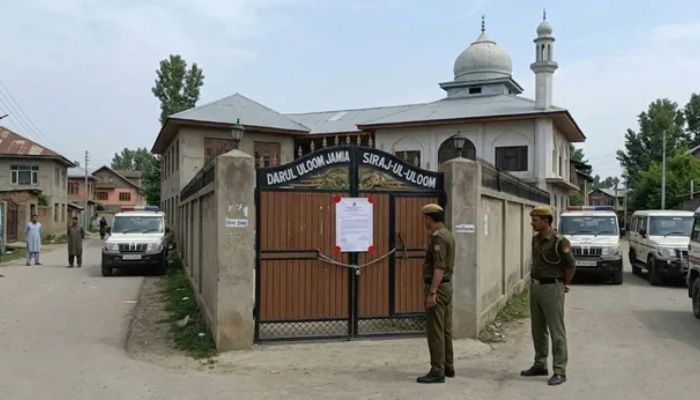
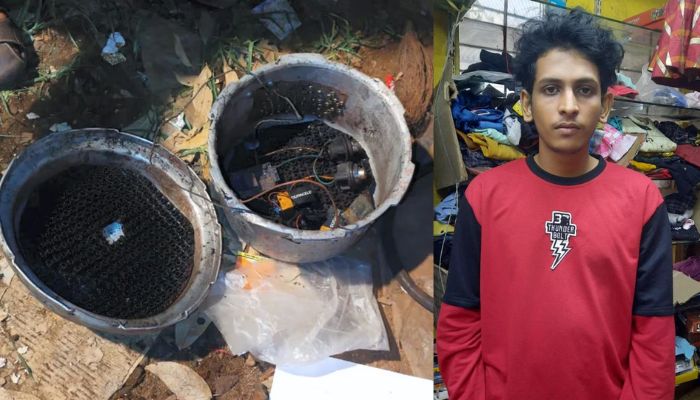
Muslim mobs run rampage in Murshidabad over ‘migrant issues’, attack journalists, carry out arson and stone pelting: Read how West Bengal has emerged as a hub of Muslim street veto

The Beldanga town in Murshidabad district of West Bengal, which has previously witnessed violent attacks on the Hindu community by Muslims, is yet again on the boil.

On Friday (16th January), a frenzied Muslim mob blocked the National Highway (NH)-12 in Beldanga for 6 hours over the death of a migrant worker named Alauddin Seikh.

Seikh, a 34-year-old native of Beldanga, had gone to Daltonganj in Jharkhand to work as a hawker about 10 days prior. His body was found hanging in his room on Thursday (15th January).

It was alleged that prior to his death, Seikh had called his mother and expressed concerns over ‘Hindu-Muslim divide’. After his dead body reached his hometown of Beldanga, local Muslims seized the opportunity to create chaos and anarchy.

They first took Alauddin Seikh’s body to NH-12 and blocked it completely. Thereafter, the local Muslims stopped multiple trains along the Sealdah-Lalgola route.

As their numbers increased, the mob burnt tyres and pelted stones. They brought private buses, trucks and SUVs to a halt on either side of the highway.

The Muslim mob thereafter thrashed several reporters and photojournalists and even molested some of them. One case in point is that of Soma Maiti, a female journalist who works for Zee 24 Ghanta News.

She was punched, kicked and sexually assaulted in the middle of the road. The attackers also chased the victim when she ran for her life.

The Zee 24 Ghanta journalist is now undergoing treatment at a nearby hospital.

While speaking about the matter, she said, “I went to work there, but the way I was beaten cannot be expressed in words. In all these years of my journalism, I never had such a disturbing experience. 2 people grabbed my legs, one was pulling my hair while another was pulling my clothes.”

Interestingly, the attack was carried out despite a significant police presence in the area. Initially, no arrests were made in connection with the case. Later, it was reported that the police nabbed the main accused, Matiur Rahman, who instigated the violence.

Besides Rahman, 3 other accused were arrested specifically over the assault on Soma Maiti.

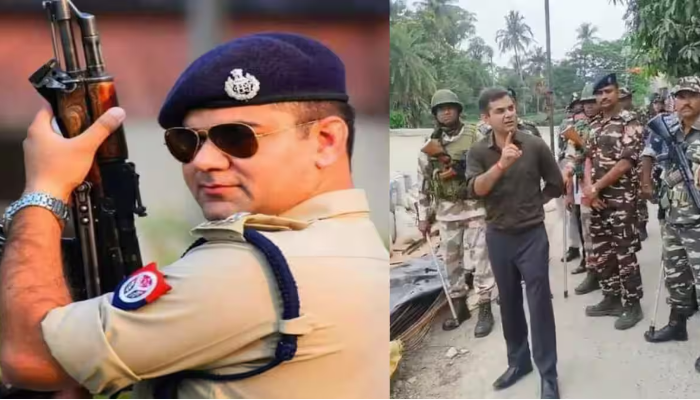
In a statement, the police claimed that the mob was ‘co-operative’ during Friday (16th January) and not ‘aggressive.’ SP (Murshidabad) Kumar Sani Raj even went on to say that there were no ‘injuries’ to anyone.

Later in the press conference, he expressed sadness over the assault on journalists in Beldanga. SP Kumar Sani Raj cautioned, “I would humbly request media persons to exercise caution while covering volatile situations and ensure their own safety.”

He also suggested that journalists should be wary of people’s sentiments and avoid ‘provoking the mob’.

“Any loose statement by you can make someone take it in a negative direction. Remember, the mob has no direction,” the officer further warned.

Muslim mobs run rampage over ‘assault’ on another migrant worker

A day later, on Saturday (17th January), a Muslim mob resorted to rioting near the Barua crossing in Beldanga. This time, the pretext for creating unrest was an alleged ‘assault‘ on another migrant worker named Anisur Rahman in Bihar.

Rahman reportedly returned to his hometown with ‘severe injuries’ from Majhyampur in Bihar. “A group of people kicked me, beat me up with sticks after they checked my ID in Bihar on Friday,” he claimed

According to reports, the attackers vandalised the railway signalling system of the Beldanga station and destroyed the railway gate.

They successfully disrupted train services, forcing authorities to suspend trains running between Krishnanagar and Lalgola.

A large contingent of Railway Police Force (RPF) was deployed to bring the situation under control.

According to the police, the attack was carried out in a pre-planned manner. Accused Matiur Rehman was part of the violence.

“From uprooting railway signal posts to attacking government buses, there was a conspiracy to spread chaos in every instance,” it stated.

SP (Murshidabad) Kumar Sani Raj informed that a bus was vandalised and the mob resorted to stone pelting.

5 passengers who were on board the bus were injured.

He pointed out that the police had to fire tear gas shells and carry out a lathi-charge to bring the situation under control in 30-35 minutes.

He further added that 30 accused were nabbed from the spot.

In the meantime, the Chief electoral officer (CEO) of West Bengal, Manoj Agarwal, has sought a report on the incident.

Hindu houses and businesses torched, informs BJP leader Suvendu Adhikari

On Saturday (17th January), BJP leader Suvendu Adhikari posted a video of the chaos and anarchy taking place in Beldanga.

He informed that Hindu properties and businesses were being burnt down in the name of ‘dissent’ over migrant issues outside of West Bengal.

“This is no spontaneous outrage, it’s a calculated replay of the horrific violence that engulfed Murshidabad during the Anti-CAA and Anti-Waqf Amendment Act protests, where innocent Hindus like Haragobinda and Chandan Das were systematically targeted, Hindu homes and livelihoods reduced to ashes while the state machinery looked the other way,” Suvendu emphasised.

He added, “Once again, the same sinister design unfolds: Police standing as mute spectators, complicit in their inaction, allowing these rioters and arsonists to wreak havoc without fear. Why? Because Mamata Banerjee’s precious vote bank must not be offended!”

The BJP leader has called for an NIA probe into the matter.

Earlier, he had written to Governor CV Ananda Bose for the promulgation of prohibitory orders to control the law and order situation in Murshidabad.

He had stated, “I am deeply concerned and outraged by the ongoing communal violence in Beldanga; …….Over the last 48 hours, rioters have unleashed terror, vandalizing properties and even assaulting Journalists of Zee 24 Ghanta and ABP Ananda who were simply reporting the truth. This is a direct assault on Democracy and the Rule of Law.”

In the meantime, TMC leader Abhishek Banerjee has alleged that the violence in Muslim-dominated Murshidabad by Muslim mobs was somehow the handiwork of the BJP and a ‘gaddar’ (perhaps referring to ex-party MLA Humayun Kabir).

The Mamata government has also announced ₹2 lakh financial assistance for the deceased migrant worker Alauddin Seikh and a government job for his wife.

Murshidabad, the hotbed of the Muslim street veto

In November 2024, a frenzied Muslim mob unleashed attacks on Hindu homes in Beldanga town in Murshidabad district of West Bengal.

The attack coincides with the Kartik Puja celebration, observed by the Hindu community across the State. The Muslim mob resorted to arson and stone pelting after accusing Hindus of committing ‘blasphemy.’

In a video shared by BJP spokesperson Amit Malviya, a Hindu man narrated his ordeal, “Despite the presence of the police, see how Hindu houses are set on fire. Look at the stones lying around. A car has been set ablaze.”

BJP (West Bengal) President Sukanta Majumdar also raised alarms about Bangladesh-like cleansing of Hindus in Beldanga. He highlighted instances of bombing and death threats issued to Hindu women.

In the meantime, a Muslim man (sporting a skull cap) was seen issuing threats to the Hindu community and calling upon other co-religionists to unleash havoc in Beldanga.

He threatened, “I want to inform all my Muslim brothers that a Kartik Puja pandal in Beldanaga insulted Allah. I want to call upon my Muslim brothers to ensure that the land of Beldanga shakes.”

“The son of a swine who did this needs to be eliminated. Hindustan should get the message about the aftermath of disrespecting Allah and the Prophet,” the radical Muslim man declared.

He encouraged his fellow co-religionists to come to Beldanga and run riots in the town to avenge alleged blasphemy. “We don’t want legal justice or fines. Just hand over the blasphemer to us,” the Muslim man hinted at mob lynching.

In April this year, the Muslim-dominated Murshidabad district witnessed large-scale incidents of violence, vandalism, arson and targeted attacks against the Hindu community in the garb of protests against the newly enacted Waqf Amendment Act.

Muslim mobs unleashed mayhem in Suti and Samserganj areas in Murshidabad after the conclusion of the Jumma Namaz.

 In the guise of peaceful protests, the extremists destroyed the sweet shop of a Hindu couple and looted all their belongings.

While breaking down in tears, the owner of the shop said, “I had a sweet shop here.” He then pointed towards his now-destroyed ‘Subha Smriti Hotel.’

“They took away all our belongings. including cash kept inside the shop…There is nothing left. How will we eat now?” the owner’s wife was heard saying.

Muslims also vandalised another establishment named ‘Sri Hari Hindu Hotel & Lodge’. The visuals of the damage were shared by the news agency ANI.

There have also been local reports of attacks on Hindu temples and idol desecration in Murshidabad. In a video shared by Republic Bangla, Trinamool Congress MP Khalilur Rahaman admitted that a temple was vandalised in Jangipur.

According to a report by India Today, the extremists also targeted homes belonging to Hindu families.

Several houses of Hindu families in the minority-dominated district were targeted and shops were attacked,” it stated.

The protesters didn’t even spare an ambulance that got caught in the violence and set it ablaze. The driver of the ambulance was brutally thrashed before the vehicle was set on fire,” the report further pointed out.

An eyewitness confirmed to India Today that Muslims set fire to an ambulance and assaulted the driver of the vehicle. “We were scared and sitting inside our homes. I had kept my parents, wife and children at home,” he narrated.

The Hindu man pointed out that the attackers were local Muslims and not outsiders. A CCTV footage that has now surfaced online shows an attacker damaging the vehicle of a Hindu family in Murshidabad.

“They have destroyed and torched bikes, looted our belongings and set shops on fire,” another Hindu victim of the Murshidabad carnage narrated to ANI.

“I couldn’t sleep at night. We were awake and in fear. There was no police force when violence was being carried out here. The cops were running for their lives…Let us see if the government gives us compensation,” he added.

Manju Bhagat, the wife of a Hindu trader Amar Bhagat, told Aaj Tak, “They (Muslim mobs) tried to enter through the front gate. When they failed, they attempted to enter through the back gate.”

“They broke the bike, vandalised our home, and looted everything from chairs, mattresses, TV to expensive household items,” she added.

“Our whole family was praying to God. We were risking our lives and hiding on the terrace. We were chanting the name of God and praying that the mob leave the house. What would I have done if something happened to my daughter at that time?” she narrated her ordeal.

The situation became so grim that 1000s of Hindus had to flee their homes in Murshidabad to the nearby Malda district via boats. 

Maharashtra civic poll results show Muslim vote bank is moving out of Congress shadow: A trailer for the full show in Assam and West Bengal

The results of the recent municipal elections in Maharashtra have triggered a serious rethink in Indian politics, especially around how Muslim voters are making choices.

In many Muslim-majority areas, the old pattern of voting out of fear or habit for the Congress and other secular parties is clearly weakening. Instead, voters are now openly backing parties that they feel truly represent them, speak their language, and raise issues they care about in their everyday lives.

Two stories stand out from Maharashtra. One is the strong comeback of All India Majlis-e-Ittehadul Muslimeen across several cities. The other is the stunning rise of a purely local force, the Islamic Party, in Malegaon. Together, these results suggest that a section of Muslim voters is no longer comfortable living under the shadow of bigger national parties.

AIMIM’s comeback surprises many

In the 29 municipal elections held across Maharashtra on 15th January, AIMIM performed far better than most people had expected. The party won between 114 and 125 wards across the state, more than double its earlier tally. In Chhatrapati Sambhajinagar, formerly known as Aurangabad, the AIMIM won 33 seats and emerged as the second-largest party, trailing only the BJP.

The party’s footprint spread across many urban centres. It won 21 seats in Malegaon, 13-14 in Nanded, 10 in Dhule, 8 in Solapur, 8 in Mumbai’s BMC, 11-12 in Amravati, 7 in Nagpur, and 5 seats each in Thane and Mumbra. In the overall picture, AIMIM finished ahead of the Samajwadi Party, the Maharashtra Navnirman Sena, and the Sharad Pawar-led NCP faction.

AIMIM national spokesperson Waris Pathan said the results showed that people were voting on basic civic issues. According to him, many voters felt the parties they had supported for years were no longer working for them at the ground level. That disappointment, he said, turned into support for Asaduddin Owaisi and his party. He also pointed out that the Samajwadi Party failed to make any impact in the state.

Support base goes beyond one community

Maharashtra AIMIM president Imtiaz Jaleel linked the party’s performance to Owaisi’s rallies and sustained local work. He stressed that AIMIM is no longer seen only as a Muslim party. According to him, Scheduled Castes, Scheduled Tribes, and even sections of Hindu voters have begun supporting AIMIM candidates.

This was visible in areas like Sambhajinagar’s Gulmandi ward, once considered a stronghold of the Shiv Sena and BJP, where AIMIM candidates managed to win. In Mumbai, newly elected corporator Khairunnisa Akbar Hussain said the victory belonged to the people and promised to focus on the issues raised during the campaign.

What makes this result more striking is that AIMIM entered the elections amid internal problems. The Mumbai unit president had resigned, and Jaleel had reportedly received threats. Even so, rallies led by Owaisi and his brother Akbaruddin helped set the tone. In several municipal bodies where neither the Mahayuti nor the Maha Vikas Aghadi got a clear majority, AIMIM has now emerged as a key player.

Malegaon tells a local story

While AIMIM’s rise grabbed headlines, the story from Malegaon was even more unusual. Malegaon, known for its powerloom industry and large population of weavers, rejected the pull of national parties. Instead, voters rallied behind a local outfit, the Islam Party, which went on to become the single-largest party in the 84-seat municipal corporation by winning 35 seats. The majority mark is 43.

The Islam Party, whose full name is the Indian Secular Largest Assembly of Maharashtra, was founded in 2024 by former Congress MLA Asif Sheikh. Its agenda is tightly focused on local problems such as saving the powerloom industry, improving electricity and water supply, and addressing the daily struggles of weavers.

Despite its name, locals say the party’s politics is more about civic issues than religion. In these elections, the BJP was reduced to just two seats, Congress won three, and Shiv Sena finished third with 18 seats. AIMIM, which had earlier done well in Malegaon, was limited to 21 seats this time. Even popular figures like Mufti Ismail failed to swing the vote.

Residents say national parties often arrive with big promises but disappear once elections are over. The Islam Party, being homegrown, filled that gap. Its success shows that in Muslim-majority towns, voters are now willing to back local leadership over so-called “outsider” parties.

Traditional parties feel the heat

For parties like the Indian National Congress, the Samajwadi Party, and the NCP, these results are worrying. The Muslim vote bank, which supported these parties for decades, is no longer united. Many voters now feel these parties talk about minority issues but fail to deliver real change.

Owaisi’s direct style of speaking on minority rights, insecurity, and local problems has found strong support, especially among younger Muslim voters. Political analysts say a mix of fear, frustration, and unmet expectations is driving this shift. Muslim voters are increasingly choosing parties that openly claim to represent them rather than voting tactically to stop someone else.

West Bengal watches closely

What happened in Maharashtra may soon be seen on a bigger scale in West Bengal. Expelled All India Trinamool Congress MLA Humayun Kabir has launched his own party and is in talks with Owaisi for an alliance. Kabir has also announced plans to build a mosque inspired by the Babri Masjid in Murshidabad, adding an emotional angle to his politics.

Muslims make up around 30 % of West Bengal’s population and are decisive in about 120 to 126 assembly seats. In at least 45 seats, Muslim voters form more than half of the electorate. Kabir believes that if the TMC’s Muslim vote splits, he could gain significantly in the 2026 assembly elections.

In 2021, the TMC won 215 seats, well above the majority mark. Kabir’s calculation is simple: if the party loses around 100 seats and his new outfit wins 40-50, he could become a kingmaker. Such a split could also help the Bharatiya Janata Party emerge as the largest party.

In the last assembly election, AIMIM contested alone in Bengal but failed to dent the TMC’s support among Muslims. This time, the combination of a local leader like Kabir, Owaisi’s wider acceptance after Bihar, and religious symbolism could change the outcome.

Assam is already on a similar path

Assam’s Muslim politics has long revolved around the All India United Democratic Front, led by Badruddin Ajmal. The party has built a strong base in Muslim-majority areas and carved out an identity independent of Congress.

Ahead of the 2026 assembly elections, reports suggest Ajmal could explore an understanding with AIMIM, something that has made Congress uneasy. Ajmal has claimed his party could overtake Congress, while Congress leaders have ruled out any alliance with AIUDF.

Issues like the NRC, the CAA, and debates around Bangladeshi infiltration have sharpened Muslim political identity in Assam. The BJP, led by Chief Minister Himanta Biswa Sarma, continues to project the narrative of local versus migrant Muslims and remains strong in surveys. Still, a possible AIUDF-AIMIM tie-up could hurt Congress in much the same way it has been hurt in Maharashtra.

A clear shift is taking shape

Taken together, developments in Maharashtra, West Bengal, and Assam point to a clear shift. Many Muslim voters no longer want to remain tied to Congress, the Samajwadi Party, or the TMC by default. They are increasingly backing parties they see as their own, whether it is AIMIM, the Islamist Party, AIUDF, or new outfits led by leaders like Humayun Kabir.

There are several reasons behind this change. Traditional secular parties are seen as raising issues but failing to act. Leaders like Owaisi offer a strong and confident voice that resonates with the youth. New and local parties are focusing on everyday problems rather than big national slogans.

In the short term, a divided Muslim vote could weaken the opposition and help ruling parties. But many believe that in the long run, this process will strengthen Muslim politics by giving it a clearer and more independent identity.

Maharashtra has shown the first signs of this shift. West Bengal may soon take it further, and similar trends are already visible in Bihar, Uttar Pradesh, Kerala, and Karnataka. Indian politics appears to be entering a new phase, where old vote banks are breaking, and new identities are taking shape in the open.

VGRC, maritime jobs and multi-crore investments: How the Gujarat govt is linking the state’s vast coastline with the Blue Economy

Gujarat has long been regarded as India’s industrial engine. However, this identity is no longer confined to land-based development alone. The Gujarat government is now actively linking the state’s vast coastline with the blue economy. A recent updated assessment carried out using modern mapping technologies has revealed that Gujarat’s coastline is far more extensive than previously recorded. This change is not due to any “rise in sea levels” but the result of precise technical measurement, and it opens up a new gateway for economic growth, investment, and employment through the blue economy.

Against this backdrop, the government has presented a roadmap at the Vibrant Gujarat Regional Conference (VGRC), outlining how it plans to work with the private sector to boost investment in the maritime economy and convert coastal potential into tangible development.

Earlier, Gujarat’s coastline was measured almost like a straight line, leaving many coastal areas unaccounted for and resulting in imprecise assessments. Recent high-end mapping, however, has shown that India, and Gujarat in particular, has far greater potential to strengthen its maritime economy, as the state’s actual coastline is significantly longer.

Why is the new assessment of Gujarat’s coastline important?

For decades, data on India’s coastline relied on limited resources and outdated survey methods. Advanced mapping tools such as satellite imagery, GIS-based analysis, and high-resolution data have now provided a far more detailed picture of coastal geography. As a result, Gujarat’s coastline, earlier estimated at around 1,600 km, is now assessed to be over 2,340 km.

This is not just a numerical revision; it reflects the true scale of Gujarat’s maritime potential, which can now serve as a foundation for policymaking, infrastructure planning, and investment strategies. Expanded coastline measurement goes beyond redrawing lines on a map—it enlarges the scope for coastal resources, marine biodiversity, fisheries, port-led trade, logistics corridors, and coastal industrial clusters. Simply put, Gujarat’s “maritime India” is now larger and far more promising than earlier believed.

The blue economy: From the sea to prosperity

The blue economy is not a fashionable buzzword. It means achieving economic growth, generating employment, and maintaining environmental balance through the sustainable use of marine resources. It spans a wide ecosystem, from ports and shipping to fisheries, marine tourism, coastal infrastructure, marine technology, and logistics. At the policy level, the blue economy is being treated as a strategic priority by the Government of India, given the country’s maritime location, long coastline, and presence along global trade routes.

Gujarat holds special significance in this vision because it already hosts some of India’s most active industrial zones. With the new mapping revealing expanded coastal capacity, the prospects of port-led and sea-led growth have become even stronger. Gujarat is now well positioned to lead the next phase of “sea-led growth” in India.

How the government is linking the expanded coastline with the blue economy

One of the most visible examples of policy and investment momentum around the blue economy is the Vibrant Gujarat Regional Conference (VGRC) organised for the Saurashtra–Kutch region. Held on 11–12 January 2026 at Marwadi University in Rajkot and inaugurated by Prime Minister Narendra Modi, the conference focused on industrial and economic development across 12 districts. Key sectors included ports and logistics, fisheries, ceramics, engineering, and other industries linked to the maritime economy.

VGRC was designed as a regional platform to connect the Vibrant Gujarat model with local development, translating investment commitments into on-ground opportunities. It was organised under the state government’s official framework aligned with the vision of Viksit Bharat 2047.

VGRC: A platform connecting policy, industry, and investment

The Vibrant Gujarat Regional Conference is more than a one-off event. It is part of a broader model where the government brings together investors, industry leaders, experts, and regional strengths to create a practical development roadmap. Reports of a large number of MoUs signed during the recent VGRC underline the state government’s strategy of fast-tracking regional investments.

In this context, the discussion on the blue economy is particularly important. The revised assessment of Gujarat’s coastline is pushing the state toward a new maritime development plan, where public–private partnerships can drive investment in ports, logistics, and fisheries, delivering direct benefits to millions of people.

MoUs and investment scale

During the two-day conference, MoUs were signed for a total of 5,492 projects, with proposed investments of approximately ₹5.78 lakh crore. This investment has the potential to become a major engine for employment, infrastructure creation, and regional development.

Key regional investments include:

  • Kutch district: MoUs worth ₹1.25 lakh crore
  • Bhavnagar: proposed investment of ₹60,000 crore
  • Amreli: investment agreements worth ₹36,000 crore
  • Rajkot: ₹23,000 crore across 2,921 projects

These figures clearly show that Kutch, home to the longest coastline, has attracted the largest share of investment, accounting for over half of the total MoU value. This is particularly significant from a blue economy perspective, as it directly links maritime potential with capital inflows.

Role of the maritime sector and importance of the blue economy

Gujarat has India’s longest coastline, with the Saurashtra–Kutch belt holding immense geographical importance. This vast coastal stretch along the Arabian Sea and the Gulf of Kutch naturally supports ports, shipping, logistics, fisheries, and marine industries.

The blue economy focuses on sustainable, structured, and long-term growth of all sea-linked economic activities, shipping, ports, fisheries, marine tourism, marine technology, and logistics. Gujarat’s expanded coastline significantly strengthens this ecosystem. The government aims to convert this opportunity into investment and employment, ensuring direct economic participation for local communities.

Role of the private sector

One of the defining features of the Gujarat model has been close collaboration between the government and the private sector. This partnership explains why Gujarat’s pace of industrialisation, infrastructure creation, and job generation stands out. The same model is critical for the blue economy, where maritime infrastructure and logistics require large capital investment, technical expertise, and long-term operations.

During VGRC, one of the most discussed investment commitments came from the Adani Group, which announced major investments in the Kutch region over the coming years. With an established presence in ports and logistics, and with the Mundra–Kutch belt already central to India’s maritime economy, these commitments align directly with Gujarat’s sea-led development roadmap.

Major private players and investments

  • Adani Group: Karan Adani announced an investment of ₹1.5 lakh crore in Kutch over the next five years, focused on port infrastructure, logistics zones, renewable energy (including the 37 GW Khavda renewable park), and doubling port capacity. This is expected to strengthen Gujarat’s position as a domestic and global logistics hub.
  • Other corporate investments: Essar Future Energy signed MoUs worth ₹5,100 crore for biofuels and clean energy solutions, with spillover benefits for maritime logistics and energy networks.

A significant share of these investments will go into marine industries, port-linked logistics, energy networks, and infrastructure, generating employment and skill development opportunities for local populations.

Importantly, VGRC was not dominated by a single large corporate player. MoUs linked to fisheries and marine supply chains also indicate growing participation from MSMEs, showing that the blue economy is expanding beyond mega projects into multi-layered economic activity.

Participation across industries

Companies participating in VGRC represented sectors beyond ports and logistics, including electronics, energy, engineering, medical-industrial clusters, petrochemicals, and agri-processing. These sectors indirectly support the blue economy through logistics expansion, supply-chain strengthening, and export-driven manufacturing, creating new opportunities for coastal communities.

What are the benefits?

The real value of investments and MoUs lies in how far they benefit ordinary citizens. The blue economy offers strong potential in this regard, as ports, logistics, fisheries, processing units, cold chains, marine tourism, and transport generate both direct and indirect employment.

Coastal districts often face unique challenges, rich in natural resources but limited in job opportunities. By developing coastal infrastructure, fisheries processing, export-oriented units, and port-linked industrial hubs in partnership with the private sector, benefits will extend beyond large corporations. Local youth will gain skill-based jobs, fishing communities will see stronger value chains, and new markets will emerge in coastal regions.

The expanded coastline data also strengthens coastal security, disaster management, environmental planning, and administrative efficiency. This means development that is not only economic, but also strategic and sustainable.

Gujarat’s next growth chapter is being written through the sea

The new mapping of Gujarat’s coastline signals that the state now has a clearer and more comprehensive understanding of its maritime resources. The VGRC in Rajkot has reinforced that the government is no longer viewing maritime potential as a theoretical advantage, but as a pathway to real investment, private participation, and local employment. Commitments worth ₹5.78 lakh crore across 5,492 projects underscore this direction.

With priority being given to regions like Kutch, home to India’s longest coastline and major ports such as Mundra, the maritime economy and logistics are poised to become the next major engines of Gujarat’s growth model. With both mega infrastructure projects and MSME participation, Gujarat’s blue economy is taking shape as a multi-tiered development model.

If this roadmap translates on the ground at Gujarat’s traditional pace, the state will not only remain India’s industrial engine but also emerge as the core of India’s maritime economy.

Resort politics returns to Mumbai: Eknath Shinde moves Sena corporators to a hotel amid fears of poaching and battle for BMC’s mayoral post

0

Resort politics has made a dramatic return to Mumbai, with Deputy Chief Minister Eknath Shinde’s Shiv Sena shifting its newly elected corporators to a five-star hotel, barely a day after the party emerged as a crucial kingmaker in the fiercely contested Brihanmumbai Municipal Corporation (BMC) elections.

According to reports, the move is driven by two key concerns: the threat of poaching ahead of the formation of the new civic body, and hard bargaining within the ruling Mahayuti alliance over control of Mumbai’s powerful mayoral post.

The BJP–Shinde Sena combine has delivered a decisive blow to the Uddhav Thackeray-led Shiv Sena, ending the Thackeray camp’s 25-year dominance over India’s richest civic body. However, despite their strong performance, neither the BJP nor Shinde’s Sena has secured a majority on its own, leaving room for political manoeuvring.

Numbers that fuel anxiety

The BMC has 227 wards, with the majority mark set at 114. The BJP emerged as the single largest party with 89 seats, while Shinde’s Shiv Sena won 29, taking the Mahayuti tally to a comfortable 118. Ajit Pawar’s NCP, which contested independently despite being part of the Mahayuti at the state level, added three more seats.

On the Opposition benches, the Shiv Sena (UBT), Maharashtra Navnirman Sena (MNS), and NCP (Sharad Pawar) fought together. Sena (UBT) secured 65 seats, MNS won six, and NCP (SP) one, taking their combined strength to 72. The Congress won 24 seats, AIMIM eight, and the Samajwadi Party two.

If the entire Opposition spectrum were to unite, their numbers would rise to 106, just eight short of the majority mark. It is this arithmetic that has triggered fears of horse-trading and defections. A swing of just eight corporators from the ruling side could potentially derail the BJP-led alliance’s plans to take control of the BMC.

Shield against Poaching, a tool for bargaining

Against this backdrop, Shinde’s decision to move his corporators to a hotel is being seen as both a defensive and an offensive strategy. On one hand, it is meant to insulate the party from possible attempts by Opposition forces to woo members. On the other hand, it is viewed as a calculated effort to strengthen his hand and thus extract a better bargain from the BJP, possibly the position of the mayor.

Sources say the Shiv Sena is keen on retaining the prestigious mayor’s post, a position historically held by the Sena during its long rule over the BMC. Despite being the junior partner in the alliance, Shinde’s camp believes its “kingmaker” status entitles it to the post. There is reportedly intense pressure from within the party not to concede the mayoralty to the BJP.

That said, keeping the BJP out of power will be an uphill task after it emerged as the single largest party with 89 seats; even if the Shinde camp were to back a united Opposition, they would still need at least eight corporators to defect to cross the majority mark.

Echoes of 2022

The episode has also revived memories of June 2022, when Eknath Shinde dramatically split the Shiv Sena by going “out of reach” with a group of MLAs following Legislative Council elections. At the time, Shinde and his supporters were flown to Assam and housed in a hotel to prevent any counter-move by the Uddhav Thackeray camp, a rebellion that ultimately brought down the Maha Vikas Aghadi government.

Now, nearly four years later, similar tactics are back in play, this time over control of Mumbai’s civic crown jewel. As negotiations intensify and numbers are closely guarded, the coming days will determine whether the BJP-led Mahayuti consolidates its victory or whether a surprise Opposition realignment throws up another twist in Maharashtra’s ever-turbulent politics.

PM Modi to perform Bhumi Pujan for Kaziranga Elevated Corridor in Assam: All you need to know about India’s most wildlife-friendly highway project

Prime Minister Narendra Modi is scheduled to visit Assam on Saturday, 17th January, for a two-day tour of the state, marking his second visit in less than a month. The visit assumes importance not only because of the cultural aspect but also because of a developmental announcement that will change and shape the connectivity and wildlife protection system in Assam.

The Prime Minister’s visit is a mix of cultural festivity, development schemes, and connectivity initiatives to make Assam a stronger contributor to the growth saga in the Northeast region. During this visit, the Prime Minister will lay the foundation stone of the Kaziranga Elevated Corridor, which is one of the most environmentally sensitive road projects in India to date.

The Assam Chief Minister, Himanta Biswa Sarma, has also shared a post on his X account, welcoming PM Modi. He wrote, “Assam is all set to welcome Adarniya Shri Narendra Modi ji to Guwahati tomorrow.”

The Kaziranga Elevated Corridor project

The Kaziranga Elevated Corridor is a smart highway project on NH-715 (Old NH-37) that runs through the southern border of the Kaziranga National Park. It will allow vehicles to cross the park area without the risk of hitting wild animals. At present, there is a speed limit on that section of the highway, as animals often enter the highway, and many of them get hit by vehicles. This risk increases during the monsoons, as the animals leave the low-lying areas in Kaziranga and move towards the Karbi hills, crossing the highway. There are nine identified corridors used by the animals, and the elevated corridor will cover them all.

As a result of the speed limit, it takes almost one and a half hours to cross the around 30 km section of the road. When the elevated corridor is built, cars and trucks will speed along as rhinos, elephants, deer, and many more animals move freely underneath. The elevated corridor is part of the ongoing four-laning of the Kaliabor-Numaligarh section of NH-715 to a four-way freeway. While the rest of the road has already been widened to four lanes, the Kaziranga section is still a two-lane highway, as it has not been widened, creating a bottleneck.

The entire corridor has an extent of approximately 85.7 km. Of this, 34.5 km will be the elevated corridor through the park. Apart from this, there will be over 30 km of widening of the existing route from two to four lanes. The project will also include 1 major bridge and 5 flyovers.

In addition, there are proposals for 21 km of greenfield route bypasses of major towns such as Jakhalabandha and Bokakhat. However, locals are opposed to the bypasses, as both the towns developed around the highway, as the majority of economic activities in Jakhalabandha and Bokakhat revolve around buses and other vehicles halting there for food.

The project covers Nagaon, Karbi Anglong, and Golaghat districts, and the road connects Guwahati to the upper Assam areas of Jorhat, Dibrugarh, and Tinsukia. Every day, thousands of vehicles use this route, causing traffic congestion and, unfortunately, more than 30 animal casualties due to accidents annually. This corridor fixes that by keeping animals safe, especially during the floods when they move to the hills.

Kaziranga is home to India’s biggest rhino population and tons of other wildlife. The elevated design covers 9 key animal corridors for year-round safe passage. It cuts human-animal clashes, speeds up travel times between cities, boosts road safety, and handles more passengers and goods.

The total cost of the 85.675 km long Kalibor-Numaligarh project is ₹6,957 crore, which includes the elevated corridor section. The Cabinet Committee on Economic Affairs greenlit it back in 2022, and gave the final approval in October last year. The National Highways Authority of India (NHAI) is handling it via EPC mode. They’ve got nods from the Wildlife Institute of India and the National Board for Wildlife. Eco-rules are strict, no work in peak floods, mandatory noise and pollution checks, and constant animal monitoring to keep disturbance low.

After completion of the elevated corridor, travel time on the route will come down significantly. At present, it takes 150 minutes to travel between Kalibor and Numaligarh, which will be reduced to just 50 minutes. The highway will also provide seamless access to 10 nodes under the PM Gati Shakti master plan.

Beyond enhancing trade and transit, the project will serve as a vital conduit to major tourist and religious landmarks, including Kaziranga National Park, the Deopahar Archaeological Site in Numaligarh, Kakochang Waterfalls, Baba Than (the Lord Shiva Temple) at Numaligarh, the Maha Mrityunjay Temple in Nagaon, and the Hatimura Temple in Nagaon.

Assam CM Himanta Biswa Sarma has said that even after the completion of the elevated corridor, the existing road below it will continue to operate. Cars and buses can take the road if the travellers want to drive slowly while enjoying the beauty of the national park. However, trucks will not be allowed on the road on the ground.

PM will also flag two new Amrit Bharat Express

According to the Press Release by PIB, PM Modi’s Assam visit on 17th and 18th January packs in a lot. On Saturday, 17th January, around 6 PM, he’ll join the “Bagurumba Dwhou 2026” cultural event at Sarusajai Stadium in Guwahati. On this occasion, more than 10,000 artists from the Bodo community will perform the Bagurumba dance in a single, synchronised presentation. 

Bagurumba is a beautiful folk dance inspired by nature, think blooming flowers, butterflies, birds, and leaves swaying gently. Young Bodo women usually lead it, with musical instruments played by men, and it’s tied to festivals like Bwisagu New Year and Domasi. It stands for peace, joy, and harmony between people and nature.

The next day, on Sunday, 18th January, around 11 AM, Modi heads to Kaliabor in Nagaon district for performing Bhoomi Pujan for the Kaziranga Elevated Corridor project. The PM will also address the gathering on the occasion.

He will also flag off two new Amrit Bharat Express trains, one from Guwahati (Kamakhya) to Rohtak, and another from Dibrugarh to Lucknow’s Gomti Nagar. These trains will make travel between Northeast and North India smoother and safer.

A R Rahman plays Muslim victimhood card by saying he lost work in Bollywood, claims ‘it might be a communal thing’: Read how his allegations are completely baseless

When success comes their way, some people attribute it to their sheer talent and hard work, but when a setback or a slowdown comes in their career, they find people and the industry they work in to blame. In a recent interview, noted music composer A R Rahman reflected on his professional journey, only to blame ‘communalism’ and ‘industry-politics’ for losing out in the Hindi film industry, Bollywood, over the last 8 years.

In an interview with BBC Asian Network, the Oscar-winning composer was asked if he faced any prejudice in the Hindi film industry in the 1990s. To this, Rahman said that he did not feel any such prejudice overtly; however, in the past eight years, there has been a slowdown in his Hindi music career. Rahman attributed this slowdown to a ‘power shift’.

Beyond the insinuation that he may have been a target of industry politics due to his South Indian or Tamil background or for other reasons, A R Rahman cited Chinese whispers to suggest that his not getting more work in Bollywood could be a “communal thing”.

“Maybe I didn’t get to know all this stuff. Maybe God concealed all this stuff. But for me, I never felt any of those, but the past eight years, maybe, because the power shift has happened. People who are not creative have the power now to decide things, and this might have been a communal thing also, but not in my face. It comes to me as Chinese whispers that they booked you, but the music company went ahead and hired their five composers. I said, ‘Oh, that’s great, rest for me, I can chill out with my family,’ Rahman told BBC’s Haroon Rashid.

It must be recalled that back in 2020, Rahman had similar complaints that there was a ‘gang’ operating in Bollywood that was spreading false rumours about him, creating misunderstandings, and blocking good projects from reaching him. This forced him to do ‘dark movies’ and not the good ones or more mainstream Bollywood projects. However, Rahman did not make any claims back then about communal targeting or simply his being deprived of quality work in Bollywood due to his Muslim religious identity.

It is ironic that, of all the film industries, A R Rahman went on to call Bollywood communal, that too, suggesting that he is perhaps being sidelined due to his Muslim identity by the industry folks due to their anti-Muslim biases. Bollywood has historically been, and even now continues to be, a highly secular, rather Muslim-inclined industry to a great extent. From Mohammed Rafi to Dilip Kumar (Yusuf Khan) to Salim-Javed to the Khan trio, Muslims have dominated the industry.

Undeniably, there has been an emergence of Hindi cinema that showcases Hindu history and grievances, and highlights the Hindu culture more unapologetically. However, this does not automatically mean that the industry has become communal, pro-Hindu or anti-Muslim.

Many singers and music composers, who are Muslim by faith, continue to thrive in Bollywood. Is the ‘communal thing’ A R Rahman talked about only against him?

Bollywood has always been and continues to be a nepotistic, obviously not entirely, clique-driven, and profit-centric industry, where religious, regional or ideological agendas may influence movie scripts. However, communal prejudices against Muslim actors, singers or music composers, that too of Rahman’s stature, is a hard-to-believe claim.

A R Rahman has had an illustrious career spanning three decades. Through his music, Rahman has left his mark on Tamil, Hindi, and other regional languages. From Oscar to Filmfare, Rahman has won dozens of awards and accolades for his melodies. However, this does not mean he would have always got the same amount of or the same quality of work consistently.

His songs in the recent Bollywood hit starring Dhanush, who primarily acts in Tamil movies, became quite popular. In fact, singer Faheem Abdullah’s song ‘Aawara Angara’ became quite popular among the audience. Abdullah’s title track in another blockbuster of 2025, ‘Saiyara’, remained among the top songs for four months.

How is it that Muslim actors, singers, and music composers, be it Faheem Abdullah, Salim-Sulaiman, Arman and Amaal Mallik, Javed Ali, among others, continue to get consistent work in Bollywood, but only A R Rahman is not getting enough work due to the ‘communal thing’? Is the ‘communal thing’ there in the Hindi film and music industry only against A R Rahman?

Until Rahman divulges more details about who those ‘non-creative decision makers’ are, his “communal thing” claim is speculative and comes across as needless Muslim victimhood. The biases, Rahman claims, could be real, but more individualised than religion-centric.

Interestingly, established artists attributing their career dips to ‘gangs’, and ‘boycotts’ is not new. Be it Taapsee Pannu, Swara Bhasker, or Richa Chadha, all of them have been quite vocal on political issues. They have enjoyed support and faced criticism from various sides of the political spectrum. Yet when their films do not do well on box office, they at times argue that their failure is the cost of their unfiltered political commentary.

This convenient yet dishonest excuse comes even as their movies were rejected by audiences due to poor scripting, mediocre acting, and other content-based reasons. If movies like Dobaara, Anarkali of Aarah, Jahaan Chaar Yaar, Ishqeria, Shakeela, and Madam Prime Minister tanked at the box office, films like Pink, Fukrey, Veere Di Wedding, among others, performed phenomenally and earned praise for them.

Instead of reflecting on factors like poor script choices, some actors choose to blame ‘trolling’, boycott campaigns, outsider factors, and even ‘communalism’ by which they essentially mean ‘Hindutva’, while in reality their content and performance may have been the problem.

Coming back to A R Rahman not getting more work in Bollywood. The music maestro has an illustrious career with more than 200 films. However, like any other entertainment industry, Bollywood’s music landscape has transformed over the years. Like in any field, new people come in, make their place, and eventually replace the old one no matter how talented the established ones are. Music composers like Amit Trivedi, Mithoon, Pritam, Sachin-Jigar, and many emerging talents have brought fresh sounds; of course, they too are and should be subjected to criticism when warranted.

However, times change, audiences evolve, and new demands emerge. Talented artists have had their eras. Once Kishore Kumar and Mohammad Rafi ruled, then came Kumar Sanu and Udit Narayan, then entered Sonu Nigam and KK.

There was a time when movies were not complete without Mohit Chauhan songs, but now Arijit Singh dominates playback singing. This does not mean earlier singers lost vocal magic or were deliberately sidelined, but rather a crop of new singers emerged and swept audiences with their fresh voices.

Audience taste has pivoted from song-centric movies to content-driven narratives. Although musicals like Aashiqui 2 or Saiyara do manage to pull viewers to theatres, reliance on good songs alone is no longer a guaranteed success formula. With music apps, YouTube, and social media handling music PR, filmmakers no longer essentially rely on chart-topping tracks to pull crowds. Dhurandhar became a smashing hit due to its content and powerful performances, with its music playing a perfect cherry on the cake, same goes with Animal, and Chhaava.

Historical drama film Chhaava, one of the biggest hits of 2025, had its music as its biggest weak link. Ironically, the film’s music was composed by A R Rahman.

During his interview with BBC Asian Network, Rahman discussed the film Chhaava, which stars Vicky Kaushal as Chhatrapati Sambhaji Maharaj. The film centred on the valour, resistance, and sacrifice of the son of Maratha warrior king Chhatrapati Shivaji Maharaj, and the brutality Sambhaji was subjected to by Mughal tyrant Aurangzeb for around 40 days for not converting to Islam.

The film dramatised the lived reality of Chhatrapati Sambhaji Maharaj and the Islamic fanaticism of Aurangzeb, yet A R Rahman found the film “divisive”.

“It is divisive. I think it cashed on the divisiveness of it, but I think the core of it is to show the bravery… I told the director, ‘Why do you need me for this?’ He said we need only you for this. I think it was an enjoyable finish. But I definitely think people are smarter than that. Do you think people are going to get influenced by movies? They have something called internal conscience which knows what the truth is and what manipulation is…” Rahman said.

However, contrary to Rahman’s reading of Chhaava, the film was not ‘divisive’, rather it presented historical facts about Chhatrapati Sambhaji Maharaj’s courage, sacrifice and devotion towards Hindu Dharma as well as Aurangzeb’s Islamic jihadist fanaticism, within the bounds of cinematic storytelling.

Somehow, whenever Hindus attempt to narrate their stories of persecution by Islamic jihadis through films like the recent blockbuster Chhaava based on the life and valour of Chhatrapati Sambhaji Maharaj who was tormented for days before being murdered for not converting to Islam or The Kashmir Files which retold the genocide of Kashmiri Hindus in the early 1990s, such films are dubbed as ‘communal’, ‘propaganda’, ‘divisive’, and whatnot. But no such hue and cry erupted when movies ‘Fanaa’ humanised Islamic terrorists, film ‘Haider’ featured song calling the Martand Surya Mandir a ‘Shaitan ki Gufa’, or Kabir Khan’s ‘Tiger’ franchise whitewashing Pakistan’s ISI responsible for countless jihadist attacks in India, or when films like ‘Article 15’ peddle an anti-Brahmin narrative by distorting facts.

Amusingly, if Chhaava was indeed a divisive film, why did A R Rahman choose to compose music for such a movie, especially when he claims that ‘communalism’ is hindering his career in Bollywood? Despite there being a ‘communal thing’ prevalent in the Hindi film industry, how does A R Rahman get a massive project like Ramayana, the movie centred on the Hindu epic and Hindu gods?

A R Rahman’s own ‘communal thing’

A R Rahman’s “communal thing” remark becomes even more baffling when one looks back at the allegations he faced in the past about similar bias. Back in 2020, Tamil poet and lyricist Piraisoodan made a shocking disclosure on how Rahman’s family had expressed their intolerance towards Hindu traditions and their symbols.

According to Piraisoodan, when he went to Rahman’s house upon his invitation, shockingly, Rahman’s mother asked him that he should not wear Vibuthi and Kumkum Tilak when he visits their house.

“I refused to remove the Hindu religious marks on his forehead,” Piraisoodan said in an interview.

Notably, A R Rahman is a born Hindu, who converted to Islam after his sister and father fell seriously ill, and a Sufi told his family to convert to save the girl’s life. Soon, Dileep Kumar became A R Rehman, and his mother Kasturi Shekhar became Kareema Begum.

Rahman had also once stoked a controversy after he allegedly blamed the Hindu deities for his father’s death. Rahman had said that the deities which his father worshipped had killed him. Rahman’s daughter, Khatija Rahman, had also triggered controversy by defending the burqa, without which she is not seen in public. She had said that the burqa empowers her.

A R Rahman received Padma Shri, Padma Bhushan, six National Awards, and continues to be one of the highest-paid music composers in the country. He continues to get mainstream projects like Chhaava, Tere Ishk Mein, and many other upcoming projects like Ramayana, yet he ludicrously attributed a perceived Hindi career slowdown to being sidelined due to communal reasons.

Punjab Kesari Group accuses Bhagwant Mann govt of targeted witch hunt: Read how AAP govts have been hounding the media and journalists over the years

The Aam Aadmi Party (AAP), which rose to power with the commitment to introduce the politics of honesty, transparency and impartiality into India’s political landscape, soon began to emulate the practices of its predecessor, the Indian National Congress (INC), shortly after it gained power in Punjab and Delhi.

The AAP government has repeatedly come under not only for its corrupt activities but also for its intimidation of the media over their coverage or questioning of these matters. Now, a prominent media house “Punjabi Kesari Group” has accused the state of engaging in a “targeted witch hunt” on 15th January (Thursday) over an article on Arvind Kejriwal, former Delhi chief minister and the national convenor of the party.

It asserted that the government was browbeating the press through a string of raids and regulatory measures against its publications and affiliated businesses.

“We are writing to express our deep concern and anguish regarding certain recent developments which give rise to a serious apprehension that the Punjab government is specifically targeting the Punjab Kesari Group and its associate concerns with an extraneous motive to intimidate the press,” read a formal letter signed by the outlet’s editor-in chief, Vijay Kumar Chopra alongside Joint Managing Directors, Avinash Chopra and Amit Chopra.

How Punjab Kesari Group was hounded

The letter was sent to Governor Gulab Chand Kataria and Chief Minister Bhagwant Mann and attributed the move to a news article that was released on 31st October of last year which it maintained, provided a fair assessment of the statements made by the opposition against Kejriwal.

Afterwards, all government advertisements to the group were stopped from 2nd November, according to the publication. It added, “Despite this economic coercion on the press, we stood steadfast and continue our independent and free reporting. However, in the past few days a relentless campaign has been launched against Punjab Kesari and its promoters.”

The group disclosed that the Chopra family, the group’s promoters and others have been frequently targeted in recent days. It highlighted events that occurred between 11th and 15th January, including raids by Food Safety and Standards Authority of India, GST department and Excise agencies at Jalandhar’s Park Plaza run by Chopra Hotels Private Limited.

The Punjab Pollution Control Board’s activities at the hotel and presses, the Factories Department’s inspections of its printing presses in Ludhiana and Jalandhar, the cancellation of excise licenses and the Jalandhar hotel’s power outage were also mentioned.

“Due to the actions it is feared that as on 15th January the operation of the press at various presses at Jalandhar, Ludhiana & Bathinda will be obstructed or stopped altogether. There is a heavy deployment of police force outside the press at Suranussi, Jalandhar, focal point, Ludhiana and IGC Bathinda,” the media group asserted.

It also invoked history and reminded Mann that late Lala Jagat Narain who was killed by Khalistanis launched the Hind Samachar in 1949 and Punjab Kesari started its circulation in 1965, requesting him to “enquire into this matter urgently and take the necessary action at the earliest.” However, allegations were refuted as “vendetta narrative” and claimed that the acts were in response to violations recorded in official records in an official press release.

The Bharatiya Janata Party (BJP) protested against the action as “attack on media’s freedom” and announced that a party delegation would meet with the governor on 17th January as the Congress emphasised that AAP was suppressing the press.

FIR against social activists, journalists and others

The AAP government possesses a troubling history of harassing the media if it does not acquiesce to its demands or dares to raise valid inquiries as outlined earlier. A similar issue took place on 12th December of last year when a FIR (First Information Report) was submitted in Ludhiana against social activist Manik Goyal, journalists Mintu Gurusaria and Manindejit Sidhu from Lok Awaz TV, in addition to Gagan Ramgarhia, Harman Farmer, Mandeep Makkar, Gurlal S Maan, Arjan, Snammu Dhaliwal and Deep Mangli for purportedly sharing “objectionable posts.”

According to the authorities, an initial review of the uploaded material indicated that it contained misrepresented, unsubstantiated and obvious fabrications regarding the matter. However, Manik Goyal noted that their questions about the use of government helicopters when Mann was away were the root of the complaint.

He revealed, “For 4 years, they’ve refused to share RTI (Right to Information) data on helicopter & Aeroplane usage and expenditure. Now, when we raise legitimate questions on social media, they slap FIRs on journalists and activists. He then remarked, “Is this the democracy we voted for, Arvind Kejriwal and Bhagwant Mann? Was this the Badlaav (change) you promised, silencing voices instead of answering questions.”

YouTuber approached Punjab and Haryana High Court for protection

The Punjab government targeted a YouTuber and commentator on 27th October of the same year, forcing him to request protection from the judiciary. Ajeet Bharti approached the Punjab and Haryana High Court to find out about whether the Punjab government had lodged cases against him for his alleged online remarks after a shoe was hurled at then Chief Justice BR Gavai in the Supreme Court by a lawyer on 6th October.

Bharti’s attorney informed the court that he required formal confirmation from the state authorities after learning that his client has been booked under Scheduled Castes and Scheduled Tribes (Prevention of Atrocities) Act and Indian Penal Code via national newspaper. However, he is unable to seek conventional legal remedies due to his lack of information regarding the specifics. The YouTuber also feared that coercive action could be initiated against him without warning or a hearing and prayed for protection from the court

Additional Advocate General for Punjab and state attorney Jastej Singh had sought time to confirm the details. The matter was then heard on 3rd November after which Bharti was told to provide the links to his videos to the Mohali Police in order to know the details of the FIR.

AAP media coordinator tenders unconditional apology and fined 25,000 by court

Vikas Kumar Yogi, the media coordinator for the AAP had to offer an unequivocal apology to a woman journalist about an altercation that occurred outside the party headquarters in May 2024. Afterwards, the Delhi High Court dismissed a formal complaint against him and directed him to deposit Rs 25,000 with the Delhi Police Martyrs’ Fund in September 2025.

The FIR stated that Yogi started a dispute with the journalist and eight to ten party members also joined him at his instance. She was there to cover a story on foreign funding. They attempted to steal the camera, encircled the complainant and her cameraperson as well as shoved them in the direction of the gate while shouting disparaging remarks.

However, the court was told that the parties had resolved the matter through a settlement deed, free from undue influence, pressure, or coercion in June 2025. It pronounced, “The petitioner states that he has unconditionally apologised for his behaviour. He also undertakes not to indulge in any such activity in future.” The journalist also conveyed that she had no more grievance to the court after accepting the apology.

“Operation Sheesh Mahal” fame journalist Bhawana Kishore arrested, humiliated

Times Now journalist Bhawana Gupta (Kishore) who exposed “Operation Sheesh Mahal” related to Kejriwal’s lavish official residence, was apprehended by Ludhiana Police along with video journalist Mritunjay Kumar and driver Parminder for reportedly striking a Dalit woman with a vehicle and using casteist insults against her. The Indian Penal Code and the SC and ST Act were also invoked in the 2023 case.

The channel termed it as a witch hunt following the expose. Kishore even broke down in tears on national television as she recounted the humiliation she faced during her time in incarceration. “When I went to the washroom, 2-3 female constables accompanied me. There was no electricity or water at the police station (I was kept in),” she voiced.

“I still used the washroom while the door was open. I was under so much mental pressure that I felt no shame,” she added. Kishore was permitted to bath but she “felt awkward that the door was open and they (female constables) might be looking. I feared that a CCTV was recording me while I was using the washroom.”

The Punjab and Haryana High Court was petitioned against the action after which interim bail was granted and later the FIR was quashed along with all subsequent proceedings in 2024, highlighting that they “had no personal knowledge of the caste of the victim or her family.”

It further observed, “As such, the court cannot presume that the accused was aware of the victim’s caste or tribal identity” and “the primary burden was on the complainant to establish the same” but they failed. It further observed that “neither the state nor the complainant” indicated about it “and their conspicuous silence speaks more than the words.” The bench determined that carrying out criminal proceedings would be an abuse of the judicial system.

Charges of media censorship in Punjab

The AAP governments have also gained a reputation for their media censorship in addition to the attacks and targeting directed at the journalists. It encountered intense condemnation and allegations of repressing the media in Punjab after newspaper deliveries, including “The Indian Express” were delayed in some areas of the state on the morning of 2nd November 2025.

The reason was that the authorities stopped vehicles carrying newspapers and conducted checks throughout the 1st and 2nd November intervening night. Interestingly, the dailies had printed BJP’s charges regarding the AAP supremo’s second “Sheesh Mahal” in Chandigarh.

Police gave conflicting explanations, claiming to have information about drugs, weapons and explosives being transported in a newspaper truck. Punjab Police later asserted that “various kinds of commercial vehicles” were searched after “intelligence inputs” were received about the involvement of the drivers in the smuggling of firearms and drugs in an official statement.

Congress took aim at AAP, labelling it a “disturbing assault on press freedom” and expressed that the action “raised significant concerns regarding press freedom and public safety.” Sukhbir Singh Badal, president of the Shiromani Akali Dal (SAD), implied that the government targeted the vehicles “because they do not want anyone writing against them.”

The Chandigarh Press Club also slammed the action in a statement and urged the Punjab government to step in to ensure an unimpeded newspaper distribution along with protecting the fundamental right to press freedom.

Channel blacked out, photojournalists barred from conference

The Punjab government banned all Zee Media Corporation’s channels in the state on 28th May 2024. Zee News Hindi stated the media platform confronted the government about its shortcomings and brought up public concerns during the Lok Sabha Elections which resulted in the black-out and argued whether the state was under a “state of emergency.”

BJP leader Jawahar Yadav talked to the channel and stated, “It is clear that media is not allowed to show the truth in Punjab without the approval of Aam Aadmi Party-led state government.” He invited anyone who claimed that the media outlets and their staff were “Godi Media” to come out and offer their opinions about the state ban on the channels associated with Zee Media.

On 4th November 2022, Kejriwal and Mann convened a press conference in which photojournalists from specific media outlets, such as The Print, The New Indian Express and The Morning Standard were not allowed. The Sunday Standard is owned by the same media conglomerate that also owns The Morning Standard and The New Indian Express.

The group’s chief, Swatantra Bhattacharya commented on this via a series of tweets, speculating that it was because these news outlets reported on the inconsistencies and corruption by the AAP governments in the distribution of permits to sell alcohol which is currently infamous as Delhi liquor scam, leading to imprisonment of top party leaders including Kejriwal.

She reacted, “AAP goes down censorship route. Photojournalists from The New Indian Express and The Morning Standard were disallowed from the Kejriwal-Bhagwat Mann presser. Why throw out photojournalists? Is the extra hospitality bcoz of our Liquorgate and Hawalagate reports?”  Bhattacharya further wrote, “The same treatment was meted out to the photographer from a prominent news website. For reasons best known to AAP.”

Journalist harassed at Kejriwal-Mann presser

On 26th April 2022, Punjab Police officials misbehaved with journalist Naresh Vats during a joint news conference between Kejriwal and Mann at The Imperial Hotel. “I showed them my PIB (Press Information Bureau) card. But on the pretext of checking they took it and after a few minutes they told me that I was not a reporter and will not be allowed to enter the press conference room,” the Hindustan Post reported revealed and mentioned that was subjected to further mistreatment when he questioned them about the criteria to define a reporter.

“One of them asked other cops to have me arrested. When I again opposed, they dragged me out of the room. In CCTV, it could be seen,” he added while narrating the story of his physical and mental harassment. Vats further complained that neither of the AAP leaders took any action despite being notified about the incident. He filed a complaint at the Connaught Place Police Station. The Chandigarh Press Club and Press Association also denounced the occurrence, asking for an extensive probe and strict action.

Reporters removed from AAP’s group

Likewise, seven Hindustan Times reporters were kicked out of a WhatsApp group used for exchanging press notes, including a daily health update, reported Newslaundry. The development transpired on 6th May 2021 by the Delhi government’s Media Cell and Vikas Yogi did not provide an explanation for the same. However, journalists in the group unveiled that a piece criticising the government’s response to the oxygen crisis prompted the action.

A reporter expressed, “The representatives of the government should give an explanation to other reporters in the group. Ignoring questions from multiple reporters, who you also know personally, is insulting.”

“It’s not just this, we have seen a steady decline in their engagement with journalists. For instance, once the lockdown happened, they didn’t arrange for a mechanism for us to directly question Kejriwal at his press conference. Kejriwal holds a press conference everyday, but how is it a press conference if you’re not taking any questions,” asked another journalist who called the move “disgusting and shameless.”

The person added, “This is just bad behaviour from a party that claims to be the alternative, it just reflects so poorly on them. We need to look at this from a larger perspective, as to what they are trying to do. Are they trying to intimidate journalists, scare them? What exactly are they aiming for here?”

India News, three journalists sued over sting operation

The AAP does not shy away from legal acction against the media if they try to uncover the corruption or malpractice within the party, a conduct that has been evident since its formation. Hence, the party sued Chief Executive Officer (CEO) of Media Sarkar Anuranjan Jha for defamation over a sting operation that showed eight prominent members taking financial assistance without doing a background check in 2013.

It also lodged the case against then editor-in-chief of “India News” Deepak Chaurasia and CEO Vinod Sharma and dubbed the sting operation as phoney which was carried out to damage its reputation.

AAP national secretary Pankaj Gupta submitted the petition which accused that the sting’s CD was made available by Jha to the media and showcased by the other two, tarnishing the party’s image. Dinesh Mohania, who was AAP’s Sangam Vihar candidate and featured in the video also approached court.

“Act of the accused is clearly malafide and calculated to defame the complainant in the eyes of voters of Delhi where assembly election is going to take place on 4th December. Therefore, they have committed an offence of defamation under section 500 (defamation) of the India Penal Code,” it insisted.

AAP, a day earlier, declared that its internal investigation revealed that significant portions of the sting operation’s tape had been altered and removed to portray the party members negatively. “They have manipulated and edited and presented the CD to people. The edited scenes/conversations change the whole meaning. The CD is doctored, its fake and fraud,” contended Yogendra Yadav who was in AAP at the time.

Conclusion

The AAP government has once again reiterated its anti-media stance with the recent measures against the “Punjab Kesari Group,” which was a beacon of light against anti-Khalistani elements during the period of terrorism in Punjab, despite facing severe threats, fatalities and intimidation.

Notably, its made the ultimate sacrifice, but his media organisation never succumbed to the deadly pressure of the gun-weilding extremists even in the face of death. Thus, the present matter points out more about the incumbent AAP rulers, especially in relation to their controversial track record.

The right to die debate: Euthanasia’s global journey and India’s delicate balance between morality and lack of adequate palliative care

In a petition (Harish Rana v. Union of India) seeking to extend euthanasia rights beyond passive measures to include active euthanasia for patients experiencing intolerable, non-terminal suffering, such as advanced ALS or chronic pain syndromes, the Supreme Court of India reserved its judgment yesterday, January 15, 2026. This development rekindles the national discussion on Article 21’s right to die with dignity. It is the result of ongoing writs such as those in Dr MRS Revathy, and new challenges to the 2018 Common Cause framework.

This article, written in anticipation of the verdict, traces the history of euthanasia, global laws, India’s judicial evolution, and ethical crossroads, asking readers to consider, in a democracy that values life, when does mercy cross into peril? Given the growing number of global precedents and the appallingly inadequate palliative care in India.

The term ‘euthanasia,’ which comes from the Greek words ‘eu’ (good) and ‘thanatos’ (death), sums up humanity’s long-standing struggle to balance the sanctity of life with intolerable suffering. From intellectual reflections in antiquity to hotly contested laws around the world, this intentional acceleration of death, whether by active methods like fatal injection or passive removal of life-sustaining treatment, has developed over time. Societies struggle with autonomy vs vulnerability, compassion versus force, as medical advancements prolong terminal suffering. Euthanasia divides nations in 2026 due to ageing populations and secular trends; some support it as a dignified decision, while others condemn it as a step toward state-sanctioned death. 

Ancient Roots: Mercy in philosophy and practice

The origins of euthanasia can be found in ancient times, when death was socialised rather than medicalised. Wounded warriors begged for allies to put an end to their suffering in Homer’s Iliad (c. 8th century BCE), illustrating the societal acceptance of mercy killings. Eastern traditions, Hindu texts like the Mahabharata permitted prayopavesa (fasting to death) for ascetics, while Confucian China prioritised filial piety, banning suicide. Euthanasia for the terminally ill was supported in Plato’s Republic (380 BCE), which argued that prolonged suffering burdens society. Stoic resolution was demonstrated by Socrates’ composed acceptance of hemlock in 399 BCE, accepting death as better to dishonor. However, Hippocrates’ Oath (c. 400 BCE) forbade active euthanasia ‘I will not give a deadly drug to anybody who asks for it, establishing a medical taboo that persisted for millennia and was based on Pythagorean respect for life.

Rome blurred these lines. Seneca the Younger (4 BCE-65 CE) praised rational suicide for the terminally ill, influencing Stoicism. Galen (129-216 CE) permitted withholding sustenance from hopeless cases, foreshadowing passive euthanasia. Sparta practised senicide, where elders starved on mountainsides.

Medieval shadows and enlightenment sparks

Greco-Roman tolerance was overshadowed by Christianity. Citing Genesis’ life as a gift from God, Augustine’s City of God (426 CE) denounced suicide as self murder. In Summa Theologica, Thomas Aquinas (1225-1274) reaffirmed this by comparing euthanasia to murder. The Fourth Lateran Council (1215) required confession for aiding and abetting, whereas canon law condemned practitioners.

Through Al Ghazali (1058-1111), Islam accepted passive aid removal to speed up death, but prohibited violent murder. The Talmud of Judaism permitted indirect hastening, such as using noise to calm the dying, but not medications. Up to the Enlightenment, these religious barriers remained in place. While David Hume (1711-1776) advocated the morality of deliberate suicide, John Locke’s Second Treatise (1689) alluded to bodily liberty.

By using anaesthesia and surgery, the 19th-century industrialised medicine. The debate was sparked by Samuel D. Williams’ 1870 pamphlet Euthanasia, which suggested using chloroform for the terminally ill. Secularists were inspired by Ohioan Robert Ingersoll’s ‘The Right to Die’ speech from 1894. The Euthanasia Society of New York filed a petition for legalisation in 1906, but it was denied.

20th century shadows: Nazi atrocities and reformist stirrings

The legacy of euthanasia was damaged by the twentieth century. The Binding-Hoche manifesto of 1920 demanded the abolition of life unworthy of living. Under the direction of doctors like Karl Brandt, the Nazi T4 program (1939-1945) exterminated 300,000 allegedly ‘retarded’ people at Nuremberg by gassing them. Euthanasia was stopped by post war terror that compared it with genocide.

Reform, however, continued. The 1935 Voluntary Euthanasia Society in Britain, led by C. Killick Millard, produced an unsuccessful piece of legislation. The clergy supported America’s 1949 living will petitions. Although Derek Humphry’s Final Exit (1991) popularised self-deliverance, Cicely Saunders 1967 hospice movement provided palliation.

Euthanasia in modern secular democracies

Secular democracies gave rise to modern perspectives on euthanasia. Before a federal override in 1997, Dr Philip Nitschke’s (founder of suicide Pod) four assisted suicides were permitted by Australia’s Northern Territory (1995 Rights of the Terminally Ill Act). With 3,500+ deaths by 2025 under stringent safeguards, mental competency, two physician approvals, a 15-day wait, and self-administration, Oregon’s 1997 Death with Dignity Act pioneered assisted dying for terminal adults (with a six-month prognosis) in the United States.

After the 1973 judicial tolerance, the Netherlands (2001 Termination of Life on Request Act) allowed active euthanasia, requiring excruciating suffering, consultation, and reporting. Luxembourg (2010) followed Belgium (2002) in extending to minors (2014). Dignitas (1998), was born out of Switzerland’s legalising of assisted suicide in 1942. Following the Carter verdict, Canada’s 2016 Medical Assistance in Dying (MAiD) program saw 15,300 instances in 2024, prompting concerns about the spread of mental illness (delayed to 2027).

Assisted dying forms are allowed in Spain (2021), Austria (2022), Australia (2017), New Zealand (2021 referendum), Colombia (2014 decriminalization), Ecuador (2024), and Portugal (2023, revoked). In 2026, there are 13 jurisdictions in the US (Oregon model), 40 states will have bans. France and the UK prioritize sedation, while Germany (2020) permits assisted suicide. Scandinavia emphasizes hospice and forbids all. While Muslim countries impose Sharia prohibitions, Japan in Asia allows disengagement.

India’s judicial odyssey: Art 21 and the Right to die

The Supreme Court’s interpretations of Article 21’s right to life with dignity, which strike a balance between autonomy and the sanctity of life upheld by cultural and religious traditions, are how India’s euthanasia debate develops rather than through legislation. Sections 306 (abetment of suicide) and 309 (attempted suicide) of the colonial Indian Penal Code (IPC) provide the legal framework and carry a maximum sentence of ten years in prison for abetment and a year to attempt it. Suicide attempts are a sign of desperation, not criminality, according to early challenges like P. Rathinam v. Union of India (1994), which attempted to overturn Section 309 as unconstitutional. In Gian Kaur v. State of Punjab (1996), the Supreme Court upheld Section 309 to protect life after first agreeing, yet decriminalisation disputes persisted.

Aruna Shanbaug: The sassive euthanasia precedent

India’s euthanasia shift was signalled by the historic Aruna Ramchandra Shanbaug v. Union of India (2011). After being raped in 1973, Aruna, a nurse from Mumbai, sustained brain damage and spent 42 years in a persistent vegetative state (PVS) at KEM Hospital. In her writ petition, journalist Pinki Virani requested the removal of life support, or passive euthanasia. Citing Hippocratic oaths, religious purity, and abuse dangers in India’s socioeconomic setting, a two-judge bench consisting of Justices Markandey Katju and Gyan Sudha Misra denied active euthanasia. However, it allowed passive euthanasia for PVS patients under strict criteria, including annual compliance reports, referral to another hospital’s committee, magistrate clearance, and primary hospital ethics committees consisting of three senior doctors who were unrelated. No motivation for organ donation is permitted. Although Aruna passed away naturally in 2015, the ruling established the legitimacy of passive euthanasia and set it apart from active killing.

Common cause: Advance medical directives and dignified death

India’s framework was changed by the NGO Common Cause v. Union of India (2012-2018). It was filed in 2005 by advocate Prashant Bhushan, who wanted advance medical directives (AMDs), which are living wills that refuse terminal care, to be recognised as a right to die with dignity. It was referred to a Constitution Bench by a two-judge bench in 2012. A five-judge panel consisting of Chief Justice Dipak Misra, Justices A.K. Sikri, A.M. Khanwilkar, D.Y. Chandrachud, and Ashok Bhushan unanimously ruled on March 9, 2018, that passive euthanasia and AMDs are basic rights under Article 21. Notarized AMDs refusing disproportionate care (such as ventilators for irreversible coma) could be executed by competent individuals. Two witnesses, a medical assessment, and police notification after death were all necessary for execution. Medical Boards, consisting of three professionals, would make decisions for PVS/incapacitated patients after consulting their families. Under IPC 306/309, assisted suicide and active euthanasia were still prohibited.

Refinements and implementation challenges

The implementation was not successful. The laborious notarization process of AMDs discouraged adoption. The Supreme Court shortened procedures in Dr. MRS Revathy v. Union of India (2023) by allowing gazetted officers to certify AMDs, requiring three witnesses (one independent), clear/competent declarant stipulations, and durable storage (e.g., KRYA site). Medical boards became required for PVS cases, with appeals to appellate authorities; foreign AMDs received limited recognition. Notarization was made easier by a 2021 Registrar General circular. By 2026, judicial rules will take precedence over any government legislation. The decriminalisation clause in Section 115 of the Mental Healthcare Act of 2017 expired, and private members’ bills such as the 2019 Euthanasia Bill failed.

Contemporary cases and gaps

Limits are highlighted by recent incidents. A Kerala nurse couple requested euthanasia in 2024, but their request was turned down since psychological distress does not meet PVS/terminal conditions. The National AIDS Control Organisation’s 2022 advisories helped HIV patients understand AMD. The Centre is promoting palliative care under the 2017 National Palliative Care Policy; petitions such as 2025’s non-terminal suffering cases (such as ALS patients) are pending. Due to rural illiteracy, family pressures, and medico-legal concerns, coverage is still appalling 1-2% of necessary patients according to Lancet estimates. Due to a duty-bound society, families frequently take precedence over patient autonomy, and doctors hesitate, citing liability.

India’s legal system is complex. PVS cases require Medical Board approval, although passive euthanasia and AMD are permitted for capable individuals who refuse pointless treatment. Active euthanasia is still illegal.

Conclusion: Navigating autonomy, abuse and India’s path forward

The global history of euthanasia exposes a fundamental ethical conundrum where the promise of autonomy collides with real risks of abuse and the potential for criteria to be enlarged. Since 2001, the number of instances in the Netherlands has increased by 15% annually, reaching 9,958 in 2024.

Reports of dementia patients being put to death with prior authorisation and psychiatric cases have raised concerns about the effectiveness of safeguards. Following 2016, Canada’s Medical Assistance in Dying (MAiD) program saw a sharp increase, accounting for 15,300 deaths in 2024 (4.7% of all deaths), including non-terminal diseases. Eligibility for mental illness was postponed until 2027 due to concerns about coercion among vulnerable populations, such as the impoverished and disabled.

Over 3,000 assisted deaths were recorded by 2025 under Oregon’s Death with Dignity Act, a U.S. pioneer since 1997. However, the median patient age fell to 76, and the number of non-cancer cases increased, suggesting criteria creep.

In the end, euthanasia provides mercy, but in cultures where confidence is lacking, courts face danger. Should India strengthen its palliative infrastructure or jump to active legalisation like Canada, risking abuse, while striking a balance between Article 21’s dignity and IPC protections? The moral dilemma stands. Does the right to die free the individual or endanger society’s most vulnerable members in a world that prolongs life while barely reducing suffering? It is up to you to decide between the triumph of individuality and the untouchable sanctity of life.

As NASA gears up to return humans to the Moon, here’s all you need to know about the Artemis II mission

Around 50 years after the Apollo era, NASA is set to send humans to the Moon again and establish a sustained presence there under its ambitious initiative, the Artemis II Mission. Named after the Greek goddess of the Moon, and Apollo’s twin sister, the Artemis II program aims to send its four astronauts on their first flight aboard NASA’s Space Launch System (SLS) rocket and Orion spacecraft to the Moon.

The program involves collaborations with agencies like the European Space Agency (ESA) and the Canadian Space Agency. In addition, commercial partners like SpaceX have also been roped in for landing systems.

Artemis II builds on the uncrewed test flights, particularly Artemis I in 2022, which successfully sent Orion around the Moon and back.

What is Artemis II?

Artemis II is the second mission in the Artemis program. It is the first crewed mission in the wider program, and the first-time humans will travel beyond low Earth orbit since Apollo 17 in 1972. This mission’s budget is estimated to be around $93 billion, although the exact figures could be higher. The Artemis II is a 10-day test flight that will send four astronauts, Reid Wiseman, Victor Glover, Christina Koch, and Jeremy Hansen, on a lunar flyby. The mission will involve orbiting the Moon without landing, before returning to Earth through a free-return trajectory using the Moon’s gravity to slingshot back to Earth.

Official Artemis II crew poster released by NASA.

The complete Artemis program comprises four missions: Artemis I, which was an uncrewed flight test of the Space Launch System and the Orion spacecraft around the Moon. Artemis II, which will be the first crewed flight test of the Space Launch System and the Orion spacecraft around the Moon. Artemis III, which will send the first humans to explore the region near the lunar South Pole. And, Artemis IV, which will debut humanity’s first lunar space station, a larger, more powerful version of the SLS rocket, and a new mobile launcher.

What will the astronauts do during the mission?

According to NASA, the main goals of the mission are to validate the Orion spacecraft’s life support systems, propulsion, and hardware in deep space with a human crew aboard. The objectives of the mission also include testing environmental controls like air and water recycling, in addition to conducting scientific observations from a unique vantage point farther from Earth than humans have been in over 50 years.

“During an approximately 10-day mission set to launch in 2026, NASA astronauts Reid Wiseman, Victor Glover, and Christina Koch, and CSA (Canadian Space Agency) astronaut Jeremy Hansen will collect and store their saliva, don wrist monitors that track movement and sleep, and offer other essential data for NASA’s Human Research Program and other agency science teams,” a NASA article titled “Artemis II Crew to Advance Human Spaceflight Research”, reads.

The four astronauts will record their observations via pictures and audio recordings during the Moon exploration mission. While NASA’s Lunar Reconnaissance Orbiter has been mapping and surveying the Moon for decades, Artemis II allows humans to evaluate the lunar surface from above. Since human eyes and brains are highly sensitive to subtle changes in colour, texture, and other surface characteristics, Astronauts having a first-hand observation of the lunar surface could “form the basis for future scientific investigations into the Moon’s geological history, the lunar environment, or new impact sites, NASA says.

Another interesting aspect of the Artemis II mission is the integration of science flight control operations. The takeaways of these operations during Artemis II will pave the way for lunar science operations on future missions.

Explaining what it is and how it will work, NASA says, “From their console in the flight control room in mission control, a science officer will consult with a team of scientists with expertise in impact cratering, volcanism, tectonism, and lunar ice, to provide real-time data analysis and guidance to the Artemis II crew in space. During the mission, the lunar science team will be located in mission control’s Science Evaluation Room at NASA’s Johnson Space Center in Houston.”

Studies NASA researchers will conduct on the Artemis II Mission

The study by NASA researchers on the Artemis II mission will include A Virtual Astronaut Tissue Analog Response or AVATAR investigation. This will use organ-on-a-chip devices, or organ chips, to study the effects of increased radiation and microgravity on human health.

Another key study on the mission will be Artemis Research for Crew Health & Readiness, or ARCHeR. Detailing what this study will cover, NASA says, “This study will measure astronauts’ well-being, activity, sleep patterns, and interactions during the Artemis campaign that will return astronauts to deep space and the Moon for the first time in over 50 years. These missions will launch in a new space vehicle, the Orion capsule, and journey deep into space, resulting in longer exposures to space hazards, including isolation, radiation, and more. Data will be collected using actigraphy and behavioral performance surveys before and after the mission. Actigraphy data will also be collected during the mission.”

NASA opines that this study will help understand the combined effect of space hazards on well-being and performance. ARCHeR will also be used to “develop protocols, interventions, and technologies that will enable humans to survive and thrive for future Moon and Mars missions.”

The mission will also involve studying radiation, and radiation sensors will be fitted inside the Orion capsule cells to collect information about radiation shielding functionality and organ-on-a-chip devices. These devices containing astronaut cells will study how deep space travel affects humans at a cellular level.

The NASA researchers will also conduct a study titled “Immune Biomarkers”. Under this, the researchers will explore how the immune system, and of the crew aboard, reacts to spaceflights.

Though not central to the Artemis II mission’s objectives, the program will include CubeSats. This will help improve the understanding of the space environment. NASA and four international space agencies have signed agreements to send CubeSats into space aboard the SLS rocket. The four space agencies sending their CubeSats include Argentina’s ATENEA, Korea Aerospace Administration, Saudi Arabia Space Agency, and the Germany Space Agency. While each country have their own diverse objectives, collecting data on radiation is a common objective.

Korea AeroSpace Administration’s K-Rad Cube CubeSat installed within the Orion. Image source: NASA

Artemis II launch details

The Artemis II mission will launch from NASA’s Kennedy Space Centre in Florida using the American space agency’s most powerful rocket, the SLA Block 1. NASA is targeting a launch no earlier than 6th February 2026, with the launch window opening from the 5th to 11th February. The fully stacked SLS rocket and Orion spacecraft are scheduled to roll out to Launch Pad 39B starting from 17th January. This process could take up to 12 hours.

Following the rollout, the teams will conduct a wet dress rehearsal, which will involve fuelling and a countdown simulation, to assess readiness.

Components of the Orion spacecraft. Image source: NASA

In the event that the February window is missed due to technical anomalies or adverse weather conditions, additional opportunities have been explored. These opportunities are scheduled for 6th-9th and 11th March, 5th-8th and 10th April, and will continue into April 2026, if needed.

As per NASA, the exact date of launch will depend on post-rehearsal evaluations of the spacecraft, ground systems, and crew preparedness. To stay on track for the program, NASA intends to proceed with the launch no later than April 2026.

The Artemis II crew

The Artemis II crew is an interesting blend of inclusivity and cooperation, as it includes the first woman, the first ‘person of colour’, and the first non-American to venture to the vicinity of the Moon. The four-person crew was announced in April 2023.

The Artemis II crew has Reid Wiseman as its Commander. Wiseman is a NASA astronaut selected in 2009. He is a former US Navy test pilot and fighter jet aviator. Wiseman has logged over 165 days in space and commanded ISS operations, including ISS Expedition 40/41 in 2014. During this mission, Wiseman and his crewmates conducted more than 300 scientific experiments.

American astronaut Reid Wiseman. Image source: NASA

The Artemis II mission will have NASA’s Victor Glover as the Pilot. Glover is the first Black astronaut assigned to a lunar mission. Glover was selected as an astronaut in 2013. He has been a US Navy aviator with combat experience. Glover has spent 168 days on ISS, wherein he conducted spacewalks and experiments. He was a part of the SpaceX Crew-1 to ISS in 2020-2021.

American astronaut Victor Glover. Image source: NASA

In the role of Mission Specialist 1, Christina Koch holds the record for the longest single spaceflight by a woman, spanning 328 days. She completed six spacewalks, including the first all-woman EVA

American astronaut Christina Koch. Image source: NASA

The Artemis II crew includes Canadian astronaut Jeremy Hansen as Mission Specialist 2. The astronaut from the Canadian Space Agency will be the first Canadian on a lunar mission. He has been a Royal Canadian Air Force colonel and fighter pilot.

Canadian astronaut Jeremy Hansen. Image source: CSA

Hansen was selected as an astronaut in 2013. After completing his Astronaut Candidate Training, Hansen has been part of various space programs by the CSA, ESA, and NASA, and will now be venturing around the Moon.

US nuclear-powered supercarrier heads towards Middle East while Trump announces ‘Board of Peace’ for Gaza, reports of secret Israel-Iran understanding via Russia. Read details

The pentagon has directed the USS Abraham Lincoln (CVN-72) to move to the US Central Command area of responsibility, which involves the Middle East as tensions between Washington and Tehran remain high. The fifth among the Nimitz class nuclear-powered supercarriers, CVN-72, has been patrolling in the South China Sea and carried out live-fire drills and a replenishment-at-sea as part of its regular operations.

Visuals from Copernicus, a satellite data company that tracks maritime movement, showed the carrier and its strike group heading west away from the Indo-Pacific area. The strike group consists of guided missile destroyers, fighter planes and at least one attack submarine. The transition would at least take a week.

According to insiders, US military equipment from the air, land and sea is anticipated to arrive in the area in the upcoming days and weeks, reported Fox News. The intent is to offer armed alternatives to President Donald Trump in the event that he chooses to launch strikes against Iran. Officials referred to the movements as a part of “setting the force.”

If the president wants to use force then “this will be different, more offensive,” a source highlighted and added that US military strategists are planning a variety of possibilities that will rely on the actions of the Iranian government in the days ahead. Officials informed that nearly 30,000 American personnel are presently stationed in the US Central Command region.

Israel, Iran use Russia to discreetly assure each other: Report

Meanwhile, Israeli officials have informed the Iranian leaders that they would not attack the country unless the Jewish state was hit first, reported The Washington Post. The message was conveyed through Russia, only a few days prior to the unrest which rocked Iran in the last week of December. WaPo quoted “individuals with knowledge of the development” saying Iran replied that it would likewise abstain from a preemptive strike via the same channel.

Sources further disclosed that Iranian officials reacted favourably to the outreach but were suspicious of Israel’s objectives. The officials suspected that even if the guarantee was sincere, there continues to be a possibility of a potential of US assault on the Islamic Republic as an element of a joint effort executed by the two partners as Israel was focussing its arsenal on Hezbollah.

However, a senior regional official stressed that “for Iran, it was a good deal” to avoid any conflict between Israel and Hezbollah. US officials noted that the internal strife in the nation has already decreased its substantial backing for the outfit.

“Israel is giving the US the leading role (in any potential strikes against Iran), but there is no question Israel would love to see regime change because that would change the Middle East, as well as Hezbollah. But Israel could be a target for the Iranian response, and therefore Israel has already taken a lot of steps to be better defended and prepared,” expressed Sima Shine. She was the chief of research for Mossad before becoming a senior researcher at the Institute for National Security Studies in Tel Aviv.

Israel’s goal at the time was to isolate Hezbollah if it lauched an attack on the group while keeping Iran on the sidelines. An Israeli official mentioned that the “same logic” might apply now with the country attempting to stop a direct confrontation between the two sides even if only momentarily.

The person added that regardless of what happens with Iran, strikes against Hezbollah, which was described as a “threat” remained a potential outcome. “The (Lebanon) campaign will take place, and Hezbollah will be heavily targeted, The question is if it’s during or after the Iran war,” the official asserted.

Trump announces “Board of Peace”

On 15th January (Thursday), Trump announced the formation of a Gaza “Board of Peace,” amid the violatile situation with Iran. He referred to the formation as his “great honor” and pointed out, “The members of the board will be announced shortly.” He called it “the greatest and most prestigious board ever assembled at any time, any place.” Trump is reportedly going to preside over the panel which will include international figures to monitor its functioning.

The establishment of the board follows the unveiling of a 15-member Palestinian technocratic council tasked with overseeing Gaza’s regular administration during the dispute. Trump first recommended it in 2024 as a transitory body that would oversee a technocratic panel of Palestinian officials and manage Gaza’s rehabilitation. It has been created to oversee Gaza’s post-war government and direct political and security choices throughout the transitional phase.

Furthermore, Steve Witkoff, the president’s foreign envoy, also declared the start of Phase Two of the 20-point plan to resolve the Gaza crisis. “Phase Two establishes a transitional technocratic Palestinian administration in Gaza, the National Committee for the Administration of Gaza (NCAG), and begins the full demilitarisation and reconstruction of Gaza, primarily the disarmament of all unauthorised personnel,” he wrote on social media.

He emphasised that the US expects that Hamas would fulfil all of its commitments, including returning the last hostage who had died, and then threatened the jihadi organisation of “dire repercussions” if it failed to comply.

Witkoff also lauded the Phase One and remarked that it “delivered historic humanitarian aid, maintained the ceasefire, returned all living hostages and the remains of twenty-seven of the twenty-eight deceased hostages. We are deeply grateful to Egypt, Turkey, and Qatar for their indispensable mediation efforts that made all progress to date possible.”

Trump’s plan proposed the deployment of an International Stabilisation Force to assist with managing Gaza and provide training to Palestinian police units that have been vetted.