Social media platforms are abuzz with claims that the Income Tax Department of India will soon be able to snoop on every individual with the help of a new amendment, which users claim grants unprecedented power to tax sleuths to breach privacy and examine emails, chats, and other communications.
The online discussions currently underway claim individual privacy will be compromised and fundamental rights curtailed following the passage of the law, which, they say, accord the government of India unhindered access to emails, messages, instant messaging chats, etc.
Source: X
However, this is not the first time the internet has been flooded with rumours claiming that the Government of India will gain the power to read citizens’ emails and WhatsApp messages. Such alarmist chatter resurfaces almost every time the Centre considers tightening provisions of the Income Tax Act to curb tax evasion. These claims, framed as concerns over “fundamental rights,” are routinely amplified to mislead the public and exert pressure on the government to preserve the status quo.
Nevertheless, over the past ten years, there has been a significant movement in tax evasion into digital trails, including cloud storage, encrypted phones, email inboxes, trading apps, e-wallets, benami digital identities, and messaging-based dealmaking. Long before cellphones, law enforcement could conduct searches and seizures, but the digital age created a gap. Police could locate a device while conducting a search, but it could still be blocked by passwords, encryption, cloud logins, or remote wipes.
This provides the policy context for Section 247 of the proposed Income Tax Act, 2025, which is said to be comparable to the traditional search and seizure clause included in Section 132 of the Income Tax Act, 1961.
Why Section 247 of the Income Tax Act, 2025 is needed: Balancing enforcement and privacy
Section 247, the codified search and seizure provision for tax investigations, is introduced by the Income Tax Act, 2025, which takes the place of the previous 1961 Act on April 1, 2026. The clause permits authorised tax officers to carry out search and seizure operations against individuals who are already the subject of formal legal proceedings, such as summonses or notices, and when there is a reasonable suspicion that the individual has hidden assets, income, documents, or pertinent electronic records that are necessary for tax assessment or investigation. Section 247 is a targeted investigation tool that updates current authorities in light of digital economic realities; it is not a warrantless surveillance law.
The law expressly places these powers in the context of ongoing tax proceedings under Section 247. Thus, a random person’s phone, emails, bank accounts, and social media accounts cannot be abruptly searched by an officer. The authority only comes into play when there is a legal summons or notification that calls for the production of books of account or other papers and the taxpayer disregards it, or when there is reliable evidence of income or property concealment that is pertinent to a tax investigation. This is consistent with the fundamental tenet of Indian tax law, which states that enforcement operations must be connected to particular legal procedures (notice or summons).
The specific inclusion of virtual digital space in Section 247, which relates to online accounts, cloud storage, emails, social media platforms, online banking, investing and trading portals, or any digital environment where financial or communications data may be held, is a significant advancement. Since the majority of financial transactions and important evidence are now stored electronically rather than in physical books of account, this explanation is required. According to the Indian Express, this clear definition acknowledges the importance of digital data as evidence in tax disputes while reiterating and clarifying current powers.
What critics say and what they miss
Section 247 opponents have expressed worries that, in the absence of sufficient protections, tax authorities may hack into private digital accounts or social media. For instance, some observers have equated the terminology on overriding access codes to warrantless access to private devices or cloud data, interpreting it as a privacy danger. Opponents claim that the clause ‘allows tax authorities to effectively hack into people’s computers, cell phones, and even email or social media accounts if they refuse to provide access,’ according to Medianama.
However, this argument frequently ignores how similar authorities already exist as well as the contextual restrictions and protections built into the law. No one’s digital accounts can be arbitrarily accessed by the law. Instead, it only permits access as a component of a search and seizure operation that is based on earlier legal actions, such as a summons or notice, and the existence of a reason to suspect that the individual is concealing non-compliance.
For many years, Section 132 of the previous Income Tax Act, 1961, provided a more comprehensive investigative process that included the authority to enter property, seize documents or equipment, and access digital data. Simply put, Section 247 modernises and makes clear how these authorities apply to digital places.
The concept of procedural rights and limitations that must be upheld during search and seizure is likewise strengthened by the law. In the past, Indian tax law has upheld practices like requesting an authorisation order, providing the taxpayer with an explanation (or documentation of the reasons), creating thorough inventories (panchanama) of confiscated goods, and making sure the taxpayer receives copies of the inventories.
These protections are a part of the regular enforcement framework and are not eliminated by Section 247. Additionally, taxpayers can contest the legality of a search or seizure in court if they feel their rights were violated, and judicial review is still accessible in certain circumstances.
Section 247’s larger context is the need for contemporary enforcement in a digital economy. Conventional search skills concentrated on actual books of account or records stored in safes or offices. These days, important evidence could be found in bank transaction logs, online investment statements, emails, automatic portfolio records, or even communication channel metadata.
Tax enforcement may be severely hindered if that evidence cannot be properly accessed. Legal assessments have shown that in order to uncover undeclared income in the modern period and ensure effective compliance, search and seizure procedures must be expanded to include digital assets and data.
A common misconception is that Section 247 permits unrestricted access to all digital personal information. However, as previously stated, this view is inconsistent with the law’s wording and application. Only in the event of a tax proceeding, a summons or notice, and a reasonable suspicion that assets or records pertinent to tax liability are being hidden can access powers become available. Search and seizure powers are not activated by mere suspicion unconnected to a tax procedure.
Furthermore, the provision must be used in compliance with legal due process, and abuses can be contested in court. This means that tax officers do not have unrestricted authority. According to the Supreme Court of India’s privacy ruling (K.S.Puttaswamy), privacy is a basic right under Article 21, but it can also be reasonably restricted for legitimate governmental reasons as long as certain procedures are followed.
Section 247 requires the legislature to ensure that powers exist to enforce tax compliance in the digital era, but procedural protections and judicial scrutiny ensure that enforcement does not become arbitrary.
Conclusion
Finally, Section 247 of the Income Tax Act, 2025, is a sensible, updated enforcement mechanism that aligns Indian tax law with modern financial realities. It guarantees that hidden income, whether it is documented in electronic or traditional ledgers, can be looked into by the authorities. The legal structure of authorisation, reasoned belief, and procedural protections that uphold the rights of taxpayers is also retained. It takes a balanced approach, modernising enforcement while integrating due process and accountability in accordance with constitutional standards, rather than compromising privacy.
The Khet Talaab Yojana is a key water conservation and irrigation support scheme of the Uttar Pradesh Government under Chief Minister Yogi Adityanath. The scheme, that was launched in 2017, is designed to help farmers store rainwater in small ponds built within their fields and use that water for irrigation during dry spells.
The scheme has been implemented in the state under the Rashtriya Krishi Vikas Yojana (RKVY) with funding support from the Government of India. Both the state and the Centre share the funding in a 50 per cent ratio. The aim of the scheme is to reduce dependence on falling groundwater, improve irrigation reliability, and strengthen farm resilience.
Under the leadership of Chief Minister Yogi Adityanath, the scheme has shown remarkable changes in drought prone regions. The scheme has expanded from seven districts of Bundelkhand to multiple districts across the state. Official data accessed through RTI by OpIndia suggests that the scale has grown steadily over time.
Why the scheme was launched
For decades, farmers in Bundelkhand faced drought, dry wells, and crop failures. With the arrival of summers, hand pumps used to dry out, and farming was entirely dependent on rainfall. The Khet Talaab Yojana was designed as a decentralised fix for this problem. The ponds created under the scheme help in storing rainwater at the farm level, which farmers can use to irrigate crops when needed. It also improves groundwater recharge over the long term.
In a report by UP Tak on Bundelkhand’s revival, the change in the region has been described as a silent shift, where small farm ponds were built in fields to store rainwater, which now supports irrigation throughout the year. The scheme has directly affected agriculture in the region by improving water availability. It has also provided additional income to farmers through fish farming.
Launch, phases, and Bundelkhand as the starting point
According to the information available on the UP Government’s website, the scheme began with an initial phase in seven districts of Bundelkhand. A total of 2,000 ponds were constructed at an outlay of Rs 12.20 crore, covering all development blocks in these districts. The seven districts where the scheme started included Jhansi, Jalaun, Lalitpur, Banda, Chitrakoot, Hamirpur, and Mahoba.
In the next phase, the coverage was expanded to a total of 73 districts. It targeted 167 over exploited and critical development blocks, with an additional outlay of Rs 27.88 crore and a target of 3,384 ponds. After that, the state government, with the help of the Centre, has funded the scheme consistently.
Over the years, 37,403 ponds have been created across state. In 2017-18, 2,000 ponds were created. The schemed peaked in 2022-23 when 6,306 ponds were created.
Year-wise total ponds created across state. (Source: Soil Conservation Wing of Department of Agriculture, Government of Uttar Pradesh.)
RTI numbers show Bundelkhand remained the top beneficiary
According to the data provided by the Soil Conservation Wing of Department of Agriculture, Government of Uttar Pradesh, in response to the RTI filed by OpIndia, a total of 37,403 ponds have been created so far under the scheme since its launch. The UP government has allocated Rs 311.43 crore in grants.
The data showed that the original seven Bundelkhand districts remained the most consistent top beneficiaries year after year. Cumulative grant figures for 2016–17 to 2024–25 highlight sustained focus on the region.
6,213 ponds were created in Jhansi since the launch of the scheme, followed by Banda where 4,743 ponds were created. In Jalaun 4,504 ponds were created, Mahoba witnessed creation of 4,321 ponds, Chitrakoot 4,228 ponds, Hamirpur 3,922 ponds, and Lalitpur saw creation of 3,200 ponds.
Top districts (Bundelkhand) where maximum ponds have been created since the launch of ‘Khet Talaab Yojana’. (Source: Soil Conservation Wing of Department of Agriculture, Government of Uttar Pradesh.)
The consistency matters because it signals that Bundelkhand was not treated as a one time pilot. The region continued to receive substantial support even as the scheme expanded statewide.
What people on the ground say, and why it supports the policy intent
Beyond the numbers, statements from beneficiaries provide on ground accounts that fit neatly with the scheme’s stated objectives. In Banda’s Luktara village, locals described water becoming available for daily needs and livestock, and agriculture becoming less monsoon dependent. A farmer in Jhansi described the shift away from rainfall only farming by saying, “We are no longer dependent on rains.”
Speaking to UP Tak, a government agriculture officer in Jhansi also described the scheme’s mechanics and scale. He stated that the grant is paid directly through Direct Benefit Transfer. He pointed out that Jhansi has crossed around six thousand ponds. As a matter of fact, data from RTI replies showed that Jhansi is the top beneficiary of the scheme. He also said that the scheme contributed significantly to improvements in the local water table.
Expansion beyond Bundelkhand
After Bundelkhand, the scheme expanded to multiple other districts. These include Meerut, Ghaziabad, Shamli, Muzaffarnagar, Saharanpur, Baghpat, Gautam Buddh Nagar, Aligarh, Hathras, Kasganj, Hapur, Bulandshahr, Amroha, Mathura, Agra, Firozabad, Etah, Farrukhabad, Kannauj, Kanpur Dehat, Kanpur Nagar, Unnao, Mainpuri, Etawah, Auraiya, Bareilly, Bijnor, Badaun, Pilibhit, Rampur, Moradabad, Sambhal, Ayodhya, Ambedkar Nagar, Gonda, and others.
The broadening of the scheme indicated that the state moved strategically from a Bundelkhand first intervention to wider water stressed blocks across Uttar Pradesh.
How funds have been allocated over the years
Funds under the Khet Talab Yojana were allocated progressively over the years, reflecting the scheme’s phased expansion and increased focus on water conservation. Beginning with Rs 12.20 crore in 2016–17, allocations rose to Rs 24.50 crore in 2017–18 and Rs 43.22 crore in 2018–19. Spending remained substantial in subsequent years, peaking at Rs 63.51 crore in 2022–23, before moderating to Rs 35.81 crore in 2023–24 and Rs 10.77 crore in 2024–25. In total, the Uttar Pradesh government has spent Rs 311.43 crore on the scheme so far.
A total of Rs 311.43 crore have been spent on Khet Talaab Yojana by UP Government (Source: Soil Conservation Wing of Department of Agriculture, Government of Uttar Pradesh.)
Pond sizes, costs, and how the grant works
The scheme supports two standard pond sizes, each with a depth of 3 metres. A small pond measures 22x20x3 metres. The estimated cost of such a pond is Rs 1,05,000. A medium pond measures 35x30x3 metres, and the estimated cost of such a pond is Rs 2,28,400.
Farmers receive a 50 per cent grant amount, which is paid via Direct Benefit Transfer. Typically, the grant is paid in instalments linked to work progress and completion. This structure is intended to ensure that farmers have skin in the game, while still making the construction affordable for small and marginal landholders.
Eligibility, priority groups, and key conditions
While the scheme gives priority to Scheduled Caste and Scheduled Tribe farmers, minority farmers, and small and marginal farmers, the government categorically stated in its RTI reply that such data is not maintained by the state agriculture department. Farmers have to apply for the scheme, and approval comes from the district level administration. Notably, one farmer can receive support for only one pond.
Online registration is mandatory, and selecting the Khet Talaab option during registration is required.
A crucial condition is that the beneficiary must have a functional micro irrigation system, such as drip or sprinkler irrigation, installed through the agriculture or horticulture department within the previous seven years and currently operational.
How to apply, where to apply, and documents required
Applications are submitted online on the UP Agriculture Department portal at agridarshan.up.gov.in.
Applicants fill in personal and land details, upload the required documents, and deposit a token amount as required during application windows. Selection follows a first come, first served processing approach, subject to eligibility and verification.
Documents typically required include Aadhaar, bank details, land records such as Khasra Khatauni, a recent photograph, a declaration, and micro irrigation related documentation, including the tripartite agreement where applicable.
The Yogi Adityanath led BJP government in Uttar Pradesh has focused on long term solutions with the Khet Talaab Yojana rather than short term relief. The scheme combines rainwater harvesting and decentralised irrigation. Grants allocated via Direct Benefit Transfer ensure that the money reaches farmers directly. With these features, the scheme has delivered measurable outcomes on the ground, especially in drought prone Bundelkhand.
On 18 December, the Islamic terrorist outfit ISIS released the 526th issue of its propaganda magazine Al-Naba, in which it openly praised the terrorists who carried out the antisemitic massacre targeting Jews at Bondi Beach in Sydney, Australia. The editorial titled “The Pride of Sydney” described the terrorists as “heroes” and projected the bloodshed as a model to be replicated globally. OpIndia accessed copy of the article published in Al-Naba.
In the article, the terrorist outfit celebrated the terrorist attack on Jews celebrating Hanukkah at Bondi Beach. It praised the terrorist who initiated the attack. It shows how global jihadist networks have weaponised online radicalisation to incite violence against communities that do not align with their ideology and faith.
ISIS praised terrorists behind the terror attack on Jews celebrating Hanukkah at Bondi Beach in Sydney, Australia.
The terrorist outfit did not make any attempt to hide its admiration for the terrorists. It went ahead and glorified the attack as a successful implementation of ISIS ideology. The article portrayed the massacre as proof that lone actors who are inspired by ISIS propaganda can strike deep inside western countries.
ISIS glorifies Sydney attackers, calls them ‘heroes’ and ‘lions’
Naveed Akram and his father Sajid Akram were the father and son terrorist duo behind the attack. The editorial praised them for killing 15 people and injuring several others. While ISIS has not formally claimed responsibility for the attack, the editorial left little ambiguity about ideological ownership.
The terrorists were referred to as “heroes” and “lions” in the editorial, framing the massacre as a religiously sanctioned act. It asserted that such violence represents adherence to what it calls the “Prophetic methodology”. The article repeatedly emphasised that the success of an attack matters more than formal allegiance or documentation, a tactic aimed at encouraging decentralised terrorism without direct organisational links.
The message is significant because it mirrors a familiar ISIS playbook. The terrorist organisation often encourages individuals who have been radicalised online to act independently. Later, ISIS often claims ideological credit rather than a direct link to the terror attack.
‘Jews bleeding in the streets of Australia’, ISIS celebrates Hanukkah massacre
In some of the most chilling passages, the editorial boasts that Jews are now “bleeding in the streets of Australia” and claimed that the Hanukkah celebration was transformed into a “funeral”. The editorial framed the massacre as a victory achieved by “zealous ones” who heeded ISIS calls to target Jewish and Christian gatherings during religious festivals.
The article made it clear that ISIS sees Jewish religious events as deliberate targets. Synagogues, community gatherings, and festivals are portrayed as legitimate arenas for violence, revealing the genocidal intent that underpins ISIS ideology. It also makes it clear that the hatred towards Jews is ideological, theological, and deeply entrenched.
Incitement extends beyond Australia, Belgium named as next target
Another disturbing aspect of the editorial is that it did not limit itself to celebrating past violence. It openly incited Muslim refugees in Belgium to carry out similar attacks. ISIS urged them to “fight Jews and Christians in every street”. Refugee status, asylum, and migration have been openly framed as tools to be discarded in favour of violent attacks.
Notably, Belgium has a significant migrant population. It has been singled out as fertile ground for future attacks, which has raised serious questions about Europe’s continued failure to confront Islamist radicalisation within its borders.
Lone wolf terrorism promoted as unstoppable
Another key aspect of the editorial was the glorification of lone wolf attacks. ISIS mocked western intelligence agencies and claimed that modern jihad has evolved beyond hierarchical structures and funding trails.
According to the article, a single radicalised individual armed with ideology and online guidance is sufficient to carry out mass murder. The Sydney massacre is repeatedly cited as proof that decentralised terrorism is both effective and difficult to prevent.
The editorial has left no room for misinterpretation. ISIS has not only endorsed the Bondi Beach terrorist attack in Australia but has projected it as a template for future attacks worldwide. This is no longer a foreign security issue. It is a reminder that Islamist terror thrives on propaganda, permissiveness, and denial. ISIS celebrating the Sydney massacre shows that there is an urgent need to confront extremist ideology head-on without leaving any room for misplaced political correctness.
Bondi beach terrorist attack
On 14th December, two terrorists, Naveed Akram and his father Sajid Akram opened fire at a Jewish Hanukkah celebration at Bondi Beach in Sydney, Australia. This was one of the deadliest terrorist attacks Australia witnessed in decades. The antisemitic terror attack left 15 innocent people dead, including a 10 year old girl, and injured dozens more. Australian authorities formally declared the massacre a terrorist incident.
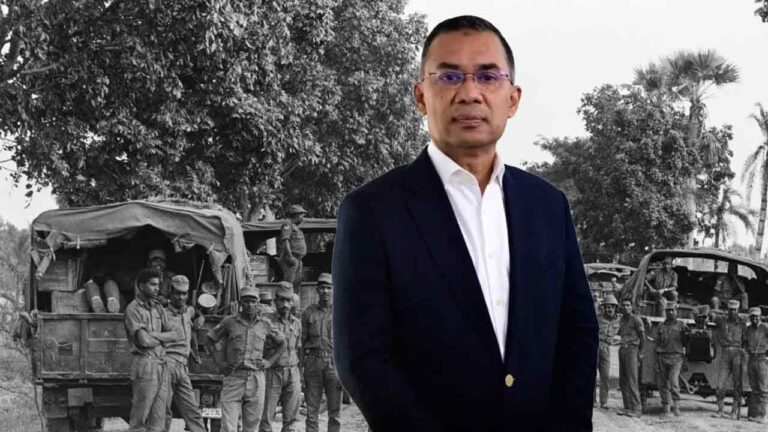
After months of uncertainty, denials, and diplomatic signalling, Bangladesh has finally announced that its national election will be held on February 12. The declaration came only after sustained political pressure, public assurances by BNP leader Tarique Rahman, and his much-discussed meeting with Muhammad Yunus in London. Yet, despite the formal announcement, there is little confidence either in Dhaka or in New Delhi that the election will actually take place as scheduled.
Bangladesh today is not merely facing a routine political transition. It is staring at a dangerous convergence of political anarchy, Islamist mobilisation, targeted attacks on minorities, and renewed external interference. The vandalisation of the Awami League headquarters, followed by the attack on the residence of Bangabandhu Sheikh Mujibur Rahman, is not accidental or spontaneous. These are deeply symbolic assaults aimed at dismantling the ideological foundations of the Bangladeshi state itself.
For India, this turmoil is not an abstract foreign policy concern. Bangladesh’s stability has a direct bearing on India’s national security, its Northeast, and the broader regional balance especially at a time when Pakistan and China are actively seeking strategic openings in South Asia.
Attacks on minority and manufactured chaos
The most alarming feature of the current unrest is the sharp rise in attacks on the Hindu minority. Temples, homes, and businesses have been targeted amid political violence, while the interim administration appears either unwilling or unable to control the situation. This is not a new pattern. Historically, whenever Islamist forces gain ground in Bangladesh, minorities become the first casualties.
The attack on Bangabandhu’s residence is particularly telling. Sheikh Mujibur Rahman is not just a political figure; he represents the 1971 Liberation War, Bengali nationalism, and Bangladesh’s break from Pakistan’s Islamist-nationalist project. Assaulting his legacy is a clear message: the forces on the streets are not merely opposing Sheikh Hasina or the Awami League they are challenging the very idea of a secular Bangladesh born out of resistance to Pakistan.
Who is behind the violence?
While responsibility for the unrest remains officially unclear, the fingerprints of Islamic fundamentalist forces are hard to miss. Jamaat-e-Islami, Bangladesh’s largest Islamist organisation, has once again emerged as a central player. Jamaat opposed the creation of Bangladesh in 1971, collaborated with the Pakistani Army, and has never reconciled itself to the country’s secular foundations.
Over the past few years, Jamaat’s ideological influence has steadily expanded, particularly among urban youth and radical student groups. With Sheikh Hasina removed from power and the Awami League barred from contesting elections, Jamaat now sees an opening to reposition itself as a mainstream political force.
The BNP’s role is more ambiguous. While the party has communicated to India its desire to maintain cordial bilateral relations, its historical dependence on Jamaat and its reluctance to clearly distance itself from Islamist street power raises serious doubts. The reality is that the current unrest benefits those who thrive in instability Islamist groups, radical student fronts, and militant networks.
India draws the line
India’s response so far has been measured but firm. New Delhi has repeatedly stated that it does not wish to interfere in Bangladesh’s internal political process. At the same time, it has made its red lines unmistakably clear.
India wants the February 12 election to be held on time, peacefully, and with genuine democratic legitimacy. The repeated emphasis on a “free, fair, inclusive, and peaceful” election is significant. The word “inclusive” is a pointed reference to the exclusion of the Awami League a party that led Bangladesh’s liberation and has commanded mass support for decades. An election without the Awami League risks being viewed as a managed transition rather than a democratic exercise.
Equally critical is India’s insistence that Bangladeshi territory must not be used for anti-Indian activities. Intelligence assessments indicating that Paresh Baruah, a senior militant leader, has returned to Dhaka have revived painful memories of the early 2000s, when insurgent groups used Bangladesh as a launchpad against India’s Northeast. Those years of strategic vulnerability are not something New Delhi is prepared to relive.
Pakistan’s quiet re-entry
Adding to India’s concerns is Pakistan’s renewed engagement with Dhaka. The visit of the ISI chief to Bangladesh has not gone unnoticed. Pakistan has never accepted the outcome of 1971, and weakening India-Bangladesh relations has long been a strategic objective for Rawalpindi.
Jamaat-e-Islami’s ideological proximity to Pakistan is well documented. The BNP’s historical alignment with Jamaat further complicates matters. While Dhaka may insist that its foreign policy remains unchanged, symbolism matters in geopolitics and Pakistan’s re-entry into Bangladesh’s strategic space is a development India cannot ignore.
The BNP, Jamaat, and electoral arithmetic
Initially, it was widely assumed that the BNP and Jamaat would contest the election together. Jamaat lacks the electoral strength to win power independently, while the BNP needs Jamaat’s organisational reach and street mobilisation. However, seat-sharing disputes have exposed growing tensions between the two.
Jamaat believes it can now command a substantial vote share and wants greater representation in Parliament. The BNP, wary of being overshadowed, is unwilling to concede too much ground. This rivalry is one of the reasons behind the ongoing uncertainty and street unrest.
If Jamaat emerges with significant parliamentary influence, it will embolden Islamist forces and marginalise secular voices. If the BNP dominates, Jamaat risks being sidelined but not eliminated. Either outcome has serious implications for India.
Election delays and strategic ambiguity
Tarique Rahman’s repeated delays in returning to Bangladesh have only deepened suspicions that sections of the opposition may prefer postponement. While the BNP has privately conveyed to India that elections should be held soon, its actions suggest strategic ambiguity.
There is also speculation that Muhammad Yunus may seek to delay the polls to consolidate his position and organise a student-backed political platform. Khaleda Zia’s deteriorating health has further complicated the situation, though her decision to continue treatment in Dhaka after the election announcement has removed one immediate uncertainty.
Despite these developments, there is persistent speculation in Delhi that the election could still be cancelled if law and order collapses further or communal violence intensifies.
India’s course correction
India has also engaged in some honest introspection. Its earlier policy of placing all strategic weight behind Sheikh Hasina, while understandable, contributed to the rise of anti-Indian narratives within Bangladesh. Islamist and radical groups have exploited this perception effectively.
Today, New Delhi’s approach is more balanced. It is not pressuring Sheikh Hasina to return, nor is it endorsing Jamaat or any Islamist formation. It has rejected Dhaka’s demands for Hasina’s extradition, dismissed claims of politically motivated tribunal verdicts, and reiterated that Indian soil will not be used to destabilise Bangladesh.
At the same time, India remains unequivocally opposed to Islamic fundamentalism and any attempt to constitutionally or ideologically realign Bangladesh with Pakistan.
The road ahead
Bangladesh stands at a defining moment. The February 12 election if held, will shape not just its domestic politics but its regional posture for years to come. Any attempt to dilute the legacy of the 1971 Liberation War, marginalise minorities, or provide space to extremist forces will fundamentally alter India-Bangladesh relations.
India’s expectations are neither intrusive nor unreasonable: a timely election, protection of minorities, rejection of extremism, and assurance that Bangladeshi territory will not be used against Indian interests.
Ultimately, Bangladesh must demonstrate through actions, not diplomatic assurances, that it values stability, sovereignty, and regional responsibility. New Delhi is watching closely and so is history.
A young Hindu tribal man was beaten to death in Dabhel village of Navsari district in Gujarat, triggering outrage and renewed concerns over targeted violence. The victim, identified as Dipak Kalidas Rathod, was from the Halpati tribal community. He died during his treatment due to a brutal attack by many Muslim men from his area, as revealed in the FIR filed by the Navsari police.
The incident took place on 15th December, when Dipak was returning home from work in the evening. Police have arrested the accused and initiated further legal action. Following his death, murder charges have been added to the case.
Dispute linked to refusal to slaughter cow
According to the FIR, a copy of which is available with OpIndia, Dipak had earlier worked at the residence of Shaukat Usman Ekalwaya, a resident of Dabhel village, about a year ago. Dipak said that he was not paid properly for his work and was repeatedly pressured to slaughter a cow.
Dipak refused to do so and left the job. After leaving the job, he started doing other work by grazing cows and buffalo for a living. His family claims that resentment over his refusal continued and eventually led to the violent attack.
Before his death, Dipak recorded a video statement, now available with OpIndia, in which he said he was attacked because he refused to slaughter a cow and because of long-standing hostility.
Attack near the graveyard while returning home
As per the complaint, on the evening of 15th December, around 6:30 pm, Dipak was walking back home after finishing work when he was stopped near a graveyard on the roadside. The accused blocked his path, began abusing him, and hurled caste-based slurs.
The FIR names Hasan Shaukat Ekalwaya and Hussain Mohammed Ekalwaya, along with several unidentified muslim men, as the attackers. Dipak was threatened with death before the assault began.
According to the complaint, Hussain and others held Dipak down, while Hasan and the rest pulled out an axe from a bicycle and began attacking him. Dipak suffered serious injuries to his chest and legs during the assault.
As Dipak screamed for help, his wife, father, and other villagers rushed to the scene. Seeing locals gather, the attackers fled. An ambulance was called, and Dipak was rushed to Navsari Civil Hospital in a critical condition.
Police reached the spot shortly after and began recording Dipak’s statement while he was undergoing treatment. Despite medical efforts, his condition worsened, and he later died in the hospital. After his death, the police added Section 302 (murder) to the FIR.
FIR registered under multiple sections
Soon after Dipak was hospitalised, a large number of villagers gathered, demanding strict action. The Maroli Police Station team reached the spot and recorded Dipak’s statement, based on which an FIR was registered.
Initially, police booked the accused under multiple sections of the Bharatiya Nyaya Sanhita (BNS), including Sections 115(2), 117(2), 352, 351(3), and 54, along with provisions of the SC/ST Atrocities Act and Section 135 of the Gujarat Police Act.
However, Dipak’s condition deteriorated during treatment, and he died due to his injuries. Following his death, police added Section 302 (murder) to the FIR. Police said all named accused have been arrested, and investigations are ongoing to identify others who may have been involved.
Earlier videos show Dipak speaking about threats
Local Hindu organisations said Dipak had earlier spoken to the media about being pressured to slaughter cows and being attacked when he refused. That video, too, is available with OpIndia.
After Dipak’s death, his wife accused the police of inaction, claiming she had approached the police station at least twice earlier to complain about threats and harassment. “No action was taken, and today my husband is dead,” she said.
Anger grows among local Hindu community
Dipak’s death led to a large gathering of people outside the hospital, with members of the Hindu community demanding justice and strict action against the accused. Protests were held in and around Dabhel village, with residents alleging long-standing intimidation by certain families.
Hindu activist Jay Patel Nagaraj told OpIndia that while three people have been named as accused, more individuals were involved in the attack. He accused the police of downplaying the scale of the violence.
“The demand of the Hindu community is clear. All accused should be publicly presented in Dabhel village, and strict action should be taken so that such incidents do not happen again,” he said, alleging police negligence and demanding action against responsible officers.
Dabhel village’s troubled past
Dabhel village, located in Jalalpore taluka, has a history of communal tension. The village has a Muslim majority population, while the Halpati Hindu tribal community is small in number.
Locals say that the Ekalwaya family has a long criminal history. Police records reportedly confirm past cases related to cow slaughter, assault, and intimidation involving members of the family. Residents claim that fear has prevailed in the village for years, discouraging people from filing complaints.
Earlier beef-related controversy in the village
Dabhel had earlier come into the spotlight in 2023, when Maroli police raided the house of Ahmed Mohammed Suzan, who ran a snack centre in the village. The raid revealed that beef-filled samosas were allegedly being sold under the guise of chicken and mutton samosas.
Police said the accused had been selling beef samosas for nearly four years. Both Muslims from the village and Hindus from nearby areas had consumed the beef samosa. Ahmed Mohammed Suzan was arrested, and legal proceedings were initiated.
Valsad MP meet the victim’s family
Following Dipak’s death, several local BJP leaders visited the hospital and spoke to police officials, demanding swift and strict action. Valsad BJP MP Dhaval Patel also visited Dipak’s family at their home in Dabhel village.
The MP met Dipak’s grieving family and assured them that justice would be delivered. He also criticised what he called the silence of so-called tribal leaders and activists.
નવસારીમાં આદિવાસી યુવક દીપક પટેલની વિધર્મી દ્વારા કરપીણ હત્યાનો બનાવ બન્યો હતો, મૃતકના પરિવારજનોને મળીને સાંત્વના પાઠવી અને પરિવારને જલ્દી ન્યાય અપાવવાનું વચન આપ્યું. આરોપીને કડકમાં કડક સજા થાય અને સમાજમાં દાખલો સ્થાપિત થાય તે માટે તમામ પ્રયત્નો કરવા હું વચનબદ્ધ છું અને પરિવારની… pic.twitter.com/MRUYIGSfDb
“Those who claim to be messiahs of the tribal community are nowhere to be seen today,” Patel said. He accused certain leaders of remaining silent out of fear of losing their vote bank.
Without naming individuals, Patel questioned why some MLAs who frequently speak about tribal rights were absent when a tribal youth was killed by members of muslim community.
On 20 December, the Kheda Sessions Court in Nadiad, presided over by Judge Mukeshkumar Jayantilal Brahmbhatt, rejected a bail plea filed by Steven Bhanubhai Mekwan and Smitul Philipbhai Mahida in a religious conversion case that was reported in September this year.
The court held that a prima facie case of serious offences under the Gujarat Freedom of Religion Act and the Bharatiya Nyaya Sanhita (BNS) was made out. The court observed that releasing the accused at this stage could adversely affect the investigation and the safety of vulnerable witnesses. Both accused are currently lodged in Sub Jail, Bilodara.
Case details as recorded by the court
The case was registered in September this year at Nadiad West Police Station. The FIR in the matter was registered on the complaint of Akash Patel. In his complaint, Patel said he came across religious conversion activities being carried out by members of an organisation known as Restoration Revival Foundation. He added that these activities went beyond ordinary religious preaching and amounted to an attempt to induce people to convert to Christianity.
According to the FIR, when the complainant reached the spot after receiving information about a religious programme being conducted, he found that sermons were being delivered promising miracles, divine grace, improvement in personal life and salvation. These assurances were being used as inducements to persuade Hindus to adopt Christianity. He further stated in the complaint that when he questioned the activities, the accused persons attempted to induce him as well to change his religion.
Based on the complaint, the police initially registered a case under Sections 3(1) and 3(2) of the Gujarat Freedom of Religion Act. Later, Sections 4(C) and 5(3) of the Gujarat Freedom of Religion Act and Sections 54, 79(2), 3(4)(9) and 238(B) were also added to the FIR.
During the investigation, police found that the programme in question was attended by 59 people who had come from outside the district, and some were even from outside the State of Gujarat. The attendees claimed they had come to attend a seminar under the banner of the organisation being run by the accused. According to the investigating officer, nine of the attendees were minors. These minors were subsequently placed in a child protection home.
The police further found that one of the minor girls belonged to a Scheduled Tribe community and that her baptism ceremony was performed at the site in a water tank prepared for the purpose. The baptism, according to the findings of the police, was carried out without the consent of her father. Statements of the minor girl and her father were recorded, and caste related documents were submitted to support the allegation.
Furthermore, the police also relied on digital evidence recovered from mobile phones and other electronic devices seized during the investigation. The material suggested that similar religious conversion activities had been carried out prior to the registration of the FIR, in at least six batches. The police said that a majority of the persons who attended these activities belonged to tribal communities within Gujarat.
The police further found that the accused travelled across various districts of Gujarat and other states to conduct similar activities, which were part of the organisation’s efforts to carry out religious conversions by inducement and temptation.
According to the police, Steven is the President of the Restoration Revival Foundation and Smitul, who is a close relative, was responsible for managing the financial affairs of the organisation. During the investigation, police found that they raised funds worth Rs 15 crore. It was stated that evidence relating to financial transactions, foreign links and involvement of other organisations had been collected and formed part of the charge sheet.
Several persons linked to the nexus are absconding. Some of the absconding accused possess foreign passports. The prosecution informed the court that the accused were not fully cooperating with the investigation and were not disclosing complete details about the persons involved in their conversion nexus.
Arguments advanced by the defence
Counsel for the accused claimed that the complainant had no locus to file the complaint under the conversion law and claimed that only the person whose conversion had taken place could initiate such proceedings. The defence further contended that neither the FIR nor the statements recorded during the investigation disclosed any use of force, inducement or temptation by the accused.
The defence maintained that the activities carried out by the accused amounted to lawful religious preaching and prayer, protected under constitutional guarantees. It was also argued that the Restoration Revival Foundation is a registered trust with audited accounts, filings before the Charity Commissioner and regular income tax returns, and that allegations of illegal fund raising were baseless.
Prosecution’s opposition to bail
The prosecution, however, opposed the bail application and stated that the accused were the main conspirators in an organised religious conversion operation targeting minors and socially vulnerable groups. It was argued that the complainant himself was a victim, as inducement was allegedly offered to him.
The State further submitted that statements of minors and digital evidence clearly pointed to inducement-based conversions. The prosecution said that if the accused are released, it could lead to intimidation of witnesses, many of whom are minors or belong to SC and ST communities. Furthermore, it could jeopardise efforts to trace and arrest the absconding accused.
Observations of the sessions court
In the judgment, the court observed that a prima facie case of serious offences was made out based on the charge sheet, police papers and the affidavit of the investigating officer. It held that the filing of the charge sheet did not dilute the gravity of the allegations.
The judge noted the seriousness of the allegations, the involvement of minors, the alleged targeting of backward communities, the existence of absconding accused and the possibility of witness intimidation and evidence tampering.
Judgment
The court held that the offence constituted a social evil affecting vulnerable sections of society. The court further noted that if the accused are released, it could adversely impact the trial and the ongoing investigation. Hence, the court rejected the bail application filed by Steven Bhanubhai Mekwan and Smitul Philipbhai Mahida.
Speaking to the Indian Express, Public Prosecutor Dhaval Barot said, “We brought to the notice of the court that the FSL had retrieved some deleted data from the devices and a total of one lakh names have been recovered; it is a matter of probe as the accused were mostly motivated by the funds they were getting for completing large-scale conversions more than the religious reasons.”
We have opposed the bail as they can influence witnesses and tamper with evidence… Moreover, the other accused involved in the racket are yet to be apprehende,” he added.
On December 18, in Bhaluka Upazila, Mymensingh district, Bangladesh, a young Hindu garment factory worker named Dipu Chandra Das was brutally lynched by a mob over unverified allegations of blasphemy. Dipu was no political activist or leader, he was a poor factory worker who lived in a rented room in the Dubalia Para area of Square Master Bari and went to work in a garment composite unit every day to earn wages.
The videos that have emerged on social media after Dipu’s lynching are gory, unwatchable. In the evening, an enraged, frenzied mob started beating Dipu. A mob of dozens of men is seen kicking, beating and jumping on every part of a defenceless Dipu’s body. After crushing every bone in his body and beating him to death, the mob was yet to be satisfied. They dragged the body to a public square, a busy thoroughfare that some are reporting as the Dhaka-Mymensingh highway. There, they tied the lifeless body and hung it up, to beat it further. The mob continued to beat the corpse of Dipu, and when even that wasn’t enough spectacle, they poured some inflammable liquid on it, and burned it, rejoicing with ‘Naara-e-Takbir, Allah Hu Akbar’ slogans.
Imagine this happened in India and the victim was Muslim. National and international media, Left and human rights organisations would be demanding justice nonstop.
But the victim is Dipu Chandra Das a Hindu minority in Bangladesh so there is silence.
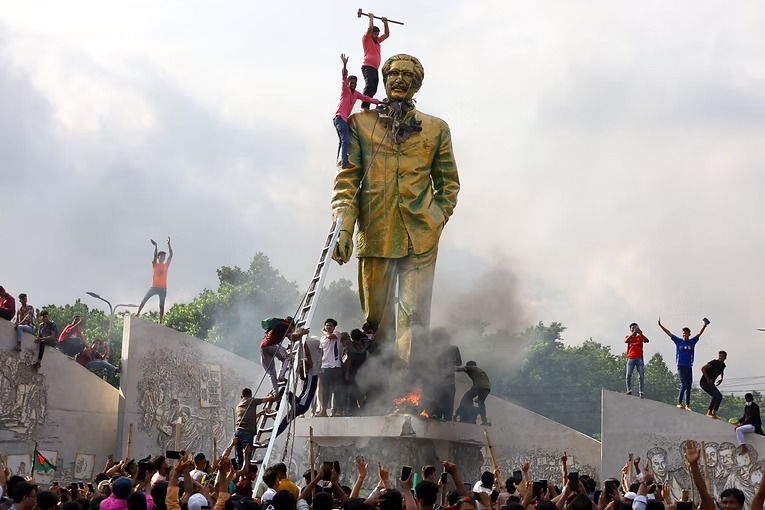
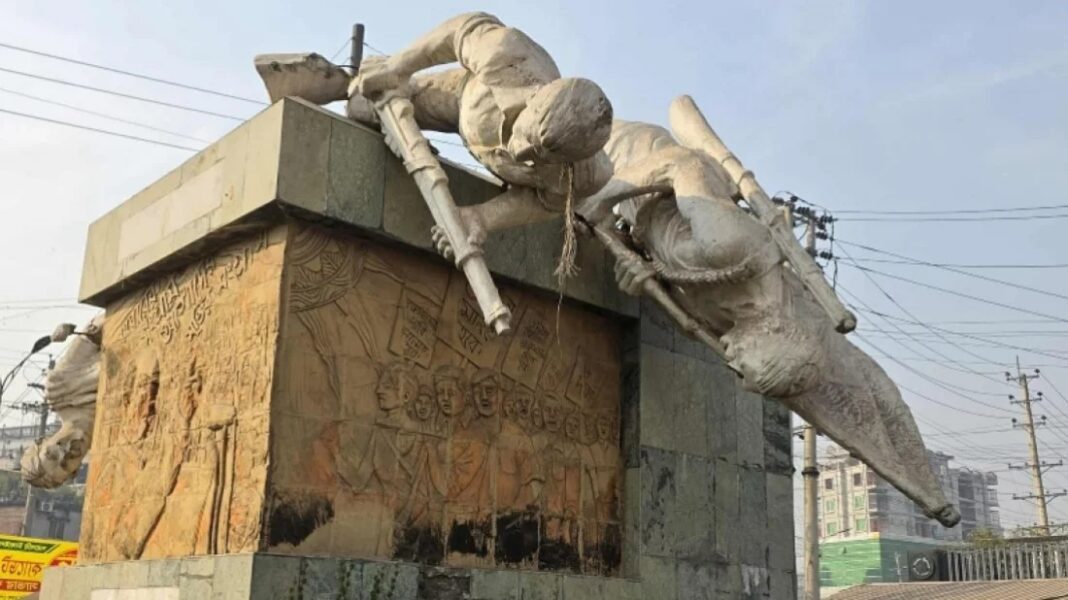
From the beating, dragging and burning, there was no police personnel visible. Nobody seemed to have tried to stop the mob. The mob seemed completely carefree, fearless of any consequence. The security apparatus in Bangladesh has long surrendered before the Islamist mob, the mob has been destryoing monuments of national identity, desecrating the very foundation of the cultural and historical roots of the nation, and the ruling apparatus has been watching, the caretaker regime whitewashing their acts.
The images are confusing. The scene unfolding looks more like a medieval affair, a frenzied mob beating a man to death with wanton impunity. But there are mobile phones, vehicles, and signs of modern civilisation. This is what has happened to Bangladesh.
This is Bangladesh in December 2025, lost to Islamist fanaticism
Anyone who has been following the news, would know that the incident, however shocking and scary, was not unexpected in Bangladesh. Incidents like this have happened before, because whatever law and order was there in Bangladesh was shattered after the government of Sheikh Hasina fell in August 2024. The mob ruled the streets, the mob killed and chased and burned Hindus, and the mob was given cover fire, and ample whitewashing by the farce of a ‘caretaker government’ that was installed to fool the world. Hundreds of Hindus have been raped, killed, dragged from their homes, beaten, threatened to quit their jobs, and brutalised in Bangladesh in the past 18 months, just for being Hindus.
It is not that the persecution was not happening before. It did, but despite its flaws, Sheikh Hasina was a bulwark against the absolute Islamist frenzy that has engulfed the country now. Her government, albeit with mistakes, held the Islamist powers at bay. That bulwark is gone, and chaos rules now.
The visuals and circumstances of the brutal lynching of Dipu Das are almost a repeat of what happened with Sri Lankan national Priyantha Kumara in Sialkot, Pakistan in 2021.
The lynching of Priyantha Kumara in Sialkot, Pakistan in 2021
On December 3, 2021, in Sialkot, Punjab province, Pakistan, a mob of hundreds of locals, primarily factory workers and supporters of the hardline Islamist group Tehreek-e-Labbaik Pakistan (TLP), brutally lynched Priyantha Kumara Diyawadanage, a 49-year-old Sri Lankan factory manager at Rajco Industries.
Kumara, a Sinhalese Buddhist who had lived and worked in Pakistan for over 10 years, was preparing the factory for a visitor delegation. He asked workers to remove some posters from the walls and machinery to facilitate cleaning. Some of the posters had Islamic verses written on them and quotes from TLP leaders. When workers refused, he reportedly removed the posters himself and disposed of them. This simple act of ‘cleaning’ was seen as ‘blasphemy’.
Priyantha Kumara was burned as a crowd of hundreds cheered in Sialkot, Pakistan in 2021
The mob first gathered, and chased Kumara to beat him. He fled to save his life as his pleadings to reason failed. The mob then dragged Kumara from the factory roof, where he had run to save his life, beat him severely with sticks and stones, broke all his bones, killed him, and then set his body on fire in the street. The ‘kafir’ was first beaten to death, then burned as a spectacle to entertain and satisfy the mob. Videos of the attack showed the crowd chanting slogans, the same slogans the killers of Dipu Das raised on December 18, 2025, raised by hundreds of people blinded by the same religious fury.
"Kaafir ke bacche ne Quran ki ayatein dustbin mein fainki hain (son of kaafir has thrown verses of Quran in dustbin)," a man is heard saying in the crowd that killed & burnt a Sri Lankan identified as Priyantha Kumara, in Pakistan's Sialkot. Priyantha was manager of RajCo factory pic.twitter.com/RRR3pGDaGz
The scenes were eerily similar in their horrific brutality, a chilling reminder of the depravity and hatred seemingly ‘normal’ people are capable of.
The unsettling similarity between Dipu and Priyantha is not limited to just how they were lynched and by whom, the allegations against them were similar too. Flimsy accusations of ‘blasphemy’, baseless rumours of ‘insult to Islam’ and ‘Insult to the Islamic prophet’.
Reports from Bangladesh say Dipu didn’t even commit any ‘insult’. He had apparently tried to argue that all religions are equal and all Gods are the same. December 18 was the ‘World Arabic Language Day’, and Dipu reportedly made some trivial remarks. Some coworkers took that as ‘offensive’, and that one spark, one accusation of ‘Insult to Islam’ was enough to gather a mob that wanted to spill his blood.
Incidents of violent mob lynching over flimsy accusations of blasphemy are nothing new in Pakistan. In the lawless Islamist hellhole, even a false rumour to settle personal grudges is enough to send a man to jail for ‘blasphemy’. The country punishes blasphemy by death, and rumours and verbal allegations are often enough for courts. The Islamist mob, however, is not satisfied with the prolonged process of what passes as law in those lands; they want the Kaafir killed then and there, in a violent manner where the mob cheers and enjoys the killing.
Bangladesh has come a full circle
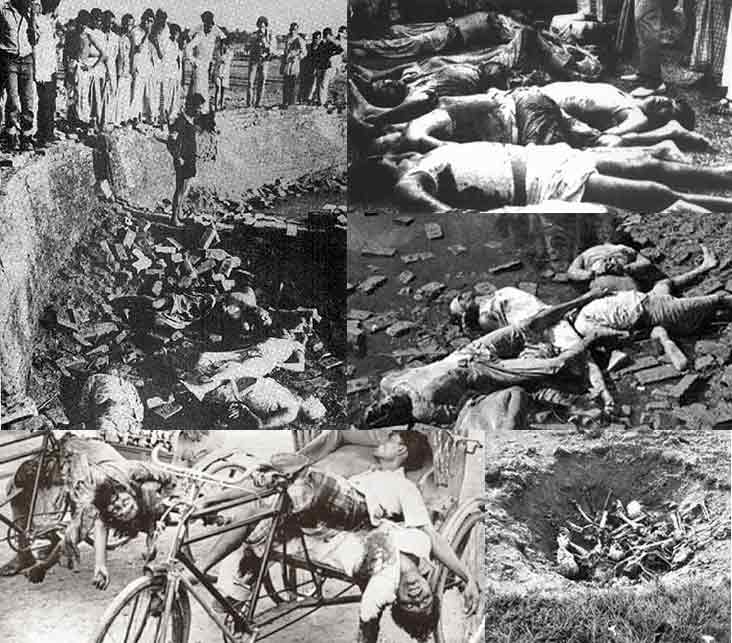
Bangladesh sacrificed lakhs of lives and went through a lot of pain to free itself from the grip of Pakistan. Freedom fighters laid down their lives, a bloody war was fought, and an entire generation risked everything they had to gain that freedom and make the nation a democratic, secular country. However, demography writes a nation’s destiny, more than laws, constitution and governments.
Bangladesh has come a full circle, it has lost whatever it had gained. The economy is in shambles. The geography was never in their favour anyway, and the political powers that could have kept the religious fanatics at bay are gone. Bangabandhu Sheikh Mujibur Rahman is gone, his house, which stood as a symbol of the bloody struggle for freedom, is gutted. His daughter has been exiled.
Stripped of the hard-fought progress, the semblance of modernity and democratic governance, and the minority populations pushed to the brink of extinction, what is left now in Bangladesh is just chaos, anarchy and a lawless bloodlust of fanaticism that won’t stop till it engulfs the whole country.
Between 2025 and 1971, 54 years have passed. Bangladesh has become the very oppressor it fought to free itself from. Demography has changed its destiny and turned the country into Pakistan.
Bangladesh has outclassed its erstwhile oppressor, Pakistan, in being self-destructive. After derailing its economic progress and political stability in mid-2024, the country is witnessing a redux of Islamist mob violence, arson, vandalism and anti-India propaganda. The anti-India elements in Bangladesh have pinned the blame for the alleged “political assassination” of radical Islamist leader Sharif Osman Hadi on India.
Osman Hadi: The India-hating radical Islamist and his murder
Osman Hadi rose to prominence in the turbulent political landscape of Bangladesh as a vocal leader of the radical student protest group, Inqilab Mancha. This group emerged during the anti-Sheikh Hasina ‘uprising’ in 2024. Hadi’s ascent to popularity was largely driven by his senseless but fiery anti-India rhetoric. In the name of championing Bangladeshi sovereignty, Osman Hadi perpetually peddled anti-India narratives rooted in falsehoods and exaggerations rather than reality.
More recently, Osman Hadi accused India of meddling in Bangladesh’s internal affairs and backing the ousted Sheikh Hasina government. Hadi stretched this hatred against India to the extent that he made statements about “capturing” the Seven Sisters northeast states of India. Hadi’s rhetoric framed India, the liberator of Bangladesh, as an ‘aggressor’ intent on ‘undermining’ Bangladesh’s sovereignty and independence.
The 32-year-old Inqilab Mancha leader had recently shared maps of ‘Greater Bangladesh’ depicting India’s Bengal, Bihar and the entire North Eastern states as Bangladesh territory, and the entire Jammu and Kashmir and Punjab as Pakistani territory. While campaigning for the proposed February elections, Osman Hadi was shot in the head by unidentified assailants on 12th December in Dhaka. A week later, Hadi died while undergoing treatment at a hospital in Singapore.
Hadi’s post with a distorted map of India
The timing of Hadi’s anti-India social media post and his assassination sparked speculations that somehow India was behind the radical Islamist’s killing; however, beyond the ‘timing’, there is no shred of evidence supporting this claim. It is suspected that Hadi was killed by local political rivals. However, Islamists and India detractors in Bangladesh do not need proofs; mere rumours and rhetoric are enough for them to hit the streets and wreak havoc in their own country.
Osman Hadi’s death triggers violence and anarchy in Bangladesh
Notably, Sharif Osman Bin Hadi was campaigning as an independent candidate ahead of the February 2026 elections. While the wounds of the August 2024 Islamist rampage are yet to heal, Hadi’s death has sparked a fresh wave of violence and anarchy across Bangladesh.
Calling Osman Hadi a ‘martyr’ of the July Uprising, his supporters across student groups and Islamist outfits have flooded the streets and carried out violence and arson in the garb of demanding justice for Hadi.
Hadi’s radical supporters, driven by mindless hatred against India, started attacking the offices of major newspapers, Prothom Alo and The Daily Star, accusing them of bias. On 18th December, the main office of Prothom Alo in Kawran Bazar in Dhaka was attacked by rioting mobs belonging to the Islamist outfit Inqilab Mancha. The mob, carrying sticks and rods, vandalised the office, breaking most of its window panes. Over 28 journalists and other staff members were trapped inside when the rioters set the Prothom Alo office building ablaze.
#WATCH | Bangladesh: Visuals of the aftermath from The Daily Star office in Dhaka, which was burned down by protesters.
After the death of Osman Hadi, a key leader in the protests against Sheikh Hasina, Bangladesh has erupted in unrest, and two newspaper offices have been set… pic.twitter.com/dpKn5h97fI
Similar events transpired at the nearby The Daily Star newspaper’s office, where around 25 journalists were rescued after being trapped in the office for over four hours. The anger of the radical mobs is such that even those attempting to calm them down peacefully are being attacked. Editors’ Council President and New Age Editor Nurul Kabir, along with photographer Shahidul Alam, came and attempted to calm the rioters down; they too were attacked and labelled by the mob as “Awami League agents”.
Editor of New Age Newspaper of Bangaldesh Nurul Kabir being attacked by mobsters. pic.twitter.com/gM0Bn7MJkz
Meanwhile, the ancestral residence of Bangladesh’s founding president, Sheikh Mujibur Rahman, in Dhanmondi, was vandalised by radical Islamist mobs again.
#BREAKING: Angry students set fire, vandalized Dhanmondi 32 in Dhaka. This is the ancestral place of Sheikh Mujibur Rehman. This location was attacked at least three times before and completely gutted and ransacked. Reports of attacks on Awami League offices across Bangladesh. pic.twitter.com/5uCxZcN02m
The radical Islamist mobs have also targeted India’s high commissions in Bangladesh. A group of anti-India protestors gathered outside the Indian Assistant High Commission in Bangladesh’s Chattogram after Osman Hadi’s death, to stage a sit-in protest. Earlier this week, anti-India protestors attempted to march towards Indian diplomatic missions in multiple cities to oppose the imaginary Indian ‘hegemony’.
Similar protests were staged in Dhaka, where a group under the “July Oikya” (July Unity) movement marched, demanding the extradition of deposed Prime Minister Sheikh Hasina, who fled to India in August 2024 following a mass ‘uprising’.
Disturbingly but unsurprisingly, Bangladeshi Hindus are also facing the brunt of Islamist ire. On 18th December, a Hindu youth, Dipu Chandra Das, was lynched by an Islamist mob over bogus allegations of blasphemy against Islam and Prophet Muhammad. After beating Das to death, the assailants tied his body to a tree and set it on fire, amidst slogans of “Nara-e-Takbir, Allahu Akbar”.
OpIndia has continuously reported on how Bangladesh has witnessed unprecedented violence against the marginalised Hindu community following Sheikh Hasina’s forced ouster from power and her country. The opprobrious trend of Islamists targeting Hindus in the face of crisis and instability continues under the Yunus regime unchecked.
Even on 19th December, anti-India protestors are carrying out a ‘long march to border’ with India in Benapole near the Indo-Bangladesh border. On the other side is Petrapole in India’s West Bengal.
Reports say that Islamist outfit Hefazat-e-Islam and some Islamist student groups, alongside Inqilab Mancha, are behind the anti-India protests. OpIndia has reported earlier that Hefazat-e-Islam is a platform of mainly teachers and students of non-government or “kawmi” madarsas or religious seminaries in Bangladesh, and it is considered an influential pressure group. The radical Islamist outfit has been demanding the strict implementation of Islamic laws in Bangladesh. This outfit was also involved in Islamist violence during PM Modi’s two-day Bangladesh visit in 2021.
Did India orchestrate Osman Hadi’s killing, or is the Yunus regime exploiting the radical Islamist’s murder for its own ambitions?
The Yunus-led interim government and its Islamist supporters have consistently and mindlessly blamed India for a wide array of Bangladesh’s self-inflicted woes. Osman Hadi’s killing is no different. While the Yunus regime has expressed solidarity with Hadi’s family and assured justice after a thorough investigation, its Islamist supporters have already declared India the culprit.
On 14th December, the Yunus administration claimed that Osman Hadi’s killers had crossed into India. The Bangladeshi interim government even summoned the Indian ambassador, asking India to arrest and hand over Hadi’s killers. This fuelled the already simmering suspicion that India, or somehow those linked with India, were behind Hadi’s assassination.
However, the Yunus regime made a villain out of India by peddling lies even as the Dhaka Metropolitan Police stated that there is no evidence that Hadi’s killers had crossed into India.
“There is no verified evidence that the attackers… have crossed into India”, Dhaka-based TV channel Jagonews24 quoted the DMP as saying.
Deputy Commissioner of the DMP Muhammad Talebur Rahman said that the police have no confirmed information that any of the suspected killers have left Bangladesh.
It must be noted that local Islamist activists, along with anti-India propaganda portals, have been making unfounded claims that Osman Hadi’s attackers, including one from the banned Awami League’s student wing Chhatra Shibir, crossed into India and are staying in Assam’s Guwahati.
First, the Yunus regime involved India’s name in Osman Hadi’s killing, summoned the Indian Ambassador to send out a message to his Islamist and anti-India support base that the unelected regime was taking a strong stand against India, when India responded strictly through diplomatic channels, Yunus delivered a message to his nation seeking time to complete the investigation.
Yunus regime has a set pattern: Blame India for everything
This, however, has been Muhammad Yunus’s pattern: Point fingers at India, accuse India of attempting destabilisation of Bangladesh, and cry hoarse when called out. Yunus’ regime is doing what Pakistani governments have been doing for decades: blame India for their own failures, deflect attention from domestic issues by painting India as a bigger threat, gain public support by posing as defenders of the nation against the ‘India threat’, and continue to rule the ruins.
By villainising India, the Yunus regime wants to consolidate power and rally nationalist sentiments. It is a clear indication that Muhammad Yunus wants to either delay elections by stirring prolonged unrest or wants to ensure that whenever elections are held, Islamist political outfits come to power.
Dissecting Muhammad Yunus’s sinister modus operandi, a Bangladeshi professor, Rezwana Snigdha, told BBC Bangla in an interview that the Yunus regime conveniently points fingers at India for every unpleasant incident in Bangladesh to hide its own failures, including the attack on Osman Hadi.
Interestingly, several Bangladeshi political analysts and minority rights activists have repeatedly been insisting that Muhammad Yunus wants the elections not to happen or at least wants them to be delayed. Earlier this month, OpIndia spoke to Dipan Mitra, the President of the Bureau of Human Rights and Justice (BHRJ), who said that Yunus is “totally aligned with Islamist groups to target Hindus. I don’t think he will even let the elections take place next year. Even if he does, he would make sure the Jamaat-e-Islami and its allies come to power. He wants to make Bangladesh an Islamic country.”
He added that after banning Sheikh Hasina’s Awami League from partaking in the coming elections next year, the interim government’s advisor is also trying to eliminate the Bangladesh Nationalist Party (BNP) from the race for power.
Not to forget, under Yunus’s watch, the outlawed anti-India and hardcore Islamist outfit Jamaat-e-Islami was unbanned, Islamist leaders were released from jail, while the crackdown on Awami League leaders intensified.
Ever since Muhammad Yunus assumed office as the Chief Advisor to the interim government in Bangladesh, he has consistently and in the most senseless fashion been blaming India for every unpleasant incident unfolding in the country. First, Yunus dismissed the anti-Hindu pogrom orchestrated by Islamists as political retribution and not religiously-motivated attacks and accused the Indian media of doing propaganda. Then, Muhammad Yunus villainised Prime Minister Narendra Modi and the Indian government for deteriorating India-Bangladesh ties over the latter’s decision to grant refuge to Sheikh Hasina.
Further, without taking India’s name, Yunus claimed that ‘big countries’ are not liking Bangladesh’s post-Hasina ‘freedom’, in the presence of leaders of different political parties, including Jamaat-e-Islami, the BNP (Bangladesh Nationalist Party) headed by former prime minister Khaleda Zia, and left-leaning outfits.
In May this year, Muhammad Yunus reportedly threw tantrums, saying that he would resign. He whipped up anti-India sentiments in the country to distract the public from his incompetence and failure to restore democracy and electoral reforms in Bangladesh. Through one of his stooges, Mahmudur Rahman Manna (Nagorik Oikya party President), Yunus sent out a message that Bangladesh was faced with a ‘major crisis due to Indian hegemony’. It is seen how the current anti-India protestors are claiming to put up resistance to ‘Indian hegemony’.
OpIndia reported earlier how Yunus first attempted to ban the export of Hilsa fish to India but it was in vain. He then strategically downplayed the crucial role played by India in the 1971 Bangladesh Liberation War by distorting textbooks. With the tacit support of the Yunus regime, Islamist political and student leaders have continuously been spewing anti-India vitriol and threatening to severe India’s Seven Sister states and merge them into Bangladesh.
Sarjis Alam, a so-called ‘student activist’, issued veiled threats to Indian Prime Minister Modi. And yet again, Yunus maintained strategic silence. His own ‘adviser’, Mahfuz Alam, threatened to annex parts of India.
Former Director General of the Border Guard Bangladesh (BGB), A.L.M. Fazlur Rahman, had also threatened to occupy the 7 States of North-East India in case of war with Pakistan. He is a close aide of Muhammad Yunus.
Border Guard Bangladesh (BGB) commander Lt. Col Golam Kibria also issued threats to India’s Border Security Force (BSF). The interim government maintained stoic silence yet again.
Yunus went on a trip to China and urged the expansionist nation to use the 7 sisters of India as an extension of its economy.
Earlier this year, it was reported that during the floods and economic downturns, the Yunus regime accused India of water aggression through upstream dams, even as meteorological evidence pointed to natural causes. Even the incidents of Bangladeshi youth expressing discontent over delayed reforms by the Yunus regime were dismissed as India’s attempt to destabilise the interim government.
While Muhammad Yunus makes it seem that he is not power hungry or interested in delaying elections, his “Shuru majboori mein kiye they, ab maza aa raha hai (started out of necessity, but now enjoying it) mindset is reflected in his attempts at sidelining Bangladeshi President Mohammed Shahabuddin. Earlier in December 2025, Shahbuddin revealed how the interim administration, headed by Muhammad Yunus, degraded him. Shahabuddin mentioned that Yunus had not seen him in almost seven months. Moreover, his photos were pulled out of Bangladeshi embassies all around the world in September, and his press department was also shut down.
Yunus’s modus operandi is quite clear: tighten grip over power, legitimise and empower anti-India and Islamist elements and villainise India on hand, and stir chaos, blame it on India and posit own regime as a force resisting Indian ‘hegemony’. Apparently, for Muhammad Yunus, a known deep-state asset, chaos is a ladder, and he wants to use this ladder to further postpone elections. The Hadi assassination episode can be used by the Yunus regime as a justification to cause further delays in conducting elections, arguing that stability must precede elections to ensure their credibility.
Mohibul Hasan Chowdhary, a former Education Minister in the Hasina Government, has also asserted that Muhammad Yunus is deliberately inciting violence to postpone elections indefinitely. Speaking with ANI, Hasan stated that the attack on the residence ofthe Indian Deputy High Commissioner was “pre-planned” and “state-sponsored” to incite India.
He said that Muhammad Yunus plans to use Hadi’s political assassination to mobilise Islamic extremist elements and sympathetic political groups to engineer nationwide unrest in Bangladesh.
“Sharif Osman Hadi was a firebrand fanatic who openly called for blood. According to information available in the media, he was gunned down by someone close to him, a member of his own armed group,” Chowdhury said.
“The primary objective is to delay the elections they themselves keep talking about. The second objective is to eliminate grassroots political workers who are still active inside the country,” the former minister added.
Regarding why out of nowhere Indian High Commissions were targeted, Hasan said that the idea behind invoking India’s name was to internationalise the crisis. He added that this entire agitation is manufactured by ministers in the Yunus regime, saying that everyone was silent until Yunus’s ministers began calling for blood.
OpIndia earlier analysed Muhammad Yunus’s meticulous attempts at delaying elections. In July 2024, Muhammad Yunus wanted a ‘fresh election’ when Sheikh Hasina was in power. In October, months after Hasina was forcibly removed from power, Yunus refused to put a ‘time frame’ on conducting elections. By December 2024, as Yunus faced public pressure to announce election dates, he vowed to hold elections in late 2025 or early 2026.
In March 2025, as pressure mounted, Yunus pushed the election process to next year. In May 2025, Yunus delayed the election until June 2026; however, he later said that elections would be held in February 2026. This came amidst rising frustration among the Bangladeshi populace and politicians. However, as the election time is nearing, Muhammad Yunus is quite shrewdly stirring nationwide unrest. The timing and the tactic can’t be more telling.
Going by the pattern of persistent provocation by the Yunus regime, it seems that Muhammad Yunus wants to flare things up to a point where India has to resort to a kinetic response to Bangladesh’s anti-India activities, which can then be used as a vindication of the Yunus regime’s months-long peddle-hate-against-India project, and justification to postpone elections. The question lingers: Is Muhammad Yunus trying to become South Asia’s Zelenskyy?
India responding militarily to the Yunus regime’s political game to cling to power will be a historic blunder. India has been Bangladesh’s liberator against the Pakistani oppressive forces, while Bangladesh under Yunus is becoming everything its Islamist oppressor was. India will not and should not become what it defeated in 1971. However, Yunus’s audacious attempt at using India as a scapegoat for his political ambitions cannot go unanswered.
On 17th December (Wednesday) the Allahabad High Court pronounced a landmark judgement regarding the slogan “gustakh-e-nabi ki ek saja, sar tan se juda, sar tan se juda (the only punishment for insult to prophet is beheading),” during the bail hearing of Bareilly violence accused named Rihan. The case pertains to the violence amid “I love Muhammad” row.
Justice Arun Kumar Singh Deshwal stated that the slogan undermines India’s sovereignty, integrity and legal authority. The plea for bail was also rejected. OpIndia has a copy of the order.
Rihan had been booked under sections 109(1), 109(2), 118(2), 121(1), 189(5), 191(2), 191(3), 195(1), 196(1), 196(2), 223, 310(2), 324(5), 324(6), 61(2), 62 BNS, 7 Criminal Law Amendment Act and Section 3/4 Prevention of Damage of Public Property Act.
The applicant’s lawyer alleged that he “has been falsely implicated and he was arrested from his home, but the police falsely claimed his arrest from the spot.” He added, “Rihan has no criminal history and there is no incriminating material against him. Therefore, he is entitled to be released on bail during the investigation/trial.”
However, the prosecution led by Additional Advocate General for the State of Uttar Pradesh, Anoop Trivedi fiercely objected to the prayer and maintained that the actions of Rihan and the other co-accused were against the state, the unity and integrity of India and religious communities.
It was argued that the use of the slogans “gustakh-e-nabi ki ek saja sar tan se juda, sar tan se juda” demonstrated their disdain for the Indian legal system, since insult to any God or prominent figures of any religion is criminalised in Bharatiya Nyaya Sanhita (BNS) through appropriate punishment. “There is no such punishment for beheading a person who disrespects the God or Nabi of any religion,” the prosecution added.
As a result, such a conduct carries penalties not only under section 152 of the BNS, but also under other sections of the BNS. The prosecution mentioned that the individuals involved, including the applicant, threatened India’s sovereignty and integrity by shouting the aforementioned slogans and destroying public and private property.
Allahabad High Court’s decision
The high court noted that the role of Maulana Taukir Raza, Nadeem Khan and the 500 people who assembled in Biharipur area and raised slogans against the state alongside the controversial “gustakh-e-nabi ki ek saja, sar tan se juda, sar tan se juda” was “not in dispute.” It also acknowledged that violence was carried out due to the inflammatory remarks of Maulana Taukir Raza.
According to BNS 299 and 196, blasphemy and disparaging any faith or God are crimes. Additionally, section 302 of the BNS stipulates that anyone who intentionally uses a word to offend someone’s religious feelings would be punished. Sections 298, 299 and 302 BNS are the pertinent sections of Chapter XVI of the BNS, which contains violations pertaining to religion.
The court specifically emphasised the particular provisions and the penalties imposed on the convicts of such actions. It observed, “From the perusal of the above section, it is clear that BNS has taken care of all such situations where any person disrespects any religion or its God, Prophet, Guru or attempts to promote enmity between the religious groups by chanting any slogan or visible representation, then appropriate punishment has also been provided.”
The court held that using the slogan is tantamount to subverting India’s integrity and sovereignty as well as the country’s legal system, which is founded on serious constitutional goals and democratic ideals.
The genocidal slogan is a challenge to Constitution and legal system
“The Constitution of India provides freedom of speech and expression as well as other liberties to all Indian citizens irrespective of their caste, creed or religion. Therefore, if a person, instead of respecting the law framed under the Indian constitution, attempts to challenge the law or promotes or incites people to commit an offence in the garb of providing punishment, though the same is not provided in the criminal law then that should be dealt with strictly,” the order read.
The court outlined that Article 19 of the Indian Constitution guarantees the freedom of speech and expression as well as the right to assemble. However, Article 19(2) of the Indian Constitution places restrictions on these rights. Thus, any slogan that calls for murder in contrast to the proper punishment stipulated by the BNS or other criminal laws is not only contrary to the constitutional intent but also contests the legitimacy of the Indian legal system and is punishable under section 152 BNS.
The judge highlighted slogans from various faiths, such as “Jai Shree Ram,” “Har Har Mahadev,” “Jo bole so nihaal, Sat Sri Akal,” and even “Nara-e-Takbir Allahu Akbar,” to show that these calls to devotion or proclamation uttered by an individual or a group of people are not illegal unless they are employed vilely to intimidate adherent of a different religion.
He stated that the phrase “gustakh-e-nabi ki ek saja sar tan se juda, sar tan se juda” does not appear in the Quran or any other Muslim holy scripture, but is often used by the community who is unaware of its true meaning and consequences.
Origin of “gustakh-e-nabi ki ek saja”
The Allahabad High Court pointed out that the blasphemy law was established by the British in 1927 in response to the communal strife between Hindus and Muslims. It conveyed how the blasphemy laws in Pakistan were turned harsher after the partition and recounted the accusations against Christian woman Asia Bibi, which received international attention.
The court mentioned that the Governor of Punjab, late Salman Taseer’s support to her sparked unrest in the nation and led to the emergence of the notorious slogan. Taseer was killed by his bodyguard while extremists took to the streets under the guidance of Islamist Tehreek-e-Labbaik Pakistan‘s (TLP) late supremo Khadim Hussain Rizvi.
The order revealed that the Pakistani hardliner Rizvi was the one to use the slogan for the first time “and thereafter this slogan also spread to other countries including India and has been widely misused by certain Muslims just to intimidate the people of other religions and also to challenge the authority of the state.” The court reiterated that the slogan widely heard in the streets of India “is nothing but used to challenge the authority of law and sovereignty of India and also to incite people for armed rebellion.”
The court referenced the life of Prophet Muhammad to illustrate instances of kindness that the prophet reportedly showed towards his neighbours and repeated that it was evident that the slogan “gustakh-e-nabi ki ek saja, sar tan se juda, sar tan se juda” raised by an individual or by a crowd questions the authority of the law as well as the sovereignty and integrity of India because it encourages armed rebellion. Hence, this act would be penalised under section 152 BNS.
Judge rejects the bail application
The court confirmed that “it is not in dispute that such a disputed or objectionable slogan was used by the crowd of thousands of people assembled at the instigation of Maulana Taukir Raza.” It also affirmed the criminal conduct of Maulana Taukir Raza and the Islamist throng despite the police’s objections along with the violence directed at cops which prompted the arrests of several perpetrators including Rihan.
The judge emphasised, “There is sufficient material in the case diary showing that the applicant was part of an unlawful assembly which not only raised objectionable slogans challenging the authority of the Indian legal system but also caused injuries to police personnel and damaged public as well as private property, which is nothing but an offence against the state and he was arrested from the spot. Therefore, this court does not find any ground to release the applicant on bail.”
He further concluded, “Accordingly, the bail application of the applicant is rejected.”
Background of the case
The prosecution informed that on 26th May, a formal complaint was lodged charging that Maulana Taukir Raza Khan, President of the Ittefaq Minnat Council, had called on the Muslim community to gather at Islamia Inter College in order to protest the state’s atrocities and alleged false charges against Muslim youth. On 25th September, police were informed that Raza and Nadeem Khan, one of the INC’s leaders, had encouraged members of the Muslim community to gather on Islamia Inter College grounds following the conclusion of namaz on 26th September.
Police asked the crowd not to proceed. Furthermore, section 163 Bharatiya Nagarik Suraksha Sanhita (BNSS), which forbids any gathering of more than five people was also implemented in the district. Afterward, the first informant, who was stationed close to Nadeem Khan’s home in Biharipur, discovered that he had encouraged people to gather and head for Islamia Inter College. A mob emerged from Nadeem Khan’s home as well.
He also exited the place to provoke people elsewhere. It was then discovered that 500 people gathered in Biharipur and began shouting slogans against the government and “gustakh-e-nabi ki ek saja sar tan se juda, sar tan se juda.” Police attempted to stop them, but they started snatching their canes and ripping off their uniforms.
When the cops objected, the mob hurled petrol bombs, fired shots and threw stones which injured many personnel and damaged several police personnel along with private vehicles. Seven people, including Rihan, were immediately taken into custody. The names of other people, consisting of the primary suspects, Maulana Taukir Raza and Nadeem Khan, emerged based on their accounts.
An FIR (First Information Report) was filed against 25 named and 1700 unknown individuals in line with the statements of these detainees and the identification of other co-accused. Police then captured other named suspects and identified anonymous persons according to evidence gathered from the held individuals, independent witnesses and CCTV footage.
The real-life effects of the radical slogan
Multiple occurrences, such as the shocking beheading of Kanhaiya Lal and the murder of Kamlesh Tiwari, whose throat was slit by two Islamist fanatics, highlight the fact that “gustakh-e-nabi ki ek saja, sar tan se juda, sar tan se juda” constitutes a real threat to the lives of non-Muslims, especially Hindus. Multiple Hindu leaders, including former Bharatiya Janata Party leader Nupur Sharma and Yati Narsighanand Saraswati of the Dasna Devi Temple, have faced similar threats over accusations of showing ‘disrespect’ towards the Prophet of Islam.
Essentially, a target is placed on the back of anyone regarded as a blasphemer, regardless of the truth. This slogan not only stir up violence directly but, as the order rightly indicated, is a serious threat to India’s Constitution and legal system. It also exemplifies how Muslims in Pakistan target their shrinking minorities, particularly Hindus, while similar actions are being attempted in India by Muslim fundamentalists.
Massive protests were witnessed in the Hanumangarh district of the Rajasthan state on Wednesday, 17th December, where a large gathering of farmers was witnessed during the mahapanchayat that has been organised against the biggest ethanol production facility in Asia. The protest that took place at the Junction Dhan Mandi has caused quite a stir in the region, where the farmers have raised vocal slogans such as “Factory band karo,Kisan Bachao.”
Although the meeting was relatively peaceful, there was a sense of tension present. The government, in anticipation of violence, continued with strict measures on the fourth day running, including the ban on the internet, imposition of Section 144, and a strong police presence in the district.
At the root of this protest is the deep-seated fear of the farmers about this ethanol unit damaging their land and depleting their water resources and the future of the coming generations. At the same time, questions are being raised over whether the agitation is purely a local farmers’ issue or if political interests and external groups are fuelling the unrest, especially with the visible presence of farmer unions from neighbouring Punjab.
Ethanol plant at the centre of the storm
Tibbi, a part of the Hanumangarh area, has been renowned for its fertile land and an agriculture-based economy. The farmers of this area have been utilising the groundwater resources and canals for irrigation purposes and have been facing challenges associated with electricity shortages and decreasing levels of water. The issue started getting raised in the year 2023 when the then Congress party of the state chose a proposed ethanol plant project of the Punjab-based firm Dune Ethanol Private Limited for funding to the tune of ₹450 crores.
The proposed plant was expected to manufacture ethanol using rice husks. This was supposed to create jobs, offer the farmer a fair price for farm waste, as well as conserve the environment through the promotion of ethanol as a cleaner fuel alternative to petrol.
However, farmers did not believe these assurances. As per their claims, Hanumangarh is already experiencing drought-like conditions, as water levels in groundwaters have gone below 100 feet. They feel that this unit is also going to utilise water to the extent of 50 to 60 lakh liters every day.
Besides water, pollution is another big issue here. According to farmers, harmful gases like methanol and carbon dioxide are also produced by emissions from the factory, which can cause respiratory and cancer-related problems. Even as environmental clearance has been given by the Pollution Control Board, natives argue that the EIA study has been done on paper, without taking into account realities on the ground.
How the protests turned violent earlier this month
This unrest has not broken out in a single day. On 10th December, a mahapanchayat was held at Tibbi, where farmers marched towards the plant site in anger. This time, the situation got heated with machines vandalised, vehicles set on fire. The police unleashed a lathi charge on the protesters, resulting in at least 16 farmers being injured, while 40 protesters were arrested. This incident has led to tension among the farm community.
Following this, there were negotiations between the government and farm union representatives on 12th December. A deal was struck regarding the formation of a committee to look into their grievances, and, subsequently, a pause in the construction activities at the spot. However, farm unions, particularly the Samyukt Kisan Morcha, labelled this attempt as an “eyewash” and said that only a complete withdrawal of their project would assuage their anger.
However, this unsettled anger ultimately resulted in the huge mahapanchayat on Wednesday, 17th December.
Mahapanchayat Day: Calm on the surface, tension beneath
The mahapanchayat started around 12 pm on Wednesday, 17th December at Junction Dhan Mandi. From early morning, long lines of tractors could be seen entering the town, though authorities imposed restrictions on tractor movement to maintain order.
Security was tight. Internet services remained suspended, drones hovered over the area, Section 144 was in force, and senior officials, including District Collector Khushal Yadav, were present on the ground. Despite the heavy security presence, farmers maintained discipline, and no violent incidents were reported.
Addressing the crowd, former MLA Balwan Poonia of the Communist Party accused the government of signing an MoU with the company without consulting farmers. “We will not step back until the MoU is cancelled,” he declared.
Farmer leaders from Punjab also took the stage, warning that if the factory is allowed to operate, protests would spread beyond Rajasthan. “This is not just Rajasthan’s issue, it is a national’ issue,” one Punjab-based leader said, drawing parallels with the 2020–21 farmers’ agitation.
However, some local farmers expressed discomfort with the growing involvement of outsiders, saying they only wanted to protect their land and livelihoods, not turn the issue into a national political movement.
Farmers place three clear demands before the administration
During the mahapanchayat, officials held discussions with farmer representatives. The protesters placed three key demands before the administration: immediate cancellation of the MoU signed with the ethanol company, withdrawal of all cases filed against farmers during the protests, and the formation of a genuinely impartial investigation committee.
The administration assured farmers that their demands would be conveyed to the state government. Farmers, however, gave a clear deadline of 20 days and announced another mahapanchayat on 7th January in Sangaria if their demands remain unmet.
“We will continue our protest peacefully, but we will not surrender,” said a farmer. “The government must understand that farmers are not weak.”
Political blame game comes to the fore
Politics has become deeply intertwined with the movement. Critics point out that it was the Congress government that approved the ethanol project in 2023, yet now Congress leaders are among the loudest voices opposing it. Congress MLA from Sangaria, Abhimanyu Poonia, accused the BJP-led state government of favouring corporates over farmers. “Lathi charges and arrests show the government’s true face,” he said at a press conference.
Interestingly, FIRs related to the 10th December violence also name Congress MPs and MLAs. Balwan Poonia dismissed the allegations, calling the violence a “government conspiracy” to defame the movement. The BJP, on the other hand, accuses the Congress of hypocrisy and instigating unrest for political mileage.
Punjab’s role raised eyebrows, old memories return
The involvement of farmer groups from Punjab has added another layer of complexity. Leaders from the Bharatiya Kisan Union and the Samyukt Kisan Morcha arrived in large numbers, reviving slogans and rhetoric from the 2020-21 farmers’ protest.
“If farmers lose in Rajasthan, Punjab will also rise,” warned a Punjab-based leader. Others spoke of cross-border solidarity among farmers. However, many locals remain sceptical. “These people look like professional protesters,” said an elderly farmer. “They come, ignite the fire, and leave. We are the ones who suffer.”
Administration sets up committee, situation temporarily calms
In response to mounting pressure, the administration formed a five-member committee led by the divisional commissioner, with the district collector and subject experts as members. The committee will examine issues related to groundwater depletion, pollution, and water availability. Construction work at the factory site will remain halted until the committee submits its report.
Still, farmer leaders remain cautious. “A committee is fine, but unless the MoU is cancelled, we will not stop,” said one leader, adding that preparations for the 7th January mahapanchayat are already underway.