Home Blog Page 159

Kerala govt does u-turn after crying “saffronisation of education”, joins PM SHRI scheme so it can pay teachers after mounting arrears: What the scheme is, why Kerala had opposed it and the NEP controversy

0

In a major development, the CPI(M)-led government of Kerala has finally agreed to join the Pradhan Mantri Schools for Rising India (PM SHRI) scheme of the Central Government. PM SHRI is a flagship initiative aimed at upgrading existing schools and strengthening the quality of education across the country. The decision of the Kerala government is a complete reversal from its earlier stand, as it had accused the Centre of attempting to “saffronise” education through the scheme.

Kerala’s earlier opposition to PM SHRI

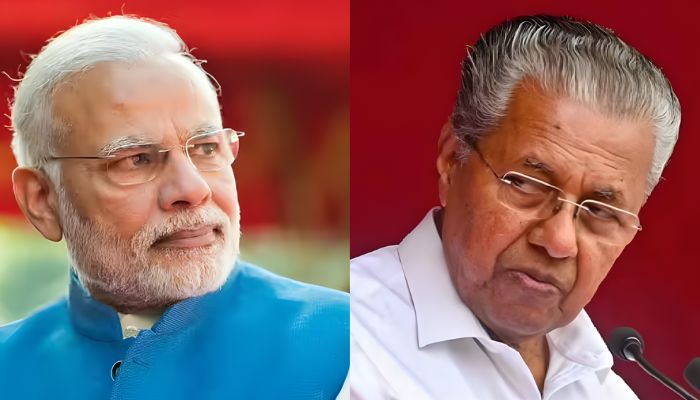
For almost a year, the Government of Kerala had refused to sign the memorandum of understanding (MoU) needed to participate in the PM SHRI scheme. The state government claimed that the initiative, which is aligned with the National Education Policy (NEP) 2020, would undermine the state’s autonomy in the education sector. The Chief Minister of Kerala, Pinarayi Vijayan, had termed NEP “a danger to the nation”. Kerala’s Education Minister V Sivankutty alleged that NEP could lead to “central interference” in syllabus design.

As a result of the refusal by the state, the Centre decided to withhold Rs 1,000 crore in education funds meant for the state. Kerala and a couple of other states refused to sign the MoU, while the majority of the states and UTs have already signed it.

What led to the U-turn

On 19th October, Education Minister Sivankutty admitted that the state had no reason to stay away from the scheme meant for national development. He said, “Funds worth Rs 1,466 crore belong to our children. Many of our education-related expenses, including salaries of the teachers and student grants, depend on this support. The Centre’s funds belong to every citizen of the country.” He added that the government would take a “practical approach”.

ABVP’s role and student-led pressure

Notably, for months, various quarters had been pressuring the state government, including student bodies such as the Akhil Bharatiya Vidyarthi Parishad (ABVP), to join the PM SHRI scheme. ABVP held state-wide campaigns demanding Kerala’s inclusion in the scheme.

The student wing of the Bharatiya Janata Party (BJP), ABVP, had been at the forefront of the movement. They argued that the Left government’s ideological resistance was depriving students of central benefits. Its activists had submitted memoranda, organised protests, and even faced attacks during their campaigns.

ABVP’s Kerala State Secretary EU Eswaraprasad welcomed the state government’s decision and said, “This is a big victory for students who stood for educational progress. Around 336 schools in Kerala will benefit from PM SHRI, reaching standards comparable to Kendriya Vidyalayas.”

The fund freeze and its consequences

The Central Government runs an umbrella programme named Samagra Shiksha, under which states and UTs receive education funds that have been linked to the signing of the PM SHRI MoU. Since Kerala, West Bengal and Tamil Nadu were the only states that refused to sign, 2024-25 funds were not allocated to them. On the other hand, states including Madhya Pradesh, Uttar Pradesh, Rajasthan and others received thousands of crores under the same scheme.

Centre’s firm stand pays off

The Central Government stood firm on its stance that all states must align with the NEP and PM SHRI to ensure uniform national standards. By insisting on compliance before fund release, the Union Government reinforced accountability and avoided politically selective implementation of central schemes.

The Centre’s position on the PM SHRI and Samagra Shiksha funding issue was clarified in the Lok Sabha by the Union Education Minister. On 21st July, Dharmendra Pradhan, Education Minister of the Government of India, replied to a question jointly raised by Bapi Haldar and Kodikunnil Suresh regarding state-wise information on funds released, withheld, or delayed under Samagra Shiksha Abhiyan (SSA) and PM SHRI schemes between 2023 and 2025.

The MPs also asked about pending proposals for school upgradation in West Bengal’s Mathurapur constituency, the reasons behind the withholding of more than Rs 1,500 crore from the state, and whether such delays had affected teacher training and ICT programmes in Kerala.

In a detailed reply, Pradhan underlined that education falls under the Concurrent List of the Constitution of India and that the Centrally Sponsored Schemes (CSS) are implemented jointly with states that must meet certain fiscal and administrative conditions. He added that the release of funds by the Ministry is possible only after states fulfil requirements laid down by the Ministry of Finance, such as matching state share, audited accounts, and up-to-date utilisation certificates.

The minister reaffirmed that alignment with NEP 2020 is integral to both the Samagra Shiksha and PM SHRI frameworks. Furthermore, it was clarified that 33 out of 36 states and UTs have already signed the PM SHRI MoU, with West Bengal, Kerala and one more state (Tamil Nadu) pending.

According to the details provided by the Education Ministry, Kerala received Rs 141.66 crore under Samagra Shiksha in 2023–24 but no allocation was made in 2024-25 as the state had not signed the PM SHRI MoU. Similarly, Tamil Nadu received Rs 1,876 crore in 2023-24 but nothing in 2024-25.

In contrast, states that signed the MoU continued to receive full support. Uttar Pradesh received Rs 6,264.79 crore under SSA and Rs 246.86 crore under PM SHRI, while Madhya Pradesh got Rs 3,434.71 crore under SSA and Rs 145.32 crore under PM SHRI.

He said that the government has repeatedly urged non-signatory states to participate in PM SHRI so that their schools too can serve as models of NEP-driven excellence. Kerala’s decision to sign the MoU therefore reflects a larger acceptance of the idea that development cannot be held hostage to ideological bias.

Political posturing versus practical governance

While CPI leaders such as Binoy Viswam maintained their ideological objections, describing NEP as “reflecting the RSS agenda”, the state government appears to have accepted the practical necessity of cooperation with the Centre. Sivankutty clarified that Kerala would continue to uphold its own educational traditions while availing of central aid.

He stated that the funds would be utilised for essential activities such as textbook printing, exam preparation, student grants, hostel facilities for SC and ST students, and special education initiatives.

Failed attempt at confrontation

Earlier in May, the Kerala government had threatened to take legal action against the Central Government for withholding funds. At that time, the Kerala Government held meetings with the Tamil Nadu government to explore a joint front against NEP. However, the strategy did not yield any results.

Kerala’s earlier claim of already meeting PM SHRI goals

Despite its refusal, Kerala had often boasted of having already implemented key components of PM SHRI, citing the presence of 40,000 smart classrooms with broadband facilities across government and aided schools. Yet, without joining the scheme, the state had no access to central grants for further modernisation or teacher training.

Now, under the new agreement, over 260 to 336 schools in Kerala will be upgraded as PM SHRI model schools, joining 12,400 others across 670 districts in the country.

What is PM SHRI

The Pradhan Mantri Schools for Rising India (PM SHRI) is a flagship education initiative of the Central Government, announced by Finance Minister Nirmala Sitharaman in the Union Budget of 2022. The objective of the scheme is to transform existing government and government-aided schools across the country into model institutions of excellence. A total of 14,500 schools have been targeted under the programme, with at least two schools selected from every block in each district.

These schools are designed to play a leadership role for other government schools, serving as benchmarks of quality education in infrastructure, teaching standards, and learning outcomes. PM SHRI schools will showcase the successful implementation of every key objective outlined in the National Education Policy (NEP) 2020, making them exemplars of the policy in action.

The funding structure is shared, with the Centre contributing 60% and the states bearing 40% of the total expenditure. Each selected school will receive an average of Rs 1 crore annually for five years, aimed at improving physical infrastructure, digital learning facilities, and capacity building for teachers. The overall financial outlay for the scheme is approximately Rs 27,000 crore, making it one of India’s most ambitious education modernisation programmes.
The Shaniwar Wada namaz row: A warning against the silent encroachment of Hindu heritage sites

0

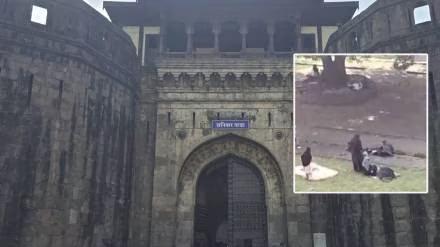
When three Muslim women were caught on video offering namaz inside the historic Shaniwar Wada Fort in Pune, it was initially brushed aside as an innocuous act of faith. But those familiar with India’s long history of cultural dilution and land encroachment saw it for what it truly was: a deliberate act of symbolism.

For Hindus, Shaniwar Wada is not just another monument. It is the beating heart of the Maratha Empire, built in 1732 by Bajirao I, the Peshwa who restored Hindu sovereignty across much of India. The fort stands as a civilizational reminder of a time when Bharat reclaimed its pride from centuries of foreign subjugation.

To offer namaz within its walls, therefore, is not merely an act of religious expression. It is a symbolic intrusion into a space that represents the Hindu civilizational ethos. And when BJP MP Medha Kulkarni responded by holding a shuddhikaran (purification) ritual and protest, it wasn’t political theatre as accused by the opposition parties. It was a cultural defence, an act of reclaiming what history has already sanctified.

Predictably, her detractors accused her of “communalising” the issue. But that framing misses the real point. The Shaniwar Wada namaz is not an isolated incident; it is part of a larger continuum of encroachment, one that begins with normalisation and ends with ownership.

The normalisation tactic: How devotion becomes dominion

Across India, the public offering of namaz on roads, in parks, on railway platforms, or in government compounds has grown steadily over the past two decades. Initially justified as a necessity due to a lack of mosques, these open-air prayers are now seen by many as exercises in visibility and claim-making.

The process typically unfolds predictably. It begins with namaz being offered in a public or non-Islamic space, justified as a temporary arrangement. As the act continues, it becomes routine, and society begins to accept it as part of the local landscape. Gradually, the repeated performance of namaz at the same location transforms into a claim of historical or religious significance. Finally, the Waqf Board steps in, citing this continuity to assert ownership of the land as Waqf property.

Once that happens, the transformation from faith to legal possession is complete. This pattern from temporary tolerance to permanent claim is now visible across multiple states, from Haryana and Uttar Pradesh to Karnataka and Madhya Pradesh. And it is precisely why what happened inside Shaniwar Wada must not be dismissed as trivial.

From Makhni to Srirangapatna: The expanding shadow of the Waqf Board

In Madhya Pradesh’s Makhni village, located in Raisen district, the Waqf Board issued notices claiming ownership of three acres of land, including private homes, farmlands, and even a village Shivling. Villagers who have lived there for generations were suddenly told that their land belonged to the Waqf. The Board’s justification was that the area was once a graveyard, allegedly donated by a man named Qadir Khan. No documentary proof was provided. The villagers have no record or even memory of such a person ever existing in their community.

Shockingly, the Waqf Board’s claim extended to state-owned land, despite official revenue documents showing clear government ownership. For locals, the inclusion of their Shivling in the list of claimed properties crossed every line of religious and cultural decency. The outrage in Raisen is a vivid reminder of how unchecked Waqf powers can destabilise entire communities.

Under the Waqf Act of 1995, once land is declared Waqf property, it becomes perpetual, inalienable, and immune to challenge in regular civil courts. Only a Waqf Tribunal, often composed of individuals aligned with or sympathetic to the Waqf establishment, can adjudicate such disputes. This asymmetry leaves ordinary citizens powerless against arbitrary claims.

The Makhni incident is not a rural anomaly. It is part of a nationwide pattern, and nowhere is that pattern more alarming than in Karnataka.

Karnataka: When even heritage belongs to Waqf

Earlier this year, a report published in the Star of Mysore revealed a stunning development: the Karnataka Waqf Board had laid claim to more than 70 properties in Srirangapatna taluk, including government-owned lands, ASI-protected monuments, and even Hindu temples.

Among the listed sites were the Tipu Armoury, a heritage monument under the Archaeological Survey of India; the Sri Chamarajendra Memorial Government Museum, a building belonging to the Department of Archaeology, Museums, and Heritage; the Chikkamma Chikkadevi Temple in Mahadevpura village; and even a government school in Chandagalu village. In addition, agricultural lands owned by local farmers were recorded as Waqf properties in official RTC (Record of Rights, Tenancy, and Crops) documents.

These claims followed a similar controversy in Vijaypura, where the Waqf Board attempted to take over 1,200 acres of farmland in Honwada village of Tikota taluk, declaring it as property of the Shah Aminuddin Dargah. Villagers pointed out that no such dargah had existed for centuries and that their families had owned the land for generations. Only after massive protests did the Karnataka government intervene, issuing a circular on November 9, 2024, ordering District Commissioners to withdraw all Waqf-related notices, reverse land mutations, and take disciplinary action against any official who had facilitated illegal encroachments.

That the Waqf Board could list ASI monuments, temples, museums, schools, and private farms as its property should alarm every citizen who values India’s civilizational integrity. It exposes how legal loopholes and bureaucratic complicity are being used to convert faith-based assertions into administrative facts.

The Shaniwar Wada connection: When history is rewritten by precedent

Seen in this light, the offering of namaz inside Shaniwarwada is not a random act; it is a symbolic precursor. Once a religious act is performed in a historically Hindu or state-protected space, it can later be invoked to claim “historic usage.” That is how soft encroachments evolve into hard claims.

If the Waqf Boards can list the Tipu Armoury or the Chikkamma Chikkadevi Temple as their property today, what stops similar claims tomorrow if religious rituals at Hindu monuments go unchallenged? Legally, under the current Waqf Act, such assertions can be made with minimal scrutiny. Culturally, they gain legitimacy if society continues to treat them as harmless acts of devotion.

That is why the Shaniwarwada namaz must be seen as an act of testing boundaries, a probe into how far such symbolic incursions can go without resistance.

Selective secularism and the erosion of heritage

India’s secular discourse has long operated on a one-way street. If Hindus were to conduct Hanuman Chalisa inside Haji Ali Dargah or Jama Masjid, outrage would erupt across leftwing cabals, and FIRs would follow within hours. Yet, when non-Hindu rituals are performed inside Hindu or national heritage sites, the same commentators appeal for calm and tolerance.

This selective secularism has allowed the gradual erosion of Hindu cultural spaces under the guise of inclusivity. The protests led by Medha Kulkarni and others in Pune were, therefore, not acts of intolerance but of preservation, a reminder that Hindu spaces are not open grounds for religious experimentation. “It is our duty to preserve Hindu culture and traditions,” Kulkarni declared. That sentiment echoes beyond Pune, from Makhni to Srirangapatna.

Civilizational vigilance: Beyond law, beyond politics

To its credit, the Government of India has begun addressing these distortions. The Waqf Amendment Bill, whose Joint Parliamentary Committee report was tabled in February 2025, seeks to make land declarations more transparent, introduce third-party audits, and curb arbitrary claims. But legislative reform alone cannot safeguard heritage. What is required is civilizational vigilance, the collective determination to protect spaces that define India’s identity.

Because civilisations rarely fall through invasion alone. They crumble when they surrender their cultural confidence, ritual by ritual, concession by concession. The namaz at Shaniwar Wada was not merely a breach of ASI rules; it was a psychological test of whether Hindus would once again stay silent as their heritage is slowly redefined.

The outrage in Pune suggests that silence is finally breaking. And that matters.

Because in the end, the Shaniwar Wada namaz was not a prayer. It was a precedent. And if the examples of Makhni and Srirangapatna are any guide, precedents, once ignored, have a way of turning into property deeds.

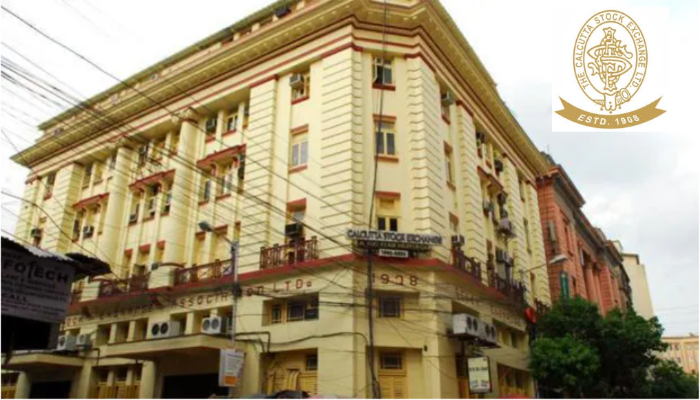
Why is Calcutta Stock Exchange closing down after 117 years? Explained

Once considered a contender to the Bombay Stock Exchange (BSE), the 117-year-old Calcutta Stock Exchange is reportedly nearing the end of its voluntary departure as a bourse. After years of legal and regulatory obstacles, it is going to celebrate its last Kali Puja and Diwali as a functioning stock market before permanently closing on 20th October.

The Securities and Exchange Board of India (SEBI), the market regulator, had already suspended trading at the CSE in 2013 due to non-compliance with regulatory standards. The exchange decided to completely shut down despite attempts over the last ten years to revive trading and even challenge SEBI’s ruling.

Although the exchange had previously intended to challenge SEBI orders in court, a favourable ruling was not possible until last year. The board of CSE made the decision to drop its pending cases in the Supreme Court and the Calcutta High Court in December 2024. The former then requested a voluntary departure.

CSE Chairman Deepankar Bose stated, “Approval has also been obtained from the shareholders vide EGM (Extraordinary General Meeting) dated 25th April 2025 relating to the exit of the stock exchange business. Accordingly, CSE submitted the exit application to SEBI, which has, in turn, appointed a valuation agency for undertaking the valuation of stock exchange which is in progress.”

CSE would remain a holding company if SEBI authorises the withdrawal but its subsidiary CSE Capital Markets Pvt Ltd (CCMPL) will continue to operate on the NSE (National Stock Exchange) and BSE. The sale of CSE’s three-acre EM Bypass property to the Srijan Group for Rs 253 crore has also been approved by the regulator and this will happen after SEBI grants his approval.

The regulator has also approved CSE’s plan to sell its three-acre EM Bypass property to Srijan Group for ₹253 crore, a transaction that will be completed after the exit is finalised.

End of an era of trading

CSE which was founded in 1908 was formerly a competitor of the Bombay Stock Exchange and a representation of Kolkata’s financial history as well as the hub of the Lyons Range.

The largest setback for CSE occurred in 2013, when SEBI chose to halt trading on the platform. The exchange violated important regulations which led to the outcome. It approched courts multiple times to counter the suspension. However, this resulted in financial strain and a decline in trade activity did not help either, particularly in the midst of the NSE and BSE trading boom.

One of the main causes of CSE’s downfall along with other factors including an actual loss of relevance, is the dominance of BSE and NSE. CSE started to lag behind especially following the Dot Com boom in the early 2000s, when the stock exchange found it difficult to adapt to a finance industry dominated by technology.

The revelation of the Ketan Parekh scam in 2001 dealt the last blow. Parekh who was a stockbroker by profession inflated the prices of a few stocks, referred to as K-10 stocks, by taking advantage of the exchange’s loopholes. It triggered stricter regulations and a sharp decline in investor confidence. CSE’s collapse was ultimately caused by the stock exchange’s incapacity to adhere to the rules over time.

“We began each day with a prayer to Goddess Lakshmi before trading till April 2013 when trading was suspended by the regulator. This Diwali feels like a farewell to that legacy,” veteran stockbroker Siddharth Thirani, reported The Times of India.

On 25th April, the formal proposal was approved by shareholders after being submitted to SEBI earlier on 18th February. Rajvanshi & Associate has been hired by SEBI to complete the same which is the last stage before exit approval is granted.

With 1,749 listed businesses and 650 registered members, the exchange “has played an important role in India’s capital markets,” according to chairman Bose’s FY25 report. During 2024-2025, he was paid Rs 5.9 lakh in director’s sitting fees.

With a one-time payment of Rs 20.95 crore and yearly savings of roughly Rs 10 crore, the exchange provided all employees with a Voluntary Retirement Scheme (VRS) in advance of the departure. While some staff were kept on contract for compliance tasks, all of them accepted the offer.

An era for India’s regional stock exchanges which used to be abuzz with activity until electronic platforms moved market concentration to Mumbai, is coming to an end with the exit of the CSE. Legacy organisations like CSE remain as symbols of financial history, reflecting the evolution of India’s capital markets through technology modernisation and regulatory strengthening.

“CSE has played an important role in India’s capital markets,” Chairman Deepankar Bose rightly summarised in the FY25 annual report.

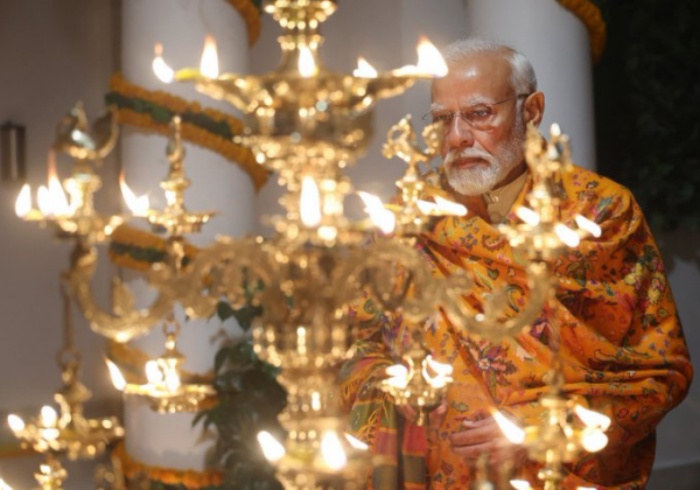
PM Modi writes a letter to all Indians on the occasion of Deepavali, mentions Operation Sindoor, end of Naxalism, and GST reforms

On the occasion of Deepavali, PM Modi has written a letter to fellow Indians, sharing his heartfelt wishes and marking some significant achievements of India as a nation.

This is the full text of the letter.

Dear fellow citizens,

I extend my heartfelt greetings to all of you on the auspicious occasion of Deepavali, a festival filled with energy and enthusiasm. This is the second Deepavali after the grand construction of the Ram Temple in Ayodhya. Lord Shri Ram teaches us to uphold righteousness and gives us the courage to fight injustice. We witnessed a living example of this a few months ago during Operation Sindoor, when Bharat not only upheld righteousness but also avenged injustice.

This Deepavali is particularly special because, for the first time, lamps will be lit in many districts across the country, including remote areas. These are the districts where Naxalism and Maoist terrorism have been eradicated from the root. In recent times, we have seen many individuals abandoning the path of violence and joining the mainstream of development, expressing faith in the Constitution of our country. This is a major achievement for the nation.

Amid these historic achievements, the country has also embarked on next-generation reforms in recent days. On the first day of Navratri, lower GST rates were implemented. During this “GST Bachat Utsav” (Savings Festival), citizens are saving thousands of crores of rupees.

In a world going through multiple crises, Bharat has emerged as a symbol of both stability and sensitivity. We are also on track to become the third-largest economy in the world in the near future.

In this journey of a “Viksit” (Developed) and “Aatmanirbhar Bharat” (self-reliant India), our primary responsibility as citizens is to fulfil our duties towards the nation.

Let us adopt “Swadeshi” (local products) and proudly say: “This is Swadeshi!” Let us promote the spirit of “Ek Bharat, Shreshtha Bharat”. Let us respect all languages. Let us maintain cleanliness. Let us prioritise our health. Let us reduce the use of oil in our food by 10% and embrace Yoga. All these efforts will rapidly move us towards a “Viksit Bharat”.

Deepavali also teaches us that when one lamp lights another, its light doesn’t diminish, it grows further. With the same spirit, let us light lamps of harmony, cooperation, and positivity in our society and surroundings this Deepavali.

Once again, wishing you all a very Happy Deepavali.

Yours,

Narendra Modi

Uttar Pradesh: Prayagraj court denies bail to 13 individuals accused of running Christian conversion racket; Read what the court said

0

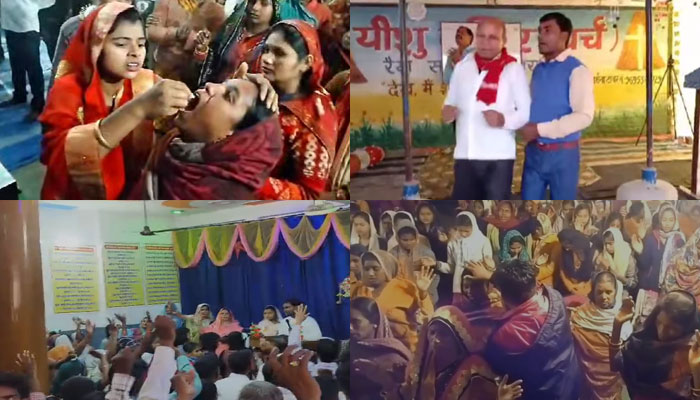
On 16th October, the Prayagraj District Court dismissed the bail application of 13 individuals accused of orchestrating an organised Christian conversion racket in Baudai village under Phulpur Police Station area of district Prayagraj in Uttar Pradesh. The order was passed by the Additional District Judge. The court found that the evidence on record prima facie suggested the involvement of the accused in attempts to unlawfully convert poor Hindus to Christianity through inducement, monetary incentives, job offers at missionary schools, and religious propaganda.

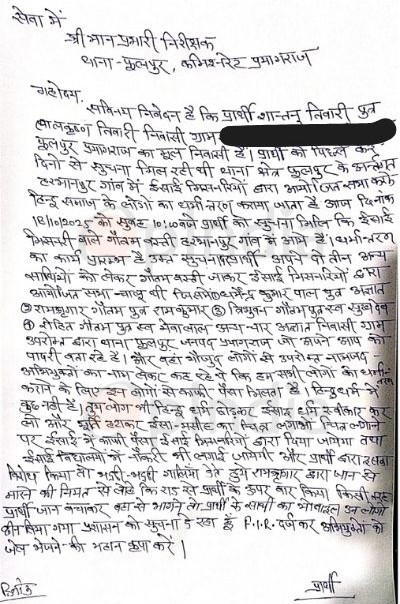
The accused have been identified as Sonu Kumar, Pankaj Saroj, Sachin, Anil, Ram Milan, Sona Devi, Aarti Devi, Shivani Yadav, Anjula, Rekha Devi, Sangeeta Saroj, Shivani Saroj, and Harishiv. They were booked under Sections 191(2), 352, 351(3), 299, and 196(1) of the Bharatiya Nyaya Sanhita (BNS) and Sections 3 and 5(1) of the Uttar Pradesh Prohibition of Unlawful Conversion of Religion Act, 2021, on the complaint of Shantanu Tiwari, co-convenor of Bajrang Dal, Phulpur, on 19th September.

Bajrang Dal leader exposed the racket

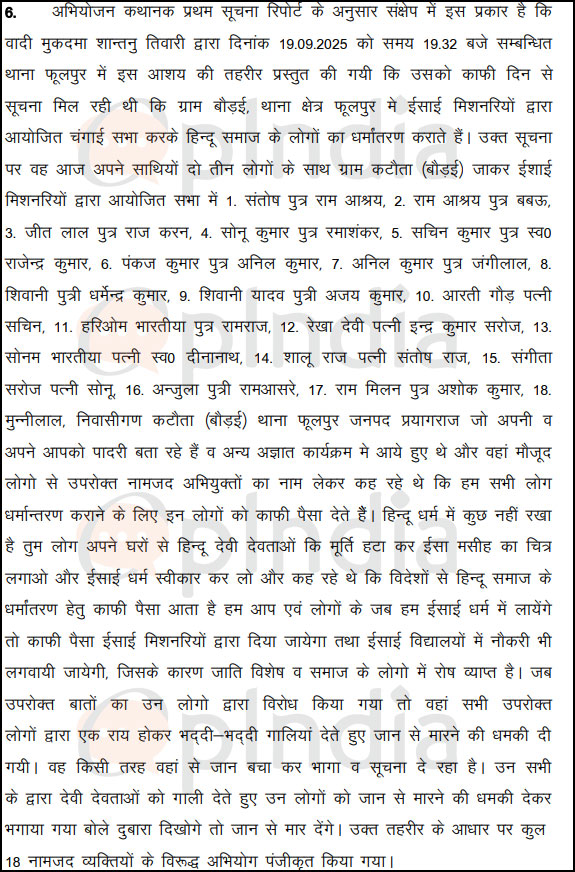
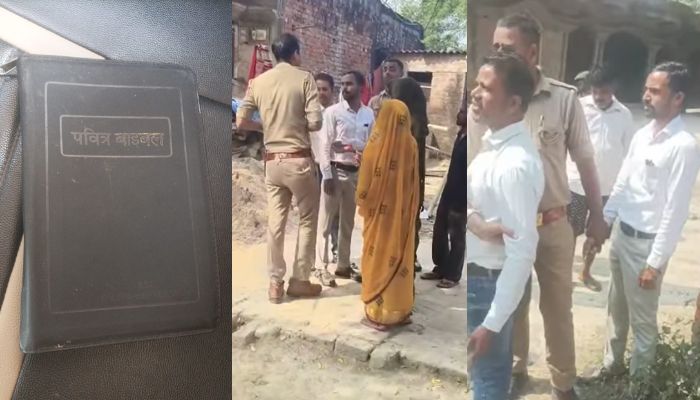
The case originated from a written complaint filed by Shantanu. According to the FIR, Shantanu had been receiving consistent reports that a group of individuals was conducting prayer meetings in Baudai village to convert Hindus to Christianity. On 19th September, he came to know about one such meeting happening in the village. He and his three fellow activists of Bajrang Dal went to the village to verify the information.

Source: Prayagraj District Court

On reaching the spot, Shantanu found a gathering of men and women engaged in a Christian-style prayer meeting, allegedly organised by the individuals introducing themselves as missionaries. One of them, Munnilal (also among the accused), was calling himself a pastor. When questioned, some attendees reportedly revealed that the accused received money for each Hindu they converted to Christianity and were motivated by foreign funding and missionary organisations.

Conversion tactics and false promises

The FIR noted that the accused were telling Hindus that there was “nothing in their religion” and that they should discard idols of Hindu Gods and Goddesses from their homes, replacing them with images of Jesus Christ. The accused allegedly promised them financial support and jobs in Christian missionary schools once they embraced Christianity.

Shantanu’s complaint further stated that when he and his associates objected to the ongoing activity, the accused verbally abused them and threatened to kill them if they returned. Following this confrontation, he immediately informed the Phulpur Police, which led to the registration of the case under stringent provisions of the anti-conversion law.

Court noted ‘prima facie evidence’ of organised conversion drive

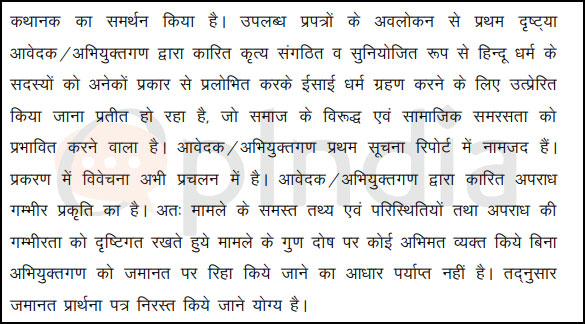
In its order, the court rejected the bail plea and stated that the material on record indicated that the petitioners were actively participating in a planned effort to lure innocent and economically weaker Hindus into conversion by offering money and jobs. The judge noted that the crime was of a “serious nature” and that bail cannot be granted at this stage.

Source: Prayagraj District Court

While rejecting the bail plea, the court also observed that there were consistent statements from witnesses, including complainant Shantanu Tiwari and others, affirming that the accused were conducting regular meetings to promote conversion under the guise of prayer gatherings. The court rejected the defence argument that no actual conversion had taken place, stating that the intention, inducement, and preparatory acts were clearly established in the investigation papers.

Investigation and custody status

As bail has been denied, all 13 accused will remain in judicial custody. They were sent to custody on 21st September. The police informed the court that the investigation in the matter is underway to trace other individuals potentially connected to the conversion network and to identify sources of funding.

Recently, Shantanu filed another complaint in a similar matter in Phulpur leading to arrest of three individuals involved in luring Hindus to convert to Christianity on 18th October. The police has filed an FIR in that matter and an investigation is underway.

Viral OpIndia video shows supporter of Shahabuddin’s son Osama threatening to burn a man alive, RJD defends him as “people’s leader,” BJP calls it return of jungle raj

0

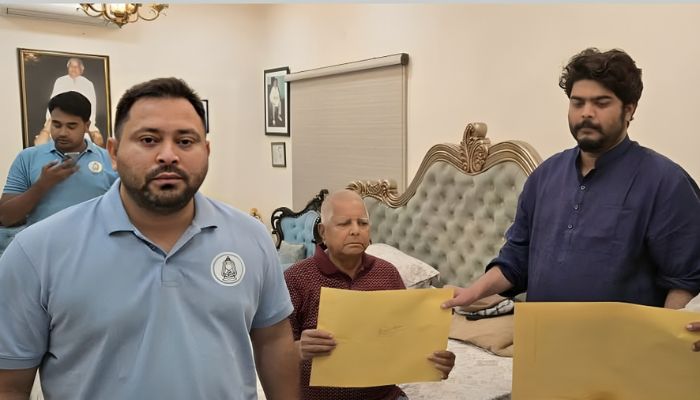
A political storm has erupted in Bihar after a video involving Osama Shahab, son of notorious former Siwan MP Mohammad Shahabuddin, went viral. The video, originally shot during OpIndia’s ground reporting, has brought the Rashtriya Janata Dal (RJD) under sharp criticism and on the defensive. Osama, who has been given a ticket by the RJD for the upcoming Assembly elections of Bihar, is now being accused of continuing his father’s legacy of crime and intimidation, while the party is being accused of glorifying it.

The viral video that sparked outrage

The controversy began after a supporter of Osama Shahab made shocking remarks on camera during OpIndia’s election coverage in Siwan. The supporter, speaking to the reporter, Anurag Mishra, claimed that they were looking for a boy who had torn down a poster that read “I Love Muhammad”. The man further threatened that if the boy was found, Osama Shahab would “burn him alive.”

The video immediately went viral on social media, sparking massive outrage. Many users pointed out that the violent language echoed the brutal methods once associated with Mohammad Shahabuddin, who was infamous for burning people alive with acid. The video reinforced fears that Osama, too, was carrying forward the same legacy of fear and violence.

BJP attacks RJD over “criminal legacy”

The ruling Bharatiya Janata Party (BJP) in Bihar wasted no time in attacking the RJD. Sharing the viral video on X (formerly Twitter), the BJP’s official handle wrote, “An RJD ticket means an invitation to jungle raj in Bihar! Open support to criminals’ families, the people are watching.”

Amit Malviya, head of the BJP IT cell, also shared OpIndia’s video, saying, “If the RJD candidate Osama, son of Shahabuddin, loses the election, Islamist extremists are threatening to burn down Siwan. Posters of ‘I Love Muhammad’ are plastered across the entire area, and ahead of the elections, these extremists are issuing poisonous statements.”

The video has put the RJD in a tough spot, especially since Osama’s candidature had already raised questions about the party’s willingness to rehabilitate the Shahabuddin family in politics. The optics of the video have only added fuel to the fire.

RJD’s counterattack: “Fake video, paid propaganda”

Soon after the video went viral, RJD supporters tried to control the damage by discrediting it. Some party members produced the same youth seen in the video, who then claimed that Anurag Mishra gave him ₹5,000 to make the remarks and that he was under the influence of alcohol at the time.

However, OpIndia journalist Anurag Mishra later released another detailed video exposing the truth behind the viral clip. He explained that the youth had been brought to the reporter by another local, and OpIndia had not coerced or paid him to make any statement. Mishra shared unedited footage showing the sequence of events, countering the RJD’s claims of fabrication.

RJD defends Osama, calls him a “people’s leader”

Facing mounting criticism, RJD leaders have stepped in to defend Osama Shahab. Former minister and current RJD candidate from Siwan Sadar, Avadh Bihari Chaudhary, posted on Facebook in support of Osama.

“Over the last few days, certain so-called media outlets and opposition parties have been spreading false propaganda against Osama Sahab, the son of the late Mohammad Shahabuddin, using money and misinformation,” Chaudhary wrote. He added, “Their goal is to divide the people of Siwan and destroy the atmosphere of harmony. Osama Babu is an honest, humble, and service-oriented leader. He doesn’t believe in religious politics, his goal is Siwan’s development, youth employment, and respect for the people.”

Chaudhary’s remarks make it clear that the RJD is determined to portray Osama as a “leader of the people” rather than a symbol of criminal politics.

The reality behind Osama Shahab’s record

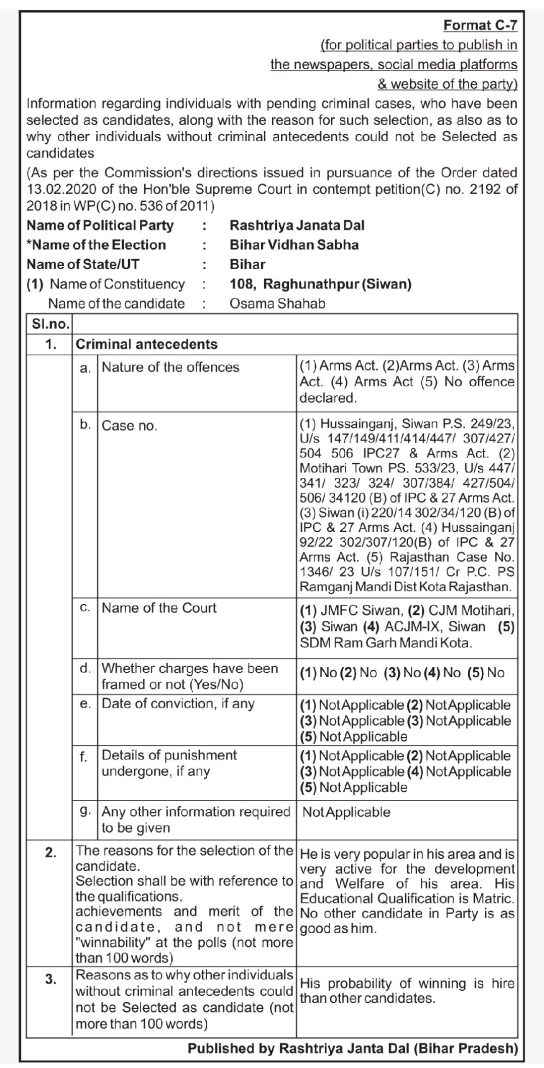
Despite the party’s defense, Osama’s record tells another story. Like his father, he has already had several run-ins with the law. His first case was registered at the Hussainganj police station in connection with a land dispute over 42 kathas of land in Chapia Buzurg village. Later, an FIR was also lodged against him in Motihari for allegedly firing shots at his brother-in-law during another land dispute.

In the RJD’s official candidate disclosure form (Form C7), the party itself has listed the criminal cases pending against him. Yet, the justification given for his selection reads: “He is very popular in his area and actively participates in developmental and welfare activities. His educational qualification is matriculation. There is no other candidate in the party like him.”

This admission has only deepened the criticism against the RJD, as it appears to have equated fear-based popularity with leadership potential. Political observers say the move reflects the RJD’s old playbook, blending crime with charisma to secure votes in its traditional strongholds.

The politics of legacy

For decades Mohammad Shahabuddin dominated Siwan with a firm hand. Even in prison, he was a dominant force who dictated local politics and held criminal gangs in thrall. His death in 2021 from COVID-19 did not bring his influence to a halt; rather, it left a power vacuum that his son Osama now seems to be filling.

By issuing a ticket to Osama, RJD has indicated that it is ready to accept that legacy if it is able to regain its past electoral support in Siwan. Yet this action has also raised concerns about the return of “jungle raj,” something that tends to characterize RJD’s early days in power, may not be very distant.

“What can be expected from Akhileshuddin?”: SP Chief Akhilesh Yadav gets schooled by netizens after he criticised Ayodhya Diwali Deepotsav and praised Christmas celebration

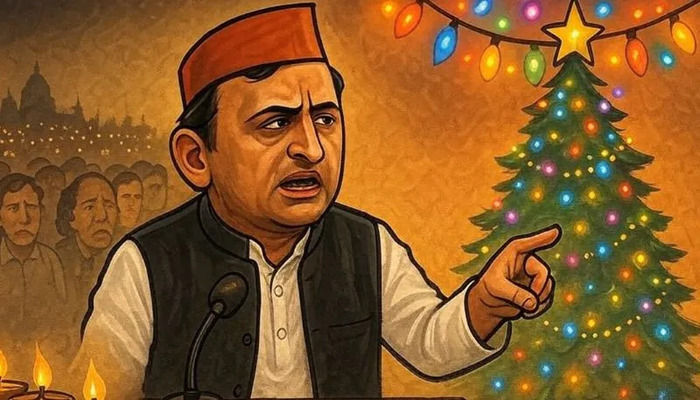
While preparations for the upcoming Diwali are in full swing across the country, Samajwadi Party (SP) chief Akhilesh Yadav is irritated by the joy of the people. This year, his irritation is directed at the lamps lit on Diwali. His recent statement made it clear that he likes the Christian festival of Christmas more than Diwali, and sees the lighting of lamps on the Hindu festival of Diwali as a waste of money. Akhilesh Yadav said that lighting diyas on Diwalil is ‘waste of money’, and instead people should use electric lights for decoration like Christians do on Chirstmas.

During a press conference held on Dhanteras (October 18, 2025) in Lucknow, Akhilesh Yadav said, “I would like to make a suggestion in the name of Lord Ram. During Christmas, cities are illuminated for months. Learn from them. Why spend so much money on lamps and candles again and again? What can we expect from this government? It should be removed. We will ensure that there are even more beautiful lights here…”

Akhilesh’s statement outraged people on social media

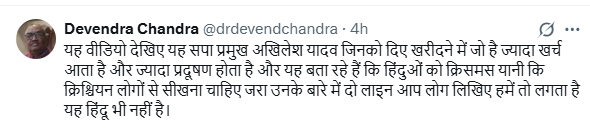
Akhilesh Yadav’s suggestion on Diwali reflects his hatred for Hindu festivals. His statement attracted backlash from Hindus on social media. Some people on social media expressed suspicion about whether Akhilesh was even a Hindu.

A social media user referred to Akhilesh Yadav as ‘Akhileshuddin’ and said, “What can be expected from ‘Akhileshuddin?”

An X user said, “Now Akhilesh Yadav has a problem with diyas and candles. Now, the people of Uttar Pradesh have to question whether he is a Christian or a Muslim”.

Another user wrote, “We’ve seen many great leaders, but none like this one, who can’t even make his own stand clear. After all, this leader, who specialises in building his political career by misleading people and giving false assurances in the name of PDA (Pichda, Dalit, Alpsankhyak), has now started insulting Hindus while opposing Brahmins, Kshatriyas, and upper castes. While on one hand, our brothers and sisters from the Kumhaar (potter) caste work hard all year to make lamps for the Diwali festival, on the other hand, this gentleman, citing the example of Christmas, asks people to hang lights. Should the people of Sanatan Dharma take inspiration from Christmas…?”

Another social media user asked Akhilesh Yadav to offer similar advice for the festival of Eid. The user wrote, “Similarly, why sacrifice animals every year on Eid? If you do it once, isn’t that enough? Save money and maybe an innocent animal. Why cut down trees every year on Christmas?”

Evidently, Hindus are outraged over Akhilesh Yadav’s Hinduphobic statement, terming Hindu celebrations as a waste of money. The Hindus understand the significance of lighting diyas on Diwali, something the SP supremo, despite being a Hindu, probably doesn’t. Akhilesh Yadav should understand that the festival of lights is not just a religious tradition but also has spiritual and social significance.

Importance of lighting a lamp

The tradition of Deepotsav is not just a religious ritual but is also deeply connected with our culture, consciousness and socio-economic life. It symbolises the triumph of light over darkness, knowledge over ignorance, and truth over falsehood. From a religious and spiritual perspective, the Hindu tradition considers the lamp to be the light representing the soul and the divine energy. The light of the lamp not only dispels external darkness but also illuminates the darkness of inner thoughts, emotions, despair, and negativity.

Similarly, on a social and economic level, diyas are the livelihood of thousands of families who engage in the work of making Diyas for festivals like Diwali. During the annual Deepotsav in Ayodhya, local potter families receive large orders to make diyas for Diwali.

Employment from making diyas

Every year, the Ayodhya Deepotsav sets a new record by breaking the previous one. Last year, the Deepotsav set a record with 2.6 million diyas being lit for the celebration. However, the record will be broken in this year’s Deepotsav, which is set to witness the lighting of 2.9 million diyas. Thus, the festival of Diwali is not only a demonstration of people’s faith but also creates employment opportunities.

Several media reports showed how local potters said their lives had changed since the beginning of Ayodhya Deepotsav in 2017. While potter families previously earned only about ₹20,000 on Diwali, their income has now reached lakhs. Hundreds of families in small villages across the country are earning a comfortable living by making diyas.

This is the reason that Prime Minister Narendra Modi emphasised purchasing indigenous products. Ahead of Diwali, PM Modi appealed, “Embrace indigenous products and make them the mantra of every home and market”. PM Modi’s appeal has had a significant impact on the Diwali market. In the colorfully decorated markets, the number of indigenous products has increased, and the buyers are enthusiastic about purchasing them.

Cutting down trees for Christmas

Notably, millions of trees are cut down for Akhilesh Yadav’s favourite festival, Christmas, which has many negative impacts on the environment and society. Decorating trees is a common practice every year for Christmas, and these trees are either real or plastic. Growing natural Christmas trees requires extensive use of chemical fertilisers and pesticides, which severely impacts the ecosystem.

Additionally, felling these trees destroys wildlife habitats, harming biodiversity. When felled trees end up in landfills, they release carbon dioxide, which contributes to climate change. Artificial Christmas trees are equally harmful to the environment because they are made of plastic, which is non-biodegradable and remains in landfills for years. Akhilesh Yadav, who preferred artificial Christmas lights over earthen lamps of Deepotsav, should know that these lights increase the consumption of electricity, whereas lighting lamps makes the world bright without using electricity.

Akhilesh Yadav’s hypocrisy

Akhilesh Yadav may or may not realise the significance of the festival of Diwali. Or maybe, even if he does, he will not admit it publicly. But his Diwali greetings from 2024, interestingly, suggest that he does have some knowledge of the festival of lights. It is also possible that last year’s Diwali greetings were a mere formality, and his real opinion on Diwali was revealed during the press conference. Interestingly, Yadav does not remember such suggestions for Eid, Christmas, or any other religious festival.

The truth is that Akhilesh Yadav is not happy with the fact that Ayodhya Deeptsav, which was started by the Yogi government, is getting global acclaim. He is unable to accept the reality that the diyas of a Hindu religious festival are an attraction for people from India and abroad. Akhilesh Yadav’s venomous statement on Diwali has made it clear that if his government comes to power, Diwali will have no significance for him. Comparing the Hindu festival of Diwali to Christmas, celebrated in Western countries, is nothing more than Akhilesh Yadav’s crude anti-Hindu rhetoric.

(This article is a translation of the original article published on OpIndia Hindi.)

Uttar Pradesh: Phulpur Police bust Christian conversion racket on Bajrang Dal’s complaint; 3 arrested, one absconding – Read what FIR says

0

On 18th October, Phulpur Police in district Prayagraj, Uttar Pradesh, arrested three accused in connection with a religious conversion racket in Haribhanpur village. The fourth accused in the matter is absconding, and a manhunt is underway to catch him. The arrests were made following a complaint lodged by District Co-Convenor, Bajrang Dal, Vishva Hindu Parishad, Shantanu Tiwari.

In his complaint, Shantanu informed the police about the conversion event happening in the name of a “prayer meeting”. After confirming the details, the police arrested three individuals and initiated legal action in the matter. OpIndia accessed a copy of the FIR in the case.

Details of complaint

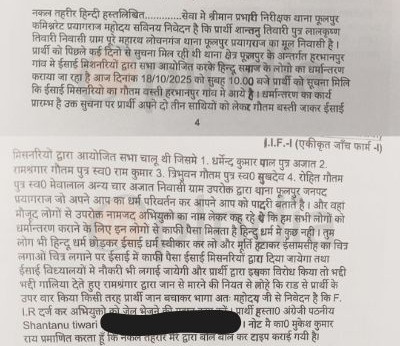
Shantanu filed a written complaint at Phulpur Police Station in which he said that he had been hearing about conversion activities being conducted by Christian missionaries in Haribhanpur village for several days. On 18th October, he received information about one such meeting happening in the village at around 10:40 AM. He said, “I was informed that a religious assembly under the banner of a ‘community discussion meeting’ was being held, where Hindu villagers were being lured into adopting Christianity.”

Source: Shantanu Tiwari

Shantanu, along with his fellow Bajrang Dal activists, reached the site and found a group of missionaries persuading villagers to abandon their faith. He stated that the missionaries told attendees that those who converted to Christianity would receive money, clothes, and other material benefits. “These activities are completely against Hindu society,” Shantanu added, accusing the missionaries of spreading misinformation and exploiting vulnerable villagers for conversion.

Details of FIR

OpIndia accessed a copy of the FIR, which has been registered on Shantanu’s complaint under Sections 352, 196(1), and 299 of the Bharatiya Nyaya Sanhita (BNS) 2023, and Sections 3 and 5(1) of the Uttar Pradesh Prohibition of Unlawful Conversion of Religion Act, 2021, against four individuals, namely Ramkumar Pal, Ramsharan Gautam, Tribhuwan Gautam, and Rohit Gautam.

The FIR noted that the meeting was described as a “community discussion”. It was convened by Christian missionaries to promote religious conversions among members of the Hindu community in Haribhanpur village, under the Phulpur Police Station area. On the date of the incident, when Shantanu received information about the meeting organised by missionaries under the banner of a “community discussion meeting”, which was being attended by a large number of people from the Hindu community, he rushed to the spot.

At the site, he discovered that the Christian missionaries were persuading Hindus to abandon their faith and embrace Christianity. They were asking Hindus to renounce Hindu Gods and Goddesses and place images of Jesus Christ in their homes in exchange for money and jobs at missionary schools.

Excerpt of the FIR. Source: Shantanu Tiwari

The complainant also told the police that some people present at the prayer meeting were saying that they received hefty payments for converting people to Christianity and that no such rewards were given in Hinduism.

When Shantanu objected to the act, the accused attacked him with an iron rod in an attempt to kill him. The complainant somehow managed to escape and save his life.

Several conversion rackets busted in the past

Speaking to OpIndia, Shantanu said that Bajrang Dal has busted several other such conversion rackets in the past. Among those, in one of the cases, 13 accused were sent to jail. The case was being delayed by the accused as they filed multiple anticipatory bail applications, leading to delays in the proceedings. Shantanu’s advocate representing him in the matter recently got the bail applications cancelled.

In this case as well, Shantanu said that he will pursue the matter actively to ensure such activities stop in the region.

Investigation underway

Police said that the investigation confirmed that the accused had been urging villagers to renounce their faith. They had promised monetary rewards and employment opportunities in return for converting to Christianity. Authorities stated that the matter falls under offences related to assault, incitement, and unlawful conversion, and assured that legal proceedings will continue in accordance with the law.

Further investigation in the matter is underway.

RTI stronger under Modi government, CIC report shows 95% disposal rate; Read how Digital India improved transparency

The Right to Information (RTI) Act, referred to as the backbone of India’s democracy, celebrates its 20th anniversary in October 2025, and it is in the middle of a politically heated controversy. The Congress party blames the Modi government for systematically weakening the RTI, hiding information and threatening transparency.

The government has strongly fired back, with official reports as proof of the opposite. According to official data, RTI is now stronger, faster, and more transparent than ever, highlighting a remarkable case disposal rate of nearly 95%.   

Are the allegations from the Congress party accurate?

The Congress party has continued its relentless criticism. Party President Mallikarjun Kharge wrote on X that the Modi government is gradually hollowing out the RTI. He argued that new laws, like the Data Protection Act, are being used to stop the disclosure of the information to the Public.

At a press conference, senior leader Jairam Ramesh identified various high-profile cases where he claims the government has avoided transparency through RTI. These encompass calls for details on the Prime Minister’s degree, alleged fake ration card, the Rafale fighter aircraft jet deal, the demonetization policy, and the scrapped electoral bonds scheme.

The party’s core argument is that the government, scared by tough questions in these matters, passed an amendment to the RTI Act in 2019. They claim this amendment weakened the Central Information Commission (CIC) by giving the government more control over the salary and tenure of the commissioners, thus compromising their independence.

The Congress also put a special focus on the terrible situation in Bihar. Party coordinators pointed out that the state’s Information Commission is practically at a standstill. As of 25,101 appeals and complaints are currently pending, and it takes an average of five years for a single case to be resolved. To make matters worse, Bihar has not published an annual report on its RTI performance since the year 2017-18.

RTI story revealed in figures

Reports from the Central Information Commission (CIC) and data provided by Union Minister Dr Jitendra Singh in Parliament tell a different story compared to what Congress has claimed.

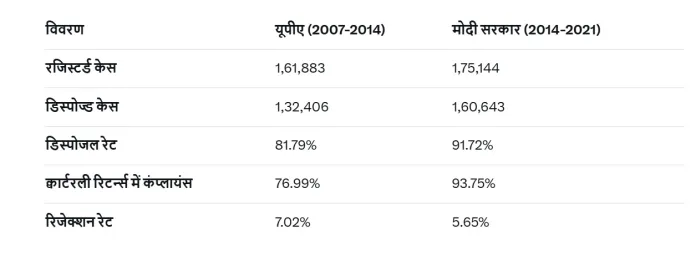
The numbers show a dramatic improvement in the functioning of the RTI at the central level. For instance, the case disposal rate has soared to over 94%, a massive leap from the 81% rate during the previous UPA government’s tenure. This high rate was maintained even during the difficult years of the COVID-19 pandemic.

Furthermore, the backlog of pending cases, which is a major source of frustration for applicants, has been nearly cut in half. The number of pending cases at the CIC dropped from 38,116 in 2020-21 to just 19,233 in 2023-24. Perhaps most tellingly, public trust in the system appears to be at an all-time high.

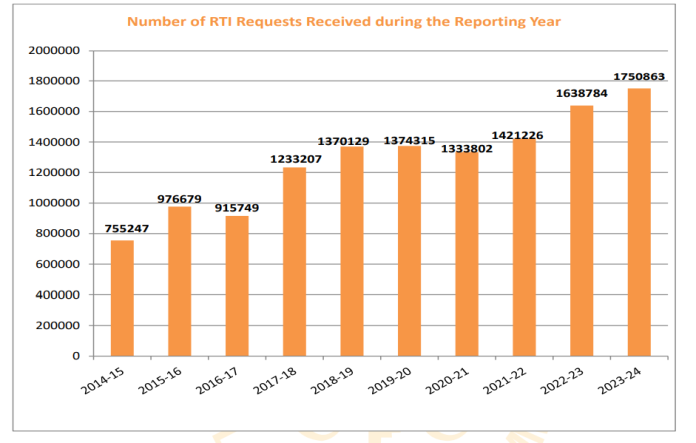
A record 17.5 lakh RTI applications were filed in 2023-24, which is double the number from a decade ago. This suggests that more citizens believe the RTI is a useful tool and are confident they will get a response.

Source: CIC

In recent years, the Right to Information (RTI) has led to several major revelations. Whether it was corruption in government schemes, irregularities in ration cards, or discrepancies in scholarship programmes, RTI has helped millions secure their rightful entitlements. For instance:

  • Information obtained through RTI exposed delays in MNREGA wage payments, ensuring timely payments to thousands of workers.
  • Irregularities in pension schemes were uncovered, benefiting senior citizens.
  • Cases of wrongful allocation of government land were revealed, curbing corruption.

The success formula: How ‘Digital India’ revamped the RTI

The magic of an online portal: The biggest game-changer has been the creation of a dedicated online portal. Now, any citizen can file an RTI application 24/7 from anywhere in the country with just a few clicks. This eliminated paperwork and made the process incredibly accessible. The online system was so robust that the CIC’s work continued uninterrupted even when the country was in a complete lockdown during the pandemic.

Hybrid hearings for faster justice: The CIC introduced hybrid hearings, allowing applicants and officials to connect through audio and video conferencing. This simple move saved enormous amounts of time and travel costs, enabling the commission to hear and settle a far greater number of cases each day.

Strict timelines and accountability: The government has enforced strict deadlines for every stage of the RTI process. There’s a 30-day limit for the first appeal and a 45-day limit for the second. If an officer delays providing information, they can be penalized. The fact that penalties were imposed in only 1.2% of cases last year indicates that most officials are now responding on time.

Strengthening the institution: The CIC’s budget has also been increased, reaching ₹120 crore in 2023-24. The government has also been diligent about filling vacancies for commissioners on time, ensuring the commission is always fully staffed and functional. On top of this, the CIC has started using Artificial Intelligence (AI) to help analyze RTI patterns and quickly sort through fake or repetitive applications.

The bihar question: A state-level issue

While the national picture looks positive, the government admits that there are serious issues with the RTI system in Bihar. However, it frames this as a state-level failure, placing the responsibility directly on the Nitish Kumar government.

The argument is that the central government has created a successful and efficient model, but it is up to individual states to implement these reforms. The issues in Bihar, therefore, do not reflect a weakness in the central RTI framework but rather a local administrative failure.

The RTI Act remains a powerful tool for citizens to hold their government accountable. From exposing corruption in the MNREGA scheme to ensuring elderly people get their pensions, the law has delivered countless victories for ordinary Indians.

While there are still issues to fix, especially in improving how state commissions perform, the data strongly suggests that at the national level, the RTI is not just alive and well, it’s thriving in the digital age.

Gujarat cabinet reshuffle: BJP brings back its trusted formula to beat anti-incumbency and shape the 2027 election strategy

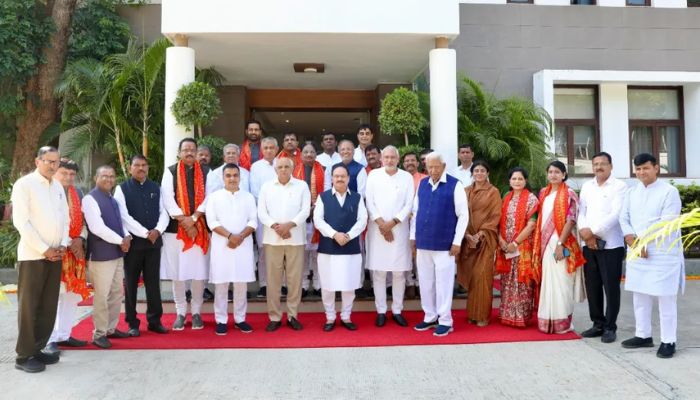
The Bharatiya Janata Party (BJP) has once again reshuffled its Gujarat cabinet, continuing its practice of making big political changes every two to three years. This latest change has come exactly two years before the 2027 Assembly elections. However, unlike previous times, the Chief Minister remains the same. 

Bhupendrabhai Patel continues to lead the government, but new faces have been added to the cabinet, along with promotions for some of the important ministers. The most prominent among these is Harsh Sanghvi, who has been promoted from Minister of State to Deputy Chief Minister. The cabinet now consists of 26 ministers, up from 16 in the last one, and it has a more complete appearance.

Looking at the cabinet, it seems that it has been designed keeping in mind the upcoming elections. Ministers who delivered and gained a reputation for competence have been rewarded, while those who were involved in controversies have been asked to leave. Some names were dropped as a balancing act on caste and regional equations so that the BJP keeps its social support base intact in Gujarat. This reorganisation is not new, it’s a part of the BJP’s overall strategy to counter anti-incumbency and maintain the organisation fresh before every election.

The BJP has been in power in Gujarat for nearly three decades now, and as expected, some amount of anti-incumbency does accumulate over the years. Despite the fact that there is no real opposition in the state at present, the party understands the fact that complacency can prove dangerous. By changing its ministry from time to time, the BJP maintains high public hopes and keeps discontent from accumulating. This strategy has worked for the party every single time in the past.

Similarly, when Anandiben Patel’s government faced widespread protests in 2015, including the Patidar agitation, the BJP replaced her with Vijay Rupani. At that time, the opposition thought it had a real chance to capture power, but the new leadership change helped the BJP minimise losses and retain power in the 2017 elections.

Again, during the COVID-19 pandemic, the Vijay Rupani government faced strong criticism from the public. As with all other states, Gujarat also experienced anger and frustration because of the crisis. There were many other reasons for it, too, some veteran ministers had been ruling for decades, and the people were craving change. The BJP went one step ahead again, just before the 2022 elections, and decided to change the entire government, including the Chief Minister. That risk paid off; the party was back in power with a historic win.

The BJP’s formula is easy: if there’s growing dissatisfaction, hange the face of the government. Once the old lot disappears, people’s anger dissipates, and fresh hopes are generated. This renews people’s expectations and provides the ruling party with a new lease of life. For years, this has been the BJP’s proven technique in Gujarat, and it has succeeded every time.

This time, however, the replacement of Chief Minister Bhupendrabhai Patel was not necessary. He still has a clean image and is not personally targeted. The BJP leadership must have realised that there was no need to do something radical at the top. They instead concentrated on reinforcing the team around him. Patel will be the government’s face until 2027, but it is also evident that other leaders are now also making their mark in Gujarat’s politics.

Among them, the rise of Harsh Sanghvi stands out the most. His promotion from Minister of State to Deputy Chief Minister was almost certain. Sanghvi has become one of the most visible faces of the government, both because of his strong social media presence and his active engagement with public issues. As Minister of State for Home, he handled his responsibilities efficiently, often stepping in to resolve matters that fell under other departments. He has earned a reputation as a dynamic, result-oriented leader who gets things done.

Now, as Deputy Chief Minister, Sanghvi has been allotted the Home portfolio, something which has not happened in Gujarat for years. The Home department has always been with the Chief Minister traditionally. Even Narendra Modi retained it with him when he was the Chief Minister. 

The choice of allotting it to Sanghvi is a clear indication that his role in the government has become extremely significant. He is now expected to be a key player in Gujarat politics for years to come. In many ways, the BJP has found in him the next big face of Gujarat’s leadership, someone who can carry forward Modi’s legacy in the state.

At the same time, the cabinet reshuffle reflects careful social and caste balancing, a crucial aspect of Indian politics. Every major community and region has been given representation to maintain harmony within the party’s voter base. From Patidars to OBCs, from tribals to urban communities, the BJP has ensured that no section feels left out.

This reshuffle was expected, it was only a matter of time. Now, the new team will govern till the 2027 elections, which will once again test the BJP’s long-standing hold over Gujarat.

Meanwhile, the Aam Aadmi Party (AAP) has tried to take credit for the changes, claiming that its growing presence in Gujarat forced the BJP to revamp the cabinet. AAP leaders argue that their leader Gopal Italia’s victory in Visavadar and their protests over farmers’ issues have shaken the BJP’s confidence. Some social media influencers and YouTube personalities associated with AAP have also been propagating this claim over the internet.

But the truth is otherwise. The fact is that the Aam Aadmi Party is not yet a significant force in Gujarat, which necessitates a complete change in the cabinet. Making noise on social media does not amount to a real political challenge. On the farmers’ issue too, the Aam Aadmi Party has not been able to create much impact despite repeated efforts.

In short, this cabinet reshuffle is more about the BJP’s planned approach rather than any external pressure. The party realizes that to remain in power for so many decades means constant renewal. Gujarat continues to be an important state for the BJP, it’s where its national leadership, Prime Minister Modi and Home Minister Amit Shah, established their political roots. With the elections just a year away in 2027, this reshuffle is an indication that the BJP is not leaving anything to chance.