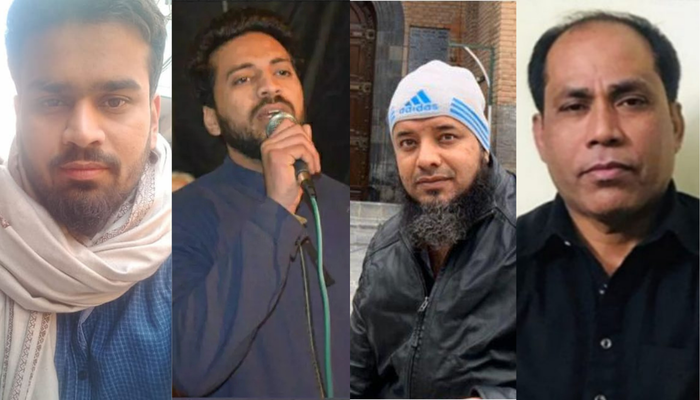
Delhi High Court on Tuesday (2nd September) rejected the bail pleas filed by the Delhi anti-Hindu riots accused, Athar Khan, Shadab Ahmed, Abdul Khadil Saifi and Saleem Khan. The High Court noted that, prima facie, it appeared that all four of the accused (appellants) played an active role in the conspiracy that led to the riots.
Accused involved in the creation of protest sites
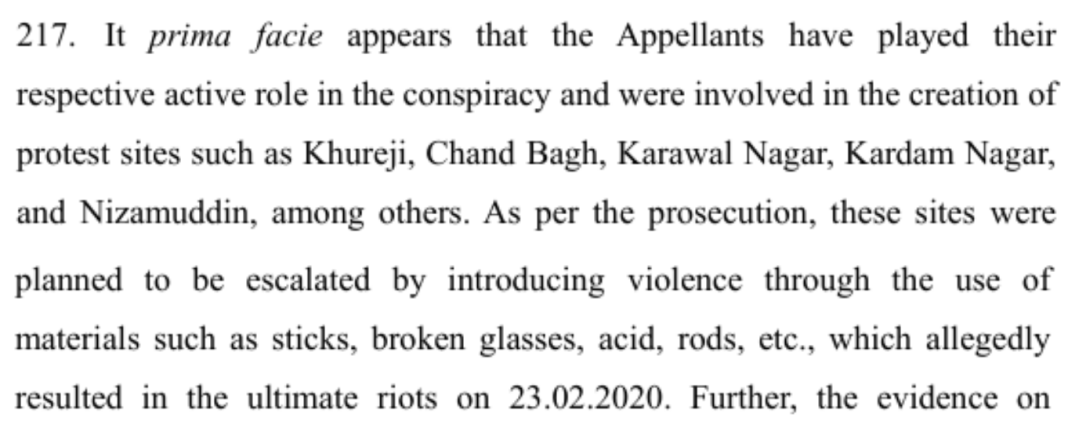
In its order, accessed by OpIndia, a division bench of Justice Naveen Chawla and Justice Shalinder Kaur noted that the accused were involved in creating protest sites at various places in the national capital, including at Khureji, Chand Bagh, Karawal Nagar, Kardam Nagar, and Nizamuddin. Besides, they planned to escalate violence by using materials like sticks, broken glass, acid, rods, etc.
Screenshot of the court order (via Delhi High Court)
After perusal of the evidence put forth by the prosecution and the statements of witnesses, the Court added that there existed prima facie evidence to show that the accused took part in various meetings wherein they conspired to perpetuate violence against the policemen and non-Muslims.
Athar Khan and Shadab Khan destroyed CCTV cameras
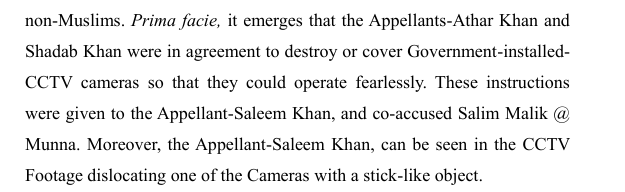
According to the High Court, Athar Khan and Shadab Khan agreed to destroy or cover Government-installed-CCTV cameras so that they could operate “fearlessly”. The instructions to destroy the CCTV cameras were also given to Salim Khan and another co-accused, Salim Malik. Salim Khan was captured in a CCTV footage dislocating a camera with a stick-like object.
Screenshot of the court order (via Delhi High Court)
Abdul Khalid Saifi raised and collected funds for the protests
The Court noted that apart from being a part of many WhatsApp groups and conspiratorial meetings, Abdul Khalid Saifi was also involved in raising and collecting funds for arranging guns and “managing protest sites”. Refraining from examining the evidence and the statements of witnesses in detail, the High Court concluded that all the members involved in the conspiracy behind the anti-Hindu riots, including the four accused, were assigned specific roles to further the conspiracy.
Screenshot of the court order (via Delhi High Court)
“We may note that, at the stage of consideration of a bail application, it would be impermissible in law to enter into the merits or demerits of the evidence produced by the prosecution on record, which can only be tested at the trial,” the court said.
The High Court distinguished between multiple FIRs against the accused
The court rejected the argument of the accused Saleem Khan, who contended that he was being subjected to multiple proceedings under different FIRs, based on the same evidence and overlapping narratives. The court clarified that the different FIRs against the accused were on a different footing and that the FIR in the current case relates to a larger conspiracy.
The High Court rejected the claim of parity
Dismissing the claim of the accused to be treated at par with the other accused in the case, namely, Devangana Kalita, Natasha Narwal, and Asif Iqbal Tanha, who were able to secure bail by the High Court, the Court remarked that the role played by the present Appellants is distinct from the said co-accused persons who were let out on bail. “In our careful consideration, having regard to the totality of factsand circumstances as noted hereinabove, these appeals fail,” the court noted in its order.
In 2020 anti-Hindu Delhi Riots larger conspiracy case, the Delhi High Court on 2nd September dismissed the bail application of accused Umar Khalid, Sharjeel Imam and Gulfisha Fatima, among others. The division bench of Justice Naveen Chawla and Justice Shalinder Kaur noted that in view of the allegations made, the ground of parity does not go in the favour of the appellant Gulfisha Fatima.
Notably, Gulfisha Fatima allegedly played a pivotal role in the conspiracy by welcoming women protesters at Seelampur and Jafrabad, who were arriving from Jahangir Puri to instigate the violence. She was not only a member of WhatsApp groups which discussed the ways in which the riots conspiracy was to be executed but also created two such groups to mobilise Muslim women for protests which were meant to take violent turn.
Gulfisha Fatima had told Muslim women to bring their children along so that police would not be able to take any action and if police were to take action, then because of the children, they would get sympathy. The protests organised by Gulfisha near Nadima Masjid were attended by Mehmood Paracha, Umar Khalid, and Apoorvanand, among others, who gave inflammatory speeches provoked people by referring to CAA, Article 370 and Ayodhya Ram Mandir.
Prosecution’s allegations against Gulfisha Fatima
The prosecution alleged that Gulfisha Fatima played an active role in the anti-Hindu Delhi Riots conspiracy. She was responsible for managing and actively guiding the protest sites at Seelampur-Jafrabad in North East Delhi areas, which are in the vicinity of her residence in Chauhan Bangar, New Seelampur.
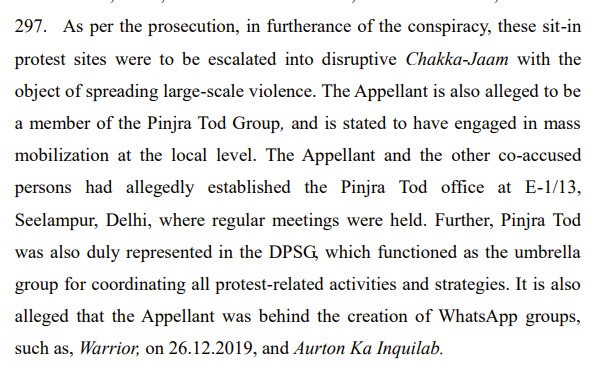
Fatima had created a 24×7 sit-in protest site at Madina Masjid, Seelampur, on 15.01.2020, along with co-accused persons Natasha Narwal & Devangna Kalita, who were the members of the Delhi Protest Support Group (DPSG).
The prosecution alleged that the co-accused in the case including Devangana, Natasha, Umar Khalid, Khalid Saifi, Meeran and others, passed DPSG’s instructions to Gulfisha Fatima for its implementation. Fatima also initiated other sit-in protest sites at various places in Seelampur and Jafrabad, Delhi, such as the Fruit Market, Gali Akhade Wali, etc.
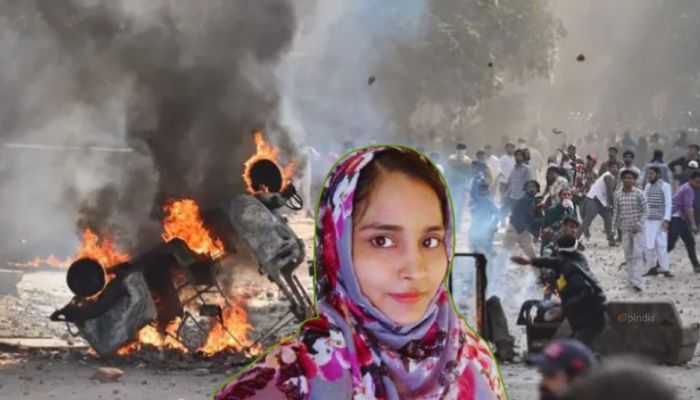
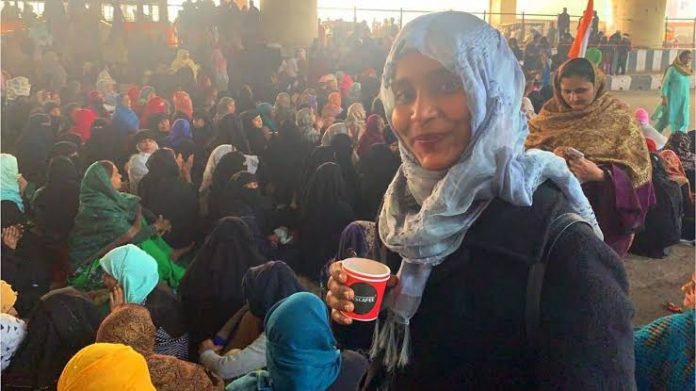
Gulfisha Fatima at a protest site in Delhi in 2020 (Image via MuslimMirror)
These sit-in/ dharna protests were to be escalated into disruptive Chakka-Jaam with the object of spreading large-scale violence. Accused Gulfisha Fatima is also a member of the Pinjra Tod Group, and was involved in mass mobilisation. As per the prosecution, Fatima and other accused had set up an office of Pinjra Tod in Seelampur, Delhi and regular meetings were held here. Pinjra Tod was represented in DPSG as well. The DPSG functioned as the umbrella group for coordinating all protest-related activities and strategies.
Gulfisha Fatima was involved in the conspiratorial meeting on 23/24.01.2020 at the Seelampur and Jafrabad protest site among others like Umar Khalid and Pinjra Tod members. Gulfisha Fatim had created two Whatsapp groups called Warrior and Aurton Ka Inquilab. These groups were created on 26/12/2019.
The defence, however, argued that that the chats of the Auraton ka Inqalab group are not a part of the case record, and the chat of the Warriors group pertain only to participation in legitimate peaceful protests.
In this conspiratorial meeting, co-accused Devangana Kalita, Natasha Narwal, Umar Khalid, and others were present. Here, co-accused Umar Khalid allegedly gave directions for stockpiling red chilli powder, acid, bottles, and sticks, which Gulfisha Fatima began gathering after receiving the instructions.
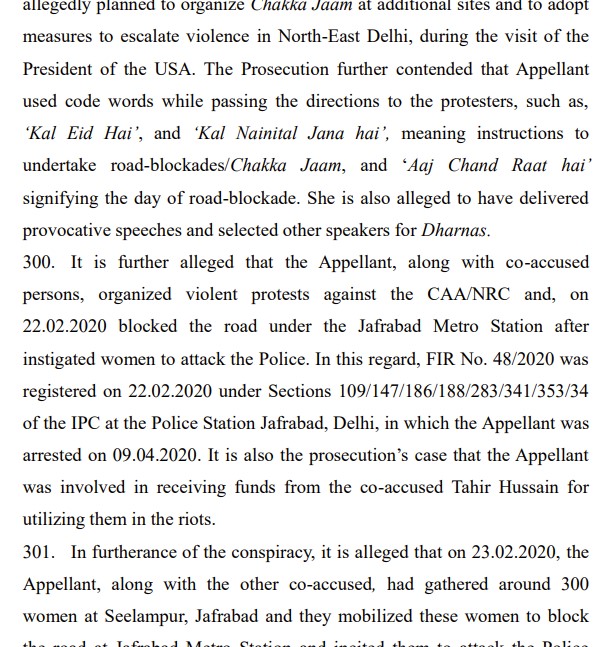
The prosecution alleged that Gulfisha Fatima was also a part of other key meetings, including one on 16/17.02.2020 at Chand Bagh, wherein it was allegedly planned to organize Chakka Jaam at additional sites and to adopt measures to escalate violence in North-East Delhi, during the visit of the President of the USA. The Prosecution further contended that Appellant used code words while passing the directions to the protesters, such as, “Kal Eid Hai”, and “Kal Nainital Jana hai”, meaning instructions to undertake road-blockades/Chakka Jaam, and “Aaj Chand Raat hai” signifying the day of road-blockade. She is also alleged to have delivered provocative speeches and selected other speakers for Dharnas.
In addition, the prosecution also alleged that Fatima, along with co-accused persons, organized violent protests against the CAA/NRC and, on 22.02.2020 blocked the road under the Jafrabad Metro Station after instigated women to attack the Police. She was arrested by Jafrabad Police in this case. She is also accused of involvement in receiving funds from the co-accused AAP councillor at that time, Tahir Hussain, for utilizing them in the riots. The defence, however, contended that the allegations of Tahir Hussain giving money to Fatima for illegal purposes is “uncorroborated”.
Notably, at the time of the riots, Gulfisha Fatima was present in Northeast Delhi and in fact, as per the witnesses, she was the one who started the blockade and prompted the attack on police personnel and others with weapons like dande, lal-mirchi powder and others in Jafrabad area which had a cascading effect leading to riots.
“Gulfisha, along with the other co-accused, had gathered around 300 women at Seelampur, Jafrabad and they mobilized these women to block the road at Jafrabad Metro Station and incited them to attack the Police using chilli powder, stones, sticks, and other dangerous articles, which were allegedly provided by the Appellant and the co-accused persons,” the prosecution alleged.
Meanwhile, the defence argued that while Gulfisha Fatima was present at Chand Bagh on the intervening night of 16th and 17th February 2020, yet no incriminating act or statement has been attributed to her. Regarding Jafrabad, Gulfisha Fatima’s counsel contended that there was no chakka-jaam or road blockage that disrupted essential services; rather, the protest was peaceful and non-violent.
The defence also denied that Fatima was a member of the DPSG WhatsApp group. The defence further trivialised the testimonies of the witnesses, saying that these were based on hearsay and lac credibility. The defence also challenged invocation of UAPA against her and also claimed that Gulfisha Fatima was not a member of even Pinjra Tod group.
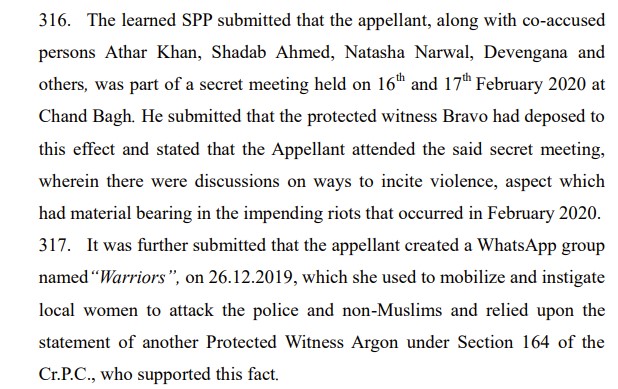
The State sought dismissal of the bail plea filed by Gulfisha Fatima. The Special Public Prosecutor alleged that the appellant along with other accused persons was present in the meeting held on 16th and 17th February 2020 at Chand Bagh and that protected witness Bravo had deposed to this effect. Bravo said that Gulfisha Fatima was indeed a part of the secret meeting wherein discussions on ways to incite violence.
The SPP also submitted that in a meeting on the intervening night of 23rd and 24th January 2020, co-accused Umar Khalid visited the Seelampur protest site and held a secret meeting wherein Gulfisha was also present. “This meeting played a vital role in escalating the situation into violent riots to overawe the Government by pressurizing it to withdraw the CAA/NRC and hold its exercise, being Anti-Muslim,” the SPP said.
The SPP highlighted that the testimonies of witnesses Delta, Gama, Echo, Yankee, Smith, and Sierra point to his claim. The SPP also referred to to the statement of Echo, who deposed that the Appellant ensured that children also participated in the protests, fully aware that the police would refrain from using force against them. The SPP also said that Gulfisha received funds from Tahir Hussain and protected witness Saturn’s testimony supports this claim.
Furthermore, the SPP contended that the ground of parity is not available to the appellant, as her role is graver than the other co-accused, who are on bail.
Court’s observations based on analysis of prosecution and defence’s arguments
The court considered the submissions made by the prosecution, defence and the SPP for the State. The court also took note of the statements given by Protected Witnesses, namely, Beeta, Gama, Argon, Jupiter, Echo, Smith, Bravo, Johny, Helium, Saturn, Delta, Smith, Seirra, Etc.
“We also find that the sum and substance of the arguments advanced on behalf of the Appellant before this Court are substantially similar to those raised before the learned Trial Court,” the court said.
The court took note of the prosecution’s allegations against Gulfisha Fatima, including her alleged membership of Pinjra Tod and creation of the WhatsApp groups Auraton ka Inqalab and Warriors, which was used to disseminate information about protests and mobilisation of women.
The court took note of the alleged role of appellant Gulfisha Fatima in executing the conspiracy, her role in managing protest in Seelampur, her attendance in the conspiratorial meetings, wherein co-accused Umar Khalid allegedly instructed them to escalate the protests into riots by resorting to violence and by using chilli powder, sticks, stones, etc., and to coordinate chakka-jams during the visit of the President of the USA. The court also noted that Fatima had blocked the road near Jafrabad Metro Station also instigated women to resort to violence against police officials, alongside the allegation of having received funds from Tahir Hussain.
Furthermore, the court noted defence’s contention that Fatima was not a member of Pinjra Tod or even DPSG group. The court also mentioned the SPP’s objection to the plea of parity and noted SPP’s argument that the role of appellant Gulfisha Fatima is largely different from that of the other two co-accused persons on bail.
Based on the analysis of the arguments made by all parties, the court noted that “it is not necessary that all the accused persons must be involved in all facets of the criminality. Participation in one group or the other, and the connectivity of the Appellant with the co-accused persons, including Shadab Ahmad, Umar Khalid etc, are factors to be considered.”
Regarding the WhatsApp group Fatima created, the court observed that these were focussed on protest coordination and ensuring woman participation. The court said that the creation of these groups (Warriors and Auraton ka Inqalab) cannot be seen in isolation.
“The WhatsApp groups that the Appellant allegedly created, of which one noticeably, revolve around coordination in protests and ensuring that as many women participate in the protests. This factum of creation of these two groups cannot be seen in isolation, the consideration should weigh in on broad probabilities as per the settled law,” the court noted.
The court took note of the prosecution’s submissions that the appellant used code words to relay instructions to the protestors to carry out tasks as discussed in the secret meetings. The court noted SPP’s submission that protect witness Sierra’s statement ascertains the role of Gulfisha Fatima in the conspiracy.
Addressing the issue of parity, the court said that “it is trite in law that merely because co-accused persons have been granted bail, would not, by itself, entitle the other accused to bail; there are other considerations and factors which weigh in for considering parity.”
Prima facie, the court said, the role ascribed to the present Appellant, as reflected from the material on record, is distinct than that of the co-accused Devangana Kalita and Natasha Narwal in the alleged conspiracy.
“Keeping in view the allegations against the Appellant, discussed herein above, the ground of parity is not made out in favour of the Appellant,” the court ruled.
Addressing the argument of delay and prolonged incarceration of the accused persons, the court said that the trial is progressing at a “natural pace”.
The court, thus, dismissed the bail application moved by Gulfisha Fatima, Umar Khalid, Sharjeel Imam, among other accused persons.
Anti-Hindu Delhi Riots: When the national capital witnessed the violent expression of Islamist hatred against Hindus
The 2020 anti-Hindu Delhi Riots, occurred in Northeast Delhi from 23rd to 26th February, leaving 53 dead and over 200 injured. The Islamists mobs attacked local Hindus on the pretext of protest against the Citizenship Amendment Act (CAA). These riots were not spontaneous but a culmination of a pre-planned conspiracy A Delhi Police Head Constable and an Intelligence Bureau Constable were killed in the riots. The latter went to prevent the violence but was claimed by it as Hindus listened to him but the Muslims saw him as a vulnerable target and brutally ended his life. One individual later identified as Shahrukh was seen firing bullets and flashing his gun at the police.
Islamists hacked off the hands and legs of a Hindu man named Dilbar Negi, who was then burned to death. Communal violence had plagued Delhi since the Citizenship Amendment Act was passed and the riots were merely the culmination of a fire that radicals had started months earlier.
While the Islamo-leftist media and Muslim-appeasing political parties presented Shaheen Bagh sit-in as some sort of ‘iconic’ act of resistance against ‘fascist’ BJP government, a sinister anti-Hindu conspiracy was brewing. A conspiracy to punish Hindus, to teach a ‘lesson’ to the BJP government, that if they do not submit to the Islamist whims, Muslims can and they will resort to mob violence. The now-banned Islamic terrorist outfit, Popular Front of India (PFI), Pinjra Tod, Jamia Coordination Committee, etc orchestrated the violence.
An intricate scheme was hatched by some Muslim and Left groups, which led to rampant violence in Delhi. The investigation revealed the multiple layers and the conspirators behind the bloodbath. However, many other who were directly or indirectly involved are yet to face the music of the law.
Not only was the violence motivated by anti-Hindu prejudice or an aversion to CAA, but it was also a deliberate attempt to damage India’s reputation abroad during President Donald Trump. A meeting was conducted in a basement in Jangpura with many conspirators including Yogendra Yadav, Sharjeel Imam, Umar Khalid and others, on 8th December 2019. According to a chargesheet, a plan for implementing the Chakka Jam was developed during this time.
It was agreed that Sharjeel Imam would be in charge of organizing and guiding students from different institutions and universities in and around Delhi. Interestingly, it was also resolved that groups like “Swarajya Abhiyaan” and “United Against Hate” would support one another in whatever manner they could. Swara Bhaskar, a small-time actor, was in close touch with Umar Khalid who had instructed her to fabricate a story in support of Dr Kafeel Khan during their conversations. He had informed her in a previous conversation that the demonstrators from Shaheen Bagh in Kolkata’s Park Circus wanted her there. The many Umar Khalids, Gulfishas and Sharjeels collectively executed the anti-Hindu conspiracy in the national capital five years back. The wounds inflicted on Hindus are still afresh but the Islamo-leftist cabal has elevated these people to the status of ‘heroes’.
India is once again in the grip of a harsh monsoon. For weeks now, heavy rains have been lashing many states, leading to floods, landslides, and cloudbursts. Swollen rivers are overflowing into villages, roads are caving in, and essential services have broken down in many areas.
The India Meteorological Department (IMD) has warned that the downpour is not over yet, and more rain can be expected in the coming days. Delhi, which is not usually affected by such strong monsoon weather, has crossed the 1,000 mm rainfall barrier this year.
From the plains of Punjab and Haryana to Himachal Pradesh’s Himalayas, Uttarakhand, and Jammu & Kashmir, humans are witnessing the worst of nature’s fury.
Delhi crosses 1,000 mm rainfall as Yamuna floods
Rain after rain has pummeled Delhi, rendering this one of its wettest monsoons in recent years. On Monday, 1st September, the city experienced 37.8 mm of rainfall, followed by 16 mm the following day. With that, the capital’s season rainfall breached 1,000 mm, far exceeding its normal of 774 mm.
The Yamuna River, swollen because of excess inflows from upstream barrages, crossed the year’s evacuation mark for the first time. Entire floodplains in Delhi were flooded, and hundreds of families had to relocate to safer areas. Inhabitants rushed to rescue whatever they could as water entered their huts and temporary homes.
Situation of Yamuna Bazaar (Image via ANI)
Delhi Flood Control and Irrigation Minister Parvesh Verma maintained that the government was fully equipped. “We are working day and night. Boats, life jackets, and pumps have been dispatched, and our officers are present at the sites to oversee the situation,” he asserted.
Gurugram comes to a halt after heavy rain
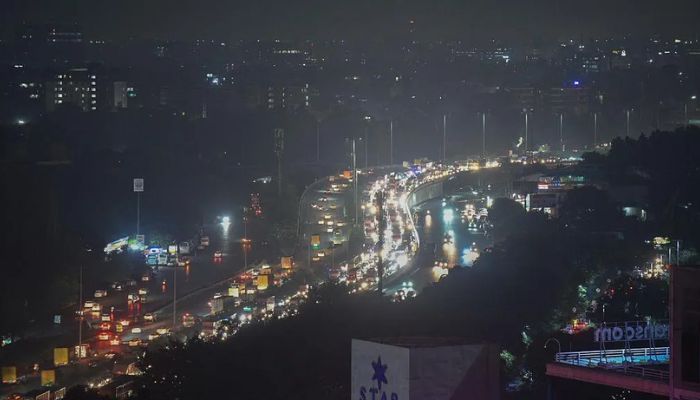
Haryana also sees its own set of issues. The state’s corporate capital, Gurugram, was submerged in water after heavy rains on Monday, 1st September. Major roads, underpasses, and residential areas were flooded, and traffic came to a standstill.
Image via Hindustan Times
The situation further aggravated when Aravali dam in Kadarpur village was broken, leading to flooding of villages that surround it. Vehicles were stuck for hours, and schools were forced to adjust bus timings so that kids would be home without an issue. Authorities have suggested that private companies make it compulsory for employees to work from home, thereby minimising disturbances.
Farmers in rural Haryana reported extensive damage to crops as heavy rain inundated their fields.
Punjab faces its worst floods since 1988
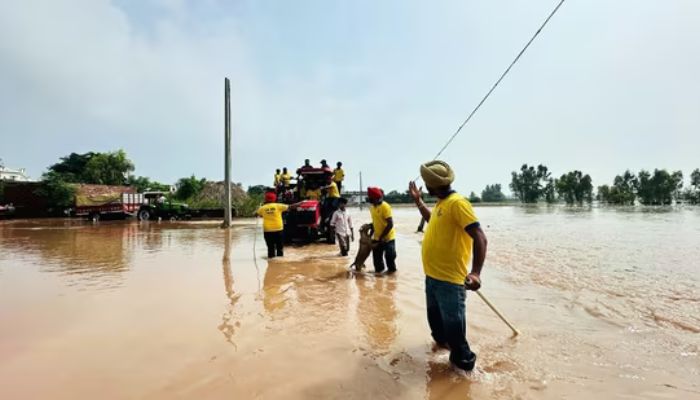
Punjab is suffering from one of the worst floods in the last 37 years. Non-stop rain in the last week has converted huge tracts of the state into a sea of water. Massive rain in Himachal Pradesh and Jammu & Kashmir has driven rivers such as the Sutlej, Beas, and Ravi to perilous heights, submerging villages and agricultural fields.
Earlier, the state had 12 districts affected by the floods, as per a bulletin released by the state government on the affairs from 1st August to 1st September.
As per a bulletin released on Tuesday, 2nd September, 23 districts of the state have been announced hit by the floods.
1,400 villages have been notified as hit with an estimated 3.5 lakh people affected till now, of which the deluge has claimed 30 lives in 12 districts. Pathankot alone has reported six fatalities.
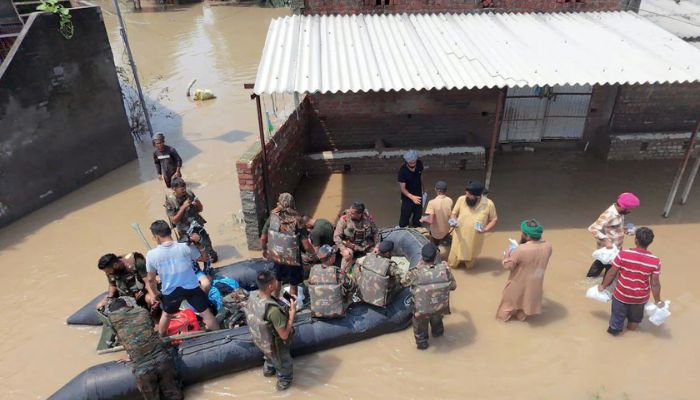
Army launches rescue operation as Punjab grapples with the worst floods in 37 years (Image via IANS)
Punjab is facing its worst floods in almost four decades, with 29 individuals having lost their lives in 12 worst-affected districts of the border state.
As per the data gathered by the Punjab government between 1st August to 1st September, since rivers and rivulets began overflowing following heavy rain in Himachal Pradesh and Jammu and Kashmir hills, six persons lost their lives in Pathankot district following the swollen Ravi river, three each in Hoshiarpur, Amritsar, Ludhiana, Mansa, Rupnagar and Barnala districts.
The flood took one life each in Bathinda, Gurdaspur, Patiala, Mohali and Sangrur districts.
Three individuals are missing in Pathankot district after the flash floods devastated the area last week. Apart from the Ravi, the Beas and Sutlej have wreaked havoc in Punjab, causing one of the worst floods after 1988.
“Figures of deaths have been compiled based on the reports received at the district headquarters. It covers those who died by electrocution, incidents of house collapsing and died in drowning due to floods in the affected areas,” said a senior state government officer.
As per the official statistics, 56,834 acres of farm land have been damaged in Amritsar district, followed by 42,020 acres in Mansa district, 36,902 acres in Kapurthala, 29,363 acres in Tarn Taran, 27,754 acres in Ferozepur, 14,754 acres in Hoshiarpur and 6,034 acres in Pathankot district.
Relief efforts are at full capacity. 16,000 individuals have been evacuated, and 7,000 are residing in government-operated relief camps.
Flash flood warnings for the Himalayan states
The IMD issued a flash flood warning on Tuesday, 2nd September, in parts of Uttarakhand, Jammu and Kashmir, Ladakh, and Himachal Pradesh amid continuing heavy rainfall. The forecast indicates a number of districts are at “moderate to high risk” of flash flooding in the next few days.
Districts such as Almora, Chamoli, Dehradun, Rudraprayag, and Pithoragarh of Uttarakhand, and Kullu, Shimla, Chamba, and Kangra of Himachal have been instructed to stay on high alert. Anantnag, Ramban, Kathua, and Kulgam districts in Jammu & Kashmir are under danger.
Uttarakhand affected by cloudbursts and landslides
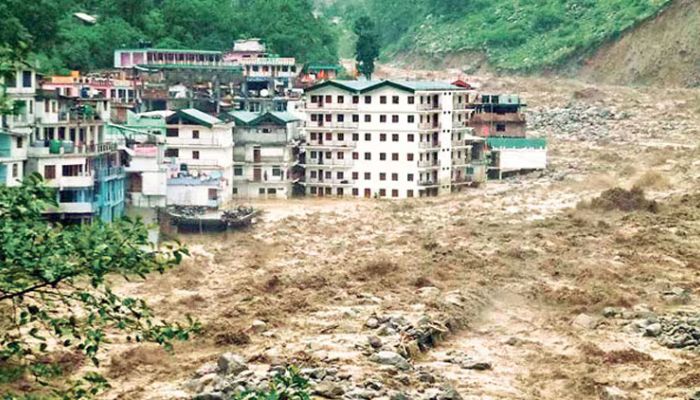
Uttarakhand has been severely affected. Cloudbursts, flash floods, and landslides have razed houses, bridges, and fields. Rudraprayag and Chamoli districts were severely affected. At Basukedar, four houses were destroyed, although fortunately, individuals were relocated in time.
During another incident in Chamoli, rubble had accumulated within houses, injuring a couple, while two people went missing in Dewal. In Bageshwar, cowsheds collapsed and some animals were killed.
Image via PTI
The Alaknanda and Mandakini rivers are flowing above the danger mark, forcing people to vacate their homes. The Hanuman temple in Rudraprayag got submerged, while a bridge was swept away in the Kedarnath valley.
Chief Minister Pushkar Singh Dhami said that he is monitoring the situation himself. “Rescue teams are on ground, and schools in most districts have been closed as a precautionary measure,” he added.
Himachal declares itself disaster-hit
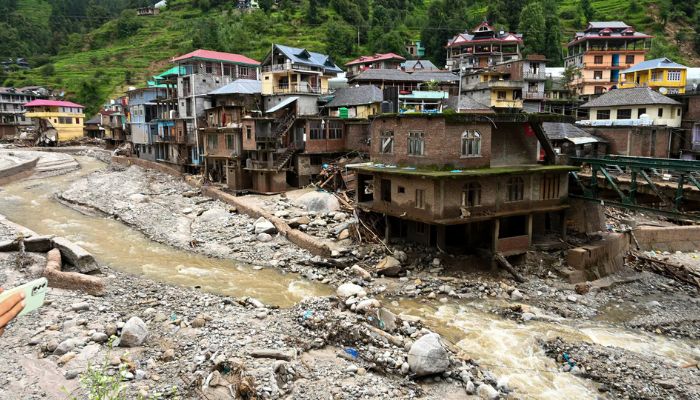
More than 300 people have died in Himachal Pradesh since 20th June as relentless monsoon rain triggered landslides, flash floods and widespread damage to homes, farms and infrastructure, officials said.
According to the State Disaster Management Authority (SDMA), 166 people were killed in rain-related incidents such as landslides, drowning and electrocution, while another 154 died in road accidents linked to the weather. At least 379 others were injured.
Image via Hindustan Times
“Entire Himachal Pradesh has been declared a disaster-hit state and notification has been issued to declare the state as disaster-hit,” announced Chief Minister Sukhvinder Singh Sukhu in the Himachal assembly on Monday in the wake of the widespread devastation faced by the state that has suffered ₹3,056 crore losses so far.
The Himachal Pradesh government declared the rain-battered entire state as “disaster-affected” under Section 34 of the National Disaster Management Act, following widespread devastation caused by incessant monsoon rains, landslides and cloudbursts since late June.
The CM said, “The monsoon reactivated on 21st August, triggering a fresh wave of extreme rainfall, landslides, and cloudbursts, affecting Chamba, Kullu, Lahaul-Spiti, Mandi, Shimla, Kangra, and Hamirpur districts the most.”
He said the Chamba district is the worst-hit. No district is untouched by the devastation, with maximum damage is of roads, power infrastructure and drinking water schemes.
The impact of the cloudburst has been severe in several locations. In Rudraprayag district, six people went missing. Water levels of the Alaknanda and Mandakini rivers at their confluence are continuously rising. In Kedarnath Valley’s Lawara village, a bridge on the motor road was swept away by strong currents. The situation in Chenagad has also turned critical.
Looking at the large-scale devastation being faced by the state, former chief minister and Bharatiya Janata Party leader Shanta Kumar has written to Prime Minister Narendra Modi seeking a special grant for the state.
In his letter to PM Modi, he mentioned that the Government of India has around ₹2 lakh crore belonging to people without heirs. He had written to the Prime Minister, along with the complete list from all banks and LICs. “This ₹2-lakh crore belongs to those people who had deposited money but died without any legal heirs. This entire wealth belongs to the nation,” mentioned Shanta Kumar in his letter.
Flood alert in Jammu & Kashmir
In Jammu, the Chenab River is flowing dangerously high after heavy rains and water release from dams.
The authorities have opened the spill gates at the 900-MW Baglihar hydroelectric project and 690 mw Salal hydroelectric project over the Chenab River.
The 250 km long Jammu-Srinagar national highway (NH 44) has also been closed for traffic movement following heavy rains.
“It’s been raining heavily almost along the entire stretch of NH-44 since wee hours. Apart from sinking zones created at Tharad and Balli Nullah due to incessant rains, there are reports of slides and shooting stones at Tharad, Samroli Chanderkote, Mehar, Monkey Morh, Digdol, Kishtwari Pathe etc. In view of heavy rains, landslides, mudslides and shooting stones, traffic movement has been stopped,” said a traffic police officer.
The pilgrimage to Shri Mata Vaishno Devi Yatra remained suspended for the eighth consecutive day on Tuesday, 2nd September, due to inclement weather conditions in Trikuta hills in Reasi district, said officials.
Since 26th August, when 34 Vaishno Devi pilgrims were killed and scores injured in a landslide near Adhkuwari, Shri Mata Vaishno Devi Shrine Board has suspended the pilgrimage, said a police officer.
He informed that repair and restoration work was on but the pilgrimage remains suspended in view of rains.
“Only members of the shrine board staff and a few security personnel attend morning and evening Arti,” he said.
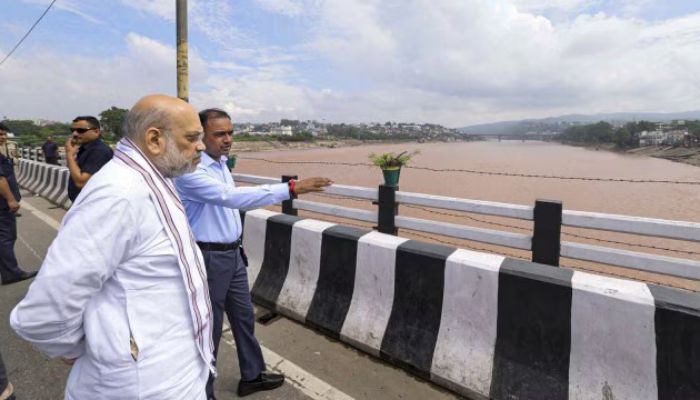
Home Minister Amit Shah at the Tawi Bridge in Jammu (Image via PTI)
Union Home Minister Amit Shah recently visited Jammu, while Chief Secretary Atal Dulloo chaired a meeting to ensure that essential services were restored and public infrastructure was made safe.
Heavy rain forecast in Northeast
IMD issues heavy rain alert, Arunachal to see widespread showers this week. The India Meteorological Department (IMD) on Tuesday, 2nd September, issued a heavy rain alert for West Kameng district, warning that intense showers are “very likely” at isolated places by 3rd September.
According to the district-wise weather maps, Arunachal Pradesh is expected to see scattered to widespread rainfall over the next five days, with varying intensities across different regions.
This monsoon season has turned out to be one of the toughest in recent memory. From Punjab’s farms drowning under floodwaters to Uttarakhand’s cloudbursts sweeping away bridges, and from Delhi’s Yamuna crossing danger levels to Arunachal’s looming threats, large parts of the country are battling nature’s fury.
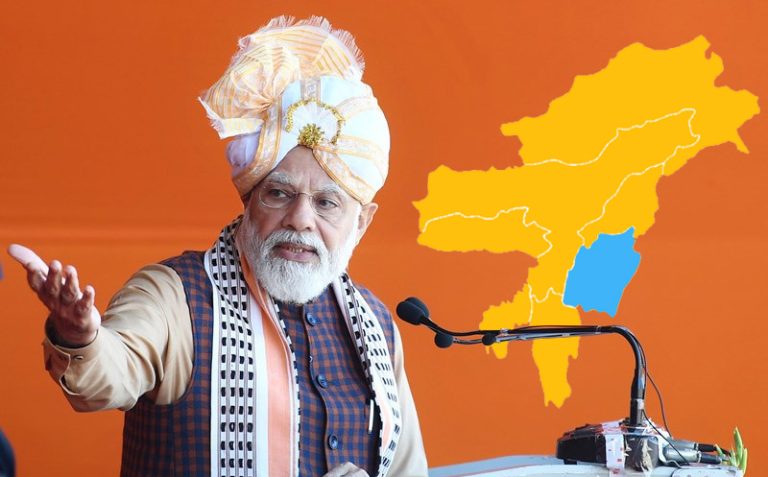
Prime Minister Modi is reportedly set to visit Manipur in the second week of September 2025. This is going to be the first visit of the Prime Minister in two years since the ethnic violence erupted in the state in May 2023. The state has been under the President’s rule since February 13, 2023.
The speculation about PM Modi visiting the state was strengthened after Manipur Chief Secretary Puneet Kumar Goel chaired a meeting on Sunday (29th August), which was attended by several officials. In the meeting, which was described as a “preparatory meeting for the proposed VVIP visit in September 2025”, police were reportedly directed to beef up security arrangements at two venues- the Kangla Fort in Imphal (the traditional seat of power in Manipur) and the Peace Ground in Churachandpur (a Kuki-majority district).
In addition to that, a notice was issued by the Manipur DGP, directing that no leave should be granted to any official or personnel between the 7th and the 14th September, except in case of extreme emergencies. PM Modi is likely to inaugurate a railway project on 13th September in Imphal.
Kuki-Zo Council representatives hoping to meet the PM
According to reports, some Union Home Ministry officials will meet representatives of the Kuki-Zo insurgent groups on Wednesday (September 3, 2025), to decide on the extension of the suspension of operations (SoO) agreement, which was signed by the Central and the state governments with the Kuki National Organisation (KNO). The Manipur government withdrew from the tripartite pact on February 29, 2024.
Spokesperson of the Kuki Zo Council, Ginza Vaulzong, expressed hope that PM Modi will meet the representatives of the Kuki community. “If he is stopping by Manipur to understand our hardship and address our issues, then it will be very good. We expect him to sit with our leaders to understand our situation and demands. We also expect him to visit relief camps to see the hardships our IDPs (internally displaced people) face,” said Vualzong.
On June 9, 2025, the Union Home Ministry resumed talks with the Kuki-Zo SoO groups after a two-year gap since the ethnic violence, to renegotiate the SoO agreement with stricter ground rules. One of the conditions is reducing the number of SoO camps from the existing 14 camps to 7, away from the Meitei-dominated areas. The insurgent groups will reportedly hold talks with the Home Ministry Adviser (Northeast), A.K. Mishra, and Intelligence Bureau officials today (September 3, 2025). Ahead of the Prime Minister’s visit, the Kuki-Zo civil society groups are likely to unblock NH2 and NH37, which pass through the Kuki-Zo inhabited areas. NH2 and NH37 connect the landlocked Imphal valley to Nagaland and Assam, respectively. The highways, which are the key routes for the supply of essential commodities, have been blocked for the Meitei people for the last two years.
What is the SoO agreement
The Suspension of Operations (SoO) agreement is a tripartite agreement, signed by the central government and the Manipur government with the Kuki National Organisation on August 22, 2008, to put a stop to hostilities by Kuki militant groups. Under the pact, 25 armed Kuki armed groups agreed to stop violence in all forms. The central and state governments also agreed not to use force (army, paramilitary, state police) against the signatory Kuki militant groups as long as they follow the terms of the agreement.
After the agreement, a Joint Monitoring Group (JMG) was formed comprising the principal secretary (Home), the inspector general of the additional director general (intelligence), representatives of the army, paramilitary forces and the home ministry. The group was to meet every month and see if the signatory militant groups were sticking to the terms of the agreement.
The terms of the agreement included-
The cadres of the signatory militant groups were to remain in designated camps.
The routine administration of the camp would be controlled by the groups staying therein.
A monthly stipend of ₹6,000 was paid to the cadres.
These camps will not be located near populated areas, the National Highways, or the international border.
The special branch of state police will be provided with a complete list of all the cadres, with details like names, date of birth and latest photographs.
All cadres will be issued identity cards.
Members of the groups, which move frequently, will be provided with different photo identity cards by the IGP (Intelligence) Manipur.
Some terms of the agreement have been revised over the years. The agreement has been extended every year since 2008, and its last extension ended on February 29, 2023.
Ethnic violence in Manipur
Violent clashes erupted between the Meitei community and the Kuki-Zo tribal community in Manipur after the Manipur High Court passed an order on March 27, 2023, directing the Manipur state government to submit recommendations to the Union government for the inclusion of Meitei in the Scheduled Tribes (ST) list. The order was passed by the High Court on several petitions filed by Meitei activists seeking the said direction. The Kuki-Zo community was opposed to the conferment of ST status on the Meitei community. The ethnic violence involved killings, arson and incidents of sexual violence, resulting in around 260 deaths and 60,000 people being displaced.
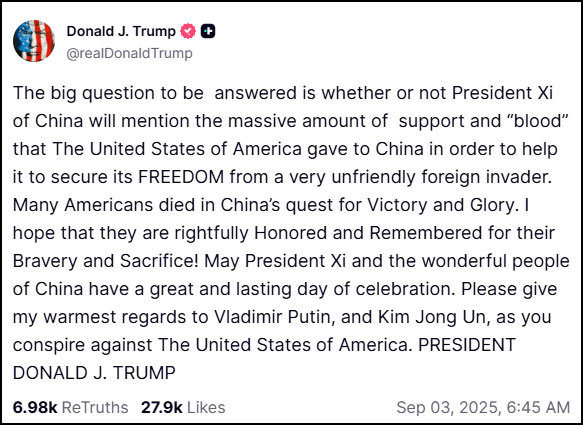
As China hosted its largest-ever Victory Day parade on 2nd September marking the 80th anniversary of Japan’s surrender in World War II, Nobel Peace Prize aspirant and US President Donald Trump could not hold back from claiming credit of China’s 1945 war victory against Japan. Trump published a post on Truth Social urging China to recognise the US’s role in securing China’s freedom.
“The big question to be answered is whether or not President Xi of China will mention the massive amount of support and “blood” that The United States of America gave to China in order to help it to secure its FREEDOM from a very unfriendly foreign invader. Many Americans died in China’s quest for Victory and Glory. I hope that they are rightfully Honored and Remembered for their Bravery and Sacrifice! May President Xi and the wonderful people of China have a great and lasting day of celebration.” Trump wrote.
Source: Truth Social
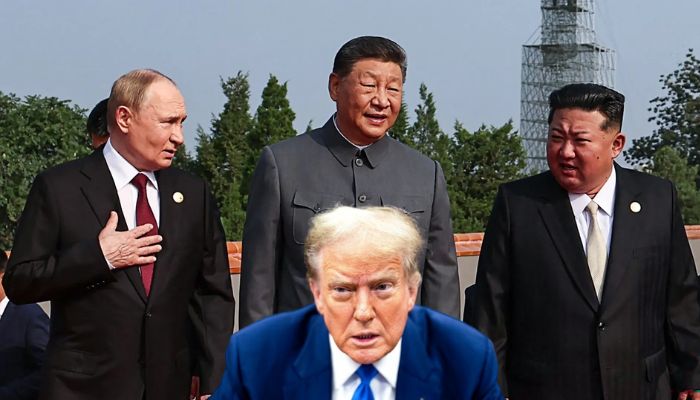
Days after saying that strengthening ties of Russia and China with other nations does not pose a threat to the US, Trump accused Russian President Vladimir Putin, Chinese President Xi Jinping and North Korea’s dictator Kim Jong Un of ‘conspiring’ against the US.
“Please give my warmest regards to Vladimir Putin, and Kim Jong Un, as you conspire against The United States of America,” Trump posted.
Interestingly, while Donald Trump expects Xi Jinping to give credit to the US for its ‘role’ in securing Japan’s surrender in 1945, the Chinese Communist Party does not even give proper credit to the Chinese leaders who fought and defeat the Japanese forces. It was the Republican government of China under the leadership of Chiang Kai-shek, who majorly fought the Japanese.
In fact, the communists were accused of attempting to grab power in the name of fighting the Japanese. The People’s Republic of China under CCP was formed in 1949 after ousting the Republicans following the latter’s defeat in the civil war. While the People’s Republic of China did not even exist in 1945, the CCP now pushes the narrative that somehow it was the communists who led the resistance. So, if Trump expects CCP-ruled China to give credit to the US for its victory, he is up for a big disappointment.
China’s Victory Day parade
China held a massive military parade on Tuesday (2nd September) to mark the 80th anniversary of the end of World War II. Russian President Vladimir Putin and North Korean leader Kim Jong Un were in attendance as Beijing exhibited its military prowess.
BREAKING: Xi Jinping, Vladimir Putin, and Kim Jong Un have arrived for the start of China's biggest ever military parade
China showcased its HQ 9C missiles during the Victory Day Parade in Beijing. A version of the HQ-9 missile system has been acquired by Pakistan for its defence network. It purportedly saw action as per the Pakistan media in Operation Sindoor; however, it failed to protect Pakistani airspace from Indian missiles.
#WATCH | HQ-9C missiles seen in China's Victory Day Parade, in Beijing.
A version of the HQ-9 missile system has been acquired by Pakistan for its defence network. It purportedly saw action as per Pak media in Operation Sindoor, however, failed to protect Pakistani airspace… pic.twitter.com/18LiAGinCb
Chinese President Xi Jinping, terming the country “unstoppable,” assured its commitment to peaceful development. “China will adhere to the path of peaceful development. The rejuvenation of the Chinese nation is unstoppable, and humanity’s cause of peace and development will prevail,” Xi Jinping said.
Noting the conflicts around the world, Xi Jinping assured that China will firmly stand on the “right side of history” and will join hands to build a community with a shared future for humanity.
China's military parade kicked off with an 80-gun salute. The event marks 80 years since Japan’s defeat in World War II. Follow along for live updates: https://t.co/FGbJhNFXg3pic.twitter.com/Tq62OFrNXL
“Humanity is again faced with a choice of peace or war, dialogue or confrontation, and win-win outcomes or zero-sum games. The Chinese people will stand firmly on the right side of history and on the side of human progress, adhere to the path of peaceful development, and join hands with the rest of the world to build a community with a shared future for humanity,” Xi said.
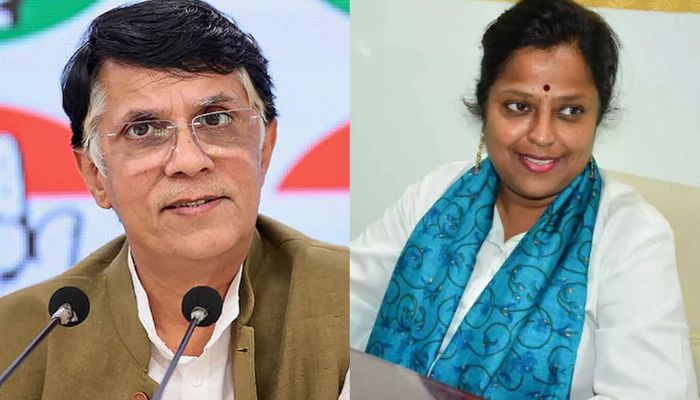
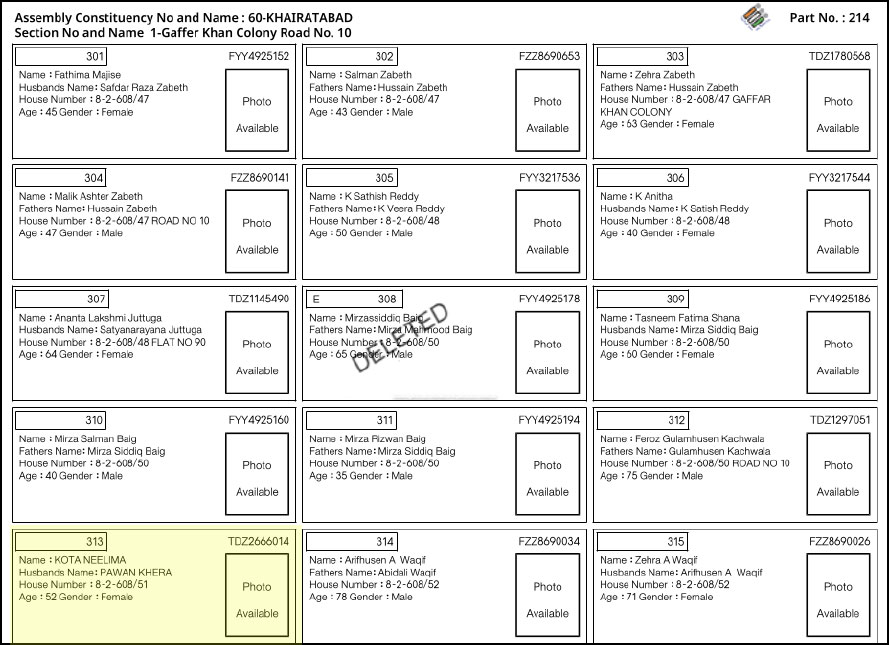
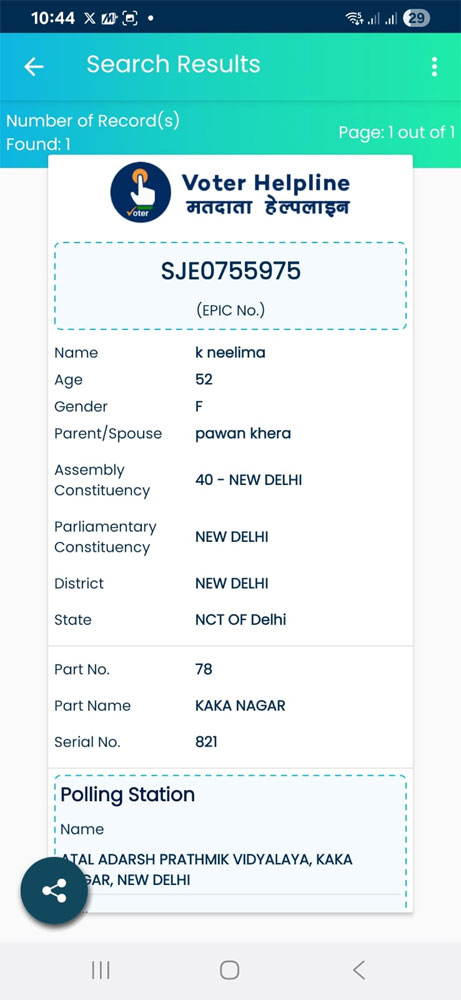
On 3rd September, fresh allegations have been made against Congress spokesperson Pawan Khera as his wife Kota Neelima has been found to have her name registered as a voter in three different polling stations across two states. According to the details shared by Bharatiya Janata Party (BJP) IT Cell Chief Amit Malviya, Kota Neelima has her name registered in the electoral roll at three locations, two in Hyderabad, Telangana, and one in New Delhi’s Kaka Nagar constituency. The presence of her name in the electoral roll at two locations was confirmed by OpIndia.
Rahul Gandhi held a press conference and, without adequate due diligence, targeted and tarnished honest voters — even putting them at risk by revealing their identities without consent. He doxxed young, upwardly mobile professionals and poor daily wagers who had moved cities in… pic.twitter.com/WWjM3OUIZB
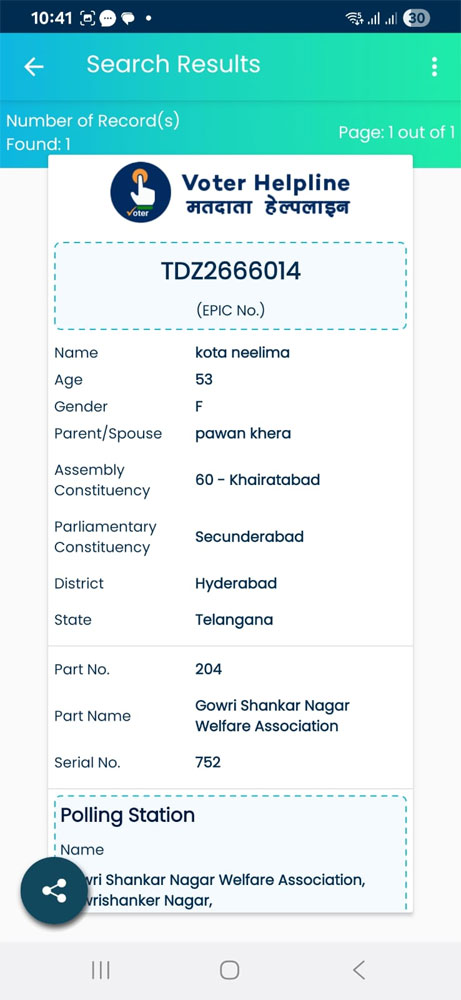
According to the details shared by Malviya, in her 2023 affidavit, which was cross-checked by OpIndia, Neelima was registered as a voter in Khairatabad with EPIC number TDZ2666014. The EPIC number, according to Malviya, was at two polling booths.
Source: Election Commission of India
One was confirmed by OpIndia during an independent search on the Voter Helpline App and the other was confirmed while checking the details of the electoral roll available on the Election Commission of India’s website for the 2024 General Elections.
Source: Election Commission of India/Voter Helpline App
In addition, she holds another EPIC number SJE0755975 in New Delhi’s Kaka Nagar constituency, the same address as her husband Pawan Khera.
Source: Election Commission of India/Voter Helpline App
Duplicate voter IDs of Pawan Khera
This revelation follows the embarrassment of 2nd September when it was revealed that Khera himself had two EPIC numbers, one in Jangpura and another in New Delhi. Both were verified by OpIndia to be active. The controversy grew further when it was noted that even deletions for a deceased family member, Khera’s sister Roopam Khera, had not been carried out.
Rahul Gandhi’s silence and contradictions
Despite making “vote chori” a political slogan, Congress leader Rahul Gandhi has not commented on the duplications involving his own close aides. Not to forget, he has been holding press conferences targeting common citizens, at times even revealing their identities without consent. His silence on the irregularities of Pawan Khera and Kota Neelima now stands in sharp contrast to his accusations against others.
Counter-allegations by Pawan Khera
Pawan Khera came into offence mode on the allegations of him having two EPIC numbers. In a post on social media platform X, Khera claimed that this is exactly what Congress has been accusing the ECI of. He demanded to see CCTV footage and asked who voted in his name as he, according to his claims, had applied for the deletion of his name from the New Delhi constituency. However, the post was later deleted and he reposted a video shared by ANI on the same.
#WATCH | In a tweet, BJP leader Amit Malviya claims that Congress Pawan Khera holds two active EPIC numbers (in Jangpura and New Delhi Assembly Constituencies).
Pawan Khera says, "This is exactly what the Congress party is saying. This is the question that we are raising… pic.twitter.com/jxKcTAfy9Z
The duplications raise questions not just about individual lapses but about Congress’s larger relationship with electoral rolls. From Sonia Gandhi’s name appearing on voter lists before she became a citizen in 1980, to the recent duplications of its spokesperson and his wife, the pattern fits a history of Congress exploiting electoral systems while accusing others of malpractice.
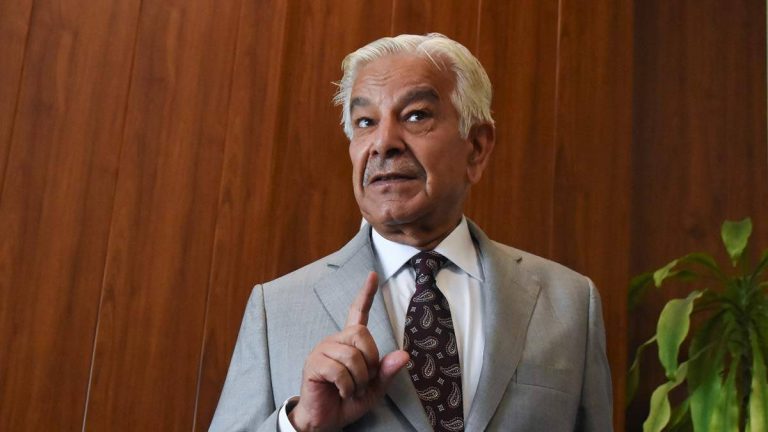
As Pakistan grapples with one of its worst flood disasters in recent memory, Defence Minister Khawaja Asif has triggered a storm of criticism with a bizarre suggestion that citizens should treat floodwaters as a “blessing” and store them at home.
In a video clip amid the current monsoon deluge, Asif can be heard telling Dunya News: “People who are protesting against the flood-like situation should take the floodwaters home. They should store this water in tubs, in lakes, in containers. We should look at these waters in the form of a blessing and hence should store it.”
The remarks have resurfaced at a time when Punjab province is reeling under catastrophic rains. At least 33 people have died, 2,200 villages have been inundated, and more than 700,000 residents displaced. Thousands of livestock have also been moved to safer areas, but anger simmers among villagers in Bahawalnagar, Bahawalpur, and Kasur, who accuse the government of apathy.
Provincial Disaster Management Authority (PDMA) chief Irfan Ali Kathia admitted Punjab is facing one of its severest floods in history. Although water levels in the Sutlej River near Kasur have begun receding, officials fear fresh inflows could devastate downstream districts.
The national picture is even grimmer. Since late June, torrential rains and flash floods have killed more than 850 people and injured over 1,100, according to the National Disaster Management Authority (NDMA). More than 9,000 houses have been damaged, over 2,000 completely destroyed, and tens of thousands forced into relief camps. Altogether, some 2.4 million people have been affected across Pakistan.
Yet, against this backdrop of misery, Asif’s so-called “bucket plan” has fueled widespread ridicule. With millions displaced and entire communities submerged, the suggestion to collect floodwater in tubs and buckets appeared grossly out of step with the magnitude of the crisis. Critics accused the government of trivialising the plight of citizens and failing to provide effective relief.
Meanwhile, authorities remain on high alert. Rising waters from the Chenab are expected to hit Multan soon, merging with inflows from the Ravi. The Panjnad River is forecast to peak around September 5, while the Sutlej continues to push dangerously high volumes toward Suleimanki and Head Islam barrages.
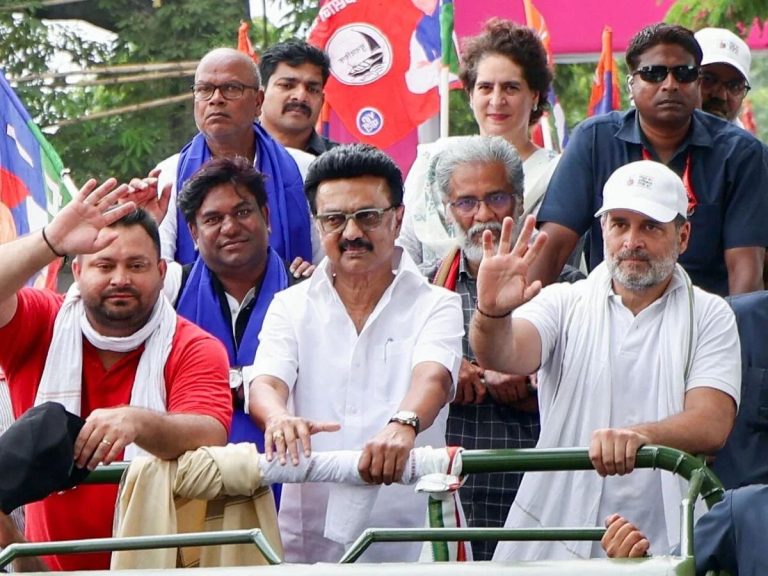
Congress leader Rahul Gandhi’s controversial 16-day ‘Voter Adhikar Yatra’ has ended. This yatra covered 23 districts, 1300 kilometres and 67 assembly seats in poll-bound Bihar. While the purpose of this yatra was to gain public support and bolster I.N.D.I. Alliance by peddling the ‘Vote Chori’ (vote theft) bogey, its impact has been the exact opposite.
The Congress party which led this Voter Adhikar Yatra neither managed to win the trust of the people nor could unity be seen within the alliance. The controversy, mutual differences and the indifference of the local people during the yatra made it a topic of discussion. Let us understand every aspect of this yatra in detail.
Voter Adhikar Yatra and its failure
Rahul Gandhi started the Voter Adhikar Yatra from Sasaram, in which RJD leader Tejashwi Yadav was with him. Its aim was to make vote theft a big issue and tell the people of Bihar that their voting rights are in danger. In addition, this march’s aim was to demonstrate the unity of I.N.D.I. bloc and make Tejashwi Yadav the face for the post of Chief Minister in Bihar. However, both these goals could not be achieved.
The local people did not pay much attention to this yatra. Talking to Dainik Bhaskar, senior journalist Sanjay Kaushik says, “The biggest loss of the Voter Adhikar Yatra was in the selection of issues. The issue of vote theft could not resonate among the people of Bihar. People consider SIR (Special Electoral Registration) necessary, because they believe that the names of outsiders, infiltrators and dead voters should be removed from the voter list.” Due to this, Rahul Gandhi failed to garner local support.
OpIndia also covered Rahul Gandhi’s Voter Rights Yatra. During this, our team talked to the people. People not only rejected Rahul Gandhi’s visit, but also called Bihar SIR very important. The local people also seemed troubled by the influx and dominance of infiltrators.
The route map of the Yatra was also made keeping in mind the Muslim dominated areas, so that this community could be attracted towards the I.N.D.I. alliance. The Yatra which started from Sasaram, Rohtas passed through Aurangabad, Gaya, Wazirganj, Sheikhpura, Munger, Bhagalpur, Katihar, Purnia, Supaul, Darbhanga, Sitamarhi, Bettiah, then Gopalganj, Chhapra, Bhojpur and ended in Patna. But this strategy also did not work. Left parties were included in areas like Ara, but there too they could not gather large crowd.
Rahul Gandhi’s limelight hogging, rift in the alliance and its impact on Tejashwi Yadav’s image
RJD hoped that this yatra would make Tejashwi Yadav the face for the post of Chief Minister in Bihar, however, this did not happen. During the yatra, Rahul Gandhi drew all the attention towards himself, which damaged Tejashwi’s image. Talking to Dainik Bhaskar, senior journalist Nachiketa Narayan says, “Rahul Gandhi exposed the internal bitterness of the alliance by avoiding declaring Tejashwi as the face for the post of Chief Minister.”
In addition, tensions also emerged between RJD and Congress regarding seat sharing. Before the yatra, there was a discussion that Congress will not get even 40 seats in the Mahagathbandhan. But after the yatra, it seems that Congress can get some more seats. Despite this, no significant benefit is seen at the ground level.
Controversies sank the boat of Voter Rights Yatra
Many controversies during the yatra further weakened it. The biggest controversy arose over the participation of Tamil Nadu Chief Minister MK Stalin. Stalin joined the yatra in Muzaffarpur on 27th August. But people remembered the old anti-Bihari and anti-Hindu statements of DMK leaders.
DMK MP Dayanidhi Maran had called people from Bihar and UP ‘toilet cleaners’, while Stalin’s son Udhayanidhi had called Sanatan Dharma a disease. BJP spokesperson Prabhat Malakar said, “This yatra was a yatra of insult to Bihar and Biharis. Rahul and Tejashwi travelled with people who questioned the DNA of Bihar.”
The second major controversy took place in Darbhanga, where Prime Minister Narendra Modi was abused from the stage. Mohammad Rizvi was arrested in this case. The video of this incident went viral and the BJP made it an issue across the country.
Union Home Minister Amit Shah said during his Assam visit, “Rahul Gandhi should apologize for the abusive words he used against PM Modi and his late mother.” PM Modi himself also raised this issue in front of the public. In such a situation, this controversy further damaged the credibility of the visit. Even Prime Minister Modi has condemned the abusive language used against his deceased mother and said that she had nothing to do with politics and yet the opposition leader insulted her. PM Modi added that insult to his mother, is insult to all the mothers in India.
Pappu Yadav and Kanhaiya Kumar’s role is limited, they remain on the backfoot
Leaders like Pappu Yadav and Kanhaiya Kumar were also included in the yatra, but their role was also not untouched by controversies. Pappu Yadav was used in Purnia, but later he was not even given a place on the stage. In Patna, he was seen sitting behind the stage, while he even called Tejashwi Yadav ‘Jananayak’. Kanhaiya Kumar was seen in the yatra in the beginning, but later disappeared.
RJD is still not ready to accept people like Pappu Yadav and Kanhaiya Kumar. In such a case, RJD did not accept both of them completely, due to which the gap of mutual distrust in the alliance has widened.
Disappearance of Tejashwi’s issues
RJD was hoping that this yatra would make Tejashwi Yadav the front face of the I.N.D. Alliance in Bihar, but the opposite happened. Rahul Gandhi hogged all the limelight. Due to this, differences also came to the fore between Congress and RJD that Rahul Gandhi dominated Tejashwi Yadav. Due to this, the conclusion of the yatra was changed and the yatra was ended in Patna in a very disappointing atmosphere.
There is a section of people in Bihar who has only read the stories of Jungle Raj, has only heard about that time, they have not lived through Jungle Raj. This class of voters has seen Nitish Kumar in power for 20 years. There was an anti-incumbency factor in this class of voters who did not know about Jungle Raj. This class was also looking towards Tejashwi Yadav as an option out of helplessness. They were looking at him in 2020 and are still looking at him.
This is the reason why Tejashwi Yadav used to talk about education, employment and all constructive issues. But the fake agenda of vote theft imposed by Congress made Tejashwi Yadav lose his issues and chance establish an impression in the minds of voters that he could be their leader. It is clear – Congress’s agenda of vote theft suppressed the issues Tejashwi Yadav could have played on.
Due to all this, the popularity of Tejashwi who was emerging among the new voters with the issues of education and employment also slipped out of the hands of Tejashwi and the Indy alliance. Nachiketa Narayan says, “Congress was successful in putting itself at par with RJD. Apart from this, it did not gain much. The issue of vote theft was rejected by the people. The evidence shown during the yatra either turned out to be wrong or the public did not accept it.”
What did the Indy Coalition get?
The I.N.D.I. Alliance got mixed benefits from the yatra. For the Congress, it was an opportunity to strengthen the organization. Sanjay Kaushik says, “The Congress organization in Bihar was almost finished. This yatra breathed new life into the workers.” But it is not clear how much benefit it will have in terms of votes.
The yatra was not a profitable deal for RJD. Talking to Dainik Bhaskar, senior journalist Manikant Thakur says, “This yatra did not prove to be a profitable deal for RJD. The only benefit it got was to prevent division of Muslim votes. Strategically, it suffered a loss.” However, Nachiketa Narayan believes that the chemistry between Rahul and Tejashwi can make seat sharing and vote transfer easier.
Smaller parties like CPI (ML) gained some benefit from this visit. Party general secretary Dipankar Bhattacharya was seen with Rahul for the entire 16 days, which increased the importance of his party.
Has the political atmosphere of Bihar changed?
Out of the 67 assembly seats included in the route of the yatra, NDA had won 39 seats in 2020, while Congress had won only 9 seats. Rahul Gandhi had the challenge of breaking the strength of NDA on these seats, but it could not happen. A big rally was planned at Gandhi Maidan in Patna at the end of the yatra, but due to lack of crowd, it was converted into a roadshow. Rahul Gandhi soon left Bihar.
Lost more, gained less
Overall, the discussion that was there before this yatra that Congress will not get even 40 seats in the Indi alliance has changed after this yatra. Now it seems that Congress might snatch some more seats. However, it has also become clear from this yatra that even if Congress gets some more seats in the Indi alliance, it will not benefit them on the ground. Because despite being in the opposition for years, neither Congress nor RJD has any issue. In such a situation, it does not seem at all that Rahul Gandhi’s Voter Rights Yatra has made any significant difference on the ground.
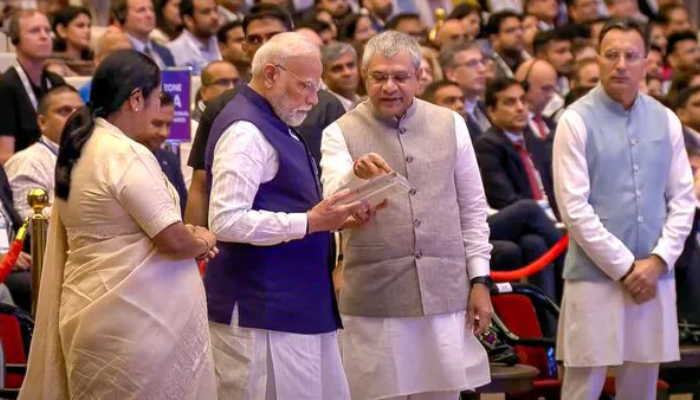
India’s quest towards semiconductor self-reliance reached a significant milestone on 2nd September when Electronics and Information Technology Minister Ashwini Vaishnaw presented Prime Minister Narendra Modi with the country’s first domestically produced Vikram 32 bit processor chip at Semicon India 2025 in Delhi.
After PM Modi launched Semicon India 2025 alongside Delhi Chief Minister Rekha Gupta and Union Minister of Commerce and Industry Jitin Prasada, Vaishnaw additionally presented him with test chips of four projects that had been authorised. “Oil was black gold, but semiconductor chips are a digital diamond,” the prime minister stated, highlighting their crucial role in the country’s progress and development.
Vaishnaw conveyed, “Just a few years ago, we met for the first time to make a new beginning driven by our prime minister’s farsighted vision, we launched the India Semiconductor mission. In a short span of 3.5 years, we have the world looking at India with confidence. Today, the construction of five Semiconductor units is going on at a rapid pace. We just presented the first Made-in-India chip to PM Modi.”
He further emphasized, “We are living in unprecedented times. Global policy turmoil has created huge uncertainty. In these turbulent times, India stands as a lighthouse of stability and growth. In these uncertain times, you should come to India because our policies are stable.”
Vikram 32 bit chip and its features
The Vikram 32 (formally known as Vikram 3201) is the first 32-bit microprocessor that is completely indigenous. It is specifically made for rockets and satellites in contrast to the processors found in everyday devices like laptops and smartphones. It has been developed to survive the harsh conditions (temperatures from -55 degrees Celsius to +125 degrees Celsius) of rocket launches and space environment by the Semiconductor Laboratory (SCL) Chandigarh of the Indian Space Research Organisation.
First ‘Made in India’ Chips! A moment of pride for any nation. Today, Bharat has achieved it. ??
This significant milestone was made possible by our Hon’ble PM @narendramodi Ji’s far-sighted vision, strong will and decisive action. pic.twitter.com/ao2YeoAkCv
The Vikram Sarabhai Space Centre created the Vikram 32 chip which was manufactured at SCL’s 180nm (nanometers) CMOS (Complementary Metal-Oxide-Semiconductor) plant in Punjab’s Mohali. The 16 bit Vikram 1601 microprocessor which has been powering the space agency’s launch vehicles since 2009 has been replaced with it. The Kalpana 3201 chip and the new processor were officially included into the program in March.
The 32-bit structure on which the Vikram 32 is based enables it to process more data more effectively and can do intricate computations needed for satellite and aeronautical missions since it supports floating-point processing. A specially designed Instruction Set Architecture (ISA) for space applications is used by the processor.
The Ada language which is extensively utilised in aeronautical engineering is supported for programming. ISRO produced the compiler, assembler, linker and simulator, among other supporting software tools, domestically. Moreover, efforts are being made to include support for the C programming language.
Importance of Vikram 32 chip
Space-grade processors must endure radiation, high temperatures and launch vibrations They are not commercially available off-the-shelf devices. India has relied on foreign processors for numerous vital tasks up to this point. India obtained autonomy in this area with Vikram 3201 which lowers dependency on exports and supply chain interruptions.
The new version can process more data at once with increased accuracy owing to its 32-bit design. Its 64-bit floating-point capabilities are essential for precise navigation and trajectory computations. Ada programming language is commonly employed in aerospace systems that are crucial to safety.
It can be linked to other avionics modules of a rocket due to on-chip communication interfaces (1553B bus). It is made with 180-nanometer CMOS technology, a process node that is dependable for aerospace-grade applications despite being small by consumer electronics standards.
The Vikram 32 has been designed mainly for satellites and rockets but it is also applicable in other vital applications due to its sturdy construction. High-reliability energy systems, innovative automotive solutions, aeronautical technology and military systems are among its possible uses.
Space tests of the Vikram 3201 have already been completed. During its flight on the PSLV-C60 mission, it supplied power to the PSLV Orbital Experimental Module’s (POEM-4) Mission Management Computer. ISRO gained the confidence to pursue broader adoption after its successful in-orbit validation.
MeitY (Ministry of Electronics and Information Technology) Secretary S Krishnan formally turned over the first production lots of Vikram 3201 and Kalpana 3201 to ISRO Chairman Dr V Narayanan on 5th March. The 32-bit SPARC V8 RISC microprocessor Kalpana was created to work with open-source toolchains. It employs a distinct design methodology while still accomplishing the same goal of indigenous capabilities.
Boost to “Make in india”
ISRO has created a whole ecosystem around Vikram 3201 to reduce reliance on imports, including Ada compilers, assemblers, linkers, simulators and integrated development environments. Furthermore, a C compiler is being developed to increase the flexibility of programming. India would retain control of the development tools and hardware required for mission-critical applications because of this integrated ecosystem.
The space agency unveiled four other domestic devices in addition to the Vikram 3201 with the goal of downsizing launch vehicle avionics: Two Reconfigurable Data Acquisition System (RDAS) variations, a Relay Driver IC and a Low Drop-out Regulator IC with multiple channels. All of these elements work together to minimise the burden placed on foreign electronics for launch vehicles.
Consumer to creator
The first “Made in India” chip is anticipated to be released by semiconductor manufacturer CG-Semi from the Outsourced Semiconductor Assembly and Test (OSAT) pilot plant in Sanand, Gujarat. The initial plan to develop a semiconductor facility in Sanand was authorised by the Narendra Modi administration in 2023.
23 chip design projects have been approved under the Design Linked Incentive (DLI) program to assist inventors and companies. Businesses such as Vervesemi Microelectronics are producing cutting-edge chips for energy systems, electric vehicles, aerospace and defence, demonstrating India ambitious leap in the field.
The India Semiconductor Mission (ISM) was started by the Indian government in 2021. It appears that in just three and a half years the mission has already paid off. Ten semiconductor manufacturing projects totalling over ₹1.60 lakh crore have been sanctioned by the government so far in six states: Gujarat, Assam, Uttar Pradesh, Punjab, Odisha and Andhra Pradesh. Five more semiconductor units are already under construction.
Modern technology relies heavily on semiconductors. They supply vital systems for communication, transportation, healthcare, defence and space. Semiconductors are now essential to both economic security and strategic independence as the world becomes more automated and digitalised.
Although India now employs around 20% of the world’s chip design experts, the country’s manufacturing capabilities have not kept up with demand. Hence, Vikram 32 chip is a significant step towards Atmanirbhar Bharat (India that is self-sufficient) and lessens its reliance on imported microchips.
Semicon India 2025
The goal of the three-day Semicon India conference which was launched in New Delhi is to improve the semiconductor ecosystem in the nation. The conference’s sessions will cover areas such as advanced packaging and semiconductor fabrication projects, infrastructure preparedness, research and artificial intelligence advancements, investment prospects, smart manufacturing and the execution of state-level policies.
Likewise, there will be dedicated sections on workforce development, international collaboration, the startup ecosystem, and the Design Linked Incentive program.
More than 2,500 delegates from 48 countries, 150 presenters and more than 350 exhibitors are among the more than 20,750 attendees of this year’s event. The program also includes pavilions and roundtables tailored to each countries. Greater Noida (2024), Gandhinagar (2023) and Bengaluru (2022) have hosted Semicon India conferences in the past.
On 2nd September, the Delhi High Court dismissed the bail application of Umar Khalid and Sharjeel Imam in the 2020 anti-Hindu Delhi riots larger conspiracy case. The division bench of Justice Naveen Chawla and Justice Shalinder Kaur noted that at this stage, prima facie material exists to show both of them played a role in planning and mobilising protests that spiralled into riots. While rejecting the bail applications of Khalid and Imam, the court clarified that it was not going into the merits of the case but found no ground for parity with other accused who had been granted bail earlier, as the roles attributed to the two were of a different nature.
Court on early mobilisation after CAB
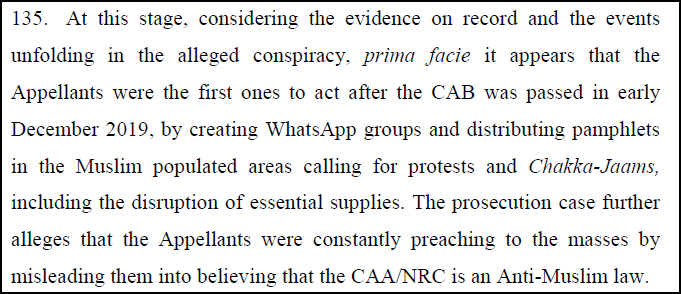
The Delhi High Court observed that in the events that unfolded soon after the Citizenship Amendment Bill was passed in December 2019, it was Khalid and Imam who allegedly took the first steps towards mobilising dissent. The judgment noted, “prima facie it appears that the appellants were the first ones to act after the CAB was passed in early December 2019, by creating WhatsApp groups and distributing pamphlets in the Muslim populated areas calling for protests and Chakka-Jaams, including the disruption of essential supplies.”
Source: Delhi High Court
The bench noted that the prosecution has alleged that there was a deliberate attempt to mislead the public, specifically the Muslim community, into believing that CAA and NRC were anti-Muslim laws. According to the court, this went beyond simple political opposition and was aimed at laying the groundwork for disruption.
Khalid and Imam described as intellectual architects of conspiracy
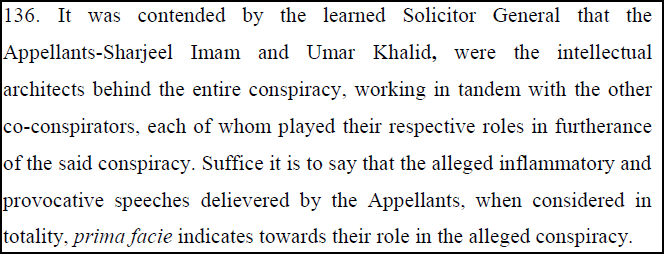
The court also emphasised the role of speeches delivered by Khalid and Imam, and observed that when considered together with other material, they revealed more than just routine political expression. During the hearing, the Solicitor General argued that Imam and Khalid were “the intellectual architects behind the entire conspiracy, working in tandem with the other co-conspirators.”
Source: Delhi High Court
Though the bench did not comment on the ultimate merits, it accepted that, prima facie, “the alleged inflammatory and provocative speeches delivered by the appellants, when considered in totality, prima facie indicates towards their role in the alleged conspiracy.”
The court was satisfied that the speeches could not be viewed in isolation. Such speeches had to be read in the wider context of coordination, mobilisation and disruption that the prosecution alleged was by design.
Physical absence not enough to negate role
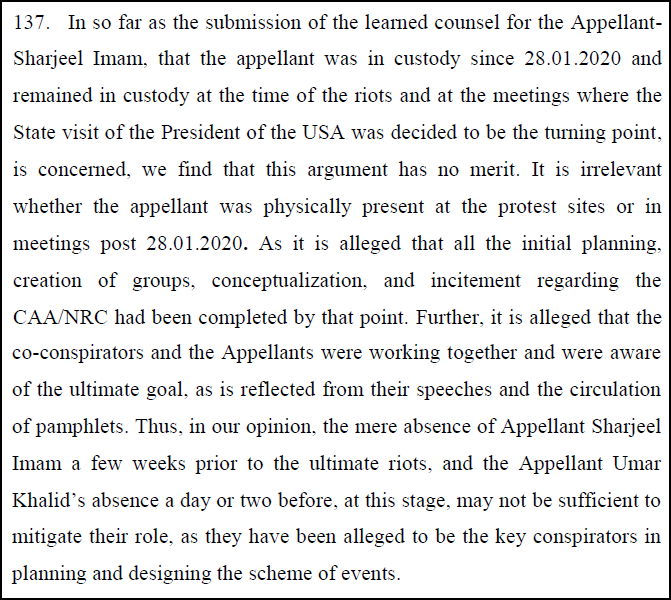
The defence had strongly pressed the point that Sharjeel Imam had been in custody since January 2020 and therefore could not have had a role in the riots. In the case of Umar Khalid, he was also not present at the protest sites on the day of the riots. The High Court, however, dismissed this line of argument.
Source: Delhi High Court
The bench noted, “it is irrelevant whether the appellant was physically present at the protest sites or in meetings” that were held after 28th January 2020 as the key acts attributed to them, “initial planning, creation of groups, conceptualisation, and incitement regarding the CAA/NRC”, had already been completed.
The absence of Imam and Khalid, therefore, could not wipe away their involvement in the larger conspiracy behind the riots. The order concluded that “the mere absence of appellant Sharjeel Imam a few weeks prior to the ultimate riots, and the appellant Umar Khalid’s absence a day or two before, at this stage, may not be sufficient to mitigate their role, as they have been alleged to be the key conspirators in planning and designing the scheme of events.”
Bail rejected on distinct roles
While refusing bail, the court stressed that though it was not entering into a detailed evaluation of the evidence or the merits of the charges, bail could not be granted on parity. The court noted that unlike some other accused, including Devangana Kalita and Natasha Narwal, who had obtained bail, Khalid and Imam could not be granted bail as they stood on a different footing. Their actions, as recorded in the observations, showed a degree of planning and leadership that could not be equated with others.