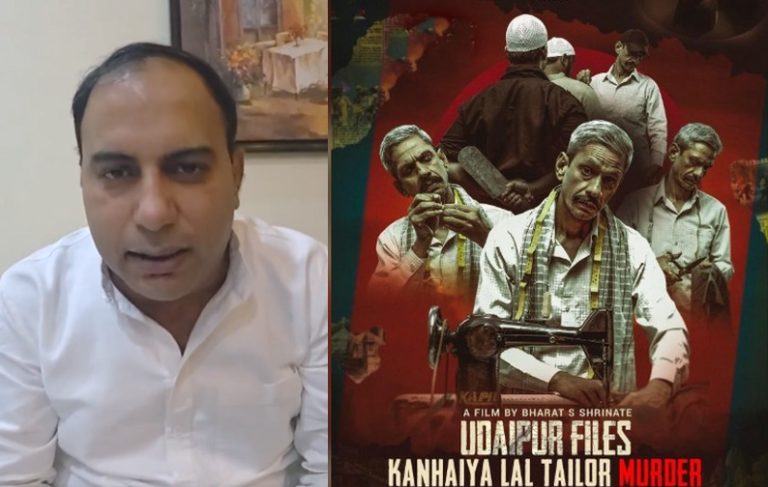
Producer Amit Jani, who backed the controversial film Udaipur Files, has alleged that he has received repeated death threats, just a day after the film was released across India.
Threat claims after release
In a post on X on Saturday, Jani claimed he was receiving persistent calls from an unknown number. According to him, the caller, identifying himself as Tabrez from Bihar, threatened to kill him either by shooting or by a bomb attack. Jani urged authorities to register a case and arrest the accused immediately.
Security already in place
Only last month, the Central government had extended Y-category armed security cover to Jani in Delhi and Uttar Pradesh, after he petitioned the Supreme Court citing life threats. The protection detail, which consists of 8 to 11 personnel including commandos, was sanctioned following the Court’s direction allowing him to seek police protection.
+971566707310 number se lagatar aaj bomb se udaane ki, goli maarne ki dhamki aur gaali galauch ki jaa rhi hai , Ye khud ko Bihar ka rahne wala bata rha hai khud ka naam tabrej bata rha hai ispar mukdma kayam karke isko giraftar kiya jaye @HMOIndia@PMOIndia@Uppolice@UPGovt…
The film finally released on Friday, 8 August, following a clearance from the Delhi High Court a day earlier. It had originally been slated for release on 11 July but was repeatedly delayed owing to censorship hurdles and legal battles. The Supreme Court had also instructed the Delhi High Court to deal with challenges to the government’s approval of its release.
Based on Udaipur murder case
Udaipur Files depicts the 2022 murder of Kanhaiya Lal, a tailor in Udaipur, Rajasthan. Lal was brutally killed in his shop by two men after he allegedly shared a social media post supporting former BJP spokesperson Nupur Sharma, whose remarks on Prophet Mohammed during a television debate had sparked a national controversy.
Police reports state that the accused, Mohammad Riaz Attari and Ghaus Mohammad, posed as customers before attacking Lal with knives and slitting his throat. They filmed the murder and posted the video online, boasting of their act. The crime shocked the nation and drew attention to the dangers of radicalisation and communal tensions.
Initially investigated by Rajasthan police, the case was later transferred to the National Investigation Agency (NIA) and is currently under trial before a special court in Jaipur.
Cast and production
The film features Vijay Raaz in the lead role and has been directed by Bharat S Shrinate and Jayant Sinha. Amit Jani, now at the centre of the security row, has produced the project.
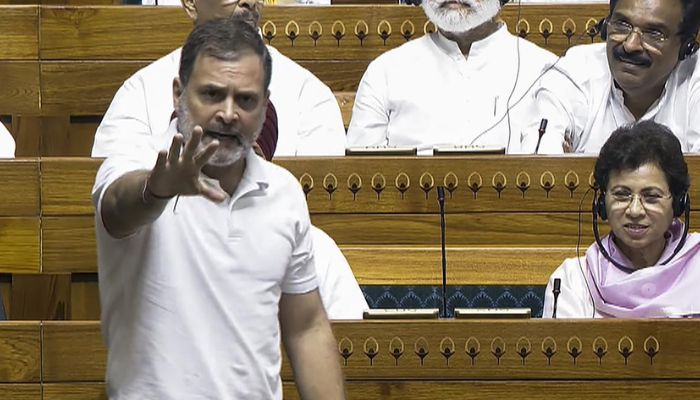
Leader of Opposition in the Lok Sabha, Rahul Gandhi, has taken sharp aim at the government’s handling of Operation Sindoor, India’s military response to the deadly Pahalgam terror attack. Speaking in the Lower House on 29th July, Gandhi accused the ruling BJP of showing weak political will and putting unnecessary restrictions on the armed forces.
The heated debate in Parliament saw the Opposition accusing the government of lacking strategic clarity, while the BJP hit back, accusing Congress of politicising national security and disrupting proceedings. Gandhi, however, insisted that the Opposition had always stood with the armed forces and the government on matters of national security.
“Even before Operation Sindoor began, the Opposition committed itself to stand like a rock with the government and the forces,” he said.
“Political will” and “Freedom of Operation”
Gandhi’s criticism focused on two key points: political will and freedom of operation for the armed forces.
“There are two words: ‘Political Will’ and ‘Freedom of Operation’. If you want to utilise the Indian Armed Forces, you need 100% political will and full freedom of operation,” he said, pointing to the 1971 war as an example.
He recalled how then Prime Minister Indira Gandhi had told General Sam Manekshaw to take as much time as needed to prepare and act, and how that decision led to a decisive victory where 1 lakh Pakistani soldiers surrendered, resulting in the creation of Bangladesh.
Gandhi contrasted that with Operation Sindoor, claiming that the government tied the hands of the military. “You went into Pakistan and told our pilots not to attack their air defence. It was bound that the aircraft would be downed. You tied the hands of our pilots,” he alleged.
He was quick to clarify that the Indian Air Force (IAF) had done no wrong, blaming instead the “political leadership” for restricting them from hitting military targets.
Background of Operation Sindoor
Operation Sindoor was India’s swift and strong military retaliation after the Pahalgam terror attack on 22nd April, in which 26 tourists were killed in Kashmir.
On the night of the attack, India launched 24 precision missiles targeting nine terrorist bases across Pakistan and Pakistan-Occupied Kashmir. These included terror launchpads, training centres, and safe houses. According to Indian government sources, more than 70 terrorists were killed and at least 60 others injured.
One of the worst-hit sites was the Jaish-e-Mohammed (JeM) camp in Bahawalpur. The strikes were meant to send a strong message that India would not tolerate attacks on civilians and would respond with precision and force.
IAF Chief counters claims of “Tied Hands”
Rahul Gandhi’s claim that the government restricted the military was directly contradicted by Indian Air Force Chief Air Marshal AP Singh.
Addressing the 16th Air Chief Marshal LM Katre Memorial Lecture in Bengaluru, the IAF chief credited the success of Operation Sindoor to strong political will and full operational freedom given to the armed forces.
“I was present at the meetings. There was very clear political will, and there were no restrictions imposed. If there were any, they were self-imposed by the defence forces,” he said.
According to him, the military had full freedom to plan and execute the attacks on terror bases and Pakistani air bases. He praised the coordination between the Army, Navy, and Air Force, as well as the role of the Chief of Defence Staff and National Security Advisor Ajit Doval.
Air Marshal Singh revealed that during the operation, Indian forces shot down five Pakistani fighter jets and an AWACS aircraft in the air, destroyed a few American F-16s undergoing maintenance, and hit another large aircraft on the ground.
Addressing doubts over the operation’s success
The IAF chief also addressed the scepticism around Operation Sindoor, saying it was “unfortunate” that some people in India doubted the operation’s success. He explained that since the targets were deep inside Pakistan, over 100 km from the border, getting definitive proof was challenging.
However, he pointed to satellite images and pictures from Pakistani media and social media showing massive damage to the terror bases and air force facilities. He also compared the operation to the 2019 Balakot air strikes, saying that this time the military had much more evidence of success.
Rahul Gandhi’s broader attack on the government’s strategy
Rahul Gandhi didn’t limit his criticism to the military aspect. He also questioned the government’s foreign policy and strategic messaging.
He accused the government of telling Pakistan, “we don’t want to fight” after the operation and mocked what he called the “new normal”, that the mastermind of the Pahalgam attack was having lunch with the US President even before the operation ended.
Gandhi challenged Prime Minister Narendra Modi to directly call out former US President Donald Trump for claiming that he brokered the ceasefire 29 times. “If Trump is lying, let the PM stand here and say: ‘Donald Trump, you are a liar.’ If he has the courage of Indira Gandhi, let him say it here in Parliament,” Gandhi said.
He also warned that India had failed in its biggest foreign policy challenge, keeping Pakistan and China apart and accused the government of underestimating the China-Pakistan partnership.
Congress leaders join in the criticism
Several Congress leaders have echoed Gandhi’s scepticism about Operation Sindoor. Kothur Manjunath, the MLA from Kolar City in Karnataka, asserted that the action has proven ineffective and failed to deliver justice to the family of the victims of the Pahalgam terror attack. “If terrorists can enter our country, kill our people, and escape unscathed, isn’t that a glaring security failure? What was our army doing at the border? Did they have any plan at all?” he asked.
?"Operation Sindoor was a show-off; nothing was done."
Karnataka Congress MLA Kothur Manjunath questioned the effectiveness of Operation Sindoor and the government's claims.
Congress veteran Prithviraj Chavan accused the government of using the name ‘Sindoor’ for emotional or religious gain. Congress leader Udit Raj also levelled similar allegations and accused, “During discussions with intellectuals, it was pointed out that Sindoor is associated with a specific religion, and it would have been better if a different name was chosen.”
Delhi: When asked about the name "Operation Sindoor" for the operation targeting terrorists
Congress leader Udit Raj says, "During discussions with intellectuals, it was pointed out that Sindoor is associated with a specific religion, and it would have been better if a different… pic.twitter.com/ef58ZH3mph
Controversial Congress MP Imran Masood went even further, suggesting that the results of the operation should be made public. He referred back to the Balakot air strike, saying, “The world mocked us. People said we only killed three crows.” His comments aimed to downplay India’s earlier efforts against cross-border terrorism and added fuel to the ongoing debate.
Accusations of spreading conspiracy theories
The ruling BJP has accused Congress, and Rahul Gandhi in particular, of echoing the narratives of Pakistan and China by questioning the success of Operation Sindoor.
They pointed to how Congress leaders raised doubts similar to those made by Pakistan after the Balakot strikes, and accused the Opposition of undermining the armed forces for political gain.
Government sources have also said that by constantly questioning the operation and suggesting that “nothing much was achieved,” Congress is damaging India’s position on the global stage and giving ammunition to enemy propaganda.
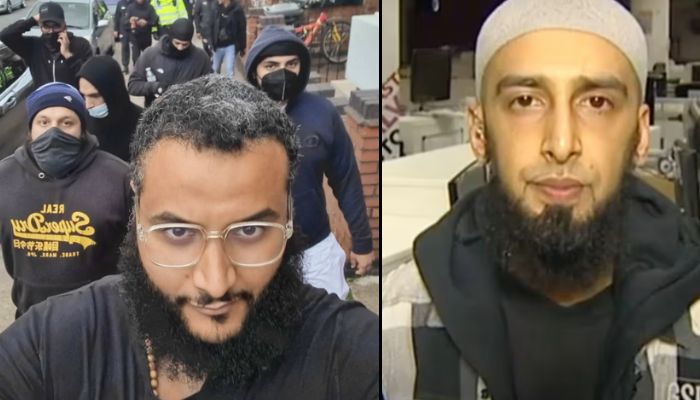
Three years after Islamists and their cheerleaders in the media blamed Hindutva for the 2022 Leicester riots, the High Court of Justice in England on Tuesday (5th August) debunked the fake news aimed at giving a clean chit to Islamic extremists.
The court made the observations during a defamation case, filed by an Islamist named Mohammed Hijab against weekly British political and cultural news magazine, The Spectator.
In an article titled ‘Leicester and the downside with diversity’, which was published by the magazine on 24th September 2022, columnist Douglas Murray referred to Mohammed Hijab as ‘street agitator.’
Claims held by Mohammed Hijab, of Hindutva to be the cause of the Leicester unrest, to be false: Case of Hijab v. Spectator. pic.twitter.com/Jtugblj7Ae
While recounting the Islamist’s past attempts to whip up a mob on the streets of London, the article stated, “This week Hijab cropped up in Leicester to whip up his followers. Among other things he told them that Hindus are ridiculous people, not least because of their belief in reincarnation. Hijab claimed that the Hindus must live in fear because they have been reincarnated as such ‘pathetic, weak cowardly people’. ‘I’d rather be an animal,’ he went on.“
Hijab claimed that The Spectator article resulted in loss of thousands of pounds in fees and thus sued both the magazine and the columnist.
In the end, the Islamist lost the defamation suit and the court held that the article is “substantially true, and it is not materially inaccurate.”
Findings of the High Court of England & Wales
However, the most significant observation of the court was that Hindutva was not responsible for the 2022 Leicester riots.
In Paragraph 53 of the judgment copy, the Judge noted, “The claimant’s (Mohammed Hijab) account as to his basis for attributing responsibility to the Hindutva does not withstand scrutiny. He had not been in Leicester in the days and weeks leading up to his speech. He had no first-hand knowledge of the events and was not in a position to make a direct first-hand informed assessment.”
Mohammed Hijab claimed to have based his theory of ‘involvement of Hindutva’ on a video clip of masked men chanting ‘Jai Shree Ram’ and marching past a Muslim neighbourhood. The court pointed out that the video was posted online, two days after his inciteful speech targeting the Hindu community.
“A difficulty with that account is that this video was only posted online two days after the claimant’s speech. It cannot therefore have informed his knowledge of events at the time he gave his speech. When that was pointed out, the claimant said he did not know if this was the “exact video” that he had seen, but that he had seen material with the same elements,” the court observed.
It further added, “The claimant relied on the chants of “Jai Shree Ram” but he did not have any convincing reason for asserting that this was necessarily an indicator of the Hindutva as opposed to Hindus who do not subscribe to the Hindutva ideology. The claimant, in his oral evidence, said he had seen Hindutva flags when he was in Leicester. This was not in his witness statement. In any event, he did not profess any detailed knowledge of Hindu vexillology, and he was in no position reliably to attach particular significance to individual flags.“
In reality, the said flags were saffron in colour and were put up in the temples on the occasion of Krishna Janmashtami celebrations.
The court highlighted that Mohammed Hijab based his claims of Hindutva on social media posts of Islamist Majid Freeman (whose identity in the court documents was protected and his name replaced with ‘CVB’).
“It is clear that the claimant followed CVB’s social media posts, and CVB asserted that there was Hindutva involvement. But CVB’s tweets elicited responses from the police which warned that unsourced assertions should not be taken at face value. The claimant has had sufficient academic training to know about the dangers of placing any great weight on CVB’s contested tweets,” it stated.
The High Court of England & Wales contended, “The fact is that the claimant was in no position to make a reliable assessment of the political or ideological views of each of the individual men who were involved in the disturbances…He denounced the opposing faction of Hindu men as “the Hindutva” for his own rhetorical and propaganda purposes, just as he described the Jewish people he encountered in Golders Green as “Zionists” without any objective basis, and to suit his own narrative.“
The Judge also exposed the anti-Hindu mindset and ideology of Mohammed Hijab.
“The phrase “if they believe in reincarnation” was not a genuine conditional clause that sought to distinguish Hindu Hindutva from non-Hindu Hindutva. It was a rhetorical device intended to inflame sectarian tensions by inviting ridicule of a central tenet of Hinduism,” he concluded.
When Mohammed Hijab incited Muslims to attack Hindus in Leicester
In September 2022, Islamist ‘scholar’, Mohammed Hijab, was seen mocking Hinduism and inciting Muslims to attack the Hindus in Leicester.
In a video that surfaced on social media, he was seen interacting with mask-clad Muslim men and encouraging them to teach the local Hindu population ‘a lesson’.
“When I was on social media, I saw these people (Hindus) getting brave. How come today it is like pin-drop silence?” the British Egyptian ‘scholar’ was heard as saying.
Muslim fundamentalist Mohammed Hijab who previously had led violence against Jews in London, is now in #Leicester with a mob of masked men and planning similar assault on local Hindu community. We demand arrest of Mohammed Hijab immediately.@leicspolicepic.twitter.com/Nl8kmupY5b
He claimed that no Hindus were in sight after realising that Muslim mobs were coming at them in hordes. “Cause they (Hindus) fear us when they are near us”, responded an Islamist from the crowd.
Pumped by the support of the like-minded people in the crowd, Hijab said, “Deep down, they know we got the truth. If you want respect, then, learn to respect.”
“If they (Hindus) believe in reincarnation, what a humiliation of them to be reincarnated into some pathetic, weak, cowardly people like that,” the Islamist went on an anti-Hindu tirade.
“Hindutva (Hindus), you are trying to act like gangsters…Don’t ever come out like that again (referring to the protests by Hindus in Leicester). Do you understand? Are they going to come out again?” he continued his threats.
Amidst the war cry of Allah hu Akbar, Mohammed Hijab cautioned that he and his supporters would be there if Hindus ‘dared’ to protest against the violence, committed by his co-religionists.
In an Instagram post, Hijab was seen leading a frenzied mob of Islamists, with their faces covered in masks. “Muslim patrol in Leicester,” he wrote in his post.
He has since then given clean chit to Muslim grooming gangs in UK and appealed to Indian Muslims to betray their country and side with Ummah.
Majid Freeman was at the forefront of instigating violence against Hindus in Leicester
Throughout the Leicester violence, Islamist Majid Freeman (referred to as CVB in court document) was at the forefront of spreading fake news that instigated violence against Hindus.
It was on 28 August 2022 that a scuffle broke out after India defeated Pakistan in a T20 match after the Indian flag was desecrated. After the scuffle, Hindus had even calmed the situation down and tended to the individual who had snatched and desecrated the Indian flag. Majid Freeman, however, had a different story to tell.
On the 30th of August, after the Leicester police got influenced by the Muslim organisations and lied about “death to Muslims” being chanted by Hindus (they later clarified their investigation found no such chants were heard), Majid took to Twitter to rabble-rouse against Hindus.
Source: X
In September 2022, the rabid Islamist alleged that 3 men had tried to abduct a teenage Muslim girl. “CONFIRMED: An incident took place this morning not far from a college in Leicester,” he tweeted.
Source: X
“A Muslim teenager was approached by 3 men but she ran away into the school. The college & police are aware of it and the family have been given an incident number by Leicester Police,” he claimed.
The conspiracy theorist even claimed to have met the family of the girl, who was traumatised by the alleged kidnapping attempt. “The girl is very shaken but she is ok alhamdulillah. They’ve reported the incident to the police. Hopefully, we’ll get to the bottom of this and the people behind it are caught,” he said.
The fake news was then amplified by other Islamists, who alleged the role of the Rashtriya Swayamsevak Sangh (RSS) in the alleged abduction attempt. The Hindu man, falsely accused of kidnapping the Muslim girl, was doxxed on Facebook and his residential address was leaked on social media.
Source: X
Later, the Leicester police debunked the disinformation through a press release. It said, “Yesterday we issued an appeal following a report that a teenage girl had been approached by three men in the area of Richmond Way, Leicester, on Monday morning.”
“A full investigation has been carried out. Following extensive enquiries, we have established that the incident did not take place and no offence was committed,” the cops confirmed.
Islamists also tried to use the trope of provocation to justify their attacks on the Hindu community. They claimed that Hindus raised anti-Islamic slogans whereas they only chanted ‘Jai Shri Ram’ and ‘Vande Mataram.’
Majid Freeman was yet again at the helm of this fake news. Interestingly, Majid Freeman was also interviewed by the BBC to set the narrative in favour of the perpetrators.
Source: X
The deliberate attempt by Majid Freeman to stoke hysteria in the Muslim community and lay the foundation of violence against the Leicester Hindus did not stop the then-city Mayor from arranging a meeting with him.
He was arrested on suspicion of counter-terrorism offences, including encouraging acts of terrorism in July 2024.
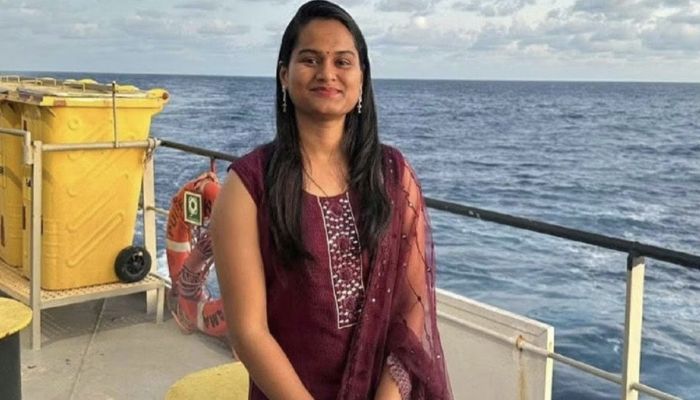
A 26-year-old pregnant woman from a Hindu family ended her life in Sangli district, Maharashtra, on 6th June. The case of suicide has shaken West Maharashtra. Her father described it as an unfortunate outcome of the pressure of following Christianity, harassment over dowry, and physical assault.
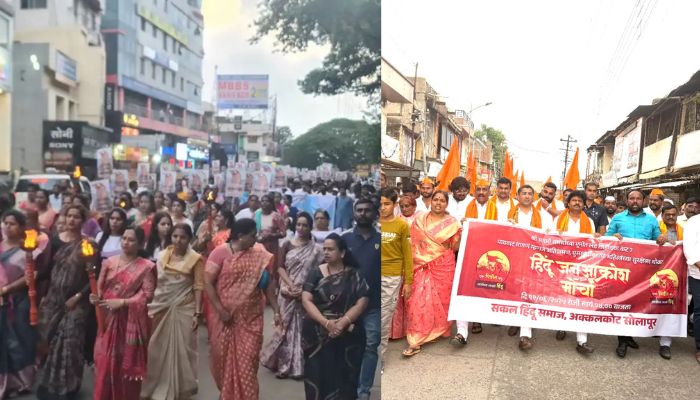
In the last few days, over a dozen protests were held. Thousands of protesters took to the streets, shouting slogans and demanding justice for Rutuja Rajge.
Rutuja Rajge was seven months pregnant. She had married into a family from the same Dhangar caste in an arranged marriage. According to media reports, her father, Dr Chandrakant Laxman Patil, said that the groom’s family had concealed one critical truth that they were practising Christians; something never disclosed before the wedding.
Rutuja wed Sukumar Suresh Rajge, a Merchant Navy officer, on 24th May, 2021, in a Hindu Dhangar ceremony in Malgaon village of Sangli. Dr Patil claims he was given to understand that the groom’s family believed in the same religion and traditions. But within weeks of the union, disturbing signs began to appear.
On the occasion of Vat Pournima festival in June 2021, Rutuja’s mother-in-law, Alka Rajge, prevented her from conducting Hindu rituals. Subsequently, when Dr Patil invited the couple to his residence, they declined, reportedly after Sukumar’s father replied they would come only if offered a gold ring.
Pressure to convert and early harassment
During the following months, Rutuja was forced to abandon her Hindu religion and embrace Christian rituals. For her first Diwali after marriage, she was forced to join church worship and was dissuaded from celebrating Hindu festivals.
During a housewarming party for Sukumar’s new apartment in Pune in November 2021, Dr Patil’s family members discovered that Christian rituals had already taken place, and Hindu visitors were dealt with disdain.
The harassment went on in January 2022, when Rutuja’s mother-in-law, Alka, purportedly blamed Rutuja for Sukumar’s bad luck, including having his phone go into a ship toilet, claiming it was Jesus’s revenge for not praying to him.
As of April 2023, the tension had increased. Rutuja was forced to go to church in Miraj, Khatibnagar, and when she did not, she was emotionally and physically abused.
Temporary relief, but old pressures return
Worried for the safety of his daughter, Dr Patil brought Rutuja to her parental house in Gundewadi, where she remained for a few months. A meeting held in July 2023 with Sukumar and his family members, and elderly people from the village, resulted in Sukumar making guarantees that he would treat her well.
But within days of being back at her husband’s house, Rutuja is said to have informed her father that Christian priests used to be regular callers and pressure to convert had begun again.
Abuse during pregnancy
The harassment is said to have continued even after Rutuja had become pregnant. In March 2024, she was scolded by her in-laws after she attended a Hindu temple to watch her brother get married.
Between September 2024 and February 2025, Rutuja travelled with Sukumar on his vessel. She had come back pregnant, but her father claimed to experience no happiness or affection, merely increased demands for cash. On 17 February 2025, Dr Patil sent ₹50,000 to his daughter through PhonePe, but the demands continued unabated.
In March, when Rutuja had gone to a conventional Kakan Choli ceremony at her maternal uncle’s place, the event had been allegedly derided by her in-laws, who said such Hindu rituals had no place within their residence.
By May 2025, Sukumar was allegedly insisting on taking Christian pregnancy rituals (garbha sanskar). When Rutuja protested, Sukumar allegedly attacked her on May 22. On their wedding anniversary a few days later, he allegedly drank heavily and made a scene at a relative’s home and then attacked her again when she objected.
Dr Patil and a cousin went to see Rutuja on 3rd June, 2025. Sukumar and his parents were at church, and she was all alone. She seemed disturbed and informed her father that Alka had taken all her jewellery, saying the Patil family had not contributed enough during the wedding. She added that she was being instructed to ask her father for money to finance their house.
Rutuja added that, was being accused by her mother-in-law of “destroying Sukumar’s life” because she had not converted to Christianity, an accusation levied just after Sukumar’s phone fell into a commode accidentally.
Three days after that, on the night of 6th June, Sukumar called Dr Patil to inform him that Rutuja had been found hanging from a ceiling fan in her bedroom. Upon arrival, the family discovered her dead body. Together with her, the unborn child she was carrying had also passed away.
Police action and arrests
Following Dr Patil’s complaint and what the police claim is a suicide note written by Rutuja, an FIR was registered at MIDC Police Station. The case was lodged under Section 108 of the Bharatiya Nyaya Sanhita (abetment of suicide), Section 85 (hurt by husband or relatives) and Sections 35(2) and 35(5) of the Bharatiya Nagarik Suraksha Sanhita.
Rutuja’s husband, Sukumar, mother-in-law Alka, and father-in-law Suresh were all accused and have been arrested. Police have confirmed the presence of a suicide note.
Public outrage and demands for justice
The case has also triggered protests by women’s groups, legal activists, and Hindu groups. Most are calling for strict enforcement of laws against religious coercion in intermarriage and against so-called “crypto-conversion”, instances wherein a family conceals its real faith when fixing up the marriages.
Protest in Sangli and Akkalkot (Image via Rashtra Jyoti)
Dr Patil describes his daughter’s death as not a spontaneous choice but the culmination of years of constant harassment, humiliation, and religious pressure. “She attempted to adapt, she attempted to make the marriage succeed,” he explained to the press, “but they crushed her spirit. And ultimately, they took the life of my daughter and my grandchild before either had a chance to fulfil their life.
The investigation is still underway, and authorities indicate that more information will come out as they investigate the suicide note and other evidence.
A shocking incident of violence has come to light from Saidhari village of Lakhimpur Kheri district in Uttar Pradesh, where a young Hindu Dalit man was fatally attacked by the family of a Muslim girl over interfaith relationship. The case was registered in the matter on 2nd August. The assault has triggered tensions between the two communities in the region.
As per the media reports, the victim, Nitin, son of Mahesh, had gone to meet his girlfriend on Saturday, 2nd August, on a river bridge in the Mahevaganj police station area. He was with two friends.
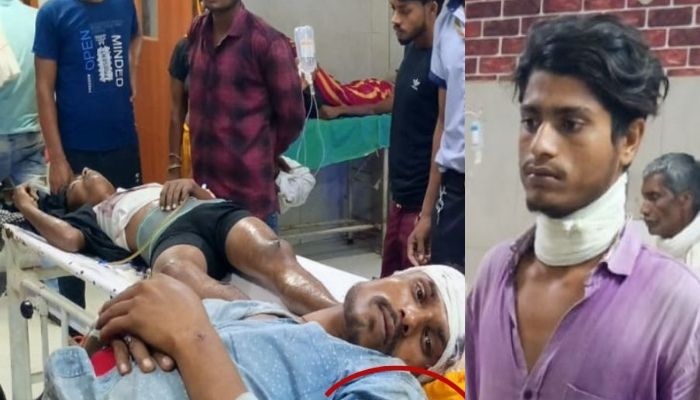
While they were meeting, members of the girl’s family reached the spot. Suddenly, they struck Nitin with a sharp weapon. The attack was so brutal that his clothes were torn, his neck was injured, and he lost consciousness.
His two friends, who fled for their safety, ran to Nitin’s home, which was around a kilometre away, and told his family about the attack. Nitin’s family members went to the place in a rush and found him unconscious in the river. They pulled him out and rushed him to the hospital for immediate medical care.
Violent clashes erupted between Nitin’s family and the girl’s relatives, leaving Nitin’s brother critically injured; he later succumbed to his wounds.
The horrific incident has created unrest in the village, with locals outraged by the incident. Additional Superintendent of Police (East) Pawan Gautam confirmed that a case was registered in the case on 2nd August and one of the accused had been arrested. “The investigation is underway, and a bid is being made to arrest the remaining accused,” he added.
Meanwhile, the victim’s family has demanded bulldozer action against the accused.
The BJP government in Madhya Pradesh has revealed alarming data on ‘Love Jihad’ cases in the State Assembly. Between January 2020 and July 15, 2024, as many as 283 cases were registered across the state, 73 of the victims were minors.
The highest number of cases emerged from the Malwa-Nimar region, once a hotbed of the now-banned terror outfit SIMI. Indore, part of this very region, has recently seen multiple cases where a so-called “Muslim gang” allegedly targeted Hindu girls.
The data also reveals a disturbing trend: in many cases, victims are unable to withstand societal and legal pressure, often turning hostile during trial or being coerced into “settlements.” Of 86 such cases so far, 50 have ended in acquittals, only 7 in convictions, while one was closed after a compromise.
Even major cities with Police Commissionerates, like Indore and Bhopal, have not been spared. Indore city alone has recorded 55 cases, with the district total hitting 74, the highest in the state. Bhopal follows with 33 cases, while Khandwa and Ujjain have 12 each, and Chhatarpur has 11. Out of the 283 cases statewide, 197 are still pending in court.
State forms SIT to probe Love Jihad cases
In response to a question from BJP MLA Ashish Govind Sharma, CM Mohan Yadav informed the Assembly that the State Police Headquarters has formed a Special Investigation Team (SIT) on May 4, 2025, to investigate incidents of exploitation and forced religious conversion of vulnerable women and girls. These cases are being registered under the Madhya Pradesh Freedom of Religion Act, 2021.
Hindu panchayat rises against Love Jihad
On August 8, 2025, a massive ‘Hindu Panchayat’ was held in Ujjain against the rising tide of Love Jihad. Thousands of Hindu families, along with saints and seers, took out a rally across the city. The gathering resolved to economically boycott those in society who support such acts.
A larger terror conspiracy?
The Malwa-Nimar belt, now infamous for Love Jihad cases, is the same region where SIMI had deep roots. In recent years, reports from districts like Burhanpur, Khandwa, and Khargone suggested that ISIS was attempting to establish a foothold.
This raises a chilling question: could Love Jihad be part of an organized terror-linked conspiracy? The National Commission for Women has also hinted at such a possibility. Evidence suggests that in urban pockets, white-collar operatives may be running a SIMI-style network, orchestrating Love Jihad as part of a larger subversive agenda.
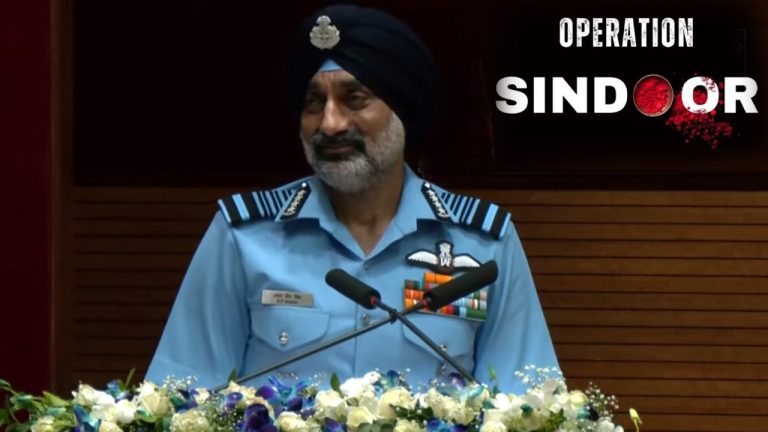
In an explosive revelation, Indian Air Force Chief Air Marshal AP Singh said on Saturday that five fighter jets and an AWACS aircraft of Pakistan were shot down during the Operation Sindoor. This is the first time the IAF has made an official statement regarding the loss of aircraft by Pakistan in India’s strikes.
Addressing the 16th Air Chief Marshal LM Katre Memorial Lecture in Bengaluru, Air Marshal AP Singh said that five Pakistani fighter jets and one Airborne Early Warning and Control aircraft were confirmed to be shot down by the S-400 missile defence system. Additionally, a few American F-16 fighter jets and a large aircraft, probably another AWACS, were destroyed in the ground in India’s airstrikes on Pakistani airbases.
He said that the aircraft hit on ground were undergoing maintenance, and they were destroyed after India targeted the hangers in Pakistani air bases. The IAF chief added that the Pakistani air bases were hit from a distance of over 300 kms, saying it is one of the farthest air-to-surface hit.
Air Marshal AP Singh’s comments make it clear that multiple American fighter jets of Pakistani Air Force were destroyed in the brief conflict. While he didn’t disclose the identity of the 5 fighter jets hit in the air, he said that ‘a few’ F-16 jets under maintenance were hit on the ground.
The IAF chief showed before and after satellite images of the terror camps and army bases in Pakistan targeted by India during Operation Sindoor. He emphasised how the airstrikes were precise, as the images show that the adjacent buildings and structures were not damaged in the missile attacks.
Air Marshal AP Singh said that India targeted only terror bases in Pakistan, and there were no plans to go after Pakistani defence establishments. But Pakistan attacked India using missiles, drones, loitering munnions etc on 8th and 9th May. He said that many of the Pakistani drones were unarmed, sent only to saturate Indian air defence system. But India was able to successfully intercept most of the airstrikes, and not a single target in India was hit.
AP Singh called the Russian S-400 system a game changer, adding that Indian forces were ready with sufficient defence systems to intercept Pakistani attack. He also mentioned that indigenous Akash defence system was highly successful, and not a single Pakistani missile could come near it.
As announced earlier, the IAF also said several radar stations were hit by India.
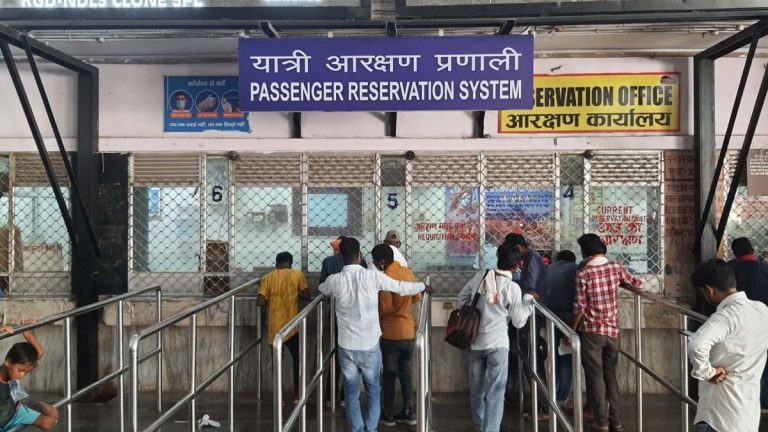
The Ministry of Railways has introduced an experimental scheme titled “Round Trip Package for Festival Rush” to ease congestion and provide smoother travel during the upcoming festive season.
Discount aimed at easing festival crowding
As per a Railway Board circular issued on 8 August 2025, passengers booking confirmed tickets for both onward and return journeys on the same route, in the same class, and for the same set of travellers will receive a 20 per cent rebate on the base fare of the return trip. The initiative is designed to redistribute crowding, facilitate smoother bookings, and ensure optimum utilisation of trains, including special services in both directions.
Booking window and conditions
Reservations under the scheme will open on 14 August 2025. The onward journey must fall between 13 and 26 October 2025, while the corresponding return travel can be booked for dates between 17 November and 1 December 2025 using the connecting journey feature. The advance reservation period will not apply to return bookings, but both legs must be purchased through the same channel, either online or at railway counters.
Scope and restrictions
The scheme is valid across all classes and trains, including special services, but excludes those operating on the flexi-fare system. Only confirmed tickets qualify, and the rules clearly state that no modifications, additional concessions, or refunds will be allowed. Rail travel coupons, passes, vouchers, and PTOs cannot be used for discounted journeys under this offer.
Public awareness measures
The Railway Board has directed zonal railways to widely publicise the scheme through media, press coverage, and station announcements. The Ministry emphasised that the initiative is experimental in nature and aimed at providing relief to passengers during one of the busiest travel periods of the year.
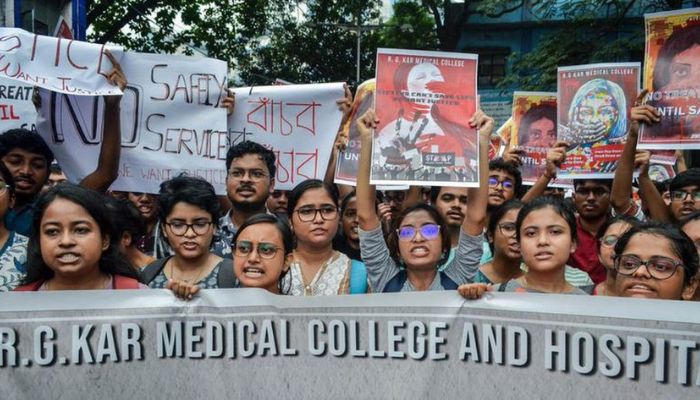
The Mamata Banerjee-led Trinamool Congress (TMC) government in West Bengal is leaving no stone unturned to persecute junior doctors, who led protests against the gruesome rape and murder case at RG Kar Medical College and Hospital, reported The Indian Express.
For the unversed, a 31-year-old junior doctor (name withheld) was raped and murdered at the institution by a ‘civic volunteer’ of Kolkata police on 9th August 2024. The perpetrator was identified as Sanjay Roy.
The initial attempt at coverup by the college principal, Sandip Ghosh, coupled with the fact that a woman was assaulted and killed at her workplace, triggered mass protests against the Mamata government for over 6 weeks.
It has now been a year since the heinous crime. According to The Indian Express, the junior doctors who carried out demonstrations to ensure justice to the victim are now faced with legal, financial and professional troubles.
Doctors, who became the face of the protests, including Aniket Mahato, Ashfaqulla Naiya, Kinjal Nanda, and Debashis Halder, are now left to deal with undue transfer, court cases and police FIRs.
Some of them were recently summoned by the police. The Mamata government transferred Aniket Mahato, Ashfaqulla Naiya and and Debashis Halder in a ‘punitive and retaliatory’ manner to new hospital facilities.
This was despite the fact that they were previously transferred just 3 months earlier. The cases challenging the transfer are now pending before the Calcutta High Court.
The Mamata government has attempted to rationalise the punitive action as ‘routine move’, unrelated to the RG Kar protests.
Besides transfers, several junior doctors have been booked for ‘causing grievous hurt to police personnel’ and ‘unlawful assembly.’
The police had previously raided the residence of Dr Ashfaqulla Naiya after a complaint was filed over his degree.
The West Bengal Medical Council sought details from RG Kar Medical College Hospital about another protesting doctor, identified as Kinjal Nanda, regarding his allowance and service hours.
It also inquired whether Nanda took permission from the institution before acting in films.
Meanwhile, Dr Aniket Mahato has not received his salary for several months as his case challenging transfer to North Dinajpur is pending before the court.
He told The Indian Express, “Legally, we are fighting the notices. Over the last year, we have faced many difficulties. I haven’t been able to practise medicine. I am sitting idle, not drawing a salary. Since April, I have been off duty… This has also affected me mentally.”
“We had no intention to jump into politics. But I am firm that I will continue my fight against injustice. My family has never pressured me, but they have been concerned,” he emphasised.
Junior doctors, who carried out protests demanding justice for the RG Kar victim, are miffed that their demands to ensure the safety and security of health professionals have not been met.
These include creation of a central referral system and filling of vacancies. The protesting doctors have raised concerns about plausible evidence tampering and the involvement of more than one perpetrator in the rape and murder case.
While a Sealdah court had convicted Sanjay Roy of the heinous crime in January this year, questions remain about the police investigation in the sensational case and the vindictive attitude of the Mamata government.
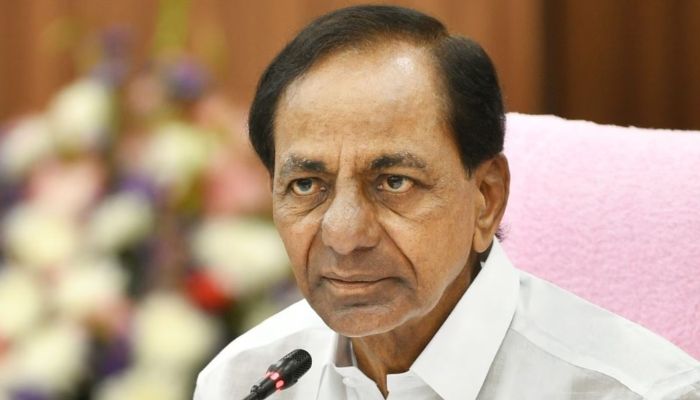
The BRS government, which tapped the phones of over 600 influential people, including politicians, journalists and activists, had destroyed 62 hard disks after losing elections by switching off CCTV footage for 1 hour.
On the night of 4th December, 2023, something unusual happened inside Telangana’s Special Intelligence Branch (SIB) office in Hyderabad. For exactly one hour, from 8:34 pm to 9:34 pm, the CCTV cameras at the state’s top intelligence agency were switched off.
According to a report by The Indian Express, the Hyderabad police investigation has determined the exact window when 62 hard disks were destroyed. Investigators say the disks were cut, ground into bits, and dumped into a river. All this happened in a small anteroom of the SIB office.
From fighting Naxals to spying on political rivals
The case is part of a larger investigation into allegations that five senior police and intelligence officers, along with a TV channel operator, carried out illegal surveillance on at least 600 people, all for the benefit of the then ruling Bharat Rashtra Samithi (BRS).
Those targeted included politicians, bureaucrats, businessmen, a sitting High Court judge, and even their families, drivers, and old friends. The surveillance was carried out using systems originally meant to track Maoist activity.
Politicians among those under the scanner
Union Minister of State for Home Affairs and BJP leader Bandi Sanjay Kumar, who is said to be one of the targets, appeared before the Hyderabad police on Friday, 8th August. After his statement, he claimed that as many as 6,500 phones were tapped, including those of Telangana Chief Minister Revanth Reddy and BRS MLAs. Reports have also suggested that a separate team was dedicated just to monitor Revanth Reddy and his associates.
Who gave the destruction order
Investigators believe the order to destroy the disks came from then SIB chief T Prabhakar Rao. He resigned from his post on 4th December, 2023, just one day after the Congress came to power in the state.
In his Supreme Court plea, however, Rao has claimed that the decision to destroy the data was approved earlier, on 2nd December, by a committee that included the Chief Secretary, the Secretary of the General Administration Department, and the Law Secretary.
What was inside those disks
Police say most of the destroyed disks contained “political intelligence”, personal profiles, phone conversations, and online chats of political leaders. But some disks also had legitimate surveillance data on the CPI (Maoist), which the SIB is supposed to collect.
By wiping these drives, investigators say, decades of valuable intelligence were lost — something that could even put the country’s internal security at risk.
The secret Special Operations Team
Out of the 62 disks, 36 were under the control of a Special Operations Team (SOT) created in 2020 within the SIB. This team focused not on Naxal activities, but on political spying.
The SOT’s lead officer was DSP D. Praneeth Kumar, also known as Praneeth Rao, who was later arrested in connection with the case but is now out on bail. He reportedly had three exclusive rooms in the SIB office, 11 staff members, 17 desktops, two laptops, dedicated phone lines, and a private internet connection.
How they tapped calls and tracked online activity
According to investigators, the SOT’s lead officer was D. Praneeth Kumar alias Praneeth Rao, a DSP of SIB, who was arrested in connection with the case and is now out on bail.
Kumar had three rooms in the SIB office to himself and 11 personnel under him. They had access to 17 desktop computers, two laptops, two phone numbers and a dedicated leased line with internet connection.
According to investigators, the SOT would write to various telecom service providers to allow them to intercept calls. This activity, called legal interception, was signed off by Prabhakar Rao, investigators familiar with the chargesheet said.
As per law, such data must be destroyed every six months. But here, the witness told police, the destruction order came a month early, and there was no reason to turn off the CCTV cameras during the process.
Even technicians were not allowed inside the SOT rooms for repairs; they had to collect machines from outside the door.
Help from a private surveillance company
The SOT also worked with a Hyderabad-based private surveillance operator. This firm provides technical help to law enforcement and defence agencies, including intercepting online chats on platforms like WhatsApp. Investigators say the company provided three special tools to gather information from platforms like X, Facebook, Instagram, YouTube, and Snapchat, to decrypt captured network data, and to read WhatsApp messages from targeted phones.
Background: How the case began
The illegal surveillance began in 2018–19 but peaked just before the 2023 Telangana Assembly elections. Between 16th November and 30th November, election day, at least 600 people were under watch, according to the SIT.
Those targeted included top Congress and BJP leaders, such as Telangana Pradesh Congress Committee president Mahesh Kumar Goud and Union Minister Bandi Sanjay Kumar.
In March 2024, the case surfaced when an Additional Superintendent of Police from SIB filed an FIR against DSP Praneeth Rao, accusing him of using illegal methods to collect intelligence. The Punjagutta police later named six accused, including former SIB chief T Prabhakar Rao, Praneeth Rao, ASP M Thirupathanna, N Bhujanga Rao, former DCP T Radha Kishan Rao, and TV channel owner N Shravan Kumar.
The Supreme Court has given Prabhakar Rao protection from arrest until August. Others, including Praneeth Rao, Bhujanga Rao, Thirupathanna, and Radha Kishan Rao, were arrested and later released on bail. Shravan Kumar is still in Chanchalguda jail in another case, but also has interim relief in the phone-tapping case.
Officials say the surveillance was done by misusing Section 419(A) of the Indian Telegraph Rules, which allows interception orders only from senior government officials or in emergencies by specially authorised officers. In this case, the rules were bent to justify spying on people with no links to Naxalism, purely for political gain.