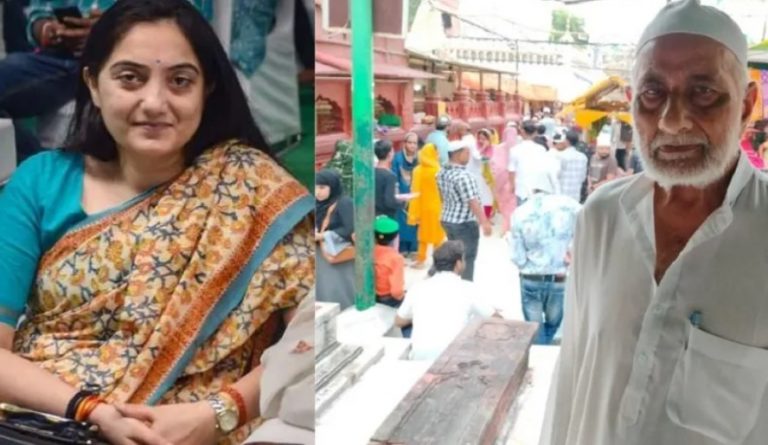
Speaking to OpIndia, the Diwan of Delhi’s Hazrat Nizamuddin dargah, Ali Musa Nizami, asserted that Islam would never pardon former BJP spokesperson Nupur Sharma for what she said about Prophet Mohammad.
Nizami advised her to go to the temple to do penance for her transgression. He asserted that she is still alive since this is India, had it been in any Islamic country, she would have been dead by now.
Nizami, who was seen laughing when asked about the horrendous beheading of the Udaipur’s Hindu tailor Kanhaiya Lal by Islamists, said that in Islam, there is no such thing as forgiveness for the sin she has committed. He added that since Jamhooriyat (Democracy) exists in India, she is still alive, had it been any Islamic country, the only punishment for her would have been death.
Notably, BJP ex-leader Nupur Sharma’s comments had the Islamists across the country running riot, indulging in wanton violence, issuing death and rape threats against her and killing those who extended their support to her, like Udaipur’s Kanhaiya Lal, besides engaging in vandalism and arson.
Nizami told OpIndia, “Islam will not pardon Nupur Sharma for what he has said. The punishment for it is only death. She, however, is still alive since Jamhooriyat exists in India. He needs to publicly apologise for what she said. She needs to go visit the temple and make amends, in my opinion. You ought to apologise for what you said. It’ll have a significant effect,” said the Nizamuddin dargah’s dewan adding that since India is a country of faith, raising the ‘Sar Tan Se Juda’ slogan was also ‘wrong’.
When OpIndia pointed out to Nizami how many Islamic scholars have corroborated with Nupur Sharma’s statement saying that she had merely quoted from Islamic texts, the Diwan of Delhi’s Nizamuddin Dargah repudiated the same. He responded by asserting, “Their claims are incorrect. In Islam, there is no room for forgiveness.”
It may be recalled here that Nizami, who appeared absolutely unrelenting and stern when it came to his response about Nupur Sharma, was seen bursting into laughter when questioned about the brutal killing of the Hindu tailor Kanhaiya Lal. He had given a placid response to the heinous crime by simply calling it ‘wrong’.
Notably, last month, in a debate show hosted by Pradeep Bhandari in India News, Islamic scholar Atiqur Rahman stated that Nupur Sharma was not wrong in what she said about the life of Prophet Muhammad. The Islamic scholar lamented the atmosphere of hate and threats created via social media and stated that Islam has the scope to discuss and forgive.
Replying to VHP’s Vinod Bansal, scholar Atiqur Rahman said, “No, Nupur Sharma was not wrong. She was not wrong. If any Islamic scholar or Muslim thinks she was wrong, Islam has such wide scope that she can be forgiven and given a chance that some senior Islamic cleric explains to her how she was wrong.”
Diwan of Delhi Nizamuddin Dargah starts laughing when asked about the beheading of Kanhaiya Lal by Islamists
Nizami is the same person, who, during the conversation with OpIndia was hailing the dargah for preaching peace and love. He had referred to himself as a custodian of Sufism and claimed that because of his persona, Sikhs, Muslims, and Hindus alike frequent the dargah. Ali Musa Nizami was also seen laughing when asked about the horrendous beheading of the Udaipur’s Hindu tailor Kanhaiya Lal by Islamists in broad daylight.
He had tried to normalise the recent controversy regarding the former BJP spokesperson Nupur Sharma, the brutal murder of the Hindu tailor Kanhaiya Lal in Udaipur, and the impact of the provocative statements by people associated with Ajmer Dargah, saying that all this keeps happening.
Hindu visitors have decreased by 60% in the past year: Nizami
He also mentioned how the number of Hindu visitors to the Dargah has dramatically decreased over the last year. He said that the number has gone down by almost 60 per cent during that period. The 84-year-old dewan, who has been associated with the dargah for several years, asserted that fewer Hindus are now visiting the dargah as a result of the ‘propagation of hatred’, which he believed will only increase with time under the present government.
Nizami lamented how, earlier, many Hindus used to visit the dargah every day in the past. From 2 in the afternoon to almost 11 at night, the Hindus use to throng the dargah, hold bhandara, and distribute food and money amongst the needy, but that is not the case anymore.
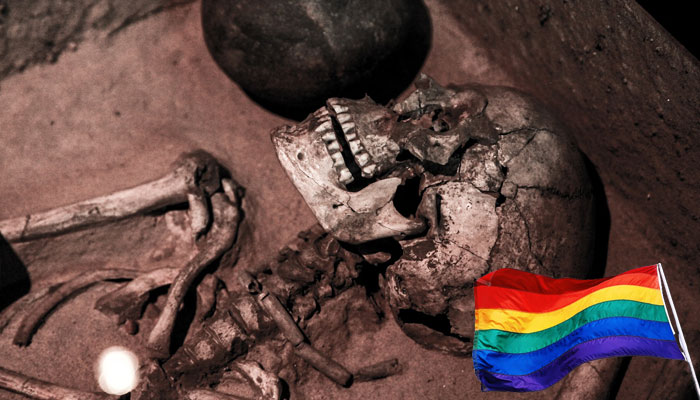
The woke culture is starting to affect science. Anthropology can be defined as the study of humanity using applications of biology, cultural studies, archaeology, linguistics, and other social sciences. Using different methods, anthropologists provide a deeper analysis of the human remains and sketch a possible history of humans.
When archaeologists find any human remains, their first aim is to determine several traits, including age, race and gender. It helps in creating a proper map of history. However, the woke culture that is gripping the education system at an unprecedented pace is now questioning the gender assigning techniques used by archaeologists.
Several experts, including archaeologists, anthropologists, and even criminal forensic detectives, use several markers such as the size and shape of the bones to determine if the human remains were of a male or a female. The aspect of biological gender is crucial to the study of the remains because it provides essential details of the anatomy and socio-cultural aspects of the subject under study.
However, gender activists are now reportedly arguing that it is not possible to determine by the bones how an ancient person “identified themselves”.
Last week, Canadian Master’s degree candidate Emma Palladino wrote a Twitter thread on the matter and sparked controversy. She is pursuing an advanced degree in archaeology. That means it is possible that in the near future, she will be working on archaeological projects, and her “findings” may find their way into the history books forever. Notably, she locked her profile after her thread started gaining traction on social media. OpIndia found her thread on Archive.org, and here is what she has suggested.
In a 10-Tweet long thread, she called the methodology used by the archaeologists to determine the sex of the human remains “stupid”. She claimed that the archaeologists are “acutely aware of how culturally and spatially relative the concepts of sex, gender, and identity are. While a bioarchaeologist might identify a set of remains as “probably female”, it is understood that the gender of an individual is never necessarily the same as their sex, and that gender is a whole spectrum we’ve barely begun to unpack.”
Essentially, the woke concepts of ‘gender identity’ are being brought into scientific studies that rely on actual scientific facts, that humans are either male or female. Biological sex is determined by one’s chromosomes and is reflected accordingly in physical appearance. Females have XX chromosomes and males have XY chromosomes. No matter what gender a certain individual identifies with, the genes never change.
For example, in Geoffrey Chaucer’s The Canterbury Tales from 1386, the singular “they” was used to describe someone’s features. Also, in Shakespeare’s Hamlet from 1599 “they” was used for describing singular persons.
She further argued, “Labelling remains “male” or “female” is rarely the end goal of any excavation, anyway. The “bioarchaeology of the individual” is what we aim for, factoring in absolutely everything we discover about a person into a nuanced and open-ended biography of their life.” Continuing her argument, she talked about gender-affirmation surgery.
She said, “For those who’ve medically transitioned or have had gender-affirming surgery, there’s also that to consider. It’s still unknown how long-term use of things like HRT or estrogen might be visible in the bones, but you’d be surprised just how much our bones retain of our lives. (But for those who haven’t, as I said earlier, the bioarch of the individual is about surmising nuanced life stories and not about assigning rigid + arbitrary genders to skeletons).” Interestingly, as per records, the first gender-affirmation surgery was done in 1917. It is just over 100 years old, and interestingly, the woke propagandists want to use such surgeries as the base for interfering in the determination of a skeleton based on birth sex.
How ‘gender activists’ are working hand-in-hand to propagate their agenda
Palladino is not the only one who is propagating to change the way forensic experts identify human remains. A group named Trans Doe Task Force comprises gender activists who are exploring ways “in which current standards in forensic human identification do a disservice to people who do not clearly fit the gender binary.”
In its mission statement, the group says, “We propose a gender-expansive approach to human identification by combing missing and unidentified databases looking for contextual clues such as decedents wearing clothing culturally coded to a gender other than their assigned sex. We maintain our own database of missing and unidentified people who we have determined may be Transgender or gender-variant, as most current database systems do not permit comparison of missing to unidentified across different binary sex categories.”
Furthermore, Associate Professor Jennifer Raff of the University of Kansas published a paper in February 2022 titled “Origin: A Genetic History of the Americas”, in which she argued that the division between physically or genetically ‘male’ or ‘female’ individuals was not possible. She suggested it was impossible to determine the gender of a 9,000-year-old Peruvian hunter as no one knows how “that person identified themselves”. She further argued that the dual-gender system was imposed by Christian colonizers.
There are several “experts” in the field that want to change the way sex is determined in archaeology, anthropology and forensic sciences, so human history gets in sync with their agenda. However, while doing so, they are creating a barrier for the scientists to do their work properly and efficiently. Just imagine a scenario where a forensic analyst examining an unknown person’s body won’t be allowed to say whether the victim of a crime was male or female, or an anthropologist working on old skeletons won’t be allowed to say whether the bones belonged to a woman or a man.
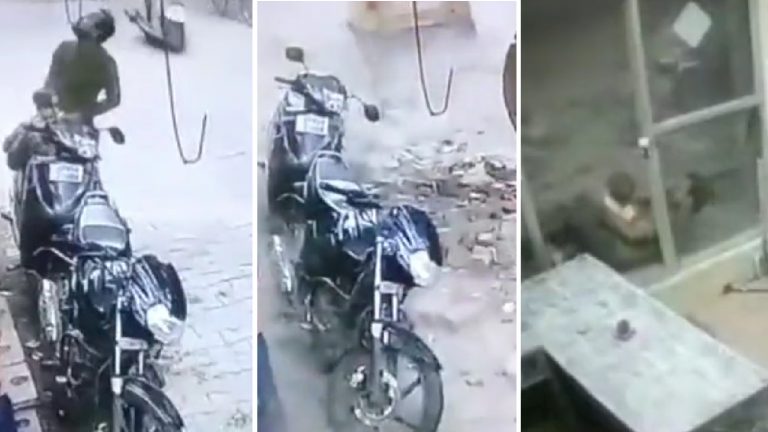
A video has gone viral on the internet showing a man heroically saving a child after some kind of construction debris fell on them from above. The viral video, which seems to be CCTV footage, is apparently from the Mathura district of Uttar Pradesh.
In the footage, a man is seen standing alongside the road with his scooter and a child. He glances up and discovers something unusual. As some kind of construction debris falls from above, the man quickly grabs the child with him and rushes to a nearby shop. Both of them get knocked to the ground, but they appear to be unharmed.
In the second half of the video, it can be seen that both of them miraculously escape the accident. The child and the man appear to have been hurt, but there does not appear to be any significant injuries in the footage. Several people run to their rescue after noticing the accident.
It is the promptness of the man and his keen observation that led to both of their lives being saved otherwise they could have faced some fatal injuries in case the debris had fallen on them.
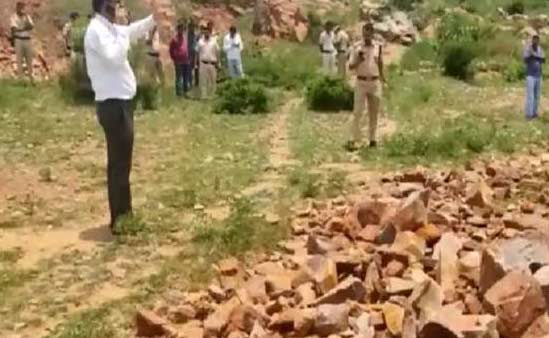
Haryana DSP Taoru Surendra Singh Bishnoi was run over my mining mafia and killed in Panchaon near Nuh in Mewat region of Haryana. As per reports, DSP Bishnoi had gone for surprise inspection of a site where illegal mining was taking place. However, the mining mafia ran the dumper over him and killed him. The dumper that was used to kill him was the same that was used for illegal mining of sand.
As of now, no arrests are made in this case. The DSP died on the spot. As per police the investigation has been initiated.
DSP Taoru Sh Surender Singh laid down his life today in the course of duty. #HaryanaPolice extends its deepest condolences to the bereaved family of the brave officer. No effort shall be spared in bringing the offenders to face justice. …@cmohry
Haryana Police took to Twitter to so condole his murder and said that he has laid down his life in line of duty and extended condolences to the family. Police said that no effort will be spared in bringing the offenders to justice.
As per reports, Bishnoi was acting on inputs of illegal mining in the area. Upon reaching the site he signalled a truck carrying stones to slow down. However, instead of slowing down and stopping, the driver sped up and ran over him, killing him instantly.
Bishnoi was set to retire later this year. Mining Minister Moolchand Sharma has said that the culprits wont be spared.
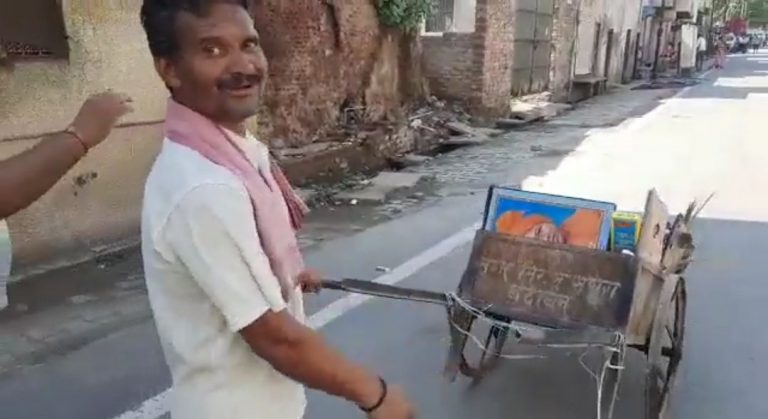
A contractual sanitation worker in Uttar Pradesh’s Mathura district who was fired after being seen carrying two framed portraits of Prime Minister Narendra Modi and Chief Minister Yogi Adityanath in a garbage trolly has been reinstated after apologising for negligence in the execution of his responsibilities.
Breaking: Bobby, the contractual sanitation worker at Mathura Nagar Nigam, who was spotted carrying discarded pictures of Prime Minister Narendra Modi and chief Minister Yogi Adityanath in his garbage cart has been reinstated after he was sacked for “negligence”. pic.twitter.com/8YS6cKu2vJ
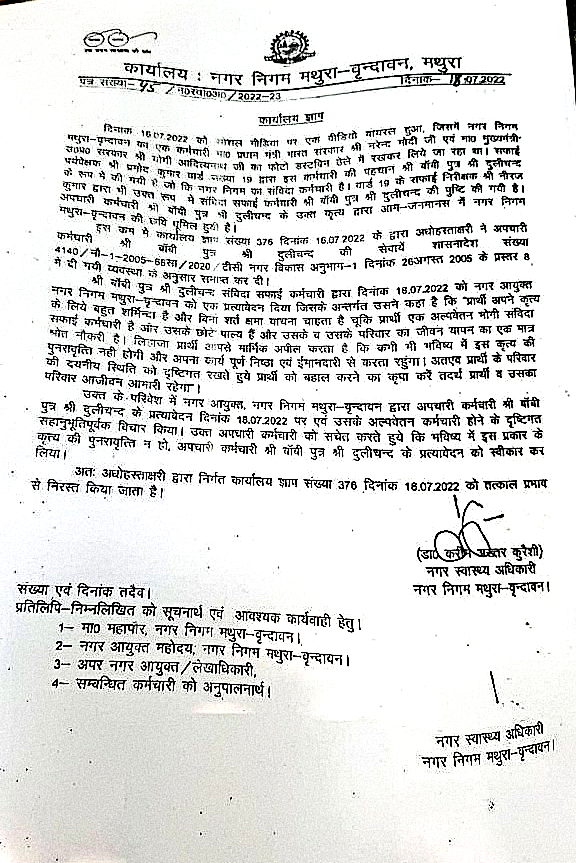
Nagar Nigam authorities accepted his apologies and reinstated him, stating that his actions gave the public a negative view of the municipal body and that such irresponsibility is not acceptable. Karim Akhtar Qureshi, the Municipal Health Officer of Mathura Nagar Nigam, reinstated the worker’s contract and warned him to be more cautious in the future.
Reinstation order.
A video surfaced on social media on Saturday showing a sanitation worker, Bobby, working in the Generalganj area, carrying portraits of PM Modi and CM Yogi in his garbage trolly. The video showed several individuals questioning him about the portraits in the garbage barrow. Following the incident, Bobby was terminated from his job owing to his carelessness.
A contractual worker at UP’s Mathura Nagar Nigam was terminated after he was found carrying pictures of PM Narendra Modi and CM Yogi Adityanath among other dignitaries in his hand held garbage cart. pic.twitter.com/Jg2x3LW3Mk
However, considering that the employee was only performing his cleaning duties, many people asked the municipal council to reinstate him. The sanitation worker was not to blame, according to doctor Pankaj Gupta, who was the first to notice the portraits in the trolly, because he was an uneducated person and likely did not comprehend the significance of the pictures. He urged the authorities to bring the employee back to work.
Several people even criticised the Mayor of Mathura Nagar Nigam for being highhanded in such a case. People pointed out that the Prime Minister himself values the dignity of labourers and workers and termination of service of a worker for a minor mistake is not justified.
“If he had brains, he wouldn’t be doing the work of safai.”
What ridiculousness is this? The Mayor doesn’t have the brains to understand that the PM himself greatly values the dignity of labour? https://t.co/CT6oR1UTU2
Taking into account the public’s criticism and suggestions, the Nagar Nigam officials reinstated Bobby, the sanitation worker, after he promised not to be so negligent in the future. The authorities reasoned that because he is a low-wage contractual employee, they should be sympathetic towards him.
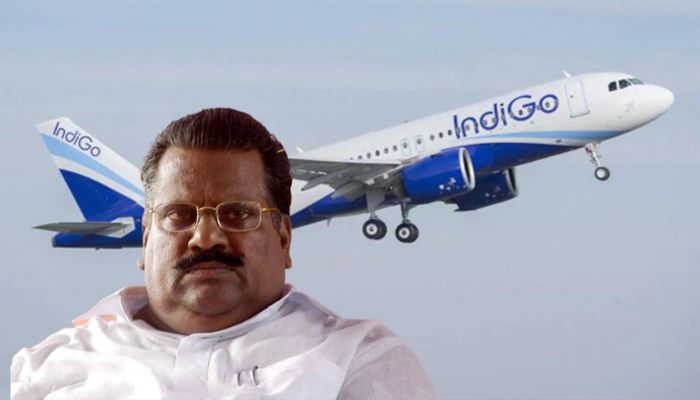
A month after a scuffle broke out between Left Democratic Front (LDF) leader EP Jayarajan and Kerala Youth Congress workers in an IndiGo flight, the commercial carrier has put them on a ‘no-fly list’.
In accordance with the guidelines of the Directorate General of Civil Aviation (DGCA), 2 Youth Congress workers and the LDF convener were penalised for unruly behaviour on board a flight.
IndiGo had set up an internal committee to probe the matter as per Civil Aviation Requirements (CAR) Section 3- AIR Transport Series M Part VI Issue II. On Saturday (July 16), the committee passed its final verdict in the case.
Youth Congress members Naveen Kumar RK and Farsin Majeed PP were found guilty of Level I offence and were banned from flying with IndiGo for a period of 2 weeks. Similarly, EP Jayarajan was found guilty of a Level II offence and was banned from flying with the airline for a period of 3 weeks, starting July 16 this year.
LDF leader speaks on the development
While speaking about the matter to The Indian Express, the LDF leader said, “I think, IndiGo does not know who I am. The airline could not prevent the criminals (Youth Congress workers) from travelling when CM Vijayan, who has Z-plus category security, was on board.”
He further added, “The airline should not have issued tickets to these criminals. They could not reach the CM because of me. In fact, the company should have given me an award for preventing the criminals.”
“The ban on me is against civil aviation rules. Hereafter, I would never fly by IndiGo planes. It is a dirty, sub-standard company,” EP Jayarajan concluded.
The Background of the incident
On June 13, 2022, activists of the Kerala Youth Congress boarded a commercial flight flying Kerala Chief Minister Pinarayi Vijayan to Thiruvananthapuram from Kannur and waved black flags at him to protest against police harassment.
The chief minister was at Kannur on a three-day official tour. The Youth Congress workers were nabbed by the CM’s security team and LDF leader Jayarajan, and were handed over to the CISF.
Jayarajan described the incident as worse than a “terrorist strike.” The incident was also criticized by CPI(M) state secretary Kodiyeri Balakrishnan, who claimed that Youth Congress workers were plotting to attack the CM.
First response of E P Jayarajan, passenger at Indigo flight CNN to TRV on 13/06/22 confirms that CM Vijayan had already left the flight when the ‘alleged protest’ happened. And thus the murder attempt case looks prima facie framed.
Meanwhile, Congress leader VD Satheesan described it as a “symbolic protest against police repression.” Farzeen Majid, head of the Youth Congress Mattanur block and one of the protestors, claimed that their objective was just to register a protest.
He alleged that the Youth Congress workers were “brutally beaten” at the airport by the CM’s security team and Jayarajan, thereby inflicting serious injuries on the Youth Congress workers.
They were also charged with a case of an attempt to murder. The Valiyathura police department registered the case under Indian Penal Code Section 307 after receiving a complaint from Chief Minister’s bodyguard Anil Kumar.
According to sources, this incident also prompted attacks on certain Congress offices, including the State Headquarters in Thiruvananthapuram, purportedly by members of the CPI(M) and its youth wing DYFI.
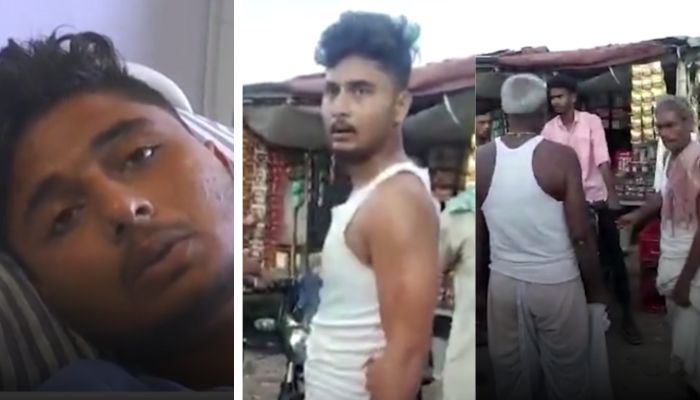
On Friday (July 15), a 23-year-old man named Ankit Kumar Jha was stabbed multiple times for watching a video of former BJP spokesperson Nupur Sharma on social media. The incident took place in the Sitamarhi district in the Tirhut Division of Bihar.
As per reports, Jha was watching the video of his own social media status about Nupur Sharma on his mobile which drew the ire of the Islamists, who then attacked him with a knife.
The victim was stabbed 6 times and is now said to be in serious condition. He is currently undergoing treatment at the Darbhanga Medical College and Hospital (DMCH).
Big Breaking: #AnkitJha stαßßed after watching a video of #NupurSharma in Sitamarhi, Bihar : Md Bilal along with 3 others publicly attαck£d him with a kn!fe 6 times; Nupur’s name removed then police took complaint !! + pic.twitter.com/QyltOushTl
— Ashwini Shrivastava (@AshwiniSahaya) July 19, 2022
The video of the incident has now gone viral on social media. Reportedly, a scuffle broke out between Ankit Kumar Jha and the accused men at a roadside shop, following which they stabbed him 6 times with a knife.
A complaint was filed by the victim’s family at the Nanpur police station against the four accused, namely, Mohammed Bilal, Mohammed Nihal, Gulab Rabanni (alias Gora) and Hilal. Two of the accused have been arrested so far and sent to judicial custody.
The main accused is still on the run from the law enforcement authorities. The cops are raiding possible hideouts to nab him at the earliest.
Police claim ‘no communal angle’, blame confrontation on smoking
Interestingly, the police have ruled out a communal angle in the case and claimed that the deadly attack on Jha was not related to his support for the ex-BJP spokesperson.
While speaking about the matter to Hindustan Times, Station House Officer (Nanpur police) Vijay Kumar Ram said, “For some unknown reasons they started fighting with each other. Suddenly, the accused, identified as Gulab Rabbani alias Gora, stabbed Jha from behind.”
He later added, “The reason behind the scuffle between the two groups was over releasing cigarette smoke on Jha’s face at the roadside stall, leading to an immediate argument. During the investigation, it was found that the matter was not related to Nupur Sharma.”
Victim narrates his ordeal
According to the victim’s family, the Nanpur police had intentionally dropped the name of Nupur Sharma to dismiss the communal angle in the case.
Reportedly, Ankit Kumar Jha had gone to a nearby paan shop. There, the accused began abusing him and started puffing out the cigarette smoke on his face. While on his hospital bed, Ankit Kumar Jha told Dainik Bhaskar, “I was watching my social media status of Nupur Sharma on the phone when one of them stabbed me from behind.”
Attacks on Hindus for supporting Nupur Sharma
On June 28, a Hindu tailor named Kanhaiya Lal was brutally beheaded in Udaipur, Rajasthan. He was killed over an alleged social media post in which he had supported Nupur Sharma.
As per reports, his neighbour Nazim had filed a complaint against him, following which he was arrested by the Police. Kanhaiya Lal was later released on bail.Nazim also leaked Kanhaiya Lal’s number, photograph, and address to his community groups.
Kanhaiya Lal continued to receive threat calls and messages. Fearing for his life, Kanhaiya Lal shut his shop for six days and approached Police for protection. Instead of giving him protection, the Police asked him to compromise with the Islamists who were threatening him.
After six days, when he opened his shop, two Islamists came as customers and beheaded him. The two attackers, identified as Mohammed Riyaz Akhtar and Mohammed Gos, were arrested by the Police. National Investigation Agency is currently investigating the case.
7 days prior to his beheading, another Hindu man named Umesh Kolhe was hacked to death for supporting Nupur Sharma. Several people, including TV actresses, have received death threats for merely speaking in support of the ex-BJP spokesperson.
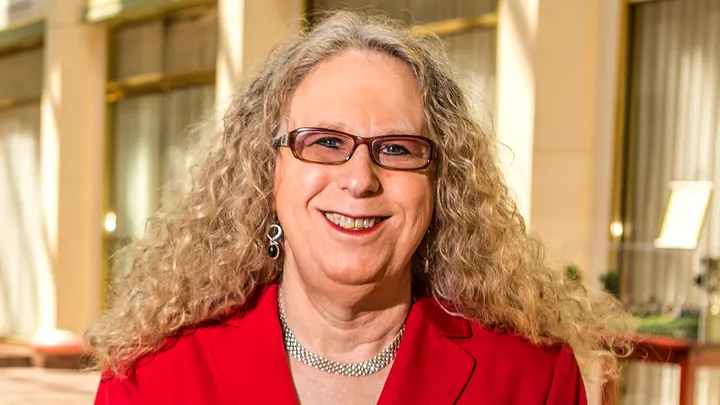
On Monday, United States Assistant Health Secretary Rachel Levine urged for legislation to “support and empower” youngsters seeking “gender affirmation treatment.” Levine, who is transgender ‘herself’, and has lived till 2011 as a biological male, made these statements while appearing on MSNBC’s “Andrea Mitchell Reports.”
Biden Assistant Secretary for Health Rachel Levine: We need to “empower” kids to go on puberty blockers and get sex reassignment surgery. pic.twitter.com/CRPRaFYtzK
Levine said, “Trans youth are vulnerable. We really want to base our treatment and to affirm and to support and empower these youth, not to limit their participation in activities such as sports, and even limit their ability to gender affirmation treatment in their state.”
Levine admitted during the interview that transgender youth are more likely to have mental health issues, but insisted that bullying, not the person’s gender identity, is to blame.
“They suffer significant harassment and bullying, sometimes in schools or their community. They have more mental health issues, but there’s nothing inherent with being transgender or gender diverse which would predispose youth to depression or anxiety. It’s the harassment and bullying,” Levine said.
Levine’s comments on supporting gender-transition surgeries as a way to empower children drew criticism from a number of social media users. US Representative Andy Biggs, who represents Arizona’s 5th congressional district in the United States House of Representatives, said that this is ‘deeply disturbing.’ In a tweet, he wrote, “Biden Assistant Secretary for Health Rachel Levine says we need to “empower” children to get gender affirmation treatment in their state. This is deeply disturbing.”
Biden Assistant Secretary for Health Rachel Levine says we need to “empower” children to get gender affirmation treatment in their state.
Senator for Kansas Dr Roger Marshall said, “80% of children outgrow gender dysphoria. Under the Biden Admin’s “gender care” policies, these children may suffer irreversible harm. “Gender-affirming care” is child abuse.”
80% of children outgrow gender dysphoria.
Under the Biden Admin’s “gender care” policies, these children may suffer irreversible harm.
— Dr. Roger Marshall (@RogerMarshallMD) July 18, 2022
It is notable that Levine’s comments follow a federal court order last week on Friday blocking the Biden administration’s regulations mandating transgender people to have access to toilets, locker rooms, and sports teams that correspond to their desired gender identity.
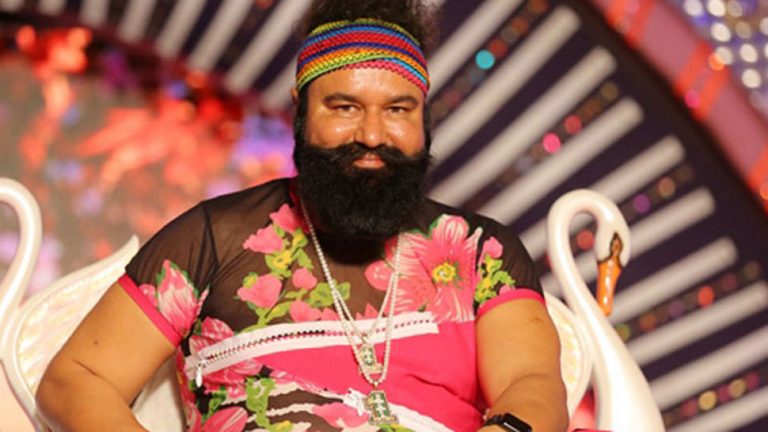
The Dera Sacha Sauda chief Baba Gurmeet Ram Rahim Singh Insan has claimed that his blood group has changed from O negative to O positive. During an Instagram live session, the murder convict reportedly told his followers that his blood group changed but offered no evidence, medical or otherwise to support his bizarre claim.
During the interaction with his followers, the Dera chief invoked the second spiritual leader of Dera Sachcha Sauda, Shah Satnam Singh. Baba said that before Shah Satnam passed away, he had urged him not to leave him, to which Shah Satnam Singh reportedly responded that he will always stay inside Rahim. After this, his blood group changed from O positive to O negative.
Baba also told his followers that the blood group on his driving license was recorded as O+ve.
Notably, a person’s blood group never changes medically during the course of their life, with the exception of truly uncommon circumstances such as when they might have a bone marrow transplant or develop a rare form of cancer. All these changes are also temporary.
Besides, the Dera Sacha Sauda chief also made some other bizarre claims during his Instagram Live session. He reportedly said that he had learnt to drive and repair a tractor when he was merely 8 years old.
Baba Gurmeet Ram Rahim Singh Insan switched in prison, claims his followers
Interestingly, when Ram Rahim walked out of prison a couple of weeks ago on month-long parole, his followers alleged that the man who walked out of the prison on parole is a different person altogether. His followers had on July 4, petitioned the Punjab and Haryana High Court, alleging that Baba Gurmeet Ram Rahim Singh Insan has been replaced in prison by a dummy.
The petitioners provided numerous specifics of Ram Rahim who was released on parole that were different from the “original” Baba. They alleged that the original Ram Rahim has been kidnapped and taken to Udaipur, and he will be replaced by this dummy to take control of the huge immovable property belonging to Dera Sacha Sauda, as Ram Rahim is the only owner of the trust controlling this wealth.
Dera Sacha Sauda chief currently serving life imprisonment
Meanwhile, the 30-day parole of Dera Sachcha Sauda chief Gurmeet Ram Rahim ended on July 17. Ram Rahim was convicted in a murder case by the special CBI court in Haryana in October last year. The special CBI court had found Ram Rahim and 4 others guilty in the murder case of Ranjit Singh. He was awarded a life sentence in this case of murder. Ram Rahim was already serving a long prison sentence after being convicted in a rape case by the same CBI court in 2017. He has been out on parole since the 17th of June.
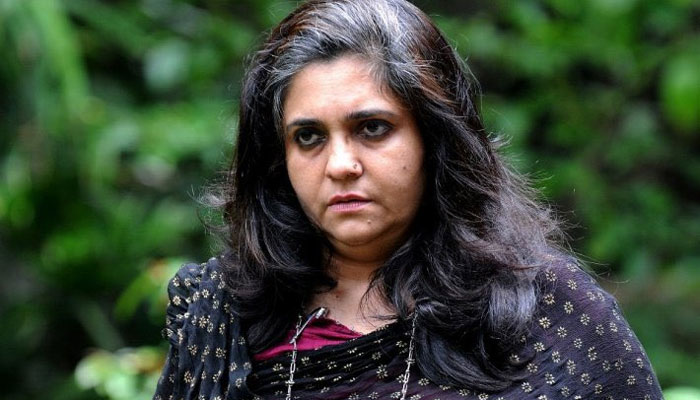
On June 24, the Supreme Court of India dismissed a petition by Zakia Jafri challenging clean chit to then-Chief Minister Narendra Modi in the 2002 Gujarat Riots Case. In the judgment, the apex court stated how activists like Teesta Setalvad, former IPS officer Sanjiv Bhatt and others conspired to ‘keep the pot boiling’ in the case.
There were a number of actors playing their role in changing the outlook of the horrifying incident that sparked the riots. It has been over 20 years since the train carrying Karsewaks from Ayodhya was burnt in Godhra, Gujarat, by a Muslim mob. 59 Hindus were burnt alive, including women and children. The propagandists tried their level best to paint the incident differently to save the murderous Muslim mob from facing any criticism from the public. In fact, if they had succeeded in their propaganda, India would have completely forgotten what had happened in Godhra on February 27, 2002.
For the media and the activist who tried to whitewash the Godhra carnage, it was almost justified that these men, women, and children who were murdered simply because they were Hindus, because they were returning from Ayodhya and because they chanted Jai Shree Ram while returning from a place where they wanted their Ram Mandir built.
It was the duty of the media to report how the Muslim mob burnt Hindus to death. However, they were more bothered about being politically correct than standing with the unvarnished truth of how Hindus had been massacred.
OpIndia CEO and author Rahul Roushan in his book ‘Sanghi Who Never Went To A Shakha’ talks about his time as a young journalist associated with Aaj Tak, where he briefly interned. He was there in the studio when the news of the train coach being set on fire had started trickling in. He talks about how things were handled in the newsroom on how to break the story for the viewers. Here is a snippet from his book about the incident:
“‘Pata chala kaun kiya?’ (‘ Do we now know who did it?’), asked the copy editor to the input guy, who immediately replied ‘Musalmaan sab aur kaun?’ (‘ The Muslims did it, who else?’) in a hushed but disgusted tone. After a brief pause, the copy editor said, ‘Ab yeh toh nahi likh sakte na.’ (‘ Now, we can’t really write this.’) I furtively tried to have a look at the input guy. He didn’t say anything after this. Anger was discernible on his face and so was the disgust. His eyes met mine and I immediately averted them, lest he thought I was trying to spy. He then walked away, leaving some fax or photocopies at the desk of the copy editor, presumably the raw reports sent by the reporters from the ground. I too walked back to my desk, silently. This conversation of barely ten seconds, which would include some uncomfortable pauses, too, revealed so much in retrospect. The mainstream can write headlines like ‘Frenzied Hindu mob brings down sixteenth-century mosque’ and ‘Dabang Rajputon ne Dalit dulhe ko ghodi se utaara’ (when some men from the Rajput community force a Dalit groom to alight from the horse during a wedding procession), mentioning the religion or caste of the perpetrator of a reported crime in some cases, but it feels greatly uncomfortable about mentioning the religion when the perpetrator of the crime is a Muslim—this when religion was clearly the main element in the crime committed at Godhra. ‘Muslim mob sets a train carrying Hindu pilgrims on fire’ is not seen as a legitimate or ‘responsible’ headline, even though it is factual.”
There were countless fake stories that popped up following the deadly riots in Gujarat. One of such stories was of a Muslim woman, Kausar Bano. It was propagated that Bano, who was pregnant, was attacked by a Hindu mob. Her tummy was ripped open with a sword, and the foetus was flung in the air. It has been 20 years, and this myth has been perpetuated for a generation now. There are different variations, sometimes the fate of the foetus is depicted in more gruesome manners, but the basic premise remains the same.
However, the postmortem of Kausar Bano told a different story. A 2010 report states that the doctor who conducted a postmortem on Kauser found the foetus intact. Dr J S Kanoria, who had conducted the autopsy on March 2, 2002, presented supporting documents to the special Court and said that the foetus was intact in the woman’s womb. The foetus weighed 2,500 gms and was 45 cms long.
The role of activists and anti-Hindu actors in painting Hindus as the culprits
Gujarat riots were the most fertile ground for NGOs and alleged human rights activists to get fame and money for themselves. Teesta, by far, stands at one of the top positions. It is a known fact that she has been accused of embezzling funds meant for Gujarat riot victims. She had allegedly collected funds for the 2002 riot victims and instead used it for personal luxury and expenses. The allegations had come to light after one of the residents of the Gulbarg Housing Society filed a complaint against her alleging that she had embezzled funds collected for the 2002 riot victims through her NGOs Sabrang Trust and Citizens for Justice and Peace.
Furthermore, she used the funds that were collected for the riot victims for liquor, movies, gadgets, and personal goods. Reports suggest that it was found her NGO also violated FCRA norms. The Sabrang Communications and Publishing Pvt Ltd had allegedly received Rs 2.9 lakhs from the Ford Foundation even if it was not registered under FCRA.
Now coming to the observations made by the Supreme Court on the role of Teesta Setalvad. The Court categorically said, “the antecedents of Ms Teesta Setalvad need to be reckoned and also because she has been vindictively persecuting this for her ulterior design by exploiting the emotions and sentiments of the appellant – Zakia Ahsan Jafri, the real victim of the circumstances.”
There was a reason for such strong language against Setalvad. In multiple instances, she tried her best to take the case off track using fake testimonies and tutoring the eyewitnesses. She even sent two letters to the Office of the High Commissioner of Human Rights at the United Nations (OHCHR) about the case. The Court had called it ‘misadventure’ and took an undertaking that she would not repeat it. She not only raised questions over the SIT but also questioned the integrity of the honourable courts of the country by sending notes to the OHCHR.
In its judgment, the Court noted that Setalvad was in a position to influence Zakia. The Court noted, “It is submitted that Ms Teesta Setalvad, for reasons best known to her and out of vengeance, was interested in continuing with her tirade and persecution on the basis of unsubstantiated allegations in the complaint in the name of the quest for justice with real purpose to keep the pot boiling and sensationalise and politicise the crime.”
The Court further observed that Zakia had admitted to concealing the fact that she had known Teesta for some time. She admitted during her cross-examination that Teesta Setalvad tutored the statement that she gave to Nanavati-Shah Commission. Interestingly, during cross-examination, Zakia admitted she never read the copy of her own statement to the Commission.
In its observation, the Court pointed out that the protest petition was not a genuine one by any standard. The observation was made because of the fact that several allegations made by Zakia were found to be part of her attempts to ‘keep the pot boiling and politicising the crime.’ The Court noted that Zakia kept adding new materials and allegations that the Court had to examine to do complete justice.
In a strong-worded observation, the Court said, “The appellant had the audacity to assert in the protest petition that it is open to her to keep on adding new materials and allegations which the Court is bound to examine to do complete justice, so that she would succeed in her design to keep the pot boiling and politicising the crime. This indeed was being done at the instance of the group of persons in the name of so-called public-spirited persons like Ms Teesta Setalvad. The protest petition is not a genuine protest petition by any standard.”
Notably, from Pages 148 onwards, the Court observed that the appellant tried to confuse the Court by making false allegations. At one point, she wanted the Court to disregard the version of all high officials except three who proclaimed themselves being wedded to the truth, including Sanjeev Bhatt, who is currently in jail over an alleged case of extra-judicial killing in police custody.
Teesta also tried to mislead the Court by claiming that the passengers themselves or the persons belonging to their own community. Her claims were found to be untrue, and interestingly the main accused in the case, Rafiq Hussain Bhatuk, was arrested on February 16, 2021, after 19 years of the incident. Though the arrest was not mentioned in the judgment, in this case, his arrest holds significance in proving that the allegations were false.
The allegations of a larger conspiracy fell apart
The Court observed that it was contended during the hearing that the allegations regarding a larger conspiracy by Teesta were out of vengeance. It was an attempt to defame the entire state of Gujarat. Solicitor General of India noted in his submission, “Appellant – Zakia Ahsan Jafri was used as a tool to further the said design, which in turn fell prey to the influence exerted by Ms Teesta Setalvad and lent her name as complainant in the complaint dated 8.6.2006 being the widow of deceased – Mr Ehsan Jafri, Member of Parliament.”
There was evidence in the final report that proved Teesta had conjured facts and evidence. “She fabricated the documents by persons who were to be prospective witnesses of the complainant. It is not only a case of fabrication of documents, but also of influencing and tutoring the witnesses and making them depose on pre-typed affidavit, as noted in the High Court judgment dated 11.7.2011 in Criminal Miscellaneous Application No. 1692/2011,” the Court observed.
Notably, SG also urged SIT to take steps to prosecute Teesta Setalvad for ‘damning the elected representatives, bureaucracy and police administration of the whole State of Gujarat for ulterior purposes.’ It was further observed that Teesta and her husband, Firoz Khan Sayeed Khan Pathan, were accused of misappropriation of the funds they had collected as donations in the name of Sabrang Trust. The money was meant to be spent on poor and needy persons affected by the mass violence, but it was allegedly ‘misused and misappropriated for their personal pleasure and comfort.’
‘Setalvad received money from Congress’s Ahmed Patel to campaign against Narendra Modi’ said SIT
In a recent report, the Special Investigation Team that has been probing the allegations of evidence fabrication in the 2002 Gujarat riots case informed an Ahmedabad sessions court that a political conspiracy against Narendra Modi was hatched on the behest of former Congress leader Ahmed Patel. As per reports, the SIT has accused ex-IPS officer Sanjiv Bhatt, former DGP R B Sreekumar and ‘activist’ Teesta Setalvad of falsely implicating the then Gujarat government and CM Narendra Modi in the riots case. The Special Investigation Team opposed the bail applications filed by Setalvad and informed that she received ₹5 lakhs from Ahmed Patel. The money was reportedly handed over to the ‘activist’ by one of the witnesses. The Special Investigation Team pointed out that Teesta Setalvad was felicitated with Padma Shri by the then UPA government in 2007 for her role in malicious and vexatious prosecution.
Role of Mukul Sinha in spreading false information about Godhra riots
Mukul Sinha is the father of Alt News co-founder Pratik Sinha. Known for his immense hate for Prime Minister Narendra Modi, Sinha left no stones unturned to spread false information about the Gujarat riots of 2002.
The real story of the Godhra train burning incident
Justice Nanavati-Mehta Committee report [pdf] talks about how the Godhra carnage took place. Right after the Godhra platform and boundary, there is a road and a locality named ‘Signal Falia.’ “It extends up to the culvert and goes further towards A cabin. It is a locality mainly inhabited by Ghanchi Muslims,” the report mentions. When the train had arrived, a lot of unauthorised vendors, mainly Ghanchi Muslims, would come on the platform and sell snacks, cold drinks, bidis, etc.
The report further states that the train arrived at the platform at 7:43 AM as it was running about 5 hours late, and there was a halt of about 5 minutes. In its evidence portion, the report cites media reports from February 28, 2002, the day after the carnage, where leading mainstream media had reported that a mob had set Hindus on fire. They mentioned how Hindus were returning from karseva and how the mob set the train coaches on fire with petrol.
The Times of India had mentioned how the train was stopped at Signal Falia, where someone had pulled the chain, and after the initial pelting of stones on coach S6 and S7, windows were broken, and petrol bombs were thrown inside. The Indian Express, too, carried eyewitness statements on how the mob had set the coach ablaze after pelting stones.
How did the conspiracy theories come to be, denying justice to Hindu victims?
As evident, barring the usual whitewashing, there was consensus that it was a mob that had set fire to the train, causing the brutal massacre of 59 Hindus. While the media might not have put the details in the headline to be politically correct, there was no other theory that was peddled about how the Hindus died. It was only later that these theories emerged.
Mukul Sinha’s Jan Sangharsh Manch and other ‘liberals’ and ‘activists’ fought tooth and nail to call the eyewitnesses of the Godhra carnage liars, as evidenced in the Nanavati-Mehta Commission Report. They went to lengths to create various narratives like ‘fire was started from inside,’ ‘short circuit,’ ‘spontaneous scuffle,’ ‘Karsevaks raised provocative Jai Shri Ram slogans’ (20 years later, Jai Shri Ram is ‘Hindu terrorist war cry’ and Allahu Akbar is ‘voice of courage’ as per the same set of ‘liberals’). Mainstream media and politicians were complicit in making the world think that the Hindus burnt alive on the train did not matter.
“No person had suggested for quite a long time that fire in coach S/6 of Sabarmati Express train was caused in any other manner,” the Commission report said. Except, in response to this, a member of Jan Sangharsh Manch, a ‘civil rights organisation’ started by ‘activist-lawyer’ Mukul Sinha, filed a statement and questioned the criminal conspiracy angle of the state government and claimed that after the ‘evidence’ collected by him, it “appeared to him that burning of coach S/6 was because of the spontaneous scuffle and fight that had taken place between Ramsevaks and Muslim vendors on the platform of Godhra railway station and not because of any conspiracy hatched earlier.” Mukul Sinha’s son, Pratik Sinha, now runs the propaganda website ‘Alt News,’ which regularly whitewashes crimes committed by Islamists.
Mukul Sinha was a scientist turned “activist.” He was a physicist working with the Physical Research Laboratory in Ahmedabad. In 1988, he obtained a law degree and founded ‘Jan Sangharsh Manch,’ a ‘civil rights organisation’ along with his wife, Nirjari Sinha. The leadership of Jan Sangharsh Manch also founded the New Socialist Movement, which was registered as a political party with the Election Commission in 2007. Mukul Sinha had also contested elections in the past and lost.
Mukul Sinha, along with his son Pratik Singh used to run an online rag called “Truth of Gujarat,” which basically spread lies about the carnage of Hindus and tried to blame the victims for their own death. Essentially, Sinha senior, with a bunch of ‘like-minded’ propagandists, would float theories on the 2002 Godhra carnage and subsequent riots in Gujarat.
In 2004, pro-Congress ‘activist’ Shabnam Hashmi organised a seminar in Delhi, “Rebuilding Justice and Hope in Gujarat: The Agenda Ahead.” Amongst those present in the seminar were: actresses Sharmila Tagore and Nandita Das, lawyers Indira Jaisingh and Nitya Ramakrishnan, and journalists Praful Bidwai and Rajdeep Sardesai, along with many known critics of the then Gujarat CM Narendra Modi. They all tried to figure out ways to ‘fix’ Modi legally, where Sinha gave a presentation to ‘prove’ the Muslim mob setting the train to fire was ‘false’ and that the fire was an ‘accident.’
This kind of propaganda was seeded through ‘truthofgujarat’ by Mukul Sinha along with his son Pratik.
Pratik Sinha, as mentioned earlier, now runs another propaganda outlet AltNews that whitewashes the murder of Hindus. Nirjari Sinha (Wife of Mukul Sinha and mother of Pratik Sinha), Pratik Sinha, and Murlidhar Deomurari – all associated with Alt News are members of Jan Sangharsh Manch. Nirjari and Murlidhar are directors of Alt News.
RJD chief Lalu Prasad Yadav was the Union Railway Minister in UPA 1, and he formed UC Banerjee Committee to ‘investigate’ the Godhra carnage. The UC Banerjee Report claimed that the fire that killed 59 karsevaks was ‘accidental.’ Its interim report was released in 2005, which Lalu had used in the 2005 Bihar state election polls. Banerjee, however, never explained what could have caused the fire. Maybe some Karsevaks used the stones pelted at them by the Islamists and were trying to see how man invented fire in the Stone Age.
See how suddenly the narrative went on to karsevaks, who ‘got into a scuffle’ with a tea vendor. Shame on the karsevaks for ‘getting into a spontaneous scuffle,’ which manifested a spontaneous mob armed with stones and inflammable materials which decided to kill them instead.
Gujarat High Court, in 2014, about a decade after Banerjee Committee declared the fire ‘accidental,’ said that such a panel was a “colorable exercise of power with mala fide intentions,” and its argument of accidental fire “opposed the prima facie accepted facts on record.”
Nanavati-Mehta Commission report on Godhra carnage
“Till July 2002, neither Jan Sangharsh Manch nor Gujarat Pradesh Congress Committee nor anyone else had suggested that the Godhra incident had not happened in the manner reported by the media and as stated by the State Government and others including the concerned railway personnel and the passengers, but it had happened in a different manner,” the Nanavati Mehta Commission stated.
Regarding the ‘scuffle,’ Nanavati-Mehta Commission had concluded, “From the evidence of all these witnesses and other material on record, it becomes clear that except overcrowding in the train and occasional raising of slogans inside the train and on platforms of the intervening stations, the Ramsevaks had not done anything and no incident had happened earlier which could have led to the incident which later on happened at Godhra. In the absence of any evidence whatsoever indicating any incident on the way, the Commission has no hesitation in coming to the conclusion that the suggestion made by JamiateUlma-E-Hind that a quarrel had taken place between Ramsevaks and vendors at Ujjain railway station is without any basis. Its journey from Ayodhya to Godhra was trouble-free.”
There were other allegations that the karsevaks ‘attempted’ to abduct a Muslim woman after the ‘scuffle’ that angered the mob. After careful scrutiny of her evidence, the Commission comes to the conclusion that the version given by her does not appear to be true. If they had really gone to the station to go to Vadodara, they would have boarded the Sabarmati Express train as it would have taken them to Vadodara earlier, but they had not done so. The alleged attempt to abduct her was made while they were near the bookstall. That would mean that they were almost in the middle of the covered portion of the platform and very close to the offices of the railway staff. The evidence discloses that there were many persons on the platform. Apart from passengers, many Muslim vendors were there. The railway staff was present in their offices. Some policemen were also present. If she had raised shouts to save her, then they would have been heard at least by some persons who were near about, but not a single vendor or anyone else has come forward to support her version. According to her evidence, they had then gone inside the office of the booking clerk. They did not inform anyone there about what had happened. When inside that office, they had no reason to be afraid of anything thereafter and returned immediately to their relative’s place instead of waiting for the Memu train, which was about to arrive. Her explanation that she was much frightened and had giddiness and, therefore, they had decided not to go back to Vadodara on that day does not appear to be true,” the Nanavati Mehta Commission report stated.
It mentions that the theories of ‘accidental fire’ were floated after Forensic Science Lab, in its report dated May 7, 2002, mentioned how the windows of the train were too high for anyone to have thrown inflammable liquid inside. The Nanavati-Mehta Commission report found this evidence during the course of their investigation regarding the FSL report. The FSL had prepared four reports on the basis of their examination. Some samples were also sent to the lab, and a report on it was also made.
“Two more reports were prepared by the Chemistry Division of their laboratory, of which Shri DV Talati was the head. He has stated that the opinion expressed in report no. 1 that a person standing outside coach S/6 could not have applied force to the bars of the windows was in the context of the query, viz., whether a man standing on the ground could have applied force to the bars of the windows. He has stated that if a man had tried to raise himself or if he was lifted by somebody, then he could have applied force on the bars. His examination of the coach had indicated that inflammable material must have been thrown while standing in the passage between seat no.72 and the eastern door of the coach,” The Commission report states.
Regarding the fire and its origin, D V Talati had told the Nanavati-Mehta Commission, “About 60 liters of inflammable liquid must have been used in burning that coach. The floor of the coach in some places was totally burnt. After explaining the difference between a fire in an open space and a fire in a confined place, he stated that the phenomenon of flashover could happen in a place that is small and completely closed. The size of S/6 was quite big. The total area of it was 5000 sq. ft. Therefore, there was no possibility of flashover in that coach unless the fire was big. The fire had not started from below the coach. The total quantity of liquid that was required for burning the coach could not have been thrown from outside, nor the fire which took place in S/6 could have been caused only by the burning rags thrown in it. As there was more damage in the eastern part of the coach, he had come to the conclusion that the fire had originated in the eastern part of that coach.”
Dismissing the claims by some websites, ‘activists’ that the fire happened inside the compartment after some inflammable liquid from a stove spilled after some karsevak tried to cook a meal in the compartment, the Commission report said, “He has denied that such fire could have taken place in the coach as a result of inflammable liquid in a vessel getting spilt in the coach. This witness has produced photographs taken by his office at the time of examination of that coach.”
Further, Mukesh Joshi, Scientific Officer at FSL had gone to Godhra thrice in 2002, and he had observed “n hit marks on the outer side of coach S/6 caused by stones hitting the coach. There were burn marks also on the outer side of coaches S/6 and S/7.”
The Nanavati-Mehta Commission report then talks about the statements of various eyewitnesses. Multiple eyewitnesses narrate how the mob started pelting stones from the left side of the compartment as the train started to move away from the platform. “Sajjanlal Raniwal has stated that as soon as the train had moved out of the platform, a mob standing on the left-hand side had started throwing stones at it, and for that reason, he was required to close the door and shutters of the windows of their compartment. If really that had not happened, there was no other reason for Sajjanlal to say so. He would not have closed the windows unless he was compelled by the circumstances to do so. The passengers have also said that as the persons on the left-hand side of the train had started throwing stones at the train, they were required to close the windows of their coach. Some of the witnesses have stated that stones which were thrown on the train had a broken glass of one or two windows and therefore, the passengers in the coach were required to close the tin/metal shutters of the windows on that side. Hariprasad has also clearly stated that right from the time the train had moved out of the station, pelting of stones on the train had started and because of that passengers had closed the windows of their coach. There is no reason to doubt this part of their evidence. Hariprasad and other witnesses would not have said so unless it was true as they had nothing to gain by saying something that which was not correct.”
Mukul Sinha’s Jan Sangharsh Manch opposed this version of the eyewitness and claimed how “neither driver Rajendrarao nor assistant driver Mukesh Pachori has stated anything with regard to the attack on the train with stones while it was moving towards ‘A’ cabin.” To this, it was clear that since the driver had to focus on the track, he would not have any reason to look towards Signal Falia, from where the mob had come. “Rajendrarao has stated that his attention was fixed on the track ahead and therefore, he had not noticed any mob or movement of persons near the Signal Falia. This conduct of Rajendrarao is quite natural. He was moving out from the station and had to keep an eye on the tracks ahead. Moreover, he had to exchange the “all right” signal with the staff at ‘A’ cabin and therefore also it is likely that his attention was towards ‘A’ cabin. They had no reason to look towards the Signal Falia side. The evidence is that persons were chasing the train in small groups. They were not standing near the track,” The Nanavati-Mehta Commission report stated.
As per the statement, the mob was not near the track, they had come near the track a little while later. “Their having not seen any mob does not provide a good reason to raise any doubt regarding reliability and truthfulness of the evidence of TTE Sajjanlal and the passengers. In view of the false rumour spread that a Ghanchi Muslim girl was being taken away, what the passengers have said regarding the mob is more likely to have happened. The Commission is of the view that on the basis of this evidence it is quite safe to record a finding that the train was attacked with stones while it was running between the station and ‘A’ cabin,” the report states.
Another conspiracy theory about the fire that was floated by Mukul Sinha’s Jan Sangharsh Manch was ‘short circuit.’ The Nanavati-Mehta Commission had this to say about this, “A short circuit is another probability canvassed by the Jan Sangharsh Manch. No evidence has been led, and no material has been produced before the Commission to show the possibility of a short circuit having occurred in the coach. The reason given in support of this possibility is that there was smoke in the coach first and flames were seen after sometime. Not a single passenger of coach S/6 examined by the Commission was asked if anything like short-circuit had happened in the coach.”
Further, the report said, “During the inspection by the Commission in presence of advocates appearing for the parties it was noticed that the electric wires were in the upper parts of the coach. If there was a fire because of a short circuit the passengers who were near that place would have immediately come to know about it. In that case, the passengers who were sitting on the lower seats would not have climbed up on the upper berths to protect themselves. On the contrary, those who were sitting on the upper berths would have immediately come down to save themselves from fire and electric shock. The passengers would have left the coach immediately through all the four doors and so many persons would not have lost their lives.”
Jan Sangharsh Manch by Mukul Sinha then called an eyewitness a liar. One Savitaben Sadhu, who was a few compartments away, saw the horrifying scenes unfold in front of her eyes. “She has stated that because of the attack by the mob with stones and other articles, windows of their coach had broken down and that she was hit by some stones. She has also stated that a window on the southern side was broken by some persons in the mob. When questioned about the details of the attack, she has stated that she had seen persons in the mob throwing stones and burning rags inside the coach through those open windows.”
“The burning rags and some liquid which was also thrown in the coach. She was able to see all that as the shutters of the window near which she was sitting had given way and the window had become open. She had also seen persons throwing some liquid in the coach that had led to smoke and fire in the coach. First, there was smoke and after some time flames were seen. Her shawl had got burnt and she had received some burn injuries,” she had said.
Except, Mukul Sinha’s Jan Sangharsh Manch called her a liar. They claimed that all other evidence shows that first there was smoke and after some time there was fire and hence, what she said burning rags were thrown inside the train was a lie. Except, the Nanavati-Mehta committee report stated, “A careful reading of her evidence shows that what she wanted to say was that the burning rags which were thrown inside the coach had remained burning after falling in the coach and that had led to the fire and smoke in their coach.”
So, if an eyewitness that saw a murderous mob setting a train on fire and barely managed to escape, says something that is slightly unclear to interpret, it is termed a lie. As we can see in Mukul Sinha’s case, the apple hasn’t fallen far from the tree when it comes to whitewashing the crimes of Islamists and dehumanising Hindus, even if the Hindus are dead and cannot defend themselves.
How Arundhati Roy played her role in blaming Hindus for the riots
It is not only Mukul Sinha, through his Jan Sangharsh Manch, who dismissed the carnage. Seasoned ‘liberal’ Arundhati Roy once claimed that the karsevaks who were burnt alive were returning from Ayodhya after demolishing the disputed structure often referred to as Babri Masjid at Ram Janmabhoomi.
Roy, with all confidence and conviction, claimed Babri was demolished in 2002. Further, she also had the gall to claim ‘no one knew’ how the ‘train caught fire.’ No, Roy, the train ‘did not catch fire’, it was set on fire by a murderous mob of Islamists specifically to kill Hindus returning from Ayodhya after karseva. There is ample evidence provided above, and a court of law has actually sentenced the accused, many of them to death.