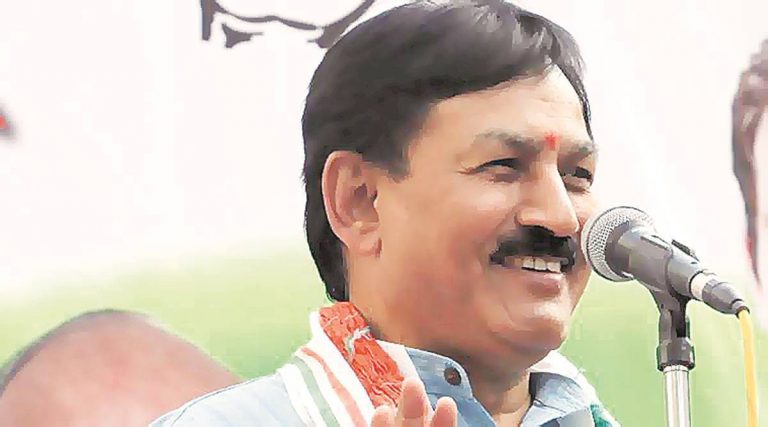
An audio clip believed to be of former Gujarat State Congress President Bharatsinh Solanki and a woman has gone viral. In the audio clip, the man, some media houses believe to be Bharatsinh Solanki, asks the woman ‘kem chho’ (how are you) quite lovingly. The woman, responds with ‘kem chho’ as well. She then says she is fine and asks how the man (believed to be Solanki) is who responds with he is fine as well.
Zee 24 Kalak, however, has identified the woman in the audio clip as Anand Nagar Palika President, Aarti Patel.
The man, believed to be Congress leader, then asks the woman if he has started some activity. When the woman asks what ‘activity’, the man replies with “I heard you started a school.” Then the audio gets a little unclear. The man then asks ‘what else, and if everything is okay,’.
When the woman says that the audio is unclear, the man replies, “I am currently in the USA.” The woman then says that he was supposed to return on 19th to which he said that he would return after about 10-15 days.
“US citizen is in USA,” the woman says to which the man replies that “Not a US citizen yet.” From the conversation it appears like they are discussing someone else’s US citizenship. The woman then expresses disbelief that the person (about whom they are talking) is not yet a US citizen, despite so many years (of being in US). “Has a Green Card,” the man says. Green Card holder in America is a Permanent Resident card which allows a person to work and stay in the US permanently.
The woman then talks about American citizenship and the man teases her how ‘she knows everything’. The woman then says how she was just kidding. The man then asks her to call him on WhatsApp when she is free. “Then what?” she asks and giggles. “We will talk,” he says. She then asks him why hasn’t he slept yet to which he responds, he will soon.
Rest of the audio is unclear where the man can be heard repeatedly saying ‘bolo’.
Bharatsinh Solanki’s estranged wife wrote to Rahul Gandhi, Sonia Gandhi, accused him of having illicit relationship with multiple women
Earlier in December 2021, Bharatsinh Solanki’s estranged wife Reshma Solanki had written a letter to Congress President Sonia Gandhi and her son and senior Congress leader Wayanad MP Rahul Gandhi making explosive allegations against her husband. She had accused Solanki of using his political clout to destroy the party in Gujarat. She had also accused him of having illicit relationship with multiple women and that he was giving election ticket to those women he was close to.
“My husband keeps chatting continuously with these women. He keeps saying what if he is old. He has relationships with women as young as 22 and even as old as he is. He spends most of his energies behind these women only,” a letter purportedly written by Reshma Solanki read. “24 years back I was made to marry him against my wishes and in all these years I never got the rights of a wife. My brother in law Amit Chavda (who is Solanki’s first cousin) knows all this but to advance the political career has kept mum on the issue,” she said in the letter. In the letter she alleged that in the night, Solanki goes in the bedroom and then locks himself up and sends obscene messages to 8/10 women of party.
Bharatsinh Solanki is son of former Gujarat CM Madhavsinh Solanki
Bharatsinh Solanki is son of Congress leader and former Gujarat Chief Minister Madhavsinh Solanki who had infamously propagated the ‘KHAM’ (Kshatriya, Harijan, Adivasi, Muslim) votebank theory for Congress in Gujarat. He was the chief minister of Gujarat when some of the worst communal riots. The first half of the 1980s saw some of the worst inter-caste riots in Gujarat, which quickly escalated to communal riots. There was rise of crime, including bootlegging and don-wars. Madhavsinh Solanki passed away in January 2021.
In a significant relief to Indian students, the universities in Poland may consider giving admissions to the Indian students enabling them to finish their studies. The Indian students currently studying in Ukrainian universities face uncertainties over their future as universities are shut in the war-torn country, affecting their studies.
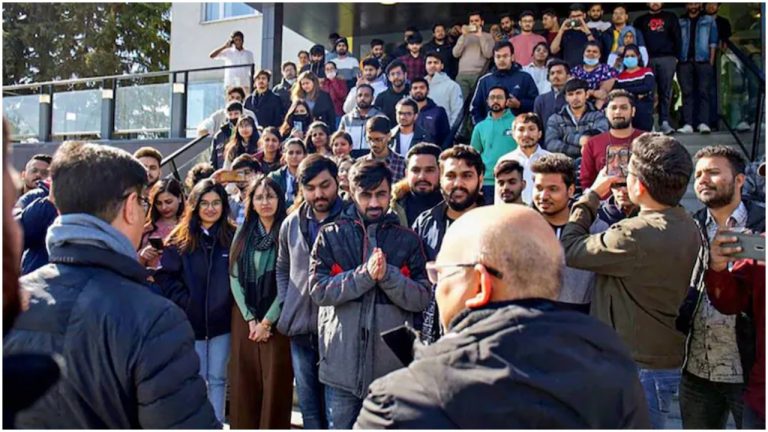
Interacting with 600 Indian students at Hotel Prezydenckie in Rzeszow, Poland, Union Minister Vijay Kumar Singh said, “If your course is not complete, all people I met in Poland said they would take responsibility for the education of all students who were in Ukraine.
Taking to Twitter, the Union Minister said, “Poland and India share centuries of friendship and cordial relations which have brought our people together. I am happy to share with you that Polish universities will be opening their doors to our students from Ukraine so that they can finish their studies. Jai Hind!”
Poland and India share centuries of friendship and cordial relations which have brought our people together.
I am happy to share with you that Polish universities will be opening their doors to our students from Ukraine so that they can finish their studies.
— General Vijay Kumar Singh (@Gen_VKSingh) March 2, 2022
The Union Minister indicated that the Polish universities might come to the rescue of Indian students affected by the ongoing Russia-Ukraine crisis by allowing these students to complete their education out of goodwill towards India.
Amidst ongoing Russia’s special military operations in Ukraine, VK Singh landed in Poland to oversee the evacuation process of Indian nationals from Ukraine on Tuesday. During his interaction with the Indian citizens, he urged the Indians stranded there to monitor the guidelines issued by the Indian embassy in Kyiv and the Ministry of External Affairs.
India fast-tracks evacuation from Ukraine
As the Ukraine-Russia war turns ugly, the government has rushed to evacuate Indian nationals stranded in war-torn Ukraine and has deployed 80 flights under “Operation Ganga” to evacuate stranded Indians from Ukraine.
The Modi government has intensified the evacuation plan by deploying more flights in the coming months. By March 10, a total of 80 flights will be pressed into service to evacuate the stranded Indians. These flights belong to the fleet of Air India, Air India Express, IndiGo, Spice Jet, Vistara, Go Air, and planes from the Air Force.
The government has planned nearly 35 evacuation flights from the Romanian capital city Bucharest, including 14 flights of Air India, eight of Air India Express, seven of IndiGo, one of Spice Jet, and three of Vistara two of Indian Air Force in the coming week.
Similarly, another 28 flights have been scheduled to take off from Hungary’s capital Budapest. Among these 28, 15 flights are from Go Air, nine from IndiGo, two from Air India, one from Indian Air Force, and one from Spice Jet.
From Rzeszow, Poland, nine flights are scheduled to depart, including eight from IndiGo and one from Indian Air Force, while five flights will take off from Suceava, Romania and three flights will take off from Kosice, Slovakia.
While the Western world keeps demonising Vladimir Putin and now even Russians, a stark reality that has emerged is how badly they are dependent upon Russian energy exports, and how their overt, boastful attempts to put up a farce of token solidarity with Ukraine is only an attempt to divert the attention of the public from their own failures.
A video clip of the former USA President Donald Trump is going viral for weeks now since the news of Russian troops preparing to invade Ukraine emerged.
In the clip, Trump is accusing Germany, a major NATO country of being badly dependent on Russian energy exports.
I know CNN & MSNBC never aired this, so I figured I would. Spot on, don't you think? pic.twitter.com/6V1vRKxP8p
In this video, Trump says, “It is very sad when Germany makes a massive oil and gas deal with Russia. We are supposed to be guarding against Russia, we are spending millions of dollars to protect France, Germany (NATO countries) against Russia and here they are, pouring millions of dollars into the coffers of Russia, making pipeline deals. it is very inappropriate, A former chancellor of Germany is the head of the pipeline company that is supplying the gas.”
Trump adds further, “Ultimately Germany will have over 70% of their country controlled by Russia. It should have never been allowed to happen. You tell me if that is appropriate. It is very bad for NATO”. He goes on to assert how the US share of spending is higher than other NATO members, but that is another discussion.
US depends on Russian oil and gas exports too, hence they left out ‘energy’ sector from sanctions
Earlier last week, when USA and Germany, UK etc were starting to declare they are super angry with Vladimir Putin and wanted to show the world that they care very much for Ukraine, they announced a series of sanctions, aimed at damaging Russia economically.
However, the US government explicitly stated that they are not touching the energy sector, that is, they are doing nothing that will affect the energy imports from Russia in any way. The entire energy sector, with broad inclusions of even wood, had been left untouched, safe from sanctions.
“Our sanctions are not designed to cause any disruption to the current flow of energy from Russia to the world”, announced the Biden administration’s Deputy National Security Advisor Daleep Singh last week.
Biden’s Deputy National Security Advisor Daleep Singh:
"Our sanctions are not designed to cause any disruption to the current flow of energy from Russia to the world." pic.twitter.com/YGTFcGrtLT
The White House order announcing sanctions had explicitly stated that energy will be exempt from sanctions.
There is a reason why US has not touched energy imports in its sanctions against Russia. They cannot, not without pluging their own citizens into a serious energy crisis. In the last few years, the US has grown only more and more dependent on Russian oil and gas.
While the Democrats in USA kept accusing Trump of being Putin’s puppet, the reality is that since Biden took oath, the USA’s dependency on oil and gas imports from Russia has only increased.
As per reports, the USA purchased over 600,000 barrels of Russian oil and petroleum products PER DAY in 2021. That was 24% higher than 2020. In 2021, 21% of all gasoline imports of the USA came from Russia. Basically, while Biden keeps making big statements about how Russia and Vladimir Putin are everyone’s enemy, his country keeps paying the so-called enemy billions of dollars every month.
UPDATED 3: The White House, in call with reporters tonight, made very clear that it's actively making sure that the SWIFT move against Russia does NOT impact energy payments, using two potential paths | #OOTT#ONGT#Ukraine
Europe gets over 40% of its oil and gas from Russia. Germany is one of the countries where the energy dependency is at its worst. While big sanctions and big statements of condemnation were announced by leaders in Europe and USA against Russia, they have made sure that Russian oil and gas continues to flow into their countries.
Even the move to cut off Russian banks from the SWIFT system has come with a lot of conditions and careful exemption of ‘energy’ related payments.
A Russian energy embargo would cause massive energy shortages in Europe, leading to blackouts and a deep recession. It would cause global oil prices to perhaps double.
As much as the world is mad at Putin, that is not a price the West is willing to pay.
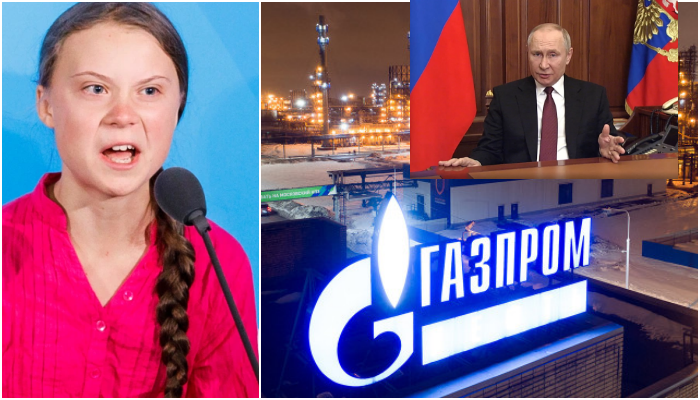
Even after announcing sanctions and hyperventilating against Russia, Germany has actually bought more oil and gas from Russia in the last few days. Russian energy giant Gazprom has stated that despite the so-called sanctions, gas exports from Russia to Europe, via pipelines that run through Ukraine, are functional and continuing, unaffected.
In 2021, Russia got more than 100 billion USD from Europe by selling oil and gas. Though Germany has announced a token measure of ‘suspending’ the Nord Stream 2 pipeline project, for now, the fact remains that Germany gets more than half of its gas from Russia alone. Nord Stream 2 is not supplying gas yet, so the ‘suspension’ doesnt actually hurt Germany’s gas imports.
How and why did US and Europe become so dependent on Russian oil and gas
The reason why the USA and Europe have become so dependent on Russian gas is mainly because they stopped being self-reliant, and especially because they became the devotees of a new religion called climate activism.
Over the years, riding on a wave of fanaticism called ‘climate activism’, the Western nations have shut down their nuclear power plants, and increased dependency on ‘renewables’ like wind and solar power. The delusions of having a ‘green energy’ revolution were so intense they they closed down gas fields, decommissioned nuclear power plants (NPPs) and even rejected the new methods of extracting natural gas.
When Joe Biden came to power, his very first move was to shut down the Key Stone XL pipeline project. Climate activists like Greta Thunberg, John Kerry and many ‘woke’ politicians in Western countries have led them to believe that they can fulfill their energy needs through wind and solar, that they do not need nuclear power, that nuclear power, that is the cleanest, most effective means to produce energy, is actually ‘extremely dangerous’, and have shut down projects involving natural gas.
Author Michael Shellenberger has pointed out often how shutting down nuclear plants and rejecting energy-intense sources like natural gas, countries have spiralled down into the path of unreliable, inconsistent and low-output solutions like wind and solar.
In a recent article, Shellenberger wrote, “At the turn of the millennium, Germany’s electricity was around 30 percent nuclear-powered. But Germany has been sacking its reliable, inexpensive nuclear plants… By 2020, Germany had reduced its nuclear share from 30 percent to 11 percent. Then, on the last day of 2021, Germany shut down half of its remaining six nuclear reactors. The other three are slated for shutdown at the end of this year. (Compare this to nextdoor France, which fulfills 70 percent of its electricity needs with carbon-free nuclear plants.)”
On the contrary, as Shellenberger pointed out, Putin has been focusing on expanding nuclear energy projects, and producing more and more oil and gas. As a result, while Russia fulfills a significant part of its domestic energey needs through nuclear power plants, it has a lot of oil and natural gas left to export to Europe and the USA.
Yes, though Greta cannot be directly linked to the German onslaught on its own NPPs, because that started under Angela Merkel around 2011, when she was 8, the way the climate activist’s theatrics of “How dare you” and “blah blah blah” have been lapped up, hailed, deified and celebrated by the Western media and their policymakers is a good indicator of why their energy policies have ended up laying them at the mercy of Russian exports.
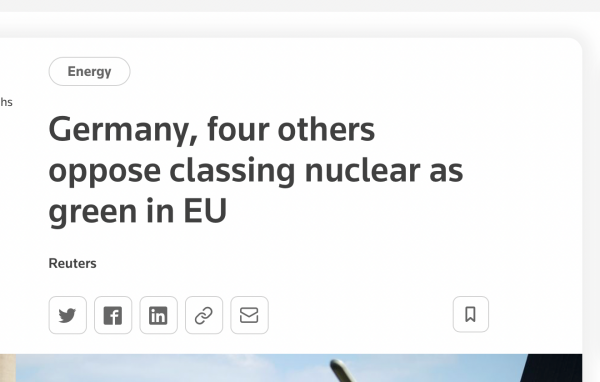
And yet, as recetly as July 2021, Germany and 4 other EU countries had opposed to classifying nuclear energy as ‘green’. Spain, Austria, Denmark and Luxemberg were the other four.
Reuters headline from July 2021
Climate activists would like everyone to believe that it is entirely possible to fulful energy demands though wind and solar, but it is far from the truth. Renewables like wind and solar are low output, require vast lands and prone to weather patterns. There are other downsides too, like recycling costs, carbon footprint and inconsistency in production and supply.
The cost of energy dependency
Russia’s military operation in the Ukraine is the jolt that has made the West wake up from its long slumber. Climate politics is a phenomenon that has long been making poorer, developing nations pay dearly for the whims and fancies of Wstern activists. Now that Germany has hastened up to quickly announce they will be building two new LNG terminals and may be not shut down all its remaining NPPs, it is a lesson for the whole world.
Now it is the EU and USA, tomorrow it may be India, Indonesia, China and many others. In a rapidly developing world, energy dependency will shape geopolitics, national security and economy. The dependence on energy is only going to be more and more intensified as we progress, and it is a brutal wake up call for every country, to invest on reliable, efficient sources of energy and ensure that when hostilities emerge, they are not held hostage to another country’s schemes.
The sanctions announced by the USA and European country against Russia come with a lot of exemptions, conditions and even a ‘grace period’. It is notable here that any measures of ‘not depending upon Russian energy exports’ will take years to actually develop the infra and showing results. So the truth is, while they shame other nations like India for not going against Russia, these Western power are still paying billions of dollars to the so-called ‘enemy of the world’. The realities of energy dependency and the stark hypocrisy of western powers somehow gets buried in the noise of sanctimony and hollow solidarity.
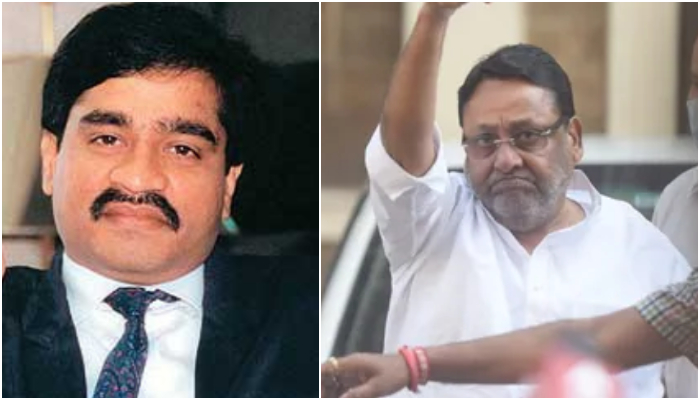
After Maharashtra minister and NCP leader Nawab Malik was arrested by ED for alleged links with Dawood Ibrahim, opposition parties in the state are demanding his resignation. But despite the grave allegations, Nawab Malik is putting up a confident face. He is smiling to the cameras, showing ‘I am safe’ attitude, and overall seems confident that allegations against him will not be proved. Moreover, the Maharashtra govt and his party is also supporting him.
While answers to many of such questions remain concealed, it is clear that the MVA led Maharashtra govt and the National Congress Party (NCP) is entirely supporting Malik and has no intentions to make him resign from the Ministry. The NCP toughened its stand yesterday in the case and cleared that Malik would continue to be the Minister.
BJP’s Chandrakant Patil and Devendra Fadnavis yesterday had demanded that Malik should resign on March 3, today as Maharahstra’s Budget Session began and said that the party would not allow the legislature to function until Malik resigned. State NCP President and Minister Jayant Patil then affirmed that though Malik was being alleged of his involvement in the Dawood Ibrahim case, he would not leave his Ministerial position. “No resignation means no resignation”, he stated.
Today, yet again, Devendra Fadnavis launched a blistering attack on MVA led govt and stated that the state government was dedicated to terrorist and gangster Dawood Ibrahim. He added that the MVA was being sympathetic towards those who helped Dawood and his aides, convicted in the 1993 Mumbai bomb blasts.
Condemning the decision to retain Nawab Malik as a minister in the govt, Fadnavis said, “For the first time in Maharashtra, a minister is behind bars but his resignation hasn’t been taken. This government is coming together to save people who keep relations with Dawood. That’s why we have started protests and we demand that his resignation be taken immediately,” he added.
For the first time in Maharashtra, a minister (Nawab Malik) is behind bars but his resignation hasn’t been taken. This is unexpected. He hasn’t been jailed for a small matter, he’s accused of dealing with family of Dawood Ibrahim: Devendra Fadnavis, LoP in Maharashtra Assembly pic.twitter.com/ZPZkIevJXa
The allegations posed by the ED against Malik are serious but the approach of NCP and Malik seems to be informal and uninhibited in the case. The ‘Malik saga’ actually kicked off when the ED arrested him in the case pertaining to a PMLA instance related to elements linked to Dawood Ibrahim and the underworld. There were reports saying that Malik was involved in the Hawala transfers operated by Dawood Ibrahim.
On February 15, the ED had conducted multiple raids in South Mumbai in connection with a money laundering case against the underworld don Dawood Ibrahim and his aides. Close to 9 places in Mumbai and 1 in Thane had been raided including the residences of Dawood Ibrahim’s late sister Haseena Parkar and brother Iqbal Kaskar.
The agency later took into custody Iqbal Kaskar on February 19 and presented him before the special Prevention of Money Laundering Act (PMLA) court. Also, the National Investigation Agency had said that Dawood Ibrahim was planning to launch terror attacks in India and that he was transferring funds through Hawala channels to provide financial help to all those involved in a planned attack. Nawab Malik’s name appeared in the process of investigation after the intelligence inputs directed the agency to look into the Hawala transactions while probing a money laundering case against Ibrahim, Iqbal Mirchi, Chhota Shakeel, Parkar and Javed Chikna.
Meanwhile, BJP leader Devendra Fadnavis last week reiterated the linkages between Nawab Malik in a money-laundering probe linked to 1993 Mumbai blasts accused Dawood Ibrahim. He alleged that Malik had purchased land worth rupees crores for just Rs 30 lakhs from 1993 bomb blasts accused Sardar Shahwali Khan and Sardar Patel, an aide of Dawood’s sister Haseena Parkar.
Earlier in November 2021 also, Fadnavis had exposed Malik and said that he and his family had bought land parcels from people linked with the underworld. The ED in the investigation process happened to learn that Malik had actually purchased land worth Rs 3 crores in the year 2005 from Haseena Parkar at Rs 30 lakhs. The sale deed was deliberately made to look like the cost of the land was Rs 30 lakhs when the practical cost transacted was at Rs 85 lakhs. The market value of the land today is around Rs 300 crores.
The ED quizzed Nawab Malik for 7 to 8 hours on the day he was arrested, but to no avail. Later ED on March 1, issued summons to his son Faraz Malik as Nawab Malik did not cooperate to the investigation process. It was later found by the agency that Faraz Malik had a major role to play in the land deal. The ED while probing into the land transaction between Nawab Malik and Hassena Parker, found that Faraz Malik had paid the required amount in cash to satisfy the deal.
Dawood Ibrahim money laundering case | Enforcement Directorate summons Faraz Malik, son of NCP leader and Maharashtra minister Nawab Malik
Nawab Malik had bought Kurla’s Goawala Compound property at Rs 85 lakhs and had asked Faraz Malik to pay Rs 55 lakhs in cash to Saleem Ishaq Patel who was working as a driver of Haseena Parkar. According to the reports, Parkar had given power of attorney of the land to Patel who got the deal signed by Faraz Malik. Patel was later arrested in 2007 with Parkar in a land grabbing and fraud case but no action had been taken against Malik and his son. The property deal began in 2003 and was completed by 2007.
It is important to note that, Nawab Malik has not been cooperative throughout the investigation initiated by the agency. According to the reports, he was seen waving at the public and the media with an immorally confident smile. He had also complained of kidney problems immediately after he was arrested and was shifted to JJ Hospital for treatment. However, the ED brought him back to custody after getting discharged.
#WATCH | Mumbai: NCP leader and Maharashtra Minister Nawab Malik being brought out of Enforcement Directorate office, to be taken for medical examination.
He has been arrested by Enforcement Directorate in connection with Dawood Ibrahim money laundering case. pic.twitter.com/UMAVK5ZEVW
While the ED is tracing the other person involved, it has affirmed that Faraz Malik is one of the two persons who delivered Rs 55 lakhs in cash and Rs 5 lakh in a cheque to Parkar in 2005-06 for the Kurla land. Further, it becomes interesting to note that, NCP leader Sharad Pawar had specifically criticized the arrest of Nawab Malik and said that the case was being planned deliberately to harass people who have been outspoken against misuse of central agencies. Trying to give a religious angle to the situation, he had said that Malik was being targeted because he is a Muslim.
“If there is a Muslim activist who is their opponent, it is their habit to link his name to Dawood. When I was the CM of Maharashtra, they had tried to link my name with Dawood as well. This is an attempt to harass those who are speaking against the misuse of central agencies,” Pawar was quoted.
Also, AIMIM Chief Asaddudin Owaisi saw the arrest of Malik as an opportunity to further its Islamist politics. He alleged that Malik was arrested only because he was a Muslim. AIMIM MP from Maharashtra, Imtiaz Jaleel also extended support to Malik and said that nobody from the MVA alliance was actually concerned over the issue. He said that the current Deputy CM from NCP, Ajit Pawar who is accused of a massive Irrigation Scam is from NCP and he never went to jail. He reiterated that Muslims in this country cannot be linked to terrorism.
Pertinently, the serial blasts, which ripped through Mumbai on March 12, 1993 had killed around 300 people and injured over 1,400. Ninety-nine persons were convicted for the blasts under various sections of Terrorist and Disruptive Activities Prevention Act (TADA). Sharad Pawar who was Maharahstra’s Chief Minister during the 1993 blasts series, had invented an extra bomb blast to promote ‘secularism’ and ‘maintain harmony between Hindus and Muslims’. While there were a total of 12 blasts in the Hindu dominated areas, Pawar on the govt radio channel had announced that there were 13 blasts and that the last one (imaginary) had affected a Muslim dominated area.
22 years later, Sharad Pawar, speaking at an event during the 89th Marathi Literary Meet near Pune, Pawar admitted that he had invented a bomb blast because all actual ones had happened in Hindu areas and he feared there will be communal tension as ‘that is what Pakistan wanted’.
SHOCKING- Sharad Pawar ADMITS that he “DELIBERATELY MISLED” people during 1993 bоmbings. “Instead of 11 bоmbings I said 12- one in Masjid Bandar- a minority area- JUST TO SHOW that bоmbings are not only in Hindu Areas but also in MusIim areas”#SharadPawarpic.twitter.com/Damx7y4zNO
The case is under investigation by the ED who is tracing all the linkages of illegal money transfers, land purchases and involvement of NCP’s Nawab Malik in the Dawood Ibrahim case. Whatever happens, it is clear by now that the NCP and the MVA led govt would stand strong behind Malik and that is what is probably accounting to Malik’s safe play in the case.
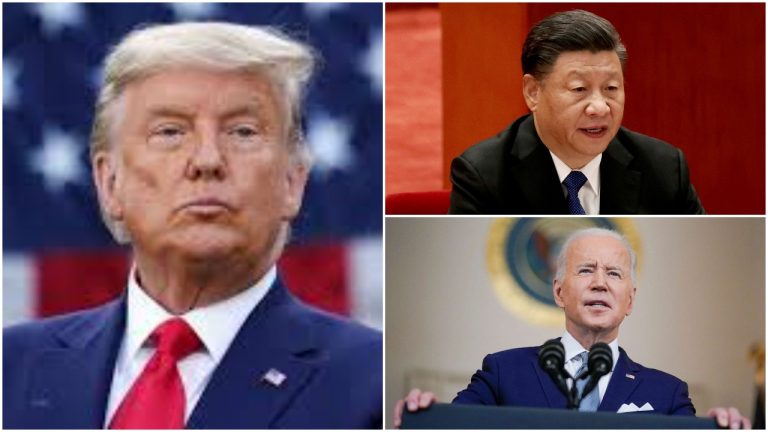
Given the Biden administration’s failure in handling the US pullout from Afghanistan and Russia’s invasion of Ukraine, US former President Donald Trump believes China might be emboldened to invade Taiwan.
Speaking exclusively in an interview with Fox Business on Wednesday, March 2, Trump reportedly said that Taiwan may be “next” for a potential invasion, as the ongoing Russia-Ukraine conflict may impact China’s rising aggression.
“Taiwan is going to be next. Just watch Taiwan; President Xi is watching with glee,” Trump was quoted as saying.
When the FOX Business host asked Trump if he expected Taiwan to invade sooner rather than later, the former president took a direct dig at his successor and the incumbent US President Joe Biden, saying that “they’re seeing that our leaders are incompetent, and of course, they’re going to do, this is their time. They did nothing on Ukraine. They do nothing.”
Donald Trump also stated that China is closely monitoring the Russia-Ukraine crisis. He also stated that Chinese President Xi Jinping is taking cues from the US’s handling of Afghanistan’s evacuation after the Taliban seized power last year.
“President Xi happens to be a man with a high intelligence level, and he looks at what happened in Afghanistan…He saw the way that we left Afghanistan…left American citizens there… is still trying to get out…he sees that and this is his opportunity to do what he wants to do,” Donald Trump said.
“Many people are dying, and we’re allowing this to happen. It would have never happened [if I was still president]. It should have never happened. Putin never would have done it with me. I can tell you that,” Trump said claiming that he gave Ukraine the anti-tank missiles while Biden gave little and Obama gave them blankets.
Ukraine has fought Russia capably, far better than most people expected, Trump remarked, stressing that Putin would never do such a thing to him (Trump).
The US shared intelligence with China on Russia’s troop buildup near Ukraine, China shared the info with Moscow
On February 26, OpIndia reported on how senior Biden administration officials held urgent meetings with the Chinese diplomats and presented them intelligence showing Russia’s troop buildup around Ukraine.
In response, the Chinese officials, including the Foreign Minister and the Ambassador to the United States, ignored American officials, saying they did not see any Russian invasion of Ukraine coming.
The Biden administration was desperate to stop Russians and thus shared intelligence with China on Russia’s troop buildup in hopes that President Xi Jinping would step in. The officials privy to this information said that the Biden administration shared high-level info with its adversary to gain support from China to stop Russian President Vladimir Putin from invading Ukraine.
However, the Chinese government repeatedly rebuffed the efforts and instead turned over the intelligence data to Moscow.
The US officials believe that their information was relayed to Russia by China, noting that the Biden administration was trying to sow division between China and Russia.
Russia’s ‘military operations’ against Ukraine
President Vladimir Putin of Russia announced limited military strikes against Ukraine on Thursday, February 24, 2022. Russian President Vladimir Putin announced the special operation in eastern Ukraine in a televised address.
Putin made it clear that Russia had no intention of invading Ukraine. He stated that the military operation he announced was in reaction to threats from Ukraine and would strive to “demilitarise” and “denazify” Ukraine.
The Russian military entered Ukraine through Belarus, according to Ukraine’s border guard service. According to Ukraine’s Ministry of Internal Affairs, the Russian military crossed Belarus to enter Ukraine from the north. Russian troops have launched an attack on Ukraine’s northern border forces.
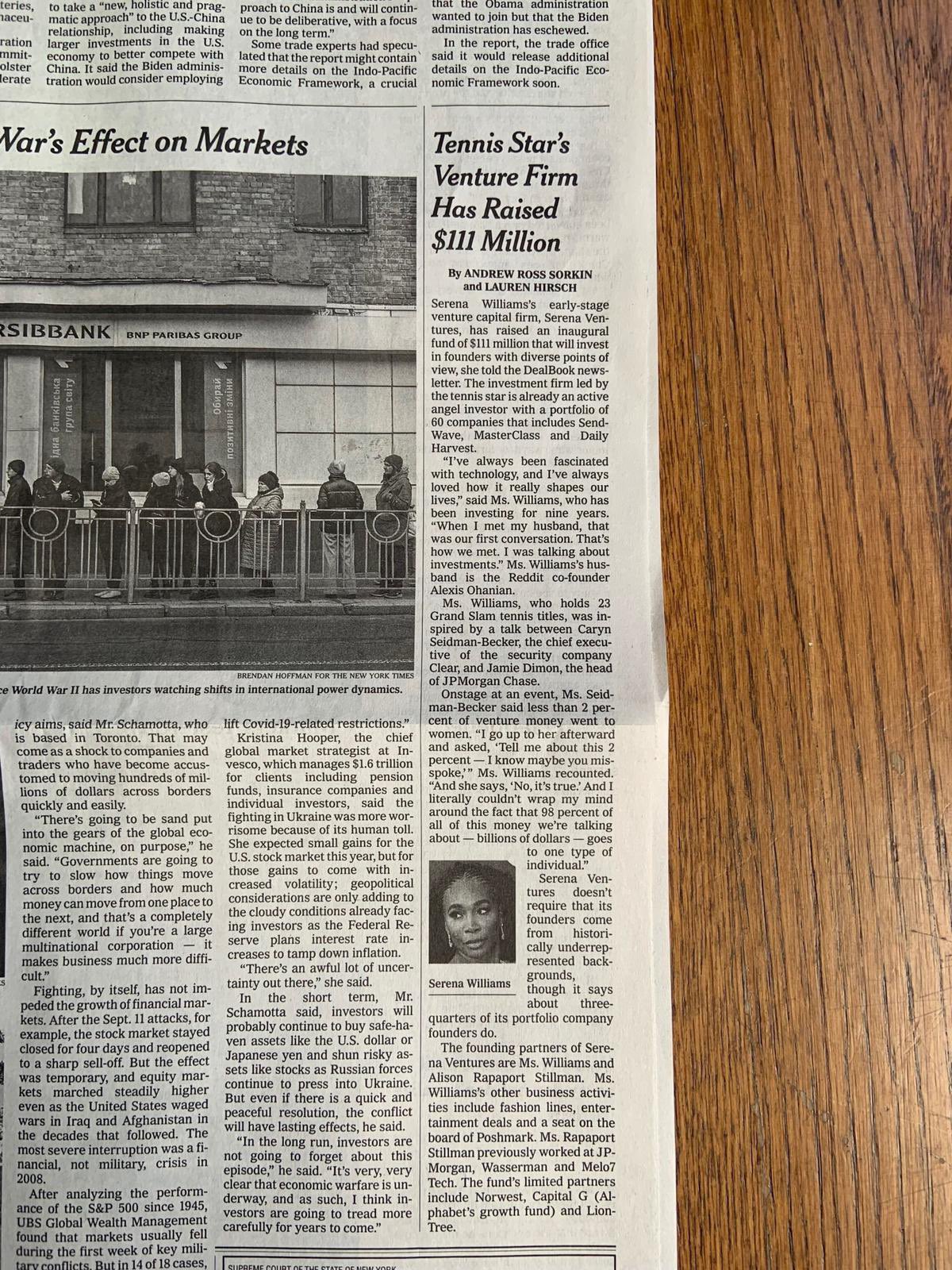
Tennis star Serena Williams has called out the New York Times for printing the photo of her sister Venus Williams in a news about her on Wednesday. Serena Williams runs an early-stage venture capital firm Serena Ventures. This firm had raised an inaugural fund of $111 million. While publishing a report about this, NYT had printed the photograph of Venus Williams – elder sister of Serena Williams – in the news article.
This mistake by NYT has not only attracted the rage of Serena Williams but has also enraged fans and followers who have reacted on social media.
The photo shared by Serena Williams from her Twitter handle.
Serena Williams has posted the photo of the newspaper report on her Twitter account saying, “No matter how far we come, we get reminded that it’s not enough. This is why I raised $111M for Serena Ventures. To support the founders who are overlooked by engrained systems woefully unaware of their biases. Because even I am overlooked. You can do better, New York Times.”
No matter how far we come, we get reminded that it’s not enough. This is why I raised $111M for @serenaventures. To support the founders who are overlooked by engrained systems woefully unaware of their biases. Because even I am overlooked. You can do better, @nytimes. pic.twitter.com/hvfCl5WUoz
The Twitter handle NYT Business has replied to her saying “This was our mistake. It was due to an error when selecting photos for the print edition, and it did not appear online. A correction will appear in tomorrow’s paper.”
This was our mistake. It was due to an error when selecting photos for the print edition, and it did not appear online. A correction will appear in tomorrow’s paper.
Moreover, the New York Times has also avoided mentioning the name ‘Serena Williams’ in the headline and simply wrote ‘Tennis star’ instead. This has caused the fans and followers to be enraged and they have lashed out at the NYT on social media. A Twitter handle Digital Sista has written, “it’s not a mistake. It’s called racism and sexism. It’s not something all women experience. And if Serena Williams is overlooked by VCs. Imagine what happens to those that don’t even have her platform. That should be the takeaway.”
it’s not a mistake. It’s called racism and sexism. It’s not something all women experience. And if @serenawilliams is overlooked by VCs. Imagine what happens to those that don’t even have her platform. That should be the takeaway. @ArlanWasHere was the first to shift this. https://t.co/6QhpDMELWE
— Shireen, Harlem’s Shuri, In Political Mecca! (@digitalsista) March 2, 2022
Drew Olanoff has written in his tweet, “they should issue an apology, run it again tomorrow with a respectful headline and the apology.”
they should issue an apology, run it again tomorrow with a respectful headline and the apology.
Serena Williams’s firm Serena Ventures has invested in fintech companies Propel, Cointracker, and edtech company Masterclass. It manages a portfolio of over 60 angel investments, thirteen of which are unicorns.
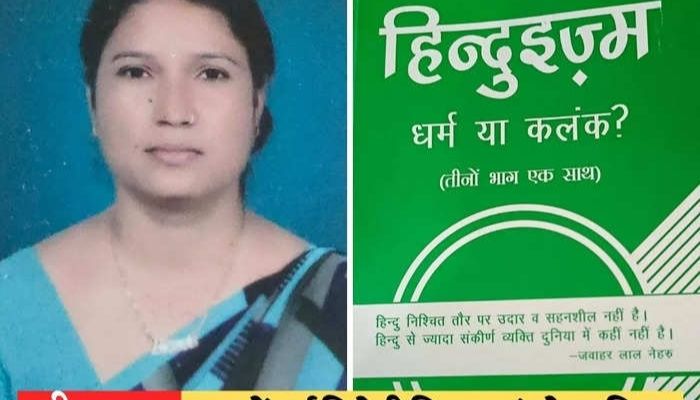
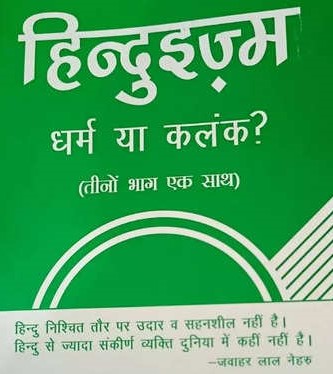
A lady teacher in the government senior secondary school of Rooppura in Bhilwara of Rajasthan had reportedly distributed among her students a booklet titled ‘Hinduism: Dharm ya Kalank’ in the last week of February 2022. The parents of the students have protested this act by the teacher. Taking cognizance of this, the chief district education officer of Bhilwara Brahma Ram Choudhary has ordered an inquiry in this matter on 2nd March 2022.
Hinduism: Dharm ya Kalank?
Nirmala Kamad is a teacher in the government senior secondary school of Rooppura in the Asind subdivision of the Bhilwara district of Rajasthan. She is accused of distributing a booklet among her students in the school. The booklet is specifically against Hinduism which is clear by its title ‘Hinduism: Dharm ya Kalank?’ which means ‘Hinduism: Religion or Indictment?’. Interestingly this whole text is divided into three sections and the distributed booklet covers all three of them. The book with a green cover also has a quote attributed to Jawaharlal Nehru which says ‘Hindus are definitely lenient and intolerant. No one in the world is as narrow-minded as a Hindu person’.
The cover page of the booklet
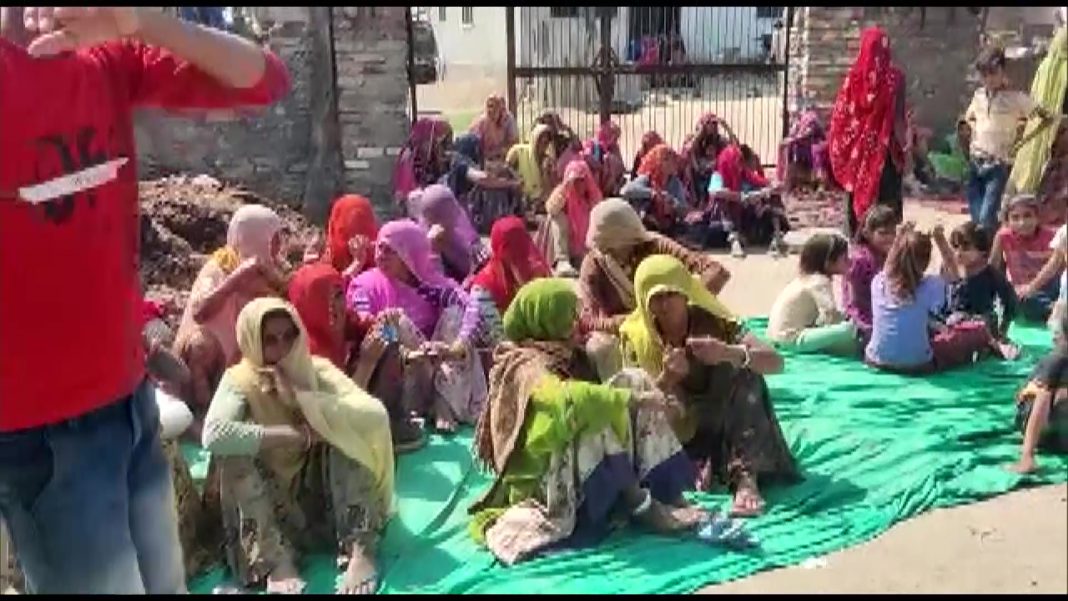
The students and villagers complained
The teacher had distributed this booklet in the last week of February 2022. When the parents of these students got to know about this, they came to the school complaining about the incident. The outraging parents locked the school.
According to a report by Navbharat Times, Mukesh Kumar, the principal of the school has informed that the Sarpanch of the village Soniya Gurjar had visited the school on 28th February along with his father Man Roop Gurjar and other villagers accusing the teacher of distributing this booklet.
Man Roop Gurjar said that a student called him up to inform him that the accused teacher propagates misinformation about Hinduism. Students have alleged that she has accused the priests at Ayodhya’s Ram Mandir of using funds collected for construction of Bhavya Ram Mandir for their personal use, he added. “She also gives misinformation about cows. When we tried to talk to her, she threatened us that she would register a case against us under the SC/ST Act. We demand suspension of the teacher,” he said.
The protesting villagers locked the school.
Teacher alleges harassment
The teacher, on the other hand, has accused villagers of discrimination and harassment because of her caste. Nirmala Kamad, the teacher, has said that five months back, Man Roop Gurjar had called on school principal’s number and spoken to her. She alleged that Gurjar had said that villagers were objecting to her leaving her hair untied, coming in a car and wearing spectacles. “Our children will not study with you SC/ST people. Get yourself transferred,” she alleged that Gurjar told her. She also alleged that another Nandlal Khatik was similarly harassed.
The teacher is put on APO (awaiting posting orders)
Amidst the protests by the villagers, Beni Prasad Sargara, the Tahsildar of Asind reached the school along with Asind Police Station in-charge Harish Sankhla and Additional Block Education Officer Bhanwar Lal Sen. After this, the Chief District Education Officer Brahma Ram Choudhary had ordered to put the teacher on APO. The lady teacher is temporarily posted in the office of the Block Education Officer.
Rajasthan | People staged a protest after a govt school teacher in Bhilwara has allegedly distributed a book against a particular religion.
The chief district education officer of Bhilwara Brahma Ram Choudhary said, “A team has been set up to investigate the matter.” (02.03) pic.twitter.com/f4YXxjA6mN
School unlocked only after strict action was assured
The additional block education officer Bhanwar Lal Sen had informed that the protesting villagers had closed and locked the gates of the government senior secondary school of Rooppura. He said, “The villagers had complained about a teacher that she had distributed an anti-religious booklet (that is Hinduism: Dharm ya Kalank?) to the students. We had received a complaint letter from the villagers and we will be doing further action based on this complaint.” The gates of the schools were opened after the villagers were satisfied by the assurance of the strict action given by the administration.
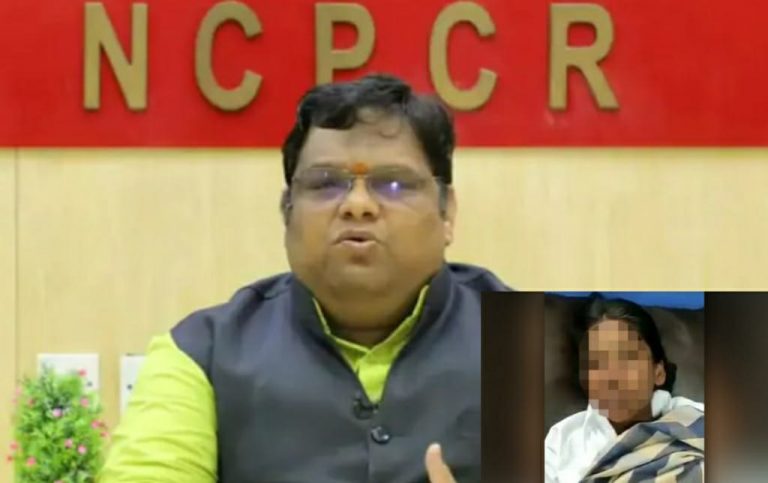
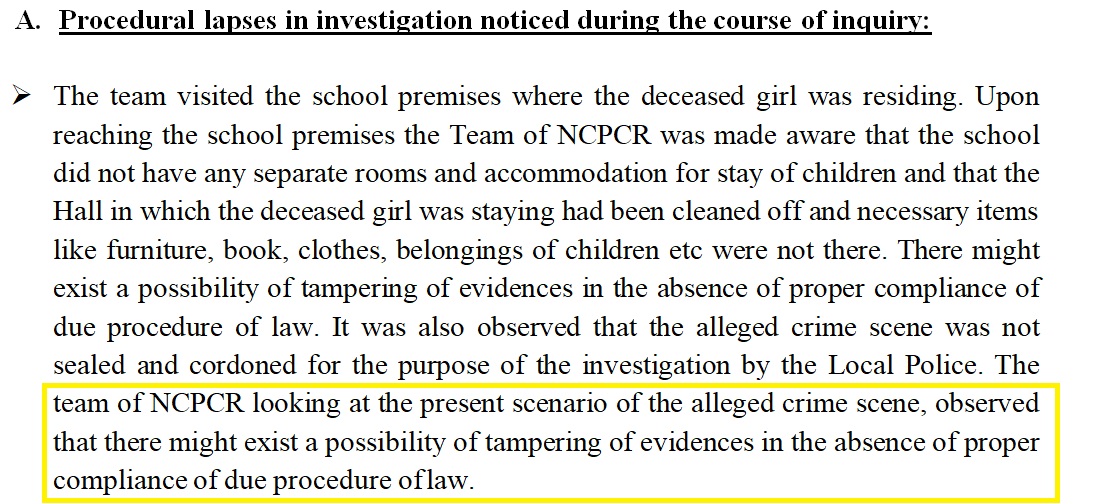
The three-member committee of the National Commission for Protection of Child Rights (NCPCR), probing the suicide case of M Lavanya, has sent its inquiry report to the chief secretary and DGP of Tamil Nadu government. The report stated that the team noticed several procedural lapses during the inquiry. It confirmed that there might exist a possibility of tampering with evidence in the absence of proper compliance with the due procedure of law.
The NCPCR report also accused the Tamil Nadu Police of not filing a complaint about the conversion angle, which was the cause of the suicide according to the family and was also mentioned in Lavanya’s dying declaration. The reports also accused the school of not letting Lavanya’s mother take the dead body of her daughter until they did not pay off the full school fee for the deceased victim.
SS from the inquiry report submitted by NCPCR in the M Lavanya suicide case
Lavanya, who was studying in class 12 at Sacred Heart Higher Secondary School in Michaelpatti near Thanjavur, committed suicide by drinking pesticide after she was tortured to convert to Christianity by the school. Lavanya’s parents said that there was an attempt to forcefully convert their child and become a nun which the child had rejected and hence was subject to torture.
The NCPCR said in its report that the statutory body had taken cognisance of this incident after it received“3545 odd complaints for requests pertaining to initiate inquiry against the allegations in connection to this incident.”
“Looking into the gravity of the situation, and the lenient stand of the State Authorities in the present matter, regarding the death of a minor girl in Thanjavur, a team of three officials headed by Chairperson NCPCR Shri Priyank Kanoongo, Ms Madhulika Sharma, Advisor (Education), and Ms Katyayani Anand, Consultant (Legal) visited Thanjavur, Tamil Nadu on 30th and 31st of January 2022 for the purpose of conducting a thorough inquiry in the matter,” NCPCR said.
The NCPCR team headed by Chairperson Priyank Kanongo in the inquiry report mentioned that the team had interacted with the Superintendent of Police, Investigating Officer, Chief Education Officer, doctors who treated the minor girl and doctors who conducted the autopsy, grandparents and family from the maternal side (biological mother) of the minor girl, etc at the Railway Officers Rest House, Thanjavur to conduct a fair probe in the case.
During the inspection and investigation, NCPCR investigators observed a lot of discrepancies and shortcomings on the part of the school administration.
School authorities and police laxity in handling M Lavanya suicide case
The NCPCR inquiry report firstly pointed out how the NCPCR team found shortcomings in the school authorities’ initial actions to care for the minor girl after she had fallen ill. It further stated that when the NCPCR team reached Sacred Heart Higher Secondary School, Michaelepatt in Thanjavur in Tamil Nadu, where the class 12 student died of suicide, they discovered that there were no separate rooms or accommodations for the children’s stay.
The report further added that the hall where the deceased girl was staying had been cleaned and that essential objects such as furniture, books, clothes, and children’s belongings had been removed, leading to a possibility of evidence tampering, said the report.
Further, the team observed that the alleged crime scene was not sealed and cordoned for the purpose of the investigation by the local Police.
Looking at the current situation at the alleged crime scene, the NCPCR team came to the conclusion that there was a chance of evidence tampering in the lack of adequate legal procedure.
Implying police laxity in handling the suicide case of M Lavanya, the report further stated that during the interaction with the Investigating Officer (IO) and the Superintendent of Police (SP), the team was made aware that the warden of the boarding (the hall where children were kept), who had been named as a prime accused, had also not been taken to the crime scene to recreate the alleged incident and seizure of evidence.
The report added that the investigating officer also informed the NCPCR team that they did not seek the Police Remand of the warden who is one of the prime accused in the instantaneous matter. It added that the police have, to date, not identified the vendor or the source from which the alleged substance/poison/herbicide had been procured.
The NCPCR team further observed various anomalies in the statements made by the IO and the SP.
“The steps taken by the investigating authorities were observed to be not in line with the rules of procedure that should have been adopted in case of investigation into the death of a minor girl. This creates suspicion whether the investigating agency is doing a fair investigation or not”, read the report.
School authorities collected fees from the mother before M Lavanya could be taken for treatment: NCPCR
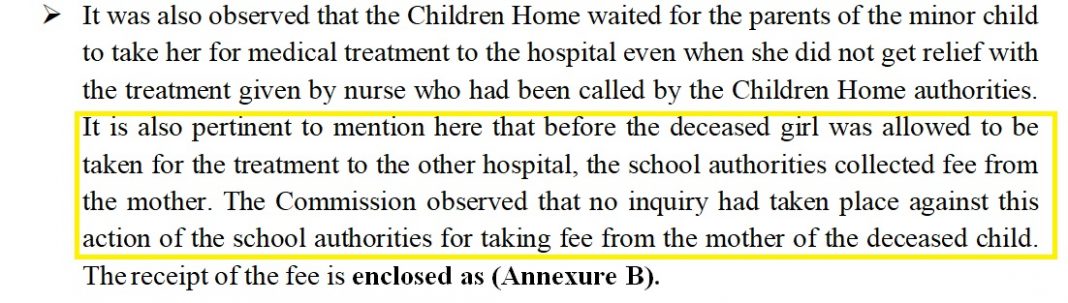
Further highlighting the apathy of the school authorities and the Tamil Nadu police pertaining to the M Lavanya suicide case, the NCPCR report stated that before the deceased girl was allowed to be taken for treatment to the other hospital, the school authorities collected fees from the mother. The Commission observed that no inquiry had taken place against this action of the school authorities for taking a fee from the mother of the deceased child.
SS from the inquiry report submitted by NCPCR in the M Lavanya suicide case
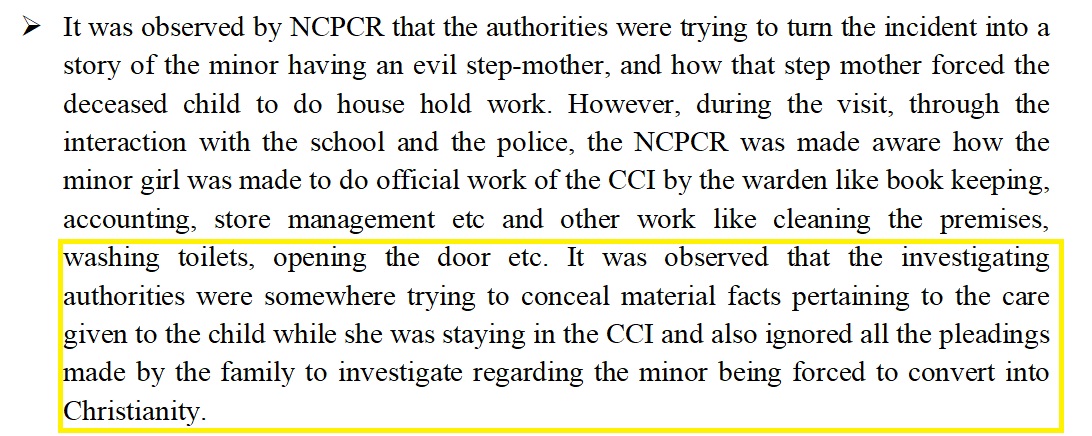
Another scathing observation made by the NCPCR team probing the suicide case of a Class 12 student of Thanjavur was that the investigating authorities were somewhere trying to conceal material facts pertaining to the child while she was staying in the CCI and also ignored all the pleadings made by the family to investigate regarding the minor being forced to convert into Christianity.
“It was observed by NCPCR that the authorities were trying to turn the incident into a story of the minor having an evil stepmother, and how that stepmother forced the deceased child to do household work. However, during the visit, through the interaction with the school and the police, the NCPCR was made aware of how the minor girl was made to do official work of the CCI by the warden like bookkeeping, accounting, store management etc and other work like cleaning the premises, washing toilets, opening the door etc,” read the report.
It added that authorities were attempting to conceal important details about the child while also ignoring the family’s pleas for an investigation into the minor being compelled to convert to Christianity.
SS from the inquiry report submitted by NCPCR in the M Lavanya suicide case
Key violations of the Juvenile Justice Act of 2015 and its Rules of 2016, as well as a variety of other anomalies
The report further specified the legal bounding that the school authorities had not been adhering to. It said that the school was housing children without a valid registration under the Juvenile Justice Act, 2015, which is a mandatory requirement.
The report added that the minor girl despite having parents and family was illegally being kept in the CCI premises and was not produced before the Child Welfare Committee (CWC) by the authorities, which is another compulsory requirement as per Section 37 of the Juvenile Justice Act, 2015.
“Therefore it was observed that due procedure with regard to institutionalisation of child was clearly not followed by the District Authorities. It was further observed that the deceased girl staying in the CCI was not produced before the CWC and was being kept illegally,” read the inquiry report.
It further stated that the crucial standards pertaining to the infrastructure and child care facilities, that ought to be followed by each CCI were found to be less than prescribed norms in this particular CCI which housed M Lavanya.
It NCPCR committee further observed that as mandated by the law, there was no exclusive officer- Special Juvenile Police Unit to exclusively deal with children either as victims or perpetrators, in accordance with Section 107 of the Juvenile Justice Act, 2015.
Recommendations made by NCPCR
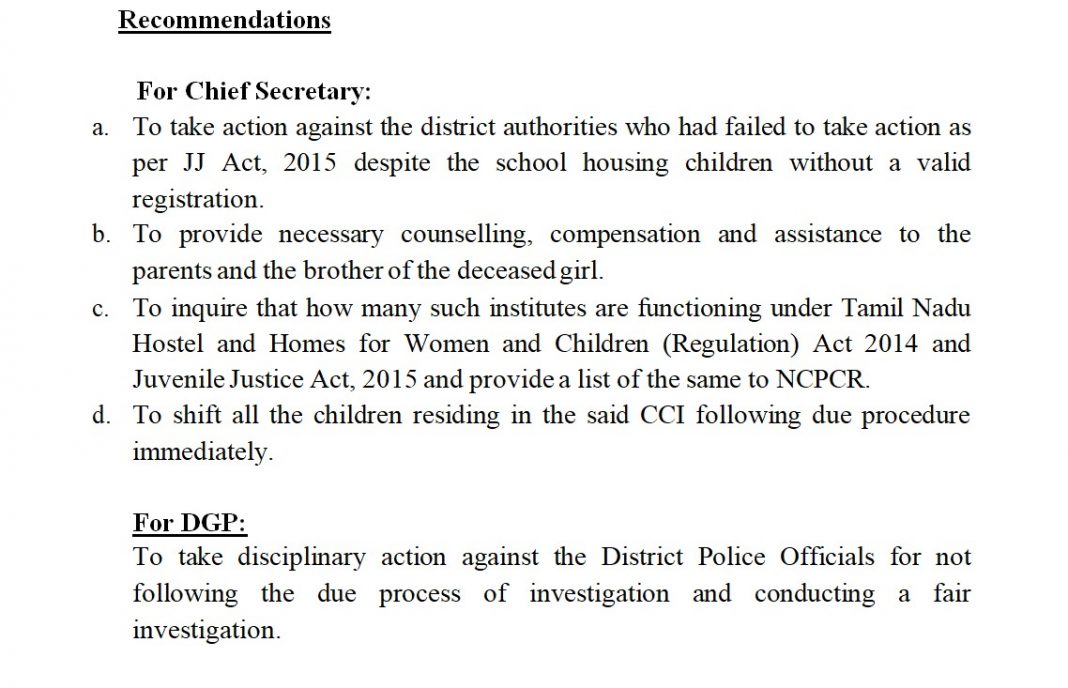
The report mainly addressed recommendations to the Chief Secretary and the Director-General of the Police (DGP).
To take action against the district authorities who had failed to take action as per JJ Act, 2015 despite the school housing children without a valid registration.
To provide necessary counselling, compensation and assistance to the parents and the brother of the deceased girl.
To inquire how many such institutes are functioning under the Tamil Nadu Hostel and Homes for Women and Children Regulation) Act 2014 and Juvenile Justice Act, 2015 and provide a list of the same to NCPCR.
To shift all the children residing in the said CCI following due procedure immediately
For DGP:
To take disciplinary action against the District Police Officials for not following the due process of investigation and conducting a fair investigation.
NCPCR says Tamil Nadu govt not cooperating in probe of M Lavanya suicide case
The National Commission for Protection of Child Rights had sent a team to Thanjavur in Tamil Nadu to probe the suicide of M Lavanya. A press release issued by the NCPCR said that a team headed by Chairperson Priyank Kanongo would visit Thanjavur district in Tamil Nadu to inquire into the suicidal death of the minor girl of the Sacred Heart Higher Secondary School, Michaelepatt, as the child rights body has received a complaint regarding the matter.
In a dying declaration recorded on video, the 7-year-old girl student had alleged that her school was pressurising her to convert to Christianity, and had tortured her for refusing to leave Hinduism. However, the police and the media had tried to cover up the conversion angle in the case and alleged that the girl killed herself because the school had asked her to do some regular chores.
Therefore, the NCPCR had decided to visit the spot between 30 and 31 January to ascertain the facts of the case. NCPCR also said that the Tamil Nadu government is not cooperating with it in the case, and therefore the commission will make all arrangements itself for the probe.
India’s abstention in the UN on the resolution of aggression against Ukraine has surprised many foreign experts on international relations. But British News Presenter Alastair Stewart saw this as an opportunity to mock India over its decision to strategize its national interests and not towing the western line.
It came after India, along with 34 other countries decided to abstain on the draft resolution concerning the aggression on Ukraine after the Russian Invasion of the country in the last week of February. While an unprecedented number of 141 counties took the NATO line to unite against Russia, India taking a neutral stand pressed that ‘dialogue and diplomacy’ could only solve the conflict.
India abstains from voting against Russia at UNGA. 141 in favour, 5 against, 35 abstentions.
However, Understanding India’s nuanced stance on the issue underlined by its equations with Russia and the presence of stranded nationals in war-torn Ukraine seems well above the pay grade of some international diplomacy experts in the west. Many of this cabal have resorted to making racist, derogatory and patronizing snides against India, entrenched in their continued colonial outlook.
On Thursday, British News Presenter Alastair Stewart while noticing India’s abstention over the resolution commented, “Pretty predictable but India and Pakistan should hang their heads in shame and, henceforth, receive not a penny piece in aid from the UK.” While Stewart seems to be aware of the history of India’s continued non-alignment in world affairs, he did not miss an opportunity to ‘tell’ the former colony nations to be ‘ashamed’ of their sovereign decisions.
Moreover, his remarks on British ‘aid’ to India have caught much ire amongst Indians and on Twitter that they are giving a good class to Alastair Stewart in coloniality. Renowned Indian Author, Scientist and Political critic Anand Ranganathan reminded Stewart on Twitter, “This butler probably doesn’t know that in 1947, Britain owed India 1.4 billion pounds, that it finally returned in 2001,”
This butler probably doesn’t know that in 1947, Britain owed India 1.4 billion pounds, that it finally returned in 2001.
The only thing you muppets are good at is showering yourselves with hollow titles, like OBE, where E stands for Empire. Where’s your empire now, schmuck? WDTT https://t.co/aIzvRioKDL
Indians reminded the entitled British presenter on the British loot of India, which from 1767 to 1938 amounted to over US$ 45 trillion. To put this into perspective, the total loot estimated is 15 times that of the current GDP of India (close to 3 Trillion USD). Krithika Sivaswamy replied, “You owe us, buddy. It’s out of magnanimity (most would agree it’s foolish) that we have ignored to ask the UK to return with interest the total debt, including war debts.”
You owe us buddy. It’s out of magnanimity ( most would agree it’s foolish) that we have ignored to ask UK to return with interest the total debt , including war debts .
— krithika sivaswamy (@krithikasivasw) March 3, 2022
Calling out the British Museum in London which is often termed as the British Warehouse of Colonial loot, a Twitter user compared it with a high definition version of Chor Bazaar in Mumbai.
What they took even if they returned back – then they should not feel as ashamed of their history as now! pic.twitter.com/cExhaIWbFq
Going beyond the past while considering the present scenario, Indian businesses continue to be one of the largest investors in the UK while the diaspora contributes to a whopping 6% of the British GDP. Contrasting this with British contributions to India, Twitter user Joseph T Noony asked, “The 1.6% Indian diaspora contributes a disproportional 6%(?) to UK’s GDP. What’s your contribution to India? $45 trillion loot? Pakistan?”
India is the 2nd largest investor in the UK. Indian companies create >100,000 jobs there. They pay~ 2 billion pounds in corporate taxes. The 1.6% Indian diaspora contributes a disproportional 6%(?) to UK’s gdp. What’s your contribution to India? $45 trillion loot? Pakistan? https://t.co/yXwDXALtF1
Indian experts also reminded Alastair Stewart that while India does not need the condescending ‘British aid’ anymore, it was already stopped in 2015.
What a clown! India doesnt need your aid. You can take it and stuff it up. And it is you who is begging for a trade deal. So get off your imperial high horse and get over your colonial nostalgia https://t.co/Gt2NbL3K71
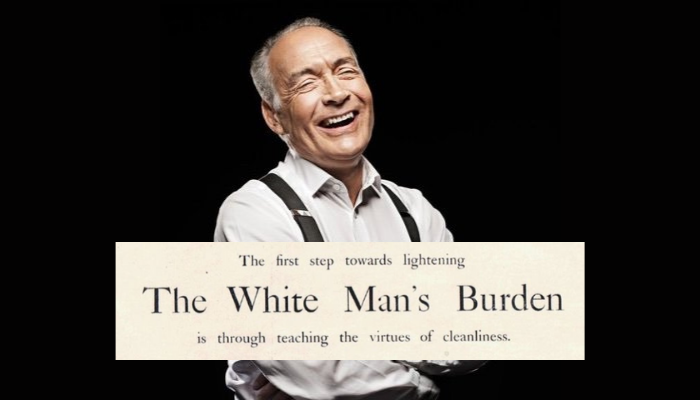
Poor Stewart and his racist followers were seen justifying the cause of the Empire, while Indians did not leave a chance in giving them a good lesson in history. Self-appointed global analysts often put themselves on pedestals while preaching the world over ‘values’, but in reality, they buckle down under their self-imposed white-man’s burden.
A tense situation has prevailed near Ladle Mashak Dargah in the Aland town of Kalaburgi district, Karnataka, after a Muslim mob resorted to stone pelting against Hindu activists and police personnel on Tuesday.
According to the reports, Hindu groups had planned to offer puja to Raghavachaitanya Shivalinga located inside the Ladle Mashak Dargah premises.
The Hindu groups wanted to cleanse the idol by performing puja after some miscreants had thrown human faeces on the Shivalinga recently. Hence, the Hindu activist group Sri Rama Sene had proposed the purification of the Raghavachaitanya Shivalinga at the dargah on March 1 to mark Maha Shivaratri.
Ahead of the events, the Kalaburagi police had prohibited the entry of Sri Ram Sene founder Pramod Muthalik, Hindu activist Chaitra Kundapura and Siddalinga Swami in the Kalaburagi district till March 3. However, the Hindu groups took out the procession from Aland’s bus stand as planned amidst the prohibitory orders.
As the Hindu groups marched towards the dargah, a Muslim mob assembled outside the premises to stop the peaceful rally. Apparently, the local Muslims had planned a procession to mark Shabab-e-Barat to pay respects to the dead at the shared dargah on the same day.
The #Karnataka Police have arrested 167 persons, including 10 women in connection with an incident of communal violence that rocked Aland town of #Kalaburagi district on Maha Shivratri day. The investigations have revealed that the violence was planned, police sources said. pic.twitter.com/QTC1x1O5tE
The Muslim mob assembled near the dargah flashed sharp weapons, sticks and other armaments as Hindu groups approached the dargah. The dargah committee office-bearers locked the gate, saying they would not allow them inside.
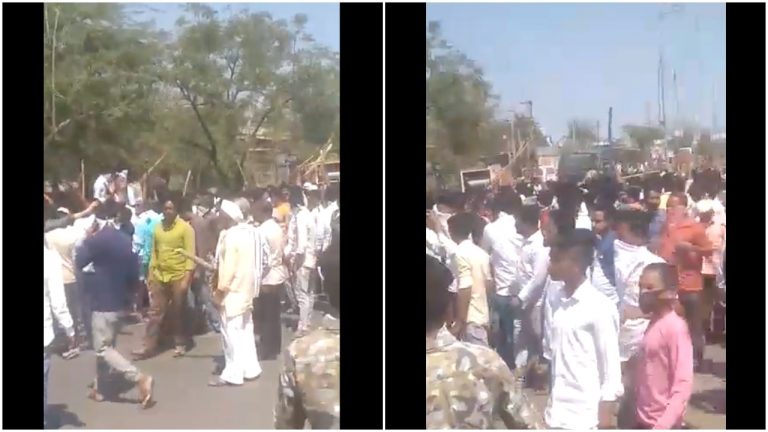
The enraged mob pelted stones at them as they encountered Hindu activists, leaving many injured. The mob also pelted stones on the vehicles of Union Minister Bhagwanth Khuba, former MLA BR Patil, including the Deputy Commissioner and the Superintendent of Police.
As tension gripped the city, the police officials deployed additional forces to maintain law and order. The police used drones to keep a strict vigil on the activities as there were rumours that stones have been stocked on the terraces of the houses to attack the Hindu groups.
Later in the day, the district administration finally achieved a breakthrough after holding a series of negotiation talks with both groups. The district authority allowed 11 people to purify the Shivalinga and offer puja as a compromise between the two sides.
The Kalaburgi police have arrested more than 167 persons, including ten women, for their role in the clashes in Aland. The police have also extended prohibitory orders until March 5 to restore peace, law and order.
Meanwhile, a Muslim mob assembled on the streets of Kalaburgi to condemn the arrests of attackers. They demanded the release of persons accused of pelting stones at Hindu groups and police personnel.