Home Blog Page 399

Samajwadi Party MP Ramji Lal Suman, who called Rana Sanga a ‘traitor’, now questions Rajput DNA and warns Karni Sena that ‘Akhilesh Yadav is coming’

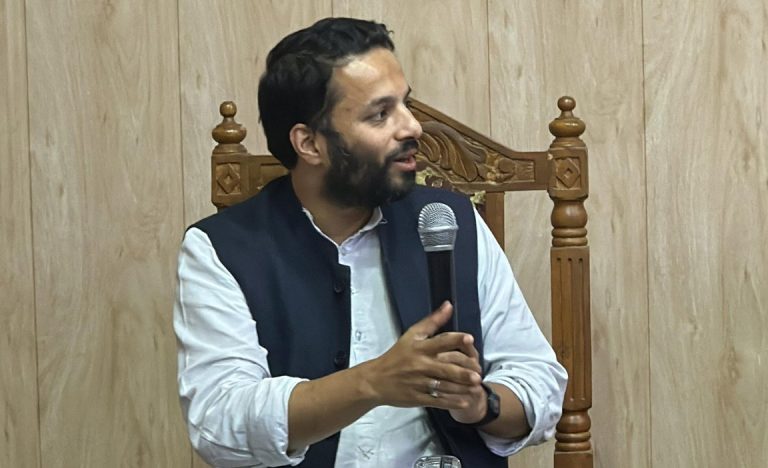
The Karni Sena’s uproar against Samajwadi Party motormouth Ramji Lal Suman over his outrageous remarks against Rana Sanga is yet to subside, and the Samajwadi Party leader has courted yet another controversy. On Monday (14th April 2025), Ramji Lal Suman attended a program celebrating the birth anniversary of Dr BR Ambedkar as the chief guest. While addressing the crowd, Suman claimed that contrary to the claim that there is a Hindu temple under every mosque, there are Buddhist monasteries under every temple.

Ramji Lal Suman went on to issue threats of violence against Karni Sena, saying that Akhilesh Yadav is coming to Agra on 19th April, and then there will be a fight.

“We have given the slogan of Picchada-Dalit-Adivasi. This fight will go on for a long time. I want to tell them that the ground is ready, now there will be a fight. You will say that there is a temple under every mosque, then we will have to say that there is a Buddhist monastery under every temple. Do not dig up old graves, otherwise you will have to face consequences,” Ramjilal Suman said.

He further attacked the Karni Sena, saying that if they think Muslims have DNA of Mughal tyrant Babur, whose DNA do Rajputs have. “If you say that Muslims have Babur’s DNA, then whose DNA do you have? Please tell me this too,” the Samajwadi Party leader added.

This comes amidst massive protests by Karni Sena against Ramji Lal Suman over his remarks calling Rana Sanga a ‘traitor’. Ramji Lal Suman made the controversial remarks while speaking in the Rajya Sabha on 21st March. He said that the Indian Muslims did not consider Babur as their ideal and followed the Sufi tradition. “They follow Muhammad Saheb and the Sufi tradition. However, I want to ask, who brought Babur here? It was Rana Sanga who invited Babur to defeat Ibrahim Lodhi. So, if that’s the case, then Hindus must be descendants of the traitor Sanga. We criticize Babur, but why do we not criticize Rana Sanga?” he said.

“Babur was invited by Rana Sanga to defeat Ibrahim Lodi. He had the misconception that Babur was a robber, and that he would go back, and Rana Sanga would rule, but Babur declared himself the ruler of Hindustan and refused to leave,” the Samajwadi Party MP added.

Outraged by his disrespectful comments about the Rajput ruler, several Karni Sena activists stormed his residence in Agra, damaging vehicles and other property. Karni Sena also held protests at different places in Uttar Pradesh against his remarks. Karni Sena chief Suraj Pal Singh Amu condemned his remarks and said that he insulted a hero who defeated the Mughals. He demanded an apology from Ramji Lal Suman and SP chief Akhilesh Yadav. An FIR was registered by the Agra police in connection with vandalism at the MP’s house, and several persons were detained.

Despite the outrage, the Samajwadi Party leader refused to apologise saying that he will not apologise for his comments in this life. While Ramji Lal Suman may have not apologised despite triggering a huge outcry with his factually incorrect and offensive remarks, he recently approached the Allahabad High Court seeking protection for himself and his family.

Stalin’s ‘autonomy’ gamble: Taking Tamil Nadu down a Kashmir-like road is dangerous for Indian democracy

On 15th August, in what appears to be a desperate pre-poll manoeuvre cloaked as federal concern, the Chief Minister of Tamil Nadu, MK Stalin, announced the formation of a high-level committee to explore “autonomy” for the state. The committee will be headed by retired Supreme Court judge Kurien Joseph. The panel aims to “protect state rights” and push for the retrieval of key subjects like education from the concurrent list back to the exclusive domain of the state.

The development comes amidst ongoing face-offs between the Stalin-led Tamil Nadu government and both the BJP-led central government and Governor RN Ravi. However, beyond the political frictions between the Centre and the state, there is a more concerning trend that echoes the language of separatism and threatens the integrity of the Indian Union.

A political move disguised as federal concern

The timing of the formation of the committee is no coincidence. Tamil Nadu’s Assembly elections are scheduled for next year. The DMK is facing challenges over its NEET opposition and developmental inconsistencies. The committee, thus, must be seen as a last-ditch attempt to rally Tamil pride and shift focus from governance shortcomings.

Stalin announced the panel formation under the guise of “defending federalism” and painted the BJP as a centralising villain. However, it also opened a dangerous road—one where states begin demanding reversals of constitutional amendments such as the 42nd, which placed education in the concurrent list. If that happens, it will chip away at the central government’s role in national policymaking.

NEET, education policy, and the politics of victimhood

The recent tensions stem from the NEET examination and the National Education Policy’s three-language formula. Stalin wants education to be a state subject again, which defies not only constitutional norms but also the consensus on educational standards. His government has accused the central government of “blackmail” over funds and has claimed “Hindi imposition”. However, in reality, the policy clearly offers considerable flexibility when it comes to language.

NEET, which has been repeatedly passed by the Tamil Nadu Assembly and rejected by President Murmu, has become a political symbol for the DMK’s grievance-mongering. Interestingly, if examined closely, Stalin portrays it as Centre-state hostility, but in reality, it is more accurately the refusal of constitutional bodies to allow a state to cherry-pick national laws based on local vote banks.

Why the ‘autonomy’ path is a constitutional minefield

The call for Tamil Nadu’s autonomy is not without precedent—and that is precisely why it is dangerous. Kashmir too once enjoyed “special status”, and it is well known how that unfolded over decades. The state became a breeding ground for separatism, corruption and violence. For decades, the Centre’s limited say over Kashmir allowed radicalism to flourish. It took the abrogation of Article 370 to finally align the state with national constitutional values. Before the abrogation, several central schemes and projects could not reach the people of Kashmir simply because of its autonomous status.

The proposal of “retrieving” powers from the concurrent list and forming a committee to potentially dilute Centre-state coherence is not just legally suspect—it is political recklessness. If every state demands selective autonomy over contentious issues, the federal fabric of India will unravel, piece by piece.

A nationalist pushback likely

The BJP has now realigned with the AIADMK and is gearing up for a comeback in Tamil Nadu. Stalin’s autonomy pitch may backfire in the coming elections. For a state proud of its national contribution in terms of both economics and culture, invoking a quasi-secessionist sentiment is hardly the ideal campaign for the upcoming Assembly elections.

The Chief Minister may think he is making a federalist appeal. However, it is a clear sign of desperation—he fails to recognise that such moves could fracture India’s unity, one ‘autonomy’ at a time. What next? Punjab demanding autonomy again? Nagaland, Manipur, and other northeastern states following suit? Where does it end?

RSS chief Mohan Bhagwat to launch ‘The Hindu Manifesto’ by Swami Vigyananand on April 26

0

Rashtriya Swayamsevak Sangh (RSS) Chief Mohan Bhagwat will release The Hindu Manifesto, a thought-provoking new book that blends ancient wisdom with contemporary vision, authored by Swami Vigyananand. The book will be launched in an event scheduled to take place on April 26 at the Prime Minister’s Museum in New Delhi.

Swami Vigyananand—a senior functionary of the Vishva Hindu Parishad (VHP) and the visionary behind the World Hindu Congress—presents The Hindu Manifesto as a blueprint for a civilisational renaissance. The book lays out a Dharma-centred framework for modern governance, prosperity, and justice, drawing deeply from the timeless teachings of the Vedas, Ramayana, Mahabharata, Arthashastra, and Shukranitisar.

At its heart, The Hindu Manifesto is structured around eight guiding Sutras—principles that together offer a roadmap for building a just, prosperous, and harmonious society. These include:

  • Prosperity for All
  • National Security
  • Quality Education
  • Responsible Democracy
  • Respect for Women
  • Social Harmony
  • Sacredness of Nature
  • Pride in One’s Heritage

These pillars underpin a new paradigm of societal development—one that celebrates the richness of Hindu civilisation while addressing the demands of a modern, interconnected world. Inspired by the ideal of Ram Rajya, the book advocates for governance rooted in justice, responsibility, and public welfare. It also questions existing stereotypes, providing a fresh perspective on Varna and Jati with a call for a non-discriminatory, inclusive social order.

Swami Vigyananand, an eminent scholar of Hindu Dharma and an IIT alumnus, brings a rare combination of spiritual insight and intellectual rigour. Currently the Joint General Secretary of the VHP, he leads international initiatives and has been instrumental in organising global platforms like the World Hindu Economic Forum and the World Hindu Congress.

Published by BluOne Ink, The Hindu Manifesto is now available for pre-order on Amazon. The launch event on April 26 is anticipated to spark vigorous discussion on governance, decolonisation, and civilisational values in Bharat.

As Bharat navigates a changing global landscape, The Hindu Manifesto offers a timely, bold vision—one that seeks to realign societal growth with the enduring strength of Dharma and the spirit of civilisational continuity.

‘She invited trouble’: Supreme Court questions Allahabad High Court’s remark in Noida rape case

0

The Allahabad High Court in a controversial order, blamed the rape victim for the crime against her. As per reports, Justice Sanjay Kumar Singh of the Allahabad High Court made the comment that ‘the victim invited trouble’ while granting bail to the accused.

On Tuesday, April 15, Supreme Court of India expressed their anger at the orders from the Allahabad High Court. Notably, Allahabad High Court is one of the oldest constitutional courts in India, but the behaviour of the Judges there displayed an insensitive outlook towards women.

The victim is a student at a popular university in Noida. The incident occurred in September 2024 where the victim had gone with her friends to a bar. At around 3 am, the victim was in an intoxicated state and upon insistence by the accused, she had agreed to go with him to his flat to rest.

The victim had complained that instead of taking him to his nearby flat, the accused took him to a relative’s place in Gurgaon and raped her.

The High Court blamed the victim for ‘inviting trouble’ and held her responsible for the rape.

The Supreme Court took objection to the Allahabad High Court Order which granted bail to a man accused of committing rape against a college student while observing that the victim had herself invited trouble and was responsible for the rape.

“This Court is of the view that even if the allegation of the victim is accepted as true, then it can also be concluded that she herself invited trouble and was also responsible for the same. Similar stand has been taken by the victim in her statement. In her medical examination, her hymen was found torn but doctor did not give any opinion about the sexual assault,” a Single Bench observed, as it allowed accused’s bail plea.

Frustrated with the High Court’s operations, Justice BR Gavai said, “What is happening in this High Court? Now this is another judge from the same High Court saying such things… Why make all these observations? One has to be very careful with these cases which are so sensitive.”

Husband ‘complains’ to mosque, wife ‘summoned’ and beaten up by mob: How India’s mosques are routinely dispensing Taliban-style ‘justice’

In Bengaluru, a Muslim mob allegedly assaulted a 38-year-old woman named Shabeena Bano after a complaint was filed against her at a local mosque over a family dispute. The Taliban-style mob ‘justice’ was caught on camera and sparked outrage on social media.

On 7th April, the victim, who works as a house help, was at her house when a relative, Nasreen, came to her house. Meanwhile, another person named Fayaz also visited the victim’s house. The trio went out for some time and later returned to Shabeena’s home. However, when Shabeena’s husband came home and saw Nasreen and Fayaz, he grew enraged. Subsequently, Jameel went to the local Jama Masjid in Tavarekere and filed a complaint against his wife and her relative, Fayaz.

Following this, Shabeena and her relatives were summoned to the mosque on 9th April. However, when Shabeena arrived at the mosque, six Muslim men identified as Mohammad Niyaz (32) – a driver, Mohammad Gauspeer (45) – a scrap dealer, Chand Basha (35) – a sugarcane juice vendor, Dastagir (24) – a bike mechanic, Rasool T R (42) a fisherman at Bukkambudi Lake, and Inayat Ullah (51) – a resident, brutally assaulted complainant Shabeena.

According to the FIR filed in this case, the victim alleged that the accused individuals had gathered with the intent of intimidation. They began verbally abusing Shabeena, used filthy language, and threatened her and her family. Moreover, the accused also slapped, kicked and assaulted her children.

“After this incident, I returned home and felt extremely humiliated, physically hurt, and mentally disturbed. I then came to the police station to file this complaint. I request strict legal action against the above-named accused persons for their criminal acts, threats, physical assault, and theft,” the complainant said.

In her complaint, Shabeena also alleged that Nasreen and another woman named Parveen allegedly entered her house later stole a TV, mobile phone, charger, and other household items, and left. “On 09.04.2025, around 2:30 PM, I asked my husband where he was going. He told me he was going near Jamiya Masjid in Tavarekere. Nasreen and Parveen also went in that direction. Near the mosque, I saw a crowd gathered,” the complaint reads.

Meanwhile, the police have filed a case under sections about conspiracy, assault, and attempted murder. The police arrested all six accused soon after the incident triggered social media outrage. According to the police, an investigation by the SIT in this case is underway.

Sharia courts: How a Muslim India exists within a broader ‘secular’ India

While this incident is as outrageous as it gets, this is not the first time that a Taliban-style mosque court has delivered ‘justice’ to Muslim women in India. Not to forget the Chopra flogging incident in West Bengal. Last year, a Shariah court-like ‘Insaf Sabha’ was organised in Chopra, wherein a TMC-linked Islamist named Tajemul Haque brutally assaulted a Muslim woman in public, aided by another Islamist, Amirul. Tajmul Haque brutally assaulted a woman and a man during a so-called ‘arbitration meeting’ which he named ‘Insaf Sabha’ over an allegation of an ‘extramarital affair’. A large number of people were spectators to the flogging, and nobody protested the brutal assault.

As if this Kangaroo ‘justice’ was not outrageous enough, a TMC MLA, Hamidul Rahman, justified this Taliban-style flogging by saying that there are some ‘codes’ in a ‘Muslim Rashtra’. 

Time and again, several Muslim clerics and politicians have issued statements prioritising Sharia over the constitution, with many asserting that Indian Muslims will follow only Sharia. A latest example of this came on 14th April, when Hafizul Hasan, a minister in the Jharkhand government, said that for him, Sharia comes before the constitution. In an accidental moment of truth, Hasan divulged the Al-Taqqiya Islamists often use to fool ‘secularists’, as he said that “We carry the Quran in our hearts and the Constitution in our hands. Muslims walk with the Quran in their hearts and the Constitution in their hands.”

Reports suggest that there are nearly 100 Sharia courts in ‘secular’ India. Back in 2023, the All India Muslim Personal Law Board (AIMPLB) boasted that there are over 100 Sharia courts in India and that AIMPLB intends to set up such Islamic courts in all of India’s Muslim majority districts. In 2018, too, the Muslim body had said it plans to open Darul-Qaza (Sharia courts) in all districts of the country. These Islamists have received support from Muslim appeasing political parties. In 2018, it was reported that the then Telangana government was contemplating extending judicial powers to Waqf Boards, which would allow the setting up of Sharia courts—an Islamic justice system operating parallel to the Indian constitution-based judiciary, although not as powerful as the latter.

In July 2018, the Central government dismissed a proposal by AIMPLB, which advocated for setting up Sharia courts. The Modi government deemed the proposal unconstitutional. Later that year, a Muslim woman filed a plea in the Supreme Court demanding that Sharia courts in India be declared unconstitutional. 

In 2020, AIMIM urged Muslims to disregard the Indian Judiciary and approach Sharia courts to resolve their disputes. This, however, was not shocking as Hamid Ansari, the former Vice President of India, had also once made a similar assertion. He had backed the idea of setting up the Shariat courts in every district of the country, saying that each community has the right to practice its own personal law. 

Back in October 2017, a Muslim family in the Mallapuram district of Kerala was ‘ostracised’ by the community after a Muslim girl, Jaseela from that family, married a Christian boy, Tiso Thomas. Kunnummal Yusuf faced a boycott by the local Mahallu mosque committee in Keezhattur. The boycott was called by the local Mahallu committee (mosque committee).

“A member of this mosque committee, Kunnummal Yusuf, has conducted the marriage of his daughter with a non-Muslim. So the mosque committee has unanimously decided not to cooperate with the family of Kunnummal Yusuf and his family in matters related to the mosque and other affairs,” the mosque committee’s circular stated, adding that local Muslims should refrain from attending the ostracised family’s wedding-related functions.

Similarly, back in 2019, a Muslim family of Thrithala, Palakkad district in Kerala was boycotted by a local mosque committee as women of the family posed publicly for photographs during a wedding function in the family and for organizing a musical programme at the event.

These mosque-run Kangaroo courts are often touted as easy, accessible and non-expensive means to achieve justice for poor Muslims, however, the functioning of these parallel religious justice systems is not only undermining the authority of the Indian judiciary but also harming Muslims.

Several mosques in India function as police stations, as seen in the case of Shabeena Bano. Such cases demonstrate that Muslims are running an Islamic nation within a secular India. When they want to shield their Islamic dominance, they brandish India’s ‘secular’ constitution and invoke ‘Ganga-Jamuni Tehzeeb’; however, in reality, they are running a parallel Taliban government of sorts. This should not be taken lightly if one has read the history of religion-based separate electorates in British India.

Apparently, India is a secular country until one mentions Indian Muslims. The second-largest religious majority in the country, which for political reasons has been labelled as a permanent ‘minority’, enjoys certain freedoms and privileges that other communities can only dream of. One such privilege of arbitrarily declaring any property, including that of the government and non-Muslim, as Waqf, was taken away in the Waqf Amendment Act. Myriad attempts are being made to assert Islamic dominance within the Muslim community and on others, particularly the Hindu majority.

From Taliban-style Sharia courts, violent anti-Waqf agitations as seen in West Bengal’s Murshidabad where out of nowhere local Hindus became the victims, attacks on Hindu processions passing near mosques or Muslim-dominated areas, glorification of Islamic fanatics like Aurangzeb, love jihad to Islamic terrorism, Islamists are implementing their sinister designs while their liberal enablers whitewash their deeds with ‘Sharbat-e-Mohabbat’ and villainise the Hindu victims. Mosque-led Muslim mobs bypassing laws to resolve dispute of Muslims through violence or mosque committees calling for boycott of community members for establishing relations or interacting with non-Muslims or Muslims preferring to approach mosques to file complaints instead of police stations to resolve their disputes suggests that many Muslims are drifting away from secular mainstream towards a more ‘Muslim-only’ framework.

How The Economist misrepresented India’s Waqf Act reform as anti-Muslim propaganda

In early March 2025, The Economist published an article titled “A new law targets India’s third-biggest landowner: Allah”, which offered a sensational, fear-driven narrative of the Waqf (Amendment) Act, 2025. In the article, the media outlet portrayed it as a Hindu nationalist ploy to seize land pockets belonging to Muslims. The language employed was full of misleading claims and selective framing, and fit neatly into a global trend of foreign media being alarmist about India’s internal legislative matters.

When the Bill was tabled in Parliament, Union Home Minister Amit Shah provided a detailed analysis of the amendments. A closer look at his speech and evidence from prior Waqf abuse cases shows that The Economist article distorted reality to peddle a baseless Muslim victimhood narrative.

From charity to cartel: How Waqf was misused

The Waqf system was intended to act as a charitable endowment to help the Muslim community, especially the poor, widowed, orphaned and unemployed. However, over the decades, the Waqf Act in India was transformed into a political real estate racket. As HM Shah stated in his Lok Sabha speech, the original concept of Waqf, rooted in Hadith and intended as personal property donations for religious and social good, had been corrupted to the point where properties were being arbitrarily claimed.

The claims were laid on lands where no proof of it being Waqf property at any time in the past was available. So much so, government land and buildings, private properties of Hindus and other non-Muslim communities, and even temples were claimed by State Waqf Boards across the country.

“From 1913 to 2013, Waqf land was 18 lakh acres. But in the last 10 years, 21 lakh more acres were added, often by misuse of unchecked authority,” Shah said. The explosion of Waqf claims was largely enabled by the changes in the Waqf Act brought by Congress-led governments.

In a detailed report, OpIndia highlighted how the 1995 amendment to the Waqf Act removed crucial safeguards in place from the original 1953 law. It allowed Waqf Boards to declare any land as Waqf, including government, temple, church, and private lands, without any transparent procedure.

Then in 2013, before being voted out of power, the Congress-led UPA further entrenched the power of Waqf Boards, granting them virtual immunity from legal challenge. It paved the way for mass land appropriation.

The scale of misuse is massive

In Vijaypur, Karnataka, a ₹500 crore property was leased to a five-star hotel for ₹12,000 a month. In Himachal Pradesh, Northern Railways’ land was handed over. In Maharashtra, claims were made on Mahadev temples; in Haryana, on Gurudwara lands; and in Tamil Nadu, 400 acres belonging to the 1,500-year-old Tiruchendur temple were declared Waqf. These cases are just the tip of the iceberg.

In his speech, Shah pointed out that by 2025, although 20,000 properties had earlier been registered as leased, official records now show zero. It means that they had been sold off. Meanwhile, the annual income from Waqf properties is only ₹126 crores despite landholdings worth lakhs of crores.

He said, “This money was meant for poor Muslims, not elite deals with five-star hotels. The Waqf Boards should be throwing out those who sold these properties, not protecting them.”

A law for accountability, not religious interference

Despite the evident misuse, The Economist painted the reform as an anti-Muslim act of state aggression. The article claimed that the Bill “could destroy properties” and allow Hindu nationalists to reclaim land. It framed the amendment as part of a larger RSS-BJP plot to dismantle Muslim identity.

However, it failed to point out that the government explicitly retained Muslim control over all religious aspects of Waqf. Shah categorically stated, “Mutawalli, Waqif, Waqf—everything remains under Muslim control. Non-Muslim members on boards will have no say in religious functions.”

He further clarified that the inclusion of a Charity Commissioner, who may belong to any religion, is purely administrative. It is similar to Hindu trusts and Christian churches. Likewise, requiring district collectors to verify Waqf land titles will bring Waqf procedures in line with how temple lands are treated in the country. “If temple land requires verification, why should Waqf land be exempt?” Shah asked. “This is not about religion, but about legal ownership and public interest.”

Safeguards, consultations, and transparency

Notably, it has been repeatedly claimed that the Bill was rushed or authoritarian. In reality, it underwent rigorous debate. Shah highlighted that the Bill was deliberated for 16 hours in both Houses. It was examined in over 38 committee meetings, which included 284 stakeholders. The committee received around 1 crore public suggestions. Interestingly, the 2013 amendment was discussed for only 5.5 hours, and once it was passed, 123 Lutyens Zone properties were arbitrarily handed over to the Delhi Waqf Board.

Opposition claims of community exclusion fall flat, as Christian organisations have supported the Bill and recognised the risks posed to their properties by the previous unchecked Waqf powers. Even some within the Muslim community have acknowledged the need for reform to include neglected sects like Shias and Sufis and to ensure fairer distribution of funds.

International fear-mongering vs Indian reform

In the end, The Economist’s narrative is no different from the fear-mongering deployed during the CAA, Article 370 and Triple Talaq reforms. As HM Shah said, “They said Muslims will lose citizenship with CAA. Show one such case… It has become fashionable to scare Muslims for votes.”

The Waqf Amendment Act is far from being a Hindu nationalist weapon. It is a long-overdue act of legal clarity and fiscal justice. The amendments now in place stop illegal land usurpation and bring parity in land donation laws across religions. Furthermore, the amendments seek to benefit the very community that Waqf was meant to serve—that is, the Muslim community.

Those who see it otherwise, like The Economist, should ask why the poorest Muslims remained poor despite the Waqf owning 39 lakh acres of land across the country. The answer cannot be found in Hindu nationalism. It lies in decades of elite misappropriation under the guise of “secular” protection. The time for accountability has arrived—instilling fear among those who were sitting on Waqf lands as owners without any proof.

Deflect, deny, and victim-blaming: TMC leaders downplay Islamist violence and plead with rioters as Murshidabad burns over the Waqf Act

Various regions of West Bengal, particularly the Murshidabad district, experienced prolonged violence as radical groups targeted Hindus residing in the predominantly Muslim area, under the pretext of the anti-Waqf Amendment Act. Hindu families faced violent assaults, with their homes set ablaze, belongings plundered, drinking water contaminated, and women subjected to molestation by Islamists, including minors. They issued threats of death and rape, attributing responsibility to the victims for the enactment of the legislation.

Three people were killed including 70-year-old Hargobind Das and his son Chandan Das (40) who were hacked to death at Dhulian in Shamsherganj. The situation deteriorated to a point where Hindus, especially women were forced to leave their residences, carrying their newborns only to ensure their safety from the ruthless extremists. The police and Border Security Force (BSF) were also subjected to the attacks, enduring stone pelting and having their vehicles torched. Many cops even sustained injuries during the violence.

The Calcutta High Court instructed the Central Armed Forces to be deployed in the areas affected by unrest. According to the state government, more than 150 individuals have been arrested till now. On the other hand, as the state was burning due to communal violence, members of the ruling All India Trinamool Congress (AITC or TMC) were preoccupied with downplaying the incidents, placing blame on the Bharatiya Janata Party (BJP), Rashtriya Swayamsevak Sangh (RSS) and even Hindus from other states as well as alleging conspiracy.

West Bengal Chief Minister Mamata Banerjee made an appeal to the public, urging them not to be misled by rumors or to partake in any wrongful acts in the name of religion, warning that those who incite riots would face repercussions. However, as expected, she slammed the BJP-led central government for enacting the law. “Remember, we did not make the law that many are agitated against. The law was made by the central government. So the answer you want should be sought from the central government,” she announced.

She restated that the legislation will not be implemented in the state and questioned, “What is the riot about,” and further alleged, “Some political parties are trying to misuse religion for political gain. Do not give in to their persuasion,” indirectly pointing fingers at the BJP.

It is noteworthy that the statements made by leaders like her regarding the anti-Waqf Act served to embolden these violent mobs. Rather than calling out the true culprits behind the unrest, she predictably sought to score political points by naming the BJP.

Mahua Moitra, more frequently in the spotlight for controversies than for her work in Parliament, has issued a video helplessly pleading the rioters to halt their rioting. This outspoken leader, who positions herself as a staunch feminist and a fierce advocate against majoritism appears to have lost her voice when it comes to addressing the oppression of Hindu minorities in Murshidabad. The necessity of catering to the Muslim vote-bank seems to have incapacitated even the most “fearless” leaders.

Alleged journalist turned TMC Rajya Sabha MP Sagarika Ghosh romptly accused the saffron party amid reports and videos of rampant Muslim fanatics engaging in widespread violence came to the fore. She referred to the party members as “saffron goons” and claimed that they were “up against the best law enforcement in the country.” She labeled the state’s police force as “among the best in the country” and declared, “BJP will fail.” Notably, many victims voiced that the authorities failed to protect them as the jihadis descended upon them.

The TMC leader then shared a post regarding the arrests made in the aftermath of the violence, applauding her state government while again holding the BJP accountable, “asking it to stop the politics of incitement which it routinely attempts ahead of big elections.” She added, “The people of Bengal have rejected the politics of communal polarisation in the past, and will reject it again.”

She proceeded to use a remark from a person in an interview to assert that outsiders were responsible for the violence in the state and charged the “Godi media” of hiding the truth. She even went so far as to claim that young Hindu men disguised themselves as Muslims and infiltrated Bengal, while conveniently overlooking the accounts of numerous victims who described how Muslim mobs targeted them and left them destitute.

Social media users discovered that the post was fabricated, highlighting the absence of credible information or sources regarding the involvement of any Hindus and indicating that the report relies solely on an unverified internal inquiry by the newspaper dubbed as “TMC’s mouthpiece.”

Another TMC leader and former Rajya Sabha MP Jawhar Sircar shared a video showing Hindus celebrating with saffron flags, claiming that “this is not the India I was born into” even as his own state was engulfed in turmoil for several days. The persons in the video were not doing any harm or causing any disturbances, however, the mere presence of assertive Hindus seems to offend these “secular” politicians.

He would never dare to share any footage of Muslim mobs actually wreaking havoc, with a similar sentiment. It has become exceedingly convenient for them to abuse Hindus and turn a blind eye to the rampage inflicted by their favourite community in the state.

West Bengal Minister Firhad Hakim took it a step further to minimizing the violence, claiming that the Hindus have moved within the state and did not leave it which signifies that the community is safe. According to this reasoning, one could argue that no genocide of Kashmiri Pandits occurred in the valley, as many chose to escape to Jammu for their safety. Additionally, he proclaimed that the act would not take effect in the state and provoked the people to demonstrate in the national capital as it was passed there.

TMC leader Kunal Ghosh even dragged the BSF in his party’s petty politics and alleged, “Some miscreants entered, created chaos and were given safe passage to return. I use the words ‘border’ and ‘with the help of a section of BSF,’ whether it is true or not, there is a need for proper investigation. The local people are not finding any known faces. Who are the masterminds? Police are taking some steps against some people. But from where did the main masterminds come from and where did they go?”

He asserted that there are allegations of a deep-seated conspiracy, purportedly involving the BSF, designed to undermine West Bengal administration and provoke unrest for the political benefit of the BJP and other parties. “BJP has no issue here. You see in the post of BJP, they have used some pictures. We have pointed out most of the pictures are from other states, and they are using it as Murshidabad,” he added.

The TMC and its officials have belittled the suffering of the Hindu community, which was left to fend for itself under the rule of Mamata Banerjee. Lok Sabha MP Bapi Halder not only termed the anti-Hindu violence in Murshidabad as a “small problem” but even threatened, “If someone dares to eye Waqf properties, gouge their eyes out and break their hands,” only to appease his Muslim voters.

When these leaders are not deriding the persecution of Hindus, they are instigating their rabid voters to take to the streets. “If want to create jams in Kolkata, we can easily get groups of 2000 people in 50 places to block traffic. We have not done it yet, but it will happen later. After the districts, we will tighten our grip on Kolkata. There will be 10,000 people each at 50 places in Kolkata. They will come, sit and eat puffed rice, jaggery, and sweets, they won’t have to do anything else,” another minister Siddiqullah Chowdhury threatened while demanding the withdrawal of the act.

The Waqf Amendment Act has been contested in the Supreme Court following its passage in Parliament and subsequent approval by President Droupadi Murmu. Nevertheless, the misleading propaganda perpetuated by opposition leaders and Muslim leaders ultimately culminated in violence, with Hindus bearing the brunt, reminiscent of the anti-Hindu riots in Delhi in 2020.

At a time when Muslims are on a rampage against Parliament passed Waqf (Amendment) Act, Hindus’ Hanuman Jayanti processions faced attacks from India to Nepal

In West Bengal’s Murshidabad, Hindus were attacked by Muslim mobs protesting against the newly passed Waqf (Amendment) Act. This Muslim-dominated district has witnessed large-scale incidents of violence, vandalism, arson and targeted attacks against the Hindu community since the Act came into existence.

Hindu houses, shops and establishments were targeted by Muslim mobs in Murshidabad’s Suti, Dhuliyan, and Samserganj, among other areas. The Islamist onslaught even forced a Hindu exodus from parts of West Bengal.

Emboldened by the backing of the ruling TMC government, which has historically been mollycoddling its Muslim votebank, the anti-Waqf Amendment ‘protestors’ torched numerous vehicles, including police vans, pelted stones at security forces and obstructed roads. On 12th April, the dead bodies of Haragobindo Das and his son Chandan Das, were found at their home in Jafrabad area of Samserganj, showing multiple stab wounds.

Over 500 Hindus, especially women from Murshidabad, were driven to flee to a relief camp in Malda through boats with their newborn babies as Islamists ran riots in the area. The situation was exacerbated due to the provocative rhetoric of the Trinamool Congress leaders alongside Muslim-appeasing opposition parties, who contributed to instigating the petulant Islamists ever-ready to exercise their street veto.

Islamists are using the politically fueled ‘apprehension’ that somehow the government will snatch away control of Waqf properties from Muslims just as Waqf Boards used to arbitrarily claim ownership of random properties. To attack Hindus, Islamists have been targeting Hindus during the latter’s festivals. After Holi and Ram Navami, Islamists in India and Nepal attacked Hindus on Hanuman Jayanti again this year.

Muslim mob attacked Hanuman Jayanti procession in Nepal

In Nepal’s Birgunj, a Muslim mob attacked a Hanuman Jayanti procession on Saturday (12th April). Following this, a curfew was imposed in several areas. Some Hindu organisations were taking out a religious procession on the occasion of Hanuman Jayanti, when a group of Muslims attacked the procession by pelting stones near Shreeram Hall Chowk in Chapkaiya-3.  The situation turned violent with several people, including some policemen, sustaining injuries in the stone pelting. Many vehicles were also set on fire by the attackers. Police had to use tear gas shells to control the situation.

Muslim mob attacks Hindus taking part in Hanuman Jayanti procession in Madhya Pradesh

On the evening of 12th April, communal tension erupted in the Guna district of Madhya Pradesh when a Muslim mob attacked a Hanuman Jayanti procession with stones. The procession was passing near the Colonelganj mosque when the incident occurred at around 8 PM. Several people, including the 11-year-old son of Bharatiya Janata Party (BJP) councillor Omprakash Kushwaha, were injured during the attack. The procession that was attacked originated from Shah Ke Kolhu Pura and passed through Hat Road. It was near the mosque when the incident took place. According to the police, the violence erupted after an exchange of slogans between members of two communities. So far, the local police have arrested 9 accused, including Sameer, Soham, Anas, Shakeel, Sahil, Atiq, Vicky Pathan and 2 others.

Stone pelting on Shobha Yatra in Jharkhand’s Hazaribagh

On 12th April, a Hindu procession was attacked when it passed in front of a mosque in Hazaribagh in Jharkhand. The incident took place on Sunday night in the Jhurjhuri area of Barkatha, where a Maha Yagya is being organised. The Shri Shri 108 Shri Shatchandi Maha Yagya is being held along with Hanuman Pran Pratishtha. As part of the event, a procession was taken out in the area. But when the procession reached Tarbechwa Mosque in the area, people from the Muslim community in the area pelted stones at Hindu devotees in the procession. The mob also set fire to some vehicles that were part of the procession.

Later, the mob also torched the straw kept in the houses in the area. Some people, including women, were reportedly injured in the attack. As per reports, miscreants continued pelting stones in the night, taking the advantage of darkness. Moreover, incidents of arson took place in over half a dozen places in the area.

Not to forget, Hazaribagh has been a communally charged area. In March this year, an Islamist mob resorted to stone pelting at a Mangla procession near Jama Masjid Chowk in Hazaribagh. Stone pelting started over songs being played during the procession. An argument broke out between the mob and members of the procession, which quickly escalated, leading to the stone pelting incident. Members of the Hindu community also resorted to stone pelting in retaliation. Nearby shops were vandalised during the incident, and the Eid Market was temporarily shut.

Before this, in February 2025, a clash transpired between two communities on Maha Shivratri over tying a loudspeaker to an iron pillar in Pipratola, located in Dumraon village of Ichak police station area in the Hazaribagh district of Jharkhand. Half a dozen people were injured in stone pelting. The miscreants set fire to 8 vehicles, including a car, six bikes, a scooter and a bicycle. A loudspeaker was being tied to the iron post at New Sanatani Hindustan Chowk at about 8 am, after which members of the Muslim community began pelting stones from the roofs of their houses and the school grounds.

Meat pieces thrown on the Hanuman Jayanti procession route in Mumbai

In the Powai area of Maharashtra’s Mumbai, meat pieces were thrown on the route from where the Hanuman Jayanti procession of Vishwa Hindu Parishad and Bajrang Dal was to pass. This procession started from Jagdish Swami temple at 9.30 pm and reached Farukhibad Mohalla. During the procession, people were moving forward with the idols of Lord Shri Ram and Hanuman, when they saw pieces of meat thrown on the road. Angered by this, the procession was stopped there, and sloganeering started after turning off the DJ. After the Hindu activists protested, the road was cleaned and meat pieces were removed.

Conclusion

Be it Hanuman Jayanti, Ram Navami, Maha Shivratri,or any other Hindu festival or the ongoing protests by Islamists against the Waqf Amendment Act, somehow, Islamists find an excuse for attacking Hindus. The Islamists rely on excuses as trivial as loud music and ‘Jai Shri Ram’ slogans in Hindu processions, saffron flags, and even the mere sight of Hindus celebrating their festivals or flaunting their religious identity unapologetically to attack Hindus. The attacks on Hindu processions during Hanuman Jayanti and other Hindu processions by Islamist mobs demonstrate their tendency to get offended over trivial issues and resort to violence against Hindus to assert their religious dominance, especially in ‘Muslim areas’.

The Muslim mobs’ attacks on Hindu religious processions are not isolated incidents but a part of a continuum where the Islamists are targeting the Hindu community for having dared to express their religiosity unapologetically on their festivals. Or maybe it is simply to exact revenge and vent out frustration over the Central government bringing legislation aimed at curbing unwarranted and discriminatory powers and privileges bestowed upon Muslims by Muslim appeasing political parties, as seen in the case of anti-Waqf agitation and previously during the anti-CAA protests.

‘Let 8–10 die in every town’ – Congress leader Kabir Khan arrested for inciting arson and chaos over Waqf Act

On 14th April, Karnataka Police arrested 32-year-old former Davangere municipal corporator and Congress leader Ahammad Kabir Khan for inciting mass violence over the recently amended Waqf Act. Khan’s video had gone viral on 8th April, where he was seen inciting Muslims to indulge in violence and rioting as a form of protest against the Waqf (Amendment) Act. He called on Muslim youth to take to the streets, destroy public property, and “sacrifice lives” as part of the protest against the legislation.

“Let 8–10 die in every town” – A chilling call to chaos

Kabir Khan’s provocative speech sparked nationwide outrage. It was recorded at an undisclosed location and went viral on 8th April. In the two-minute video, Khan dismissed the notion of “peaceful protests” as useless and said, “Holding banners and submitting petitions won’t help. Set fire to buses and trains, let a few people sacrifice their lives.”

He continued to say, “There must be sacrifice; in every town, 8–10 people must die. There must be 50–100 cases filed; all this must happen.” Khan is a resident of Azad Nagar in Davangere district, Karnataka. He also claimed that such violence should not be spontaneous but thoroughly planned. He said, “This isn’t something to be done casually – it must be planned. Heads must be broken, and everything must be destroyed. Do whatever you must, the Waqf will stand with you.”

After the video went viral, he switched off his phone and went into hiding. Azad Nagar police took suo motu cognisance of the video, and an FIR was registered, leading to a manhunt. Following the arrest, he was presented before the court and remanded to judicial custody.

Content of FIR

OpIndia accessed a copy of the FIR registered against Khan. It was registered on the complaint of police constable Venkatesha under Sections 3(5), 352, 353(1)(b), 353(1)(c), 353(2), and 54 of the Bharatiya Nyaya Sanhita (BNS) on 8th April 2025.

The FIR stated that in the viral video, Khan expressed strong opposition to the Waqf Bill 2025. He was heard saying that holding protests and submitting petitions to Deputy Commissioners or the Chief Minister is of no use. Instead, he asserted that Muslims must be ready to make sacrifices and declared that there must be deaths in every town.

He insisted that in each locality, 8–10 individuals must be ready to lay down their lives and that fifty to a hundred cases should be filed. According to him, only such measures will bring about change. He continued by calling for organised violence. He stated that buses and trains must be burnt and that people must descend onto the streets in anger.

He further added that heads must be broken and that such actions cannot be random but should be meticulously planned. He emphasised that those participating should not wait for instructions or leadership, asserting that no real leaders exist in this country anymore. He claimed that if there were true leaders, the Bill would not have passed, and that only through bloodshed and sacrifice can it be reversed.

He urged his followers to act regardless of the consequences, encouraging them to be fearless in the face of police action. Khan declared that it is not enough to simply protest or shout slogans — there must be actual destruction. He concluded by assuring that the Waqf will stand in support of those who participate in such acts, and that people should do whatever is necessary to express their anger, even if it means burning and destroying everything in sight.

Police issue public warning

After the video went viral, authorities appealed to citizens not to circulate the video or any related inflammatory content. Davangere police issued a public advisory stating, “Strict legal action will be taken against those who forward or share provocative material concerning the Waqf Bill or other sensitive issues.”

Further investigation into the matter is underway.

Al Jazeera, AFP downplay atrocities committed on Hindus by Muslim mobs in Murshidabad, contextualise violence as protests against Waqf law

Amid the onslaught on the Hindu community in Murshidabad district of West Bengal, foreign media publications like Al Jazeera and AFP have resorted to Goebbels-like propaganda to downplay the atrocities committed by violent Muslim mobs.

OpIndia has reported in detail how Hindus were selectively targeted, including their homes, shops and temples. The carnage began soon after Jumma Namaz on 11th April in the name of ‘protests’ against the new Waqf law and continued till 12th April.

The situation became so grim that 1000s of Hindus had to flee their homes in Murshidabad to the nearby Malda district via boats. On 13th April, Al Jazeera published a report titled ‘India deploys troops after deadly protests over Muslim endowment bill’

Screengrab of the news report by Al Jazeera

Instead of focusing on the actual Hindu victims, the Qatar-funded website resorted to portraying the Muslim perpetrators as ‘victims’. The large-scale riots were trivialised as ‘protests against recently passed controversial bill.’

The mayhem unleashed by Muslim mobs was rationalised by suggesting that the Waqf Amendment Act ‘diluted the rights of Muslims to manage religious endowments (Waqf)’. Terms such as ‘escalation of protests’ were employed to characterise the deadly violence.

Al Jazeera, in its report, focused on the inclusion of non-Muslims in Waqf and laid the justification for Muslims to run riots in Murshidabad against the supposed ‘religious discrimination’.

“Muslims fear that changes to the 1995 law could leave waqf properties, including historic mosques, shops, shrines, graveyards and thousands of acres of land, vulnerable to confiscation, dispute and demolition,” it further contextualised the violence against the Hindu community.

Al Jazeera, through its Goebbels-like propaganda, attempted to blame Prime Minister Narendra Modi for the carnage in Murshidabad instead of the rioting Muslim mobs that set Hindu homes on fire, destroyed livelihoods, issued death and rape threats and poisoned water tanks.

Modi’s decade as prime minister has seen him cultivate an image as an aggressive champion of the country’s majority Hindu faith and reports show religious polarisation has helped his party gain electoral benefits,” it claimed.

The Qatar-funded outlet additionally tried to make a case for West Bengal Chief Minister Mamata Banerjee and her party, Trinamool Congress, which provided a favourable environment for extremists to target Hindus, by pointing out that the Waqf Amendment Act would not be implemented in the State and that TMC leaders were actively pacifying Muslims in the State.

Screengrab of the AFP report re-published on Pakistani news portals

The Agence France-Presse (AFP) had also published a wire copy, which tried to downplay the extent of violence committed against Hindus in Murshidabad by frenzied Muslim mobs opposed to the new Waqf law.

The well-coordinated riots were dubbed ‘deadly protests’. A foundation was set to justify the violence by claiming that the protests were over a law that changed ‘how Muslim-owned properties are managed.’

The Waqf amendment bill that set off the protests was passed earlier this month after heated debate,” the news agency had claimed in its report.

Citing Opposition leaders, AFP presented a demonic imagery of the Waqf Amendment Act, thereby further contextualising the need for ‘protests’ and an inherent justification for the violence that followed over the enactment of the legislation.

Police fired tear gas at the thousands of demonstrators who gathered on Friday in the state’s Murshidabad district. Three people, including a child, were killed, police told AFP on Saturday,” the agency claimed, giving a false impression about law enforcement authorities using deadly force against mere ‘demonstrators (rioters in reality).’

The AFP report also attempted to blame the Modi government for the violence.

Modi’s decade as premier has seen him cultivate an image as an aggressive champion of the country’s majority Hindu faith. His government revoked the constitutional autonomy of India’s Muslim-majority Indian Illegally Occupied Jammu and Kashmir and backed the construction of a temple on grounds where a mosque stood for centuries before it was torn down by Hindu extremists in 1992,” the news agency claimed.

Due to the deliberate mischaracterization of the riots unleashed against Hindus in Murshidabad, the wire copies of AFP were re-published in Pakistani news portals like Dawn, Geo and The News International.

Targeted attack on Hindus in Murshidabad

The Muslim-dominated Murshidabad district has witnessed large-scale incidents of violence, vandalism, arson and targeted attacks against the Hindu community on Friday (11th April) in the garb of protests against the newly enacted Waqf Amendment Act.

Muslim mobs unleashed mayhem in Suti and Samserganj areas in Murshidabad after the conclusion of the Jumma Namaz.

 In the guise of peaceful protests, the extremists destroyed the sweet shop of a Hindu couple and looted all their belongings.

While breaking down in tears, the owner of the shop said, “I had a sweet shop here.” He then pointed towards his now-destroyed ‘Subha Smriti Hotel.’

“They took away all our belongings. including cash kept inside the shop…There is nothing left. How will we eat now?” the owner’s wife was heard saying.

Muslims also vandalised another establishment named ‘Sri Hari Hindu Hotel & Lodge’. The visuals of the damage were shared by the news agency ANI.

There have also been local reports of attacks on Hindu temples and idol desecration in Murshidabad. In a video shared by Republic Bangla, Trinamool Congress MP Khalilur Rahaman admitted that a temple was vandalised in Jangipur.

According to a report by India Today, the extremists also targeted homes belonging to Hindu families.

Several houses of Hindu families in the minority-dominated district were targeted and shops were attacked,” it stated.

The protesters didn’t even spare an ambulance that got caught in the violence and set it ablaze. The driver of the ambulance was brutally thrashed before the vehicle was set on fire,” the report further pointed out.

An eyewitness confirmed to India Today that Muslims set fire to an ambulance and assaulted the driver of the vehicle. “We were scared and sitting inside our homes. I had kept my parents, wife and children at home,” he narrated.

The Hindu man pointed out that the attackers were local Muslims and not outsiders. A CCTV footage that has now surfaced online shows an attacker damaging the vehicle of a Hindu family in Murshidabad.

“They have destroyed and torched bikes, looted our belongings and set shops on fire,” another Hindu victim of the Murshidabad carnage narrated to ANI.

“I couldn’t sleep at night. We were awake and in fear. There was no police force when violence was being carried out here. The cops were running for their lives…Let us see if the government gives us compensation,” he added.

Manju Bhagat, the wife of a Hindu trader Amar Bhagat, told Aaj Tak, “They (Muslim mobs) tried to enter through the front gate. When they failed, they attempted to enter through the back gate.”

“They broke the bike, vandalised our home, and looted everything from chairs, mattresses, TV to expensive household items,” she added.

“Our whole family was praying to God. We were risking our lives and hiding on the terrace. We were chanting the name of God and praying that the mob leave the house. What would I have done if something happened to my daughter at that time” she narrated her ordeal.