Home Blog Page 4257

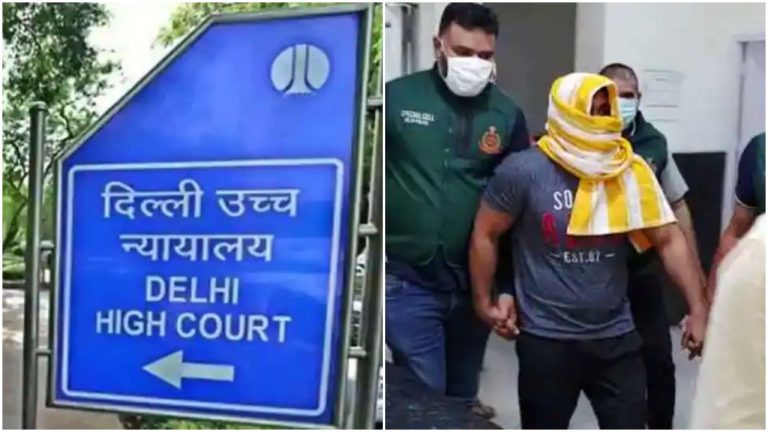
Delhi High Court refuses to entertain PIL seeking to stop ‘media trial’ of wrestler Sushil Kumar in murder case

The Delhi High Court on Friday declined to hear a plea seeking to stop the media from ‘sensationalising’ and carrying out a ‘media trial’ against wrestler and Olympic medallist Sushil Kumar in connection with the death of a 23-year old wrestler, reports Bar and Bench.

A bench of Chief Justice DN Patel and Justice Jyoti Singh said the petition has been filed on behalf of a “vigilant person” – Sushil Kumar and no other PIL can be entertained filed on behalf of him.

“You can’t file a PIL. Let that man come.”, the Court said as it dismissed the petition that claimed media has defamed him by its reportage of the murder case in which Sushil Kumar is an accused.

The former Olympian was arrested by a team of Delhi Police Special Cell on May 23 morning in connection with the Chhatrasal Stadium brawl that led to the death of a wrestler named Sagar Rana or Sagar Dhankad. Sushil Kumar was absconding after the purported May 4th incident.

The Delhi Hight observed that Sushil Kumar was free to take the recourse available to him in law, adding, “All these contentions are raised for Sushil Kumar and as per party-in-person, there is defamation. PIL has been preferred for a person who is a vigilant man. We see no reason to entertain.”

The petition was filed before the Court by a law student Srikant Prasad and Kamla Devi, the mother of accused Sushil Kumar.

The petitioners claimed that Kumar’s career, achievement, rewards, medals and honour are being diminished due to the ongoing media trial, and “he would be not left with anything” even after an acquittal. The petitioner also claimed that the entire case was set up with a malafide intention to sabotage Sushil Kumar’s career.

“Media is using Article 19 as misuse by creating false and frivolous heading. In every high profile cases, media has decided them criminal before the court.”, he contended.

Images show Olympian Sushil Kumar attacking Sagar

On Friday, a video showing Olympic medalist Sushil Kumar and his friends attacking another wrestler Sagar Rana with sticks surfaced on social media platforms.

In the video, the wrestler Sagar Rana can be seen lying on the ground, who later succumbed to the injuries he suffered due to the severe beating. The visuals show the 23-year-old injured wrestler, Sagar Dhankar, with his back on the ground while Sushil Kumar and three others surround him.

Reportedly, the wrestler had a video of the incident filmed to terrorise the wrestling circuit in the city. Sushil had asked his friend to make that video as they thrashed the victims like animals. He wanted to establish his fear in the wrestling community, the police told in the Delhi court.

Earlier this month, Sushil Kumar’s anticipatory bail was rejected by Delhi Court. Later on May 23, he was arrested by the Delhi Police and sent to 6-day police custody.

Narada sting case: TMC leaders granted interim bail by Calcutta HC, forbidden from giving press statements. Read details

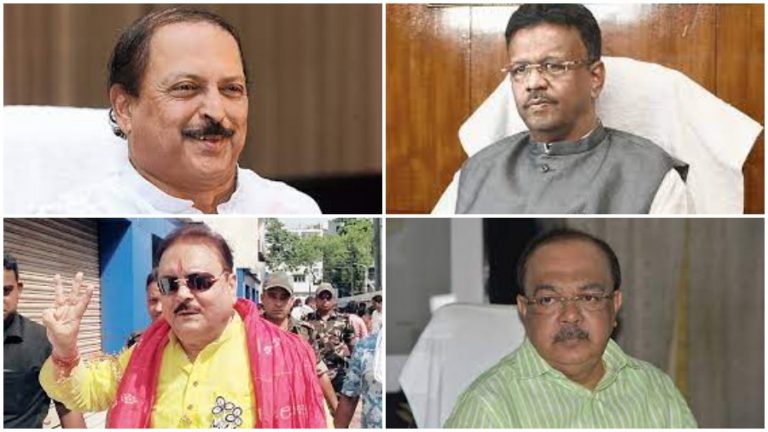
The Calcutta HC has granted interim bail to all four TMC leaders accused in the Narad sting case. As per latest reports, Firhad Hakim, Subrata Mukherjee, Madan Mitra and Sovan Chatterjee have all been granted interim bail.

All four political leaders have been asked by the HC to submit personal bonds of Rs 2 lakh each with two sureties. They have been asked to join the investigation via video conferencing. In addition, they have been forbidden from giving press statements regarding the ongoing investigation, as per an ANI report.

On May 17, the CBI had confirmed that the four TMC leaders, including two ministers, have been arrested in the Narad sting case. The arrests had sparked a political drama in the state, with CM Mamata Banerjee reaching CBI offices in Kolkata and daring them to arrest her too.

Following much political drama and ruckus by TMC workers where they had gheraoed the CBI office, a CBI Special Court had granted them interim bail, following which the CBI had moved to the HC contesting the order.

Later, a division bench of the HC had stayed the bail order and had ordered the 4 leaders to be kept under ‘house arrest’.

The CBI is also appealing for the transfer of the case to the HC. That matter is scheduled to be heard later today. Arguing on behalf of the CBI on Thursday, Solicitor General Tushar Mehta had pleaded before a five-judge bench of the HC that the Special CBI Court had come under the Bengal government’s pressure. The 5-judge bench comprising of Acting Chief Justice Rajesh Bindal and Justices I P Mukerji, Soumen Sen, Arijit Banerjee, and Harish Tandon.

As per an Indian Express report, the CBI had opposed the granting of interim bail, saying, “If this mobocracy is not checked by the constitutional court, tomorrow we may have a situation where a gangster gets arrested and his henchmen gherao the CBI office.” 

The Narada sting case

Narada news founder Samuel Mathew had reportedly conducted a sting operation for over two years. Just ahead of 2016 West Bengal state assembly elections, Narada news released the sting operation videos showing 13 TMC ministers and leaders accepting bribes in return of favours or misusing official positions before the elections creating ripples in the political landscape of West Bengal.

As part of this operation, Samuel had floated a fictitious company to approach several TMC ministers, for favours in return for money.

Firhad Hakim, Mukul Roy (now with the BJP), Saugata Roy, Kakoli Ghosh Dastidar, Sultan Ahmed, Subrata Mukherjee, Suvendu Adhikari (now with the BJP), Sovan Chatterjee (who joined the BJP and then quit), Aparupa Poddar, Madan Mitra, Iqbal Ahmed, Prasun Banerjee and HMS Mirza were the ones who were seen on the scam tape.

Facebook reverses its ban on Wuhan lab theory after US President Biden asks for intel agencies to probe origins of COVID-19

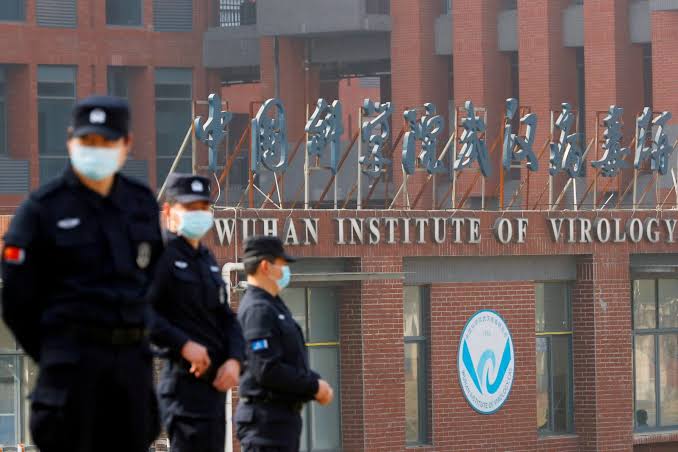
After President Biden ordered a US intelligence inquiry into the origins of COVID-19, amidst the renewed scrutiny of the likelihood of the virus emerging from the Wuhan Institute of Virology, popular social media giant Facebook reversed its policy, allowing posts that linked the virus’ origins to a possible lab-leak.

Facebook had earlier banned posts that suggested COVID-19 to be man-made, arguing that it took the decision to ban posts attributing the coronavirus outbreak to a deliberate lab leak, in an attempt to root out false and potentially harmful content while remaining open for discourse.

Pivoting from its stance, Facebook on Wednesday released a statement that said: “In light of ongoing investigations into the origin of Covid-19 and in consultation with public health experts, we will no longer remove the claim that Covid-19 is man-made or manufactured from our apps.”

“We’re continuing to work with health experts to keep pace with the evolving nature of the pandemic and regularly update our policies as new facts and trends emerge,” it further added.

The new statement is in opposition to the previous guidance issued by Facebook in February when it said it would ban false and debunked claims about the novel coronavirus which spawned a global pandemic that killed over three million people. The move was then seen as a charm offensive from Facebook to extract concessions from Beijing over the social media company’s entry into the nation’s digital space.

Earlier last year, former President Trump had routinely blamed China for bequeathing the world with an intractable contagion. Trump had been one of the fiercest proponents of the Wuhan Lab Leak theory, alleging that the virus was accidentally leaked from the Wuhan Institute of Virology. However, his claims were not taken seriously—both by the opposition as well as the social media tech giants, who alleged that the former president was deflecting his poor handling of the coronavirus outbreak by dissing China and concocting conspiracy theories.

However, months later, as Biden Administration issued a directive to the US intelligence agencies to investigate the competing theories on how the virus first emerged—a zoonotic spillover at a wet market in Wuhan, China, or through accidental release from a research laboratory in the same city, the social media behemoth has overturned its policy of blocking posts ascribing the genesis of the coronavirus to the Wuhan Lab.

The order indicates a significant escalation in the raging controversy surrounding the origins of the virus.

At the start of the pandemic, it was alleged that the virus first emerged in bats and then passed to humans, likely via an intermediary species. The theory was widely accepted across the world, but as the time has gone past, scientists have failed in detecting the virus either in bats or other animals that matches the genetic signature of SARS-CoV-2.

In the light of the latest developments, the lab-leak theory is gaining increasing traction in the United States and other western countries, even as China is vehemently denying the hypothesis and denouncing it as a “conspiracy created by the US Intelligence Agencies”.

India extends its support to WHO study on COVID-19 origin, calls its “first important step”

India on Friday extended its support to the World Health Organisation’s (WHO) led global study on the origins of Covid-19. 

In response to media queries on India’s stand on the WHO convened global study on the origins of COVID-19, the MEA spokesperson said, “The WHO convened global study on the origin of Covid-19 is an important first step. It stressed the need for next phase studies as also for further data and studies to reach robust conclusions. The follow-up of the WHO report and further studies deserve the understanding and cooperation of all.”

Source: Twitter

Earlier this year, WHO-led teams had visited the central Chinese city of Wuhan in January and February to investigate the origins of the virus. In a report later, which was co-authored with Chinese researchers, the WHO team concluded that the virus had probably been transmitted from bats to humans via intermediary species, and that “introduction through a laboratory incident was considered to be an extremely unlikely pathway”. 

The clean chit given to China and the fact that the report was co-authored by Chinese researchers parked a massive furore online, with people raising doubts over the authenticity of the claims made in the report. WHO director-general Tedros Adhanom Ghebreyesus, who is himself accused of being partial to China, later distanced himself from the findings of a WHO-led mission. He said the laboratory leak was the “least likely” hypotheses, but still needed “further investigation.”

Now, the United States has asked the WHO to initiate the second phase of its investigation into the origins of COVID-19, with independent experts given full access to original data and samples in China. 

The lab-leak theory is gaining increasing traction in the United States and other western countries after Biden Administration had issued a directive to the US intelligence agencies to investigate the competing theories on how the virus first emerged—a zoonotic spillover at a wet market in Wuhan, China, or through accidental release from a research laboratory in the same city. 

On Thursday, the US mission to the UN in Geneva deemed the initial WHO study to be “insufficient and inconclusive”, calling for what it called a timely, transparent and evidence-based second probe to be conducted, including in China.

“It is critical that China provides independent experts full access to complete, original data and samples relevant to understanding the source of the virus and the early stages of the pandemic,” the US statement said.

‘If u want to come back to village, send your wife to me first’: TMC leader Muzaffar Baig accused of threatening BJP worker

West Bengal has been witnessing widespread political violence, following the declaration of state election results on 2 May, allegedly by the Trinamool Congress (TMC) workers, who have been allegedly inflicting utmost brutality on BJP workers and supporters in the state. Owing to this many have been forced to flee the state and take refuge in the neighbouring state of Assam. 

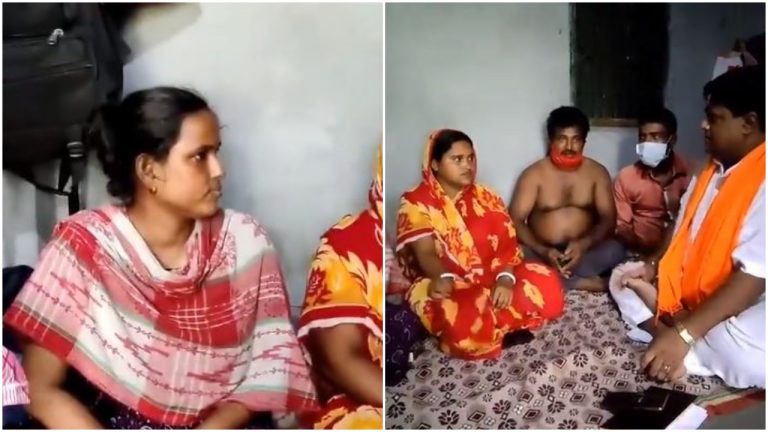
One such BJP worker in the Minakhan assembly constituency, in the North 24 Parganas district, West Bengal, has come up with a shocking claim. He has alleged that a local TMC leader named Muzaffar Baig has asked him to trade his wife in exchange for his freedom to continue living in the village.

“Send your wife Pinki to me for few days, then only we will allow you back in the village”, The TMC leader has allegedly threatened BJP worker Sadhan Baj.

Devdutta Maji, a BJP candidate who is the president of social organization Singha Bahini, shared the video where Sadhan Baj is heard narrating how the TMC leader had threatened him. Sadhan Baj’s wife Pinki Baj is also the treasurer of the BJP women’s wing in the area. Devdutta Maji recorded Baj’s statement during a visit to the place where Sadhan Baj, his wife Pinki, and some other Hindus from their village had taken refuge.

The BJP leader also affirmed that the TMC goons tortured them and other Hindus residing in the Minakhan assembly constituency, which is predominantly a Muslim-dominated area. They also ransacked and looted their houses, forcing them to flee the area.

“Muslims attacked Hindu families in the village after the election results on 2 May,” said Pinki. “We all fled with just the clothes on our back. Later when I called local (TMC) committee leader Muzaffar Baig, he said ‘send your wife first, then later you can come,” said her husband Sadhan Baj.

Recounting the horror, Pinki appealed to PM Modi to save them. “We request Modi Ji to protect us Hindus from the atrocities heaped on us by Muslims,” Pinki pleaded.

Post Poll violence unleashed by TMC goons on BJP workers in West Bengal

Post-poll violence has become a leitmotif of news emerging out of Bengal following the declaration of results. Umpteen number of violence against political opponents have been reported from the state. In an overwhelming number of such incidents, the victims have been BJP supporters and workers while the accused belong to the ruling party TMC. More than a dozen of BJP workers have lost their lives in the post-poll violence that ensued following the victory of the TMC in the assembly elections.

The violence unleashed against them forced hundreds of BJP party workers and supporters to flee their villages along with their families. They crossed over to Assam where they have been provided temporary shelter under supervision by CM Himanta Biswa Sarma. It is not just the BJP but even CPI(M) which has accused the TMC of killing its workers. Reports of attacks on BSF jawans have also emerged in the media.

Recently, about 146 retired public officials from various walks of life have signed a petition expressing their concern over the recent spate of political violence unleashed in West Bengal following the conclusion of the state assembly elections and seeking the President’s intervention in ensuring that the country’s democracy is salvaged.

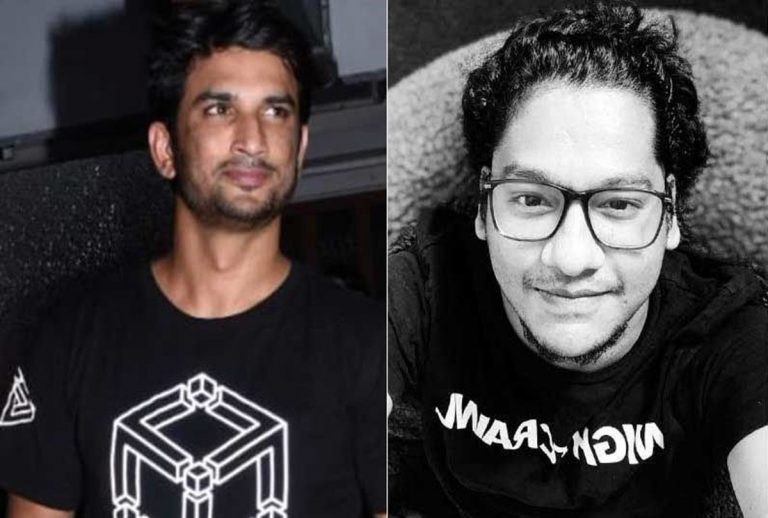
Siddharth Pithani, friend and flatmate of late Bollywood actor Sushant Singh Rajput arrested from Hyderabad

The Narcotics Bureau Control has arrested Siddharth Pithani, friend and flatmate of Sushant Singh Rajput, from Hyderabad in the drugs case linked to Bollywood actor Sushant Singh Rajput’s death. Ever since the untimely death of actor Sushant Singh Rajput, Pithani has been questioned multiple times by the federal agency.

In August last year, Siddharth Pithani had told CBI that on 8th June, eight hard drives were destroyed before Rhea Chakraborty left the house. In a report, Republic TV claimed that experts were called to destroy the data on the eight drives. They said Sushant tried to protest, but he helplessly watched all the data being destroyed from his personal gadgets, including a computer, laptop and phones.

In fact, Siddharth Pithani, who was the creative manager of the late Bollywood actor, was the first to see the corpse of Sushant Singh Rajput. It was reported then how Pithani had called in a blacksmith instead of trying to find the duplicate key.

Reportedly, he refused to allow the key maker to enter the room of Sushant and instead saw him off. Later, Pithani and another man Dipesh opened the door, entered the room, and allegedly brought down the ‘hanging body’ of the deceased actor. 

Actor Sushant Singh Rajput was allegedly found hanging in his house on 14th June. After his death, a lot of questions were raised related to his death and involvement of Rhea and her family in Sushant’s alleged emotional and financial exploitation was mentioned in a complaint filed by Sushant’s father KK Singh in Patna. The case eventually got transferred to CBI on Bihar Police request and the Supreme Court’s orders. The case that was intended to be a simple open and shut for Mumbai Police has turned into a much bigger conspiracy that includes drug dealings, money laundering and the alleged murder of the actor.

#ArrestRandeepHooda trends as netizens fume over derogatory remarks against former UP CM Mayawati

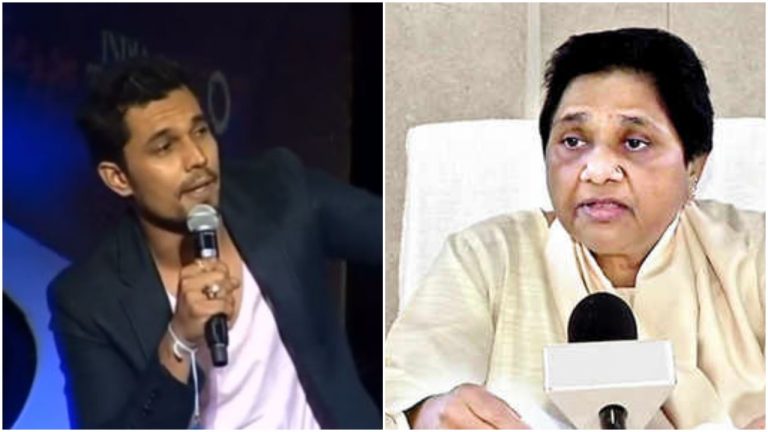
Bollywood actor Randeep Hooda has landed in a controversy irking Netizens, after his old video making a derogatory ‘joke’ on Uttar Pradesh Chief Minister Mayawati surfaced online. Within no time, #ArrestRandeepHooda started trending on the microblogging site.

The 41-second throwback video of Randeep Hooda’s statement at an event organized by a media house in 2012 has gone viral with netizens calling it ‘casteist’, ‘sexist’ and ‘misogynist.’ In the video, Hooda claims of making a ‘dirty joke’ on Mayawati, one of the most notable Dalit leaders of the country.

The video clip starts with Hooda talking about some particular ‘sex position’, after which he goes on crack his alleged ‘dirty joke’. He says once Mayawati was walking down a street with two boys when an inquiring stranger asks whether they were twins. Hooda furthers that Mayawati replies to the stranger: “No, no, one is four and the other is eight”. Here Hooda throws his punch line saying that the stranger said: “I can’t believe someone has been there twice?” Randeep is then seen laughing in the video, the audience also cheers him on.

This derogatory innuendo did not go down well with Netizens, who castigated him as being casteist and sexist and demanded an apology.

Netizens demand arrest of actor Randeep Hooda

Communist leader Kavita Krishnan responded to the video, tweeting: “Not a “joke” @RandeepHooda . You notice no one makes “jokes” saying a male politician is too ugly to f***? You are doing what casteist, misogynist, insecure turds do when confronted with women whose strength they fear: attack the woman as unattractive.”

Journalist Dilip Mandal tagged Mumbai police and the office of Maharashtra CM Uddhav Thackeray, demanding the arrest of the actor. “Outraging modesty of a women is a cognizable offence @MumbaiPolice. Don’t wait, #ArresteRandeepHooda. @OfficeofUT Pl. direct @CPMumbaiPolice to register an FIR & arrest @RandeepHooda. This will set an example. @nitinmeshram_”, Tweeted Mandal.

Many other social media users slammed the actor for making a derogatory comments against the Dalit leader.

Suprisingly, after all the hate the actor received on social media, Hooda has not responded or issued any apology for the same.

Celebrities in the dock for their casteist remarks

Lately many Bollywood celebrities have been at the receiving end for using castiest slurs. Recently, actress Yuvika Chaudhary, most famously known for her role in Shahrukh Khan starrer Bollywood movie Om Shanti Om, has issued an apology after she found herself in hot water for allegedly using a casteist slur in one of her new video featuring her husband Prince Narula, that kicked up a storm on social media.

Prior to this, Netizens had made similar demands for the arrest of actor Munmun Dutta, most famously known for playing the character of ‘Babita Ji in ‘Taarak Mehta ka Ooltah Chasmah‘ after Dutta had used the same casteist slur. Heeding to the online backlash, Dutta had immediately removed the concerned part from her video and issued an apology.

Just a few days ago, comedian Abish Mathew’s tweet from 2012 on Mayawati, where he called the Dalit leader ‘ugly’ and had shared offensive sexual innuendos, caused outrage on social media and  #Arrest_Abish_Mathew trended on Twitter. The comedian had later apologized in a statement issued on social media. A similar derogatory tweet against the Dalit leader made by Feminism In India CEO Japleen Pasricha had also gone viral recently.

Most of the above mentioned people have had to issue apologies over the casteist, sexist remarks for the fear of SC/ST Act. Mayawati, a prominent Dalit leader, and one of the most successful female politicians in India, is the BSP supremo and casteist, misogynist innuendos thrown against her attract wide criticism on social media.

China wants Nepal to buy vaccines with ‘secret’ conditions after Nepal had to look for other sellers as India decided to stop export

On Wednesday, China announced that it would provide 1 million doses of a Covid-19 vaccine under “grant assistance” to Nepal as the Himalayan country scrambles to secure vaccine amidst a recent surge in Covid-19 infections. However, getting access to these vaccines has become a tough task for Nepalese authorities, reports Kathmandu Post.

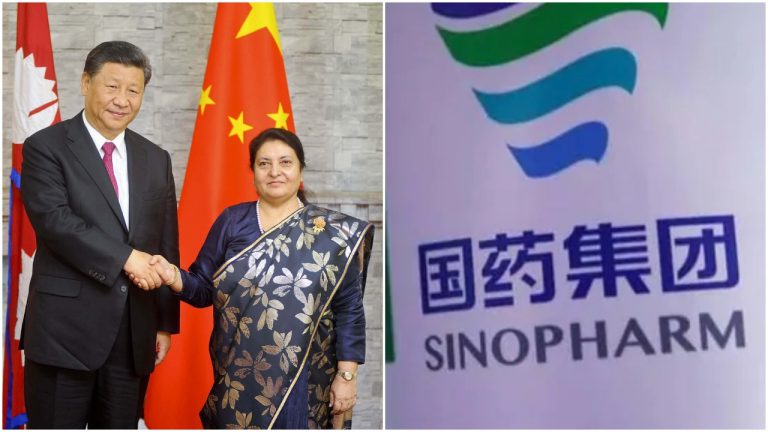
In a telephonic conversation, Chinese President Xi Jinping had assured his Nepali counterpart Bidya Devi Bhandari of providing Chinese-made Sinopharm vaccines to Nepal, which is struggling to cope up with the Chinese pandemic. The latest vaccine assistance by China comes just months after the Communist nation had provided 800,000 doses of the Sinopharm vaccine to Nepal, which also received 1 million jabs of the AstraZeneca vaccine as a gift from India.

However, the Nepalese authorities are facing numerous challenges to get these Chinese vaccines as Chinese firms have insisted that Nepal sign a non-disclosure agreement for commercial procurement of these vaccines, putting officials in a fix.

A non-disclosure agreement is a legally binding contract establishing a confidential relationship. If Nepal signs a non-disclosure agreement with China, that would mean confidentiality, and either of the two parties cannot disclose details, including the price.

Dipendra Raman Singh, Director-General at the Department of Health Services of Nepal, said the Nepalese government had received a proposal for a non-disclosure agreement from Sinopharm. The proposed non-disclosure deal contains over a dozen issues, including the price and specifications.

The company will notify Nepal about the quantity, price and delivery schedule only after signing a non-disclosure agreement, said an official.

One of the major issues with procuring vaccines under such a secret agreement is that Nepal currently does not have any guidelines to sign such deals for public procurement. The recently introduced Covid-19 Crisis Management Ordinance is also silent on a non-disclosure agreement, however, it allows the government to procure directly from suppliers or manufacturers without competitive bidding under extraordinary situations.

According to experts in Nepal, non-disclosure agreements are signed only when the government decides to procure defence-related materials, which are sensitive from a national security point of view. Details of all other procurement must be disclosed as per the existing law in Nepal, he added.

The objective of the procurement law is to ensure transparency and fairness, said the official, adding, “If any citizen seeks the procurement details by invoking the Right to Information Act, the government has to provide such details.”

Nepal’s decision to look out for other vaccines, including the untested Chinese vaccines, after it failed to procure any vaccines from India. Nepal had signed a commercial deal with India’s Serum Institute of India in February. However, SII could not supply 1 million of the 2 million doses for which Nepal had already paid.

Interestingly, Nepal had agreed to buy the 2 million doses from Serum at $4 per dose and the deal did not involve a non-disclosure agreement.

Signing non-disclosure agreements with China will make worse for Nepal

The experts believe that such non-disclosure agreements with China will worsen the condition for Nepal as it could make the country immensely difficult to procure vaccines from China. As per them, the country’s procurement law is silent on whether such an agreement is permitted, and secondly, Nepal plans to pay for vaccines from donor funds.

“Apart from some defence-related purchases, Nepal does not engage in the practice of non-disclosure agreements,” said Rameshore Khanal, a former finance secretary. If Nepal is taking money from donor agencies, then it has to disclose procurement details such as the rate, cost and logistical and transportation issues, among other things, said Khanal.

According to the Nepal Health Ministry officials, one of the provisions in the proposed non-disclosure agreement is that the information from the agreement cannot be disclosed to any third party, which in general is a key condition.

However, if Nepal intends to procure any goods or services with the money received from the donor agencies like the World Bank and Asian Development Bank, they have to send all the procurement-related documents to them. The Nepal government intends to procure Covid-19 vaccines with money provided by international development partners.

On April 2, the Nepalese government signed an agreement with the World Bank for a loan worth $75 million to support access to safe and effective Covid-19 vaccines in the country. According to officials at the finance and health ministries, the government is also discussing with the Asian Development Bank to secure aid another $150 million to purchase Covid-19 vaccines.

“It is also difficult to use the government’s own resources for making purchases through non-disclosure agreements because transparency questions could arise, as the public could ask how the taxpayer money is being spent,” said another Nepalese official.

Hence, the non-disclosure agreements being pushed by China has put the Nepal governments in a legal bind. Several questions are also being asked regarding the transparency of the deal between Nepal and Chinese firms, as these deals are clouded with secrecy. The critics believe that such a non-disclosure agreement gives the vaccine manufacturers the upper hand, as the government negotiators will not know what other countries are paying, putting them at risk.

In fact, this is not the first time that the Chinese are indulging in such a suspicious vaccine deal with other countries. In January this year, the Bangladesh government had rejected the Chinese vaccine – CoronaVac vaccine over their non-transparent agreements. The Chinese firm had also brazenly asked Dhaka to share costs of clinical trials of Sinovac manufactured drug in the country.

As the Chinese tried to bully and enforce one-sided deals, Bangladesh rejected the Chinese vaccines and obtained India’s Covishield doses under the Modi government’s ‘Vaccine Maitri’ initiative.


Viral rape video: Victim was trafficked by Bangladeshi TikTok ‘star’, all accused arrested in Bengaluru. Details

A viral video clip of a gang rape incident began doing the rounds on the internet on Wednesday (May 26). In the video footage, four men and a woman were seen brutally assaulting a victim and sexually torturing her.

Initially, many social media handles had claimed that the victim in the video is the 25-year-old Nagaland girl Lovi Sumi, who had recently committed suicide in Jodhpur where she worked. However, police officials verified the identity with the family members of the deceased woman and confirmed that the woman in the viral video is not the Nagaland girl but a different woman. Law enforcement authorities in several states were put on alert to find the culprits visible in the video.

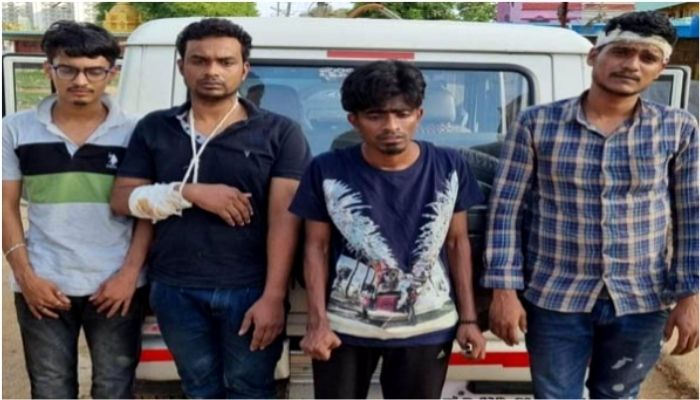
The Assam police soon sprung into action, posted the images of the accused on its Twitter handle and sought information about them from the public. By tracing the chain of video forwards, the cops were able to locate its origin to a mobile phone in the city of Bengaluru. Immediately, the Bengaluru City Police was alerted and special teams were deployed to track down the perpetrators. The four men, and a female accused were all arrested from a rented house in Avalahalli in Ramamurthy Nagar.

They were identified as Mohammed Baba Sheikh, Ridoy Babo, Sagar, and Hakeel. The identity of the female accused was not revealed. Reportedly, all the accused worked as laborers. According to the police, the victim, a Bangladeshi woman, was illegally trafficked to India under the pretext of a job and was later forced into prostitution. Although she was able to flee, the accused hunted her down. They then assaulted and gang-raped her with the help of their female aide.

Bengaluru police nab 5 accused, team dispatched to trace victim

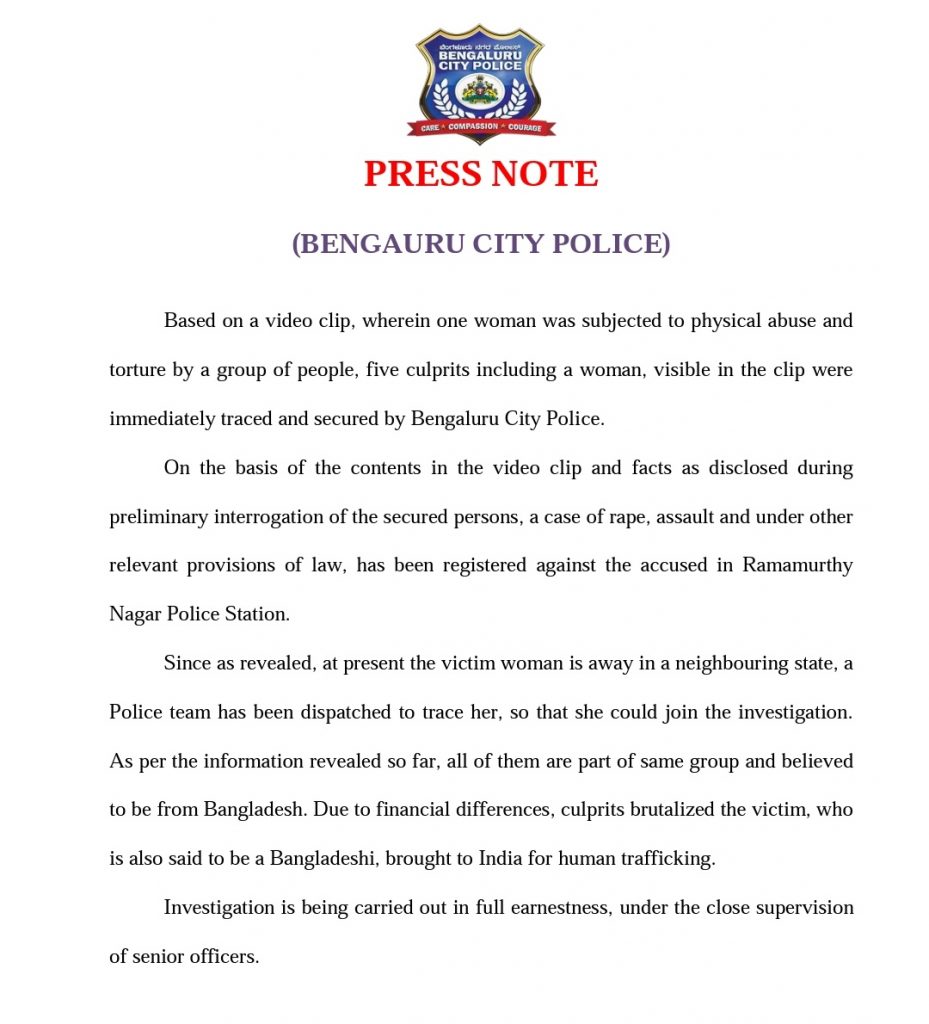
In a press note released by the Bengaluru City police, it said, “Based on a video clip, wherein one woman was subjected to physical abuse and torture by a group of people, five culprits including a woman, visible in the clip were immediately traced and secured by Bengaluru City Police. On the basis of the contents in the video clip and facts as disclosed during preliminary interrogation of the secured persons, a case of rape, assault, and under other relevant provisions of law, has been registered against the accused in Ramamurthy Nagar Police Station.”

The press release by Bengaluru police

It further added, “Since as revealed, at present the victim woman is away in a neighbouring state, a Police team has been dispatched to trace her, so that she could join the investigation. As per the information revealed so far, all of them are part of same group and believed to be from Bangladesh. Due to financial differences, culprits brutalized the victim, who is also said to be a Bangladeshi, brought to India for human trafficking. Investigation is being carried out in full earnestness, under the close supervision of senior officers.”

Bangladesh police registers case, traces accused and victim’s family

Reportedly, the perpetrators from Bangladesh had shared the video clip of the gang rape with their friends in West Bengal and Assam. On Thursday (March 27), Bangladesh Pratidin informed that the gang-rape incident took place in Kerala in India. Bangladesh National Crime Bureau (NCB) AIG Moinul Islam confirmed that the victim and one of the perpetrators is a Bangladeshi national. The agency could not verify the nationality of the other accused.

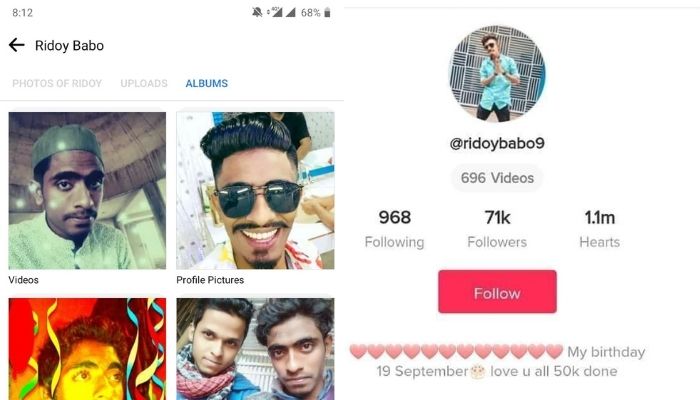
Meanwhile, two cases were also registered by the Hatirjheel Police in Bangladesh under the pornography act and the human trafficking act. One of the prime accused, Ridoy Babo, was identified by the Tejgaon division police through his social media accounts. His uncle, mother, and local residents also identified him from the viral video. He was a resident of Moghbazar in Dhaka and came to India 3-4 months ago, after being evicted from his house for disorderly conduct.

Screengrab of the Facebook and TikTok profile of Ridoy Babo

When the police approached him through his uncle’s Whatsapp number, he admitted that he was the one seen in the video. According to the perpetrator, the incident took place 15-16 days ago. The cops seized the accused’s JSC exam registration card and NID card from his house. He was a TikTok star with over 71K followers. Deputy Commissioner informed that a probe has been initiated to establish whether they entered India illegally.

The Bangladesh police were able to identify the victim through Ridoy and contacted her family. They were able to recognize her from the viral video clip. Ridoy said that he knew the victim and that she is 20-22 years old. Citing sources, Bangladesh Pratidin revealed that the victim was married in 2014 and that her husband lives in Kuwait. After suffering torture at her in-laws’ residence, she began staying at her father’s house for 5 years after the marriage. She wanted to go to Saudi Arabia to help her father tide over financial difficulties. But, her father was duped for over Tk30,000 by a broker while trying to send her to the Gulf nation. She then left for India without telling anyone.

Russian court fines Twitter for failing to delete illegal content including child pornography and drug abuse

A Russian Court has on Thursday fined social media giant Twitter for failing to delete illegal content highlighted by the telecom regulator. As per reports, the US-based social media behemoth was fined 19 million roubles (around USD 259,000) in the latest development in the ongoing tussle with the Russian government.

As per a WION report, earlier, the Russian Telecom regulator Ruskomnadzor had partially halted the proposed slowdown of Twitter after Twitter agreed to deleted over 90% of content flagged as illegal by the authorities. The illegal content flagged by the Russian authorities includes content related to child pornography, drug abuse information, calls for minors to commit suicide, and such.

Officially, Twitter denies allowing its platform to be used for sharing content related to child sexual exploitation and such activities, but the US-based company’s delay in deleting such contents flagged by the Roskomnadzor had become the peg of a showdown between the Russian authorities and Twitter.

Moscow’s Tagansky District Court has informed that it has issued a financial penalty on Twitter for six different administrative offenses, totaling 19 million roubles.

Twitter was fined in April too

This is the second instance when Twitter has been penalized by the Russian government. it was penalized once before in April too. In March this year, Roskomnadzor had announced that it was slowing down the speed of Twitter in the country till May 15 following its failure to delete banned content. Back then, the government had also threatened that Twitter will face outright ban if they do not comply with Russian law.

On March 11, Roscomnadzor had announced that it is slowing down Twitter country-wide for failing to remove over 3000 posts flagged for illegal, banned content.

In a statement issued on VK, Roskomnadzor had said in March, “The slowdown applies to the delivery of audio, video content and graphics. Social network text messages are delivered without restrictions.” Vadim Subbotin, the deputy head of Roskomnadzor had stated that if Twitter doesn’t fall on the line, the authorities may decide to put a blanket ban on Twitter without even waiting for a court order.

Google, TikTok face the heat too

Other big tech companies like Google and China’s TikTok too have been facing the Russian government’s ire. On Thursday 27 May, both Google and TikTok too have received similar monetary penalties for similar offenses as Twitter, but they refused to comment. WION reported that Roskomnadzor has warned that it may move to slow down Google and Facebook too if they do not mend their ways.

Repeat offenses by the big-tech companies may enable the Russian government to seize 10% of the total annual revenues of the respective companies, but it is unclear if the Russian government is ready yet for such drastic steps, the report said.

It is notable here that Twitter is facing similar tussles with the government of India too, over its arbitrary policies and refusal to comply with Indian law.