Home Blog Page 4542

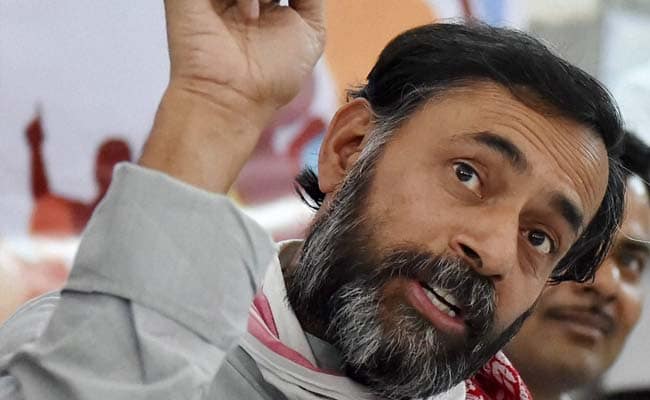
I worry about Yogendra Yadav’s mental health and his The Print article on the 2021 Bengal elections proves I am not wrong

The West Bengal Assembly elections are only weeks away and with the admittedly meteoric rise of the Bhartiya Janta Party in the state, it is not difficult to imagine the absolute and thorough panic attacks that the entire ecosystem might be experiencing. Mind you, there is absolutely no guarantee that BJP will be able to clinch a decisive victory in the state, but the rise, the sheer rise has sent certain elements within the ecosystem into a rather strange spiral into madness. One such panic attack was detailed in The Print, owned by Shekhar Gupta, written by our very own Icchadhari protestor, Yogendra Yadav.
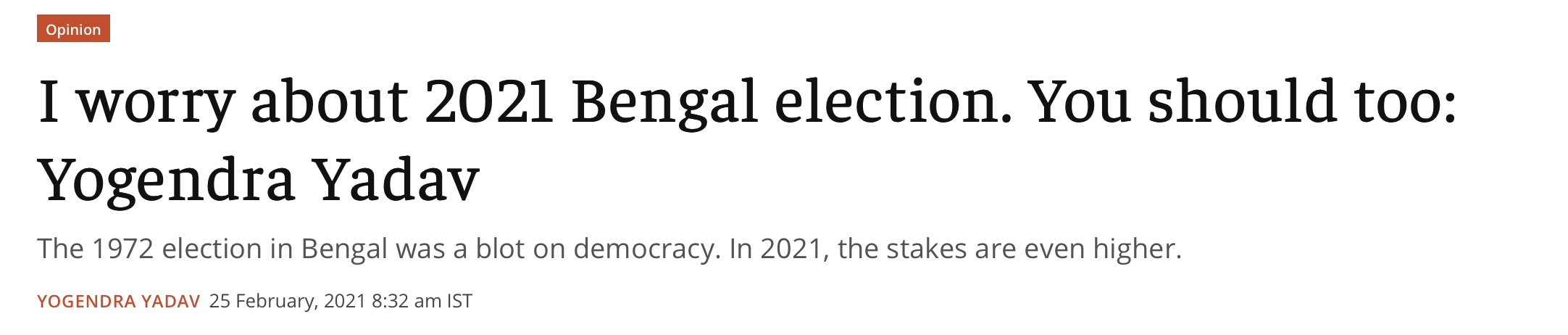
Article by Yogendra Yadav on Bengal elections in The Print
Article by Yogendra Yadav in The Print

In this unhinged ramblings of a presumably mad man, Yogendra Yadav, who seems to have made the switch from a newly anointed farmer leader to a political analyst yet again, essentially tells people that they need to be scared about the 2021 Bengal elections, not because who might win in the end, but what the process of these elections would do to the state.

In a stunning display of just what an abomination one man can be and also, how incompetent (considering before turning into an Icchadhari protestor, he used to be a failed psephologist), he truly is, Yogendra Yadav has this to say:
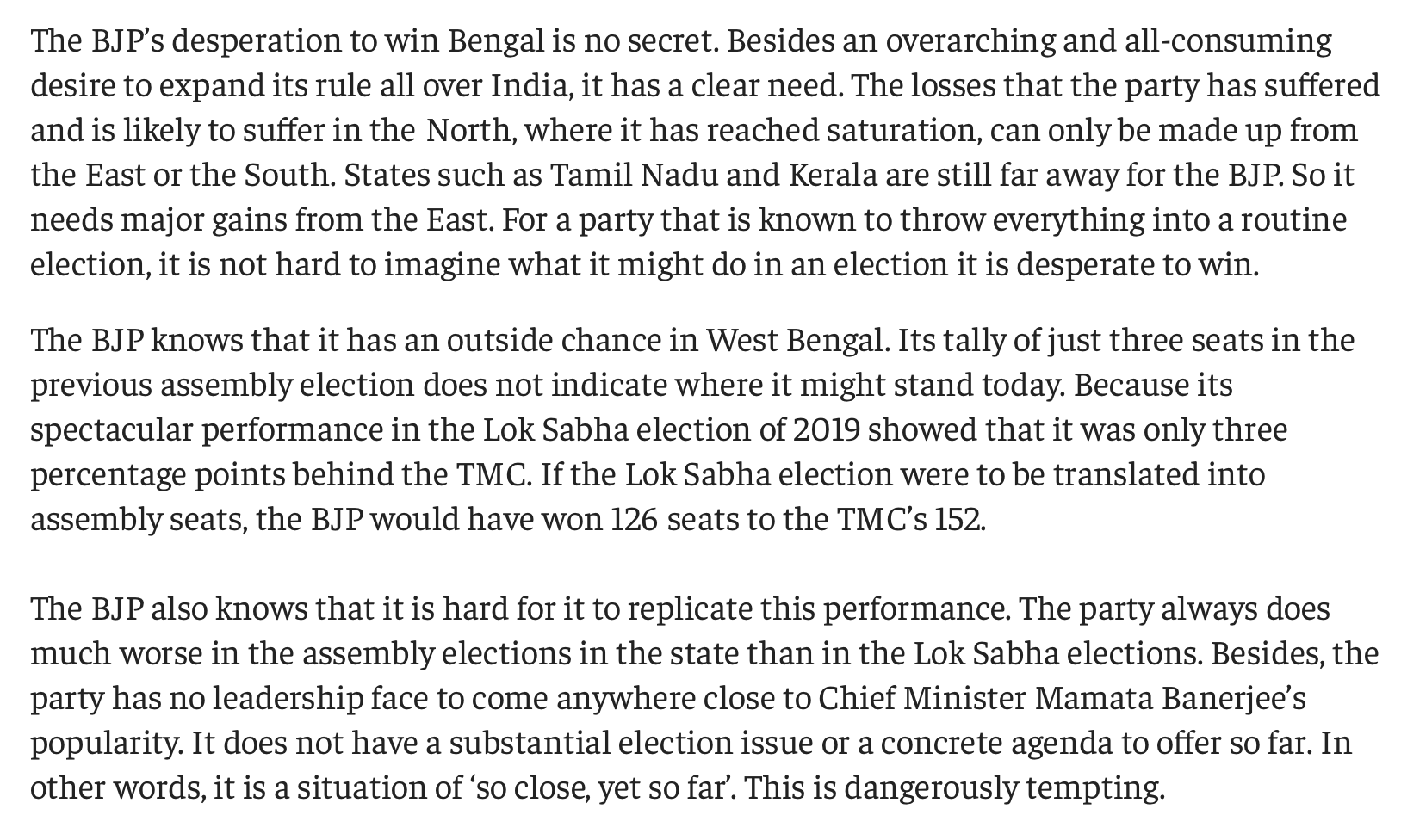
Article by Yogendra Yadav on Bengal elections in The Print

He first says that BJP has an ‘outside chance’ of winning Bengal since it did rather badly in the last assembly elections. He then says that there might also be a situation where they come “so close, yet so far” and hence, could essentially indulge in violence. First and foremost, this article gives me a better understanding of why Yogendra Yadav was compelled to turn into an Icchadhari protester – there is absolutely no chance he could have made a successful career in psephology with such idiotic statements. Secondly, it gives us a peek into the beating his mental health seems to have taken over the years – changing careers ever so often can possibly lead to some form of cognitive dissonance that we see a reflection of here.

Beyond the jibes, however, it is essential to understand how Bengal politics work. When the TMC routed the Communists, it was following the exact trajectory that BJP has followed. A terrible assembly performance, followed by a decent electoral performance and culminating in a clean sweep of the state. Electoral politics isn’t like solving a simple equation where LHS equals RHS. It is not about Lok Sabha seats translating to Assembly seats to the decimal.

But, of course, the beautiful mind of Yogendra Yadav is perhaps too fried to grasp such nuanced concepts – or perhaps – this is just him being devious. I leave that decision to the readers.

Essentially, Yogendra Yadav started by saying that BJP has had a meteoric rise in the state. He then went on to say that they have no chance of winning the state and ended with “it might be a close fight and hence, they might indulge in violence”. A mark of a good psephologist – all outcomes laid out neatly, so matter what the result is – he gets to say ‘I told you so’.

What comes next is far more hilarious.

Yogendra Yadav lists 4 possibilities that he seems to be paranoid about:

  1. Raj Bhavan turning into a BJP HQ because the current governor is partisan. This would, according to him, result in a slugfest to control the local bureaucracy.
  2. Yogendra Yadav says that the credibility of EC is compromised in the eyes of the public and in this election, its neutrality matters the most (it does in every election, but then again, this article has been written by Yogendra Yadav). He further says that “this is where the Commission might come under pressure from the ruling party the most” – he does not explain the logic behind this tenuous conjecture.
  3. The central government might be tempted into using the powers at its disposal to neutralise the strong-arm tactics of the TMC cadre on the ground, for which the BJP has no match at this moment. There are fears of blatant partisanship on polling day.
  4. He says that “BJP has already begun and is likely to pour money on a scale that West Bengal has never known before”.
  5. Divisive politics

Now, let us briefly analyse Yogendra’s worries one by one.

1. Raj Bhavan acting partisan is a silly conjecture that must be summarily ignored. According to the cabal, he is being partisan because he does not stay mum about the violence being unleashed by TMC.

2. The article does not exactly clear how the EC would likely be under more pressure from the government when he says that this is an election where EC’s neutrality would matter the most. But as I said earlier, Yogendra Yadav is a mindless rabble-rouser. For him, the logic of his argument does not really matter as long as it leads to chaos. Sadly, we can’t really compare him to The Joker either, because the latter actually had the luxury of being extremely intelligent.

3. In this argument, Yogendra Yadav is actually worried about the central government using “its powers” to counter the violence by TMC. Let me get this straight – Yogendra Yadav is worried that the central government might try and stop TMC from using violence. Ah! This suddenly all makes sense. This article is meant to be a foundation for the cabal to scream about how the elections are being “rigged” if the paramilitary forces, 150 units of which have already landed in Bengal – try and ensure free and fair elections without interference by other parties. So Yogendra Yadav here admits that TMC will indulge in violence on polling day, but is worried that the central government will use its powers to stop the violence and hence, he thinks polling day would end up being ‘partisan’.

4. Yogendra is extremely worried that BJP will spend bundles of money in West Bengal – he has no proof for it, but he is worried nonetheless. He is willing to ignore the several documented cases of voters being paid off by the TMC, Congress, AIMIM and the Communists, but he is fearful about the BJP.

5. And thus, we come to his favourite schtick – communal politics. Mamata Banerjee screaming bloody murder when she hears Jai Shree Ram is not communal politics. Mamata Banerjee’s various minority appeasement schemes are not communal politics. Owaisi talking against Hindus is not communal politics. BJP chanting Jai Shree Ram is. Sure!

Essentially, in this article, Yogendra Yadav is dog-whistling. He is laying down every asinine argument that would be used by his cabal to cry hoarse after the Assembly Elections. If the BJP makes inroads or wins, they would say it was because BJP bought the votes, the EC was partisan, the governor was partisan and the Modi government crushed dissent with paramilitary forces (this would of course mean that the forces did not let TMC, Congress or the Left indulge in violence and rig the elections).

Frankly, I don’t disagree with him as far as his basic premise goes. No matter who wins, the process of elections in West Bengal has always been a concern. In the 1972 elections that he alludes to at the beginning of his article, Congress and CPI won the assembly elections, riding on the popularity gained by Indira Gandhi post the 1972 Bangladesh liberation war. the CPIM lost miserably. However, there were several allegations of rigging. There was gunfire, unbridled violence to either stop people from voting or force them to vote the Congress way.

In a Telegraph article, it is noted:

“There was gunfire and bombing. The Congress had taken complete control of the election set-up and was freely rigging the polls,” said Gopal Banerjee, 56, a CPM leader from Baranagar who had accompanied Basu on a round of the constituency as an 18-year-old that day. “Jyotibabu visited a few polling stations and decided to withdraw his candidature. ‘This cannot be tolerated,’ he told us,” Banerjee said.

While blood has always flown cheap in Bengal and political violence has been rampant, it was peachy to think of Jyoti Basu pontificating about it. To put it mildly, Jyoti Basu is the mass murderer that India forgot. in 1997, Bengal’s Home Minister admitted on the floor of the Assembly that 28,000 political murders had happened in West Bengal since the beginning of Jyoti Basu’s rule. And who can forget the Marichjhapi massacre? Deep Haldar, who wrote a book on the massacre says in an interview, “Why the government suddenly became desperate to send refugees back to Dandakaranya remains a mystery. Jyoti Basu was like a dictator. He probably couldn’t digest the fact that they were disobeying his orders. It was his hurt ego, nothing else”. In the massacre, thousands were murdered, raped, buried at sea, humiliated and driven off. It was all done under the watchful eyes of Jyoti Basu.

Essentially, Bengal politics has always been marred by violence – blood-curdling violence.

Only 2 years before the 1972 elections in Bengal that Yogendra Yadav remembers with such fear, a mother being force-fed rice soaked in her son’s blood. In 1970, the Sain Parivar was a prominent family in Bardhaman which supported the Congress party. The family had refused to join the Communists despite the numerous threats that were issued and for their conviction, they suffered ruin.

On 17th March 1970, a mob of CPI(M) workers, allegedly led by a man who went on to become a Minister in the state no less, barged into the house, set it on fire and committed one of the most horrendous crimes in the history of Indian politics. Two brothers of the family, Pranab Kumar Sain and Malay Kumar Sain were hacked to death in front of the family members.

A private tutor, Jitendranath Rai, who had come to teach the kids in the family was hacked to death as well. Later, the mother of the slain brothers was forced to eat rice smeared with the blood of her dead sons. Words cannot ever capture the horror that transpired in Sainbari that day.

One of the daughters-in-law of the family, Rekha Rani, now around 75 years old, recounted the horrors of the incident in an interview with Indian Express. She said, “My brothers-in-laws Pranab Kumar Sain and Malay Kumar Sain and Jitendranath Rai, a private tutor who had come to teach the kids, were hacked in front of my eyes. I was 26. It all began at 7.30 am… people started pelting stones at our house. Later, they set it on fire.” “My mother-in-law, Mrignayana Devi, tried to stop the attackers but she was hit on her head. Two attackers mixed Pranab and Malay’s blood with rice and forced it into her mouth… She was taken to the hospital… she survived,” she added.

This was only two years before the assembly elections, that Yogendra Yadav speaks of. However, he fails to mention it. He says that 1972 was a blot on the other clean record of West Bengal holding fair elections. Fair? What was the attempt here, one wonders? My readers know for a fact that I have absolutely no love lost for the Congress, but to blame Congress for the start of political violence in Bengal is deceitful, to say the least. The communists started the cycle of violence that has continued to this day. That Yogendra Yadav refuses to mention the trail of blood that has been left in Bengal, makes him either stupid, ignorant or plain malicious.

While whitewashing the atrocities heaped by the Communists, Yogendra Yadav also whitewashes the TMC and, lo and behold, ends up expressing his ‘worry’ about what the BJP might do in the state in its “desperation” to win Bengal.

These arguments are mundane and expected and therefore, my concern for Yogendra Yadav’s mental health has only peaked. He could not hack it as a psephologist. He could not cover his tracks in the Delhi Riots. In the farmer protests, he was tossed aside like a rotten fish by the Modi government and ended up with egg on his face when his comrades indulged in rampant violence. If he cannot even write a decent opinion piece without sounding unhinged and monumentally stupid – what does he do next?
Modi govt tightens noose on social media giants and ‘intermediaries’: What it means, the effects of the provisions and how it could tame the beast

Amid the growing demand for controlling content on OTT platforms and social media, the government of India has come up with guidelines for both of them. On Thursday, the union government announced its new guidelines for digital news organisations, social media platforms and OTT platforms.

Social media

The guidelines published by the IT ministry contains comprehensive guidelines for social media platforms, which has been defined as ‘social media intermediaries’ which primarily or solely enables online interaction between two or more users and allows them to create, upload, share, disseminate, modify or access information using its services.

The new guidelines say that the intermediaries must publish rules and regulations, privacy policy and user agreement prominently on their websites. It holds significance given the controversies surrounding privacy and user data at several social media platforms, especially Facebook and its WhatsApp.

Contents not to be allowed on social media

According to the guidelines, the social media platforms will have to inform the users that they can’t publish content belonging to others, defamatory, obscene, pornographic, paedophilic, invasive of another’s privacy, insulting or harassing on the basis of gender, libellous, racially or ethnically objectionable. Social media users also can’t publish content that is harmful to minors, infringes patent, trademark etc, violates any law, deceiving or misleading and impersonates someone else. Users also can’t pose content that threatens the unity of the country, which contains software virus, and is patently false and untrue.

The guidelines make it clear that the social media platforms have to abide by any court order or government direction, and have to provide any information that is asked from time withing a given time period.

Classification of social media

The new guidelines classify the social media platforms in two categories, significant social media intermediary and other intermediary. The guidelines say that ‘significant social media intermediary’ means a social media with users above such threshold as may be notified by the Central Government.

The guidelines contain additional responsibilities for “significant social media intermediary”, which means major platforms like Twitter and Facebook.

It says that such platforms have to appoint a Chief Compliance Officer who shall be responsible for ensuring compliance with the Act and rules made under it. They also have to appoint a nodal person of contact for 24×7 coordination with law enforcement agencies and officers. Apart from this, they also have to appoint a Resident Grievance Officer, to handle user grievances.

The following provisions also apply only for significant social media intermediaries.

Identity of first originator of objectionable content

The most important guideline regarding is that it virtually bans anonymous accounts, as it says that the social media platforms must enable the identification of the first originator of the information. It means, the platforms may require to provide an identity proof, to comply with this order. If some information has originated outside India, the first person in India who shared that information will be considered as the first originator.

However, the identity of the first originator will be required only if the information shared violates a law that attracts jail term of five years or more. This means, for social media posts that threaten the sovereignty and integrity of India, friendly relations with other nations, public order, and offences related to rape, child sexual abuse material etc, the identity of the originator will have to be revealed.

The guidelines also ask the platforms to deploy technology measures such as automated bots to identify such content. The companies also may implement human oversight mechanisms in this regard.

The guidelines make it clear that the steps taken to identify social media users will have consider the rights of free speech and privacy.

Paid posts

Another important guideline is regarding marketing and promotions done on social media, as the guideline says the social media intermediaries have to clearly mark such content as advertisement, promotion etc. This may have a significant impact on social media influencers and celebrities, who often post promotional material disguised as personal opinion in return for payment.

Voluntarily verification of accounts

While most social media platforms have mechanism to very the accounts of users, it is arbitrary, and it depends on the whims and fancies of the officials of the companies. Verification of a social media account means that it actually belongs to the person or entity that it claims to be. Now the guidelines issued by the ministry makes provisions for voluntary verification of accounts by the users.

Removal or disabling of information

The guidelines say that if social media platforms remove or disable any information, they much give the originator of the information a notification explaining the action being taken and the grounds or reasons for such action. The user also must be given an adequate and reasonable opportunity to dispute the action being taken by such intermediary. This will change the current scenario when social media sites, especially Twitter, suspends accounts without giving any opportunity to defend.

Social media sites also have to ensure that such actions are based on an assessment of the relevant context of the information, and they must display a notice stating the action taken by them, and the grounds or reasons for such action.

If the social media platforms fail to comply with the above-mentioned measures, then the safety net provided to them by disassociating them from the content published on their platforms will be removed. It means, if any platform does not comply with this rules, they will be held responsible for any content published on their platforms that violates any law, and the officials of such social media platforms will be prosecuted for such content.

Digital media

Apart from social media, the government also have issued guidelines for digital media platforms. Such Digital portals will have to comply with a code of ethics which has been notified along with the guidelines. It prescribes three-levels of regulation for digital portals, which are self-regulation by the entity, self-regulation by the self-regulating body of the applicable entities, and oversight mechanism by the Central Government.

For this purpose, the digital media houses will have to appoint a Grievance Redressal Officer based in India, and they will have to come together to establish a self-regulatory body headed by a retired Supreme Court or High Court judge. For the third level, the ministry will develop an Oversight Mechanism, which will include an Inter-Departmental Committee for hearing grievances

The government will also establish an online grievance portal, where complaints and grievances regarding any content published by digital media sites can be submitted. The concerned entity will have to respond to such complaints, and if the complainant is not satisfied with the response, the same can be escalated to the concerned self-regulating body and then the central government.

Significant publishers of news and current affairs

The guidelines also include separate provisions for ‘significant publishers of news and current affairs’, which means media entities with 5 lakh subscribers or 50 lakh followers on any significant social media platform. Such media platforms will have to notify the Broadcast Seva that it is operating in the territory of India, by furnishing the information that may be required on the Broadcast Seva by the Ministry.

Guidelines for streaming platforms

The government also have issued guidelines for online entertainment platforms. The guidelines prescribed appropriate self-classification of the shows, instead of directing any censorship. It says that the streaming platforms will have rate content in three categories, U- Universal, U/A, and A- Adult.

The U category means it is suitable for all age groups. The U/A group has been further divided into different categories, which are U/A – General, which is suitable for all but may contain scenes not suitable for young children; U/A – 7+, suitable for 7 years and above, U/A – 13+, and U/A – 16+. An A category movie or show can be watched by people aged 18 years and above only. Shows and movies containing nudity without any sexual context can be rated as U/A 16+.

The guidelines say that content on such platforms should take into account the potentially offensive impact of matters such as caste, race, gender, religion, disability or sexuality which may be depicted in such streaming shows. The ratings of the shows will depend on the language used, the depiction of sex and nudity, fear, threat and horror, and violence. Such a rating of shows and movies, instead of censoring them like what is done in case of films in India, is the international practice.

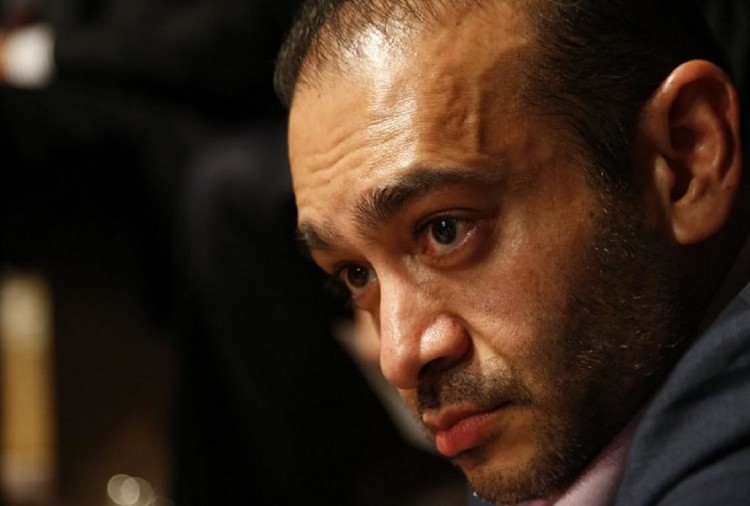
‘Barrack 12 at Arthur Road Jail in Mumbai is fit for Nirav Modi’: UK court approves extradition to India

Indian Government’s two-year-long battle to bring back fugitive businessman Nirav Modi to India has finally tasted some success. A UK Court has on Thursday, accepted that prima facie, a money laundering case has been established against Modi. The fugitive billionaire is wanted for fraud and money laundering in the ₹ 14,000-crore Punjab National Bank (PNB) scam

The UK’s Westminster Magistrates’ Court has also acknowledged that the diamantaire conspired to destroy evidence and intimidate witnesses and ordered that Nirav Modi may be extradited to India to stand trial.

“I am satisfied that there is evidence that Mr Modi could be convicted”, said UK’s Westminster Magistrates’ Court’s District Judge Samuel Goozee delivering his judgment on whether the jeweller has a case to answer before the Indian courts.

It also dismissed Modi’s “mental health concerns,” as the UK judge ruled that Nirav Modi will be given adequate medical treatment and mental health care at Arthur Road Jail, Mumbai. “There is no risk of suicide for Nirav Modi if he is sent to India as he will have access to adequate medical care at Arthur Road jail. Barrack 12 at Arthur Road Jail in Mumbai is fit for Nirav Modi,” said the UK judge.

The ruling of the UK’s Westminster Magistrates’ Court will now be sent back to UK Home Secretary Priti Patel for a sign-off, with the possibility of appeals in the High Court on either side depending on the outcome.

The high-profile extradition case of diamantaire has been continuing for over two years now. The fugitive businessman has been behind bars at Wandsworth prison since his arrest on March 20 2019. His multiple attempts at seeking bail have been repeatedly turned down, both at the Magistrates’ and High Court level, as he was deemed a flight risk.

Nirav Modi is the prime accused in the $2 billion USD PNB scam

Nirav Modi is accused in two criminal cases. First is the USD 2 billion PNB scam slapped on the diamantaire by the CBI. Second, the Enforcement Directorate (ED) case relating to the laundering of the proceeds of that bank fraud. He also faces two additional charges of evidence tampering and intimidating witnesses, which were added to the CBI case.

He had fled India just before the PNB scam was brought to the light. He had left the country and fled just when PNB had reported a massive 11,300 crore loan fraud by Nirav Modi and his uncle Mehul Choksi.

Meanwhile, Mehul Choksi, the second accused in the fraud case, has taken up the citizenship of Antigua and has been living there. The Indian government is trying for his extradition too. Both Nirav Modi and Choksi’s properties, houses, luxury items and business premises, worth thousands of crores, have been attached by the ED in India.

In June last year, the ED had recovered several consignments of diamond and luxury pearl jewellery of the duo in Hong Kong and had brought back over 108 consignments of various entities, totalling over Rs 1300 crores.

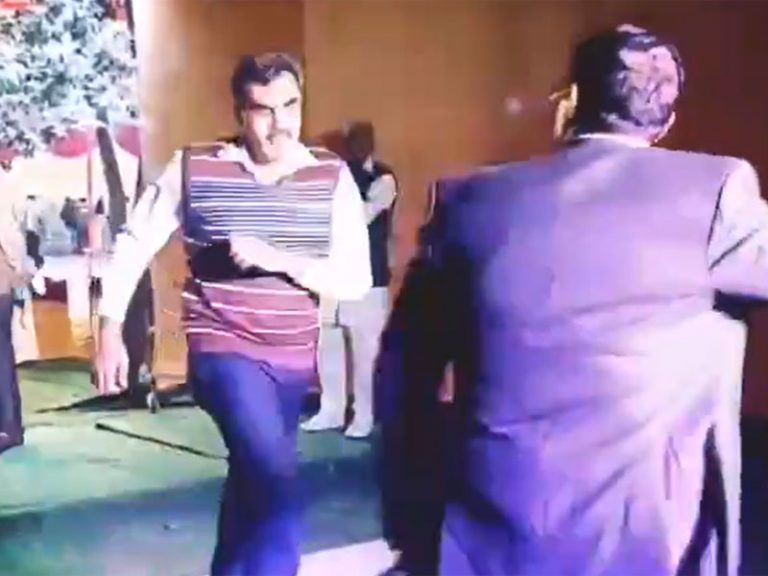
Watch: Off-duty police officers shake a leg on the dance floor, video goes viral

Police departments have many responsibilities that make it next to impossible for the police personnel to have a few moments of fun with family or at some function. Thus, whenever a video goes viral in which off-duty police personnel can be seen enjoying their free time, it attracts positivity from all sections of society. The fun side of the cops makes it easier for people to connect to them on a personal level.

One such video is making rounds on social media platforms in which the Superintendent of Police and an inspector were seen shaking legs on the dance floor on a Haryanvi song. Shared by photojournalist Ashutosh Tripathi of News Track Media, the undated video of two cops enjoying the off-duty hours gave everyone a few moments of a smile.

While sharing the video, Tripathi wrote, “SP and inspector set fire on DJ floor. Video goes viral.”

Netizens praise the dance by cops

Netizens were delighted to see the fun side of the police personnel. The majority of the comments were filled with appreciation of the dancing skills of the two cops.

The dancing duo of police officials are winning the internet today.

‘Follow Indian law, no more double standards’: Full details of new guidelines for tech-giants, OTT platforms and digital media

'Follow Indian law, no more double standards': Full details of new guidelines for tech-giants, OTT platforms and digital media by Modi govt

On Thursday, Union Ministers Prakash Javadekar and Ravi Shankar Prasad announced the centre’s new guidelines for digital news organisations, social media platforms and OTT platforms.

Addressing the press conference, Union Electronics and Information Technology Minister Ravi Shankar Prasad categorically stated that social media companies are welcome to do business in India, however, they must not overrule the dignity of civilised existence.

“Social media platforms are welcome to do business in India but they need to follow the Constitution and laws of India. Social media platform can certainly be used for asking questions and criticise. Social media platforms have empowered ordinary users but they need accountability against its misuse and abuse,” said Union Electronics and Information Technology Minister Ravi Shankar Prasad in the press conference.

In the press conference, Union Minister Prasad said that the new rules will empower ordinary users of social media, embodying a mechanism for redressal and timely resolution of their grievance.

The Minister also said that they have had widespread consultations on the issue and came with a draft in December 2018. The newly drafted regulation – Information Technology (Guidelines for Intermediaries and Digital Media Ethics Code) Rules, 2021, aims to have tighter control over the powerful big tech firms.

Modi govt takes strong note on fake news on social media

Taking a strong note of the fake news emanating on social media platforms, the centre has said that there is a need to counter fake news, financial frauds in India. The minister also said several concerns have been raised over the years about social media’s rampant abuse.

Under the rules, the digital companies will have to remove objectionable content within 36 hours after a government or legal order and will have to assist in investigations. The rules will likely also include a code of ethics that bans content affecting “the sovereignty and integrity of India” and that which threatens national security.

“Many organisations have fact-check machines, which only indicates the strong presence of fake news in India,” says Union Minister Ravi Shankar Prasad.

Grievance Redressal Mechanism for social media users

Under the new draft, the social media entities will have a grievance redressal mechanism. Union Minister Prasad also said that the social media intermediaries should appoint a Grievance Officer to deal with such complaints and share the officer’s name and contact details. The centre has also set up a three-tier system to regulate online content.

“We shall notify users number for a significant social media intermediary very soon. They will have to have a grievance redressal mechanism, you will also have to name a grievance officer who shall register the grievance within 24 hours and disposal in 15 days,” said Minister Ravi Shankar Prasad.

The minister also said that social media companies need to act and remove the content in the next 24 hours if there are complaints regarding morphed images and nudity.

“Intermediaries shall remove or disable access within 24 hours of receipt of complaints of contents that exposes the private areas of individuals, show such individuals in full or partial nudity or in a sexual act or is in the nature of impersonation including morphed images etc,” said the minister.

Social media intermediaries categorised, says Union Minister

In the press conference, IT Minister Ravi Shankar Prasad also said that the social media intermediaries will now be classified under two categories – Social media intermediary and significant social media intermediary. This distinction is based on the number of users on the social media platform.

The minister said that the government is empowered to notify the user base threshold that will distinguish between social media intermediaries and significant social media intermediaries. The Rules require significant social media intermediaries to follow certain additional due diligence.

Act on the originator of mischievous content, says the new rules

Emphasising the need to act on the originator of mischievous content, the Minister also said that social media platforms would be required to disclose the mischievous content’s first originator.

Under the new rules, the significant social media intermediaries should identify the first originator of the information required only for prevention, detection, investigation, prosecution, or punishment of an offence related to India’s sovereignty and integrity, relations with foreign states, public order or incitement of criminal offences like rape or child abuse. The intermediary shall not be required to disclose the contents of any message or any other information to the first originator, stressed the IT minister.

It yet another important step, the government has also enforced social Media platforms to provide for voluntary verification of users. From now on, the users who wish to verify their accounts voluntarily shall be provided an appropriate mechanism to verify their accounts and provided with demonstrable and visible mark of verification. 

The centre will implement the law within the next three months, said Union Minister Ravi Shankar Prasad.

OTT platforms will be self-regulated, centre will have oversight mechanisms

Speaking on the regulation of OTT platforms and digital news outlets, Information and Broadcasting Minister Prakash Javadekar said all media platforms must have the same justice system. He also said that there have been widespread concerns about issues relating to digital contents both on digital media and OTT platforms.

The I&B minister added that the government has also studied the models in other countries, including Singapore, Australia, EU and the UK and has gathered that most of them either have an institutional mechanism to regulate digital content or are in the process of setting up one.

The Rules establish a soft-touch self-regulatory architecture, a Code of Ethics, a three-tier grievance redressal mechanism for news publishers and OTT Platforms, and digital media. Stressing that press freedom is the essence of democracy, Minister Prakash Javadekar also noted ethics code will remain common for all, and no one has the right to rumour-mongering, especially in the digital space.

Union Minister Prakash Javadekar said that OTT and digital news media will have to disclose their details and added that the government will not mandate compulsory registration.

“Publishers of news on digital media would be required to observe Norms of Journalistic Conduct of the Press Council of India and the Programme Code under the Cable Television Networks Regulation Act thereby providing a level playing field between the offline (Print, TV) and digital media,” said the I&B minister.

“There should be a grievance redressal system in OTT platforms and digital portals. OTT platforms will have to have a self-regulating body, headed by retired Supreme Court or High Court judge or very eminent person in this category,” said Union Minister Prakash Javadekar.

The minister also added that there will also be an oversight mechanism at the government level to deal with the case wherein immediate action is needed. He also added that The OTT platforms, called the publishers of online curated content in the rules, would self-classify the content into five age-based categories.

“For OTT, there should be self-classification of content – U (Universal), U/A 7+, U/A 13+, U/A 16+, and A (Adult). There has to be a mechanism of parental lock and ensuring compliance that children don’t see that,” Union Minister Prakash Javadekar.

Social media platforms cannot have double standards, RS Prasad

Concluding the press conference, Union Minister Ravi Shankar Prasad also took barbs at the social media platforms for displaying double standards when it comes to acting against hate speech.

“Every social media platforms are welcome in India, but there shouldn’t be double standards. If an attack takes place on Capitol Hill, SM supports police action, but if there’s an aggressive attack on Red Fort, you’ve double standards. This is plainly not acceptable,” said Prasad while highlighting the recent hypocrisy of Twitter to act on hate-speech in India just as it acted in the United States during the Capitol Hill protests.

‘Puducherry’s Congress CM was an expert in lifting the slippers of his party leaders’: PM Modi

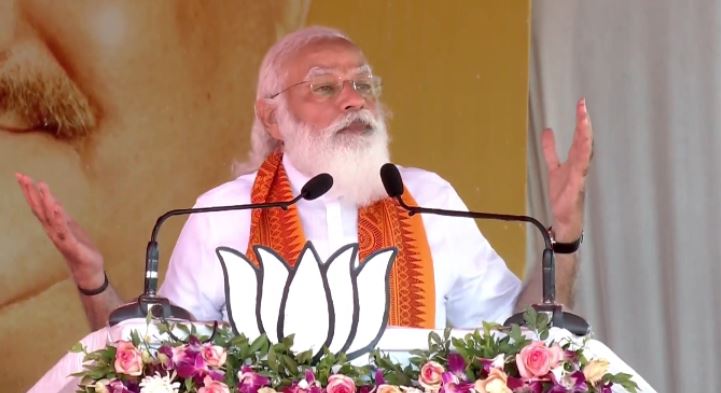
PM Narendra Modi, who is on a visit to poll-bound Tamil Nadu and Puducherry, addressed a public rally in Puducherry on Thursday, 25 February. 

Speaking after inaugurating a number of projects in the Union territory, PM Modi took jibes at the Congress senior leader Rahul Gandhi for his remark on a ‘fisheries ministry’ in Delhi.

PM Modi also mentioned the incident where the recent CM of Puducherry V Narasyanasamy was seen giving a grossly incorrect translation of the grievance raised by a woman during a meeting between the Gandhi scion and the fisherfolk community.

“I was shocked,” PM Modi said on Rahul Gandhi’s fisheries ministry remark, adding: “Congress leaders come here and say we will make a fisheries ministries for fishermen”. Current National Democratic Alliance (NDA) government made the ministry in 2019 and the budget allocated for fisheries has grown more than 80% in two years,” he said.

Further, speaking on the brazen disregard of public sentiments shown by Puducherry’s now-resigned chief minister, PM Modi said: “Instead of telling the truth to the nation, the former Puducherry CM gave a wrong translation of the woman’s words. He lied to the people and his own leader. Can a Party whose culture is based on lies ever serve people?, Modi asked addressing an ocean of people in the poll-bound Puducherry.

PM Narendra Modi slammed the Congress party for building its realm over lies and deceit. He said that while our colonial rulers used the policy of divide and rule, Congress has a policy of divide, lie and rule.

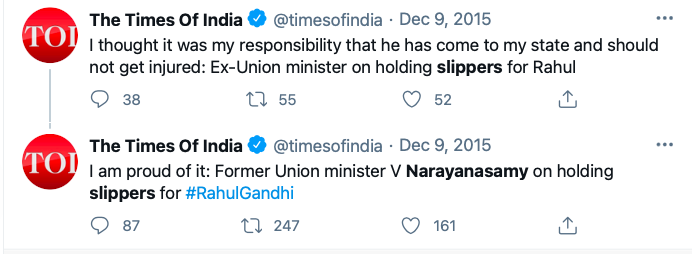
Launching a scathing attack on the now-collapsed Congress-DMK government in the Union Territory, PM Modi further said that the former CM was an “expert in lifting slippers of his party leaders”. PM Modi was probably referring to an incident in 2015 when Rahul Gandhi was touring the flood-hit Puducherry. Narayanasamy, who was a former Union Minister in the UPA government, was seen bending down and holding a pair of slippers while Rahul Gandhi removed his shoes to walk in the flooded area.

Narayanasamy had even stated that he was proud of what he did.

News from TOI from 2015

“In 2016, Puducherry didn’t get a people’s government. They got a government that was busy serving the Congress high command in Delhi, their priorities were different. Your former CM was an expert in lifting the slippers of his top party leaders,” he said, adding that “the high command Congress government in Puducherry made it a point to damage every sector of governance. Traditional mills closed. Local industry was troubled. Congress doesn’t believe in working for the people,” said Modi.

Slamming the Congress party for its ‘feudal, patronage, dynasty politics’, PM said that people all over India are rejecting Congress and asserted that their seats in Parliament are the lowest ever. 

Addressing the people of the Union Territory, PM Modi gave away BJP’s “BEST” mantra for Puducherry. PM said: “If you ask me to share my manifesto for Puducherry, I will say – I want Puducherry to be the Best. NDA wants to make Puducherry the BEST. By BEST, I mean – B for the business hub, E for education hub, S for the spiritual hub, and T for tourism hub.”

Prior to the address, PM Modi laid the foundation stone of several development projects including a 400-m synthetic athletic track at the Sports Complex in Puducherry, the Puducherry Port Development under central govt’s Sagarmala scheme and a 4-laning of NH 45-A – 56 km Sattanathapuram-Nagapattinam package of Villupuram to Nagapattinam project covering Karaikal district. PM Modi also inaugurated the projects at the Jawaharlal Institute of Postgraduate Medical Education and Research in the UT.

Govt removes safety net that allowed platforms like Twitter to not take responsibility for their misuse, officials can be penalised

Government of India today released the guidelines for regulating social media and OTT platforms in the country. The guidelines spell various responsibilities for the social media platforms and OTT content hosts, with additional responsibilities for major social media sites.

One of the most significant provision of these guidelines is that if the social media platforms don’t comply with the provisions prescribed in the guidelines, this will attract penal provisions as per the Information Technology Act. The new guidelines say that the social media intermediaries must follow the due diligence mentioned in it, and if any intermediary does not follow the due diligence, the safe harbour provisions will not apply to them.

The section 79 of the Information Technology Act defines this safe harbour, which basically makes them not liable for any content posted by users on their platforms. It says that an intermediary shall not be liable for any third-party information, data, or communication link made available or hosted by them, provided they themselves didn’t initiate such communication, and observes due diligence under the IT act.

Now these due diligences to be observed by the social media companies have been defined in the new guidelines. It includes various measures they have to perform, like identifying the first originator of any information that appears on social media, not allowing content that is defamatory, obscene, pornographic, paedophilic, inciting violence, against national integrity, misleading, false etc. The platforms also have to remove any such content withing 36 hours of receiving a court order or a government direction to remove such content.

According to the guidelines, if the social media sites allow such objectionable content to be hosted on their platforms, and don’t remove them even after receiving such orders from courts or government, it will mean that they are not observing due diligence. As a consequence, they will lose the safe harbour in the IT Act that isolates them from content posted on their platforms.

This means, if the social media companies do not comply with the guidelines published today, they will be held responsible for any content which is not allowed as per the guidelines. And, the officials of the social media companies will be liable to be prosecuted for such content. This implies that the social media officials will also be punished according to the nature of the offence, which are defined in the IT Act for various kinds of offences. The punishment defined in the act includes imprisonment for three years for most offences, but life imprisonment for some like cyber terrorism, and also includes fines of various amounts.

This will change how the social media behemoths behave currently, as they often give their own rules and regulations more importance over the law of the land where they operate and often ignore government orders. Recently, Twitter had refused to remove several objectionable posts despite asked by the government of India, and such incidents happen all over the world. But now with the new guidelines, social officials of social media sites can be arrested if they don’t comply with court and government orders.

Central govt opposes petition to allow same-sex marriage under Hindu Marriage Act, seeks dismissal of petitions: Read details

The central government has opposed a petition to legalise same-sex marriage under the Hindu Marriage Act, as moved in Delhi Court. There is no fundamental right to seek recognition for same-sex marriage, Centre tells Delhi High Court.

According to reports, the central government has contended that the Indian family concept and legislative intent recognises a union only between a biological man and a biological woman. Thus, it has demanded that the plea moved by Abhijeet Iyer and others be dismissed.

According to Hindustan Times journalist, the Central government has said that while a marriage may be between two private individuals having a profound impact on their private lives, it cannot be relegated to merely a concept within the domain of privacy of an individual. Further, the government contended that a two people living together and having a sexual relationship cannot be considered comparable to the with the Indian family unit concept.

Saying that the family concept entails a husband, wife and children, it necessitates that the marriage be between a biological man and a biological woman, the central government asked for the petition to be dismissed.

The Central government further said that “In our country, despite statutory recognition of the relationship of marriage between a biological man and a biological woman, marriage necessarily depends upon age-old customs, rituals, practices, cultural ethos and societal values”.

Saying that social morality also needs to be a consideration while talking about the validity of legislation, the central government contended that it is for legislature to judge and enforce such social morality and public acceptance based on Indian ethos.

The petition by Abhijeet Iyer Mitra, Gopi Shankar M, Giti Thadani and G Oorvasi to legalise same-sex marriage under the Hindu law

In September 2020, a petition was filed in the Delhi High Court seeking the recognition of same-sex marriages under the Hindu Marriage Act. The petition was filed by Abhijit Iyer Mitra, Gopi Shankar M, Giti Thadani and G Oorvasi and the matter was heard by Chief Justice DN Patel and Justice Prateek Jalan. The petitioners claimed that the Hindu Marriage Act permits any two Hindus to solemnise their marriage and therefore, homosexuals should also have the right to marry and have their marriages recognised.

“That it is further submitted that despite the fact that there is absolutely no statutory bar under the Hindu Marriage Act of 1955 and the Special Marriage Act of 1956 against gay marriage, the same are not being registered throughout the country and also in Delhi,” the plea claims. “As a result of the same, there are many benefits that would otherwise be available to heterosexual married couples that are not available to them,” it stated.

The claim that Act does not mandate that marriage is between a man and a woman appears to be unfounded. Section 5(iii) clearly mentions that a marriage between two Hindus can be solemnised if the groom is 21 years old and the bride is 18 years old at the minimum. It is a clear indication that the Act recognises marriage only between a man and a woman.

“That Right to Marry is also stated under Human Rights Charter within the meaning of the right to start a family. The Right to Marry is a universal right and it is available to everyone irrespective of their sexual orientation and gender identity,” it added. The petition also argued that denial of the Right to Marry is in violation of the Right to Equality and Right to Life as guaranteed by the Indian Constitution.

The central government had earlier opposed the petition as well

On the 14th of September, at the first hearing of the petition, Solicitor General Tushar Mehta, appearing for the central government, said that he opposed the petition. He argued that homosexual marriages are not recognised by our laws and culture. He said that the Hindu Marriage Act itself does not recognise same-sex marriages. As per law, marriage is only between a husband and a wife’.

The Court had responded saying that the government has to look at the matter at hand with an open mind and not the position as stated by a law saying that changes are happening across the world. SG Tushar Mehta, however, maintained that the petition does not even deserve the filing of an affidavit.

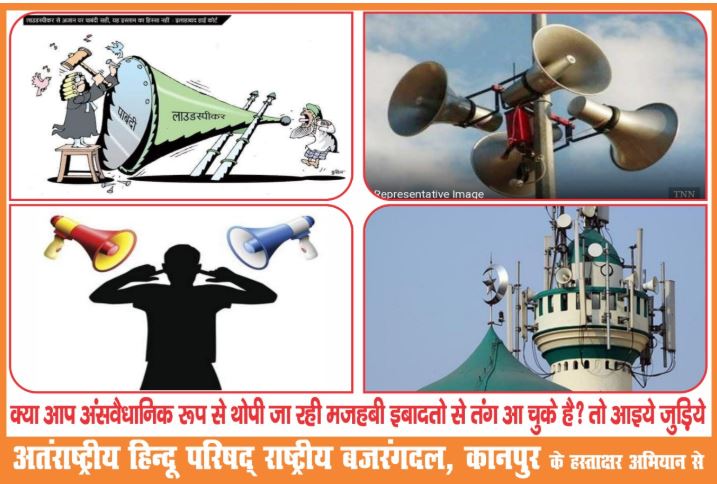
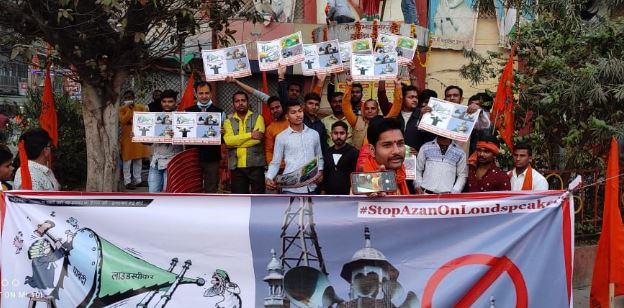
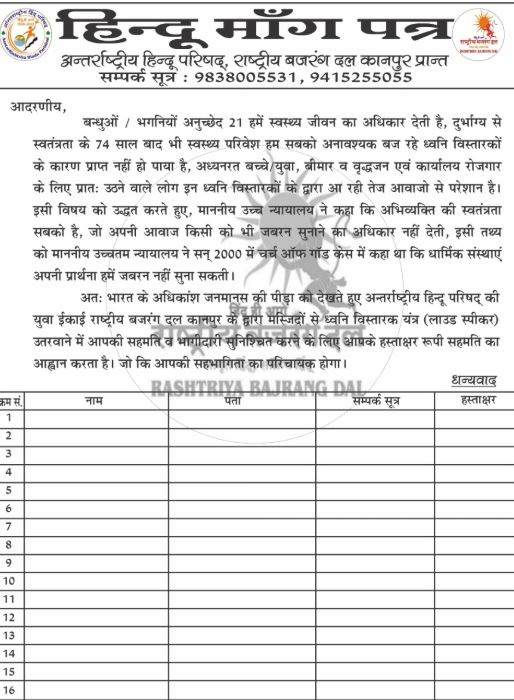
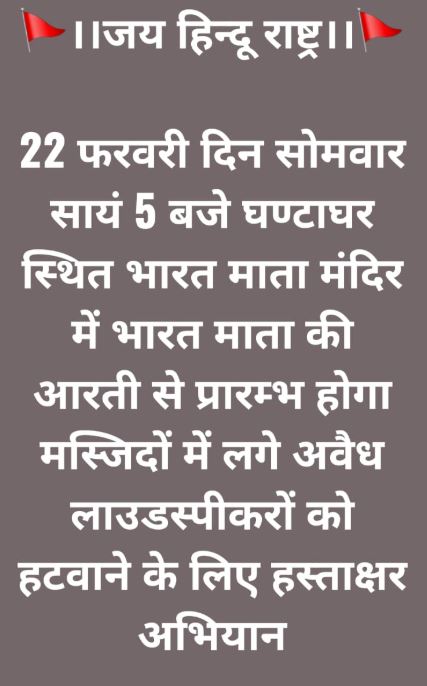
Exclusive: Bajrang Dal in Kanpur starts a signature campaign against the usage of loudspeakers during Azaan

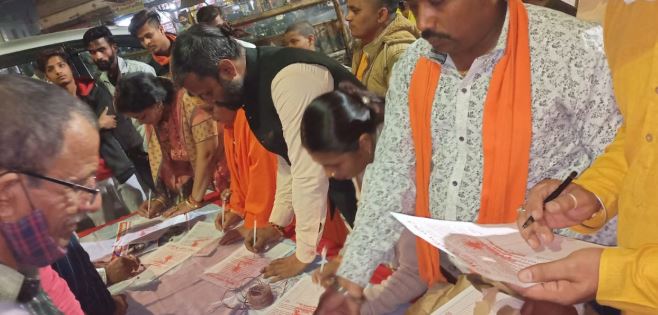
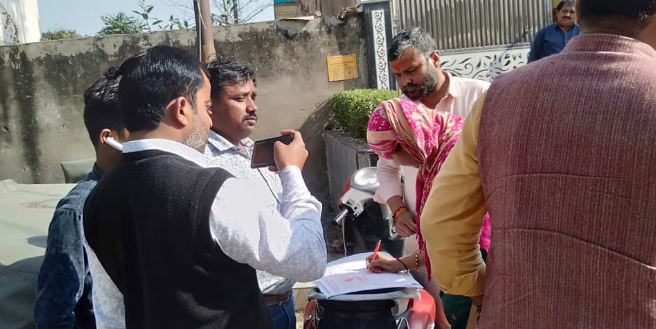
Hindu outfits led by Rashtriya Bajrang Dal have initiated a signature campaign in Kanpur, Uttar Pradesh, against mosques blaring loudspeakers during Azaan. The campaign, which kickstarted on February 22, 2021, aims to garner the support of 1 lakh people in Kanpur. For this, the organisation plans to gather signatures of 1 lakh people in Kanpur and submit the memorandum to the President of India for his perusal.

Bajrang Dal’s signature campaign

Speaking to OpIndia, Rashtriya Bajrang Dal General Secretary Ramji Tiwari said that the campaign was kickstarted on February 22 from the Bharat Mata Temple, situated near the Ghanta Ghar in Kanpur, where the members of the Hindu outfit spoke on the inconvenience this practice causes to the people residing in those areas where mosques use blaring loudspeakers for the call to prayer (Azaan).

Bajrang Dal’s campaign against mosque loudspeakers

Miffed by the fact that the mosques in Kanpur are not abiding by the Allahabad High Court order that ruled against the use of loudspeakers during Azaan, Ramji Tiwari said that the mosques in different areas of the city continue to arbitrarily use loudspeakers while reciting Azaan (call for Muslims to pray), five times every day, causing inconvenience to the public. So the Hindu organisation has taken up the initiative to raise awareness and put a stop to this practice. Tiwari furthered that the outfit aims to submit a memorandum to the President of India signed by 1 lakh people from Kanpur apprising him about the issue.

Bajrang Dal’s campaign in Kanpur against loudspeakers

Meanwhile, a Kanpur based lawyer took to Twitter to apprise that she is initiating legal proceedings to remove loudspeakers from mosques.

However, a Muslim cleric said that the campaign is unnecessary and is being done to divert people’s attention and benefit a particular party. He also said that the Constitution gives them the right to play Azaan at the mosque, and “no one can stop it”. It is notable here that no group is asking to stop Azans and the Bajrang Dal’s campaign is only against the usage of loudspeakers.

In May last year, the Allahabad High Court ruled that while reciting Azaan (call for Muslims to pray) by a Muezzin from a Masjid is integral to Islam, the use of sound-amplifying devices such as loudspeakers are not. The Court held that usage of such devices for ‘Islamic call to prayer’ is not protected under Article 25 (Right to Freedom of Religion) of the Indian Constitution.

The bench had said that there was no mention on use of loudspeakers for any prayer call in any religious books adding that the top priority of the HC was to ensure that law is in place to maintain the harmony of the society. The bench observed that there is no need for evangelism in society. However, it was necessary to maintain social cohesion and harmony.   

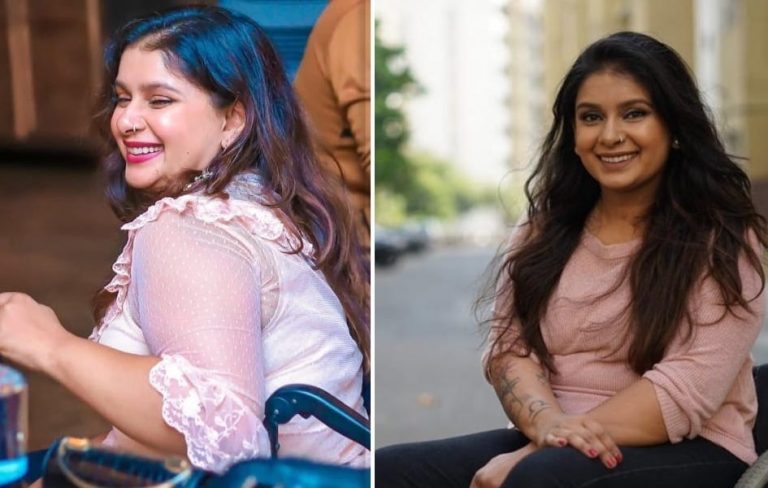
How disability rights activist Virali Modi came back from the dead thrice and went on to inspire millions over the years

15 years ago my life changed. I was an ordinary teenager, living my life and trying to understand the world. When suddenly a trip to Mumbai changed my life, leaving me disabled, and once again, trying to figure out the world.

I was born in Mumbai and raised in America for most of my life. I was a bright student, a dancer, and incredibly active in sports. During the summer of 2006, I decided to visit my relatives in Mumbai. I took an excruciatingly long plane ride in July and spent an amazing month with my family. Little did I know, that amazing month was going to be followed by the most difficult time in my life.

After returning to the states, I came down with a fever. After many visits to the doctor, I ended up in the emergency room. Surprisingly, all of the tests were inconclusive and I was sent home with another dose of Paracetamol. The next morning my mom woke me up and I started hallucinating. I couldn’t recognise my mother, I legitimately thought she was trying to kidnap me. After 5 minutes, I went back to sleep, and upon waking up, I was normal. No more hallucinations.

As soon as I got up to go to the washroom, I started limping. I wasn’t able to walk properly anymore, and suddenly I realised that I couldn’t pass urine either. I was rushed to the hospital where they did an MRI, they suspected that there was a shadow in the cervical region of my spine and performed a spinal tap.

I was taken into the testing room, laying on my side, while the doctor inserted a needle into my lower back, extracting the fluid that surrounds the spinal cord. As soon as I was laying on my back, I had a violent seizure that lasted for thirty seconds, resulting in dangerous levels of blood pressure, causing me to vomit. I aspirated and half of the vomit went into my lungs, causing respiratory arrest. I lost the ability to breathe and I went into cardiac arrest. I was declared dead for 7 minutes, while the doctors tried to revitalise me. Finally, after getting a minuscule pulse, I was transferred to the ICU. Unfortunately, I was put on a ventilator because they weren’t able to stabilise my breathing.

The next day the doctors performed another spinal tap, after which, I went into a coma for 23 days. Those 23 days were the most testing times for my parents, more than me. I was declared dead, two more times, in a matter of three and a half weeks. Once, I lost so much blood that my hemoglobin went below 4, another time my body temperature went below 32 degrees Celcius (90 degrees Fahrenheit). To this date, the doctors are clueless as to my diagnosis.

On the 21st of September, the doctors had a meeting with my parents. They wanted consent to pull the plug on my ventilator, they wanted to end my life because there weren’t any signs of hope. My mother begged for them to keep me alive because my 15th birthday was coming in 8 days. After convincing them and getting permission from the Dean of Medicine, my parents threw a huge birthday party for me on the 29th of September. All of my family members had come because despite getting permission from the Dean of Medicine, there was a condition. If I didn’t show any signs of hope on my birthday, the doctors would switch off my ventilator at midnight on the 30th of September. My mother agreed and signed the consent form, which is a metaphor for my death certificate.

On my birthday at 3:05 pm, the exact time of my birth, my family surrounded my bed singing Happy Birthday. My dad took my hand and as soon as I cut the cake, I opened my eyes, on my birthday, at the exact time that I was born. It was indeed a miracle! You can call it a rebirth if you must.

I didn’t know why I was in the hospital and I certainly didn’t know that I was disabled. When I found out about everything, I was beyond shocked, but what shocked me, even more, was that I was paralysed from the neck down. I was also on steroids for the inflammation of my spine, which caused immense weight gain.

I suffered from depression, anxiety, and panic attacks after I tried contacting my friends when I was discharged from the hospital. I was told that I was a burden because I was technically a vegetable. My self-esteem and confidence were shot, I even tried committing suicide, twice. Of course, I survived and I underwent many sessions of therapy and counseling. My parents helped me understand the true meaning of self-love, and of course, I practiced it and I continue to practice it.

In 2008, I shifted to India where I had the worst experience due to inaccessibility. While traveling on an expressway train, I was molested by the porters due to the inaccessibility. This happened three times, in the years 2008, 2011, and 2013. I never raised my voice nor did I ever say anything, not because of shame, but because no one would believe me.

In 2014, I won second place in the Miss Wheelchair India pageant, which gave me hope and courage to pursue modeling and acting. After being shot down by many casting directors due to my disability, I decided to put my dreams on the back burner and started working on myself and increasing my strength.

I had always struggled with weight due to the steroids that I was prescribed. I took them for two years, but I never let my weight come in the way. I decided to start working on my mobility, becoming as independent as possible and raising my voice for disability rights.

After three years, I started my campaign called #MyTrainToo, which focuses on the inaccessibility within the Indian Railways. My petition online has over 6 lakh signatures to this date. With a railway official, we made 9 railway stations in India totally wheelchair accessible, without any renovations. This landed me in BBC 100 Women, I became a TEDx speaker, I’ve won countless awards, and I became a motivational speaker. I also had the wonderful opportunity to model with Salman Khan for Being Human, I shot a print ad for Big Bazaar, and was the show stopper for Bombay Times Fashion Week, FBB, and Jewels Of India.

I was so busy in my career that I didn’t focus on my health, wellness, and what I was putting into my body. I gained so much weight over the years that I found it difficult to even begin. I did join the gym but I wasn’t seeing results, which left me demotivated.During the lockdown, I decided to focus on my health and wellness. I initially started doing IF and Keto, I did see results but it wasn’t a sustainable regimen for me. Then suddenly, one day my neighbour told me about Fittr and that’s when I decided to join the group and see what the fuss was all about.

I was surprised when I saw all of the transformations! I desperately wanted to be one of them. I posted a query on Fittr about losing belly fat (my biggest problem area due to my disability), where I was introduced to Hitesh sir. To be very honest, initially, I was a bit scared of the program. It seemed so intense, measuring out your portions to the T. It seemed overwhelming. Once I got the hang of it, it became easier and now it doesn’t seem like that big of a deal.

Once I started seeing the difference in centimeters, my clothes feeling looser, people who would comment on my weight were now commenting on my weight loss. It was an overwhelming feeling, I was emotional, really emotional.

Those steroids that I took 15 years ago, wreaked havoc on my body. Before my disability, I was 52 kilos, the steroids took my weight up to 90 kilos, and before I started training under Hitesh sir I was 67 kilos. It’s difficult to weigh myself, but I know I’ve lost weight because I’m in desperate need of a wardrobe change. This is still the beginning, I’m not anywhere near my goal and until then I have to keep pushing on and becoming the best version of myself.

I am so grateful to Hitesh sir, JC sir, Fittr, this group, and all of its wonderful participants. Thank you for making me feel so welcome and encouraging me to continue my fitness and wellness journey.

And as my mentor says – lehro se darr kar nauka paar nhi hoti, koshish karne walo ki kabhi haar nahi hoti.

Note: The article was originally published in a private Facebook group FITTR and by Virali’s mentor Hitesh Vaishnav.