Home Blog Page 479

Cabinet approves Electronics Component Manufacturing Scheme for making India Atmanirbhar in electronics supply chain, aims to generate production worth ₹4,56,500 crore

The Union Cabinet chaired by Prime Minister Narendra Modi today approved the Electronics Component Manufacturing Scheme with a funding of ₹22,919 crore to make India Atmanirbhar in electronics supply chain.

A press release issued by the cabinet stated that this scheme aims to develop a robust component ecosystem by attracting large investments (global/domestic) in electronics component manufacturing ecosystem, increasing Domestic Value Addition (DVA) by developing capacity and capabilities, and integrating Indian companies with Global Value Chains (GVCs).

The Electronics Component Manufacturing Scheme aims to attract investment of ₹59,350 crore, resulting in production of ₹4,56,500 crore. It is expected that the scheme will generate additional direct employment of 91,600 persons and many indirect jobs as well during its tenure.

The scheme provides differentiated incentives to Indian manufacturers tailored to overcome specific disabilities for various categories of components and sub-assemblies so that they can acquire technological capabilities and achieve economies of scale.

The target segment covered under the scheme and nature of incentive offered include sub-assemblies of Display module and Camera module, bare components like Non-Surface Mount Devices (non-SMD) passive components for electronic applications, Electro-mechanicals for electronic applications, Multi-layer Printed Circuit Board (PCB), Li-ion Cells for digital applications, Enclosures for Mobile, IT Hardware products and related devices, High-density interconnect (HDI)/ Modified semi-additive process (MSAP)/ Flexible PCB, and SMD passive components.

The scheme further covers supply chain ecosystem and capital equipment for electronics manufacturing, which includes parts/components used in manufacturing of sub-assemblies and bare components, and Capital goods used in electronics manufacturing including their sub-assemblies and components.

The tenure of the scheme is six years with one year of gestation period. Payout of a part of the incentive will be linked with employment targets achievement.

The statement stated that electronics is one of the highest-traded and fastest-growing industries globally and is expected to play a pivotal role in shaping the global economy and advancing a country’s economic and technological development. Since electronics permeates all sectors of economy it has economic and strategic importance. With various initiatives of Gol, the electronics manufacturing sector has witnessed remarkable growth in the last decade. The domestic production of electronic goods has increased from Rs.1.90 lakh crore in FY 2014-15 to Rs.9.52 lakh crore in FY 2023-24 at a CAGR of more than 17%. The exports of electronic goods have also increased from Rs.0.38 lakh crore in FY 2014-15 to Rs.2.41 lakh crore in FY 2023-24 at a CAGR of more than 20%.

Nepal: Pro-monarchy activists clash with security forces, curfew imposed in several places

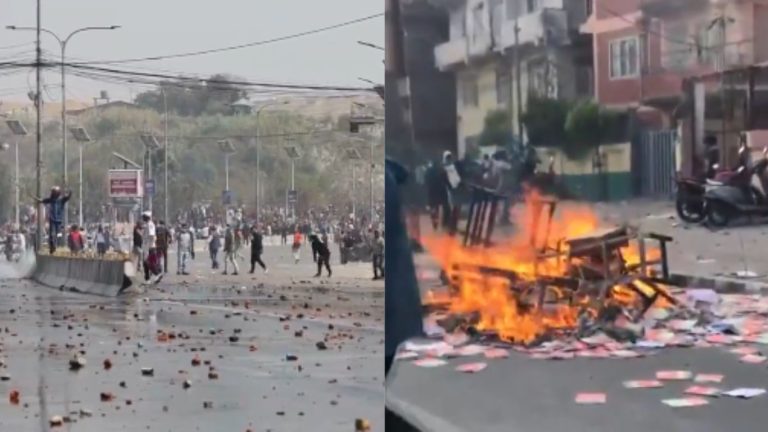
Violent clashes erupted in Kathmandu, Nepal, on Friday (28th March) between protestors demanding the restoration of the monarchy and the security personnel. The protests reportedly turned violent after the security forces tried to stop the protestors from breaching the designated security cordon.

As per reports, many houses, buildings and vehicles were torched during the clashes. Several police personnel also sustained injuries as the protestors pelted stones. Several rounds of tear gas and rubber bullets were used by the security forces to control the protestors. A curfew has been imposed in Tinkune, Sinamangal, and Koteshwor areas.

The protests were joined by several pro-monarchy groups, including the Rashtriya Prajatantra Party (RPP). Thousands of protestors were seen carrying Nepal’s national flags and pictures of the former king Gyanendra Bir Bikram Shah Dev. They demanded the restoration of the Hindu kingdom of Nepal, raising slogans like ‘Raja aau, desh bachau’ (Let the king come to save the country), ‘Down with the corrupt government’ and ‘We want monarchy back’. To control the protestors, hundreds of riot police personnel have been deployed across the national capital.

King Gyanendra Shah sought the support of his followers

Earlier this month, pro-monarchy demonstrations erupted across Nepal, raising similar demands. Demonstrations, including bike rallies and sloganeering, were organised by the supporters of the former King of Nepal, Gyanendra Bir Bikram Shah Dev. On 19th February 2025, the 75th Democracy Day of Nepal, King Gyanendra Shah sought public support for advancing the country to the path of unity, progress and prosperity during a pilgrimage in Galeshwar Dham and Baglung Kalika. He said that he gave up the throne in 2008 after Nepal was declared a Republic, not out of weakness but to witness peace in the country.

On May 28, 2008, the kingship was officially abolished by the first constituent assembly and Nepal was renamed as the Federal Democratic Republic of Nepal. This was preceded by a Maoist insurgency in Nepal, after which the king was suspended from exercising his powers on January 15, 2007, and an interim legislature was formed.

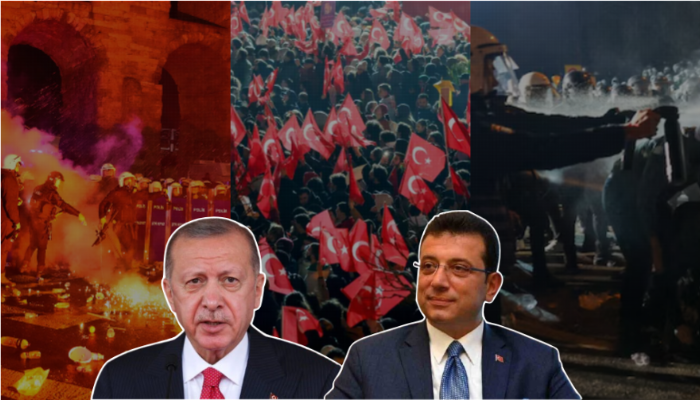
Nationwide agitation rocks Turkey as President Erdogan jails main opposition leader, assault on media and protestors ensues: Know what is happening

Ekrem Imamoglu (54), the mayor of Istanbul and a member of the opposition Republican People’s Party (CHP) was taken into custody by Istanbul police early on 19th March and was formally arrested and jailed five days later. He and 106 other people were charged with aggravated fraud, extortion, bribery, leading and taking part in a criminal organization, unlawfully obtaining personal information, manipulating tenders and assisting a terrorist group, according to the prosecutor’s statement. However, the development sparked a nationwide agitation.

Many Turkish cities, especially Istanbul, witnessed huge and persistent protests with tens of thousands of demonstrators calling the action a politically motivated decision in support of President Recep Tayyip Erdogan (71). Interestingly, a day earlier, on 18th March, Istanbul University revoked bachelor’s degree of İmamoglu over claims of a fraudulent transfer from a Cyprus university at 30 years prior. This was a significant political development because a college degree is necessary to be eligible to run for president in the country.

Imamoglu has previously faced other cases and contended that they were motivated by politics. He had been named the CHP’s presidential candidate for the 2028 elections and a formal announcement was set for 23rd March. The party was founded by Mustafa Kemal Ataturk, the first president and founder of the modern Turkish republic. Attorney Mehmet Pehlivan, who represented Imamoglu in the inquiry was also arrested “for fabricated reasons” after which Imamoglu responded, “As if the coup on democracy wasn’t enough, they can’t stand the victims of this coup defending themselves.” He previously announced that the prosecution against him was “a black stain on our democracy” and further stated, “I stand tall. I will never bow.”

Nearly a year ago, the CHP won the municipalities of 36 of Turkey’s 81 provinces, marking a major victory in local elections. Additionally, it recorded mayoral victories in Istanbul, Ankara, Izmir, Bursa, and Antalya, the five biggest cities in the nation. Imamoglu has become a popular leader who has the backing of many groups, including secular voters and the Kurdish ethnic population. He was elected mayor of Istanbul in 2019, bringing an end to the 25-year rule of Erdogan’s Justice and Development Party (AKP). Due to Erdogan’s pivotal participation in the campaign, the elections were perceived as a de facto vote on him.

Brutal crackdown on protestors

At least 2000 individuals, including opposition activists, students, and journalists covering the protests, have been arrested by the government in a brutal crackdown. Echoing Erdogan’s rhetoric denouncing the protests as “street terror” a “disruption of public order” and “vandalism,” Interior Minister Ali Yerlikaya also pledged “no concessions” for those who “terrorize the streets.” Large crowds have repeatedly defied protest ban and took to the streets with the nightly agitation frequently turn into running confrontations with riot police, whose actions have been condemned globally.

The scale of the initial protests was modest for a city of over 16 million residents. Since then, however, they have expanded to dozens of other Turkish regions and are currently at a level not seen in over ten years. Protesters akin to Gezi demonstrations raised slogan, “Taksim everywhere, resistance everywhere” in reference to the movement’s (protest to contest the urban development plan for Istanbul’s Taksim Gezi Park which later turned into a massive agitation across Turkey) well-known catchphrase from 2013.

“This movement so frightened the authorities that everything was locked down and every gathering was under suspicion. Twelve years on, we can see some similarities, such as the participation of young people and the fact that these demonstrations are an aggregation of various forms of opposition.” Samim Akgonul, head of the Turkish Studies Department at Strasbourg University epressed.

Breaking through a police barricade, students from various universities congregated in front of Istanbul University near the Beyazit neighborhood before making their way to Sarchane, the location of the Istanbul Metropolitan Municipality headquarters.

Police targeted demonstrators with house raids. The majority of individuals imprisoned in their houses belong to members of civil society organizations, trade unions and opposition parties. Police even attempted to disperse the protests that have been outlawed in Istanbul, Ankara and Izmir using pepper spray, rubber pellets, tear gas and water cannons, leaving the agitation tainted by violence. A netizen claimed that “police blinded a protester” and shared pictures of the same.

A video of a person dressed as popular Pokemon “Pikachu” as police attempted to disperse angry protesters using water cannons was shared online and soon went viral on social media.

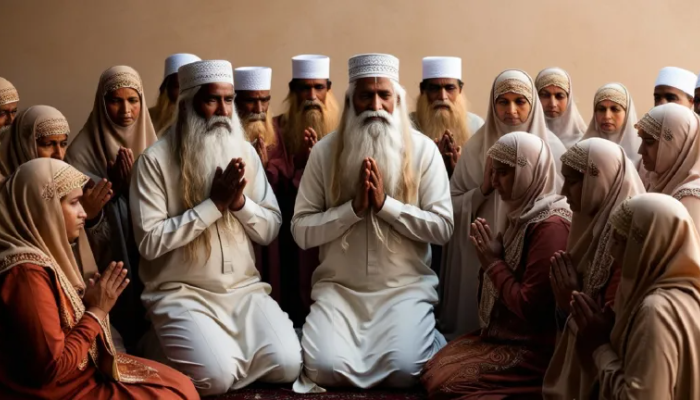
Likewise, another striking image emerged on social media, depicting a protester in traditional dervish attire being pepper-sprayed by law enforcement, which quickly captured widespread attention.

Notably, the CHP has urged Turkish citizens to proceed with the protests, adding that it will host demonstrations and other events in Istanbul and other places. In the meantime, the supporters of the CHP continued to cast their votes for Imamoglu, in spite of the situation.

“Whenever there’s a strong opponent (to Erdogan), they are always jailed. There is a dictatorship in Turkey right now, nothing else. It’s politics in name only,” a voter stated. Protesters, according to one, wanted to defend the candidate the city had chosen, not “confront the police,” while another asserted that Turkey had “woken up” and added, “We will defend our rights until the end.”

Since the protests started, 1,879 people have been arrested, according to Interior Minister Ali Yerlikaya earlier, who also added that 260 of them have been incarcerated pending trial. He stated that 489 individuals had been released, while 662 others remained under processing, and noted that 150 police officers sustained injuries. At least 11 Turkish journalists were apprended by the authorities in dawn raids on their homes.

Attack on media, opposition

A court in Istanbul even detained multiple journalists, including AFP photographer Yasin Akgul, who were later placed under remand after being accused of “taking part in illegal rallies and marches,” reversing a decision to release them. Reporters Without Borders (RSF) and other media watchdogs denounced the action as a clear violation of press freedom. Human Rights Watch called the situation a “dark time for democracy” in Turkey, while the Council of Europe criticized the Turkish government’s reaction as a “disproportionate” use of force.

BBC journalist Mark Lowen was also removed from his hotel in Istanbul and held for 17 hours prior to his deportation. Deborah Turness, CEO of a British broadcaster, described the episode as “extremely troubling.” BBC released a statemen which read, “This morning, the Turkish authorities deported BBC News correspondent Mark Lowen from Istanbul, having taken him from his hotel the previous day and detained him for 17 hours. Mark Lowen was in Turkey to report on the recent protests. He has been told he was deported for being a threat to public order.”

Meanwhile, a number of accounts belonging to opposition figures in Turkey had been suspended by the government. “University-associated activist accounts, basically sharing protest information, locations for students to go” comprised the majority of the suspended accounts. On the other hand, accounts that shared images and videos from the demonstrations also met a similar fate.

The authorities have discovered 326 hateful social media profiles, 72 of which are located overseas, declared Turkey’s Interior Minister Ali Yerlikaya who aadded that 54 people connected to the social media accounts were caught as a result of a concerted effort by security and cyber agencies. A social media law passed in 2022 grants the government broad and ambiguous authority to censor information.

Politicians in opposition can be incarcerated, critics intimidated and demonstrators end up in jail in Turkey. A tweet mocking Erdogan can lead to arrest. Pro-government media outlets dominate the news by the time election day arrives, making it difficult for the opposition to be heard as majority of the news platforms are controlled by the incumbent administration.

The social media platform X announced its opposition to several court orders issued by Turkish authorities that seek to restrict access to over 700 accounts, which include those belonging to news organizations, journalists, and political figures in Turkey.

The opposition TV channel Sozcu was banned from broadcasting for ten days by Turkey’s broadcasting watchdog RTUK due to alleged provocation to “hatred and hostility” in its coverage of the demonstrations. “The broadcaster was given a 10-day broadcast suspension,” RTUK mentioned and warned that its license would be canceled if the media house was found to have committed additional “violations” after the prohibition had ended.

“We are being punished for reporting, for trying to make the voices of the people on the streets heard, for broadcasting the recent largest public gatherings that are taking place in Turkey,” SZC TV Editor-in-chief Ozgur Cakmakci stated and added, “I don’t think it makes any sense. We are being punished for just doing our job.” The CHP protested in front of the RTUK building in Ankara, demanding that the penalties be lifted. Now TV, Tele1 and Halk TV were also ordered to stop some of their shows and were fined.

Widespread condemnation

In an interview with foreign media in Istanbul, Justice Minister Yilmaz Tunc stated that Ankara had urged its European allies to exercise “common sense” and that Imamoglu’s imprisonment was necessary. “We don’t want the arrest of any politician, but if there is evidence of a violation then it can happen. If we look at the gravity of the allegations, and as there is risk that evidence can be concealed, the judiciary has made a reasonable decision,” he claimed.

Later, the Turkish government was charged with launching “systematic attacks” on liberties by French President Emmanuel Macron. “(Europe) needs a Turkey that assumes its responsibilities for European security, (and) continues on its democratic path by respecting the commitments it has made,” he pointed out. Germany also expressed “great concern” over the happenings and deemed the imprisonment of  head of the Turkish opposition, “totally unacceptable.” Chancellor Olaf Scholz’s spokesman Steffen Hebestreit conveyed, “The arrest and suspension of the mayor of Istanbul is totally unacceptable. This must be clarified very quickly and transparently.”

Moreover, rights organizations urged the government to permit the rallies, which have been mainly peaceful, and asked Turkey to look into what they saw as disproportionate force employed by police to disperse people. According to Western officials, the case represented an aberration of democratic principles. In its 2024 press freedom index, Reporters Without Borders placed Turkey 158th out of 180 nations. The report highlighted that the government controls over 90% of the media, which makes Turks more likely to rely on independent or opposition news sources.

Erdogan has been in power for more than 20 years and has been charged with causing Turkey’s decline into authoritarianism and the Islamization of the country, which was once established as a secular republic. The detention of opposition leaders, media restrictions and other constraints have led international analysts to characterize its elections as “free, but not fair.” Imamoglu’s detention is therefore interpreted as a component of a broader deteriorating trend as the Erdogan era has seen a steady erosion of democracy and freedom in the country.

The clampdown has been regarded as unprecedented. Turkish financial assets have also plummeted since Imamoglu’s arrest, forcing the central bank to utilize reserves to maintain the currency.

Samajwadi Party MP Ramjilal Suman refuses to apologise for calling Rajput king Rana Sanga a ‘traitor’, claims to have told the truth

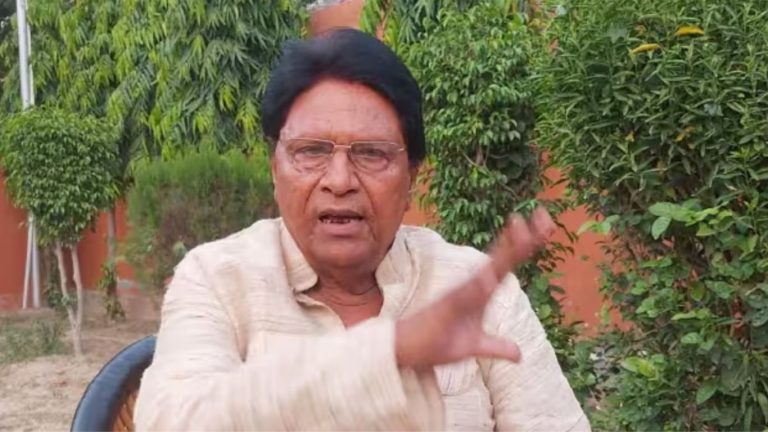
Samajwadi Party MP Ramji Lal Suman, who is facing the flak for his controversial comments about Rajput King Rana Sanga, refused to back down on Thursday (27th March). His comments caused a major showdown in the Rajya Sabha on Friday (28th March) as the BJP MPs protested and raised slogans against Ramji Lal’s comments, demanding his apology. As a result, the Rajya Sabha was adjourned for 30 minutes.

Ramji Lal Suman made the controversial remarks while speaking in the Rajya Sabha on 21st March. He said that the Indian Muslims did not consider Babur as their ideal and followed the Sufi tradition. “They follow Muhammad Saheb and the Sufi tradition. However, I want to ask, who brought Babur here? It was Rana Sanga who invited Babur to defeat Ibrahim Lodhi. So, if that’s the case, then Hindus must be descendants of the traitor Sanga. We criticize Babur, but why do we not criticize Rana Sanga?” he said. “Babur was invited by Rana Sanga to defeat Ibrahim Lodi. He had the misconception that Babur was a robber, and that he would go back, and Rana Sanga would rule, but Babur declared himself the ruler of Hindustan and refused to leave,” He added.

Outraged by his disrespectful comments about the Rajput ruler, several Karni Sena activists stormed his residence in Agra, damaging vehicles and other property. Karni Sena also held protests at different places in Uttar Pradesh against his remarks. Karni Sena chief Suraj Pal Singh Amu condemned his remarks and said that he insulted a hero who defeated the Mughals. He demanded an apology from Ramji Lal Suman and SP chief Akhilesh Yadav. An FIR was registered by the Agra police in connection with vandalism at the MP’s house, and several persons were detained.

Despite severe backlash against his remark, the SP leader has refused to apologise. Claiming his comments to be true, he said, “I will not apologise in this life, I do not know about the next life.”

Dr Radha Mohan Das Agarwa, the National General Secretary, lashed out at Ramji Lal Suman in the Rajya Sabha, accusing him of intentionally disrespecting the Rajput ruler. “We will not compromise on this issue until Congress and Ramji Sumanji apologise, “said Dr Radha Mohan Das Agarwa, the National General Secretary of the BJP.

Muslims helped Hindu devotees in the Mahakumbh Mela

Speaking to the media on Friday, Ramji Lal Suman claimed that Muslims helped Hindu devotees during the stampede in the Mahakumbh Mela. He added that Muslims even provided shelters to Hindu devotees in their homes. “For a long time, there has been an effort to create tension between Hindus and Muslims… We come from ‘Ganga-Jamuni’ traditions… During Maha Kumbh, when the stampede happened, it was Muslim families who took the devotees in and took care of them. We should not do anything to disrespect the religious sentiments of anyone,” he said.

Meanwhile, distancing the Congress party from Ramji Lal Suman’s remarks, Congress President Mallikarjun Kharge gave the entire controversy a casteist alleging that the attack on the SP leader’s house was an ‘anti-Dalit action’. “None have the right to take law and order into their hands and break into an MP’s house and resort to vandalism. Such anti-Dalit actions will not be tolerated,” said Kharge.

Reality of AAP’s ‘education revolution’: 20,000 new classrooms were claimed but only 7,000 constructed, toilets and storerooms counted as classrooms

0

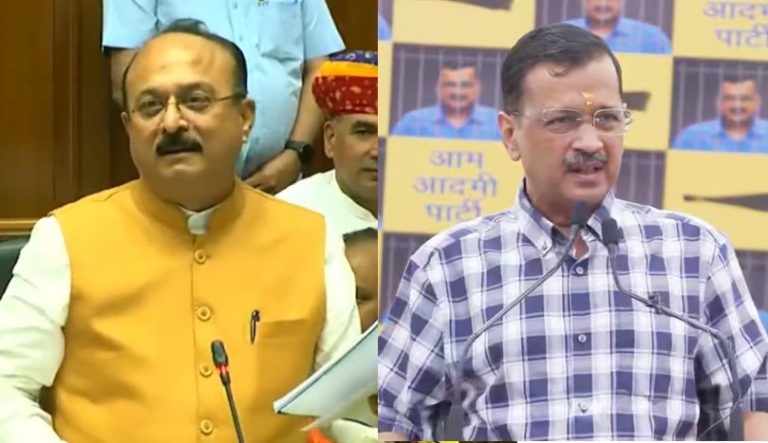
In an embarrassing turn of development for the Aam Aadmi Party, Delhi’s Education Minister Ashish Sood told the Delhi assembly that contrary to former CM Arvind Kejriwal’s claim of building 20,000 classrooms, the AAP government built only 7,000 classrooms. The Minister said that the AAP government counted toilets, store rooms, etc, also as classrooms. 

The minister said that those who are building ‘Shiksha Kranti’ and ‘Dream School’ have counted toilets and storerooms as classrooms. The minister said that his government will stop this practice of PWD, that corridors, bathrooms, and storerooms are counted as rooms. Out of the 20,000 rooms that you show as equivalent rooms, as Shiksha Kranti, only 7 thousand of them are classrooms. Sood said, ‘One day your deeds will come to meet you, just don’t be surprised on that day.’

The minister further alleged that during the Kejriwal government, more money was spent on publicity than on work. He said, ‘Rs 4 crore was spent on the happiness curriculum and Rs 20 crore 87 lakh was spent on its publicity. Rs 49 lakh was spent on the patriotism curriculum and Rs 11 crore 49 lakh was spent on its publicity.’ 

Ashish Sood said that those who talk about Manipur every time were spending only 1.5% on education in Delhi. Manipur spends more on education than Delhi. “The AAP government, which claims to be the messiah of the poor, has been continuously indulging in corruption in the name of education,” Sood said.

India is not a Dharamshala: Read how Immigration and Foreigners Act 2025 prevents illegal immigration, several new features added

On 27th March, the Lok Sabha passed the Immigration and Foreigners Act 2025. The purpose of the law is to regulate the entry of foreigners, stay and departure from India. Union Home Minister Amit Shah explained in the lower house that India welcomes visitors who arrive for business, tourism, education or medical care, but he also emphasized that the country is not a Dharamshala (Indian hostel/guest house). In simple terms, anyone attempting to enter India illegally will face severe consequences.

The Passport (Entry into India) Act of 1920, the Registration of Foreigners Act of 1939, the Foreigners Act of 1946 and the Immigration Act of 2000 are among many other immigration-related laws that have been abolished by the new law. It aims to improve national security, streamline the immigration procedure and deter unlawful immigration to India. Let’s go over the key features to understand what it entails and its imapct.

What is the purpose of the law

Let’s start by discussing why this legislation was introduced. India receives lakhs of visitors each year from over the world. Tourists, students, businessmen, and refugees are among the groups who come to the country. However, people often enter India illegally or remain longer than permitted by their visa. Such individuals might pose a threat to national security. This new law’s objective are mentioned below:

  • It should be simple and easy to travel to and from India.
  • Illegal intrusions need to be eliminated. 
  • National security must be strengthened.
  • It should be uncomplicated for those who travel to India for legitimate reasons, such as tourists, students or entrepreneurs.
  • It is imperative that refugees who arrive in India because of issues back home receive the assistance they require.

After the centre notifies the public in the official gazette, the law will become functional and won’t take effect until the government makes a formal announcement.

Foreigners divided into six categories

This law’s division of foreigners into six categories is one of its unique features. This clarifies the rights and obligations of a certain foreign national. These categories include:

  • Tourists: People who come to India to travel.
  • Students: People who come to India to study.
  • Business visa holders (traders): People who come to India for business or trade.
  • Refugees: People who come to India to seek shelter due to persecution in their country.
  • Illegal immigrants: People who enter India without proper documents.
  • Others: This comprise of people who are in India for different reason, such as medical treatment.

The government has made it obvious that there would be distinct regulations for each category of foreigner by establishing these classifications.

Provision of strict punishment in law

The most focus has been placed on strict action in the law. There is a provision for severe punishment for foreigners who enter India illegally, use forged paperwork or violate the terms of their visa. Furthermore, there will be different penalties for this, including as:

  • Illegal entry: Anyone found entering India without the necessary documentation would be considered an illegal immigrant. Such individuals could be placed on a blacklist, arrested or deported.
  • Visa overstay: Those who remain in India for longer than the allotted time might also face penalties. Re-entry into India may be prohibited for up to five years even for minor infractions. Furthermore, a warning or fee could also be imposed.
  • Strict action on repeat offenders: If an individual violates the rules on regularly, he or she will face serious repercussions. India could ban their entry for a very long time.
  • Attempt to re-enter illegally: A deported individual faces a lifetime ban from entering India and a 10-year jail sentence if he attempts to enter illegally again.
  • Major offenses:  A person will be deported, imprisoned and permanently blacklisted if they are discovered to have engaged in fraud, major crime or terrorism.

Special provisions for refugees

This law has taken refugees into consideration as well. Better security measures have been enforced for people who flee persecution in their country and seek safety in India. India can meet its humanitarian obligations owing to these regulations, which have been developed in accordance with international norms. Such persons will receive legal recognition and support to ensure their safety.

Simplified visa process

The visa process has been made easier for those who come to India for the right purpose, such as tourists, students or businessmen. The new law has streamlined the visa application procedure, making it faster for people to obtain one. Nine types of electronic visas have been introduced, including the e-tourist, e-business, e-medical, e-medical attendant, e-AYUSH, e-preacher, e-student and e-student dependant visas. Likewise the process of entering and exiting India has been convenient. Additionally, some stringent rules have been implemented.

  1. Students and tourists will not be permitted to work or conduct business of any kind.
  2. People on business visas are not permitted to work in salaried positions in India.
  3. A person’s visa will be revoked if they are discovered to have engaged in any criminal activity or fraud.
  4. The visa will also be cancelled if it was obtained using fraudulent documents or if the individual poses a threat to national security.

Necessary to inform FRRO

The law has another significant rule. A foreign national must notify the Foreign Regional Registration Office (FRRO) immediately if any of the information they have provided changes while they are in India, such as their address, employment or university. A fine or expulsion from the nation may be implemented on anyone who violates the rule.

Who will be considered illegal immigrants

The law makes it clear who will be considered an undocumented immigrant. A person will be deemed as such if they enter India without the required paperwork or remain in the country for longer than the duration of their visa. Such individuals will face serious ramifications. The permission to imprison, deport, or add such individuals to a blacklist has been granted to the authorities.

What do the statistics say

The law also includes some figures that demonstrate the extent of India’s illegal immigration problem. Approximately 14 lakh persons are residing in India without the required documentation, according to data as of 20th March. 5% are from Bangladesh, 5% are from Sri Lanka, 5% from Myanmar and 5% from Afghanistan. The remaining 80% are from Nepal, Bhutan, Maldives and African nations.

5% are tourists, 5% are students, 5% are on business visas, 5% are refugees and 5% are undocumented immigrants. Other groups comprise the remaining 70%. 5% of these have attempted to overstay their visa, 5% have used forged documents and 5% have entered India without the required paperwork. Other regulations have been broken by the remaining 85%. 5% have received warnings, 5% have been penalized, 5% have been deported and 5% have been put on a blacklist. The remaining 80% have been the target of further action.

These figures make it evident that illegal immigration is an important concern, and the government is attempting to curb it with the new law.

What will be its effect

The new law will have a wide range of consequences.

  • This bill will limit unauthorized immigration. Strict penalties will be applied to anyone who attempt to enter India illegally, which could lessen the number of such occurrences.
  • Those who travel to India with the proper motive will find the process easier.
  • Legal aid will be provided to refugees, improving their quality of life.

The Immigration and Foreigners Act 2025 is a law that seeks to make the immigration process in India clean and secure.What foreigners must and will not do is spelled down in detail in its parts and subsections. The law was created to deter illegal immigration, improve national security and make life easier for individuals who enter the country lawfully. Additionally, it safeguards the rights of refugees as well.

Read the report in Hindi here.

Bihar: Tensions erupt in Samastipur after Hanuman idol vandalised by unidentified miscreants

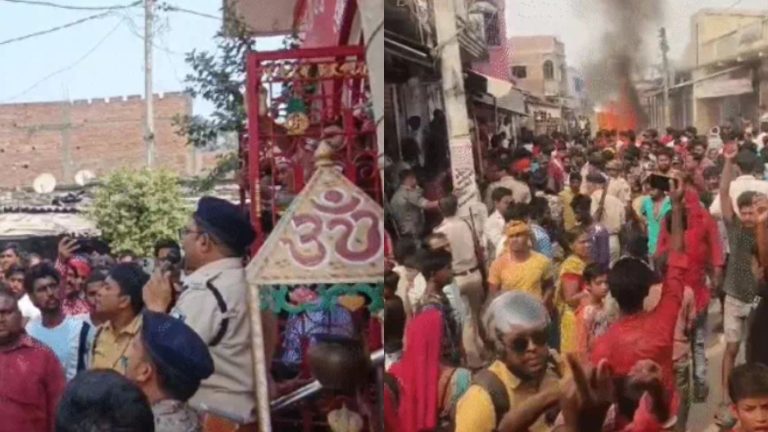
Tensions flared up in the Karpuri Gram Police Station area in the Samastipur district of Bihar on Friday (28th March) after a Hanuman idol inside a village temple was vandalised. The incident outraged locals, who came out on the streets and protested against it. The situation was pacified after the intervention of the local administration. Locals have alleged that some unidentified miscreants threw stones inside the Hanuman temple located in Dadhiya Belar village, which damaged a limb of the idol.

Police assured action against the culprits

As per reports, the Police swung into action on receiving information about the incident. Police assured the locals that action would be taken against those responsible for damaging the Hanuman idol. Besides, the police said that a new idol would be installed in the temple. “Ashtajaam will be held on 6th April in the temple. A new idol will be installed. Action will also be taken against the arrested accused. If any incident happens with the accused, action will also be taken against them. Refrain from increasing the controversy or else the matter will turn upside down. It is a matter in your hands, keep your hands to yourself,” said ASP Sanjay Pandey.

Addressing the angry locals through a loudspeaker, ASP Pandey said, “Have faith in the police. Do not take the law into your hands. A very big action can be taken.” A suspect was reportedly caught by the locals and was later handed over to the police. To prevent any untoward situation, police personnel from about 12 police stations, including ADM Sanjay Kumar and ASP Sanjay Pandey, were camping in the area.

Locals suspect a conspiracy

The locals alleged a conspiracy behind the idol vandalisation. One of the locals said that the idol was vandalised after everyone had left after performing the daily morning prayer. The temple priest Laxman Das said that several people arrived after the morning prayer and pelted stones at the temple. “Eevryone went to their homes after the morning Aarti held at 7 am. Thereafter, around 8-10 people arrived and pelted stones at the temple and vandalised the limb of the idol,” said the priest.

“In a village in the Karpurigram police station area, a youth damaged the idol by throwing a stone in the temple. The local people caught the accused. The police have arrested him. The accused will be questioned. It has come to light that other people were involved in this incident. They will be identified and action will be taken,” ASP Sanjay Pandey said.

Blockade at Shambhu and Khanauri borders cleared, farmers’ leader Jagjit Singh Dallewal has ended fast: Punjab govt tells Supreme Court

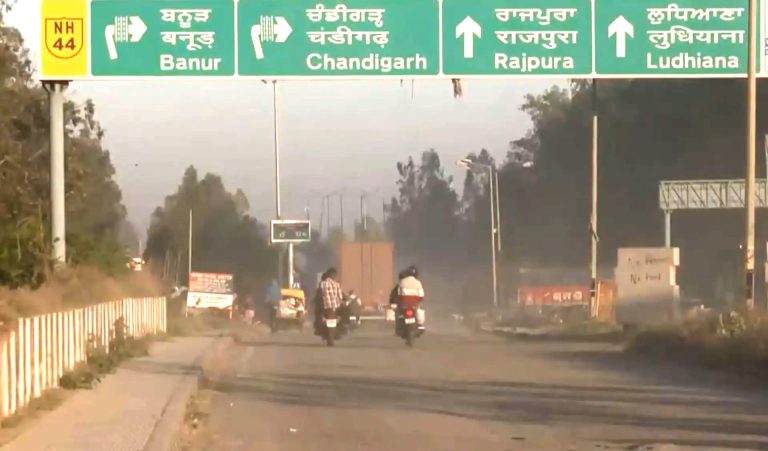
The Punjab Government on Friday told the Supreme Court that it has cleared the protesting farmers from the Shambhu and Khanauri borders near Haryana and farmers’ leader Jagjit Singh Dallewal who was on fast unto death also broke his fast.

A bench of Justices Surya Kant and N Kotishwar Singh was informed by the Advocate General of Punjab Gurminder Singh that the national highway was free for traffic movement.

Punjab government has cleared the protestors first from the site and Haryana government has cleared the highway and restored the traffic.

“I said it, highways are not supposed to be (occupied). National highways are lifeline of the country,” said Justice Kant.

With regard to Dallewal, Punjab’s Advocate General said he has ended his hunger protest (started in November last year) today.

“Mr. Dallewal accepted water today and broke fast,” Singh said.

The top court also declined to entertain a contempt petition filed against the Punjab authorities for clearing the protesters in alleged violation of a status quo order passed by the apex court.

To this, the bench told the lawyer who filed the contempt petition, “We have been asking them to clear highway, the contempt petition is misconceived.”

The advocate then withdrew the contempt petition from the court.

The bench also dropped the contempt proceedings initiated earlier against the Punjab Chief Secretary and the DGP for not taking steps to hospitalise Dallewal, who was on fast-unto-death then.

It further directed the High Powered Committee, constituted by it to hold negotiations with the protesting farmers and the governments, to file its supplementary report.

The top court had earlier asked Punjab authorities to swiftly tackle the health situation of Dallewal who was on fast unto death.

It had also asked the states of Punjab and Haryana to continue their meetings with the protesting farmers, to persuade them to clear the highway along Shambhu border.

In February last year, the Haryana government had set up barricades on the Ambala-New Delhi national highway farmers bodies announced that farmers would march to Delhi in support of various demands, including a legal guarantee of minimum support price (MSP) for crops.


(This news report is published from a syndicated feed. Except for the headline, the content has not been written or edited by OpIndia staff)

‘Murtad’, ‘mocking Babri demolition’: Islamists attack actor Salman Khan for sporting a Ram Janmabhoomi edition luxury watch

Actor Salman Khan recently received Islamist backlash after he posted pictures for his upcoming movie, which is set to release this Eid.

“See you in theatres this Eid!” Salman Khan tweeted, sharing striking photos of himself rocking an orange watch while casually leaning on a car.

However, what truly stood out was the sleek gold-dial watch with an orange strap that he sported in the photos. 

The exclusive Ram Janmabhoomi watch comes with a staggering price tag of ₹34 lakhs. Previously seen on Abhishek Bachchan, this luxury timepiece is crafted by Jacob & Co. and is officially named the Epic X Ram Janmabhoomi Titanium Edition 2.

The Jacob & Co. timepiece seamlessly combines luxury with heritage, showcasing intricate engravings that honor the cultural and historical essence of Ram Janmabhoomi. Its dial features a finely crafted relief of the Ayodhya temple, while the bezel and face are adorned with sacred inscriptions of Hindu deities. With only 49 pieces available globally, this exclusive edition is now part of the actor’s collection.

Salman Khan’s Ram Janmabhoomi watch leaves Islamists red-faced

But no sooner did Salman share his pictures on X, a raft of Islamists descended on his Timeline, abusing and attacking him for sporting a Ram Janmabhoomi Titanium edition watch manufactured by Jacob and Company, the luxury jewelry and watch brand founded by Jacob Arabo, a Bukharian Jewish man who is often targeted by Islamists for his staunch support to Israel.

“Wearing a Zionist co Watch with Ram Janm Bhoomi edition mocking Muslims,” tweeted one of the Islamists, triggered by Salman’s pictures.

Yet another Islamist called Salman a “murtad”, an Islamic term for an apostate, for wearing a watch that celebrated Ram Janmabhoomi movement.

Another Islamist has called for a boycott of Salman Khan’s upcoming movie Sikandar, accusing the actor of “mocking the Babri demolition” and “anti-Muslim riots.” Ironically, the same individual, a vocal supporter of the Palestinian cause, failed to explain why the Ram Janmabhoomi movement—a reclamation effort similar to the one she endorses for Palestine—is unjust while the Palestinian struggle is legitimate.

Salman Khan’s Sikandar is a highly anticipated action thriller set to release on Eid 2025. Directed by A. R. Murugadoss and produced by Sajid Nadiadwala, the film promises a gripping storyline packed with high-octane action and drama. This marks Salman’s first collaboration with Murugadoss, known for his blockbuster films. Fans are eagerly awaiting the movie, which is expected to be a grand Eid spectacle.

Gujarat: Tribals are being converted, hundreds of churches come up but no mention in government records, Hindu activists of Tapi fear their existence will be erased

Dang and Tapi, two districts in the southeastern part of Gujarat, are deeply affected by the illegal conversion of unsuspecting tribals living in rural areas. Even though missionaries and churches have been active here for years and the conversion of Hindu tribals is happening at a rapid pace, this issue has not caught the attention of the mainstream media, nor has there been any discussion about it. That is the reason why such activities have found a wide field in the last few years. On the other hand, the issue is not getting the attention of the state government, and the local-level leaders are also facing questions. In this situation, the condition of the Hindu community is becoming difficult day by day.

Recently, Hindu saint Morari Bapu stirred up a debate across the state after he pledged to donate ₹1 lakh to every new school to curb religious conversions and also requested the state government ministers to pay attention to this serious issue. The ministers have assured to take strict action on this issue, but the situation on the ground, some statistics and the experiences of the locals indicate that if the government does not wake up or if awareness is not spread in the society, then very soon there will be such a change in the demography that it is even difficult to imagine and the seeds of it have already been planted. 

Leaders of Dev Birsa Sena, who have been active against religious conversions in Tapi for a long time, shed light on this entire nexus in a conversation with OpIndia. They have also accused local MLA Mohan Konkani, who is a leader of the Bharatiya Janata Party. Dev Birsa Sena leader Arvind Vasava says that in just a few years, about 1500 small and big churches have come up in Tapi, and most of them are illegal. Moreover, the number of people following the Christian faith here is increasing day by day, but government records do not show this. A war is being waged by Hindu organizations against this issue as well. They said that this vile activity will be controlled only if the converts are delisted.

Conversion is taking place through enticement, temptations and superstition

Arvind Vasava says that the entire Tapi-Songhar is a tribal area. However, 1500 churches have been set up there illegally. He has also claimed that Christian priests coming from different states organize various programs in this area, from public meetings to prayer meetings. His question is that legally, this entire area is a tribal area, no one has legally become a Christian there, yet, why are such programs being organized here?

Vasava alleged that the aim of various groups of missionaries is only to convert the naive tribals here to Christianity. They are converting the tribals to Christianity by giving various temptations, luring them and spreading superstition. No person has become a Christian legally. He says that despite the protection of tribal culture being provided by the Constitution, such a large number of churches have been built in tribal areas, and various programs are being organized.

MLA Konkani himself won the election on a tribal certificate- Dev Birsa Sena

Vasava further said, “Evidence is being repeatedly sought regarding religious conversions, MLA Konkani is also seeking evidence. But people who convert never do it in public. They do this privately in their discussions. But there are tribal communities in the entire South Gujarat, they are not Christians, so why were churches built in villages in districts like Tapi? What is the need for it in tribal areas? There are no legally registered Christians here.”

He further said, “We are tribals, so what is the need for Christian public meetings and big programs in our area? Why do Christian pastors, preachers and big people from different states come to hold meetings only here? There are no legitimate Christians here, so why come here? If there is a Christian in this area, show him a government record that he is a Christian. The country runs based on the Constitution, so if you follow another faith, then mention that in the government record too.”

He further alleged that the people converted to Christianity by missionaries are referred to as tribal Hindus in government books. They are also giving up all tribal culture, traditions and festivals. He said that even during the collection of contributions for tribal festivals, these converted Christians refuse. He sighed and said, “In this way, in the next second or third generation, both we and our culture will be extinct, our very existence will be erased.”

Moreover, he has accused MLA Mohan Konkani of patronizing Christian missionaries. Vasava claims that Konkani is a tribal in the government records and has become an MLA based on a Scheduled Tribe certificate. But currently, he follows the Christian faith. He alleged that Konkani openly encourages Christian missionaries by going to their programs.

MLA Konkani was the chief guest at a public event of Christians

This entire controversy has come to light due to a viral video of MLA Konkani. In the video, Konkani was seen giving a speech as the chief guest and speaker at a public program of the Christian sect. In this video, he was telling the people present there to bring other people to the Christian program as well. Dev Birsa Sena said that the MLA has openly encouraged missionaries in the public meeting and has asked them to bring other people there.

Regarding this incident, Vasava said, “The Konkani MLA himself does not convert people, but he encourages them and creates an atmosphere. There is a village called Haripura next to his village, where a church has been built on a hill and roads and lights have also been provided there. For whose glory is all this happening? In the public meeting of Konkani Christians, they say that if you bring other people here too, then that will encourage conversions.”

Vasava further said, “The video of MLA Mohan Konkani has gone viral, in which he is speaking in a clear Christian language and style. He is a devout Christian, and seeing that, many tribals are also moving towards him. In the Konkani video, words like Jesus Prabhu and Mother Mary are also mentioned. All this needs to be stopped soon, otherwise in 10 years the tribal existence will end in South Gujarat.”

Vasava further said that a big program of Christians has been going on in the Tapi district for three days now. He said, “We have spoken to the Mamlatdar, Collector and all the officials about this and submitted a complaint. We have also told the responsible persons of the BJP, and also contacted the office of Minister of State for Home Harsh Sanghvi. However, the program is going on openly. My society is being destroyed, and the administration is silent.”

Christians illegally occupy the tribal Kuldevi hills by removing the Hindu temple

Arvind Vasava also talked about a Hindu temple located on a hill in Niana Bandharpada village of Songadh taluka. He said that Gidhamadi Aya Dungar was the place of the tribal goddess Mata, and Hindus used to worship there. But over time, due to the rapidly growing population of Christians in this area, the movement of people on this hill gradually decreased and after that, Christian missionaries built their place there called ‘Mary Mata’s Temple’.

Arvind Vasava has said that today, tribals are not even allowed to enter that hill. Tribals cannot even see or worship their clan goddess. Christians have completely taken over the place. He claims that when tribals gather in large numbers to go to the temple for worship, they are expelled. Along with this, he gave the example of Haripura, near the village of MLA Konkani, he said that an illegal church has been built on the hill of Haripura, and it is claimed that it has a direct connection with Konkani.

What do tribal activists expect from the government?

Arvid Vasava of Dev Birsa Sena has urged the government, through OpIndia to stop the efforts of religious conversion in South Gujarat and to remove the illegal structures. He further requests that the government cooperate and listen to them to keep their culture alive. He said, “So that the culture of our tribals, our tradition, our language and our existence survive, you all should cooperate with us and stop such illegal activities at any cost. Today, there are many villages where only 10 tribals are left. The rest have abandoned the tradition of their forefathers and the Kuldevi.”

He said, “The people here have also joined hands with foreign forces to destroy tribal culture. Our only demand from the government is that our culture, customs and the legacy of our ancestors should survive, and our existence should continue. We make a clear appeal to the government to come to our side, help us…We don’t want anything.”

What did MLA Konkani say in the viral video?

BJP MLA Mohan Konkani went to address the Vanvasi community in a large gathering organized by the Christian community. The language used by Mohan Konkani in the viral video is alleged to be similar to that of a Christian pastor. He says at the beginning of his address, “In the name of the Lord Jesus Christ, I greet everyone with my love and thank God the Father for allowing me to speak.” He further mentions the word ‘John’ in his address and says, “John (who came before the birth of Jesus Christ, or was sent for the work of Jesus) wrote in the first chapter, “To all who received him and followed him, to them he gave the right to become children of God (Jesus Christ).”

Furthermore, he quotes the New Testament (the Christian Bible that came into existence after the Jewish Old Testament) and says that it says, “Come to me, all of you. I will give you rest. God has come here to do miraculous things, and he has accepted you people.” Finally, he also says, “This program is going to last for two more days, and you people have come, but now bring others too.”

What does MLA Konkani have to say?

Regarding this entire controversy, MLA Mohan Konkani told OpIndia that he is not encouraging any such conversion and if he is, then evidence should be presented and action should be taken. On being asked about going to a Christian meeting and telling the tribals, “You too come and bring others with you,” he said that as a public representative, he has to go to such programs and speak well there. He was asked, since there are no tribals legally in the Tapi area, why do the country’s biggest pastors and Christian preachers come there to hold meetings?

He replied that everyone in the country is free and can hold a meeting anywhere. If the police had permitted it, it would be more appropriate to ask the police about it. He also claimed that no application was given to him regarding this dispute. He was further questioned about the locals’ allegation that he was promoting Christian conversions in Andarkhan. In response, he said that even if it is happening in Andarkhan, evidence should be provided and action should be taken. Further, when we mentioned the Dev Birsa Sena, he said that he does not know of any such army.

Along with this, we gave voice to the local people and said, “Local people say that since the work is done secretly, there is no evidence. But a lot is coming to light even without proof. Your speech in the Christian meeting is also proof of this, in which you ask other tribals to come to the meeting.” Apart from this, the local people also raise the question that if nothing like this happens in Tapi, then why have about 1500 churches been built there and why are all Christian meetings held there? However, during the entire discussion, the MLA only talked about evidence, and instead of clearly denying his involvement, he talked about gathering evidence and taking action.

The sword of conversion looming over the tribals of South Gujarat

However, secretly Christian conversion programs and campaigns have been going on in South Gujarat and especially in Tapi-Dang for a long time. But after the statement made by Morari Bapu, a public discussion has started. Morari Bapu said that most of the teachers in this area are Christians, and they are converting tribal children to Christianity. After this statement, MLA Mohan Konkani refuted Bapu’s statement, and a few days later, he addressed a huge program of the Christian community. Since then, his video has been going viral, and the issue of conversion has gained momentum.

But the reality is that even before these incidents, Christian conversion was taking place on a large scale in the Tapi-Dang area. In December 2022, a Hindu temple was removed from Zarali village of Nana Bandharpada in Songadh, Tapi, creating a controversy. However, after the intervention of the police, Hindus got the right to worship, but they are still unable to go there. Local Hindus allege that they are being threatened by Christians and have been prevented from worshipping.

In the year 2022, 5 members of a family from Tapi were arrested. It was alleged that they had converted Hindu tribals to Christianity by misleading them. Apart from that, in July 2023, Bible readings were conducted on the occasion of Guru Purnima in a government school in Songarh, Tapi. After this incident, local Hindu organizations strongly protested and accused the school of promoting conversion. Apart from that, Christian pastors also visit Nijar, Tapi frequently, and the locals also oppose it.

Not only Tapi or Dang, but also in Navsari in South Gujarat, two Christian teacher couples were recently arrested. They were publicly insulting Hinduism and misleading people to spread Christianity. After their video went viral, the police also took action. Apart from that, in Dharampur-Kaprada of Valsad, there are allegations that big crosses and Christian settlements are being set up on hills and conversions are being done.

Apart from this, churches have been built in many Hindu societies and areas in Surat without any reason, and the Christian community goes there to pray. Ravi Nayak, a tribal activist associated with a social organization in Navsari, told OpIndia that a large-scale religious conversion campaign is going on in the rural areas of Navsari as well.

These are just a few cases that have come to light. Countless cases may have been suppressed somewhere, which may not have received coverage. Hindu organization activists say that if this issue is not addressed at the earliest, serious consequences can arise.