Home Blog Page 5304

Indian officials abducted by Pakistan’s ISI were punched, beaten with rods, made to drink dirty water and forced to confess ‘hit-and-run’

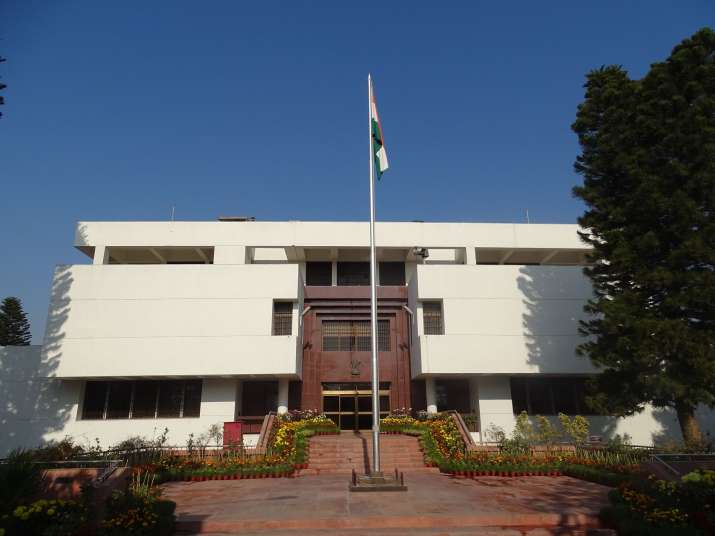
The two Indian High Commission staffers who were abducted by Pakistan’s ISI and were later released on Monday were tortured to confess that ‘they were involved in an accident’. As per sources quoted by news agency ANI, the two Indian staffers of the High commission working as drivers were picked up by 15-16 armed men at around 8:30-45 am from a fuel station near the high commission. The ISI officers had blindfolded the two Indian staffers with a rucksack and took them to an unknown location.

ANI further reported that the sources revealed that the abductors made multiple videos in which Indian high Commission officials were forced to confess under coercion that they were involved in an accident. Armed Pakistani men also forced them to confess that there are “Intelligence officials” inside the Indian High Commission who order them to bring people from outside in their cars for a meet inside the High Commission.

Repeatedly beaten with sticks and rods

As per reports, the staffers were interrogated till around 2 PM during which they were repeatedly beaten with rods/wooden sticks, punched and made to drink filthy water. They were interrogated regarding the specific role and function of all High Commission officials down to the lowest staff.

They were also threatened that this way the other members of High commission will be made to face in the future. After this, they were taken for a medical check-up and there they were injected with a tetanus shot.

At around 9 PM hours, the High Commission staffers were released. They were able to walk but carried serious injurious on neck, face, thighs, and rear indicating extensive persecution. However, no life-threatening injury was found.

Two staffers from Indian High Commission in Islamabad abducted

The two staffers working at the Indian High Commission were abducted by the ISI on Monday morning. Following the incident, Pakistan’s Charge d’affaires to India was summoned by the Ministry of External Affairs. The Indian staffers were identified as a CISF security official along with a driver. Authorities in Pakistan were asked to return the two officials to the Indian High Commission immediately along with the official car.

Pakistan High Commission staffers caught spying

Towards the end of last month, two officials of Pakistan High Commission in New Delhi were caught spying in Delhi. The two-officials, named Abid Hussain and Tahir Hussain working in the Pakistan High Commission in New Delhi were expelled and asked to go back to their country. Following this, the situation for Indian diplomats and other staff in Islamabad remained tense and there were aggressive tailing and surveillance. India had also asked Pakistan to ensure the safety of Indian staff in the High Commission.

Is the Ladakh conflict a consequence of internal turmoil within China: Here are the factors that may be playing a role

On the afternoon of Tuesday, the world was shocked to learn that a violent clash had broken out between India and China at Galwan Valley while they were supposedly engaged in efforts to deescalate the situation at the border in Ladakh. While China blames India for crossing the border and attacking its troops, India has not made any such remarks.

However, both sides agree on one essential fact, that there were casualties on both sides. India has confirmed that 3 Indian soldiers have died during the clash but China has not confirmed its numbers yet. But no matter how we look at it, it is truly unprecedented. India insists that the clash occurred during deescalation efforts and given China’s propensity towards obfuscating the truth, we are inclined to believe that it was China which decided to escalate matters.

And as it so happens, there is good reason why China may want to escalate affairs with India. It is certainly consistent with their conduct post the advent of the Wuhan Coronavirus pandemic. As we have reported earlier, China increased its military exercises in the South China Sea region amidst the pandemic while simultaneously engaging in atrocious conduct otherwise.

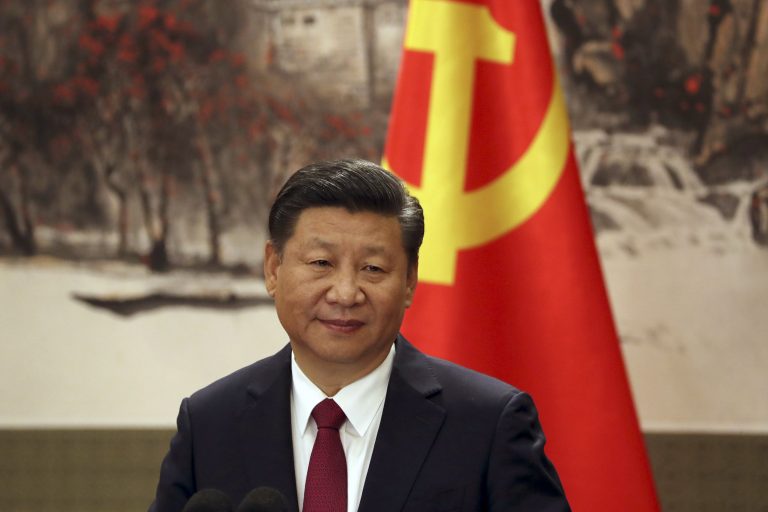
Users on social media speculate that recent events may have something to do with possible differences between the Chinese Army and President Xi Jinping with the latter losing control of the former. It could also be that the pandemic has initiated a succession war at multiple levels or it could be that Xi Jinping is attempting to create an external enemy in order to forge internal unity, they say.

It is entirely a possibility that it is a combination of all three factors with the second unlikely to have played any significant part. The Chinese arrangement is such that their military is prone to external influence and it is not insulated from the other machinery of the state as it is in mature democracies like in India or the USA.

In recent years, we have witnessed Xi Jinping make a power grab which certainly made a lot of people within China uncomfortable. He has persecuted his political opponents in China quite ruthlessly and has attempted to create a cult of personality around himself. And then, he implemented provisions that would enable him to remain President for life. It is easy to see why his political opponents would be wary of the power he has amassed for himself.

And then came the Wuhan Coronavirus outbreak which has weakened Xi Jinping’s position within the country. Dissidence has been rising against him and it became evident that not everyone was happy with the manner in which the pandemic was addressed by the regime. An influential man within the party, who has the reputation of being an ‘outspoken maverick’, wrote an opinion post headlined, “An official call to arms against Xi: The clown who insists on wearing the emperor’s new clothes.”

The pandemic also will certainly have economic repercussions for the party. The regime has managed to sustain goodwill among its citizenry by the virtue of the economic development they ushered in. In the absence of such sustained development, it is unclear to what extent it will affect the perception of the populace with regards to the party.

Thus, there is certainly a possibility that factions within the Chinese Military are not following the commands of Xi Jinping and acting of their own accord or taking orders from others. Violent revolutions and power grabs in China is not new, it has a history of such rebellions and revolutions.

Simultaneously, another possibility exists that Xi Jinping is initiating conflict abroad in order to quell the differences within his party. The rising dissidence against him could very well have prompted the Chinese President to trigger a conflict with India so that he could consolidate his own position within the party.

Thus, from an Indian perspective, it becomes mandatory for us to expect China to not really deescalate matters at the border. There are multiple factors at play here and not all of them are under our control. The only thing we can exercise an influence over is our own response to Chinese aggression. And that is what we must focus on the most.

If the current conflict at the Ladakh border is a consequence of internal turmoil within China, and it is the basis on which we ought to proceed, then there is not much we could do to resolve the matter amicably. And it does some certain that our relationship with China is unlikely to improve any time soon in the near future.

China trying to hide casualties? Communist state machinery goes on overdrive after India defends its territory

Amidst the latest stand-off between India and China along the Line of Actual Control at Galwan, Ladakh on Monday, casualties have been reported from both sides. The Indian Army has released a statement saying that three Indian soldiers had martyred, including the Commanding Officer of a battalion at Galwan valley in a violent faceoff on Monday night. The official statement said that it took place during the de-escalation process underway in the Galwan valley. It reported that no bullets were fired but the Chinese troops pelted stones and clubs.

While India had stated the number of casualties on its side, the Chinese authorities are yet to reveal the official figures, though the Editor of Global Times confirmed that there were indeed casualties on the Chinese side as well. The journalists at Global Times, the English version of Chinese state media, seemed to have been downplaying the casualties on their side via contradictory claims at different points. While expecting transparency from the Communist party, known to withhold critical information, is a bit too much, the over-enthusiasm of its paid reporters have cast aspersions about the possible damage inflicted by the Indian Army on the Chinese notion of invincibility.

Chinese State Machinery in dilemma

Wang Wenmen, the Chief reporter and opinion writer at Global Times, initially tweeted that 5 soldiers of the People’s Liberation Army were killed by the Indian Army and a total of 11 personnel were injured during the scuffle between the two forces at the Line of Actual Control (LAC). However, she later deleted her tweet, citing unprofessional behaviour by Indian media. She wrote, “I cited an Indian source about a physical clash at LAC China-India border yesterday. No confirmation from the official Chinese source regarding casualties yet. It is unprofessional for Indian media to say this is official news from the Chinese side.”

Another journalist with the Global Times, Liu Xin cited experts to conclude that Indian soldiers ‘severely assaulted’ Chinese army. In a bid to whitewash the casualties on the Chinese side, she later tweeted that there was no information from the Chinese authorities about the casualties and injuries succumbed by their Army personnel.

Hu Xijin, the Editor-in-Chief of Global Times, conceded that the Chinese army suffered casualties during the physical clash in the Galwan Valley. But, he put up a strong face by warning the Indian side to not be arrogant and make the mistake of considering China’s supposed restraint as their weakness. “China doesn’t want to have a clash with India, but we don’t fear it.”

Fearing wrath from the Communist Party of China (CCP), Global Times tweeted that its official account never reported the exact number of casualties on the Chinese side. “The Global Times cannot confirm the exact number at this point”, the tabloid reiterated. According to a report by the Express which relies on a tweet by journalist Aditya Raj Kaul, China has lost a total of 4-5 soldiers.

While China is confirming casualties, the Communist state and its propaganda arms seem to be going on overdrive to not only hide the number of casualties on their side, but is also trying to paint India as the aggressor in the situation. However, as per all reports, it seems to be the Chinese side that initiated the scuffle and it was India that was fighting the aggression off.

India-China Standoff

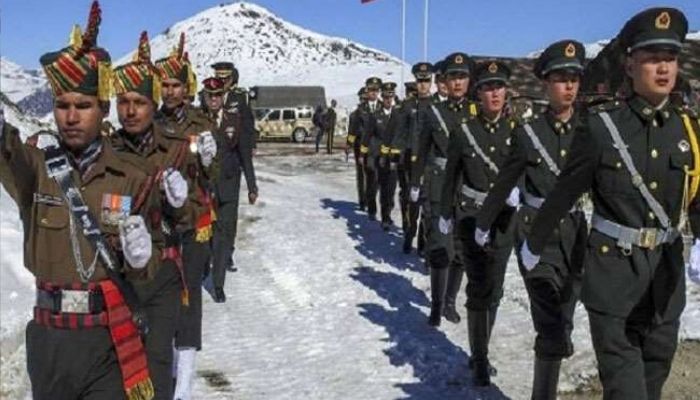
About 5000 Chinese army personnel, under the garb of a military exercise, diverted their movement towards the Indian side of the LAC (Line of Actual Control). The current stand-off began on May 5-6 and has been continuing all along the LAC up to Sikkim. The Indian Army had matched the level of their counterparts and had stopped them from conducting movements in several areas. As per the ANI report, Indian forces had also been airlifted from other high altitude areas to the Eastern Ladakh sector.

Last month, the Chinese army reportedly targeted the Indian Army, in complete disregard for professionalism, with stones, sticks, and clubs bearing barbed wires. Sources told ANI that the behaviour of Chinese troops has been reminiscent of the stone pelters in Kashmir who are funded by Pakistan. The Chinese troops came armed with sticks, clubs with barbed wires and stones in an area near the Pangong Tso lake during a face-off with Indian troops there, the source revealed.

India’s protest culture: Rooted in Dharma

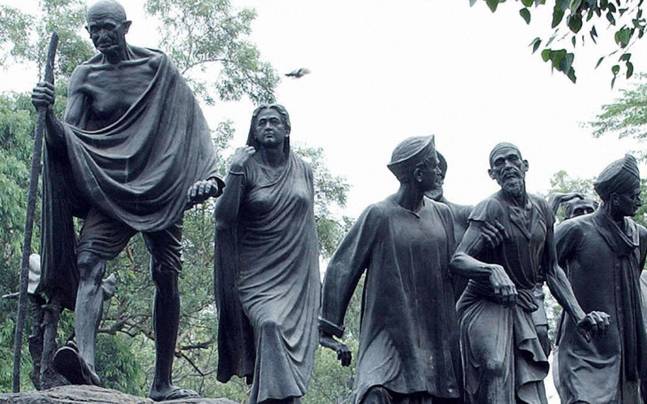
The protests in America after the death of George Floyd have turned violent with the destruction of property and large scale rioting. Protest groups have taken down statues of colonial and racist figures such as Christopher Columbus, Confederate General Robert E Lee and slave trader Edward Colston. The protests have also spread to Europe where protestors have sought the removal of imperialist and racist icons that have adorned public spaces such as Robert Clive, Baden-Powell and Winston Churchill. Unfortunately, even Mahatma Gandhi’s statue was not spared for the views he held during his formative years in South Africa. 

Rights-based protests Vs cultural re-awakening

African Americans and native Indian tribes have been fighting a long battle against systemic injustices meted out to them in America. Affirmative action by itself has neither assuaged these wounds nor set right the injustices that they have faced. The protests after the death of George Floyd turned violent with many protestors seeking immediate recourse. Protests in western democracies are rooted in a “rights-based” culture where the emphasis on being denied a fundamental right (in this case a right to life) trumps the duty one has towards the state. It’s rare for American leaders to emphasize one’s own duties towards the state – President Kennedy was one such leader who did so in his inaugural address. 

In contrast, India’s fight against colonial imperialism can be traced to cultural re-awakening, increased awareness of one’s heritage, and a greater assertion of one’s identity. As a result, it has been rooted in dharma and hence the awareness of one’s duty and responsibilities in its interaction with the state. This is one reason for most issue-based protests in India being peaceful. The freedom movement against British colonialism was won through non-violent movements led by the Mahatma. However, of late, we have departed from this dharma based framework towards a more “rights-based” framework. The need for immediate results coupled with low state capacities has led to violence slowly seeping into India’s protest culture. 

Ghosts of colonialism

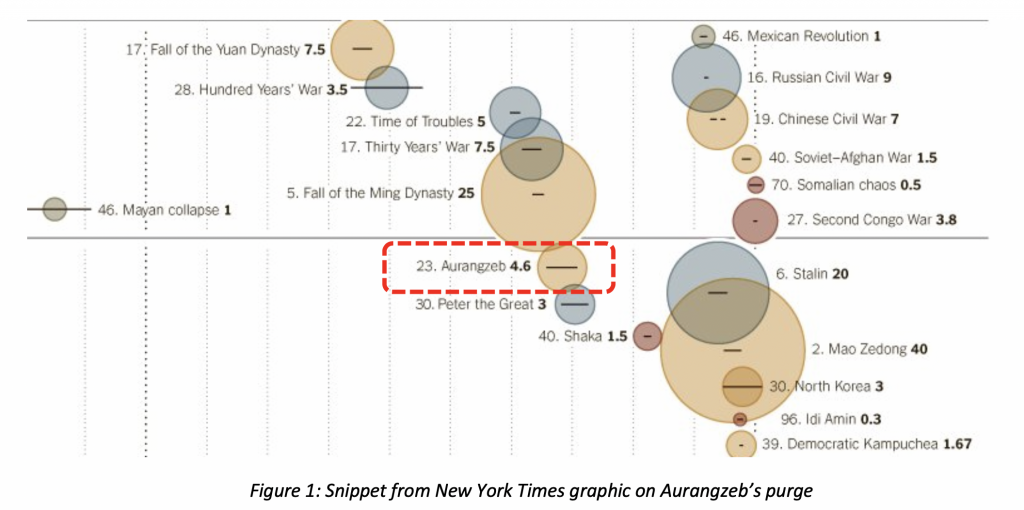
India reclaiming its past from colonial imperialism doesn’t stop with us exorcising the ghosts of British colonialism. The New York Times, in a 2011 article titled “Population Control, Marauder Style”, carried a graphic depicting the loss of lives caused by wars, the savagery of despots and institutionalized oppression. Mughal Emperor Aurangzeb’s 4.6 million murders was ranked at 23. Indians do not need such names to adorn public spaces and to have the road renamed after former President APJ Abdul Kalam was a befitting tribute to one of post-independence India’s great minds. 

Figure 1: Snippet from New York Times graphic on Aurangzeb’s purge  

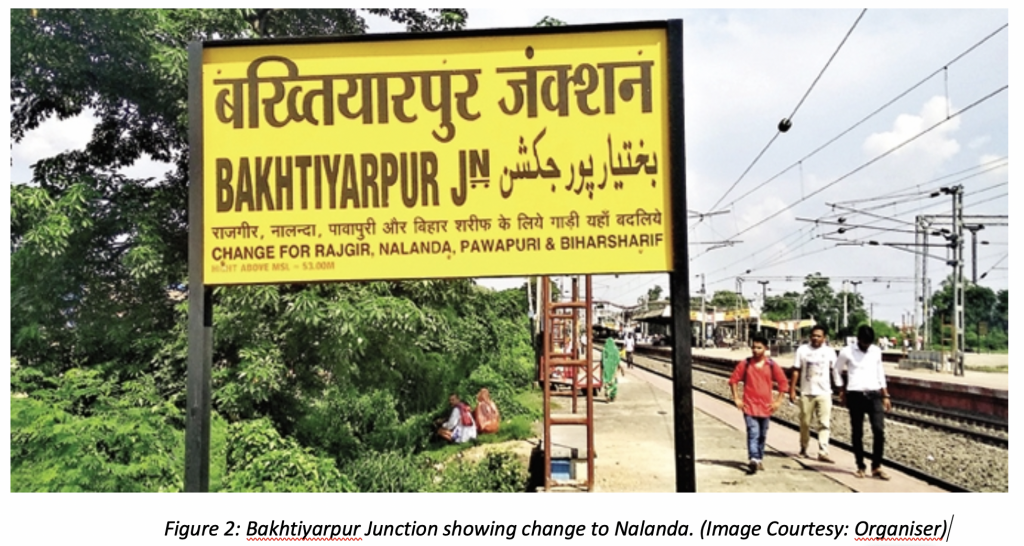
Neither does India need to recognize tyrants who killed their own populations just because they “fought the British”. The atrocities of Tipu Sultan are well documented and the Karnataka government’s decision to not celebrate Tipu Jayanti is a welcome decision. The irony is not lost on us when one needs to change at Bakhtiyarpur Junction to reach Nalanda in Bihar. Bakhtiyarpur is named after Bakhtiyar Khilji who was responsible for the destruction of Nalanda – one of the oldest universities in the world and a seat of high learning. 

Figure 2: Bakhtiyarpur Junction showing change to Nalanda. (Image Courtesy: Organiser)

Colonial mindsets and practices are so deeply entrenched that reversals are always a long drawn out exercise. So far, the Narendra Modi government’s rootedness in dharma has led to an institutional approach in reclaiming our heritage from colonial imperialism. This approach is a befitting tribute to our ancestors who adhered to dharma when the odds were stacked against them. Violent protests and toppling of racist statues may seem like a short-cut but eventually, end up as a zero-sum game that India cannot afford. 

(Y. Satya Kumar is the National Secretary of the Bharatiya Janata Party and served as the Officer on Special Duty to Vice President Shri M Venkaiah Naidu. He tweets at @satyakumar_y)

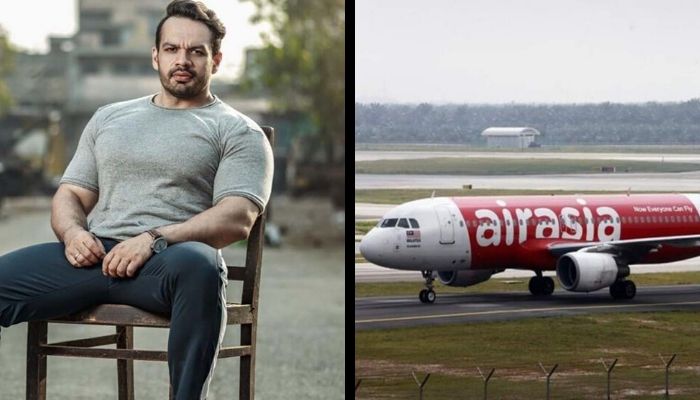
DGCA initiates probe against Air Asia after pilot and YouTube vlogger Gaurav Taneja alleges ‘gross irregularities’ of passenger safety

On Monday, the senior officials of Directorate General of Civil Aviation (DGCA) informed that a probe has been launched against Air Asia, following allegations of negligence by pilot and YouTuber Gaurav Taneja aka the Flying Beast. In a Twitter post, DGCA said that the aviation regulator took cognisance of the matter and the approach of the airline towards safety protocols. It assured to take appropriate action based on the outcome of the investigation.

“Air Asia India stands firmly on its value of ‘safety always’. The safety of our guests is of paramount importance in every aspect of our operations. AirAsia India is cognizant of the matter in regard to a social media post put up by one of its employees”, an Air Asia spokesperson was quoted as saying. The official informed that the airlines was co-ordinating with the DGCA in the probe but added that it did not want to comment on its business or its employees.

Allegations against Air Asia by Gaurav Taneja

Gaurav, in his YouTube vlog claimed that Air Asia had directed its pilots do land the flights via ‘Flap 3 mode’, as it is cost-effective. He claimed that such targets can risk the life of passengers, especially while landing on steep runways. However, the company allegedly considers not meeting the 98% target as a violation of Standard Operating procedures (SOPs). Taneja cited the example of Imphal airport and highlighted that the drag has to be higher for a slow landing.

He added that only a ‘full flap’ landing is feasible and safe in such cases but the company is indifferent to safety protocols. “In order to achieve targets, what would people do? They will do Flap 3 landings without giving consideration whether it is safe or unsafe. This directly impacts the passenger safety,” he was quoted as saying. Gaurav said that the airlines will make him the scapegoat, in case of a misfortune.

Airlines undermining pilot’s health

He has raised concerns about the alleged series of lapses in the safety regulations of the airlines. He claimed that the company has an unfavourable sick leave policy and added that if the pilot is not feeling 100%, he should not fly as it is a rule that every airline has to follow. Gaurav said, “The airline has money and resources but failed to provide even the smallest things to ensure passengers and airline staff safety. The ‘chalta hai’ attitude in India is a huge problem in the Airline industry.” Netizens on Monday trended #BoycottAirAsiaIndia after the YouTube vlogger claimed that he was suspended for sharing his concerns about the company’s negligence over safety norms.

‘When you speak the truth, you are branded a liar, mad, and psychotic’: Raveena Tandon speaks on the dirty politics in Bollywood

The unfortunate and untimely death of actor Sushant Singh Rajput has compelled many in the film fraternity to break their silence and expose the dirty dark world of Bollywood.

Sharing some of her personal experiences through a series of tweets on her Twitter account, actress Raveena Tandon concurred how “camps do exist” in the film industry. Despite being ‘born in the industry’ the actress took to Twitter to reveal that the “dirty politics played by the mean girl gang of the industry can leave a sour taste”.

‘Chamcha journalists and fake stories

The actress said that if you dare speak the truth you are branded a liar, mad or psychotic by the lobby and the price it costs you is that the “chamcha journos” write pages and pages of fake media stories, destroying all the hard work that you might have done. “Sometimes careers are destroyed. U struggle to keep afloat. fight back. Some survive, some Don’t”, wrote the actress with a hashtag #oldwoundsrevisited.

In her subsequent tweet she wrote that the pressure of keeping up with the unfair game is something that both, insiders and outsiders of the film industry, have to face. However, she emphasized the need to fight back by citing her own experiences and shared that ‘the more they tried to bury me, the harder I fought back’. 

She concluded the series of tweets by saying: “I love my industry, but yes, the pressures are high, there are good people and people who play dirty, there are all kinds, but that’s what makes the world. One has to pick up the pieces, walk again and again, with the head held high. Goodnight world. I pray for a better tmrw”.

Powerbrokers’ lobby blamed for Sushant Rajput’s death

Apart from Raveena Tandon, many Bollywood celebs had hit out at the ‘lobby’ for pushing the 34-year-old Sushant Singh Rajput to suicide. Actress Kangana Ranaut, on Monday, exposed the propaganda of the film fraternity and the journalists who work in cahoots with them to undermine the talent of the ‘outsiders’ and convince them to live under the false impression that they are ”worthless.’

Dabangg director Abhinav Kashyap exposes the bullying in Bollywood

Likewise, Abhinav Singh Kashyap, director of Salman Khan starrer 2010 film Dabangg, had taken to Facebook to narrate his own bullying experience in Bollywood and appealed for a detailed investigation into Sushant Singh Rajput’s death

Bollywood actor Sushant Singh Rajput, who rose to great stardom and has acted in superhit movies such as Kai Po Che and MS Dhoni, committed suicide on Sunday, June the 14th 2020. As per reports, he was found hanging at his home in Bandra.

Functionary of NGO linked to Maoists among activists and politicians who penned letter in defence of Italian Secret Service linked Harsh Mander

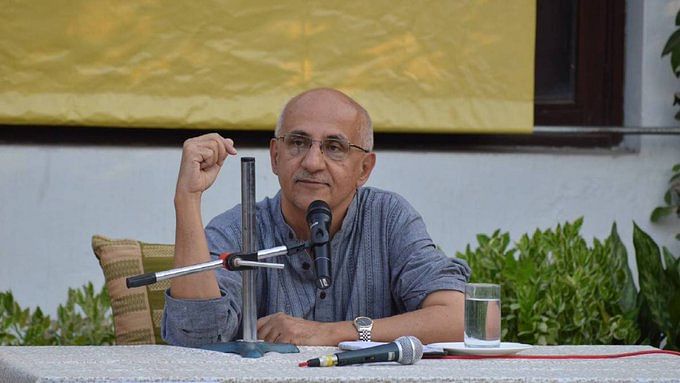
The ‘Civil Society’ always protects one of their own. And so it has come to pass that over 200 academicians and ‘activists’ have come forward in defence of Harsh Mander after a charge sheet filed in the Delhi Riots case documented the role he played in the entire scheme of affairs. The charge sheet mentioned that the controversial activist had instigated protesters in a speech he made in the Jamia Milia Islamia University.

The ‘civil society’ actors claimed that it was an “attempt to target him” and have him implicated in “false cases”. According to them, the speech where Harsh Mander urged the protesters to take the battle to the roads and undermined the authority of the Indian Judiciary was not an incitement to violence. They want people to believe it is “utterly deplorable” to do so.

The letter which was penned “in solidarity with Harsh Mander” states, “We, the undersigned, condemn the manner in which the Delhi Police has mentioned the name of Harsh Mander and other activists, to concoct a ‘chronology’ and create a false narrative about the Delhi riots, in the chargesheet filed by them on FIR No.- 65/2020 of 26/02/2020.”

“This is an attempt to target him, perhaps pull him into the police dragnet of false cases, and silence powerful and effective citizen’s voices against hate, divisiveness and for unity and compassion,” it added. It said, “We strongly condemn the motivated, compromised investigation and vilification of a person with commitment to a just society, and demand that this is stopped forthwith.”

The letter was signed by a host of usual suspects. The most prominent among them being Indira Jaising and Anand Grover, Gujarat MLA Jignesh Mevani, Communist leaders Annie Raja and Brinda Karat, apologist for Christian evangelism John Dayal, disgraced civil servant Kannan Gopinathan and numerous others.

However, the name that stands out the most is Kavita Srivastava, who is a functionary of PUCL, Jaipur. PUCL is the same organisation that has extensive links to Maoists, something we have reported extensively on. ‘Urban Naxals’ who were arrested in the Elgar Parishad case and in connection with an alleged assassination plot against the Prime Minister are intimately linked with the PUCL.

The PUCL and the organisations that it is associated with has a history of ties to Naxals and separatists in Kashmir as well as Manipur. Over the years, numerous members of the organisations PUCL is associated with have been arrested for their links to Maoists. Thus, it is not surprising that one of its functionaries has come out in defence of Harsh Mander.

Harsh Mander is himself a member of an Italian organisation that works in close coordination with the Italian Secret Service. The Ara Pacis Initiative which counts Harsh Mander as one of its senior members is known to work with the Italian Government in achieving the latter’s foreign policy objectives.

In addition to it, Mander is also associated with George Soros, the American Billionaire who declared a war against nationalism and nationalists recently. He is the Chairman of George Soros’s Open Society Foundation’s Human Rights Initiative Advisory Board. During the CAA-NRC debate, he indulged in a host of antics and he was also spotted giving a speech at Shaheen Bagh.

Thus, it is not surprising that Indian politicians and activists and ‘civil society’ has come out in the defence of Harsh Mander. A lot of them are known to harbour great animosity towards Narendra Modi and his government. Some of it is due to personal reasons as the govrnment has cracked down on foreign funded NGOs.

Harsh Mander has also received funds from Christian Missionary organisations for his NGOs. He was a member of Sonia Gandhi’s National Advisory Council as well. In the controversial speech that he made at Jamia Milia Islamia, he had said, “From now on, the decision will not come from the Supreme Court or Parliament. We saw what the Supreme Court did in Ayodhya, NRC and Kashmir matters. The SC has failed to honour secularism, equality and humanity. We will try fighting there too, but, the decision will not happen in neither Supreme court nor Parliament, it has to be made at the streets.”

AgustaWestland scam: ED accuses middleman Rajiv Saxena of hiding information, says he is acting on Ratul Puri’s orders

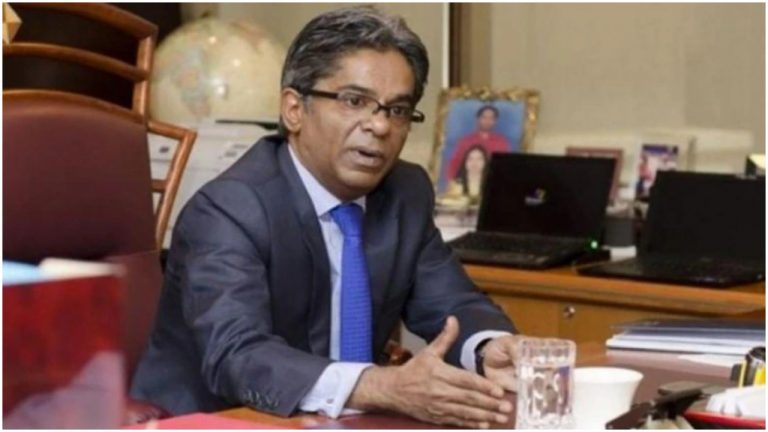
A dossier received from Mauritius, along with the forensic data analysis and scrutiny of WhatsApp chats has led the Enforcement Directorate to suspect the authenticity of disclosures made by Rajiv Saxena, one of the main accused in the 3600 crore AgustaWestland scam. As per a report in the Economic Times, the investigating agency has now pointed out that Saxena has concealed and withheld information at the instance of co-accused, especially Ratul Puri.

According to the Economic Times report, the Enforcement Directorate has submitted before a court that the accused Rajiv Saxena, who had turned approver in the Rs 3,600 crore AgustaWestland scam case, has been misleading them by “playing one agency against the other”.

The Enforcement Directorate will also now appeal before the court to discredit Saxena’s statements during the trial as ED alleged that Saxena has been selectively stating the facts on the insistence of co-accused, especially Ratul Puri, the nephew of senior Congress leader Kamal Nath.

Last week, the Delhi High Court had turned down a petition filed by ED to revoke Saxena’s approver status, which was granted on March 25 last year.

Rajeev Saxena playing one agency against other: Enforcement Directorate

According to the ET report, the ED informed the court that Saxena was “playing one agency against the other” and mentioned about dossier from Mauritius and other reports that revealed how Saxena was misleading the investigative agencies through selective information.

The documents received from Mauritius contained one titled “Consent to act as Director” of M/s Interstellar Technologies Ltd, dated June 20, 2000, bearing Saxena’s signatures.

However, when ED had questioned about the same in February last year, Saxena had withheld information regarding the same and had lied to the investigation team that these signed documents were misused by his lawyer and co-accused Gautam Khaitan. The new information submitted to ED by the CBI revealed that the signatures belonged to Saxena.

The accused Saxena had allegedly operated a firm named Interstellar, which received a kickback worth 12.4 million euros which were then re-routed as “payment of bribes” to influential people, including politicians and bureaucrats in India to influence the VVIP chopper deal in favour of AgustaWestland. The middleman Christian Michel James allegedly routed bribe money to a company through Interstellar, according to ED investigation.

The ED, while asking to revoke the ‘approver’ status of Rajiv Saxena, alleged that Saxena supplied selective information and documents to earn the trust of the ED and the counsels.

ED alleges Saxena hid his connection with Ratul Puri

After receiving a ‘pardon’ from the court in March last year, the ED alleged that Saxena was in contact with co-accused, including Puri, and has been protecting them to prevent a ‘successful prosecution’. The ED also alleged that Puri asked Saxena to provide only selective information during the investigation. The ED also said Saxena had admitted that he was being pressurized by Puri.

Further, the Enforcement Directorate said that Saxena submitted a folder titled “Ratul Puri summary of transactions USD account”, which when analysed with another set of backup emails provided by him on July 23, 2019, revealed that most emails crucial to the investigation were not submitted by him earlier.

As ED questioned Saxena about the information, Saxena told ED that Puri had pressurised him against disclosing that the payments he had received from Global Services FZE were on Puri’s instructions.

As per the ET report, Saxena told that Puri had also asked him not to provide any information, documents or statement that linked his father or uncle in any matter. He also added that it was his lawyer who shared the details with Puri, the ED claimed. The ED added that not only was Saxena in direct touch, but his lawyers were also in touch with Puri, in an attempt to ‘mislead’ the agency.

Laptop data was deleted

The ED had carried out forensic analysis of data present in two laptops provided by Saxena, which revealed the presence of data that the ED had repeatedly sought. However, the same data was deleted before the laptops were handed over to the agency. The ED recovered some of the data and other files could not be opened or were password-protected.

Meanwhile, Saxena has denied allegations of withholding information, while Puri has categorically denied his involvement in the VVIP chopper scandal.

Within days of moving for cancellation of his bail on July 15, 2019, Saxena had submitted documents that he had earlier denied any knowledge of. He had also submitted an email id “[email protected]” which contained emails connecting him to Puri. Saxena also shared documents pertaining to the incorporation of shell companies and emails used for hawala transfers.

The ED said that Saxena started giving information immediately after his brother-in-law was summoned for questioning. The investigating agency also said that in July last year, Saxena visited Mumbai without informing them.

However, Saxena had said it was for an emergency. But, the ED has cited medical records saying Saxena’s condition was not serious. The ED claimed that it scrutinised Saxena’s WhatsApp chats, which said that he had lied about visiting Mumbai for a medical check-up.

Saxena was extradited to India last year

Rajiv Saxena, described by the ED as one of the “key money launderers” was picked up by UAE government security agencies in Dubai and later extradited to India on January 30, 2019.

It was reported that Rajiv Saxena has several accounts in Switzerland. OpIndia had acquired the list of accounts that Rajiv Saxena allegedly used for kickbacks received in the AgustaWestland scam.

Prior to the extradition of the two main accused Rajiv Saxena and Deepak Talwar, several startling revelations had come to light in the VVIP chopper scam soon after the case gained momentum post middleman Christian Micheal’s extradition to India. From the names of “Italian Lady”, to “Italian Lady’s son R“ to how Christian Michel was lobbying for the Eurofighter and against the Rafale deal and how he had unbridled access to the PMO under Congress regimethe CCS and even the investigative agencies.

Maharashtra: Dawood aide and underworld gangster Chhota Shakeel’s sister Hamida dies of coronavirus in Mumbra

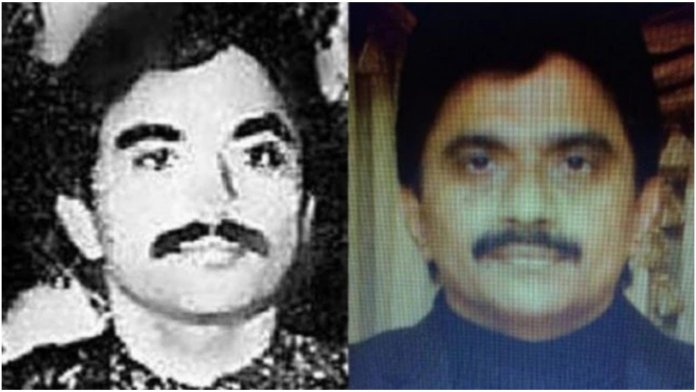
As per the reports, Mumbai bomb blast accused underworld Don Dawood Ibrahim’s aide Chota Shakeel’s elder sister Hamida has passed away due to novel coronavirus infection in Mumbra. It is believed that Chhota Shakeel is currently holding up in Karachi with his family. Recently some media reports suggested that Dawood Ibrahim had died due to Covid-19 infection but no intelligence report can confirm his death.

Last month his other sister Fahmida died due to pneumonia after developing breathing problems. Some media reports suggested that she died of pneumonia while getting treatment for a brain hemorrhage, but her Covid-19 tests came negative. However, at that time, her driver Altaf was tested positive. Fahmida’s husband Arif Aboobakar Sheikh alias Arif Bhaijaan’s Bungalow was sealed off at that time by Thane municipal commissioner.

Maharashtra has seen the maximum cases of novel coronavirus in India. There are more than 50,000 active cases in the state and 4128 people have lost their lives due to complications associated with Covid-19.

India-China border stand-off: Chinese troops suffer casualties too in the stand-off at Galwan valley, says Indian Army

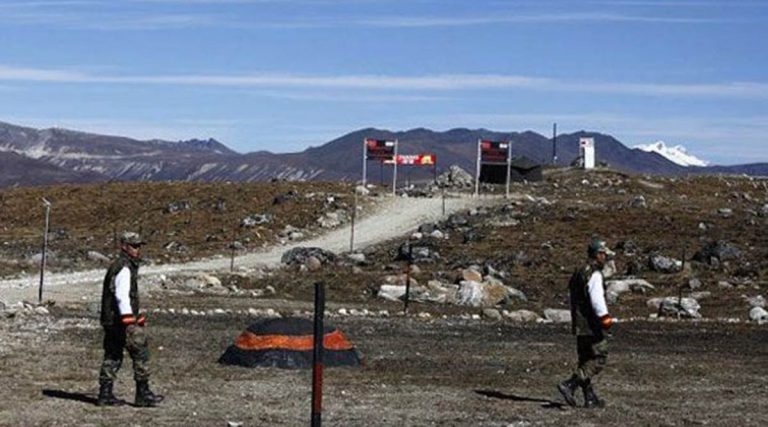
The latest stand-off between India and China along the Line of Actual Control at Galwan, Ladakh on Monday night has now resulted in casualties from both sides. According to reports, the Chinese troops have also suffered casualties in last night’s violent face-off in Galwan Valley.

The Indian Army has released a statement stating that casualties have been suffered by both sides in “violent face-off” during the de-escalation process with China in Galwan Valley, Ladakh. However, it is not clear regarding the nature and number of casualties on the Chinese side yet.

Shiv Aroor, the Defence journalist at India Today, said that no bullets have been fired but Chinese troops pelted stones and clubs. Several soldiers from both sides have been injured.

The Indian Army had earlier released a statement saying that the Chinese troops have killed three Indian soldiers, including the Commanding Officer of a battalion at Galwan valley in a violent faceoff on Monday night. The official statement said that it took place during the de-escalation process underway in the Galwan valley.

The deaths of Indian soldiers come at a time when thousands of soldiers are facing each other at several locations on the Line of Actual Control.

“During the de-escalation process underway in the Galwan Valley, a violent face-off took place yesterday night with casualties. The loss of lives on the Indian side includes an officer and two soldiers. Senior military officials of the two sides are currently meeting at the venue to defuse the situation,” an Indian Army statement read.

India-China standoff at Ladakh: China blames Indian troops

Meanwhile, Beijing has accused Indian troops of crossing border and ‘attacking Chinese personnel’.

The Chinese Foreign Minister has blamed Indian troops for the clashes. “The Indian Army on Monday seriously violated consensus of the two sides by illegally crossing the border twice and carrying out provocative attacks on Chinese soldiers, resulting in serious physical clashes,” said Chinese Foreign Minister according to Global Times.

“China has lodged solemn representations with the Indian side and urged it to strictly restrain its frontline troops from crossing the border or taking any unilateral action that may complicate the border situation,” said Foreign Minister.