Home Blog Page 5343

How Sikkim, once a different country like Nepal, became a state of India

In what it construes to be a diplomatic offensive, the Communist government in the Himalayan nation Nepal, on the behest of China has provoked its neighbour India by not only releasing a new political map consisting Indian regions of Limpiyadhura, Lipulekh and Kalapani as parts of Nepal but also pinning the blame of the spread of coronavirus in Nepal on India.

Displaying his arrogance and ignorance, the Nepal Prime Minister had claimed that Indian virus to be “more virulent” than the coronavirus that ravaged Italy and China. The dangerous diplomatic manoeuvre by Nepal govt to alter the status quo is not just being condemned by India, but also within the society of Nepal as the pro-Indian people of Nepal has taken offence against communist government’s recent anti-India rhetoric.

However, as history has shown, especially, in the most of the cases associated with despotic governments, it is not the will of the ‘elected’ governments but the will of the people which decides the fate of such governments. Particularly, in Nepal’s case, the communist government, alleged to be a ‘puppet’ at the hands of China, seems to be losing the confidence of its own people following its repeated anti-India stance.

The Nepalese populace, ardent Hindu followers, have often chosen what is right for them and has gone to the extent of revolting against the existing political structure to achieve what is best for its nation’s interest. With communists in Nepal are increasingly moving against India, another political revolution in the Himalayan nations may soon be on the cards.

Is Nepal going Sikkim way?

From a being buffer state during British era to being ruled by monarchs and to its later shift towards democracy, the Himalayan country has seen a lot of political turbulence. The constant feud between the country’s long-ruling monarchs and the masses has resulted in perpetual instability in the country’s political structure.

Ever since Parliamentary democracy was introduced in Nepal in the early 50s, it has already been suspended twice by the Nepalese monarch. The Himalayan country has also experienced a civil war more than once, first in the 1990s and then later in 2000s, resulting in the abolition of the monarchy and to be replaced by a ‘secular republic’ in 2008, ending the world’s last Hindu monarchy.

The common masses of Nepal have always found a way to impose their political will to further their interests and well being of the country. As per the early signs, the Himalayan country seems to be on a cusp of another major turn in its political system. The increasing proximity towards China followed by the anti-India rhetoric, perhaps, has sown a seed for another major revolution in the erstwhile Himalayan Kingdom.

Interestingly, the latest geopolitical shift in Nepal has a striking similarity with the case of India’s Himalayan state of Sikkim. The rulers of Sikkim, who had enjoyed relatively much more autonomy than other states soon after Indian independence, had attempted to exert its own influence over India by going against the will of their people, however, ended up completely merging with the Indian union while losing its erstwhile limited amount of autonomy.

In 1947, Sikkim under the rule of the Chogyal Kings had joined India union, as a result of which Sikkim’s foreign policy, security and communications were left to Indian government. However, Sikkim retained a small amount of independence.

Palden Thondup Chogyal, Sikkim’s last monarch, began to exert his own influence by involving foreign powers in its affairs to gain some kind of leverage against the country. However, the people of Sikkim were very much against the anti-India stand of Chogyal, resulting in a rebellion in the small Himalayan state.

The increasing interference by foreign powers in Sikkim’s affairs caused a scare in the country, leading to people of Sikkim hitting the streets to dethrone the ruling monarch of the Himalayan state. A referendum was soon held in which people of the state overwhelmingly voted in favour of the complete merger of Sikkim into the union of India. In 1975, Sikkim merged completely with India, becoming the 22nd state.

The Sikkim’s merger with India, perhaps, teaches a lesson for the ruling communist government of Hindu-majority country of Nepal, who have lately shown extra-enthusiasm to exert its influence against India, which has historically supported the impoverished nation in its developmental agenda.

The general will of the common Nepalese has always been inclined towards India, who considers the country to be the cradle of the Hindu civilisation. Any bravado by the Communist government against neighbouring India will invoke a strong resentment within the Nepalese society, which could even create another major political transition in the country, including creating an existential crisis to the Himalayan nation.

India, as the big brother to the entire South Asian region, has always been respectful for its neighbours and has tried to stay away from the country’s internal affairs. At the same time, India has always been cautious about its national security interests and has time-and-again taken important steps to keep its security interests intact.

Perhaps, Nepal could learn a bit or two from the island country of Sri Lanka. The Sri Lankan government headed by Mahinda Rajapaksa, which had tried to bargain India with the China-card, was faced with the anger of Sri Lankan public in 2015, who threw them out of power and enabled a pro-Indian government led by Maithripala Sirisena to take over the reigns of the island nation.

Nevertheless, at the end of all, it is still the will of common masses, who has every bit of awareness regarding what is best for them and their homeland. We can just wait to see whether the popular resentment of the Nepalese will grow larger and dethrone the communist government, who then may replace it with the age-old monarchs or may be a merger with its eternal philosopher-friend India.

Is Pakistan govt website really showing the entire Kashmir as part of India, a fact check

On Thursday, several people on social media claimed that Pakistan is showing the entire Jammu and Kashmir area as part of India. Sharing a screenshot from Pakistan government’s Coronavirus portal, it has been claimed that finally Pakistan has accepted that Kashmir is part of India.

At present Pakistan is illegally occupying the PoK and Gilgit-Balistan regions, and the areas are generally included in the map of Pakistan published by the Pakistani government. Similarly, the same region is also included in the map of India published by India, as the region officially belongs to India.

The same was also reported by a portal called The Real Kashmir News. It said that Pakistan Government’s official website on Covid-19, www.Covid.gov.pk has shown Jammu and Kashmir as part of Indian Territory.

But when one goes to the international section of the Covid19 website of Pakistan, one can indeed see that the map shown here is how India projects the map, with the whole of Kashmir shown as part of India. Although it looks like a big development, as a official govt website of Pakistan is carrying this map, actually this does not mean Pakistan has given up their claim on Kashmir. Moreover, the map is showing that way only in India, outside India it shows differently.

This is because, the map shown on the website is not made by the Pakistan government, and they have merely embedded a map created by Microsoft. Tech giant Microsoft has created a Coronavirus database which is projected on their Bing maps. That same map has been embedded in the Pakistan’s Covid portal, which is why the map shows Kashmir in India when viewed from India.

The online maps that we frequently use, like Google Map and Bing Map, are not shown as same in every part of the world. As there are many disputed territories in the world, the same is reflected in the maps, and the maps depending on from where it is being accessed. Generally disputed territories are marked with doted lines, as opposed to normal lines used for non-disputed boundaries. Apart from that, in some cases the map is shown the way it is mandated to be shown in a particular country. As Indian laws mandate that the maps must show the entire Kashmir region in India, the Google and Bing maps comply with that ruling. But when the same maps are viewed from outside India, actually the PoK and Gilgit Balistan as shown as part of Pakistan, and the line of control is shown as dotted lines.

When viewing the website from India

As the Pakistani Covid portal was accessed by Indians from India, the embedded Bing map showed the map as per India. But when it is viewed from outside India, a different map can be seen. This can be verified by accessing the map from outside India. Or the same also can be done by using a VPN (virtual private network) client, which lets one mask their own IP address and allows to set the location to some other country. Thus, one can check how a website is seen in different countries by using a VPN and selecting a country.

When viewing the website by setting location as Pakistan in VPN

We checked the same by using this technique. First, when visited the page, it indeed showed Kashmir in India. But when we activated our VPN client and set the location as Pakistan, we saw that PoK and Gilgit Balistan are now in Pakistan, Aksai Chin in China, and dotted lines for LoC and LoAC. The same appears when the location is changed to different countries like USA and UK.

The same experiment can be repeated by going directly to Bing’s COVID19 website directly and through VPN, and the same results can be seen.

Moreover, the homepage of the portal features a map of Pakistan which shows the usual map that the country uses. They have used an image file as the map which shows PoK and Gilgit Balistan in Pakistan.

Therefore, although it is true that Pakistan’s COVID19 portal shows whole Kashmir India, that is happening only when viewing the portal from India. This is happening because the Pakistan govt has embedded a third party mapping program, they have not created the same. Pakistan govt is not changing their position on Kashmir as evidenced by the map used on the homepage.

Congress General Secretary Priyanka Gandhi recalls ‘buses’ sent to Uttar Pradesh for migrants

Congress General Secretary Priyanka Gandhi has now recalled the ‘buses’ she had sent for migrants in Uttar Pradesh after blaming Yogi Adityanath government of ‘playing politics’. The decision was taken on Wednesday. Uttar Pradesh Deputy Chief Minister Dinesh Sharma said that they could not risk the lives of migrants by letting buses which are unfit to ply to transport them.

Congress claimed that they had about 900 buses ready at the UP border, waiting for permission from UP government to enter to take migrants to their hometowns but the partial list of these buses included ambulances, private vehicles as well as auto rickshaws. Later the bus drivers who were arranged for by the Congress in Rajasthan chanted anti-Congress slogans over stale food served to them.

The political slugfest turned ugly after UP government and Congress indulged in FIR war. UP Police booked Priyanka Gandhi’s adie Sandeep Singh and Congress UP chief Ajay Lallu for forgery and cheating. After that, Rajasthan Police filed a retaliatory FIR against UP Additional Chief Secretary (Home). Later on Tuesday, Lallu was arrested by Agra Police for sitting on a dharna amid coronavirus lockdown.

Congress’ Rae Bareli MLA Aditi Singh called out her party’s bluff and praised Yogi Adityanath for handling the migrant crisis in state amid coronavirus crisis. She was later suspended from Congress.

Terrorists attack patrol party of Jammu and Kashmir police in Pulwama, one cop martyred

A patrol party of Jammu and Kashmir police was attacked by terrorists in Pulwama today. A J and K police jawan was martyred and another was injured in the attack while a CRPF jawan has also received injuries, as per reports.

The attack happened in the Prichoo area of Pulwama in South Kashmir. The CRPF jawan has received superficial bullet wounds and has been evacuated for treatment.

2 BSF jawans killed in an attack yesterday

This is the second attack on security forces within two days. Earlier on Wednesday, terrorists who were on a motorcycle fired on two BSF jawans at the Pandach area on the outskirts of the Srinagar city. Two BSF jawans were killed in action in that attack.

The BSF jawans, aged 35 and 36, were shot in the head by the terrorists, as per reports. The terrorists had fled after snatching their weapons.

Newly recruited terrorist arrested in Kupwara

Jammu and Kashmir police in a joint operation with security forces on Thursday arrested three newly recruited terrorists at Sogam of Kupwara district. They were newly recruited by Lashkar-e-Taiba. Two of them have been identified as Zakir Ahmad Bhat and Abid Hussain Wani.

Gujarat: Woman gives birth in ambulance in Gir Somnath as the road was blocked by lions

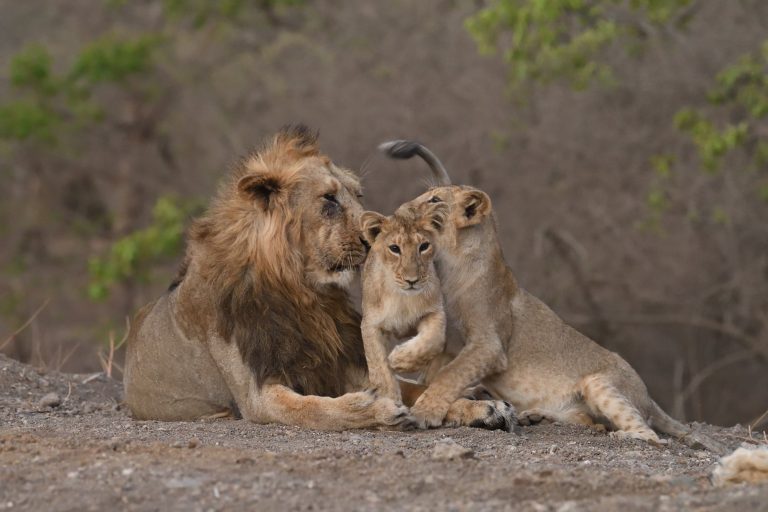
In Gujarat’s Gir Somnath district a woman gave birth in an ambulance as a pride of lions blocked the way of the ambulance while it was taking the pregnant woman to the hospital for delivery. The pregnant woman had called the 108 emergency ambulance after feeling labour pains.

According to reports, the incident happened on the night of May 20 after a 108 emergency ambulance received a call from Bhakha village about a woman who was in labour. Soon the ambulance arrived and carried the woman Afsana heading for the hospital in Girgadhada. But around mid-way, they found that the road was blocked by a pride of four lions. 

Finding no other way around to escape as the road was too narrow, the ambulance stopped at the spot and waited for the lions to move. But suddenly the woman started having extreme labour pain, which forced the staff of the ambulance to carry out the delivery. Emergency Medical Technician Jagdish Makwana and driver Bharat Ahir carried out the delivery in the vehicle itself successfully. The mother and the baby were taken to the hospital after waiting some more time, as the herd of lions stayed there for 20 more minutes.

Similar incident has been happened earlier

In July 2017, a woman identified as Makuben Makwana had delivered a baby in the ambulance that was on its way to hospital. The herd of lions had blocked the way in Gir forest. The paramedic staff conducted delivery when the ambulance was surrounded by the lions.

As per reports, the emergency technician contacted the physician over phone for directions to conduct delivery. Other lions sensing the human presence came out of bushes and surrounded the ambulance.

Chetan Gaadhe, the emergency management executive said, “Though Jadav, who is a local and understood the behaviour of lions, tried to scare them away, the lions refused to budge. Some of them even sat in front of the vehicle, blocking its passage.”

They helped woman deliver the baby inside the ambulance while Jadav monitored the movement of the ‘curious’ lions.

Delhi Waqf Board trying to encroach a public park to convert it into coronavirus graveyard for Muslims, alleges VHP, writes to Lt Governor

The Vishwa Hindu Parishad has alleged that the Delhi Waqf Board, supported by some elements in the Delhi government, has been planning to illegally occupy the Millenium Park in Indraprastha in the name of a dedicated Coronavirus graveyard.

The VHP has written a complaint to Delhi Lieutenant Governor Anil Baijal regarding the alleged illegal encroachments of the Indraprastha Millennium Park and urged to remove the illegal Board “Jadeed Kabristan Ahale Islam” erected from the gate of the park.

VHP alleges land encroachment attempt by Waqf Baord

According to the complaint, the VHP alleged that the Delhi Waqf Board has attempted to encroach the land inside the Millenium Park near Ring Road to offer it to Muslims, who are attempting to convert it to a graveyard to bury coronavirus deceased patients. The VHP stated that the local residents of the area have also been objecting to the repeated attempts by the Waqf Board to occupy land inside the Millenium park under the garb of a dedicated COVID burial ground.

In an order last month, the Delhi Waqf Board had designated a graveyard near Millenium park, ‘Jadeed Qurustaan’, as one of the coronaviruses burial grounds and allowed performing the last rites of the Muslim coronavirus victims in the city. However, the local residents of Nagli Rajapur have refused to allow the encroachment of the adjacent areas and joined hands with the VHP to make sure that no deceased body was buried there.

VHP says Waqf Board’s proposed graveyard is under Millenium Park premises

According to VHP, the park is frequented by local residents. They alleged that allowing the Waqf Board to encroach it and convert it to a graveyard for coronavirus dead bodies, may create health hazards in the nearby areas, including an increased risk of the spread of the disease.

In the letter, the VHP has alleged that the Delhi Waqf Board had mentioned the ‘Jadeed Qurustan’ as their graveyard but the location they had mentioned comes under the park’s area. They have also alleged that an illegal board declaring the areas of the park as ‘Jadeed Qurustan Ahle Islam’ has been attached to the front gate of the park, merely 100 metres from a Buddha stupa that is a popular spot among locals.

The VHP letter also stated that for 2 days, on 17 and 18 May, the Waqf Board even employed JCB machines and broke the locks of the park gate, in its attempt to occupy the plot.

The VHP requested the Delhi LG to instruct the concerned officials to ensure that no illegal encroachments take place near the Millenium park and the board “Jadeed Kabristan Ahale Islam” be removed from the gate of the park.

Hyderabad: Woman claims her husband, a coronavirus patient, is missing, hospital says he was cremated and family was informed

In a shocking incident, a woman from Hyderabad has alleged that her husband who was admitted in hospital after being infected by coronavirus is missing.

As per a Hindustan Times report, Alampally Madhavi, who resides in the Vanasthalipuram colony, posted her grievance on Twitter mentioning Information Technology minister KT Rama Rao claiming that her 42-year old husband, who was a rice-mill worker, had been missing after he was admitted to the hospital.

She said that her husband was admitted to King Kothi hospital on April 27 and was later shifted to Gandhi hospital on April 30.

The woman and her two daughters were also admitted in the Gandhi hospital for treatment of coronavirus infection. They were discharged on May 16.

The hospital authorities have claimed that her husband who was suffering from bilateral pneumonia with acute respiratory distress syndrome when found coronavirus positive, had succumbed to the disease on May 1. Following his death, he was cremated the next day by the Greater Hyderabad Municipal Corporation (GHMC) authorities after informing the family of the deceased.

Woman alleges hospital did not take any permission

However, Madhavi alleged that Hospital authorities had not taken any permission neither shown any of evidence to accept their claims. She said, “On May 16, when we were discharged, we questioned the hospital authorities about my husband, but they did not give a proper reply. They first said he was still on a ventilator but later said he was not alive. We request you to help in probing my husband’s missing case.”

She even told the reporters that she strongly believes that her husband is alive. She challenged, “Let them show evidence to whom they had informed and from whom they had obtained consent or no objection letter.”

Hospital Superintendent issued a statement

Dr M Raja Rao, Superintendent of Gandhi Hospital issued a statement saying, “As per the procedure, the family members were informed and following the protocol, the dead body was handed over to the police and their acknowledgement was taken. On inquiry, it was known that the body was cremated by the GHMC. All due procedures were followed.”

While sympathizing with the woman, Dr. Rao said that it is wrong to throw allegations on the hospital and the doctors who are treating coronavirus patients while risking their own lives.

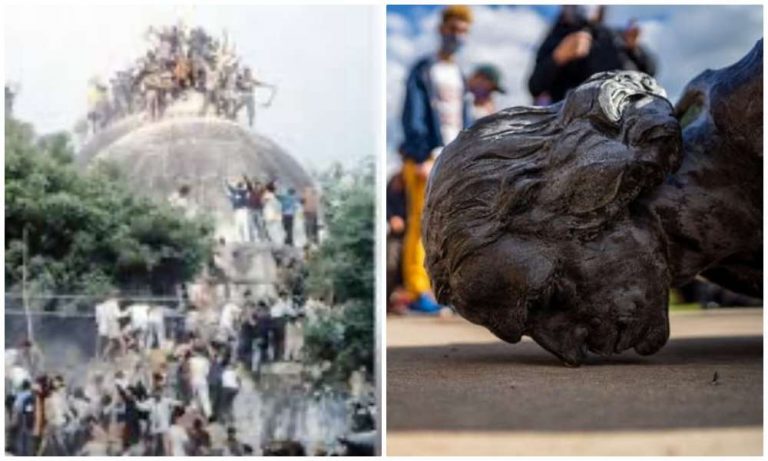
Ayodhya: Museum needed to preserve memory of oppressed generations

In Ayodhya, the hallowed ground is now being dug up and readied for construction. After being buried under ‘Ganga Jamuni Tehzeeb’ for five hundred years, India’s real history is speaking up.

Untitled
Temple remains and idols found at Ram Janmabhoomi site during excavation

For 70 years after independence, a powerful lobby of leftist historians and archaeologists tried to keep a lid on these voices. But they failed. For everyone who believes in justice and truth, it is a moment of triumph.

However, it is important to remember that the victory is not complete simply with the verdict from the Honorable Supreme Court. Victory is not simply in building a grand Ram Temple at Ayodhya.

Real victory lies in establishing a full documented history of what happened to generations of oppressed Hindus in India. For this, the evidence has to be curated, preserved and presented in compact fashion for the whole world to see and remember.

The lobby of leftist historians may have lost this round after 70 years, but they are not done yet. Their much bigger plan was to bury the history of how Hindus were oppressed for hundreds of years. This bigger plan is still very much up and running. That is why they are creating canards accusing the Supreme Court of deciding on sentiments instead of facts. They are trying to relate the victory to the political success of the BJP and its “Hindu nationalism” which they have defamed across the world.

In other words, leftist historians want the world to think that oppression of Hindus never happened.

Undoubtedly, this has parallels with holocaust denial. And as in many other spheres, we can learn from the Jewish people how to effectively counter such propaganda.

The generation of Jewish people that survived the holocaust vowed two things to themselves. First, they would build a great and glorious Jewish nation. Second, they would make sure the world never forgets what happened to them.

Towards the second aim, they made sure every bit of evidence about the holocaust was carefully collected, documented and preserved. That holocaust memorial museums were opened all across Europe. That every generation of school kids would go to these museums and see for themselves what happened. So that the great atrocity against Jewish people would forever prick the conscience of humanity.

They anticipated that holocaust deniers would eventually appear and try to work their propaganda. Public memory is never particularly good. With time, there is a danger of real history getting lost in a battle of narratives. So you have to keep the documented history fresh and real and before the eyes of the public.

In India, we Hindus face a similar threat. A lobby of left wing propagandists works non stop to deny all historical evidence of Hindus being oppressed in this land. They impose on us the fantasy of ‘Ganga Jamuni Tehzeeb.’ Because they know they are lying, they wouldn’t let us dig up the ground in Ayodhya.

The historical evidence is everywhere. But they wont let us talk about it or use the correct words for it.

I’ll explain how it works. If the evidence is buried below the ground, then they will say that your stories about the place being a temple are just legends not worth believing in. But don’t you dare dig. If it is recorded clearly in some text that a temple was destroyed, they will say the real purpose was plunder and not religious imposition. If the record says that the purpose was to crush the idol worshipers, they will ask what about some Hindus who were appointed as officers? If you can actually see the remains of the old temple at the spot, they will say it is a unique style of Indo-Islamic architecture that is part of Ganga Jamuni Tehzeeb!

So how do we defeat the propaganda? We do exactly what the Jewish people did to keep holocaust deniers away. We start collecting, documenting and preserving. We start with a museum alongside the Ram Temple in Ayodhya where the world can see the evidence that was unearthed.

And then we have to scale this up to a global network. We need museums and exhibitions and school trips to learn about Hindus and the terrible oppression they faced. We need a global day of remembrance for what the Hindu people suffered in their own land. In Germany even today, there are traveling railway coaches that go from station to station, reminding people about what happened in the holocaust. The world never forgets because the Jewish people make sure they don’t.

In India, we Hindus face twice as much of a problem. I dare say most Hindus have forgotten as well. First, we have to teach Hindus about what their ancestors faced. Then, we have to tell the world. It is a huge challenge. But a museum in Ayodhya is a good beginning.

Wuhan: City authorities officially ban eating, hunting wild animals, certain aquatic animals for 5 years

Authorities in the Chinese city of Wuhan, from where the coronavirus was originated, have reportedly banned the hunting and consumption of wild animals. As per reports, the new regulation was released on the official website of the Wuhan government on Wednesday.

Animals that are included in banned list

The regulation stated that wild animals, including all terrestrial wildlife, wildlife animals that are on the national and Hubei provincial preservation lists cannot be consumed or hunted by the residents.

It also added that animals that naturally grow and reproduce in the wild environment and artificially bred and propagated wild animals also cannot be consumed or hunted henceforth.

Certain aquatic animals, including precious aquatic animals and the aquatic animals that currently under national key protection list and endangered aquatic animals are also included in the list of animals the people of Wuhan are now prohibited from hunting or eating.

Ban for 5 years

The new policy was released on May 13. The current ban on the consumption and hunting of the wild animals is to stay for 5 years as of now, as per the orders.

Wuhan coronavirus

The coronavirus pandemic that is currently wreaking a havoc around the world was first reported from the wet markets of Wuhan. Experts had then stated that it is likely that the virus jumped from a wild animal to human body in the wet market of the city.

A 55-year-old woman from China’s Hubei province may have been the first person to have contracted COVID-19 through one such wet market. Huanan Seafood Market in China’s Wuhan is believed to be the epicentre of coronavirus. Though the wet market was shut in January after the initial spread of the disease was reported, the markets were reopened on March-end.

China’s wildlife trade

China’s illegal wildlife consumption trade is suspected to be worth over 125 billion yuan, roughly 18 billion USD. Millions of wild animals are illegally hunted, procured and transported to China every year to meet the growing demand of consumption of wild, exotic animals and their so-called medicinal value. The illegal wildlife trade has been driving many species of wild animals to the brink of extinction in recent years.

A paper published by scientists years ago predicted the reemergence of such viruses. The paper published by Cheng VC, Lau SK, Woo PC and Yuen KY in 2007 warned, “The presence of a large reservoir of SARS-CoV-like viruses in horseshoe bats, together with the culture of eating exotic mammals in southern China, is a time bomb.” It added, “The possibility of the re-emergence of SARS and other novel viruses from animals or laboratories and therefore the need for preparedness should not be ignored.” 

Ultimately, we are all in this together: Psephologist Pradeep Bhandari talks about his month long ground reporting on coronavirus and migrant crisis

Ever since the Chinese coronavirus pandemic hit the world, our lives have changed drastically. There have been millions of people infected worldwide, and while many have recovered, thousands have lost their lives. In wake of the outbreak, India, like many other countries, announced lockdown to contain the spread of virus and save lives. For a population of over a billion, India had its own set of challenges. While while stay at home was a luxury for many, thousands of migrants across India left the places they were working to go back to their villages. The heartbreaking migrant crisis was as unprecedented.

Psephologist Pradeep Bhandari traveled for over a month to understand and get to the bottom of the ground realities of the migrant crisis. In conversation with OpIndia, Bhandari talks about how the governments fared and what more they could do to mitigate the crisis.

Q: You have traveled for 38 days, what is your reading about situation of migrants on the ground?

I had roughly travelled more than 14,000 kms across 8 states, in my journey on the ground. During my journey I had hardly met an individual who opposed lockdown. Even amongst the migrants, the general sentiment was in favour of lockdown. However there was also a sense of despair which was visible on their faces. There is a thin line between despair and anger which the migrants displayed.

Migrants who were patient and could board the train were happy to go back home, however those who had lonely family back in their village, and had stopped receiving wages from their contractor had no other choice but to leave for home on foot or cycle. The manner in which the returning migrants, will be provided temporary employment will determine that state of the migrants in coming months.

Q: Have migrants turned anti Modi government?

Majority of migrants I spoke to in hindi heartland did not display an anti Modi sentiment. In fact many were of their opinion if Modi was not the PM situation would have been worsen.

The migrants on foot were frustrated and expressed the sense of helplessness on their journey while those who waited and got the train returned with sense of satisfaction. The coming 3 months will determine whether the migrants will remain pro Modi or not depending on delivery of welfare services.

Q: What more needs to be done for the migrants to improve their situation?

It will be extremely critical for state governments to engage with the migrants in the coming months. Caring for the migrants economically, socially, and health wise will be a continuous exercise. On their return to their home states they should be quarantined first.

I remember meeting a group of migrants on cycle from Noida to Mahoba (UP). When I enquired about what they will do on return, the first thing they said -“quanrantine for 14 days”. Level of awareness and voluntary responsibility, resilience in migrants has helped India contain COVID till now. It is extremely imperative that in the coming days food and shelter is taken care of. Home states need to make a state migrant database and centre should also have their details in a single database. With time giving them direct financial benefits should be looked at. Increasing MNREGA will benefit them. They need to be engaged in more public work. It has never happened historically that such huge proportion of migrants have returned back. States should utilise this opportunity to come with state centric model of development which is labour intensive.

Q: Which states fare well and poorly in your state-wise ranking?

Odisha, Telangana, Kerala and Uttar Pradesh fare well while Bengal, Bihar and Maharashtra need to improve. Gujarat and Madhya Pradesh also need to keep track on containing COVID-19 spread. Rest others have performed above average in public perception to the response.

Q: How has the Rs 20 lakh crore economic package received on the ground?

The government has announced a big package focussed on MSME sector, farmers and reforms. It needs to communicate the specifics of the package on the ground in the coming days. The people are aware that government has announced a package, but are yet to gather the specifics of the package to gain benefit.

Q: What are reports from Bengal telling?

The reports from bengsl are worrying. Speaking to people there reflect a sense of worry, lack of clarity in the mind of the residents vis a vis the spread of COVID-19 in the state. As per ground reports, Bengal also did not enforce the lockdown in letter and spirit. Centre needs to minutely track the COVID-19 situation in Bengal as residents to not have complete confidence in state government to fight the pandemic on its own.

Q: How has been the ground travel on migrant crisis? How is the level of awareness? Is social distancing followed?

My approach in my 14,000 km travel was not to reflect the voice of the people or to spread panic. My objective was to help those who are suffering. So if a migrant on the highway was barefoot, apart from documenting his ordeal, I would will also connect the migrant to relevant authorities to help. If sanitisation help is needed we distributed sanitisation kits. In this way we are very fortunate to help many on the roads.

I remember some of them had lost their way to Uttar Pradesh and reached Roorkee in Uttarakhand from Ludhiana, Punjab. We ensured the locomotive passing by could drop them till Meerut from where they could reach their home in East UP. We also used to share the number publicly so that the authorities could reach out to them and help. I would have done injustice to my conscience had I just focused on pain, not making effort to alleviate pain. Ultimately every Indian is in it together.

In villages there is a sense of self confidence that they are more COVID-19 resistant. They had barred outsiders to enter village, even produce was locally sourced in the village. They used gamcha to cover face.

Social distance was not strictly followed at all places. For the migrants on the road, they were anxious to reach back home. Traveling hundreds of kilometres made them impatient and their first preference was not social distancing, but reaching home at the earliest. However, they were self aware of quarantining voluntarily on reaching back. I think migrants are doing best in the given circumstances. Fortunately every day situation is improving as less number of migrants are on the road than before. More than 15 lakh migrants have already reached back, and with increase in Shramik trains and change in the rule needing the permission of state govt to run the Shramik train situation will stabilise in the coming days.