Home Blog Page 183

‘I love you, I want to marry you’: Principal Shakeel Ahmed sexually abused an 11-year-old Hindu girl in Aligarh, used to touch her private parts, arrested

0

Shakeel Ahmed, the principal of a government school in Aligarh, Uttar Pradesh, has been arrested for his despicable sexual exploitation of an 11-year-old Hindu girl. Shakeel started pressuring this girl, who was studying in the 7th grade of his school, to marry him. He used to molest her and touch her private parts and whenever the girl protested, he threatened to fail her.

This case is from the Primary Junior High School located in Talibnagar of Jawan Block of Aligarh. Shakeel Ahmed, the principal of this school, always kept an evil eye on his girl students.

What is the entire matter

On the evening of August 23, the girl returned home from school sad and upset. When the mother went to the scared girl and asked her about her well-being, she broke down and shared her ordeal while crying. The mother was shocked to hear what her daughter shared with her.

According to the copy of the FIR available with OpIndia, the girl told her mother, “The school principal Shakeel Ahmed has bad intentions and touches my private parts. He also puts his finger in my private parts. When I oppose him, he threatens me and says that if I tell anything to anyone, he will fail me in the exam.”

The girl further said that middle-aged Shakeel Ahmed used to talk sweetly to her to trap her in his net. It is mentioned in the FIR that the girl told her mother, “The principal says that he loves me very much and wants to marry me.” The girl’s mother went to the local police station and lodged an FIR against Shakeel Ahmed.

The victim’s mother has also lodged a complaint with the District Magistrate and SSP in this matter. Further, the villagers, angry with this incident, have also protested at the local police station.

Police arrested the accused Shakeel

Apart from the police, the girl’s mother had also complained about this matter to the Basic Shiksha Adhikari (BSA). After which, the Block Education Officer investigated the matter.

BSA Dr. Rakesh Kumar Singh has suspended Shakeel after finding him guilty in the investigation. Rakesh Kumar said that after suspension, a detailed investigation is being conducted against the accused and action to dismiss the accused will also be initiated.

This thinking of middle-aged lustful beasts like Shakeel is the biggest stigma in front of the society. A wolf like Shakeel hiding in human form needs to be given the most cruel punishment. It is also necessary to see where such thinking of such people comes from and it needs to be destroyed from the root.

The original Hindi report can be read here.

Rising criticism from within US, dropping approval ratings: How Donald Trump has helped increase his unpopularity within his country and upset friends like India with bizarre tariffs

0

US President Donald Trump’s tariff policy, which was recently declared illegal by a US federal appeals court, has been receiving backlash not only from other countries but also from within the US. While Trump’s reciprocal tariffs have been facing criticism from trade experts since the beginning, his act of selectively targeting India with double tariffs has further downgraded his international as well as domestic standing. Several former US officials and economic experts have criticised Trump’s decision to levy stringent tariffs on India and alienate it.

Trump’s tariffs a result of his bitterness for not being allowed to mediate between India and Pakistan

A recently released report by the US multinational investment bank and financial services company, Jeffries, said that Trump’s punitive tariffs on India resulted from the loudmouth US President’s “personal pique” at not being allowed to mediate the India-Pakistan conflict in May this year. The report added that Trump “hoped to intervene” in the military conflict between the two countries that went on for four days. This revelation is a rebuttal of Trump’s claims of having played a key role in mediating a peace deal between India and Pakistan. Trump blatantly kept repeating his false claims despite India’s outright denial of the US involvement in the ceasefire with Pakistan and affirmation that the ceasefire understanding was reached bilaterally.

“Tariffs (on India) are primarily the consequence of the American president’s ‘personal pique’ that he was not allowed to play a role in seeking to end the long-running acrimony between India and Pakistan,” the report stated. “India has never accepted third-party intervention in its relations with Pakistan, and this remains a ‘red line’ despite the economic costs of depriving the 47th American president of one of his opportunities to win the Nobel Peace Prize,” the report added.

American global brand is in the toilet: former US security advisor

Condemning US tariffs on India, former US National Security Advisor (NSA) Jake Sullivan said that the US tariffs on India have damaged America’s global standing and have pushed India towards China. “The American brand globally is in the toilet. Look at India. Trump has executed a massive trade offensive against them. Now, India is thinking, shit, we have to go sit down with China to hedge against America,” Sullivan said without mincing words on The Bulwark Podcast with Tim Miller. He added that the decision has projected the US as “a big disruptor” rather than a reliable partner, while allowing China to gain influence in the region.

Great nations do not give ultimatums all the time: John Kerry

Similar opinions were echoed by former US diplomat John Kerry, who described Trump’s stance against India “as a little bit too much ordering, pressuring, and pushing around”. Taking a jibe at Trump’s popular slogan “Make America Great Again”, Kerry said that great nations “do not necessarily exhibit greatness by giving people ultimatums all the time”.

Trump’s tariffs show a lack of strategic thinking: John Bolton

Earlier, John Bolton, who was the National Security Advisor to the first Trump administration, slammed Trump for his national security and foreign policies and for pushing India closer to Russia and China, setting back the India-US diplomatic ties. Supporting India’s stand on the tariff and Russian oil issue. Bolton described Trump’s decision to impose tariffs on India as a “lack of strategic thinking and priorities”. He added that the decision goes against the US interests.

Trump unsuccessfully trying to armtwist India: Jeffrey Sachs

American Economist Jeffrey Sachs said that with his tariffs, Trump is trying to “armtwist” India without realising the futility of his move and that he would end up isolating the US from the world economy and would make the US industry less competitive. Apart from that, Sachs warned India against the “US friendship”, reminding it how the country has historically used its friendship to serve its own selfish interests, even if it comes at the cost of its “friends”.

Trump’s approval rating sinks

Apparently, the people of the US, whose interests Trump claims to protect with his policies, have also expressed dissatisfaction over his decisions regarding the economy, tariffs, and immigration. Trump’s approval rating, which is an indicator of how Americans view his performance, hit a record low in his second term. In a 5-day survey conducted by Quinnipiac University Poll, 55% of the US voters disapproved of his handling of the job. His net negative 18-point approval rating is his lowest since January 2021. Trump’s approval rating has been on a downward spiral since the beginning of his second term, showing an increasing dissatisfaction among Americans about his policies.

From imposing reciprocal tariffs on its trade partners to baselessly boasting about having mediated global conflicts, Trump’s second term has been full of many decisions, which have projected him as a ‘global bully’ rather than a ‘global peacemaker’, a title he covets to cement his candidacy for the Nobel Peace Prize.

By selectively taxing India for purchasing Russian oil while China continues to be the world’s biggest importer of Russian oil, Trump has undone the decades of diplomatic collaboration between the two countries. The decision has put the India-US trade relations on hold. Trump, who secured favourable trade deals from several countries by misusing his tariffs, hoped that India, like Japan and the European Union, would also give in to his pressure tactics and would agree to trade concessions. However, to the disappointment of Trump, India stood its ground and resisted the US’s trade colonialism. His tariffs reflect his mounting frustration over India’s clear refusal to credit him for the ceasefire with Pakistan, coupled with India’s continued purchase of Russian oil.

While Trump’s trade policy has resulted in a growing anti-US sentiment in India, he is also facing scrutiny in his own country. Trump’s overemphasis on economic priorities and his coercive tactics against India are being viewed by Americans as having an adverse effect on the country’s interests in the Indo-Pacific region. The US has long used India to counterbalance the Chinese influence in the Indo-Pacific region. But his tariff policy has prompted the rekindling of India-China ties and has further strengthened India-Russia relations. This, in turn, has bolstered the BRICS group, to the displeasure of the US President, who has been openly targeting the multilateral forum. Trump threatened to target BRICS “very, very hard” and impose additional 10% tariffs on nations aligning with the group.

Uttar Pradesh: Judicial report on Sambhal violence reveals network trapping Hindu girls for marriage with Muslim men, hosting grand Walima to humiliate Hindus and trigger migration

The Yogi Adityanath government in Uttar Pradesh has received a 450-page judicial report on the November 2024 violence in Sambhal district. The report, prepared by a special judicial commission, has made some disturbing revelations about the district’s changing demography, past communal riots, and targeted attacks on Hindus.

According to the report, Sambhal is no longer just a communally sensitive district but has also become a base for extremist activities and terror networks. The commission has pointed to the declining Hindu population, systematic targeting of Hindu families through what has been described as “love jihad,” and attempts to intimidate Hindus into migrating out of the area.

Love Jihad and targeted humiliation of Hindu families

One of the most shocking aspects of the judicial commission’s findings relates to the targeting of Hindu girls through love jihad. The report carries testimonies of families who lost their daughters to such incidents.

One such case is of Kishan Lal’s daughter, Bharti, who was once deeply religious and devoted to Hindu customs. She used to fast, voice the Neelkanth on Diwali, did not even eat onion-garlic and sew clothes for the idols of the temple with her hands. But in 2013-14, she came in contact with a Turkish youth named Hammad from Sambhal while studying outside the district.

Eventually, she converted to Islam, married Hammad, and became Sidra. Her family said that after the marriage, they not only lost their daughter but were also humiliated when Hammad’s family organised a grand Walima (wedding feast). According to witnesses, such feasts were often used as a show of power to “humiliate Hindus” and force them to migrate.

Bharti stated in favour of her husband, Hammad

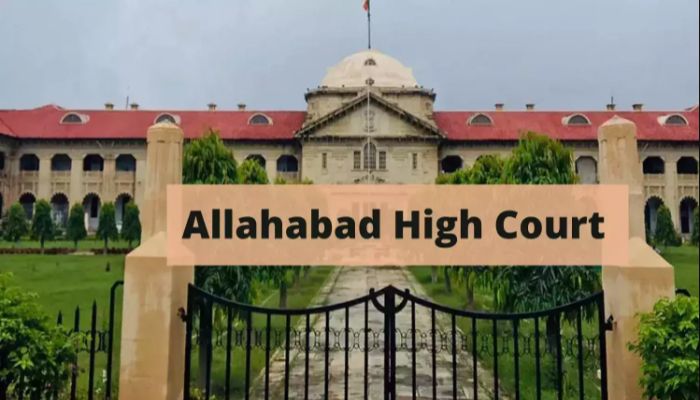
The Bharti-Hammad case was also taken to the Allahabad High Court, but when the girl supported her husband in her statement, the court ruled in his favour. The family lost the case and described it as the ‘biggest blow’ of their lives.

The commission records how the mother of the girl fell into deep depression after the marriage and has been unwell for over a decade. The family told investigators that their daughter had once even called them in tears, pleading for help, but fear of threats and social pressure stopped them from intervening.

Today, Bharti, or Sidra, delivers religious lectures in madrasas, while her husband struggles with odd jobs and runs a boutique from home. The family says the emotional wound from the incident has never healed.

Well-planned conspiracy, says commission

The judicial panel has concluded that incidents like these were not isolated but part of a larger, well-planned conspiracy. It is said that by such marriages, Hindu families were knowingly insulted in public and forced out of their homes, which added to the demographic transformation of Sambhal.

The report also connects these attacks to the larger Ghazwa-e-Hind narrative, advocated by radical groups as a part of their grand scheme. Targeting Hindu girls and families was one means of instilling fear among Hindus and weakening the Hindu community in the district, as per the panel.

Hindu population declining sharply in Sambhal

One of the most important points in the report is about demographic changes in Sambhal. At the time of independence, the Hindu population in the Sambhal Nagar Palika area was around 45%, while Muslims made up about 55%.

All this while, the balance has shifted dramatically. Now, the report adds, Hindus are left with 15% of the population only, with Muslims increasing to nearly 85%. This population change, the commission observes, is not only because of migration but also due to persistent pressure and repeated episodes of violence that prompted Hindus to abandon their homes.

The decline has been consistent. The report informs that Hindus who earlier inhabited in large numbers in several localities are now only present in isolated pockets, and most mohallas, earlier mixed colonies have become fully Muslim-dominated localities. The trend, says the panel, has transformed the social texture of Sambhal and intensified tensions.

15 big riots after independence

The judicial commission also examined the history of riots in Sambhal. The report stated that a total of 15 riots took place in Sambhal since independence.

These riots occurred in 1947, 1948, 1953, 1958, 1962, 1976, 1978, 1980, 1990, 1992, 1995, 2001, and 2019. The report also revealed that the Muslim-dominated Sambhal district has become a base for several terrorist outfits.

Sambhal violence of 2024: Hindus targeted again

The November 2024 violence in Sambhal was no different. The commission has clearly stated that Hindus were the primary target. However, unlike in previous incidents, a large-scale tragedy was prevented because of heavy police presence in Hindu-majority areas.

The report claims that mobs had plans to attack Hindus directly, but the conspiracy failed when security forces were deployed in time. Even so, the violence revealed how deeply radical groups have penetrated Sambhal and how local networks had been mobilised for such attacks.

Rise of terror networks in Sambhal

The judicial report has also highlighted the presence of terrorist modules in the district. It identifies that Sambhal, over time, has emerged as a fertile terrain for the recruitment of young men into terrorist groups active in Pakistan, Afghanistan, and other places.

According to the report, some youths from Sambhal were brainwashed and recruited into notorious terrorist organisations. These include Harkat-ul-Mujahideen, Tehreek-e-Taliban, Al-Qaeda, Hizbul Mujahideen, IS, etc. Apart from this, the Pakistani intelligence agency ISI also succeeded in building its network in Sambhal.

The commission further observed that the Pakistani intelligence agency ISI had been able to set up a chain in Sambhal, capitalising on the unstable communal environment. The network, the report said, not only offered logistic assistance but also endeavoured to disseminate radical ideologies.

Trump’s quest for the Nobel Prize, Pakistan tilt, and tariff bullying: Why PM Modi may no longer be engaging the US President

Few bilateral relationships in the 21st century carried as much promise as that between the United States and India. For a time, leaders in both Washington and New Delhi framed their partnership as indispensable, a “natural alliance” between the world’s oldest and largest democracies. Yet today, the relationship is fraying at the edges, poisoned by mistrust, political vanity, and an American president more interested in chasing accolades than respecting India’s sovereignty.

At the heart of this rupture is President Donald Trump’s unhealthy obsession with the Nobel Peace Prize. His repeated boasts of “solving” the India–Pakistan conflict, and his unsubtle hints that Prime Minister Narendra Modi should nominate him for the award, have collided with the immovable wall of India’s historical experience with American duplicity. Trump’s simultaneous embrace of Pakistan’s military establishment, particularly Field Marshal Asim Munir, a man notorious for his anti-Hindu bigotry, has further deepened the impression that Washington is reverting to its Cold War habit of hyphenating India with Pakistan.

What Trump may have thought was clever deal-making has instead been interpreted in New Delhi as yet another American betrayal. A recent report published in the New York Times sheds light on the deteriorating relationship between New Delhi and Washington as Modi pivots to the east, exploring more vibrant markets and slightly more reliable partners in Russia, China, and Japan. 

US President Donald Trump has “no plans” to travel to India later this year for the Quad Summit, The New York Times reported on Saturday. The article, titled “The Nobel Prize and a Testy Phone Call: How the Trump-Modi Relationship Unraveled,” outlined how ties between Trump and Prime Minister Narendra Modi soured in recent months

A history India cannot forget

India’s wariness of U.S. mediation is not new. The scars run deep. During the 1971 Bangladesh Liberation War, when India intervened to end genocide in East Pakistan, the United States under Richard Nixon and Henry Kissinger tilted openly toward Islamabad, even dispatching the Seventh Fleet into the Bay of Bengal in a show of intimidation. In the decades that followed, successive administrations armed Pakistan despite its sponsorship of terrorism against India.

The nuclear sanctions of 1998, imposed after India’s Pokhran-II tests while ignoring China’s proliferation to Pakistan, reinforced the perception that Washington’s non-proliferation concerns were selective and politically motivated. Even after the 2008 U.S.–India civil nuclear deal seemed to usher in a new era, American reluctance on technology transfers and its indulgence of Pakistan’s duplicity kept Indian scepticism alive.

Against this historical backdrop, Trump’s repeated claims of having “solved” the India–Pakistan dispute were bound to strike a nerve. For Modi, conceding any role to Washington would not just be politically costly; it would amount to repeating the very mistakes that Indian diplomacy has spent decades resisting.

Operation Sindoor and Trump’s credit theft

The most recent flashpoint came during Operation Sindoor, when Indian forces retaliated firmly after the gruesome Pahalgam terror attack, where Pakistan-sponsored terrorists in Kashmir wreaked havoc, killing tourists with abandon but after checking if they were Hindus. The swift escalation, involving drone strikes and missile exchanges, was eventually halted by a ceasefire painstakingly arranged between New Delhi and Islamabad.

Yet Trump could not resist inserting himself into the drama. On Truth Social, even before India’s foreign secretary had announced the ceasefire terms, Trump declared “FULL AND IMMEDIATE CEASEFIRE” as if it were the fruit of his intervention. To make matters worse, his Secretary of State Marco Rubio suggested that India and Pakistan had agreed to “start talks at a neutral site,” blatantly violating India’s consistent position that there will never be third-party mediation on Kashmir.

In New Delhi, officials were livid. The ceasefire had nothing to do with Washington, and Trump’s insistence on claiming credit was seen not only as dishonest but humiliating. Weeks since a ceasefire was achieved between the two sides, the satellite imageries and vivid account of operations headed by Indian military officials revealed the scale of destruction that was inflicted on Pakistan. At one point, the Navy chief even almost admitted that Karachi Port was spared from destruction, implying it was one of the targets of India’s formidable naval force.

It was Pakistan that came begging for a ceasefire. Yet, Trump tried to turn it as an opportunity to steal credit and burnish his credentials as a candidate most deserving of the Nobel Prize. Munir and Pakistan after having robbed off their dignity and honor during Operation Sindoor, have merrily played along like loyal sycophants, echoing statements that are music to Trump’s ears.

Trump’s Pakistan gamble: Flirting with Munir

Compounding the problem was Trump’s visible tilt toward Pakistan. In recent months, he openly courted Field Marshal Asim Munir, Pakistan’s all-powerful army chief, notorious for his anti-Hindu rhetoric and record of stoking religious extremism. By inviting Munir to Washington and allegedly considering orchestrating a staged “peace handshake” with Modi, Trump revealed either a dangerous ignorance of India’s sensitivities or a deliberate attempt to test Modi’s patience.

For New Delhi, this crossed a red line. India has spent decades fighting the Pakistani deep state, which nurtures groups like Lashkar-e-Taiba and Jaish-e-Mohammed. For Trump to not only engage Munir but also elevate him as a “partner for peace” was nothing short of an insult to the memory of Indian soldiers and civilians who have died at the hands of Pakistan-backed terror.

This revived the old suspicion that Washington, when push comes to shove, will always fall back on Pakistan as its regional pivot. For India, such hyphenation is intolerable.

Tariffs as punishment, ot policy

If Trump’s Nobel fetish and Pakistan tilt bruised India politically, his economic policies cut deeper. Within weeks of the June phone call with Modi, Trump announced sweeping tariffs on Indian imports: first 25%, then another 25% penalty for buying Russian oil. At a combined 50%, these were the steepest tariffs slapped on any major trading partner.

The targeting was selective. China, the largest buyer of Russian crude, was spared such treatment. Brazil faced penalties, but lower than India’s. Pakistan, astonishingly, emerged with tariffs of just 19%. The message was clear: Trump was punishing India not for economics but for politics, for refusing to fall in line with his narrative.

Indian officials rightly called it “gundagardi” — bullying, plain and simple.

The impact was immediate. Sectors like textiles, pharmaceuticals, and IT exports, vital contributors to India’s economy, were squeezed. Simultaneously, Trump restricted H-1B visas, cracked down on Indian students, and even deported undocumented Indians in shackles, triggering public outrage. For a country that had long viewed the U.S. as a destination for opportunity, this was unfair and discriminatory.

India responded with deepening its defence and economic ties with Russia and China. It showed the US administration that New Delhi is not a country that is going to bend to its will, especially after the “backstabbing” it faced at the hands of the US President who is still deluded into believing that Pakistan has vast reserves of untapped oil and LPG.

U.S. hawks blame India, ignore China

As if tariffs weren’t enough, American hawks turned their ire into rhetoric, sermonising to India almost daily. Every week seemed to bring a new accusation: India was “funding Putin’s war machine,” India was “profiteering” from discounted oil, India was “weakening democracies.” The attacks against India quickly became a routine.

But the most outrageous charge came from Trump’s own trade adviser, Peter Navarro.

In an interview with Bloomberg, Navarro went on a tirade: “Ukraine comes to us and Europe and says give us more money (for its war). Everybody in America loses because of what India is doing. Consumers and businesses lose; workers lose because India’s high tariffs cause jobs, income and higher wages. The taxpayer loses because we have to fund Modi’s war.”

Yes, Navarro actually called the Ukraine conflict “Modi’s war.”

He doubled down, calling India “arrogant” for buying oil from Russia and insisting New Delhi must “side with democracies.” He mocked India’s sovereignty, sneered at its growing ties with Moscow and Beijing, and even dared to lecture Indians about Aksai Chin, as if India needed a reminder of Chinese aggression.

“You’re getting in bed with the authoritarians… These are not your friends, folks. Okay? And the Russians, I mean, come on,” Navarro scolded.

The irony was staggering. While Navarro raged against India, American companies were profiteering from the war. U.S. oil giants like ExxonMobil and Chevron registered record profits in 2022, with LNG exports to Europe sold at four times the domestic U.S. rate. American defence firms reaped windfalls: Lockheed Martin, Raytheon, and others surged on billions in weapons sales to Ukraine.

Trump himself was selling arms to Europe, at a 10% markup, destined for Ukraine. Yet somehow, when India bought oil for its own energy security, the war became “Modi’s war.”

Even more farcical: during his August meeting in Alaska with Putin, Trump discussed letting Russia purchase American equipment for LNG projects, despite sanctions. U.S.–Russia bilateral trade even expanded 20% this year. So much for Washington “punishing” Moscow.

The hypocrisy could not be clearer: when America profits from war, it is strategy; when India ensures its own survival, it is villainy. 

India’s strategic patience

Through all of this, Modi has displayed notable restraint. Instead of engaging in public mudslinging, he has quietly declined Trump’s repeated requests for calls, refusing to hand him material for social media bombast. This calculated silence signals both dignity and strategic patience, a refusal to be baited into theatrics.

At the same time, Modi has pivoted pragmatically toward multipolar engagement. He is set to meet Xi Jinping and Vladimir Putin, not out of naivety but as part of a deliberate strategy to broaden India’s options. With Russia, energy and defence cooperation remain critical. With China, economic engagement, despite border tensions, provides leverage against American unpredictability. And with Japan, India has found a reliable Asian partner committed to long-term infrastructure and supply-chain resilience.

Far from being cornered, India is diversifying its partnerships, ensuring it cannot be bullied by any single power.

America’s loss, India’s gain

The tragedy of the current moment is that Washington has lost far more than New Delhi. By indulging Trump’s ego and erraticism, the U.S. has squandered an opportunity to consolidate India as a cornerstone of its Indo-Pacific strategy. Instead, India is now drifting toward a more independent posture, one that welcomes ties with America’s rivals while hedging against American volatility.

Trump’s foreign policy has always been transactional and personal. But in India, it ran into a wall built by history, sovereignty, and national pride. By overplaying his hand, demanding a Nobel nomination, claiming credit for Operation Sindoor, and cosying up to Pakistan’s generals, Trump turned goodwill into resentment. By weaponising tariffs and visas, he transformed partnership into humiliation, which has now morphed into motivation towards multipolar engagement—something that the US, particularly Trump, deeply hates.

For India, the lesson is clear: self-reliance and multipolarity are the safest guarantees of sovereignty. For the United States, the cost is equally stark: in trying to chase prestige and pressure Modi, Trump has alienated the world’s largest democracy and strengthened the very power, China and Russia, that Washington seeks to counter.

The end of hyphenation

Ultimately, Trump’s legacy in South Asia may be remembered not for peace but for the resurrection of a failed policy, the hyphenation of India and Pakistan. By courting Asim Munir, flattering Islamabad, and humiliating New Delhi, he has revived the worst instincts of American diplomacy in the region. Modi, in refusing to play along, has preserved India’s dignity and reminded Washington that India cannot be reduced to a prop in someone else’s prize campaign.

In his haste to chase a Nobel and manufacture credit, Trump has lost an ally. India, meanwhile, walks away stronger, anchored in history, guided by sovereignty, and increasingly at the centre of a multipolar world order.

Similarly, if and when India chooses to re-engage with the United States, New Delhi must ensure that American loudmouths are held accountable for their impropriety if the relationship is to move forward on meaningful terms. Until officials in Washington, including Trump, understand that America cannot bully others into obedience, such tensions will inevitably persist.

PM Modi visits Tokyo Electron Miyagi Ltd plant in Japan: Read how the company will play a crucial role in making India a global semiconductor hub

0

Prime Minister Narendra Modi visited a semiconductor plant Tokyo Electron Miyagi in Sendai on his second day of Japan visit. He was accompanied by Japanese Prime Minister of Shigeru Ishiba for the visit on a bullet train. Prime Minister Modi was briefed about TEL’s role in the global semiconductor value chain, its advanced manufacturing capabilities and its ongoing and planned collaborations with India.

PM Modi posted on X that he visited the Training Room and Production Innovation Lab of the facility, and interacted with top officials of the company. He added, “the semiconductor sector is a key area for India-Japan cooperation.”

Tokyo Electron Miyagi is a crucial partner in India’s ongoing efforts to become semiconductor manufacturing hub. Because, the company makes the tools needed to make semiconductor chips, and has already signed an MoU with Tata Electronics to supply cutting-edge tools for the two upcoming plants of Tata in India.

Tokyo Electron (TEL) is one of the world’s top suppliers of semiconductor manufacturing equipment, the “capital goods” that actually make chips. The company makes tools for each step involved in semiconductor making, like etching, deposition, cleaning, coating/developing, etc. A close tie with the company is crucial for access to tools, process know-how, and training of operators.

The factory visit gave the leaders a practical understanding of the opportunities that exist between the two countries to forge collaboration in the field of semiconductor supply chain, fabrication and testing.

For India’s strategy, equipment access is pivotal for three reasons. First, India’s flagship wafer-fab and semiconductor packaging projects hinge on timely tool procurement and installation. Second, India must train thousands of tool operators and process engineers to run and maintain complex tools at high yield. Third, long-term resilience depends on embedding global suppliers like TEL into India’s ecosystem, through service hubs, training pipelines, and, over time, even localised capabilities.

The government of India has already approved ten semiconductor units across states in the country, with additional projects cleared in August 2025. These plants will need to procure high end tools used in semiconductor manufacturing, which are made by only few companies in the world. A visible, high-level engagement with TEL is important in this regard.

Tokyo Electron supplies the full suite of tools needed in a semiconductor fab, each serving a distinct purpose in chipmaking. Its coater/developer systems apply and process photoresist layers for lithography, while Etch tools use plasma to carve precise patterns into silicon and other films. Deposition systems such as CVD, PVD and ALD lay down insulating, conducting and barrier layers essential for device structures.

Cleaning equipment made by TEL ensures wafers remain free of particles and residues between steps, and Thermal Processing systems like furnaces and rapid thermal anneal units activate dopants and improve film quality. Complementing these, Metrology and Inspection tools measure critical dimensions, film thickness, and detect defects, enabling process control and yield improvement. Together, these tools form the backbone of any modern fab, making TEL’s engagement crucial for semiconductor manufacturing in India.

Tokyo Electron Miyagi has already signed a MoU with Tata Electronics to supply semiconductor making tools to be used in Tata’s upcoming two semiconductor units in India. The two companies announced a strategic partnership in September 2024. This covers equipment planning and procurement, services, and the ecosystem pieces needed to install toolsets on schedule.

Statements issued by both the companies said that the two companies will collaborate to accelerate semiconductor equipment infrastructure for India’s first Fab being built by Tata Electronics in Dholera, Gujarat, and for its assembly and test facility in Jagiroad, Assam.

Apart from supplying tools, the deal also involves training Tata Electronics’ workforce on TEL equipment, and supporting ongoing improvement and R&D initiatives. 

Tata Electronics in investing ₹1,18,000 lakh crore in its two units, far more than the combined investment in the other upcoming units. Therefore, TEL’s involvement in India’s semiconductor manufacturing is significant. The company has pledged to provide comprehensive support to Tata Electronics to ensure the success of India’s first commercial wafer fab.

CEO Toshiki Kawai said that Robotics will play a growing role, and local staff will be provided with in-person and remote support from Japan.

Moreover, Tokyo Electron plans to expand its presence in India, with recruitment and training of local engineers in India to support the country’s growing semiconductor industry. The company aims to establish a team of engineers by 2026 to provide technical services to Tata Electronics.

Not many companies make semiconductors, and much smaller number of companies in the world make the tools used in making semiconductors. Therefore, close ties with companies like TEL is very important for the industry. Therefore, PM Modi’s Sendai visit was not just a plant photo-op, it was an important part of India’s Semiconductor Mission.

Prime Minister Modi visits semiconductor plant in Sendai during his Japan visit, travels by Bullet train along with PM Shigeru Ishiba

Prime Minister Narendra Modi visited a semiconductor plant in Japan on his second day of the visit to the country. He was accompanied by Japanese Prime Minister of Shigeru Ishiba for the visit to Sendai in Miyagi Prefecture on a bullet train. In Sendai, the two leaders visited Tokyo Electron Miyagi Ltd (TEL Miyagi), a leading Japanese company in the semiconductor sector.

Prime Minister Modi was briefed about TEL’s role in the global semiconductor value chain, its advanced manufacturing capabilities and its ongoing and planned collaborations with India. The factory visit gave the leaders a practical understanding of the opportunities that exist between the two countries to forge collaboration in the field of semiconductor supply chain, fabrication and testing.

PM Modi posted on X, “PM Ishiba and I visited the Tokyo Electron Factory. We went to the Training Room, Production Innovation Lab and interacted with top officials of the company. The semiconductor sector is a key area for India-Japan cooperation.”

PM Modi also posted pictures of his travel on the Shinkansen, popularly known as bullet train. He said, “Reached Sendai. Travelled with PM Ishiba to this city on the Shinkansen.”

The visit to Sendai highlighted the complementarity between India’s growing semiconductor manufacturing ecosystem and Japan’s strengths in advanced semiconductor equipment and technology. Both sides reaffirmed their commitment to deepening cooperation in this sector, building on the Memorandum of Cooperation on the Japan–India Semiconductor Supply Chain Partnership as well as ongoing partnerships under the India–Japan Industrial Competitiveness Partnership and Economic Security Dialogue.

The visit came amid reports that Japan will be shifting manufacturing of legacy chips and LCD screens to India. While decides like computers and phones use the latest semiconductors and displays, many devices use older legacy technologies, like household electrical equipment. A Nikkei Asia report said that Japan will be transferring technologies for such legacy systems to India to reduce reliance on China, while the plants in Japan will focus on making cutting-edge latest items.

This joint visit by Prime Minister Modi and Prime Minister Ishiba also underscored the shared vision of India and Japan to develop robust, resilient and trusted semiconductor supply chains. Prime Minister Modi conveyed his appreciation to Prime Minister Ishiba for joining him in this visit and reaffirmed India’s readiness to work closely with Japan in this strategic domain.

Prime Minister Ishiba also hosted a lunch in honour of Prime Minister Modi in Sendai. The Governor of Miyagi Prefecture along with other dignitaries were present on the occasion.

PM Modi later departed from Japan to Tianjin in China to attend the SCO summit.

Asaduddin Owaisi, who opposed population control bill, targets RSS chief for advocating 3 children per family: Here is how he exposed his hypocrisy while playing ‘feminist card’

On Friday (29th August), AIMIM leader Asaduddin Owaisi attempted to portray RSS chief Mohan Bhagwat in a negative light for asking Indian families to have 3 children.

Owaisi pulled out the ‘feminist card’ and claimed that the RSS chief’s statement somehow put an extra burden on Indian women and hampered their free will to make decisions.

The newly christened champion of ‘women empowerment’, Asaduddin Owaisi, brazened out, “Who are you to enter into people’s family lives? Why are you trying to put a burden on Indian woman who might have their own different priorities according to their life?

Interestingly, the AIMIM leader and his party MP Imtiyaz Jaleel were the only people who voted against the landmark women reservation bill in 2023.

Asaduddin Owaisi was somehow aghast that Mohan Bhagwat recommended Indian families to have 3 children.

BJP and RSS both have failed in providing employment to the youth of this country. You are not talking about that. And now you are saying, okay, give birth to three children,” he alleged.

However, in October 2022, the same Asaduddin Owaisi was encouraging people to have more children. He had rubbished the idea of ‘population control’, claiming that we have achiveved replacement rate.

There’s no need for population control as we’ve already achieved replacement rate. The worry is an ageing population & unemployed youth who cannot support elderly,” he had claimed.

Given that only biological women can produce kids, ‘feminist’ Owaisi, through his tweet, implied that women should produce more children as there is no need for population control.

He has gone on record to oppose the population control bill tooth and nail. In June 2022, the AIMIM leader had announced, “I will not support any law that mandates two children only policy as it would not benefit the country.

Other prominent Muslim leaders, such as AIDUF chief Badaruddin Ajmal, had even declared in 2019, “Muslims will continue to have children and not listen to anyone.”

Coincidentally, Asaduddin Owaisi and his party did not object to this statement as ‘anti-women’. His cherry-picking and selective outrage are now directed towards a Hindu leader who recommended ‘all’ to have 3 kids.

On Thursday (28th August), RSS chief Mohan Bhagwat discussed the issue of population control. He had said that the government recommends 2.1 kids per family (while accounting for the national average).

“In mathematics, 2.1 can be rounded to 2. However, human life cannot be 2.1. We cannot have a 0.1 kid. So, 2.1 means 3 kids. Every citizen of this country should see to it that they have 3 children in their family,” the RSS chief stated.

Mohan Bhagwat emphasised, “I am saying this from the perspective of the nation. Population can be an asset as well as a concern because we need to feed these children as well. This is why there is a population policy in place. The idea is to keep population under control as well as adequate.”

“We should not go beyond 3 kids. Because it can then become difficult to raise them properly. This is something everyone should accept. Yes it is true that fertility rate is declining for all. Hindus had low fertlity rate which had further reduced now. Other groups had a high fertility rate, and hence their decline looks drastic,” he added.

But Asaduddin Owaisi harped on the ‘feminist rhetoric’ that Mohan Bhagwat somehow stripped women of their choice to make decisions about having children.

The AIMIM leader, who voted against giving 33% reservation to women in Parliament and Legislative Assemblies, had himself claimed that there was no need for population control. He had in fact encouraged Muslims to have more children by claiming that their fertility rate is declining and thus ‘burdened’ Muslim women in the process.

The new champion of ‘women empowerment’ also attempted to present data to suggest that the Muslim population increase in India is a myth.

It is a known fact that the Hindu population has declined from 84.1% in 1951 to 79.8% in 2011. During the same period, the Muslim population increased from 9.8% to 14.2%.

This happened due to a higher fertility rate (Muslims producing more children than Hindus on average) among adherents of Islam.

Asaduddin Owaisi misled about the Muslim population increase in India and thereafter attempted to villainise Mohan Bhagwat as ‘anti-women.’ The AIMIM leader conveniently resorted to doublespeak on population by first opposing the proposed population control bill and then objecting to Mohan Bhagwat’s statement on Indian families having 3 kids.

While it is not uncommon for politicians to display hypocrisy on social issues, it was indeed surprising to see Asaduddin Owaisi (of all people) play the ‘feminist card’ with a dismal track record.

Vladimir Putin visiting India in December: Read how in the face of Trump’s bullying, India is strengthening its ties with Russia despite the tariffs

Russian President Vladimir Putin will travel to India in December, the Kremlin said on Friday, 29th August. His visit comes at a time when ties between Moscow and New Delhi are becoming stronger after the United States imposed tariffs on India over its purchases of Russian oil.

President Putin will also meet Prime Minister Narendra Modi at the SCO summit in China’s Tianjin on 1st September, indicating the strength of the partnership between the two nations. PM Modi will also meet Chinese president Xi Jinping during his China visit.

This is going to be one of Putin’s few overseas trips after the International Criminal Court (ICC) issued a warrant against him regarding the Ukraine crisis. India is not a signatory to the ICC, so it is not bound to implement the warrant. Vladimir Putin visited Alaska in US earlier this month for a meeting with president Donald Trump. U.S. is also not a member of the ICC.

Putin’s India trip also highlights the fact that in spite of sanctions and political pressure, Russia has been able to hold on to important strategic partners like India.

Trump’s tariffs: bullying tactics against India

The Kremlin’s announcement comes against the backdrop of fresh U.S. tariffs on Indian goods. President Donald Trump has accused India of funding Russia’s war in Ukraine by buying discounted crude oil from Moscow. To pressure India, Trump’s administration has imposed a 50% duty on a wide variety of Indian goods, up from the earlier 25%.

The U.S. Department of Homeland Security formally notified the hike, saying the additional taxes were a reaction to “threats to the United States by the Government of the Russian Federation.” Any Indian product arriving after 27th August at 12:01 am (Eastern Daylight Time/EST) would face the extra duty, effectively doubling costs for Indian exporters.

Trump signed Executive Order 14329 authorising the move and has even threatened “very big consequences” for any country that continues to trade with Russia. While India has been directly targeted, curiously, Washington has avoided imposing similar penalties on other major buyers of Russian oil, including China and several European nations.

Trump first announced a 25% duty on Indian goods but he subsequently declared that he would increase it to 50% by adding 25% more as a penalty for purchasing Russian oil which he insisted “funded war in Ukraine.” 

He had set the implementation date for 27th August. Interestingly, his government has been accusing India and the “wealthiest Indian families” of profiting from Russian oil while continually defending Beijing.

This uneven strategy has generated universal criticism that the U.S. is selectively employing tariffs as an instrument of bullying instead of an equitable global policy. For India, the tariffs remind it that economic coercion is being employed as leverage in geopolitics far beyond its own concerns.

India’s response: energy security first

India, however, has not taken this lying down. Prime Minister Narendra Modi was adamant in his response: “The pressure on us may increase, but we will bear it all.” He emphasized that national interests of farmers, small and medium-scale industries, and common citizens are given priority. 

External affairs minister S Jaishankar also strongly endorsed India’s energy decisions, asserting that New Delhi would keep making choices that serve its strategic autonomy and national interest.

Dr Jaishankar pointed out that the US tariff issue is being misrepresented as “oil dispute”. He pointed out that bigger importers like China and European countries have not received the same criticism as India for buying Russian oil.

India has been purchasing more than a million barrels of Russian crude daily, most of it at discounted prices. These imports help India manage fuel costs for its 140 crore citizens, keeping inflation under check in a volatile global market. Indian officials have pointed out that after the war began, Europe diverted much of its oil supply, leaving India with limited options but to look toward Russia.

Jaishankar has also repeatedly reminded Western leaders of their double standards: Europe continues to purchase Russian liquefied natural gas (LNG) in massive quantities, and the United States still imports Russian uranium for its nuclear plants. Yet, India alone is being singled out and punished with tariffs.

Defence ties with Moscow

India’s ties with Russia are not limited to energy. Nearly 60-70% of India’s defence equipment originates from Russia, ranging from fighter jets to missile systems. New Delhi has consistently argued that abruptly cutting off these supplies would harm its national security.

Here too, Western criticism appears selective. NATO member Turkey purchased Russian S-400 missile systems in 2019. While it faced some sanctions, Turkey continues to remain a NATO member and engages in trade with Russia. India, on the other hand, is being targeted with harsher rhetoric despite not being bound by any alliance obligations to the West.

U.S. threatens even harsher sanctions

The Trump administration is not stopping with tariffs. A bill in the U.S. Congress proposes a 500% tariff on any nation continuing to purchase Russian oil. Though India is not named directly, it is clear who the intended target is. Some legislators have even threatened 100% “secondary tariffs” on goods from countries that help Moscow.

NATO leaders have also tried to pressure India, with Secretary General Mark Rutte warning that India and China risk new penalties if they do not cut their oil trade with Russia.

India’s response has been equally strong. During his recent visit to Washington, Jaishankar made it clear that “India’s energy security cannot be sacrificed.” Petroleum Minister Hardeep Puri also emphasised that India has diversified its oil sources, now buying from nearly 40 countries instead of 27 earlier, which gives it flexibility in case of disruptions.

Not about war, but about survival

Critics in the West argue that India’s oil purchases are helping Russia fund its war. But India has countered that it is not financing a war, it is simply ensuring affordable energy for its people. India has a population of 140 crore and growing demand, and it cannot pay more simply because America or Europe wants it to.

India has also made the world remember that it has always been pro-peace initiatives, ranging from donating humanitarian assistance to Ukraine to continuing to speak with both President Zelensky and President Putin. New Delhi has reiterated that India is not a belligerent in the war and should not be punished for focusing on its internal needs. 

Double standards of the West

Numbers tell the story clearly. In 2022, the European Union paid over $120 billion to Russia for fossil fuels. In the same period, India’s payments were less than half that, around $50 billion. Despite this, Western governments have focused their criticism on New Delhi, ignoring their own continued dependence on Russian energy.

The irony is even deeper when we consider refined oil. Indian refineries process Russian crude and export the refined fuels to Europe. So, while European nations buy the final product from India, they simultaneously attack India for purchasing the crude in the first place.

This double game raises serious questions. Are sanctions about punishing Russia for what it has done in Ukraine, or are they about Western preservation of control over global trade flows and energy politics?

The bigger picture: global fairness

When we look at the bigger picture, the issue is not just oil. It is about fairness in the global order. The West cannot set rules that others must follow while quietly exempting themselves from the same. If Europe can keep buying LNG from Russia, and the U.S. can still import uranium, then India’s crude purchases should not be singled out.

India’s position is rooted in its right to act independently, balancing ties with all major powers while ensuring its economy remains stable. It has made clear that it will not allow its people to be held hostage to someone else’s war.

India’s strengthening ties with Russia despite pressure

And this is why Putin’s visit in December is so significant. At a time when Trump is trying to bully India into submission with tariffs, New Delhi is instead doubling down on its partnership with Moscow. Far from reducing purchases, Indian refiners have increased their intake of Russian crude. Defence cooperation continues, and now diplomatic engagement at the highest level will further cement ties.

For India, this is about strategic independence. It refuses to be a pawn in a larger power struggle between the U.S. and Russia. For Moscow, India remains one of its most dependable partners, both in energy and defence.

Putin’s visit will not just be a ceremonial event; it will be a message to the world that India is charting its own course. It is not bowing down to U.S. pressure, and certainly not compromising the needs of its people for geopolitical posturing.

Big setback to Donald Trump as US Court of Appeals declares most of his tariffs illegal, a defiant US President says it will be a disaster if they are removed

After the US Court of Appeals for the Federal Circuit, in a major setback to the Trump administration, declared most of Donald Trump’s tariffs illegal on Friday (29th August). In response, the US President claimed that the removal of the tariffs would be a disaster.

Even though the court did not revoke the tariffs and gave the Trump administration time to appeal to the Supreme Court, it came down heavily on the Trump administration without mincing words. The court observed that Trump exceeded his powers in declaring national emergencies under the 1977 International Emergency Economic Powers Act (IEEPA), to justify his sweeping tariffs on almost every country on earth.

“It seems unlikely that Congress intended to grant the President unlimited authority to impose tariffs,” said the court in a 7-4 ruling. The court observed that the US President possesses broad powers during a declared national emergency, but those powers do not expressly include imposing tariffs or similar taxes.

“The statute bestows significant authority on the President to undertake a number of actions in response to a declared national emergency, but none of these actions explicitly include the power to impose tariffs, duties, or the like, or the power to tax,” the judges said.

The IEEPA empowers the US President to regulate international commerce by imposing sanctions and freezing assets during a declared national emergency relating to foreign relations. The power has been delegated by Congress to the President to allow him to respond to external threats by regulating commercial transactions involving the US and other parties.

Removal of tariffs will destroy America: Trump

The court ruling prompted a lengthy response from the US President, who claimed that the decision, if allowed, would destroy the US. Accusing the court of being “partisan”, Trump wrote on Truth Social, “ALL TARIFFS ARE STILL IN EFFECT! Today, a Highly Partisan Appeals Court incorrectly said that our Tariffs should be removed, but they know the United States of America will win in the end. If these Tariffs ever went away, it would be a total disaster for the Country. It would make us financially weak, and we have to be strong.”

He justified the tariffs, saying that the US would not tolerate trade deficits and unfair tariffs that undermine the US farmers and manufacturers.

“The U.S.A. will no longer tolerate enormous Trade Deficits and unfair Tariffs and non-tariff trade Barriers imposed by other Countries, friend or foe, that undermine our Manufacturers, Farmers, and everyone else. If allowed to stand, this Decision would literally destroy the United States of America,” he added.

Trump claimed that in the past, “unwise politicians” allowed tariffs to be used against the US and that his administration would use the tariffs to “Make America Rich, Strong, and Powerful Again!”. Accusing the judges of interfering with the President’s power regarding foreign policy, Attorney General Pam Bondi said that the administration will appeal to the Supreme Court against the decision.

Soon after assuming office at the beginning of the year, Trump announced that he would impose reciprocal tariffs on all countries. From April onwards, he imposed baseline tariffs of 10% on almost every country and up to 50% tariffs on countries with which the US runs trade deficits. He later revised the tariffs and his bizarre reciprocal tariffs on several countries, and in some cases, like India, the tariffs were imposed for reasons other than trade deficit. Recently, he doubled tariffs on India from 25% to 50% for buying oil from Russia.

Impact of the US Court’s decision on tariffs levied on India

As per reports, the punitive tariffs levied by the US on India are likely to remain unaffected even if the IEEPA-based tariffs are rolled back after court’s decision. This is because the after the initial phase of tariffs, Trump, anticipating judicial scrutiny, used a blend of legal framework, and not just emergency powers, to impose subsequent tariffs on India. Thus, Trump made sure that his tariffs on India remain unaffected even after a possible judicial intervention.

Italian adult website forced to shut down after massive outrage over doctored pornographic images of women including PM Giorgia Meloni

An Italian image sharing website has been forced to shut down after users posted thousands of doctored pornographic images of women, including Prime Minister Giorgia Meloni and other celebrities. The website announced its closure after a backlash from several female politicians including Meloni.

The website named Phica, a play on the Italian slang for vagina, now displays a message saying it has shut down. The scandal broke down after several politicians targeted in the website reported the matter to the police. The Italian police have launched investigations into the site’s administrators and participants.

“I am disgusted by what has happened, and I want to address my solidarity and closeness to all the women who have been offended, insulted, violated in their intimacy by the managers of this forum and its users,” Giorgia Meloni told the media. She said that that those who disseminate intimate content without consent commit a serious crime.

Doctored photos of women posted on the site were accompanied by sexist and explicit comments. Alessandra Moretti, Member of the European Parliament, said, “They have been stealing photos and clips from TV shows I’ve appeared on for years, then altering them and feeding them to thousands of users.”

Phica reportedly had around 7,00,000 users, and was active for two decades. While there were complaints earlier, no action was taken. The site had a so-called VIP section, where doctored photos of female Italian politicians and other prominent figures were posted. The photographs were taken from publicly available sources including their own social media profiles.

Phica said that all the images from the platform will be deleted.