Home Blog Page 208

Lashkar-e-Taiba to rebuild Markaz Taiba headquarters destroyed in Operation Sindoor using govt grant and floor relief funds, demolition completed

0

The Lashkar-e-Taiba (LeT) headquarters in Murdike destroyed by India’s operation Sindoor is being rebuilt using government funds. A report by India Today said that the LeT is using state funds and reliefs given to flood victims to rebuild its Markaz Taiba headquarters.

Markaz Taiba is the ‘alma mater’ and the most important training centre of Lashkar-e-Taiba, located in Nangal Sahdan, Muridke, Sheikhupura, Punjab, Pakistan. Established in 2000, the centre is spread across 82 acres, and is comprises of madrassa, market, residential area for terror entities, sports facility, a fish farm and agricultural tracts.

The complex holds arms and physical trainings facility, as well as for dawa’h and radicalisation/ indoctrination for terror entities both from within Pakistan and abroad. There are separate Sufa education centres for men and women for religious indoctrination of male and female cadres. Several structures in this large complex were destroyed in Operation Sindoor in May this year.

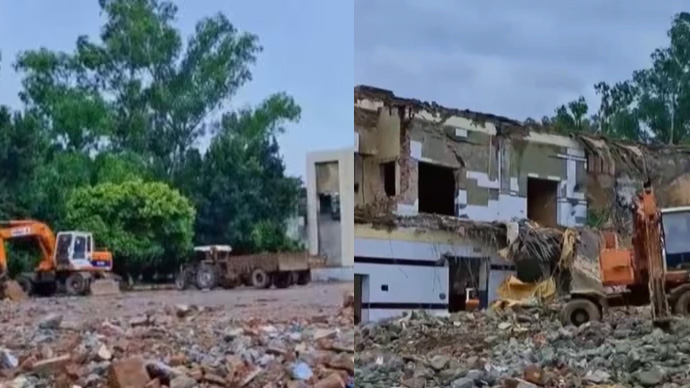
As per the report, the terror group has completed demolition of the structure bombed by Indian forces. Most of the buildings in the complex were destroyed in the missile strikes, and only skeletal remains of the structures were left standing, and were unsafe for use. Therefore, the structure has been demolished to pave way for new construction.

LeT started demolition of Markaz Taiba complex using five JCB machines on August 18, and by August 20, Umm-ul-Qura training complex was partially razed. The structure was completely demolished by 4th September. After that, the heavily damaged accommodation block was fully demolished by 7 September.

At present, the debris from the site is being cleared, and construction of a new structure will begin soon. The group has set a target to complete the new building by February 5, 2026 for the annual Kashmir Solidarity Day convention, a major event for LeT.

Notably, after multiple terror bases were destroyed by India during Operation Sindoor, Pakistan government had promised to rebuilt them, as all the bases are located in public buildings like mosques and health centres. Last month, LeT received initial assistance of PKR 4 crore (₹1.25 crore) from the govt to rebuild the Markaz Taiba, however, the group will need PKR 15 crore (₹4.70 crore) to rebuild the structure to its previous state.

Therefore, the terror group has launched a fundraising campaign, under the grab of seeking help for flood victims. LeT is receiving both online and offline donations under the label ‘Relief for flood victims.’ 

Congress ecosystem’s sinister fantasy of Nepal-style violence in India: A desperate bid to import chaos and anarchy to revive its fading fortunes

When history looks back at the decades following India’s independence, one of the most remarkable features of our national journey will be that despite our immense diversity, our frequent political turbulence, and our periodic bursts of social unrest, India has managed to remain a democracy that resolves its contradictions through the ballot box, not the bullet. Unlike our neighbours Pakistan, Nepal, Sri Lanka, Myanmar, or Bangladesh, India has, against all odds, consciously resisted the path of violent insurrections. We have faced wars, insurgencies, terrorism, and ideological extremism, but we have never allowed democratic transfer of power to be undermined by mob violence or street revolutions.

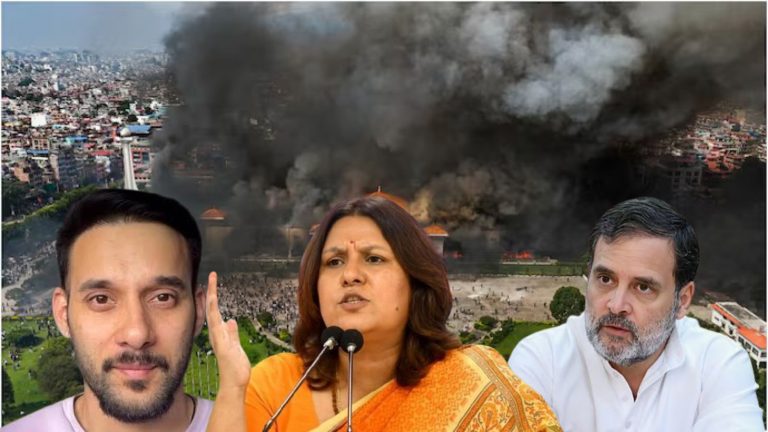
It is against this backdrop that the recent moves by the Congress ecosystem, a cocktail of party leaders, social media trolls, partisan journalists, and ideological sympathisers, appear deeply sinister. Having failed to dethrone Prime Minister Narendra Modi in three consecutive Lok Sabha elections (2014, 2019, 2024), and having exhausted the vocabulary of electoral jibes like “Suit Boot ki Sarkar” or “Chowkidar Chor Hai”, Congress now seems to be experimenting with a dangerous, reckless strategy: instigating Indian youth to take up violent protest on the lines of Nepal’s “revolutionary” movements. This is not mere rhetoric. It is an effort to inflame resentment, encourage lawlessness, and potentially push India onto the path of civil war.

Nepal’s Tragic Example: From Protest to Inferno

The glorification of Nepal’s Gen Z protests by Congress ecosystem warriors is not some harmless social media fantasy. Nepal is currently reeling under one of its deadliest political crises in decades. Prime Minister KP Sharma Oli was forced to resign after violent protests left 19 young demonstrators dead in brutal clashes. What began as an agitation against corruption quickly descended into unrestrained mob violence.

Oli’s Bhaktapur residence was set ablaze, the homes of former prime ministers Pushpa Kamal Dahal “Prachanda” and Sher Bahadur Deuba vandalised, and several ministers were hounded out of office. Protesters stormed the residence of Foreign Minister Arzu Rana Deuba, wife of Sher Bahadur Deuba, physically attacking both in their own home. The violence claimed more lives, 17 killed in Kathmandu, two in Sunsari, and left the capital engulfed in chaos.

Mobs set fire to Nepal’s parliament, Kathmandu’s iconic Hilton Hotel, and several government complexes, including the Singha Darbar, which houses Nepal’s administrative offices. Even the ancient Pashupatinath Temple had to be protected by the Nepalese Army after hooligans attempted to storm it. The wife of former Prime Minister Jhalanath Khanal tragically succumbed to burn injuries after their residence was torched. Ministers were chased through the streets, beaten, and threatened, while Oli himself went into hiding. The army had to take over, enforcing curfews and attempting to restore a semblance of order.

Amidst this anarchy, Nepal’s so-called youth revolutionaries have already split, with some distancing themselves from the arson and destruction. But the damage is done: the Himalayan nation has been pushed into turmoil, its economy devastated, and its political system teetering on collapse. The emergence of rapper-turned-politician Balen Shah and NGO-founder Sudan Gurung as potential successors highlights the vacuum, and the dangers of mob-fuelled politics.

This is the “model” some Congress sympathisers and trolls are glorifying for India.

From electoral failure to dangerous instigation

It is a truth universally acknowledged that the Congress party has been unable to reconcile itself with Modi’s repeated electoral victories. Despite enormous media backing, a vast network of NGOs, international commentary sympathetic to its cause, and an entrenched dynastic leadership, the party has seen its base shrink. Each electoral setback has pushed the party not towards reform or reinvention but towards greater bitterness.

The latest symptom of this desperation is the open flirtation with revolutionary language. When Congress spokesperson Supriya Shrinate shared a video on X captioned “Their Kids vs Your Kids”, the intent was clear. The video contrasted images of BJP leaders’ children, portrayed as living privileged lives, with visuals of protesting youth being lathi-charged by the police, captioned “Your Kids”.

The design of this propaganda was not subtle; it was crafted to evoke anger, jealousy, and a sense of injustice, pushing young Indians to think that violent rebellion is the only path available. The video was amplified on social media by several Congress leaders and loyal supporters alike.

This was not an isolated episode. Rahul Gandhi’s favourite online troll, Arpit Sharma, has been called out for glorifying violent protests in Nepal and encouraging Indians to imitate them. Arpit Sharma, a popular Congress troll, posted a video on X, heaping praises on the ‘courageous’ young Nepali protestors who marched through the streets of Nepal, vandalising and destroying anything and everything that came in their way.

A starry-eyed Sharma hailed the Nepalese Gen Z for raising their voice against the corruption in their country. However, he lamented that the Indian youth were not courageous enough to organise similar violent demonstrations against the Indian government.

In the video, Sharma went on to suggest ideas, including Congress leader Rahul Gandhi’s Vote Chori lie, to the Indian youth to organise Nepal-like violent demonstrations in India. He claimed that 60 crore young voters in India can come together and shake the “power structure” in the country. Sharma’s father, Vikas Sharma, contested the 2022 Uttar Pradesh Assembly Elections on the ticket of AAP. However, he lost the election.

Sharma subsequently deleted the tweet following massive online backlash. But it nevertheless demonstrates how Congress ecosystem warriors have been hankering for violence just because their favourite leader has repeatedly failed electorally in his bid to reach the highest office of the land.

Another prominent troll, @thepeeinghuman, went so far as to suggest “monitoring” the offsprings of Indian politicians — effectively an open call to paint targets on the backs of people whose only ‘fault’ is that their parents belong to a party the troll despises.

Still another influencer, @ms_medusssa, rationalised violence as an inevitable outcome of “systems where justice is inaccessible,” during a video chat with ex-Newslaundry ‘journalist’ Meghnad. When social media handles with significant influence begin to justify violence as natural or necessary, they are not engaging in debate; they are planting landmines in India’s democratic soil.

The hypocrisy on nepotism

The most galling aspect of this campaign is the naked hypocrisy. The Congress ecosystem pretends to be outraged about the “privilege” enjoyed by children of BJP leaders, while maintaining a studied silence on Rahul Gandhi’s dynastic entitlement. Rahul Gandhi is a fifth-generation dynast: From Motilal Nehru, Jawaharlal Nehru, Indira Gandhi, and followed by Rajiv Gandhi — at least four generations before Rahul Gandhi were actively involved in shaping India’s politics in profound manner. No other party in the democratic world clings so desperately to hereditary leadership, and yet Congress supporters do not dare to question this.

Contrast this with the BJP’s leadership, most of whom, including Narendra Modi himself, rose from humble beginnings. Modi was once a tea seller at a railway station; Amit Shah was a booth-level worker in the Jan Sangh-BJP tradition; Nitin Gadkari, Rajnath Singh, Shivraj Singh Chouhan, all come from ordinary families. Their children may or may not pursue politics, but their political authority is not inherited, it was earned through decades of ground-level struggle. To compare their children’s relative privilege with the masses while ignoring the Gandhi family’s dynastic entitlement is not just dishonest; it is malicious propaganda designed to inflame resentment, anger, and bitterness among people.

Why this is dangerous for India

The reason this strategy is so perilous is not just its dishonesty, but its potential to unravel India’s hard-won stability. The instigation of violent uprisings has consequences far beyond one election cycle. India is today the world’s fastest-growing major economy, a hub of digital innovation, and a leading voice of the Global South. But all of this progress rests on a bedrock of political stability. Investors, industries, entrepreneurs, and global powers trust India because it has shown that, despite noisy democracy and regular political change, it does not descend into chaos.

If the Congress ecosystem succeeds even partially in planting the idea that violent street revolution is a legitimate path to political change, the risks for India are immense. The first and most immediate danger is economic derailment. Investor confidence is notoriously fragile in the face of instability. India’s booming stock market, its steady flow of foreign direct investment, and the momentum behind its manufacturing drive could all collapse if the spectre of mob violence were to dominate headlines. We have already seen how political chaos and street protests triggered an economic freefall in Sri Lanka, and how years of insurgency in Nepal destroyed decades of developmental progress.

The second risk is civil strife. India is home to extraordinary diversity: linguistic, regional, religious, and caste-based. And, it has so far managed to hold this complex mosaic together through democracy and constitutional methods of dispute resolution. But if violent methods were to be normalised, these very fault lines could erupt into a patchwork of civil conflicts. Each grievance group might feel emboldened to justify violence as a tool for its cause, leading to an endless cycle of insurgencies that could make governance nearly impossible.

A third and equally grave danger lies in the precedent set by our region. Every neighbouring country offers a cautionary tale. Pakistan’s repeated coups and jihadist uprisings have kept it perpetually unstable. Nepal’s Maoist revolution, which Congress sympathisers today romanticise, led to years of bloodshed and left the economy permanently scarred. Sri Lanka’s civil war, Myanmar’s military crackdowns, and Bangladesh’s violent street politics all demonstrate how rebellion can set a nation back by decades. India has consciously avoided this trap so far. To now import such a virus would be nothing short of national suicide.

Finally, there is the tragedy of generational loss. India’s youth today have unprecedented opportunities at their fingertips. From startups and global careers to digital platforms and expanding higher education, millions of young Indians are being empowered to dream bigger than ever before. But if the Congress ecosystem succeeds in redirecting this immense energy into street battles and violent confrontations, the result would be catastrophic. An entire generation’s future would be wasted in destruction rather than creation, tearing down what they should instead be building.

The calculated silence on Rahul Gandhi

The hypocrisy comes into full view when we notice what is left unsaid. If Congress-supporting voices are truly outraged about dynastic privilege, why is there no outrage over Rahul Gandhi? Why is there no campaign against Priyanka Gandhi Vadra’s dynastic entitlement? Why no mention of the countless Congress MPs, MLAs, and state leaders whose only credential is their parentage?

The truth is that this outrage is not principled but weaponised. “Nepotism” is only condemned when it can be used to provoke anger against BJP leaders. When the exact same phenomenon exists in the Congress fold, it is celebrated as “continuity of legacy.” The aim is not to reform Indian politics, but to destabilise India’s polity.

The long shadow of insurrection

History teaches us that once the genie of violent politics is unleashed, it is nearly impossible to put it back in the bottle. Nepal’s Maoist revolution, celebrated by some Congress supporters today, did not lead to a utopia of justice; it led to decades of killings, instability, and economic stagnation. Pakistan’s repeated flirtations with jihadist violence have left its society fractured and its state perpetually on the brink. Sri Lanka’s civil war took 30 years and countless lives to extinguish. Myanmar is today a humanitarian catastrophe. Bangladesh, too, has seen cycles of violent protests that stunted its democratic development.

India’s miracle has been to avoid this path despite far greater diversity and fault lines. Our democratic culture, our faith in elections, and our ability to resolve disputes through constitutional means have ensured stability. If Congress now tries to erode this culture by instigating youth towards violent confrontation, it will not be Modi who suffers. It will be India itself; its youth, its economy, its unity.

A dangerous gamble with India’s future

At its core, the Congress ecosystem’s flirtation with violent rhetoric is an admission of defeat. Having failed to convince Indian voters electorally, it now dreams of revolution by chaos. But the costs of this gamble are catastrophic. It threatens to derail India’s economic rise, fracture its social fabric, and plunge it into the same cycle of instability that has crippled its neighbours.

India is too big, too diverse, and too important to be sacrificed at the altar of dynastic desperation. The Congress ecosystem must be held accountable for its reckless instigation, its selective outrage, and its silence on its own hypocrisies. The Indian people have repeatedly chosen democracy, progress, and stability. They will not allow a bitter, dynastic party and its ecosystem of trolls to drag them into the abyss of civil war.

The choice before India is clear: stay the course of growth and democratic stability, or surrender to the chaos that Congress seems to romanticise. The people have spoken thrice at the ballot box. It is time Congress heard them or risk being remembered not as a party of governance, but as a party that once dreamt of plunging the country into blood.


PM Modi to inaugurate India’s first bamboo-based ethanol bio-refinery in Assam; read why it is called 2G ethanol and how it differs from 1G, 3G and 4G ethanol

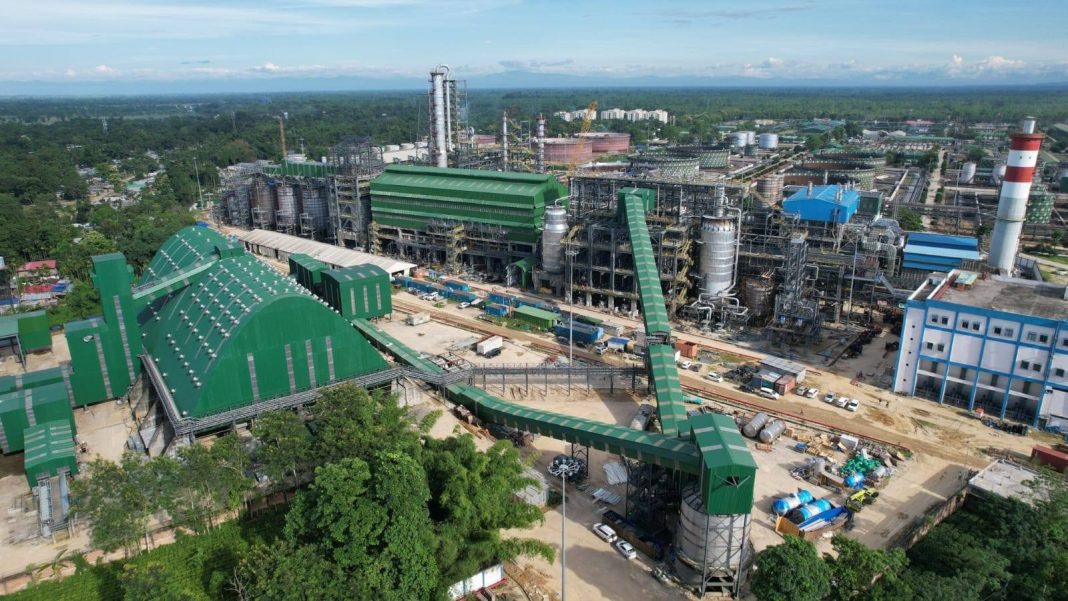
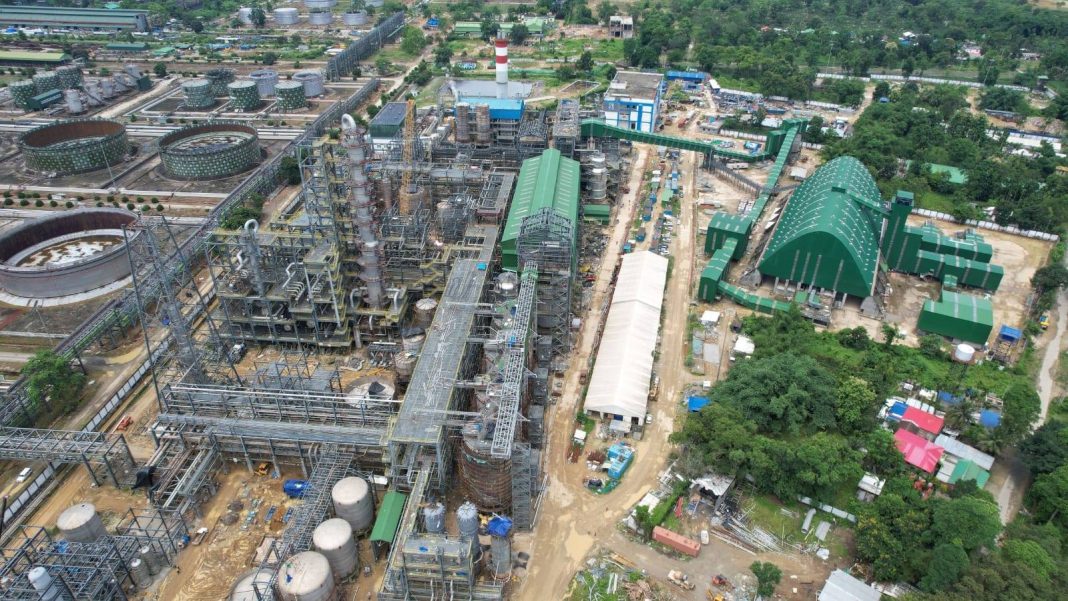
India is set to achieve a significant milestone in sustainable energy with the inauguration of the country’s first bamboo-based ethanol plant by Prime Minister Narendra Modi on 14th September. Located at Numaligarh in Golaghat district, Assam, this state-of-the-art facility has been established by Numaligarh Refinery Limited (NRL), a subsidiary of the Indian Oil Corporation Limited (IOCL), with 26% of the shares held by the state govt.

The plant has been built with an investment of around Rs 5,000 crore aimed at promoting green energy, enhancing farmer incomes through bamboo cultivation, and reducing dependence on fossil fuels. The plant will be operated by Assam Bio Ethanol Private Limited (ABEPL), a joint venture between Numaligarh Refinery Limited and two Finnish companies, Fortum BV and Chempolis Oy.

The facility is designed to process lignocellulosic biomass, primarily bamboo, into ethanol and other value-added products like bio-chemicals, contributing to the economy. The plant will process around 500,000 tonnes of bamboo annually, and will produce 48,900 tonnes of ethanol, significantly contributing to 20% ethanol blending in petrol.

This is not just an ethanol producing plant, but a bio-refinery which will produce a range of products and byproducts from bamboo. Apart from bio-ethanol to be blended with fossil fuel, the bio-refinery will also produce furfural, a product used in making resins, acetic acid, and valuable by-products such as enzymes, formic acid and food grade carbon dioxide. The residue remaining after extraction of useful products will be used to generate power. The plant will produce 25 megawatts of electricity, of which 20 MW will be used internally, and the rest 5 MW will be supplied to the refinery.

Apart from 48900 MT of ethanol,  the plant will produce 19000 MT of furfural, 11000 MT of acetic acid, and 31000 MT of food grade liquid CO₂ from bamboo.

The plant is also working with IIT Guwahati on a pyrolysis project to produce biochar from bamboo waste.

The refinery will source bamboo directly from around 3,000 farmers across Assam. The north eastern states have abundant supply of bamboo, a fast-growing grass plant. India’s northeastern region is home to over 66% of the country’s bamboo forests. After the closure of paper mills in the region, there is no large-scale use of bamboo, and therefore there will be no shortage of raw material for the bio refinery.

The biorefinery has already demonstrated its technical prowess by successfully producing 99.7% pure bamboo ethanol. This achievement underscores the plant’s readiness for commercial operations and its potential to utilize Assam’s abundant bamboo resources.  

This initiative not only boosts local economies by creating jobs and supporting bamboo farmers but also aligns with India’s commitments to reduce carbon emissions and achieve net-zero goals.

Understanding 1G, 2G, 3G and 4G Ethanol: Key Differences and Why Bamboo Falls Under 2G

Ethanol or ethyl alcohol( C₂H₅OH) is a clear colourless liquid, biodegradable, low in toxins, and causes little environmental pollution if spilled. It is a high-octane energy source and has replaced lead as an octane enhancer in petrol.

The ethanol to be produced in the Numaligarh plant will be 2G ethanol. Notably, commercially produced ethanol is classified into generations, 1G, 2G, and 3G, based on the source of raw materials and the production processes involved. These categories reflect advancements in technology to address sustainability challenges, such as food security and resource efficiency.

First-Generation (1G) Ethanol

1G ethanol is produced from edible crops rich in sugars or starches, such as sugarcane, corn, sugar beet, or grains like wheat and rice. The process is relatively straightforward, the feedstock is crushed or milled to extract sugars, which are then fermented using yeast to produce ethanol. This method has been in commercial use for decades and forms the backbone of India’s current ethanol blending program, primarily sourced from sugarcane molasses.

However, 1G ethanol faces criticism due to the “food vs. fuel” dilemma. Diverting food crops for biofuel production can drive up food prices, strain agricultural land, and compete with human and animal feed needs. Additionally, it relies on fertile arable land and water-intensive crops, limiting scalability in densely populated countries like India.

Second-Generation (2G) Ethanol

2G ethanol addresses the limitations of 1G ethanol by using non-edible lignocellulosic biomass as feedstock. This includes agricultural residues like rice straw, sugarcane bagasse, forestry waste, energy crops like switchgrass, and dedicated plants such as bamboo or miscanthus. Unlike 1G ethanol, 2G ethanol feedstocks do not compete with food production, as they are derived from non-food sources.

The production process for 2G ethanol is more complex and energy-intensive. It involves pretreatment like steam explosion or acid hydrolysis to break down the tough lignocellulosic structure, which comprises cellulose, hemicellulose, and lignin, into fermentable sugars. These sugars are then hydrolysed, fermented, and distilled into ethanol. This requires advanced enzymatic or chemical technologies, making 2G costlier initially but more sustainable in the long term.

The Numaligarh plant is India’s second 2G ethanol plant, and the first to use bamboo. A plant set up by Indian Oil in Haryana’s Panipat to make ethanol from rice straw is the first such 2G ethanol plant in the country. That plant started operations in August 2022. Using rice straw to make ethanol can help in mitigating the stubble burning problem in India.

Bamboo is specifically useful to produce 2G ethanol because bamboo is a fast-growing, lignocellulosic grass that does not require fertile soil or excessive water, thriving in wastelands. It yields high biomass, up to 40 tons per hectare annually, and contains 40-50% cellulose, ideal for ethanol production.

In the Numaligarh plant, bamboo chips are pretreated and converted into ethanol, producing not just fuel but also byproducts like furfural and acetic acid, enhancing economic viability without impacting food security.

Third-Generation (3G) Ethanol

3G ethanol represents the next development in ethanol production, primarily sourced from microalgae or cyanobacteria cultivated in photobioreactors or open ponds. These microorganisms offer superior yields, up to 100 times more than 1G crops per unit area, and can grow in non-arable land, seawater, or wastewater, minimising environmental footprint. The process involves harvesting algae, extracting lipids or carbohydrates, and fermenting them into ethanol.

While 3G ethanol promises higher efficiency and lower land use, it remains largely experimental due to high costs, scalability challenges, and energy demands for cultivation and harvesting. Commercialization is expected in the coming years, but it is not yet widespread like 1G or emerging 2G technologies.

Fourth-Generation (4G) Ethanol

4G ethanol is an emerging concept in biofuel research, that combines advanced biotechnology, synthetic biology, and carbon capture to make fuel in a more sustainable way. It typically involves genetically engineered microorganisms or photosynthetic organisms that can directly convert carbon dioxide, sunlight, or waste gases into ethanol, rather than relying on crop-based feedstocks.

The idea is to create a carbon-neutral or even carbon-negative fuel, reducing greenhouse gas emissions while avoiding land-use conflicts. Though still largely at the research and pilot stage, 4G ethanol represents a future direction where renewable energy, industrial waste recycling, and cutting-edge biotechnology converge to produce cleaner liquid fuels.

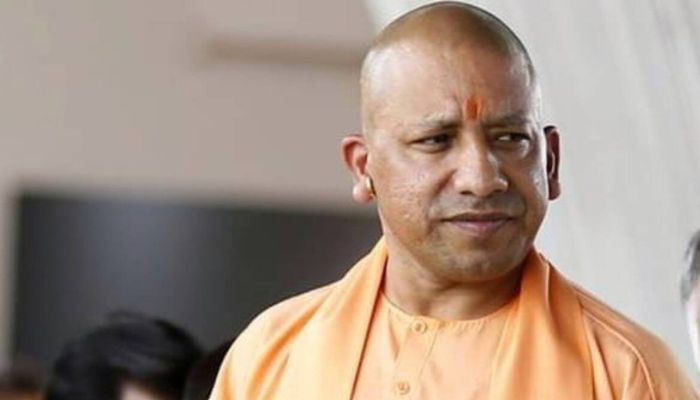
Uttar Pradesh: Yogi govt approves construction of 2.5 lakh houses in urban areas, earlier completed rural housing projects in record time

In a major development, the Yogi Adityanath-led government in Uttar Pradesh has given a nod to the construction of 2.5 lakh houses in the State under the Pradhan Mantri Awas Yojana (Urban) 2.0 for the Financial Year 2025-2026.

An amount of ₹735.94 crores, which includes funds from both the State and the Centre, has been earmarked for the project.

At the same time, the photo and video recording of each newly constructed house and geo tagging has been made mandatory.

The Yogi Adityanath government has given instructions for following the National Building Code and other disaster prevention guidelines during the construction phase.

So far, 2,52,605 houses have been allotted under the Pradhan Mantri Awas Yojana (Urban) 2.0 scheme. The Yogi government has built houses in record time (199 days as against the national average of 299 days) under the Pradhan Mantri Awas Yojana (Rural).

According to reports, between 2016-17 and 2024-25, about 36.34 lakh houses have been built. Under the Mukhya Mantri Awas Yojana (Rural), about 3.51 lakh houses have been completed.

With this milestone, Uttar Pradesh ranks second in the country with 99.37% completion rate. Today, the State ranks first on several parameters such as mason training, social audit, site inspection, land lease to eligible beneficiaries and housing completion.

99.39% of the completed houses have been connected with toilets, 93.31% with electricity, 94.42% with gas and 80.02% with drinking water connections.

Chief Secretary SP Goyal had given instructions to complete the construction of the remaining houses and equipping them with all facilities within given time frame.

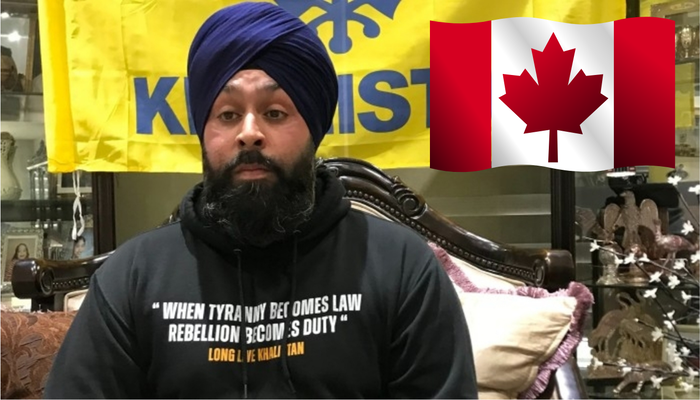
Canada offers protection to Khalistani terrorist Inderjeet Gosal, who was involved in the Bramtpon Hindu temple attack, blames India for threat to his life without proof

0

Continuing to host and support Khalistani elements in Canada, the Canadian authorities recently offered protection to Khalistani terrorist Inderjeet Gosal from an alleged threat to his life.

As per reports, the information was revealed by Gosal during an interview given to Global News on Thursday (11th September). Gosal said that the Royal Canadian Mounted Police (RCMP) officers formally warned him that his life was in imminent danger. Gosal, who believes that Indian hitmen are after his life, claimed that the Canadian police cautioned him last month, saying that he might be killed within weeks.

He said that the police official issued him a duty-to-warn notice again on Monday (8th September) regarding fresh threats to his life. The police official reportedly told Gosal that some hitmen were there to kill him. The Canadian Police reportedly offered him witness protection, which he is said to have refused on the grounds that it would interfere with his activism. “As a result of being the organiser of the Khalistan Referendum, I am facing an imminent threat to my life from the agents and proxies of the government of India,” he said.

Canadian police alleged India’s involvement in attacks on Khalistani elements in Canada

Without disclosing the details of the RCMP’s communication to him, Gosal claimed that the source of the alleged threat to his life originates from the Indian government. “It all stems from them, it all stems from the Indian government. They call the shots,” Gosal claimed. “We know this goes to the top of the chain of the Indian government, and we’re asking the Canadian government, our prime minister, Mark Carney, to take the necessary steps,” he added. Gosal urged the federal government to take immediate action against the alleged operations of Indian diplomats and intelligence agents.

According to reports, the Canadian police started issuing duty-to-warn notices to Khaistani elements regarding alleged threats to their life in 2022. In October 2024, the RCMP linked the incidents of attacks on Khalistani elements in Canada with the Indian government. The Canadian police alleged that the Indian diplomats and consular officials collected information on targets and passed it to the Research and Analysis Wing (RAW), which then tasked organised crime members operating in Canada.

Who is Inderjeet Gosal

Inderjeet Gosal is a 36-year-old Khalistani terrorist based in Brampton, Canada. In November 2024, he was arrested by the Canadian police in connection with a violent attack on a Hindu temple in the Greater Toronto Area (GTA) in Brampton. He was later released by the Peel Regional Police (PRP), subject to certain conditions.

Gosal was reportedly at the centre of the violent attack carried out by Khalistani terrorists on the Hindu temple. Gosal is the coordinator for the Sikhs for Justice (SFJ), a Khalistani terrorist group banned in India. He is also the principal organiser of the Khalistani campaign in Canada. He succeeded Khalistani terrorist Hardeep Singh Nijjar, who was killed in 2023. The killing of Nijjar was pinned by the Canadian government on India, without any evidence, which led to strained relations between India and Canada. Gosal is considered the lieutenant of SJF’s general counsel, Gurpatwant Singh Pannun, who is designated a terrorist by India. In a statement given to the Financial Times last year, Gosal said that he was not afraid to die for the establishment of an independent state for Sikhs (Khalistan) in Punjab, India.

The possibility of the revival of India-Canada relations

The India-Canada relations took a downward turn during the previous Trudeau government in Canada, after he accused the Indian government of being involved in the killing of Khalistani terrorist Hardeep Singh Nijjar, without any evidence. This led to both countries expelling each other’s diplomats. However, after the present Canadian PM Mark Carney, assumed office this year, the relations between the two countries seem to be improving. Unlike his predecessor, Carney has adopted a pragmatic and economy-focused approach in resetting Indo-Canada relations. Even though there has been an apparent shift in Canada’s approach towards India since Carney took charge, the Canadian government has not actively taken any steps to curb Khalistani elements thriving in the country.

ISIS-linked terror module busted by Delhi Police was planning to kill a Mumbai politician and Hindu boys married to Muslim girls across India, reveals investigation

0

A shocking revelation has come to light from the interrogation of members of a pan-India terror module linked to the Islamic State (ISIS). The arrested suspects told Delhi police that their group had planned to kill a well-known politician in Mumbai. Apart from this, they were also targeting Hindu youths across India who had married Muslim girls and wanted to kill them. This disclosure has put security agencies on high alert, as it shows the growing ambitions of the terror network.

Weapons smuggled from Mewat to Delhi

Additional Police Commissioner of Delhi Police Special Cell, Pramod Singh Kushwaha, said that the accused suspected terrorists were increasing the capacity (members) of their module. Module members Aftab Nasir Qureshi and Sufiyan Abubakar were assigned the task of targeting the politician. For this, these people had brought weapons to Delhi. They had brought weapons from Mewat (Nuh) of Haryana to Delhi.

A person had come to Delhi from Mewat to give them weapons. When they were about to leave for Mumbai by train with the weapons, the team of ACP Rahul Vikram and Inspector Vinaypal posted in the Special Cell arrested him and Sufiyan. Pistols and cartridges have been recovered from their possession.

Plot to kill Hindu boys

Investigators also revealed that another arrested accused, Kamran from Madhya Pradesh, had been assigned with the task of killing Hindu boys who had married Muslim girls. The gang’s leader, Danish, had even sourced weapons from Telangana for these operations.

Officials said the ISIS-backed group was deliberately trying to expand its base across India. Danish and his associates had already misled over 80 young men and roped them into their module. These new recruits were being brainwashed and encouraged to join their violent plans.

Delhi police plans counselling

Police officials underlined that terror groups often manipulate and misguide innocent youths in the name of religion. To counter this, Delhi Police runs a programme where such misguided individuals are given counselling and then handed back to their families. Amit Kaushik, Deputy Commissioner of the Special Cell, confirmed that counselling would also be provided to youths connected with this particular module.

While Delhi Police uncovered a direct plan of violence through this ISIS-supported module, another form of radicalisation is spreading across society in a different way. Islamist groups are not only encouraging targeted killings but are also running online propaganda campaigns to control the personal lives of Muslim girls. One such campaign is being widely promoted under the name of the “Bhagwa Love Trap.”

The “Bhagwa love trap” propaganda

Islamist groups are pushing a dangerous propaganda campaign called the “Bhagwa (Saffron) Love Trap.” This campaign falsely paints Hindu boys as predators of Muslim girls and seeks to discourage interfaith friendships and relationships.

Activists behind the campaign have gone as far as sharing personal information of Muslim girls who are in relationships or friendships with Hindu men. These details are posted on social media platforms like X and Instagram, often accompanied by abusive language. Posters and banners have also been put up, urging the Muslim community to “protect the faith” of their girls.

Several disturbing incidents have been reported where Muslim girls were harassed, threatened, or even assaulted simply because they were seen with Hindu boys. In some cases, they were subjected to online abuse and doxing.

Interestingly, many of the claims made under the “Bhagwa Love Trap” banner lack real evidence. The Hindu boys mentioned in these cases did not hide their identities. They were identified through their social media profiles, religious symbols like sacred threads (kalawa), and openly using their real names. This is very different from “love jihad” cases, where Muslim boys have been accused of hiding their religion to deceive Hindu girls.

The real issue seems to be the opposition of radical groups to free relationships between two consenting adults. If Hindu boys and Muslim girls, both over 18, openly choose to meet and form friendships, why should this be treated as a crime?

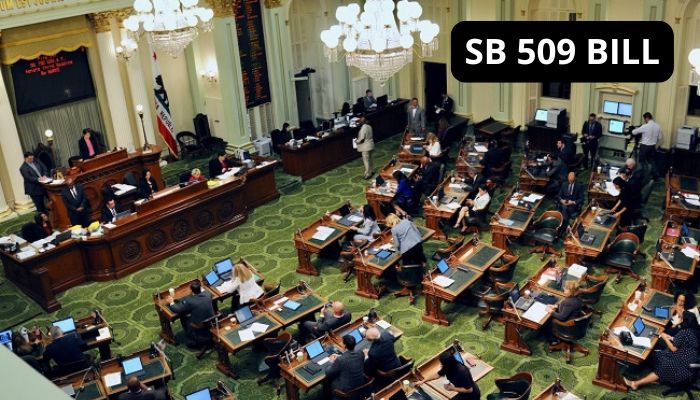
California State Legislature passes controversial ‘SB 509 Bill’, which can persecute Indian-origin Hindu Americans: Read how this proposed law supports Khalistanis

In a major setback to the Indian-origin Hindu diaspora in the United States, the California State Legislature has passed the dangerous SB 509 Bill.

The proposed law, which can label opposition to the violent Khalistani separatist movement as ‘digital, transitional repression,’ was passed by both the Senate and the Assembly of the California State Legislature.

The development was confirmed in a tweet by the US-based Hindu American Foundation (HAF) on Friday (12th September).

HAF pointed out, “Proponents of this bill and previous failed versions sought to silence advocacy against the separatist Khalistan movement, deeply tied to transnational terror attacks.”

The Hindu rights organisation, however, informed that it was successful in adding critical amendments to the SB 509 Bill, but it remains problematic in its current form.

HAF has appealed to California Governor Gavin Newsom to veto the controversial Bill, which is designed to encourage homegrown Khalistan extremism and target Indian origin Hindu Americans.

The disturbing nature of the amended SB 509 Bill

The controversial legislation is prone to misuse against the Indian-origin Hindu diaspora in the United States.

SB 509 Bill has the potential to label anyone (using digital technology to track the activities of terrorists or those involved in separatist movements) as ‘radicalised by state-sponsored propaganda or ideology’.

The proposed law defines transnational repression as “any action taken by a foreign government or an agent of a foreign government involving the transgression of national borders through physical, digital, or analog means in order to intimidate, silence, coerce, harass, or harm members of diaspora and exile communities or organizations that advocate for individuals in diaspora or exile communities in order to prevent the exercise of their human rights.

It could thus be weaponised against Indian-origin, Hindu Americans for voicing their opposition to Khalistani extremism and seperatist activities.

The ‘SB 509 Bill’ further claims that transnational repression is a ‘human rights violation’ which is somehow aimed at curbing dissent and preventing individuals from exercising their ‘rights and freedoms.’

The proposed law further states that the California government, by virtue of its State policy, is supposed to

  1. Protect persons and organizations in the state from transnational repression.
  2. Pursue criminal prosecutions, as appropriate, against those who engage in transnational repression.
  3. Provide support services for victims and communities in the state that may credibly be targeted in transnational repression.
  4. Meaningfully hold accountable foreign governments engaged in transnational repression and limit their ability to influence state policy or public opinion.
  5. Coordinate actions to enhance and complement any federal laws or regulations related to transnational repression.

‘SB 509 Bill’ directs the Office of Emergency Services to develop a ‘transnational repression recognition and response training’ to provide so-called ‘unbiased information on transnational repression’ to law enforcement authorities.

The deadline has been set to 1st January 2027.

The training will involve identification of different tactics of transnational repression in physical and nonphysical forms, governments known to ’employ transnational repression’, best practices for appropriate local and state law enforcement prevention, gathering information about ‘communities targeted by transnational repression’ and misinformation.

Given that the Indian government has been a vocal opponent of Khalistani activities abroad, aimed at secession of Indian State of Punjab from the Union, it could be labelled as a foreign government (under the proposed California State law) employing ‘transanational repression.’

This is further evident from the fact that Khalistanis may as well be roped in as ‘community experts’.

Culturally competent outreach to diverse impacted diaspora communities and subject matter experts in order to support effective and unbiased law enforcement responses to transnational repression,” the amended version of the Bill stated.

The Khalistani Sikhs involved in plotting anti-India activities from American soil might as well be labelled as ‘community targeted by transnational repression.’ This is what makes the ‘SB 509 Bill’ dangerous.

While the amended version claims that rights under the First Amendment (aka free speech) will not be prohibited, the lack of adequate guardrails and safeguards gives little to no hope.

Karnataka: Ganesh idol immersion procession in Hassan turns tragic as truck ploughs into crowd, leaving 9 people dead and 22 injured, driver booked

0

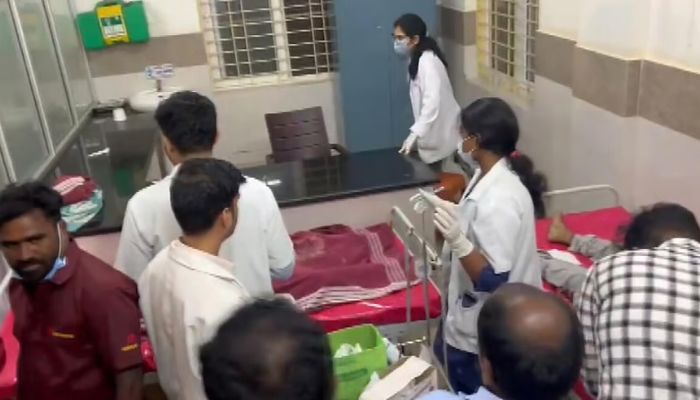
A Ganesh idol immersion procession in Hassan district of Karnataka turned into a scene of tragedy on the night of Friday, 12th September, when a truck rammed into the crowd. At least nine people lost their lives, while 22 others were injured in the horrific accident, officials confirmed.

According to Hassan Deputy Commissioner KS Latha Kumari, the truck driver made a futile bid to avoid hitting a two-wheeler and lost control of the vehicle. The truck then ran over the median and ploughed into a crowd on the other lane of the road.

Driver booked under the several sections of BNS

The Goruru Police booked a case under the Sections of 281, 106 and 125 of the BNS, against Bhuvanesh, who was driving the truck. The driver, Bhuvanesh, a resident of Kattebelaguli village in Holenarasipura taluk of Hassan district.

The video clip captured at the accident spot shows that the the truck hits a two-wheeler and then crosses over the divider to ram into the crowd dancing in the Ganesha procession.

The driver also suffered injuries in the incident and after being beaten by an angry mob at the scene. The police booked the case based on the statement by Manjunath of Danayakanahalli, who lost his nephew Eshwar in the incident.

Details of the injured

The injured were immediately rushed to the Hassan Institute of Medical Sciences (HIMS) hospital and a nearby private hospital. Out of the 22 injured, 19 were admitted to HIMS. Among them, 18 of them are stable and being treated in the general ward, while one underwent surgery for a rib fracture. Two others, who were shifted to a private hospital, are in the ICU but are reportedly stable.

According to the media reports, A team of doctors, led by the district health officer, is closely monitoring the patients. Hassan district in-charge Minister Krishna Byre Gowda, who visited the hospital, said the state government is ensuring the best possible treatment for the injured.

Deceased are mostly young students

The incident has left families shattered, with tragic scenes being seen at the hospital and even at the victims’ homes. Among the deceased, most of them were hardly 25 years old. They included Praveen Kumar (21), Mithun (23), Rajesh (17), Kumar (25), another Praveen (25), Eshwar (17), Gokul (17), and Suresh (22). Another victim was Prabhakar (52).

Most of the victims and injured were said to be students of the Government Engineering College in Mosale Hosahalli. Locals said that some students had gone out for dinner from the college hostel and had joined the Ganesh procession when the accident took place.

How the accident occurred

Eyewitness accounts stated that the procession, which consisted of a large number of youths, was going smoothly when the truck suddenly lost control and crashed into the divider before striking the crowd. According to some reports, the truck was overloaded, although the actual cause is yet to be investigated.

The abrupt crash brought fear as individuals fled for their lives. Locals and police immediately transported the ones struck to the hospital.

Government’s response and the ex-gratia announced

Prime Minister Narendra Modi mourned the loss of lives and declared an ex gratia of ₹2 lakh from the PM National Relief Fund (PMNRF) for the family members of every deceased, and ₹50,000 for the injured.

Karnataka Chief Minister Siddaramaiah also mourned the loss of lives and referred to it as a very painful tragedy. He stated that ₹5 lakh will be provided as compensation to the families of the victims. He further said that the state government will cover all medical costs for the injured in the accident.

“It is deeply saddening to learn news of several people losing their lives and over 20 others seriously injured when a lorry collided with a procession heading for Ganesh immersion in Hassan. I pray that the souls of the deceased find peace and that the injured recover as quickly as possible.” Siddaramaiah said.

Reactions from leaders

Former Chief Minister HD Kumaraswamy also reacted strongly to the accident, calling it a “most unfortunate” incident. He expressed shock and prayed for the departed souls while urging the government to ensure free treatment for the injured.

Hassan MP Shreyas Patel also expressed his grief. “It is extremely saddening that devotees lost their lives after being run over by a truck during the Ganapati procession. May God grant peace to the departed and strength to their families. The state must take steps to provide the best treatment to the injured,” he said.

From violence to hope: PM Modi pledges peace in Manipur, announces Rs 500 cr relief package and 7,000 homes for displaced

0

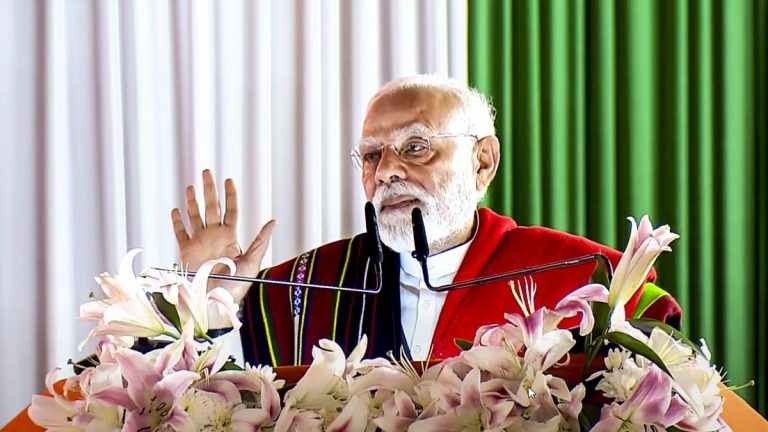
PM Modi on Saturday assured the people of Manipur that peace and development will go hand in hand, declaring that the violence-hit state was standing at the threshold of “a new dawn of hope and trust.” This was his first visit to the state since the outbreak of ethnic clashes in May 2023, when fighting between the Meitei and Kuki communities plunged the region into one of its worst crises in recent decades.

Addressing a gathering in Churachandpur, one of the districts worst affected by the conflict, Modi said, “The land of Manipur is a land of aspiration. Unfortunately, violence had cast a shadow here. A short while ago, I met those staying in relief camps, and after meeting them, I can say with conviction that change is coming. Hope is returning.”

The clashes, which left more than 250 dead and forced nearly 60,000 people to flee their homes, exposed the fragility of ethnic relations in the state. Internet services were suspended for months, while many displaced families remain unable to return because of ongoing tensions. Rights groups have long accused local leaders of exploiting these divisions for political ends, deepening mistrust between communities.

Against this backdrop, the Prime Minister emphasised that the central government was committed to restoring normalcy. “For development to take root anywhere, peace is essential. In the past 11 years, many conflicts in the Northeast have been resolved through dialogue. People here too must embrace peace, for it is only through peace that dreams can be fulfilled,” he said, urging civil society groups and organisations to step forward.

The speech carried a strong developmental pitch. Modi announced a slew of projects, including a new airport in Imphal, new highways, medical colleges, and most notably, the railway project connecting Jiribam with Imphal—a long-pending demand that promises to improve connectivity in the landlocked state.

“There was a time when decisions made in Delhi took decades to reach here. Today, our Churachandpur, our Manipur, is progressing step by step with the rest of the nation. India is soon to become the world’s third-largest economy, and Manipur will be part of that journey,” he said.

The Prime Minister also highlighted welfare gains. Nearly 60,000 pucca houses have been built in Manipur under central housing schemes, while piped water supply—once limited to barely 25,000 households—now reaches more than 3.5 lakh homes.

Though largely symbolic, the visit was designed to send a message that reconciliation and development are inseparable. For Manipur, still scarred by last year’s violence, Modi’s words were an attempt to restore both confidence and a sense of belonging within India’s larger growth story.

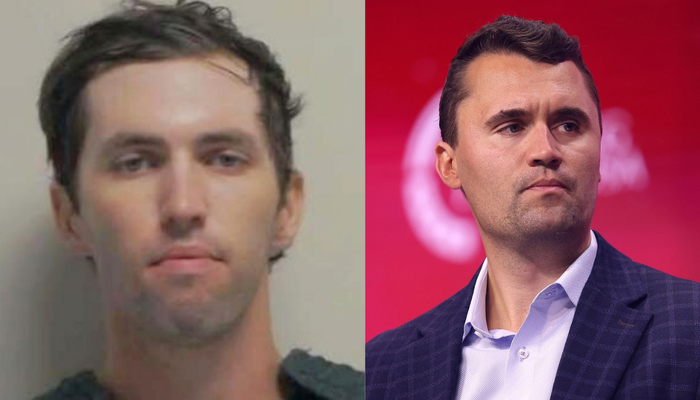
Charlie Kirk murder suspect Tyler Robinson caught after he confessed to his father about killing the conservative political activist

Authorities arrested a 22-year-old suspect for the assassination of conservative political activist Charlie Kirk on Thursday (11th September) following a 33-hour manhunt. The suspect, Tyler Robinson, was arrested after he confessed to his father, who informed the authorities.

Tyler Robinson, a college dropout, has reportedly been accused of aggravated murder, obstruction of justice, and felony discharge of a firearm. Formal charges against him will be filed on Tuesday (16th September). Before Robinson’s arrest, the FBI had announced a reward of up to $100,000 for information leading to the identification and arrest of the person responsible for Kirk’s killing. The authorities reportedly received over 7000 leads and tips after they announced the reward for the identification of Kirk’s shooter.

The suspect confessed to his father

31-year-old Charlie Kirk was shot dead on stage at Utah Valley University, Utah, while addressing students on Wednesday (10th September). Two people were taken into custody shortly after the incident, but were later released. Informing the media about the arrest of Robinson on Friday (12th September), Utah Governor Spencer Cox said that Robinson confessed to his father about killing Kirk and said that he would rather commit suicide than surrender. His father called a family friend, who is a pastor and also serves as a court security officer. The pastor then informed the US Marshals who arrested Robinson.

Governor Cox said that CCTV images showed the suspect arriving on the university campus on the day of the incident, around four hours before Kirk was shot. He added that when the suspect was taken into custody, he was wearing clothes similar to what he was seen wearing in CCTV footage at the scene of the shooting. The Governor further said that the investigators interviewed a family member of the suspect, who said that he became more political in recent years. The family member also revealed that Robinson mentioned that Kirk would be visiting the university and that he “was full of hate and spreading hate”.

The investigators also talked to the roommate of Robinson, as revealed by Governor Cox. The roommate showed the investigators some messages with an account named Tyler on the messaging app Discord. The messages referred to retrieving a rifle from a drop point, and the rifle being wrapped in a towel and left in a bush.

Possible Antifa links in Kirk’s murder

Notably, the FBI found an imported Mauser .30-06 bolt action rifle wrapped in a towel in a wooded area near the university campus on Thursday. The rifle has some engravings said to be linked to the Anti-fascist (Antifa) movement, including the words “hey fascist! CATCH!” and “O Bella ciao, Bella ciao”. ‘Bella Ciao’, in Italian, means “goodbye beautiful” and is also the title of an Italian resistance folk song, which has been adopted by the Antifa as its unofficial anthem. The song is frequently played at Antifa’s rallies, and the title often features on their signs and slogans. The investigators also found other messages on the bullet casings, including memes and video game jargon, which they are trying to decipher.

As per reports, Tyler Robinson is a third-year student in an electrical apprenticeship programme at Dixie Technical College in south-west Utah. His social media reportedly revealed that his father runs a kitchen countertop and cabinet installation business, and his mother is a social worker. He secured a four-year scholarship to Utah Valley University in Logan after scoring in the top percentile on his college entrance exam. However, he abruptly left the university after attending a semester after which he took a leave of absence and did not return.