Home Blog Page 207

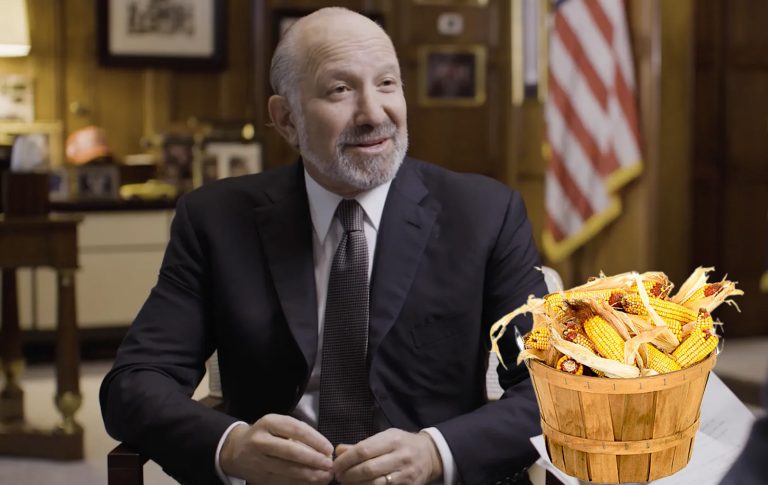
U.S. Commerce Secretary Howard Lutnick launches new attack on India for not buying ‘one bushel of corn,’ says ‘accept it or you are going to have a tough time’

While U.S. president Donald Trump has appeared to have softened his stand towards India, his attacks continue to attack the country over trade issues and Russian oil. In latest such comments, U.S. Commerce Secretary Howard Lutnick targeted India for not opening its market for American agricultural products.

Lutnick said that despite having 1.4 billion people, India does not buy even a bushel of corn from U.S.A., adding that the country will have to either buy American corn or face high tariffs. He made the comments with an interview with Axios in its inaugural show “The Axios Show.”

The Commerce Secretary made the comments responding to a question asking whether Trum administration is mismanaging or pissing away valuable allies like India, Canada and Brazil. Repeating the baseless claims of trade deficit, Lutnick said that relationship with these countries is one way, “they sell to us, and take advantage of us. They block us from their economy, and they sell to us, and while we are wide open for them come in”.

When the interviewer, Axios co-founder Mike Allen, said that U.S. is paying a big price by this approach, Lutnick said, “How are we paying a big price? We can’t. India brags that they have 1.4 billion people, then why wouldn’t they buy one bushel of corn from us? Doesn’t that rub you the wrong way. That they sell everything to us, and they won’t buy our corn. They put tariffs on everything. So the president says, bring down your tariffs, treat us the way we treat you. Now we have to right years of wrong, so we want the tariffs go the other way, until we fix this.”

One bushel of corn is 56 pounds of corn, approximately 25.40 kgs.

He further said, “That’s the President’s model, you either accept it or you are going to have a tough time doing business with the world’s greatest consumer.” 

Notably, India’s refusal to open the India’s market for American farm and dairy products is a main issue blocking a trade deal between the countries. Now, the commerce secretary has openly acknowledged that apart from Russian oil and alleged high tariffs, not importing American farm produce is also a reason for Trump’s tariff assault on India.

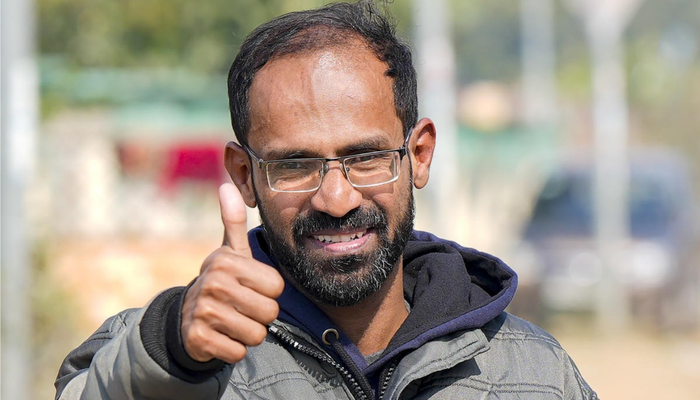
Kerala: Siddique Kappan among 11 booked for organising unlawful assembly against the arrest of Maoist sympathiser Rejaz M Sheeba Sydeek in a UAPA case

0

Terror accused ‘journalist’ Siddique Kappan was booked, along with 10 others, by the Ernakulum Central Police in connection with an unlawful assembly and use of loudspeakers without permission on Saturday evening (14th September). Two of the accused were arrested by the police and later released on station bail.

The accused had reportedly gathered at Ernakulum Vanchi Square, close to the High Court Junction, to organise a ‘Comrade Rejaz Solidarity Gathering’ condemning the arrest of Maoist sympathiser Rejaz M Sheeba Sydeek. Rejaz is facing charges under the Unlawful Activities Prevention Act (UAPA) for condemning Operation Sindoor carried out by the Indian Armed Forces against terror camps in Pakistan and Pakistan-Occupied Jammu & Kashmir. They reportedly obtained permission from the Kochi Corporation to hold the event, but did not secure mandatory police approval for the use of loudspeakers.

Apart from Kappan, others booked in the case are Neeharika Pradaush, Pramod Puzhangara, Ambika, C P Rasheed, Sajid Khalid, Baburaj Bhagavathy, VM Faisal, Mrudhula Bhavani, Dr Hari, and Shaneer. The FIR was registered under Sections 189(2), 190, and 285 of the BNS and Sections 118(e) and 117(e) of the Kerala Police Act. It reportedly states that the accused unlawfully assembled and raised “slogans for the release of comrade Rejaz and fight against the fascist UAPA”. The unlawful assembly was led by the 11 accused, and 30 others were present. The FIR further mentions that the accused did not disperse, and two of them argued with a sub-inspector.

“They had no valid sanction to use loudspeakers and had gathered illegally, causing obstruction to both pedestrians and traffic in the area. Hence, they were taken into custody,” said the assistant commissioner with Ernakulam Central subdivision, Sibi Tom. “When the police reached the spot, most participants dispersed. However, two individuals refused to leave and even pushed the sub-inspector on duty, obstructing official work,” she added.

BJP’s Ernakulam district committee has also lodged a complaint with the police regarding the event. The committee said that Kappan’s participation in the event violated the bail conditions set by the Supreme Court. Kappan, who is accused of planning to incite riots over the Hathras case, has links with the PFI. He was granted bail by the Supreme Court in September 2022.

Rejaz M Sheeba Sydeek condemned India’s Operation Sindoor and action against Naxalites

Rejaz M Sheeba Sydeek was arrested in Nagpur in May this year after he posted against Operation Sindoor on Instagram and also criticised the government’s action against Naxalites. He was also reportedly brandishing firearms in the video.
Sydeek was booked under sections 149 (preparing to wage war against the government of India), 192 (giving provocation with intent to cause riot), 351 (criminal intimidation) and 353 (statements conducing to public mischief) of the BNS, along with relevant provisions of the UAPA. During the arrest, police seized three books related to banned Maoist ideology, including one focused on GN Saibaba, who was once accused of being a Naxal.

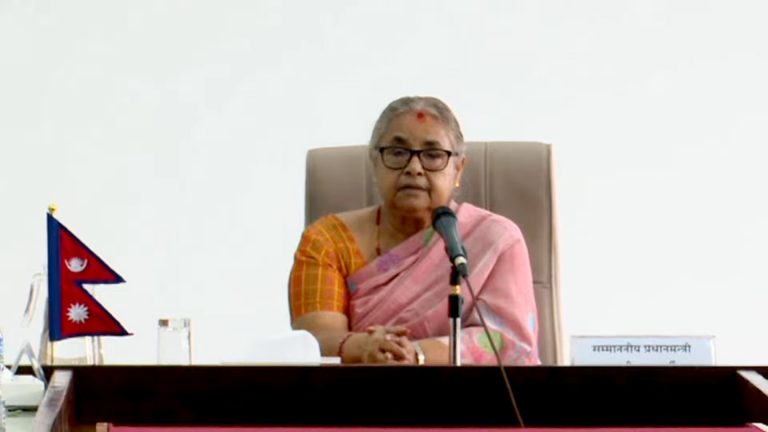
Sushila Karki assumes charge as Nepal’s Interim PM, declares victims of GenZ protests as martyrs, announces probe into arson and vandalism calling them criminal acts

Sushila Karki formally took charge as Nepal’s prime minister on Sunday, two days after she was sworn in as the head of the interim government by President Ramchandra Paudel. Before assuming charge, she visited the Martyrs’ Memorial at Lainchaur.

The new PM has occupied the Home Minister’s office in Singha Durbar, as the Prime Minister’s office building in the palace compound was set on fire by the Gen Z protestors. One of the first decisions taken by the new government is to provide relief to victims of last week’s protests, and to declare them as martyrs.

Chief Secretary Eknarayan Aryal said that the government has declared those killed in the Gen Z movement as martyrs. The families of the martyrs will receive Rs1 million from the government.

Moreover, the government has also directed hospitals to provide free medical treatment to the injured, and treatment has already begun under the new decision. PM Karki on Saturday visited various hospitals in Kathmandu and met the injured protesters receiving treatment. 

Significantly, PM Sushila Karki said that the arson and vandalism that took place during the Gen Z protest last week were criminal acts against the country. She added that these criminal acts must be investigated and the truth made public, and those responsible must be brought to justice.

The PM said that the government would investigate the vandalism targeting Singha Durbar, Parliament building, Supreme Court, business complexes, and private property.

She said, “I have never seen such a transformation in just about 27 hours of protests. To meet this group’s demands, we must all work with determination. I did not come here out of desire; I took on this responsibility after you all urged me to step in.” PM Karki further added, “Looking at what happened in the name of protests, it seems as if it was executed in a planned way, raising questions of a conspiracy.”

Sushila Karki has started consultations with close aides and leaders from the Gen Z movement to appoint her cabinet ministers. Although she can appoint up to 25 ministers, reports suggest that she will keep it limited to 15. Notably, the interim government will be in power for just six months, as the president has said that the elections must be held by 5 March 2026.

Gen Z members are also holding consultations to suggest names from their side, and most of the discussions are taking place on Discord. Notably, Sushila Karki was also selected by the protestors on the social media platform through a voting. If consensus on names is received, the new ministers will be sworn in by Sunday evening.

Pakistani lies become Congress agenda: PM Modi slams Congress for repeating Pakistani claims on Operation Sindoor, asks people to be cautious of the party

0

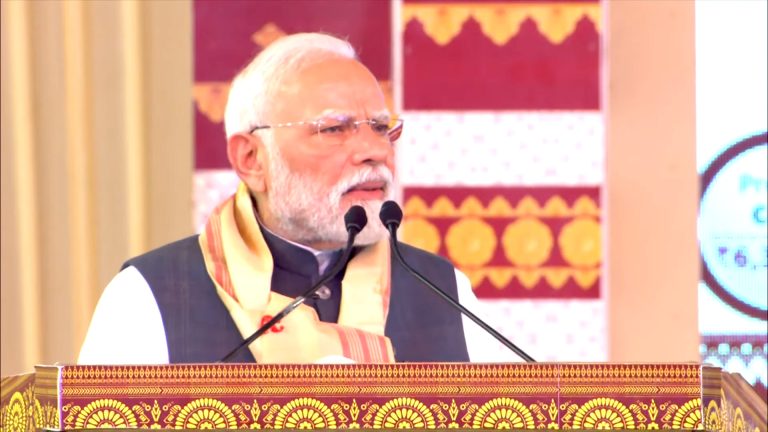
PM Narendra Modi on Sunday strongly criticised the Congress party, accusing it of aligning with forces that go against India’s interests. While addressing a massive public meeting in Mangaldoi, Darrang district of Assam, the PM said that Pakistan’s lies becomes Congress agenda, giving the example of how Rahul Gandhi and other Congress leaders repeated the claims of Pakistan on Operation Sindoor.

PM Modi was in Assam as part of his visit to the Northeast after visiting Manipur and Mizoram. He laid foundation stone for several mega projects, including a medical college, a GNM School and a B.Sc. Nursing College, Guwahati Ring Road Project, and the Kuruwa–Narengi Bridge over Brahmaputra river.

Addressing the event, PM Modi said, “For the sake of politics, Congress has always associated itself with ideologies that are against the country. This was clearly visible during Operation Sindoor. When our forces destroyed terrorist leaders across Pakistan, the Congress stood with the Pakistani army instead of supporting the Indian Army. Instead of backing our soldiers, Congress repeated Pakistan’s lies and promoted the agenda of those who shelter terrorists. That is why people must always remain cautious of the Congress party.”

PM Modi went on to say that Congress has now become a “protector of invaders and anti-nationals.” According to him, vote-bank politics is Congress’s top priority, even above the nation’s interest. He accused the party of supporting infiltrators and wanting them to permanently settle in India.

Referring to the past, Modi said that when Congress was in power, it encouraged infiltration and even tried to bring these groups into the political fold to influence decisions about India’s future. He also said that during the Congress rule, encroachments were carried out on farmers’ lands and even on religious sites.

“Encroachments on farmers’ land and on places of worship were carried out under the previous Congress governments. Since the formation of the BJP-led NDA government, we have begun to correct those wrongs and remove illegal claims,” Modi told the gathering, stressing that the BJP was committed to protecting the people’s rights and the nation’s security.

Ayodhya to witness ‘green fireworks’ this Diwali, state government to set a new Guinness Book World Record by lighting 26 lakh diyas along Saryu River

Ayodhya in Uttar Pradesh is set to witness a majestic show of green fireworks this coming Diwali. A splendid Deepotsav will be organised in the city of Lord Ram, in which over 26 lakh (2.6 million) diyas or earthen lamps will be lit at the Ram Ki Paidi and other Saryu ghats of Ayodhya. This is expected to set a new Guinness Book of World record.

According to state government officials, eco-friendly, pollution-free fireworks will be among the highlights of the Deepotsav on October 19th. Tourism and culture minister Jaiveer Singh said that preparations have already commenced to make Deepotsav 2025 both divine and grand. “This time, with over 26 lakh diyas and international-level pollution-free fireworks, we will showcase the cultural grandeur of Ayodhya, giving every devotee an unforgettable experience,” Singh said.

“Amid devotional performances, a special highlight will be a pollution-free green fireworks show—a fusion of faith and innovation. Lasting about 10 minutes, an international-standard display will blend music, laser effects and modern choreography, as colourful fireworks soar into the sky and reflect brilliantly on the waters of the Saryu, leaving spectators spellbound,” he added.

Principal Secretary, Tourism and Culture, Mukesh Kumar Meshram, said that Deepotsav 2025 will celebrate an amalgamation of tradition and innovation. The intention behind including eco-friendly fireworks is to give out a message of sustainability to all the devotees while also showcasing Ayodhya’s heritage at an international level.

The Deepotsav is being organised in Ayodhya since the Yogi government came to power in the state in 2017. During last year’s Deepotsav in Ayodhya, 25,12,585 (2.51 million) diyas were lit along the banks of the Saryu river, setting a Guinness World Record. The total number of diyas lit across Ayodhya was more than 35 lakhs.

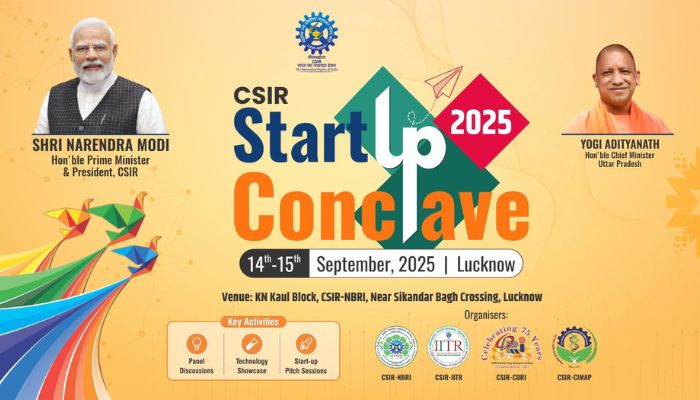
Uttar Pradesh: CSIR Startup Conclave Lucknow 2025 to showcase innovation and entrepreneurship

0

On 14th and 15th September, the Council of Scientific and Industrial Research (CSIR) is hosting the CSIR Startup Conclave Lucknow-2025 at KN Kaul Block, CSIR-NBRI. The two-day event will bring together scientists, industry leaders, policymakers, investors, and young entrepreneurs to strengthen India’s innovation ecosystem and drive technology-based growth. NBRI, CDRI, IITR and CIMAP labs have come together to organise the conclave.

In a post on social media platform X, Chief Minister of Uttar Pradesh, Yogi Adityanath, called it a significant step under the vision of Prime Minister Narendra Modi’s ‘Startup India’ mission. He said that the conclave is not just an event but a celebration of innovation and entrepreneurship. He added that at the conclave, farmers would connect with science, young entrepreneurs would be empowered to realise their dreams, and agricultural research would contribute to social prosperity.

He highlighted UP’s resolve of ‘Viksit Bharat-Viksit Uttar Pradesh’ and said that the conclave would contribute towards making the state a national hub for biotechnology, entrepreneurship, and innovation. The event would provide new ideas, fresh energy, and expansion to the innovation ecosystem, he said.

Focus on bridging research and industry

The conclave comes at a time when start-ups are being seen as the backbone of India’s innovation ecosystem. Organisers of the event in a post on social media highlighted that while CSIR institutes such as NBRI, CDRI, IITR, and CIMAP possess rich expertise in biotechnology, pharmaceuticals, health care, agriculture, aroma, medicinal plants, and applied environmental sciences, there is often a gap between laboratory research and industry-scale applications. The conclave is expected to address this gap through structured interventions for commercialisation and scaling.

Key activities planned

There will be panel discussions on health care, pharmaceuticals, and environmental sciences during the conclave. Furthermore, handholding sessions are being organised for technology transfer with industry. A dedicated technology showcase will display CSIR-developed innovations. In the start-up pitch sessions, innovators and entrepreneurs will present their ideas before potential investors.

Further activities include B2B and B2G meetings between start-ups, industry leaders, and government agencies. There will be workshops and awareness sessions designed to strengthen the start-up ecosystem.

In a post on X, Union MoS (Ind. Charge) Science & Technology, Dr Jitendra Singh, said, “A golden opportunity for innovators, StartUp entrepreneurs, researchers and Industry leaders to come together on one of the largest platforms dedicated to technology-driven entrepreneurship. Over 50 CSIR-incubated StartUps will showcase innovations in biotechnology, healthcare, agriculture, aroma, and environmental technology.”

Target audience and objectives

The aim of the conclave is to encourage start-ups in sectors including biotech, pharma, aroma, agriculture, and environment. Furthermore, it will help to connect young entrepreneurs, researchers, students, policymakers, and state and central government departments. The conclave will help in building collaboration platforms between CSIR labs, start-ups, and industry, showcasing technologies, driving sustainable growth through partnerships, supporting young innovators, and creating stronger linkages for incubation and funding.

What is CSIR?

The Council of Scientific & Industrial Research (CSIR) was established in 1942. It is India’s premier national R&D organisation functioning under the Ministry of Science and Technology. CSIR has vast infrastructure that includes 37 labs and 39 outreach centres. Around 3,400 scientists work for the organisation. CSIR is at the forefront of research in several sectors including biotechnology, pharmaceuticals, agriculture, environment, aeronautics, and IT. The organisation is recognised globally for its scientific output and patents. It plays a crucial role in encouraging innovators, driving entrepreneurship, and delivering technological solutions for national development.

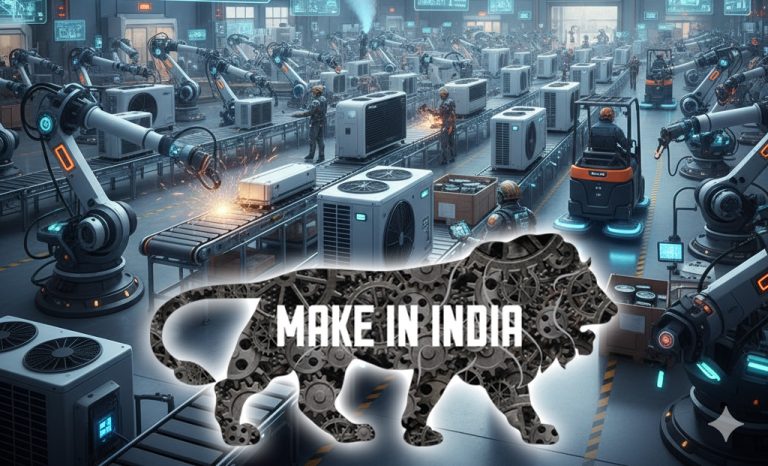
Union govt reopens application window for PLI Scheme for ACs and LED lights due to industry appetite to invest more

The Union Government is reopening the application window for the PLI Scheme for White Goods (ACs and LED Lights). A press release issued by the Ministry of Commerce & Industry said that this is being reopened based on the appetite of the industry to invest more under the Scheme. The ministry said that this is an outcome of the growing market and confidence generated due to manufacturing of key components of ACs and LED Lights in India under the PLIWG Scheme.

The application window is being opened on the same terms & conditions stipulated in PLIWG Scheme notified on 16.04.2021 and PLIWG Scheme Guidelines issued on 04.06.2021, as amended from time to time.

The application window for the Scheme shall remain open for the period from 15th September, 2025 to 14th October, 2025 (including both dates) on the PLIWG on-line portal. The ministry said that no application will be accepted after the closure of the application window.

In order to avoid any discrimination, both new applicants as well as existing beneficiaries of PLIWG who propose to invest more by way of switching over to higher target segment or their group companies applying under different target segment would be eligible to apply, subject to fulfilling the eligibility conditions.

So far, 83 applicants with committed investment of Rs 10,406 crore have been selected as beneficiaries under the PLI scheme. The investments will lead to manufacturing of components of Air Conditioners and LED Lights across the complete value chain, including components which are not manufactured in India presently with sufficient quantity.

The Union Cabinet had given approval for the PLI Scheme for White Goods for manufacture of components and sub-assemblies of Air Conditioners (ACs) and LED Lights on 07.04.2021 in pursuance of the clarion call of the Prime Minister Narendra Modi for ‘Atmanirbhar Bharat’ to bring manufacturing at the centre stage and emphasise its significance in driving India’s growth and creating jobs.

The Scheme is to be implemented over a seven-year period, from FY 2021-22 to FY 2028-29 and has an outlay of ₹ 6,238 crore.

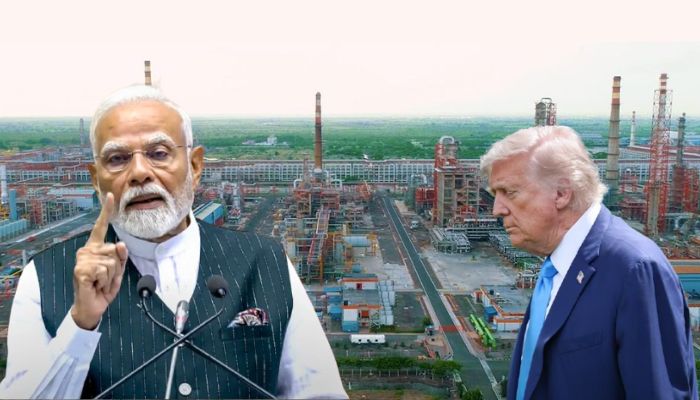
US politician demands more tariffs on India after pressure tactics to curb Russian oil imports fail: Read how Modi govt is standing its ground against Western hegemony

A senior U.S. politician has demanded tougher tariffs on India after Washington’s earlier attempts to reduce New Delhi’s Russian oil imports fell flat. U.S. Congressman Brian Fitzpatrick, who recently visited New Delhi as part of a high-level delegation, has now called for even tougher tariffs on countries continuing to buy Russian oil.

India, which has continued to import Russian oil to meet the energy needs of its people and refuses to bend to Western hegemony, happens to be a major target of these proposed penalties.

During his trip, Fitzpatrick said Indian refiners were signalling a shift under “sustained U.S. pressure,” but the ground reality shows otherwise. 

Imports of Russian oil into India are actually set to rise in September, according to a report by Reuters. Still, the Republican lawmaker, who chairs the House Intelligence Committee’s CIA Subcommittee, has returned to Washington, calling for further economic action.

Backing his demand, U.S. Senator Lindsey Graham released a lengthy statement supporting President Donald Trump’s push for coordinated tariffs on nations such as China, India, and Brazil. The message was blunt: if New Delhi continues to buy Russian crude, Washington wants to hit back with more tariffs.

A new round of pressure tactics by another US leader

In his statement, Senator Graham praised Trump for “urging America and Europe to impose serious tariffs on China for propping up Putin’s war machine by buying cheap Russian oil and gas.” He added that similar measures should extend to India and Brazil, describing it as “the right approach to bring maximum economic pressure to bear.”

Graham also confirmed that bipartisan lawmakers are pushing for legislation to empower Trump to act decisively. “We will be urging our colleagues, on both sides of the aisle, to join us in advancing this legislation and standing with freedom against tyranny,” he said, suggesting that new sanctions and tariffs could soon become law.

This signals that Washington is preparing for a fresh round of economic coercion. Trump himself has doubled tariffs on Indian imports in recent weeks, and now members of Congress are openly calling for secondary penalties aimed squarely at New Delhi.

Modi government refuses to bend

But despite this sustained pressure campaign, Prime Minister Narendra Modi and his government have made it clear that India will not compromise on energy security. Far from scaling back imports, India’s refiners are preparing to increase purchases of 

Russian crude, taking advantage of discounted prices and diversifying its supply lines in the process.

Officials in New Delhi have emphasised that this decision is not about politics but about economics and stability. By sourcing cheaper oil, India has been able to keep inflation in check and shield its 140 crore citizens from the worst of the global energy crisis. The government’s stand reflects a wider principle: India will pursue policies in its own national interest, regardless of Western virtue signalling.

EAM Jaishankar pushes back against criticism

External Affairs Minister S. Jaishankar has been particularly vocal in defending India’s oil imports. Speaking in Moscow on 22nd August, he dismissed accusations that India was undermining global stability. “We are not the biggest purchasers of Russian oil; that is China. We are not the biggest purchasers of LNG; that is the European Union. We are not the country which has the biggest trade surge with Russia after 2022,” he said, adding that it was “perplexing” to see India singled out.

Jaishankar also reminded the international community that India’s oil purchases had in fact stabilised global markets. “We are a country where the Americans have said for the last few years that we should do everything to stabilise the world energy market, including buying oil from Russia. Incidentally, we also buy oil from the U.S., and that amount has increased. So honestly, we are very perplexed at the logic of the argument,” he pointed out.

At another event in late August, the minister delivered a clear message: “If you don’t like it, don’t buy it. But Europe buys, America buys. If you don’t like it, don’t buy from us.” His words struck a chord, highlighting the double standards at play. While Europe continues to import Russian LNG and the U.S. still purchases Russian uranium, India is being pressured to cut ties.

PM Modi’s strong response

Prime Minister Modi has also made his stance clear. “The pressure on us may increase, but we will bear it all.” He emphasised that national interests of farmers, small and medium-scale industries, and common citizens are given priority. For PM Modi, securing affordable energy is not negotiable, and no amount of external pressure can override that.

This confidence is backed by numbers. India is currently importing over a million barrels of Russian crude per day, much of it at a discount compared to global benchmarks. A more recent report by the news agency even said India would get Russian oil at a discounted price, with a barrel of Urals crude reportedly $3–$4 cheaper than Brent. 

Trump’s 50% tariffs on India

The latest remarks by the US congressman comes days after US President Donald Trump‘s 50% tarrifs on Indian imports took effect on August 27. One half of these duties were imposed over India’s oil trade with Russia, which the US officials claim indirectly funds the war in Ukraine.

As Fitzpatrick said that Indian refiners may be mulling reducing Russian oil imports, he said the move was “a consequential shift that directly undermines Moscow’s ability to finance its war in Ukraine”.

Why India continues buying Russian oil

Explaining India’s position further, Jaishankar said that crude oil purchases from Russia not only support India’s domestic needs but also help keep international prices stable. “Yes, it is in our national interest, but it is also in global interest,” he said.

He recently visited Russia for annual bilateral talks, where discussions included expanding trade. Meanwhile, Jaishankar reaffirmed that India’s stand on the Russian-Ukrainian conflict is clear-cut. “We desire an early cessation of hostilities,” he mentioned, reiterating that India desires peace while managing its economic interests.

Petroleum Minister Hardeep Puri also emphasised that India has diversified its oil sources, now buying from nearly 40 countries instead of 27 earlier, which gives it flexibility in case of disruptions. This diversification strategy strengthens energy security, making India less vulnerable to geopolitical shocks.

Negotiations with Washington stall

Despite repeated visits and negotiations, U.S. efforts to persuade India have failed. Fitzpatrick’s office claimed that Indian refiners were preparing to scale back Russian imports, but data tells another story. 

According to a report by Reuters, Reliance Industries and Rosneft-backed Nayara Energy are actually preparing to increase their purchases by 10–20% this month. That means an additional 150,000-300,000 barrels per day will be flowing in from Russia.

This directly contradicts Washington’s narrative that pressure tactics are working. Instead, the opposite is happening: India is doubling down. The recent reports also indicate that India is buying Russian oil at discounts, which fortifies its economy but disappoints American lawmakers.

Strengthening relations with Russia and China

India’s strengthening ties with Russia and China are another sign of India’s not bowing down, and PM Modi is standing his ground. Modi and Russian President Vladimir Putin solidified connections during their latest meeting at the Shanghai Cooperation Organisation (SCO) Summit in China.

The two leaders, hold a bilateral meeting on the sidelines of the Summit, meeting for the first time after the US imposed 50 per cent tariffs on India over its Russian oil imports.

During his bilateral meeting with Russian President Vladimir Putin in Tianjin, China, Prime Minister Narendra Modi also addressed the war in Ukraine and said, “We have been continuously discussing the ongoing conflict in Ukraine. We welcome all the recent efforts for peace. We hope that all parties will move forward constructively. A way has to be found to end the conflict as soon as possible and establish lasting peace. This is the call of the entire humanity.”

“We welcome all the recent efforts for peace,” PM Modi said in the meeting. 

This was not just a symbolic friendship. It was a calculated statement, India will not be bullied out of its choices.

India’s increasing proximity to Russia is also counterbalanced by its engagement in multilateral forums such as BRICS and SCO, where China dominates. For New Delhi, both strategic and economic opportunities are on offer through such platforms, complementing its autonomy from Western pressure.

Double standards exposed

The larger problem lies in the hypocrisy of Western nations. Europe, which still imports massive amounts of Russian LNG, is not penalised. The U.S., which continues buying Russian uranium for its nuclear industry, is not questioned. But India, which has openly explained its position and acted transparently, is singled out for criticism.

In 2022, the European Union paid over $120 billion to Russia for fossil fuels. In the same period, India’s payments were less than half that, around $50 billion. Despite this, Western governments have focused their criticism on New Delhi, ignoring their own continued dependence on Russian energy.

Jaishankar has not missed an opportunity to call out this double standard. “Arguments used to target India have not been applied to China,” he pointed out, adding that many of the same critics were silent when global oil prices spiked in 2022 and India’s Russian purchases helped stabilise markets.

India’s clear message to the world

At the heart of India’s stance is a simple principle: decisions will be made in the national interest. Jaishankar has asserted that New Delhi will not compromise on energy security, time and again. Modi has asserted the same, reiterating that India will not yield to foreign pressure.

The Trump administration’s threats of tariffs and congressional resolutions will likely take up space on Washington’s front pages, but are not about to alter policy in New Delhi. India has demonstrated that it can resist pressure, defend its economy, and remain a player in the global community by appealing for peace and diplomacy in Ukraine.

The latest calls for additional tariffs, led by Congressman Fitzpatrick and supported by Senator Graham, underline Washington’s frustration. Negotiations have failed, tariffs have not worked, and India’s oil imports from Russia are still rising. For the Modi government, this is a matter of sovereignty and survival, cheap oil keeps the economy running and citizens protected from inflation.


What is PFI’s India Vision 2047 document, which has come under spotlight after arrest of its Bihar President Mahboob Alam

The National Investigation Agency (NIA) arrested the Bihar state president of the banned Islamic fundamentalist organisation Popular Front of India (PFI) on Saturday (14th September). Accused Mahboob Alam alias Mahboob Alam Nadvi has been arrested in connection with the 2022 Phulwarisharif criminal conspiracy case.

Mahboob Alam, who is a resident of the Hasanganj area of district Katihar, Bihar, was arrested in Kishanganj. He is the 19th accused to be arrested and chargesheeted out of the total 26 persons named by the police in the case. The case relates to the involvement of the PFI in anti-national and unlawful activities aimed at creating an atmosphere of terror by spreading religious enmity between members of different religions and groups.

The NIA said that the case is related to activities prejudicial to peace and harmony, and intended to disrupt public tranquillity and cause disaffection against India, justifying the use of criminal force. “Originally filed by local police against 26 suspects, the case involves PFI members in illegal and anti-national acts. These activities aimed to spread fear by fuelling religious hatred between communities, disrupt peace, and create unrest against the country. The group even promoted violence to achieve their goals,” said a statement released by the NIA.

According to the investigation agency, Mahboob Alam and other PFI members were acting on the plan laid down in a secret “vision document” of the Islamic outfit, which was seized by the agency from Ahmad Palace in Phulwarisharif on July 11, 2022. The NIA revealed that Mahboob Alam was found to be a part of the conspiracy linked to the plan. He and the other co-accused were involved in recruitment, training, meetings, and other anti-national activities of the PFI. “He also raised funds and provided the same to co-accused persons and PFI cadres. Investigations in the case under the BNS and UA(P) Act are continuing,” the NIA said.

PFI’s mission for Gazwa-i-Hind by 2047

In July 2022, the Bihar police seized an 8-page document during a crackdown on a secret PFI operation in the state, in which it planned to launch an attack on PM Modi during his visit to Patna. The document titled “India 2047: Towards Rule of Islam in India” contained a detailed plan for the Islamisation of India in the coming years. The PFI circulated the document among its cadre to motivate them to act on the plan that aimed to dominate the ‘coward Hindus’ and subjugate them, a goal which, according to the PFI, would be achievable even with the support of 10% of Muslims.

Furthermore, the document mentioned a conspiracy to launch a full-fledged armed uprising against the Indian State with the help of their trained cadre and with the help of Islamic countries like Turkey. The plan also included appealing to other Islamic nations seeking their help in bringing the Indian state and the majority Hindus ‘to their knees’.

This was followed by two rounds of raids conducted by the NIA at multiple locations, in which the agency seized several incriminating documents and materials from PFI organisations settled in almost 17 Indian states. The documents included a training module to make IEDs and bombs from available domestic material, and also the ‘Vision 2047’ document and a CD, underlining the PFI’s goal of Islamisation of India.

After the discovery of the PFI’s vision document, the central government passed an order banning the radical outfit and its associated or affiliated fronts in September 2022 for a period of 5 years. The government maintained that the organisations operated as unlawful associations under the Unlawful Activities (Prevention) Act (UAPA). The affiliations banned along with the PFI include All India Imams Council, Campus Front of India (CFI), Rehab India Foundation, National Confederation of Human Rights Organisation (NCHRO), National Women’s Front, Junior Front, Empower India Foundation, and Rehab Foundation, Kerala. 

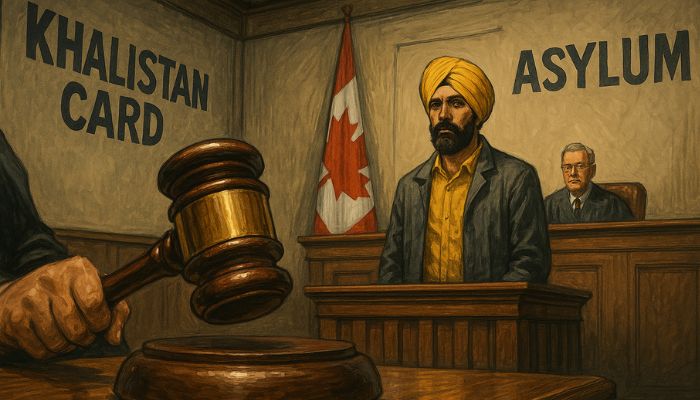
Canada: Ontario Court rejects asylum claim of ‘Khalistani’ Pardeep Singh – Read how refugee protections are repeatedly abused using the ‘Khalistan card’

0

On 6th September, the Federal Court in Toronto, Ontario rejected the asylum claim of one Pardeep Singh, an Indian citizen who had sought refuge in Canada after his work permit expired in November 2024. According to snippets of court documents shared by a freelance journalist who goes by the handle OnTheNewsBeat on social media platform X, Pardeep Singh entered Canada in February 2023 on a spousal work permit.

He attempted to stay on by filing a refugee claim. However, his application was dismissed as ineligible under the Immigration and Refugee Protection Act. Notably, he had previously made a refugee claim in Australia between 2014 and 2019. Interestingly, Singh played the infamous ‘Khalistan card’ and claimed possibility of persecution by Indian authorities if he returned to his home country.

The timeline of his case underlines a well-established pattern. After his work permit expired, Singh did not apply for an extension. Instead, he played the ‘Khalistan card’ and filed a refugee claim on 16th November 2024. This was rejected on grounds of prior asylum attempts. In February 2025, he was informed that he could apply for a Pre-Removal Risk Assessment (PRRA).

For those who are unaware, PRRA is a process in Canada that allows certain individuals facing deportation to ask for protection if they believe they would be at risk if sent back to their home country. Through this option, applicants can present new evidence showing they face danger of persecution, torture, risk to life, or cruel and unusual treatment or punishment. The application is then reviewed by immigration officials before the removal. This option cannot be seen as a full asylum process but a last chance safeguard for people about to be deported, which in this case was Pardeep Singh.

After getting information that he was eligible for PRRA, Singh pursued the option only to get his application rejected on 15th August 2025. Ten days later, the Canada Border Services Agency (CBSA) informed him that he would be deported on 8th September 2025. Singh challenged the decision with an Application for Leave and Judicial Review (ALJR) and sought a deferral of removal. However, his request was denied on 2nd September 2025.

In the judgment, the Federal Court noted that Singh had submitted affidavits and evidence. However, the decision officer placed little weight on those documents. Instead, social media evidence presented by authorities highlighted Singh’s involvement in the Farmers’ Protest in India and his continued support for the Khalistan movement in Canada.

The court specifically observed that Singh’s parents had also provided a joint affidavit in support of his claim. However, the officer found it lacking in substance, noting that it contained no concrete details about the alleged threats or harassment they faced and offered little clarity on the circumstances of their arrests. As a result, the affidavit was given minimal weight, with the focus instead shifting to Singh’s own online activities and public associations.

A familiar modus operandi

The rejection of Singh’s claim brought back a now-familiar tactic. The asylum route has become a convenient alternative for many Punjabi youth who are unable to migrate legally under skilled categories. In doing so, they invoke the infamous ‘Khalistan card’. The strategy works in one of two ways. Some adopt an outward persona of being pro-Khalistan to strengthen their claim of possible persecution in India, while others are genuine sympathisers of the Khalistani separatist ideology and attempt to parlay that into asylum.

The logic is simple. They project themselves as victims of political and religious persecution linked to the Khalistan movement. These individuals expect sympathetic treatment in Western countries that often present themselves as protectors of minorities. While many attempts succeed, like in the case of now-dead Khalistani terrorist Hardeep Singh Nijjar, Singh’s case shows that not every attempt is successful. Repeated claims in multiple countries, lack of supporting evidence, or exposure of social media activity that confirms more opportunism than persecution can easily undermine the narrative.

The ‘Khalistan card’ and its enablers

The abuse of asylum procedures is not a new phenomenon. In Punjab, there is a cottage industry running around asylum claims. Local agents routinely guide youths on how to build a persecution story including vocabulary to use, organisations abroad to contact and affidavits to support their claim. Lawyers in Canada, the US, Australia, and the UK then take over. They often charge hefty fees to structure these asylum petitions.

This is a two-way problem. On one hand, fraudulent claims are being made to bypass the legal route of staying in a foreign country. On the other hand, actual supporters of the Khalistan movement, most of whom are either proclaimed terrorists or terror-sympathisers, find their way to countries like Canada away from Indian law enforcement agencies. Interestingly, despite having a treaty on the extradition of criminals, Canada has repeatedly rejected India’s requests, especially when it comes to Khalistan supporters.

Social media is filled with youth in Canada, the US, and Australia who openly glorify Khalistani terrorists, promote separatist propaganda, and amplify the rhetoric of groups like Sikhs for Justice (SFJ), a banned terrorist organisation in India. Host countries often provide a shield to these elements despite the security risk to themselves.

The dangers of asylum abuse

In principle, asylum is meant to protect individuals who face genuine threats of persecution, torture, or death in their home countries. It is a humanitarian instrument rooted in international law. However, the system begins to crumble when it is routinely gamed.

Fraudulent claims often clog asylum systems, delaying protection for those who genuinely need it. They also introduce security risks, especially when the asylum narrative is built around extremist ideologies. Canada, for instance, is facing the side-effects of supporting the Khalistani movement. It has ruined diplomatic relations with a friendly country, India. Host societies are left grappling with the unintended consequences, that too on an international level.

Lessons from past patterns

Canada has faced challenges with countless Punjabis seeking asylum over the years claiming possibility of persecution for supposed Khalistan sympathies. In many cases, they succeed. Former Sangrur MP Simranjit Singh Mann even boasted of issuing thousands of letters supporting asylum claims, often in exchange for money. These letters painted applicants as potential victims of state oppression, creating a paper trail to bolster their narratives.

Singh’s case as a cautionary tale

Pardeep Singh’s case is not extraordinary. It follows a predictable script. Arrival on a temporary permit, expiration of legal status, shift to asylum claim, invocation of the Khalistan card and eventual rejection. However, that does not mean the Federal Court has rejected the narrative. In some instances, claims survive because of technical grounds.

For example, Gurcharan Singh (IMM-12706-24), where the matter was remitted for redetermination over oral hearing inconsistencies; Iqbal Singh Dhaliwal (IMM-11033-24), where the Court found a key CBSA dossier overlooked and sent the case back; or Amandeep Singh and Kanwaldeep Kaur (IMM-4214-24), where the Court upheld findings that their Khalistan-based sur place claim was disingenuous and dismissed it. These examples show the narrative remains alive, with outcomes shifting case by case. These decisions came in the past two months in Toronto Federal Court.

In the case of Pardeep Singh, the Canadian authorities underlined his previous asylum claim in Australia and demonstrated that this was not an isolated attempt but part of a pattern. For Singh, the outcome is deportation and his case can very well be used by pro-Khalistani elements to put pressure on policymakers to amend rules that reflect the host country prioritising asylum seekers’ rights.

Conclusion

Pardeep Singh’s failed asylum claim is more than an individual story. As mentioned above, there were three decisions made in just two months on similar grounds. It is a reflection of how the ‘Khalistan card’ has become both a tactic and a liability in global migration politics. By attempting asylum in multiple countries, by leaning on separatist narratives, and by projecting a persona of persecution, such individuals represent a pattern that has become all too familiar.

The tragedy is, while these elements are playing with the system, genuine asylum seekers, those who are facing real threats, find their voices drowned out.