Home Blog Page 5343

Economic policy to alleviate the immediate effects of Covid-19 on the Indian Economy needs to be tactical to stabilize society

Worldwide, economies are expected to get a hammer blow from the effect of Covid-19. In India also a contraction in the economy is inevitable. It is very challenging to estimate the level, given the uncertainty of how long the pandemic persists. Reliable data is hard to come by and the challenge is magnified in these unprecedented times due to the effects of the lockdown. Even where data is available, its application in computing Gross Value Added GDP using simulation models may be rendered statistically irrelevant because of the staggering range of the variation.

While one hopes that the government has the resources to compute the numbers in a dynamic context, there has not been any substantive press releases with such details. Most of the reporting has thus been reliant on reports by investment banks with the inherent strengths and weaknesses of the simulation models the have use for sectoral GDP calculation. As these are mostly proprietary, they are not available for public scrutiny and without their analysis one can hardly comment on the accuracy of such forecasts. However, conclusions, when published, are used in India’s noisy and highly polarized politics to further political positions. They are reported in mainstream television media with headline-grabbing bombast accompanied by selective usage of footage from real-life stories that can be found to buttress as many points as there are humans.

All this justifiably causes a great deal the angst amongst the populace. During such times of crisis, the data-driven analysis should be the only way to assess the extent of the disaster as it is unfolding. It is precisely because of these reasons that the authors have adopted a simplistic methodology to work out estimates of what might happen in each constituent sector of the economy. The emphasis is to ensure that the assumptions are clearly stated and documented so that subsequent revisions can be effected, once more data is available.

The Lockdown in the Indian Economy was declared on March 25, 2020, when the financial year 2019-2020 was nearly over. As the Financial Year (FY) for the Indian Economy starts from April 1, its impact is mainly going to affect the FY 2020-2021. Most of the 2nd quarter of Calendar Year (CY) 2020 (or 1Q of FY 2020-2021) is going to be lost with a cliff-edge drop impact on the GDP. For purposes of simplicity, the authors have considered zero revenue for impacted sectors. Thereafter while several sectors will take many quarters to recover others should be able to pick up the threads unless the pandemic runs amuck causing disastrous levels of death. Given in the following is a construct of the Gross Value Added (GVA) measure of the Indian Economy by considering a sectoral drop percentage in various constituent sectors.

  • For the Trade, Repair, Hotels, Tourism and Restaurants sectors, a change factor of 0.5 or 50% has been considered with the GVA drop being 50%.
  • Electricity, gas, water and utilities have been considered at 100% representative or minimal impact.
  • With transport starting to operate, change in transport is considered at a factor of 0.75, with GVA drop being 25%.
  • While agriculture is not expected to be impacted severely there is a lot of loss of value due to the lockdown, considered at a GVA drop of 20%.

While these are armchair affixed factors, within the macroeconomist’s discipline these should and would be based on statistically determined sectoral simulations. The big-ticket conclusions from the given armchair exercise on the effect of a full 3 month lockdown from April to June on an annualized FY 2020-2021 basis, are the following. A word of caution for the readers, that this is a worst case assumption.

GDP Drop26%Value of US$ 624 Billion
Loss of GVA in Agriculture12%Value of US$ 52 Billion
Loss of GVA in Industry27%Value of US$ 184 Billion
Loss of GVA in Services31%Value of US$ 388 Billion

The table below lays out the details of calculation behind the aforesaid numbers:
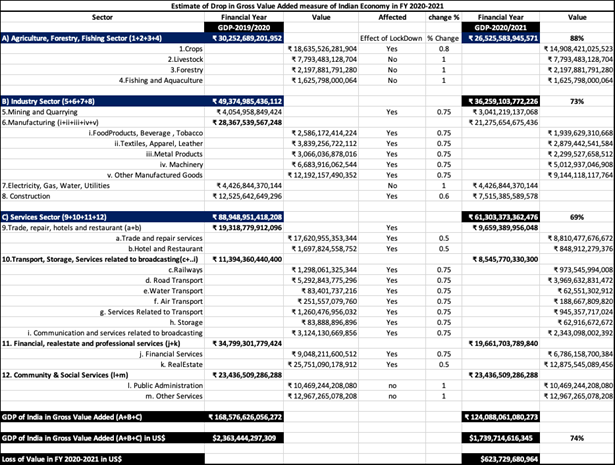
Base Line GDP 2019-2020 constructed based on GDP growth applied to 2016-17 data gathered from following and applying growth rates 2017-18 (8.2%), 2018-19 (7.2%), 2019-20 (5%) & INR = 0.01402 US$
Source: statisticstimes

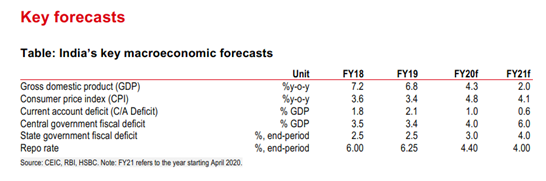
It is revealing to compare these estimates to the professional estimates prepared by global financial giants such as Goldman Sachs, Nomura and HSBC.

Goldman Sachs:

Goldman Sachs predicts the Indian economy will shrink by 45% on an annualized basis this quarter, and suffer its most severe recession since 1979 this fiscal year, as the coronavirus pandemic wreaks havoc on many of its industries. Their   latest quarterly growth forecast, detailed in a May 17 note, is significantly worse than its previous estimate of a 20% decline. On the positive side, its economists expect the Indian economy to rebound 20% in the third quarter, compared to the current quarter. They then anticipate 14% growth in the fourth quarter and 6.5% growth in the first quarter of 2021.

Goldman Sachs’ estimate applied to the authors’ baseline results in the following.

GDP Drop31%Value of US$ 730 Billion

Nomura:

India’s real gross domestic product growth is likely to contract 5.2 percent in the financial year ending March 2021, which lowers its economic outlook amidst an extended lockdown. That is against a contraction of 0.4 percent projected earlier. “We now expect year-on-year growth to remain negative for three consecutive quarters — with growth faltering to 1.5 percent in Q1 (January-March) before plunging to -14.5 percent in Q2 (April-June), and then weakly recovering to -6.0 percent in Q3 (July-September) and -1.5 percent in Q4 (October-December),” the research house said in a statement.

Nomura’s estimate applied to the authors’ baseline results in the following.

GDP Drop5.2%Value of US$ 121 Billion

HSBC:

HSBC’s forecast on GDP decline is not available as yet.

Let us hope that neither ours nor Goldman Sachs’ estimates come to fruition. While a deep recession spares no one, it is unspeakably hard on the poor and working classes with little savings and reliant on day to day work for earnings. Below Poverty Line (BPL) population in India was approximately 22% of the population in 2012. It is expected that loss of millions of jobs as a result of the economic contraction is going to increase this number substantively. These are some of the most vulnerable sections of the society mainly from the eastern states of Bihar, UP, Orissa and Bengal (including illegal immigrants from Bangladesh).

With employment opportunities mainly concentrated in the Western and Southern states of India, a large number of BPL families travel to these states to take up employment as unskilled and semi-skilled labour in sectors such as construction, quarrying, textiles, jewellery making, hospitality and tourism, to name a few. With hardly any leverage in an oversupplied labour market, they continue to remain the most vulnerable and exploited. Since the start of the lockdown, pitiable images of these migrant workers in Delhi, Mumbai, Ahmedabad, Surat have drawn the attention of the world. Due to the cliff-edge drop in economic activity in the earlier named sectors, they have mostly remained unpaid since the start of the lockdown in India from end-March by unscrupulous private sector employers and contractors. On average their earnings are estimated at around Rs 10,000 per worker, a month.

Only recently since early May, the government organized migrant special trains to transport this restive population back to their hometowns and/or to their extended families. As they now return, by end of May their unpaid wages would total 3 months or a full quarter due to no fault of theirs. At a very conservative estimate, they could number up to a fifth of India’s labour force (of over 500 Million) at 100 Million. These workers potentially support family members numbering between 200 to 400 Million or more. A resurgence in the Indian Economy can only happen if India’s migrant labour are nursed, rehabilitated and motivated to join the rebuilding effort. In line with Pandit Deendayal Upadhyay’s principle of Integral Humanism, the authors lay a case to propose the provision of a special one time grant, to rehabilitate these affected millions.

Migrant Labour PopulationAmount in INR as GrantNumber of MonthsCost of OutlayOutlay Cost in US$
100,000,000₹10,0003₹3,000,000,000,000$42,060,000,000

A modest grant of ₹10,000 per month for 3 months for 100 million workers is going to cost ₹ 3 lakh crores or US$ 42 billion.

While naysayers will be quick to criticize this as a wasteful “dole” one should also consider it from a humanist prism as a stabilization cost for the society. An unstable society is on a slippery slope of a breakdown of law and order. The academic underpinnings of the proposal are anchored in John Maynard Keynes’s Macroeconomic Policy. Keynesian intervention has been successfully used in the past to overcome the 1930’s depression. Fundamentally the macroeconomic equation at any present moment is considered as balance between Aggregate Demand (comprising consumption and investment) and Aggregate Supply (comprising wages, rents, interest and profits). Keynesian macroeconomic policy stipulates that in unprecedented deep recessions boosting the Demand Side of the macroeconomic equation is the only way to kick start the economy.

Given below are adjacently placed tables of Fiscal Stimuli and GDP by Country extracted from the website Statista. Based on the same, the authors have compileda table of gross value of fiscal stimulus in US$. Out of all G20 countries, Japan has passed the largest fiscal stimulus package that amounts to about 21.1 percent of its gross domestic product (GDP). This package amounts to about 117.1 trillion Yen (1 Trillion US$), and consists of delivering universal cash handouts of ¥100,000 (approximately US$ 930) to every individual in Japan, comprising 126 million people. The USA has also a high fiscal intervention percentage as they did during the 2008 subprime housing-related Economic Crisis.

 Fiscal Stimuli. GDP

CountryGDP in Billions of US$Fiscal Stimuli as % of GDPBillions of US$
USA$21,439.4511%$2,358.34
China$14,140.162.50%$353.50
Japan$5,154.4821.10%$1,087.60
Germany$3,863.644.90%$189.32
India$2,935.573.50%$102.74
UK$2,743.59NANA
France$2,707.075%$135.35
Italy$1,988.641.40%$27.84
Brazil$1,847.028%$147.76
Canada$1,730.919.80%$169.63
Australia$1,376.269.90%$136.25

The Indian government has recently announced a comprehensive stimulus package of ₹20 lakh crore (or 20 trillion) worth approximately $280 Billion Dollars at an old exchange rate of ₹ = 0.01402 US$, estimated to be 10% of GDP. These are a combination of fiscal, monetary and macro-financial measures.

The key elements of the fiscal package (3.5%) captured in the earlier table are the following:

  • In-kind (food; cooking gas) and cash transfers to lower-income households
  • Insurance coverage for workers in the healthcare sector
  • Financial sector measures for Micro Small Medium Enterprises (MSME) and Non- Banking Finance Companies (NBFC)
  • Concessional credit to farmers, as well as a credit facility for street vendors and an expansion of food provision for migrant workers.

The monetary and macro-financial measures are structural in nature mainly comprising of regulatory, liquidity and policy amendments pertaining to RBI. One of the excellent policy decisions of the government is in amending legislation to give freedom to farmers to sell their produce anywhere. The new model Agricultural Produce Market Committee (APMC) Act proposes to do away with the concept of notified market area and allow the aforesaid measure. “Over time” such a policy decision is going to lead to increased agricultural revenue and even allow India to emerge as a force to reckon with in international markets as farm based value additive agro-units emerge to take advantage of this supply flexibility. There is a tremendous value and demand for Indian agro-produce such as seasonal fruits and vegetables, amongst the Indian diaspora, but mechanisms for their reliable and assured supply is required. Structural changes however strategic in nature, affect the supply side macroeconomic equation and usually take time to create an impact.

There is a legitimate question in the minds of people as to how the government is going to fund the stimulus even if it is just a medium-term (4 year) loan, without controlling runaway inflation. The following is the Debt Status of the top 100 debtors in India (based on their 2019 balance sheet) accessed from Money Control. Analysis of this suggests that public deposits more than adequately cover outstanding debt:
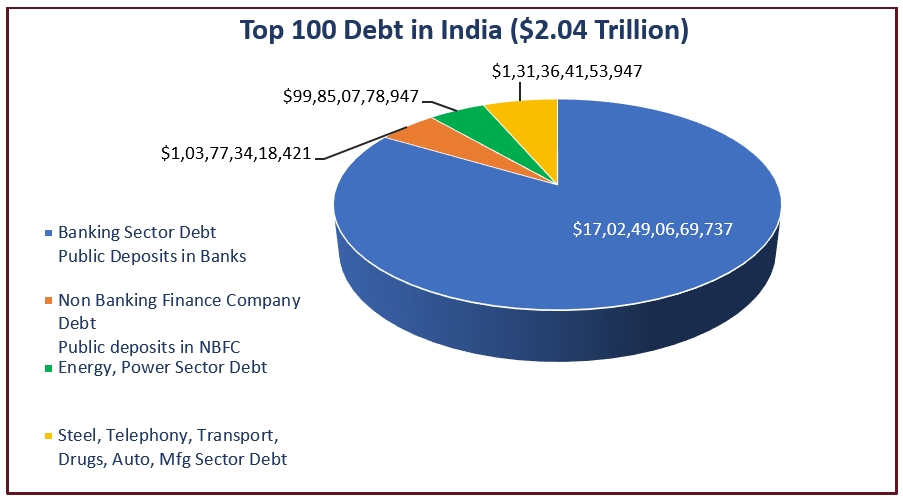
Debt in India

Banking and Finance Sector Debt actually comprises Public deposits held by these financial institutions. Presuming that the Reserve Bank has done its job professionally regarding oversight on the quantum of advances lent by banks, public deposits more than adequately cover the outstanding debt. It also explains how the government can work on a stimulus using public funds. The government also has various other policy tools such as easing controls on the level of deficit financing and external borrowings to name a couple, which has been reticent so far in use. The fear has always been about the decline in value of the Rupee and its adverse impact in funding oil imports, but at a time when every country in the world has thrown such caution to the wind and oil prices are at a historic low, there is a compelling case for more direct fiscal stimulus in the form of direct benefit transfer to India’s migrant labour and daily wagers to kick start the Demand side of the macroeconomic equation.

Economic policy to alleviate the immediate effects of COVID-19 needs to be tactical to stabilize society. The strategy has a long term horizon in terms of yield of aspired results. A fine balance of both approaches should serve India well in the times to come. The present government has displayed a commendable commitment to the highest levels of humanism by initiating the lockdown and thus effectively containing a runaway spread of the pandemic. As preparations are made to restart the economy after the effects of the lockdown, stimulating the demand side of the economy is the need of the hour. Augmenting the already announced fiscal measures by providing succour to India’s itinerant labour with an additional one-time distress grant, will enable them to have a fresh start once the economy opens up again. Industry and Businesses also need to share responsibility towards minimising labour migration by offering them food supplies and a minimum allowance to meet their monthly expense. While the mechanism of identification of the recipients of such a benefit is a technical challenge in its own right and merits an in-depth assessment, this is perhaps one policy that will have wide political consensus in the otherwise fractured polity of India.


Authors: Bhaskar Mukherjee and Professor Sunil Poshakwale

About the Authors:
Bhaskar Mukherjee is a Chemical Engineer with over 34 years’ experience in the Oil, Gas and Chemicals Business, based in UK.
Professor Sunil Poshakwale is Professor of International Finance, School of Management, Cranfield University, England.

West Bengal: Textbook for pre-primary children depicts the image of a black person as ‘ugly’, parents fume

A government-aided school in West Bengal’s Burdwan district has attracted the ire of parents after an illustration in one of its textbooks described dark-skinned people as “ugly”. The book is followed by the pre-primary department of the government-aided school- Municipal Girls High School, located in Burdwan city of East Burdwan district of West Bengal.

As reported by India Today, in the alphabets section, the book shows the image of a black person as an illustration of the word ‘ugly’.

As per a report in a local portal, the book is named ‘Child’s Study’ and is written by one Ruma Roy.

Parents protest

Parents of children studying in this school have shown concern over the issue and demanded that the book be withdrawn.

As reported by India Today, Sudip Majumdar, a teacher of Kolkata Bangbasi (Evening) College, said, “My daughter is studying in this Municipal Girls High School. I came across this subject while teaching my daughter. It is completely wrong to educate children by calling a black person ugly in this way.”

“This book should be withdrawn soon. In any case, such education will fill their tender hearts with inferiority complexes and will teach them discrimination based on skin colour. This is wrong,” he added.

India Today also reported that the District Inspector of School Primary Education, Swapan Kumar Dutt, who initially refused to comment, later said, “this kind of book is not an official book given by the school. We will still talk to the school about it. If needed the book should be changed.” 

Did you know? Lord Jagannath in Puri is now under ‘quarantine’ till Ratha Yatra. Read details of the ‘Anasara’ ritual of the ancient Hindu temple

While the entire world is gripped in the clutches of the coronavirus pandemic, terms like quarantine, social distancing, and self-isolation have become a part of our lives. While these terms, from a medical perspective, may sound western to many, the concepts have been a part of our culture and rituals since centuries.

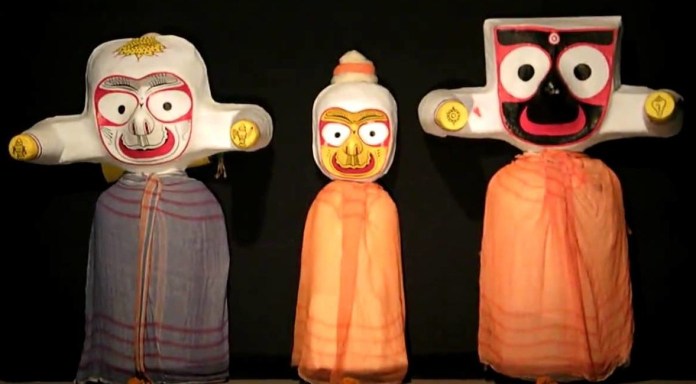
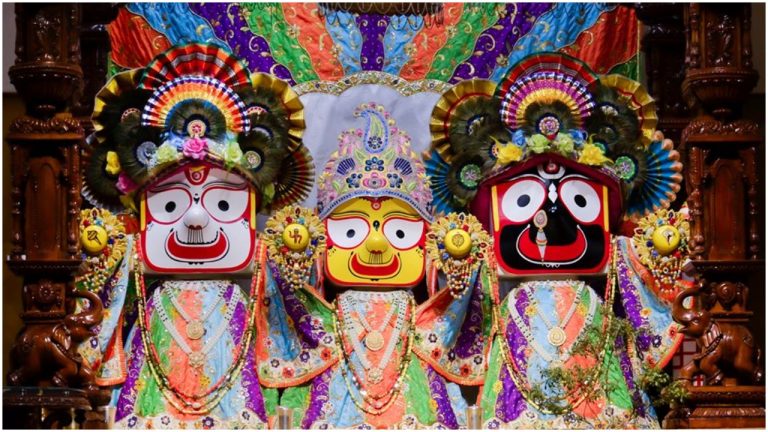
One of the best examples of these practices is the fourteen-day ‘Anasara’ ritual that is practised in the Shri Jagannath Temple of Puri, Odisha every year. Anasara means a 14-day period during which the three deities of the temple, Lord Jagannath, and his siblings Lord Balabhadra, and Devi Subhadra are confined to the sanctum sanctorum because they suffer from a fever after the festival of Devasnana Purnima.

Devasnana Purnima

The bathing festival – ‘Devasnana Purnima’ or just ‘Snana Yatra’ is a festival dedicated to Lord Jagannath. The much-revered tradition is observed on the Purnima or the full moon day of the Jyeshtha month of the Hindu calendar and is also considered to be one of the oldest festivals associated with the temple.

Devasnana Purnima is a ritualistic bathing ceremony of the deities of the Jagannath Temple, Lord Jagannath, Devi Subhadra, and Lord Balabhadra. This year, Devasnana Purnima or Snana Yatra was celebrated on Friday, June 5. The idols of Lord Jagannath, Devi Subhadra, and Lord Balabhadra are taken out from the Jagannath temple and are brought to the ‘Snana Bedi’ or the bathing altar in a procession known as ‘Pahandi’.

The Holy Devasnana Yatra at Puri Jagannath temple in Odisha/ Image Source: Kalinga TV

A few rituals are performed by the priests just before the bathing ceremony starts. The deities are bathed with 108 pitchers of holy water, a mixture of herbal and aromatic water. The water, used for bathing is taken from the golden well or ‘Suna Kua’ inside the temple.

During the process, the priests cover their mouths with a piece of cloths to avoid contaminating the holy water. The priests purify the water with turmeric, whole rice, sandal, flowers and perfumes. The deities are then dressed up in Sada Besha after the bath.

At night, the three deities – Lord Jagannath, Devi Subhadra and Lord Balabhadra are carried back to ‘Anasara Ghara’ to keep them away from public darshan for about 14-days. As the belief goes, the deities, after the prolonged ‘Snana’ or bath, are ill with fever.

Anasara or Anabasara: The two-week isolation period

During this Anasara or Anabasara period, the devotees are forbidden from seeing the idols of the Lords. According to mythology, the three deities are believed to have developed a fever after the prolonged bathing on Devasnana Purnima day.

The deities, Lord Balabhadra, Devi Subhadra and Lord Jagannath, are kept in the ‘Anasara Pindi’ where they are ‘treated’ with natural herbal medicines, and specially prepared oils. The ailing deities are only offered only fruits and water, mixed with cheese and ‘Dasamula’ (herbal) medicines while Daitapati Sevayats (the priests who carry out holy rituals) now perform secret rituals to cure them.

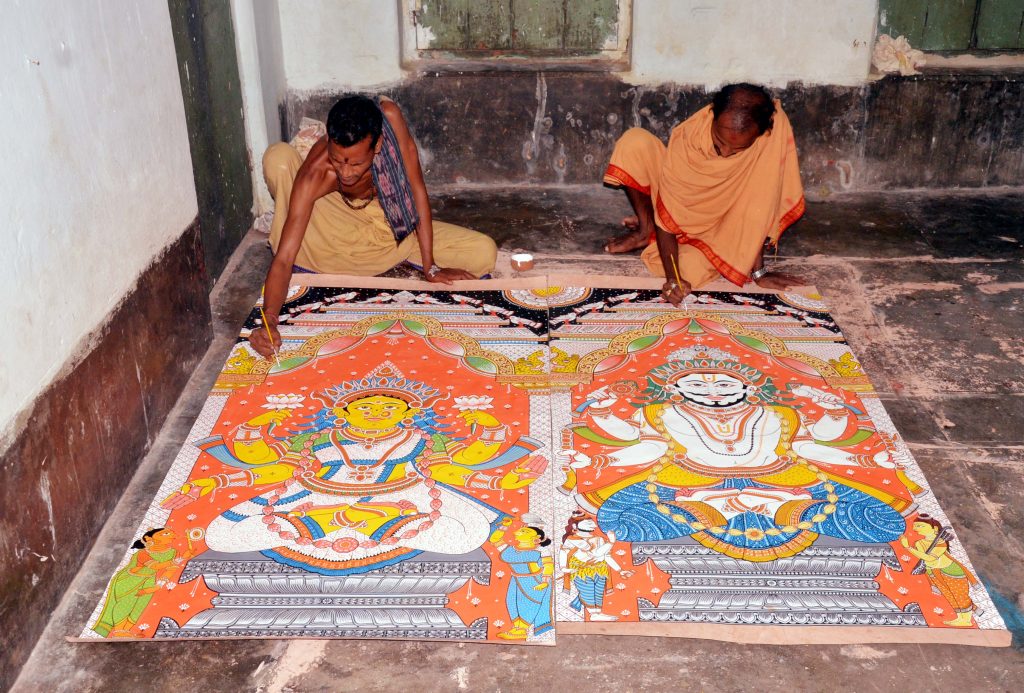
During the ‘Anasara’, “Patti Dian”, or the traditional Pattachitra paintings of the three deities are worshipped as a proxy to the original idols since the doors of the sanctum sanctorum are closed and devotees are forbidden from darshan. In the Pattachitra paintings, Shri Ananta Narayana is worshipped in the place of the Lord Jagannath, Lord Balabhadra is worshipped as Shri Ananta Basudeva and Devi Subhadra is worshipped as Maa Bhubaneshwari. 

Kalinga TV’s chief editor Soumyajit Pattnaik had today shared a video of the worship of “Patti Dian”, at the Jagannath Temple.

The three deities under ‘treatment’ in the Anasara Pindi will be offered ‘Pana Bhoga’ by Pati Mahapatra to help them heal. The natural medicines and other herbs are also offered to the deities by the Daitapatis. A special oil ‘Phuluri Tela’ prepared for the deities, will be applied on the wooden idols on the eighth day or ‘Ashtami’ to protect them.

It is part of the faith that on the Dashami, the deities regain their balance and strength. The next day, the deities are painted in a new colour to protect the wooden idol from damage.

The Anasara ritual is, in a way an annual maintenance ritual for the wooden idols, because the wooden idols of the three deities are changed only once in twelve years, in another mega festival known as ‘Naba Kalebara’. The all-organic, all-natural oils and preservatives are a part of the twelfth-century shrine’s ancient traditions.

Artists painting the Pattachitra forms of the three deities that is worshipped during the ‘Anasara’ period, Image via Orissapost.com

Nabajoubana Darshan 

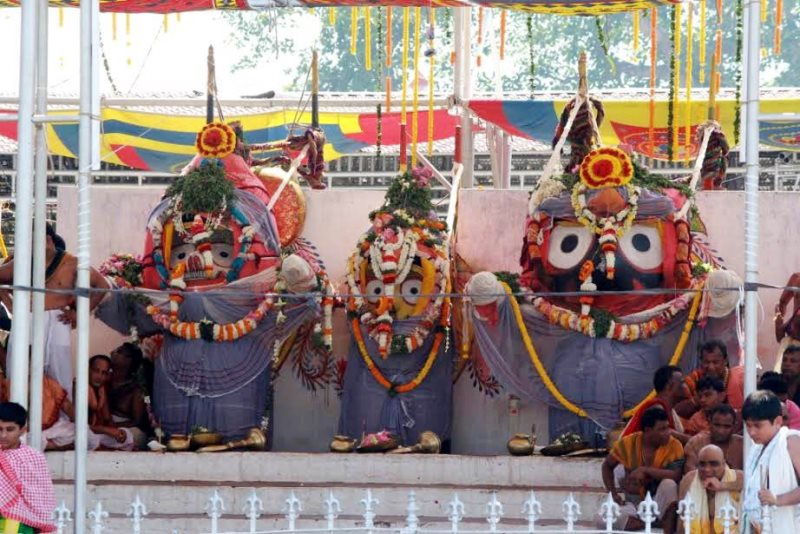
On the Amavasya, the 15th day, the deities are dressed up in Nabajoubana Besha. During the Nabajoubana Darshan, the devotees are allowed to see all the three deities. These traditions bring an end to the annual quarantine of the deities, who are now believed to be cured from all illness and are back to their usual health and beauty. The deities are now prepared for a grand Rath Yatra.

Nabajoubana Darshan of the three deities at Puri/Image Source: Puriwaves

Two days later, on the Dwitiya of the Ashadha Shukla Paksha, the Puri Rath Yatra is celebrated with all the pomp and splendour. All the three deities, along with Sudarshana are brought out in huge chariots for the devotees to have Darshana or the holy view of Lord Jagannath, Devi Subhadra, and Lord Balabhadra. The deities then travel to the Gundicha temple in the chariots drawn by devotees.

Columbus statues demolished in America: Was he different from Babur or Ghazni?

An invader comes to plunder a country. Then, settlers come along. They carry out bloody atrocities on the people who are already there. They impose their rule, their culture and their religion.

Sound familiar?

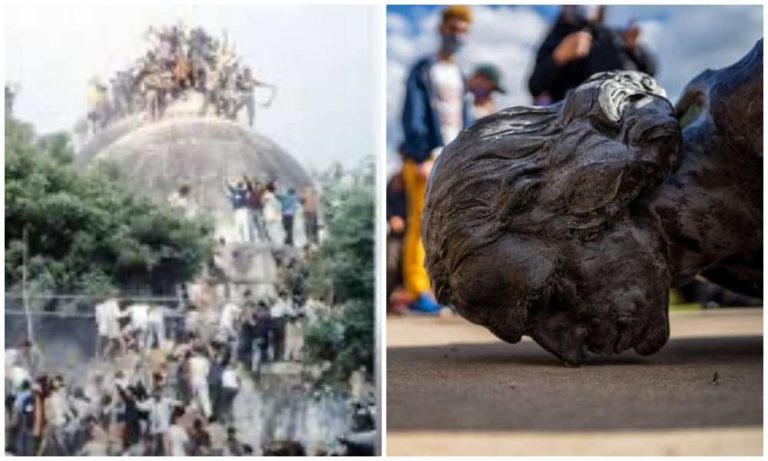
Below is a statue of Christopher Columbus in Boston, now destroyed by liberal protesters, apparently sympathizers of the Black Lives Matter movement. This is happening all over America right now.

Christopher Columbus statue toppled in Minnesota

And here, from Ayodhya in the Indian state of Uttar Pradesh, is the famous image from Dec 6, 1992. The demolition of Babri Masjid by karsevaks.

Babri mosque demolished

However, we know that the world reaction to these two events has been vastly different. In the case of Columbus statues, the reactions have ranged from benign neglect to silent support to active praise. In the case of Babri Masjid, there was near universal condemnation.

Why? Personally, I don’t take a position in either case. I would just like the well informed global elite to clarify the moral principle here.

Christopher Columbus came to America in 1492. Babur arrived in India around 1526. If Columbus is a villain, why is Babur a hero?

The parallels are obvious. Columbus was the first of the European invaders who massacred the Native Americans and plundered them. Around the year 1000 CE, Arab and Turkic invaders did much the same to India. Most famously Mahmud Ghazni and his plunder of Somnath Temple. During these invasions, Indian Hindus were massacred in large numbers.

Soon after the raiding and the pillaging, there came the settlers. The dynasties of the Delhi Sultanate and a few centuries later, the Mughals. In America, the European settlers arrived in ships around the year 1620. They set up their colonies along the east coast of what is now the United States.

Both Arab / Turkic settlers in India and European settlers in America were constantly at war with the original inhabitants. The American settlers pushed westward to gradually occupy the continent. In India, the settlers pushed towards the south and the east of the subcontinent. For both groups, this was a long and bloody process, stretched out over centuries.

No difference there.

And just as there were times of war, there were times of peace. The European settlers signed numerous treaties with Native American chiefs, allowing them to control large parcels of land, known as ‘reservations.’ Here is what the continental US really looks like, if you draw all the Native American nations separately.

Native American ‘reservations’ in US

Just like that, the Muslim empires in India have a complicated history. Many Hindu chieftains signed treaties and kept their sovereignty over certain tracts of land. This is how virtually *all* empires work. From Alexander’s empire to the Mughal empire, the British empire or even the Nazi empire. Or even the Soviet empire. No empire is absolute. Everyone has a number of vassal states who enjoy some form of independence.

What about the excuse of Ganga Jamuni Tehzeeb? Our history textbooks tell this heartwarming story of Hindus and Muslims lived in mutual harmony in the medieval times. It’s probably true at the level of some individuals living closely together in one place such as a a village. It happened in America too. In fact, Native Americans welcomed the settlers and showed them how to survive in the New World. After a particularly successful harvest season, the settlers invited their Native American hosts to share in a great celebration. This was the first Thanksgiving. It’s a wonderful American tradition that is still thriving today.

But just because everyone in America loves Thanksgiving and just because everyone loves Sufi music, doesn’t mean that the broad contours of history are any different. The Native Americans were the oppressed and the European settlers were the oppressors. This is not hard to make out. Similarly, it is Hindus who paid Jaziya tax. Hindu temples were broken and plundered. It is not hard to see who is the victim here.

Finally, what of the argument that the Mughals and their descendants became fully “Indian”? Well, of course they did. The European settlers fought a bloody war of independence against Britain, following which they embraced a fully American identity. Their descendants today are 100% American, just as the descendants of Mughals are 100% Indian. Nobody can question that.

But that does not mean we have to reject the obvious history of which class was ruling and which class was subjugated. It is entirely possible to acknowledge the wrongs of history without being prejudiced or hateful against anyone today on the basis of race or religion.

The only difference I see is that American liberals are extremely sensitive to the wrongs of history, while Indian liberals want to suppress the wrongs of history. In the US, someone speaking up for the rights of Native Americans would never be vilified by the left. In India, anyone talking about Hindus becomes a target for the left and its global network.

This is true not just of America, but of many other countries. In New Zealand (another global liberal darling), white school kids are taught to embrace dances and other art forms of the native Maori people. But in India, liberalism is all about attacking “Bharat Mata ki jai” or “Vande Mataram” or someone for wearing a Hanuman shirt.

The stated objective of Indian liberalism is to curb Hindu expression, to further marginalize the historically marginalized Hindu people! To snatch away even more land from Indian Hindus than has been snatched already!

For a while now, Indian liberals have been urging Indians to learn from the Black Lives Matter movement. I agree. Let us press Indian liberals to clarify the underlying principle. How was Columbus different from Babur or Ghazni?

“Not time for conservative approach, time for bold decisions, investment”, PM Modi reiterates his dream for self-reliant India

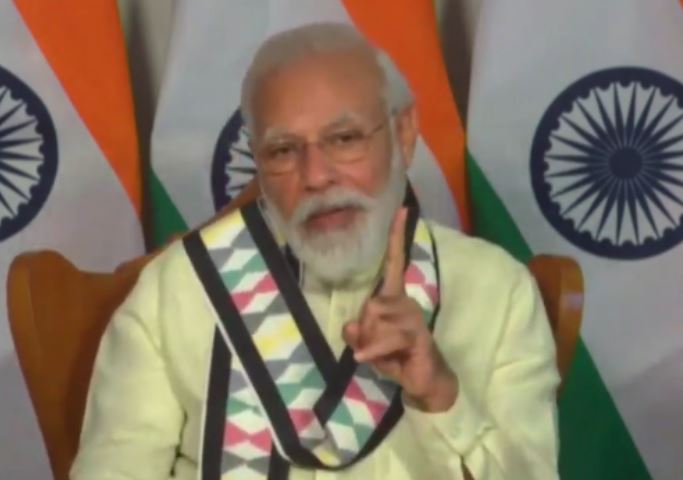
Prime Minister Narendra Modi delivered the inaugural address of the 95th annual plenary session of the Indian Chamber of Commerce (ICC) through video conferencing today. PM Modi said that at the moment India is facing many challenges, including coronavirus, locust swarms invasion, gas well explosion in Assam’s Tinsukia, Cyclone Amphan and minor earthquakes across India. Once again hammering on self-reliant India, PM Modi said that India should convert these crises into a turning point towards becoming self-sufficient. 

North-East India found a special mention in PM Modi’s address. Quoting Swami Vivekanand as once saying: “The simplest method to be worked upon at present is to induce Indians to use their own produce and get markets for Indian artware in other countries’, Modi said that the path shown by Swami Vivekananda is an inspiration for India in post-COVID world.

The Prime Minister said that this is the time when India has to shun conservative approach and take bold decisions and make bold investments. We together have to revive the manufacturing sector in West Bengal, said Modi. We’ve always heard “what Bengal thinks today, India thinks tomorrow”, we have to take inspiration from this and move forward together and have to revive the historical excellence of Bengal in the manufacturing sector, said Modi.

Speaking further on the development of NE India, PM Modi said that like Siliguri, entire North-East India could become a hub for organic products. People in East and North-East India could become the biggest beneficiary of the reform in the agriculture sector. The country is running another mission to make the country free from single-use plastic. North-East should take benefit from this opportunity. Illuminating on how people, profit and planet can flourish and coexist together, Modi said that West Bengal has an opportunity in a single-use plastic ban.

Kolkata can act as a pivot for development of the East and Northeast

Recent decisions taken by Centre for farmers have freed the agriculture economy from years of slavery. Having said this, PM Modi furthered that West Bengal can now ramp up jute production and make the best of the situation. Kolkata can act as a pivot for development of the East and Northeast, said the Prime Minister.

The Prime Minister lauded the Indian Chamber of Commerce for its contribution towards the development of industries in the north-east and said its high time India becomes vocal for local.

I see people thinking kaash (I wish) we were self-reliant in medical equipment, solar energy, I wish we were self-reliant in manufacturing PPE kits, I wish we were self-reliant in defence production, electronic production, mobile manufacturing, I wish we were self-reliant in manufacturing all that we buy or consume. I see countless such kaash in Indians today. The solution to all this can only come from Atmanirbhar Bharat (self-reliant India). India which today is an importing nation has to first rise up and become self-reliant and then move on to become an exporting nation. This is the vision that will take India forward, said PM Modi.

Time to take the Indian economy out of ‘command and control’ and take it towards a ‘plug and play’ economy

At this time we’ve to take the Indian economy out of ‘command and control’ and take it towards a ‘plug and play’ economy. This isn’t the time for a conservative approach. It’s time for bold decisions and bold investments. It’s time to prepare a globally competitive domestic supply chain, emphasised the Prime Minister, reiterating that self-reliant India is based on self-confident Indians.

The Indian government is speedily implementing the policies declared to make the country self-reliant, what the citizens need to do is work in the direction so as to make India an exporter of every product that the country needs. This is how the country would become Atmanirbhar, said Modi.

“While it true that coronavirus has slowed down our growth, India has now left the lockdown behind and has entered unlock phase 1. So in a way, we have already started getting our growth back. India took the right steps at the right time. When we compare our country to others, we can realise how the lockdown has helped us,” said PM Modi. 

“This is the time to recognize opportunity, to try oneself and to move towards new heights. If this is the biggest crisis, then we should take full advantage of it, while learning the biggest from it”, said the Prime Minsiter, urging India to move ahaead towards becoming self-reliant.

On 73rd birthday of Lalu Prasad Yadav, JD(U) wishes him with a list of 73 properties acquired by him and his family using political influence

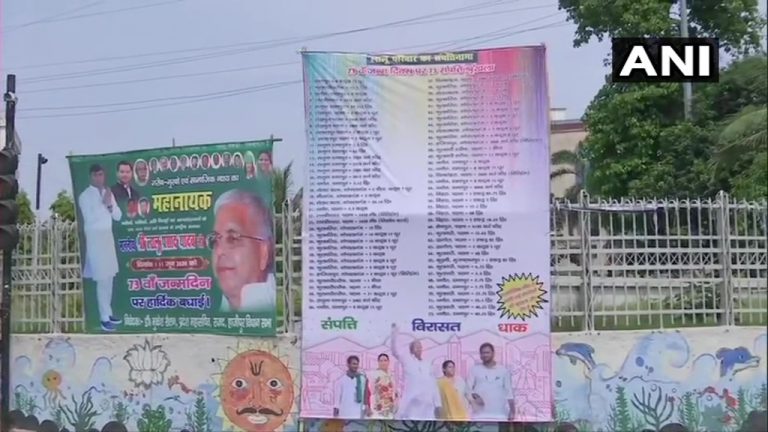
Bihar Chief Minister Nitish Kumar’s party Janat Dal (United) posted a birthday wish to Lalu Prasad Yadav on his 73rd birthday in a different way. The political party put up a poster listing the details of 73 properties of Lalu Prasad Yadav on his 73rd birthday which were allegedly acquired illegally by him and his family members.

The poster read as, “The list of properties acquired by political influence is still being compiled.”

The poster was standing right next to the poster of Rashtriya Janata Dal’s poster which was wishing its leader on his 73rd birthday in Patna.

Lalu Prasad Yadav is the ex-CM of Bihar who is accused in several scams worth crores. Lalu Prasad Yadav was sentenced for three and a half years in the Deoghar treasury case, and he has already spent more than one and a half years in jail. RJD chief was serving his term in the Birsa Munda jail in Ranchi. Nowadays he is out on bail on some cases while he is undergoing treatment in Ranchi hospital as a prisoner.

Other than the Deoghar case, the RJD chief has been sentenced to five years in jail in Bhagalpur treasury fodder case, five years in jail in Chaibasa treasury fodder scam, and 14 years in jail in Dumka treasury case, while several other fodder scam cases are still being heard by courts. He has already got bail in the Bhagalpur case. Other than the fodder scams, he is also facing a probe in the Indian Railway tender case, disproportionate asset case, tax evasion, and Benami properties case, Patna Zoo soil case, etc.

The poster war between JDU and RJD is going on since last year. This came in light of the assembly election for the Bihar assembly elections that are expected to take place in this year-end.

Population of the majestic Asiatic lions in Gir forest up by 29%, read how Gujarat forest carried out the census amid coronavirus lockdown

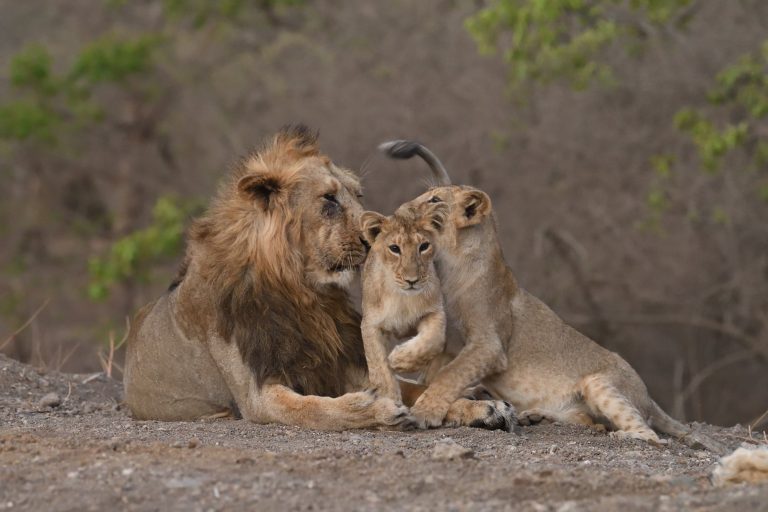
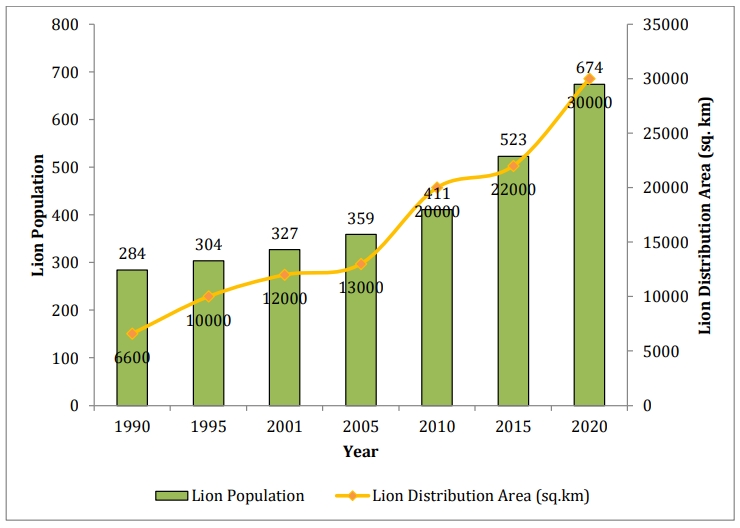
Amid coronavirus lockdown, Prime Minister Narendra Modi shared the good news about the majestic Asiatic lions in Gir forest. He mentioned in his tweet that the population of Asiatic Lions has increased by 29% in the last five years. Also, the distribution area is up by 36%. The tweet was based on the recent report submitted by the Gujarat Forest Department in which they noted that the population fo Asiatic lions in the state is 674, up from 523 in 2015.

The count is not based on the Census but on Poonam Avlokan (full-moon night estimation exercise) that is a population observation exercise. Once in every five years, the forest department conducts a Census of the Lions’ population that was due on 5th and 6th June this year. However, the department has to postpone it amid coronavirus lockdown that was announced on 24th March. The government deployed 1,500 forest guards, range forest officers and foresters to ensure lockdown is in place in the Gir forest.

Every year the forest department takes support from experts, NGOs and wildlife enthusiasts for the Census to ensure transparency. However, there were reports that a tigress in Bronx Zoo, New York, got infected with novel coronavirus and Forest Ministry decided not to take any risks this time.

Poonam Avlokan and the methodology behind counting Asiatic Lions

Poonam Avlokan is a monthly in-house exercise that was developed in 2014 as a part of the lion Census 2015. It is carried out in every full mood. The officers and field staff spend 24 hours in their respective jurisdictions to access the number of Asiatic lions. This time the department initiated the exercise from Friday 2 PM to Saturday 2 PM. The exercise covered 10 districts and 13 forest divisions, including Surendranagar and Morbi.

Population and distribution trend of Asiatic Lions

In 2015 there were 2,000 officers, volunteers and experts involved in Census. However, this month the exercise was conducted by 1,400 forest experts along with a few experts. The census takes around two days to complete, which has two stages named preliminary census and final census. Instead of observing only the water points, the team kept moving in their jurisdictions. They made their estimates based on inputs by lion trackers and chance sightings. They collected data based on Time, GPS location, number of individuals, individual identification marks, radio-collar numbers, images & egujforest data, etc.

Observations made by the forest department under Poonam Avlokan

  • The forest department mentioned that the population of lions is increasing at a steady speed. There are 161 male adults, 260 female adults, 45 sub-adult males, 49 sub-adult females, 22 unidentified sub-adults and 137 cubs in the Gir forest that makes a total of 674 lions.
  • The distribution of lions in 2015 was across 22000 square kilometers that has increased to 30000 square kilometers this year.
  • Multiple strategies and interventions have helped the forest department in maintaining a steady increase in population and distribution.

Historian Ram Guha gets history wrong while drawing up comparison between Gujarat and Bengal

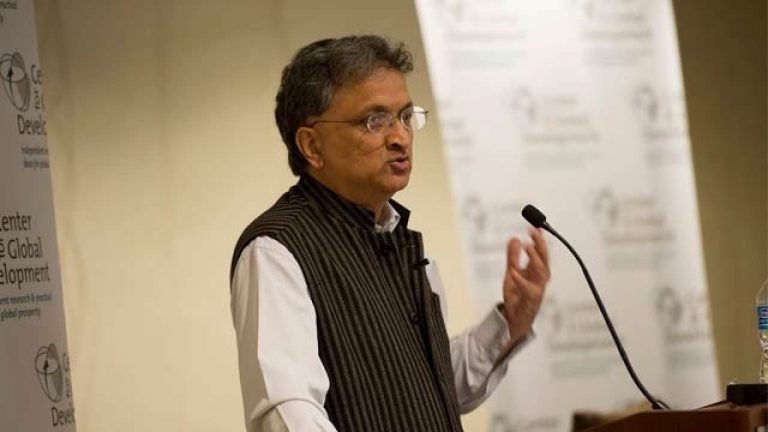
Historian Ramchandra Guha, who now seems to have developed complicated relationship with history, today took to Twitter to claim Philip Spratt in 1939 had written that Gujarat, though economically advanced is backward culturally and Bengal while being economically backward, has been culturally advanced.

Guha had not provided citation source for the above quote and OpIndia could not independently verify whether Spratt wrote such a statement back in 1939. Spratt was a British communist sent to spread communism in India. He was the founding member of the Communist Party of India.

Guha cites Spratt’s 1939 quote where he claims that Gujarat, even though economically advanced was culturally a ‘backward’ province and compared to that, Bengal, though ‘economically backward’, was ‘culturally advanced’.

Gujarat as a state came into existence in 1960. In fact, part of what exists today as Gujarat was known as ‘Bombay Presidency’ and remaining were princely states like Baroda state, Kathiawar and Kutch.

And prior to that, Gujarat fell under the Delhi Sultanate in 1298 after Alauddin Khilji managed to invade the state. Perhaps the approximate 350 year of rule by the Mughal invaders left Gujarat ‘culturally backward’ as described by Guha citing Spratt.

Netizens pointed out the flaw in Guha’s comparison and the random quote by Spratt, which many had never even heard of before.

Gujaratis also explained how Gujarat has managed to survive and thrive despite the drawbacks it has had since centuries regarding water shortage and not being blessed with as much fertile land as other parts of the country. People also pointed out the flaw in his argument. Gujarat does not have a strong communist presence because of the generally enterprising nature of people of the state. Lothal and Dholavira in Gujarat are proofs that Gujarat had been an important port of ancient India. Since time immemorial Gujarat has learnt to work to survive. If that makes the ‘culture’ backward, then so be it. Many also wondered if Guha through Mahatma Gandhi, who is considered Father of the Nation and was a Gujarati too, was culturally backward. Bengalis, too, were offended by the tweet who asked him to stop romanticising how communism has ruined Bengal and there are severe lack of job opportunities there.

Moreover, prior to independence, Bengal was a vast territory which comprised the modern day Bangladesh and West Bengal. It was historically rich on account of the existence of artisans and craftsmen whose hand-woven products were sought after across the world. When the British started cotton export from India, they faced tough headwinds from the products sold by the artisans from Bengal. To stop the bengal artisans from selling their produce, Britishers spliced thumbs of artisans, killed the dissidents, thereby economically depriving a vast section of population. Bengal was a bustling trade hub and it is one of the reasons why the East Company India was headquartered there and the Brits started their imperial conquest of India from there. The Britishers persecuted by splitting their thumbs, killing those who opposed their draconian taxes. This is what Congress leader Shashi Tharoor said in his book “An Era of Darkness”

This hatred for Gujaratis has peaked ever since Prime Minister Modi took oath back in 2014 after registering a historic win. Gujaratis are mocked at on social media and ridiculed. Not just by Guha but even by those who like to identify themselves as liberals and ‘culturally strong’.

TMC supporter Garga Chatterjee has regularly indulged in mocking Gujaratis, Biharis and Marwaris under the garb of Bengali pride. Similarly, ‘journalist’ Swati Chaturvedi has also referred to PM Modi and HM Shah as ‘dhokla mafia’ because casual racism isn’t racism if it comes from the ‘culturally advanced’ and ‘liberal’ lot.

Bengaluru court denies bail to sedition accused Amulya Leona, says she will abscond and involve in offences that could affect peace

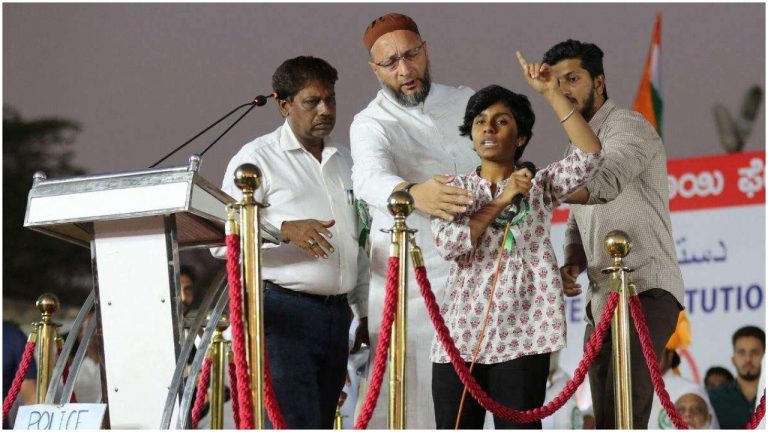
On Wednesday, a local court in Bengaluru rejected the bail plea of ultra-left-wing activist Amulya Leona Noronha, who was arrested on the charges of sedition after raising slogans of ‘Pakistan Zindabad’ in a rally of AIMIM Chief Asadudin Owaisi.

While rejecting the bail, the 60th additional city civil and sessions judge observed that if bail is granted to Amulya Leona Noronha, she may abscond.

Judge Vidhyadhar Shirahatti in his order also said that Amulya Leona may involve in similar offences which would affect peace at large if she is granted bail.

The public prosecutor argued that the accused Amulya was trying to incite people to create a law and order problem. The prosecutor also mentioned before the court that the accused had involved in activities that caused hatred and disaffection towards religion and the government by holding a placard that stated “F##k Hindutva” during a student protest.

The prosecution also argued that the student, if released, may commit similar offences since cases were already registered against her.

However, in defence of the accused, her friends said that she was trying to convey a message of universal humanity by chanting zindabad in the name of all nations, including Pakistan and India.

Amulya Leona’s pro-Pakistan slogans

A ruckus had erupted at an anti-CAA rally of AIMIM Chief Asaduddin Owaisi in Bengaluru in February after ultra-left-wing protestor Amulya had burst onto the stage to shout pro-Pakistan slogans in his presence. The video clips of Amulya Leona chanting “Pakistan Zindabad” had gone viral across social media platforms.

Soon, she was arrested and was sent to 14-day judicial custody after a case was registered under the Section 124A (offence of sedition) of the Indian Penal Code.

During the investigation, the ultra left-wing protestor Amulya Leona Noronha had revealed that she was a paid protestor and had said how the anti-CAA protest organisers had been carrying her expenses ever since the agitation against the Citizenship Amendment Act started in December last year.

Amulya Leona was also spotted being interviewed by a Youtube channel a month prior to her arrest in which she was explaining the modus operandi of the left to endorse the seditious anti-India agenda. She had stated that they were paid and the speeches and slogans are prepared by a group of people who organised these ‘protests’.

Rajya Sabha elections: Resort drama back in Rajasthan, Congress shifts its MLAs, alleges poaching attempts

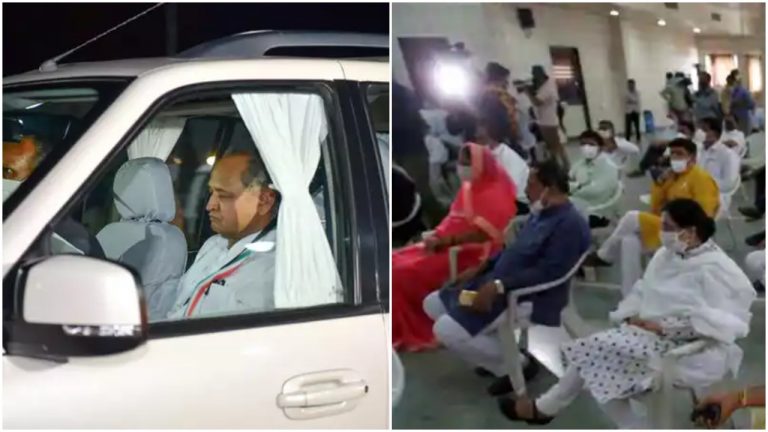
On Wednesday, the Rajasthan Congress claimed that attempts are being made to destabilise the Congress-led government by luring MLAs ahead of the Rajya Sabha elections. Following the scare, the Congress party has also shifted its 107 Congress and independent MLAs to a resort on the outskirts of Jaipur.

According to the reports, Chief Whip of the Rajasthan Assembly Mahesh Joshi has written a letter to the Director General of Anti Corruption Bureau claiming that attempts are being made to destabilise the government in the state on the lines of Karnataka, Madhya Pradesh and Gujarat just days ahead of Rajya Sabha Elections 2020.

This political development in Rajasthan comes at a time when Congress MLAs in Gujarat have been resigning from the party ahead of the Rajya Sabha elections. A total of eight MLAs of the Congress party have resigned from the party in the last three months in Gujarat.

The Congress leader Joshi also sought “strict legal action” against such persons for indulging in corrupt activities.  

Congress moves its MLAs to resort

The Congress party has now moved its 107 MLAs and independent legislators to Shiv Vilas resort on the outskirts of Jaipur. Chief Minister Ashok Gehlot and senior leader Randeep Singh Surjewala also reached the resort later in the day and held a meeting with the MLAs.

The Congress party has 107 seats, including six MLAs who defected from the BSP last year in the 200-member Rajasthan legislative assembly. The Ashok Gehlot-led government also enjoys the support of all 13 independents while Subhash Garg, who was elected on an RLD ticket, is a minister in the Gehlot government.

3 Rajya Sabha seats to be filled

The Rajya Sabha elections are scheduled to be held for three seats in the state as BJP’s Rajya Sabha members Ram Narain Dudi, Vijay Goel and Narayan Lal Panchariya retired on April 9. The elections were supposed to happen on March 26 but were postponed in light of the coronavirus lockdown. The elections will now take place on June 19 and the counting will be held on the same day.

The Congress party is expected to win at least two seats, while opposition is expected to win one. The Congress party has fielded Rahul Gandhi’s aide KC Venugopal, Neeraj Dangi while BJP has fielded two candidates – Rajendra Gehlot and Onkar Singh Lakhawat.