Home Blog Page 4208

Chhattisgarh: Locals deny police claim that three protestors killed in police firing in Silger were Maoists, demand probe

A controversy has erupted over what Chhattisgarh police claimed to be an encounter in Silger on the inter-district border of Bijapur and Sukma in the Bastar region of the state on May 17 (Monday). Villagers have claimed that the three people, namely Uika Pandu from Teemapura, Bheema Ursam from Gundam, and Kawasi Waga from Sudwa village, who died in police firing were ordinary civilians and not Maoists as claimed by the state police.

Alleging gross human right violation, villagers said that they were staging a peaceful protest close to the newly constructed Silger police camp when police opened fire to end the protest.

“We do not want a police camp, therefore, we are protesting and to end our demonstration police fired upon us,” said a villager named Madvi Hunga, adding that eighteen of the villagers are injured and six of us are still missing.

A local journalist named Shankar, who has been extensively covering the protest, confirmed: “The villagers are continuously protesting since May 12. However, for the last three days, the situation has been quite tense, and people wanted security forces to abandon the place at any cost. During the course, more than three times police carried out lathicharge, fired tear gas shells to disperse the villagers but the situation did not come under control”.

Journalist slams Rahul Gandhi for failing to protect the tribals in Congress-ruled Chhattisgarh

Denouncing the arbitrary conduct of the state police in the Congress-ruled Chhattisgarh, senior journalist Alok Putul took to Twitter on May 18 (Tuesday) to share a video related to Silger firing and tagged Congress leader Rahul Gandhi questioning the latter’s committment to protecting these tribals from violence.

A day after the firing incident, several human rights activists, tribal leaders of Bastar and civil society organisations condemned the killings and demanded a judicial probe into the incident. They also demanded compensation for the families of the deceased and said that criminal cases should be registered against those police officials (if found guilty) responsible for the firing.

Copy of a letter written by a civil society demanding judicial probe into the incident

Police claim Maoist killed in firing incident

Meanwhile, the Chhattisgarh police have refuted the allegations meted out at their department claiming that Maoists had taken the villagers as their shield during the protest.

“This was a Maoist-compelled protest against the police camp. The protest ended on Sunday night, but the Maoists forced the innocent villagers to return on Monday,” said Inspector-General of Police, Bastar Range, Sunderaj P, adding that the protest was being carried out by Maoists primarily because they do not want a police camp in their core area.

Maoists in Chhattisgarh call for bandh

After Chhattisgarh police issued its statement, Maoists South Zonal Committee issued a press release in which it claimed that the police story related to firing from Maoists is fake. Police indiscriminately fired upon the villagers under the instructions of SP Bijapur and IG Bastar, Maoists alleged.

To protest the alleged police brutality, the Maoists South Zonal Committee said that a shutdown of Bijapur and Sukma districts has been called on May 21.

This particular incident in question had occurred on Monday evening near a newly set up police camp at Silger. A big crowd of villagers had gathered in the area since Sunday night to oppose the camp.  

Videos of the firing incident, including the one in which local villagers can be heard saying that nine civilians had been killed in the firing by the security forces and that no Maoists were present at the spot and no exchange of fire had taken place, are doing the rounds on social media.

The villagers alleged that nine had been killed and almost one and a half dozen civilians had been injured in the incident.

As WHO finally admits that Covid-19 virus can be ‘airborne’, read how it had refused the possibility for a year, rejected evidence given by scientists

Earlier this month, the World Health Organisation (WHO) acknowledged that the Coronavirus can also be airborne. After denying for more than a year, the WHO finally updated the mode of Covid-19 transmission and said that the disease can be an airborne threat. It said, “the virus can also spread in poorly ventilated and/or crowded indoor settings, where people tend to spend longer periods of time. This is because aerosols remain suspended in the air or travel farther than 1 metre (long-range)”. For almost a year now, scientists all over the world have known that the SARS-CoV-2 can be airborne for a short distance for some time, but the WHO had refused to acknowledge that.

It may be noted that Centers for Disease Control and Prevention (CDC) of the USA had also admitted earlier this month that the Covid-19 virus can be airborne, after denying the same for a year.

On March 28 2020, the WHO, the global health watchdog, took to social media to put out a post, “FACT: #COVID19 is NOT airborne”. In its post, the WHO claimed that the coronavirus is mainly transmitted through droplets generated when an infected person coughs, sneezes, or speaks. For the scientists of WHO, Covid-19 was not airborne, and one could not contract the disease if they followed necessary protocols.

Linsey Marr, an aerosol scientist at Virginia Tech and an infectious disease expert, had her doubts regarding WHO’s so-called fact-check. For Marr, who had analyzed the initial results of the Covid-19 outbreak in China, it looked like the virus may stay in the air for longer, infecting anyone who breathed in enough of it. For people indoors, that posed a considerable risk. Soon, Marr joined with 35 other aerosol scientists to try and warn the WHO it was making a big mistake.

According to a detailed report by website – The Wired, for the next few days, the scientists analyzed the list of superspreading events in restaurants, call centres, cruise ships, and a choir rehearsal, instances where people got infected to Covid-19 even when they were far away from a contagious person. The incidents contradicted the WHO’s main safety guidelines, i.e., keeping 3 to 6 feet of distance between people and frequent handwashing.

If SARS-CoV-2 travelled only in large droplets that immediately fell to the ground, as claimed by the WHO, then how would people far away from each other caught the infection, the scientists pondered. They argued that the infectious air was the reason for the infection. However, the WHO’s experts were in no mood to listen to these scientists. To declare Covid-19 could well be airborne, the scientists wanted more direct evidence, which could take months to gather. Meanwhile, thousands of people were falling ill every day as the virus was abundant in the air.

Lidia Morawska, a revered atmospheric physicist, also tried to explain how far infectious particles of different sizes can travel. Shockingly, WHO experts abruptly cut her off, arguing that she was wrong.

As per Marr, Morawska has been advising WHO on the impacts of air pollution for over two decades. Interestingly, the organization has accepted her research on air pollution to understand similar particles of many sizes can hang aloft, travel far, and be inhaled. For the WHO’s advisers, the same laws of Physics strangely did not apply to virus-laced respiratory particles. To them, the word ‘airborne‘ only meant that particles smaller than 5 microns.

For Marr, the beginning of a global pandemic was not a good time to pick a fight with WHO. But, the reluctance of WHO to listen to experts and banking on outdated science that concerns public health policy had angered Marr. She had to get through to them, but first, she had to understand why they were failing to convince the WHO on Covid-19 being airborne.

According to scientists, almost all respiratory infections transmit through coughs or sneezes as bacteria and viruses quickly spread by falling and sticking to any surface within a distance of 3 to 6 feet. If these droplets come in contact with the nose or mouth, they can cause an infection. Only Measles and tuberculosis transmit a different way, an exception to the above rule. They are described as “airborne” as those pathogens travel inside aerosols, microscopic particles that can be alive for hours and travel longer distances. They can spread when contagious people breathe.

WHO relied on ‘5 micron’ classification to decide whether Covid-19 was airborne or not

As per Marr, the distinction between the droplet and airborne transmission has enormous consequences. To prevent droplets, one has to wash hands frequently with soap and water regularly. However, to fight infectious aerosols, the air itself is the enemy, which means setting up expensive isolation wards and providing N95 masks for all medical staff. The distinction between droplets and airborne is based on their length, i.e., at 5 microns. A micron is a unit of measurement equal to one-millionth of a meter.

By this definition, any infectious particle smaller than 5 microns in diameter is an aerosol, anything bigger than the size is a droplet. To her shock, the WHO and the US Centers for Disease Control and Prevention also keep the ‘5 microns’ as the basis to define whether a particle is a droplet or aerosol dichotomy toggled.

According to Marr, this is a problem. “The physics of it is all wrong,” Marr says as she explains how things move through the air. “Reality is far messier, with particles much larger than 5 microns staying afloat and behaving like aerosols, depending on heat, humidity, and airspeed. I’d see the wrong number over and over again, and I just found that disturbing,” Marr expresses her anguish.

The error meant that the medical community had a distorted picture of how people might get sick, the aerosol scientist contends. Marr decided to collect some data of her own. Marr found that droplets were small often stay aloft for hours, and it was enough of it to make people sick.

Despite all her efforts, Marr could not convince the WHO officials that certain infections could be airborne. In December 2019, similar research carried out by Yuguo Li reached her desk. An indoor-air researcher at the University of Hong Kong, Li was among the firsts to discover the SARS outbreak in 2003. His investigation of an outbreak at the Amoy Gardens apartment complex provided the strongest evidence that a coronavirus could be airborne. Like Marr, he too struggled to convince the public health community that their risk calculus was off. Eventually, he decided to work out the math.

The simulations worked out by Li showed that when a person coughed or sneezed, the heavy droplets were too few, and the targets. i.e., an open mouth, nostrils, eyes were too small to account for many infections. Therefore, Li’s team concluded that the public health establishment had got it backward and that most colds, flu, and other respiratory illnesses must spread through aerosols instead. The latest findings had exposed the fallacy of the 5-micron boundary. 

He went a step further, tracing the number back to a decades-old document the CDC had published for hospitals. The new findings brought excitement to Marr. Co-incidentally, a journal asked her to review Li’s paper, and she did not have any hesitation about that. On January 22, 2020, she wrote, “This work is hugely important in challenging the existing dogma about how infectious disease is transmitted in droplets and aerosols.”

A day later, the Chinese government officially stopped traveling in and out of the city of Wuhan in a desperate attempt to contain an as-yet-unnamed respiratory disease that had bought an 11-million-populated city into its knees. As the pandemic shut down country after country, the WHO and the CDC insisted that the infection was not a serious one and asked them to people to wash their hands, scrub surfaces, and maintain social distance. They did not utter anything about masks or the dangers of being indoors.

A 60-year-old study caused WHO to commit its greatest blunder

A few days later, Marr got an email from another aerosol scientist and an atmospheric chemist at the University of Colorado Boulder named Jose-Luis Jimenez. Jimenez, like Marr, was fixated on the WHO recommendation that people stay 3 to 6 feet apart from one another. According to Jiminez, the social distancing guideline seemed to be based on obsolete studies from the 1930s and 40s. Interestingly, the authors of these guidelines had themselves not ruled out the possibility of airborne transmission, which by definition would involve distances over 6 feet.

Strangely, nobody understood the reluctance of WHO not to consider the possibility of the Wuhan virus being airborne. Marr apprised Jimizez about her concerns with the 5-micron boundary and suggested that their two issues might be linked. If WHO based its 6-foot guideline on an incorrect definition of droplets, the 5-micron error was not just some misjudgment. For them, it seemed that WHO and CDC were deliberately sitting on flawed guidance. The scientists had a new purpose now – to find the origin of such distorted research.

With the help of Tom Ewing, a Virginia Tech scholar, and Katie Randall, Marr and the team began to dig for the citations that had become the basis of the ‘5-micron’ theory to consider infection as airborne or not. As they looked deeper, they found a research paper written in 1934 by a Harvard engineer named William Firth Wells Wells and his wife, Mildred Weeks Wells, a physician. The couple had analyzed air samples and plotted a curve showing how the opposing forces of gravity and evaporation acted on respiratory particles. The couple’s calculations made it possible to predict when it would take a particle of a given size to travel from someone’s mouth to the ground.

According to them, any particles bigger than 100 microns sank within seconds, and smaller particles stayed in the air. Randall paused at the curve the wife-husband had drawn, where she discovered the root of the idea of a droplet-aerosol dichotomy. However, the only exception in the graph was that it read around 100 microns, not 5. Years later, the scientists inside the CDC conflated the couple’s observations and plucked the size of particles out of context, based on the data of tuberculosis, to generalize the particle size to 5 microns. So, CDC kept a static guideline to classify whether an infection was airborne or not.

“Wells’ 100-micron threshold got left behind. You can see that the idea of what is respirable, what stays airborne, and what is infectious are all being flattened into this 5-micron phenomenon,” Marr and her team noted. Over time, this flawed understand became the norm to classify infections and pandemics.

Marr did not stop there. They wanted to get to the bottom of the 5-micron myth and dislodge it from decades of public health doctrine. To do this, she had a massive task at hand – to convince two of the world’s most powerful health authorities – WHO and CDC. Marr and her team had to convince these two organizations not only that they were wrong but that the error had caused irreparable damages. More than it, the error was urgent and consequential as Wuhan coronavirus had begun to wreak havoc.

Scientists publish their research, WHO owns its mistakes after a year and 3.3 million deaths

In July, Marr and Jimenez went public about their research, started a signature campaign with an open letter addressed to public health authorities, including the WHO. More than 237 other scientists and physicians warned that WHO should make stronger recommendations for masking and ventilation, failing which the airborne spread of SARS-CoV-2 would undermine even the most vigorous testing, tracing, and social distancing efforts.

The campaign went viral, inviting a strong backlash from a section of public health personalities, who rushed to defend the WHO. However, realizing its error, days later, WHO released an updated scientific brief acknowledging that aerosols may cause infection through the air, especially in poorly ventilated places. However, it stuck to its social distancing norms, advising people to wear masks indoors only if they could not keep that distance.

Even as WHO officials continued to discredit their research, Marr and Jimenez found ways to educate people about the seriousness of the Wuhan virus and its ability to be airborne. Marr spoke to Kimberly Prather, an atmospheric chemist at UC San Diego, who had the ear of prominent public health leaders within the CDC and on the White House Covid Task Force. In July, both explained the research to Anthony Fauci, director of the National Institutes of Allergy and Infectious Diseases. They showed how the 5-micron theory was flawed and explained the trajectory of a 5-micron particle went farther than 6 feet—hundreds of feet farther, making social distancing redundant.

A few weeks later, Fauci admitted that the 5-micron distinction was wrong and had been for years. “The bottom line is, there is much more aerosol than we thought,” he said. Days later, the CDC updated its guidance to acknowledge that SARS-CoV-2 can spread through long-lingering aerosols.

In December 2020, the WHO also acknowledged more about aerosols. On December 1, WHO finally recommended that everyone always wear a mask indoors wherever Covid-19 is spreading. Rather than acknowledging the massive blunder they had committed, WHO patted themselves, saying the change reflected the organization’s commitment to evolving its guidance when the scientific evidence compels a change. The WHO officials maintained that the WHO had initially paid attention to airborne transmission in hospitals, then at places such as bars and restaurants.

Last month, on Friday, April 30, the WHO quietly updated its page on its website to acknowledge that the coronavirus gets transmitted through the air. The website now states that the virus can spread via aerosols as well as larger droplets. The biggest news of the pandemic, however, passed with no news conference, no big declaration.

Alas, World Health Organisation finally woke up from its deep slumber to recognize that SARS-Covid-19 is an airborne infection, a pandemic that has killed more than 3.4 million people and infected at least 164 million people worldwide.

‘Deferring deadline does not absolve WhatsApp’: Modi govt again gives stern warning over privacy policy

The Union Government has written to social-media giant WhatsApp asking them to withdraw its new Privacy Policy in the aftermath of sweeping policy changes proposed by the messenger app. In a letter to WhatsApp, the Ministry of Electronics and Information Technology has expressed its reservations against its urgency to push for privacy policy and its implications on the users in India.

Earlier, WhatsApp had announced that its new controversial privacy policy has been deferred and it wont come into effect on May 15th. However, the govt of India said that deferring the same does not absolve WhatsApp from respecting values of informational privacy, data security and user choice for Indian users.

In a communication sent to WhatsApp yesterday (18 May 2021), the Ministry has once again told WhatsApp to withdraw its Privacy Policy 2021 as the changes to the Privacy Policy, and the manner of introducing these changes including in FAQ undermines the sacrosanct values of informational privacy, data security and user choice of Indian users and harms the rights and interests of Indian citizens.

The Ministry has also taken the same stand in the Delhi High Court, where this matter is sub-judice. Taking up the issue of discriminatory treatment to Indian users vis-a-vis users in Europe, the Ministry has further stated that, “As you are doubtlessly aware, many Indian citizens depend on WhatsApp to communicate in everyday life. It is not just problematic, but also irresponsible, for WhatsApp to leverage this position to impose unfair terms and conditions on Indian users, particularly those that discriminate against Indian users vis-à-vis users in Europe.”

In its communication, the center has drawn attention to WhatsApp about how its new Privacy Policy is a violation of several provisions of the existing Indian laws and rules. In fulfilment of its sovereign responsibility to protect the rights and interests of Indian citizens, the Government of India will consider various options available to it under laws in India. Government has given seven days time to WhatsApp to respond to his notice and if no satisfactory response is received, necessary steps in consonance with law will be taken.

Earlier, WhatsApp had said that as part of its new privacy policy it would share user data with other Facebook companies. This led its users to believe that WhatsApp would now be able to peek into the personal messages of its users and it would share the personal data of users with Facebook.

Facebook-owned Whatsapp had given February 8th as the date after which the app would stop working on devices and accounts would be suspended if the new policy was not accepted. As a result, many people started moving to other apps like Signal and Telegram looking for a substitute. Following the backlash, the social media giant had deferred its plan of implementation of Privacy Policy to May 15.

Feminism in India founder’s ‘All Muslims are terrorists’ tweet goes viral, a day after she aplogised for derogatory tweet on Mayawati

A day after Japleen Pasricha, founder-CEO and Editor-in-Chief at ‘Feminism in India’, was caught up in a controversy after her old sexist tweets targeting BSP supremo Mayawati went viral on social media, another old tweet has fuelled a fresh backlash against the far-left activist.

An old tweet of Japleen Pasricha, where she had claimed that ‘All Muslims are terrorists’ has now come back to haunt her. In September 2013, Pasricha, who manages the far-left portal ‘Feminism in India’, had put out a tweet saying, “Because all Muslims are terrorists.”

Almost eight years later, the old tweet of Pasricha has now gone viral on Twitter, inviting a barrage of criticism. Several social media users targeted the far-left ‘feminist’ Japleen Pasricha for her ‘Islamophobia’ and asked her to get ‘proper medical treatment’.

Another user said that people like Pasricha cannot generalize all Muslims as “terrorists.” Tejashvi, a secular social media user, called her tweets “utterly disgusting.”

As her old tweets went instantly viral, prompting several social media users to react to her past tweets aggressively, the far-left ‘activist’ claimed that her tweet was a sarcastic one.

Taking to Twitter on Wednesday, Japleen Pasricha issued a clarification for her ‘Islamophobic’ tweets saying that she was disheartened to see that some people were misreading her tweets. She claimed that her tweet was sarcastic and was in response to the harrasment that Miss America had faced in 2013.

According to Pasricha, her tweet was in response to a racist attack on Miss America winner Nina Davuluri by a section of Americans in 2013. Nina Davuluri, who had become the first Indian-American to win Miss America, was called an ‘Arab’ and ‘terrorist’ by a section of Americans in response to her victory in the Miss America contest in 2013.

Nina Davuluri is not a Muslim, howevern she had to face raciall slurs after her win. As per Pasricha, she was responding to that particular incident and had tweeted in a sarcastic way saying, “Because All Muslims were terrorists”.

In a tweet posted in 2013, Pasricha had also claimed that her tweets were in response to the racist attacks and not an act of Islamophobia.

Japleen Pasricha’s tweet

The controversy over Pasricha’s controversial tweets on Muslims resurfaced on internet just a day after her old sexist tweets against BSP chief Mayawati had gone viral.

Japleen Pasricha called out for sexist tweet

On Tuesday, an old sexist tweet targeting Dalit politician Mayawati put out by Japleen Pasricha appeared on Twitter accidentally, inviting severe condemnation.

In a tweet posted in 2012, Pasricha had hurled sexist abuses at Mayawati, saying that she was not entitled to discuss family planning and birth control in Lok Sabha as she was ‘unmarried.’ In her tweet, Pasricha, who often claims to be the champion of ‘Feminism’ had mocked Dalit leader Mayawati for not having children of her own and speaking of birth control and family planning.

After severe backlash, Japleen Pasricha apologised for a sexist jibe at BSP supremo Mayawati.

In her apology tweet, Pasricha claimed that she had put out the tweet nine years ago without having any knowledge about sexism and casteism. She said she was ignorant then and has unlearnt a lot about internalised sexism and casteism since then.

Who drafted the Congress toolkit? Here is what we know

After threatening to file an FIR against BJP leaders for allegedly floating an AICC toolkit document on social media, links of the document creator to Congress have emerged.

Twitter user and consultant Ankur Singh has shared an image highlighting the source of the document which is said to be created by one Saumya Varma.

Who is Saumya Varma?

Saumya Varma’s LinkedIn profile reveals that she is a policy and political research consultant working with the office of Rajeev Gowda, the Chairman of All India Congress Committee since April 2017.

Screengrab of Saumya Varma’s LinkedIn profile
Screengrab of Saumya Varma’s Work Experience listed on LinkedIn

She has been working in Congress leader Rajeev Gowda’s office since August 2017.

Saumya Varma’s profile

She is a graduate of St Stephen’s College, Delhi and pursued her Masters in Modern History in Jawaharlal Nehru University.

As per a 2019 report published in ThePrint, Varma was also a part of the 19- member Congress committee who was responsible for drafting INC’s 2019 Lok Sabha manifesto. Prior to joining Congress for the manifesto, she was teaching undergraduate students at Ashoka University and also preparing for UPSC. She worked with Shashi Tharoor and Salman Khurshid “on issues of environment, internal security and institutional reforms.”

Varma along with the other members can be seen in the team picture with former Congress President Rahul Gandhi.

The team of researchers; From left- 1. Ved Prakash 2. Vijay Chandra 3. Prem Bahukhandi 4. Ragghu Dodderi 5. Amol Deshmukh 6. Rajeev Gowda 7. Congress chief Rahul Gandhi 8. Leni Jadhav 9. Harshvardhan Shyam 10. Aamer Jaaved 11. Kanksshi Agarwal 12. Amit Sihag 13. Amitabh Dube Upper row from left: 14. Angad Kapoor 15. Ayush 16. Varat Pandey 17. Akash Satyawali 18. Gaurav Kapoor 19. Pooja Bhari 20. Nur Laiq 21. Saumya Varma 22. Tarana Rao 23. Manisha Shastri 24. Siddharth Jain 25. Varun Santhosh. Image Source: ThePrint

In March 2019, Varma had given an interview to The Times of India talking about the listening exercise undertaken by Gowda, who was the convenor of the Congress’s manifesto committee to draft the manifesto.

Saumya who goes by the name Varmacular on Twitter with “Parliament Buff” as her profile description has been vocal about registering her support to the farmer’s protest and the Hathras case.

Congress Toolkit

On Tuesday, a leaked document showed an elaborate point-to-point instruction on how to create a narrative on social media as well as international media platforms. The toolkit included usage of certain words like “Modi Variant” (for COVID second wave), “Kumbh superspreader” and also discrediting PM CARES Fund and other initiatives by PM Modi for curbing the pandemic.

Blackmailing, extorting money from minor’s family over explicit images: Delhi police arrest culprit Md Aamir

On Tuesday (May 18), the Delhi police apprehended a man for threatening to upload naked videos of a 13-year-old girl on social media.

As per reports, the accused has been identified as one 21-year-old man named Mohammed Aamir. He had demanded a sum of ₹5000 from the father of the minor in exchange for not uploading her intimate videos on social media. Initially, the victim’s father gave in to his threats and transferred him ₹2000 online. However, the accused kept on threatening him to send the remaining amount.

Faced with constant intimidation, the victim’s father then filed a complaint with the Alipur police station in Delhi. The cops then initiated a probe in the case and nabbed Mohammed Aamir from Nehtaur in the Bijnor district of Uttar Pradesh. DCP (Outer North) Rajiv Ranjan Singh informed that a case has been registered against the accused under Section 387 (extortion) and relevant Sections of the Prevention of Child Sexual Offences (POCSO) Act.

Reportedly, Mohammed Aamir would befriend unknown girls on Instagram and lure them by claiming to be from a good family. He would then coerce them into sending him their nude videos. After receiving the explicit material, he would then threaten, blackmail, and extort money from the family of the girl. He used to work at a saloon in his village in Uttar Pradesh.

Major online sextortion racket busted by Delhi police

In January this year, the Cyber Cell of Delhi police unearthed a cybercrime racket that was allegedly extorting money from people on Facebook by blackmailing them. The Cyber Cell arrested six men from Bharatpur in Rajasthan who were allegedly running an online extortion racket. The culprits were identified as Waris, Rayees, Annay Khan, Wahid, Mufeed and Akram. All were residents of Bharatpur.

The culprits reportedly used to create fake profiles on Facebook and would send friend requests to unsuspecting people, their victims were mostly men over 50 who were generally active on social media. They would ask these people to talk over video calls and would show them obscene videos over video calls. While the victims watched these videos, the culprits would record them watching the videos. Later, the culprits would pose as senior officials of social media platforms and would demand money for deleting the video.

‘Delhi CM does not speak for India’: MEA responds to Kejriwal’s ‘Singapore Variant’ fear-mongering

The Ministry of External Affairs has responded to Delhi CM Arvind Kejriwal’s fear mongering about ‘Singapore variant’ and said that the Delhi CM does not speak for India.

On Tuesday, Kejriwal had taken to Twitter to claim that a new variant of Covid-19 was found in Singapore and appealed to Indian government to shut down flights to and from Singapore to not let the ‘new variant’ reach India.

The official spokesperson of the Ministry of External Affairs revealed that the Singapore government had called the High Commission raising a strong objection to Kejriwal’s statement.

Embarrassing not just himself but even the nation, Union Cabinet Minister Dr S Jaishankar too had to issue a clarification on Kejriwal’s unwarranted statement.

“However, irresponsible comments from those who should know better can damage long-standing partnerships. So, let me clarify- Delhi CM does not speak for India,” Jaishankar said in a Tweet.

Singapore’s Foreign Minister Vivian Balakrishnan too took to Twitter to suggest that politicians should stick to facts and slammed Kejriwal’s statement reiterating that there is “no Singapore variant.”

In fact, the B.1617 variant of the virus was first found in India and has since spread to many countries including Singapore.

The callous attitude and ignorance by the Chief Minister has embarrassed the nation on a global platform.

Arvind Kejriwal’s tweet came at a time when India was recovering from a devastating second wave of the pandemic that has resulted in a large number of deaths compared to the first wave that ravaged the country last year. In fact, to fight the second wave, Singapore has sent medical aid including oxygen to help fight the oxygen crisis at home.

Madhya Pradesh: Congress MLA booked for abetment of woman’s suicide, body found at his residence

Madhya Pradesh Congress MLA and former state forest minister Umang Singhar was booked for abetment of suicide after a 40-year-old woman was found dead at his bungalow in Bhopal on Sunday.

An FIR has been registered against Umang Singhar under Section 306 (abetment of suicide) of the Indian Penal Code basis his recorded conversations and chat history with the woman and her son’s statement.

Singhar is said to have met the widowed woman on a matrimonial site last year and got engaged to her in December 2020 while still being married to his first wife. 

Additional superintendent of police (ASP) Rajesh Bhadoriya informed, “The woman had been living in the MLA’s bungalow for the past 20 days while he was visiting his assembly constituency of Gandhwani in Dhar district.” 

“They met many times in Bhopal and at the woman’s hometown in Punjab in the past few months. Recently, she told her family she was in depression due to regular fights with Singhar,” the ASP added.

The body was found by the house help employed at the Congress leader’s Shahpura bungalow who informed the police immediately. A suicide note was also recovered from the woman’s articles accusing Singhar of anger issues and lack of clarity on some matters.

The statements of the house help and the woman’s mother and son have been recorded. An investigation is underway.

The son’s statement

The 20-year-old son of the woman arrived from Ambala on Monday. During a media interaction claimed that he does not fear anyone.

The boy informed the police that his widowed mother met Singhar on a matrimonial website in September last year and they decided to get married.

Singhar’s first wife

Umang Singhar’s estranged wife lives in Indore with their two sons. Sources close to Singhar revealed that the two are at loggerheads, however, the couple had not filed for a divorce.

Umang Singhar’s statement

Singhar has blamed the Bhartiya Janta Party for his private affairs. Claiming that he has lost a “dear friend”, the MLA said, “I am cooperating with the police in the investigation but the Bharatiya Janata Party (BJP)-led state government is doing dirty politics on this issue.”

However, as per reports, upon realizing that a case was to be filed against him, the Congress MLA wrote a letter to IG Bhopal requesting him not to register a case against him.

Singhar in the letter claimed that he is a public representative and is busy helping the people of his constituency amidst the pandemic. He also claimed that he got to know about the suicide only through media and was unaware that his friend was reeling under stress. He also appealed that the matter should be investigated thoroughly before filing an FIR. The authenticity of the letter has not been determined.

Silence for 7 months, then multiple letters after Covid second wave hit: Maha CM’s communication with PM revealed by RTI

Uddhav Thackeray-led Maharashtra has failed to step down from the top contributor position for new Covid-19 cases for a long time. While the Maharashtra government was struggling to manage Covid-19 and reported a higher number of new cases than any other state, CM Uddhav Thackeray has not approached the PM for any support for seven months, an RTI query has revealed.

In an RTI filed by RTI activist Vivek Pandey, it was revealed that the Chief Minister of Maharashtra wrote a letter to PM in the last week of August 2020 and did not communicate with him until the first week of April 2021. By that time, the state was under the immense pressure of the second wave already. In between, it was the Central Government that had approached the Maharashtra Government in March 2021 to be on high alert as the state was on the brick of the second wave of Covid-19 pandemic.

What did Pandey ask in his application?

In his application, Pandey asked the government to provide an answer to two queries.

  1. He asked for soft or hard copies of official communication between the CM of Maharashtra to Union Health Ministry seeking help for the fight against Covid-19 between July 2020 and April 2021.
  2. He asked for soft or hard copies of letters sent by the CM of Maharashtra to the PM of India seeking help for the fight against Covid-19 between July 2020 to April 2021.

The Maharashtra government did not provide any soft or hard copies in reply to the first query about CM’s communication with Union Health Ministry. It is unclear from their reply if they had approached the Health Ministry for any support.

What did CM write in his letters to PM?

In the official communication between CM Thackeray and PM Modi, CM had asked for allocation of funds for increasing testing in the state. He said that the state had been aggressively testing for Covid-19 across 151 laboratories, and ICMR had been providing kits and consumables to the state. However, those would not be provided from September 2020 as per the circular issued by the Central Governemnt and asked to continue the support to the state.

CM asking Union Government to continue supply of kits and consumables in letter dated August 26, 2020

Silence for 7 months, then a barrage of letters after April 2021

After the letter in August, no further communication was initiated from CM’s office. Later, in April 2021, CM talked about ramping up testing and vaccination in the state. He sought more vaccine doses from the centre and thanked the centre for lowering the age limit for vaccination. He further requested the Central Government to consider lowering the age limit to 25 so that more citizens could get the vaccine shot.

CM asking to reduce age limit to 25 for getting vaccination in letter dated April 5, 2021

In the official communication on April 22, 2021, CM talked about the availability of Remdesivir injection and alleged the state was not getting the allotted quota of the medicine. He had requested the PM to ensure the state gets the injection so that lives could be saved.

CM asking PM to provide the allotted Remdesivir injections to the state in letter dated April 22, 2021

On April 30, 2021, he wrote to the PM he suggested to allow the states to have their own Covid-19 vaccination platforms where citizens could register as opening slots for the 18-45 age group would put immense pressure on Cowin servers. He also asked PM to allow the states to procure the vaccine directly from the other manufacturers.

CM asking PM to allow states to procure vaccines directly from manufacturers in letter dated April 30, 2021

Central Government’s communication with states for Covid-19 second wave

As per reports, Prime Minister Narendra Modi had warned the states about the second wave of Covid-19 during six meetings. In his interactions with chief ministers, PM Modi had raised the issue of rising infections in certain parts of the country. The Prime Minister had also asked them to take measures to handle the surge, the BJP said.

When the infections started soaring again around March, heralding the onslaught of the second wave, at PM Modi’s meetings with various Chief Ministers on March 17, he had alerted them about a fresh spike in infections and had asked them to take urgent steps before it was too late.

In fact, PM Modi held six interactions with chief ministers, starting from September 23 last year till April 23 this year, to monitor the situations in the country. During such meetings, PM Modi had constantly asked Chief Ministers to focus on 60 districts with a high burden of cases and increase testing substantially.

Had blamed centre after second wave hit

It can be noted here that while CM Thackeray maintained silence over Covid preparedness, and the through the time when the Centre’s warnings of a second wave, he has sent multiple letters in April, highlighting several issues. It was the time when Maharashtra’s covid situation had worsened and the state was seeing constantly increasing Covid caseload, being India’s worst affected state.

In September 2020, the Maha government had complained that they are not getting PPEs and other medical supplies from the centre. Health minister Rajesh Tope had also stated that the Centre’s help is needed to deal with the rising caseloads in the state. PM Modi had held a special meeting with CMs of the states with biggest caseloads on September 23. Maharashtra was included.

Maharashtra government and several party leaders have also been vocal about the alleged ‘lack of support’ from the centre. As the second wave raged in Maharashtra in April, CM Uddhav Thackeray had tried to blame PM Modi again, claiming that he could not get through to PM because the latter was busy campaigning in West Bengal.

Shiv Sena Rajya Sabha MP Priyanka Chaturvedi had tweeted, “We will wait, Hon. PM for your election campaigning and rallies to conclude for an urgent intervention to save lives. But those who need remdesivir and Oxygen may not have the luxury of time. PS. EPIDEMIC IS AN EMERGENCY NOT THE ELECTION.”

Sena’s attempt to create a political drama was criticised by union minister Piyush Goyal, who had clarified that the centre is coordinating with state governments on a daily basis and Maharashtra has been provided the highest quantity of oxygen.

It is interesting to note that while Uddhav Thackeray and his government kept blaming the centre over the alleged lack of support, even going to the extent of petty political gimmicks and Twitter allegations, the CM had been maintaining no communication with the PM’s office all these months, right upto April 2021 when Covid’s second wave came back with a vengeance.

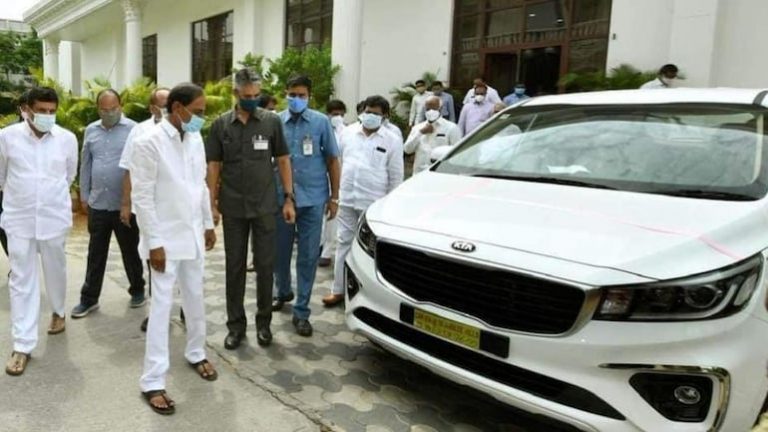
Dynasty Politics: Pinarayi Vijayan appoints son-in-law Mohammad Riyaz, an accused in riots case, as a minister in his cabinet

Kerala Chief Minister Pinarayi Vijayan’s decision to appoint his own son-in-law as a minister in the cabinet has now fuelled a major controversy in the southern state.

On Tuesday, the LDF-led government, which retained power in the state after winning the recently held polls, announced its new cabinet causing surprise to many. The Pinarayi Vijayan-led government decided to drop all of its ministers, including the incumbent health minister Shailaja Teacher to appoint fresh faces into his cabinet.

Among the ‘young’ fresh faces who have been appointed as the ministers are Pinarayi Vijayan’s son-in-law Mohammed Riyaz. Mohammed Riyaz, who contested and won from the Beyopre constituency was given a cabinet berth by father-in-law and CM Pinarayi Vijayan.

It is also pertinent to note that Mohammed Riyaz, who is the Democratic Youth Federation of India (DYFI) chief, has an extremely controversial past. Mohammed Riyaz, who rose through the ranks in the Left serving in the Students’ Federation of India, the DYFI, and then CPI-M, has been accused of orchestrating violence in Kerala.

In fact, in March this year, Riyaz was sent to judicial custody for orchestrating violence near the Air India office in Kozhikode to protest against the air tariff hike and reduction in the flight services by the national carrier. A case was registered against four people, including Rajesh, for breaking the law after the DYFI protests had turned violent. The two accused, including Pinarayi Vijayan’s son-in-law Mohammed Riyaz, was later granted bail in the case.

Mohammed Riyaz is married to Pinarayi Vijayan’s daughter Veena. The couple married last year in a private ceremony. Riyaz is infamous for leading ‘beef cooking’ protests after the center sought to regulate cattle purchase and sale. He had also unsuccessfully contested for the Kozhikode Lok Sabha seat in 2019.