Hindu houses at Harijan Basti, Sarai Kale Khan in Delhi was attacked allegedly by an Islamist mob after a Dalit man married a girl from the minority community. The incident occurred on Saturday. Visuals of the incident was shared by journalist Rahul Upadhyay on social media.
#Delhi: Houses ransacked, residents of Harijan Basti, Sarai Kale Khan area attacked yesterday because a Dalit Hindu boy dared to marry a Girl of minority community.
Jagran reported that the rioting mob entered the Dalit basti and attacked the locality with sticks and swords. There is significant communal tension in the area following the incident of Saturday night.
The mob were incensed after a Muslim girl decided to marry a man from the Dalit community of her own accord. Locals say that the two had gotten married in secret but recently, the family of the woman fixed her marriage with someone else.
Thereafter, the girl went to the local police station to register her statement on the matter and left with the Dalit man. The family of the Hindu man is reported to have left the area to live with relatives elsewhere. Upon becoming aware of the matter, the Islamist mob attacked the Dalit locality.
There is heavy police deployment in the area, according to Jagran. Jagran quoted sources who said that the Police has apparently made 5 arrests in the matter.
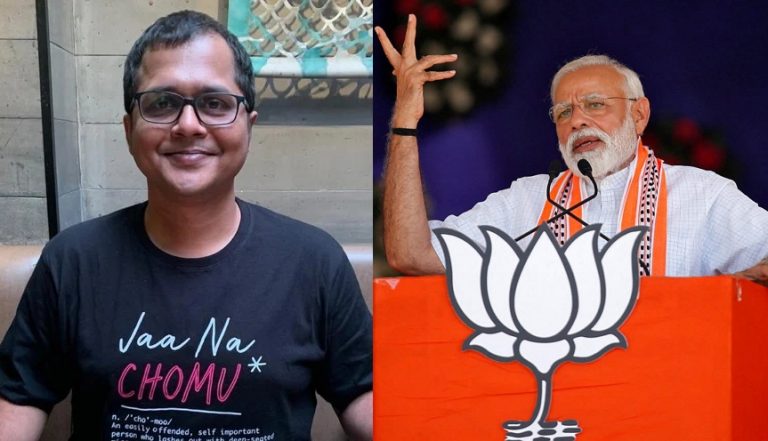
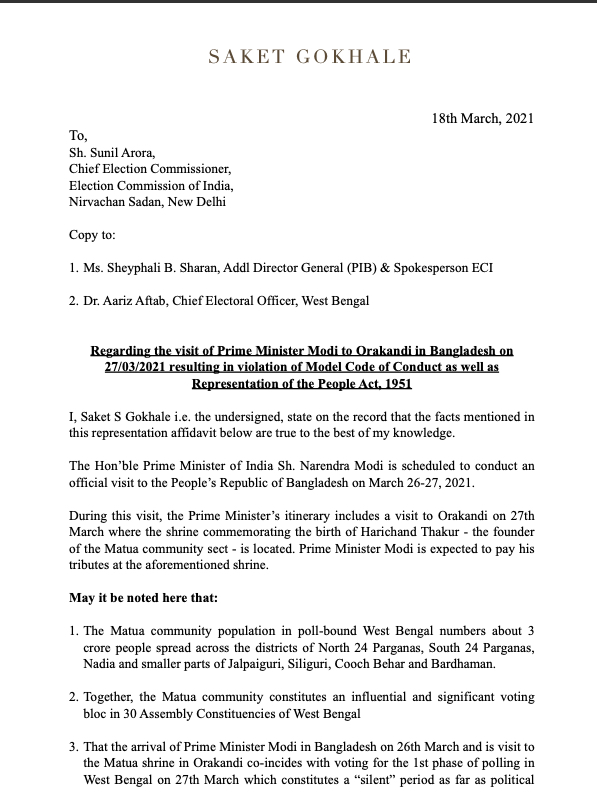
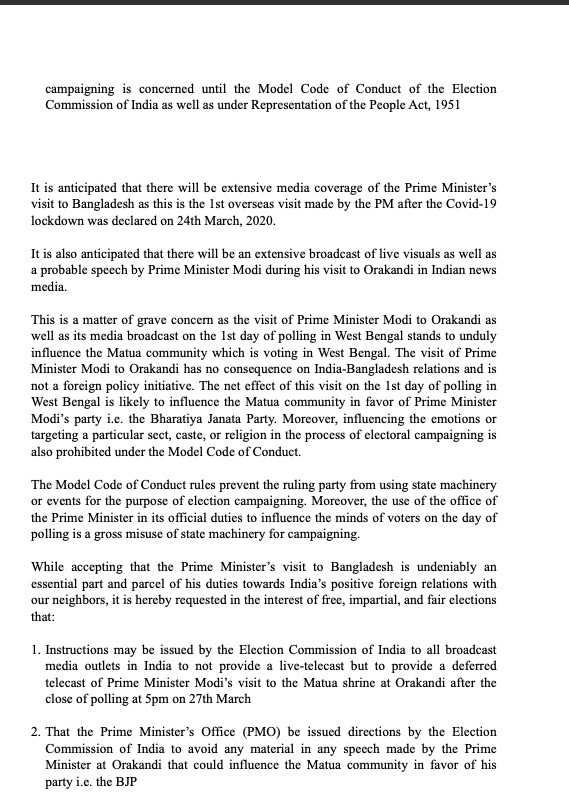
Congress supporter Saket Gokhale, who likes to call himself a ‘Transparency activist and investigator’, has filed a plea with Election Commission regarding Prime Minister Narendra Modi’s visit to Orakandi, Bangladesh which is scheduled for 27th March which coincides with the polling for the first phase of the elections in West Bengal. Gokhale has sought directions from the EC to delay the telecast of PM’s speech in India so that it ‘does not influence the voters in Bengal’, and also demanded that the EC should first read the PM’s speech and approve it before it is delivered in Bangladesh.
Saket Gokhale revealed the same through a tweet and claimed that Orakandi “is a shrine for Matua community that influences about 29 seats in Bengal.”
Filed a representation affidavit with Election Commission regarding PM Modi’s visit to Orakandi in Bangladesh which is a shrine for Matua community that influences about 29 seats in Bengal.
Modi is making this visit on 27 March i.e. 1st day of Phase 1 polling in Bengal.
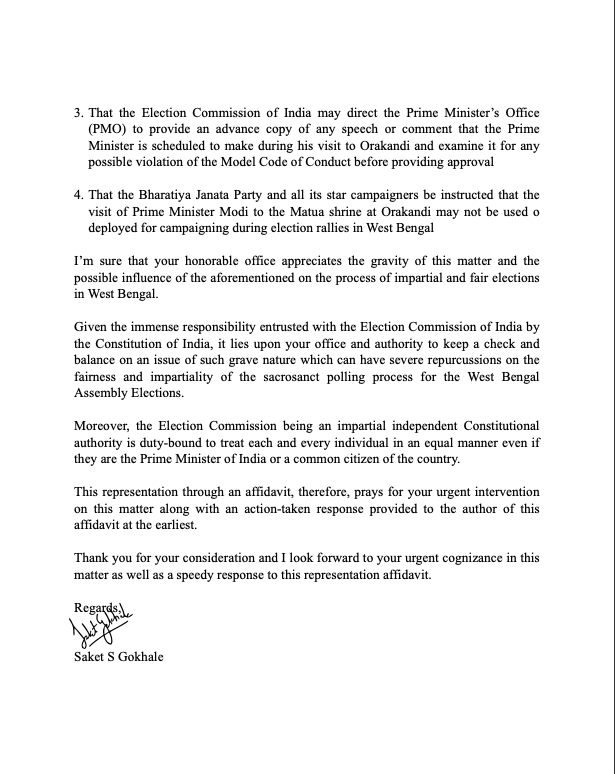
Saket Gokhale has also requested the Election Commission of India to vet an advanced copy of PM Modi’s speech to be delivered at Orakandi, allow the broadcast of his program only after closing of polling time i.e., 6 pm and restrain the BJP from using this event for the election campaign.
I’ve demanded that the ECI:
1. Vet an advance copy of Modi’s speech to be delivered at Orakandi
2. Require all TV media to broadcast Modi’s program at Orakandi only after close of polling i.e. 6pm
3. Restrain BJP from using this state visit for election campaigning.
Alleging an attempt to influence the voters of Matua community which comprises of 3 crore people, Saket Gokhale furthers his claim by stating, “influencing the emotions or targeting a particular sect, caste, or religion in the process of electoral campaigning is also prohibited under the Model Code of Conduct.”
That’s not where the allegations stop. Saket further assumes that the Office of Prime Minister in its official duties is trying to influence the minds of voters on the day of polling.
Here’s a copy of the affidavit shared by Saket Gokhale.
It may be noted that Prime Minister Narendra Modi is set to visit Bangladesh on a two-day visit at the invitation of Bangladesh PM Sheikh Hasina to join the 50th celebration of Bangladesh’s independence.
The Matua community:
The Matua’s are originally from East Bengal and many of them entered West Bengal after the partition and formation of Bangladesh. The Matua Mahasangha, a religious reforms movement was formed by Harichand Thakur in the mid-1800s. The community has had a strong presence in politics since then. Initially supporting the Congress, the community offered its support to the Left Front from 1977. However, noticing a change in citizenship and land rights, Boro Ma ( matriarch of the Matua Mahasangha) made Mamata Banerjee the chief patron of Matua Mahasabha in 2009 after she approached them. In 2018, Mamata Banerjee had visited Boro Ma and the government later announced a welfare board for Matuas.
Boro Ma’s son Kapil Krishna Thakur won the Bangaon Lok Sabha on a Trinamool ticket in 2014. Soon after his death, Kapil’s wife Mamata Thakur won the same seat while Boro Ma’s another son Manjul Krishna Thakur, a TMC minister later joined the BJP followed by his son Subrata.
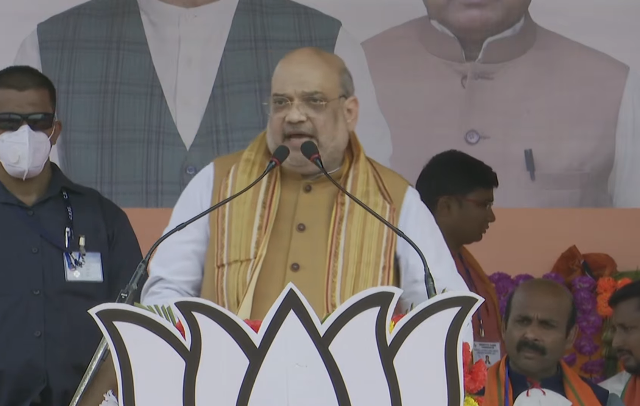
Union Home Minister Amit Shah addressed a public meeting in Purba Medinipur’s Egra in West Bengal ahead of the West Bengal assembly elections.
Veteran TMC MP and father of Suvendu Adhikari, Sisir Adhikari also attended Amit Shah’s rally in Egra on Sunday and chanted ‘Jai Shri Ram’ slogans. Sisir Adhikari, who is the sitting Trinamool Congress MP from Contai, joined the Bharatiya Janata Party (BJP) in the presence of Amit Shah at the rally.
The development has come two days after Sisir Adhikari said he would join the BJP if Suvendu Adhikari asks him to. Sisir is BJP leader Suvendu Adhikari’s father. Suvendu’s brother Dibyendu Adhikari, a Trinamool MP from Tamluk, is also expected to join the party. His other younger brother Soumendu left TMC to join the BJP in January, weeks after Suvendu Adhikari joined the party.
Following Suvendu’s departure, Sisir Adhikari was removed as chairman of the prestigious Digha-Shankarpur Development Council and president of the Trinamool’s district unit by Mamata Banerjee.
Amit Shah launches scathing attack on Mamata Banerjee-led government
Addressing the public, Home Minister Amit Shah launched a scathing attack against Mamata Banerjee-led government on the issue of illegal immigrants in the state. Home Minister Shah said Mamata Banerjee gave the slogan of ‘Maa, Maati, Manush’, however, it did not change anything. He asked Mamata Banerjee whether she could give freedom from infiltrators.
“You were fed up by the Communists, and didi promised you transformation. Has there been any change? Infiltration has continued, and there has been no change!” said HM Shah in his public address in Egra.
Home Minister Amit Shah also assured that they will make Bengal free of infiltrators in five years if voted to power in the state.
People of Bengal need not fear to celebrate Durga Puja, says Amit Shah
Home Minister Amit Shah also lashed out against Mamata Banerjee for stopping Durga Puja celebrations in West Bengal.
“The people of Bengal need to take permission from courts to celebrate Durga Puja and Saraswati Puja. People are being killed by the Mamata Banerjee-led government. Should such a government continue?” asked Home Minister Shah.
If BJP is voted to power, no one will stop you from celebrating Durga Puja and Saraswati Puja, Home Minister assured the public during his address at Purba Medinipur’s Egra.
Home Minister attacks Trinamool over Tollbazi and violence during Panchayat Polls
Speaking on the increasing violence in the state, Home Minister pointed out that more than 130 cadres have been killed. Warning the TMC workers for allegedly carrying attacks on BJP cadres, Home Minister said that the goons of TMC should not think that they will be spared. We will take action when our government comes to power in West Bengal on May 2, said Home Minister.
“TMC goons should not feel that they are safe. After forming the govt on May 2, we will find the murderers of 130 BJP karyakartas and put them in jail!,” said Home Minister as he attacked Mamata Banerjee.
Our 130 cadres were killed. Goons of TMC shouldn’t think that they will be spared. We will take action when our government comes to power in West Bengal on May 2: Union Home Minister Amit Shah during a rally in Egra, West Bengal pic.twitter.com/BN08wYpAD5
Home Minister also said they would end the practice of Tollbazi extortion in Bengal after forming the government. HM Shah also assured that the government would give OBC reservation to the Mahisya caste.
Home Minister attacks Abhishek Banerjee, promises of ‘Sonar Bangla’.
Launching a scathing attack on Mamata Banerjee’s nephew, Abhishek Banerjee, Home Minister said Mamata Banerjee wants to make her nephew the next CM. However, PM Modi wants to make Sonar Bangla. If you want Sonar Bangla, make sure you form a BJP government in the state, he added.
The Home Minister also said that West Bengal’s government employees had not received the 7th Pay Commission, and their government will implement it as soon in West Bengal. We will also increase the salaries of the teachers, the Home Minister said.
Fishermen will also receive an yearly help of Rs 6,000 from a BJP govt. We will also work on skill development in the region full of gold makers.
We will also ensure a health cover of Rs 5 lakh for everyone under Ayushman Bharat.
“Fishermen will also receive an yearly help of Rs 6,000 from a BJP govt. We will also work on skill development in the region full of gold makers. We will also ensure a health cover of Rs 5 lakh for everyone under Ayushman Bharat,” Home Minister said in his address at Egra.
West Bengal elections
The much-anticipated elections to 294-seats of the West Bengal Assembly are scheduled to be held from March 27 in eight different phases. The results will be announced on May 2.
Currently, Mamata Banerjee’s Trinamool Congress holds 222 seats at present. However, BJP has made major inroads in the state in the Lok Sabha elections winning 18 seats out of 42 and establishing itself as the major opposition force in the state.
In a shocking incident, a man sewed the genitals of his wife with an aluminium wire after he suspected her of having an extra-marital affair.
According to the reports, the incident occurred in Uttar Pradesh’s Rampur district. The accused, who worked as a driver, had suspected that his wife was cheating on him. He asked his wife to prove her loyalty with a fidelity test. As she agreed, he tied her hands and legs and allegedly sewed her genital shut with an aluminium wire.
After the shocking act, the man fled the scene leaving her bleeding profusely. The 24-year-old woman informed about the cruel act to her mother, who lives in a nearby village, who rushed her daughter to a community health centre. The mother of the victim registered a complaint against her son-in-law at Milak police station.
The Rampur police ordered the doctors to conduct a medical examination of the woman, who confirmed the assault.
“The husband was booked under appropriate sections and arrested later in the day,” said police. The husband is currently under police custody while the woman is undergoing treatment at the district hospital.
Narrating her ordeal, the woman said that her husband often assaulted her for no reason. She said he suspected her of having an extramarital affair and had asked me to prove my innocence. I had not even imagined that he would indulge in such a horrible act, said the woman, who married the accused two years ago. The couple had a baby, who died soon after the delivery.
“The medical examination of the woman has confirmed that she has suffered serious injuries. We have arrested her husband and he will be sent to jail. We are ensuring that she gets proper treatment at the district hospital,” said Rampur SP.
NCP chief Sharad Pawar on Sunday threw ex-Mumbai CP Param Bir Singh under the bus, figuratively, and claimed his allegations against Home Minister and NCP leader Anil Deshmukh were because of his removal from his post. He alleged that Singh was making ‘wild allegations’ against Deshmukh after he was removed from his post as Mumbai CP.
However, he did say that that the allegations made against the Home Minister Anil Deshmukh are serious. He further said that the Chief Minister has the full authority to initiate an enquiry against the home minister based on the allegations.
The Maharashtra CM has the full authority to take a decision regarding an inquiry on these allegations against the Home Minister: NCP Chief Sharad Pawar pic.twitter.com/RA7OvW42H2
Pawar admitted that Singh had met him regarding his transfer and said that it was Singh who got controversial Mumbai Police cop Sachin Vaze reinstated. He further added that the current controversy will not have any impact on the future of Maha Vikas Aghadi government led by Uddhav Thackeray in Maharashtra.
BJP questions Maha govt
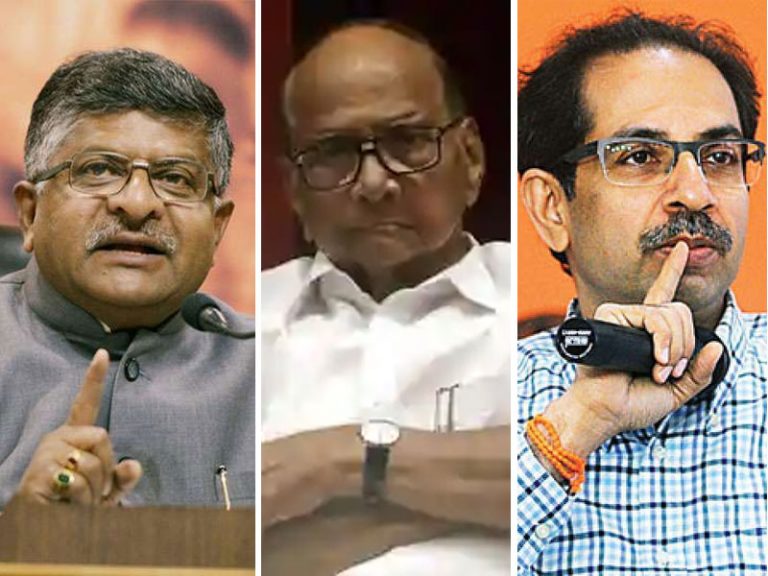
On March 21, Union Minister Ravi Shankar Prasad held a press conference to address the allegations against home Minister Anil Deshmukh. He also raised questions on the role of Sharad Pawar in the Sachin Vaze case.
He added that Maharashtra Chief Minister Uddhav Thackeray must answer the questions so clear his stand on the case.
Union Minister Prasad further asked why former Police Commission Param Bir Singh was briefing Sharad Pawar when he was not part of the government. He said, “Param Bir Singh said that he used to brief Sharad Pawar. He’s not a part of the government. Why was he briefing him? What is Sharad Pawar’s role?”
पूर्व कमिश्नर परमवीर ने कहा है कि मैं शरद पवार को भी ब्रीफ करता था।
शरद पवार वहां सरकार का अंग नहीं है, तो एक पुलिस कमिश्नर उनको ब्रीफ क्यों कर रहा था और उसने ये भी बताया कि पैसे मांगे जा रहे हैं।
Prasad said that it was alleged Vaze was reinstated during Corona time as police officers were getting sick and there was not enough force. However, his party would like to know who really was behind his reinstatement? “Was it Shiv Sena, Chief Minister or Sharad Pawar?” Prasad asked.
सचिन वाजे की नियुक्ति किसके दबाव में की गई? ये शिवसेना का दबाव था, मुख्यमंत्री मंत्री का दबाव था या शरद पवार का भी दबाव था?
सचिन वाजे को बचाने की क्या मजबूरी थी, सचिन वाजे के पेट में और क्या-क्या सीक्रेट हैं?
Vaze has been a member of the ruling party Shiv Sena. Further, Shiv Sena, through its mouthpiece Saamana as well as leaders like Sanjay Raut, have very vocally come out in support of Vaze. During his interrogation with the NIA, Vaze had revealed that he was just a tip of the iceberg and named big Shiv Sena leaders.
During the press conference, Prasad said that his party would like to know from the Maha Vikas Agadi government of Maharashtra that how many more dirty work had been sought to be done through Sachin Vaze. It was reported that in his letter, Param Bir Singh had mentioned that Vaze was allegedly asked to collect Rs 100 crore per month by Home Minister Anil Deshmukh.
मुंबई के पूर्व पुलिस कमिश्नर ने एक चिट्टी लिखी है महाराष्ट्र के मुख्यमंत्री और उप मुख्यमंत्री और राज्यपाल जी को, जिसमें उन्होंने कहा है कि महाराष्ट्र सरकार के गृह मंत्री ने सचिन वाजे से कहा कि हमें 100 करोड़ रुपये महीना बंदोबस्त करके दो।
Prasad said that this was the target for Mumbai only. It is still unknown how much was the target for the rest of the state. He further added, “Anil Deshmukh has lost the authority to govern, even for a day. This is not a Maha Aghadi for governance or development, this is a Maha Aghadi for loot.”
इस प्रकरण से एक और बहुत बड़ा गंभीर सवाल उठता है-
100 करोड़ रुपये का टार्गेट था मुंबई से तो कृपया करके उद्धव ठाकरे और शरद पवार जी बताएं कि पूरे महाराष्ट्र का टार्गेट क्या था?
अगर एक मंत्री का टार्गेट 100 करोड़ था तो बाकी मंत्रियों का टार्गेट क्या था?
Prasad said that in his decades’ long career as an MP and Minister, he had never seen a chief minister coming forward to save an assistant police inspector. “What are the secrets stored in Vaze stomach that the CM is defending him?” Prasad asked.
Raj Thackeray demanded the center’s intervention
In a statement, Maharashtra Navnirman Sena’s head Raj Thackeray said that the Maharashtra government is not equipped to initiate enquiry against home minister Anil Deshmukh.
Anil Deshmukh should resign immediately. The main issue is that of an explosive-laden vehicle being found near the residence of an industrialist. I request the Central Government to intervene. The State government cannot investigate this matter: MNS chief Raj Thackeray pic.twitter.com/gNN0Segeqt
He further urged the central government to intervene and initiate an enquiry at the earliest. He alleged that once the central investigating agencies take over the case, many names will be revealed.
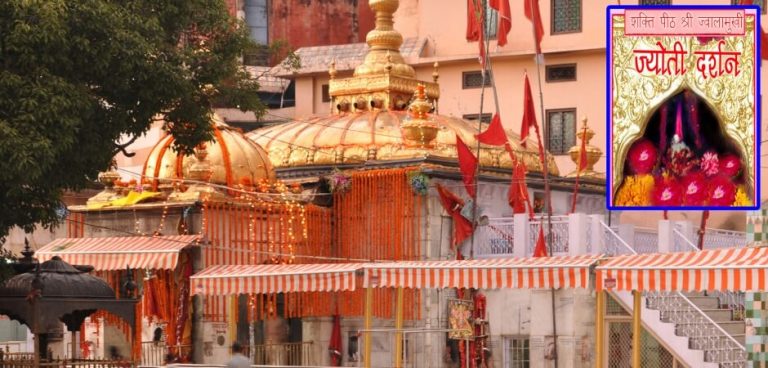
In a recent development, Himachal Pradesh government has appointed two non-Hindus to the administration of Maa Jwalamukhi Temple, one of the Shaktipeethas. The development came to light when Girish Bharadwaj, a VHP leader, tweeted furthering the call for freeing Hindu temples.
In an order released by Office of the Commissioner (Temple)-cum DC Kangra, two employees from non-Hindu community have been appointed as langar sevadars in the Shaktipeeth temple. The order further specifies that the salaries would be taken care by temple administration. The two individuals appointed are named Jashan Deen and Shakeen Mohhamad.
The appointment has given rise to strong opposition from non-government members of the temple and several local organizations. While speaking with OpIndia, Girish Bhradwaj said, “temples are not tourists spots and should not be treated as one.” Commenting on the appointment of non-Hindus he said, we cannot expect someone who is not emotionally connected or believes in that place of worship to work efficiently in the administration.
As reported by Jagran, the members of the Himgiri Hindu Mahasabha submitted a memorandum to SDM Ankush Sharma to cancel these appointments. The letter also stated that if these appointments were not canceled, it would result in state-wide agitation.
Highlighting the injustice, Himgiri Hindu Mahasabha state secretary Kishan Sharma explained that permanent appointment have been given to two personnel from a different community rather than to those personnels who have been working in the Jwalamukhi Temple since 32 years.
The report suggests, Ramesh Dhawala, MLA and Deputy Chairman of the State Planning Board, had proposed to appointing the two specific employees to other departments right from the beginning to avoid complications. Despite this, the administration regularized the appointments without taking anyone in confidence and posted them in the temple. The nine non-government members of the temple stated that they had opposed the appointment of employees from other religions even during Congress’s tenure.
They also said that multiple resolutions were passed and sent to the Deputy Commissioner, Chief Minister and Governor office through SDM Jwalamukhi to regularize these appointments, yet such appointments keep happening.
Joining the opposition, Kesariya Hindu Vahini, a International Hindu organization has issued a statement stating that the organization strongly opposes such appointment.
Clarifying that no member or organization is against the employment, they have simply called out the injustice meted out to the Hindu community with such appointments. OpIndia confirmed the agitations reported with the temple administration.
Kangra DC took to Twitter to clarify that the above two men were appointed in 2017 by previous government. People have since been opposing their appointment.
Both appointed in temple in 2017 by the Previous GOVT. People objected to their presence around temple even though they were posted in the temple REST HOUSE. So I transferred them 50 KMs away to District Headquarters in order to maintain communal harmony & Law and Order.
He said that to maintain communal harmony and law and order, he transferred them 50 kms away to district headquarters.
Islam does not believe in idol worship and refer to those who indulge in idol worship as Kafirs. Anyone who does not worship Allah is also Kafir, as per Islam. As per Islamic holy scriptures, Kafirs are punished by Allah.
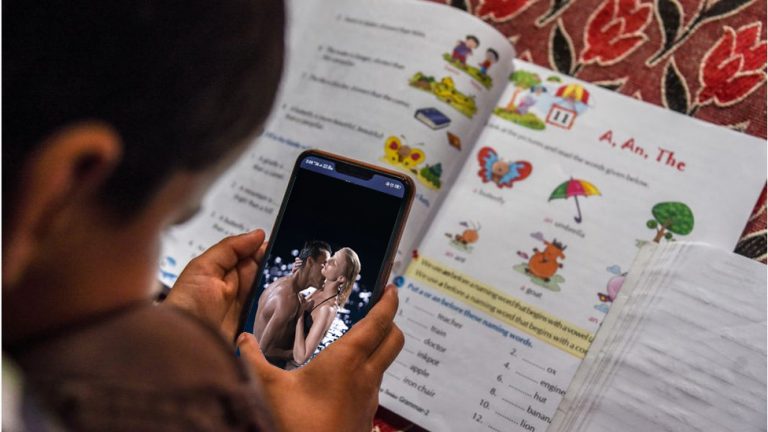
A shocking case has come to light in a village of the Raisinghnagar area, district Sri Ganganagar, Rajasthan, where a 12-year-old boy raped a 6-year-old girl. As per reports, the boy studies in class six. During Covid-19 lockdown, he attended online classes and had unhindered access to the internet. During that period, while using his father’s phone for online classes, he stumbled upon porn websites and started watching them, and gradually got addicted to them.
As per reports, the girl is a neighbour of the boy, and the parents of the victim work on the farm. The boy took advantage of the girl being alone at her house. One day he took her to his house and raped her. When the parents came back, she told them about the incident, after which the parents rushed to the hospital. Later, a case was registered at the police station.
Investigating officer Rohit Sankhla is probing the case. The accused boy has been taken into police custody following the registration of the case against him.
Pandemic increased children’s access to porn
It won’t be right to blame Covid-19 lockdown for putting children at risk of encountering pornographic content online. However, since online classes started due to lockdown, it acted as a catalyst in increasing such exposure. According to a study published in 2013, 79% of accidental exposure to internet porn among kids take place at home. While children being exposed to internet porn is not new, in the current time, parents have to be extra vigilant to ensure their child’s safety.
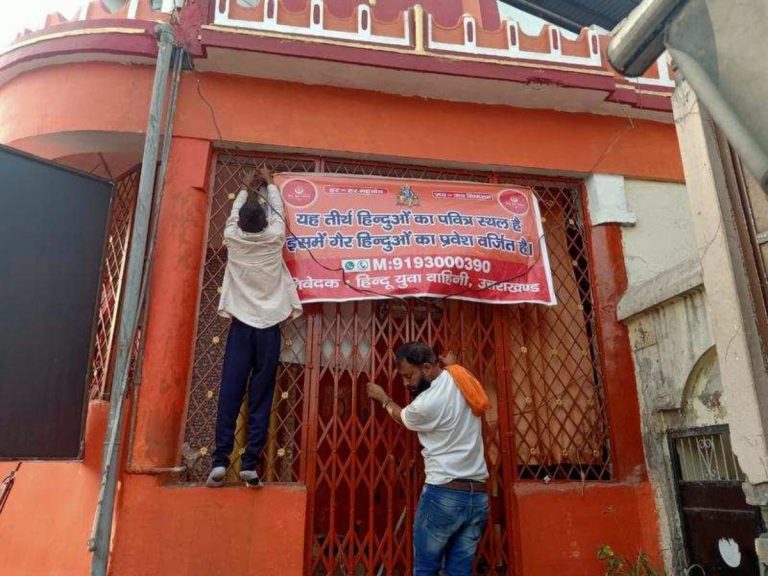
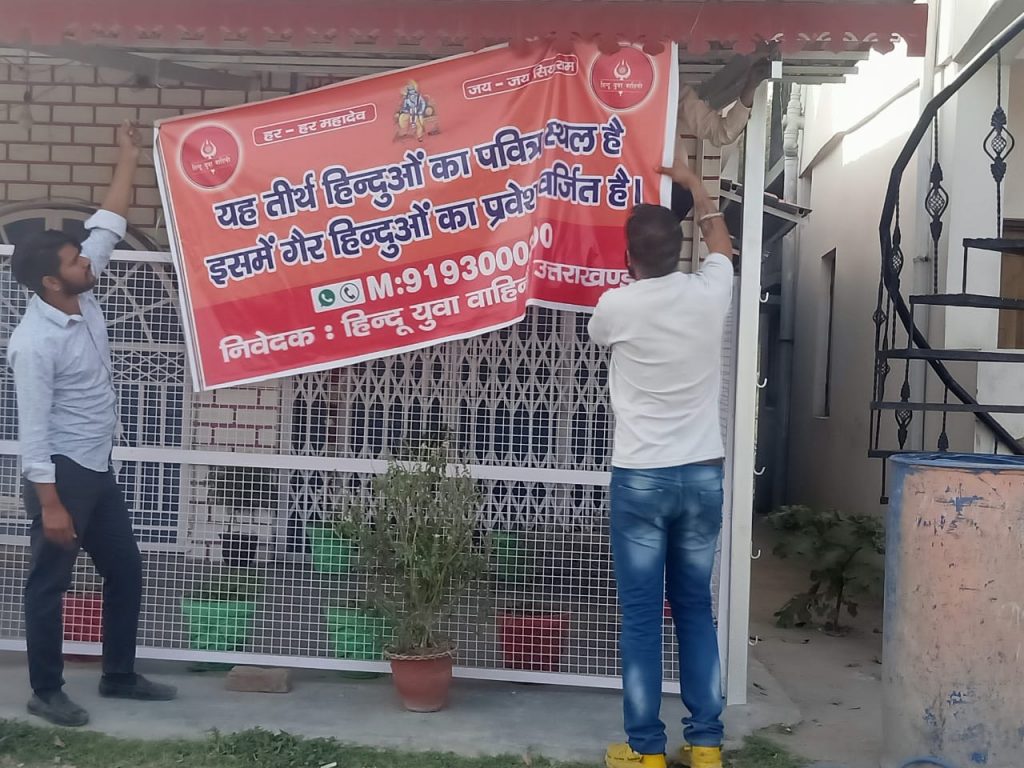
The Hindu Yuva Vahini has out up banners in over 150 Temples in Dehradun saying that the entry on non-Hindus is banned in the premises, Times of India has reported. The banners, put up at temples situated in Chakrata Road, Suddhowala and Prem Nagar areas of Dehradun, are planned to be put up in Temples across Dehradun, the Hindu outfit says.
The banners have come up in light of the recent dispute at the Dasna Temple in Ghaziabad where a Muslim boy was thrashed for trespassing on the Temple premises despite the banner. Yati Narsinghanand, the head priest at the Temple, and others have alleged that Muslims from the locality often entered the Temple to harass Hindu women and there have been multiple theft and dacoity at the Temple.
Image Credit: Times of India/Twitter
BSP MLA Aslam Chaudhary had then threatened to enter the Temple and claimed that the Temple belonged to his ancestors. It was in response to the threat that the Hindu Yuva Vahini has decided to put up the banners across Uttarakhand.
Jeetu Randhawa, state general secretary of Hindu Yuva Vahini, said that “in order to counter Aslam’s threat, we will now put up such posters outside every temple in Uttarakhand.” “The temple is a revered place for people who believe in the Sanatan dharma and hence, only those people who belong to this religion will be allowed inside,” he added.
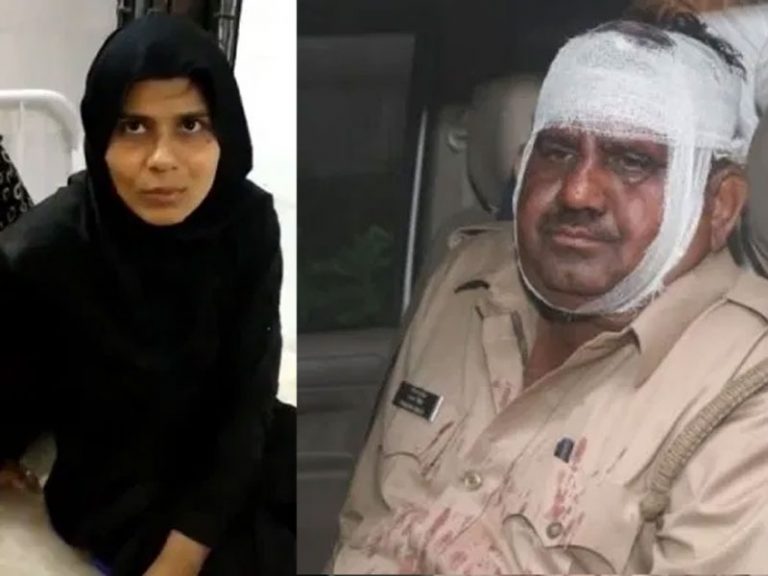
On March 20, 2021 a Police team from Kajijri Police Station in Kanpur rural region, Uttar Pradesh were attacked by dowry case accused Rafiq and his family members, including women. The team was at Rafiq’s house with his daughter-in-law as per the orders of the Commission for Women, Uttar Pradesh. Several policemen were injured, out of which two are in critical condition.
The dowry case is two years old
As per reports, Shah Begum, wife of Ajmal, resident Bhikdev, filed a complaint against her husband and father-in-law Rafiq alias Hakkal two years ago. On March 18, Shah Begum filed a complaint in front of Poonam Kapoor, a member of the Women’s Commission, after which Ajmal was arrested by the police. Both parties reached a compromise, after which Ajmal was released.
Shah Begum was living at her maternal house. A police team accompanied Shah Begum to her in-law’s house as she had to stay at her in-law’s house as per the conditions laid down by the women cell. Police were questioning Ajmal’s elder brother Hasar Ali when they were attacked.
Women pelted stones at the police team
The women in Rafiq’s family pelted stones and bricks on policemen. They had to run to save themselves and call for additional force. The situation went south quickly, and police had to open fire in self-defence. The station in-charge and a constable, along with the complainant woman, were injured during the attack. The station in-charge fainted after he was hit by stones. A police team from Rasulabad station reached the spot to rescue the injured. Station in-charge and constable Samar Singh are in critical condition and undergoing treatment at the Regency Hospital in Kanpur.
SP Took charge of the case
SP Keshav Kumar Chaudhary has taken over the case. Five teams have been formed to apprehend the accused. It has to be noted that there are several cases already registered against Rafiq.
According to Shah Begum, her in-laws wanted to kill her. She said her husband Ajmal Ali and her father-in-law Rafiq, along with sister-in-law Afrun, Akram Ali, brother-in-law Wajid Ali, Muskan and others attacked her and police personnel. She alleged that they used iron rods as well. She added that when the police team asked them to let her stay there, everyone got irked and attacked them.
Amidst escalating tensions between China and the United States, Pakistan has found itself in a tough spot. While the Islamic Republic has been an all-weather friend of China and also a negotiator in talks with the Taliban on behalf of the US, the Pakistani establishment is increasingly finding it difficult to continue with its balancing act.
In the recently concluded Quad summit meeting, the US sought to contain the growing influence of China by strengthening ties with Japan, India, and Australia. Following the virtual meeting, the US diplomatic and military chief visited India, South Korea and Australia to reaffirm mutual cooperation and bilateral relationships. Pakistan finds itself increasingly cornered by the States in two decades since the onset of the Afghanistan war.
With the Afghan conflict reaching its conclusion and shifting geopolitical commitments of the United States, Pakistan is pondering over the possibility of jumping the anti-China bandwagon and renewing its estranged relations. However, such a move can distance it from China, which has been building massive infrastructure in the cash-strapped country of Pakistan. The Islamic Republic is under the ‘Chinese debt trap’ and is unlikely to come out of it anytime soon.
Given that Pakistan is the largest importer of weapons from China, it has become difficult for the country to develop non-terrorism related geopolitical ties with the States. To add salt to the wound, it cannot be seen being ‘overtly pro-China’. Else, it might risk losing economic assistance or bailout packages from the United States or the US-backed International Monetary Fund.
IMF has called for strict scrutiny of CPEC, given its lack of transparency. This has further stressed ties between China and Pakistan. It remains a challenge for the Pakistani government and its baggage of Army establishment to steer past this inconvenient diplomatic situation. “As Biden looks to build an alliance of “likeminded” democracies against authoritarian China, Islamabad won’t easily shift the focus of Pakistan-US relations from security to economics,” the report concluded.
Deteriorating US-China relations
Recently, US Secretary of State Antony Blinken and National Security Adviser Jake Sullivan had a tough time during a meeting with Chinese diplomats Yang Jiechi and State Councilor Wang Yi in Anchorage, Alaska where US officials received an astonishing dressing down from their Chinese counterparts.
Wang also told the US delegation that they are not in a position to speak to China from a position of strength. Blinken said during his remarks, laying emphasis on the “rules based international order” that the two countries will discuss the USA’s “deep concerns with actions by China, including in Xinjiang, Hong Kong, Taiwan, cyber attacks on the United States, and economic coercion toward our allies.”
“Each of these actions threatens the rules-based order that maintains global stability. That’s why they’re not merely internal matters and why we feel an obligation to raise these issues here today,” he added.Yang, on his part, mocked the proponent of the “rules based international order”, which truth be told, is a thinly veiled euphemism for a world based on American hegemony.