The Uttar Pradesh government on Saturday accused Arvind Kejriwal led AAP government in Delhi of playing petty politics, lying and spreading rumours, risking the lives of migrant workers at the time of a crisis as serious as the Coronavirus pandemic, according to a report by Indian Express.
The UP authorities stated that the Delhi authorities disconnected the water and electrical energy connections of individuals. “Throughout lockdown, individuals weren’t even supplied meals and milk in Delhi,” stated the report quoting UP govt sources. The UP authorities have also alleged that DTC buses dropped off individuals on the Delhi border within the title of assist.
The Delhi government spread unnecessary rumours by making announcements that there were buses at UP border ready to drop individuals to their locations, said the UP govt.
Basically, to do away with the migrant workers in the national capital amidst the pandemic, the AAP government allegedly spread the rumour that buses have been waiting at the UP borders to take them to their respective households. This impelled the mass exodus of these migrant labourers, now camping at the Delhi-Uttar Pradesh border, in an attempt to return to their respective villages.
The report said that the UP CM Yogi Adityanath has stayed up till late last night to overlook the arrangements in order to help these stranded migrants, mostly hailing from UP and Bihar, to return back to their respective homes as soon as possible.
“Till late in the night, Chief Minister Yogi Adityanath was busy issuing instructions for arranging buses for the purpose,” the spokesman said, adding that the CM also directed officials to arrange for food and water for such people and their families. “At night, transportation officials, drivers and conductors were called from home,” said the statement, adding that 1,000 buses were arranged at night to bring back people stuck on the Delhi border.
On Saturday morning, senior police officers reached the Charbagh bus station in Lucknow to ensure that those arriving there were provided with food and water.
The buses later left for Kanpur, Ballia, Varanasi, Gorakhpur, Azamgarh, Faizabad, Basti, Pratapgarh, Sultanpur, Amethi, Rae Bareli, Gonda, Etawah, Bahraich and Shravasti.
State’s DGP Hitesh Chandra Awasthi and Lucknow Police Commissioner Sujit Kumar Pande, were personally present at the bus depot to monitor the arrangements, the spokesman added.
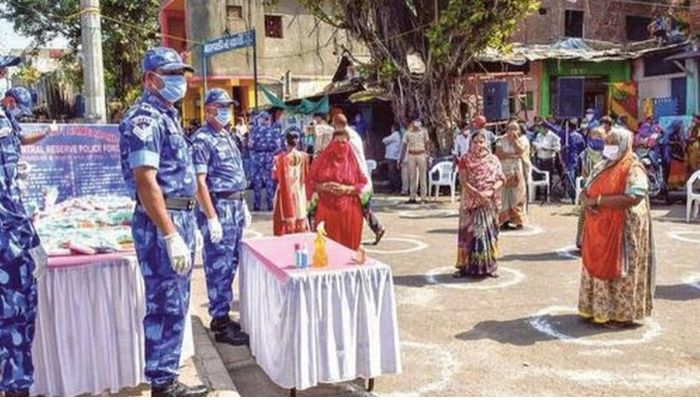
The Uttar Pradesh government has claimed that these migrant workers will be ferried home to their respective villages free of cost but will be screened for the novel coronavirus first.
As India strives to contain the spread of deadly Wuhan Coronavirus which have devasted several first world countries in the world, today prime minister Narendra Modi appealed the citizens of the country to monetarily contribute towards this effort by making donations. Although there is already the Prime Minister’s Relief Fund where people can make donations, the union government has decided to set up a specific fund for Covid-19, due to the gravity of the situation posed by it.
The prime minister tweeted, “It is my appeal to my fellow Indians, kindly contribute to the PM-CARES Fund. This Fund will also cater to similar distressing situations, if they occur in the times ahead.”
It is my appeal to my fellow Indians,
Kindly contribute to the PM-CARES Fund. This Fund will also cater to similar distressing situations, if they occur in the times ahead. This link has all important details about the fund. https://t.co/enPvcqCTw2
He informed that people from all walks of life expressed their desire to donate to India’s war against Covid-19. “Respecting that spirit, the Prime Minister’s Citizen Assistance and Relief in Emergency Situations Fund has been constituted. This will go a long way in creating a healthier India,” PM Modi tweeted.
The public charitable trust with the name ‘Prime Minister’s Citizen Assistance and Relief in Emergency Situations Fund’ (PM CARES Fund)’ will be a dedicated national fund with the objective of dealing with any kind of emergency or distress situation, like the current Covid-19 pandemic. Prime Minister is the Chairman of this trust, and its members include Defence Minister, Home Minister and Finance Minister. This
Citizens who want to make donations can go to the pmindia.gov.in and donate to the PM CARES fund. The details for making the donation are:
Name of the Account ——— PM CARES Account Number ————– 2121PM20202 IFSC Code ———————— SBIN0000691 SWIFT Code ——————— SBININBB104 Name of Bank & Branch —– State Bank of India, New Delhi Main Branch
Donations can be made using Debit and Credit Card, Internet Banking, UPI, and RTGS/NEFT. The UPI ID of the fund where donations can be made is pmcares@sbi.
As
usual, donations made to PM CARES Fund will be exempted from Income Tax under
section 80(G) of the Income Tax act.
The
Prime Minister also tweeted
details about the fund.
A notification published by the govt of India said that the pandemic of COVID-19 has engulfed the entire world and has posed serious challenges for the health and economic security of millions of people worldwide. In India too, the spread of coronavirus has been alarming and is posing severe health and economic ramifications for our country. The Prime Minister’s office has been receiving spontaneous and innumerable requests for making generous donations to support the government in the wake of this emergency, the statement said.
“Distress situations, whether natural or otherwise, demand expeditious and collective action for alleviating the suffering of those affected, mitigation/control of damage to infrastructure and capacities etc. Therefore, building capacities for quick emergency response and effective community resilience has to be done in tandem with infrastructure and institutional capacity reconstruction/enhancement. Use of new technology and advance research findings also become an inseparable element of such concerted action,” the statement issued by the union govt said.
This
fund will enable micro-donations as a result of which a large number of people
will be able to contribute with smallest of denominations. The statement adds
that PM Narendra Modi has said that public participation is the most effective
way to mitigate any issue and this is yet another example of the same.
The Congress-ruled Punjab Government has failed to trace 1330 out of 55,000 Non-Resident Indians (NRIs) who returned to the State from foreign countries after the 30th of January in the midst of country-wide lockdown in a bid to control the spread of Wuhan Coronavirus. Reportedly, these returnees evaded quarantine under the nose of the administration. The missing NRIs belonged to Rural Jalandhar (204), Ludhiana (172), Mohali (128), Gurdaspur (118), and Hoshiarpur (63).
Keeping in mind the alarming health risk posed by these untraceable passengers to the society, the State Ministry of Home Affairs has issued directions to the law enforcement authorities to find and quarantine the missing people for 14 days. The Divisional, Deputy and Police Commissioners have been asked to divide the districts into sectors and appoint Section officers for 8-10 villages.
Chief Secretary of the Punjab Government, Karan A Singh, was quoted as saying, “Till date, more than 48,000 NRIs have come to the state and almost all of them have been traced baring a few as the passport numbers and address given by them were incorrect. We have again written to the Union government to verify and send us the correct address.”
He also claimed that Punjab is the only state to have been able to track people who have returned from abroad. Singh added that a few people kept under home quarantine have expressed their displeasure but he appealed to them to stay at their homes.
Earlier, around 167 people who were suspected of being infected Wuhan Coronavirus had been missing in Ludhiana, while only 29 had been traced, said Dr Rajesh Bagga, the city’s civil surgeon. He added, “Two teams have been tasked to find the people coming from abroad, in which police have been given responsibility for finding 119 people. They have found 12 people so far and the other team is from the health department, in which they were given the responsibility to find 77 people. 17 people have been traced by the health department team while the rest of 167 people are still missing.”
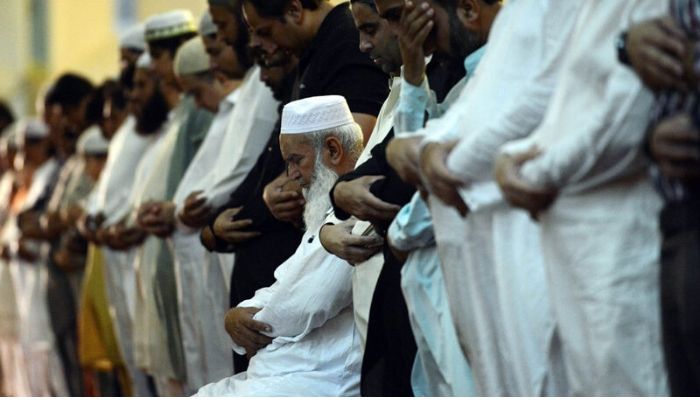
To battle the deadly Wuhan Coronavirus outbreak, the central, as well as the state governments, have time and again reiterated the importance of social distancing and urged people to stay confined to their houses. While the Government is imposing stringent restrictions to ensure that the spread is contained, several people throughout the country have been purposely violating the lockdown risking theirs and other people’s life. Uttar Pradesh police have arrested a Muslim cleric in Bhagpat area for urging people to gather to offer Friday Namaz at the mosque amidst Coronavirus lockdown. He allegedly used the microphone to invite all the members of his community to join him for the mass prayer (Namaz) at the Mosque. Following the announcement, few alert locals informed the police who then reached the Mosque and arrested the cleric.
According to Kotwali in-charge Arvind Kumar, a case has been registered against the arrested Maulana under IPC sections 269 (Negligent act likely to spread infection of disease dangerous to life) and 270 (Malignant act likely to spread infection of disease dangerous to life).
Snapshot of the report published by the Hindi daily Dainik Jagran
Bhagpat in Uttar Pradesh reported its first case of coronavirus on March 26. A 32-year-old Bhagpat man who returned from Dubai recently tested positive for Covid-19 on Thursday. The patient in question had travelled via public transport after deboarding the flight at the Delhi airport, confirmed the doctor currently treating him.
Uttar Pradesh police have also arrested two teachers, Imran and Madan, from the madrasa located in Muradnagar area in Ghaziabad, Uttar Pradesh. Deliberately defying the nationwide lockdown orders the teachers had locked up 20 students inside the Madarasa and continued with the classes.
An Imam was arrested in Bulandshahr while cases were registered against about two hundred others for violating the lockdown orders. According to reports from Bulandshahr, a case was registered against 22 people, including two imams, for offering prayers in mosques despite the nation-wide lockdown in Jahangirabad and Dibai areas of Bulandshahr district, police said on Friday.
Santosh Kumar, the Senior Superintendent of Police in Bulandshahr, said that ignoring repeated warnings, around two dozen people were offering namaz at a mosque in Mohalla Kayastha Bara of Jahangirabad. On receiving information, when police station in-charge reached the spot, the people fled. Meanwhile, Imam Nazir Ahmed, who was offering prayers, was arrested and a case was registered against 21 people.
In a similar incident, several people were offering prayers at a mosque in Kaser Kala village in Dibai area of the district. When the police reached the spot, the people fled. Police were bringing the imam Amir Hamza, after arresting him but due to strong resistance from people, the cops let him off to avert any untoward incident. However, the police registered a case in the matter.
@RakeshA12572734#कोरोना_वायरस के संक्रमण से बचाने के लिए सोशल डिस्टेंस बनाए रखने की अपील किए जाने के बाद भी कुछ लोग बाज नहीं आ रहे हैं।बुलंदशहर के डिबाई में दो मस्जिदों में लोगों की भीड़ नमाज पढ़ा रहे दो मौलनाओं को गिरफ्तार किया गया है https://t.co/3CYuUw1wI6#COVIDIOTS
In another incident reported from Hardoi, as many as 150 people were booked for offering prayers collectively in a mosque despite the lockdown in the district, police said on Friday.
In yet another shocking act of deliberate violation of lockdown, a Muslim mob on March 26, not only assembled at a local mosque in Mainpuri, Uttar Pradesh but also attacked the policemen for asking to avoid mass prayers (namaz) in the view of nationwide lockdown due to the coronavirus pandemic.
According to the report, the Muslim had assembled at a local mosque in Bhogaon, Mainpuri on Wednesday to offer namaz at a time when Uttar Pradesh government has issued orders that no religious places will be kept open for prayers during the lockdown. The local administration had also appealed the Muslims to not assemble at the mosque.
However, the Muslims had defied the rules to assemble at the mosque. On receiving information that people had gathered at the mosque located in Mohalla Mohammad Saeed town of Bhogaon, Inspector Pahup Singh reached the mosque with fellow policemen. When asked to open the door of the mosque, the mob became angry and refused to open the doors of the mosque. Thereafter, the Muslim mob unleashed themselves on the policemen as they attempted to disperse the mob. The police had to call for reinforcements to control the mob. However, Muslims have denied any attack and claimed that they are offering Namaz at home.
As the menace of coronavirus prompted several states across the country, including Uttar Pradesh, to impose blanket restrictions against the movement and congregation of people to blunt the spread of the virus, Muslim mobs have repeatedly descended on the streets to offer namaz.
Just two days back, in a similar incident, a Muslim mob in Meerut created a ruckus over being stopped from offering namaz in the mosques by the city police. Scores of Muslims had hit the streets at around 5:30 PM on Sunday in Meerut following the 5-minute celebration of gratitude expressed towards the frontline workers fighting the coronavirus.
Defying the rules, they had assembled at different mosques in the town- Sisiganj, Safety Tank, Rajbandh Market, Kotwali, Lisadi Gate and Nauchandin, to offer the evening prayers. Despite repeated attempts by the police to dissuade Muslims from marching towards the mosques, many Muslims ignored police’s appeals and instead created a ruckus after police tried to impede them from assembling at mosques in the view of the surging coronavirus cases in the country.
A day after the horrific terror attack by Islamic terrorists at a Gurudwara in Shor Bazar area in Kabul, Afghanistan, leaving 28 dead and at least 15 injured, Punjab Chief Minister Captain Amarinder Singh has now requested the Modi government to fly the Sikh families out of Afghanistan.
Taking to Twitter, Punjab CM urged External Affairs Minister S Jaishankar to evacuate the Sikh families from the terror-hit Afghanistan. He requested the Modi government to airlift the Sikh families who are currently in the ‘moment of crisis’.
Dear @DrSJaishankar, there are a large number of Sikh families who want to be flown out of Afghanistan. Request you to get them airlifted at the earliest. In this moment of crisis, it’s our bounden duty to help them.
Ironically, Capt. Amarinder Singh’s request to evacuate persecuted minorities from Islamic countries such as Afghanistan comes despite the fact that he had himself opposed the Modi government’s idea of giving refuge in India to the persecuted minorities of the three neighbouring countries through Citizenship Amendment Act.
After the historic legislation was passed, Punjab Chief Minister Captain Amarinder Singh had slammed the contentious Citizenship (Amendment) Act or CAA calling it against the secular fabric of the country. He said that the ongoing situation in India is similar to the one witnessed in Germany during 1930s under the leadership of Adolf Hitler.
Opposing the act tooth-and-nail, the Punjab Congress government had even passed a resolution against the Citizenship Amendment Act (CAA) in the state assembly.
However, Punjab CM Singh seems to have now realised the need for the humanitarian law which provides for citizenship to minorities such as Sikhs in Afghanistan who have been persecuted at the hands of Islamic terrorists for years now. He has now sought help from the Modi government for the evacuation of Sikh families stranded in Afghanistan.
Meanwhile, pro-Khalistani terrorists have also begged the Indian government seeking evacuation of stranded Sikhs in Afghanistan. Jaswant Singh Thekedar, the founder of pro-Khalistani Dal Khalsa terror organisation, has requested the Indian government to shelter the remaining families of Sikhs and Hindus from Afghanistan.
On Wednesday, armed Islamic terrorists attacked a Gurudwara in Shor Bazar Area of Afghanistan killing at least 28 people and left hundreds injured. The Islamic State has claimed responsibility for the attack, however, the possible role of the Tehreek-e-Taliban backed by Pakistan has not been ruled out.
It was later reported that the Islamic State communique had claimed the responsibility for the attack. An Indian identified as Mohammed Sajid Kuthirummal alias ‘Abu Khalid al-Hindi’ from Kerala had reportedly carried out the attack in order to avenge the supposed ‘plight of Muslims in Kashmir’.
In 2016, Mohammed Sajid Kuthirummal had escaped from Kerala to join Islamic terror outfit ISIS. Before he escaped, he was a shopkeeper in Kasargod, Kerala. He had joined ISIS along with 14 others from Kasargod itself. Mohammed Sajid Kuthirummal was wanted by NIA in its 2016 Kasargod ISIS module case and had a red corner notice out against him.
The Varanasi District Administration has served the Janasandesh Time journalist Vijay Vineet with a legal notice for spreading misinformation with his article claiming that members of Musahar community in villages close to Varanasi were eating grass in the wake of lockdown ordered by PM Modi to combat the spread of coronavirus.
A news editor of Jansandesh time, Vijay Vineet had published a report on March 26 about families in Koiripur village (Baragaon block) eking out their existence on grass, accompanied with an image of poor children eating grass. The report was widely shared on social media and by other media outlets and invited criticism of the government.
However, according to the legal notice sent by the District Magistrate, Varanasi, the facts and claims made in the article did not correspond to reality. As per the findings of an investigation in the matter constituted by the DM, the grass which was being consumed by children in Janasandesh’s report was actually “akhri daal”, which according to the notice is usually consumed by the children there and that it was perfectly edible. It is a kind of wild pulse that grows in that area in the fields of wheat. The legal notice also added a picture of Varanasi DM Kaushal Raj Sharma himself consuming the “akhri daal” along with his family members.
Varanasi DM Kaushal Raj Sharma with his son
“It is clear that the reporter associated with Janasandesh Time by describing the consumption of “akhri daal” as grass-eating is a gross attempt by him to cast aspersions on the Musahar community and spread misinformation among the masses at a critical time. I had sent you a Whatsapp message at 1:30 AM denouncing this baseless report but you still went ahead to publish the misleading article on the front page,” the notice signed by Varanasi DM read.
The legal notice ordered the concerned journalist and Janasandesh Time to issue clarification as to on what basis did they publish the report about the alleged grass consumption by the members of Musahar community. The notice asked the news daily to publish a report on March 27, denouncing the article published the previous day, failing which appropriate action will be initiated against them.
While Vijay Vineet was slapped with a legal notice for his false reportage tarnishing a community for its long-standing practise of eating “akhri daal”, there were other media outlets which co-opted Vineet’s article to peddle their anti-government propaganda but are so far unscathed from any legal action ordered against them.
Screenshot of National Herald report
Congress mouthpiece National Herald published the report asserting that Dalit children were forced to eat grass in PM’s constituency. The article stated that the hunger pangs following the lockdown order by PM Modi have forced the Dalit members of the village to eat grasses in sheer desperation.
Screenshot of The Wire report
Another habitual fake news peddler The Wire too picked up on the unfounded news of the Dalit kids eating grass to slake their hunger. Known for being critical towards the government, the article published in the Wire attempted to portray that the Prime Minister’s call for a lockdown has caused massive disruption in the food consumption of the underprivileged, forcing them, especially children, to eat grass amidst severe restrictions.
A police officer named Rajesh Babu has collaborated with a local artist Gowtham and designed a “Coronavirus Helmet” to raise awareness about the deadly Wuhan Coronavirus in Chennai, Tamil Nadu. He wanted to persuade people to comply with the nationwide lockdown by understanding the seriousness of the issue.
Speaking to ANI, Inspector Rajesh said, “We had been talking to the public. But, awareness among them is very less. So, we thought of doing something different. We designed a helmet that looks like coronavirus. We thought of doing something which will scare the people and make them stay at home.”
Inspector Rajesh Babu says, “We had been talking to public. But awareness among them is very less. So we thought of doing something different. We designed a helmet that looks like coronavirus. We thought of doing something which will scare the people and make them stay at home.” https://t.co/dG3NCWpUPzpic.twitter.com/wwbkhRrinT
“The public at large is not treating the COVID-19 situation seriously, whereas, the police personnel are working round the clock to ensure people stay at home and do not venture out so that further spread of the disease can be stopped. I came up with the idea and used a broken helmet and papers to prepare this. I have also prepared many placards displaying slogans and handed them over to the police,” Artist Gowtham was quoted as saying.
According to the Police personnel, the Coronavirus helmet has been useful in raising awareness. The distinct approach taken by the cops has appealed to the minds of the commuters. Children after seeing the gear chose to stay at home as well.
This is not the first time when cops resorted to creative measures to make violators comply with the lockdown. In Bareilly district of Uttar Pradesh, cops publicly shamed miscreants, unnecessarily wandering on the streets during the ‘Janata Curfew‘ on Sunday, by making them hold posters that read, “I am the enemy of the society. I would not stay at home.”
A video of Punjab Police dancing to an altered version of the Punjabi folk song, ‘Bari Barsi’ had gone viral on social media. The cops were also seen punishing defaulters of lockdown by making them ‘Murga‘, a form of corporal punishment quite prevalent in the subcontinent.
In a major breakthrough, India has developed its first Wuhan Coronavirus testing kit that delivers result in just two and a half hours as compared to the imported testing kits which take six-seven hours to deliver the results. And moreover, the made-in-India kit will cost Rs 1,200, about a quarter of the Rs 4500 that India pays to import testing kits from abroad.
On Thursday, the first made-in-India coronavirus testing kits reached the markets. Mylab Discovery, in the western city of Pune, is the first Indian firm to get approval to make and sell testing kits for Wuhan Coronavirus. The first batch of 150 kits were shipped by the Mylab to other diagnostic labs in Pune, Mumbai, Delhi, Goa and Bengaluru (Bangalore) this week.
All this was made possible because of the relentless efforts of one virologist Minal Dakhave Bhosale, Mylab’s research and development chief, who delivered on a working test kit, just hours before delivering her baby girl.
Minal boasts 10 years of experience in the diagnostic field, primarily in the area of molecular diagnostics of infectious diseases, diagnostic product development and R&D management functions. Bhosale has the experience of working on the swine flu disease at NIV, Pune, during the 2009 outbreak.
Under Minal Dakhave Bhosale, the coronavirus testing kit called Patho Detect was developed in a record time of six weeks.
Bhosale began work on the programme in February, just days after leaving the hospital with pregnancy complications. “It was an emergency, so I took this on as a challenge. I had to serve my nation,” she said, adding that her team of 10 members worked very hard to make the project a success.
“We started the development process for Covid-19 six weeks ago on an emergency basis looking at the national crisis and need for an indigenous accurate solution for improved management. We have developed a unique formulation for test reagents that increases the catalytic activities of the enzymes, reducing the enzyme unit requirement, resulting in reduced cost”, said the Virologist.
“Our test aims to detect nucleic acid of the virus, based on RT PCR technology, which is very specific for virus detection. The developed test is based on WHO/CDC guidelines and covers specific targets of Covid-19/Sars-CoV-2 where we didn’t observe any mutations during the development process”, she said.
The kit was submitted for evaluation by the National Institute of Virology (NIV) on 18 March. In the evening, Bhosale submitted the proposal to the Indian FDA and the drugs control authority CDSCO for commercial approval. Within an hour of submitting the proposal for FDA approval, she got admitted to a hospital for a c-section and the very next day, Minal delivered her daughter.
The government-run Indian Council for Medical Research (ICMR), under which NIV operates, approved the testing kit, confirming that Mylab was the only Indian company to achieve 100 per cent results at that time.
Bhosale had to deal with many challenges during the development of the kit like the accurate design of the product, product validation for 100 per cent sensitivity and specificity in a short-time protocol run, but with her and the team’s dedication and perseverance, all of those were overcome.
“If you carry out 10 tests on the same sample, all 10 results should be the same, and we achieved that. Our kit was perfect,” said Bhosale.
In the times to come, Minal Dakhave Bhosale will be remembered for her dedication and contribution to the nation.
First made-in India Covid-19 testing kit:
The first made-in-India test kits hit the Indian markets on Thursday. Minal Bhosale confirmed in an interview with Hindustan Times: “Our kit gives the diagnosis in two and a half hours while the imported testing kits take six-seven hours.”
Mylab Discovery Solutions, the molecular diagnostic company, had received statutory approvals late on Monday from authorities. The firm can manufacture over 15,000 testing kits per day from its facility at Lonavala in Pune district and the same will be boosted to 25,000 kits per day.
Mylab shipped the first batch of 150 to diagnostic labs in Pune, Mumbai, Delhi, Goa and Bengaluru (Bangalore) this week. “Our manufacturing unit is working through the weekend and the next batch will be sent out on Monday,” said Dr Gautam Wankhede, the Mylab’s director for medical affairs.
The firm, which also makes testing kits for HIV and Hepatitis B and C, and other diseases, says it can supply up to 100,000 Covid-19 testing kits a week and can produce up to 200,000 if needed.
In the past few days, India has scaled up testing. Initially, only the state labs were allowed to test for coronavirus, but permission has now been extended to several private labs too.
India is in crisis. The number of people who have tested positive for the Wuhan Coronavirus is now disturbingly close to the 1000 mark. Countries such as the United States, Italy and Spain are now rapidly approaching 1 lakh confirmed cases. Only yesterday, the pandemic claimed over 900 lives in Italy and 300 in the US. We can only shudder at the thought of the nightmare scenario that could unfold in India.
Amid this, you would be pleasantly surprised (and possibly bewildered) to find that some in the media think that India is actually making the war on the virus look “easy.”
So that is the list of 7 states where the war with the virus looks “easy.”
Wait! Maharashtra? Kerala? Punjab? Aren’t these among India’s worst affected states? Didn’t over 300 people escape quarantine in Punjab, endangering everyone? If the battle in these states looks “easy,” how can it add up to a crisis overall?
Ok, there is this canard being spread that India is not testing “enough.” Perhaps it only looks like Maharashtra, Kerala, etc are worst affected, because they did the most tests?
But then, how did Jharkhand make the list? According to the same article, they’ve done just 61 tests so far.
Somebody should explain this discrepancy. If the most affected states and the least affected states, if the states doing maximum tests and the states doing minimum tests are all making the battle look “easy,” how come India is in crisis?
Among the list of achievements of these star Chief Ministers touted in this article :
(1) Chhattisgarh CM getting credit for installing banners of himself across the state. Oh and a tweet by some guy called Sudhir Mishra who thinks Bhupesh Baghel is doing a fantastic job.
(2) Rajasthan CM getting credit for writing a letter to PM Modi.
(3) Puducherry CM getting credit because his police lathicharged some street vendors.
It doesn’t take much to notice that all the star Chief Ministers being praised in this article belong to a certain political camp. This would be fine, if these were normal times.
But in times like this, if Chief Ministers belonging to a certain camp feel like media will not hold them accountable, it takes away their incentive to work effectively. And that makes us much more unsafe at a time when the life of millions of people could be at stake.
This is not just a matter of one article. Consider the ultimate trailblazer when it comes to receiving media praise: the Communist government of Kerala.
Article by Quartz India
By Feb 14, 2020, Kerala had successfully fought and contained the deadly virus. Mission accomplished.
Or not.
Article by TheWeek
On March 5, Kerala won praise for its handling of the Coronavirus pandemic again, this time from the imperial BBC. However, the BBC was slightly less effusive, downgrading Kerala from “successfully fought and contained” to “efficient handling.” Perhaps our former colonial masters were jealous.
As of March 28, cases in Kerala continue to increase rapidly, making it the second most affected state in the country. Despite successfully fighting and containing the virus over a month ago.
Perhaps this would have happened anyway. But there is a valid concern: if the govt of Kerala notices that they are receiving global accolades for the handling of Coronavirus pandemic for free, why would they do anything at all? Did undeserved media praise make the govt of Kerala complacent?
Which is the worst affected state in India? Maharashtra. But imagine this.
Article by The Print
The article quotes about half a dozen people to draw this conclusion. Among them, one Congress Rajya Sabha MP, one ex-aide to Rahul Gandhi and a Congress spokesperson. At least one of the people complained that Aaditya Thackeray is the “true pillar of strength” behind the CM, but is not getting due credit for it.
This is comical. Except that there is nothing funny about the pandemic right now.
Here is the Associate Editor of The Hindu.
Tweet by the Associate Editor of The Hindu.
Now consider this. We have all seen the disturbing images of migrants having at the Delhi/UP border amidst the Coronavirus lockdown, so desperate that they consider walking hundreds of kilometers back to their villages in Uttar Pradesh. Could Arvind Kejriwal, with the resources of the national capital, have done nothing for these unfortunate people instead of leaving it all to Uttar Pradesh?
He just didn’t have an incentive. Because he knew he was getting showered with certificates of appreciation.
When PM Modi came to power in 2014, less than 40% of households in India had access to toilets. Have you ever wondered how this happened? What were our secular and liberal Prime Ministers doing for six decades?
Perhaps they didn’t have the incentive to do anything. Perhaps because they were showered with excessive praise for doing precious little. That’s why we ended up with the collective failure where 60% of households did not have toilet access.
GDP per capita – India vs Pakistan
This is data from the World Bank on per capita GDP of India vs Pakistan. Observe how Pakistan’s green line stays consistently above India’s blue line for decades. Until around 2007, when India finally manages to push its nose ahead.
In other words, 60 years for India to pull ahead of Pakistan in per capita GDP.
How did this happen? Perhaps because media and intellectual class was busy showering praise on ‘secular’ Prime Ministers by quoting one Congress MP, one Nehru-Gandhi family aide and one Congress spokesperson?
When you take away the incentive of political parties to work, they don’t. In decades after independence, India’s secularism could not guarantee even one toilet per family. PM Modi has had to arrange that since 2014.
Now, all of a sudden, we have been plunged into a situation where we might need one ventilator per Indian. It is good that liberals are now asking: what about quality healthcare? Expectations from India are surely growing even faster than the spread of Wuhan Coronavirus. Now we are expected to have a better healthcare system than America, France and UK. It’s been (almost) six years of Modi already. What could be taking so much time?
Very well. The Govt of India should welcome this challenge. And the commitment of the media to keep the Modi govt accountable. At the very least, the Central government needs the states to cooperate. As a matter of basic decency, perhaps the media should try not to take away the incentive of non-BJP Chief Ministers to pitch in and help.
The New York City is clapping and cheering for the doctors and nurses and paramedical staff in their response in fighting the deadly epidemic when the USA is facing a grave health crisis with a sudden surge in the COVID-19 cases across the country. While the medical workers of the same New York City are facing difficulty with long hours and a dire need for protective equipment, the medical staff is fearing for their own safety.
After a sudden surge in COVID-19 patients in New York city, the doctors and nurses are working tirelessly risking their lives on the front lines of the global crisis.
The United States is becoming a new epicenter for epidemic after reporting 100,000 confirmed cases and 1500 death due to COVID-19. What created more fear among the medical staff when a nurse manager named Kious Kelly at Manhattan hospital succumbed to the infection.
A psychiatry resident in a New York hospital citing the shortage of protective equipment for the medical staff said, “It’s abysmal. There’s not enough money, there aren’t enough tests, there’s not enough personal protective equipment for people who are dealing with this — not just the doctors, but nurses, ancillary staff, janitors — everyone in the hospital who are getting huge exposure to the virus.”
He is quarantined at home assuming to be a case in himself.
A former colleague of late Kelly, Diana Torres said that the hospital staff is devastated stating that Kelly paid the ultimate price. She told AFP that the units of the hospital filled to the brim with the COVID-19 patients.
The death of Kelly fumed the netizens who took to social media over inadequate protection equipment including one post showing medical staff wearing garbage bags.
Mount Sinai stated that it was a “grieving reply” over the death of Kelly, but also emphasized that they always provide their staff with critically important PPE.