Home Blog Page 64

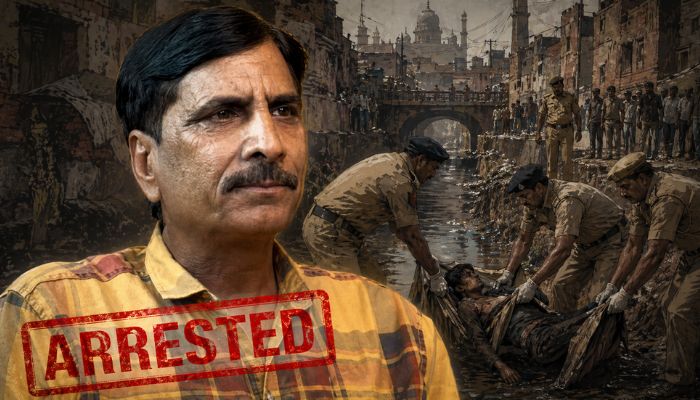
The lynching of Dipu Chandra Das and how radical Islam in Bangladesh and Pakistan is posing security challenges for India

The images of Dipu Chandra Das’s inhumane torture in Bangladesh are heartbreaking. These images of his torture have sparked outrage across India, especially among Hindus. In 1971, India played its role in establishing the existence of Bangladesh separate from Pakistan and today in 2025, this country has finally followed the path of Pakistan. The situation now is such that religious fundamentalists and jihadis from Pakistan and Bangladesh have come together to oppose India. In Pakistan, democracy has never been able to stand up to the alliance of the military, religious fundamentalist and Jihadis. Together, these two neighbouring countries are posing serious religious-fanatic challenges to India.

What is this India-Pakistan-Bangladesh conflict all about? To understand this, we need to understand the demography as well as the background of the partition and creation of these three countries. The worst nightmare of the establishment of Pakistan was that only half of the Muslims living on Indian side went to this new country created to realise the idea of a Muslim nation, while the rest remained in India. There were 7.44 crore Muslims in undivided India and at the time of India-Pakistan partition in 1947, 3.90 crore Muslims remained in Pakistan while 3.54 crore remained in India. The interesting thing is that after partition, out of 4.25 crore Muslims present in the Indian territory, only 72 lakh Muslims went to Pakistan, whereas 83 lakh Hindus and Sikhs came to India from Pakistan. According to a data, in 1947, the Hindu population in West Pakistan i.e. present Pakistan was 20 percent, whereas in East Pakistan i.e. present Bangladesh, the Hindu population was 28-30 percent. In 1947, the population of India was around 33-34 crore, of which about 9.8 percent were Muslims.

Now according to the 1951 census, the population of India was 36 crore in which Hindus were 84.1 percent and Muslims were 9.8 percent. In 1951, the total population of Pakistan was 7.5 crore, of which West Pakistan had a population of 3.37 crore and East Pakistan (present-day Bangladesh) had a population of 4.2 crore. In this, apart from 98.4 percent Muslims in West Pakistan, there were a total of 2.9 percent non-Muslims in which 1.6 percent was Hindu population. Similarly, in East Pakistan (present Bangladesh), apart from 78 percent Muslims, there were 23.2 percent non-Muslims, in which 22 percent was Hindu population.

If we look at the present population of India-Pakistan-Bangladesh then according to the data released by the Pakistan government in 2023, out of the total 24 crore population of the country, 23.12 crore i.e. 96.35 percent were Muslims. Apart from this, the Hindu population was 38 lakh i.e. 1.61 percent, Christian population was 26 lakh i.e. 1.37 percent, Sikh population was 15,998 and Parsis only 2348.

According to the data released in 2022, the total population of Bangladesh was 16.5 crore, of which 15.03 crore i.e. 91 percent were Muslims. Apart from this, 1.31 crore i.e. 7.95 percent Hindus, 10 lakh i.e. 0.61 percent Buddhists, 4.95 lakh i.e. 0.30 percent Christians lived in Bangladesh. At the same time, according to the estimated figures of 2024, the population of India is 145 crore, in which Hindus are likely to be 115.71 crore i.e. 79.8 percent. Whereas Muslims are estimated to be 20.59 crore i.e. 14.2 percent, Christians 3.33 crore i.e. 2.3 percent, Sikhs 2.46 crore i.e. 1.7 percent, Buddhists 1.01 crore i.e. 0.7 percent, Jains 0.58 crore i.e. 0.4 percent and Parsis are estimated to be around 50 thousand.

From the above data, the change in the Hindu and Muslim demography in India-Pakistan-Bangladesh from 1947 can be easily understood. In India, the Hindu population decreased from 84.1 percent to 79.8 percent, while the Muslim population increased from 9.8 percent to 14.2 percent. The Hindu population in Pakistan decreased from 20 percent to 1.61 percent, while the Hindu population in Bangladesh decreased from 28-30 percent to 7.95 percent. Interestingly, in West Pakistan (present-day Pakistan) the Hindu population declined from 9.8 per cent to 1.61 per cent between 1947 and 1951, and in East Pakistan (present-day Bangladesh) the Hindu population declined from 28-30 per cent to 22 per cent during the same period.

Although Pakistan’s statistics have always been shrouded in suspicion, the released figures must be trusted. It is also important to know that at the time of the birth of Bangladesh in 1971, the total population of Bangladesh was approximately 7.10 crore, in which the estimated Hindu population was 1.7 crore i.e. approximately 20-22 percent.

Religion has definitely been at the backdrop of the India-Pakistan-Bangladesh conflict because the main reason and basis for the partition of the nation has been religious. It is no less interesting that among these countries divided on the basis of religion, Pakistan and Bangladesh are declared Islamic countries whereas India was made secular. The worst situation was that even after the creation of Pakistan on the basis of religious discrimination between Hindus and Muslims, more than 3.50 crore Muslims remained in India.

The question is that if Jinnah accepted the partition of India completely on religious grounds and created Pakistan, then why did Gandhi-Nehru not fully implement it in India? The reality is that despite the partition on religious grounds, both these leaders were busy preventing Muslims from going to Pakistan. India openly gave Muslims the option to stay in India, due to which a large number of Muslims stayed in India. Is it not less unfortunate that the country was divided on religious grounds but only 18 percent of the total Muslim population living in the Indian part shifted its base to Pakistan?

Not only this, after the partition, a large number of Muslims who returned to India disappointed with the bad conditions in Pakistan, were again granted Indian citizenship by the then Indian Government by taking a policy decision. Surprisingly, Gandhi- Nehru also gave open call to Muslims to return to Indian side. The biggest argument for the partition of India by imperialist Britain was that people of two different religious communities, Hindus and Muslims, could not live together. But leaders like Gandhi and Nehru not only got India divided, but also by thwarting the reasons for the partition, they added a permanent feeling of Muslim appeasement to the society and politics of India.

Over a period of time, the politics of so-called secularism, which has been successful for a long time in India under the leadership of Congress, has left no stone unturned in hollowing out the country socially, politically, economically and psychologically. It is obvious that Pakistan, which had a Muslim population of about 4 crore in 1947, has not been able to become democratic till date and in 1971, Bangladesh became Independent, with Muslim population of about 5.5 crore, failed to follow the path of democracy. Then it can easily be understood, the serious challenge of maintaining democracy in the society & politics of India with its Muslim population of about 21 crore.

In Pakistan and Bangladesh, Islamic religious fanaticism is synonymous with nationalism. But in the India from which these two countries originated after partition, there have been social and political attempts to cast doubt and question on the Sanatan Hindu religious consciousness since independence. All this has had such a bad psychological impact that even a common Sanatani Hindu, who feels proud in wearing the Maulana cap, has started avoiding applying the tilak and using religious symbols.

It should not be an exaggeration to say that the Shri Ram Janmabhoomi movement has played a major role in reviving the Sanatan Hindu religious consciousness in India. Due to the foundation of liberal soft democracy laid by Gandhi and Nehru in India, Muslim appeasement in Indian politics was given the name of secularism. But at the same time, those who expressed India’s cultural heritage, Sanatan Hindu religious consciousness and nationalist ideology were declared communal.

In recent times, the entire world including America, Britain, France, Italy, Japan and almost all the countries of Europe are falling prey to increasing Islamic fundamentalist and jihadi mentality. The grooming gangs in western countries are the lowest level of this mentality which is spreading its roots in a country like India in the form of burqa niqab, love jihad, land jihad, religious conversion and terrorism. Islam is expanding with a complete strategy and the apartment societies, streets, neighborhoods, villages, cities, states and countries are coming under its grip.

Due to approximately 1 crore Rohingya, Bangladeshi and other infiltrators in India, there has been a major change in the local demography in many states, which has affected society, politics and economy. Now, countless mini Pakistan and mini Bangladesh have been created within India itself, which are busy hollowing out the country by eating it away like termites. These elements present within India are getting strength from foreign forces as well as leftist, moderate, extremist, secular, anti- Sanatan Hindu and anti-national, anti- India forces.

At present, the blood of every nationalist and Sanatani Hindus of India is boiling over the incident in Bangladesh. The way Islamic fundamentalist tendencies are increasing in South Asia, especially in Pakistan and Bangladesh has shaken the global democratic forces. The massacre of Hindus in Bangladesh has exposed the global community including the United Nations, United Nations Human Rights, America, United Kingdom, which has remained silent like a mute spectator.

The time has come to not only be alert and aware of the Islamic religious fundamentalist and jihadi challenges present within India and the neighbourhood. There is a serious need to give befitting reply to the designs of anti-Hindu and anti-India forces present inside and outside the country with every possible strategy.

(Dr. Nikhil Anand is a BJP leader from Bihar and is currently the National General Secretary of the BJP OBC Morcha.)

2026: When the Western-dominated world order begins to crumble under India’s leadership

When countries on the periphery begin to speak the language of the centre, the global balance of power shifts. 2026 is the year when India will assume the presidency of BRICS (an intergovernmental organisation comprising ten countries: Brazil, China, Egypt, Ethiopia, India, Indonesia, Iran, Russia, South Africa and the United Arab Emirates) from 1st January.

Formally, India will hold this responsibility for one year, that is, until December 31, 2026. However, it would be reductionist to see this as a mere calendar-based responsibility. India’s presidency is not just a routine diplomatic exercise; it marks a civilizational and geopolitical leadership shift. India is assuming this responsibility at a time when it is no longer a bystander in the global power game, but is in a position to write the rules.

The time is gone when the Western media derided BRICS as a “loose club.” It is no longer limited to Brazil, Russia, India, China, and South Africa. The entry of countries like Saudi Arabia, the UAE, Iran, and Egypt has positioned it as an alternative to the petro-dollar system. The group produced approximately 42 per cent of the world’s oil in 2024.

Today, BRICS contributes nearly 40 per cent to global GDP, which is significantly more than the Western elite club, the G-7. The BRICS group accommodates more than half the world’s population. It plays a decisive role on four fronts: energy, raw materials, manufacturing, and consumer markets. In addition to that, the BRICS countries hold 20 per cent of the world’s gold reserves.

India: The Pivot Between the Poles

At this historic juncture, India, which is set to assume leadership of BRICS, represents no single faction. This is the greatest strength of the country. India is a trusted strategic partner of Russia. It has deep economic and technological ties with the United States. It is both a competitor to China and a force to be reckoned with. Above all, India in present times is the natural voice of the Global South.

Source: OpIndia Hindi

For a long time, the West viewed India as a ‘soft state,’ a poor country, disorganised, and dependent on global aid. But over the past decade, under Prime Minister Narendra Modi’s leadership, India has completely shattered this myth.

Today’s India is self-reliant. It has a world-class digital public infrastructure. It has earned global trust through vaccine diplomacy. At the G20, it placed the Global South at the centre, and now that vision is extending to BRICS.

This is, in effect, the global expansion of Indian nationalism. India’s nationalism is no longer confined to borders. It is an assertion of civilizational leadership.

The biggest blow to Western dominance

This isn’t just India’s story. Countries outside the centre of the global order are now asking: why should Washington dictate their policies? Why should their culture be labelled regressive? Why should their sovereignty remain confined to IMF files?

Under the leadership of PM Narendra Modi, India stands as the answer to these questions – without bowing down, without asking for Western certification.

The West knows that without India, BRICS can neither expand nor gain credibility. China’s global image is aggressive. It is accused of trapping many countries in debt through the Belt and Road Initiative (BRI). It is viewed with suspicion in South Asia and the Indo-Pacific.

Source: OpIndia Hindi

The dollar is inevitably crumbling

The West doesn’t fear any military force. It fears the emergence of alternatives to the dollar. Trade in local currencies, alternative payment mechanisms, and a shift away from the dollar in energy transactions – all of these are weakening the very system on which American power rests.

Remember, America’s strength comes not from its military, but from the necessity of the dollar. BRICS, under India’s leadership, will accelerate the process of eliminating that necessity. In August of this year, India took a historic step toward challenging the dominance of the US dollar (USD) by issuing an official circular allowing BRICS countries to conduct 100% of their trade in Indian rupees.

Source: OpIndia Hindi

2026: Not just India’s BRICS chairmanship, but also a year of direction-setting

2026 is not just the year of India’s BRICS presidency. It is a time when the US will be grappling with internal polarisation, Europe will be facing energy and demographic crises, and the Global South will have decisively questioned the Western model.

Against this backdrop, if India establishes BRICS as a common platform for development, sovereignty, and multipolarity, America’s “we make the rules” monopoly will automatically weaken. This is not anti-Americanism, but rather the process of dismantling the US-centric world order.

Today, India neither offers explanations, nor demands certifications, nor relies on the narrative of borrowing. The BRICS presidency will provide India with the opportunity to demonstrate to developing nations that the path to modernity lies not in imitating the West, but in advancing on its own terms.

India is no longer an emerging power, but is moving towards becoming a determining power

India will chair BRICS in 2026, but the real question isn’t how many summits it will host. The real question is: will India guide global discourse? Will it legitimise alternatives to the dollar? Will it be able to balance China’s aggression and Western arrogance?

The answer lies in India’s global rise under the leadership of Narendra Modi. It suggests that India is no longer a rising power, but a determining power. This fact is making the world’s old rulers uneasy.

After 2026, the question will no longer be whether the West will fall; it will be whether the West can rise. The question will be: how gracefully will it accept this decline? India stands at a turning point in history, where nationalism appears to stand alongside humanity for the first time. This is India’s rise. This is the meaning of BRICS.

This truth may seem uncomfortable to the narrative of Western dominance created by left-liberal discourse, but this is the truth of 2026.

(This article is the translation of the original article published on OpIndia Hindi.)

Gujarat: Saddam Khan, along with a minor, arrested for killing a pregnant cow in Valsad; also accused of attacking gau rakshaks with sword

A shocking incident has come to light from Sarigam in Umargam, Valsad, Gujarat, where a pregnant cow was brutally killed. Police said two Muslim men from the village were involved in the killing. One of them was caught at the spot, while the other fled but was later arrested after the police launched a probe.

According to the police, one of the accused is a minor, and the other is an adult. A case has been registered, and further legal action is underway.

The incident took place on the night of 24th December behind an industrial unit near Rohitwas in Sarigam. Gau rakshaks informed the police that two people had slaughtered a cow at the spot and were still present there. Acting on this information, a team from Bhilad Police Station reached the location and carried out a night raid.

During the investigation at the spot, police found the severed head of a pregnant cow and the remains of beef. The scene clearly showed signs of a brutal killing. Gau rakshaks caught a minor who was present there and handed him over to the police. Sources said that during this time, the second accused, identified as Saddam Shahbuddin Khan, tried to attack the gau rakshaks with a sword and then escaped from the spot.

Police sources said that initial questioning revealed that the two had taken the cow on the pretext of feeding it fodder and later killed it. The meat was meant to be sold to local butchers. Bhilad police seized beef remains, pellets and other materials from the scene, and further legal and forensic procedures are ongoing.

Speaking to OpIndia, PI Pawar of Bhilad police station confirmed that the second accused, who had absconded earlier, has also been arrested. Both accused are currently being questioned, and the investigation is continuing.

A leader of a local Hindu organisation told OpIndia that police have taken the matter seriously, especially since one of the accused is a minor. Due to the sensitive nature of the case, police have not shared many details publicly. The police themselves have become the complainant in the case and are proceeding with further action as per the law.

After the incident, a meeting was held at the Sarigam Gram Panchayat office. Leaders from Hindu and Muslim communities, office bearers of Vishwa Hindu Parishad, local residents, police officials and Ramanbhai Patkar were present at the meeting. Gau rakshaks expressed anger and concern over the killing of a pregnant cow, while police appealed to both communities to maintain peace.

Police said the situation in the area is under control and further action will be taken based on the findings of the investigation.

8 Hindus murdered in the Islamic Republic of Bangladesh in less than a month: Read about the victims and why these killings are just the tip of the iceberg

Bangladesh has been witnessing a drastic rise in atrocities on Hindus ever since the undemocratic ouster of Sheikh Hasina as the Prime Minister in August 2024.

With federal elections just around the corner, the Muhammad Yunus regime has given a free hand to violent Muslim mobs and extremist elements to unleash chaos and unrest in the country.

In December alone, at least 8 Hindus have been slaughtered in the Islamic Republic of Bangladesh. The situation has become extremely grim and vulnerable for the already persecuted minority community.

Prantos Karmakar

On 2nd December, a Hindu man named Prantos Karmakar (42) was gunned down in the Narsingdi district of Bangladesh. He was the owner of a jewellery shop.

According to reports, a group of ‘unidentified’ men wearing masks called the victim out of his home.

Prantosh Karmakar, image via Deshshakal News

Karmakar was thereafter taken to the playground of the Dighliyakandi Government Primary School and shot him in the chest at point-blank range. The attackers fled the crime scene soon after.

The victim was first admitted to the Raipura Upazila Health Complex and later shifted to Narsingdi Sadar Hospital but he succumbed to his injuries.

As per the local police, the motive and identity of the perpetrators are unclear, and that a probe has been initiated into the matter.

Utpal Sarkar

A 35-year-old Hindu fish trader named Utpal Sarkar was attacked and killed in the wee hours of the morning of 5th December. The incident occurred in Saltha upazila in the Faridpur district of Bangladesh.

According to reports, he was travelling in a van at the time of the incident. The attackers stopped the van, and stabbed the victim in the chest.

They also looted the money that Utpal Sarkar had in his possession before fleeing the crime scene.

Interestingly, the attackers left the van driver, Firoz Molla, unharmed. He was only blindfolded and tied to a bridge. Later, local residents rescued Molla and informed the police.

The cops thereafter sent the bloodied body of the Hindu fish trader to the Faridpur Medical College Hospital. According to the police, 2-3 people were involved in the murder of Utpal Sarkar.

“An investigation is under way. The actual motive will be known once the inquiry is complete,” remarked KM Maruf Hasan.

Jogesh Chandra Roy and Suborna Roy

An elderly Hindu man named Jogesh Chandra Roy (75), who fought for the Independence of Bangladesh in 1971, was hacked to death at his residence on the night of 7th December.

His wife, Suborno Roy (60), was also killed by the attackers. The incident took place in the Rangpur district of Bangladesh. Their dead bodies (with slit throats) were discovered by the neighbours in the morning.

According to reports, the body of Jogesh Chandra Roy was found in the dining room while the body of Suborno Roy was discovered in the kitchen.

Dead body of Jogesh Chandra Roy, image via Dhaka Tribune

As per the Awami League, the gruesome murder of the Hindu couple has been carried out by the Jamaat-e-Islami, who were opposed to the Independence Movement.

This is despite the fact that 2 children of Jogesh Chandra Roy and Suborno Roy are members of the Bangladesh police force.

Shanto Das

On 12th December, the police recovered the body of a Hindu man named Shanto Das from a cornfield in Homna upazila in Comilla district of Bangladesh.

According to his reports, the victim was an auto rickshaw driver by occupation and a member of the village police force.

Police investigate the murder of Shanto Das, image via BDNews24

While speaking about the incident, his father Arun Chandra Das stated, “My son Shanto drove an autorickshaw. We were not able to communicate with him after Thursay evening.”

“In the morning, we learnt that his body was found in a cornfield. We have heard that his autorickshaw has yet to be found. I think they killed my son to steal his autorickshaw,” he added.

The victim’s throat was slit, and his neck had stab wounds. The police recovered the body of Shanto Das and sent it to the Comilla Medical College Hospital for autopsy.

Dipu Chandra Das

On 18th December, a young Hindu man was lynched by a violent Muslim mob in Bhaluka village in Mymensingh district of Bangladesh. The victim was identified as 27-year-old Dipu Chandra Das.

The victim was thrashed, tied to a tree and then set on fire. A gut-wrenching video of the incident had gone viral on social media.

Dipu Chandra Das worked as a labourer in a garment factory. Following a workplace dispute, he was falsely accused of ‘insulting’ Prophet Muhammad and committing blasphemy.

Lynching of Dipu Chandra Das

The manager of the factory forced Das to resign and handed him over to a violent Muslim mob so that he could be killed.

The brutal lynching of the Hindu man was reminiscent of a similar instance of mob violence in the Islamic Republic of Pakistan.

Amrit Mondal

On 24th December, another Hindu man named Amrit Mondal was beaten to death by a frenzied mob. The incident occurred in Pangsha upazila in Rajbari district of Bangladesh.

The victim was just 29 years old. He was a resident of Hosendanga village. Amrit Mondal was rushed to the hospital in a critical condition, but he succumbed to his injuries.

Deceased Amrit Mondal, image via NDTV

His body was later sent to the Rajbari Sadar Hospital morgue for post-mortem. Following the killing of the Hindu man, Muhammad Yunus tried to rationalise his lynching by branding him Amrit Mondal as a ‘criminal.’

Besides, the ‘chief advisor’ to the interim government also downplayed the ‘communal angle’ in the case.

Pintu Akanda

On 23rd December, the dead body of a 35-year-old Hindu man named Pintu Akanda was recovered from a microbus in Adamdighi upazila in Bogura district of Bangladesh.

He was abducted a day earlier at gunpoint by 4 ‘unidentified’ attackers. The victim was a businessman and the owner of a Lotto showroom.

Pintu Akanda, image via Prothom Alo

As per preliminary reports, Pintu Akanda was strangled to death. In a statement, ASP Asif Hossain said, “We primarily suspect that Pintu was strangled after being abducted at gunpoint. We are currently conducting the inquest.”

The victim’s family has filed a complaint with the police. A CCTV footage of the abduction has now surfaced on social media.

In the video, 4 masked men could be seen pointing a weapon at Pintu and taking him out of his showroom. The victim was then forced to sit inside the vehicle.

Conclusion

Besides the murder of the 8 Hindus, there have been several cases of harassment, assault and vandalism in the past few weeks.

For instance, the residence of a Hindu journalist named Sushanta Dasgupta was vandalised in Sylhet on 19th December. His sister and mother escaped narrowly from the onslaught by a Muslim mob. In another case, a Hindu rickshaw puller was thrashed for wearing a sacred red thread on his wrist. He was accused of being a RA&W agent and arrested by the police.

In June this year, OpIndia had reported 13 cases where Hindus were attacked, targeted under the false pretext of blasphemy. The situation has now

The 8 cases mentioned above are the ones which have been reported in the local media. There are several undated videos of atrocities on Hindu minorities which have come to light in recent times.

As such, the count of Hindus killed in this month alone is likely more than a dozen. The reported crimes only represent a fraction of the actual incidents.

Although the reported crimes represent the tip of the iceberg, it is enough for us to understand the deep rot of radical Islamism within the Bangladeshi society.

Who is Mufti Shamail Nadwi? The latest ‘Zakir Naik on the bloc’, under the spotlight after viral God debate with Javed Akhtar and his record of supremacist, exclusionary rhetoric

Mufti Shamail Nadwi recently sparked national controversy after a high-profile public debate with veteran poet and lyricist Javed Akhtar on the topic, “Does God exist?” The discussion took place at the Constitution Club in New Delhi on Saturday, 20th December, and quickly became one of the most talked-about intellectual events of the month.

Moderated by journalist Saurabh Dwivedi, editor of The Lallantop, the nearly two-hour-long debate drew a packed audience and soon spilt beyond the hall onto social media, where clips and quotes were widely shared. While supporters on both sides praised the exchange as a rare face-off between faith and reason, critics argued that it exposed deeper ideological divides, especially given Nadwi’s past statements and public positions.

Nadwi, an Islamist and online preacher, began by arguing that neither science nor religious scripture alone could be used as a common yardstick to prove or disprove God’s existence. Science, he said, is limited to studying the physical world, while God is by definition beyond physical measurement. Religious texts, he added, cannot convince those who do not already accept revelation as a source of knowledge.

Instead, Nadwi relied on philosophy, presenting what he called the “contingency argument.” According to him, the universe depends on causes and therefore cannot explain its own existence. This, he claimed, logically points to the existence of a “necessary being” that is eternal, independent, intelligent and powerful.

Using examples of design and order in nature, Nadwi argued that the precise laws governing the universe suggest intention rather than random chance. He rejected the idea that scientific discoveries eliminate the need for God, saying science explains how the universe works, not why it exists.

Javed Akhtar’s sharp counter and a heated exchange

Javed Akhtar, known for his outspoken rationalist views, pushed back strongly. He questioned the durability of religious belief and pointed out that many gods worshipped by ancient civilisations, Greek, Roman and Egyptian, were once believed in with absolute certainty, yet are now seen as mythology.

“Gods change with time,” Akhtar said, arguing that belief systems evolve as human understanding grows. He cited the decline of organised religion in parts of Europe as evidence that faith is not fixed or eternal.

Akhtar drew a clear line between belief and faith. Belief, he said, rests on evidence, reason and testimony, while faith demands acceptance without proof. “When there is no evidence, no logic and no witness, and you are still asked to believe, that is faith,” he said, adding that unquestioning faith discourages critical thinking.

The exchange grew more intense when Akhtar raised the issue of suffering and violence. Referring to children dying in Gaza, hunger and disease, he questioned the idea of an all-powerful and benevolent God. “If such a being exists and allows this, I find it difficult to respect it,” he said, adding sarcastically that “compared to that, our Prime Minister Narendra Modi is better, “kuch to khayal karte hai.”

खुदा से ज्यादा तो हमारे प्रधानमंत्री है खयाल रखते

सीधी बात मोदी ही इनका अल्लाह है 

पूरा डिबेट देखो इसने खुद मोदी को अल्लाह
और खुदा से बड़ा बताया ..मुफ्ती को खूब धोया 

जावेद अख्तर का सॉफ्टवेयर अपडेट हो गया ? pic.twitter.com/pD5I0zMS7l— Amrendra Bahubali ?? (@TheBahubali_IND) December 20, 2025

Nadwi responded by arguing that evil exists to define good and that human beings are tested through free will. Acts like violence and oppression, he said, are the result of human choices, not divine failure. 

Akhtar rejected this, citing philosopher Bertrand Russell’s famous analogy of an invisible teapot orbiting the Earth. “The one who makes the claim must prove it,” he said.

Early life and ideological shaping

Born and raised in Kolkata, Mufti Shamail Nadwi, whose full name is Mufti Shamail Ahmad Abdullah Nadwi, grew up in a deeply religious environment. According to his own accounts and public profiles, the Qur’an and classical Islamic texts were a central part of his daily life from a very young age.

The Qur’an, by his description, was not just recited but “lived.” Classical religious texts were introduced early, shaping his ideology from childhood. This early immersion laid the foundation for a rigid, regressive and exclusionary mindset that later became visible in his public speeches and online activity.

Today, Nadwi is associated with academic work as a doctoral researcher at the International Islamic University Malaysia. However, alongside his academic identity, his public statements and videos have repeatedly sparked controversy.

Promoting the ‘Bhagwa Love Trap’ conspiracy

One of the most criticised episodes linked to Nadwi is his promotion of the “Bhagwa Love Trap” conspiracy theory, a narrative that is outright sinister as it puts the lives of Hindu men in love with Muslim women in danger.

In a video shared on his X account, Nadwi addressed Muslim women and warned them against marrying non-Muslims, particularly Hindus. 

A polite message for those girls who left #Islam for a non-muslim by Mufti Shamail Nadwi#Bhagwalovetrap#Hindutva pic.twitter.com/vwqDx8QpBU— Mufti Shamail Nadwi (@muftishamail) May 28, 2023

In the video, he said, “Don’t give your Muslim daughters to Hindus. Surely, a Muslim slave is better than these Hindus… I am talking to my sisters who are trapped in the love trap of these polytheists and have deviated from Islam.”

He framed interfaith relationships as a choice between “temporary worldly love” and “the fire of hell” versus “the paradise of Allah,” urging women to return to Islam and abandon such relationships. He claimed that Allah invites believers to heaven, while non-believers invite them to destruction.

Why the ‘Bhagwa Love Trap’ narrative is dangerous

The “Bhagwa Love Trap” theory emerged as a counter-narrative to documented cases of identity fraud and forced religious conversion, “love jihad.” Unlike those cases, experts and civil rights groups say the Bhagwa Love Trap narrative lacks evidence and is built on suspicion rather than facts.

In recent months, videos have surfaced across social media showing Muslim mobs harassing Hindu men seen with Muslim women in public places, roads, cafes, restaurants and even hotels. These mobs often accuse the men of trying to “trap” Muslim women into Hinduism, even when no deception is involved.

OpIndia earlier reported that at least 30 such incidents have been documented across different states. In Patna and Muzaffarnagar, Hindu men were abused, threatened and even physically assaulted, while Muslim women were publicly shamed and pressured to leave.

Numerous inconsistencies exist in the “Bhagwa Love Trap” narratives propagated by Islamists who aim to frame it as “love jihad.” However, their assertions appear to lack substantial evidence. The Hindu boys have not been accused of hiding their identity in any of the cases brought up by them.

On the contrary, Hindu boys are being recognised through the sacred thread or other religious markers. The Hindu boys whose social media profiles have been disclosed have also accurately represented their names on those platforms. They did not obscure any aspect of their identity.

“Only Islam is true”: Another supremacist claim.

Nadwi has also drawn criticism for openly declaring the superiority of Islam over all other religions, an archetype of a Maulvi intoxicated on the supremacism of Islam. In one of his statements, he said, “Islam is the only true religion. All other religions and theories are false. No person can be successful until he enters Islam.”

देखिये कैसे हिन्दू ईसाई बौद्ध नास्तिक के खिलाफ जहर उगल रहा है ये नींच / आतंकवादी 

मुफ़्ती कह रहे अपने दिमाग़ मे बैठा लो 

सिर्फ इस्लाम सत्य है 

बाकी सारे धर्म झूठे है. pic.twitter.com/wtBfGAewKU— chandan (@chandan_stp) December 23, 2025

Such remarks go beyond theological belief and promote exclusion, intolerance and disrespect toward other faiths. 

He has also made statements declaring music to be “haram,” reinforcing perceptions of a rigid and authoritarian worldview.

Provocative speech in Kolkata

While he is known for peddling hate, Nadwi delivered a clearly provocative speech in Kolkata, West Bengal. In one such speech, he was seen saying, “Allah will do what He wills. No one can interfere in His Shariah… People say they will erase Islam and Muslims from this country.” 

He further said, “There is no woman in the world who has given birth to any son who can erase Muslims and Islam from this land (Hindustan).”

There is no woman in the world who has given birth to any son who can erase Muslims and Islam from this land (Hindostan). : Mufti Shamil Nadwi Sahab.
pic.twitter.com/q82cZj1A3r— Osman Alamgir ? (@ibn_Ghazi_) December 22, 2025

He went on to glorify martyrdom, invoking historical Islamic figures and framing sacrifice and death as honourable outcomes. “This is not the end,” he said repeatedly. “This is the beginning.”

This kind of rhetoric, delivered in an emotionally charged tone, risks radicalising audiences and normalising confrontational attitudes toward the state and society. 

Taken together, the debate with Javed Akhtar did not merely pit belief against disbelief; it pulled back the curtain on the ideological worldview Mufti Shamail Nadwi represents. While the event was projected as an intellectual exchange on God and philosophy, Nadwi’s public record, marked by supremacist claims, exclusionary theology and incendiary rhetoric, raises serious questions about the real-world implications of such ideas when amplified on mainstream platforms.

At a time when India is grappling with rising social tensions, figures like Nadwi blur the line between theological discourse and ideological provocation. His statements, far from remaining confined to abstract belief, risk legitimising intolerance and hostility under the guise of faith, making scrutiny not just justified, but necessary. No wonder, his supporters see in him as the next Zakir Naik, the Islamist preacher who fled the country after video of his supremacist claims went viral. While his supporters and Mufti himself might claim he is an ‘Islamic scholar’, if that is the case, then bigotry and contempt toward other faiths seem to be an integral part of the theology that Mufti proclaims to champion. 

What is Somaliland? What does Israel’s recognition of the ‘new country’ in Africa mean? Read why it is less about ‘land’ and more about ‘Sea’

On December 26, Israel became the first United Nations member state to formally recognise the Republic of Somaliland as an independent and sovereign nation, marking a major breakthrough for the seceded region after 34 years of self-declared independence from Somalia.

Prime Minister Benjamin Netanyahu, alongside Foreign Minister Gideon Sa’ar, signed a joint declaration with Somaliland President Abdirahman Mohamed Abdullahi during a video call. The agreement between Israel and Somaliland establishes full diplomatic relations, including the exchange of ambassadors and the opening of embassies. 

Netanyahu described the move as “in the spirit of the Abraham Accords,” expressing hopes that Somaliland would join the U.S.-brokered normalisation framework. Israel pledged immediate cooperation in agriculture, health, technology, and economy.

The government of Somaliland has hailed the recognition and celebrations broke out in the country as the agreement was signed. Thousands of people gathered in the capital Hargeisa’s Freedom Square, waving Somaliland flags to celebrate Israel’s formal recognition of the self-declared republic as an independent state.

Israel’s formal recognitio has also triggered a massive backlash in Africa and Middle East. The Kingdom of Saudi Arabia condemned the move, so did the African Union, Somalia, Egypt, Turkey, Djibouti, and others.

The Kingdom of Saudi Arabia issued a statement, saying, they have “full support for the sovereignty of the brotherly Federal Republic of Somalia, and for its unity and territorial integrity. The Kingdom expresses its rejection of the announcement of mutual recognition between the Israeli occupation authorities and the Somaliland region, considering it an action that entrenches unilateral secessionist measures that violate the international law.”

“The Chairperson of the African Union Commission rejects any recognition of Somaliland and reaffirms the African Union’s unwavering commitment to the unity and sovereignty of Somalia”, the African Union posted.

What is Somaliland, and how was it born?


Somaliland is a former British protectorate that declared independence from Somalia in 1991 amid civil war. Since 1991, Somaliland
has maintained relative stability, its own currency, and democratic institutions. As of now, it is a ‘self-declared’ independent state in the Horn of Africa. It occupies the northwestern region of Somalia, bordering Djibouti to the northwest, Ethiopia to the south and west, and the rest of Somalia to the east.

The most important aspect of its location, however, is not the land borders, it is the 850-kilometre-long coastline in the Gulf of Aden, the waterway that connects the Red Sea to the Arabian Sea, and watches over a large chunk of global trade passinge over a sea-route that has been contested, and fought over for centuries.

The geopolitical significance of Somaliland is not about the ‘land’, it is about the sea.

The former British Somaliland Protectorate gained independence in 1960 and became the State of Somaliland on June 26, 1960. Just days later, on July 1, 1960, it voluntarily joined the former Italian Somaliland to form the Somali Republic, but the union did not last long. The Somalis of the Northern areas were alienated and marginalised under a political dominance of southern groups. After Somalia’s disastrous 1977–1978 Ogaden War with Ethiopia, under the dictatorship of Siad Barre, the tension peaked. Barre bombarded the northern territories, destroyed Hargeisa and killed thousands of people.

In response, the Somali National Movement (SNM) launched a guerrilla war against Barre’s regime. During the fall of Barre regime in 1991, the SNM already controlled the northwestern lands. At the Grand Conference of Northern Clans in Burao in 1991, SNM leaders revoked the 1960 union and declared an independent Somaliland, recognising the borders of the former British Protectorate as the new independent nation of Somaliland.

How does Somaliland function?

Despite having no UN recognition as a country, Somaliland has been a country in terms of governance and jurisprudence. It blends modern democracy with traditional clan-based rule to form a functional, peaceful governing system, with peaceful transfers of power, a sharp contrast to Somalia which is a fragile land destroyed by civil wars. Somaliland holds regular multi-party elections and is ranked as ‘partly free’ by Freedom House.

Somaliland has a relatively stable and lawful governance, with low instances of piracy and terrorism. It has its own police and military and maintains territorial integrity in the region.

On the contrary, Somalia, which is recognised as a country by the UN, is riddled with anarchy, civil wars, terrorism and violence. Al Shabaab controls large chunks of its territory and rampant crimes, genocides, and piracy are the everyday reality. Its economy has collapsed, and it survives on aid. Whatever relevance Somalia has a ‘nation’, it comes from the recognition by the African Union and other regional powers.

Basically, Somaliland is a de facto nation with democracy, functional government and relative stability with a developing economy, which is not recognised as a ‘country’ by the UN yet. Somalia is none of the above, but is still a ‘country’ recognised by the UN.

Israel’s recognition of Somaliland: what does it mean and how is it significant?

As stated above, the geopolitical significance of Somaliland is not about the ‘land’, it is about the sea.

Somaliland’s coastline on the Gulf of Aden faces Yemen, where Iran-backed Houthis have been attacking shipping lanes and have used the area to launch missiles at Israel. The Red Sea shipping lanes have been dangerous for Western ships for months now, as Houthis continue to attack them. By having friendly relations with Somaliland, Israel gains support for maritime intelligence and countering Iranian influence in the region. Somaliland’s Berbera port offers a foothold amid growing Chinese presence in nearby Djibouti.

The Berbera Port, a deep-water facility overlooking the Bab Al Mandeb strait, was modernised by the UAE’s DP World with over $442 million invested. Ethiopia, which needs an alternative port to reduce its dependence on Djibouti, has maintained friendly relations with Somaliland, too, despite not having declared full official recognition.

The global interest in Africa is escalating. As dominant powers seek footholds to control trade and assert military dominance in the larger Indian Ocean and Atlantic Ocean, Israel’s recognition of Somaliland comes as a significant development. 

Somaliland is not recognised by the UN yet. But a country is an idea, more than anything else. The validation of a country’s identity comes from other nations, who are ideas themselves, held by pieces of paper called declarations and agreements. The UN itself is not a “place”, but an idea that is held by pieces of paper. A country is defined by its people, a functional governing body and its own will to assert its power. Somaliland has been that for over three decades now. 

If power, economy, democracy, governance and stability define a nation, Somaliland is more of a nation than Somalia, whether the UN likes it or not.

India set to assume the chairmanship of Kimberley Process: Read about the UN-backed initiative and its role in preventing “conflict diamonds” in the global trade

On 1st January, India is going to preside over as chair of the Kimberley Process (KP) for the third time. It is a worldwide forum supported by the United Nations that aims to prevent the trade of conflict diamonds. The information was shared by Union Commerce and Industry Minister Piyush Goyal on 25th December.

He declared, “India’s KP leadership reinforces its credibility among diamond producing nations, trading centres, industry and civil society, placing us at the centre of efforts to strengthen transparency, continuity and unity in diamond governance in line with the Modi government’s commitment to fostering integrity & transparency in international trade.”

The minister highlighted three main areas that are set to be under focus during India’s leadership. “Building consumer confidence in conflict-free diamonds, accelerating digital certification and traceability alongside strengthening transparency and accountability across the supply chain,” he mentioned.

Goyal added that the country is eager to collaborate with all KP members to strengthen rule-based and data-driven compliance in order to boost confidence in the international rough diamond trade via “reform-oriented and consensus-driven” guidance. India was chosen to serve as the plenary’s head for 2026 after the country took over as its vice-chair on 25th December.

India has served as the chair in 2008 and 2019. The official statement highlighted that India is a major global centre for the production and trade of diamonds, and its leadership coincides with evolving geopolitics and an increasing focus on ethical and ecological sourcing.

The Gem and Jewellery Export Promotion Council (GJEPC) has been designated as the Kimberley Process Certification Scheme (KPCS) “Importing and Exporting Authority” for India. GJEPC is in charge of both issuing KP certificates and keeping track of the ones that are obtained within the nation.

What is the Kimberley Process

The Kimberley Process began in May 2000 when states that produce diamonds in Southern Africa convened in Kimberley of South Africa, to deliberate on ways to end the trade in “conflict diamonds” and make sure that purchases of diamonds did not finance acts of violence by rebel groups and their allies who were trying to overthrow legitimate governments.

A major resolution to create a worldwide certification system for rough diamonds was passed by the UN General Assembly in December 2000. The KPCS was created in November 2002 as a result of negotiations between governments, the global diamond industry and civil society organisations. The paper outlined the regulations controlling the manufacture and trade of rough diamonds.

The Kimberley Process is a tripartite initiative involving governments, the global diamond industry and civil society. Its goal is to stop the trade in “conflict diamonds.” The official website conveys, “By enforcing rigorous certification protocols and compliance assessments, the KP ensures that all participating countries maintain high standards that keep conflict diamonds out of the international market.” 

Established in accordance with a United Nations resolution, the KPCS went into force on 1st January 2003, and has subsequently developed into a successful tool for reducing the trade in conflict diamonds. Any nation that imports or exports diamonds is eligible to become its part.

There are currently 60 participants in the Kimberley Process, including the European Union and its member states, Russia, China and the United States, among others. It consists of 60 participants from 86 different countries. KP is the most extensive international system regulating this industry since its members collectively account for more than 99 per cent (99.8%) of the world’s rough diamond trade.

It is implemented individually by these nations “to ensure that rough diamonds in the legitimate supply chain are KP-compliant.” Participant countries must enforce stringent legal and regulatory standards to control the import and export of rough diamonds and ensure adherence to KP requirements. The fundamental criteria must be met by the members.

Participant countries must impose strict legal and regulatory norms to manage raw diamond imports and exports, as well as ensure compliance with the watchdog’s standards. The countries agree to maintain transparent practices, which are critical “for the integrity of the diamond supply chain, by exchanging accurate and timely statistical data.”

Only certified KP members who completely adhere to these worldwide criteria are allowed to trade, protecting the diamond trade’s legitimacy. Every diamond export is thoroughly scrutinised and must be accompanied by a valid KP certificate stating that the diamonds are conflict-free, preventing the entry of illegal stones into the market.

“New terms established for KPCS participants in 2010 mandate stringent national legislation and institutional controls, commitment to transparency, and rigorous exchange of statistical data. Trading is allowed solely between compliant members, and international shipments of diamonds must be accompanied by a KP certificate confirming they are conflict-free,” the website points out.

What are conflict diamonds

Diamonds that are unlawfully mined and sold in conflict and war zones are known as “conflict” or “blood” diamonds. The World Diamond Council, which promotes the commercial diamond trade, explained that these diamonds are illegally traded to finance violence in war-torn regions, especially in central and western Africa.

The UN defined these as “diamonds that originate from areas controlled by forces or factions opposed to legitimate and internationally recognised governments, and are used to fund military action in opposition to those governments.”

They usually appear in “rough” condition, which indicates that they were just harvested and haven’t been cut yet. Conflict diamonds are believed to have accounted for about 4% of global diamond production during the height of Sierra Leone’s civil war. The extraordinarily violent dispute in the country in the 1990s brought these diamonds to the attention of the international media.

Thousands of men, women, and children are used as slaves to extract diamonds in nations like Sierra Leone, in addition to the innocent people entangled in the crises that the trade sustains.

The workers are made to employ crude, back-breaking techniques like using their bare hands to dig into mud or gravel along riverbanks. Hand-held sieves are then used to separate the gathered material as the proceeds from their trade are utilised to fund protracted uprisings, war and rebel activities.

Documentation of these acts has been more widespread in Sierra Leone, Liberia, Angola, the Ivory Coast, and the Democratic Republic of the Congo. Some of these nations have endured years and decades of destruction, resistance to a legal government, and civil war, all of which were primarily sponsored by the sales of conflict diamonds.

Significance of Kimberley Process

The Kimberley Agreement proposes to provide countries engaged in diamond sales with transparency. Every diamond that is sold comes with a certificate attesting to the fact that it was taken from a nation that does not use its sales revenues to finance rebel organisations or other parties who want to topple UN-recognised legitimate governments. Strict restrictions are imposed by this agreement on the import and export of diamonds to non-member nations.

Less than 0.1% of diamonds produced worldwide are currently conflict diamonds. KP and the UN collaborate to keep these gems off the legal market. Significant progress has been made in nations including Sierra Leone, Angola, Liberia, the Democratic Republic of the Congo (DRC) and the Ivory Coast that formerly saw hostilities partially financed by diamonds.

100 years of CPI: Communists of India should introspect, what has their imported ideology given this country apart from chaos, violence and hollow grandstanding

As the Communist Party of India completes 100 years, its leaders and sympathisers are marking the occasion with celebration and nostalgia. However, Centenaries are not meant only for remembrance as they are moments for serious evaluation. Political movements do not earn relevance by age alone, they earn it by outcomes. 

Over the past century, Indian Communism has presented itself as the voice of the underprivileged, workers and peasants. It has claimed itself as a long-term remedy for Indian democracy and morally superior to the other political traditions. Yet, despite this self-image, the communist movement today stands electorally diminished, ideologically rigid, and increasingly disconnected from India’s social and economic realities.

This brings up an inevitable question that cannot be dismissed with catchphrases or romanticism about the past:

Did Indian Communism actually serve India or did it ultimately damage the nation’s political, economic and social fabric? 

This article attempts to answer that question not through rhetoric or ideological prejudice, but through historical record, political conduct, and measurable outcomes. Because after 100 years, an ideology deserves neither automatic reverence nor automatic rejection but it deserves an honest audit. 

Domain of Communism: Not Indian, Never Indigenous

Communism did not rise from Indian social, cultural, or economic realities. It was a European ideological product born of the specific conditions of 19th-century Europe. It was rapid industrialisation, factory labour, and sharp class divisions between capital owners and industrial workers. The theory was developed by Karl Marx, who analysed European capitalism, and later it was adopted by Vladimir Lenin, who advocated a tightly controlled, vanguard-led revolution to seize state power.

Both thinkers operated in homogeneous, industrial societies, where economic class was the primary social identity. Their framework assumed:

A clear oppressor–oppressed binary

A violent rupture as the path to justice

Centralised control as the solution to inequality

India, however, was never structured this way. Indian society is civilisational, plural, and layered. It is shaped by community, region, faith, language, and tradition, not just economic class. Historically, social change in India occurred through reform movements, accommodation, and gradual evolution rather than the destruction of existing structures. That fundamental mismatch explains why Communism struggled to gain deep societal acceptance in India. An ideology built on rigid binaries could not sustain itself in a civilisation that thrives on plurality, negotiation, and continuity. Indian society is civilisational and plural, but Communism is rigid and binary. This contradiction lies at the heart of Communism’s long-term irrelevance in India.

Ideology Above Nation: Quit India movement and the China War

In addition to failing to produce results, Indian Communism is accused of prioritising ideology over the national interest. There are two noteworthy examples of this contradiction. 

The Quit India Movement (1942): When CPI stood apart from the nation

 In August 1942, India witnessed one of the most decisive mass uprisings against British rule, the Quit India movement. It was led by Mahatma Gandhi and embraced across regions, communities, and political traditions. But the Communist Party of India chose to oppose the movement. The CPI was officially opposed to the Quit India movement, and the reason might shock you: it was not strategic but an ideological alignment. At that time, the Soviet Union had entered the Second World War on the Allied side following Nazi Germany’s invasion. Since Britain was now an ally of the USSR, CPI categorised the war as a “people’s war” against fascism and instructed its cadres to avoid disrupting the British war effort. It discourages strikes and protests against the British. In several cases, Communist functionaries cooperated with colonial authorities. While millions of Indians faced arrests, firing, and imprisonment, CPI stood aside not because India was unready for freedom, but because Moscow’s priorities demanded restraint.

The 1962 China War: Silence, confusion, and ideological sympathy

 A similar pattern re-emerged two decades later during the Sino-Indian War, when Chinese forces crossed Indian borders in Ladakh and Arunachal Pradesh. At a moment of national crisis, India expected political unity and moral clarity. Instead, large sections of the Communist movement displayed ambiguity and ideological sympathy towards China. It led eventually to a split in the CPI, with the pro-Chinese faction leaving the parent party to form the Communist Party of India (Marxist).

Ideological dislocation, however, was only one dimension of Indian Communism’s failure. More damaging was the manner in which sections of the Communist movement gradually abandoned democratic politics altogether and embraced armed insurgency as a legitimate political tool. From the late 1960s onward, Communist ideology in India did not merely oppose the state, but it actively waged war against it. What followed was not a struggle for workers’ rights but a prolonged campaign of violence marked by assassinations, massacres, destruction of public infrastructure, and systematic intimidation of civilians. The victims were not colonial rulers or capitalist elites but ordinary Indians: tribals, farmers, elected representatives, policemen, and daily-wage workers. To understand the real human cost of Indian Communism, one must examine not slogans or manifestos, but the trail of blood left behind by Communist insurgent violence.

TOP 10 DEADLIEST KILLINGS BY COMMUNIST INSURGENTS IN INDIA

Dantewada Massacre (2010), Chhattisgarh

On 6 April 2010, Maoist cadres of the Communist Party of India (Maoist) carried out a meticulously planned ambush in the Dantewada district of Chhattisgarh, killing 76 personnel of the Central Reserve Police Force. The attack involved the use of landmines followed by heavy automatic gunfire against a patrol returning from a counter-insurgency operation. It remains one of the deadliest assaults on Indian security forces since independence and marked a turning point in the state’s Left Wing Extremism operations.

Jeeram Ghati Massacre (2013), Chhattisgarh

 On 25 May 2013, Maoist insurgents ambushed a Congress party convoy in the Jeeram Ghati area of Bastar. It killed 27 people, including senior political leaders. The attack targeted an elected political leadership during a public outreach programme, underscoring the Maoist strategy of eliminating democratic representatives rather than engaging in electoral politics. The incident was widely condemned as an attack on India’s democratic process itself.

 Nayagarh Armoury Attack (2008), Odisha

In February 2008, Maoist cadres launched a coordinated night assault on the Nayagarh police armoury in Odisha. Fifteen policemen were killed, weapons were looted, and government infrastructure was destroyed. The operation demonstrated the insurgents’ ability to carry out complex, multi-pronged attacks and significantly strengthened Maoist armed capacity in the region.

Sukma Attack (2017), Chhattisgarh 

On 24 April 2017, Maoists ambushed a CRPF patrol in the Chintalnar area of Sukma district, killing 25 security personnel. It involved improvised explosive devices and close-range firing, exploiting difficult terrain and intelligence leaks. It highlighted the Maoist insurgency’s continued operational strength despite years of counterinsurgency measures.

 Aranpur IED Attack (2023), Chhattisgarh

 In April 2023, Maoist insurgents detonated a pressure IED in Dantewada’s Aranpur area, killing 10 District Reserve Guard personnel and a civilian driver. The attack targeted a vehicle involved in a routine anti-insurgency movement, again reflecting the Maoist practice of using indiscriminate explosives on public roads.

Senari Village Massacre (1999), Bihar

 In March 1999, the Maoist Communist Centre (MCC), a predecessor group aligned with later Maoist formations, massacred 34 civilians in Senari village, Bihar. Most victims belonged to economically weaker sections. The killings involved execution-style shootings and were justified by insurgents as part of a class struggle, exposing the gap between Maoist rhetoric and actual victims.

Bara Massacre (1992), Bihar 

In February 1992, Maoist militants attacked Bara village in Gaya district, killing 37 civilians. The massacre was one of the earliest large-scale incidents of left-wing extremist violence against unarmed villagers and played a key role in shaping Bihar’s long cycle of retaliatory violence and instability.

 Latehar Police Van Blast (2016), Jharkhand

 In July 2016, Maoists triggered a landmine explosion in Latehar district, Jharkhand, killing eight police officers travelling in a patrol vehicle. The attack was part of a sustained campaign against routine policing and state presence in rural areas. 

Sukma Road-Opening Party Attack (2018), Chhattisgarh

 In March 2018, Maoist cadres ambushed a CRPF road-opening party in Sukma district, killing nine security personnel. The attack targeted development-linked security operations, reinforcing the insurgents’ opposition to infrastructure expansion in tribal regions.

Giridih Landmine Blast (2007), Jharkhand

 In October 2007, Maoists detonated a landmine under a civilian vehicle in the Giridih district, killing 14 civilians. The incident demonstrated the indiscriminate nature of Maoist violence, where civilians frequently became collateral casualties in attacks aimed at the state.

Conclusion: A Hundred Years, No Redemption

After a century of existence, Indian Communism cannot be judged by intent, theory, or rhetoric. It must be judged by record. That record shows an ideology that arrived from outside India, misunderstood Indian society, subordinated national interest to foreign centres of power, and repeatedly chose ideology over country. When electoral relevance declined, sections of the movement abandoned democracy altogether and turned to violence, leaving behind thousands of dead civilians, security personnel, and shattered communities.

This is not a story of an ideology betrayed by circumstances. It is the story of an ideology that failed because it could not adapt to India’s civilisational reality, political pluralism, or democratic ethos. The centenary of the Communist Party of India is therefore not a moment for celebration, but for reckoning. After 100 years, Indian Communism has not liberated the poor, strengthened democracy, or protected national sovereignty. It has only proven one thing conclusively: an imported ideology that places itself above the nation will ultimately damage both the nation and itself.

Sam Pitroda says Rahul Gandhi skipped parliament to attend Progressive Alliance meet in Germany: Read what is this global alliance that follows Soros ideology

On 26th December, Rahul Gandhi’s adviser Sam Pitroda explained why Rahul Gandhi was absent from the winter session of the Parliament. In an interview with India Today, Pitroda said that Rahul Gandhi had to skip parliament to attend a conference of the Progressive Alliance.

He defended Rahul Gandhi by saying that the event was scheduled several months in advance, and he had to attend the conference because the Indian National Congress is a member of the Progressive Alliance and Rahul Gandhi is a member of the Presidium of the alliance. Notably, the Presidium Meeting was held in Berlin on 19th December, while the Parliament was in session from 1st December to 19th December.

Pitroda confirmed Rahul Gandhi’s presence at the Progressive Alliance event just after saying that he does not care that Cornelia Woll, who had a meeting with Rahul Gandhi during the Berlin visit, is linked to George Soros.

As per the Progressive Alliance website, its Presidium consists of leaders of nine parties, and Rahul Gandhi is one of them, representing the Asian region. The Presidium has two leaders from Asia, two from the Americas, two from Europe, and one each from Africa, the Middle East and Oceania.

Notably, the webpage listing the Presidium members doesn’t have the photograph of Rahul Gandhi, he is listed only by his name, while photos of all other members have been provided.

Rahul Gandhi had attended another event of the Progressive Alliance last year too, as he was present at a meeting of international political leaders in Santiago to “cooperate in the fight against democratic backsliding and rising global uncertainties.” The event was held on 5 and 6 October in 2024.

The Congress party also co-hosted an international conference of the Progressive Alliance in April this year in Hyderabad. Several senior party leaders attended the two-day event.

Progressive Alliance has 119 political parties from 97 countries as its members. There are two member parties from India, Indian National Congress and the Samajwadi Party, listed as the Samajwadi (Socialist) Party on its website. Additionally, 30 left-liberal organisations are listed as its members. This includes the Association for Democratic Socialism based in Delhi.

Apart from Rahul Gandhi as a member of the Presidium, two Congress leaders are members of the board of the organisation, Sam Pitroda and Jothimani Sennimalai.

The Progressive Alliance is an international network of progressive, social-democratic, socialist, and labour parties and organisations. It was established on 22 May 2013 in Leipzig, Germany. It emerged as an alternative to the Socialist International, founded in 1951, primarily due to dissatisfaction among several major parties with the SI’s inclusion of members perceived as undemocratic or authoritarian-leaning.

Headquartered in Berlin, it positions itself as a global coordinator for progressive forces addressing challenges like climate change, rising inequality, fair globalisation, workers’ rights, gender equality, sustainability, peace etc. Notably, Progressive Alliance positions itself against right-wing politics, saying it is “determined to defend this progress against authoritarian and reactionary opponents.”

As per its guiding principles, Progressive Alliance takes up ‘political arms against the dangerous new authoritarianism and increasing right-wing populism,’ alleging that right-wing politics “pursues a policy of division, fuels hate and fear and promotes marginalisation and isolation.”

On the same ideological page as George Soros

Interestingly, this ideology of the organisation reflects the philosophy of George Soros and his Open Society Foundation. Soros has consistently opposed nationalism and populism, labelling them as existential threats to democracy, human rights, and pluralistic governance. He has described the rise of nationalist leaders as a major setback to open societies, claiming that they foster closed, authoritarian systems that undermine accountability, tolerance, and global cooperation.

Soros had framed right-wing nationalist governments, including the Narendra Modi government in India, Viktor Orbán government in Hungary, Donald Trump government in the United States, and others, as adversaries to the principles of open society. He and his organisations, including the Open Society Foundation, are working non-stop to destabilise these governments.

George Soros has been openly critical of the Narendra Modi government, calling it a Hindu nationalist regime and claiming that it represents a significant challenge to democratic openness. In a 2020 speech at the World Economic Forum in Davos, he highlighted India under Modi as the “biggest and most frightening setback” to open societies, citing policies on Kashmir and citizenship as examples.

More recently, in a 2023 address ahead of the Munich Security Conference, Soros linked the Adani Group’s market turmoil, following the now-debunked allegations from Hindenburg Research, to potential political consequences for Modi, suggesting it could weaken his influence and prompt a “democratic revival.” He stated that Modi and Gautam Adani were “close allies” whose fates were intertwined, and that the prime minister would need to address questions on the matter.

Soros has been opposing governments he perceives as nationalist or authoritarian, and it is evident that the Progressive Alliance also thinks the same.

How Progressive Alliance influences policies across the world

Although not very well known, Progressive Alliance is actually a very powerful and influential organisation, as its membership includes some of the largest, oldest, and most electorally powerful political parties in the world. Taken together, these parties govern, or have governed in the past, many of the world’s most important economies and democracies, giving the Alliance substantial global weight.

The most prominent member is the Democratic Party of the USA, one of the two dominant parties in the world’s largest economy and most powerful military. Other parties that have ruled powerful economies include the Labour Party of the UK, the Social Democratic Party of Germany, the Socialist Party of France, and the Spanish Socialist Workers’ Party. Given that it has members from 97 countries, it represents almost all major nations in the world from all the continents.

The Alliance has strong international alliances and has long-standing relationships with unions, NGOs, and policy institutions. This allows it to influence the policies of the countries. When its members become ruling parties, policies in those countries are shaped according to the agenda set by the organisation.

Some of the recent policies of the Congress party can be attributed to this alliance. For example, the Congress party became its member in 2013, when the Progressive Alliance was founded in Rome. After that, the party became a vocal critic of Electronic Voting Machines, while the use of EVMs was started during the Congress government.

Similarly, the Congress party leaning towards more socialism and away from economic liberalisation also coincides with its association with the Alliance.

Congress approved Hanumangarh plant during its rule in Rajasthan, turned against it after losing election: Read how it has been anti-industry in the state

In a major setback for the economic growth of Rajasthan, the construction of a proposed ₹450 crore ethanol plant in Hanumangarh district has been discontinued. The project, to be set up by Chandigarh-based Dune Ethanol Private Limited, was once poised to be a model of Rajasthan’s industrial development. However, the Congress party’s destructive policies and political manoeuvring have mired it in controversy.

The project was approved by the previous Congress government in 2022, led by Chief Minister Ashok Gehlot. The Congress party turned the project into a political weapon after losing the state assembly election to the BJP.  The result was violent protests in the name of farmers, vandalism, and now this major investment has fled Rajasthan. This has not only shattered Hanumangarh’s dream of becoming an industrial hub but has also dealt a severe blow to the state’s development and economic progress.

Congress’s politics forced the ₹450 crore project out of Rajasthan

The ethanol plant was to be located on approximately 45 acres of land in Rathikheda village (Chak 5 RK Rathikheda) in the Tibbi area of ​​Hanumangarh. The company planned to build a grain-based ethanol plant with a capacity of 1,320 kiloliters per day (KLPD) and a 24.5 MW power plant.

This factory would produce ethanol from rice straw, which is beneficial for the environment as it is considered a cleaner alternative to petrol. The ethanol plant would have provided local farmers with a good price for their straw, created hundreds of jobs, and brought economic prosperity to the region. However, Congress’s petty politics ruined everything.

Hanumangarh ethanol plant project approved by in-power Congress, forced to shut down due to Congress-backed hooliganism

It all began in 2022, when Congress was in power in Rajasthan, and Ashok Gehlot was the Chief Minister. The Memorandum of Understanding (MoU) for this project was signed during the “Rising Rajasthan” campaign. In 2023, the Congress government completed all the legal formalities. Approvals were obtained from all departments, including industrial conversion, land registration, and the Pollution Control Board. Everything was going well. The company began preparing for the investment. But as soon as the BJP government came to power in late 2023, Congress began to show its true colours.

The opposition Congress party launched protests, calling the project anti-farmer. Farmers began protesting in Rathikheda village in August 2024. However, these protests were motivated more by Congress politics than by the farmers’ legitimate concerns. Tensions escalated when the administration and police dispersed the protesters on November 19, 2025, and some were arrested.

Subsequently, on December 10, 2025, a mahapanchayat was held in Tibbi, which turned violent. Protesters set vehicles on fire and vandalised them, leading to clashes with the police. An FIR was filed against 100 people, including a Congress MLA, MP, and a former CPI MLA.

Congress leaders like Sangaria MLA Abhimanyu Poonia and Balwan Poonia attacked the BJP government, calling the incident a “government conspiracy.” They held a press conference and declared that the BJP was in thrall to corporations and was instigating the lathi charge on farmers. However, the truth is that Congress itself is behind this ethanol factory project. The Gehlot government approved it and then, after losing power, turned it into a political issue. External elements and Congress workers colluded to incite violence in the protest to discredit the BJP government.

The water scarcity and air pollution concerns raised by farmers are valid, but solutions also exist

Farmers cite water scarcity and the threat of pollution as the main reasons for their protests. Hanumangarh is a drought-prone region, with groundwater levels below 100 feet, and farmers rely on wells and canals. The factory requires 5-6 million liters of water daily. Rice-based ethanol plants consume a significant amount of water per litre of ethanol. Farmers fear this will dry up their fields and destroy crops.

The second issue is pollution. The Pollution Control Board has placed ethanol plants in the “red category.” The process produces a toxic liquid called “spent wash,” which, if not properly treated, can harm groundwater and soil. Boilers emit smoke and ash, and fermentation creates a foul odour. Farmers claim the air will be poisoned, leading to an increase in respiratory diseases and cancer. They allege that the Environmental Impact Assessment (EIA) was erroneous.

Neither agriculture will be affected, nor water will be contaminated, experts say – all that is needed is proper implementation of the schemes

Experts, however, are of the view that issues are not so big that the whole project needs to be shut down, and that water scarcity and pollution-related issues can be resolved. The government has mandated Zero Liquid Discharge (ZLD) technology for ethanol plants. This means not a single drop of wastewater will be released from the factory. Water will be recycled, and the remaining solid waste will be converted into animal feed and sold. Electrostatic precipitators (ESPs) are installed for air purification, which trap ash. The central board directly monitors the production through an online monitoring system. If the rules are followed honestly, neither agriculture will be harmed nor will water get contaminated.

The problem is that Congress incited protests instead of discussing these solutions. If local people had formed a monitoring committee and demanded local jobs from the company, the project could have succeeded. But politics ruined everything.

Approval in power, protests in opposition: Congress’s double standards exposed

Ashok Gehlot’s Congress government granted full approval to this project in 2023. At the time, Congress touted it as a job-generator and symbol of development. However, after losing the election, their stance changed. Congress leaders now claim that the BJP is the enemy of farmers. However, the FIR names only Congress members. This clearly shows that Congress, in collusion with outside elements, incited the protest to violence. Their sole aim was to defame the BJP government, not development.

Due to this political backlash, the company has decided to relocate the factory. According to media reports, the project is now moving out of Rajasthan.

When one company leaves, others become sceptical about entering: Hanumangarh ethanol plant project shut down is a big loss for Rajasthan

The issue is not confined to one Hanumangarh ethanol plant; there is a saying in the industrial world that with one factory, ten more emerge. Hanumangarh could have become an industrial hub. It’s rich in agricultural residue, making it the perfect location for an ethanol plant. This would have created thousands of jobs, additional income for farmers, and revenue for the state. But Congress’s narrow politics has ruined those prospects.

The head of Tibbi claims that a major company like Coca-Cola or Pepsi was also planning to set up a factory at this very site. The Hanumangarh DM was contacted for this purpose. The ethanol factory project file also includes the head’s name and number. However, due to the ethanol factory controversy, the administration has abandoned its activities. Consequently, the companies that were supposed to come to Hanumangarh will no longer be able to do so. The departure of this one project will halt many other investments. This will deal a blow to the entire Rajasthan economy. As unemployment increases in the state, young people will be forced to migrate.

Prioritise progress, not politics

The Hanumangarh ethanol factory controversy has fallen victim to Congress’s political ambitions. Ashok Gehlot and his party approved the project while in power and instigated protests while out of power. As a result, an investment of ₹450 crore was lost. Rajasthan lost an opportunity for industrial growth.

Political parties need to address the legitimate problems of farmers, not incite them. Such projects can be made successful by establishing monitoring committees and ensuring strict adherence to regulations. But as long as myopic thinking like that of the Congress party remains powerful, Rajasthan’s industrial growth will continue to lag.

This incident serves as a lesson in ensuring that politics doesn’t hinder development. Hopefully, the state government will learn from this loss and safeguard such investments in the future.