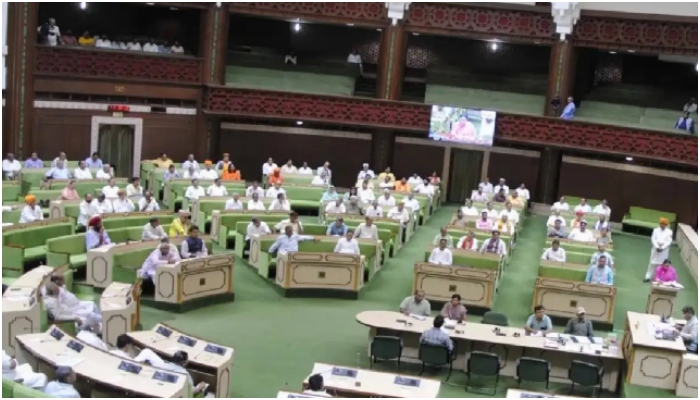
On Monday, 3rd February, the Bhajan Lal Sharma-led Rajasthan Government tabled the ‘Rajasthan Prohibition of Unlawful Conversion of Religion Bill 2025’ during the budget session in the state assembly. The bill tabled today mandates that any person willing to convert one religion into another must apply to the district magistrate at least 60 days in advance. The magistrate will then assess whether the conversion is forced or voluntary. If the authorities find that no coercion is applied during the religious conversion, the change of religion might be approved.
The bill in the state assembly was presented by Health Minister Gajendra Singh Khimsar. As per the bill, any person who is found guilty of practising forceful religious conversion shall be punished with a jail term of 2 to 10 years. Also, a monetary fine of Rs 25,000 will be imposed upon the guilty forcefully trying to convert women, minors, and those from Scheduled Castes and Scheduled Tribes. In the case of large-scale conversion, a fine of Rs 50,000 and imprisonment of 3 to 10 years will be imposed.
Rajasthan Minister KK Vishnoi commented on the bill and said that the bill was introduced against Love Jihad so that the cajoling of innocent girls could be stopped. He indicated that any marriage practised to convert the religion of the other person deceitfully shall be considered invalid. He said that the strict provisions against love jihad have been included in the bill.
#WATCH | Jaipur, Rajasthan | On anti-conversion bill, Rajasthan Minister K.K. Vishnoi says, "… This bill is being introduced against Love Jihad so that cajoling of innocent girls can be stopped…" pic.twitter.com/cwD51ghADd
Notably, in November last year, the cabinet approved the draft of the bill aiming to curb the forceful religious conversion. At that time, the Chief Minister of Rajasthan, Bhajan Lal Sharma had noted that the state would take stringent steps to stop illegal conversion.
“Rajasthan government committed to stop illegal conversion. In the cabinet meeting held in the Chief Minister’s Office today, it was decided to introduce ‘The Rajasthan Prohibition of Unlawful Conversion of Religion Bill-2024’ in the Assembly to stop attempts of conversion by inducement or fraud. The proposed bill will prohibit any person or institution from converting a person’s religion through misleading information, fraud, use of force, or undue influence. If a person marries for illegal conversion, the family court will have the right to declare such marriage invalid,” he posted on X.
अवैध धर्मांतरण को रोकने हेतु प्रतिबद्ध राजस्थान सरकार।
आज मुख्यमंत्री कार्यालय में आयोजित मंत्रिमंडल की बैठक में प्रलोभन अथवा कपटपूर्वक धर्मान्तरण के प्रयासों को रोकने के लिए 'द राजस्थान प्रोहिबिशन ऑफ अनलॉफुल कन्वर्जन ऑफ रिलीजन बिल-2024' विधानसभा में लाने का निर्णय किया गया।…
Meanwhile, Congress opposed the bill saying that the ruling government was showing off by tabling the bill that was already tabled during the Congress rule. “Anti-conversion bill was already present and previous Congress government had already responded upon this. Now this bill is being brought as a show.. Those who came into power saying ‘Rajasthan won’t tolerate women’s insult’ don’t talk about this very topic,” Congress leader Rafeek Khan said.
#WATCH | Jaipur, Rajasthan | On anti-conversion bill, Chief Whip of Congress Legislative Party, Rafeek Khan says, "… Anti-conversion bill was already present and previous Congress government had already responded upon this. Now this bill is being brought as a show off… Those… pic.twitter.com/VpMSivjbAg
Leader of the Opposition Tikaram Julie also stated that the bill presented by the BJP government should be studied. Questioning the provisions and rationale of the bill, he suggested that if the government believes that any organization, group, or individual is forcibly converting people, action should be taken against them. He also said that the government was furthering propaganda in the guise of introducing the bill.
What does the bill say
As per the bill, anyone found guilty of illegal or forceful religious conversion shall be jailed for a period of up to 10 years. The guilty persons found practising conversion of minors, women, or people from Scheduled Castes (SC) and Scheduled Tribes (ST) will also be imposed with a fine of Rs 25000.
The imprisonment could extend between three to 10 years and a ₹50,000 fine in case of large-scale conversions, the bill tabled today reads. Apart from this, the victims of forceful religious conversion will be provided with a compensation of Rs 5 lakh.
The bill also has strict measures undertaken to curb the incidents of love jihad. As per the bill, any marriage performed to forcefully convert the woman to another religion will be cancelled.
In addition to this, anyone who wishes to convert one religion to another shall apply to the district magistrate at least 60 days in advance. A notice of 30 days will also have to be given for any ceremony for the conversion. Further, post-conversion, the concerned individual must inform the district magistrate within the next 60 days.
Past incidents of forceful religious conversion from Rajasthan
The state of Rajasthan has seen several dreadful incidents of forceful religious conversion in which the accused individuals use deceit or coercive practices to force the victims to convert their religion to another. The BJP government seems to have taken steps to stop this.
In February 2024, the Rajasthan government suspended two teachers from a government school in the Kota district for their alleged involvement in religious conversion and ties to banned terror outfits. The suspension orders of the teachers identified as Mirza Mujahid and Firoz Khan, posted at a school in Kota’s Sangod block, were issued after the Sarva Hindu Samaj, Sangod, sent a memorandum to the Education Minister, alleging that activities of religious conversion and love jihad have been going on in the school since 2019.
In March 2024, the accused person identified as Imran abducted a Hindu girl from the Mandrella police station area of Jhunjhunu and took her to Haryana’s Hisar. Imran posed as a Hindu and befriended the girl, harassing her to send nudes, raping her, and forcing her to convert her religion to Islam.
In May 2024, the Rajasthan police arrested a man named Salman Khan for raping a 25-year-old Hindu woman under the pretext of love. Khan, who operated a mobile repair shop in Jaipur, pretended to be a Hindu to entrap the victim in his love trap. As per reports, he raped the 25-year-old woman, shot obscene videos, and then blackmailed the victim into soliciting 2-4 lakhs of rupees.
As per the reports, the Rajasthan government had sought to pass an anti-conversion bill in 2006 during the rule of Vasundhara Raje. However, the bill failed to become law due to a lack of assent from the then-state governor and the president. The Rajasthan High Court then in the year 2017 issued guidelines allowing scrutiny to check aspects of forcible conversions for marriage, if any.
Notably, the earlier bill required the approval of the district collectors before conversion and announced 5 years of maximum punishment for those found guilty of forcefully converting minors, women, and sc/st persons. The previous bill also stated that the registration of any organization found to be guilty of abetting conversions would be cancelled.
The state of Rajasthan is the latest BJP-ruled state that has undertaken measures to stop forceful religious conversion. Earlier to this, several states like Uttar Pradesh, Karnataka, Gujarat, Madhya Pradesh, Chhattisgarh, etc have passed anti-conversion laws to curb the forceful religious conversion.
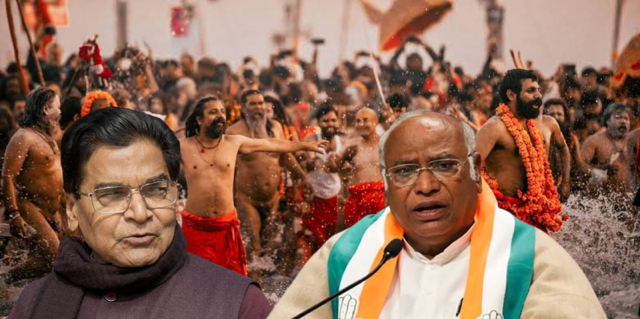
Congress president and Leader of the Opposition in Rajya Sabha, Mallikarjun Kharge, on Monday, claimed “thousands” died at the ongoing Maha Kumbh without providing evidence to back his claim and days after the Uttar Pradesh government confirmed 30 deaths in an unfortunate incident last month.
Kharge’s outlandish claims attracted protests from treasury benches and VP Dhankar, who asked him to authenticate his claim of a thousand deaths at the Maha Kumbh.
Kharge clarified that his statement was an estimate and invited the government to provide the actual figures if his numbers were incorrect.
Delhi: Leader of the Opposition in Rajya Sabha Mallikarjun Kharge says, "I said "thousands," but I didn't mean it in a way to blame anyone. Just give the information about how many actually died, how many are missing, at least that much. If I'm wrong, fine, I'll apologize. But… pic.twitter.com/5PS9asiv1d
He expressed willingness to be corrected, stating, “I did not say ‘thousands’ to accuse anyone. But at least disclose how many people lost their lives. If I am wrong, I will apologise. The government should provide data on the number of deceased and missing persons.”
The stampede occurred during the Amrit Snan on Mauni Amavasya, on January 29. According to Uttar Pradesh government data, 30 people died, and 60 were injured.
Kharge’s disinformation on Maha Kumbh intriguingly coincides with bizarre remarks made by another opposition leader, giving an impression of a well-coordinated attack to malign the UP government and muddle facts about the largest congregation in the world, Maha Kumbh.
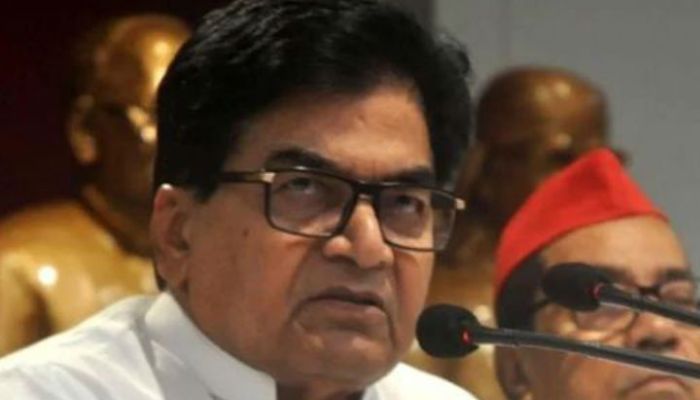
Alleging a massive administrative failure, Samajwadi Party (SP) MP Ram Gopal Yadav claimed that “thousands had died,” with some bodies “thrown into the Ganga” and others “buried.”
Yadav accused the state government of suppressing the actual death toll, alleging that officials were instructed not to report numbers exceeding 30. However, he did not present any evidence to substantiate his claims, relying instead on accounts from “eyewitnesses.”
The Samajwadi leader further claimed that families were being bribed with Rs 15,000 to Rs 20,000 to remain silent and avoid post-mortem procedures. Again, he did not provide any evidence for this claim and made a sweeping comment while talking to media persons outside Parliament. Despite the serious accusations, no formal complaints or credible eyewitness accounts corroborating such widespread fatalities were presented by Ram Gopal Yadav or any other opposition leader.
Despite the UP government confirming 30 deaths due to a stampede-like situation that occurred last week, two opposition MPs have reiterated the exaggerated claim of “a thousand deaths.” This seems to indicate an alleged attempt to discredit the Maha Kumbh and, by extension, the Yogi Adityanath government, regarding the organization of one of the largest and most unique gatherings of Hindus in the world.
After 144 years, the Maha Kumbh is taking place in Prayagraj at the confluence of the Ganga, Yamuna, and Saraswati rivers. The Sangam has been blessed by the auspicious presence of various sadhus and seers. Hindu scriptures highlight the grandeur of the Maha Kumbh, making it a once-in-a-lifetime aspiration for every Sanatani to take a holy dip in the Prayagraj Kumbh. According to Hindu beliefs, completing the Maha Kumbh pilgrimage requires not only bathing at the Triveni Sangam but also seeking darshan of the sacred Akshayvat.
Kumbh Mela is the world’s largest religious and cultural gathering, deeply rooted in scientific principles. Astronomically, Ardha Kumbh, Purna Kumbh, and Maha Kumbh occur when celestial bodies align in specific formations. The earliest written records of the Kumbh appear in the travel accounts of Chinese explorer Huen Tsang, though religious texts trace its origins to the beginning of the universe.
The Atharva Veda references the Kumbh Mela, mentioning phrases like Chaturtha Dadami and Poorna: Kumbhoshadhikaal Aahitastam. However, 14th-15th century scholar Sayana and 17th-century scholar Udgeethas clarify that the first phrase praises the Vishtari Yajna, while the second refers to ‘divine time.’ In this context, ‘Kumbh’ signifies a ‘water pot’ rather than the festival itself.
The Yogi Adityanath government finds itself in a unique position to organise such an auspicious and august gathering. Large-scale arrangements and unprecedented budget overlays have been sanctioned to ensure pilgrims coming from different parts of the country have a comfortable, pious, and effortless yatra to the Sangam. While the unfortunate tragedy has cast a pall over the Maha Kumbh and exposed administrative lapses, the government has been nimble in addressing the issues and prioritising the safety of the pilgrims.
The opposition parties have already grown restless, first with the return of Yogi Adityanath in Uttar Pradesh in 2022, and then with the return of PM Modi at the Centre in the 2024 general elections. It didn’t help matters that opposition parties lost key states in Maharashtra and Haryana shortly after the Lok Sabha elections, adding to their ongoing predicament, even as chinks in their so-called “unity” stands exposed, most glaring in the campaigning during the Delhi elections, with Rahul Gandhi pulling no punches against Aam Aadmi Party, a member of INDI alliance.
With Uttar Pradesh gearing up for elections in just about two years, the opposition parties perhaps realise the enormity of Maha Kumbh and what its successful organisation could spell for Yogi Adityanath, a dynamic saffron-clad chief minister whose zero tolerance for mafias and bulldozer justice has already had the votaries enthralled. Therefore, the recent attacks in the parliament and the readiness to fear-monger over Maha Kumbh betrays the desperation among the opposition leaders, who find no qualms in exploiting one of the holiest congregations of Hindus.
The tragic stampede in Mahakumbh on 29th January, that claimed 30 lives and left around 60 injured, has now become an opportunity for political point scoring among the anti-BJP parties, particularly the Samajwadi Party, to do ‘vulture politics’ and peddle lies.
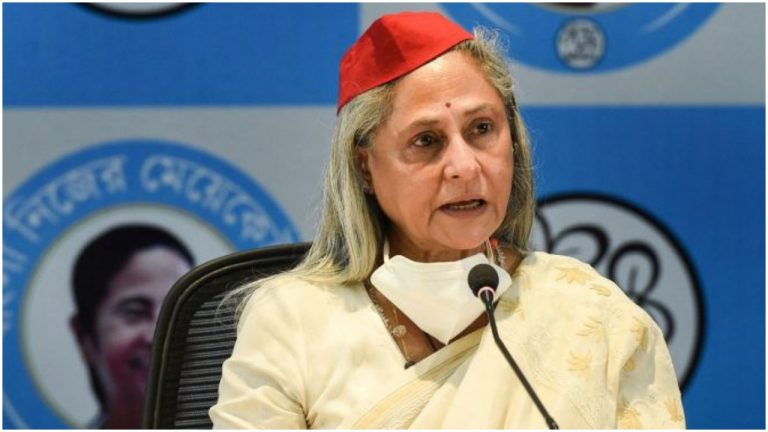
Meanwhile, Samajwadi Party MP Jaya Bachchan dismissed the government figures of the number of devotees visiting Mahakumbh and also claimed that the water in Prayagraj is contaminated as dead bodies of stampede victims have been thrown in the holy Ganga river.
During a media interaction on 3rd February, Jaya Bachchan said, “Where is the water most contaminated right now? It’s in Kumbh. Bodies (of those who died in the stampede) have been thrown in the river because of which the water has been contaminated… The real issues are not being addressed. The common people visiting Kumbh are not receiving any special treatment, there is no arrangement for them. They are lying that crores of people have visited the place, how can such a large number of people gather in that place at any given point?”
#WATCH | Delhi: Samajwadi Party MP Jaya Bachchan says, "… Where is the water most contaminated right now? It's in Kumbh. Bodies (of those who died in the stampede) have been thrown in the river because of which the water has been contaminated… The real issues are not being… pic.twitter.com/9EWM2OUCJj
The Samajwadi Party leader, however, failed to provide any evidence or source for her sensational claim and her statement is being widely criticised on social media.
Jaya Bachchan is not the only Samajwadi Party leader making absurd allegations about Mahakumbh, Party MP Ram Gopal Yadav earlier claimed that contrary to official numbers given by the administration, thousands of people died in the stampede. “The incident took place because of the mismanagement of the administration. The eyewitnesses say that thousands were killed in the stampede…Families are not getting bodies, no action has been taken against the officials…We have given notices here but they have been rejected”, Yadav said.
#WATCH | Delhi: Opposition MPs in Rajya Sabha raise slogans and walk out of the House against Uttar Pradesh's Yogi Adityanath government over Maha Kumbh stampede issue.
Samajwadi Party MP Ram Gopal Yadav says "…The incident took place because of the mismanagement of the… pic.twitter.com/PLD3PXqrtP
Meanwhile, Congress leader Gaurav Gogoi said, “Today the opposition demanded only one thing, that the government answer on the atrocities committed with the tourists and death of people at Maha Kumbh… The government is trying to hide the answers… The topic of Maha Kumbh is very serious and should be subjected to investigation and lapses by the Uttar Pradesh government should be revealed… We gave motion in urgent, but the speaker negated it…”
#WATCH | Delhi | On Maha Kumbh stampede, Congress MP Gaurav Gogoi says, "Today the opposition demanded only one thing, that the government answer on the atrocities committed with the tourists and death of people at Maha Kumbh… The government is trying to hide the answers… The… pic.twitter.com/JtmOOoTY6e
While Jaya Bachchan, along with other Samajwadi Party leaders, is spreading disinformation about the Mahakumbh stampede, it must be recalled how SP supremo Akhilesh Yadav was the Uttar Pradesh CM during the 2013 Kumbh Mela. Akhilesh Yadav had entrusted the Mela management to SP leader Azam Khan at that time. OpIndia published a detailed report on the SP government’s sheer mismanagement that year, their under-use of Centre-allocated funds and rampant irregularities.
Notably, the opposition is making vague claims about the number of deceased and the reason behind the stampede to blame the Uttar Pradesh government for the unfortunate incident in an apparent bid to establish their narrative that the BJP government’s organisation and management of Mahakumbh has been a failure.
The anti-BJP ecosystem has been blaming the VIP culture for the stampede on Mauni Amavasya. OpIndia, however, explained earlier how despite the VIP movement causing significant distress to ordinary people at Mahakumbh, it was not the reason behind the stampede.
What caused the stampede at Mahakumbh
Notably, the 29th of January was Mauni Amavasya, the new moon night of the Krishna Paksh of the Hindu month of Magh. The day holds special astrological significance since the Sun and Moon are in the same raashi of Makar or Capricorn. Taking a ritual bath on this occasion, especially at the Triveni Sangam, washes away one’s sins. Due to the spiritual significance of the Amrit Snan on Mauni Amavasya, there was a huge crowd on the day the stampede took place. Reports say that about 10 crore people were heading to the Mela Kshetra to take a holy dip at that time.
The stampede took place at around 1-2 am when a massive crowd of devotees broke barricades and trampled on those sleeping on the ground waiting for the Brahma Muhurat at the festival. It must be noted that the crowd behind the barricade, who had just arrived, did not know that there were people already sleeping on the ground and ended up trampling on them unintentionally. These barricades, according to Vaibhav Krishna, Deputy Inspector General, Mahakumbh, were put up around the ghats and they gave way due to the sea of humanity trying to get through.
“Before Brahma Muhurta, between 1 am to 2 am, a huge crowd gathered on the Akhara Marg. Due to this crowd, the barricades on the other side broke and the crowd ran over the devotees waiting to take a holy dip of Brahma Muhurta on the other side. About 90 people were taken to the hospital through ambulances but unfortunately, 30 devotees have died,” DIG Vaibhav Krishna said.
DIG Vaibhav Krishna further said that on the day of Mauni Amavasya, neither any VIP protocol was in place nor special passes were issued to any VIP.
Jaya Bachchan and controversies go hand in hand
Samajwadi Party MP and Bollywood actress Jaya Bachchan has been more in the news in the recent past for her rude behaviour, angry outbursts, and controversial statements rather than for her constructive opinions or politics.
In August 2024, Jaya Bachchan was schooled by Rajya Sabha chairman Jagdeep Dhankar after she mindlessly accused him of disrespecting her. “I, Jaya Amitabh Bachchan, would like to highlight that as an artist, I understand body language and expressions. But your tone is not right. You may be sitting on the Chair and we are your colleagues, but your tone is unacceptable,” Bachchan said.
Dhankhar responded by telling Bachchan that she should understand the necessity of maintaining decorum, even if she is an actress and a celebrity.
In 2023, Jaya Bachchan was criticized when she lost her cool at fans and paparazzi when she arrived at the Indore airport with her husband, Amitabh Bachchan. “Aise logo ko naukri se nikal deni chahiye” (such people should be thrown out of their jobs), the actress-turned-politician said as she walked away after lambasting fans for clicking her.
In 2021, Jaya Bachchan ‘cursed’ the Rajya Sabha chair over asking her to participate in the ongoing discussion on the ‘Narcotic Drugs and Psychotropic Substances (Amendment) Bill, 2021. “Aapke bure din jaldi aane wale hain…I curse you”. (Your bad days will be here soon…I curse you,” Bachchan harangued. The Samajwadi Party leader was apparently triggered when someone among the RS members questioned her about the summon sent to her daughter-in-law Aishwarya Rai Bachchan in the Panama Papers leak case by the Enforcement Directorate.
Notably, Samajwadi Party MP Jaya Bachchan never condemned Mulayam Singh Yadav’s outrageous comment during the Shakti Mills rape case where he said ‘ladke hai, ladko se galtiyan ho jaati hai’. Jaya Bachchan continues to be a member of a party wherein her co-actor Jaya Prada was badgered with sexist and misogynistic comments by her own party leader Azam Khan. Jaya Bachchan also remained silent when Azam Khan recited a sexist ‘poem’ for BJP MP Rama Devi.
Voting for the Delhi Assembly elections is to be held on February 5, 2025. The results are set to be declared on February 8. Before the election, all the parties have put in their full effort to sway the voters in their favour. BJP and AAP are putting in their maximum efforts with all their major leaders campaigning. Congress, which drew a blank in the last 2 elections, is also putting in serious efforts this time.
While BJP wants to end the drought of two and a half decades in Delhi Assembly, AAP wants to score a hat-trick of wins. Congress is also trying to regain its lost ground.
The survey ahead of elections has increased AAP’s concerns
Meanwhile, a survey by C Voter agency has come out ahead of the elections, which may increase AAP’s concerns. C Voter has published this survey on the basis of data collected till February 1. According to the survey of C Voter, 43.9% of the people of Delhi are angry with the work of the current AAP government. These people have said that they want a change in the government.
At the same time, 38.3% people say that they are not angry with the work of the government and do not want to change it. There is also 10.9% population that is angry with the work of the government but does not want a change in the government. As per the survey, overall, around 55% people are angry with the incumbent AAP Government.
In the same survey of C Voter, 46.9% people said that they are not angry with the government and do not want any change. The number of people who do not want change has now decreased. This can become a cause of concern for AAP. Because if those people, who are angry, are in the mood to change, then AAP will have problems.
5 big factors will decide the election
5 major factors will decide whether AAP will remain in power or there will be a change after the Delhi elections. The first factor in this will be the division of Muslim votes. There are about 13% Muslim votes in Delhi. This vote was with the Congress before AAP entered Delhi politics. In the 2015 and 2020 elections, this vote went to AAP.
If Congress makes a dent in this and regains some of its lost ground, then AAP is sure to lose both seats and vote share. This time. Congress is directly attacking its national ally Arvind Kejriwal during campaigning, in such a situation AAP may suffer losses. The second major factor is the Dalit vote.
This vote also used to be with the Congress earlier. Apart from AAP, BJP has also made a dent in this votebank. BJP is working on the Dalit vote at the local level in Delhi like they did in Haryana and Maharashtra. BJP has assured the Dalits that it will continue the already running schemes and will also bring new schemes for their upliftment.
BJP has promised to provide permanent houses in slums where majority of Dalit population is currently living. It is expected that this scheme will make a major difference. At the same time, Kejriwal’s image has taken a hit in the national capital compared to the last election.
Due to the allegations in the liquor scam case and Kejriwal’s time in jail, his personal brand has not been that strong, while Atishi, who was made CM for a few months, has also not been able to garner that kind of popularity. On the other hand, Narendra Modi’s popularity remains intact. There is no change in the voters’ mind about the Prime Minister.
This time BJP is countering Kejriwal’s politics of ‘free promises’ by countering them with their own announcements. BJP has promised the highest amount of ₹2500 under the Mahila Yojana in Delhi. BJP has also promised to continue the existing old schemes.
Congress vote can also change the government
Congress’s performance in the Delhi Assembly elections can change the course of the election. Congress’s performance has been continuously declining in Delhi. AAP has directly benefited from this. Congress’s vote has completely shifted to AAP in last 2 elections. While BJP may not have won the last 2 elections, it has consistently maintained 35%-40% votes in the state, but Congress vote share saw a steep decline.
While Congress got 35% votes in 2008, it decreased to 24% in 2013. In the 2015 elections, Congress came down to 9.7% and in 2020 it got stuck at 4%.
Congress’s lost vote bank is directly benefiting AAP. Congress has worked with a ‘do or die’ strategy in the 2025 elections. It wants to take back its vote bank from Kejriwal.
Even Congress leader Rahul Gandhi is directly attacking Kejriwal. Kejriwal is being cornered on the issues of Sheeshmahal, liquor scam and Yamuna. Congress wants to hurt AAP at the local level t. If the vote share of Congress crosses 10% again, Kejriwal will face a lot of problems.
The Donald Trump administration has cracked down on the controversial United States Agency for International Development (USAID). It has sent senior officials on leave, fired contractors and, most importantly, imposed a sweeping freeze on foreign assistance.
This put an immediate halt to several projects run by USAID in Pakistan, Bangladesh, Ukraine and other countries. The website of the ‘independent government agency’ also went offline.
Elon Musk, tasked to head DOGE (Department of Government Efficiency), has dubbed USAID a ‘criminal organisation’. “Time for it to die,” he said in a tweet on Sunday (2nd February).
Donald Trump did not hold back and declared, “(USAID) had been run by a bunch of radical lunatics and we are getting them out.”
The incumbent US President has made his plans clear to put USAID under the control of the State Department. This is being done to ensure that foreign assistance henceforth is aligned with the Trump administration’s ‘America First’ goals.
President Trump on USAID: "It has been run by a bunch of RADICAL LUNATICS and we're getting them out … and then we'll make a decision" pic.twitter.com/PUkToccYca
USAID, links to CIA and regime change operations in foreign countries
Robert F. Kennedy Jr., who was recently appointed the Health and Human Services secretary by the Trump administration, made several revelations about USAID in an interview with journalist Tucker Carlson in November 2024.
He informed that the United States Agency for International Development financed the 2014 Maidan Revolution, which led to the removal of Ukrainian President Viktor Yanukovych.
“There were riots, and it is called the Maidan Rebellion in Ukraine, and we are not told that we are financing those riots. The newspapers never told us, and our government never told us. USAID, which is a CIA front, put 5 billion dollars into funding those riots,” he was heard saying.
ARREST Victoria Nuland.
“USAID is a CIA front that used $5B in 2014 to ignite a Colour Revolution in Ukraine. Victoria Nuland picked the new Government a month before the old Government was overthrown…” -RFK Jr. pic.twitter.com/YurT0fAEjw
“Those riots lead to a coup d’etat against the first elected, democratically elected government of the Ukraine. It was a government that refused to choose sides and to say we were going to be on the side of the West. So we wanted them out,” RFK Jr added.
He pointed out how Victoria Nuland, who was the then spokesperson for the US State Department, was picking the cabinet members of the new Ukranian government.
“USAID doesn’t really do and the CIA doesn’t do democracy. You know, the CIA has overthrown, I think, 83 governments between 1947 and 1997. That’s a third of the governments on Earth and most of them were democracies. It doesn’t do, it doesn’t do democracy,” he had pointed out.
This becomes evident from the recent role played by USAID in fomenting trouble in Bangladesh and orchestrating the undemocratic ouster of the elected Sheikh Hasina-led-government in Bangladesh.
In September 2024, The Sunday Guardian published an explosive piece wherein it revealed that the US administration and its agencies had been conspiring against the Sheikh Hasina-led-government in Bangladesh since March 2019.
Based on its access to classified documents, the weekly newspaper stated that the US government-funded non-profit organisation named International Republican Institute (IRI) is at the helm of the regime change operation.
Screengrab of the article in The Sunday Guardian
“The IRI…was implementing the broader objectives of the National Endowment for Democracy (NED) and the United States Agency for International Development (USAID). The documents also show how the project was necessary to counter-balance India’s “interference”,” the report stated.
The Sunday Guardian noted that IRI is tasked to implement projects, funded by USAID, including a sinister programme named PARIS (Promoting Accountability, Inclusivity, and Resiliency Support Program.”
It ran from March 2019 to January 2021 during which it ‘enhanced political participation’ of Bangladeshis and amplified ‘anti-authoritarianism voices.
The International Republican Institute issued 11 advocacy grants, created 225 ‘art products’ to address social issues, supporters 3 civil society organisations, trained 77 activists, engaged 326 citizens to develop 43 specific policy demands, which were later proposed before 65 Bangladeshi govt officials.
It ran another PARIS campaign between February 2021 and September 2022 on a grant of $900,000 to influence public opinion against Sheikh Hasina.
The controversial United States Agency for International Development (USAID) has signed an agreement to provide $202 million (~2414 crore Taka) to the interim government in Bangladesh, led by ‘American asset‘ Muhammad Yunus.
The objective ‘on paper’ behind the financial aid is supposedly to empower youth, strengthen democracy and governance and bring about development in Bangladesh.
Screengrab of the report by the Council of Hemispheric Studies
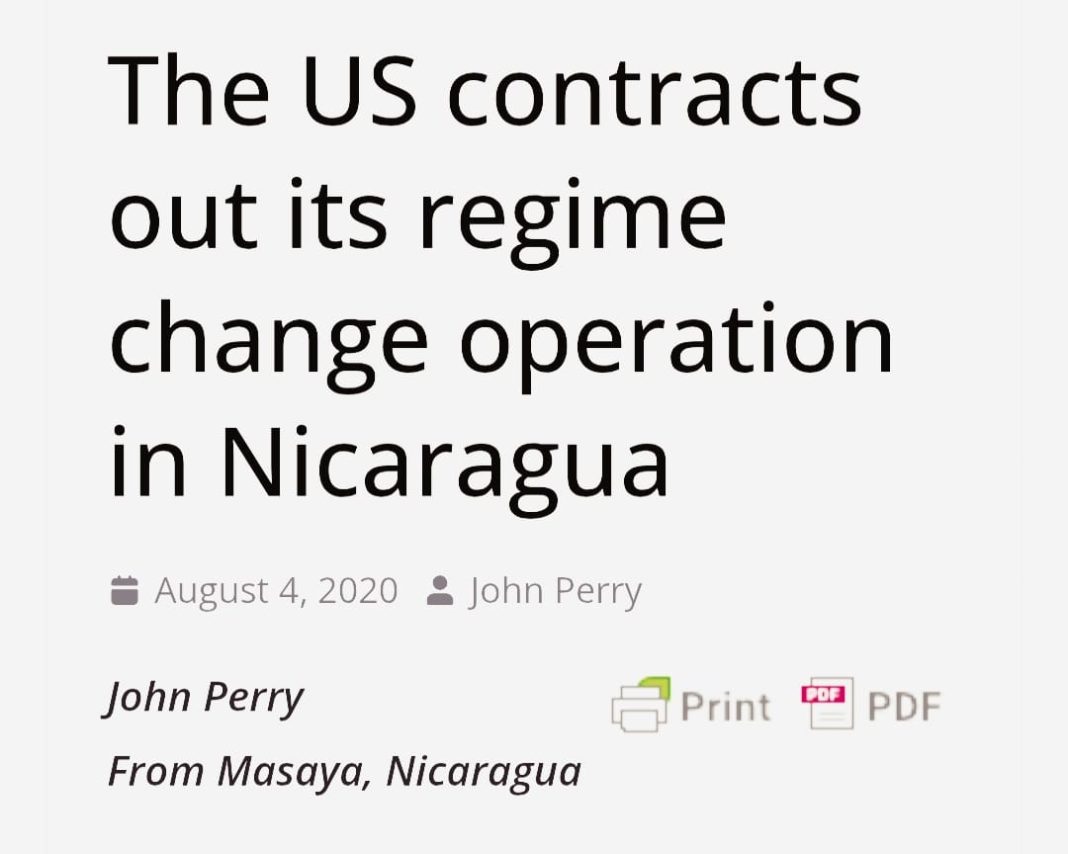
According to a research report published by the Council of Hemispheric Affairs, USAID interference led to the 2018 uprising in Nicaragua. An extraordinary leaked document revealed the US government’s plan to interfere with the internal affairs in Nicaragua before and after the 2021 presidential election.
The 14-page extract of a much longer document outlined a contract of USAID to create “the environment for Nicaragua’s transition to democracy.” William Grigsby from Radio La Primerisima revealed the plan in the document that described how USAID worked with various NGOs, think tanks, media organisations and human rights bodies to support opposition to the Ortega government.
To support and justify the interference by the US body, the document misrepresented historical events such as claims that the Sandinista party manipulated the elections even though the Organization of American States (OAS) acknowledged there were only minor irregularities. Furthermore, it also rewrote the 2018 uprising narrative ignoring the fact that the opposition indulged in violence and economic disruption.
The US has a long history of interventions in Nicaragua dating back to 1856. The existence of such documents that revealed the plan of the US’s intervention was not surprising. Notably, Ben Waddell’s article in Global Americans points out that “US support has helped play a role in nurturing the current uprisings,” highlighting the role of US-funded groups in fostering opposition.
USAID has a long history of meddling with Venezuela’s internal affairs as well. According to a 2019 report in People’s World, USAID aligned closely with the National Endowment of Democracy in “Transition Initiatives” to promote the foreign policy goals of the US. The organisation has been an integral part of US efforts to organise humanitarian aid convoys to Venezuela which aligned with the political agenda of the US administration and then-interim president Guaido.
USAID’s Venezuela program supports civil society and democratic governance, echoing the principles of the UN Human Rights Convention. Wikileaks revealed a five-point strategy by the U.S. embassy in Caracas to undermine Chávez. USAID and NED funded opposition groups extensively and the former’s operations often blended humanitarian aid with political motives. The State Department’s Bureau of Energy Resources also works to reduce Latin American reliance on Venezuelan energy.
USAID, George Soros and ‘colour revolution’ in India
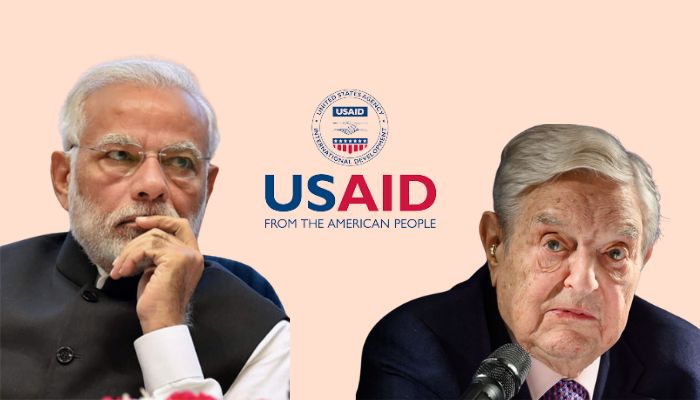
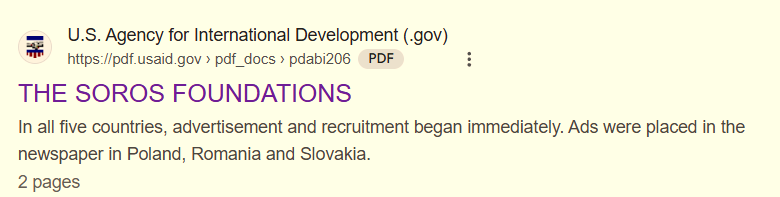
In March 2017, the Heritage Foundation published a report detailing how USAID worked in close association with far-left billionaire George Soros during the Obama administration to promote its ‘radical agendas’ in several countries.
The report stated, “…Evidence is emerging that during the past eight years, Soros, his Open Societies Foundations (OSF), and their many smaller affiliates have received U.S. taxpayer money through USAID and that USAID has made the OSF the main implementer of its aid.“
Screengrab of the Google cache of the now-deleted USAID website
It may be recalled that George Soros, who worked with USAID, had been eyeing a colour revolution in India.
In February 2023, the far-left billionaire exploited the Adani-Hindenburg controversy and launched a scathing attack on the Indian government.
He claimed, “Modi and business tycoon Adani are close allies. Their fate is intertwined…Adani Enterprises tried to raise funds in the stock market, but it failed. Adani is accused of stock manipulation and his stock collapsed like a house of cards.”
Soros accused Prime Minister Narendra Modi of crony capitalism. “Modi is silent on the subject, but he will have to answer questions from foreign investors and in parliament,” he added.
The Hungarian-American billionaire also said that the ‘shakedown’ caused to the Indian markets due to the Hindenburg Research report will result in ‘much needed institutional reforms’ and ‘democratic revival’.
George Soros and his vicious ecosystem of NGOs, activists and journalists had been trying to prove PM Modi as an ‘electoral autocrat’ who needed to be ousted for the ‘greater good’ of this country. And it has been a work in progress for a long time.
In January 2020, the American billionaire committed $1 billion to start a global university to “fight nationalists” and climate change, calling them twin challenges that threaten the survival of our civilization.
While speaking at the World Economic Forum in Davos, Soros pledged to fund a university project to battle the erosion of civil society in a world increasingly ruled by “would-be and actual dictators” and climate change.
Soros also claimed that the “biggest and most frightening setback” was in India, as he accused Prime Minister Narendra Modi of “creating a Hindu nationalist state.”
The Hungarian-American billionaire has several intellectuals on his payroll, including the former PM Manmohan Singh’s daughter Amrita Singh. Not to forget the curious case of ‘author’ and ‘social activist’ Harsh Mander who had been at the forefront of creating civil unrest during the Anti-CAA protests.
He and his NGO Karwan-e-Mohabbat had been very active in the demonstrations held at Shaheen Bagh. “From now on, the decision will not come from the Supreme Court or Parliament. We saw what the Supreme Court did in Ayodhya, NRC and Kashmir matters,” he was heard saying in a viral video.
"Ab faisla Sansad me ya Supreme Court me nahi hoga. Supreme Court ne Ayodhya aur Kashmir k mamle me Secularism ki raksha nahi ki. Isliye ab faisla Sadkon per hoga" Harsh Mander tells to a cheering mob.
Harsh Mander had threatened, “The SC has failed to honour secularism, equality and humanity. We will try fighting there too, but, the decision will not happen in the Supreme court nor Parliament, it has to be made in the streets.”
At one point, he had even vowed to register himself as a Muslim if the Citizenship Amendment Act was passed. Harsh Mander had also sought the arrest of BJP leader Kapil Mishra.
It may be recalled Shaheen Bagh was masterminded by Sharjeel Imam, an Islamist who urged Indian Muslims to cut off North East India from the rest of the country.
In 2018, George Soros-funded NGO, Sherpa attempted to thwart India’s defence deal with France and stall the delivery of Rafale fighter jets.
Moreover, Open Society Foundations (OSF) run by the billionaire had funded the Socio-Legal Information Centre (SLIC), which had been active in seeking the repeal of the sedition law currently used against anti-India elements.
In September 2019, George Soros also met Pakistani Prime Minister Imran Khan shortly after US President Donald Trump attended Narendra Modi’s ‘Howdy Modi’ event in Houston, Texas.
George Soros had been unabashed in his attempt to fuel a dangerous anti-India narrative through media and ‘civil society. Organisations funded by him played a key role in creating chaos and unrest under the pretext of anti-farm law protests.
In 1999, the Open Society Foundation began activities in India by providing scholarships and fellowships to pursue studies and research at Indian colleges. Through the OSF, George Soros made significant contributions towards the spread of instability in India.
The Hungarian-American billionaire has also tried to use international institutions, which are funded by him, including Freedom House and V-Dem (Varieties of Democracy) Institute to tarnish the image of India at a global level.
Since the early 2000s, FH has received funds in tunes of millions of USD from the Open Society Foundation (OSF), Mac Arthur Foundation, Ford Foundation, National Endowment for Democracy (NED), and USAID among others. Its 2022 report on TNR on India was duly funded by NED.
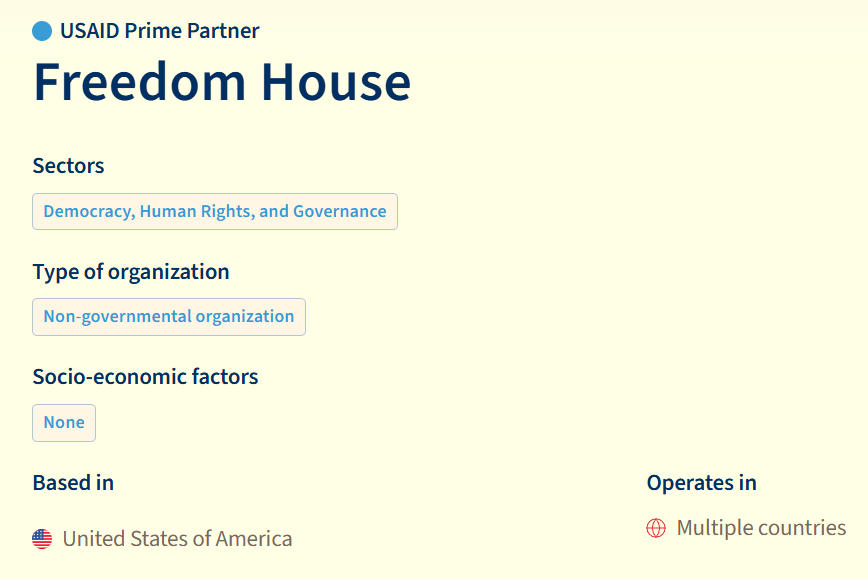
Coincidentally, Freedom Home is a ‘prime partner‘ of the United States Agency for International Development (USAID).
Link between Freedom House and USAID
USAID and links with the Congress party
George Soros, who has worked with USAID to propagate its goals, is ‘friends’ with Congress leader Shashi Tharoor. This becomes evident from the latter’s tweet in 2009.
The Congress leader had claimed, “Met old friend George Soros, upbeat abt India and curious about our neighbourhood.”
Screengrab of the tweet by Shashi Tharoor
“He’s far more than an investor: a concerned world citizen,” Shashi Tharoor further added.
OpIndia had previously reported about George Soros and his connection to Fori Gandhi, a close relative of former Prime Minister Indira Gandhi.
Sam Pitroda, the Chairman of the Indian Overseas Congress and a loyalist of Sonia Gandhi, had received funding for his NGO Global Knowledge Initiative (GKI) from USAID.
Congress leader Rahul Gandhi had met former administrator of the USAID, Samantha Power, during his trip to Uzbekistan in 2023.
?RED FLAG! Co-founder of HfHR, a pseudo Hindu rights org, extended arms of org like IAMC & OFMI and Soros's fellow- Sunita Vishwanath sharing the close dais with Rahul Gandhi on his US visit.
Vishwanath is in charge of spearheading the vicious agenda of "hindu vs hindutva". 1/2 pic.twitter.com/E3FllObL1g
He had also met Sunita Vishwanathan of Hindus for Human Rights (HfHR), a controversial outfit with ties to George Soros and Islamist ‘Indian American Muslim Council’ (IAMC).
USAID, OCCRP and targeting of India’s financial markets
The Organised Crime and Corruption Reporting Project (OCCRP), which published hit pieces on India and the Adani Group, recently came under the scanner.
French newspaper Mediapart, in an explosive report, revealed that OCCRP, which poses as an independent, non-partisan organisation, is funded by USAID.
In May 2008, the Organised Crime and Corruption Reporting Project received $1.7 million from the US agency. Its founder Drew Sullivan did not land USAID funding out of thin air.
7 years prior to establishing OCCRP, he had visited Sarajevo to train Bosnian journalists as part of a programme funded by the US government agency.
Mediapart noted that OCCRP withholds/ conceals the extent of funding by the USAID and State Department from the public, media partners and journalists.
Screengrab of the report by OCCRP
In order to keep the illusion of its ‘independence and non-partisanship’ alive, it removed the phrase ‘OCCRP is made possible by’ and the logo of USAID from the homepage.
According to Mediapart, it is essential for all organisations to prominently acknowledge financial support from USAID. However, OCCRP has been allowed a ‘partial branding waiver’ that allows it to not follow the usual process of acknowledgement.
The US State Department and USAID exerts influence on the Organised Crime and Corruption Reporting Project through its financing.
USAID can veto the appoinment of ‘key personnel’ in OCCRP. It also has a ‘cooperative agreement’ and a ‘substantial involvement clause’ with the NGO, which claims to be ‘independent.’
According to Mediapart, USAID uses OCCRP reports to trigger judicial probes and sanction procedures. OCCRP cannot investigate the US government and is directed to probe foreign governments hostile to American interests. These unfortunate countries include Russia, Venezuela, Malta and Cyprus.
In August 2023, OpIndia had predicted that the OCCRP was planning a hitjob along the lines of now-defunct US-based short seller ‘Hindenburg Research’.
The ‘network of journalists’ published two hit pieces so far – one in August 2023 and another in May 2024 in the hopes of shaking the Indian financial markets
Links between USAID and USCIRF
Although the United States Commission on International Religious Freedom (USCIRF) and the USAID are different entities, they have collaborated on different occasions.
A case in point was when Donald Trump signed an Executive Order to advance international religious freedom across the federal government. At that time, USCIRF and USAID collaborated to ensure implementation of the order.
The United States Commission on International Religious Freedom (USCIRF) has a notorious history of spreading canards about India and its internal affairs.
In its 2024 report, it cited the International Religious Freedom Act (IRFA) and demanded the inclusion of India in the list of Countries of Particular Concern (CPCs) alongside Afghanistan, Azerbaijan, Nigeria, and Vietnam.
The rationale floated by USCIRF for such a drastic measure was alleged ‘systematic, ongoing, (and) egregious violations’ of religious freedom by the Indian government.
This is despite the fact that throughout its 96-page long report, the US federal government commission failed to provide a single instance of the incumbent Modi government’s direct involvement in any violation of religious freedom of any individual.
2024 USCIRF report on India, Page 30
OpIndia found that USCIRF dedicated two pages of its report (Pages 30 and 31) to portray a falsified image of India to the rest of the world.
It lamented that India has been upfront in enforcing the humanitarian Citizenship Amendment Act (CAA), stringent Unlawful Activities (Prevention) Act against domestic terrorists and the cracking down on foreign funding of dubious NGOs through the cancellation of Foreign Contribution Regulation Act (FCRA) licences, and preventing forced conversions and illegal cow slaughter in line with constitutional principles.
USCIRF then went on to make sweeping claims about the use of anti-conversion, anti-cow slaughter laws, UAPA and FCRA cancellation to arbitrarily detain, monitor and target ‘religious minorities’ and those advocating for them.
It came to the rescue of the Delhi-based Centre for Policy Research (CPR), a think tank whose FCRA licence was cancelled for violating foreign funding norms. The Union Ministry of Home Affairs cited reports published by CPR on “current affairs programs” as one of the reasons for the cancellation.
2024 USCIRF report on India, Page 31
The US Federal Government Commission also defended NewsClick, even though it reportedly used funds received from China to procure weapons during the anti-Citizenship Amendment Act (CAA) violence in the National Capital. It also attempted to whitewash the sins of ‘activist’ Teesta Setalvad.
USCIRF also sobbed over the detention of evangelists for the deceitful conversion of vulnerable and unsuspecting indigenous people (Adivasis) to Christianity. It also attempted to falsely impart a communal colour to the Kuki-Meitei ethnic clash in the Indian state of Manipur.
The United States Commission on International Religious Freedom (USCIRF) threw its weight behind Wall Street Journal (WSJ) ‘journalist’ Sabrina Sidiqqui, infamous for her anti-India rants, and ended up exposing the hypocrisy of the White House.
The United States Commission on International Religious Freedom extended support to journalist turned-terror financer Irfan Mehraj and cried foul over the Supreme Court’s validation of the revocation of Article 370 in Jammu and Kashmir.
On 3rd February, opposition parties launched a bizarre attack on the Uttar Pradesh government over the Mahakumbh stampede in Prayagraj. Claiming massive administrative failure, Samajwadi Party (SP) MP Ram Gopal Yadav stated that “thousands were killed,” some “were thrown in Ganga,” and others “buried.”
Ram Gopal Yadav accused the state government of concealing the true death toll and claimed that officials were ordered not to report figures exceeding 30. However, he did not provide any evidence to support his claims and cited “eyewitnesses” as his source.
#WATCH | Delhi: Opposition MPs in Rajya Sabha raise slogans and walk out of the House against Uttar Pradesh's Yogi Adityanath government over Maha Kumbh stampede issue.
Samajwadi Party MP Ram Gopal Yadav says "…The incident took place because of the mismanagement of the… pic.twitter.com/PLD3PXqrtP
The Samajwadi leader further claimed that families were being bribed with Rs 15,000 to Rs 20,000 to remain silent and avoid post-mortem procedures. Again, he did not provide any evidence for this claim and made the sweeping comment while talking to media persons outside Parliament. Despite the serious accusations, no formal complaints or credible eyewitness accounts corroborating such widespread fatalities were presented by Ram Gopal Yadav or any other opposition leader.
Opposition MPs disrupt Parliament proceedings with unverified claims
SP MP Jaya Bachchan echoed Yadav’s bizarre claims. She also declared that “thousands have died” and demanded the government disclose the “real numbers.” Bachchan accused the state of lying and prioritising VIP arrangements over common pilgrims. She claimed that the water of Ganga has been “polluted” and “dead bodies were thrown” in the river. She also did not provide any data, credible reports, or evidence to back her claims.
Jaya Bachchan said, “Where is the water most contaminated right now? It’s in Kumbh. Bodies (of those who died in the stampede) have been thrown in the river because of which the water has been contaminated… The real issues are not being addressed. The common people visiting Kumbh are not receiving any special treatment, there is no arrangement for them. They are lying that crores of people have visited the place, how can such a large number of people gather in that place at any given point?”
#WATCH | Delhi: Samajwadi Party MP Jaya Bachchan says, "… Where is the water most contaminated right now? It's in Kumbh. Bodies (of those who died in the stampede) have been thrown in the river because of which the water has been contaminated… The real issues are not being… pic.twitter.com/9EWM2OUCJj
Congress MP Gaurav Gogoi also joined the chorus. He called for a special discussion in Lok Sabha and accused the government of bulldozing the opposition’s demands. He claimed that the government has been avoiding accountability. Once again, Gogoi failed to provide any evidence to back his colleagues’ claims of large-scale deaths.
#WATCH | Delhi | On Maha Kumbh stampede, Congress MP Gaurav Gogoi says, "Today the opposition demanded only one thing, that the government answer on the atrocities committed with the tourists and death of people at Maha Kumbh… The government is trying to hide the answers… The… pic.twitter.com/JtmOOoTY6e
RJD MP Manoj Jha also joined in by citing “unconfirmed reports” that truckloads of abandoned mobile phones were found after the stampede. He indirectly asserted that the discovery of a large number of abandoned mobile phones indicated missing persons. He asked, “Where are the owners of these phones?”
#WATCH | Delhi: Opposition MPs in Rajya Sabha raise slogans and walk out of the House against Uttar Pradesh's Yogi Adityanath government over Maha Kumbh stampede issue.
RJD MP Manoj Kumar Jha says "The matter of concern is that the entire country is worried about the people… pic.twitter.com/VJsgem9vZn
The controversy spilled over into the Rajya Sabha, where members from Congress, Trinamool Congress, Samajwadi Party, and other opposition parties staged a walkout after their demands for a discussion on the Mahakumbh were denied. Rajya Sabha Chairman Jagdeep Dhankhar clarified that notices submitted under Rule 267 by leaders like Congress’s Pramod Tiwari and Digvijay Singh, TMC’s Sagarika Ghose, and SP’s Javed Khan were rejected as they did not meet procedural requirements.
Despite these clarifications, opposition leaders continued their protests and walked out of the House.
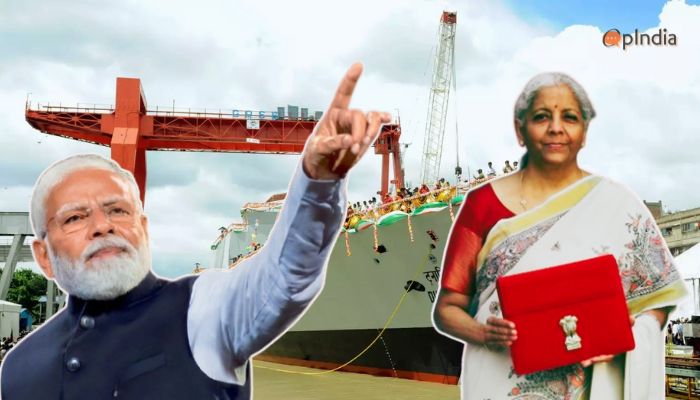
In a massive boost to India’s shipbuilding industry, the Modi government has accorded the coveted ‘infrastructure’ status for large ships. Finance Minister Nirmala Sitharaman announced in her speech for budget 2025-26 on 1st February that the ships above a specified size would be included in the harmonised master list (HML) for infrastructure. The Modi government also allocated a much-needed Maritime Development Fund (MDF) to the tune of Rs 25,000 crore to unlock India’s huge potential in the maritime sector.
Prime Minister Narendra Modi hailed the Union Budget 2025 as “Janata Janardan Ka Budget” and lauded the employment-driven initiatives proposed. Highlighting the significance of giving infrastructure status to shipbuilding, PM Modi said, “With this status, large-scale ship construction in India will be encouraged, providing a fresh impetus to the ‘Atmanirbhar Bharat’ campaign. Shipbuilding is a sector that generates extensive employment.”
Prime Minister Modi explains why large ships are being given infrastructure status and how shipbuilding will be a major focus area for expansion. pic.twitter.com/e8iyhoi2Oe
Why Modi government’s boost to the shipbuilding industry is the right step at the right time?
The global shipbuilding market was estimated at $207.15 billion in 2023, rising at a 6.5% CAGR to $220.52 billion by 2024. India’s market was valued at $90 million in 2022 and is expected to grow to $8,120 million by 2033, representing a staggering 60% CAGR.
While India currently ranks 22nd in the global shipbuilding industry, India aims to enter the top 10 global rank by 2030 and become one of the top 5 countries by 2047. This ambition is a part of the Modi government’s broader visions including the Maritime India Vision 2030 and Amrit Kaal Vision 2047, intended to capture a massive share of the global shipbuilding and ship repair markets.
However, navigating its way into the list of top 5 countries in the global shipbuilding industry is not easy. The global shipbuilding industry is currently dominated by China and South Korea. In the year 2023, China built more than half of all the world’s merchant ships by gross tonnage (33 million GT) implying that the country built 51% of the world’s merchant ships that year. China is reported to dominate 62% of the world’s shipbuilding orders.
It requires a systematic and cautious approach to tackle the China challenge and in this direction, India has been exploring partnerships with South Korea and Japan. India is also working towards expanding its domestic shipbuilding capacity to curb dependence on foreign ships. It must be noted that India spends around $75 billion annually on leasing ships but controls only 2 per cent of the world’s total tonnage in shipping.
Notably, financing has been a major challenge the shipbuilding industry in India. A ship’s average life is about 25 to 30 years and yielding profits is a long-term game. The shipbuilding industry needed finance at long-term interest rates, however, the shipbuilders faced a cost disadvantage since ships were not included in the harmonised master list (HML) for infrastructure. Since ships lacked the infrastructure status, Indian shipbuilders could not secure long-term financing either from domestic or foreign sources.
Moreover, while non-banking financial companies were allowed to obtain raise funds from external commercial borrowings in infrastructure, since ships were not recognised as infrastructure, this option was also not open to shipbuilders. Notably, while shipyards were granted infrastructure status by the Modi government in 2016, ships were not granted the same status although a recommendation for the same was made way back in 2001 by the Rangarajan Commission. Besides, ships have also been excluded from the Securitisation and Reconstruction of Financial Assets and Enforcement of Security Interest (SARFAESI) Act, 2002 due to which banks have been reluctant to give loans to shipbuilders.
The Modi government, however, noticed the challenges the Indian shipbuilding industry has been facing and decided to make the much-needed policy intervention. As India already has decent infrastructure and resources to enhance its shipbuilding, the government’s renewed steps in the budget come across as a slew of the right decisions at the right time. The special focus on ships in the budget is no less than a defining moment for the Indian shipbuilding industry.
Modi government’s budget 2025-26 comes as a monumental leap forward, propelling India into global shipbuilding arena
In the budget 2025-26, Union Finance Minister Nirmala Sitharaman announced that ships of specified size would be inducted in the harmonised master list of infrastructure making them eligible for financial incentives. This will attract private investment in the shipbuilding industry and enhance fleet modernisation.
Notably, in its report submitted in February 2024, the Standing Committee on Transport, Tourism and Culture chaired by V. Vijayasai Reddy, the committee had recommended that the infrastructure status as given to shipyards should be extended to all ships and vessels. It also recommended incentivising domestic production of specialised steels and, establishing a Maritime Development Fund for access to working capital and long-term finance.
Maritime Development Fund
The Modi government announced the allocation of a Maritime Development Fund (MDF) with a corpus of Rs 25,000 crore. This fund would be utilised for long-term financing to support the country’s maritime industry, particularly ship acquisition. Up to 49% of the corpus will be contributed by the Central government while the rest of it will be mobilised from port authorities, other government entities, Central PSEs, Financial Institutions and private sector.
“For long term financing of the maritime industry, a Maritime Development Fund with a corpus of Rs 25,000 crore will be set up,” Finance Minister Nirmala Sitharaman said.
Setting Sail for Success!
The Union Govt has revamped the Financial Assistance Policy for Shipbuilding in India.
This initiative will incentivize & provide support to Indian shipyards enabling growth, employment & self-reliance in the nation's maritime industry! #Budget2025pic.twitter.com/YFmg3UBAaT
— Ministry of Ports, Shipping and Waterways (@shipmin_india) February 1, 2025
“It aims at boosting Indian flagged ships’ share in the global cargo volume up to 20% by 2047. Further, an indigenous fleet will reduce the dependability of foreign ships, improve the Balance of Payment and secure the Strategic interests of the country. By 2030, MDF is aiming at generating up to ₹1.5 lakh crore investment in the shipping sector,” the Ministry of Ports, Shipping and Waterways said.
The budget also announced new mega shipbuilding clusters in the country. The shipbuilders will be provided direct capital support in the form of creating the breakwater along with capital dredging. Besides, this scheme also proposes a 10-year rent holiday for the land, if not provided at a nominal rate.
The Central government also informed that investment is also designed to support the creation of trunk infra like roads, utilities, and sewage treatment among others. “The proposed allocation of ₹6,100 crore aims to support India’s existing shipyards in upgrading, modernising, and automating their operations, enhancing efficiency, utilisation, and overall output,” the Ministry of Ports, Shipping and Waterways said.
In addition, a revamped shipbuilding financial assistance policy, credit note for shipbreaking in Indian yards also came as much-awaited policy decisions by the Central government.
The budget 2025-26 extended the Shipbuilding Financial Assistance Policy (SBFAP) 2.0, aimed at providing direct financial subsidies to Indian shipyards. The SBFAP initiative will help in securing orders by offsetting operational cost disadvantages, thereby strengthening the domestic shipbuilding industry. The total outlay of this scheme is Rs 18,090 crores and will offer subsidies on the contracted price or fair value for vessels built in India from 2024 to 2034.
The Shipbreaking Credit Note scheme will incentivise Ship Scrapping by issuing a Credit Note of 40% of the scrap value which can be reimbursed to buy new Made in India ships. This means that on one hand, the Shipbuilding Financial Assistance Policy (SBFAP) will provide financial incentives to Indian shipyards, the Ship-breaking Credit Note further will strengthen the domestic industry by encouraging investment and expansion.
This credit-note mechanism will facilitate the purchase of replacement vessels from Indian shipyards by ship owners which have scrapped their ships in India.
Highlighting the impact of these schemes in elevating India’s shipbuilding game, Union Minister of Ports, Shipping & Waterways Sarbananda Sonowal said, “These measures are expected to drive capital inflows, create employment opportunities, and enhance sectoral competitiveness. A renewed focus on training and human capital development will ensure a skilled workforce, equipping professionals with expertise in modern shipbuilding technologies, automation, and sustainable maritime practices. This holistic approach will not only support industry growth but also position India as a global leader in shipbuilding and maritime innovation.”
Developing human capital
Besides the infrastructure status, SBFAB and Shipbreaking Credit Note scheme, the Central government also focussed on developing trained professionals in the shipbuilding sector. In this direction, the budget allocated specific funds for training and development of human resources in order to leverage India’s position as a global leader in maritime human capital. The budget provided for Shipbuilding Capability Development Centres (SCDC) is aimed propping up platform for development of innovative ship design and engineering solutions as well as testing & evaluation of Shipping projects. An outlay of Rs 1200 crores have been earmarked for this.
Moreover, Rs 1040 crores have been allocated or providing capital and operational assistance to the existing and upcoming shipbuilding design and training centres from the private sector. To fund a scheme for Research and Development (R&D) and innovation in ship technology, the budget allocated Rs6 610 crores. These incentives are likely to generate a massive 11 lakhs of direct and indirect employment.
As the infrastructure status and the MDF will give a massive boost to shipbuilding domestically since the doors for long-term financing have finally been opened, shipbuilding and related sectors will generate lakhs of employment opportunities for Indians. Moreover, this sector is expected to witness a massive inflow of domestic and foreign investments in shipbuilding clusters which will further encourage new projects and help enhance the range, categories and capacity of ships manufactured in India. By the year 2030, the MDF is projected to generate a whopping Rs 1.3-1.5 trillion of direct and indirect investment.
With encouragement towards domestic shipbuilding, the Indian government intends to curb its dependency on foreign ship leasing which costs the country billions of dollars annually. India also aims to increase its minuscule share in the global tonnage to significantly higher numbers in line with the country’s ambition to enter the top 10 global ranks by 2030 taking a massive leap from the current 22nd rank and become one of the top countries by 2047. If the massive demand stemming from the needs of the Indian shipping market is adequately targeted by Indian shipyards, it may result in an opportunity to the extent of over USD 237 billion (INR 20 lakh crores) by 2047.
The inclusion of large ships in the infrastructure list would facilitate easier long-term and low-cost financing for shipbuilders thus adding to the Indian shipbuilding sector’s growth. Alongside an increase in the domestic manufacturing of ships, this will also support the development of port infrastructure, and modernising facilities, as well as creating new shipbuilding clusters and enhanced technology and skill development.
India is carefully working towards improving its global standing in the shipbuilding arena, by making sure that domestic shipbuilding becomes hugely lucrative for India by attracting international orders and providing massive employment opportunities to Indian youths. The country also has untapped potential in not only shipbuilding but also ship repairing and recycling industry.
As OpIndia reported earlier, the Modi government is not only focussing on improving domestic production of ships but is also collaborating with global leaders in the shipbuilding arena, particularly South Korea and Japan. The high-level delegations of India and South Korea have visited each other’s nations in recent months to explore opportunities for collaboration to help India maximise its shipbuilding capacity. South Korea’s technological advancements in the shipbuilding industry can help India bridge this gap through training, technology transfer as well as shipyard modernisation.
With the global shipbuilding slots booked in countries like China, South Korea and Japan until 2028, the Indian government sees an opportunity to emerge as a reliable alternative destination for shipbuilding. India’s strategy is not confined to constructing new ships but also expanding into ship repair and recycling given the country already has decent infrastructure.
It also important to note that even though China, South Korea and Japan are dominant players in the global shipbuilding industry with China also being a dominant player in container manufacturing, these countries are grappling with declining demographics. The situation in these countries is such that the Total Fertility Rate (TFR) has slumped below replacement levels. Despite its own challenges, India is in a better position compared to these countries, there is much scope for India’s young workforce for jobs in maritime services, construction and engineering among others.
The measures proposed in the Union Budget will enhance India’s maritime capabilities, reducing the country’s reliance on foreign shipping for energy and trade helping India mitigate geo-strategical risks and boost the country’s economy.
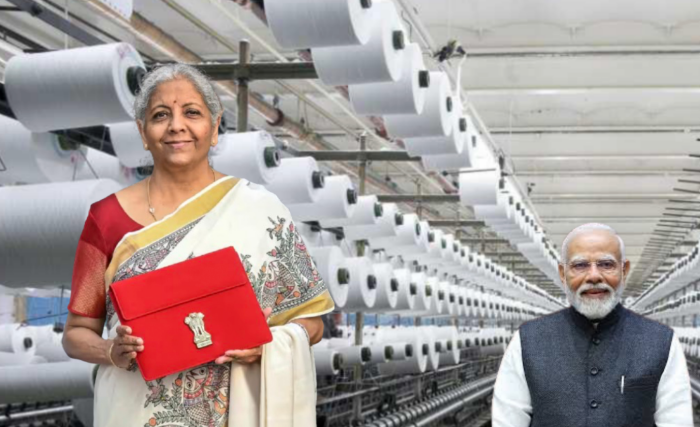
On Saturday, 1st February, the Union Budget presented by Finance Minister Nirmala Sitharaman gave a big boost to the textile industry announcing a 19% increase in the Budget Estimates for AY 2026-27. The BJP-led government allotted Rs 5272 crores to the Ministry of Textiles this year as compared to Rs 4417.03 crores in the Financial Year 2024-25.
Additionally, the government has decided to boost cotton production and has announced a five-year Cotton Mission. Amid this, the government has decided to address the challenges of stagnant cotton productivity, especially extra-long staple varieties.
“Science and technology support will be provided to farmers under this Mission. The Mission will increase the farmers’ income and augment a steady supply of quality cotton,” the Ministry of Textile was quoted as saying. Notably, India’s mission to rejuvenate India’s traditional textiles comes at a time when the country has no surplus in the cotton production sector. At present the country yields 450-kilogram per hectare, which is the lowest against a global average of 800-kilogram plus.
Fund for technology upgrade
Of the Rs 5272 crore allocated in the 2025-26 budget for the Textile industry, Rs 635 crores will be used to upgrade the technology that is used by the textile industry under the Amended Technology Upgradation Fund Scheme (ATUFS). In addition to this, the Finance Minister further gave a boost to the industry by issuing a list of exempt pieces of machinery and looms used for textile production.
ATUFS was founded in the year 2016 and is now also known by the names of the Modified Technology Upgradation Fund Scheme (MTUFS), Restructured Technology Upgradation Fund Scheme (RTUFS) as well as the Revised Restructured Technology Upgradation Fund Scheme (RRTUFS).
The scheme aims to boost the ‘Make In India’ initiative and ease of doing business by promoting exports and job creation, particularly for women. It also aims to focus on zero effect and zero defect in manufacturing. The scheme also aims at reducing focus on imports from other countries, further encouraging improved quality in textile processing.
How Bangladesh crisis may help India in Textile sector
Interestingly, the ongoing political crisis in the neighboring country of Bangladesh is aiding India’s garment industry to flourish by enhancing exports. Bangladesh used to be the second largest exporter of garments but the sector in the neighbourinfg country is looking at uncertainties amid a financial crisis, power crisis and violece. After the fall of the Sheikh Hasina-led government, India has scope to enhance increased cotton exports to the USA, UK, France, Spain, Italy, Netherlands, etc.
The ongoing political turmoil has affected its garment industry forcing the importing countries to look for alternative sources. Following this, India has emerged as a key beneficiary of the shift experiencing an increase in its textile and apparel products. As per the reports, between January and November 2024, India’s garment exports to the US rose by 4.25% to $4.4 billion, while Bangladesh’s exports to the US declined by 0.46% to $6.7 billion.
Amid this, the Indian government is making efforts to bolster the textile industry. This includes providing financial support, tariff reductions on raw materials and machinery, and incentives to encourage local production.
As per the economic survey published on 1st February, India is the sixth largest exporter of textiles and apparel globally, contributing significantly to the Gross Domestic Product of the country, industrial production, and exports.
“India exported textile items worth USD 34 billion in 2023, with apparel constituting 42% of the export basket, followed by raw materials semi-finished materials at 34% and finished non-apparel goods at 30%. Europe and the US consumed nearly 66% of India’s apparel exports, 58% of finished non-apparel goods, and 12% of raw materials semi-finished materials. Other prominent destinations include the UK (8%) and the UAE (7%). The Survey points out that textile exports remained resilient throughout the COVID-19 period (2020 to 2022),” the survey read.
In the year 2024, the government stated that India’s textile industry is expected to grow to USD 350 bn by 2030 and add 3.5 crore jobs.
On Saturday, 1st February, Union Finance Minister Nirmala Sitharaman presented the Budget for the Financial Year 2025-2026. The budget, which has been framed to benefit the middle class, highlighted key proposals and schemes for the betterment of several sectors. These include agriculture, health, education, law and order, finance, business, infrastructure and more. The detailed report on these can be read here.
With Crores of devotees from all over the world seeking moksha (spiritual emancipation) with the sacred dip, the Mahakumbh celebrated its third “Amrit Snan,” on 2nd February, on the auspicious occasion of Basant Panchami. Amrit Snan is the grandest and most sacred ritual of the Mahakumbh Mela.
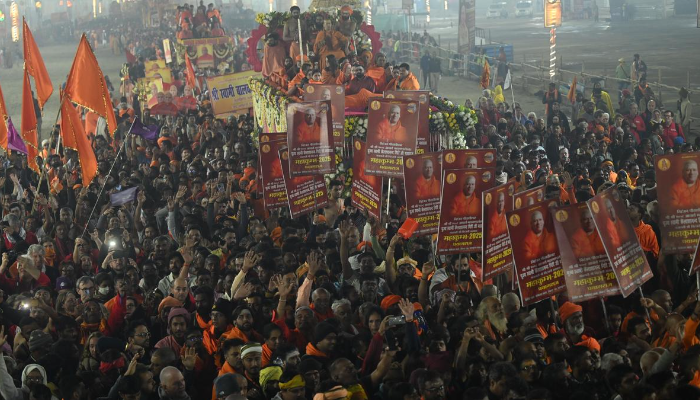
Saints and sages, including Naga sadhus from different akharas, started their ceremonial march towards the Triveni Sangam (confluence of Yamuna, Ganga and Saraswati rivers) at the crack of dawn. The Naga sadhus attracted attraction at the Mahakumbh because of their unique rituals. They demonstrated their proficiency with spears, swords, and tridents while leading several akharas in the holy bathing ritual.
The Mahanirvani and Atal Akharas finished their rituals by 5:40 am, rather than 6:15 am as they did on Makar Sankranti on 14th January, amid mounted police personnel closely monitoring Sangam Nose. They left their camps for the bathing ghats at 4 am. Sadhus of akharas were required to finish their rites by 3:55 pm after arriving at the bathing ghats in processions. Once they departed, regular devotees were permitted to take a dip at Sangam Ghats. The third “Amrit Snan” featured captivating processions led by “Mahamandleshwars” (chiefs) of several akharas.
The mela authorities worked with the senior sadhus of the akharas to determine a bathing timetable in order to guarantee a mishap-free event. Every akhara had a forty-minute window to visit the holy waters, and by 8.30 am, the first procession had finished their rite and headed back to their camps. The akharas and the Uttar Pradesh government advised people not to prioritize reaching the main confluence point, stating that all ghats carry equal importance, following the stampede at the Sangam Nose, which many perceive to have higher spiritual significance.
The akharas of three sects take dip in sequence
According to tradition, the three akharas belonging to Sanyasi, Bairagi and Udaseen sects took the sacred dip in a specific order. According to the timetable made public by the Kumbh Mela officials, the Sanyasi sect’s akharas kicked off the “Amrit Snan,” formerly known as the “Shahi Snan,” at 4 am. Panchayati Akhara Mahanirvani, Shambhu Panchayati Atal Akhara, Taponidhi Panchayati Sri Niranjani Akhara, Sri Panchayati Akhara Anand, Panchdashnam Juna Akhara, Panchdashnam Avahan Akhara and Panchagni Akhara led the revered procession.
The first procession concluded the ritual and headed back to their camps within the 40-minute window that each akhara has been allotted to visit the divine waters. The Bairagi sect’s akharas, whose bathing ritual started at 8:25 am, were next in line. All India Shri Panch Nirvani Ani Akhara, All India Shri Panch Digamber Ani Akhara, and All India Shri Panch Nirmohi Ani Akhara were among the procession. Each group’s turn ended at 12:35 pm and then the last group entered the holy waters.
The Udaseen sect, which consists of Shri Panchayati Nirmal Akhara, Shri Panchayati Akhara Bada Udaseen Nirvana, and Shri Panchayati Naya Udaseen Akhara were the last to conduct the “Amrit Snan.” The ascetics will finish their rituals and head back to their tents by 3:55 pm, after beginning their march towards the river at 11 am.
Witness the divine spectacle of the Amrit Snan at the Triveni Sangam, a confluence of sacred rivers, on the vibrant occasion of Basant Panchami (03 Feb 2025) during the #Mahakumbh2025 in Prayagraj ?✨ pic.twitter.com/aO7EHZtm7n
On the way to the Sangam region (Sector 3) for Amrit Snan, akharas crossed the Ganga from Triveni Marg (Sector 20) via Pontoon Bridge No. 6 Triveni Dakshini and Pontoon Bridge No. 7 Triveni Madhya. Only the Khalsas, Mahamandaleshwars and Acharya Mahamandaleshwars on the list that was provided to the Mela administration were permitted to bathe with the akharas, per the directive. Likewise, the number of locations and cars heading for snan were meant to match the passes that the Mela police have granted.
Bathing was at the designated Sangam Ghat by turning left from Triveni Marg Akhara Marg crossing. Additionally, parking spaces for akhara vehicles was created in the Sangam region. Following their bathing, akharas will head back to Garg (Sector 3), where they will turn right off the Akhara Vapasi Marg, bridge the Ganga across Pontoon Bridge No. 3 Mahavir Ji Dakshini and Pontoon Bridge No. 4 Mahavir Ji Northern, and enter Sector 20 afterwards.
Mahakumbh 2025: More than 6.22 million devotees take holy dip on 'Basant Panchami'
16.58 lakh devotees had taken the holy bath by 4 am and 62 lakh till 8 am, bringing the total number to 34.97 crore (35 crore per other reports) since 13th January. This number included 6.58 pilgrims and 10 lakh Kalpvasis. The administration of Uttar Pradesh expected almost 5 crore pilgrims on 3rd February alone as 1.20 crore people already took part in the ceremony during Basant Panchami, taking the final number to over 6.22 millions. It is anticipated that the overall number will surpass 50 crores with 23 days left in the Maha Kumbh.
Zero-error arrangements for Mahakumbh by state government
Preparations were personally overseen by Chief Minister Yogi Adityanath for the Amrit Snan, who sent additional personnel, medical staff and resources to ensure a “zero-error” event. According to senior Superintendent of Police (SSP) Rajesh Dwivedi, a three-tier structure was put in place to guarantee that the holy event proceeds successfully. On 2nd February, mela police implemented a seven-point special scheme to control the influx of pilgrims and devotees swarming to Ganga ghats to perform rituals and take holy dips, following chief minister Yogi Adityanath’s directives.
A one-way traffic system, a no-vehicle zone in the mela region, restrictions on vehicles entering Prayagraj limits, a diversion strategy using barricades and holding zones, and no ghat crowding were all part of the seven-point special program. The mela police also stationed joint teams of paramilitary and mela police at 28 static locations to control the flow of devotees in order to guarantee the safety and security of the people who flock to the Ganga ghats.
Mela officials asserted that the flow of devotees at all 44 ghats in Parade, Arial and Jhunsi carried on after the beginning of Basant Panchami at 9:14 am. Special 20 teams and Jal police were in charge of controlling the stream of devotees at the ghats. Two senior IAS officers, who were members of the team that successfully carried out the 2019 Ardh Kumbh, have also been deployed by the government.
Mela Adhikari Vijay Kiran Anand has joined Ashish Goyal and Bhanu Chandra Goswami, who have extensive experience in Prayagraj administration, including a thorough understanding of crowd control and inter-agency coordination during the 2019 Ardh Kumbh. The three of them participated in the mega mela six years ago. The Additional Director General of Police, Bhanu Bhaskar, is personally in charge of the crowd control measures in the area.
“A strict surveillance is being maintained at all ghats, including Sangam Nose and Eravat Ghat, and cops are strictly asked to regulate the flow of devotees,” informed Rajesh Dwivedi and added, “With Panchami tithi beginning from Sunday morning, devotees from across the states started thronging ghats and taking holy dips since sunday morning.” He asserted that eloborate security measures are in place for “Amrit Snan.”
Vigilance was focused on Akhara Marg to prevent devotees from entering, and police troops were used to enforce strict barricading. Senior police and administrative authorities are examining arrangements in static sites, such as the city, mela area, and border areas, in addition to keeping an eye on the ICCC’s (Integrated Command and Control Centre) arrangements. 2nd and 3rd February were challenging dates for the mela administration with no VIP protocol to anyone and every preparation was made to ensure Basant Panchami “Amrit Snan.”
After realizing the massive size of the gathering, Mela police are also using the pontoon bridges in a methodical way. Devotees are being urged to take a holy dip at the ghat nearest to their entry point and return from there without traveling towards Sangam Nose. Notably, a total of 44 ghats, totaling 12 kilometers were built. However, mela police are using equipment like ropes, whistles, loudspeakers, roadblocks, barriers, and watchtowers to control the flow of worshipers.
“With millions of devotees continuing to flock to ghats, elaborate security arrangements are in place for Basant Panchami (being celebrated on both Sunday and Monday). A strong posse of 40,000 policemen, including paramilitary personnel and equipped with all modern gadgets, are assigned duties at static locations,” Rajesh Dwivedi conveyed.
He added that no one is permitted to remain or sleep on the ghats and that temporary holding areas, parking lots, and overnight stay arrangements have also been put in place to help control the crowd. Furthermore, to handle the enormous number of devotees, the infrastructure at each of the 44 ghats is being strengthened. There are amenities like river barricading, Jal police, watchtowers, better lighting, conspicuous signage, restrooms, changing areas, and thorough cleaning procedures.
#WATCH | #MahaKumbh2025 | Saints and devotees take a holy dip at Triveni Sangam as flower petals are showered on them from a chopper, on the occasion of Basant Panchami.
The last 'Amrit Snan' of Maha Kumbh 2025 is taking place today on the occasion of Basant Panchami. pic.twitter.com/GbOH68AO0R
Devotees are frequently reminded via the public address system to maintain vigilance, avoid rumors, and swiftly report any issues to the on-duty police officers. A committed crew of traffic police, mela cops, and specialty physicians has been stationed around-the-clock to help devotees in an emergency. At the same time, the SSP urged people to comply with the authorities and should spend less time on ghats and proceed directly to the parking lot or destination after the dip and rites.
Police also asked pilgrims to refrain from jostling and to exercise patience on the pontoon bridges and barricading. There are plans to reduce traffic on the roads leading into and out of the Sangam area. Police encouraged people to avoid obstructing traffic and stopping on roadways rather than in designated holding areas. 2,500 buses have been deployed by the Uttar Pradesh State Road Transport (UPSRTC), which will run from four makeshift bus stops to guarantee the orderly and seamless return of devotees.
The biggest allotment consists of 1,500 buses at Jhunsi, 600 at Bela Kachhar for passengers traveling to Lucknow, 300 at Nehru Park for those traveling to Kanpur, and 100 buses for tourists traveling to Mirzapur and Banda. Devotees will also be transported to the temporary bus stations and important sites close to Maha Kumbh by 550 shuttle buses that will run every two minutes.
Medical arrangements by the government
Chief Minister Yogi Adityanath has ordered all doctors in Mahakumbh Nagar and the whole Prayagraj division to ensure the safety and well-being of devotees, placing the entire medical infrastructure on high alert. An official statement regarding the same was also released.
It read, “Over 1,200 medical personnel are fully prepared in the Maha Kumbh Nagar to provide immediate assistance. The entire medical force will remain stationed at the fairground and will only be relieved after February 6. Additionally, a backup plan has been put in place to address any emergencies. At Swarup Rani Nehru Hospital, 500 staff members have been put on standby, most existing patients have been discharged, and 150 beds have been reserved for emergencies. Sixty resident doctors have been placed on 24-hour alert mode, 30 CT scan machines are ready, along with MRI and ultrasound facilities, ensuring all necessary tests can be conducted. A 200-unit blood bank has also been set up at SRN Hospital, and all facilities are linked to an alarm system for quick response.”
“In case of need, patients will be transferred to Swarup Rani Nehru Hospital or Tej Bahadur Sapru Hospital (Bailey Hospital). Medical teams across Prayagraj, the division, and Mahakumbh Nagar are fully prepared. The chief minister has instructed that no doctor or medical staff should leave their post until February 5. Over 1,200 doctors and paramedical staff have been deployed for the event,” Dr Gaurav Dubey nodal officer for medical services at the Maha Kumbh stated. According to the administration, preparations have been made to provide doctors and medical workers at Swarup Rani Nehru Hospital with lodging and meals in order to guarantee their prompt availability.
Commencing on 13th January, the auspicious occasion that takes place once in 144 years is scheduled to end on 26th February.
As detailed in parts one and two, the kingdom of Portugal and their envoys in India were relentless in thir pursuit of power and absolute dominance over the sea trade in the Western coast of India. Their intention was not only aimed to secure a strong foothold but also underpinned the groundwork for future colonization and takeovers. They also continued to capitalize on the lucrative spice trade and asserted control over it.
On the other hand, for India, a civilisation that had already been enduring multiple hardships posed by Muslim overlords, the arrival of the European expansionists and the subsequent events sparked the beginning of a fresh era of adversity and misery.
The first and second battle (popular as the Battle of Diu) of Chaul not only reinforced the menacing presence of the Portuguese in the Indian subcontinent but also highlighted the indelible impact alongside consequences of their imperialistic ambitions. Meanwhile, India was forced to bear the brunt of their exploitative motives and become a mere witness in its own exploitation.
This article will discuss events that show how the relentless quest for power combined with superior naval tactics and better ship designs employed by the Portuguese not only left India with permanent wounds but also irrevocably changed the subcontinent’s history and perhaps shaped the future of the entire world.
Naturally, many stakeholders were concerned by the Portuguese attempt to get involved in this business following Vasco da Gama’s journey. Local attacks against Portuguese possessions were sparked by Indian traders, specifically the Muslim Marakkar from Kerala and the Banias from Gujarat. Both the Venetians who purchased from the Yemeni traders and the latter who shipped the products to Egypt ran the risk of losing their businesses. Envoys from the Christian Venetians, the Sultan of Gujarat, and the Zamorin of Calicut appealed the Mamluk court in Egypt for help.
Mamluk-Portuguese conflicts
The spice trade from India to Egypt and later Venice was severely disrupted and prices skyrocketed during the Portuguese bombardment of Calicut in 1500-01 by the 2nd Portuguese India Armada. In 1503, the Portuguese pillaged and sank the first Egyptian ship on its way back from India, demonstrating the frontal attack on them. The Portuguese destroyed 14 to 17 Arab ships in the Indian harbor of Panane in 1504. In 1505, the 7th Portuguese India Armada engaged in combat in the Indian Ocean.
The Grand Prior of Saint Catherine’s Monastery was the first person sent to the Pope by the Mamluk Sultan Qansuh al-Ghuri in 1504, warning that he would bring detruction to the Christian Holy Place in the Levant and the Christians residing in his domain if he did not halt the Portuguese assault on Muslims in the Indian Ocean. The Venetians, who were interested in the spice trade with the Mamluks and wanted to get rid of the Portuguese threat if they could, dispatched envoy Francesco Teldi to Cairo in 1504. Teldi encouraged the Mamluks to obstruct Portuguese sailing in an effort to set up some degree of collaboration between the two countries.
Egyptian Sultan Al-Ashraf Qansuh al-Ghuri (Campson Gavro re d’Egitto) by Florentine painter Cristofano dell’Altissimo, Galleria degli Uffizi. (Source: Pinterest)
The Venetians asserted that they were unable to directly interfere and urged the Mamluk Sultan Qansuh al-Ghuri to act by contacting the Indian princes in Cochin and Kannur to convince them to refrain from trading with the Portuguese and the rulers of Calicut and Cambay (Khambat) to oppose them. As a result, the Venetians and the Mamluks formed an agreement against the Portuguese.
During the League of Cambrai War, there were allegations that the Venetians had given the Mamluks both armaments and expert shipwrights. Nonetheless, the Mamluks had little interest in naval operations. The Mamluks found the battle against the Portuguese, which was mostly a naval conflict, completely foreign and unappealing. The land-minded Mamluk horsemen hated the navy and everything associated with it. However, the Portuguese continued to capture Muslim trading ships and blockade the Red Sea.
The first expedition against the Portuguese was ordered by Qansuh al-Ghuri, the Mamluk Sultan, in 1505. Crews and shipwrights were enlisted from all across the eastern Mediterranean, and the fleet was constructed using lumber and weapons from the Ottoman Empire. Under the leadership of Amir Husain Al-Kurdi, the expedition sailed from Suez to Jeddah in November and fortified the city. The fleet then readied itself for the voyage to Aden. Francisco de Almeida’s 7th Portuguese India Armada was sent into the Indian Ocean at the same time.
After defeating a Muslim fleet in 1506, Afonso de Albuquerque’s second fleet began to invade the Arabian and Horn of Africa shores. The Mamluk-Indian trade nearly collapsed in 1507 when a fleet of roughly 20 Portuguese ships invaded the Red Sea and plundered Indian shipping there. In the same year, the Portuguese made an attempt to use Socotra Island as a base to halt the Mamluk commerce across the Red Sea, but the island was too hostile and ineffectual for that purpose, so they left after only a few months.
The Mamluk fleet of over fifty ships was based at Aden in August and September of 1507, in preparation to sail to India. The Mamluks formed an alliance with the Muslim Gujarat Sultanate, India’s first naval force and they were warmly greeted in Diu.
The port of Diu in Gujarat in modern India, image via PV Magazine
1508: Battle of Chaul and the geopolitics of the spice trade
A naval conflict between the Portuguese and an Egyptian Mamluk fleet took place at the Indian harbor of Chaul in 1508. The Mamluk emerged victorious in the battle. The development occurred after a Portuguese garrison successfully repelled an attack by Southern Indian rulers at the Siege of Cannanore. Notably, this was Portugal’s first maritime loss in the Indian Ocean.
Although the Portuguese had previously been primarily active in Calicut, the northern part of Gujarat was even more significant for trade and served as a crucial bridge in east-west trade. The Gujaratis were bringing silk from China and spices from the Moluccas, which they then sold to the Arabs and Egyptians. However, the Portuguese’s monopolizing actions were considerably troubling the Indian Ocean trade, endangering both Arab and Venetian interests as it was possible for the Portuguese to undersell the Venetians in the European spice trade.
The Mamluks and the Venetians, their European trading partners, had amassed fortune by controlling the supply of spices from India to Europe. At the start of the sixteenth century, the Mamluk Sultanate of Egypt was the principal intermediary between the Indian spice-producing regions and the Venetian purchasers in the Mediterranean. The spices were then sold throughout Europe by the Venetian purchasers at a substantial profit. Egypt’s society was primarily agrarian and had minimal connections to the sea. Portuguese engagement in the Indian Ocean was resisted by the Republic of Venice, which severed diplomatic ties with the country.
They recommended swift and covert action against the Portuguese and dispatched an emissary to the Mamluk court. An emissary had also been dispatched by the Zamorin, the ruler of Calicut, requesting assistance in the fight against the Portuguese. Envoys from the Christian Venetians, the Sultan of Gujarat and the Zamorin of Calicut appealed the Mamluk court in Egypt for aide which only fuelled the critical situation.
Mamluk warriors lacked naval combat experience. Al-Ashraf Qansuh al-Ghawri, the Mamluk Sultan of Egypt, hence asked for Venetian assistance in return for reducing taxes to foster competition with the Portuguese. Venice also proposed “rapid and secret remedies” against the common foe. The Mamluks received war galleys and Mediterranean-style carracks from Venice, which were manned by Greek troops. Al-Ashraf Qansuh al-Ghawri, pleaded to Ottoman support as Egyptian Mamluk army lacked naval combat experience and Portuguese raiders frequently assaulted and stole Malabar lumber supply from India.
The Gujarat Sultanate and Calicut received the Egyptian-Ottoman fleet, which the Portuguese referred to as “the rumes.” They first defended Jeddah from a potential Portuguese attack, then proceeded through Aden at the Red Sea’s tip, where the Tahirid Sultan helped them, and finally crossed the Indian Ocean to the port of Diu in 1508.
In November 1505, they departed Suez with 1100 men to oppose Portuguese expansion in the Indian Ocean. Along with quelling rebellion near Suakin and Mecca, they were also instructed to prepare Jeddah against a potential Portuguese offensive. Amir Hussain Al-Kudri, a Kurdish Mamluk and former Jeddah governor, was given command of the expedition. Several Turkish and Ethiopian mercenaries, as well as Venetian gunners, were part of the mission in addition to Egyptians. They arrived in September 1507 in Diu, Gujarat, a city near the mouth of the Gulf of Khambhat.
The battle against the Portuguese was also backed by the Sultan of Gujarat. Gujaratis were the primary long-distance traders in the Indian Ocean and a crucial intermediary in the East-West commerce between Egypt and Malacca, primarily in the sale of spices and textiles, at the time the Portuguese arrived in India. Malik Ayyaz, a former Russian slave, born in Georgia was appointed governor of Diu by the Sultan of Gujarat in the fifteenth century. Ayyaz was a shrewd and practical ruler and transformed the city into Gujarat’s principal port. Amir Hussain Al-Kudri and his expedition arrived in his court in September of 1507. However, contrary to what the Muslim envoys to Egypt had promised, no other Indian subcontinental rulers were prepared to fight the Portuguese, with the exception of the Zamorin of Calicut.
Portuguese ships, 16th century Livro das Armadas. (Source: Wikipedia)
They learned that the Portuguese admiral Lourenco de Almeida had led a convoy to the neighboring port of Chaul while the Muslim armada was resting at Diu. When the Muslim ships arrived in Chaul, Portuguese sailors welcomed them, thinking their contemporary vessels were part of Francisco de Almeida’s fleet. A prudent pilot, however, surveyed the fleet with a telescope and found that their sails were Arab-style, bearing crescents instead of crosses. Before both fleets retreated to their own sides of the river, the Portuguese fleet quickly prepared for battle and successfully repelled the first Muslim onslaught. The Chaul ruler chose to take a neutral stance and support whoever prevailed.
Laurenco, Francisco de Almeida’s son gets killed in the Battle of Chaul, by the Egyptian-Ottoman Muslim navy
Malik Ayyaz and Amir Hussain’s fleet went south in March 1508, when they engaged Portuguese vessels in combat in Chaul’s harbor. The “Battle of Chaul” was won by the Egyptian fleet after three days of combat. The Portuguese commander and captain-major of the Indian seas, Dom Lourenco, was the son of Viceroy Dom Francisco de Almeida. His duties included supervising the loading of allied merchant ships in the Chaul and guiding them back to Cochin. Under his command, the Portuguese had a small force and were outnumbered during the conflict. His body sunk at the entrance of Chaul bay when the battle was renewed. The body of Lourenco was never found.
Technically, the Muslims won after sinking the Portuguese flagship, but the alliance suffered heavily and went back to Diu, while the remainder of the Portuguese fleet managed to escape. The Egyptian navy was too badly damaged to advance on the Portuguese headquarters in Cochin. All that remained for Amir Hussain was to go back to Diu with Malik Ayyaz and get ready for a Portuguese counterattack.
Out of 800 soldiers, he had lost 600 to 700, and the rest of his army now feared European weapons. He declared this battle a huge victory and reported the same to Egypt’s capital, Cairo but gave up on any further initiative on the Indian coast. This fight was defined as a minor skirmish in the “Mirat-i-Sikandari,” a modern Persian history of the Kingdom of Gujarat.
Back in Cochin, Francisco de Almeida vowed to exact revenge for the death of his son and retaliated ruthlessly in the following climacteric encounter. He reportedly stated, “He who ate the chick must also eat the rooster or pay for it,” while grieving alone for three days.
1509: Battle of Diu, where the Portuguese navy clashed with combined forces of Ottomans, Mamluks, Gujarat Sultanate and Calicut
The Portuguese Empire clashed with a combined fleet of the Sultan of Gujarat, the Mamluk Burji Sultanate of Egypt, the Zamorin of Calicut with Ottoman support, the Republic of Venice, and the Republic of Ragusa (Dubrovnik) in a fierce, brutal naval combat on 3rd February 1509, in the Arabian Sea, close to the port of Diu with shots being fired from the Portuguese fleet.
This came to be known as the “Battle of Diu” also called the “Second Battle of Chaul.” Its larger backdrop was a trade conflict for spices, but what drove the Portuguese assault was a grieving Francisco de Almeida’s thirst for revenge. The battle was perhaps one of the most significant events of the 1500s. It not only escalated an already intense power struggle, but the result of the battle was to decide who controlled the trade in the Indian Ocean Region for the foreseeable future.
Diu, and for that matter the coast of Khambat was an important location in the Indian spice trade and this well-defended and profitable trading network would have to be broken in order for the Portuguese to try to establish trade with India. Francisco de Almeida had to wait and have his troops ready as the rainy season began. On the King of Portugal’s orders, Afonso de Albuquerque eventually arrived in Cannamore on 6th December 1508, to succeed him. Desiring retribution, he refused to relinquish control and left for Diu with the Portuguese fleet he had gathered three days later, on 9th December.
he Battle formations and positions of ships for the battle of Diu. (Source: nadoi)
The Portuguese fleet sailed for Diu on 9th December 1508. They initially assaulted the Konkan port of Dabhol, which was later ruled by the Bijapur Sultans. They killed every resident, including, it is believed, the dogs. They then sacked the crucial port of Chaul and arrived at Mahim, which is now a part of Mumbai, which at that time had been abandoned by its people.
Malik Ayyaz planned his defense and wrote to Francisco de Almeida to pacify him as well as apologise for the death of his son after realizing the impending disaster for his city. He mentioned that he had the captives and that his son had fought valiantly. He also sent a letter from the Portuguese prisoners confirming that they had received good treatment. The Viceroy replied to Malki Ayyaz (known as Meliqueaz in Portuguese), declaring his desire for vengeance and warning them to unite all forces and get ready for battle or he would destroy Diu.
“I the Viceroy say to you, honored Meliqueaz captain of Diu, that I go with my knights to this city of yours, taking the people who were welcomed there, who in Chaul fought my people and killed a man who was called my son, and I come with hope in God of Heaven to take revenge on them and on those who assist them, and if I don’t find them I will take your city, to pay for everything, and you, for the help you have done at Chaul. This I tell you, so that you are well aware that I go, as I am now on this island of Bombay, as he will tell you the one who carries this letter,” reportedly responded.
The Kurdish admiral of the Mamluk-Ottoman fleet believed that the governor of Diu was not entirely dedicated to the cause, creating a trust gap in the Muslim coalition. Leaving Fort Kochi in late 1508, the Portuguese fleet, now consisting of eighteen ships sailed north along the west Indian coast in search of the Ottoman-Mamluk navy. Along the route, they made stops at several ports to either battle adversaries or gather supplies, allowing their warriors to “gain experience.” Mir Hussein Pasha, the Ottoman admiral, anchored his fleet in the port of Diu. He intended to support his fleet from the fort in this harbor, which had its own artillery.
The ruler of Calicut and the Sultan of Gujarat had reinforced the Ottoman-Mamluk navy. These reinforcements were, nevertheless, hardly more than fishing boats, small, shallow-draft craft. The Portuguese navy eventually located the enemy fleet in Diu’s harbor on 2nd February 1509, and was ready to launch an attack the next day. With a dangerously small and shallow channel to negotiate, the Turkish navy was stationed in Diu’s inner port. The Portuguese, however, discovered a native who was around eighteen years old, knew the channel, and promised to assist in return for his release.
The “Battle of Diu” began at approximately 11 am on 3rd February when the incoming tide and the dominant winds were favorable. The Portuguese deployed 18 ships, ranging from a brigantine to five big naus, to go up against up to 200 ships from the Mamluk-Gujarat-Calicut alliance. The Kurdish admiral was in command since the governor of Diu had already moved inland.
Map shows the location of Diu and its current status. (Source: nadoi)
Francisco de Almeida commanded 18 ships carrying roughly 1,500 Portuguese soldiers and 400 Cochin native fighters. Only twelve of the 100 ships on the Muslim side were large ships while the remainder were modest, shallow-draught craft. The Egyptians chose to exploit the port of Diu and its fort, which had its own cannon, after spotting the Portuguese, who were coming from Cochin to the north as they were intimidated by the latter’s technological supremacy. Therefore, the decision was made to remain anchored in the port and wait for a Portuguese attack.
After launching a major naval bombardment with their onboard cannon, the Portuguese engaged in hand-to-hand combat in Diu’s harbor to begin the conflict. These Portuguese ships were better manned, better constructed, had superior artillery men and cannons of higher quality. The Portuguese naval infantry also had an advantage over the Egyptians since they were experienced, professional seafarers in addition to being well-armed and equipped (arquebuses, armor, and a kind of clay grenade with gunpowder within).
The Portuguese ships were equipped with arquebuses and crude grenades and had a sizable number of combatants who had been trained for maritime combat. The Turkish fleet marines were mostly archers and wore virtually no armor because they were prepared for combat in the Mediterranean. Additionally, it was nearly hard to board the Portuguese ships because they were higher in the sea. Additionally, any enemy vessel trying to approach them for boarding action could be bombarded by their gun.
The Turkish ships and the artillery batteries defending the harbor were heavily bombarded by the Portuguese. The Portuguese then intervened to confront the enemy after the Turkish and Gujarati ships refused to leave the harbor’s “safety,” as Almeida had predicted. During the next six hours, the Portuguese engaged the enemy ships with full broadsides, grappled and boarded them, and captured two Turkish naus, two Gujarati naus, and the two Turkish gales in brutal hand-to-hand combat, demonstrating the superiority of the state-of-the-art European vessels.
Two Turkish caravelas, two Gujarati naus, and two Turkish naus were also sunk. When the wind started to shift at five o’clock, Almeida gave the order for his fleet, which had not lost any ships despite one of his naus suffering significant damage, to depart the harbor with some of its loot.
In the end, the better ships prevailed
During the preceding decades, the robust, multi-rigged Portuguese carracks and smaller quick caravels were equipped with guns and adapted to withstand the Atlantic Ocean’s storms. The coalition of the Zamorin, Gujarat and Egypt fielded smaller Indian Ocean dhows and galleys of the Mediterranean style, but they were no match. The Portuguese ships were able to deter the smaller craft from approaching them by firing their potent cannons. The smaller galleys and dhows were showered from above with small arms, grenades, and lower caliber artillery, and even when they did approach, they were low in the water and hence unable to board the Portuguese ships.
The Mamluk navy was bombarded by the stronger Portuguese cannon. The scales tipped in favor of Portugal when the Portuguese ship Rei Grande collided with Amir Hussain’s flagship. Zamorin’s light oar ships were kept inside the waterway by Hussain so they could launch a surprise attack. However, the Portuguese foresaw this action and blockaded the waterway, making it impossible for the Zamorin’s fleet to escape and making them a prime target for Portuguese artillery. The whole Mamluk fleet was either destroyed or taken prisoner before the end of the day. Hussain Amir escaped inland.
Aftermath of the battle: ‘Those who rule the seas, will rule the lands’
The Gujarat-Mamluk-Khozikode side suffered horrific losses in the conflict, which ended in a Portuguese victory. Despite their valiant efforts, they were unable to defeat a naval force that was unlike anything they had ever encountered. Following the battle, Malik Ayyaz turned over the Chaul prisoners, who were well-fed and clothed. He was surprised when Almeida, who was leaving his position as viceroy, turned down his offer to let a Portuguese castle be built in Diu. The Portuguese soon pursued this offer fervently and he was able to delay it for as long as he remained governor of Diu.
Diu city and the Portuguese fort (British engraving, 1729). (Source: franpritchett.com)
Three royal flags of the Mamluk Sultan of Cairo were among the loot of the battle which were sent to Portugal and are still on display in the Convento de Cristo, spiritual home of the Templar Knights in the town of Tomar.
The remaining members of the Zamorin’s fleet made it to Calicut. After a protracted voyage, Amir Hussain and twenty-two Mamluks rode away from Diu and made their way back to Cairo. The Portuguese navy spent a few days in the region. The troops taken at the battle of Chaul were returned within an hour of Viceroy Almeida’s demand the next day. He also asked for 300,000 gold xerafins (about 180,000 rupees) as restitution. Although he left a force in the city, Almeida declined the Diu ruler’s offer to cede his port to the Portuguese because he believed it would be too costly to govern even if he left a garrison there. Additionally, the Portuguese detainees from the Battle of Chaul were saved.
The Egyptian prisoners, however, were not so lucky. Almedia was not yet done with his revenge for his son
For the loss of his son, the Viceroy ordered the majority of them to be either burned alive, hanged, or tied to the mouths of the cannons and ripped to pieces. “As long as you may be powerful at sea, you will hold India as yours; and if you do not possess this power, little will avail you a fortress on the shore,” Almeida pronounced, almost as a prophecy.
Thankful that the Europeans did not pillage his city, the ruler of Diu sent them a boat nearly every day, full with lavish presents and “sheep, hens, eggs, oranges, lemons, cabbages, and other food items.”
Almeida sent a necklace of pearls and a brocade tapestry home to the Queen of Portugal as gifts from the victory. The Portuguese navy returned south nine days after the fight which resulted in 32 Portuguese deaths and over 300 injuries. An “even larger” number of enemy casualties were reported in addition to the projected 3,000 enemy deaths.
Interestingly, in November 1509, Almeida left for Portugal after giving his successor, Dom Afonso de Albuquerque, the Viceroy’s position, and merely one month later, he was assassinated by the Khoikhoi tribe in the vicinity of the Cape of Good Hope in Africa.
Portuguese dominance over the Indian Ocean would be Almeida’s legacy, particularly after the Ottomans overthrew the Mamluk Sultanate in Egypt in 1517. The Portuguese were followed by the Dutch, English, and French, which some would describe as the beginning of Western European control over the Indian Ocean. The Portuguese-Ottoman rivalry continued after this fight.
A second naval conflict took place thirty years later in 1538 during the Siege of Diu, when the Turks besieged the Portuguese-built fortress with fifty-four ships. The siege was subsequently lifted after the Turks suffered crushing defeats. Ottoman ambitions to increase their power in the Indian Ocean came to an end in 1547 when Suleiman I the Magnificent dispatched his admiral Hussein Pasha to undertake another siege of the fortress at Diu.
The Portuguese victory was crucial because the Mamluks and Arabs withdrew, which made it easier for the Portuguese to control the Indian Ocean and direct trade along the Cape of Good Hope, avoiding the old spice route that the Arabs and Venetians controlled through the Persian Gulf and Red Sea. Key ports in the Indian Ocean, including Goa, Ceylon, Malacca, and Ormuz, were quickly taken by Portugal after the battle, crippling the Mamluk Sultanate of Egypt and the Gujarat Sultanate. This allowed the Portuguese Empire to grow and set up its dominance in trade for nearly a century until the British East India Company won the Battle of Swally in 1612 and the Dutch-Portuguese War.
The “Battle of Diu” also signified the start of European colonization in Asia and marked the extension of the Christian-Islamic power struggle into the Indian Ocean, which at the time was the most crucial area for global trade, from the Mediterranean Sea and the Middle East. The battle of Diu was both political and commercial, and it resulted in the end of the previous global order and the start of a new one. In many ways, it shaped the world that we see today.
Spice Trade route between India and Europe, through Egypt. (Source: nadoi)
Portugal sold pepper that was bought in Calicut for 4.64 ducats for 80 ducats in Europe. Every middleman profited greatly from the transaction. For example, the pepper that was bought in Calicut for 4.64 ducats was sold for 25 ducats, five times the price, in Alexandria, Egypt, the world’s center of the spice trade. The pepper cost 80 ducats when it arrived in Lisbon, Portugal, after the Venetian traders had sold it for 56 ducats in Venice. Of course, the Portuguese were keen to eliminate all middlemen and establish a direct sea route to India.
However, what began as a trade dispute devolved into a vengeance saga. Dom Francisco even disobeyed Portuguese orders to turn over the charge and return back before finishing his mission. Notably, the battle is just as significant as the Waterloo and Trafalgar battles if not more.
The Portuguese’s superior naval might and weapons were the most crucial factors that guaranteed their victory. Regretfully, the Indian kings had disregarded this, particularly when it came to safeguarding their coastlines and coastal regions, which ultimately cost them dearly.
Indian kings had not thought about naval battles. The Indians at that time, be they Hindus or Muslims, were at a serious tactical disadvantage because they had not developed stronger ships and better cannons. By and large, the Indian cultural narrative was detached from the seas despite having a vast coastline. The same sea that was neglected by generations of kings, eventually was used by European colonisers to rule over us and exploit our lands for centuries to come.
The Portuguese exemplified the exploitation of this vulnerability in such a striking and shocking manner that its repercussions were felt by India for many centuries thereafter. The British East India Company, founded in 1600, also adopted a similar policy and brought the English to India as traders. They first wished to make money in England by trading in tea, opium, cotton, spices, and indigo dye. However, they were also European imperialists who sought to exploit Indian resources to propel their own growth. When they came, they too had better ships and better plans.