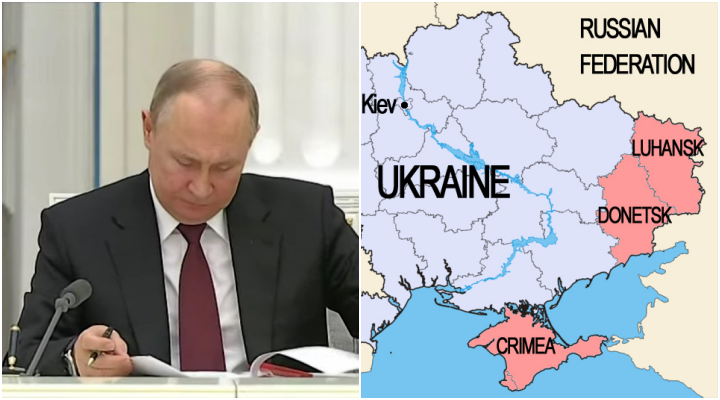
On February 21, Russian President Vladimir Putin recognized two independent nations from Ukraine’s Donbas region. He also ordered the Russian Army to launch “peacekeeping operations into the area”.
Putin signed a decree recognizing the two nations, Donetsk People’s Republic and the Lugansk People’s Republic, in the presence of Russian-backed separatist leaders Denis Pushilin (DPR) and Leonid Pasechnik (LPR). They agreed on cooperation and friendship.
An executive order on recognition of the Donetsk and Lugansk People’s Republics has been signed https://t.co/CuzfdvHXB1
The Russian government, in an official statement, said, “The President of Russia and Head of the LPR Leonid Pasechnik signed a Treaty of Friendship, Cooperation and Mutual Assistance between the Russian Federation and the Lugansk People’s Republic.”
In a television address, Putin said Ukraine was an integral part of the history of Russia, and eastern Ukraine was ancient Russian land. He said with confidence that the people of Russia would support his decision. While talking about the history as far back as the Ottoman empire, Putin said the recent eastward expansions of NATO did not go well with Russia.
He said, “I deem it necessary to make a decision that should have been made a long time ago – to immediately recognize the independence and sovereignty of the Donetsk People’s Republic and the Lugansk People’s Republic.” Notably, with the decision, Putin clearly ignored all the warnings of Western nations where they had said any such step would kill of peace negotiations and would trigger sanctions against Russia.
Though it is unclear how much force Russia is planning to dispatch to these two newly recognized nations in the decree, it was mentioned Russia now has the right to build military bases in Donetsk and Lugansk. There are around 1.5 lakh Russian troops available in the nation as per the US. Contrary to Western worries, Russia has categorically denied any plans to invade Ukraine but said it might use military-technical action unless Ukraine guarantees never to join NATO.
Emergency UN Security Council meeting
Following Putin’s announcement, the US and European nations convened an urgent meeting of the UN Security Council. However, as happens, Russia is currently the president of the UNSC and no significant decisions were taken, apart from some nations condemning Russia’s decision and some nations, including India, calling for resolution through diplomatic channels and not military conflict.
Amazing how west managed to hold UNSC meet on Ukraine in such a short notice. August 15th when Taliban took over Afghanistan in a Blitzkrieg speed it was sunday and no one bothered. Many at the council waited for monday (16th Aug) to come. India was the president of the council. https://t.co/ArWjxBjWw9
India issued an advisory on flights between India and Ukraine
Indian Embassy in Ukraine issued an advisory for the students and Indian nationals on flights between India and Ukraine. The advisory read, “In view of the continued high levels of tension and uncertainties of the current situation in Ukraine, additional flights are being organized.” It further added Air Arabia, Fly Dubai, Qatar Airways and other operators in the region also have flights from Ukraine to India.
Advisory on Flights between India-Ukraine as on 21 February 2022
During a telephonic conversation with President Putin, the President of France and the Federal Chancellor of Germany expressed disappointment over the recent developments in the region. However, as per the Russian government, they indicated readiness to continue contacts.
Britain calls Russia’s step’ breach of International Law’
In a statement, Boris Johnson, Prime Minister, UK, said Russia’s recognition of two separate nations was a breach of International Law. In an official statement, Johnson told Ukrainian President Zelenskiy that the Russian invasion was a real possibility in the coming hours and days. “He told President Zelenskiy that the UK had already drawn up sanctions to target those complicit in the violation of Ukraine’s territorial integrity and that those measures would come into force tomorrow. The Prime Minister also said he would explore sending further defensive support to Ukraine at the request of the Ukrainian government,” said PM’s office.
The US signed an order prohibiting trade with separated nations
President Joe Biden, United States, signed an executive order prohibiting trade and investment between the US and new nations recognized by Russia. The order would prohibit new investments by Americans irrespective of their locations. The order read, “The United States will not hesitate to use its authorities to target those supporting efforts to undermine Ukraine’s sovereignty and territorial integrity. This authority provides the United States with the flexibility to impose similar restrictions on any other regions of Ukraine as appropriate.”
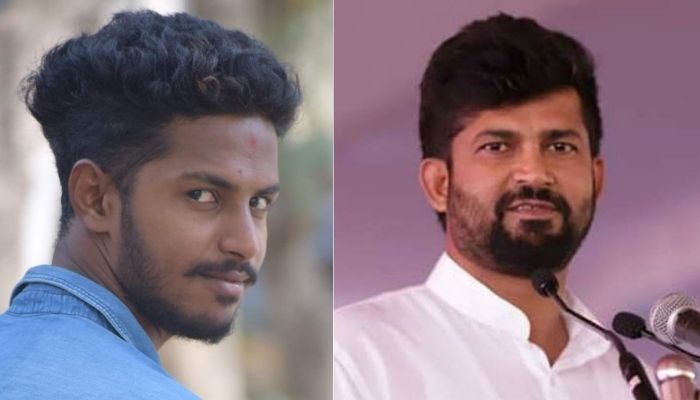
On Monday (February 22), Karnataka BJP MP Pratap Simha lashed out at his own party for not banning radical Islamist outfits such as the Social Democratic Party of India (SDPI) and Karnataka Forum for Dignity (KFD). He expressed regret over government inaction, despite the repeated killing of party Karyakartas.
The BJP MP from the Mysore-Kodagu constituency said, “I am extremely upset about the brutal killing of Bajrang Dal Karyakarta Harsha. I am ashamed that these attacks are continuing despite the BJP government in power.” He pointed out how several other Karyakartas including Prasshanth Poojari, Deepak Rao, Santosh, Sharath Madiwala, Raju, Praveen Poojari, and Paresh Mesta were hacked to death in a similar way.
“For every murder, we used to accuse SDPI, KFD and blame the Siddaramaiah government because they took back 175 criminal cases against SDPI and KFD members hacked a conspiracy and murdered our Karyakartas,” he said. Simha emphasised how BJP secured 104 seats in the Karnataka Legislative Assembly due to the efforts made by the foot soldiers of the party.
“Even after our party came to power, using the CAA protests as a pretext in Mangaluru, they attacked police and innocent bystanders. Because of the alertness of a few personnel, it was averted and firing took place which saved the government’s honour that day,” he remarked.
The BJP lawmaker added how the cops and Hindus were again targeted by Islamists during the infamous Bengaluru riots of 2020 in DJ Halli and HJ Halli. Simha said that his government vowed to punish the miscreants and ban Islamist outfits like SDPI and KFD.
“.. after Harsha’s murder, you again say you will take stringent action against those murderer’s, will our Karyakarta’s believe us?”
“The encounter which happened in Hyderabad after the rape case should be repeated here, only then they will understand. Nothing else will work.” pic.twitter.com/VS4L0DLdtk
Simha said, “Today with the hijab issue, there is an atmosphere of insecurity. This is even after the HC gave an interim ruling upholding the government order. You appeal for peace but they don’t give a damn about it. You impose Section 144 but they openly violate it and yet no action is taken.”
“After Harsha’s murder, you said that you will take stringent action against the accused. Will our karyakartas believe us? That’s why I am ashamed today. If you had taken action against SDPI and KFD after the Dj Halli/KJ Halli incident, would this incident have happened?” he continued.
The BJP MP lashed out at his party for continuing to blame the erstwhile Congress government instead of self-introspection. “Why did our karyakartas put efforts to get us elected then? They put up posters, ran campaigns for us. I have full faith in BS Bommai (incumbent Chief Minister). He was the Home Minister during Anti-CAA protests and Bengaluru riots. He knows about the crimes of SDPI, KFD,” he said.
The BJP MP pointed out how SDPI has been mainstreaming Kerala-style murders in Karnataka. While demanding a ban on the Islamist outfit, he recounted how Assam Chief Minister Himanta Biswa Sarma had also asked the government to ban the radical organisation.
Pratap Simha informed that SDPI has committed the most murders in Karnataka. He appealed to the State government to recommend the Centre to ban the outfit in the State. “Today, if you catch 4 people and say you will take action against them, then, it is not enough,” he further emphasised.
“The encounter which happened in Hyderabad after the infamous rape case must be repeated here, else they will not understand. Nothing else will work,” he urged the government to crush the anti-social elements with an iron hand.
Harsha murder case
On Sunday (February 20) night, Bajrang Dal activist Harsha was stabbed to death near Kamat petrol bunk in the Shivamogaa district of Karnataka. The Hindu activist was rushed to Mc Gann district hospital, where he succumbed to his stab injuries. He was a tailor by occupation and hailed from Seegehatti.
Harsha was a member of the Hindu organisation, Bajrang Dal, and was seen sporting saffron shawls to demand uniform dress code of schools and colleges. It has come to light that he was issued threats by Islamists in 2015 over alleged ‘blasphemous’ social media posts.
Meanwhile, the Karnataka Rural Development and Panchayat Raj Minister KS Eshwarappa had claimed that the Bajrang Dal activist was killed by ‘Musalman goondas’. So far, the police have arrested 3 people in connection to the case, including one Qasif and Nadeem.
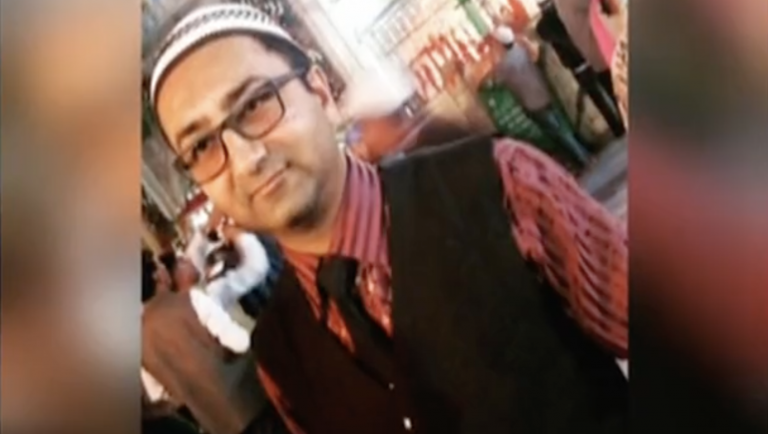
Two separate FIRs were registered against Rajkot based lawyer Sohil Hussain Mor on allegations of hurting religious sentiments, assault and obstructing a policeman from discharging his duty. The incident took place on Sunday where he allegedly created a ruckus in evening at Shamaprasad Mukherji Nagar Awas near Munjka.
Mor had reportedly posted a derogatory comment on Chhatrapatai Shivaji Maharaj on the WhatsApp group of residential society. One of the members of the group, Jyoti Sodha, objected to the same and called Mor to express her displeasure. However, an angry Mor told Sodha, “Now this country has become Pakistan and you all should leave the country.”
રાજકોટમાં ધાર્મિક લાગણી દૂભાઈ તેવી શિવાજી મહારાજ વિરોધી ટિપ્પણી કરતા વિવાદ સર્જાયો.સોહિલ મોર નામના વ્યકિતએ પોસ્ટ મુકી હતી,શિવાજી મહારાજની જયંતિને લઇ મુકી હતી પોસ્ટ pic.twitter.com/BMBBDvvjNH
In an audio recording shared by News18Gujarati, one can hear Mor tell one woman very angrily that such posts will come. “This has now become Pakistan, all are Muslims here, all Hindus should leave,” he said. When the woman asked him why he was saying so, he again angrily said, “That is what it is, leave now.”
One of the residents of the society while speaking to media said how the above statement was not given by some uneducated person but by an advocate by profession. “He has always been normal with us, but since past some time he has started using words of a typical extremist and had even changed his appearance. He even broke the photo frame of god and broke idol of Lord Ganesh,” an eyewitness said. She also said that he broke all the idols of Lord Ganesh in a toran (decorative piece hung on the doors). She also suggested that behind his extreme thoughts there could be a huge racket.
“The way Pakistan’s involvement came in Kishan Bharwad’s case… He said this society will be converted into Pakistan and all Hindus should go. For how long you’d keep me? I have bigger forces backing me,” the eyewitness said. As per the report, Mor, in his WhatsApp DP also posted an image that said ‘I support hijab’. On Sunday, a 26-year old Karnataka youth, Harsha, was killed after he posted a social media post against hijab.
Sodha then went to meet him personally and told him not to use provocative words. However, Mor then got angry and threatened to kill her with a knife.
He then created a ruckus and broke an idol of Lord Ganesh. Soon the police was informed. When police constable Ravat Dangar tried to settle the matter, Mor allegedly hurled abuses towards him and beat him up too.
Late on Sunday, Constable Dangar registered FIR against Mor under various sections of the Indian Penal Code and he was arrested on Monday.
Delhi was in throes of violent anti-Hindu riots in the last week of February 2020. Two years on, though life in the riot-affected areas has gradually limped back to normal, the vivid memories of the macabre riots are still fresh in the minds of the families of the victims. Amongst the innumerable Hindus who were slaughtered, their houses destroyed and properties vandalised by Islamist mobs, there was this 51-year-old Vinod Kumar, who too fell prey to the wrath of the anti-CAA rioters who went on a rampage on the 24th and 25th of February, 2020.
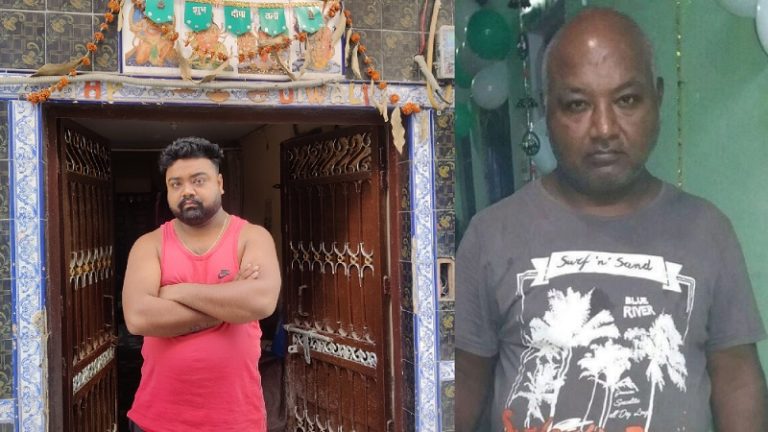
Vinod Kumar, a resident of Brahmapuri, was brutally beaten to death in front of his son Nitin Kumar alias Monu on the ghastly night of 24 February 2020. The duo was returning home on a motorcycle around 10:30 pm when a mob assaulted them with stones and lathis. Their motorcycle was also set ablaze by the bloodthirsty mob. The father-son duo worked as DJs at local weddings and functions.
This video was shot on night of 24 Feb. The man lying on road is Vinod Kumar. The injured is his son Nitin. Vinod died a couple of hours later. Nitin tells me he sees no reason for unprovoked attack other than the Jai Shri Ram sticker on his bike. It's his bike that's burning pic.twitter.com/CIbh6FXYvB
Two years on, the pain of Nitin Kumar and his family is still fresh. Nitin Kumar had then somehow survived the attack but had sustained heavy injuries. The bereaved son of the deceased Vinod Kumar had then confirmed that the ‘Jai Shri Ram’ sticker on the front side of his motorcycle was the only reason for the vicious attack on him and his father.
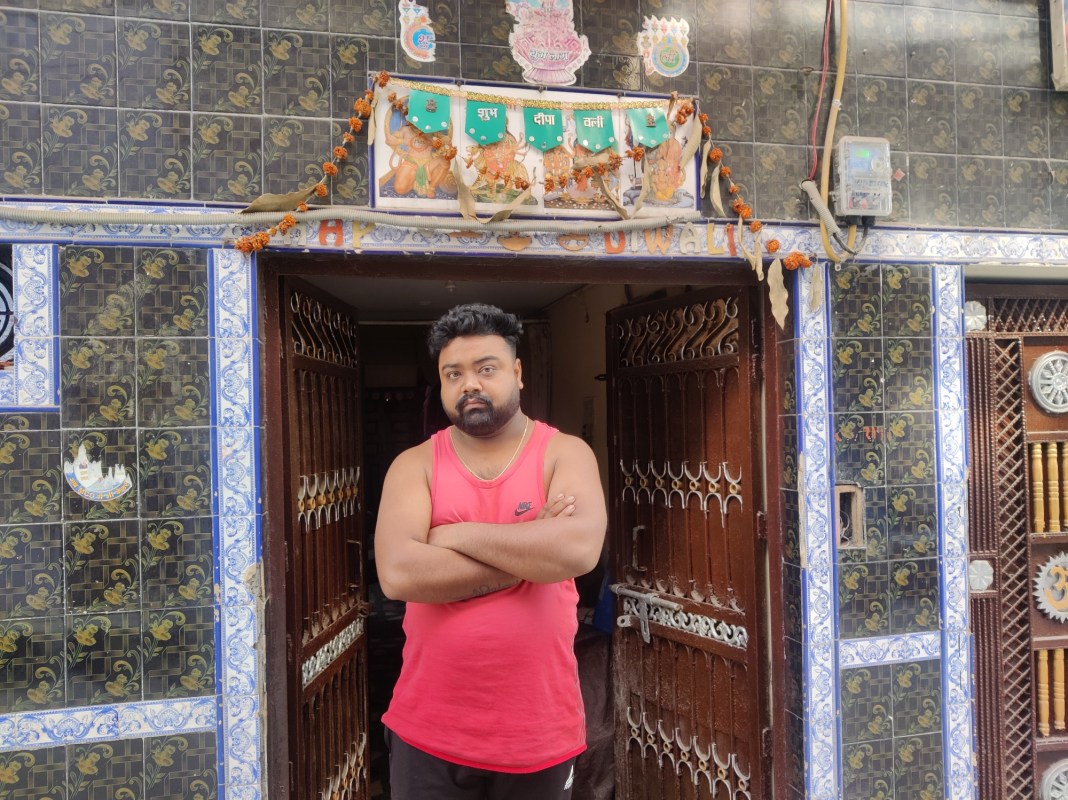
The Brahmapuri ‘Khajur Wali Gali’, where Vinod Kumar was brutally murdered, is located 5 kilometres from the Seelampur metro station. Nitin Kumar alias Monu’s house can be found a little further down this street. On the house is a sticker with Hindu symbols printed on it. The door is additionally adorned with images of Hindu deities. Above the entrance, hangs a floral garland. This type of residence is similar to that of regular Hindus all over the country.
The OpIndia team decided to pay a visit to the bereaved family of deceased Vinod Kumar in order to better comprehend the ramifications of the Muslim mob’s brutality, which they were, unfortunately, victims of.
Even after two years, residents of Khajur Wali Gali still mourn the untimely demise of ‘DJ Wale’ Vinod Kumar. Their eyes are filled with rage as they recount the horror perpetrated by Islamists on the father-son duo. On camera, however, no one wants to discuss the tragedy, exemplifying how afraid people are even today. If you ask around, everyone knows where ‘DJ Wale’ Vinod Kumar lived.
Unfortunately, Vinod Kumar’s family’s income was dependent on the DJ service, which came to a halt after his untimely demise.
Nitin Kumar, who too had received as many as 40 stitches after being brutally assaulted during the 2020 anti-Hindu riots, said that his family currently consists of five members and that the house’s financial situation is extremely dire. He stated that he is in a lot of problems as a result of his lack of employment. He said that though nothing harrowing has transpired after that particular episode, the house’s financial situation has deteriorated in the last two years.
Delhi anti-Hindu riots victim Vinod Kumar’s son Nitin Kumar alias Monu
He was furious at the Delhi government’s offer of only Rs 1 lakh in compensation for his father’s death. Besides that, he said he had received no compensation from any other source. Nitin added that the Covid pandemic had exacerbated the house’s financial situation as not too many marriages took place during the pandemic. As a result, his DJ service company had come to a standstill.
Nitin Kumar expressed concern to us regarding his elder son’s education, who he claimed is 6-years-old now. He was perturbed as to how he would provide for his mother, wife, and two children on his present earnings. He said that though he has not been harassed after that incident, in the last two years the atmosphere of the area has changed a lot.
It may be recalled that a total of 12 persons had been accused in the case, but the Karkardooma court judge Amitabh Rawat, in April last year, granted relief to seven accused namely Sagir Ahmad, Naved Khan, Javed Khan, Arshad, Gulzar, Mohd Imran, and Chand Babu saying they “cannot be incarcerated till the conclusion of the trial, which will take a lot of time and particularly considering the pandemic”.
Three months later, the Delhi High Court also granted bail to three other accused namely Sabir Ali, Mahtab and Raees Ahmed saying that there was no preliminary evidence that the accused were present at Gali no.1 Brahmpuri at around 10.30 pm when the mob killed Vinod Kumar and injured his son Nitin Kumar.
Considering that the petitioners were present as members of a mob at Gali no.1 Akhadewali Gali after 11 pm when some members of this mob were armed with sarias (iron rods), dandas (sticks), stones, swords, knives, and other weapons, there is no material on record, even prima facie, to show that the petitioners were members of a mob that was present at Gali no.1 Brahmpuri at around 10.30 pm which indulged in pelting stones causing injuries to Nitin and death of Vinod Kumar, this court deems it fit to grant bail to the petitioners, the court said.
We at OpIndia have also extensively covered the Delhi anti-Hindu riots which the national and international media had falsely painted as an “Anti-Muslim pogrom”.
Financial fraud accused Washington Post columnist Rana Ayyub has been claiming that the recent allegations of using donations raised for COVID relief were used on her personal account are ‘an attack’ on ‘a courageous voice’. She claims that as a Muslim woman journalist, she is targeted even more because she has been ‘exposing’ the powerful, especially the ones in Modi government.
She often talks about a book she published titled ‘Gujarat Files’ which she believes is ‘investigative journalism’. Rana’s writeup which she calls a book was trashed by the Supreme Court in 2019 and said that it was based upon surmises, conjectures and suppositions. Since she has been harping on the her ‘brave investigative piece’, we decided to take one for the team and read the 125-page rant and explain it to her why even her own cabal does not take her seriously.
Rana Ayyub’s writeup named ‘Gujarat Files’, Tehelka and ‘sting operations’
Tehelka, an online portal specialising in ‘investigative reports’ by relying on sting operations, was launched in 2000 by Tarun Tejpal, Aniruddhha Bahal and another colleague from Outlook Magazine. Sting operations involve various deceptive methods to lure someone into saying or doing things and recording them, usually illegally. One of the most prominent methods used by Tehelka was recording ‘off the record’ conversations by people on hidden cameras. Usually person recording such stings would hide their identity.
Rana Ayyub’s writeup is a collection of her ‘stings’ of various IPS and IAS officers and politicians. She claims she has all these stings on tape on record but no one seems to have heard any of them yet. Through these ‘stings’, Rana tries to insinuate that there was state government and administration complicity in various incidents during Modi regime in Gujarat like Gujarat riots, Ishrat Jahan encounter, Sohrabuddin Sheikh encounter, etc. She tries create a narrative that Gujarat was a lawless state under Modi and Shah (as state home minister) and that they ruled the state with iron fist. The ‘proof’ she has for this are seemingly casual conversations she might have recorded as part of her ‘sting’.
Rana Ayyub’s ‘Gujarat Files’ is one such collection of purported stings of the people in powerful position in Gujarat when Narendra Modi was the Chief Minister of the state. It covers various events and incidents in the state but lacks substance, as you would see in rest of the article here. Her writeup is divided into 10 chapters (11 if you include ‘Disclosure’) with a chapter dedicated to each person she claims to have ‘stung’. I, too, have tried to keep this article in similar fashion where I point out loopholes about each officer stung under different headings.
Please bear with me as this article will be long, really long. I wasted four days of my life so you don’t have to.
So get yourself a cup of coffee and join in.
How to cure depression 101
TL;DR: Rana gets depressed, gets fascinated by Sohrabuddin Sheikh encounter case, reminiscences about her first encounter with Narendra Modi, Aakar Patel makes guest appearance
Rana Ayyub starts her ‘investigative piece’ about an anecdote from her 2007 ‘journalism’ days in which she talks about rape of a three-year-old child in Mumbai. Soon Rana decides to quit as ‘she can’t do it’. Multiple times in the 125-page writeup one is made to believe that Rana almost ‘gave up’ doing the ‘brave journalism’ but kept going, trying to create an imagery where she is some sort of warrior taking on the evil society singlehandedly.
In chapter one of her writeup, she talks about how in the summer of 2010 she had just resumed her work at Tehelka, the portal which specialised in carrying out sting operations on politicians to ‘expose’ them, after a ‘long medical leave’. The Founder-Editor of Tehelka, Tarun Tejpal, was accused of sexual abuse by his colleague in 2013 and eventually acquitted of all charges in May 2021. Ayyub claims the doctors could not diagnose her illness despite such long medical leave. This is significant because we will soon know why the buildup was for.
Now, she claims she goes to Nagpur for some assignment and returns home and her mystery illness is now diagnosed as depression, she claims. One Dr Chitnis in some South Bombay Hospital kind of cured her ‘depression’ by telling her how it is all in her head. Hello, mental health experts, please chime in here.
Dr Chitnis saw my reports and asked me some questions. Then he took a deep breath and asked, ‘What’s bothering you?’ It was as if his words woke me from a stupor. ‘Nothing doctor, I am just too drained and feel weak, can’t figure out what’s happening?’
With a vague smile on his face, he said, ‘Get rid of this self-pity, stop glorifying your misery with these blood tests, you are absolutely fine. Get back to work, that’s your panacea. It’s all in your head.’
‘Is it hypochondria?’ I asked. I had come across this term very recently while trying to self-diagnose my condition. ‘No, you are just being plain lazy and running away from your responsibilities,’ said Dr Chitnis nonchalantly.
That Ayyub thought this anecdote about her ‘depression’ is a fantastic story and one should go ‘wa0w, how brave that she was depressed because she was running away from her brave journalism’ bullsh*t. See, I told you the mystery illness buildup was important to show her as some sort of gladiator.
As Rana Ayyub was thinking how to get over her laziness and cure her depression, her mother arrives with a copy of Urdu daily Inquilab and asked her about Sohrabuddin Sheikh. Rana Ayyub claims how Sohrabuddin’s mention piqued her interest as he was also topic of her first interaction with the then Gujarat CM Narendra Modi. Back in 2007 ahead of state assembly elections, Modi had said that Sohrabuddin, the extortionist accused of having terror links, got what he deserved.
Rana claims she was at the rally and managed to question Modi on it and got just 10 second stare in return. Though, obviously, like everything else in the write up, there is no evidence. I spent significant amount of time on YouTube and going through various videos to see if there was absolutely any moment where Modi could be seen ‘staring’ at anyone for 10 seconds (as mentioned by Ayyub). I do hope the video evidence of the same can be uploaded by concerned people somewhere. Till then, we leave it for readers to decide whether this conversation was real or part of some multiverse imaginary conversation.
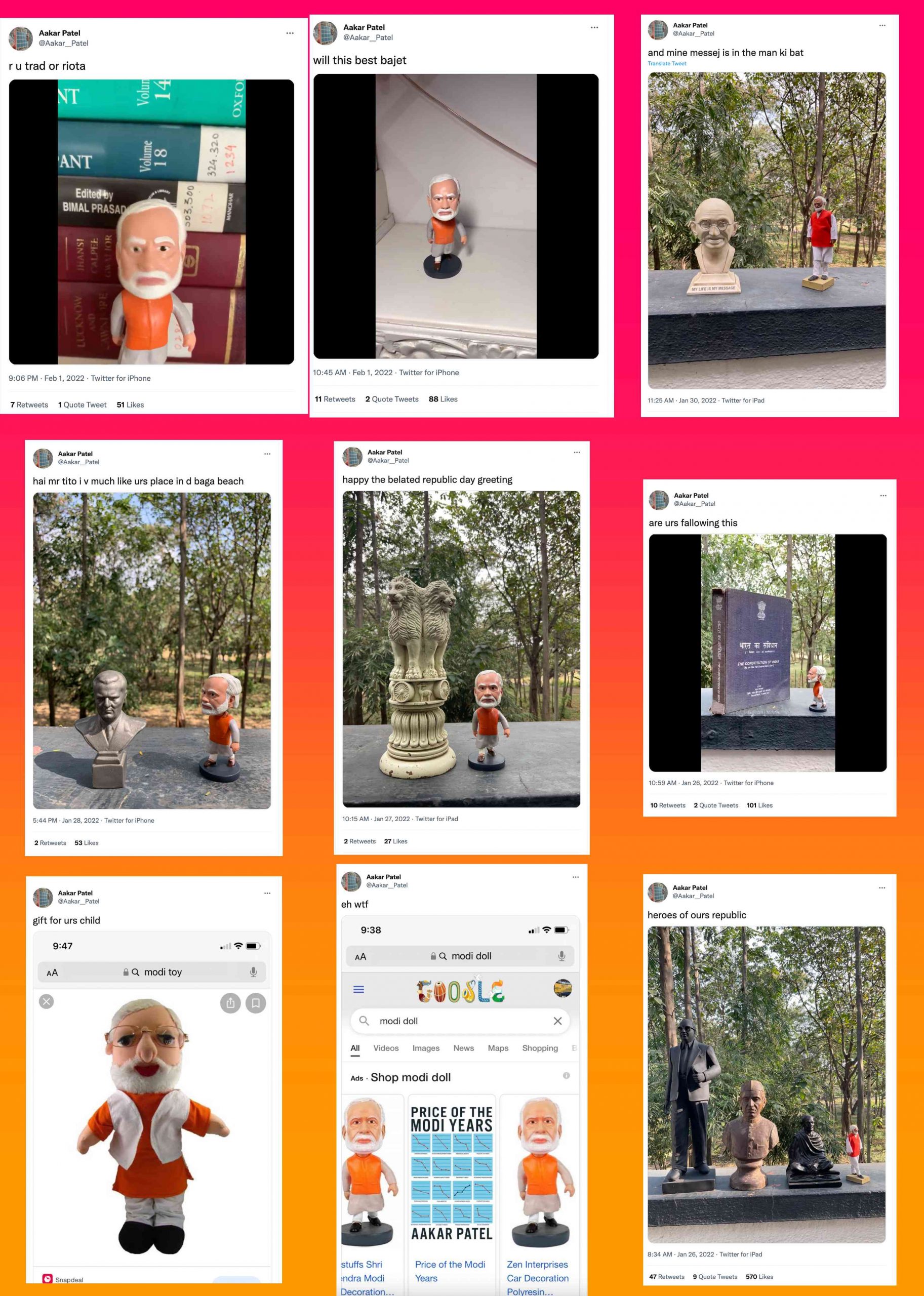
Speaking of which, ex-Amnesty India head Aakar Patel had mentioned how Gujarati women think of Modi as ‘sex symbol’. Amnesty US has come out in support of Rana in the financial fraud allegations. Patel, a decade after displaying weird fantasies has started collecting Modi bobbleheads and now abuses those dolls instead.
Aakar Patel and his Modi doll obsession
Perhaps Patel passed off his own fantasies by firing them off Gujarati women’s shoulders.
Rana Ayyub decides to tell story of Sohrabuddin
TL;DR: Sohrabuddin Sheikh, who he was and how Rana believes her ‘sting’ sent Amit Shah to jail in 2010 – she never mentions which ‘sting’ it was
This, after Aakar Patel’s fantasies and other random stuff, Rana decides that the story of an extortionist needs to be told. Because, if we can have a film glorifying a bootlegger from Ahmedabad where the anti-hero was played by one of the biggest superstars, Shah Rukh Khan, who’s to stop Ayyub from telling the story of Sohrabuddin Sheikh.
She claims she spoke to her bosses, Shoma Chaudhury and Tarun Tejpal who quickly approved her story idea and she sets out for Ahmedabad. She claims within two months of her being in Ahmedabad she made two ‘exposés’. She claims, “trust does not come easy in a state like Gujarat where officers who had decided to go by the call of duty had to suffer the wrath of the government.” It is important to note this point here because soon we will be made to believe by Ayyub that Gujarat’s top cops are more than willing to spill the beans to random women like herself.
In absence of details of when the sting were done, one will just assume they took place sometime in December 2010. Rana has not mentioned specific dates of her alleged conversations. So, we’ll just take that as base date.
Rana claims Gujarat cops were persecuted if they didn’t work as per the whims of state government (in this case, Modi and Shah). She claims she made a sensational exposé that year. “These were the call records of the then Minister of State for Home Affairs, Amit Shah, and top officers during the course of encounters. Accompanying the call records was a damning internal Official Secrets Act note. The minister’s activity was being monitored by the state CID and the note alleged that the encounter was a sinister plot to kill innocents and label them terrorists,” she claims in the write up. Here Ayyub does not reveal details which ‘encounter’ it was. But as Supreme Court said, based on conjectures, one could assume she was talking about Ishrat Jahan. Except, she (Jahan), indeed turned out to be a terrorist. So really not sure what the ‘sinister plot’ here was.
Again, while digging for Sohrabuddin Sheikh case, she ‘exposed’ Ishrat Jahan case? Two separate cases, two completely different set of accused and two totally different criminals. Umm, okay.
Rana now explains how she was staying in one Hotel Ambassador in Khanpur area of Ahmedabad since it was predominantly Muslim and hence an unassuming place for her to stay. On an unrelated note, Islamic terrorists often stay in masjids and stack their arms and ammunition there to go undetected. But things didn’t work as per her and according to her, she got a text from unknown number one fine day telling her ‘we know where you are’. So, today when someone abuses her on Twitter Rana goes files an FIR but a decade back when she got some creepy text from unknown number, she sits put because that’s what ‘brave’ journalists do.
Anyway, so now she keeps moving and changes her accommodation every few days. So she then claims how within weeks of her ‘exposé’, Shah was arrested and it was an overnight sensation. And since she had returned to Mumbai, she decided to come back to Ahmedabad for follow up. According to this NDTV report from 2010, Shah was arrested after CBI questioning which mentioned in charge sheet that Sohrabuddin was bumped off because he was becoming a nuisance to the Rajasthan marble lobby. It makes no mention of any expose or sting operation on anyone by any ‘journalist’ that led to Shah’s arrest.
Again, as mentioned above, whatever exposé Rana claims was on ‘innocents being killed and labelled terrorists’. Only such case which was widely talked about in Gujarat was of Ishrat Jahan. Shah was arrested in Sohrabuddin case. So it is quite unlikely that whatever ‘exposé’ Ayyub did had no connection to Shah’s arrest back in 2010. Do you see how these things do not add up?
Ayyub claims that after Shah’s arrest, the officers who were ‘persecuted’ for state government, got new lease of life and were now open to talk. “There was an indication that over the last decade there had been subversion of the judicial process. Those who were supposed to safeguard the lives of people had been bought over. From the riots to encounters to political assassinations, many an inconvenient truth was waiting to come out. But how could one prove any of it?” Rana writes.
Then comes the only truthful statement in the entire writeup. “The basic rule of journalism was evidence and I had none.” So now, Rana decides to go undercover. So to explain it clearly, here is a woman who claims her ‘sting’ sent state’s home minister to jail, and then she wants to return to same state and speak to top cops of the state ‘undercover’. The top cops of the state are so low IQ that they do no due diligence about the person they meet, especially when they end up revealing sensitive information.
Rana Ayyub becomes Maithili Tyagi
TL;DR: Rana goes undercover, wears bandana, straightens hair and becomes ‘Maithili Tyagi’. Rana thinks ‘Tyagi’ surname has no caste as terrorism has no religion
Now, since she wants to go undercover, she needs a fake identity. So she decides to become a Hindu girl. Maithili Tyagi.
“Rana Ayyub had to give way to Maithili Tyagi, a Kayastha girl from Kanpur, a student of the American Film Institute Conservatory who had returned to make a film on the development model of Gujarat and Narendra Modi’s rising popularity among NRIs across the world.” she says. Now remember this part well, because a lot more fantasies in writeup are based on this.
Now, Rana first tries to wear a wig to go undercover. The ‘investigative journalist’ really wants us to believe that top cops of Gujarat would not notice that wig. Wig, unless worn with help of professional make up artists, is a sure shot giveaway that something’s off about you and the other person would usually be too polite to tell you that your wig is obvious. Anyway, since it ‘felt cosmetic’ and not a ridiculous idea to meet top cops undercover, Rana then decides to ditch the wig for colourful bandanas (her words), skirts, ash grey lenses and a hair straightener.
Why Maithili Tyagi? Well, she saw Lajja and Manisha Koirala’s name was Maithili. “In the film, Koirala played a character called ‘Maithili’ who explored the lives of Indian women and caste-and genderbased suppression. Maithili was also the name of Sita, wife of Lord Ram. The name had a resonance that had stayed with me. When I found myself looking for a second name, which was common and without the snob value of some surnames, indicating neither Brahmin nor Dalit status, ‘Maithili Tyagi’ was born,” she writes. Umm, in the film Lajja, Manisha Koirala was named Vaidehi. It was Mahima Chaudhary who was called Maithili in the film.
Okay, I asked around a few people in Uttar Pradesh and most tell me Tyagi is not a Kayastha surname (she Rana mentions earlier in the writeup), but very much a Brahmin surname and sometimes, some people from scheduled caste also have the surname. Some Bhumihars (also upper caste) also have Tyagi as surname.
Coming back, Rana also claims she found a French sidekick, an exchange student, who tagged along with her on her sting escapades. He was assistant to the UP-born filmmaker who was studying in the US. Okay, then.
As soon as ‘Maithili Tyagi’ arrived in Ahmedabad, her ‘guardian family’ (she hasn’t named it, but has dedicated the writeup to activist-lawyer Mukul Sinha who has fought 2002 riots victims’ cases against state government) arranged for her fake documents and she quickly procured SIM on her assumed name. If this claim is true, the police should investigate and see if her ‘guardian family’ is involved in a fake document scam which could be a threat to national security. That a responsible citizen of India should mention and flaunt availing fake identities so casually is also a concern.
She then claims her accommodation in Ahmedabad was arranged for by a local artist who knew her as Rana Ayyub but was knowingly putting her up on fake identity. “That I was a journalist who had sent the HM of Gujarat behind bars on account of her investigation was reason enough for him to use his influence to help me get accommodation at an educational institute, the Nehru Foundation,” she writes.
Now, 1. No, she did not send HM of Gujarat behind bars on account of her investigation. 2. Nehru Foundation was set up by Vikram Sarabhai and is managed by his son Kartikeya Sarabhai. His sister, Mallika Sarabhai is a dancer and theatre artist and contested against L K Advani during 2009 general elections from Gandhinagar constituency. She, obviously, lost and even forfeited her deposit. She joined the Aam Aadmi Party in 2014.
Coming back to Rana Ayyub’s writeup. She now lives in the hostel of an institute run by the Sarabhais. Her French sidekick arrives soon. And she maintains air of mystery around him and does not tell him how she’s there to sting cops and politicians. To act their part of filmmakers they visit places in Ahmedabad with DSLRs and take pictures, etc.
Girish Singhal and Maya Kodnani
TL;DR: Rana has mystery ‘activist friend’ who is well connected in the state power circle and meeting the bigwigs just falls into place
Meanwhile, her ‘activist friend’ sent her an email and put her in touch with Girish Singhal, IPS, one of the accused in Ishrat Jahan encounter case (subsequently given clean chit in the case). Singhal was then the ATS head of the state. Since Singhal was a media recluse, Ayyub was wondering how to get in touch with him. The ‘activist friend’ had also sent her contact details of Gujarati film actors, Naresh Kanodia and his son, Hitu Kanodia.
Naresh Kanodia represented the BJP in Gujarat Vidhan Sabha from 2002 to 2007. His brother, Mahesh Kanodia represented the BJP in Lok Sabha four times. Hitu Kanodia, Naresh Kanodia’s son, represents the BJP from Idar constituency in the Vidhan Sabha. None of these things are mentioned in the writeup. All she mentions is that they belonged to the backward caste and were close to Singhal and hence pave her way to meet him.
So now, Ayyub befriends the Gujarati cinema superstars, the Kanodias, who are from ‘backward caste’ and close to Singhal, so that he’d agree to meet her. She keeps visiting their sets and flatters them and a ‘firang’ present with her had ‘desired effect’ she claimed. Rana really thinks the superstar of Gujarati cinema, whom she herself referred to as Amitabh Bachchan of Gujarati cinema, would be in total awe of a ‘firang’ and also does not understand English as well. Nice way to insinuate insult on Gujaratis who have voted Modi to power for 20 years straight.
Here she claims by dropping hints on how she wants to talk about a brave cop from backward caste in her film, Kanodia quickly recommended her to Singhal. “The last person Singhal would doubt would be a filmmaker who had been recommended by one of the topmost regional filmmakers,” she claims.
But by now, French sidekick is pissed at Rana for keeping him in the dark and hence, Rana decides to let him in on the secret. So, now they’re a team.
While fixing her meeting with Singhal, she also gets mail from ‘a source’ who puts her in touch with some ‘known gynaecologist’ in Ahmedabad whom she meets later. This dude introduces her to Maya Kodnani. Maya Kodnani, an MLA in Modi government, was accused of leading a mob on the day riots broke out in Gujarat, the day after Godhra carnage where 58 karsevaks were burnt alive. In 2018, Gujarat High Court acquitted Kodnani.
There is video footage of Kodnani being present in Gujarat Vidhan Sabha between 8:30 am to 8:40 am, witnesses for prosecution had claimed she was leading a mob in Naroda at 8:30 am as well. As per another witness, Kodnani was distributing swords and other weapons, though at a later time that day.
Anyway, so undercover Rana meets Kodnani who compliments her on her fake name as it was name of Mata Sita.
So, here is the thing. She claims she tells Kodnani that she wanted to interview her for her contribution in health sector as Minister of Child Welfare and Health. Now, while she was an MLA and a Minister after 2007 elections in Modi government, she had resigned as minister in 2009 as an accused in Naroda Patiya case. So, if in 2010 ‘Maithili Tyagi’ interviews Kodnani and talks about her being minister, Rana wants us to believe that would clearly not raise suspicion.
That a filmmaker from US wants to talk about Gujarati asmita (pride), but instead of speaking to current health minister, health secretary or any prominent doctor, speaks to a former minister who resigned after being accused of leading a mob to kill people.
Every time I find a loophole in Rana’s writeup
Flattery gets Rana everywhere, so Maya Kodnani also slips and decides to open up to random woman she has just met. “Before leaving her cabin, I remembered to praise Ms Kodnani’s saree and accessories,” she writes. An MLA, a former cabinet minister succumbs to Rana Ayyub’s ‘saree mast hai‘ compliments, we are to believe. Yet again, Rana tries to portray Gujaratis as those kinds who easily fall prey to flattery.
Once back to her hostel, Rana claims her laptop was on and claims how her room was ‘searched’. But because she was wise, she had formatted her laptop and only Maithili Tyagi existed there, not Rana Ayyub. “On the desktop were files on filmmaking and research on Gujarat museums, the film industry and forests. Adorning the screen was a wallpaper of Lord Krishna,” she claims as part of her ruse. On an unrelated note, 26/11 Mumbai terror accused Ajmal Kasab had a Hindu ID on him as “Sameer Chaudhary”. It was revealed by Rakesh Maria in his autobiography.
Rana put up the extended buildup because she was calling Singhal the next day. He dismissed her call and after a lot of elaborate drama of how she felt threatened after her ‘exposé’ on Amit Shah, she again called Singhal the following day. Anyway, so Singhal had also handled the Akshardham terror attack in September 2002. When Rana goes to meet Singhal, cops there were apparently surprised. “The security guard at the ATS office was confused. A woman in a skirt sporting a bandana and a foreigner want to meet the ATS chief? A note was sent in to him,” she mentions. Um, why would it be surprising?
Recently, when I met former Gujarat ATS head, no cop present there was surprised. Maybe because I wasn’t wearing a skirt and a bandana. Quite frequently through the book, Rana mentions that how it was easy for her to get access to places because she had ‘Mike’, the French sidekick with him. Rana creates a world for her readers where Gujarat is some backward place where in 2011, they’d think a woman wearing skirt and bandana is some exotic thing and that they’ve never seen firangs and find American-Indian fascinating. This, when one Gujaratis form one of the the largest chunk of non-resident Indians abroad.
Now, Rana claims that when she met Singhal in December 2010, she had her recorder attached to her notebook and that she had stung. These audio files have never seen light of the day even though she has claimed she has offered investigative agencies to take them from her. The ‘brave journalist’ has not just gone ahead and published it all on YouTube for everyone’s consumption. Where are the tapes, as senior journalist Madhu Trehan recently asked.
Now, here Rana claims she threw names around. She brought in her conversation with Maya Kodnani while speaking to Singhal and he immediately relaxed. Now, Gujarat’s top cop – ATS chief of state – quickly opens up about his struggles as a Dalit cop and the other Brahminical attitude and oppression he faced growing up. This cop, we were made to believe earlier, though insinuations that he went through her stuff at her hostel room in Nehru Foundation. But now, he pours his heart out to this absolutely random woman he has just met.
So first Kodnani and then Singhal. Zero filters.
Now, Singhal in his conversation with Rana (where he asked her to meet again the following week), talks about another top cop, Rajan Priyadarshi, who was at one point Singhal’s boss (more on this later).
Next time when Ayyub goes to meet Singhal, she wears her camera-attached custommade kurta. She was ready to sting Singhal. In beginning of her chapter on Singhal, (chapter 3), Rana mentions that his son Hardik committed suicide in 2012 (fact). In later part of same chapter, she mentions that Hardik committed suicide in 2013. How do years change randomly?
Rana then has written about ‘excerpts’ from her recorded conversation on her sting in 2010. Again, she has not made these tapes available to public. There is no evidence as of now that this conversation took place.
Rana wants us to believe that the top cop of state was upset about caste politics in police hierarchy and that he would rant about it to skirt-wearing bandana clad woman he is meeting the second time. The woman who is a filmmaker from US and making documentary on ‘Gujarati pride’, asking leading questions on riots and politician will not raise suspicion of ATS head, she wants us to believe.
As per the ‘excerpts’, Rana wants us to believe that Singhal admitted Ishrat Jahan was not a terrorist. Here is a 2004 Times of India report wherein Lashkar E Toiba in its mouthpiece published in Lahore had owned her up. David Headley, one of the accused in 26/11 Mumbai terror case, too, admitted that Ishrat was an LeT operative. These things are on record. But then Rana wants us to give more credence to some ‘conversation’ she printed which is not backed by any evidence at all.
Here is another conversation Rana claims she had with Singhal:
Q) But will your Shah Saheb now come back to the Home department? A) No, he won’t be able to, because CM ko usse dar lagta hai, kyunki woh home department mein bahut popular ho gaya tha. He knows the weakness of the government, so the CM will not want any HM to know everything and be there. Q) So the CM and the HM do not see eye to eye now? A) No, this CM, Modi jaise abhi aap bol rahe the, woh opportunist hai. Apna kaam nikaal liya, sab got his work done.
If we are to believe Rana Ayyub did sting Singhal, the above conversation in itself is hardly a proof. In a lot of conversations I have very casually mentioned that my boss Rahul Roushan is a psycho, tyrant and a despicable human being. A statement made in normal course of conversation with friends, acquaintances is hardly accepted as a proof of having done any nefarious activity. So, even if we were to believe Singhal and Kodnani (and others in the writeup) did say those anecdotal things about the people in power, it is hardly any conclusive evidence of crime.
In 2012, Shah again contested elections and won. In 2014, when Modi became PM, Shah was made the BJP national President. In 2019, when Modi won again, Shah became the Union Home Minister. Read about Rana seething and coping to these developments here. So the two being at loggerheads with each other appears like a Chinese whisper one would desperately like to believe.
Coming back to Ishrat case, Rana says in her writeup, “The Gujarat High Courtappointed CBI probe has in its chargesheet concluded that Ishrat was not an LeT operative and that the encounter was fake.” Except, on March 31, 2021, a special CBI court in Ahmedabad discharged three police officers including Singhal in the encounter case. While narrating the order, Special CBI judge VR Raval noted that prima facie, there is nothing on the record that may suggest that Ishrat Jahan and three others, who were killed in the encounter, were not terrorists. So, well, that is that.
Rajan Priyadarshi
TL;DR: Rana ‘stings’ former Modi-hating Gujarat cop who makes sensational disclosures but Rana does not mention he is a Congress leader
Rana next meets former cop Rajan Priyadarshi, a Dalit IPS officer, who served as Gujarat ATSDirector-General in 2007. He was also IG Rajkot during 2002 riots. Now, she publishes some more ‘excerpts’ of conversation she had with him. Again, no evidence is given on these yet.
A) What wrongly, they have done it which is why they are now going behind bars. They killed a young girl in an encounter. Q) Really? A) Haan, they called her a Lashkar terrorist. She was from Mumbra. The story created was she was a terrorist, who had come to Gujarat to kill Modi. Q) And it’s false? A) Yes, it’s false.
As we have seen above multiple times, the courts have not found enough evidence to call the encounter fake and Ishrat was owned up by the terror outfit.
Then she claims that Priyadarshi made some damning allegations against then Home Minister Amit Shah ‘who does not believe in human rights’ (now, have we not heard the same statement by multiple Modi haters over the years? And isn’t this the same Union Home Minister who did not let his police fire a single bullet when rioters desecrated Red Fort on Republic Day in 2021? Anyway, let us not digress).
Here is more purported conversation between Rana and Priyadarshi.
A) The entire country is talking of that encounter. They bumped off that Sohrabuddin and Tulsi Prajapati at the behest of the minister. This minister Amit Shah, he never used to believe in human rights. He used to tell us that I don’t believe in these human rights commissions. And now look at this, the courts have given him bail too. Q) So, you never served under him? A) I did, when I was the ATS chief. He transferred Vanzara and brought me [in]. And I am a person who believes in human rights. So this Shah calls me to his bungalow. Now I have never gone to anybody’s bungalow. Nor anybody’s residence or office. So I told him, Sir I haven’t seen your bungalow and he was baffled and asked, why haven’t you seen my bungalow. Then he said, Ok I will send you my private vehicle, come in that. So I said, Ok, you send me your vehicle. So when I reach he says. ‘Achcha aapne ek bande ko arrest kiya hai na, jo abhi aaya hai ATS mein, usko maar daalne ka hai.’ I didn’t react. And then he said, ‘dekho maar daalo, aise aadmi ko jeene ka koi haq nahi hai.’ So I immediately came to my office and called a meeting of my juniors. I feared that Amit Shah would give them direct orders and get him killed. So I told them, see I have been given orders to kill him, but nobody is going to touch him, just interrogate him. I have been told, I am not doing it so you also are not supposed to do it.
Rana wants us to believe her life is a second copy of a trashy movie directed by some artsy filmmaker who makes dark movies on gangsters. She truly wants us to believe Home Minister of a state will say ‘usko maar daalne ka hai’ to a cop about some criminal in as many words.
Rana then attributes more quotes to Priyadarshi. She claims that Priyadarshi, during 2002 riots, got a call from the then Home Minister Gordhan Zadaphia who asked him to arrest three men. Priyadarshi had claimed that the three men he wanted arrested were sitting in front of him and “they are all Muslims and because of them normalcy has been restored. And these are the people who have brought the Hindus and Muslims together with their efforts and brought the riots to an end.” To that, Rana claims Priyadarshi claimed that Zadaphia said that Modi as CM wanted these three men arrested. Priyadarshi didn’t arrest because as an ‘uptight officer’, he wouldn’t ‘arrest innocent even if CM ordered’.
Priyadarshi then also claimed that any other officer in his place would have arrested these men. Nowhere does Rana mention who these ‘innocent Muslim men who were restoring peace in Junagadh’ were. There are no names, no details about these men. We are to believe that the man who became chief minister of a state just four months back wants just three particular Muslim men arrested in Junagadh.
Rana, as Maithili Tyagi, filmmaker from US, then asks all sort of questions about encounters and politics around it and this former cop does not get suspicious at all, we are to believe. Rana then cites Priyadarshi who was again speaking of some ‘meeting’ at Amit Shah’s place where the Union Home Minister apparently ‘boasted’ about instigating riots in 1985. In 1985, Shah was 21 years old. Priyadarshi apparently told Ayyub that Shah ‘confided’ in him that Ishrat encounter was ‘fake’.
“He said he had kept Ishrat in custody before they were killed and that all five of them were killed and there was no encounter. He would tell me, she was no terrorist,” Rana claims Priyadarshi told him. Priyadarshi apparently even boasted that he got to be part of ATS etc because he made the state government believe ‘he was their man’. “Priyadarshi was the State ATS chief and Amit Shah had confided in him that Ishrat Jahan was being held in a bungalow, confined in custody before she was killed in cold blood,” she claims.
In 2012, Priyadarshi joined Congress. Rana knew this at the time of publishing (2016) her writeup she calls ‘investigative journalism’. But very conveniently she skips this particular piece of information. Indian Express report from back then describes him as thus: ‘Known for his upright and no nonsense attitude, Rajan took on the state government several times during his career, specially after the post Godhra riots.’
This report, too, was published before Ayyub’s writeup was published. So if Ayyub’s transcripts were to be believed, when Priyadarshi claims Modi and Shah think he is their men and confide in him about their escapades of ‘maar do’, ‘instigated riots’ he was ‘taking on state government especially after 2002 riots.
And if it were a truly investigative piece, Ayyub would have bothered to educate her readers on how Priyadarshi lied, if at all he said those things to her on her ‘tapes’ (which no one has ever heard) when he said he was ‘their man’ when he was clearly publicly criticising them.
Snakes encounter Rana Ayyub and dinner dates with Usha Rada, IPS
TL;DR: A snake appears in the book, no not who you think, and the snake has a friend too
Now, somewhere on page 46, Rana claims that she was asked to vacate her hostel room at Nehru Foundation because of some conference there. This is where she got in touch with some of her sources in Ahmedabad and decided to crash at some bungalow on the S G Highway. She claims the bungalow was isolated and nearby houses were still under construction and the house was being taken care of by a caretaker and some stray dogs would chill there.
Once when the stray dogs barked incessantly, Rana was informed that there was a snake out there and hence dogs were having a meltdown.
Apparently it was a cobra. Surrounded by cobra and dog, Rana would then spend sleepless nights worrying how if the top cops find out her true identity, the bungalow was ‘easiest place to cause harm’. (By the way, her religious identity has already made an appearance a few times in the write up till now. I’m not into nitpicking and hence not mentioning as many times.)
Here’s the best part in the writeup, though:
In the days to come when there was nothing much to do in the afternoons, Kalubhai’s daughters would come to me with their school books. I would make tea and we would enjoy it with some Parle G. The dogs had grown very fond of me and I had reached the stage where I found the snake playing with the dogs entertaining. Kalubhai’s daughters and I had named it Mukhia. The girls would hurl pebbles at Mukhia, while I would sit at a distance and shoot it all with my phone.
Heh Heh Heh. When was the last time you saw dogs play with a cobra and managing to stay alive? And who is Mukhia? The dog or the snake? Mad respect for the animals for continuing to play while girls threw stones at them. And why would they hurl pebbles at either of the animals? And why would you defame these kids anyway? Unless the ‘girls’ were Rana reminiscing about herself in parallel universe. On an unrelated note, psychology suggests that serial killers start off their criminal journey by hurting little animals.
Snake in bungalow where Rana claimed she lived
While speaking of dog-loving cobras residing at S G Highway, Rana also talks about befriending Usha Rada, IPS. Rana describes a thriller sequence where Rada took her for a dinner at a fancy restaurant and a movie night out too. Maybe because Rana Ayyub as ‘Maithili Tyagi’ wore a denim skirt, black tshirt with a lot of chunky jewellery to meet her that did the trick along with heaping praises on her. Rada apparently quickly promised to take her to movies, shopping and for dinner.
Rada even took Rana to her house and introduced her daughter and even to the movies: No one killed Jessica (release date: January 2011). It is not yet clear when Rana met Rada. But Rana has claimed that most of her stings took place in December 2010.
Rada then asks Rana if she had heard of Tehelka (like how things happen in movie where the heroine’s cover is about to be blown off) to which Rana says no. Anyway, Rada trashes Tehelka in front of Rana, much to her ‘amusement’.
Ashok Narayan, IAS and tainted IPS officer Sanjiv Bhatt
TL;DR: Even Rana Ayyub does not believe Modi-hating ex-cop Sanjiv Bhatt who went about throwing much at her and an ‘activist’ few years back
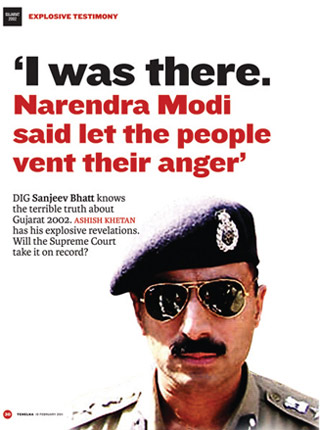
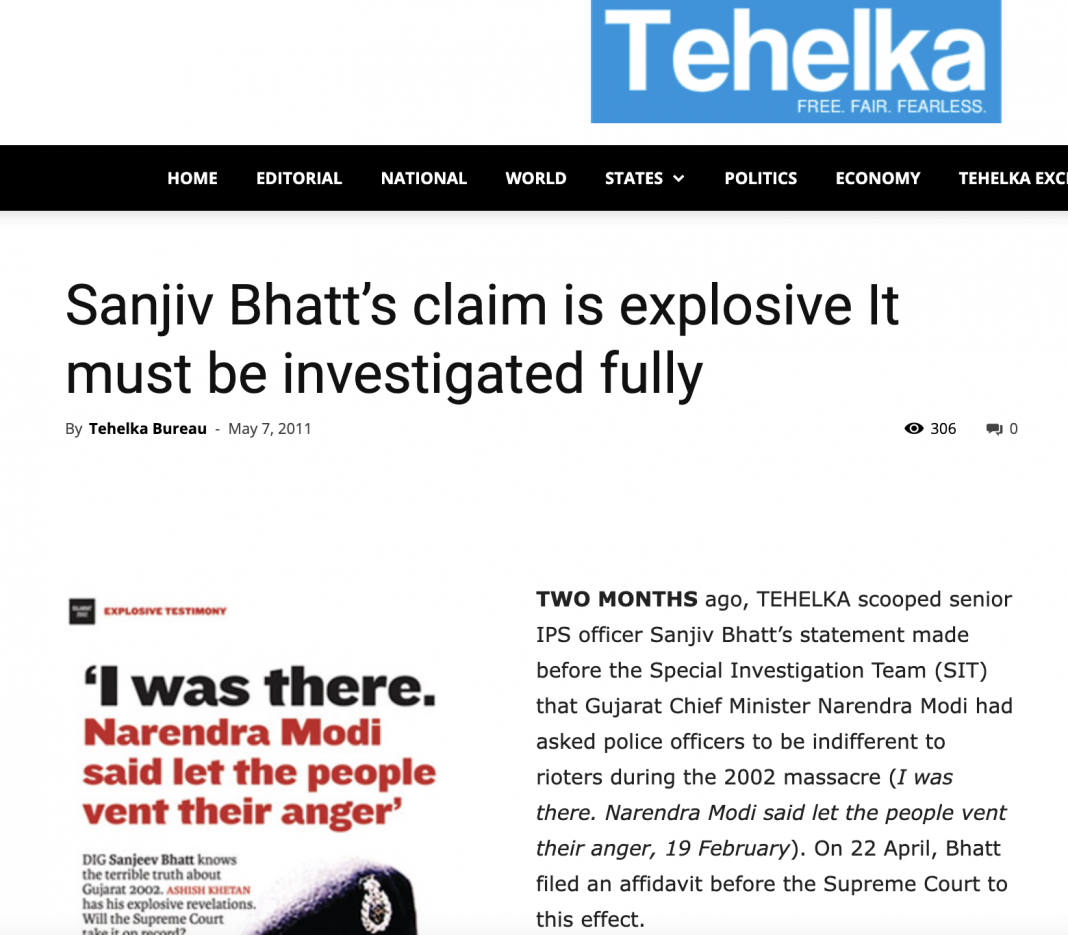
In February 2011, Tehelka published tainted ex-IPS officer Sanjiv Bhatt’s ‘testimony’ wherein he claimed he was present in the meeting with the then Gujarat CM Narendra Modi on 27 February 2002 where he had said that the Hindus must be allowed to vent their anger.
Sanjiv Bhatt Tehelka cover story
Here is a report by Tehelka few weeks after the above report was published.
Much to our surprise, even Rana dismisses Bhatt’s ‘testimony’. “Many I knew and spoke to personally did not buy his argument, suggesting that no Chief Minister would jeopardize his political career by giving an order like that amidst dozens of top bureaucrats and officers. There were too many questions. Why did it take so long for Sanjiv Bhatt to come out and give this statement? In many years of reporting on Gujarat I had never ever come across Sanjiv Bhatt or any accounts by him,” she mentions.
See how Rana dismisses Bhatt’s claims of being in meeting where Modi had supposedly given the orders but readily accepts Priyadarshi’s so-called account that Shah boasted about instigating riots and ‘maar do’ remarks. Few years later, Bhatt threw muck on other Modi haters where he spoke about ‘charms of dusky chain smoking journalist’ who had an affair with lawyer-activist from Ahmedabad. Bhatt is currently lodged in jail over custodial death case.
Now, Rana claims that in light of Tehelka report on Bhatt, it became important for her to meet Ashok Narayan. Ashok Narayan was Home Secretary, Gujarat state when the riots took place. Rana claims she met Ashok Narayan in December 2010. So, Rana wanted to hear Ashok Narayan’s side of story on Sanjiv Bhatt’s allegations which were already published (as per her) but were not yet published (as per facts).
Now, Rana here gives one more anecdote how she ran out of solution for her lens and at eight she found difficult to find basic things and hence lens solution was even harder. Now, having lived all my life in Ahmedabad, that too, in an isolated place (very near to the S G Highway cobra-filled bungalow Rana stayed in) medical stores are open till quite late. But then Rana claims she looked up Internet and soaked her lens in salt water and then wore those lens the next day. Any person with above average IQ would know to not put anything soaked in salt water in the eyes, but ‘investigative journalist’ was unaware.
About her meeting with Ashok Narayan, Rana mentions how she had to refrain herself from speaking in Urdu to Narayan who loved Urdu poetry as she was keeping the ‘Maithili Tyagi’ show. “Maithili was the daughter of a conservative Sanskrit teacher and had lived abroad. Also, Maithili was not particularly fond of Muslims as a community as part of her identity,” she writes. Apparently, Kayastha caste people who are conservative Sanskrit teachers are not particularly fond of Muslim community, Rana casually insinuates bigotry.
Now, Rana claims that in her sting with Narayan, who was the ACS Home during riots, said that one minister from Modi government (male) was leading a mob and was quickly called back by Modi. She then questions him about Kodnani, who was accused of leading a mob. Narayan, as per her writeup, said ‘she could have been there, yes’.
Here is how Rana is being dishonest to her readers: She does not mention which male minister was accused of leading a mob during riots. Secondly, she does not mention that Kodnani, as evidence stated, was in the Vidhan Sabha in Gandhinagar at the exact time she was accused of leading a mob in Naroda Patiya. In absence of this piece of information, readers can draw their own conclusions based on partial and leading information about Kodnani.
In fact, it was Haren Pandya (male, minister in Modi government) who was accused of leading a mob against Muslims in Paldi area of Ahmedabad on February 28, 2002. Rana, the ‘investigative journalist’ does not mention this. Pandya was assassinated on 26 March 2003 in Ahmedabad near Law Garden when he had gone for a morning walk. The CBI had stated that this was done to avenge the 2002 communal riots in the state.
Now, it is often repeated that former Gujarat Home Minister Haren Pandya was a ‘witness’ in a meeting where Narendra Modi, who was the chief minister of Gujarat in 2002, asked police to ‘let people vent their frustration’. Similar claim made by disgraced cop Sanjiv Bhatt, ex-IPS and proved baseless categorically. Now, here is the conversation Rana claims she had with Ashok Narayan:
Q) How did the people outside know of this controversial meeting? A) There was this minister here, Haren Pandya, he was the first one to say in the press. Q) Who all were in the meeting? A) CS, ACS, Home Secretary, DGP, officers.
“Even for a layperson the above conversation would reveal the level of complicity of the state administration during the Gujarat riots,” Rana claims.
Here is how it is deceitful. Rana has been leading Narayan by asking about ‘controversial meeting’. The same meeting which Haren Pandya and Sanjiv Bhatt both claimed had attended. Fact is, that a meeting did take place, but it was with CM and others in administration to chalk out next course of action as communal violence was spreading. It is only obvious that the meeting would be held. Multiple times when Rana asks Narayan whether Modi asked them to ‘go slow’ on rioters, he denies. However, Rana always adds that Narayan claimed Modi would never give such direct orders but would get his men to do it. To reiterate, there is no evidence whatsoever of these conversations having taken place because the ‘tapes’ were never made public.
Further, Narayan mentions that the people present in the ‘controversial meeting’ were the CS (Chief Secretary), ASC, Home Secretary, DGP and other officers. At no place Narayan mentions Haren Pandya or Sanjiv Bhatt were present in the ‘controversial meeting’. That is because they were not.
Haren Pandya in June 2002 was the first person to raise the ‘controversial meeting’ bogey. In its 3rd June, 2002 issue, Outlook Magazine published an article without naming Pandya. The Outlook reported in this article that,
The minister told Outlook that in his deposition [to the CCT], he revealed that on the night of 27th February, Modi summoned DGP (i.e. Director General of Police) K. Chakravarthy, Commissioner of Police, Ahmedabad, P.C. Pandey, Chief Secretary, G. Subarao, Home Secretary, Ashok Narayan, Secretary to the Home Department, K. Nityanand (a serving police officer of IG rank on deputation) and DGP (IB) G.S. Raigar. Also present were officers from the CM’s office: P.K. Mishra, Anil Mukhim and A.K. Sharma. The minister also told Outlook that the meeting was held at the CM’s bungalow.
The minister told the tribunal (CCT) that in the two-hour meeting, Modi made it clear there would be justice for Godhra the next day, during the VHP-called bandh. He ordered that the police should not come in the way of “the Hindu backlash”. At one point in this briefing, according to the minister’s statement to the tribunal, DGP Chakravarthy vehemently protested. But he was harshly told by Modi to shut up and obey. Commissioner Pandey, says the minister, would later show remorse in private but, at that meeting, didn’t have the guts to object…”
In this report, disgraced ex-IPS officer Sanjiv Bhatt is nowhere in the picture.
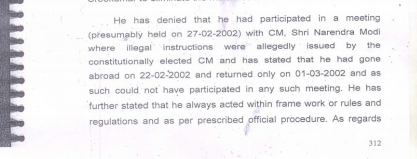
Now, there are a few factual errors in this Outlook report. The Outlook report names Chief Secretary, G. Subba Rao and an officer in the CM’s office, A.K. Sharma, as among those at the meeting. Neither were present in that meeting. That day, Subarao was on leave abroad [the SIT too mentioned this on page 312 of its report] and instead it was acting Chief Secretary S.K. Varma who participated in that meeting.
SIT Report excerpt
One may argue you cannot dismiss the claims just based on one factual error (d-uh). Since Pandya is no more to give further clarifications on the 2002 Outlook reports which are passed around as gospel truth, one must rely on Outlook itself which has acknowledged the error in its subsequent report. In a report published on 19th August 2002, Outlook has named Haren Pandya as the mystery minister it had interviewed in previous edition where Pandya (now named) acknowledges he had got the names wrong, but the place and meeting right.
Now, Pandya has said that the meeting lasted for two hours. However, the SIT has acknowledged the meeting lasted 30-45 minutes. Now in this report, too, where Pandya says he got the name of Chief Secretary wrong ‘but everything else is correct’, is factually incorrect.
Not only was the chief secretary not there (he was on leave abroad), another officer, A.K. Sharma was also not present. This was admitted by Outlook, not by the Minister. And sadly for Outlook, there was a third blunder in this allegation even in the 19th August issue, which is that DGP (IB) G.C. Raigar (correct name G. S. Raigar) was also not present in this meeting. Turns out neither Outlook nor Pandya knew this. So even in the 19th August issue, when they admitted mistakes in the 3rd June 2002 issue, they stuck to their story saying ‘rest all information is correct’, but the information in the 19th August 2002 was also wrong since G.C. Raigar was also wrongly named as being present in the meeting.
It is no wonder that when a writ petition seeking fresh investigation into Haren Pandya case based on Ayyub’s book was filed in the Supreme Court, the apex court did not waste much time to dismiss it and trashing the same.
Now, here’s more propaganda that has been repeated over and over on how Modi ‘brought bodies and displayed them to provoke hate and sentiments’.
Q) I have been told that Modi did play a partisan role though, that of instigating, like bringing the bodies from Godhra and dilly-dallying on decisions. A) I had given a statement that he is the one who had made the decision of bringing the bodies to Ahmedabad.
Here is what had actually happened. Those victims who were burnt alive in Godhra train carnage, many of those were Ahmedabad residents. Do they not deserve a respectful and dignified last rites? You can’t just leave them abandoned. To make sure the mortal remains did not flare more sentiments, the bodies were brought to Sola Civil Hospital (which was on the outskirts of the city in less inhabited area) at 3 AM in the night. How is bringing in mortal remains of Hindus to their homes ‘instigating’?
Further, in 2013 (much before Rana’s writeup was published), the Supreme Court appointed SIT (and this was during the UPA era), had said that there was no conspiracy in decision of bringing the bodies of karsevaks to Ahmedabad.
Times of India report from 2013
But why give counter facts when a fantastical narrative is being built which can be abused for personal gains and playing victim later as ‘brave face of journalism’.
Further in the writeup, she talks about how Gujarat state administration was low on forces and tries to insinuate that state government (BJP) and central government (Vajpayee-led NDA government) were complicit in the state going out of control.
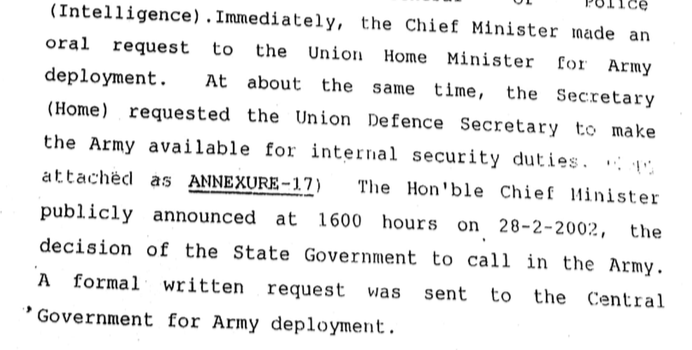
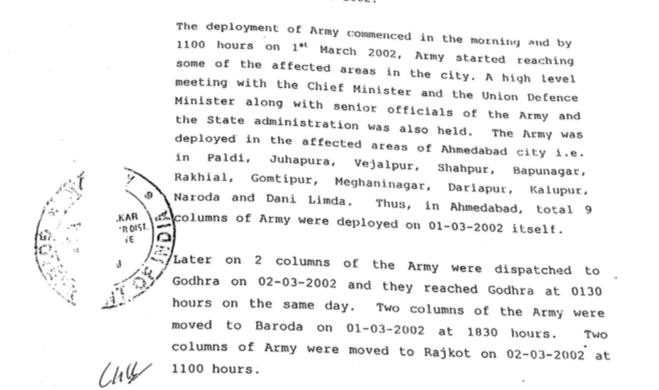
Here is what had actually happened. As reported by India Today in 18th March 2002 issue, Modi had officially called for the Army by 4 pm on 28th February and by 6:30 pm a formal request for the Army landed in Delhi. On 1st March at 1 am, the then defence minister George Fernandes reached Ahmedabad and at 11:30 the Army was staging a flag march. Here it is important to note that February has 28 days and hence the Army was conducting the flag march in less than 48 hours of the Godhra carnage that sparked riots.
The Hindu reported on 1 March 2002 (Friday) that “The Army units, frantically called by the Chief Minister, Narendra Modi, as the situation seemed to slip out of hand, started arriving in Ahmedabad and are likely to be deployed in the city on Friday (1 March).” Rediff report from 1st March mentions deployment of Army as well as shoot at sight orders on 1st March itself.
The same fact is also reflected in the note submitted by ACS (Home), Ashok Narayan as part of the investigation.
Chief Minister of Gujarat, Narendra Modi requesting for Army on 28th February 2002
The note further states that in wake of the terrorist attack on the Parliament in December 2001, there was a war-like situation on the border. Hence, the whole force was deployed in the forward/border areas of the country. The state government then requested for Army personnel in the cantonment of Ahmedabad, but no force was available there either. Despite the fact that in such a scenario, withdrawing the Army from the border would require a high-level decision at the Centre, the decision to withdraw the same and deploy to Gujarat was taken without delay.
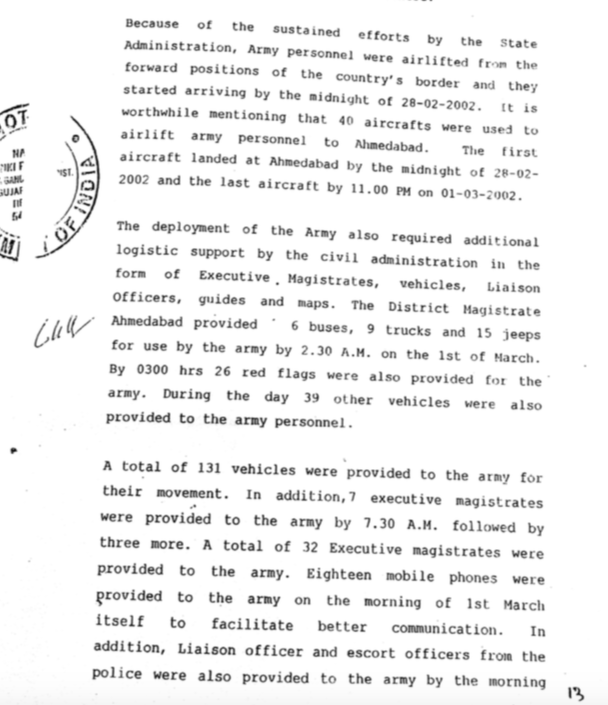
Note giving details of deployment of Army in Feb-March 2002 in Gujarat
The note says Army personnel were airlifted by using about 40 aircrafts from the border and landed in Ahmedabad by 28th February midnight. 6 buses, 9 trucks and 15 jeeps were sent for use by the Army by 2:30 am on 1st March 2002. During the day 39 additional vehicles were provided. A total of 131 vehicles were provided to the Army. Additional executive magistrates were provided to the Army. Escort officers from the police force were provided to the Army.
Personnel were airlifted to be deployed to Vadodara and Rajkot as well.
Details of Army deployment in Ahmedabad, Godhra and other parts of Gujarat
The note further states that the deployment of Army started in the early hours of 1st March and by 11 am, the Army had already started reaching some of the affected areas in the city.
The report further states that while parts of the state like Bhavnagar and Surat were initially unaffected by violence, riots soon started there as well. Following which, the Army was deployed there as well on subsequent days.
At the peak of deployment, as many as 26 Army columns were deployed in the state.
Rana’s writeup conveniently skips all this portion.
Somewhere in her writeup where Rana claims she is interacting with Narayan, where he claims Sohrabuddin encounter was fake and was on behest of politicians. “Amit Shah is behind bars because of that,” he claims to have told Rana. This conversation, as per Rana was taking place in December 2010. In October 2010, Shah had gotten bail and on Supreme Court’s order left Gujarat, first for Mumbai and then for Delhi. So, you see, the timeline does not match. He was later absolved of the charges. None of these things are mentioned.
She ends her chapter on Narayan with this quote, “Ashok Narayan had confirmed the bias and complicity of a state where blood was allowed to flow in one of the deadliest riots that spanned a period of three months.” Um, we just showed how it did nothing of that sort.
G C Raigar
TL;DR: ‘Modi gave rioters free hand’ conspiracy floated first by Haren Pandya does not hold true
Rana mentions in her writeup, “Raigar was one of the key figures in both the Mumbai riots and the fake encounters that ensued, two unfortunate, and yet glaring examples of criminal conspiracy in Gujarat.” Which Mumbai riots? Rana does not give any explanation on which Mumbai riots she is talking about. We are left to wonder.
Her so-called sting on Raigar too talks about how the state police department would dare not go against the ruling party otherwise they would face consequences, without much of an evidence on the same. One point in this alleged conversation Rana mentions how Narayan, ACS Home told her how the state government didn’t act during riots.
However, in his alleged conversation with Rana in the preceding chapter, Narayan in fact did accept how Modi recalled his male minister leading a riotous mob. While Narayan never named him in the snippet Rana published, even Rana never mentioned that the only high profile male minister who was accused of leading mob was Haren Pandya. Further, the fact that if a male minister was leading a mob and if chief minister recalled him, that would actually mean that the state government was doing its job of containing violence. Contrary to the claims being made by everyone in the writeup.
Rana very casually in her purported conversation with Raigar mentions how ‘someone’ had asked her to meet Rahul Sharma, IPS, who was posted in Bhavnagar when the 2002 riots break out. One of the things that is credited to him is that he gave shooting order on Hindu mob and also saved a few children trapped in a madarsa during violence. Conjectures are made that he was ‘punished’ for this.
Sharma also procured call records of politicians, bureaucrats and it is claimed these records ‘implicated’ a lot of people in the power. He, without permission, passed on the call records to Nanavati-Shah commission and hence was charge sheeted by Gujarat government. Sharma was represented by Modi hating lawyer-activist Mukul Sinha. One of the two persons Rana has dedicated her writeup to is Sinha.
Rana asked Raigar as well if the government instructed the officers to go ‘easy’ on the Hindus.
Q) Is it true that they wanted to go soft on Hindus [who were] against Muslims. A) Initially yes, not realizing that it will get so bad. But what you said is true. Q) But you officers were asked to go soft on Hindus, on rioters? A) Not we, not in general, but people who mattered, in important positions in certain places, in certain areas they were communicated.
Raigar, as well, mentioned how the police were not particularly asked to go easy. Conveniently, even he mentions, like most other before him, that ‘others were instructed’. With absolutely no proof, it boils down to my word vs hers.
Towards the end of her rant on Raigar, Rana writes, “Did Raigar not conclude that IPS officer Rahul Sharma was being victimized by the state for having saved the lives of Muslim students in a madrassa in Gujarat? Could we still believe that there was a media witchunt against the then Gujarat CM and his ministers? The evidence on these tapes stated otherwise.” Umm. Hardly the conclusion. Sharma was being hauled by state government over the call records he submitted to the commission and not for ‘saving lives of children in madarsa’. That is an absolutely unfair allegation to make.
Also, to reiterate, Rana is asking all these leading, investigative questions to top IPS officers in state whom she is meeting under pretext of being an NRI filmmaker making a film on Gujarat’s glory. And none of them think anything’s fishy.
One wonders if Gujarat needs better set of IPS officers who perhaps know how to keep their mouth shut.
P C Pande
TL;DR: 2008 Ahmedabad serial blasts and perpetual Muslim victimhood
Before meeting yet another top cop for her ‘sting’, Rana mentions an anecdote.
I called up Ajay (fake name of some photographer she claims she befriended in Ahmedabad).
There was a college festival for which he had some passes. He offered to pick me up. I put on a black kurta, lined my eyes with kohl and wore make-up and heels. Mike who was reading a book close by refused to accompany me suggesting I become a college student for a day and go out dancing and have a good evening. I desperately needed it. That evening I felt that there was somebody parked outside the Nehru Foundation whom I had spotted there in the morning as well.
Perhaps it was just a hunch. Instead of taking an auto to the college where the festival was to take place, I messaged Ajay to pick me up. That evening I took pictures, danced with the students, sang out loud. The next day the car that had been parked outside the previous day was missing.
Basically, this perpetual victimhood has been around since over a decade now.
Now, PC Pande was Commissioner of Police, Ahmedabad when the Godhra carnage took place. She introduces herself to Pande’s family as as Kayastha from Kanpur with family in UP and Mumbai. “…was far removed from religion. But I reassured him that the atmosphere of appeasement of Muslims in the country was bringing me closer to my religion.” See the insinuation to make it appear like everyone in Gujarat is bigoted? There was no reason for her play this card to Pande’s family but she claims she did, making it appear like her ‘leaning towards religion (Hinduism) will somehow earn her points.
As per Rana, Pande, too, mentions that in December 2010 Shah was in jail (which he was not). If he did say this, Rana could have mentioned in her writeup that Pande was wrong. But she does not mention it even once. This after beating her chest claiming that her ‘exposé’ sent him to jail. How do you not know details of case you claim to have been instrumental in? Beats me.
In same ‘sting’ conversation, Pande apparently asked ‘Maithili Tyagi’ to meet Amit Shah in Delhi as he was staying at Gujarat Bhavan to know more about Gujarat pride. It does not strike Rana strange that just few sentences prior she had attributed to Pande that Shah was ‘behind bars’ and now he was suddenly in Gujarat Bhavan in Delhi.
During the alleged interaction, Pande apparently mentions Kuldeep Sharma, IPS, who was given punishment posting for not toeing government line as head of Sheep and Wool Department. Rana again does not mention that in 2015, Sharma joined Congress. Rana’s writeup was published in 2016. If you, a very vocal critic of Modi, hail a cop for ‘standing up to power’, it is only fair if you disclose that cop’s political affiliations for the readers to judge.
When Pande was supposedly talking about the 2008 Ahmedabad serial blasts, Rana asked a leading question and the conversation went like this:
Q) I am glad Muslims were taught a lesson during the riots. A) Yes, you feel that, at one point of time ki jo hua theek hua, which is why I am so happy that I could get these people behind bars [Muslims]. It was the most satisfying thing. So people like Mukul Sinha and Teesta will say there is anarchy. Yes there is anarchy but who created that anarchy, these very Muslims. And not that I have any great love for political parties, but if the Congress is like this, I might as well be with the BJP.
Now, here again Rana puts up in brackets that ‘these people behind bars’ were Muslims. They were in fact terrorists who carried out serial blasts including at hospitals so as to cause maximum casualty. Recently many of these were convicted and given death sentence. While these terrorists are Muslims, but as we all know terrorism has no religion. So why would Rana put words in Pande’s mouth by claiming he meant Muslims when he was talking about the terrorists who carried out blasts.
Rana then claims to have asked Pande about Singhal. The conversation supposedly went like this:
Q) Give me some dope on this Singhal Guy, who heads the ATS. I am profiling him as a Dalit. A) Singhal, otherwise good officer, he’s from Rajasthan settled in Gujarat but he also was there in the Sohrabuddin encounter. They picked him also, he barely escaped and then he was in the Ishrat encounter.
If we are to believe this conversation happened, the city’s top cop mixed up timelines. Ishrat case happened in 2004, Sohrabuddin in 2005. So he could not have been picked up in Sohrabuddin encounter *after* Ishrat encounter. And if he did mix them up, wonder why Rana did not inform her readers that the former top cop was mixing up timeline and facts which could mean he may not be fully remembering details and all the claims would require further probe.
She claims Pande claimed the bodies were kept in civil hospital. Which is true, but there are two civil hospitals, one in Asarwa area (old, communally sensitive part of city) and other in Sola (outskirts of city, secluded, isolated – back in 2002). Neither Pande was clear (as per the conversation), not Rana clarifies to her readers about two separate hospitals. Since Rana had already insinuated in her ‘sting’ above that Godhra carnage bodies were brought in to instigate riots, it is important to mention that there are two separate civil hospitals and bodies were not brought into communally sensitive area like Asarwa.
Amusingly, as per the ‘sting’, Pande wasn’t too food of Teesta Setalvad, so-called anti-Modi activist accused of embezzling riot victim money and Mukul Sinha, the activist-lawyer who fought riot victim cases.
Q) I was asked to meet a social activist called Teesta? A) The biggest scoundrel ever. Take the number of this guy Uday Mahurkar, he’s a journalist with India Today. Q) And another lawyer called Sinha? A) Another scoundrel.
K Chakravarthi, IPS
TL;DR: Sanjiv Bhatt lied about ‘controversial meeting’ and more loopholes
We have now reached the end of the write up and her interaction is now with K Chakravarthi, DGP Gujarat Police when the riots broke out. He passed away in 2020. When tainted ex-IPS officer Sanjiv Bhatt claimed he was part of the ‘controversial meeting’ (which is now proven he was not present), he alleged he had gone to the said meeting with K Chakravarthi. Bhatt had claimed that he had reached to the meeting accompanying K Chakravarthi, the then Gujarat DGP in his car. However, Chakravarti had refuted Bhatt’s claim.
Another dubious anti-Modi cop who made the claim is one RS Sreekumar, who wrote so in the book. He had attributed the said ‘venting anger’ quote to Chakravarthi. Again, there has been no evidence of it.
In the alleged conversation with Rana, Chakravarthi also mentioned how Sanjiv Bhatt was not present in the so-called ‘controversial meeting’ at CM’s place to give ‘free hand to Hindus’. However, Rana does not probe Chakravarthi on the allegations of Bhatt where he claimed he went to the CM residence in Chakravarthi’s car.
Q) What’s with this Bhatt thing, that stuff that you were speaking of that day. The website you mentioned carried his testimony? Was it true? A) It’s not true in the sense that he was an SP-level officer. SP in the intelligence. And Mr Raigar was the Additional DG who was absent that crucial day. So he must have thought he should go and represent. But since it was a meeting of heads of departments, so he was not a participant. Mr Ashok Narayan will have to confirm what I am telling you.
How is your so-called investigation comprehensive if you have so many loopholes and loose ends? Rana wants us to believe the ‘controversial’ meeting took place because Pandya claimed it. However, she also wants to cast doubts in readers’ minds that Sanjiv Bhatt who claimed to have been part of the meeting was lying. Bhatt had claimed he went to the ‘meeting’ in Chakravarthi’s car, but Chakravarthi himself was present in a meeting at CM residence. However, he, too, mentions how he was part of the meeting at CM residence (which is an obvious meeting when riots have broken) but even he does not mention the ‘free hand’ quote. None of these things are clarified by Rana to her readers.
Maya Kodnani, Geeta Johri and others
TL;DR: Maya Kodnani feeds aamras to Rana and a bit about Haren Pandya
She then moves on to Maya Kodnani again. This time she talks about meeting Kodnani again in 2013. She claims her sting was done but was back in Ahmedabad for some documents. She claims Kodnani was behind bars in 2013 and ‘bordering on insanity’ as per one of the cops who visited her in prison. Suddenly Rana talks about lunching at Kodnani’s place. Rana does not mention whether this is a flashback scene or now that Kodnani was behind bars, she referred to the jail as her second home and, well, meeting her was her ‘lunch’ at Kodnani’s place.
Anyway, let us not nitpick on Ayyub, a Muslim voice for being brave and taking on the mighty Modi and Shah, about the free lunches she’s had. This is my favourite fiction in the entire writeup and forgive me for sharing the full writeup. It is too good to not be shared with everyone.
On one of my afternoon lunch visits during the sting to Mayaben’s place, she had served me aamras. We were past the mango season but she had puréed the mango and stored it in the freezer for her son who was to visit her from the US soon. Then she hugged me and said You eat, it will feel like my son is eating. You too are like my daughter Maithili.’ I had that afternoon explained to her the Gita Saar which I had allegedly learnt from my Sanskrit teacher father. She was impressed that a girl who had lived abroad had more knowledge about religion that those who lived here. ‘I say Maithili, we have lost all our culture. Look at these Muslims, even their kids are so kattar.’ I nodded in agreement.
Please bear with me as I collect myself after having doubled up in laughter. The very imagery of Ayyub giving ‘Gita Saar’ to Kodnani (who’s anyway supposed to be very religious, spiritual and Sanghi) while eating aamras and puri made by her and Kodnani telling her how Muslim kids too are so kattar.
Kodnani does mention how she knew she was innocent and how she was not there at the time she was accused of leading a mob in Naroda. Gujarat Vidhan Sabha camera clock proves she was in the assembly and not rioting. She was eventually acquitted in 2018.
After a long, winding monologue on ex-Gujarat Home Minister Haren Pandya, Rana puts up this question on his assassination: “Haren Pandya, one of the most loved Home Ministers of Gujarat had allegedly expressed his desire to appear before a citizen’s tribunal in the Gujarat riots case. Is the truth hidden somewhere in this offer? It is time we blew the lid off this maze of injustice and conflicting evidence.”
Nowhere has she mentioned allegations of witnesses who claimed Pandya led a mob in 2002 riots in Paldi. But his assassination by Islamists who wanted to avenge the riots and demolition of masjid in Paldi is suddenly ‘mystery’ because Pandya had suddenly turned anti-Modi and invented the ‘controversial meeting at CM residence to give free hand to Hindus’ bogey.
Conclusion
To conclude, Rana may or may not have stung those she has mentioned in her writeup. She may not have created fictitious stories and anecdotes on how she managed to build such strong network to get easy access to top cops of the state in a span of few weeks only but the ones who are hailed as having given ‘damning evidence’ in the ‘riots and fake encounter’ cases have had a bone to pick with the state government. In fact, some even joined Congress ‘to save constitution’. These bits of information Ayyub has hidden from her readers. Which shows her dishonesty.
What is interesting to note here is that not a single Modi-hating media house, including Tehelka, her own employer which had approved of the so-called stings, were ready to publish these conversations. We have media houses ready to believe that a fantastical, all controlling app straight from the sci-fi movies, has been created by the BJP to ‘spy’ on them. Yes, there is a constant feeling of victimhood amongst the Modi haters who’d even label their constipation as ‘Modi silencing their voice’. But even they have not believed these allegations enough to publish them.
The convictions, acquittals, political affiliations of the ones stung and who make ‘damning declarations’ on Modi and Shah are not mentioned at all, leaving readers misled and a victim to Ayyub’s own prejudices and hatred for the politicians. Which is fine, as an individual, she could totally hate the leaders, but then one should stop calling oneself a ‘brave investigative journalist’ if one cannot be objective enough to keep the hatred aside and provide facts to readers instead of surmises, conjectures and suppositions.
Hours after being barred by the Election Commission from entering a polling booth in Punjab’s Moga, The Punjab Police has registered a case against actor Sonu Sood for violation of the moral code of conduct during elections. On February 20, Sood was seen roaming in his hometown of Moga from where his sister was contesting the assembly elections on a Congress ticket.
On the accusation of influencing the voters while the assembly elections in Punjab were on, an FIR was registered against Sonu Sood on late Sunday night. The Police sought EC’s consultation on whether the moral code of conduct was broken by Sood or not. Today, The Punjab Police has registered a case against him under section 188 of the Indian Penal Code which encloses disobedience to order duly promulgated by a public servant.
Election commission impounds actor Sonu sood’s car to stop him from going to various booths in Moga, his sister is congress Candidate from Moga. pic.twitter.com/o1OaiyVfqG
On Sunday, Sonu Sood, alleging that money was being distributed at certain polling booths, stepped outside his house to check whether the same was happening to ‘ensure fair elections’. Sonu Sood, not being a registered voter in Moga violated the election rules as him entering the election booths could be suspected under campaigning for his sister Malvika Sood Sachar while the polls were on. Reportedly, his luxury SUV, a Ford Endeavour, was confiscated by the city police, while he was ordered to stay home by the EC officials.
The action against Sood was taken after SAD leaders complained that Sood was trying to influence voters at Landeke village near Moga. Moga Police station SHO Inspector Daljit Singh has informed that the case against Sonu Sood was registered for his violation of the code of conduct as noticed by the election officials.
India has responded strongly to the United Nations furthering the victim narrative peddled by Rana Ayyub, who has been accused by the Enforcement Directorate of misappropriation of public funds and PMLA violations. Responding to allegations of “judicial harassment” made by the UN, India said that nobody is above the law.
“Allegations of so-called judicial harassment are baseless & unwarranted. India upholds the rule of law, but is equally clear that no one is above the law. We expect SRs to be objective & accurately informed. Advancing a misleading narrative only tarnishes @UNGeneva’s reputation”, said India in responding to the UN.
Allegations of so-called judicial harassment are baseless & unwarranted. India upholds the rule of law, but is equally clear that no one is above the law. We expect SRs to be objective & accurately informed. Advancing a misleading narrative only tarnishes @UNGeneva’s reputation https://t.co/3OyHq4HncD
The United Nations had taken to Twitter rallying for Rana Ayyub. In a tweet, it had said, “Relentless misogynistic and sectarian attacks online against journalist @RanaAyyub must be promptly and thoroughly investigated by the #Indian ?? authorities and the judicial harassment against her brought to an end at once, stress @UN_SPExperts”.
Rana Ayyub allegedly siphoned off money she collected for charity
On February 10, OpIndia had reported that ED seized Rs 1.77 crore in Ayyub’s and her family’s accounts under the Prevention of Money Laundering Act. The ED has, in its attachment order, said, “Rana Ayyub has cheated the general Public Donors in a pre-planned manner and with the intention to cheat the general public donors”.
A few days after the expose, Ayyub alleged in a statement that she was being framed for her “journalism” and she did not misuse the money. However, all her claims were debunked by a Twitter user Hawk Eye who was the first to share details of alleged charity fraud last year.
Congress leader Priyanka Gandhi Vadra has passed off PM Modi’s allegations on Congress and SP having links with terrorists as a mere ‘pass time’. “Yeh Atankwaadi, kya fizool ki baatein?” she remarked on Monday while speaking during a political rally in UP’s Lucknow.
Even he knows that it’s not true. He is saying all this only because of polls. Why is there unemployment in UP when many govt posts are lying vacant? He should talk only on relevant issues: Priyanka Gandhi Vadra, Congress on PM Modi’s ‘Cong, SP sympathise with terrorists’ remark pic.twitter.com/y0khctkn2S
On Monday, Priyanka Gandhi Vadra participated in a roadshow for congress Candidate Lallan Kumar in Chinhat area of Lucknow for the ongoing Uttar Pradesh Assembly elections. When asked by news agency ANI about PM Modi’s remark of Congress party sympathizing with terrorists, she drifted away from the question while commenting with rhetoric. Without realizing the brevity of the allegation, she scoffed off saying, “He is saying all this only because of polls. Why are Airports being inaugurated now? Why are PSUs being sold which generate employment?” she asked.
Later she went on saying, “Yeh fizool ki baatein, Atankwaadi yeh Woh..kya fizool ki baatein hai yeh!?” (All of this is time-pass. What is this ‘terrorists’ and all? What nonsense is this?). PM Modi on Sunday, while speaking at Hardoi in Uttar Pradesh had remarked that the attitude of Congress and SP leaders is dangerous. He added, “These people call a terrorist like Osama (Bin Laden) with ji (honorific). These people shed tears on the death of the terrorists involved in the Batla House encounter… We have to remain alert to such people and such political parties. They can even put the country at stake for the chair. They also play with the security of the country.”
With a statement like this and while refuting a serious allegation, Priyanka Gandhi has diluted the context as well as the brevity of the term. While terrorism remains one of the primary challenges before the nation, terming it as a ‘pass time’ will not go a long way. In the past, There have been instances where Congress leaders’ responses to calls for terrorism as well as actions against it have been insensitive. A couple of days after the 26/11 terrorist attacks broke in Mumbai, Rahul Gandhi was seen partying hard at a farmhouse in Delhi in the ongoing wedding ceremonies of his childhood friend. A whole bogey of Congress leaders had started peddling the ‘Saffron Terror‘ narrative then, which was later exposed by a former bureaucrat from the Congress era RVS Mani.
Delhi-based news agency NDTV has decided to opt-out of the TRP rating list published by BARC (Broadcast Audience Research Council India), a statement released by the company on their website said. This came after the BARC was asked by the I&B Ministry to resume the release of viewership ratings, which were stopped after allegations of the fake TRP scam monitored by some leaders in the Maharashtra government.
In October 2020, the then Mumbai Police Commissioner Param Bir Singh had accused Republic TV of ‘TRP manipulation’. It was alleged by the Mumbai Police that Republic TV head Arnab Goswami had illegally paid some households to keep some channels running at home to boost the TRP of Republic. While there was no mention of Republic TV in the FIR filed by Mumbai Police, BARC had made its mind to abort publishing TV audience ratings amidst ongoing controversy and allegations.
During an interrogation in February 2022 by the ED, however, Pam Bir Singh had revealed in length how the allegations against Arnab Goswami were fake and that the ‘TRP Scam’ was a hoax. While talking about how the ‘TRP Scam’ was staged to target Goswami, Param Bir Singh said, “Sachin Vaze was taking briefing and giving instruction in the TRP case directly from the ex-Home Minister (Anil Deshmukh)”. Param Bir Singh had revealed how Vaze and Deshmukh were carrying out a false investigation sanctioned by the powers of the state while the latter personally wanted Republic Media Network’s Editor-in-Chief Arnab Goswami to be arrested in the made-up TRP case.
A month earlier, on January 12, 2022, the Central Information and Broadcasting Ministry had issued a statement asking BARC to resume the release of ratings with immediate effect. News Broadcasters Federation led by Arnab Goswami had also expressed displeasure over BARC’s lethargic action to release the viewership ratings. It is to be noted that the TRP ratings help to advertise agencies with the data of performance ratings of TV channels upon which they decide in which channels to invest.
The statement from NDTV has come at a time when BARC is about to release the previous TRP rating data of TV channels after a halt of 15 months. “NDTV is among the networks that have chosen to not be included in the ratings which are soon to be released for the last few months…consumers have been presented with fake news on the size and type of audience attracted by different channels; their money has been misallocated on the basis of this fake news.” the statement added.
It also looks like NDTV has backed out of the rating list fearing the abysmally low viewership it attracted during the year 2020. If the last weekly data (for September 19-25, 2020) released by BARC is considered, Republic TV’s viewership in the 9 PM primetime slot accounted for 77% of the total viewership among both Hindi and English language channels. NDTV, which calls itself a pioneer in English news journalism grabbed just 1.3% share in the viewership and could not even stand in the top 5 shows broadcast in the 9 PM slot.
NDTV’s fear-mongering and agenda-driven journalism could not stand the test of time while fearing which it has also taken a stand – not to stand at all in the viewership rating table.
Sunni leader Abdul Hameed Faizi Ambalakkadavu has attacked Kerala Governor Arif Mohammed Khan for visiting the Sabarimala temple saying that the former has “opened the door out of Islam.”
Ambalakkadavu, quoting details from news reports on the Kerala governor’s visit to Sabarimala, stated Arif Mohammad Khan had observed all the rituals that a devout Hindu would. “Dear friends, we saw our Governor Arif Mohammad recently visiting Sabrimala offering prayers and poojas at the temple. We saw him performing all the rituals in the true form and thus opening the door out of Islam,” said the Sunni leader.
“Governor’s name will create an impression that he is a Muslim by faith. He has the name of Prophet Muhammad and Arif is the term that refers to a person who knows Allah very closely,” Ambalakkadavu said, adding that the governor’s remarks on hijab should not be regarded as a comment by a Muslim.
Notably, the Kerala Governor had vociferously spoken against the pro-hijabi movement in Karnataka, saying that Muslim women will be losers if the ‘right to hijab’ argument is accepted. Moreover, he had also lambasted Congress and other opposition parties for exploiting the hijab issue for vested interests.
Continuing with his ad hominem attack against Arif Mohammed Khan, the Sunni leader further said that the governor is deriding Islam hoping that it would fetch him new positions in the BJP. “It’s a stipulation in Islam that if a Muslim visits the place of worship of other religions, follows their customs and dons their attire, he is out of Islam,” the Sunni said. “It is an unquestionable fact that if one questions the basic tenets of Islam, he will be out of the religion. I am not saying that Arif Mohammad Khan has become a non-Muslim or Kafir. It is up to the religious scholars to pronounce fatwas. I am only referring to laws in Islam,” he said.
Ambalakkadavu added that there should be no doubt as to whether Khan, who speaks about the hijab and Sharia, is an Islamic scholar or not. He described his acts as those of a man who has “opened the door out of the religion,” rather than those of a Muslim.