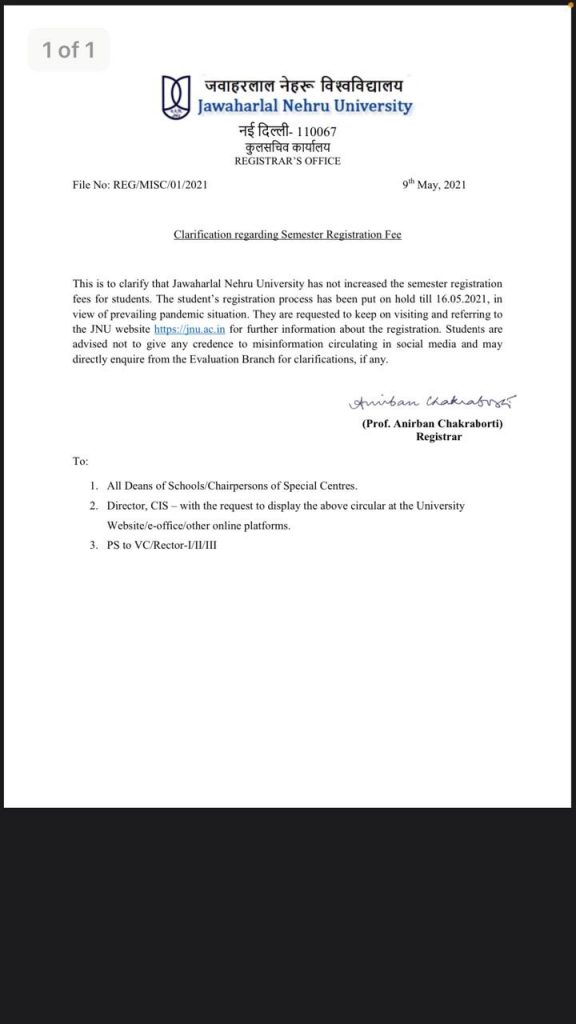
The JNU administration has clarified that it has not increased its fees for semester registration of students. In a statement by Professor Anirban Chakraborti, he has clarified that the fees have not been increased.
The statement by the registrar of the University also said that registrations have been put on hold by the Jawaharlal Nehru University till the 16th of May due to the Covid-19 pandemic. “Students are requested not to give any credence to misinformation circulating in social media and may directly enquire from the Evaluation Branch for clarification, if any.”
The statement by Registrar of JNU
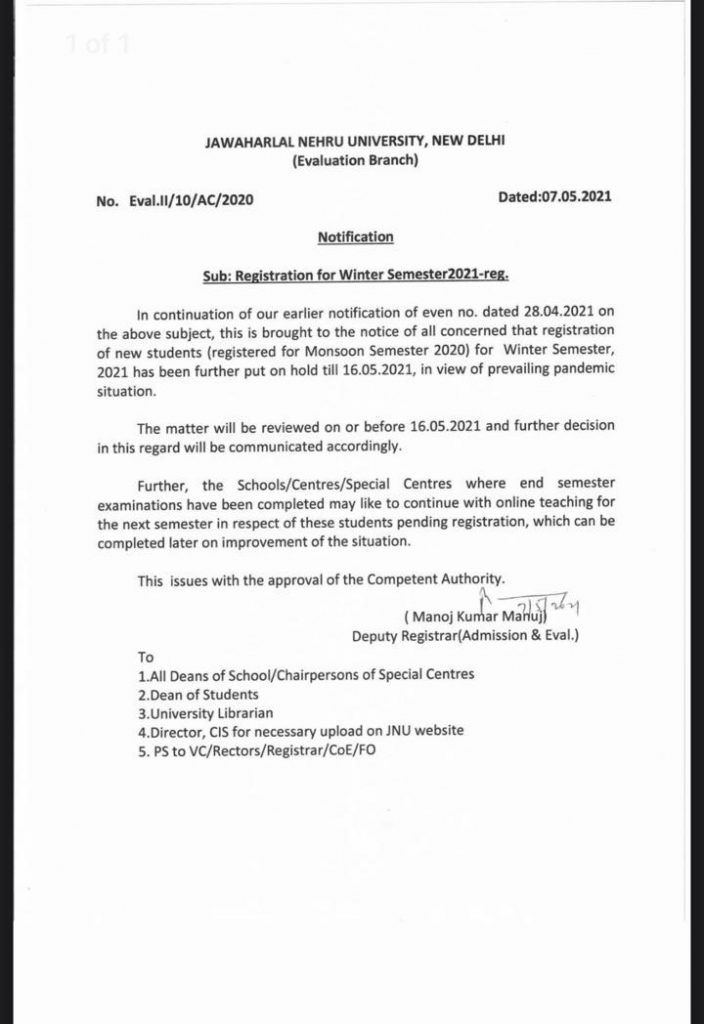
Manoj Kumar Manuj, Deputy Registrar (Admission & Eval.), has also issued a statement confirming the same. He said that registrations have been put in place till further notice.
Statement by Manoj Kumar Manuj, Deputy Registrar (Admission & Eval.)
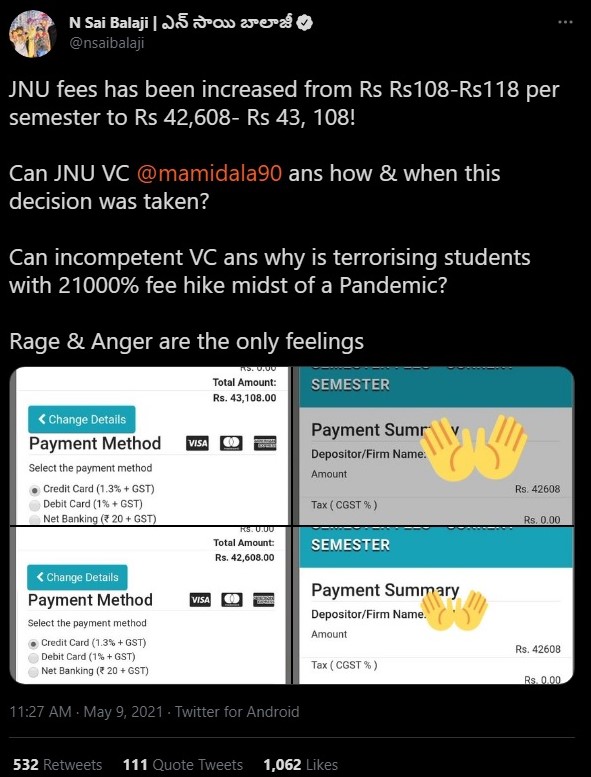
The clarification by the JNU administration comes after AISA President and former JNUSU President N Sai Balaji had claimed that fees at the University had been hiked to Rs 42,608- Rs 43,108 from Rs 108-118.
Source: Twitter
There have been protests in the past as well over fears of fee hike at the University. Clashes have often erupted at JNU over the administration’s alleged “anti-student” policies.
On May 8, Defence Research and Development Organisation (DRDO) announced that it got approval for an anti-Covid-19 therapeutic application of the drug 2-deoxy-D-glucose (2-DG) from the Drugs Controller General of India (DCGI). The Covid-19 application of the drug has been developed by a lab of Defence Research and Development Organisation (DRDO), Institute of Nuclear Medicine and Allied Sciences (INMAS) and Dr Reddy’s Laboratories (DRL), Hyderabad. The drug was originally developed for the treatment of cancer.
An anti-COVID-19 therapeutic application of the drug 2-deoxy-D-glucose (2-DG) has been developed by INMAS, a lab of DRDO, in collaboration with Dr Reddy’s Laboratories, Hyderabad. The drug will help in faster recovery of Covid-19 patients. https://t.co/HBKdAnZCCPpic.twitter.com/8D6TDdcoI7
According to the press released by DRDO, the results of the clinical trials showed the molecule helps in quicker recovery of hospitalised patients and reduces the requirement of supplemental oxygen. The Covid-19 patients who were treated with 2-DG showed a higher proportion of negative conversions. Experts suggested that the drug will be beneficial for the people suffering from Covid-19.
Although Covid-19 and Cancer are completely different diseases, the same drug has been found effective because of the similarities between the virus and cancer cells. But the virus and cancer cells replicate very fast, which means they consume lots of energy. Glucose is the main source of energy in living beings, and thus both of them use glucose very fast to survive and replicate. Therefore, these cells also consume a high amount of the drug 2-deoxy-D-glucose. As the drug and inhibits both glycolysis as well as glycosylation, it hampers the growth of the virus.
History of the drug trials by DRDO
In April 2020, INMAS-DRDO scientists conducted laboratory experiments with the help of the Centre for Cellular and Molecular Biology (CCMB), Hyderabad. The results showed it works effectively against the SARS-CoV-2 virus and prevents viral growth. Based on the results, DCGI’s Central Drugs Standard Control Organization (CDSCO) gave permission for Phase-II clinical trials of the drug in May 2020.
DRDO and DRL found that it was safe for Covid-19 patients and improved the recovery rate. Phase IIa was conducted in six hospitals, while Phase IIb (dose-ranging) clinical trial was conducted in 11 hospitals across the country. A total of 110 patients were treated with the drug. The patients treated with 2-DG showed faster symptomatic cure compared to Standard of Care (SoC) on various endpoints. There was a significant favourable trend 2.5-days difference in terms of median time to achieving normalisation of specific vital signs parameters compared to SoC.
In November 2020, DCGI gave permission for the Phase-III clinical trials, which was conducted on 220 patients. It ended in March 2021. Detailed data of the Phase-III study was presented to DCGI, which further granted permission for emergency use of the drug as an adjunct therapy in moderate to severe COVID-19 patients.
Research paper published by Patanjali on 2-DG molecule
Before DRDO conducted trials on the drug, scientists and experts from Patanjali Ayurved Ltd, Jain Vishwa Bharti Institute, and Saveetha Institute of Medical and Technical Sciences had published a paper in March 2020 on the possible use of the molecule for Covid-19. The paper titled “Glucose antimetabolite 2-Deoxy-D-Glucose and its derivative as promising candidates for tackling COVID-19: Insights derived from in silico docking and molecular simulations” talked about the research done by the institute to understand 2-DG’s effect on the SARK-CoV-2 virus that causes Covid-19. Patanjali was the first Indian company to do a study on the drug just when the pandemic had just hit the world.
2-deoxy-D-glucose (2-DG), which is a radio-chemo-modifier drug used for optimising cancer therapy, and one of its derivatives (1, 3, 4, 6-Tetra-O-acetyl-2-deoxy-D-glucopyranose) were investigated by conducting ligand-receptor docking. Binding pose depictions of ligands and viral receptors were assessed by employing molecular dynamics analysis. The researchers used Molinspiration and Toxicity Estimation Software tools to determine the drug likeliness, bioactivity indices and ADMETox values and found that 2-DG can efficiently inactivate the viral receptors leading to incapacitation of the SARS-CoV-2 virus.
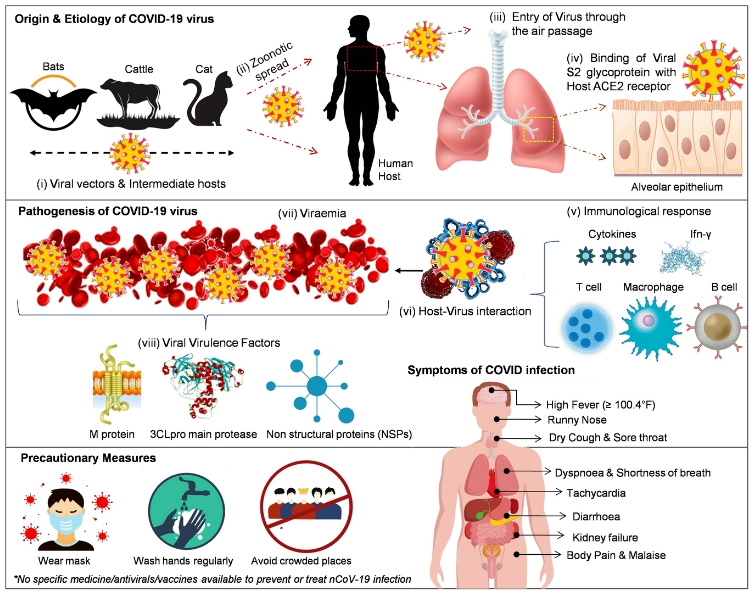
Graphics from research paper published by Patanjali
The paper suggested, “The present in silico study supports the potential benefits of using 2-DG and its glucopyranose derivative as repurposed drugs/prodrugs for mitigating the novel COVID-19 infection. Since both these moieties present no signs of serious toxicity, further empirical studies on model systems and human clinical trials to ascertain effective dose-response are warranted and should be urgently initiated.”
An in silico study refers to a study done on Computer, and it is widely used in biology, medicine and other experimental sciences. In the Patanjali study, 3D models of the SARS-CoV-2 virus and the molecules of the study drug were studied in various software programs to see how the drug works on the virus.
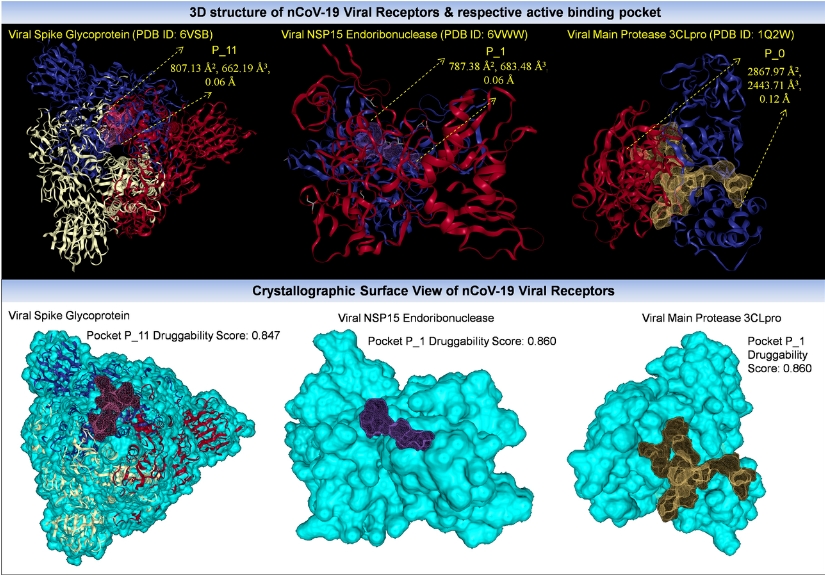
The researchers had obtained the crystal structures of SARS-CoV-2 spike glycoprotein, viral nuclease and protease from RCSB Protein Data Bank, obtained the structure of 2-deoxy-D-glucose and 2-DG derivative from PubChem database, and 3D structures of all of them were introduced in Argus Lab (4.0.1) program.
Graphics from research paper published by Patanjali
The researchers had obtained the crystal structures of SARS-CoV-2 spike glycoprotein, viral nuclease and protease from RCSB Protein Data Bank, and 3D structures of all of them were introduced in Argus Lab (4.0.1) proram.
After converting the hydrogenated ligand molecules into pdb format using Open Babel (2.4) interface, online tool DoG Site Scorer was used to predict the possible binding sites in the 3D structure of spike glycoprotein, viral nuclease and viral main protease.
Hex Cuda 8.0.0 software was used for docking analysis of pdb structures of the study molecules with the viral receptors. In this study, the binding free energy of the receptors to ligands was calculated using the GROMACS tool. After that, Molinspiration software was used to analyse molecular descriptors and bioactivity scores of the ligands and standard chemotherapeutic agents.
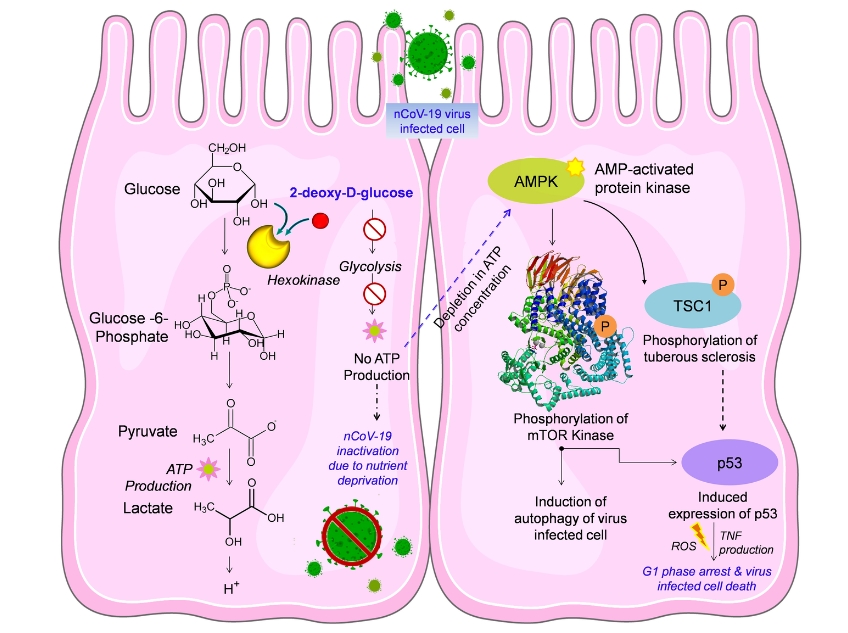
Graphics from research paper published by Patanjali
Following the analysis of the results of the study, the researchers had concluded that 2-DG may considerably reduce the infectivity and virulence of nCOVID-19 by inhibiting both the entry and the replication of the virus inside the host cells. They had suggested further study on model systems infected with nCOVID-19 to verify this possibility before conducting human trials.
Experts mentioned Patanjali’s study while thanking DRDO
Several experts, including JNU’s Anand Ranganathan, mentioned the research done by Patanjali in March 2020.
Congrats to DRDO for EUA for 2deoxy-D-glucose, 2DG. An anti-cancer drug, its MoA might be inhibiting glycolysis in virus-infected cells.
Also appreciate @yogrishiramdev‘s Patanjali for first suggesting use of 2DG although their hypothesis was that 2DG directly attacks the virus. pic.twitter.com/u9sRCJpL0q
Ranganathan said, “Congrats to DRDO for EUA for 2deoxy-D-glucose, 2DG. An anti-cancer drug, its MoA might be inhibiting glycolysis in virus-infected cells. Also, appreciate Yogrishi Ramdev’s Patanjali for first suggesting the use of 2DG, although their hypothesis was that 2DG directly attacks the virus.”
Researchers at Patanjali were the first to publish a paper hypothesising the potential benefit of glucose analogue in COVID19 treatment. But Dr Reddy’s brings it into the market and gets the emergency approval. https://t.co/k23MKydgDf
Dr Amit Thadhani said, “Researchers at Patanjali were the first to publish a paper hypothesising the potential benefit of glucose analogue in COVID19 treatment. But Dr Reddy’s brings it into the market and gets the emergency approval.”
Drug to hit the market soon
The drug will be available soon for the Covid-19 patients, and it could be taken orally by dissolving it in water. It accumulates in the virus-infected cells and prevents virus growth by stopping viral synthesis and energy production. Its selective accumulation in virally infected cells makes this drug unique. While talking to Aaj Tak, Anant Narayan Bhatt, scientist DRDO, said the trial was conducted on moderate and severe patients, but the drug should be effective for mild patients as well.
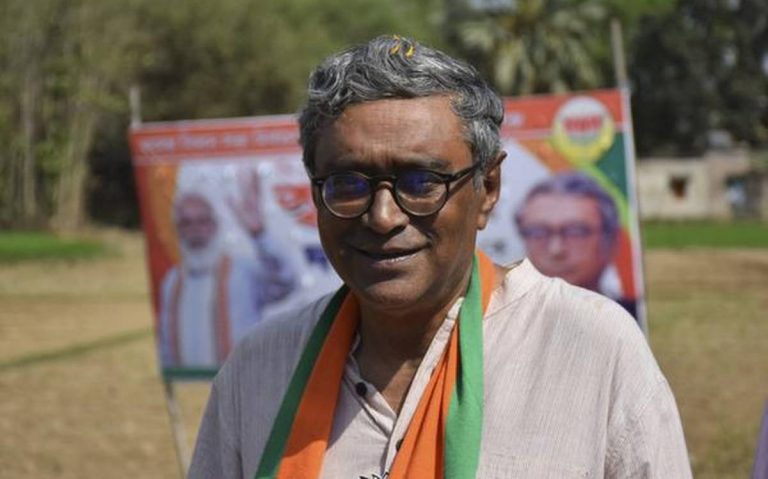
Swapan Dasgupta, former Rajya Sabha MP and an eminent member of the Bhartiya Janta Party who contested the recently concluded West Bengal state assembly polls today registered a formal complaint with the Tarakeswar police station on the targeted persecution of the BJP workers in the post-poll violence.
Dasgupta in his complaint to the police mentioned on record the names of all 260 victims, some of whom have been unable to return home after the TMC goons unleashed violence post their victory in the state.
Went to Tarakeshwar PS to register a formal complaint of the persecution of BJP workers. I included a list of 260 victims of the political violence (including those who are unable to return home). I think it was important to put it on record. pic.twitter.com/BqzcUdKkI8
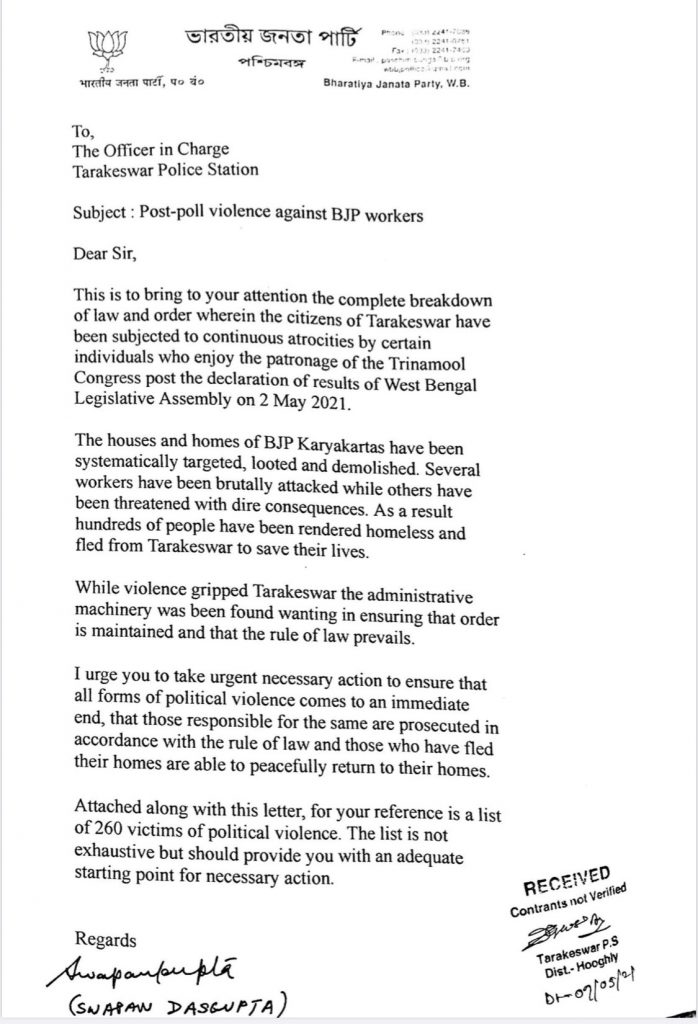
Urging the officials to take necessary action, Dasgupta in his letter specified, “The houses and homes of BJP Karyakartas have been systematically targeted, looted and demolished. Several workers have been brutally attacked while others have been threatened of dire consequences. As a result hundreds of people have been rendered homeless and fled from Tarakeswar to save their lives.”
Official complaint filed by Swapan Dasgupta
The letter also mentioned that the list of 260 is not exhaustive but should act as a starting point to take necessary action.
Swapan Dasgupta has been consistently raising awareness about the post-poll violence that has unearthed the broken system of law and order in the state of West Bengal.
TMC government under attack for allegedly unleashing violence in Bengal
From ministries to organizations to several BJP as well as Left leaders, everyone has taken notice of the fast crumbling law and order situation in West Bengal. After regaining power in the state, the TMC hoodlums allegedly went on a rampage, systematically targeting BJP workers and supporters.
Taking cognisance of the matter, the MHA constituted a four-member fact-finding central team to assess the ground situation in the state. A detailed report has been submitted to the ministry.
Roopa Ganguly and other prominent women BJP leaders were arrested in Kolkata for protesting against violence in West Bengal on Friday.
National Commission for Women (NCW) chief Rekha Sharma who had visited the state to take stock of the situation after reports of rape and targeted harassment of women went viral, was refused an extension of stay. Sharma went on record to say that the condition of women in the state due to the post-poll violence was indeed worrisome.
Yesterday I extended my visit to Kolkata for a day but state Gov. Didn’t want me to, so they sent this message to me as if I was here for a pleasure trip. In this 2 days trip met many women, saw so much pain in their eyes and recorded horrible stories. #WestBengalViolencepic.twitter.com/joxqMwXSPx
The Indic Collective Trust (ICT) on May 3, 2021, a day after the results of the Assembly elections were declared, had moved the Supreme Court through advocate Suvidutt Sundaram over the post-poll violence that has erupted in West Bengal.
Not just the nation, but even the Indian diaspora abroad took out demonstrations in various countries saddened by political attacks and killings in the state of West Bengal.
Bollywood actress Kangana Ranaut has said that she believes she will not survive a week on Instagram after one of her posts were deleted on the social media platform. She has moved to posting her thoughts on Instagram after she was permanently suspended from Twitter.
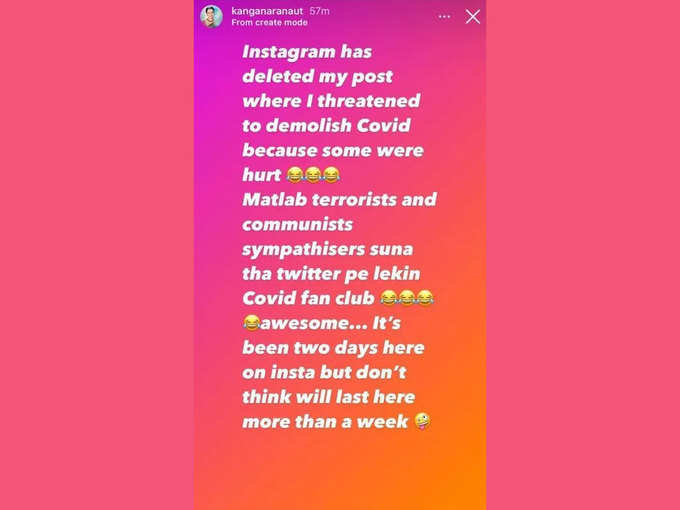
Kangana Ranaut has said in an Instagram story, “Instagram has deleted my post where I threatened to demolish Covid because some were hurt.” “It’s been two days here on Insta but don’t think will last here more than a week,” she added.
Image Source: Navbharat Times
It is suspected that her post was deleted because she had referred to Covid-19 as a ‘small time flu’.
Recently, an FIR was registered against Ranaut as well for one of her Instagram stories where she had criticised West Bengal Chief Minister Mamata Banerjee for the outbreak of post-poll violence in the state.
The complaint the FIR was based on stated, “Ms Ranaut has posted several posts from her verified official Instagram handle bearing url: httpa://instagram.com/kanganaranaut?igshid=2yruw6zd7j in the ‘Story’ section. She has also distorted and maligned the image of the Hon’ble Chief Minister of West Bengal – Smt. Mamata Banerjee. Hence she is to be charged against hate propaganda to incite violence in West Bengal.”
Kangana Ranaut had referred to Mamata Banerjee as a demoness and compared her to Tadaka from the Ramayana.
As the Chinese coronavirus pandemic rages on, social media is flooded with requests of essentials such as medicines, hospitals, beds and oxygen. While everyone is doing their bit to help ease the suffering, some seem to have misused the platform to either spread fake requests or dupe some people of their money promising medicines in return.
Amongst many who have been very vocal about helping out people amid the crisis has been Bollywood actor Sonu Sood. However, recently he was accused of taking credit for arranging plasma for a COVID patient when he has not done so.
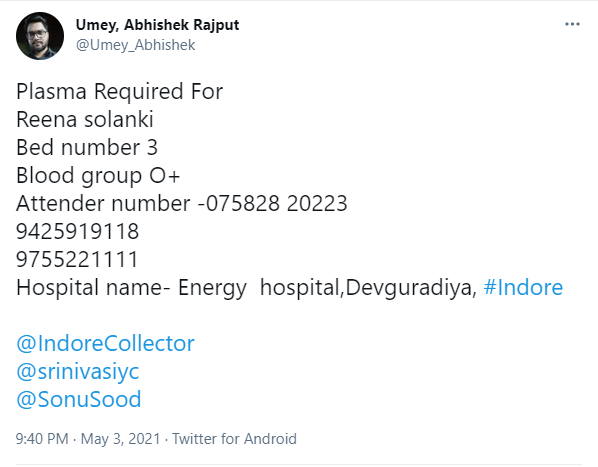
A Twitter user, named Umey Abhishek Rajput (@Umey_Abhishek), took to Twitter on 3rd May, 2021 to seek help in arranging plasma for a Covid-19 positive patient named Reena Solanki. He had shared details such as the name and location of the hospital, the telephone numbers of the patient attendees, and the blood group of the patient. He had also tagged actor Sonu Sood in his tweet.
Screengrab of the tweet by Umey Abhishek Rajput
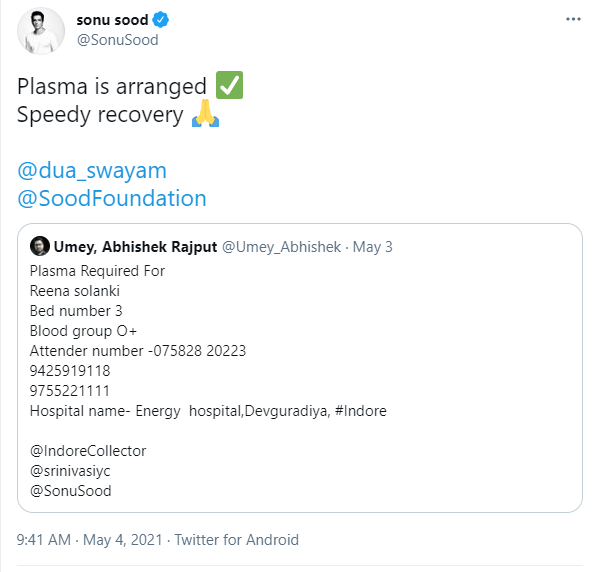
About 12 hours later on Tuesday, Sonu Sood responded to his message for help. He informed the Twitter user that he had arranged plasma for the patient named Reena Solanki. In a tweet, the actor said, “Plasma is arranged. Speedy recovery.”
Screengrab of the tweet by Sonu Sood
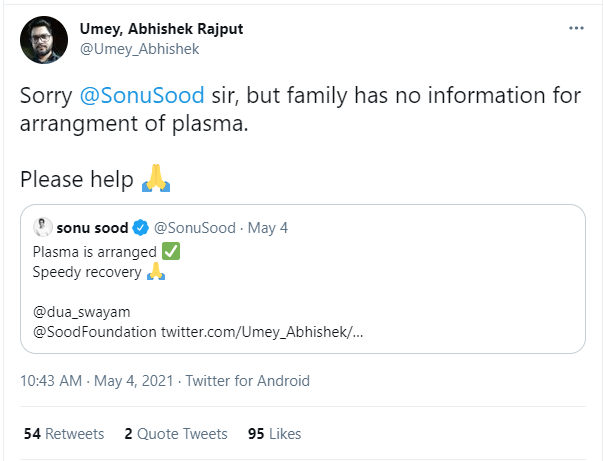
An hour after Sonu Sood claimed to have arranged for the plasma, the same Twitter user debunked his claims. “Sorry, Sonu Sood sir, but family has no information for (about) arrangement of plasma,” he clarified.
Screengrab of the tweet by Umey Abhishek Rajput
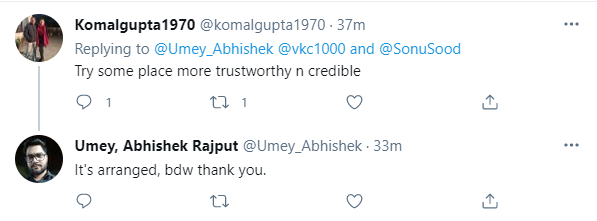
While responding to another tweet by a user named Komalgupta1970, who asked him to find a more credible and trustworthy source, Umey Abhishek Rajput said, “It’s arranged, by the way thank you.”
Screengrab of the response by Umey Abhishek Rajput
When OpIndia reached out to the attendee, we were informed that the patient had undergone two rounds of plasma therapy. On being asked whether Sonu Sood arranged for it, he outrightly denied any help received from the Bollywood actor. “We had to arrange plasma our own,” he emphasised.
Sonu Sood claims to ‘prophetically’ arrange bed for a deceased Covid-19 patient
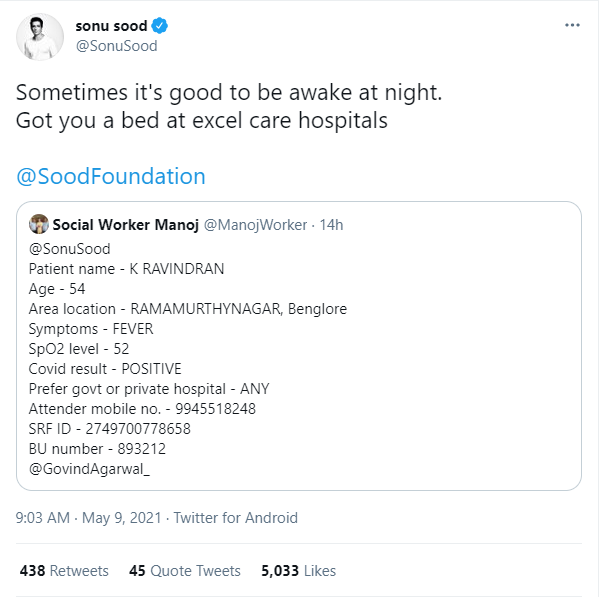
In another case, Sonu Sood claimed to have arranged a hospital bed for a patient who had succumbed to Coronavirus infection. On Sunday (May 9) night, a Twitter user (@ManojWorker) tweeted about an urgent requirement of a hospital bed for a 54-year-old patient named K Ravindran. While responding to the tweet at 9 am in the morning, Sonu Sood claimed, “Sometimes it’s good to be awake at night. Got you a bed at Excel Care hospitals.”
Screengrab of the tweet by Sonu Sood
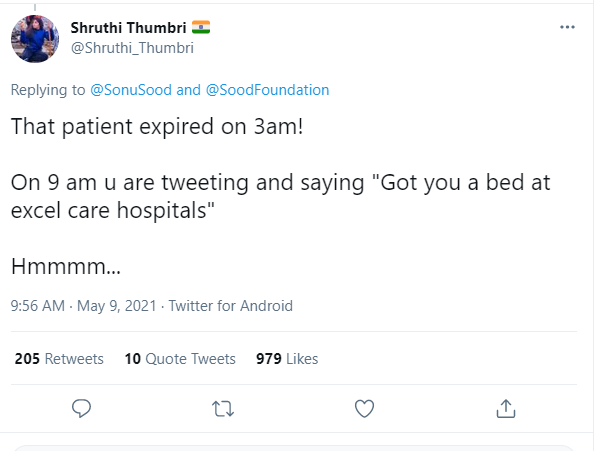
A popular Twitter user, Shruthi Thumbri pointed out that the patient had passed away in the night at 3 am. “On 9 am, you are tweeting and saying, “Got you a bed at excel care hospitals. hmmmm,” she pointed the logical fallacy in the actor’s statement.
Shruthi’s tweet
She even shared an audio recording saying that the patient’s caretaker confirmed that no bed was made available by Sonu.
Hadd Hai!! ?
Confidence ho to Sonu sood jaisa hona chahiye!
Aur kitna girna chahte ho Bhai ? ?
This is second round of discussion with patient's relative!
Here's the video with subtitles, Listen and decide! ??
— Shruthi Thumbri ?? (@Shruthi_Thumbri) May 9, 2021
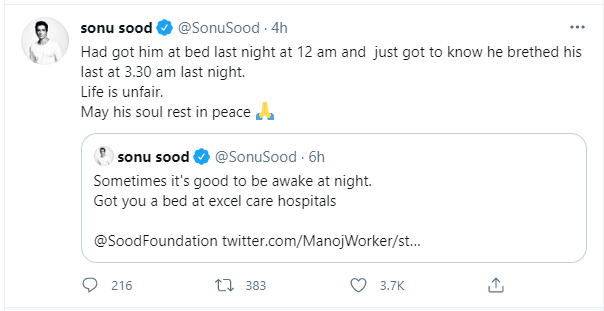
On being faced with criticism, Sonu Sood said, “Had got him at bed last night at 12 am and just got to know he breathed his last at 3:30 am last night. Life is unfair. May his soul rest in peace.”
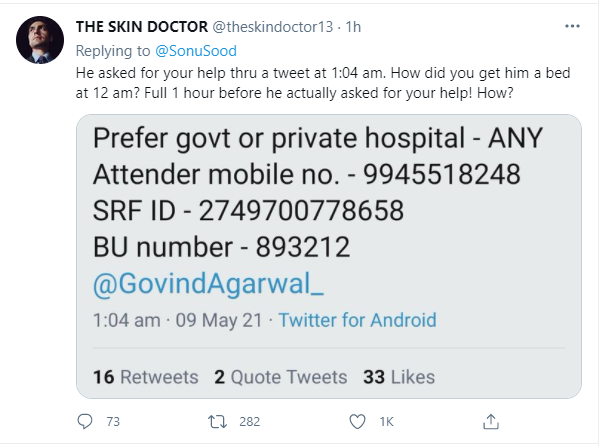
However, there are still things that don’t add up. Popular satirist ‘The Skin Doctor’ pointed out how the arrangement of bed at 12:00 midnight would not add up if the request itself came up at 1 AM. He tweeted, “He asked for your help through a tweet at 1:04 am. How did you get him a bed at 12 am? Full 1 hour before he actually asked for your help! How?”
Another Twitter user, Scar, sarcastically questioned the authenticity of his claims. “Got him bed an hour before his tweet, time Machine Sonu Sood,” he tweeted.
Got him bed an hour before his tweet, time Machine Sonu Sood ?
After multiple media reports and social media posts on how Sonu Sood was helping out migrants go back home last year amid the nationwide lockdown, Sood had written an autobiography, ‘I am no no messiah’.
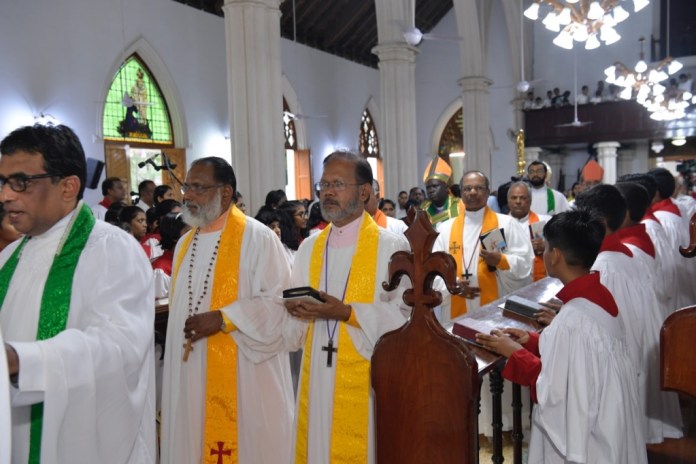
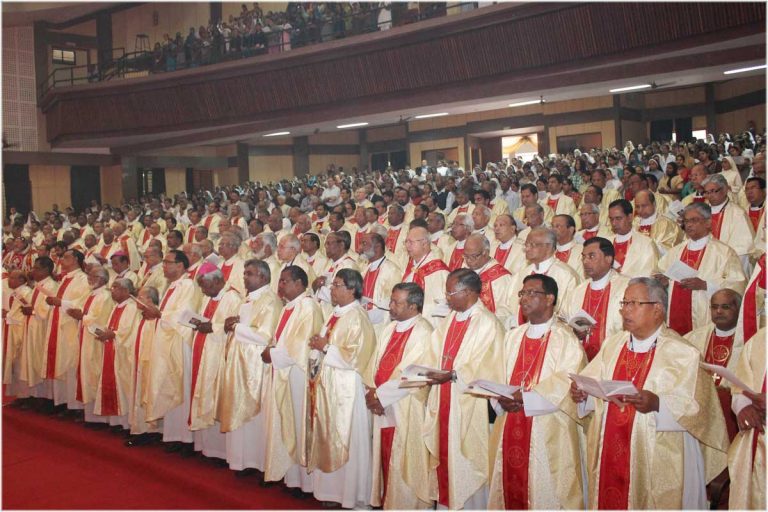
As per reports, Munnar Police have registered a case in Idukki, Kerala, against over 400 Christian priests for unlawful gathering at a time when the state is facing a severe surge in Covid-19 cases. All the priests are members of CSI Church. They have been booked under different sections of the Indian Penal Code and the Kerala Epidemic Disease Ordinance.
The gathering took place in Munnar between April 13 and April 17. The annual retreat of the church violated the protocols enacted by the state government to control the Covid-19 surge in the state.
Kerala Government and District Administration were approached by one Sabu Stephen, a member of CSI Church, against the gathering. However, CSI Church claimed that there was no violation during the retreat.
Based on the preliminary inquiry, the police said that the gathering violated the protocols. The Circle Inspector said, “At the time of the event, only 100 people were allowed for indoor and up to 200 for outdoor events. Based on the inputs from Devikulam Tehsildar, we have registered a case.”
Stephen, in his complaint, alleged that after the retreat, 100 priests contracted Covid-19, and four of them died over the past few days. On the other hand, CSI Church claimed only 20 contracted the disease, but it was not linked to the retreat that took place in Munnar.
The annual retreat that allegedly killed four priests
As per reports, the annual retreat took place between April 13 and April 17. The priests had travelled to Munnar from LMS Church in Thiruvananthapuram in a bus. Rev Bijumon, 52, the vicar of CSI church, Kazhukode, near Vattappara, passed away due to COVID on April 29. Rev Shine B Raj, 43, the vicar of CSI church, Punnakkamugal, near Thirumala, lost his battle to COVID on May 4. Many infected priests are currently undergoing treatment at Dr Somervell CSI Medical College Hospital at Karakonam, while some are home quarantined.
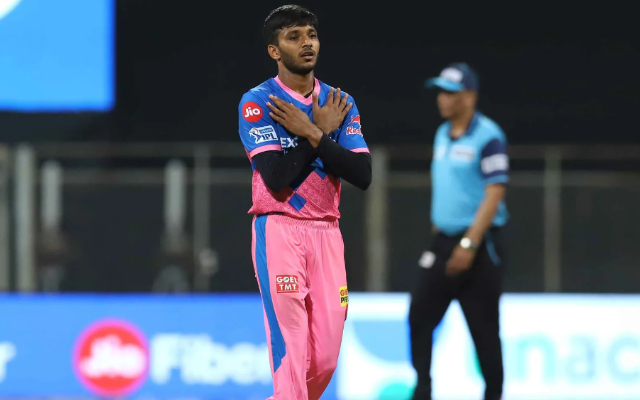
Rajasthan Royal pacer Chetan Sakariya, who was being lauded for this performance in IPL 2021, lost his father to COVID on Sunday.
Sakariya had diverted his IPL payment for the treatment of his father. Having lost his brother early this year, Sakariya wanted to make sure his father, who had tested positive for Covid-19, gets the best possible treatment.
The franchise in a Tweet assured all possible support to the young player.
It pains us so much to confirm that Mr Kanjibhai Sakariya lost his battle with Covid-19 earlier today.
We’re in touch with Chetan and will provide all possible support to him and his family in this difficult time.
“I was lucky because I had received my part payment from Rajasthan Royals a few days ago. I straight away transferred money back home, and that is helping my family the most in my toughest time,” Sakariya had said in an interview.
Chetan Sakariya, who was bought for Rs 1.2 crore by the Royals at the IPL 2021 auction, narrated his financial condition, dreams and wished for his father’s speedy recovery.
“I am the only member in my community who has earned so much. My mother doesn’t know how many zeros are there in crores. Our first priority is to see my father back and then build a home,” he added in the interview.
The news of his fathers demise despite putting all his efforts to save him reflects the grim situation prevailing in the nation because of the pandemic.
Unsure of his future, Sakariya in the interview said, “People are saying stop IPL. I want to tell them something, I am the only bread earner in my family. Cricket is the only source of my earnings.”
IPL 2021, however, was suspended indefinitely on May 04 after multiple players tested positive for COVID-19. From a Sun Risers Hyderabad player to Chennai’s bowling coach to Kolkata Knight Riders bowlers, multiple individuals had been infected with the Covid-19 virus.
Earlier this week, the Indian Women’s Cricket team allrounder Veda Krishnamurthy lost her sister and mother within days of being tested positive of coronavirus.
As many as nine priests from various churches in Kerala have died during the second Covid wave over the past ten days after leading religious services in the state, reports New Indian Express.
According to the reports, six of the priest who died due to Covid-19 belonged to the Syro Malabar Church, and three are from the CSI church. The Christian priests, who have led religious services despite the deadly pandemic, have now got exposed to the Covid-19.
Nearly 15 Christian priests have died during the second Covid wave across the country since last month. Senior Bishop Archbishop Emeritus Antony Anandarayar, former archbishop of Puducherry-Cuddalore, also succumbed to Covid on Tuesday.
Reportedly, more than 100 priests from various Christian denominations have tested positive for the Chinese pandemic and are under treatment or in quarantine in the state after turning positive. Some of them are in critical condition, adding tense situation across various congregations.
Fr Bovas Mathews of the Syro Malankara Church said seven of the priests who lost their lives recently were from the Thrissur archdiocese under the Syro Malabar Church.
“Priests of various churches in the country are vulnerable to Covid infection because of the nature of their work and services towards society. They had to travel a lot even during the pandemic. For instance, a priest named Rajan Philip of the Orthodox Church died of Covid after he had to attend a service at a home. He had gone there for a prayer to help a Covid patient recover. That patient became negative but the priest tested positive. He succumbed to the infection 40 days ago. If we examine each and every diocese or Church, the number of deaths and infections may be higher,” he said.
According to a report by ‘Matters India’, an online news reporting on Catholic Church, nearly 14 priests have fell victims to the coronavirus between April 20 and 23. Since Mach, more than 20 priests have lost their lives to Covid.
Cardinal Baselios Cleemis, the Major Archbishop of the Syro Malankara Church and a former president of KCBC, said that the church has given clear directions to the priests to follow the Covid protocol strictly when they go out to participate in religious services and programmes.
“A lot of valuable lives have been lost. Some priests, too, have lost their lives. As leaders of communities, the priests have the onus to set a model by practising social distancing, wearing masks, and keeping hygiene to show that all can stay safe and healthy to achieve normalcy soon. Value your life and care for others’ lives,” the Cardinal said.
Over 400 Kerala priests booked for violating Covid norms
More than 450 Kerala priests have been booked for violating Covid norms in the Munnar district of Kerala after attending a retreat in the city last month. The Christian priests of the Church of South India (CSI) had gathered at Munnar that had resulted in the transmission of the virus among them. More than 100 priests, who attended the event, had tested positive for Chinese coronavirus and at least two of them had died.
The gathering took place in Munnar of Idukki between April 13 and 17. It was alleged that the annual retreat of the church was conducted in violation of Covid-19 protocols. According to the reports police, a case has been registered after a preliminary inquiry.
International medical journal The Lancet on Saturday published an article targeting Prime Minister Modi over the Coronavirus crisis in India. In strong words, it placed the entire burden for the crisis at the feet of the Prime Minister while giving every other political party a free pass.
The wording makes it evident that the medical journal is using its clout to wage political battles against politicians they personally disagree with. It is not the first time they have done such a thing. Following the abrogation of Article 370, The Lancet had issued a strong condemnation of the Indian Government.
The article itself is riddled with a series of inaccuracies in terms of data that can be interpreted by laymen as well. The article says, “India must reduce SARS-CoV-2 transmission as much as possible while the vaccine is rolled out. As cases continue to mount, the government must publish accurate data in a timely manner, and forthrightly explain to the public what is happening and what is needed to bend the epidemic curve, including the possibility of a new federal lockdown.”
The Lancet argues for a national lockdown, ignoring the fact that the vast majority of India is already under partial or full lockdown. The effectivity of lockdown to curb the spread of the virus is debatable as well. Delhi, which imposed a lockdown on the 19th of April, had a test positivity rate of 31.1% on the 1st of May. Since then, the test positivity rate has come down to 23.34% on Saturday, that is, 20 days after the imposition of lockdown.
Even experts are not sure whether the reduction in the test positivity can be attributed to the lockdown.
“The reducing positivity rate is a signal that Delhi has reached the peak of infections. Now, whether the current reduction is because of the lockdown, we cannot know for sure. This could be the natural progression of the disease; any infection can spread only to a certain extent before coming down. Lockdown, if properly implemented, prevent interfamily transmissions giving hospitals a breather – allowing them to arrange beds, oxygen, medicines etc,” Dr Jacob John, former head of the department of virology at the Christian Medical College-Vellore, was quoted by the Hindustan Times as saying.
The problems with the ‘million death by August’ projections
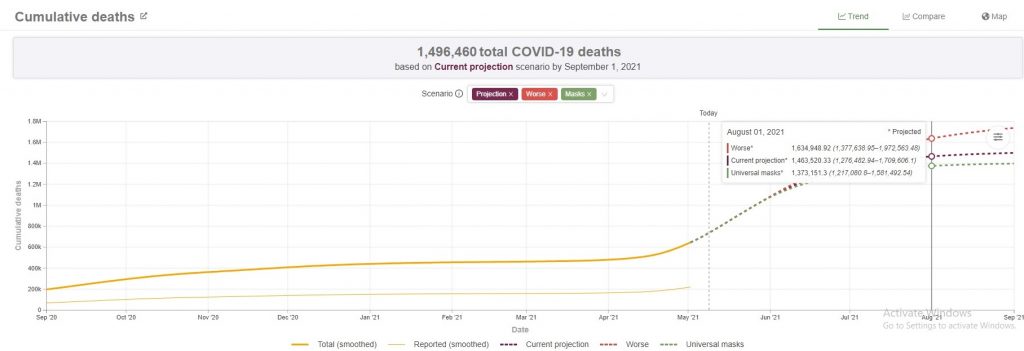
There are fundamental issues with the sources cited by The Lancet in the article as well. It says at one point, “The Institute for Health Metrics and Evaluation estimates that India will see a staggering 1 million deaths from COVID-19 by Aug 1.”
Source: IHME
There are multiple things that are wrong with the IHME projections. For instance, according to the projections, 195,135 people had already succumbed to Covid-19 in India by the 1st of September 2020. At that point of time, the reported deaths were just over 66 thousand.
As of today, its projected death tally stands at 734,238 individuals. Officially, the figure is at 242,362. That is over 3 times the reported Covid-19 deaths. By August, the IHME does not project 1 million death toll for India. The projected figure is 1.6 million at its worst and 1.3 million at best with current estimate being 1.46 million deaths.
That The Lancet chose to omit 300,000 deaths to 600,000 deaths from its article shows that not even they believe the vast exaggerations of the IHME. There is no valid justification for such a number either given the manner in which they have projected such figures. The IHME projected over 1000 Covid-19 deaths regularly in November 2020 when cases were definitively on the downturn.
The political bias of its sources
The Lancet for its article has used other dubious sources as well. One is an article penned by journalist Anoo Bhuyan. The bias of the author becomes evident in the article when she only mentions political rallies carried out by the Prime Minister but does not mention others by name.
Coincidentally, the politically biased article by Anoo Bhuyan too was published in The Lancet. Even so, it has to be conceded that the article by Bhuyan does not explicitly blame the Prime Minister or the Central Government for the crisis as the report notes that other political parties organised massive rallies as well.
The report by Bhuyan notes, “In early 2021, an opinion that India had overcome the pandemic and acquired herd immunity gained ground among policy makers, sections of the media, and the public, said Srinath Reddy, president of the Public Health Foundation of India. “Even sections of the scientific community propagated this view”, he added. The belief that there would be no second wave, says Reddy, was also spurred on by the desire to reopen society and revive economic growth.”
Therefore, it is indeed dubious that The Lancet used that report as a source as well to conclude in the end that “If that outcome were to happen, Modi’s Government would be responsible for presiding over a self-inflicted national catastrophe. India squandered its early successes in controlling COVID-19.”
Bloomberg’s biased coverage
Other sources include an article by Bloomberg that criticised India’s vaccine strategy. The Bloomberg article says, “Starting May 1, everyone over 18 is eligible for a vaccine while state governments and private hospitals can purchase doses directly from manufacturers for people from 18 to 45 years — triggering a desperate free-for-all rush to secure shots from an already strapped market.”
It is a remarkable case of “Heads, I win. Tails, you lose” situation. Numerous figures in the media and experts had suggested that vaccines be opened up for the 18-45 age category. When the government decided to open it up, the media is now accusing the government of “triggering a desperate free-for-all rush”. It’s a case of “Damned If I do. damned if I don’t” situation.
The article states further, “Health experts and officials in opposition-controlled states say the plan passes the buck to regional governments rather than addressing the pandemic directly.” The same states were arguing for more autonomy for states and now they are blaming the government for it. And it is bizarre that international media is taking the claims of opposition parties, with their own agenda, at face value without the slightest bit of skepticism.
The Bloomberg article mentions the Kumbh Mela but gives mass gatherings related to the farmer protests a free pass. It is not surprising given that international media was aggressively campaigning for the farmer protests that have continued since last year. These are just few of the many instances of bias in the article.
It is also to be mentioned that Bloomberg is the political propaganda initiative. Michael Bloomberg, the owner, was a presidential candidate from the Democrat Party in the US Elections 2020. We know for a fact that ownership affects their coverage as Bloomberg had announced that it will not Mike Bloomberg or his rivals during the Democrat primaries.
Motivated by petty politics, not medical expertise
One Al Jazeera report cited as a source claims that the Uttar Pradesh Government threatened hospitals flagging oxygen shortage. The report itself had cited “Indian media”. That did not happen. The UP Government had promised to crack down on rumours that could jeopardise the battle against Covid and waste resources in the process that could have been allocated elsewhere. It also promised a crack down on black marketing.
The Lancet also used a report by NYT to claim “Prime Minister Narendra Modi’s Government has seemed more intent on removing criticism on Twitter than trying to control the pandemic.” This is again motivated propaganda. The Government had asked for tweets to be removed that peddled hoaxes denying the existence of the Coronavirus and shared photographs of burning funeral pyres unrelated to the current crisis.
Thus, it is clear that the indictment of the Modi Government by The Lancet is motivated by petty politics and not medical expertise. The journal also demonstrates a spectacular lack of understanding of the political system in India. India has a federal structure and major powers are in the control of states, including healthcare and law and order. To absolve the states entirely of any blame reeks of political motivations on the part of The Lancet, which is already established by their opposition towards the abrogation of Article 370.
Furthermore, the British medical journal is pitching for a federal lockdown despite the fact that numerous states have imposed total lockdown or partial so that the blame for the economic devastation that inevitably follows the lockdown falls on the central government so that their friends in the media can target the government over the same again.
Following the West Bengal State Legislative election results, the state has been engulfed in post-poll violence where dozens of BJP workers have been killed and injured. Upset over the killings the Indian diaspora abroad took out demonstrations in various countries.
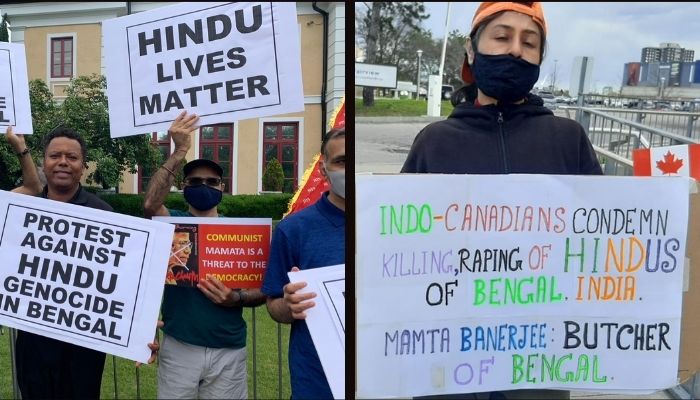
BJP leader Kapil Mishra shared pictures on Twitter on how the Indian diaspora have registered their protest. Agitators in Basingstoke in the United Kingdom waved saffron flags and held placards. ‘Protest against Hindu genocide in Bengal’, read one placard. Another placard said,’ Hindu Lives Matter.’
The Indian diaspora in Canada took out protests in the cities of Calgary and Toronto. “Stop Hindu genocide in West Bengal. Enough is Enough. Fear God,” a placard said. Another placard referred to Mamata Banerjee as the butcher of West Bengal.
“Friends, we are here to condemn the post-poll violence that is taking place in West Bengal under Mamata Banerjee’s government. The State machinery is failing the people of West Bengal as the Hindus are subjected to killings, rapes, and exodus from their homeland…There is no media coverage, no international coverage. This must be condemned,” a protestor said.
Meanwhile, SOS calls and messages continue to emerge from the state where BJP workers have been crying for help. The Union Minister of State, V Muraleedharan, who was on his way to meet the families of BJP karyakartas and supporters who lost their lives in the incidents of violence was also attacked by the TMC goons.
Hundreds of BJP party workers and supporters, along with their families were forced to flee their village along with their families. They crossed over to Assam where they have been provided temporary shelter under supervision by minister Himanta Biswa Sarma. It is not just the BJP but even CPI(M) which has accused the TMC of killing its workers. Reports of attacks on BSF jawans have also emerged in the media.