Home Blog Page 5709

Delhi Election Results and the 10 most important constituencies to watch out for: All you need to know

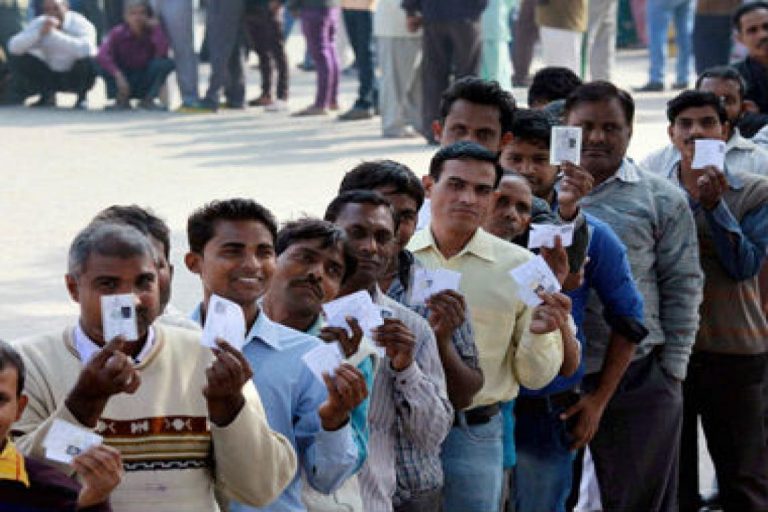
The declaration of the results for the Delhi Assembly Election is finally underway and AAP is leading in as many as 33 seat as per official EC website. After a highly polarized campaign that culminated with the polling of votes for all the 70 constituencies on the 8th February, the fate of Arvind Kejriwal’s Aam Aadmi Party and the Bharatiya Janata Party will be known by the end of the day. In this report, we shall focus on the results of the high profile constituencies in the Union Territory.

1. New Delhi

This Assembly Constituency has been the bastion of two Chief Ministers of the Union territory. Sheila Dixit, former CM of Delhi from the Congress party, won this constituency twice, 2008 and 2013. The current CM, Arvind Kejriwal, won from this constituency in 2015. Kejriwal is seeking reelection to the Assembly from the same seat.

The BJP and Congress, both, have fielded first-timers from the constituency. BJP’s Yuva unit President, Sunil Yadav, and Congress party’s Romesh Sabarwal, who is associated with the NSUI are up against the AAP Supremo.

AAP Supremo and Delhi Chief Minister Arvind Kejriwal has own.

2. Model Town

AAP rebel Kapil Mishra is seeking an election to the Delhi Assembly from a BJP ticket. After a fallout with his erstwhile comrades, Mishra has opposed the AAP tooth and nail ever since. The AAP has renominated Akhilesh Pati Tripathi from the seat while the Congress has gone ahead with Akansha Ola, a secretary of the party’s women’s wing. The BJP won the seat only in 1993 while the Congress held it between 1998 and 2013. It flipped to the AAP in 2013.

BJP’s Kapil Mishra has lost.

3. Chandni Chowk

Alka Lamba, after having a fallout with the top brass of the Aam Aadmi Party, will now be contesting from the seat on a Congress ticket.  Meanwhile, Parlad Singh Sawhney, who had won the seat as a Congress candidate four times, contested the elections as the AAP candidate in 2020. The BJP has given its ticket to Suman Kumar Gupta. The constituency has a Muslim population of over 40 percent.

AAP’s Parlad Singh Sawhney has won.

4. Patparganj

Deputy CM of Delhi Manish Sisodia is seeking reelection to the Assembly from the constituency. The BJP had won the constituency in 1993 and since 1998, the Congress had held it until 2013. In 2020, Sisodia is up against Laxman Rawat from the Congress and Ravi Negi from the BJP. The Purvanchali vote base in this constituency is around 25 percent while 20 percent of the electorate is made up of migrants from Uttarakhand.

AAP’s Manish Sisodia has won.

5. Malviya Nagar

Controversial AAP leader Somnath Bharti is seeking reelection from this seat. From being accused of domestic violence and attempted murder to abusing a journalist in filthy language on camera and leading a midnight raid where a Ugandan woman was assaulted, Bharti, like a lot of AAP leaders, has a sketchy record.

After the BJP won the constituency in 1993, the constituency had been a Congress bastion between 1998 and 2013. In 2020, he is up against former councillor Shailendra Singh Moti of the BJP and Congress candidate Neetu Verma, a former DUSU president.

AAP’s Somnath Bharti has won.

6. Okhla

Amanatullah Khan, the AAP leader who was recently spotted leading anti-CAA riots in the national capital, is seeking reelection from the Muslim dominated seat. Okhla has never been won by a non-Muslim.

The BJP has fielded Braham Singh from the constituency. He was the BJP’s candidate in 2015 as well but had secured just over 23% of the votes last time. The Congress, meanwhile, has fielded Parvez Hashmi who has won the seat four times in the past. Shaheen Bagh, which has featured prominently in these election campaigns, lies in this constituency and so does Jamia.

Okhla is also the most controversial constituency in terms of anti-CAA riots recently. Shaheen Bagh, where Islamists have laid siege is also a part of the Okhla constituency. At Shaheen Bagh, 2 infants have died due to the protests and the harsh weather conditions and several hate-filled, anti-Hindu slogans like ‘Jinnah Wali Azadi’ have also been raised. The mastermind of Shaheen Bagh protests, Sharjeel Imam, is in police custody after he made seditious statements like trying to cut away Assam from the rest of India. In fact, Sharjeel Imam was seen making provocative statements at a separate event with AAP’s Amanatullah Khan standing right beside him.

Interestingly, even Batla House forms a part of Okhla constituency.

AAP’s Amanatullah Khan has won.

7. Tri Nagar

This is the constituency that had elected the now-disgraced AAP leader Jitendra Singh Tomar. The Delhi High Court had set aside the election of the ex-Delhi Law Minister for providing a false declaration regarding his educational qualifications in his nomination papers for the 2015 assembly elections. Tomar was sacked from his post of law minister from the Arvind Kejriwal led AAP govt in Delhi after he was arrested by Delhi police for procuring fake degrees.

This time around, AAP has given the ticket to Tomar’s wife, Preeti. The AAP candidate is up against Tilak Ram Gupta from the BJP and Kamal Kant Sharma of the Congress party. The BJP had won this seat in 2013 after the Congress won it twice, 2008 and 2013. In 1993 and 1998, the BJP had won this seat. This is the first election in 17 years that the BJP’s Nand Kishore Garg and Congress’ Anil Bhardwaj did not face off against each other.

AAP’s Preeti Tomar has won.

8. Kalkaji

Controversial AAP leader Atishi Marlena is contesting the elections from this seat. In the 2019 Lok Sabha Elections, she had suffered a spectacular defeat against former Indian cricketer Gautam Gambhir who had contested from a BJP ticket.

In the 2020 Assembly Elections, Marlena is up against BJP’s Dharamveer Singh and Shivani Chopra from the Congress party. Between 1998 and 2013, the constituency was a Congress bastion. In 2013, the BJP had managed to win the seat after 20 years. In 2015, the seat was won by AAP’s Avtar Singh.

AAP’s Atishi has won.

9. Rajendra Nagar

Raghav Chaddha, another prominent face of the Aam Aadmi Party, is contesting the elections from Rajendra Nagar. In 2015, Vijender Garg Vijay of the AAP had won the seat. Two years earlier, the BJP had won it in 2013. The BJP has won the seat thrice prior to that, in 1993, 1998 and 2003. The Congress had won this seat in 2008. In 2020, Chaddha is up against veteran Sikh leader from the BJP, RP Singh, and Congress’ Rocky Tuseed.

AAP’s Raghav Chadha has won.

10. Seelampur

Seelampur is another constituency that had witnessed massive riots following the passage of the Citizenship Amendment Act in both the houses of the Parliament. It is another constituency that has never been won by a non-Muslim. The Congress party has won this seat four times in the past and the Aam Aadmi Party won it in 2015.

In 2020, the Congress party has fielded a strong candidate. Mateen Ahmed who had held the seat from 1993 to 2015 before losing it to Mohammad Ishraque from the AAP is the Congress party’s candidate this time around. The BJP has fielded Kaushal Mishra this time around. The only way the BJP could win this seat is in the case of a Muslim vote split between the Congress and the AAP.

Seelampur is an Assembly seat in the North-East district of Delhi and a Muslim dominated neighbourhood. The area was set up in the Emergency-era to rehabilitate Muslims rendered homeless after their homes were demolished in the north and central Delhi.

In the run-up to the Delhi Assembly polls, Muslim-dominated areas of Seelampur saw unprecedented violence led by Muslim mobs to protest against the Citizenship Amendment Act.

Delhi was the epicentre of the anti-CAA riots, which later spread to different parts of the country. The Muslim mob in Delhi’s Seelampur had unleashed the violence against public infrastructure and pelted stones at the police injuring many of them. The violent protestors had even attacked school buses in Delhi’s Seelampur area.

There have been serious allegations against Delhi Chief Minister Arvind Kejriwal-led AAP for instigating riots in Delhi by inciting Muslim mobs against the Modi government ahead of the Delhi assembly elections under the guise of protesting against the Citizenship Amendment Act, which has nothing to do with Indian Muslims.

Shockingly, Aam Aadmi Party led by Arvind Kejriwal has given tickets to people who are associated with instigating riots in Delhi during the anti-CAA riots. AAP has fielded Abdul Rehman to contest from New Delhi’s Seelampur constituency in upcoming elections. Rehman along with ex-Congress MLA Mateen Ahmed has been named in an FIR by Delhi Police for ‘provoking the crowd’ to join the protests.

AAP’s Abdul Rehman has won.
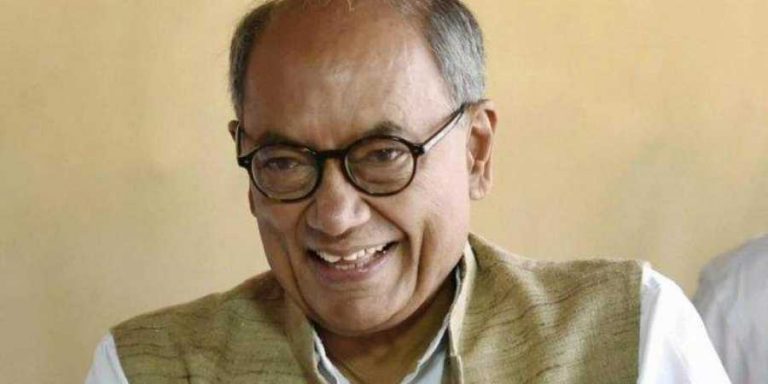
Minutes before counting of votes, Congress veteran leader Digvijaya Singh raises the ‘EVMs are hacked’ bogey. Here is how he’s wrong

Like clockwork, the ‘EVMs are tampered’ bogey has been raised by sore losers as Congress stares at an imminent defeat in recently concluded Delhi Assembly elections. Congress veteran leader Digvijaya Singh, minutes before the counting of votes began, questioned use of EVMs instead of ballot papers for elections. Taking to Twitter, Singh urged the Supreme Court and Election Commission to have a fresh look at usage of EVMs in India.


“We can’t allow some unscrupulous people to hack results and steal the mandate of 1.3 billion people,” he tweeted. He further said that no machine that has a chip is tamper-proof.


He even questioned why the developed countries don’t use EVMs if they’re so accurate. The EC has categorically explained [pdf] earlier how EVMs cannot be hacked.

The key reasons cited are:

  1. EVMs are standalone machines and not connected with internet or any other network that can give away control, so can’t be ‘hacked’ the way other systems are compromised.
  2. The chip in EVMs can be programmed only once and it’s burnt into the EVMs at the time of manufacture. They can not be programmed again to transfer all or a part of all votes to a particular party.
  3. ECI had given chances to various people, right from year 2009, to demonstrate how EVMs can be tampered with, but they either failed or refused to demonstrate.
  4. Every EVM in every election is checked in presence of representatives of political parties before election process beings. If any machine is found malfunctioning, it is not used in elections.
  5. Mock polls are done by representatives of political parties themselves and at least 1000 mock votes are registered. Some rumours had claimed that after first 100 votes, rest of the votes are transferred, so this rumour is also killed in this process.
  6. The machines found working well are stored in strong room with a ‘pink paper seal’ that is signed by representatives of all political parties. This seal ensures that the chosen EVM’s body can not be opened and no hardware changes can be made. Software changes can not be made as explained in point 1 and 2 above.
  7. Which EVM goes to which assembly or polling booth, is decided through a computerised randomisation process. This randomised allocation also happens in the presence of representative of political parties.
  8. A mock poll is done again after EVMs are assigned constituencies, and the candidate list is set to the machines. This is again done in the presence of representative of political parties.
  9. Yet another mock poll in presence of representative of political parties takes place on the actual day of polling at every polling station.
  10. Paper and thread seals are put on EVMs (after blocking those buttons that have no corresponding candidates) before the actual polling begins. This is also done in presence of representative of political parties and they are allowed to put their signatures on the seal.
  11. Once the polling is over, and “close” button is pressed, after which the data is final and secured, entire EVM is sealed. And again, it done in presence of representative of political parties and they are allowed to put their signatures on the seal.
  12. The political parties are allowed to put their seals even on strong rooms where the EVMs are stored, and they are allowed to keep a watch on the strong rooms round the clock.

[Live] Delhi Assembly elections: AAP leads in 58 out of 70 seats, BJP in 12. Congress stuck at zero

1:30 PM

AAP leading in 58 out of 70 seats as per official EC website. BJP leading in 12. Congress yet to open its account. AAP’s Amanatullah Khan leading with over 70,000 votes in Okhla. BJP’s Tajinder Bagga and Kapil Mishra both trailing in Harinagar and Model Town respectively. Delhi Deputy CM Manish Sisodia trailing in Patparganj.

10:45 AM

BJP’s Kapil Mishra is leading in Model Town with a margin of 98 votes as per official EC website while Delhi’s Deputy CM Manish Sisodia is leading with 112 votes margin. Former AAP MLA and Congress’ Chandni Chowk candidate Alka Lamba has managed to garner 157 votes. As per official EC trends, AAP is leading on 45 seats while BJP on 19. Congress yet to open shop.

9:45 AM

BJP’s Tajinder Bagga leader in Harinagar as AAP’s Raj Kumari Dhillon trails. Vikaspuri Congress candidate Mukesh Sharma concedes defeat within an hour of counting of votes.


Official EC trends, on the other hand show AAP and BJP leading in 10 seats each.

9 AM

Arvind Kejriwal-led Aam Aadmi Party has taken an early lead, while the BJP has opened its account as counting of votes begins across the capital. The ruling AAP is eyeing a third consecutive term in power in Delhi.


The latest trends show that the Aam Aadmi Party is leading on 50 seats, while the BJP is leading on 19. Congress is showing lead in one seat.

BJP’s candidate from Harinagar constituency Tajinder Pal Singh Bagga is leading, according to initial trends. Meanwhile, AAP’s riot-accused Amanatullah Khan from Okhla constituency has also taken an early lead. Okhla has been the hotbed of anti-CAA riots in the national capital.

Prominent candidates in the fray include CM Arvind Kejriwal from New Delhi, his deputy Manish Sisodia from Patparganj, Kalkaji candidate Atishi and Raghav Chadha from Rajendar Nagar of the AAP are all leading.

The exit poll results for Delhi Assembly elections have predicted a clean sweep for Arvind Kejriwal-led Aam Aadmi Party (AAP) in Delhi. If AAP wins Delhi polls 2020 then Arvind Kejriwal would become the chief minister of the national capital for the third term. The majority mark in the 70-member assembly stands at 36.

No, ASI is not replacing centuries-old murals at Konark temple with plain stones. Here’s the truth

A raging controversy erupted on social media today after a Twitter user posted two pictures, allegedly of the hallowed Konark temple. The images raised aspersions on the restoration of the temple carried out by the Archaeological Survey of India (ASI).

Viral tweet on Konark temple

In the tweet, the Twitter user asserted that the Konark Temple is being broken as centuries-old murals on the temple walls are being turned into plain bland stones by the ASI on the pretext of restoration.

However, the Archaeological Survey of India (ASI) has now put these rumours to rest.


Taking to Twitter, ASI said that the two images which were juxtaposed next to each other as ‘before and after’ are taken from different parts of the temple complex. The ASI clarified that the plain stonework in second image was done in 1980s. “ASI used plain stone only wherein there was no evidence left & as per ASI’s the then archaeological policy only such portions were filled with plain stones. ASI would like to confirm that no sculpture has been replaced,” the ASI said.

In fact, an Indian Express article regarding restoration of Konark temple states that no restoration rules or guidelines were violated while undergoing the gargantuan task of the gentrification of the much-revered Konark Temple. “As a signatory of UNESCO conventions, it is mandated that ASI cannot replicate original representations (carvings). The understanding is that as monuments deteriorate if one keeps on replicating then nothing original will remain,” the article read.

The ASI undertook the gentrification of the temple in 2012. The restoration undertaking is particularly challenging for the ASI as the temple is situated close to the sea and the accumulated salt, sand and the moisture-laden wind on the surface of the temple wall, harms the sculptures.

In addition to this, the nature of the material used in building the temple, Khondolite is a very porous stone and its susceptibility to quick deterioration has only compounded the  complexity of the challenge facing ASI engineers. Owing to the imposing grandeur of the Sun Temple, the ASI had pegged the completion of its “scientific cleaning” in 12 years. However, with naysayers raising doubts over its methodology, it may well surpass its proposed deadline.

Coronavirus effect: As China market struggles amidst the outbreak, global buyers find an alternative in India

Due to the Coronavirus hitting China, global buyers are looking at India to replace China as the primary supplier of goods such as ceramics, homeware, fashion and lifestyle goods, textiles, engineering goods and furniture, according to a report by The Economic Times.

As per the report, there has been an increase in inquiry from the buyers from the US and European countries. Rakesh Kumar, Director General, Export Promotion Council for Handicrafts told ET that those who were earlier sourcing from China are now exploring India as an alternate to meet the demands.

Due to China’s situation, Indian companies have received more interest in the ongoing Cevisama ceramics fair which is taking place in Spain. A Delhi based exporter told ET that this situation can give Indian companies a head start. Apart from this, labour-intensive industries like garments may also get boost in India due to the situation in China.

However, the coronavirus outbreak may also lead to losses in India’s trade and commerce. Indian leather industry, which is heavily dependent on Chinese market, may take a hit. In the wake of the situation with Coronavirus, the feeling is that the supply chain will get hit massively.

Rafeeque Ahmed, chairman of Chennai-based Farida Group, which is one of India’s largest shoe manufacturers and exporters feels that markets will not easily switch over suppliers and orders. Instead of India, there is likelihood that Vietnam and Cambodia will be more attractive over India, he told ET.

Earlier, we had reported how the Coronavirus has affected the Surat diamond business was as Hong Kong is in lock down for two months. Therefore, it depends upon how the global markets go around as the year progresses.

First Indian coronavirus patient recovering and stable, tests show negative results

0

The student from Thrissur who was studying in Wuhan and tested positive for coronavirus is now on the path to recovery. As per the doctors of Thrissur Medical College and Hospital, her fifth sample was tested negative and they are awaiting the sixth report, after which she’ll be eligible to go home.

A senior doctor from Thrissur medical college and hospital said that the doctors are waiting for yet another test result following which she can go home. He said, “We have nursed her back to life. We can say she is completely recovered. To doubly ensure this, we are awaiting another result after which she can go home and can be quarantined there for another two weeks or so”.

Claiming that her medical background helped her to recover, the officials of the health ministry also said that the two other patients were also on the road to recovery. The two others are undergoing treatment in Kasaragod and Alappuzha.

Earlier this month the state of Kerala had declared a novel Coronavirus epidemic as a state calamity after the medical authorities had confirmed three coronavirus cases. Although she assured that the announcement was not to scare people.

At the moment there are around 3,252 people who are under observation, of which 3,218 are under home quarantine. Fifteen students who came back two days ago after being stranded in an airport in China for three days were also discharged from the hospital the very next day after they weren’t showing any sign.

Meanwhile, besides intensifying surveillance at the airports, the central government has temporarily suspended visas for Chinese residents and already evacuated hundreds of Indians from Wuhan.

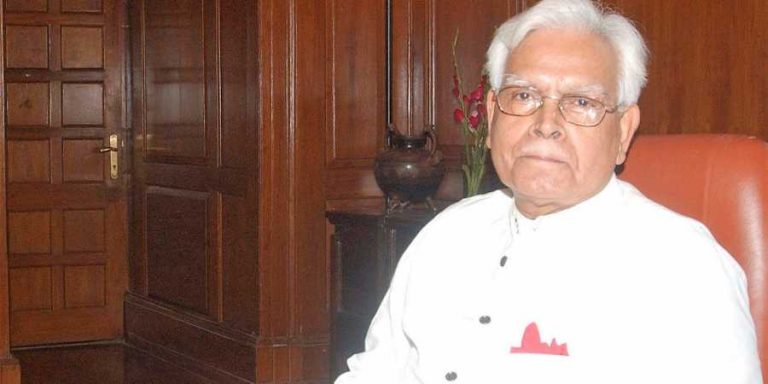
Glad that India was partitioned. Muslim league would not have allowed Congress government function: Congress leader Natwar Singh

The former Foreign Minister and a towering Congress leader, Natwar Singh, on Sunday, said that he was glad that India’s partition happened as he believed that the Muslim League would not have allowed the undivided country to function and there would have been more “direct action days” if partition had not occurred.


Speaking at the launch of BJP MP MJ Akbar’s new book, ‘Gandhi’s Hinduism: The Struggle Against Jinnah’s Islam’, at Pranab Mukherjee’s residence, Singh said it would have been impossible for the country to function normally if the partition had not taken place. “According to me, I am pleased that India was partitioned. Because if India had not been partitioned we would have witnessed more Direct Action Days — the first we had during Jinnah’s (Muhammad Ali) lifetime was on August 16 (1946) when thousands of Hindus were killed in Kolkata (then Calcutta), and of course then the retaliation took place in Bihar where thousands of Muslims were killed.”

On August 16, 1946, Muhammad Ali Jinnah exhorted his fellow Muslims to observe ‘Direct Action Day’ in support of their demand for a separate nation for Muslims. The call for observing ‘Direct Action Day’ witnessed widespread communal riots between Hindus and Muslims, especially in what was Bengal province of British India, leavings thousands and lakhs perished in the ensuing violence.

Read: One Hundred Years of the end of ‘Khilafat’: How the Gandhi supported movement unleashed the beast of Islamic fanaticism

To reinforce his assertion about Muslim League, Singh cited the example of the Interim Government of India, formed on September 2, 1946, when the Muslim League initially declined to join the cabinet of the council’s vice-president Jawaharlal Nehru, and later participated only to reject all its proposals.

“You can imagine therefore that If the country was not partitioned then, the Muslim League would have laid innumerable impediments for the proper and smooth functioning of the government. The situation of the country would have worsened by the week,” Singh enunciated.

Describing Mahatma Gandhi and Jinnah, Singh called them as two very “great” and “difficult” persons, adding that it would have been very difficult to live with either of the men. “It would have been beyond the bounds of possibility to live with them because Gandhiji observed very high standards and Jinnah”s acerbic temperament certainly would not have allowed us to go along,” the Congress leader said.

Singh also opined that according to him Gandhiji cosseted Jinnah on the persuasion of India’s last Governor-General C Rajagopalachari. “It is my belief that Gandhiji pampered Jinnah. In 1944, Gandhi made 17 visits to Jinnah”s house in Malabar Hill. But not once did Jinnah return his visits,” Singh said.

Amidst Coronavirus outbreak, India revokes export ban to China and sends 2 large medical consignments

Setting aside its February 1 order that prevented the export of personal protection equipment, India has decided to export two large consignments of medical clothing to China on an ad hoc basis, amidst the coronavirus outbreak.

An additional 6 such consignments are also in the process of being exported. Earlier, India had sent 40 boxes of protective medical gear in the 2nd Air India flight that evacuated stranded Indian citizens from Wuhan in Hubei.

China has been facing a shortage of personal protective equipment such as masks and gloves ever since the country was hit by the outbreak of deadly novel coronavirus. The disease has claimed close to 900 lives till now. As such, medical workers had become vulnerable to infection.

Chinese importers placed orders to import protective clothing from India but the export was banned without citing a reason. The Directorate General of Foreign Trade notified on February 1 “Exports of all varieties of personal protection equipment including clothing and masks used to protect the wearer from airborne particles and/or any other respiratory masks or any other personal protective clothing (including coveralls and N95 masks)…is hereby prohibited with immediate effect till further orders.”

Read: Fact Check: Did China seek court approval to kill 20,000 coronavirus patients to stop the spread of the infection?

It was perhaps done to keep supplies intact in case the disease spread to India. In meetings chaired by the Cabinet Secretary, the Government decided to waive the ban on a “case by case basis.”

Keeping in mind the situation in Wuhan, the screening committee set up the Union Health Ministry paid heed to the requests of the Chinese importers. The transactions are to be done on a “commercial basis.” China has earlier publicly acknowledged the donation of epidemic prevention supplies made by 21 countries that also includes the likes of Pakistan. However, India was absent from the list.

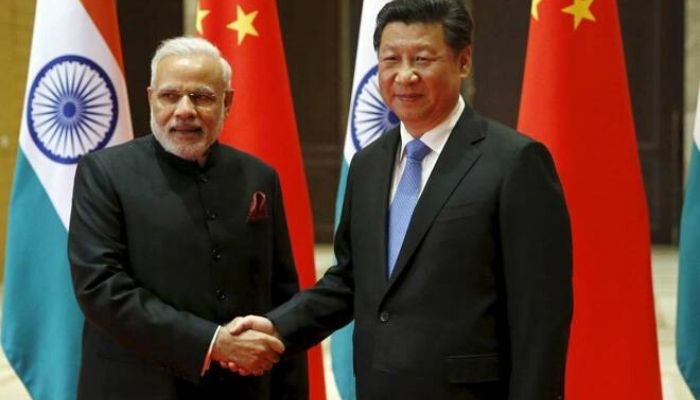
Having said that, the Indian Embassy in Beijing has reached out to the Chinese government to offer assistance in containing the outbreak of the deadly pathogen. Earlier, Prime Minister Narendra Modi had also written to President Xi Jinping on Sunday to express solidarity with the Chinese people.

Fake currency worth 24 lacs of Pakistan origin caught at Mumbai airport, Crime Branch probing terror funding links

0

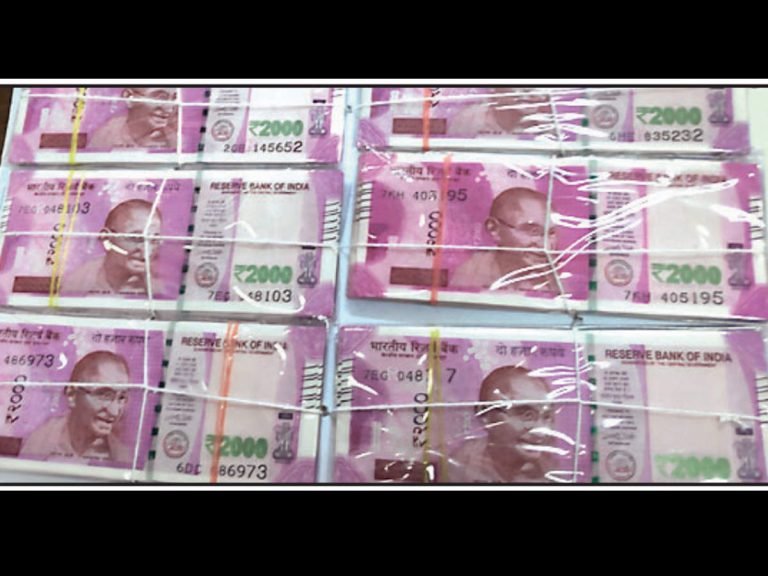
Thane resident Javed Ghulam Nabi Sheikh, who flew in to Mumbai from Dubai on Sunday was caught with very high quality Fake Indian Currency Notes (FICN) worth Rs 23.86 lacs. These fake currencies were in 2000 denomination. During interrogation he revealed that the fake currencies were routed to India from Pakistan via Dubai.

As per reports 36 year old Javed is a resident of Kalwa, Thane. The Crime Branch sleuths were tipped off by the Central Intelligence agency about the possible smuggling of FICN printed in Pakistan into Mumbai via Dubai as a transit point.

During interrogation, the accused accepted that he procured the consignment from a Pakistani in Dubai. The notes were for circulating in Mumbai. “During questioning, he said that he went to Dubai just five days ago, we don’t believe this” Joint Commissioner of Police Santosh Rastogi said.

“An average person will not be able to identify the fake notes. They look genuine. Shaikh walked away at the airport’s security check. He was caught at the bus stop outside international airport”, added JCP Santosh Rastogi. As per reports, the fake currencies checked out on 7 out of 9 security features. Except for optically variable ink ( ink that changes colour while changing angles) and ‘see-through register'(hidden features that are seen only if the note is held against the light) these notes had all other security features.

“The counterfeit currency was stuffed in one of his bags. It took us over an hour to locate it. We identified him because of his white jeans. It was around 9:30 am. He was waiting for a BEST Bus… The notes were scattered into a cushion which was stuffed into a gap between the bag’s wall and cloth liner”, Rastogi added.

He claimed that Shaikh was carrying the notes in a scattered format that made it difficult for machines to detect. The machines can only detect notes who are set as bundles, the edges of the bundles get detected. Shaikh has been booked under IPC sections for common intention, criminal conspiracy, and counterfeiting.

Bengal: Woman accuses TMC politician Shahadat Hossain of abuse, threats of kidnapping and uploading obscene videos

0

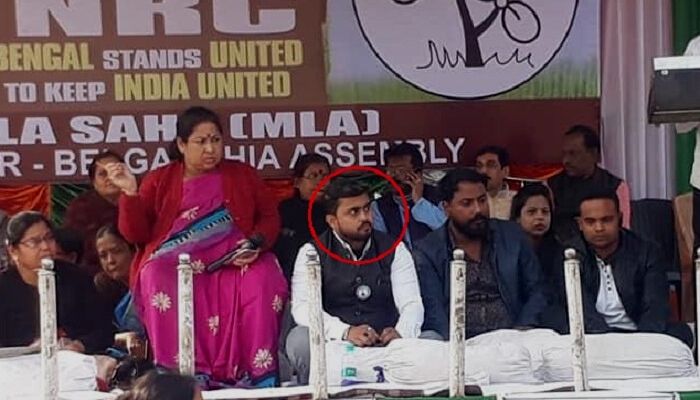
A woman has accused Trinamool Congress (TMC) politician Shahadat Hossain of harassment. She has alleged that the accused has threatened to abduct and forcibly marry her, reported Zee 24 Bangla.

The incident took place in Belgachia, North Kolkata. The TMC politician has also been accused of sending lewd texts, abusive messages and threatening to upload obscene videos of her on Facebook. Moreover, the accused has also allegedly threatened to kill the woman along with her family members.

The woman has stated in her complaint that Hossain claimed to be a close associate of the Rajya Sabha MP Shantanu Senu. He had also told the victim that the police could not do anything to him.

The woman has filed a complaint against Hossain at the Ultodanga police station. However, no action has been taken against the accused as of yet. As such, the victim and her family are forced to live in fear and panic.

This is not the first time that a TMC politician has been accused of a crime against women. Last week, a primary school teacher by the name of Smriti Kana Das in South Dinajpur district was tied with a rope, dragged and beaten up by a mob that included TMC leader Amal Sarkar for protesting against the forceful takeover of land for road construction.