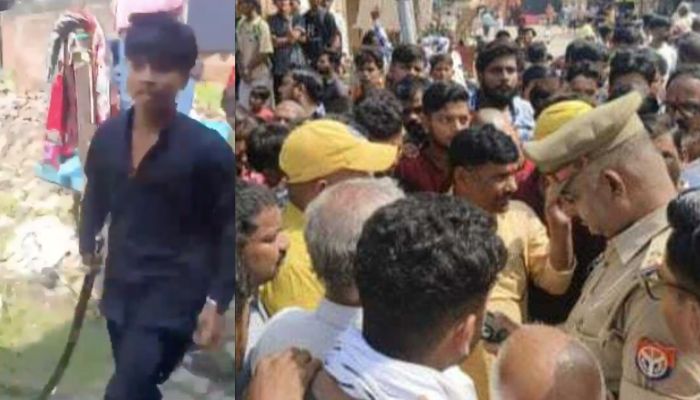
In the Siddharthnagar district in Uttar Pradesh, a minor Hindu child was raped by a 60-year-old Muslim man Nisar Qureshi. On Sunday (6th October), the Hindu locals staged a protest demanding action against the accused Nisar Qureshi. The protestors demanded the culprit be hanged to death and his house be razed down. Some of the locals also attempted to close some of the shops, however, the police stopped them.
A three-year-old girl was raped by a 60-year-old neighbour in Barhani town of UP’s Siddarth Nagar. The girl belongs to a Hindu family while the accused is from the Muslim community
The girl’s side staged protests, called for a market bandh and demanded the house of accused be… pic.twitter.com/m95mQGsd5I
While the Hindu side demanded bulldozer action and the accused Nisar Qureshi to be hanged, the Muslim side pelted stones at the protestors. The police had to do lathi-charge to bring the situation under control. Notably, the 60-year-old accused has been arrested after a case was registered against him under POCSO and other relevant BNS sections.
On the 3rd of October, accused Nisar Qureshi lured a 9-year-old girl to a secluded place near Gandhi Adarsh Vidyalaya and raped her. The girl reached home crying and informed her family about Nisar Qureshi’s crime. Upon learning about the crime, the victim’s family reached the Dhebarua Police Station and filed a complaint. Based on the complaint, the police registered an FIR against Nisar Qureshi under BNS section 65(2) and 56 of the POCSO Act.
Informing about the action taken in the matter so far, Dhebarua SO Santosh Kumar Singh said that case number 14682024 has been registered against the accused under section 65(2), and 5/6 of the POCSO Act. The officer said that the minor victim was sent for medical examination. The culprit has been arrested and jailed. On 6th October, the protestors submitted a memorandum to the police seeking the hanging of accused Nisar Qureshi. Later, some of the protestors attempted to shut down some of the shops in the locality. SO Santosh Kumar added that action will taken against such people and at present, the situation in Barhni is calm and under control.
Meanwhile, some youths from the Muslim community started hurling bricks and stones at the people who were closing the shops in the Saraswati Shishu Mandir street of the town. A sword was also seen in the hand of a youth involved in attacking the Hindu side. Upon learning about the unrest, ASP Siddharth, SDM and Tehsildar reached the spot with the police team. During this, the party that was closing the market accused the Muslim side of stone pelting from the roof of a house and said that the stone pelters were hiding in that house. The Hindu side asked the police to drag the stone pelters out of the house. When the situation went out of control, the police resorted to lathi-charge the stone-pelting mob and brought the situation under control.
Mizoram, a Christian-majority State in Northeastern India, is witnessing an indigenous, grassroots-level campaign against the potential takeover of a historic Hindu temple by the State government.
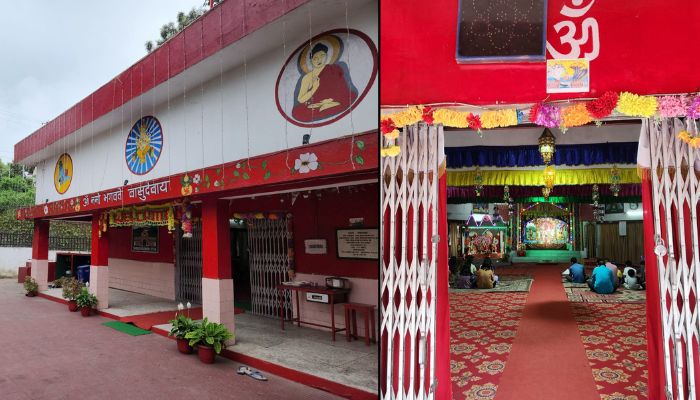
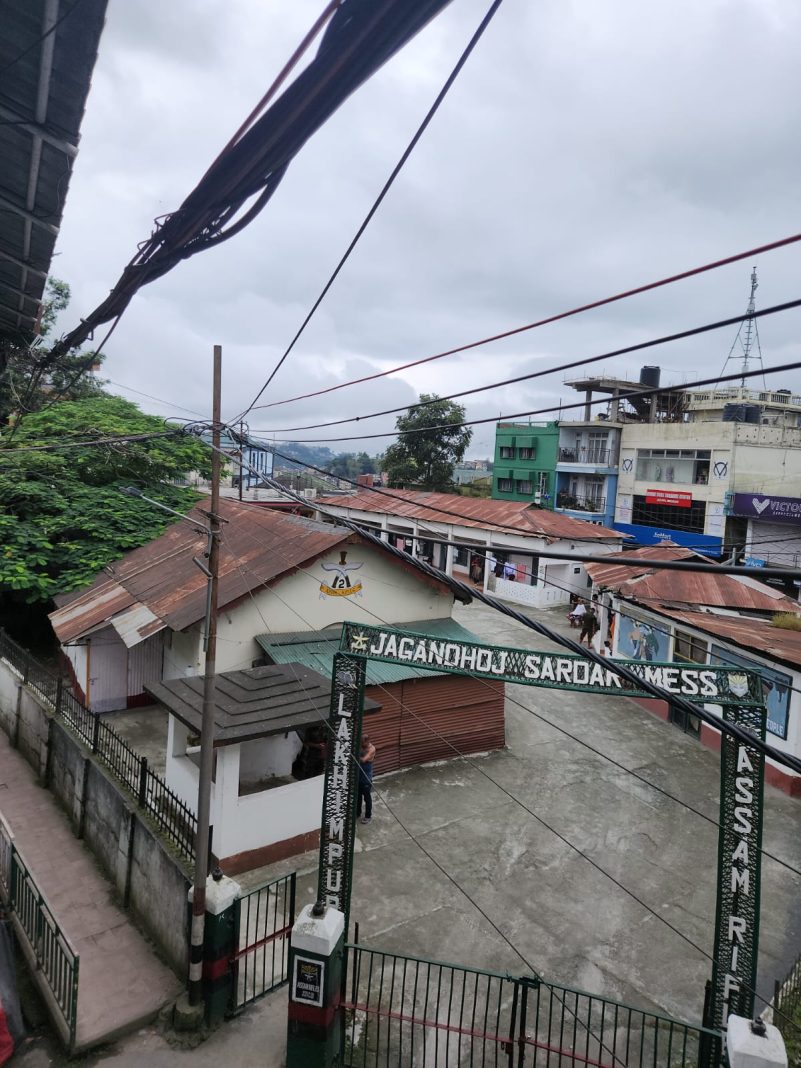
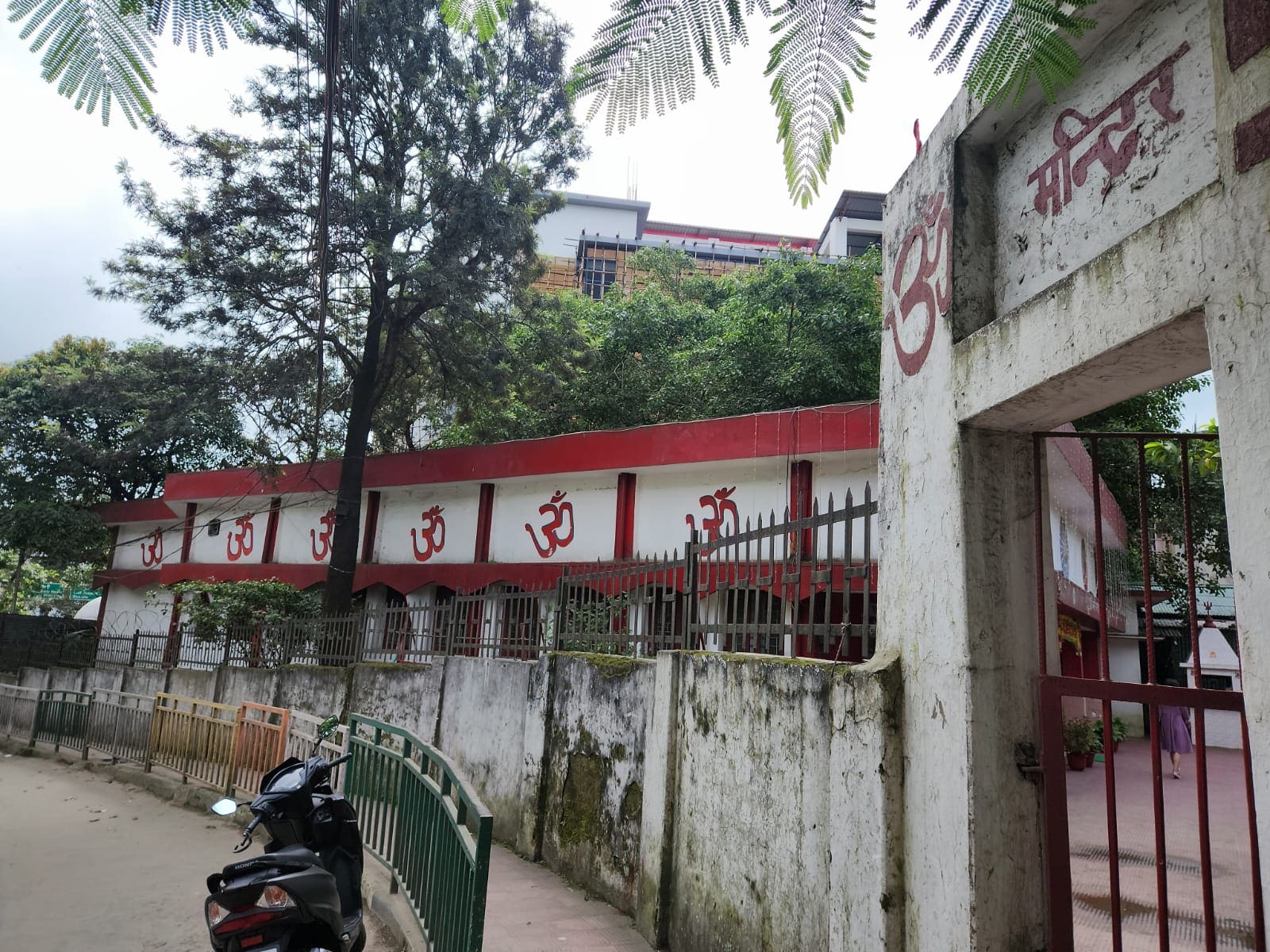
The Assam Rifles Hari Mandir, which is located at the Canteen Square in Aizwal, has been the centre for religious practice and spiritual guidance for Gorkha Hindus and Bru Reangs.
The Hindu community, which constitutes a meagre 2.75% of the population, is worried that the administration of the historic temple might go into the hands of the Mizoram government.
Assam Rifles Hari Mandir in Aizwal
The Hari Mandir (also known as Mahadev Tran) was previously located in the Assam Rifles complex in Bethlehem. It has been in existence for more than 70 years.
Assam Rifles, a premier paramilitary force (now called Central Armed Police Forces), has been responsible for the establishment, maintenance and upkeep of this Hindu temple in Aizawl.
The Hari Mandir hosts festivities such as Durga Puja, Diwali, and Janmashtami and serves as the centre for cultural events like weddings and kirtans.
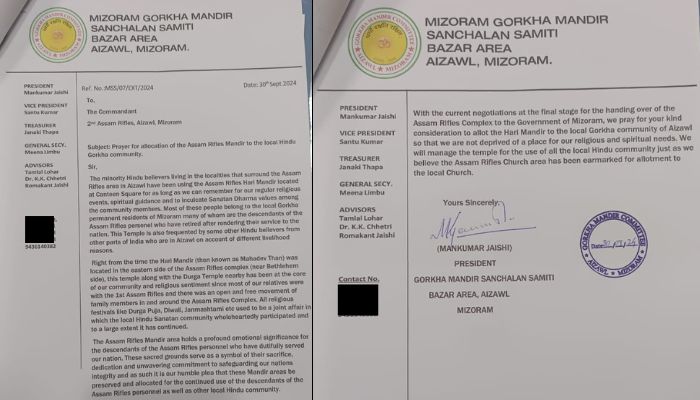
Screengrab of the letter by the Mizoram Gorkha Mandir Sanchalan Samiti
On 30th September this year, the President of the Mizoram Gorkha Mandir Sanchalan Samiti wrote to the Commandant of the 2nd Assam Rifles in Aizawal, expressing concerns about the future of the Hari Mandir.
In his letter, Mankumar Jaishi informed, “The Assam Rifles Mandir area holds a profound emotional significance for the descendants of the Assam Rifles personnel who have dutifully served our nation. These sacred grounds serve as a symbol of their sacrifice, dedication and unwavering commitment to safeguarding our nation’s integrity…”
He added, “It is our humble plea that these Mandir areas be preserved and allocated for the continued use of the descendants of the Assam Rifies personnel as well as other local Hindu community.”
MoU between the Centre and the State
Talks have been underway since 2023 to shift the Assam Rifles battalion from the heart of Aizwal to a designated complex located 15 km east of the city in Zokhawsang.
The Mizoram government had reached out to the Union Ministry of Home Affairs (MHA) to ensure that the paramilitary force was shifted to a new location.
A PTI report from July this year stated that a Memorandum of Understanding (MoU) between the Centre and the Mizoram government to relocate the Assam Rifles complex was set to be approved.
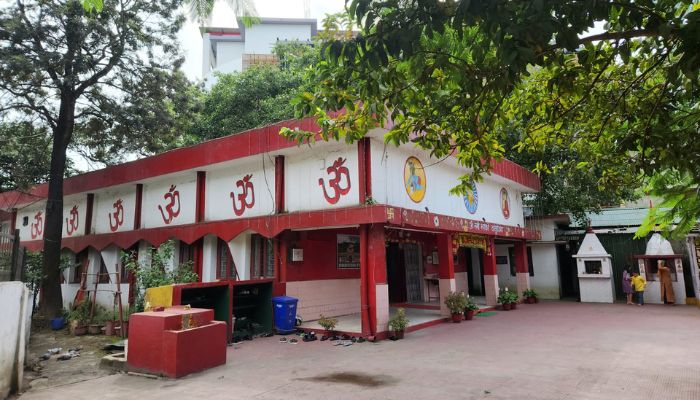
Assam Rifles Complex
While the final status of the MoU remains unclear, it is evident that the Government of Mizoram would take over the Assam Rifles complex at the Canteen Square in Aizwal following the approval of the MHA.
Given that the historic Hari Mandir is located within the premises of the Assam Rifles complex, local Hindus fear that the responsibility to run, administer and maintain the temple too would go into the hands of the Mizoram government.
Demand to allot temple administration to local Hindu Gorkhas
Mizoram Gorkha Mandir Sanchalan Samiti President Mankumar Jaishi has therefore urged the 2nd Assam Rifles Commandant to take up the matter with the State government and ensure that the administration of the temple remained with the local Gorkha community in Aizwal.
In his letter dated 30th September 2024, he said, “We pray for your kind consideration to allot the Hari Mandir to the local Gorkha community of Aizawl so that we are not deprived of a place for our religious and spiritual needs.”
“We will manage the temple for the use of all the local Hindu community just as we believe the Assam Rifles Church area has been earmarked for allotment to the local Church,” Mankumar Jaishi emphasised.
Closeup shot of Assam Rifles Hari Mandir in Aizwal
OpIndia spoke to the President of the Mizoram Gorkha Mandir Sanchalan Samiti President over the phone and he confirmed the fears and anxieties of the local Hindu population.
He told us that the Mizoram government is eyeing expanding the Canteen Square area and widening the roads.
The future of Assam Rifles Hari Mandir, a cultural centre for local Hindus, is now in jeopardy.
Hindus take the fight to social media
Concerns about the fate of the historic Hindu temple are also being raised on social media.
“Temples are vital cultural and spiritual centers. Removing the Assam Rifles temple would diminish our community’s identity #ProtectOurTemple #Aizawl #Mizoram,” wrote one X user.
Another X user stated, “We stand united in preserving the Assam Rifles temple for future generations. Let’s raise our voices to protect it. #ProtectOurTemple #Aizawl #Mizoram”
“The Assam Rifles temple has stood for decades as a place of peace and prayer. Why destroy what means so much to so many? #ProtectOurTemple #Mizoram”, one user emphasised.
The Assam Rifles temple has stood for decades as a place of peace and prayer. Why destroy what means so much to so many? #ProtectOurTemple#Mizoram
A Hindu man named Balram Sharma posted, “The Assam Rifles have long been part of Mizoram’s history; we should honor their legacy by protecting these sites. #ProtectOurTemple #Aizawl #Mizoram”
According to 2001 census data, there are only about 31,562 Hindus in Mizoram compared to 7.72 lakh Christians.
The Hindu community in the State is comprised primarily of Gorkhas and Bru Rehangs. For the unversed, the Bru Rehangs suffered a genocide at the hands of Mizos in 1997.
This forced them to flee the State and seek refuge in the nearby State of Tripura. It was not until 2018 that an agreement was reached between the governments of Tripura and Mizoram for the resettlement and rehabilitation of the Hindu minority ethnic group.
There have also been instances of attacks on the temple. For instance, OpIndia found a large plaque outside the Assam Rifles Hari Mandir in Aizawl which states that the Hindu place of worship was destroyed by miscreants.
The current temple, as it stands today, was in fact reconstructed by Brigadier Shri Ram Singh and inaugurated by the Commandant of 1st Battalion of Assam Rifles in August 1993.
In May 2013, an explosion rocked a temple in Aizawl which was located within the complex of the 26th Battalion Assam Rifles.
“The explosion shattered 26 window panes and some window frames, the police said. Police suspected that the explosive used was gelatin and the bundle of gelatin sticks must have been thrown from the main road as the compound housing the temple was encircled by the road,” the report added.
On the day of the targeted attack, the Mizo National Front (MNF) had organised a rally dubbed ‘Milem Biak Duhloh Kawngzawh‘ (Anti-idol Worshipping Rally). OpIndia could not independently verify whether the targeted temple was the Assam Rifles Hari Mandir in Aizawl.
Screengrab of the report on attack
Nonetheless, a sense of general hostility always persisted against Hindu practices in the Northeastern State. For instance, if a prominent political leader is seen associated with Hindus, then, he becomes the subject of a smear campaign.
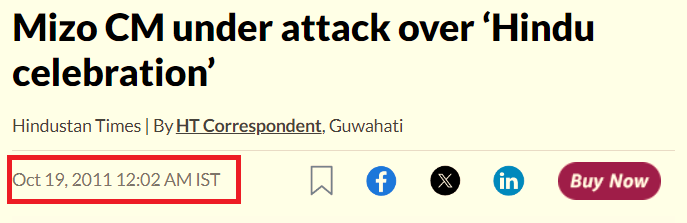
In 2011, the Mizo National Front (MNF) lashed out at then-Chief Minister Lal Thanhawla for participating in the Hindu festivals of Durga Puja and Dusshera in Kolkata.
MNF vice president R Tlanghmingthanga had infamously said, “We strongly condemn Lal Thanhawla for attending the celebrations and hope that he will seek forgiveness from God.”
Screengrab of the news report
He further alleged that the CM ‘forsook Christianity’ and ‘betrayed his God’ by partaking in Hindu rituals.
Kummanam Rajasekharan, a prominent Rashtriya Swayamsewak Sangh (RSS) activist, faced stiff opposition from a political party named People’s Representation for Identity and Status of Mizoram (PRISM) after he was appointed the Governor of Mizoram in May 2018.
They objected to Rajasekharan’s strong stance against deceitful conversions by Christian missionaries in the State of Kerala.
Free the Temples campaign
Hindu temples in India are not free from the clutches of the State governments. In several States like Tamil Nadu, the government runs the administration of Hindu places of worship and determines their functioning.
The power to run a Hindu temple must lie with the worshippers and their representatives without any governmental interference. Failure to do so results in mismanagement and hurting the broader interests of the community.
As the Centre and the Mizoram government are all set to sign the MoU to relocate the Assam Rifles battalion from Aizawal, Hindus are putting up a fight to protect their Hari Mandir from being run by the government.
On 7th October 2023, Israel witnessed one of the darkest days in its history. On that day, Hamas terrorists launched an unprecedented assault on unsuspecting civilians close to the Israel-Palestine border, including attendees of a music festival.
Over 1,300 civilians, including foreigners, were killed, and several hundred were taken hostage by Hamas terrorists and transported to Gaza. Other terror outfits like Hezbollah have supported Hamas for these attacks. It has been a year since Israel declared war against Hamas and Hezbollah following that terrorist attack.
The attack not only ignited a conflict between Israel and Hamas but also set off a chain of events that has been changing the geopolitical landscape of the Middle East since that day. One year has passed, and Israel has shown strong determination to protect its citizens and dismantle Hamas, along with other terrorist outfits in the region, including Hezbollah. The region has transformed into an active war zone, where Israel has been dominating tactically and strategically with the help of its allies.
Amid the changed geopolitical landscape and ongoing war in the region, it is essential to understand how the world views the conflict and the importance of creating a balance between security and justice.
Chronology of events: A year in review
Before we discuss what happened in the one year of Israel-Hamas war, here is a brief timeline of key events that unfolded since the 7th October 2023 Hamas terrorist attack on Israel, marking a year of war, resilience, and global ramifications.
7th October 2023: On this day, Hamas terrorist launched a large-scape coordinated attack on Israel. Over 1,300 civilians were killed and hundreds were taken hostages.
8th October 2023: Government of Israel declared a state of war and vowed to eliminate Hamas. Airstrikes on Gaza begin targeting key Hamas infrastructures.
11th October 2023: Hezbollah, an Iran-backed terrorist group in Lebanon, launches rockets into northern Israel. Hezbollah’s actions opened a second front in the conflict. Aircrafts entered Israel from Lebanon.
15th October 2023: Israeli forces prepared for entering Gaza. It marked the start of full-scale invasion aiming at dismantling military capabilities of Hamas.
20th October 2023: International protests intensified in Europe and the US, with anti-Israel demonstrators condemning Israeli military actions in Gaza. Pro-Israel rallies also begin as tensions rise globally.
25th October 2023: Reports came out that Iran supported Hamas and Hezbollah, providing weaponry and financial assistance, deepening its involvement in the conflict.
31st October 2023: Iran-backed Houthis in Yemen declare war against Israel, claim responsibility for missile and drone attacks on the southernmost Israeli city of Eilat.
15th November 2023: As Israeli forces advance deeper into Gaza, international concerns grow over civilian casualties. Israel maintained its focus on eliminating Hamas’ leadership.
12th November 2023: Israel launched attack on Hezbollah via a series of airstrikes on Hezbollah positions in southern Lebanon.
10th December 2023: Reports emerge that Hamas was using Gaza’s civilian population as human shields, It increased the complexity of Israel’s military campaign.
15th January 2024: Hamas continued to hold a significant number of Israeli hostages. Israeli intelligence and international negotiators work tirelessly to secure their release.
March 2024: Cross-border conflict between Israel and Hezbollah persisted, with neither side backing down, adding further instability to the region.
June 2024: The conflict’s widened scale, especially the Houthi attacks on shipping lanes. The attacks begun to disrupt global trade, impacting the shipping industry and oil prices.
September 2024: Israel launched coordinated attacks on Hezbollah operatives using pagers and appliances as they blew up across Lebanon. Over 800 Hezbollah operatives reportedly died.
October 2024: Iran launched missile attack on Israel in retaliation to attack on Hezbollah that led to death of Hezbollah chief Hassan Nasrallah. 7th October 2024: – One year later: Israel continues to fight the terrorist organisations in the region.
The 7th October attack: A barbaric act of terror
What happened on 7th October 2023 can only be described as a barbaric act of terror. The terrorist attack on Israel was not a military strike, as the pro-Hamas side of the political landscape wants to project it. It was a ruthless act of terror that targeted Israeli civilians and foreign nationals, who became victims of the attack. The terrorists also kidnapped a significant number of Israelis, many of whom are still being held in Gaza as bargaining chips. All of this was done by Hamas and its associated terror outfits without any regard for human decency or international law. For Israel, it was not just an attack on its people but an assault on its right to exist as a nation.
The brutality of the attack shocked the world. Dead bodies of women, children, and the elderly were scattered all over the place. One infant was found baked in an oven. Though the reports about the child in the oven were “debunked” by many media houses, this was later proven by the Israeli authorities. Retaliation in the form of a swift military response was the only logical answer to the terror attack, and this is exactly what Israel has done and continues to do to this day.
Israel’s operation in Gaza: Defending its right to exist
After the 7th October attack, Israel announced its decision to move decisively into Gaza. It launched a military operation aimed at dismantling Hamas’ terror infrastructure. Hamas had entrenched itself in Gaza for years, using civilian areas to shield its command centres, weapons depots, and tunnels. The mission of the Israeli forces was clear: to eliminate the terrorist organisation responsible for the heinous attack on Israel and to ensure that such atrocities could never be repeated.
However, the path was not easy for Israel. Several international voices raised concerns about the civilian casualties in Gaza. Ignoring these concerns, Israel made it clear that it would continue to target Hamas’ military assets while minimising harm to civilians, who were not meant to be part of the war between Israel and the terrorist organisation, Hamas.
The Israel Defence Forces (IDF) conducted several precise and sophisticated operations in Gaza. Interestingly, they made sure to issue warnings to civilians to leave the area before striking, in order to avoid unnecessary loss of life. Nevertheless, Hamas had a different plan and continued to use civilians as human shields, further endangering the people in the region. Several videos and reports confirmed that Hamas forcefully prevented civilians from leaving conflict areas, pushing them back to where Israel was scheduled to strike.
Israel-Hezbollah clashes: Another front in the war for survival
While Israel was focused on rooting out the terrorist organisation Hamas in Gaza, the northern front also ignited. In fact, when Hamas was attacking Israel on 7th October, Hezbollah provided cover fire. Hezbollah, an Iranian-backed terrorist organisation based in Lebanon, launched rocket attacks on northern Israel, opening a second front in the existential war. Israel responded swiftly to the attack and targeted Hezbollah’s military infrastructure with precision strikes, while the ground operation in Gaza continued.
The way Israel fought the war on two fronts demonstrated how well the country is prepared for any kind of conflict. The IDF not only managed to contain the attacks launched by Hezbollah but also sent a clear message that it would not tolerate aggression from any front.
Iran’s direct involvement: Stoking the flames of terror Iran has long been known for supporting terror groups like Hezbollah. It played a vital role in fuelling the conflict. Iran reportedly provided weapons and funding to the terrorists of Hezbollah to ensure they were capable of attacking Israel. Tehran’s involvement became more direct as it pushed its proxies into the fight, making clear that Iran views Israel’s destruction as a long-term goal.
Houthi attacks on Israeli-linked vessels: A widening conflict
The Israel-Hamas war, which extended to Hezbollah, further spread beyond Israel’s borders and its immediate neighbours. In Yemen, Iran-backed Houthis targeted Israeli-linked ships in the Red Sea, aiming to disrupt Israel’s trade routes. The Houthis posed a new challenge to Israel, which was met with effective and measured retaliation. Israel worked with its international partners to secure the maritime routes. However, during this period, several ships were targeted, and routes had to be changed to ensure the safety of the crew and cargo.
These attacks further illustrated Iran’s involvement in the assault on Israel and the lengths it was willing to go to harm the Jewish nation. The Houthis’ participation showed that it was no longer a conflict between Israel and Hamas, but a broader battle between Israel and the forces of terror in the region.
Global protests: Misinformed outrage
Soon after Israel intensified operations in Gaza, pro-Palestinian protests erupted across Europe and the United States. Many demonstrations were driven by pro-Palestinian and anti-Israel sentiments. The protesters mischaracterised Israel’s actions as disproportionate or unjust. In fact, several pro-Palestinian protesters called for wiping out Israel from the map and removed posters of Israelis who were taken hostage by Hamas.
These protests failed to acknowledge the context of Israel’s military action against Hamas. They neglected to recognise that the attack on Gaza to eliminate Hamas was an act of self-defence in response to a vicious terror attack that targeted civilians in Israel.
The global narrative was shaped by media outlets sympathetic to Hamas’ cause. Interestingly, protests at universities across the US, UK, and Europe were found to be funded by anti-Israel organisations, with links to George Soros, Pritzker and Rockefeller were also uncovered. Ironically, Soros himself is Jewish.
While targeting Israel during the protests, these groups overlooked the fact that Israel made every effort to avoid civilian casualties, whereas Hamas deliberately placed its military infrastructure in schools, hospitals, and residential areas. During raids, the IDF uncovered extensive tunnels full of equipment and ammunition under hospitals and residential areas across Gaza, which were subsequently destroyed and neutralised.
In many Western capitals, political divisions widened as supporters of Israel’s right to self-defence clashed with pro-Palestinian groups who refused to condemn Hamas’ terror.
The ongoing hostage crisis: Hamas’ inhumanity continues
It has been one year since Hamas took hundreds of civilians hostage and transported them to Gaza. While the IDF has rescued several, Hamas continues to refuse to release the rest, despite international pressure. For Israel, the safety and return of these hostages remains a top priority. The hostage crisis is a painful reminder of Hamas’ inhuman tactics and disregard for human life. Meanwhile, Israel has worked tirelessly through diplomatic channels and military intelligence to secure the release of the hostages.
Reshaping the political landscape
The conflict that began with Hamas’ barbaric attack on 7th October 2023 is on the path to fundamentally altering the political landscape of Middle East. Israel has stood firm against terrorist outfits, not only defending its citizens but also exposing the true nature of Hamas, Hezbollah, and Iran. The war has forced the world to reassess its alliances. While many recognise the importance of supporting Israel in its fight against extremism, there are countries that side with Hamas.
Although Israel’s resilience in the face of terror has strengthened its position on the global platform, some of its tactics and strategies are being criticised as human rights violations. Furthermore, the death toll in Gaza has raised concerns worldwide. The International Court of Justice has condemned some of Israel’s actions in Gaza. However, these criticisms ignore the fact that Israel repeatedly warned Gaza’s civilians to leave conflict areas, but Hamas prevented them from doing so.
Israel’s determination to protect its people has paved the way for reshaping regional politics and the geopolitical landscape. It has forced Israel’s enemies to come out and launch direct attacks on the Jewish nation, rather than relying solely on proxies. The recent missile attack by Iran, in which over 100 missiles were fired towards Israel, is an example of how Israel’s resilience and strategic military actions have angered its enemies.
Top terror outfit leaders killed since October 2023 in Israeli attacks
Mohammed Deif: Head of the Izz ad-Din al-Qassam Brigades (Hamas’ military wing), Mohammed Deif, was a key architect of the 7th October attack. He was killed in an Israeli airstrike in August 2024, delivering a severe blow to Hamas’ military leadership.
Ayman Nofal: A senior Hamas military leader, Ayman Nofal was a commander responsible for rocket fire and military coordination. He was killed in October 2023.
Fuad Shukr: A senior Hezbollah commander, Fuad Shukr, a top Hezbollah military leader and close associate of Hassan Nasrallah, was killed in Beirut in July 2024 as part of Israeli strikes targeting Hezbollah’s leadership.
Ibrahim Aqil: Senior Hezbollah military commander Ibrahim Aqil, another top Hezbollah leader, was killed in an Israeli airstrike in Beirut in September 2024. Aqil had been a key figure in Hezbollah’s military operations.
Hassan Nasrallah: One of the most significant assassinations during the conflict was that of Hezbollah leader Hassan Nasrallah. A long-time leader of Hezbollah, Nasrallah was killed in a targeted Israeli airstrike on 27th September 2024.
In the year since the brutal 7th October 2023 attack, Israel has demonstrated remarkable resilience and strategic prowess in its battle against terrorism. The conflict has reshaped the region, highlighting Israel’s firm commitment to protect its citizens from groups like Hamas and Hezbollah. Israel’s war against Hamas and Hezbollah continues aiming at eliminating the terror outfits.
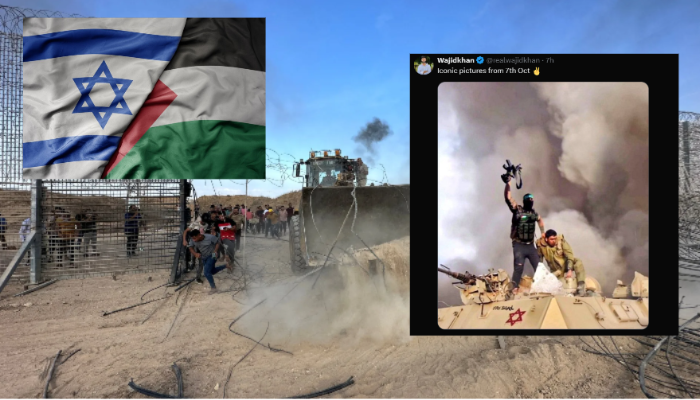
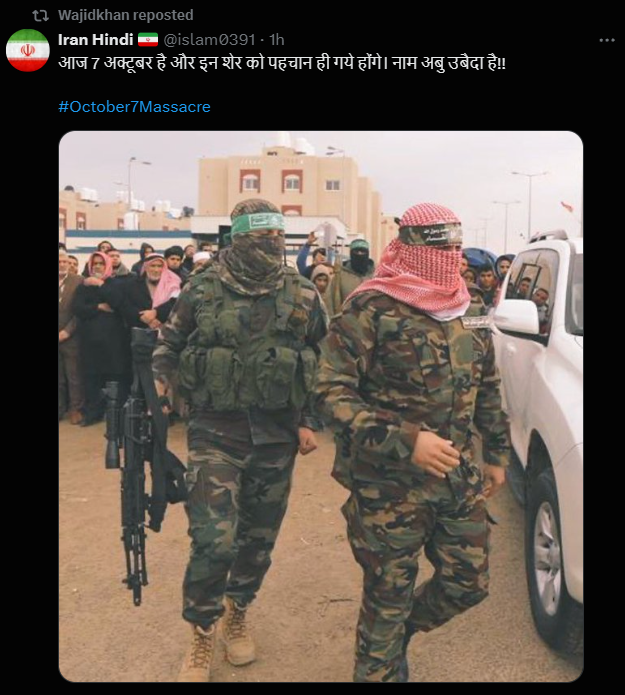
Al Jazeera, a state-sponsored media house funded by Qatar is infamous for its anti-Hindu and anti-India coverage as well as its support for jihadi and Islamist elements worldwide. Now, a notorious extremist and Khamenei-Hamas admirer Wajid Khan, who claims to be working for the platform has posted a series of tweets to celebrate the first anniversary of the brutal attack on innocent Jewish citizens by the terrorist group.
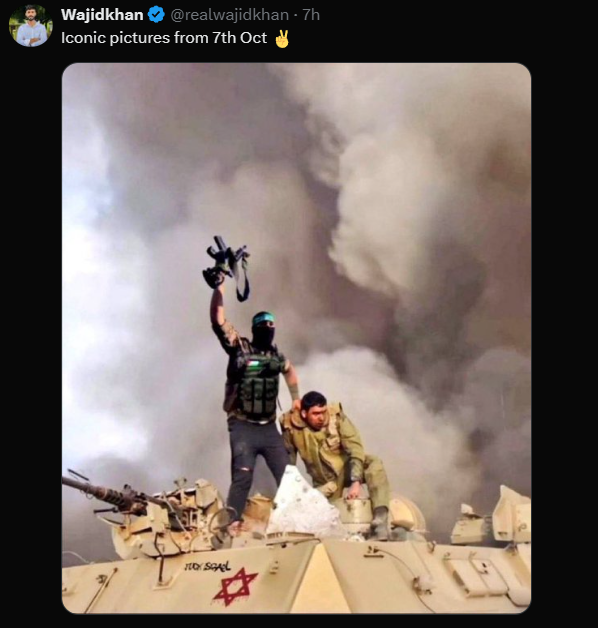
Notably, OpIndia was unable to locate any traces of his work or proof of his professional credentials. He posted a picture of an armed terrorist holding an Israeli soldier on top of a tank and referred to it as an “iconic picture,” from 7th October as well as added a victory emoticon. He also asserted that the day is no less than a festival which commemorates Israel’s overwhelming loss to Palestine
Khan even termed 7th October as a “happy day” and posted an alleged video of a Hamas assailant being shown entering the Israeli state through a parachute on the fateful event.
“On 7th October, Palestinians shattered Israel’s pride of being a superpower,” Khan boasted in another tweet while gleefully referring to the event as a massacre.
True to the duplicity displayed by every radical Muslim, Khan too uploaded a post stating, “People in Delhi gathered in support of Palestine at Jantar Mantar and demanded to stop the ongoing Israeli genocide in Gaza.” On one hand, he is celebrating the deaths of innocent Israelis at the hands of Hamas and on the other he is protesting against Israel’s action against the latter as a consequence of the terror attack.
कल अति नरसिंहानंद में नबी ए करीम की शान में ग़ुस्ताखी की थी .. लेकिन कोई गिरफ़्तारी नहीं हुई.
और अब उस मलूँन के चेले भी नबी ए करीम और हज़रत अली की शान में ग़ुस्ताखीं कर रहे है …
Interestingly, in another post which Khan later alleged had been edited, he was shown cheering the gruesome assault on Shani Louk as the terrorists paraded her half-naked body in the back of a pickup truck.
यहूदियों की कुछ नाजायज़ औलादे और इज़राइल द्वारा हज़ारो बेगुनाह गाज़ावसीयो के नरसंहार के समर्थक मेरा एक एडिटेड tweet वायरल कर रहे है.
फर्जी और फ़ेक प्रॉपेजेंडा चलाना संघीयो का पुराना काम है !!
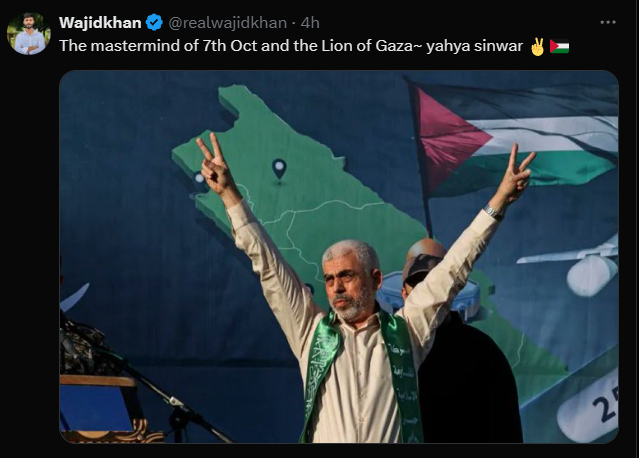
Khan hailed Hamas chief Yahya Sinwar who orchestrated the heinous operation as the “Lion of Gaza.”
“The lovers of freedom will never forget the day of 7th October 2023, because on this day Hamas gave hope of freedom of Palestine to the Muslims of the world,” Khan expressed in another tweet.
आज़ादी के दीवाने 7 अक्टूबर 2023 का दिन कभी नहीं भुला पाएंगे.
क्योंकि इस दिन हमास ने दुनिया के मुसलमानों को फिलीस्तीन की आज़ादी की उम्मीद दी थी !! pic.twitter.com/UQ0aZoHrDV
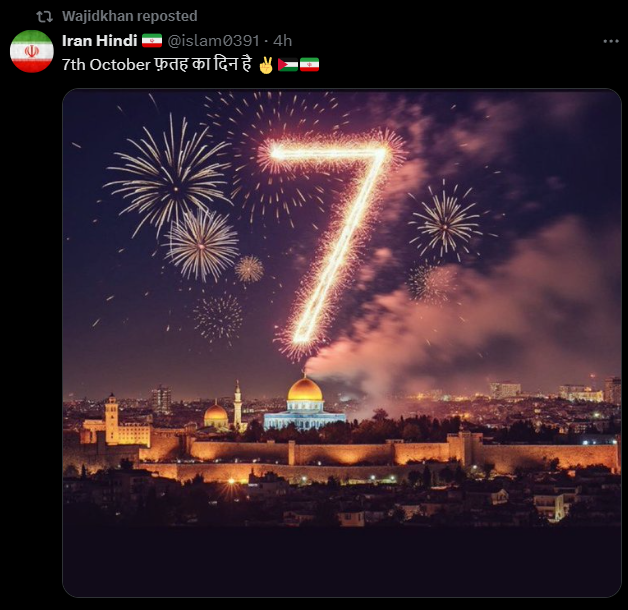
Furthermore, Khan retweeted other posts that celebrated the murder of Jews and dubbed the terrorists as “lions” by his ideological brethren while simultaneously condemning the retribution carried out by the Jewish state.
Wajid Khan, his Hindu hatred and anti-India antics
Khan is not only full of hate for Jews but also, predictably, towards the Hindu community. In addition to engaging in deviant behaviour to express his disdain for the two, he doesn’t refrain from making death threats either. He detests Hindus standing with Israel against the terrorism perpetrated by his religious brethren, akin to others from his cabal. Notably, he was one of the most vocal voices demanding action against Yati Narsinghanand Saraswati who was later arrested by the authorities over alleged blasphemy.
Khan even issued death threats to him and his followers on 4th October and declared, “Yesterday Ati (mocking his name) Narsinghanand had insulted the Prophet but no arrests were made. And now the disciples of that cursed person are also demeaning the Prophet and Hazrat Ali. There is only one cure for them and that is Hazrat Ali’s Zulfikar.” Zulfikar is the sword of Ali ibn Abi Talib (Prophet Muhammad’s son-in-law). Khan wanted the Hindu saint and his followers to suffer the same fate (death) as those who disapproved of Islam during the reign of the Muslim caliphs and rulers.
कल अति नरसिंहानंद में नबी ए करीम की शान में ग़ुस्ताखी की थी .. लेकिन कोई गिरफ़्तारी नहीं हुई.
और अब उस मलूँन के चेले भी नबी ए करीम और हज़रत अली की शान में ग़ुस्ताखीं कर रहे है …
Khan posted another tweet targetting the Hindus in the name of a Jewish religious leader and claimed that the latter was quoting the Talmud and slamming idol worshippers. He wrote, “Those who worship idols do not have the right to live in this world. Those 6 billion people around the world are a burden,” citing the latter. He further claimed that the person referred to idol worship as a sham and added that such people would be destroyed by famine. He remarked, “Fools are worshipping stone calendars and this hoax persists even in the 21st century,” according to the religious leader. Khan intended to disgrace Hindus by implying that this is how the Israelis, whom they support, view them and their faith.
इज़राइल के धर्मगुरु मूर्ति पूजा के बारे में क्या धारणा रखते हैं यह उन्हीं से खुद सुन लीजिए।
इनके मुताबिक़ यहूदियों की किताब तल्मूड के अनुसार जो लोग मूर्ति पूजा करते हैं उन्हें इस दुनिया में जीने का अधिकार नहीं है। दुनियाभर के वह 6 बिलियन लोग बोझ है, जो मूर्ति पूजा कर पाखंड कर… pic.twitter.com/meNAgBwA7q
“People who support Jews who eat beef and pork cannot be Sanatani Hindus. These people should undergo DNA check,” Khan taunted in another post. Ironically, Muslims in India argue that, in the name of secularism, they should be allowed to consume beef without facing any opposition from Hindus.
गाय औऱ सुवर का मांस खाने वाले यहूदियों का समर्थन करने वाले लोग सनातनी हिंदू नहीं हो सकते,
Khan posted a tweet mocking several Indian journalists including Suresh Chavhanke, Rajat Sharma, Sudhir Chaudhary and Arnab Goswami among others. He showed them as Rashtriya Swayamsevak Sangh (RSS) members and called them “mandarin oranges” mocking the organisation’s association with saffron, a significant colour in the Hindu religion. He remarked, “Mandarin oranges going to help Israel fight Iran.”
Khan in another tweet claimed victimhood by asserting that no Muslim has ever made an offensive remark about Sanatan Dharm. He should have read his tweets or visited the remarks uttered by the likes of Mufti Salman Azhari or Maulana Tauqeer Raza. Khan added, “Hindu religious gurus or Hindu extremists repeatedly make derogatory comments on the Prophet or Islam. Muslims have tolerated it every time. No action is taken against those who make such statements. Rather, the government and administration seem to be supporting both the accused.”
However, no lamentation of victimhood is complete without a veiled threat, hence he warned, “This is a matter of concern because you are pressuring a community which is trusting the law right now. But for how long will it do so?”
कोई मुसलमान राम पर आपत्तिजनक टीपणी नहीं करता.
कोई मुसलमान हिंदू धर्म गुरू पर आपत्तिजनक टीपणी नहीं करता.
कोई मुसलमान हिंदू धर्मग्रंथ पर आपत्तिजनक टीपणी नहीं करता.
कोई मुसलमान हिंदू देवी देवताओं पर आपत्तिजनक टीपणी नहीं करता.
Khan also made fun of the concerns of Indians who went to Israel for work but were stuck there due to war. “It seems that their Jewish brothers are not giving them a place to hide in the bunker,” he mocked.
Khan in a separate tweet claimed that Israel removed Jammu and Kashmir from the map showcasing it as a part of Pakistan. He made an obscene comment which read, “Look, bhakton (Modi supporters), you got the reward of becoming a mare in front of the Jews,” with the emoticon of a pig at the end. However, the Israeli envoy to India, Reuven Azar, took to X to inform that the incorrect map had been removed. Notably, Khan was pleased that the union territory had been removed from India’s map and saw it as an opportunity to attack his opponents.
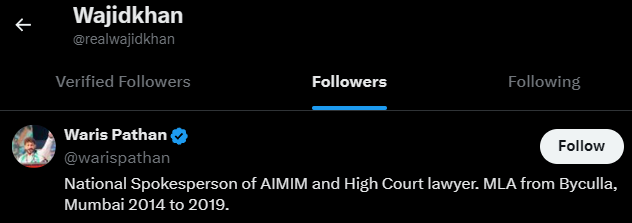
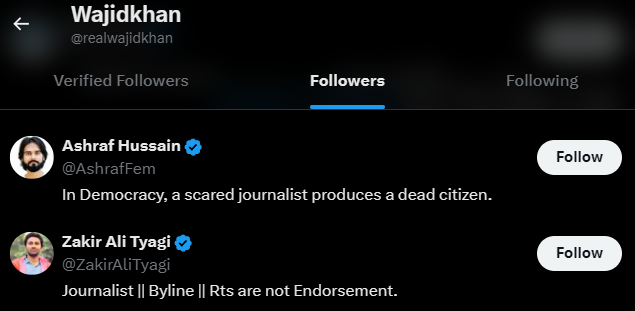
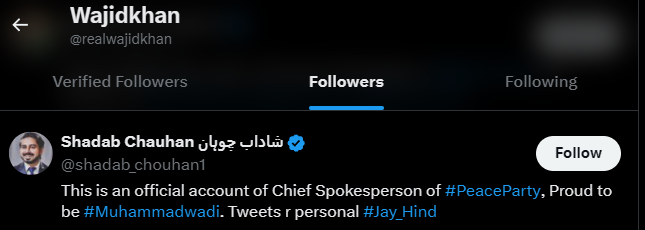
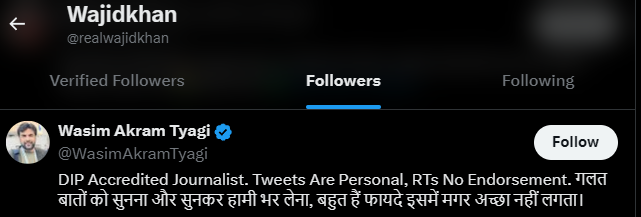
It should come as no surprise that Khan is followed by those who share his fanatic views including All India Majlis-e-Ittehadul Muslimeen (AIMIM) leader Waris Pathan, alleged journalists Ashraf Husain, Zakir Ali Tyagi and Wasim Akram Tyagi and chief spokesperson of Peace Party Shadab Chauhan.
Conclusion
Wajid Khan who is reportedly from India has no love or loyalty for the country and is purely guided by his Islamist beliefs which is the reason behind his blind support of Hamas and more lately, Iran’s mullah regime under Khamenei. He has expressed hatred towards India and Hindus and praised Hamas, Hezbollah and its ex-supremo late Hassan Nasrullah who he dubbed as a martyr and other Islamic elements in many similar posts.
He resents India’s majority community, particularly those connected to the BJP or RSS, not only because they are infidels but also for their backing of Israel in its struggle against Muslim fanaticism and terrorism. The fightback is especially infuriating to those like him, who in their ignorance cannot envision any opposition or protests against Islamic radicals.
Many others, including Rana Ayyub, Mohammed Zubair and Meer Faisal, view the violence committed by jihadis as justified and moral, but any form of reprisal as cruel and genocide. They exalt the terrorist acts of Hamas as “resistance,” yet they denounce Israel’s policies as discriminatory and portray it as an apartheid state because it stood up against the bloodshed and violence perpetrated by terrorists.
Their overwhelming hatred towards everyone who opposes terrorism in India, particularly Hindus, stems from the same cause. They don’t seem to care when India suffers from numerous terrorist attacks and incidences of Muslim mob violence that affect Hindus and their festivals but cry victimhood and human rights violations as soon as the other side responds. These individuals either ignore, justify, or whitewash the crimes committed by the jihadis on the ground, shamelessly as it seems to be the only playbook adopted by their ilk throughout the world.
On the 17th of September 2024, the Israeli intelligence agency Mossad carried out one of its most effective anti-terrorist operations against the Islamic terrorist outfit Hezbollah in Lebanon. The sophisticated attack left thousands of Hezbollah terrorists injured and over 30 dead.
It was reported how Mossad carried out a long-term operation which included setting up a legitimate company in Hungary to supply communication devices to Hezbollah. A Washington Postreport says that Israel carefully planted booby-traps in the devices for almost ten years, using them to eavesdrop, while retaining the capacity to remotely detonate these walkie-talkies.
Mossad launched the first step of the plot against Hezbollah in 2015 when the devices were secretly brought into Lebanon.
Citing officials, The Post reported: “For nine years, the Israelis contented themselves with eavesdropping on Hezbollah, while reserving the option to turn the walkie-talkies into bombs in a future crisis. But then came a new opportunity and a glitzy new product: a small pager equipped with a powerful explosive.”
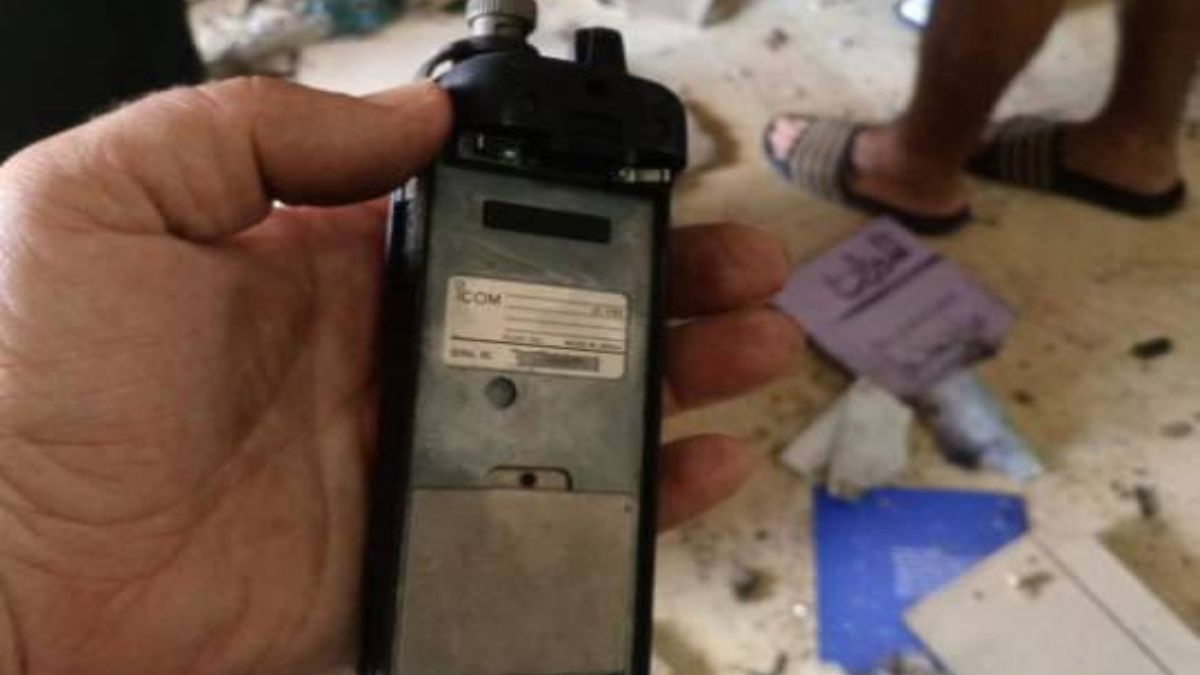
An exploded Hezbollah walkie-talkie (Source: IndiaTV)
The plan for the pager explosive operation originated in 2022, over a year before Hamas’s brutal onslaught against Israeli civilians on 7th October 2023. The first sales pitches for Apollo AR924 pagers to Hezbollah were also received two years ago.
Interestingly, the moderately bulky pagers and huge batteries, which could provide long operative days, made it easier for Israeli experts to set the explosives. One of the most deadly features of these pagers was a two-step decryption process that required its user’s hands.
This ensured most users [Hezbollah terrorists] would be holding the pager with both hands when Mossad triggered the devices remotely on the 17th of September. The WaPo report says that the user had to press two buttons to read the message. An official said that since both the hands of terrorists would be wounded in the page explosion, they would be rendered “incapable to fight”. Probably, Mossad wanted Hezbollah terrorists dead or almost dead [read “useless”].
Mossad used a Taiwanese company to penetrate Hezbollah’s communication system and cause the ultimate ‘explosion’
Notably, Mossad has long been attempting to break into Hezbollah using electronic monitoring and human informants and it found that one of the Iran-backed terror group’s top priorities was establishing a surveillance-free communication system among terrorists that Israel could not trace or hack. The Mossad investigated this, and Apollo pagers were offered to the terrorist organisation as a gadget with no risk of surveillance.
The WaPo report suggests that the choice of a Taiwanese manufacturer Gold Apollo was also pertinent, as Hezbollah leaders were cautious about gadgets from countries with ties to Israel. Hezbollah leadership did not suspect a foul play, as Taiwanese Apollo pagers, a well-known trademark and product line with global distribution, had no evident links to Israeli or Jewish interests.
Last year, the sales pitch was made by a female marketing executive trusted by Hezbollah and linked to Apollo, she was a former Middle East sales agent for the Taiwanese firm, as well as an Apollo pager licensee through her company.
“She was the one in touch with Hezbollah, and explained to them why the bigger pager with the larger battery was better than the original model,” said an Israeli official briefed on details of the operation. One of the main selling points about the AR924 was that it was “possible to charge with a cable. And the batteries were longer lasting,” an official told WaPo.
Notably, the marketing official was unaware of Israel’s designs and was clueless that the pagers were physically built in Israel under Mossad’s supervision.
It is pertinent to note that Taiwanese company Gold Apollo has denied making the pagers, saying that they were made by Hungarian company BAC Consulting under licence from them.
As reported earlier, BAC Consulting headquartered in Budapest is nothing but a front established by Mossad and two more such shell companies were created by the Israeli intelligence agency. An NYT report said that BAC Consulting is only an intermediary and has no operative site in Hungary. BAC CEO Cristiana Barsony-Arcidiacono also said that the company did not make the pagers and that she was just a link in the supply chain. While BAC may have been unaware of Mossad’s involvement, it somehow received the rigged pagers from Mossad and supplied them to Lebanon as per order.
Japanese walkie-talkies made over 10 years ago were also used in explosion
While Hezbollah was still to fathom what happened as the pager explosion created chaos, a day after the pager explosion, walkie-talkies used by Hezbollah exploded, killing 25 people and injuring over 1000. In addition, the two-way radios were rigged with explosives and were remotely detonated. Among these walkie-talkies, some were made by Japanese radio equipment maker Icom.
The interesting part here is that Icom confirmed that they discontinued the manufacturing of the model used in the attack a decade ago. The company exported the IC-V82 two-way radio to the Middle East and other regions till October 2014. This adds substance to the information emerging that Icom may have sold the devices in 2014 and the same were acquired by Mossad, altered later on, only to be eventually bought by Hezbollah.
Why Hezbollah was using old-fashioned tech?
Notably, the demand for pagers and walkie-talkies arose after the killings of Wissam al-Tawil, Taleb Abdallah, and Mohammed Nasser, commanders in charge of Hezbollah’s operations in the south, as well as Saleh al-Arouri, Hamas’ deputy leader in Beirut. Hezbollah suspected that Israel is tracking their cell phones. The terror group used its affiliated Al-Nour radio to caution its terrorists not to heed cold calls from callers claiming to be local officials as they could be Israeli agents. Since then, the cell phone ban is strictly implemented and any Hezbollah terrorist found in possession of a cell phone is kicked out of the terror group. Besides, Hezbollah is using small, homemade, unmanned aerial vehicles (UAVs) to gather information about Israeli targets and attack its surveillance systems.
Netanyahu approved the pager and walkie-talkie explosion after calculating the potential risks
The Israeli security officials and Prime Minister Benjamin Netanyahu noted that carrying out such a massive attack on Hezbollah might escalate tensions with Iran and result in a full-fledged war with Hezbollah, particularly at a time when the Israeli forces are fighting against Hamas. “But others, chiefly Mossad, saw an opportunity to disrupt the status quo with “something more intense”,” the WaPo report says adding that the US, which has been a major ally of Israel was not informed about the planned pager and walkie-talkie explosion attack.
“Ultimately, Netanyahu approved triggering the devices while they could inflict maximum damage. Over the following week, Mossad began preparations for detonating both the pagers and walkie-talkies already in circulation,” WaPo reported.
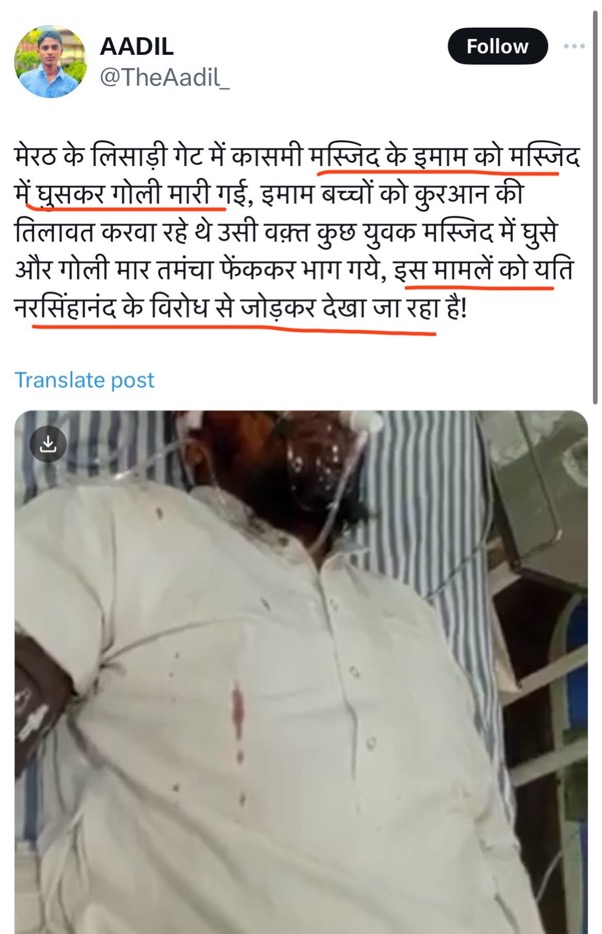
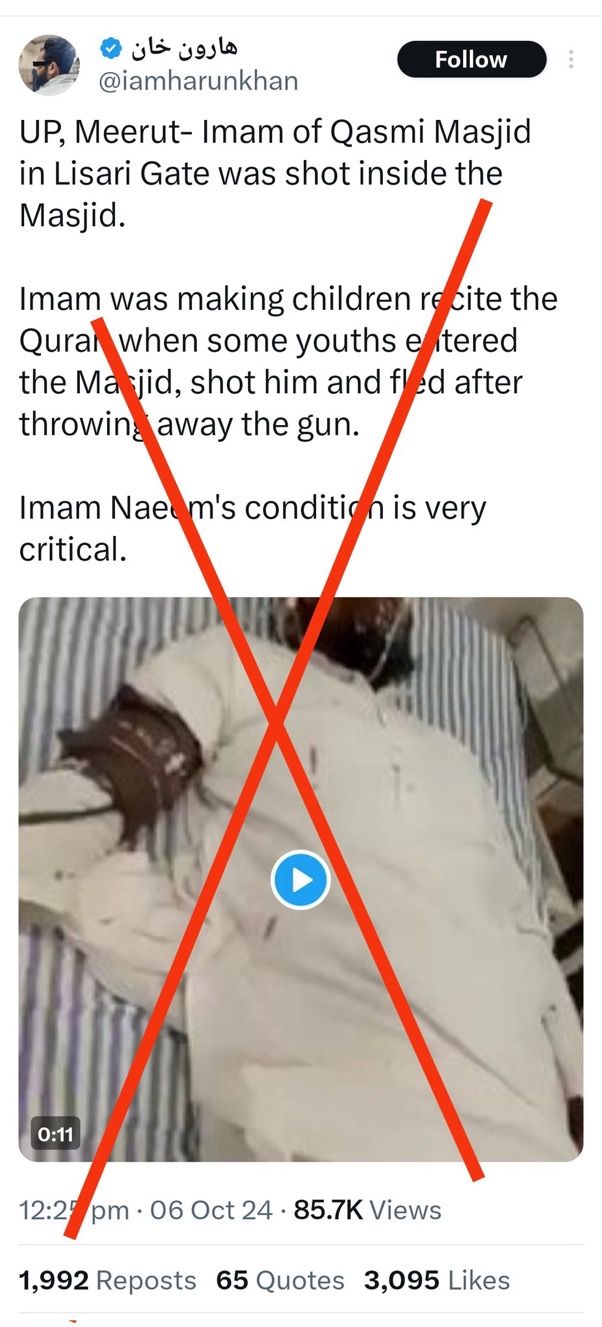
A 30-year-old Muslim cleric, who taught Arabic and Urdu, was shot at Meerut’s Lisari Gate area around 6:30 am on Sunday. Mohammed Naeem, the Muslim cleric, narrowly avoided serious injury as the bullet grazed the back of his ear.
The accused who shot Naeem inside the mosque turned out to be his co-religionist, Mohammad Sartaj, reports quoting police officials said.
However, Islamists who are always on the prowl to needlessly communalise incidents and keep the bogey of “hate crime against Muslims” alive spared no time to leverage the incident to power their venom factories.
Several Islamists tweeted about the incident, giving it a glaring communal colour while also withholding a crucial detail about the case.
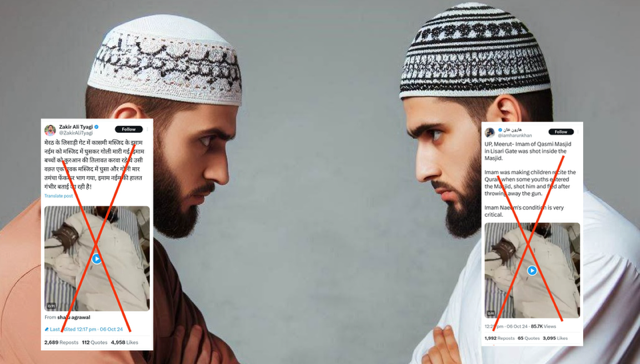
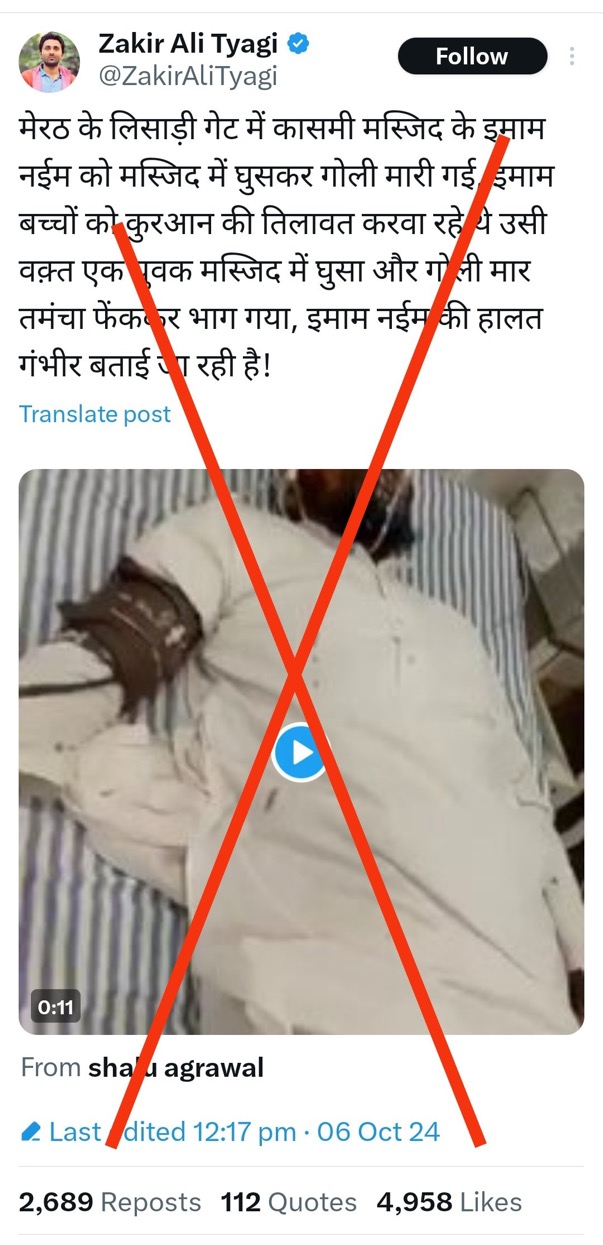
Zakir Ali Tyagi, an Islamist who refers to himself as a ‘journalist’ while being a closet Islamic fundamentalist, tweeted details of the case but failed to mention the name of the accused.
Another Islamist circulated the news and gave it a spin to blame Yati Narsinghanand Saraswati. He claimed that people linked the attack against the Muslim cleric to Yati Narsinghanand Saraswati, who was recently targeted by Islamists online for his remarks on Prophet Muhammad.
An Islamist who often furthers talking points of the Congress ecosystem tried to whip up a communal frenzy by alleging that the Muslim cleric was attacked inside the mosque when he was teaching the Quran to the students, insinuating that it was a case of hate crime.
As social media was rife with posts insinuating that the maulvi was part of a hate crime against Muslims, the Meerut Police issued a statement clarifying that both the victim and the assailant were Muslims.
SSP Meerut Vipin Tada told TOI that Naeem and the shooter, Mohammed Sartaj, who is believed to have mental health issues, were acquainted and had a disagreement after a verbal altercation a few days earlier. Naeem, who also practices as a hakeem (a traditional physician), had treated Sartaj for memory problems. On Sunday, Sartaj arrived at the mosque, shot at Naeem, and fled, leaving behind his weapon.
The barbaric attack by Hamas on innocent civilians in the Jewish country on 7th October of last year was the catalyst for the escalation of the Israel-Palestine conflict, which has embroiled the entire Middle East in fierce warfare for many decades. Notably, other Islamic nations including Iran, which is known to have close ties with the Hamas leadership and Lebanon among others also jumped in which only intensified the violence and raised concerns that the dispute would spill over into other parts of the world.
A recent tipping point in the struggle transpired when Iran launched its largest-ever assault on its regional adversary, on the night of 1st October, with a barrage of almost 200 ballistic missiles. Iran claimed that the strikes were intended for military bases, but Israel’s aerial defences, supported by the United States and the United Kingdom thwarted the attack and prevented any major loss of property and life except for one Palestinian worker named Sameh Al-Asali who was killed in Jericho and four other Palestinians were wounded by shrapnel from the same rocket.
The alarm system and Israel’s robust network of bomb shelters all over residential areas prevented major loss of life.
Rear Admiral Daniel Hagari, the Israel Defense Forces (IDF) spokesperson, providing details about the assault stated, “Iran launched a large-scale attack of over 180 ballistic missiles directly from Iranian soil at the State of Israel. There were a small number of hits in the centre of Israel and some other hits in southern Israel. The majority of the incoming missiles were intercepted by Israel and a defensive coalition led by the United States.”
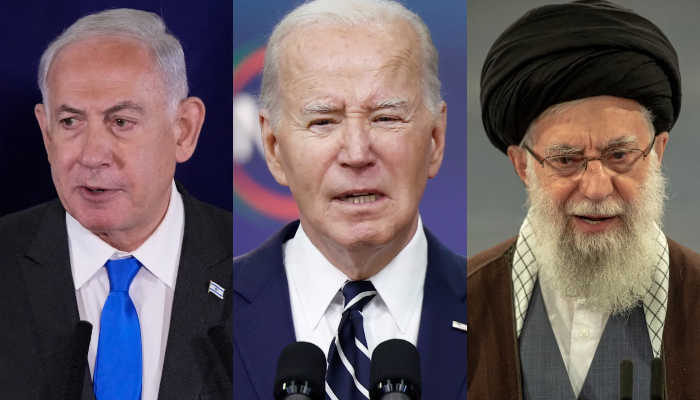
Expectedly, an incensed Israel pledged that the Islamic Republic would pay heavily for its misadventure. “Iran made a big mistake tonight, and it will pay for it,” vowed Prime Minister Benjamin Netanyahu on X (formerly Twitter). Rear Admiral Daniel Hagari also called the incident a “severe and dangerous escalation.” He declared, “Iran’s attack is a severe and dangerous escalation. There will be consequences. Our defensive and offensive capabilities are at the highest levels of readiness. Our operational plans are ready. We will respond wherever, whenever, and however we choose, in accordance with the directive of the government of Israel.”
The world has been awaiting Israel’s response in trepidation ever since, however, the latter has not acted upon its promise as of yet and there might be an interesting reason for the delay.
The US offers “compensation” to forgo attacking specific targets in Iran to a reluctant Israel
President Joe Biden’s administration has offered Israel a “compensation package” if it refrains from hitting specific Iranian targets, in retribution for Tehran’s attack, as per a report in Jerusalem Post. According to the report, US officials offered their Israeli counterparts “extensive diplomatic backing and additional military aid” in exchange for the sparing of some targets within Iranian territory. This package was put forth during discussions regarding the ‘optimal way’ to respond to the strikes, between officials from the two nations.
However, the lucrative offer doesn’t appear to sway the Israelis who reaffirmed their commitment to protecting their nation and its people. “We consider the United States to be our ally and are always ready to listen. At the same time, we will do all that’s necessary to protect the citizens of Israel and the security of Israel,” expressed an Israeli official.
Jerusalem is reportedly preparing a major attack on the Iranian regime that could aim at nuclear facilities and oil fields. Interestingly, President Biden has voiced his opposition to both. Israel pointed out that it will respond in a way that “will cause Iran to reconsider its desire to enter into a drawn-out conflict” because it is not interested in a protracted war of attrition with the Islamic Republic.
President Joe Biden was also questioned whether the US would support an Israeli attack on Iranian nuclear sites. “The answer is no,” he replied after which Donald Trump mocked him and stated, “They asked him, what do you think about Iran, would you hit Iran? And he goes, ‘As long as they don’t hit the nuclear stuff.’ That’s the thing you want to hit, right?” He then asked, “Isn’t that what you’re supposed to hit? I mean, it’s the biggest risk we have, nuclear weapons. When they asked him that question, the answer should have been, hit the nuclear first and worry about the rest later.”
On 9th October, Israeli Defense Minister Yoav Gallant is expected to embark on an “urgent, 24-hour visit” to the United States, where he will hold meetings with US Secretary of Defense Lloyd Austin among other prominent officials. “It’s important for us to hold discussions on strategic cooperation between our countries and defence cooperation in light of the threats posed by Iran and its proxies,” he mentioned and added, “We are powerful when we are aligned, and I want to make sure of it.”
However, Yoav Gallant asserted, “Israel will respond to the unprecedented Iranian attack in the manner of our choosing, and at the time and place of our choosing.” He further highlighted that all options are open in terms of potential targets.
On the other hand, the Iranian Civil Aviation Organization grounded all airlines operating within and outside of the Islamic Republic for almost nine hours on the night of 6th October over “operational restrictions,” according to state-run media. The flights were halted soon after Yoav Gallant warned, “Israel is powerful in defence and offence, and this will be reflected in the manner of our choosing, at the time and place of our choosing.” “Whoever thinks that by trying to harm Israel they will deter us from taking action, should take a look at (our operational achievements) in Gaza and in Beirut,” he further declared.
Pertinently, the US and the IDF have been corresponding about further action following the attack and United States Central Command (CENTCO) Chief General Michael Kurilla is at present in Israel for the same. The most remarkable part of the ongoing discussions is the package which includes a total guarantee of comprehensive diplomatic protection as well as a weapons package and Israel’s resistance to accept the offer.
Although the US appears to be keen to prevent any escalation that would arise from an Israeli attack on Iran’s vital assets, the Jewish state appears to prioritize security and safety in this difficult situation. Israel hasn’t, however, fulfilled its vow of vengeance, yet.
Israel killed Hezbollahchief Hassan Nasrallah
It is important to remember that the current crisis emerged after the death of Sayyed Hassan Nasrallah, the supremo of the Lebanon-based terrorist group Hezbollah which also has a political presence, in an underground bunker in Beirut on 27th September. Many senior leaders of the outfit, which is backed by Iran were eliminated in the attacks. Israeli Defense Forces launched multiple bunker-buster bombs at Hezbollah’s underground bunkers in the southern Beirut suburb of Dahiyeh, in the operation called “New Order.”
Hezbollah’s top leadership met in the organization’s headquarters, which are hidden beneath residential buildings, to discuss potential assaults on Israel in view of increasing hostility along the Israel-Lebanon border. Approximately 85 “bunker-buster” bombs, often referred to as “ground penetration munition,” were reported to have been utilised in the operation. Furthermore, just days earlier, thousands of pagers used by the terrorist outfit Hezbollah detonated all throughout Lebanon on 17th September which led to the deaths of at least eight members and 2,750 reported injuries out of which 200 were critical. The events led to major anger in the Islamic world, especially in Iran after which it attacked Israel.
An FIR has been filed against Alt News co-founder Mohammed Zubair following the attack on Dasna Devi Temple in Ghaziabad last week, alleging that Zubair and two other Muslim leaders, including Arshad Madani and Asaduddin Owaisi, tried to incite Muslims around the country and got local Muslims to get outsiders to destroy the ShivShakti Dham in Dasna.
The FIR was filed based on a complaint lodged by BJP leader Dr Udita Tyagi on October 7 at the Web City police station in Ghaziabad after the temple attack on October 5 by a mob of Islamists that had tried to lay siege to the Shiv Shakti Dham after a video shared by Zubair had gone viral on the internet.
A complaint was filed against Mohammed Zubair alleging incitement of Muslim mobs to attack Dasna Temple
In her complaint, Ms Tyagi alleged that the October 5 attack was a preplanned conspiracy by Islamists against the Shiv Shakti Dham in Dasna.
She also alleged that Owaisi, Zubair, Madani, and other Muslim leaders have been constantly instigating the public to kill Yati Narsinghanand Saraswati. She had asked the police to mark the individuals trying to whip up a communal frenzy and take appropriate action against them. Dr Tyagi has also demanded that Yati Narsinghanand should be released and granted adequate security.
Zubair has been booked under Sections 196, 228, 299, 356(3), and 351(2) of the Bhartiya Nyaya Sanhita, 2023. The FIR mentions that he has been booked on the complaint by Dr Tyagi which states that his continuously provocative tweets instigated Muslims to attack the Dasna Devi Temple, where a large of Islamists had gathered two days back, chanting threatening slogans and pelting stones.
On 4th October, thousands of Islamists took to the streets to protest against Mahant Narsinghanand Saraswati’s remarks on Prophet Muhammad in the village of Sultanpur, Laskar, Haridwar district, Uttarakhand. The protesting Islamists raised slogans such as “Nara-e-Takbir Allah Hu Akbar”, “Fansi Do”, and “Sar Tan Se Juda”.
A similar incident took place in Bulandshahr, where Islamists protested and indulged in stone pelting over remarks made by Dasna Temple Mahant Narsinghanand Saraswati. The incident occurred in the Sikandrabad area. A large number of Islamists gathered outside Hazrat Ali Mosque to protest against Narsinghanand’s statements about Prophet Muhammad.
On October 3, Zubair shared a video of Yati Narsinghanand Saraswati with a sensational claim that the Dasna Temple chief abbot had targeted Prophet Muhammad.
“One more derogatory and hateful speech by UP Priest Yati Narasinghanand targeting Islam and Prophet Mohammad,” Zubair tweeted, claiming that Narsinghanand was calling for burning the effigies of the Islamic Prophet. Ironically, Zubair, who champions himself as a ‘fact-checker’ committed to exposing “hate mongers”, has so far maintained a deafening silence on disparaging remarks made against Sanatana Dharma by Congress and DMK leaders.
Before long, other IT cell warriors who routinely share provocative posts, including tweets mocking Hinduism, were also outraged over what they claimed was an ‘unpardonable sin’ committed by Yati Narsighanand Saraswati. Posting inflammatory posts designed to incite violence against Narsinghanand, they claimed that he had spoken against the honour of their beloved prophet and that the police should jail him for committing the “gustakhi” (audacity).
How Zubair’s dog-whistling in the past had led to violence and death of innocent Hindus
It is worth noting that this is not the first time that Zubair has been accused of flaring up communal tensions by inciting Muslim mobs. Earlier in 2022, Zubair dog-whistled Islamists against former BJP spokesperson Nupur Sharma with an incomplete video from her debate on Times Now, where she stood up against an Islamist who mocked the Shivling discovered at the Gyanvapi controversial structure as a ‘fountain’. Sharma responded with remarks on Prophet Muhammad’s marriage with Ayesha, which was later picked up by Zubair, touching off massive ‘Sar Tan Se Juda’ protests across the country.
While Islamists went on a rampage on the streets in many cities across the country, it was essentially Mohammed Zubair who was responsible for kindling a fire that had gone on to assume uncontrollable proportions.
It was Zubair’s dog whistle that made a mountain out of a molehill and painted a target behind the back of Nupur Sharma and anyone and everyone who came out in her support.
The ominous hounding of Nupur Sharma prompted many to extend their support to her. Kanhaiya Lal from Udaipur, Umesh Kolhe in Amravati, and many others extended their solidarity with the beleaguered leader, voicing their support for her amid the death threats from Islamists.
Lal was a marked man the moment he came out in support of Nupur Sharma. Islamists, provoked by Mohammed Zubair, dished out death threats to him for what they considered an unpardonable sin committed against the Prophet. And days later, the Hindu man was killed for something as trivial as just sharing a social media post in support of Nupur Sharma.
A similar fate befell Umesh Kolhe, a chemist living in Maharashtra’s Amravati, who was murdered by four Muslim assailants while he was returning from his pharmacy on the night of June 22, 2022. Kolhe, too, was murdered for his social media post supporting Nupur Sharma.
The Borasad police have made a significant breakthrough in the cow slaughter case that occurred on 21st August, coinciding with the day of Rakshabandhan. It has been revealed that the cow was slaughtered for ‘Niyaz’. For those unfamiliar, Niyaz refers to a ritual offering or sacrifice typically performed by the Muslim community. It is part of their religious or communal practices, involving the offering of food, usually meat, which is then distributed among community members.
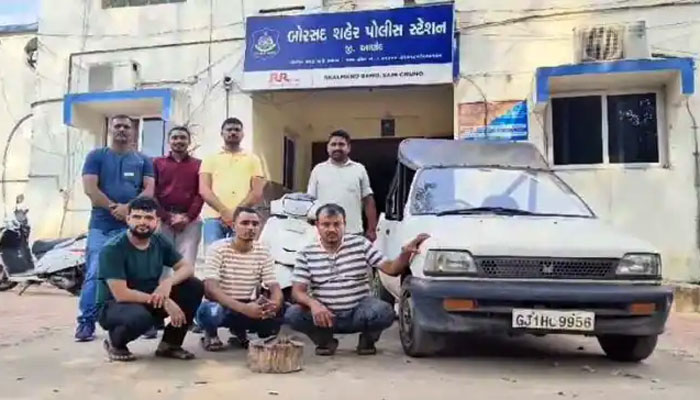
This is done during special occasions and gatherings. In this instance, a cow was slaughtered on the Hindu festival of Rakshabandhan for some Islamic occasion. The prime suspects in the case, identified as Aslam, Hasim, and Sadiq, had been absconding but have now been arrested by the police.
As per reports, on 21st August, a cow’s head was discovered in a canal near Vanatalav leading to Tekriyapura, which sparked public outrage in the area. According to the police, the absconding accused were apprehended following relentless efforts and technical surveillance. During interrogation, the suspects revealed that they had purchased a cow and slaughtered it near a stable owned by a man named Gosmohammad. The cow’s meat was then taken to Almadina Nagar and used for the Niyaz offering. Subsequently, the accused disposed of the cow’s head and other remains by dumping them in the canal leading to Tekriyapura.
The police employed a combination of human and technical surveillance to track down the main accused in the case. They received a tip-off which led to the arrest of Mohammad Sadiq, alias Lalo Bhathiyaro, Rehmat Khan Pathan from Ashrafi Society, Hasim Mohammad Hanif from Almadina Nagar, and Mohammad Aslam, alias Poori, from the same locality. The suspects will be presented before the court following processing.
Background of the Borasad cow slaughter case
The incident occurred on the sacred day of Rakshabandhan, when a cow’s head was found in a canal near Tekriyapura. The canal supplies drinking and irrigation water to several villages around Borasad. After the discovery, members of the Hindu community protested, as the incident deeply hurt their religious sentiments.
Thousands of Hindus took to the streets in response, presenting a memorandum to the Borasad Mamlatdar (local revenue officer) demanding justice. A large rally of Hindus, chanting slogans like ‘Jai Shri Ram’, urged the authorities to halt cow slaughter in the region. Prominent local Hindu leaders participated in the rally, calling for immediate action to prevent future incidents of cow slaughter.
A complaint was lodged, leading to the police filing an FIR in Borasad cow slaughter case under sections BNS 299 and 325, along with the Animal Protection Act 8(2), against unidentified individuals.
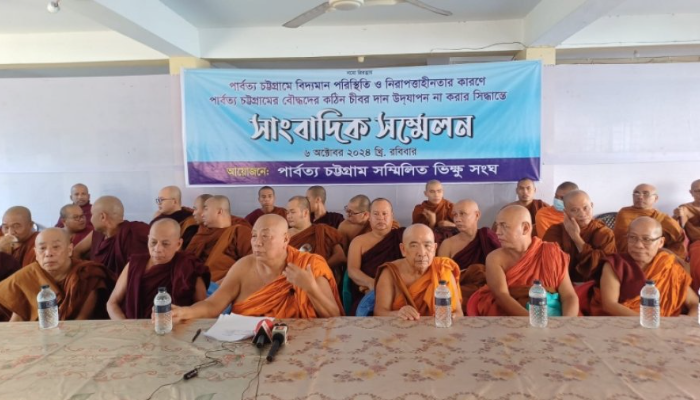
The minority population in Bangladesh is subjected to relentless persecution that appears to have no end in sight. After the extremists threatened Hindus over “Durga Puja” celebrations and demanded jizyah (tax paid by non-Muslim populations to their Muslim rulers) from them, the native Buddhist monks in Chittagong Hill Tracts (CHT) declared that they would not observe “Kathin Chibar Dan” (Kathina Robe Offering) this year due to the current situation and security concerns. The festival is one of the biggest religious celebrations held by the Buddhist community in CHT every year.
The announcement was made on the 6th of October afternoon at Maitri Bouddha Vihar in Rangamati hill, during a press conference. The President of “Parbatya Bhikshu Sangha,” Shraddhalankar Mahathero, stated that the festival will not be celebrated in any temple within the area owing to the prevailing insecurity and uncertainty. The festival was scheduled to be held in the first week of November.
According to the monks, the development transpired due to the growing violence against the minority community. They charged that law enforcement officials had both active and indirect involvement in the violent occurrences that took place in CHT. The monks added that although investigation committees were established, they were never allowed to look into any of the communal attacks.
Shraddhalankar Mahathero recounted recent violent incidents that happened in the Khagrachari and Rangamati hill areas between the 18th to 20th of September and 1st of October, during which settlers plundered, damaged and set fire to hundreds of shops owned by indigenous populations. These attacks resulted in the gruesome deaths of four indigenous people, one of them a student. Furthermore, donation boxes in Buddhist temples were plundered and Buddha statues were desecrated.
The word “Kathin” or difficult is related to the annual religious event known as Kathin Chibar Dan, where Buddhist followers present monks with “Dan” robes, or “Chibar.” These robes are made of cotton and are woven by the devotees over the course of an overnight period. The celebration was first held approximately 2,500 years ago by Bishakha, a nurse to Gautama Buddha. It comes before Probarona Purnima, a celebration marked by the releasing of skylights and signifies the end of a three-month seclusion for monks who meditate inside their monasteries for self-edification and atonement for mankind.
Attacks on Durga puja pandals
Notably, idols of Goddess Durga and other Hindu deities were vandalized at the Rishipara Barwari Puja Mandap and the Manikadi Palpara Barwari Puja Mandap, on 28th September and 1st October respectively, further adding to the continuous wave of attacks against the minority community, particularly Hindus in Bangladesh. The attacks took place in Rajshahi Division’s Sujanagar upazila in the Pabna district.
Five Hindu idols were demolished in the Manikadi Palpara Barwari Puja Mandap, while four idols total were disfigured at the Rishipara Barwari Puja Mandap. Seven idols of Hindu deities were destroyed at the Gopinath Jiur Akhara Durga Puja mandap on 3rd October. Three temples and sixteen idols of Hindu deities in Bangladesh have been targeted in only six days, ahead of the “Durga Puja” celebrations.
At least 205 attacks on Hindu temples, stores and businesses have occurred since the collapse of former prime minister Sheikha Hasina’s government on 5th August, after the months-long anti-quota protest that turned into a regime change operation.