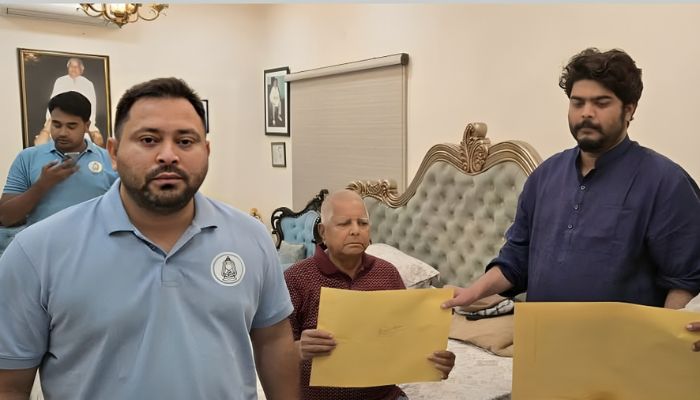
A political storm has erupted in Bihar after a video involving Osama Shahab, son of notorious former Siwan MP Mohammad Shahabuddin, went viral. The video, originally shot during OpIndia’s ground reporting, has brought the Rashtriya Janata Dal (RJD) under sharp criticism and on the defensive. Osama, who has been given a ticket by the RJD for the upcoming Assembly elections of Bihar, is now being accused of continuing his father’s legacy of crime and intimidation, while the party is being accused of glorifying it.
The viral video that sparked outrage
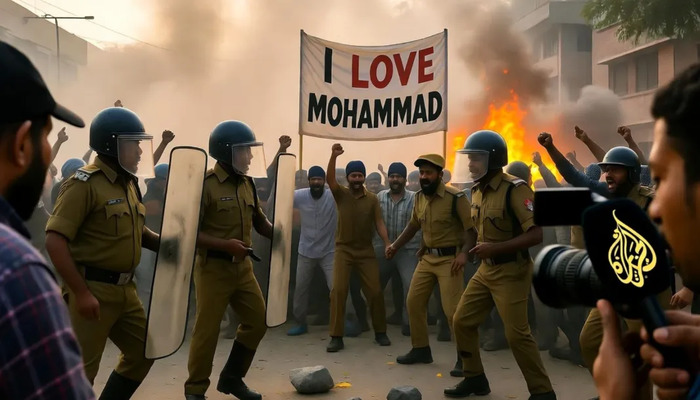
The controversy began after a supporter of Osama Shahab made shocking remarks on camera during OpIndia’s election coverage in Siwan. The supporter, speaking to the reporter, Anurag Mishra, claimed that they were looking for a boy who had torn down a poster that read “I Love Muhammad”. The man further threatened that if the boy was found, Osama Shahab would “burn him alive.”
"भाईजान (ओसामा) बोले- पोस्टर फाड़ने वाले को ज़िंदा जला देंगे"
मुस्लिम युवक बोला- एक ने I Love Muhammad वाला पोस्टर फाड़ा, उसे ढूंढ रहे हैं… मिलने पर ले जाएगा शहाबुद्दीन के घर
The video immediately went viral on social media, sparking massive outrage. Many users pointed out that the violent language echoed the brutal methods once associated with Mohammad Shahabuddin, who was infamous for burning people alive with acid. The video reinforced fears that Osama, too, was carrying forward the same legacy of fear and violence.
BJP attacks RJD over “criminal legacy”
The ruling Bharatiya Janata Party (BJP) in Bihar wasted no time in attacking the RJD. Sharing the viral video on X (formerly Twitter), the BJP’s official handle wrote, “An RJD ticket means an invitation to jungle raj in Bihar! Open support to criminals’ families, the people are watching.”
Amit Malviya, head of the BJP IT cell, also shared OpIndia’s video, saying, “If the RJD candidate Osama, son of Shahabuddin, loses the election, Islamist extremists are threatening to burn down Siwan. Posters of ‘I Love Muhammad’ are plastered across the entire area, and ahead of the elections, these extremists are issuing poisonous statements.”
यदि आरजेडी प्रत्याशी शहाबुद्दीन के बेटे ओसामा चुनाव हार जाते हैं, तो इस्लामी कट्टरपंथी सीवान को जला देने की धमकी दे रहे हैं। पूरे क्षेत्र में 'आई लव मुहम्मद' के पोस्टर लगे हैं, और चुनाव से पहले ये कट्टरपंथी ज़हरीले बयान दे रहे हैं। pic.twitter.com/cfZQBt7nms
The video has put the RJD in a tough spot, especially since Osama’s candidature had already raised questions about the party’s willingness to rehabilitate the Shahabuddin family in politics. The optics of the video have only added fuel to the fire.
Soon after the video went viral, RJD supporters tried to control the damage by discrediting it. Some party members produced the same youth seen in the video, who then claimed that Anurag Mishra gave him ₹5,000 to make the remarks and that he was under the influence of alcohol at the time.
However, OpIndia journalist Anurag Mishra later released another detailed video exposing the truth behind the viral clip. He explained that the youth had been brought to the reporter by another local, and OpIndia had not coerced or paid him to make any statement. Mishra shared unedited footage showing the sequence of events, countering the RJD’s claims of fabrication.
'Opindia ने पैसे देकर Shahabuddin के बेटे पर झूठ बुलवाया?'
बिहार के सिवान में Opindia से ओसामा शहाब (माफिया शहाबुद्दीन का बेटा) के समर्थक ने कह़ा कि 'भैया' I Love Muhammad' का पोस्टर फाड़ने वालों को ज़िंदा जला देंगे।
Facing mounting criticism, RJD leaders have stepped in to defend Osama Shahab. Former minister and current RJD candidate from Siwan Sadar, Avadh Bihari Chaudhary, posted on Facebook in support of Osama.
“Over the last few days, certain so-called media outlets and opposition parties have been spreading false propaganda against Osama Sahab, the son of the late Mohammad Shahabuddin, using money and misinformation,” Chaudhary wrote. He added, “Their goal is to divide the people of Siwan and destroy the atmosphere of harmony. Osama Babu is an honest, humble, and service-oriented leader. He doesn’t believe in religious politics, his goal is Siwan’s development, youth employment, and respect for the people.”
Chaudhary’s remarks make it clear that the RJD is determined to portray Osama as a “leader of the people” rather than a symbol of criminal politics.
The reality behind Osama Shahab’s record
Despite the party’s defense, Osama’s record tells another story. Like his father, he has already had several run-ins with the law. His first case was registered at the Hussainganj police station in connection with a land dispute over 42 kathas of land in Chapia Buzurg village. Later, an FIR was also lodged against him in Motihari for allegedly firing shots at his brother-in-law during another land dispute.
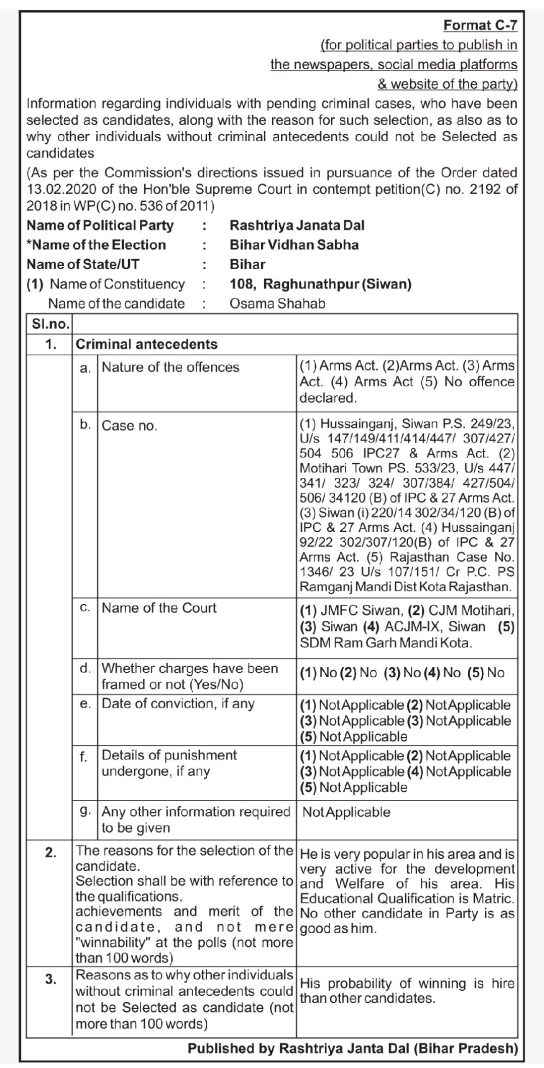
In the RJD’s official candidate disclosure form (Form C7), the party itself has listed the criminal cases pending against him. Yet, the justification given for his selection reads: “He is very popular in his area and actively participates in developmental and welfare activities. His educational qualification is matriculation. There is no other candidate in the party like him.”
This admission has only deepened the criticism against the RJD, as it appears to have equated fear-based popularity with leadership potential. Political observers say the move reflects the RJD’s old playbook, blending crime with charisma to secure votes in its traditional strongholds.
The politics of legacy
For decades Mohammad Shahabuddin dominated Siwan with a firm hand. Even in prison, he was a dominant force who dictated local politics and held criminal gangs in thrall. His death in 2021 from COVID-19 did not bring his influence to a halt; rather, it left a power vacuum that his son Osama now seems to be filling.
By issuing a ticket to Osama, RJD has indicated that it is ready to accept that legacy if it is able to regain its past electoral support in Siwan. Yet this action has also raised concerns about the return of “jungle raj,” something that tends to characterize RJD’s early days in power, may not be very distant.
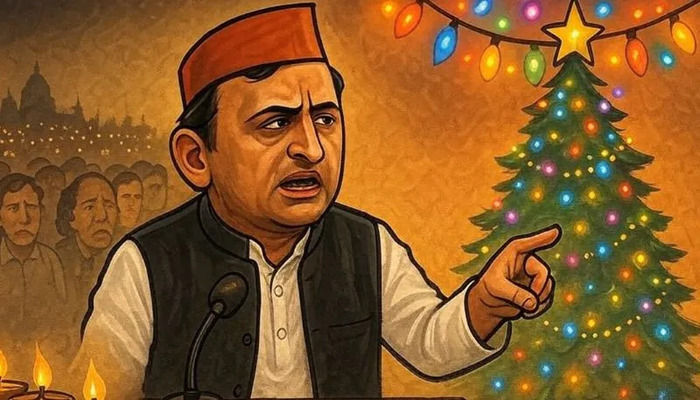
While preparations for the upcoming Diwali are in full swing across the country, Samajwadi Party (SP) chief Akhilesh Yadav is irritated by the joy of the people. This year, his irritation is directed at the lamps lit on Diwali. His recent statement made it clear that he likes the Christian festival of Christmas more than Diwali, and sees the lighting of lamps on the Hindu festival of Diwali as a waste of money. Akhilesh Yadav said that lighting diyas on Diwalil is ‘waste of money’, and instead people should use electric lights for decoration like Christians do on Chirstmas.
During a press conference held on Dhanteras (October 18, 2025) in Lucknow, Akhilesh Yadav said, “I would like to make a suggestion in the name of Lord Ram. During Christmas, cities are illuminated for months. Learn from them. Why spend so much money on lamps and candles again and again? What can we expect from this government? It should be removed. We will ensure that there are even more beautiful lights here…”
#WATCH | Lucknow | SP Chief Akhilesh Yadav says, "… I dont want to give a suggestion. But I will give one suggestion on the name of Lord Ram. In the entire world, all the cities get illuminated during Christmas. And that goes on for months. We should learn from them. Why do we… pic.twitter.com/HAL47migCC
Akhilesh’s statement outraged people on social media
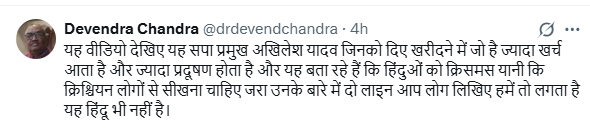
Akhilesh Yadav’s suggestion on Diwali reflects his hatred for Hindu festivals. His statement attracted backlash from Hindus on social media. Some people on social media expressed suspicion about whether Akhilesh was even a Hindu.
A social media user referred to Akhilesh Yadav as ‘Akhileshuddin’ and said, “What can be expected from ‘Akhileshuddin?”
An X user said, “Now Akhilesh Yadav has a problem with diyas and candles. Now, the people of Uttar Pradesh have to question whether he is a Christian or a Muslim”.
@yadavakhilesh को अब दियों और मोमबत्ती से भी दिक्कत हो गई है …..अखिलेश यादव का बयान —: "पूरी दुनिया में क्रिसमस के दौरान सभी शहर रोशन हो जाते हैं। और यह महीनों तक चलता है। हमें उनसे सीखना चाहिए। हमें दीयों और मोमबत्तियों पर पैसा क्यों खर्च करना है और इसके लिए इतना सोचना क्यों… pic.twitter.com/tRiZa36psC
Another user wrote, “We’ve seen many great leaders, but none like this one, who can’t even make his own stand clear. After all, this leader, who specialises in building his political career by misleading people and giving false assurances in the name of PDA (Pichda, Dalit, Alpsankhyak), has now started insulting Hindus while opposing Brahmins, Kshatriyas, and upper castes. While on one hand, our brothers and sisters from the Kumhaar (potter) caste work hard all year to make lamps for the Diwali festival, on the other hand, this gentleman, citing the example of Christmas, asks people to hang lights. Should the people of Sanatan Dharma take inspiration from Christmas…?”
एक से बढ़कर एक नेता देखे पर इन के जैसा कोई नहीं जो खुद ही अपना स्टैंड क्लियर नहीं कर पाए. आखिर PDA के नाम पर लोगों को गुमराह कर झूठी तसल्ली दे अपना राजनीतिक कैरियर बनाने में माहिर नेता जी ब्राह्मणों,क्षत्रियों और सर्वणों का विरोध करते करते हिन्दुओं का अभी अपमान करने लगे। एक तरफ… pic.twitter.com/tARAoamzWs
— Himanshu Dwivedi(Legal Journalist)?? (@Dwivedihd92) October 19, 2025
Another social media user asked Akhilesh Yadav to offer similar advice for the festival of Eid. The user wrote, “Similarly, why sacrifice animals every year on Eid? If you do it once, isn’t that enough? Save money and maybe an innocent animal. Why cut down trees every year on Christmas?”
Akhilesh Yadav Says "Learn from Foreign countries, On Christmas they decorate for entire month. Why Purchase Candles, Diya and Crackers on Diwali?"
He is Right.
Same way why Sacrifice Animals every year on EID. If you have done once is it not enough? Save money and Perhaps a… pic.twitter.com/qAevPPCg3I
Evidently, Hindus are outraged over Akhilesh Yadav’s Hinduphobic statement, terming Hindu celebrations as a waste of money. The Hindus understand the significance of lighting diyas on Diwali, something the SP supremo, despite being a Hindu, probably doesn’t. Akhilesh Yadav should understand that the festival of lights is not just a religious tradition but also has spiritual and social significance.
Importance of lighting a lamp
The tradition of Deepotsav is not just a religious ritual but is also deeply connected with our culture, consciousness and socio-economic life. It symbolises the triumph of light over darkness, knowledge over ignorance, and truth over falsehood. From a religious and spiritual perspective, the Hindu tradition considers the lamp to be the light representing the soul and the divine energy. The light of the lamp not only dispels external darkness but also illuminates the darkness of inner thoughts, emotions, despair, and negativity.
Similarly, on a social and economic level, diyas are the livelihood of thousands of families who engage in the work of making Diyas for festivals like Diwali. During the annual Deepotsav in Ayodhya, local potter families receive large orders to make diyas for Diwali.
Employment from making diyas
Every year, the Ayodhya Deepotsav sets a new record by breaking the previous one. Last year, the Deepotsav set a record with 2.6 million diyas being lit for the celebration. However, the record will be broken in this year’s Deepotsav, which is set to witness the lighting of 2.9 million diyas. Thus, the festival of Diwali is not only a demonstration of people’s faith but also creates employment opportunities.
Several media reports showed how local potters said their lives had changed since the beginning of Ayodhya Deepotsav in 2017. While potter families previously earned only about ₹20,000 on Diwali, their income has now reached lakhs. Hundreds of families in small villages across the country are earning a comfortable living by making diyas.
This is the reason that Prime Minister Narendra Modi emphasised purchasing indigenous products. Ahead of Diwali, PM Modi appealed, “Embrace indigenous products and make them the mantra of every home and market”. PM Modi’s appeal has had a significant impact on the Diwali market. In the colorfully decorated markets, the number of indigenous products has increased, and the buyers are enthusiastic about purchasing them.
Cutting down trees for Christmas
Notably, millions of trees are cut down for Akhilesh Yadav’s favourite festival, Christmas, which has many negative impacts on the environment and society. Decorating trees is a common practice every year for Christmas, and these trees are either real or plastic. Growing natural Christmas trees requires extensive use of chemical fertilisers and pesticides, which severely impacts the ecosystem.
Additionally, felling these trees destroys wildlife habitats, harming biodiversity. When felled trees end up in landfills, they release carbon dioxide, which contributes to climate change. Artificial Christmas trees are equally harmful to the environment because they are made of plastic, which is non-biodegradable and remains in landfills for years. Akhilesh Yadav, who preferred artificial Christmas lights over earthen lamps of Deepotsav, should know that these lights increase the consumption of electricity, whereas lighting lamps makes the world bright without using electricity.
Akhilesh Yadav’s hypocrisy
Akhilesh Yadav may or may not realise the significance of the festival of Diwali. Or maybe, even if he does, he will not admit it publicly. But his Diwali greetings from 2024, interestingly, suggest that he does have some knowledge of the festival of lights. It is also possible that last year’s Diwali greetings were a mere formality, and his real opinion on Diwali was revealed during the press conference. Interestingly, Yadav does not remember such suggestions for Eid, Christmas, or any other religious festival.
The truth is that Akhilesh Yadav is not happy with the fact that Ayodhya Deeptsav, which was started by the Yogi government, is getting global acclaim. He is unable to accept the reality that the diyas of a Hindu religious festival are an attraction for people from India and abroad. Akhilesh Yadav’s venomous statement on Diwali has made it clear that if his government comes to power, Diwali will have no significance for him. Comparing the Hindu festival of Diwali to Christmas, celebrated in Western countries, is nothing more than Akhilesh Yadav’s crude anti-Hindu rhetoric.
(This article is a translation of the original article published on OpIndia Hindi.)
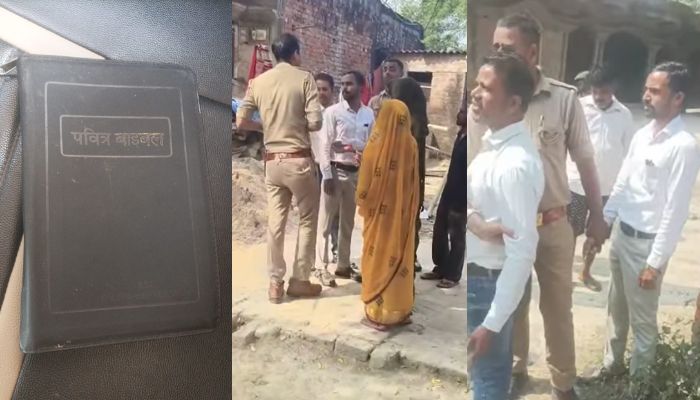
On 18th October, Phulpur Police in district Prayagraj, Uttar Pradesh, arrested three accused in connection with a religious conversion racket in Haribhanpur village. The fourth accused in the matter is absconding, and a manhunt is underway to catch him. The arrests were made following a complaint lodged by District Co-Convenor, Bajrang Dal, Vishva Hindu Parishad, Shantanu Tiwari.
In his complaint, Shantanu informed the police about the conversion event happening in the name of a “prayer meeting”. After confirming the details, the police arrested three individuals and initiated legal action in the matter. OpIndia accessed a copy of the FIR in the case.
Details of complaint
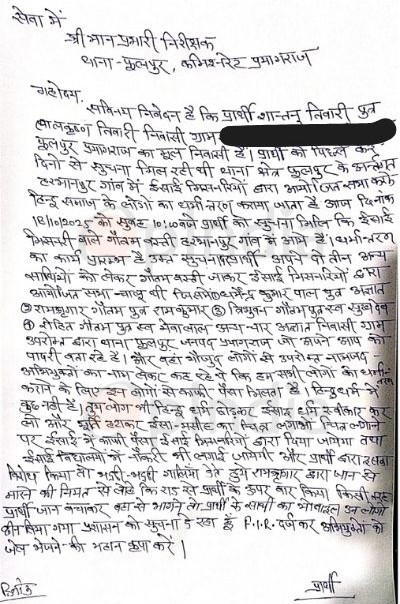
Shantanu filed a written complaint at Phulpur Police Station in which he said that he had been hearing about conversion activities being conducted by Christian missionaries in Haribhanpur village for several days. On 18th October, he received information about one such meeting happening in the village at around 10:40 AM. He said, “I was informed that a religious assembly under the banner of a ‘community discussion meeting’ was being held, where Hindu villagers were being lured into adopting Christianity.”
Source: Shantanu Tiwari
Shantanu, along with his fellow Bajrang Dal activists, reached the site and found a group of missionaries persuading villagers to abandon their faith. He stated that the missionaries told attendees that those who converted to Christianity would receive money, clothes, and other material benefits. “These activities are completely against Hindu society,” Shantanu added, accusing the missionaries of spreading misinformation and exploiting vulnerable villagers for conversion.
Details of FIR
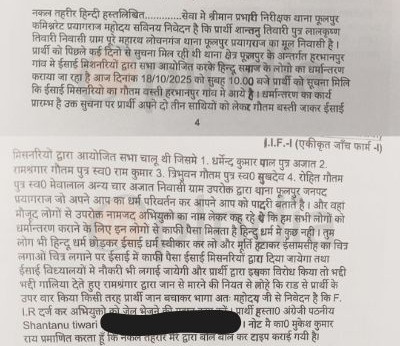
OpIndia accessed a copy of the FIR, which has been registered on Shantanu’s complaint under Sections 352, 196(1), and 299 of the Bharatiya Nyaya Sanhita (BNS) 2023, and Sections 3 and 5(1) of the Uttar Pradesh Prohibition of Unlawful Conversion of Religion Act, 2021, against four individuals, namely Ramkumar Pal, Ramsharan Gautam, Tribhuwan Gautam, and Rohit Gautam.
The FIR noted that the meeting was described as a “community discussion”. It was convened by Christian missionaries to promote religious conversions among members of the Hindu community in Haribhanpur village, under the Phulpur Police Station area. On the date of the incident, when Shantanu received information about the meeting organised by missionaries under the banner of a “community discussion meeting”, which was being attended by a large number of people from the Hindu community, he rushed to the spot.
At the site, he discovered that the Christian missionaries were persuading Hindus to abandon their faith and embrace Christianity. They were asking Hindus to renounce Hindu Gods and Goddesses and place images of Jesus Christ in their homes in exchange for money and jobs at missionary schools.
Excerpt of the FIR. Source: Shantanu Tiwari
The complainant also told the police that some people present at the prayer meeting were saying that they received hefty payments for converting people to Christianity and that no such rewards were given in Hinduism.
When Shantanu objected to the act, the accused attacked him with an iron rod in an attempt to kill him. The complainant somehow managed to escape and save his life.
Several conversion rackets busted in the past
Speaking to OpIndia, Shantanu said that Bajrang Dal has busted several other such conversion rackets in the past. Among those, in one of the cases, 13 accused were sent to jail. The case was being delayed by the accused as they filed multiple anticipatory bail applications, leading to delays in the proceedings. Shantanu’s advocate representing him in the matter recently got the bail applications cancelled.
In this case as well, Shantanu said that he will pursue the matter actively to ensure such activities stop in the region.
Investigation underway
Police said that the investigation confirmed that the accused had been urging villagers to renounce their faith. They had promised monetary rewards and employment opportunities in return for converting to Christianity. Authorities stated that the matter falls under offences related to assault, incitement, and unlawful conversion, and assured that legal proceedings will continue in accordance with the law.
The Right to Information (RTI) Act, referred to as the backbone of India’s democracy, celebrates its 20th anniversary in October 2025, and it is in the middle of a politically heated controversy. The Congress party blames the Modi government for systematically weakening the RTI, hiding information and threatening transparency.
The government has strongly fired back, with official reports as proof of the opposite. According to official data, RTI is now stronger, faster, and more transparent than ever, highlighting a remarkable case disposal rate of nearly 95%.
Are the allegations from the Congress party accurate?
The Congress party has continued its relentless criticism. Party President Mallikarjun Kharge wrote on X that the Modi government is gradually hollowing out the RTI. He argued that new laws, like the Data Protection Act, are being used to stop the disclosure of the information to the Public.
At a press conference, senior leader Jairam Ramesh identified various high-profile cases where he claims the government has avoided transparency through RTI. These encompass calls for details on the Prime Minister’s degree, alleged fake ration card, the Rafale fighter aircraft jet deal, the demonetization policy, and the scrapped electoral bonds scheme.
The party’s core argument is that the government, scared by tough questions in these matters, passed an amendment to the RTI Act in 2019. They claim this amendment weakened the Central Information Commission (CIC) by giving the government more control over the salary and tenure of the commissioners, thus compromising their independence.
The Congress also put a special focus on the terrible situation in Bihar. Party coordinators pointed out that the state’s Information Commission is practically at a standstill. As of 25,101 appeals and complaints are currently pending, and it takes an average of five years for a single case to be resolved. To make matters worse, Bihar has not published an annual report on its RTI performance since the year 2017-18.
RTI story revealed in figures
Reports from the Central Information Commission (CIC) and data provided by Union Minister Dr Jitendra Singh in Parliament tell a different story compared to what Congress has claimed.
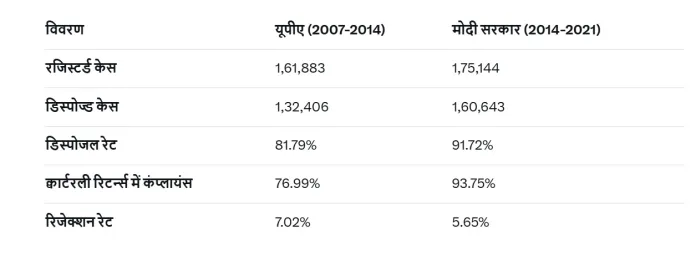
The numbers show a dramatic improvement in the functioning of the RTI at the central level. For instance, the case disposal rate has soared to over 94%, a massive leap from the 81% rate during the previous UPA government’s tenure. This high rate was maintained even during the difficult years of the COVID-19 pandemic.
Furthermore, the backlog of pending cases, which is a major source of frustration for applicants, has been nearly cut in half. The number of pending cases at the CIC dropped from 38,116 in 2020-21 to just 19,233 in 2023-24. Perhaps most tellingly, public trust in the system appears to be at an all-time high.
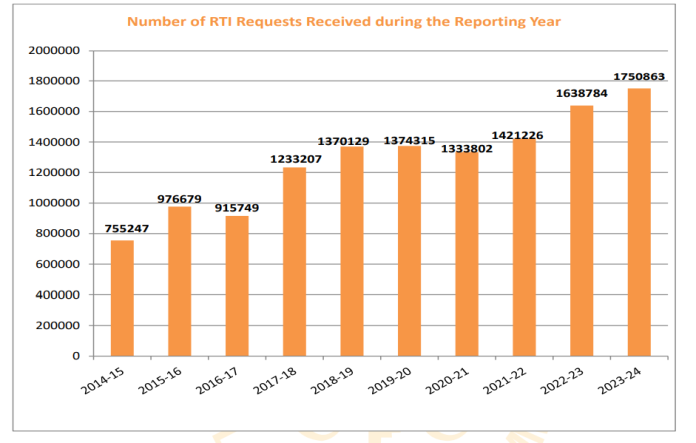
A record 17.5 lakh RTI applications were filed in 2023-24, which is double the number from a decade ago. This suggests that more citizens believe the RTI is a useful tool and are confident they will get a response.
Source: CIC
In recent years, the Right to Information (RTI) has led to several major revelations. Whether it was corruption in government schemes, irregularities in ration cards, or discrepancies in scholarship programmes, RTI has helped millions secure their rightful entitlements. For instance:
Information obtained through RTI exposed delays in MNREGA wage payments, ensuring timely payments to thousands of workers.
Irregularities in pension schemes were uncovered, benefiting senior citizens.
Cases of wrongful allocation of government land were revealed, curbing corruption.
The success formula: How ‘Digital India’ revamped the RTI
The magic of an online portal: The biggest game-changer has been the creation of a dedicated online portal. Now, any citizen can file an RTI application 24/7 from anywhere in the country with just a few clicks. This eliminated paperwork and made the process incredibly accessible. The online system was so robust that the CIC’s work continued uninterrupted even when the country was in a complete lockdown during the pandemic.
Hybrid hearings for faster justice: The CIC introduced hybrid hearings, allowing applicants and officials to connect through audio and video conferencing. This simple move saved enormous amounts of time and travel costs, enabling the commission to hear and settle a far greater number of cases each day.
Strict timelines and accountability: The government has enforced strict deadlines for every stage of the RTI process. There’s a 30-day limit for the first appeal and a 45-day limit for the second. If an officer delays providing information, they can be penalized. The fact that penalties were imposed in only 1.2% of cases last year indicates that most officials are now responding on time.
Strengthening the institution: The CIC’s budget has also been increased, reaching ₹120 crore in 2023-24. The government has also been diligent about filling vacancies for commissioners on time, ensuring the commission is always fully staffed and functional. On top of this, the CIC has started using Artificial Intelligence (AI) to help analyze RTI patterns and quickly sort through fake or repetitive applications.
The bihar question: A state-level issue
While the national picture looks positive, the government admits that there are serious issues with the RTI system in Bihar. However, it frames this as a state-level failure, placing the responsibility directly on the Nitish Kumar government.
The argument is that the central government has created a successful and efficient model, but it is up to individual states to implement these reforms. The issues in Bihar, therefore, do not reflect a weakness in the central RTI framework but rather a local administrative failure.
The RTI Act remains a powerful tool for citizens to hold their government accountable. From exposing corruption in the MNREGA scheme to ensuring elderly people get their pensions, the law has delivered countless victories for ordinary Indians.
While there are still issues to fix, especially in improving how state commissions perform, the data strongly suggests that at the national level, the RTI is not just alive and well, it’s thriving in the digital age.
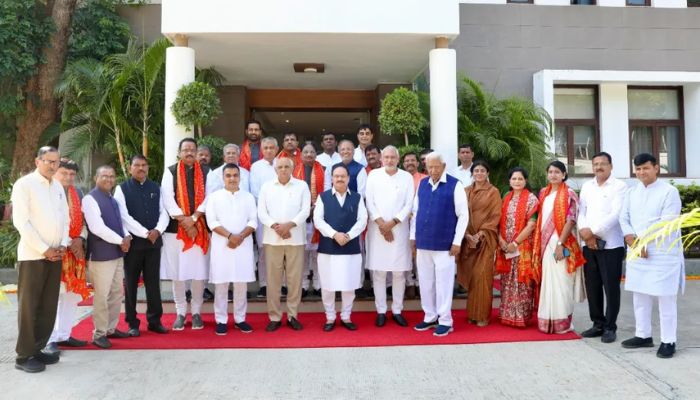
The Bharatiya Janata Party (BJP) has once again reshuffled its Gujarat cabinet, continuing its practice of making big political changes every two to three years. This latest change has come exactly two years before the 2027 Assembly elections. However, unlike previous times, the Chief Minister remains the same.
Bhupendrabhai Patel continues to lead the government, but new faces have been added to the cabinet, along with promotions for some of the important ministers. The most prominent among these is Harsh Sanghvi, who has been promoted from Minister of State to Deputy Chief Minister. The cabinet now consists of 26 ministers, up from 16 in the last one, and it has a more complete appearance.
Looking at the cabinet, it seems that it has been designed keeping in mind the upcoming elections. Ministers who delivered and gained a reputation for competence have been rewarded, while those who were involved in controversies have been asked to leave. Some names were dropped as a balancing act on caste and regional equations so that the BJP keeps its social support base intact in Gujarat. This reorganisation is not new, it’s a part of the BJP’s overall strategy to counter anti-incumbency and maintain the organisation fresh before every election.
The BJP has been in power in Gujarat for nearly three decades now, and as expected, some amount of anti-incumbency does accumulate over the years. Despite the fact that there is no real opposition in the state at present, the party understands the fact that complacency can prove dangerous. By changing its ministry from time to time, the BJP maintains high public hopes and keeps discontent from accumulating. This strategy has worked for the party every single time in the past.
Similarly, when Anandiben Patel’s government faced widespread protests in 2015, including the Patidar agitation, the BJP replaced her with Vijay Rupani. At that time, the opposition thought it had a real chance to capture power, but the new leadership change helped the BJP minimise losses and retain power in the 2017 elections.
Again, during the COVID-19 pandemic, the Vijay Rupani government faced strong criticism from the public. As with all other states, Gujarat also experienced anger and frustration because of the crisis. There were many other reasons for it, too, some veteran ministers had been ruling for decades, and the people were craving change. The BJP went one step ahead again, just before the 2022 elections, and decided to change the entire government, including the Chief Minister. That risk paid off; the party was back in power with a historic win.
The BJP’s formula is easy: if there’s growing dissatisfaction, hange the face of the government. Once the old lot disappears, people’s anger dissipates, and fresh hopes are generated. This renews people’s expectations and provides the ruling party with a new lease of life. For years, this has been the BJP’s proven technique in Gujarat, and it has succeeded every time.
This time, however, the replacement of Chief Minister Bhupendrabhai Patel was not necessary. He still has a clean image and is not personally targeted. The BJP leadership must have realised that there was no need to do something radical at the top. They instead concentrated on reinforcing the team around him. Patel will be the government’s face until 2027, but it is also evident that other leaders are now also making their mark in Gujarat’s politics.
Among them, the rise of Harsh Sanghvi stands out the most. His promotion from Minister of State to Deputy Chief Minister was almost certain. Sanghvi has become one of the most visible faces of the government, both because of his strong social media presence and his active engagement with public issues. As Minister of State for Home, he handled his responsibilities efficiently, often stepping in to resolve matters that fell under other departments. He has earned a reputation as a dynamic, result-oriented leader who gets things done.
Now, as Deputy Chief Minister, Sanghvi has been allotted the Home portfolio, something which has not happened in Gujarat for years. The Home department has always been with the Chief Minister traditionally. Even Narendra Modi retained it with him when he was the Chief Minister.
The choice of allotting it to Sanghvi is a clear indication that his role in the government has become extremely significant. He is now expected to be a key player in Gujarat politics for years to come. In many ways, the BJP has found in him the next big face of Gujarat’s leadership, someone who can carry forward Modi’s legacy in the state.
At the same time, the cabinet reshuffle reflects careful social and caste balancing, a crucial aspect of Indian politics. Every major community and region has been given representation to maintain harmony within the party’s voter base. From Patidars to OBCs, from tribals to urban communities, the BJP has ensured that no section feels left out.
This reshuffle was expected, it was only a matter of time. Now, the new team will govern till the 2027 elections, which will once again test the BJP’s long-standing hold over Gujarat.
Meanwhile, the Aam Aadmi Party (AAP) has tried to take credit for the changes, claiming that its growing presence in Gujarat forced the BJP to revamp the cabinet. AAP leaders argue that their leader Gopal Italia’s victory in Visavadar and their protests over farmers’ issues have shaken the BJP’s confidence. Some social media influencers and YouTube personalities associated with AAP have also been propagating this claim over the internet.
But the truth is otherwise. The fact is that the Aam Aadmi Party is not yet a significant force in Gujarat, which necessitates a complete change in the cabinet. Making noise on social media does not amount to a real political challenge. On the farmers’ issue too, the Aam Aadmi Party has not been able to create much impact despite repeated efforts.
In short, this cabinet reshuffle is more about the BJP’s planned approach rather than any external pressure. The party realizes that to remain in power for so many decades means constant renewal. Gujarat continues to be an important state for the BJP, it’s where its national leadership, Prime Minister Modi and Home Minister Amit Shah, established their political roots. With the elections just a year away in 2027, this reshuffle is an indication that the BJP is not leaving anything to chance.
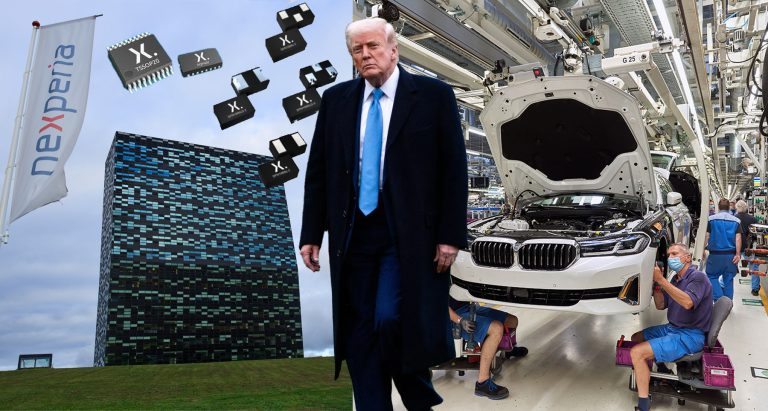
The European Automobile Manufacturers’ Association (ACEA) on 16th October issued a statement calling for a quick resolution of critical chip supply disruptions from a major chipmaker caused by major geopolitical factors. Nexperia, a Dutch chipmaker, said that it can’t guarantee supply of European car manufacturers after China imposed an export ban in retaliatory action, potentially disrupting the automobile industry in Europe. ACEA said that it deeply concerned by potential significant disruption to European vehicle manufacturing if the interruption of Nexperia chips supplies cannot be immediately resolved.
This dramatic escalation of global trade tensions was caused by the Dutch government’s seizure of Chinese-owned semiconductor firm Nexperia after U.S. threatened to sanction the company for its Chinese links. The takeover of the company, and removal of its Chinese CEO, triggered a retaliatory export ban from China, threatening to halt vehicle production across Europe.
This chain of events, rooted in geopolitical pressures from the United States, has left European automakers scrambling for alternatives as supplies of critical chips dwindle. The European Automobile Manufacturers’ Association (ACEA) has issued an urgent call for resolution, warning of imminent disruptions. Here is how American pressure on global trade, increased many fold under Donald Trump’s presidency, is causing disruptions across the oceans.
Nexperia and its strategic importance
Nexperia, headquartered in Nijmegen, Netherlands, is a leading producer of high-volume semiconductors used in automotive, consumer electronics, and industrial applications. The company manufactures older generations of semiconductors in large numbers, not the latest chips like GPUs and AI processors.
These “mature” chips power essential components like electronic control units in vehicles, making them indispensable for modern manufacturing. The company is also one of the world’s largest makers of simple computer chips such as diodes, transistors, and MOSFETs (Metal Oxide Semiconductor Field-Effect Transistors, a type of semiconductor device used for switching and amplifying electronic signals) used in large numbers in almost every electronic and electrical equipment. These relatively simple chips perform unglamorous but absolutely vital functions in vehicles and other machinery. The company makes around 50 billion components annually.
Originally spun off from Dutch giant NXP in 2017, Nexperia was acquired by China’s Wingtech Technology in 2019 for approximately $3.6 billion. This acquisition created a dual ownership structure, while Wingtech, a Shanghai-listed company with significant Chinese state ties, holds majority control, including through its CEO Zhang Xuezheng’s stake, Nexperia maintains its operational independence with a global footprint.
This setup has allowed it to leverage European innovation and Chinese manufacturing scale, but it has also exposed the company to geopolitical risks, as Western governments are increasingly worried about Chinese influence over critical technologies.
Even after the Chinese acquisition, Nexperia has operated with research, development, and manufacturing sites across the Netherlands, Germany, Britain, the United States, and Asia, including China, employing over 14,000 people and generating billions in revenue. Its vertically integrated supply chain includes front-end wafer fabrication primarily in Europe with sites in Hamburg, Germany, and Manchester, UK, and back-end assembly and testing in Asia, notably in Guangdong, China, alongside facilities in Malaysia and the Philippines.
For ease in understanding, this can be compared with Tata’s upcoming two semiconductor plants in India, while its Gujarat plant will fabricate the wafers, the final semiconductor chips will be assembled, packaged and tested at its Assam plant. While Tata’s production extends into different states in India, Nexperia’s production extends in different continents.
This hybrid model of Nexperia, design and initial production in Europe and then with cost-effective finishing and assembly in Asia, has made Nexperia a key supplier, producing over 100 billion components annually. However, the reliance on cross-border flows has made it vulnerable to trade disruptions, particularly in the automotive sector, where its chips are integral.
The company’s dual European-Chinese identity has made it a flashpoint in the U.S.-China tech war. Nexperia’s chips are vital for Europe’s automotive sector, which has already endured chip shortages during the COVID-19 pandemic and geopolitical conflicts. Losing access to these components could cripple production lines, as alternatives require months of homologation and testing.
U.S. pressure leads to Dutch government takeover
The saga began escalating earlier this year amid heightened U.S. scrutiny of Chinese influence in global technology supply chains. U.S. officials, under the Trump administration, viewed Nexperia’s Chinese ownership as a national security risk, fearing potential technology transfers or supply manipulations by Beijing in a crisis. Given that Nexperia is benefiting from major researches in Europe and USA, the Trump admin believe China can access such intellectual property through the company.
In June 2025, Washington warned Dutch authorities that Nexperia risked being added to the U.S. Entity List, a blacklist restricting exports of American technology, unless changes were made, particularly regarding the company’s CEO, Zhang Xuezheng, who holds a controlling stake in Wingtech.
Then in September, the U.S. govt issued a new rule expanding its Entity List, to automatically include subsidiaries owned 50% or more by a company already on the list. The action was aimed at stopping export of critical technology and equipment to Chinese companies. This new rule applied to Wingtech, Nexperia’s parent company, bringing Nexperia under indirect U.S. export control.
Along with this American pressure, concerns over governance issues at Nexperia also existed, including allegations of mismanagement such as forcing unnecessary wafer orders worth $200 million, firing executives who protested, and conflicts of interest tied to Zhang’s other business interests.
On 30 September, the Dutch government took over the control of Nexperia invoking the rarely used 1952 Goods Availability Act, a Cold War-era law allowing intervention in private companies to secure critical goods during emergencies. The govt cited worries about the possible transfer of technology to Nexperia’s Chinese parent company Wingtech.
This “highly exceptional” move placed Nexperia under temporary external management, suspending Zhang from his roles and transferring control to a court-appointed administrator. The Dutch Ministry of Economic Affairs cited “serious governance shortcomings and actions” that threatened the continuity of Nexperia’s operations and the safeguarding of vital technological knowledge on European soil. Officials argued that without intervention, Europe could face shortages in semiconductors, jeopardizing economic security, especially in the automotive industry.
The Dutch govt move was preceded by an Amsterdam commercial court order to suspend Wingtech CEO Zhang Xuezheng from his position as executive director at Nexperia. The court appointed Dutch businessman Guido Dierick to take Zhang’s position with a “deciding vote”, and transferred control of almost all of Nexperia’s shares to a Dutch lawyer for management.
The takeover does not involve outright nationalization, instead, it restricts major decisions on assets, personnel, or business changes for up to a year, ensuring production continues while blocking potential relocations or tech transfers to China.
Wingtech denounced the action as “excessive intervention driven by geopolitical bias,” emphasizing Nexperia’s compliance with local laws and its local employment contributions. The company said in a filing to the Shanghai stock exchange that its control over Nexperia would be temporarily restricted due to the Dutch order and court rulings, affecting decision making and operational efficiency.
This move echoes prior U.S.-influenced actions, such as the 2022 forced sale of Nexperia’s UK wafer fab in Newport due to security concerns.
China’s retaliatory export ban and its impact on Europe
Beijing responded swiftly and decisively to the Dutch intervention. On October 4, 2025, just four days after the takeover, China’s Ministry of Commerce issued an export control notice under its Export Control Law, prohibiting Nexperia China, the company’s subsidiary in Guangdong, and its subcontractors from exporting certain finished components and sub-assemblies to Nexperia and its affiliates outside China.
The ban specifically targets products manufactured in China, framing it as a countermeasure to “unilateral” foreign actions that undermine Chinese enterprises’ rights. This was not a blanket prohibition on all Nexperia activities but a targeted restriction on outbound shipments of completed semiconductors, effectively severing a critical link in the company’s global operations.
“The Chinese Ministry of Commerce issued an export control notice prohibiting Nexperia China and its subcontractors from exporting specific finished components and sub-assemblies manufactured in China,” the firm said.
This has caused major disruptions to Nexperia’s chip supplies to its customers Europe, because of intricate supply chain even though it is based in Europe. The company employs a “fab-lite” model where front-end processes, like wafer fabrication and initial chip design, take place at its European facilities in Hamburg and Manchester. Raw silicon wafers are fabricated at these facilities. These wafers are then shipped to assembly sites in Asia, including Guangdong, China, for packaging, testing, and final assembly into usable chips. Essentially, the company makes the circular wafers in Europe, which are then cut into and packaged as individual chips.
Once completed, these finished products are exported back to Europe or directly to global customers, including automotive suppliers. China plays a pivotal role in this chain, handling a significant portion of the high-volume, low-cost assembly, estimated at up to 30-40% of Nexperia’s total output, due to its advanced facilities and cost efficiencies.
The export ban disrupts this flow by halting shipments from China to non-Chinese Nexperia entities or customers. As a result, even though Nexperia’s European fabs continue operating, they cannot receive back the assembled chips needed for final distribution. This creates a bottleneck, stockpiles of unfinished wafers pile up in Europe, while finished chips remain stranded in China.
For European carmakers, this means a sudden shortfall in critical components like power management ICs and transistors, which are not easily substitutable due to automotive qualification standards requiring rigorous testing that often take 6-12 months. Nexperia has other Asian sites in Malaysia and the Philippines, but these lack the capacity to fully compensate for the Chinese output, leading to delays and shortages.
The ban’s precision, allowing domestic Chinese sales but blocking exports, amplifies pressure on Europe without broadly harming China’s economy and its growing automobile industry, which has increased its share in Europe significantly. This means, while European carmakers can’t produce their vehicles, Chinese carmakers like BYD and MG can increase their exports to Europe.
Nexperia confirmed the restrictions in a statement, noting active engagement with Chinese authorities for an exemption.
ACEA’s Distress Signal
On October 10, 2025, Nexperia notified automakers and suppliers that it could no longer guarantee chip deliveries due to Chinese export ban, with current stocks expected to last only a few weeks. The company outlined a sequence of events that makes them no longer being able to guarantee delivery of their chips to the automotive supply chain.
We are deeply concerned by potential significant disruption to European vehicle manufacturing if the interruption of Nexperia chips supplies cannot be immediately resolved.
As a result, the European Automobile Manufacturers’ Association issued a distress note on 16th October, saying that European automotive suppliers cannot build the parts and components needed to supply vehicle manufacturers without these chips, and therefore it threatens production stoppages. It stated, “While the industry already sources the same types of chips from alternative players on the market, the homologating of new suppliers for specific components and the build-up of production would take several months, while current stocks of Nexperia chips are generally predicted to last only a few weeks.”
ACEA Director General Sigrid de Vries said, “We suddenly find ourselves in this alarming situation. We really need quick and pragmatic solutions from all countries involved.”
Major carmakers also sounded alarms. BMW said its supplier network is impacted but there is no immediate production stops. The company said it is closely monitoring risks. Volkswagen echoed similar concerns, noting Nexperia’s role in its supply chain without current disruptions. Mercedes-Benz and Stellantis are assessing impacts and developing mitigations, though details on direct exposure vary. Even suppliers like Bosch, which uses Nexperia chips, are on high alert.
The Dutch government has realised the gravity of the consequence of its actions, and Minister for Economic Affairs Vincent Karremans said that he wants to find a solution with China regarding the Chinese export ban on Nexperia chips. Karremans is optimistic that the talks will progress positively.
The crisis extends beyond Europe, with some sections warnings that U.S. auto production could also be affected, highlighting the global interdependence of supply chains. The Alliance for Automotive Innovation, representing a large group of US automakers, has warned of potential supply issues.
Trump’s Dictates Causing Disruptions in Europe
Although the issue emerged due to the actions of Dutch and Chinese governments, at the heart of this turmoil are the aggressive trade policies of U.S. President Donald Trump, whose second term has intensified the U.S.-China tech war. Trump’s administration has prioritised “decoupling” from Chinese technology, imposing entity list designations and pressuring allies in Europe and Asia to restrict Chinese-owned firms. In December 2024, Wingtech was added to the U.S. Entity List as a security concern, barring U.S. exports without approval. Then in September 2025, Nexperia was added to the list, along with demands to remove its CEO which was accepted by the Dutch.
USA and Trump’s dictates, framed as protecting national security, have forced European nations into uncomfortable positions, balancing U.S. alliances with economic ties to China. The Dutch takeover, while justified domestically on governance grounds, was explicitly accelerated by U.S. threats, leading to China’s ban and the ensuing chip crunch. This has disrupted Europe’s automotive sector, already grappling with tariffs, weak demand, and competition from Chinese EVs.
This is just one instance of how Trump’s unilateral approach is undermining global trade stability, turning allies like the EU into collateral damage in his broader agenda against Beijing, and Russia. For example, his insistence on not purchasing Russian oil and gas has already put lots of pressure on Europe, traditionally heavily dependent on Russian energy sources.
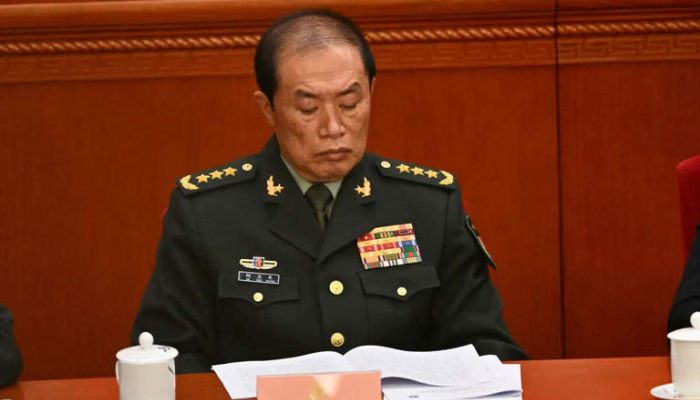
China’s ruling Communist Party has publicly fired nine of its top generals, including the military’s second-in-command, He Weidong. The defence ministry announced on Friday,17th October, that the generals were kicked out of both the army and the Communist Party for “serious violation of party discipline” and work-related crimes involving a huge amount of money.
Breaking | China’s No 2 general He Weidong expelled from the Communist Party https://t.co/5MMD3o3JeG
For the last 12 years, China’s leader, President Xi Jinping, has been leading a massive anti-corruption campaign. This crackdown has affected over a million officials across the country, from local leaders to the very top brass of the military. While the government says the goal is to create a cleaner, stronger party, many critics believe it’s also a political purge used by Xi to remove anyone who isn’t completely loyal and to secure his total control over the party and military.
Who are the fired Generals
The biggest name on the list is He Weidong. He was one of the most powerful men in China, serving as the vice-chairman of the Central Military Commission (CMC), the body that controls the entire armed forces. He was also a member of the 24-man Politburo, the party’s top decision-making circle. His removal is especially significant because he’s the first serving Politburo member to be investigated in this way. He hadn’t been seen in public since August, which had already fueled rumours that he was in trouble.
The other eight high-ranking officials who were removed include: Miao Hua, The military’s head of political work and personnel; He Hongjun, Miao Hua’s deputy; Wang Xiubin, A top director at the military’s joint operations command centre; Lin Xiangyang, Commander of the Eastern Theatre; Qin Shutong, The Army’s political chief; Yuan Huazhi, The Navy’s political chief; Wang Chunning, Commander of the Armed Police Force.
A pattern of disappearances
The crackdown has created visible instability within China’s military leadership. He Weidong is the third member of the CMC to be removed since 2022. In fact, of the seven leaders appointed to the powerful commission just a few years ago, only four remain. This level of turnover at the top is something that hasn’t been seen in decades.
This follows the removal of other top figures, including two former defence ministers, Wei Fenghe and Li Shangfu, and the sudden disappearance of the foreign minister, Qin Gang, in 2023. Ironically, one of the newly fired generals, Wang Houbin, was himself a replacement for another group of Rocket Force commanders who were purged earlier.
Why the timing of the announcement matters
The timing of this announcement is no coincidence. It comes just before a key meeting of the Communist Party, called the plenary session, scheduled from October 20th to 23rd. At this meeting, top leaders will discuss the country’s new five-year plan and major economic challenges. By making such a bold move now, Xi Jinping is sending a powerful message of strength and control.
A military spokesman said the investigation was a significant achievement that shows there is no place for corrupt officials to hide within the military. However, analysts like Neil Thomas from the Asia Society Policy Institute suggest there’s a downside. While the purges might make the system more obedient, they also create a climate of fear, making officials more cautious and at times, more brittle.
Everyone is now watching to see who actually shows up at the big party meeting. Low attendance would be the clearest signal yet of just how deep this political purge really goes.
As the upcoming assembly elections in Bihar are nearing, the faultlines within the opposition Mahagathbandhan in the state have started emerging. Contesting with the hopes of a regime change in the state, the opposition alliance appears to be struggling to put up a unified and strong opposition before the ruling NDA.
Coping with internal conflict and confusion, the Mahagathbandhan failed to announce any seat-sharing agreement on Friday (17th October) as the deadline for filing nominations for the first phase of the two-phase assembly elections ended. The Mahagathbandhan allies the RJD, Congress, CPI (ML-L), CPI (M), CPI and Vikassheel Insaan Party (VIP) filed nominations for all 121 seats in the first phase of polls, out of the total 243 assembly seats of the state. The nominations for the seats in the second phase of polls end on Monday (20th October).
Opposition allies field candidates against one another on several seats
The opposition alliance’s internal tussle over seat sharing became public after their candidates filed overlapping nominations against their Mahagathbandhan allies on several seats. There are six such assembly seats, viz. Bachhwara, Vaishali, Gauda Baram, Rosera, Lalganj and Rajapakad in the first phase of elections, where Mahagathbandhan party candidates have filed nominations against their alliance partner. For example, at the Vaishali and Lalganj assembly seats, both Congress and the RJD have fielded their candidates. On the Vaishali assembly seat, Congress has fielded Sanjeev Singh from Vaishali, while the RJD has nominated Abhay Kushwaha. Similarly, on the Lalganj assembly seat, the Congress has fielded Aditya Raj, and the RJD has put up Shivani Singh, daughter of former Lalganj MLA Munna Shukla. A similar equation is said to have emerged on the Kutumba assembly seat, where Congress and RJD have pitched their candidates against each other. On the Bachhwara and Rosera assembly seats, the Congress and CPI candidates are contesting against each other.
Besides, the Congress has unilaterally released a list of 48 candidates and has given out tickets for five constituencies of Kahalgaon (Praveen Kushwaha), Pranpur (Touqir Alam), Jale (Rishi Mishra), Chainpur (Achala Singh) and Gaya Town (Mohan Srivastava). In the Kahalgaon assembly, the Congress is facing a challenge from the RJD.
Moreover, the CPI (ML-Liberation) has also independently announced the names of its 18 candidates for the first phase of polls. The VIP is holding on to its demand to project its leader, Mukesh Sahani, as the Deputy Chief Ministerial candidate. The party has also finalised 14 seats for the first phase of polls. After failing to reach an agreement regarding the seat-sharing, Mukesh Sahani announced that he will not contest the upcoming Bihar Assembly elections.
The Mahagathbandhan parties’ inability to agree on the seats has exposed a lack of unity and consensus within the alliance. While the opposition alliance is grappling with internal discord and unending negotiations over seats and candidates, their rival, the NDA, has finalised the list of candidates for all 243 assembly seats and kick-started the election campaign with full fervour.
Confusion regarding CM candidate of the alliance
The discord within the opposition alliance is not limited to the seat-sharing arrangement, and also extended to the decision regarding the Chief Ministerial candidate of the alliance. After prolonged negotiations, a consensus seems to be building among the Mahagathbandhan regarding the CM candidate. The Congress party recently proposed Rashtriya Janata Dal (RJD) leader Tejashwi Yadav as the Bihar CM face of the alliance. This comes after Congress leaders sought clarity on the name of the CM candidate of the alliance.
Discord within opposition alliance is a usual pattern
The internal conflict of the opposition alliance is not something happening for the first time; the lack of concord among the opposition alliance partners surfaces before every state-level or national-level election. The reason behind this perpetual lack of consensus and unity is that the alliance is an blend of political parties with different and sometimes opposing ideologies, which came together to put up a fight to throw the NDA out of power. However, election after election, the struggle has hardly yielded favourable results for the grand alliance. One of the reasosns behind this is that instead of putting their might in fighting their rival, the opposition alliance parties end up struggling among themselves to protect their own petty interests. This stems from the fact that the opposition alliance units do not have an underlying unified vision for either the national or the state-level elections. Their sole mission is to grab power by hook or crook by defeating the NDA. The election strategy of the INDI alliance keeps changing from one state to another, which leads to the voter being confused. In some states, the opposition alliance partners contest independently, while in other states, they fight in alliance.
The opposition parties are fixated on their sole objective of defeating the NDA. Instead of trying to connect with the voter by focusing on their issues and problems and offering solutions for them, the opposition’s entire strategy revolves around attacking the ruling NDA but manufacturing imaginary problems, which fail to resonate with the voter. Looking at the trajectory of the opposition alliance ahead of the Bihar assembly elections, it will be no surprise if they end up continuing with their role of opposition after the elections.
The voting for the 121 seats in the first phase of the Bihar Assembly Elections, 2025, will happen on November 6, 2025. The second phase of voting for the remaining 122 seats will take place on November 11, 2025. The election results will be announced on November 14, 2025.
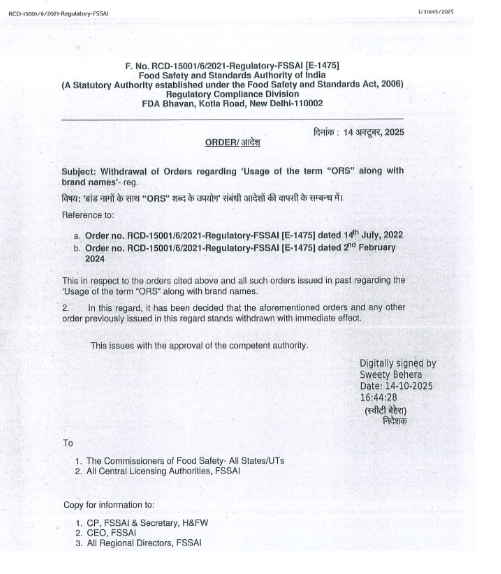
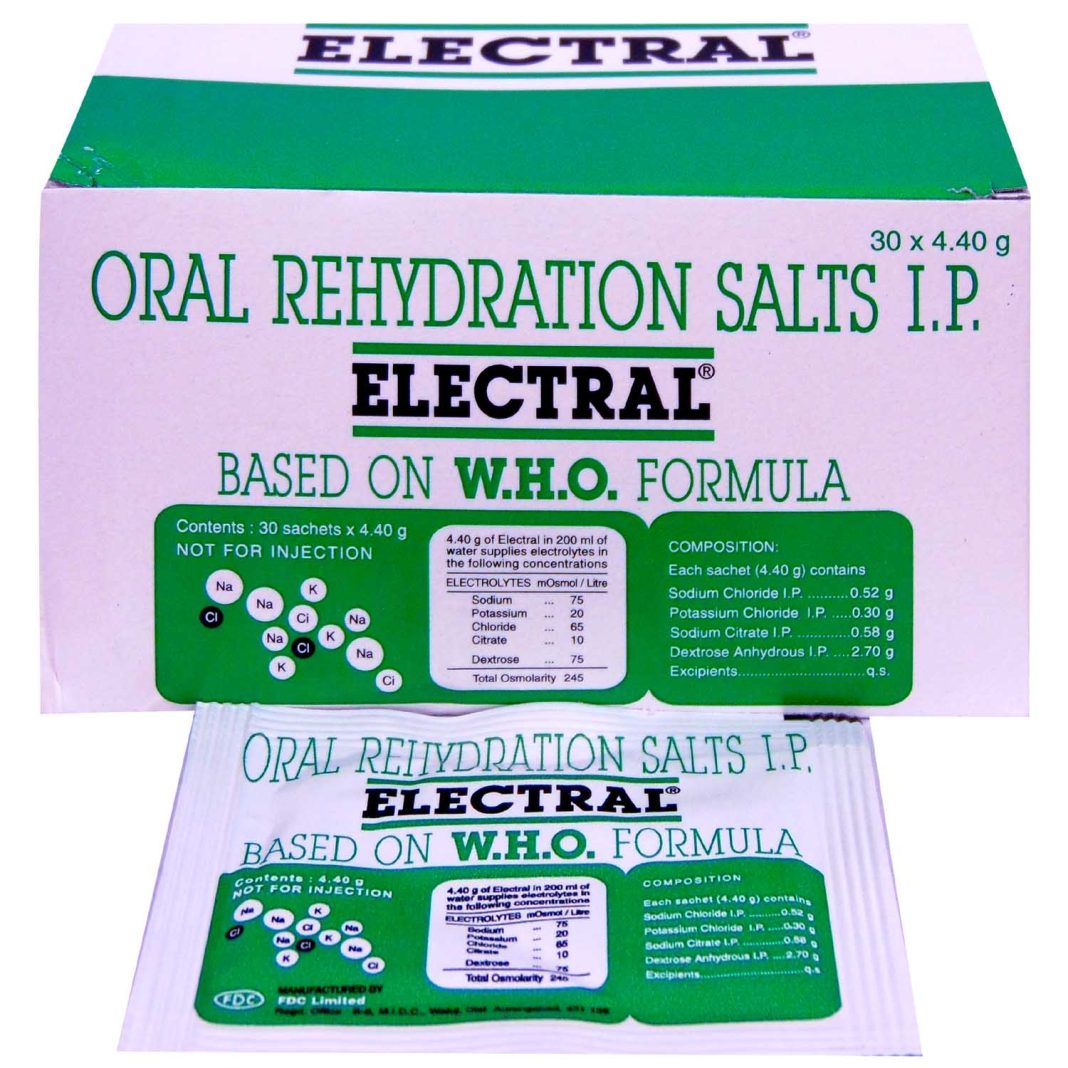
The Food Safety and Standards Authority of India (FSSAI) has issued a significant regulatory decision asking brands not to put ORS (Oral Rehydration Salts) labelling on their products unless they comply with World Health Organisation (WHO) formula for ORS recommended for diaorhea. The directive was issued on 14th October and places stringent restrictions on the usage of the label by food business operators. Furthermore, the earlier order allowing the ORS with disclaimer has been revoked effective immediately.
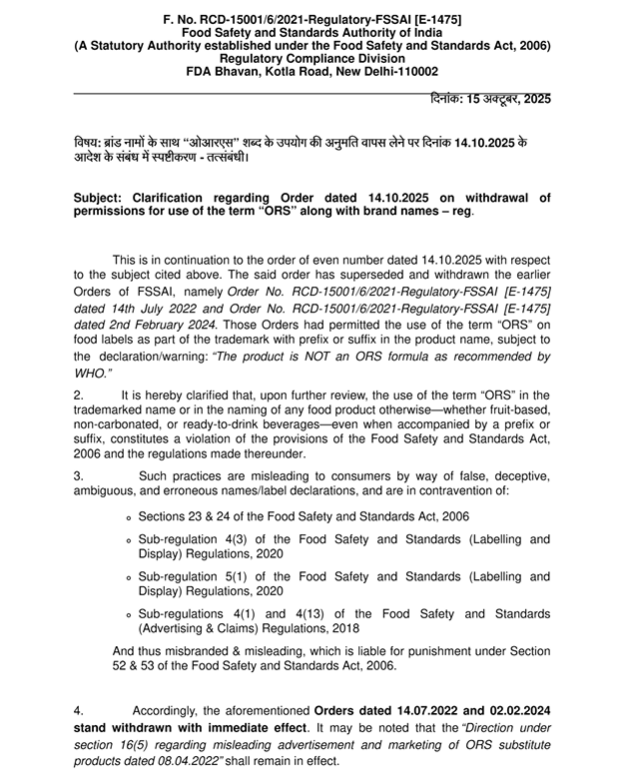
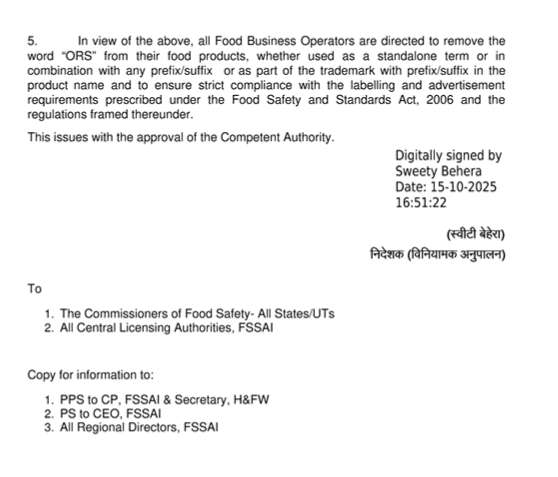
A second notification was released on 15th October. It explained that prior rulings in 2022 and 2024 authorised the use of the term “ORS” on food labels, even with a prefix or suffix in the product name, provided that the following statement or caution was included: “The product is NOT an ORS formula as recommended by WHO.” But now this has been withdrawn.
The official statement conveyed, “It is hereby clarified that, upon further review, the use of the term ORS in the trademarked name or in the naming of any food product otherwise-whether fruit-based, non-carbonated, or ready-to-drink beverages even when accompanied by a prefix or suffix, constitutes a violation of the provisions of the Food Safety and Standards Act, 2006 and the regulations made thereunder.”
FSSAI now says that the use of ORS branding in non-ORS products deceive consumers by using misleading, ambiguous and inaccurate names as well as label declarations and it violates several rules and regulations. It futher added, “Direction under section 16(5) regarding misleading advertisement and marketing of ORS substitute products dated 08.04.2022 shall remain in effect.”
Hence, the notice declared that all food business operators are required to eliminate the term ORS from their food products, regardless of whether it is used alone, together with any prefix or suffix, or as part of a trademark. They are told to strictly adhere to the labelling and advertising requirements set forth in the Food Safety and Standards Act, 2006, and its implementing regulations.
Growing worries about the ORS label being misused and endangering children prompted this adjustment. The objective is to guarantee that only safe and efficient products are accessible to people who require them, emphasising the significance of maintaining children’s well being, particularly during public health emergencies.
Foundation of the regulation
The initial guidelines to curb deceptive advertising that promotes items as “ORS substitutes” was issued by the FSSAI in April 2022. The goal of the action was to stop consumers from believing that electrolyte or flavor-infused drinks are medically equal to ORS that have been approved by the WHO which is utilised to treat dehydration caused by diaorhea.
The regulator allowed non-ORS products to use ORS branding in July 2022 in response to submissions from impacted food companies and a Delhi High Court case. It allowed food business owners who had legitimate trademarks that included the term “ORS” to continue manufacturing these products until the Controller General of Patents, Designs and Trademarks (CGPDTM) reached a decision.
Operators of food businesses without such trademarks would have to stop using them, since the FSSAI made evident that the CGPDTM’s conclusion would be legally obligatory. Companies were additionally required to prominently display a notice on the front of the package mentioning, “The product is not an ORS formula as recommended by WHO,” and that they should not be used in Diarrhea.
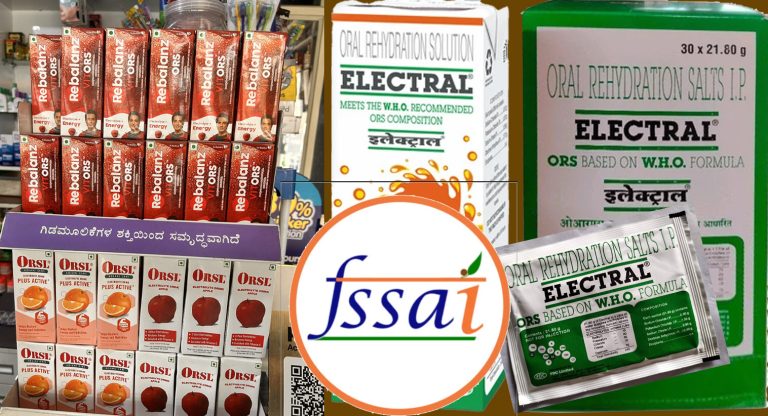
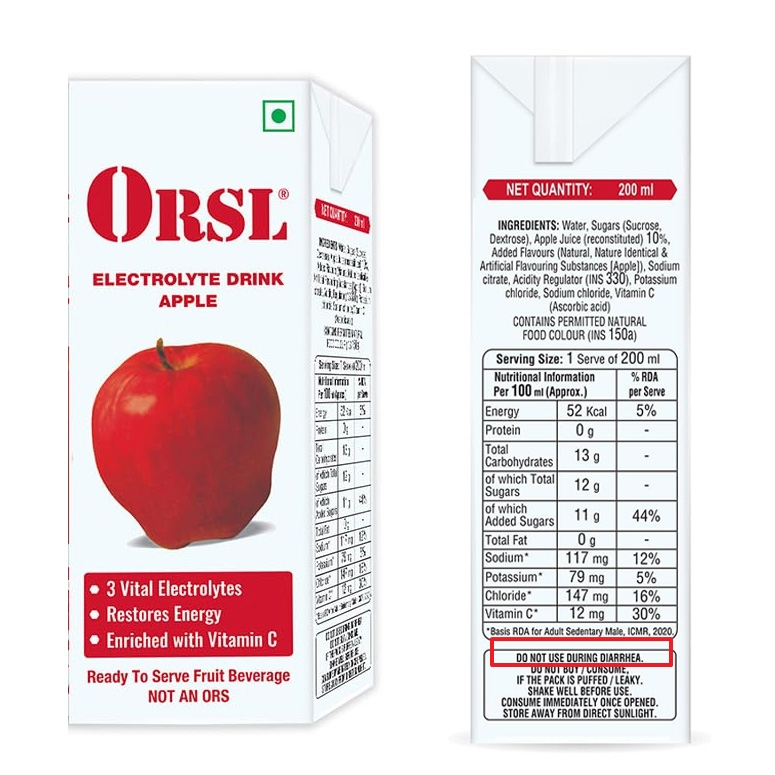
Declaration on the packaging of ORSL, sold in pharmacies and often mistaken to be ORS
Companies were permitted to use “ORS” with prefixes or suffixes for as long as they conform to Section 17 of the Trade Marks Act, 1999, which regulates the use of composite trademarks, the FSSAI further stated in February 2024. The order reaffirmed the need for businesses to specify that their use of “ORS” was merely a brand or fancy moniker.
More importantly, it did not accurately represent the nature of the product in accordance with the Food Safety and Standards (Advertising and Claims) Regulations, 2018. The regulator had set precise font size specifications for these disclaimers, scaling them to match the measurements of the product’s main display panel to prevent customer confusion. These guidelines went into effect on 1st April 2024.
The FSSAI has removed all of the aforementioned restrictions with the latest notification. Now, only the Trade Marks Act and basic labelling laws prohibiting misleading claims will apply to the use of “ORS” in trademark names.
A paediatrician’s 8-year long battle for the victory
The landmark ruling by the central authority was not an unforeseen event. It followed years of dedicated advocacy by Dr Sivaranjani Santosh against the misuse of sugary drinks that are advertised as ORS. This paediatrician and first-aid trainer based in Hyderabad had been fighting for the same for at least 8 years.
She has long been a promoter for the safe use of ORS and run a campaign to expose dishonest marketing tactics used by companies who label non-medical beverages as such without appropriate clinical support. Her efforts centred on the dangers that such mislabeling posed, particularly to children who are experiencing dehydration or diarrhoea.
“We have won it. A clarification was issued today. No one can use ORS on their label unless it is a WHO recommended formula and no one can sell it right from today,” the doctor rejoiced.
“During diarrhoea, high-sugar drinks should be avoided because excess sugar can worsen the condition. When ORSL (Oral Rehydration Salts Liquid) was introduced, manufacturers met with paediatricians, leading many to believe it was ORS. But in reality, the sugar content in ORSL is as high as in packaged soft/fruit drinks, with only a little extra sodium. We noticed that many children’s diarrhoea worsened. When we investigated we realised ORSL is not the same as ORS,” Dr Santosh pointed out earlier.
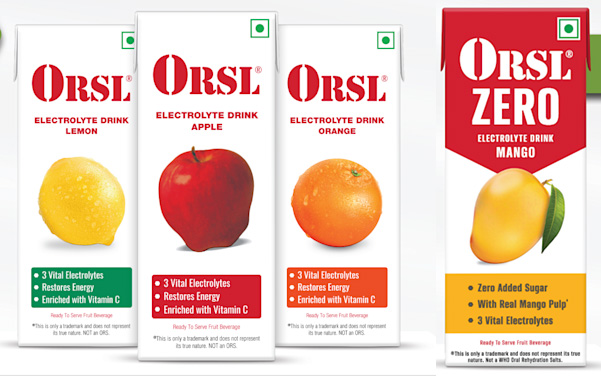
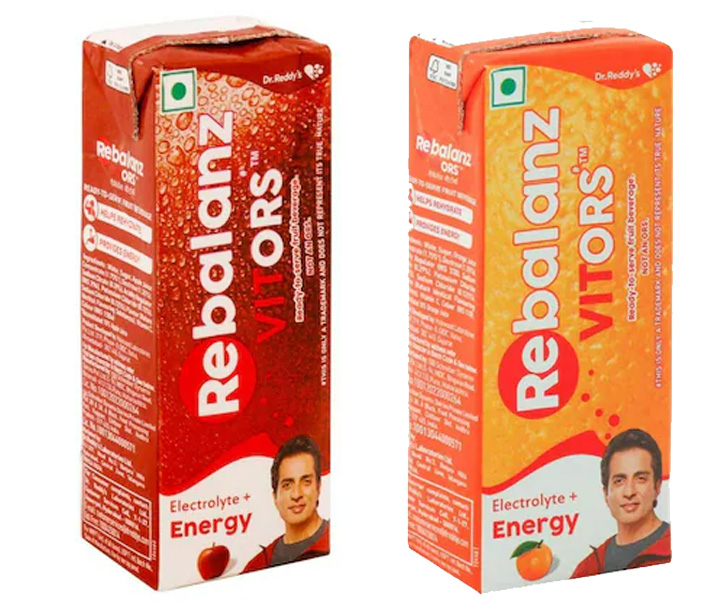
Products like ORSL, RebalanzVitORS and ORSFIT which purport to be ORS but do not comply to the World Health Organization’s formulation guidelines sparked her reservations. Dr Santosh cautioned that using liquids with high sugar alternatives to cure diarrhoea could prove dangerous.
Many child fatalities driven by complications from diarrhoea are unrecognised. However, these deaths are frequently reported as “diarrhoea and dehydration” without taking into account the possibility that these sugary drinks might be a contributing factor. She even requested her colleagues to maintain a record of the particular fluids administered to children who pass away from diarrhoea.
“ORS is a life-saving therapy that has saved millions of lives. But we are now seeing a surge in products that misuse the ORS label to sell high-sugar drinks with osmolarity levels that can actually worsen diarrhoea,” Dr Santosh similarly stated.
She underlined that despite having sugar levels six to ten times greater than the WHO radvised formula, many well-known brands are frequently marketed as rehydration solutions. These products are licensed under the Food Safety and Standards Authority of India (FSSAI) rather than the Central Drugs Standard Control Organisation (CDSCO) which oversees therapeutic ORS products, despite being sold in pharmacies and frequently recommended for dehydration associated with diseases like dengue and typhoid.
“Disclaimers are not enough. Most parents, and even some doctors, are misled by the packaging. These drinks are not only ineffective but dangerous for sick children and people with diabetes,” the paediatrician added in reference to “This is not an ORS” written on the products.
She demanded greater regulatory action, calling for the outright prohibition of the use of “ORS” on such products, their removal from hospital and retail pharmacies alongside the enforcement of WHO-approved formulations as the sole accepted method of addressing dehydration. She also urged medical professionals to refrain from endorsing these dubious substitutes.
Dr Santosh approached Telangana High Court
Dr Santosh spread awareness on the issue through workshops, media outreach and social media sites like Facebook and Instagram. The Central Drugs Standard Control Organisation (CDSCO) directed her to the Food Safety and Standards Authority of India (FSSAI) after she brought the matter to their attention in 2023.
The FSSAI issued an order in April 2023 to prevent ORSL from being mislabeled. The decree was changed in July, though, to permit enterprises with a legitimate trademark retain using the term ORS if they incorporated a disclaimer.
Some companies started including warnings on ORSL tetra packs that read, “Do not use during diarrhoea.” However, these were frequently printed in tiny fonts which were easy to miss. Dr Santosh outlined, “Pharmacists also prefer selling ORSL because they earn a higher margin, as ORSL is twice as expensive as standard ORS solutions.”
She challenged the sale of drinks that were mislabeled as ORS even though they didn’t meet WHO-recommended electrolyte and glucose requirements, in a Public Interest Litigation (PIL) brought before the Telangana High Court, in 2022.
According to the petition, a number of businesses sold “fruit juices” and other sweetened beverages as oral rehydration treatments, which is harmful especially for diabetes patients and children. Rajesh Bhushan, the then-secretary of the Ministry of Health and Family Welfare, was also notified of her complaints which led to regulatory and judicial investigation.
However, companies promoted ORSL in response to the plea by introducing the false notion of “silent dehydration,” a phrase that is not used in any medical literature.
“It was a war. Eight years of battle, three years of filing PILs, and four to five years of fighting indifference. This victory belongs not to one person, but to people’s power, all the doctors, advocates, moms and influencers who stood with me. I stood steadfast, and we won,” she expressed after the fresh FSSAI decision.
Healthcare experts warned against taking sugary drinks imitating ORS
“Diarrhoea leads to quick fluid loss, electrolyte imbalances, and dehydration. ORS is a straightforward yet highly effective method to replenish these lost fluids and electrolytes, preventing complications and aiding faster recovery, especially in young children. It’s crucial to recognize that ORS is both safe and effective. Using incorrect salt or sugar mixtures can be harmful. Proper management of dehydration requires an exact balance of water and electrolytes,” Dr Pankaj Garg stated during a press conference last year.
“Using incorrect homemade solutions or sugary drinks can disrupt this balance, causing severe health risks like worsening dehydration or even death in extreme cases,” warned Garg who is the President-Elect, Indian Academy of Pediatrics, Delhi Chapter & Senior Consultant, Neonatology in Sir Gangaram Hospital.
Additionally, he said that there were several “ORS-like” treatments on the market that can exacerbate symptoms, particularly in young patients. Likewise, Dr Mohsin Wali, Padma Shri and Consultant Physician at Sir Ganga Ram Hospital also stressed the importance of choosing the right ORS in view of rising temperatures and demand.
He highlighted, “Choosing the right ORS is crucial for effectively managing diarrhoea and dehydration, especially during the hot summer months. It’s essential to distinguish between ORS and sugary drinks available commercially. While these beverages may offer some electrolytes and fluids, they lack the critical glucose-sodium and potassium balance necessary for rapid and effective rehydration.
Wali further mentioned, “Sugary drinks may provide temporary relief but do not address the core issue of dehydration. Therefore, opting for WHO-approved ORS formulations, which are specifically designed for this purpose, is vital for maintaining overall health and ensuring quick recovery, particularly in vulnerable populations such as children.”
The experts stressed the value of making well-informed decisions. They emphasised that ORS solutions that have been approved by the WHO should be given priority over other sugar-filled drinks that are not suitable for relieving dehydration. They added that the correct knowledge could save thousands of children’s lives anually.
Meanwhile, these ORS imitations also impacted the health of diabetic patients. A 52-year-old diabetic who had managed his blood sugar levels for many years ended up in the emergency department following a stomach ailment and was found to have kidney failure, in 2024, reported The Times of India.
Doctors confirmed that he had consumed roughly seven packs of ORS lookalikes which contributed to his diarrhoea and caused his blood sugar to jump sharply.
There had been around ten such cases in just one week at the emergency rooms of significant tertiary care facilities including Gandhi Hospital and Osmania General Hospital (OGH). Additionally, endocrinologists also witnessed some cases of blood sugar spikes due to mislabeled ORS drinks.
Likewise, a 42-year-old businessman fell at home from severe dehydration and uncontrolled blood sugar after attempting to continue his daily walking routine in spite of the heat after downing a few of these “ORS” drinks. “I was given these energy drinks every time I asked for ORS and it happened at three different pharmacies in my area,” he voiced.
Three other patients with diabetes were also in the emergency rooms with diabetic ketoacidosis (DKA). All of them, age from eight (Type 1) to forty (Type 2), took these drinks.
“When we consume more glucose, the body requires additional insulin to digest it. But in case of diabetics, when the body cannot produce enough insulin, it leads to build up of acids in the bloodstream called ketones. This results in DKA, which makes the blood too acidic and it needs immediate intervention,” informed Dr KVS Hari Kumar, consultant endocrinologist.
Dr R Santosh, another endocrinologist, conveyed, “These sugary ORS lookalikes not only cause a spike in blood sugar but also pull out water from the kidney, causing extreme dehydration. The more a patient drinks these, the more the condition worsens.”
What is ORS
ORS is employed to treat dehydration specifically in kids who have severe diarrhoea, sweating, heat stroke or other conditions that result in considerable fluid loss. It is an exclusive mixture of sugar, salt and electrolytes that dissolves in purified water. When administered properly, ORS helps prevent diarrhoea and replenishes lost fluids. It’s critical to utilise oral rehydration solution under a doctor’s supervision as misuse could trigger salt poisoning.
Electrolyte solutions with or without glucose were used to empirically develop oral rehydration therapy in the 1940s, primarily for mild or convalescent patients. However, it was not widely used for rehydration and maintenance therapy until the 1960s when it was discovered that glucose improved the absorption of water and sodium during cholera. It is listed as an essential medicine by the World Health Organisation.
As of 2017, 44% of children with diarrhoea worldwide were receiving oral rehydration treatment. The rate of mortality among children under five has dropped substantially as a result of this. Approximately 61% of Indian children under five who had diarrhoea were given Oral Rehydration Solution (ORS), per a survey conducted in 2021.
This emphasises the necessity of authorised formulations and precise labels which would now be achievable due to the FSSAI order.
WHO-approved ORS vs sugar-loaded substitutes
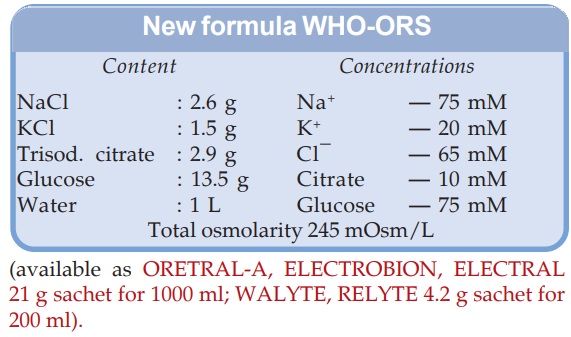
An oral rehydration solution with a total osmolarity of 245 mOsm/L is recommended by the World Health Organisation. For each litre of water, it contains 13.5 grammes of dextrose anhydrous (sugar), 2.6 grammes of sodium chloride, 1.5 grammes of potassium chloride and 2.9 grammes of sodium citrate.
Image via Pharmacy 180
On the other hand, ORS products sold by several pharmaceutical companies have far greater sugar contents, about 120 grammes of total sugar per litre of which over 110 grammes are added sugar. They only provide 1.17 grammes of sodium, 0.79 grammes of potassium and 1.47 grammes of chloride a litre which is also out of line with WHO standards for electrolyte balance.
WHO and UNICEF (United Nations International Children’s Emergency Fund) have been urging for the adoption of a new ORS formulation since 2003 since it is more effective than the previous one. The solution serves as a simple, inexpensive and effective treatment for diarrhoea which is administered orally to patients in all age groups and in all except the most severe instances.
A basic ORS mixture advised by the WHO including six teaspoons of sugar, half a teaspoon of salt in one litre of pure water. Doctors warn that adding other items such as fruit powders or spirulina and consuming excessive amounts of sugar or salt could hinder its effectiveness.
How to identify genuine ORS
The WHO-recommended mixture of water, salt and sugar should be used in the proper oral rehydration solution (ORS) and it should be verified that the packet complies with these requirements. Stevia and monk fruit sweetener are examples of sugar replacements that should be avoided as these could delay rehydration and do not provide glucose.
Some products might make claims about the addition of healthy substances like herbal mixtures, fruit powders or spirulina. However, they are not a part of the original ORS recipe and might lessen its potency. It’s critical to seek medical advice from qualified specialists and be cautious about the information acquired on the internet.
The safest course of action is to get WHO-approved ORS sachets from a reputable pharmacy. These are pre-measured and guarantee the mix is right and safe to ingest.
Al-Jazeera, the Qatar government-funded international media outlet which is notorious for spreading anti-India and anti-Hindu propaganda, has once again exposed its anti-India bias. The propagandist media outlet has published a lengthy article about the recent “I Love Muhammad” protests in India. However, in this article, Al-Jazeera has maliciously concealed facts and attempted to portray Muslims as victims of persecution.
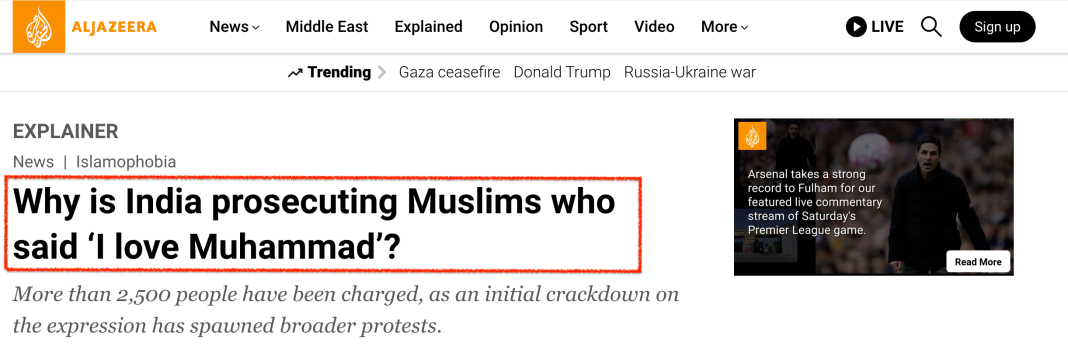
Al Jazeera news headline
The anti-India propaganda in the article begins right with its headline, which reads, “Why is India prosecuting Muslims who said ‘I love Muhammad’?” It’s clear from the headline itself that Al-Jazeera has pre-decided that Muslims are being prosecuted, and then it goes on to explain why the prosecution is taking place.
Is Al-Jazeera lying about the beginning of the ‘I Love Muhammad’ protests?
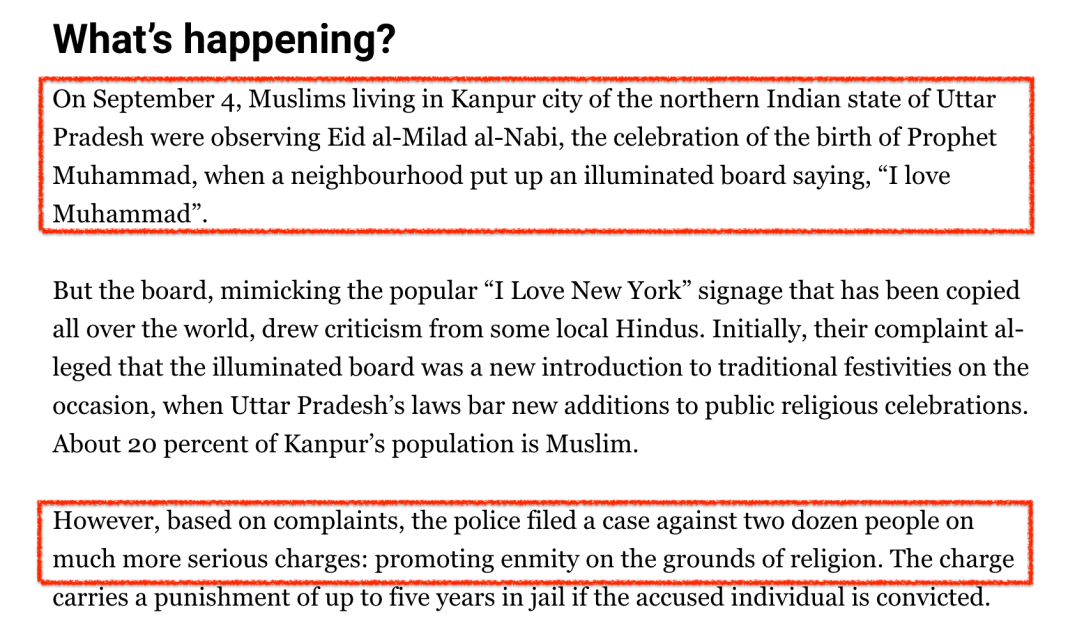
Al-Jazeera concealed the truth about the origin of the ‘I Love Muhammad’ protests. Al-Jazeera reported that on 4th September, a dispute arose in Kanpur over Muslims displaying a sign that read “I Love Muhammad,” and that an FIR was filed based on a complaint. The information provided in Al-Jazeera’s report is incomplete.
Excerpt from Al-Jazeera article
It’s true that there was controversy over the “I Love Muhammad” banner, but the real story is what happened after that. The matter was settled after the billboard displaying the words “I Love Muhammad” was relocated, well within the knowledge of both parties. However, the real controversy erupted the following day, on 5th September.
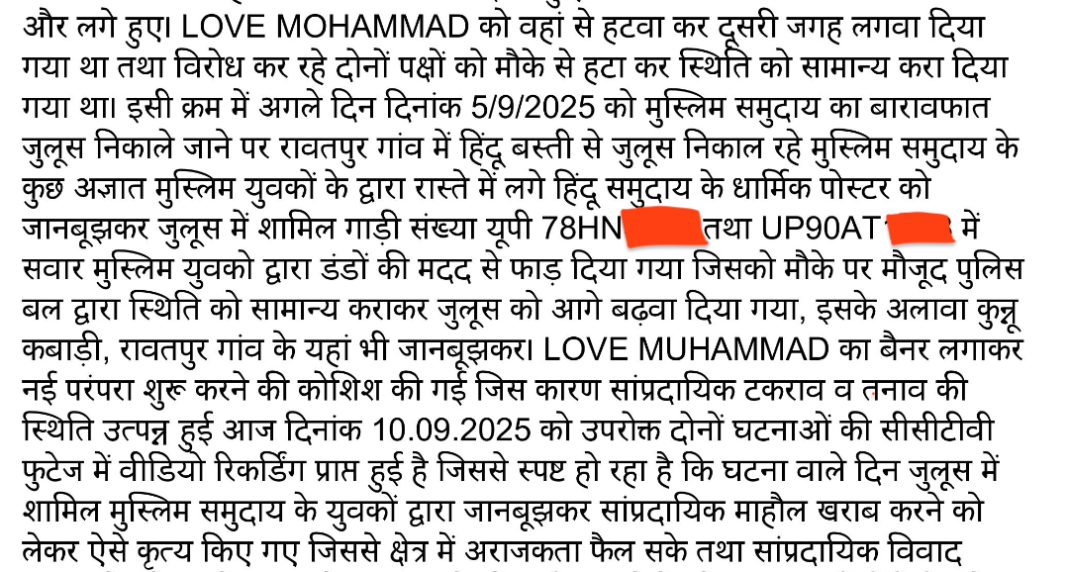
A Barawafaat procession was taken out on 5th September, in which Muslim men deliberately tore down religious posters of Hindus. According to the FIR, “When the procession was being taken out through a Hindu localityin Rawatpur village, some unidentified Muslim men participating in the procession on their vehicles, deliberately tore down religious posters belonging to the Hindu community along the route using sticks…by Muslim youths travelling in a vehicle participating in the procession.”
A portion of the FIR registered by the police
If you pay attention to these words, it becomes clear that this matter is not just about the “I Love Muhammad” banner. The story Al-Jazeera is trying to sell is actually a half-baked, self-selected “truth,” which, in many ways, is more dangerous than a lie. Al-Jazeera’s propaganda isn’t limited to this.
Al-Jazeera also spread lies about Bareilly and Gujarat.
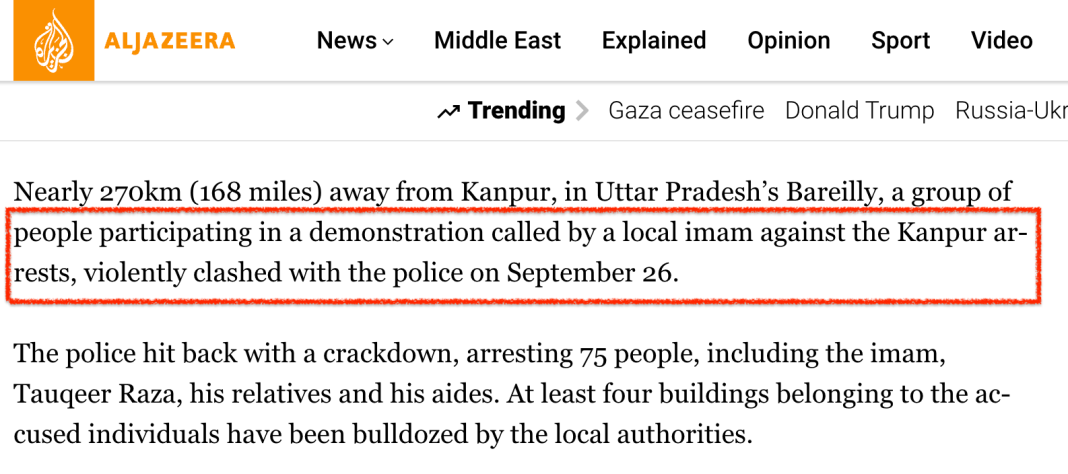
Although there was unrest in several states, the intensity was most pronounced in Bareilly and Gujarat. Al-Jazeera mentioned both incidents in its report, but here too it concealed the truth. Al-Jazeera stated that in Bareilly, protesters clashed violently with police.
Al-Jazeera on Bareilly riots
The media outlet failed to report that the protesters in Bareilly did not just have violent clashes with the police, but that the so-called protesters had arrived there with plans to attack the police. The investigation revealed that Maulana Tauqeer Raza, founder of the Ittehad-e-Millat Council, had plotted to kill policemen.
The so-called protesters had conspired to incite a riot in Bareilly. Hundreds of people were called in from outside and housed in various mosques. On the day of the purported protests, the rioters attacked the police with petrol bombs, opened fire, and pelted stones. Al-Jazeera dismissed this entire conspiracy by Islamic fundamentalists as simply a “violent clash”.
Al-Jazeera also failed to report the violence that erupted in Gujarat, Prime Minister Narendra Modi’s home state. “Muslims have been arrested in several states, including Gujarat, for social media posts and videos that included slogans like ‘I Love Muhammad,” Al-Jazeera wrote.
Al-Jazeera on action in Gujarat
In Godhra, Gujarat, Islamic fundamentalists pelted stones at police. A post that read “I Love Mahadev” caused widespread uproar in Gandhinagar, Gujarat. Extremists selectively targeted Hindu homes and shops. Stones were even pelted at the Garba pandals and surrounding areas, yet Al-Jazeera, blinded by its love for Islamic fundamentalists, failed to see this.
Al-Jazeera further attempted to create propaganda in this story by citing statements from individuals associated with organisations like Amnesty International, but none of them contained any facts. The crackdown on encroachments on drains, ponds, and other government land was portrayed as the targeted demolition of houses of Muslims. However, it failed to disclose that these homes were built on encroached land.
The battle of narrative, not bombs and guns
Organisations like Al-Jazeera, the BBC, and the Washington Post repeatedly attempt to portray every internal incident in India through their default “Muslim versus the state” lens. They do not report the plain news, but rather attempt to create a narrative portraying India as a Hindu-majority and anti-Muslim country. This, of course, aims to undermine India’s reputation in the international community. It is natural for any religion to have love for its prophet. But when such emotional slogans are used to incite mobs, politicise, or mobilise against a community, they become a ‘religious weapon,’ not ‘religious love’.
In such circumstances, radicals use this weapon, and whenever the police take legal action against them, the foreign media portrays it as a conspiracy against Muslims. These media outlets never question whether stone-pelting, rioting, or planning violence are part of any religion. Should the police be held accountable simply because the culprits belong to a particular community?
Today’s era isn’t just about bombs and guns, but about narrative. When India strongly enforces its law and order measures, the global media seeks to exploit them against India to their advantage. Such organisations strive to garner international support by portraying Muslims as victims in any way possible.
(This article is a translation of the original article published in OpIndia Hindi.)