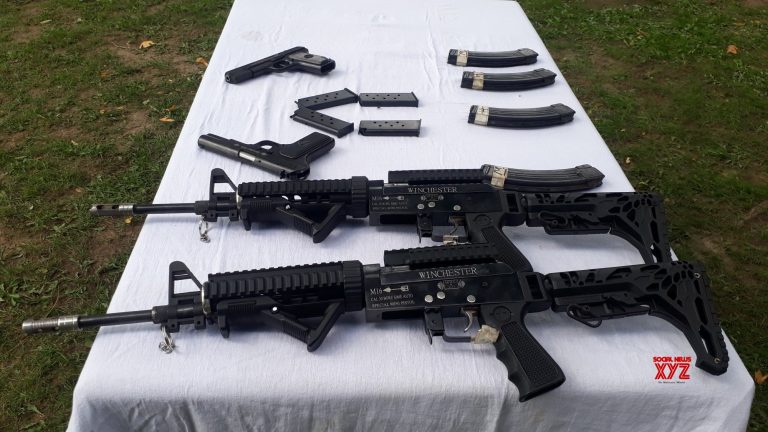
A large cache of weapons that fell into the hands of the Taliban when US-led NATO forces withdrew from Afghanistan in 2021, has now made its way to Kashmir in India. Pakistan-backed terrorists operating in the region have been observed to be using M4 carbine assault rifles, M16 rifles, and other US-made arms and ammunition, reports American broadcaster NBC News.
According to the report, the majority of such weapons seized thus far have come from Pakistan-backed terror organisations Jaish-e-Mohammad (JeM) and Lashkar-e-Taiba (LeT) operating in the Kashmir valley.
Experts are concerned that the enormous flow of US-made weaponry to such terror groups in the Kashmir valley may be the beginning of the weapons’ global journey.
According to Lt. Col. Emron Musavi, an Indian army spokesperson in Srinagar, terrorists from both organisations were sent to Afghanistan to fight alongside or train the Taliban. After the US-led NATO forces withdrew, “it can be safely assumed that they have access to the weapons left behind.”
However, when NBC News attempted to contact government authorities in Afghanistan and Pakistan for a comment, they reportedly did not respond.
It may be recalled that last year in July, Kashmir police had said that they have seized an M4 carbine assault rifle after two JeM terrorists were neutralised in an encounter.
— Kashmir Zone Police (@KashmirPolice) July 11, 2022
Questions about the US-made weapons being used in Kashmir were again raised in January 2022, when a video of terrorists brandishing American-made guns was shared widely on social media platforms.
Major General Ajay Chandpuria, General Officer Commanding (GOC) 19 Infantry Division stationed in Baramulla of North Kashmir also said in an interview with the news agency ANI last year that high-tech weapons left behind by Americans have found their way to Jammu & Kashmir.
Lt. Gov. Manoj Sinha of Jammu and Kashmir stated the government was aware of the issue and that measures were in place to resist the infiltration of US weaponry into Kashmir. “We are monitoring the situation closely and have taken steps accordingly. Our police and army are on the job,” Sinha said on the sidelines of a news conference last year at his official residence in Srinagar.
Weighing in on the issue, Ajai Sahni, executive director of the Institute for Conflict Management, a think tank in New Delhi, had said that the Pak-backed terrorist groups JeM and LeT are purchasing US weapons from the Taliban in Afghanistan, where both groups are reported to have bases, or through smugglers in Pakistan.
US left behind $7 billion of military equipment in Afghanistan during the 2021 withdrawal
Notably, a Defense Department report, published in August 2022, said that roughly $7 billion in military equipment supplied to the Afghan government was left behind in Afghanistan after the US completed its hasty withdrawal in August 2021.
A report by Forbes suggested that America has provided $83 billion worth of training and equipment to Afghan security forces since 2001. That year alone, the U.S. military aid to Afghan forces was $3 billion.
US-made weapons and equipment captured by Taliban were always likely to be sent to Pakistan, to be used against India
Soon after the withdrawal of the NATO forces, many in India raised concerns that these weapons may soon find a way into Pakistan, and then, through Pakistan-sponsored terrorists, to India, especially Jammu and Kashmir. A report by ANI quoted top military experts as saying that these weapons will first be used in Pakistan by the ISI-backed terrorist groups, and will then make their way into India.
“There are a lot of inputs suggesting that American-origin weapons, especially small arms are being sent to Pakistan. But the way terror groups have been emboldened there by the Taliban victory, there is a possibility of these weapons being used for violence in Pakistan itself,” senior military officers told ANI while discussing the Afghanistan war’s outcome.
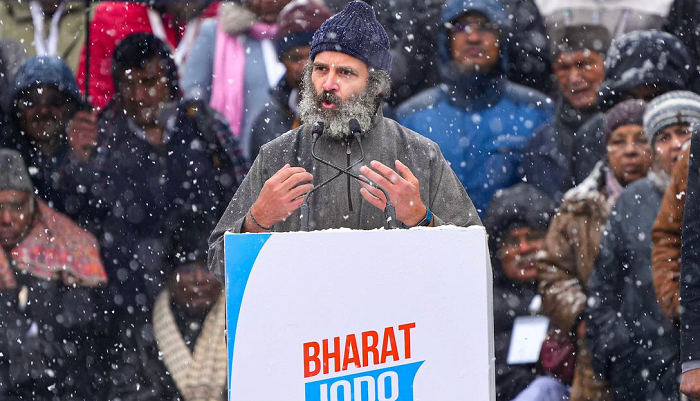
On Monday, Congress’ so-called unity march named ‘Bharat Jodo Yatra’ led by its leader Rahul Gandhi ended in Kashmir but resulted in a huge disappointment for the party as leaders of only 8 out of 23 political parties attended the final event. Congress President Mallikarjun Kharge had invited heads of 23 political parties and had asked them to join the Bharat Jodo Yatra’s concluding event. However, only a handful of members managed to make it to the event.
According to the reports, DMK’s Tiruchi Siva, CPI general secretary D Raja, the National Conference’s Omar Abdullah, the PDP’s Mehbooba Mufti, the RSP’s NK Premachandran, BSP MP Shyam Singh Yadav and the IUML’s K Navas Kani attended the event at Sher-I-Kashmir Stadium on January 30. Also present were representatives of the JMM and the VCK.
The Congress expected all parties requested to send members to the celebration at Srinagar’s Sher-e-Kashmir cricket stadium. Congress communication head Jairam Ramesh had said in a press conference at the AICC headquarters earlier this month that there would be meeting and discussions among the heads of political parties ahead of the 2024 elections. “You will see the meeting in Srinagar on the 30th… the aim (of the meeting) is that the Bharat Jodo Yatra is over… what is the next step to be taken in the context of the 2024 elections… there will be some discussions on that,” he had said.
While HD Deve Gowda of the JD(S) and Rajiv Ranjan ‘Lalan’ Singh of the JD(U) had written to Congress head Mallikarjun Kharge expressing their inability to attend the occasion, leaders of the Trinamool Congress, RJD, Samajwadi Party, and CPI(M) failed to attend too. Shiv Sena (Thackeray), NCP, TDP, BSP, RLSP, HAM, MDMK, and Kerala Congress also skipped the meeting.
However, the majority of its partners including the NCP, Shiv Sena, JMM, and DMK, participated in the Yatra at various locations. When the Yatra entered Maharashtra, Aditya Thackeray (Shiv Sena) and Supriya Sule (NCP) walked alongside Rahul, while Sanjay Raut also recently joined him in Jammu.
Notably, BSP MP Shyam Singh Yadav, who walked beside Rahul when the Yatra passed through Delhi, also attended the ceremony. According to reports, Singh, the MP from Uttar Pradesh’s Jaunpur seat, did not attend the event as a BSP delegate.
“We all fought together for the independence of the country and liberated it from the British Raj. All secular parties must come together to liberate the country from the BJP Raj,” CPI leader Raja said. While Omar requested Rahul to take up another yatra from the west to the east of the country and promised to walk with him. Mufti meanwhile stated that the public saw a glimmer of hope in Rahul Gandhi.
“A historic movement was undertaken. Rahul Gandhi has proved that he is the right leader to fight against these divisive forces,” RSP’s Premchandran extended support to the Congress Party.
The five-month march began in Kanyakumari, Tamil Nadu’s southernmost town, and ended in Srinagar, the state capital of Jammu and Kashmir. Though the march attracted large crowds around the country and received support from several celebrities, it is difficult to say if this attempt of Rahul Gandhi would help him get votes in the upcoming 2024 Lok Sabha elections.
Last week it was reported that India’s citizens appear to be content with the performance of the Narendra Modi-led NDA administration. According to the India Today-CVoter Mood of the Nation survey, if the Lok Sabha elections were conducted today, the Bharatiya Janata Party would win 284 seats and the Congress party would win 191 seats only.
On Monday, the Uttar Pradesh Police registered an official complaint against a person named Aarif for abducting a Hindu minor girl in the Kasganj district of the state. The case has been registered based on the complaint filed by family members of the victim. Brothers of Aarif identified as Tahir, Moti and Abid have also been booked in the case.
According to the report published by Amar Ujala, the incident is said to have happened on January 23 when the family members of the victim had gone to the fields for their job and the girl was alone at home. Aarif who stays in the same village arrived at the girl’s home and took her forcefully with him.
The family members reached home to see their minor girl missing and they began searching for her. During their search, they discovered that Aarif had taken the girl away with him. They then went to Aarif’s home in search of their daughter. But his brothers Tahir, Moti and Abid happened to verbally assault them.
Aarif’s family members and his brothers also physically assaulted the victim’s family as they constantly kept on inquiring about their minor daughter. They also were issued death threats by the accused’s brothers.
The victim’s family members then immediately reached the Police station and registered a police complaint against the accused and his brothers. They mentioned in the complaint that Aarif had abducted their daughter and his brorthers, Tahir, Moti and Abid had issued death threats to them.
The police has registered an FIR based on the complaint filed by the family members of the victim and have launched an investigation in the case. The accused has been booked under the relevant sections of the law.
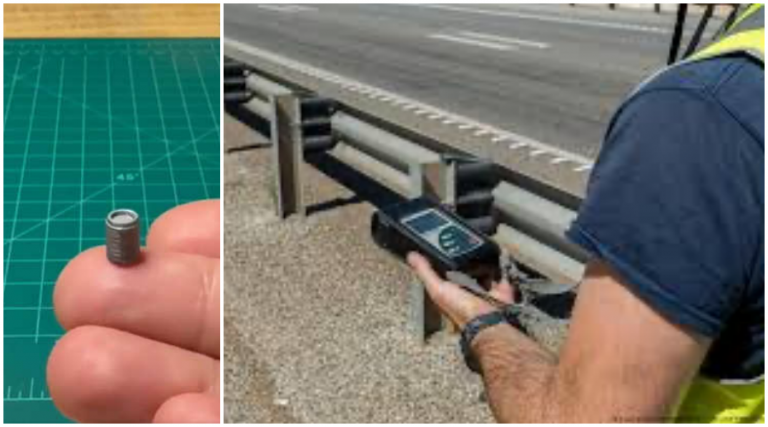
In Australia’s wide western stretch, local authorities and employees from mining company Rio Tinto are searching for a needle in a very, very big haystack. To be specific, they are searching for a tiny, but ‘deadly’ radioactive capsule that got lost along a 1400 km long road.
VIDEO: Missing radioactive capsule sparks search in Australia.
Authorities are searching for a tiny – 8mm by 6mm – radioactive capsule along a desert highway after it went missing while being transported from a mine in the country's remote west pic.twitter.com/8pamsQnjWB
As per reports, a tiny capsule of Cesium-137, the size of 6mm x 8mm, smaller than a coin and smaller than the average human fingernail, has gone missing after it fell away from a transport truck. The capsule is radioactive and emits gamma rays, which can be dangerous. (Well, the same rays that turned Dr Bruce Banner into The Hulk).
— Chief Health Officer, Western Australia (@CHO_WAHealth) January 27, 2023
A truck was transporting the capsule from Rio Tinto’s Gudai-Darri mine in the Pilbara region to Perth when it ‘fell off somewhere’. But there is more to the story. The company realised that the capsule was missing only after an inspection on January 25. It was seen the last time on January 12.
It is believed that vibrations and rattlings in the truck may have caused the bolts to come loose during transport, eventually making the gauge tumble out and fall. When the truck was opened for inspection, they reportedly found the gauge broken apart, with mounting bolts missing and some screws gone.
Now, there are concerns that the tiny capsule may have got stuck in the tyre of a passing vehicle and can be just about anywhere in Australia. The search teams are equipped with sensors that can detect radiation emitted from the capsule around a 20-metre radius.
Authorities have released statements, asking people to be careful and not to touch the capsule if they see it. The capsule, though not exactly fatal, can cause serious radiation sickness in people who come in direct contact with it. While driving past it may be the same as getting an X-Ray done in terms of radiation exposure, prolonged contact can cause skin burns and even cancer.
It has a half-life of about 30 years.
Rio Tinto has, in the meanwhile, apologised for their mistake and is assisting the authorities in the search.
Gamma rays are among the most dangerous type of radiation as they are capable of stripping electrons out, thus damaging cells and even the DNA.
The tiny capsule has a radioactive load of 19 gigabecquerels, roughly equivalent to 10 medical X-Rays per hour. Such capsules are used in the mining industry to measure the density of iron ores, as per a report in DW.
A Hindu temple, Gauri Shankar Mandir, was desecrated by Khalistani extremists in Brampton city in Ontario province of Canada.
As per reports, the walls of the temple were defaced with anti-India graffiti by Khalistanis associated allegedly with the banned outfit, Sikhs For Justice (SFJ). The vicious slogan of ‘Khalistan Zindabad, Hindustan Murdabad’ was found spray-painted on the outer wall of Gauri Shankar Mandir.
After the matter came to light, the Canadian authorities initiated a probe into the matter. In a statement, the Indian Consulate in Toronto said, “We strongly condemn defacing of Gauri Shankar Mandir in Brampton, a symbol of Indian heritage, with anti-India graffiti.”
We strongly condemn defacing of Gauri Shankar Mandir in Brampton,a symbol of Indian heritage, with anti-India graffiti. The hateful act of vandalism has deeply hurt sentiments of Indian community in Canada. We have raised our concerns on the matter with Canadian authorities.
“The hateful act of vandalism has deeply hurt sentiments of Indian community in Canada. We have raised our concerns on the matter with Canadian authorities,” it further added.
Meanwhile the Mayor of Brampton, Patrick Brown, has also condemned the attack on Gauri Shankar Mandir. “This hateful act of vandalism has no place in our City or Country. I have raised my concerns over this hate crime with @ChiefNish and @PeelPolice. Everyone deserves to feel safe in their place of worship.”
The @CityBrampton condemns the defacing of Gauri Shankar Mandir. This hateful act of vandalism has no place in our City or Country. I have raised my concerns over this hate crime with @ChiefNish and @PeelPolice. Everyone deserves to feel safe in their place worship.
Canadian Parliamentarian Chandra Arya tweeted, “The attack of Gauri Shankar Mandir in Brampton is latest in attacks on Hindu temples in Canada by anti-Hindu and anti-India groups.”
“From hatred on social media, now physical attacks on Hindu temples, what next? I call on govt at levels in Canada to start taking this seriously,” he added.
The attack of Gauri Shankar Mandir in Brampton is latest in attacks on Hindu temples in Canada by anti-Hindu and anti-India groups. From hatred on social media, now physical attacks on Hindu temples, what next? I call on govt at levels in Canada to start taking this seriously.
This is not the first case in which Hindu temples have been targeted by extremists in Canada.
In September last year, some Khalistani terrorists defaced BAPS Swaminarayan Temple in Toronto with anti-India slogans. Several videos circulating on social media showed slogans of ‘Khalistan Zindabad, Hindustan Murdabad’ painted on the walls of the temple.
Indian High Commission in Ottawa, condemned the acts of vandalism at the BAPS Swaminarayan Temple and urged the Canadian authorities to take necessary action. In February 2022, six Hindu temples were attacked in Toronto.
The attackers stole money from donation boxes as well as ornaments from the stolen idols. The attacks on the temples began on January 15, with an unsuccessful break-in at the Shri Hanuman Mandir in Brampton, a GTA town. The miscreants tried again and have since gone on a tirade.
On Monday (January 30) morning, an Italian passenger was arrested for creating a ruckus onboard a Vistara Airline flight from Abu Dhabi in the United Arab Emirates (UAE) to Mumbai.
As per a report by The Times of India, the 45-year-old woman assaulted, spat on cabin crew members and went partially naked after being asked to return to her economy-class seat.
The accused, identified as one Paola Perruccio, sat in business class despite holding an economy-class ticket. When she was asked to return to her original seat, a drunken Paola punched a cabin crew member named LS Khan (24) and spat on another onboard the flight.
Sahar Police arrested a woman, Paola Perruccio from Italy after she created a ruckus on an Abu Dhabi-Mumbai flight. She allegedly insisted on sitting in business class despite an economy ticket, assaulted crew, took off some clothes&walked up&down aisle in a partially naked state
She also hurled the choicest of expletives, partially removed her clothes and created inconvenience for other passengers. Following consultation with the flight captain, the cabin crew overpowered the Italian passenger and tied her to a seat on the rear end of the plane.
A complaint was registered against her with the Sahar police by the Vistara airline staff. After the flight landed at the Mumbai airport at 5 am on Monday (January 30), the cops arrested her, confiscated her passport and also filed a chargesheet in the case.
Paola Perruccio was produced before a court in Andheri, which granted her bail on a surety bond of ₹25000. LS Khan, the assaulted cabin crew member said, “She was in seat 11C in the economy class when she suddenly ran to the business class and sat on seat No. 1. She punched my face when I requested her not to sit in business class.”
Mumbai Police filed a chargesheet in a case of misbehaving by an airline passenger, an Italian woman Paola Perruccio, midair on a Vistara Abu Dhabi to Mumbai flight. She was arrested by Sahar Police after the landing of the plane yesterday. She was later given bail by the court.
“When another cabin crew member ran to help me and told the flyer she could not misbehave on board, she spat on her. Paola removed her clothes on board and kept walking in the open space on board. The cabin crew tried to calm her and said her act was disturbing other flyers. But she continued hurling abuses,” he added.
DCP (zone VIII) Dikshit Gedam told TOI, “The flyer has been booked for an act endangering life or personal safety and other bailable offences under the Indian Penal Code and The Aircraft Rules, 1937.”
A cop at the Sahar police station also informed, “The preliminary report of Perruccio’s medical examination showed she was inebriated during the journey, though the exact cause of the incident is yet to be known.”
The incident has been reported to the relevant authorities as per the SOPs. Vistara stands firm with its zero-tolerance policy against unruly behaviour that endangers the safety, security, and dignity of its customers and staff: Vistara spokesperson
In her defence, Paola’s lawyer Prabhakar Tripathi claimed, “Details have been submitted before the court that Perruccio wanted to complain against Vistara because of the bad services provided to her.”
He further alleged, “She was going to the washroom but was not allowed. The situation arose because of an on-flight ruckus between her and the crew members which ended in a case being filed against her. The court has also been told that police have seized her passport illegally.”
While speaking about the ordeal, a Vistara spokesperson said, “In view of continued unruly conduct and violent behaviour, the captain issued a warning card and made a decision to restrain the customer. The pilot made regular announcements to assure the other customers on board of their safety.”
“In accordance with the guidelines and our stringent SOPs, the security agencies on-ground were informed to take immediate action upon arrival. The incident has been reported to relevant authorities as per SOPs,” the official added.
Mumbai Police filed a chargesheet in a case of misbehaving by an airline passenger, an Italian woman Paola Perruccio, midair on a Vistara Abu Dhabi to Mumbai flight. She was arrested by Sahar Police after the landing of the plane yesterday. She was later given bail by the court.
Recently, a Dammam-bound passenger, Jauhar Ali Khan, was found publicly urinating in front of departure gate no 6 at IGI’s T3 airport in New Delhi on January 8. Delhi Police has said that he was arrested and then later released on a bail bond.
In November last year, a 34-year-old Shankar Mishra allegedly urinated on a 70-year-old woman onboard an Air India flight while under the influence of alcohol.
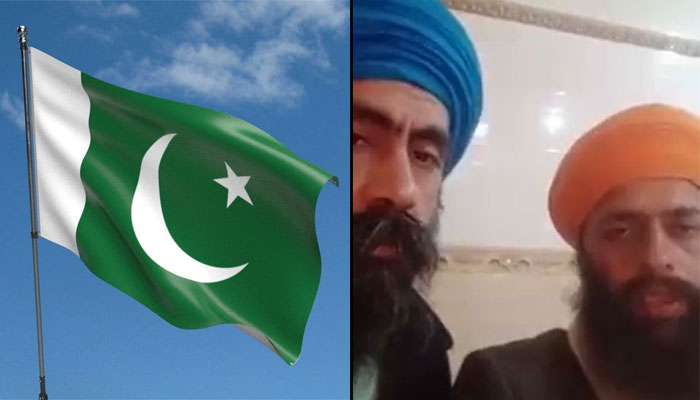
On January 30, Narain Das Bheel, Founder and Chief Organiser of the Hindu Organization of Sindh published a video on the social media platform Twitter where Sikhs of Jacobabad in Sindh, Pakistan could be heard narrating the incidents of atrocities they are facing. The Sikh individual identified as Harish Singh was allegedly abused and hackled by the Muslim community.
Jacobabad Sindh: The resident of #Sikh Harish Singh Gurdwara says that I went to take my children to school and waited at the gate.I have come and I will take it away,on which they abused me and a Muslim threatened to kill me My daughters were very worried after hearing all this. pic.twitter.com/kUgIrKHZVr
In the video, Singh told that the incident took place when he was picking up his daughters from school. He was hackled and threatened to kill. The attackers also threatened to kill his daughters. Singh added that his daughters were afraid and refused to go to school.
Singh urged the locals to stand up for him and save him from the atrocities. He said, “I am pleading with the locals of Jacobabad with folded hands that on January 26 when I was coming back after picking up my daughters, there was a lot of crowd on the road. Bike-borne Muslims abused and threatened to kill me and my daughters. They hit my scooter. I suffered an injury in my leg. My daughters are worried. They are refusing to go to school.” He added that the Sikh community living in the area gave respect and votes to the Muslim leaders. He appealed to them and the local community to support him and save his family. Singh further added, “One fish should not be allowed to spoil the pond.”
Atrocities against Sikhs in Pakistan
Islamic extremists in Pakistan have made it extremely difficult for minorities to sustain a normal life. There have been several reports of abductions, forced conversions and killings of Sikhs along with other minorities in the country. OpIndia reported several incidents where Sikh women and young girls were abducted and converted to Islam.
Notably, in 2017, Sikhs were excluded from the census in Pakistan. This was the first time the minority group was not included in the census. The official number of Sikhs in the country is not available. However, as per an India Today report from February 2022, the population of Sikhs have come down to around 8,000 in 2022 compared to 40,000 in 2002. In just two decades, there has been around 80 per cent fall in the population of Sikhs in the country.
In August 2021, it was reported that Sikhs in Khyber Pakhtunkhwa protested as Islamists forcibly converted a female Sikh teacher and perform her nikah. A young female teacher from the Sikh community was allegedly kidnapped on Saturday, and on the next day, her family was informed that the young girl is now married to a Muslim person. There is deep resentment in the Sikh community due to this incident.
Dina Kaur, a Sikh teacher was kidnapped on August 21, 2022. On the next day, her family members knew about the forced marriage and subsequent conversion. The family reached the police station where nobody cared to register their complaint. According to the family members, the local police have not registered any FIR and have asked the Sikhs to be silent on this issue.
In December 2022, The Evacuee Trust Property Board (ETPB) of Pakistan shut down Gurdwara Shaheed Bhai Taru Singh in Lahore for worship, declaring that it is a mosque. Pakistan’s ETPB, together with certain fundamental extremists, locked down the Gurdwara, infuriating the Sikh community. the controversy over the existence of the Gurdwara situated in Lahore has been long-running now. The Gurdwara was constructed in the place where Sikh fighter Bhai Taru Singh was executed in 1745 by the Mughals. The Gurdwara was built on the grounds where the Shaheed Ganj Mosque existed earlier. This has led to the dispute that continues even today.
No voice from pro-Khalistani elements against atrocities on Sikhs in Pakistan
Interestingly, despite continued attacks on Sikhs in Pakistan, pro-Khalistan elements like the terrorist organisation Sikhs For Justice, its founder Gurpatwant Singh Pannu, and Pakistani Sikh leader Gopal Singh Chawla have shown their pro-Pakistan mentality on several occasions. Pannu, who seek a separate Sikh nation, never talk about the Punjab which is part of Pakistan. He sought support from then-Imran Khan Government in the creation of Khalistan. Khalistani elements operating in India often get funding and ammunition from the neighbouring country.
Pro-Khalistani elements hardly ever talk against Pakistan. In fact, Pannu even claimed that the minority community is living “happily” in Pakistan. In a reply to Global Strat View on the inclusion of Pakistan’s Punjab in Khalistan, Pannu had said, “There are 20,000 or 25,000 Sikhs who are living happily and they call Pakistan their home.”
Not to forget, several wanted Khalistani terrorists are living in Pakistan. In September 2022, Gajinder Singh, the co-founder of the Khalistani terrorist organization Dal Khalsa and an accused hijacker of a 1981 Indian Airlines flight revealed his current location in the Punjab province of Pakistan. The revelation was made after he published a photograph of himself posing in front of a gurudwara on his Facebook profile. The gurudwara in the background was Gurudwara Shri Panja Sahib Ji, located in Hasan Abdal, Pakistan.
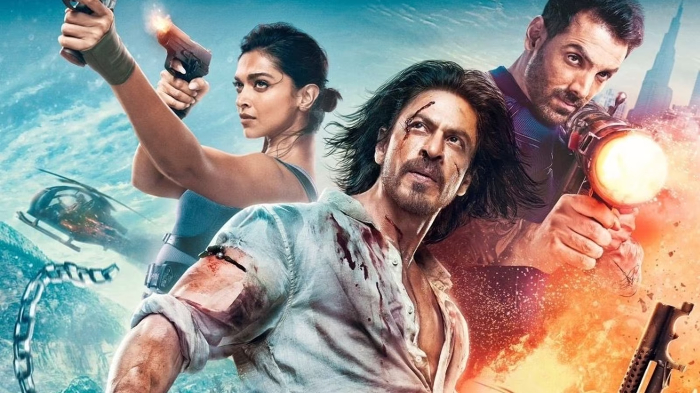
On Sunday, January 29, the news spread that a “special screening” of the Shah Rukh Khan starrer Pathaan was held at the Rashtrapati Bhavan. However, a basic check tells us that it wasn’t so “special”.
While the film Pathaan was indeed screened at the Rashtrapati Bhavan Cultural Centre by an association of employees working for the President, there was nothing ‘special’ about it, because every week a film is screened there. The screening of movies is part of perks available to employees of Rashtrapati Bhavan.
The confusion was created by the following tweet by SM Khan, who is a former secretariat employee.
SM Khan, who happens to be a member of PSOI (President Secretariat Officers Association) by virtue of being a former secretariat employee, tweeted that a “special screening” of Pathaan was taking place at the Rashtrapati Bhavan, leading to the confusion. It should be noted that it is the PSOI that organises such movie screenings at the Rashtrapati Bhavan, however, this was by no means a “special screening” as tweeted by Khan.
“It will be entirely inaccurate to call such routine screenings of movies as ‘special screening’ or some kind of official event by Rashtrapati Bhavan,” a senior official of the President secretariat told OpIndia, “It wasn’t even special in the sense that it was shown prior to public release. Such screenings are a routine affair.”
These screenings are not official events of the President’s office and using her name for such screenings is highly disingenuous.
The “special screening” is an official event, which is attended by the President. However, the President had not attended Pathaan’s screening. In fact, even the senior officials attached to the president’s office didn’t bother to attend the film’s screening, OpIndia has learnt. As explained earlier, this was a regular movie screening organised by PSOI once every week.
“A special screening of a movie is a technical term where the honourable President is invited and when the President attends such a screening. The President didn’t attend the screening of Pathaan. In fact, most senior officials too had not attended,” the official further clarified.
However, the marketing team of Pathaan hasn’t bothered with these minor details and propagated that a special screening was held for the film at the Rashtrapati Bhavan. The same was then reported by the media without adding any details or context.
Notably, the last movie the President attended at the cultural center was ‘The Kashmir Files’, which went on a record-breaking theatrical run in 2022.
Congress MP Rahul Gandhi’s Bharat Jodo Yatra concluded on 30th January 2023 in Jammu and Kashmir. Rahul Gandhi unfurled the national flag at Lal Chowk in Srinagar to conclude his container-led walk that was initiated in Kanyakumari four months ago. At various stages during this Yatra, Rahul Gandhi went on to prove that the 50th attempt at his grand political launch ended up portraying himself as more miserable than ever. From killing Rahul Gandhi to repeating the story of his meeting with poor kids shivering in cold, the Congress MP came up with many incidents displaying his long-known traits.
Initially, Rahul Gandhi displayed his confusion as he said in the early phase of his container journey that he is not fighting any political party but he is fighting the Indian state. Accusing the BJP-led NDA government of politically using central investigation and law enforcement agencies against various leaders in the opposition parties, Rahul Gandhi said, “We’re not fighting anymore a political party. We used to fight a political party. Now the fight is between the structure of the Indian state and the opposition.” His Bharat Jodo Yatra, whose motive should have been to empower his party to rise to the top of the state again, thus found itself a degraded place in the people’s point of view.
The foot march of the Congress MP was labelled as Congress’ attempt to reconnect with the masses. Though he was seen walking during this Yatra, this tour of the Gandhi scion was no less than a luxury on wheels. The ‘foot march’ was also accompanied by a convoy of 59 containers, which were colour coded as per the availability of beds. The Congress leaders slept in these containers, which were mounted on trucks. They camped on the roadsides, ate food made by the cooking staff, and got clean laundry once every 3 days.
It is notable that in his early attempts at political launch campaigns, Rahul Gandhi would go to the households of the poor and have meals with those families. This time, in Bharat Jodo Yatra, Rahul Gandhi abandoned his night stay in the luxury container only after left-wing student unions in Kerala protested against the container camp.
Rahul Gandhi roped in a minor girl wearing a hijab while walking in the Yatra in Kerala, indicating support for the hijab when the whole world is opposing the oppressive practice of repressing women.
Along with minority appeasement, Rahul Gandhi continued to take Hinduphobic steps the Congress party is known for. He met Rijil Chandran Makkutty the Indian Youth Congress (IYC) leader, who slaughtered a cow in broad daylight in 2017 to mock Hindu sentiments. However, in the later part of his foot march, Rahul Gandhi said that cows also participated in his Bharat Jodo Yatra and none of them was killed, ignoring the fact that he welcomed a cow-killer in his Yatra while in Kerala.
During the Kerala and Karnataka legs of the Bharat Jodo Yatra, Veer Savarkar’s photo appeared on the local banners of the foot march. It is pertinent to note that Congress has made it a point to deride the freedom fighter Veer Savarkar whenever they get the opportunity. Rahul Gandhi took this opportunity when his march reached Maharashtra – the land Savarkar hailed from.
The Congress scion went on a vitriolic tirade against Veer Savarkar during the Maharashtra leg of his ‘Bharat Jodo Yatra.’ On November 15, 2022, Rahul Gandhi claimed that the freedom fighter took a pension from the British government to work against the Indian National Congress (INC). Again on November 17, 2022, he reiterated that Veer Savarkar helped the British government and wrote mercy petitions “out of fear”. Rahul Gandhi accused the Indian freedom fighter of betraying the likes of Jawaharlal Nehru, Sardar Patel, and Mahatma Gandhi in the Akola district of Maharashtra. Multiple cases were filed against him for making such statements.
Rahul Gandhi also gave some apparently crazy statements during this Yatra. Once he said that he met an RSS member who weighed 100 kg and went to Kedarnath in a helicopter, unlike Rahul Gandhi who claimed that he trekked several kilometres to reach the Kedarnath temple and avoided the helicopter ride despite it being easily available.
The fiasco of the Rahul Gandhi’s martial arts lesson to Congress leaders to ‘physically’ ward off RSS and BJPNepal anthem being played at Bharat Jodo Yatra
On November 16, a shockingly funny incident happened during Rahul Gandhi’s Bharat Jodo Yatra when the Nepalese National Anthem was played instead of Indian National Anthem. Furthermore, Rahul Gandhi and other leaders on the stage kept calling it National Song while the National Anthem, ‘Jana Gana Mana,’ was supposed to be played.
Rahul Gandhi’s martial arts lesson to Congress leaders to ‘physically’ ward off RSS and BJP
On November 26, 2022, Congress scion Rahul Gandhi left netizens amused over his grand ‘political strategy’ to fight the ruling Bharatiya Janta Party. In a video shared by seasoned Congress loyalist Anshuman Sail, Gandhi was seen teaching his fellow party men the art of using the ‘energy’ of opponents.
The self-proclaimed martial arts expert politician then compelled a Congress leader to sit on his knees and then proceeded to push him from the front. When the said leader failed to maintain his balance, Rahul Gandhi suggested a way to take the opponent’s energy instead.
Rahul Gandhi shoves the phone of a man who wanted to click a selfie
On December 21, 2022, a video of Rahul Gandhi’s Bharat Jodo Yatra (BJY) went viral where the Congress leader was seen pushing down the phone of a fan who wanted a selfie with him. The video appeared to be from Rajasthan and was shot early morning on December 21, Gandhi was seen surrounded by his supporters on the stage.
All of them wanted to get clicked with the leader and started pushing each other. Irked by the situation, Gandhi angrily pushed down the phone of a fan who was trying to get a selfie with him. He seemed irritated with the attempt to take a selfie with him and did not allow the man to take the selfie.
Boasting about his ‘courage’ as Rahul went about fighting winter in a t-shirt
When the Bharat Jodo Yatra reached Delhi, at that time, it was chilling cold in the national capital. But Rahul Gandhi was seen wearing just a t-shirt. For this, he was hailed by his supporters. Some of them called Rahul Gandhi a PM candidate for showing this ‘courage’ to wear a t-shirt in cold. Salman Khurshid compared Rahul Gandhi with Lord Ram for this. Others in Haryana’s Karnal danced shirtless in the biting cold in Rahul Gandhi’s Bharat Jodo Yatra (BJY) after the Congress leader was hailed as Prime Minister candidate for the 2024 Lok Sabha elections for wearing just a t-shirt.
#WATCH | Congress supporters dance shirtless amid dense fog during Bharat Jodo Yatra in Haryana’s Karnal pic.twitter.com/0kmHmkL1nK
‘When Arjun was focusing on the eye of the fish, did he reveal about his future course of action?’
As if there was a lack of bizarreness in the foot march, Rahul Gandhi drew bizarre analogies between his ambitious ‘Bharat Jodo Yatra’ and the Swayamvar of Draupadi from the Hindu epic ‘Mahabharata.’ In a video shared very proudly by the official Twitter handle of the Congress party, he was heard as saying, “When Arjuna was focusing on the eye of the fish, did he announce his future course of action to everyone?”
गीता में कहा गया है – ‘कर्म करो, फल की चिंता न करो’
जब अर्जुन मछली की आंख पर निशाना लगा रहे थे तो उन्होंने ये नहीं कहा कि निशाना लगाने के बाद वो क्या करेंगे।
Rahul Gandhi made the remarks upon being asked about his plans, following the conclusion of his political foot pilgrimage. He had compared himself to Arjuna and erroneously claimed that the warrior did not know about the fruits of his actions (the task to hit the eye of a fish).
‘I have killed Rahul Gandhi. He is just in your head’: Rahul Gandhi
Continuing the whimsical and vague statements in the new calendar year, Rahul Gandhi said on 8th January 2023 in Samana of Haryana, “Rahul Gandhi is in your head. I have killed him. He does not exist anymore. He is not in my mind. He is gone. Gone. The person you are seeing is not Rahul Gandhi. You are seeing him.”
बोलता हे हेरान क्यों लग रहे हो आप। ये भाईसाब एक केस स्टडी हे जेसे मुन्नाभाई मूवी में वो जो कैरिक्टर था की “सब्जेक्ट सुन सकता हे पर समज नहीं सकता” इसका उल्टा हे ये बोल देता हे और समज ने का टेन्शन पब्लिक पे छोड़ देता हे। वो काजू, बीज बादाम खानेका क्या फ़ायदा हुआ इसको
He added, “You did not understand. Read Hindu Dharma a little. Read about Shiv Ji. You will understand. Do not get confused. Do not get confused. Rahul Gandhi is in your head. He does not exist in my head. Rahul Gandhi is in BJP’s head. He does not exist in my head. Why are you so confused? I do not care about the image. I do not have an interest in the image. You can keep the image you like. It concerns you, not me. I do not care. I want to do my work. Why are you so confused?”
Pujaris vs Tapasvis gibberish
Rahul Gandhi continued his habit of spurting out drivel as he addressed a press conference on 9th January 2023 in Kurukshetra during the ongoing Bharat Jodo Yatra. Speaking at a public rally in Kurukshetra, the place where the Mahabharata battle took, Gandhi, invoked Pandavas and claimed that they were ‘tapasvis‘ and had supporters of ‘all religions’, leaving many wondering which all religions existed during the times of Mahabharata.
‘Dogs, cows, buffaloes, and pigs joined the Bharat Jodo Yatra’
In one instance, Rahul Gandhi’s speech during Bharat Jodo Yatra had the internet into a tizzy after he said ‘dogs, cows, buffaloes, and pigs attended the Bharat Jodo Yatra’.
Speaking at a public rally in Delhi, Rahul Gandhi said, “I don’t know if you have noticed it or not, but in this campaign(BJY), dogs participated, but no one killed them. Cows, buffaloes, and pigs also joined in, I saw them. All animals came. This Yatra is like our India. There is no hatred or violence here.”
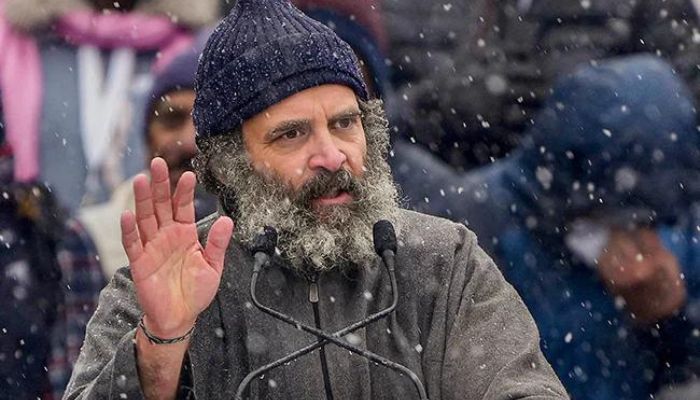
As the Bharat Jodo Yatra entered Jammu and Kashmir, Rahul Gandhi started wearing jackets due to the cold weather and snowfall in the valley. Congress party came ahead to say that Rahul Gandhi, who had earlier said that those who wear sweaters fear cold, does not actually fear cold.
#WATCH | When yatra reached MP,it was mildly cold. Three poor children came to me in torn shirts, they were shivering when I held them.That day, I decided until I shiver I will only be wearing t-shirt. When I start shivering & feel cold I would think to wear sweater: Rahul Gandhi pic.twitter.com/aCudG8swTQ
In this last phase of the foot march, the Congress leader repeated his story about poor kids shivering in cold. In Delhi, while telling the reason behind wearing just a t-shirt, he said that he saw three poor girls shivering in the cold. The girls did not have a sweater or jacket. Rahul Gandhi said that he decided at that time not to wear a sweater or a jacket unless those poor kids get a sweater to wear. However, he wore a jacket in Srinagar where he repeated the same story and told that he saw 4 kids shivering in cold in Kanyakumari when he started this Yatra and decided not to wear a jacket unless he is bothered by the cold.
#WATCH | Srinagar:Congress MP Rahul Gandhi says, “…Four children came to me. They were beggars&had no clothes on…I hugged them…They were cold&shivering. Maybe they didn’t have food. I thought that if they’re not wearing jackets or sweaters, I too shouldn’t wear the same…” pic.twitter.com/Mo81yWMvho
This Bharat Jodo Yatra had several other incidents which actually turned it into a Bharat Todo Yatra. Rahul Gandhi as usual examined the patience of the common sense of the people wherever he visited during this foot march. He managed to do so with his statements and actions. If at all anything was left to make it look miserable, people losing their relevance with every passing day this march at various stages. The list includes, Kamal Hasan, Mahesh Bhatt, Pooja Bhatt, Kunal Kamra, Shyam Manav, Raghuram Rajan, Yogendra Yadav, Medha Patkar, and many others. Bharat Jodo Yatra finally concluded on 30th January 2023, at Srinagar.
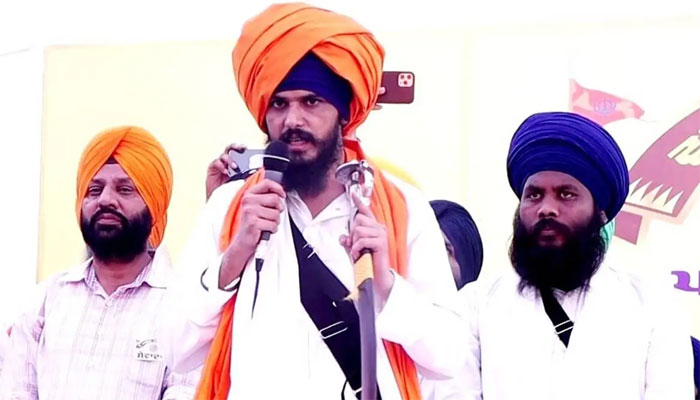
On January 29, pro-Khalistan leader and head of Waris Punjab De organisation Amritpal Singh said anyone who supports Delhi [Indian Government] whether Hindu, Sikh or Muslim, he is their [pro-Khalistan Sikhs’] enemy.
Speaking to the media, Amritpal Singh called for the release of Sikhs who are lodged in Indian jails. Lashing out at the government for giving parole to Ram Rahim, he urged Sikhs to wake up and protest against the discrimination. Amritpal was attending a march organised to seek the release of Sikhs from jails. He added while Ram Rahim is getting parole and other benefits, Sikhs have not been released despite completion of the jail term.
He said, “If the government does not listen to our demands and release Sikhs from prison, we will change our course of action”.
When asked about finding ways to maintain law and order in the state while demanding the release of Sikhs, he said, “The law and order situation is not because of us but because of the government that is not releasing Sikhs and because of those who indulge in the sacrilege of Guru Sahib [Guru Granth Sahib]. If Punjab burns, we will not be responsible.”
Speaking about the people of other faiths living in Punjab, Amritpal claimed that every person living in Punjab, irrespective of religion, wants freedom [from India]. If we had got independence in 1984, the condition of Punjab would not have been like India.”
A reporter asked him about his views on Hindus who go to Gurudwara with complete faith. He said, “We are against those who are in favour of Delhi. It does not matter if the person is Hindu, Sikh or Muslim. If the person is with Punjab [support Khalistan], we are not against him.”
Speaking about the demand of Hindu Rashtra he said, “We do not care what they want. If they want to build a Hindu Rashtra, they are free to do. They should not interfere when we ask for Sikh Khalistan.”
Who is Amritpal Singh?
Amritpal Singh Khalsa, a Sikh preacher and current chief of late actor Deep Sidhu’s organisation ‘Waris Punjab De’, is walking across the state under the banner of ‘Khalsa Vaheer’ or ‘Khalsa March’. The pro-Khalistani preacher took over the organisation after Sidhu’s demise in an accident on February 15, 2022. Sidhu formed ‘Waris Punjab De’ in September 2021 intending to “protect the rights of Punjab and raise social issues”. Amritpal Singh even dresses like Bhindranwale and is accompanied by armed men 24×7, much like the slain terrorist. There is very little information available about his past.