Himachal Pradesh is set to elect its next government today, 12th November 2022, as the voting for the 68 assembly seats is underway in the state. However, the counting of votes will only occur on the 8th of December alongside Gujarat assembly votes where voting is set to conclude on December 5.
Himachal Pradesh is famous for oscillating between Congress and BJP, as no party has been able to secure consecutive victories since Virbhadra Singh led Congress in 1985. With BJP led by CM Jai Ram Thakur as the incumbent this time, there have been speculations that Congress may stage a comeback in Himachal Pradesh despite struggling across the country.
While pollsters expect a nailbiter between BJP and Congress this time, there was another party trying to make the contest triangular but seems to have given up months ahead of the elections, the Aam Aadmi Party.
Strange Aam Aadmi Party campaign in Himachal Pradesh
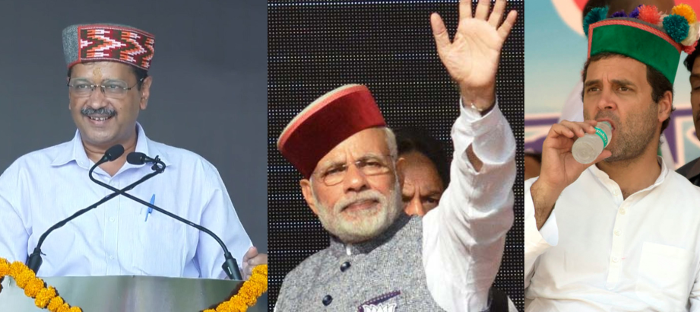
A few months ago, it looked like we may witness a three-cornered fight for the Himachal Pradesh assembly for the first time as Aam Aadmi Party tried to gain a foothold in the state. Immediately after winning neighbouring Punjab comprehensively, AAP supremo and Delhi CM Arvind Kejriwal and Punjab CM Bhagwant Mann headed to Himachal to conduct a road show in CM Thakur’s home turf, Mandi.
Himachal Pradesh | AAP national convenor & Delhi CM Arvind Kejriwal along with Punjab CM Bhagwant Mann hold a roadshow in Mandi
First, we eradicated corruption in Delhi & then in Punjab, now it's time to uproot corruption from Himachal Pradesh: Arvind Kejriwal pic.twitter.com/UprzNyOeoo
With the overwhelming success in Punjab, AAP thought that they can easily move to the neighbouring state going to polls next, however, the different nature of Himachal Pradesh politics seems to have stumped them and they quickly cut short their campaign. Even though AAP is fielding candidates in almost all the constituencies, but even their ardent supporters aren’t expecting much on 8th December when the votes are counted.
While Delhi CM Arvind Kejriwal is literally camping in Gujarat for the past few months for the assembly elections there, Himachal has been pretty much abandoned by the party. Even Punjab CM Bhagwant Mann has spent more time in Gujarat than he ever did in Himachal. In fact, Punjab government has been footing the bill for AAP’s ad expenses in Gujarat as well as per reports.
This could be because the party got no traction in Himachal Pradesh while it got some positive responses in Gujarat. Even though the party says they haven’t abandoned Himachal and their candidates are focusing on door-to-door campaigning, the absence of big faces and any large-scale campaign suggests they have just given up on the state.
The party seems to have invested all its resources in Gujarat where BJP has been ruling for the last 26 years. Even though nobody expects AAP to come close to defeating BJP, but with Congress abandoning ground, they are aiming to become the main opposition party. However, they haven’t made any such attempt in Himachal where they seem to have abandoned the ground to make sure anti-BJP votes aren’t split between them and Congress.
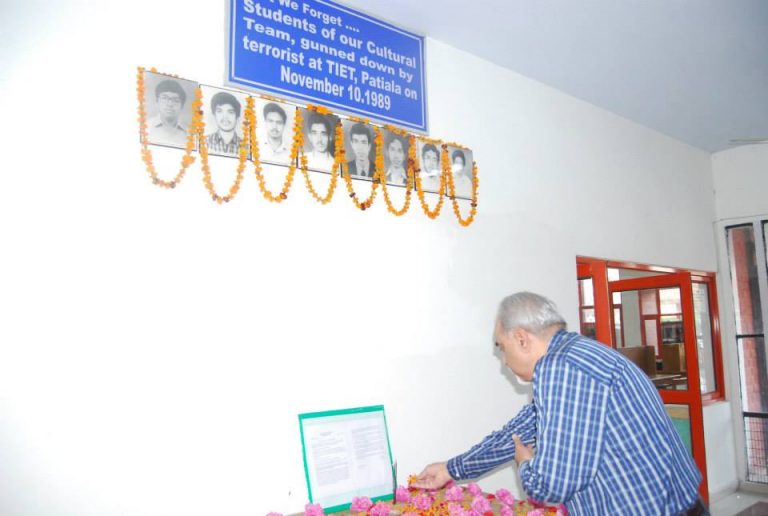
33 years ago, during the height of terrorism in Punjab, 19 students were killed by Khalistanis in an engineering college. On November 10, 1989, Khalistani Sikh terrorists attacked one of the most renowned engineering colleges in the country, located in Punjab, and killed 19 students who were sleeping inside a hostel. Everyone on the Thapar Engineering College campus in Patiala, which is 40 miles southwest of Chandigarh, the capital of Punjab, was devastated by the tragedy.
The institution was crowded with several hundred students who had come from all across India to attend a four-day youth festival that started a few days later. The assailants arrived at the campus in a car, managed to pry open the main gate chain, and then made their way to Hostel A, where they held a night watchman at gunpoint until he unlocked the entrance.
The assailants then stealthily entered two rooms that had 24 students and started firing with the Chinese-made AK-47 assault rifles they were carrying. NIT Kurukshetra students were staying in one room, and students from Chandra Shekhar Azad Agriculture University in Kanpur were lodged in the adjacent room. Nineteen students died on the spot, and five others were injured and taken to a hospital in Patiala in critical condition.
The majority of the 19 people killed were Hindus. Eight were from the adjacent state of Haryana’s NIT Kurukshetra University, and the rest 11 were from Chandra Shekhar Azad Agriculture University, Kanpur, Uttar Pradesh.
The NIT Kurukshetra students killed in the horrific attack were Anil Pandurangi from Goa, Ajay Chaudhury from Uttar Pradesh, Mrinal Bhuyan from Meghalaya, Shailender Chadha from Haryana, R Viswanathan from Tamil Nadu, Anish Choudhury from West Bengal, Ashok Ahlawa from Haryana and Rajan Thakral from Punjab.
The incident happened at 2:30 a.m. on November 11, only hours before Prime Minister Rajiv Gandhi arrived in Chandigarh for a short visit. Surprisingly, Gandhi made no public remark about the incident, which killed 19 innocent students.
From the mid-1980s to the mid-1990s, the insurgency in Punjab led by Khalistani terrorists resulted in the killings of many innocent Hindus who were targeted merely for being Hindus.
Moga Massacre 1989
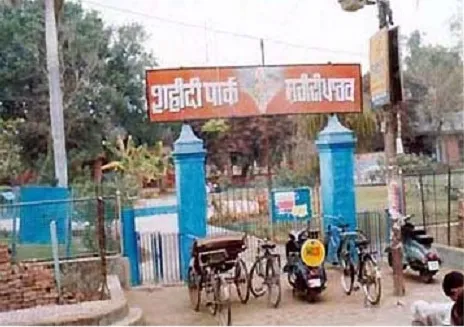
During the terror regime at that time, Khalistani terrorists opened fire on RSS workers taking part in the daily shakha in Jawahar Lal Nehru Park in Punjab’s Moga district in June 1989, killing 25 Swayamsevaks and injuring 35 RSS members. A large bomb, possibly set by Khalistani terrorists, detonated in the park a short time later, killing a couple and two police officers.
The park.
One eyewitness recalled the Khalistani terrorists asking the Swayamsevaks to take down the Sanghi flag they had flown in the Park during the daily Shakha that was being held at the time. The Swayamsevaks would not give in to their demands. Enraged, Khalistani separatists began shooting indiscriminately at RSS Swayamsevaks, resulting in the death of 25.
The infamous “Abohar Goli Kaand” of 1990
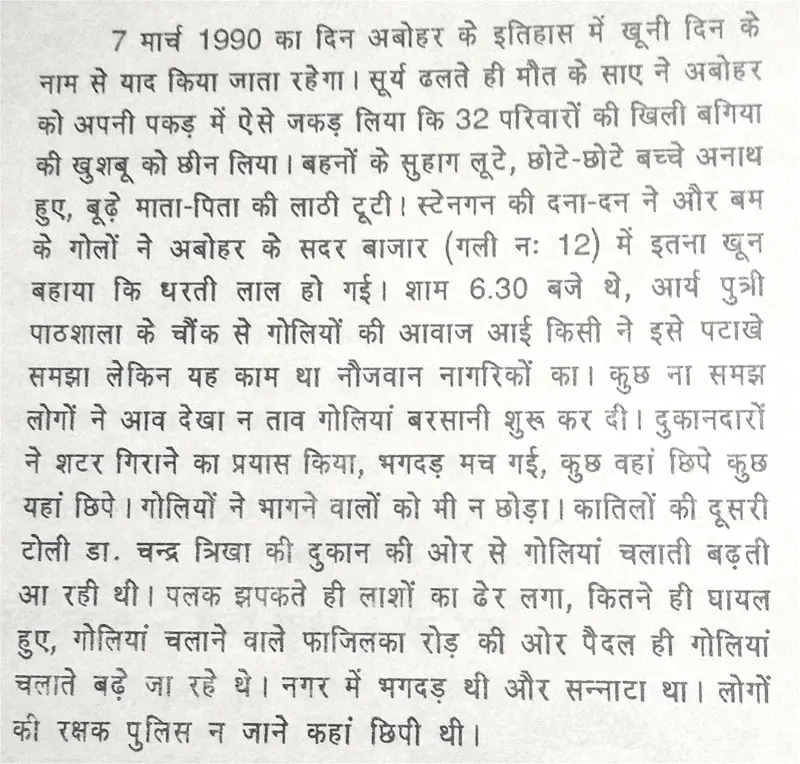
Previously, OpIndia reported on Khalistan Commando Force (KCF) terrorists wreaking havoc in Abohar, Punjab. Abohar is a small town in the district of Fazilka, close to the India-Pakistan border. With the purpose of killing everyone, the Khalistani terrorists stormed the town’s trade centre, firing uncounted rounds from their semiautomatic rifles on March 7 1990.
Excerpt about the incident from ‘Itihas Ke Jharokhe Se Abohar’ by Late Mathura Das Hiteshi
People attempted to flee the market, but the packed route made this impossible. Shopkeepers began locking their doors as promptly as possible, while customers sheltered inside. Those selling items from carts fled to save lives, but many were mortally wounded. According to official records, around 45 people died in the shooting and two bomb blasts, which occurred an hour later at the same spot where rescue operations were in full swing.
It is notable that the concept of Khalistan, a separate religious homeland for Sikhs, which led to all this violence against non-Sikh religious factions, did not emerge spontaneously. It was the inevitable outcome of a number of changes that had transpired within Sikh society.
Eli Lilly pharmaceutical company clarified on Thursday that it is not offering free insulin, after a fake Twitter account impersonating the brand that was verified via Twitter Blue, a new subscription service introduced by Elon Musk, said it was, a sign that the new feature is exacerbating confusion and misinformation to spread on the platform.
Notably, a verified Twitter account posing as Eli Lilly tweeted Thursday afternoon, “We are excited to announce that insulin is now free.” The account, @EliLillyandCo, featured the Eli Lilly logo and a verified badge.
Screengrab of the tweet by Eli Lilly and Company’s imposter account (now suspended).
As soon as the tweet went viral, the stocks of Eli Lilly plummeted. As per a report by Entrepreneur, Eli Lilly was down slightly more than 4% in a 24-hour period by Friday afternoon, and 20 points in early trading.
On Friday, Eli Lilly and Company, the official one, in a tweet apologised for the inconvenience caused due to the ‘prank’.
“We apologize to those who have been served a misleading message from a fake Lilly account. Our official Twitter account is @/LillyPad,” Lilly and Company tweeted.
We apologize to those who have been served a misleading message from a fake Lilly account. Our official Twitter account is @LillyPad.
Another ‘verified’ imposter account “LillyPadCo,” apologized for the previous impersonator, and claimed that it was the official account.
The second prankster added: “Humalog is now available for $400. We can do this whenever we want and there’s nothing you can do about it. Suck it .”
Apart from Eli Lilly, shares of prominent defence manufacturer Lockheed Martin dropped sharply after, a fake account with a verified checkmark accessed through Twitter Blue said that the company will to halting weapon sales in some countries.
The verified brand situation is getting out of control. Quick thread of twitter blue brands, and brands who might be pissed off at Elon right about now. pic.twitter.com/bZ9PSqZKtf
— Read Jackson Rising by @CooperationJXN (@JoshuaPHilll) November 11, 2022
Pranksters using Twitter Blue also targeted gaming companies Nintendo and Valve, as well as prominent athletes such as NBA star LeBron James (pretending to request a trade).
Notably, following the wave of impostor accounts, Twitter Blue was inaccessible on Friday.
Although these fake accounts have been suspended, the chaos continues. Recently, two executives, Yoel Roth and Robin Wheeler have reportedly resigned adding to the ongoing mess. Yoel Roth was Twitter’s head of moderation and safety.
Other than the resignation of top Twitter officials, Elon Musk has laid off 50% of Twitter’s workforce last week. Musk has also warned twitter employees that the company might go bankrupt if the cash burn is not stopped.
About the newly rolled out Twitter Blue
On November 5, Twitter began offering Twitter Blue for $8 per month. Initially, the feature is only available to iOS users in the United States, Canada, Australia, New Zealand, and the United Kingdom. Twitter Blue is available for $7.99 per month. It comes with a verification badge or a blue checkmark on the profile, limited advertisements and much more.
On Friday, the Uttar Pradesh Police filed an FIR against five persons of a Muslim family and an Islamic cleric identified as Guddu Haji for brutal gang rape of a woman several times after she was given triple talaq. The incident is said to have happened in Shahjahanpur area of Uttar Pradesh. The other persons booked in the case have been identified as Salman, Islam and three of their other family members.
According to reports, the victim woman married Salman five years ago. However, he divorced her under the triple talaq system a few months ago and later desired to have her again in his life. Then, Islamic cleric Guddu Haji suggested that the woman could be accepted as a wife only if she married and was divorced again by someone else. This process in Islam is called Nikah Halala.
The woman in the complaint said that based on the suggestion of Islamic cleric Guddu Haji, Salman made her marry his younger brother named Islam who later refused to divorce her. The duo then raped her. The Police confirmed the incident and said that even after the victim did as she was asked, the younger brother refused to divorce her and both brothers took to raping her.
Additional Superintendent of Police Sanjay Kumar also added that as per the woman she was gang-raped by both Salman and Islam on several occasions. “Based on the complaint we have booked Guddu Haji, Salman, Islam and three of their family members under sections of Gangrape (376 IPC), unnatural sex (377D IPC) along with sections of Muslim Women (Protection of Rights on Marriage) Act, 2019”, he added.
Notably, the complaint was filed by the Police after the woman went to the local court and the court issued orders directing the police to file an FIR in the case. The lady was also admitted to the hospital for a medical examination before being presented before a magistrate to give her a statement.
The Supreme Court eliminated triple talaq in 2017, which allowed a Muslim man to divorce his wife in minutes by uttering talaq three times. Prior to the Supreme Court decision, India was one of just a few countries that allowed triple talaq. The Indian government, led by Prime Minister Narendra Modi, supported the push by Muslim women and activists to criminalize the practice.
All the six accused in the case are absconding and the Police are taking efforts to nab them all. Further investigation in the case is underway.
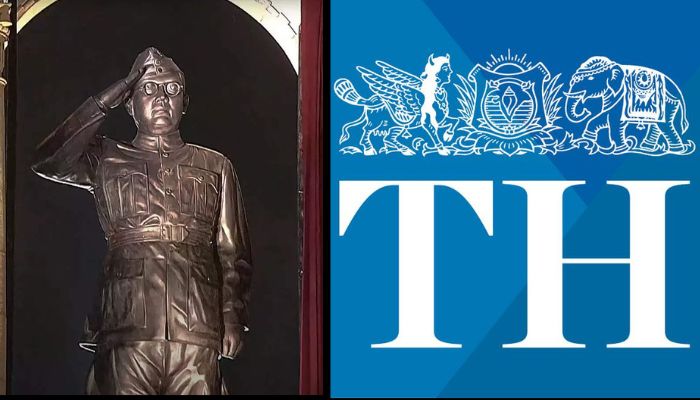
On Friday (November 11), renowned sculptor Arun Yogiraj accused ‘The Hindu’ newspaper of peddling fake news and crediting another artist for sculpting the 28-feet-tall granite statue of Netaji Subhas Chandra Bose.
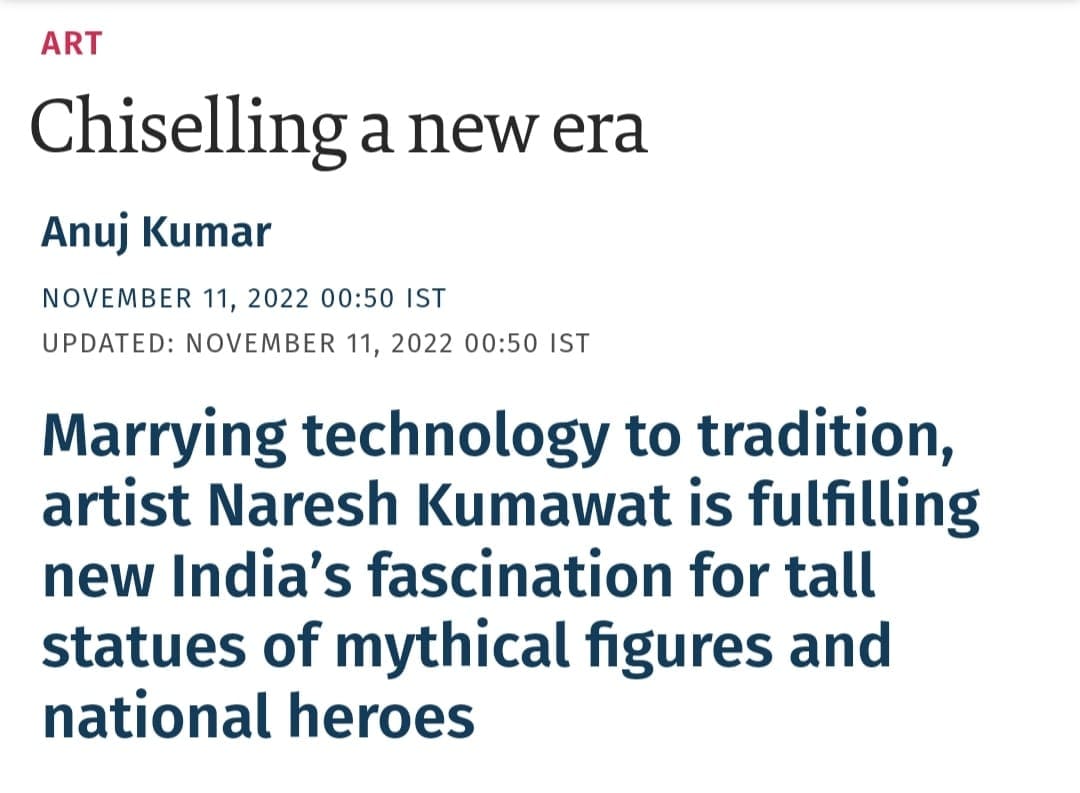
The controversy began after the senior assistant Editor of the English-daily, Anuj Kumar, published an article titled, ‘Chiselling a new era’ on Friday. Kumar credited sculptor Naresh Kumawat for modelling the Netaji statue.
“…Naresh Kumawat, the third-generation sculptor who is basking in the glory of his latest work of art – the stone statue of Subhas Chandra Bose at the newly christened Kartavya Path in Delhi. Kumawat modelled the 28-feet statue and his team of craftsmen carved the black granite structure in quick time,” the article alleged.
Screengrab of the news report by The Hindu
“Tell us about the Subhas Chandra Bose statue on Kartavya Path,” The Hindu inquired. Naresh Kumawat claimed that he was tasked with the job by the National Gallery of Modern Arts (NGMA) and that he initially designed three models of Netaji.
He added that the model, with the salute pose, was chosen and the statue was carved by 50 ‘competent craftspersons.’ “…Stone is also more difficult than bronze when it comes to carving the right facial expressions. But in the case of the Bose statue, the NGMA wanted it to be made in stone so that it looks unique,” he was quoted as saying.
Sculptor Arun Yogiraj hits out at ‘The Hindu’ newspaper, cites evidence for his claims
Sculptor Arun Yogiraj took offence at the fact that The Hindu credited artist Naresh Kumawat for modelling the 28-feet-tall statue of Netaji Subhas Chandra Bose and insinuating that other craftsmen carved the statue based on Kumawat’s model.
In a tweet, he remarked, “What a false news by The Hindu … Bose granite statue for India gate was sculpted by me and one should not claim someone’s effort and achievements as his own.”
Yogiraj emphasised, “I never referred any model of Naresh kumawat its so painful and disgusting to see this article.” The archived version of the tweet can be accessed here.
What a false news by The Hindu … Bose granite statue for India gate was sculpted by me and one should not claim someone’s effort and achievements as his own..I never referred any model of Naresh kumawat its so painful and disgusting to see this article ..… @the_hindu pic.twitter.com/7PTVpHVxvm
He also shared the work order copy, recieved on June 13 this year from the NGMA. “Not mentioned about copying of model by Artist Naresh kumawat …If I would have told to copy some ones model I would have not taken this work…I’m an artist not a labour carver…,” Arun Yogiraj pointed out.
My work order copy…. Not mentioned about copying of model by Artist Naresh kumawat …If I would have told to copy some ones model I would have not taken this work…. I’m an artist not a labour carver …. pic.twitter.com/U1ICiw1ssj
In another tweet, the sculptor pointed out how Union Minister Prahllad Joshi had applauded him for his work on the Netaji’s statue.
Sri Prahallad joshi ji, Union minister for parliamentary affairs, coal and mines, government of India has appreciated me …@the_hinduhttps://t.co/C5gwLslUbY
A tweet posted by the Ministry of Culture on September 13 also appreciated Arun Yogiraj for his “breathtaking” work over a span of 75 days.
“The hard work behind the historic Netaji Subhas Chandra Bose’s statue at the India Gate! Sculptor Arun Yogiraj’s video on the process of making the #Netaji statue over 75 days, sculpting a 280-ton monolithic granite statue is breathtaking,” it said.
The hard work behind the historic Netaji Subhas Chandra Bose’s statue at the India Gate!
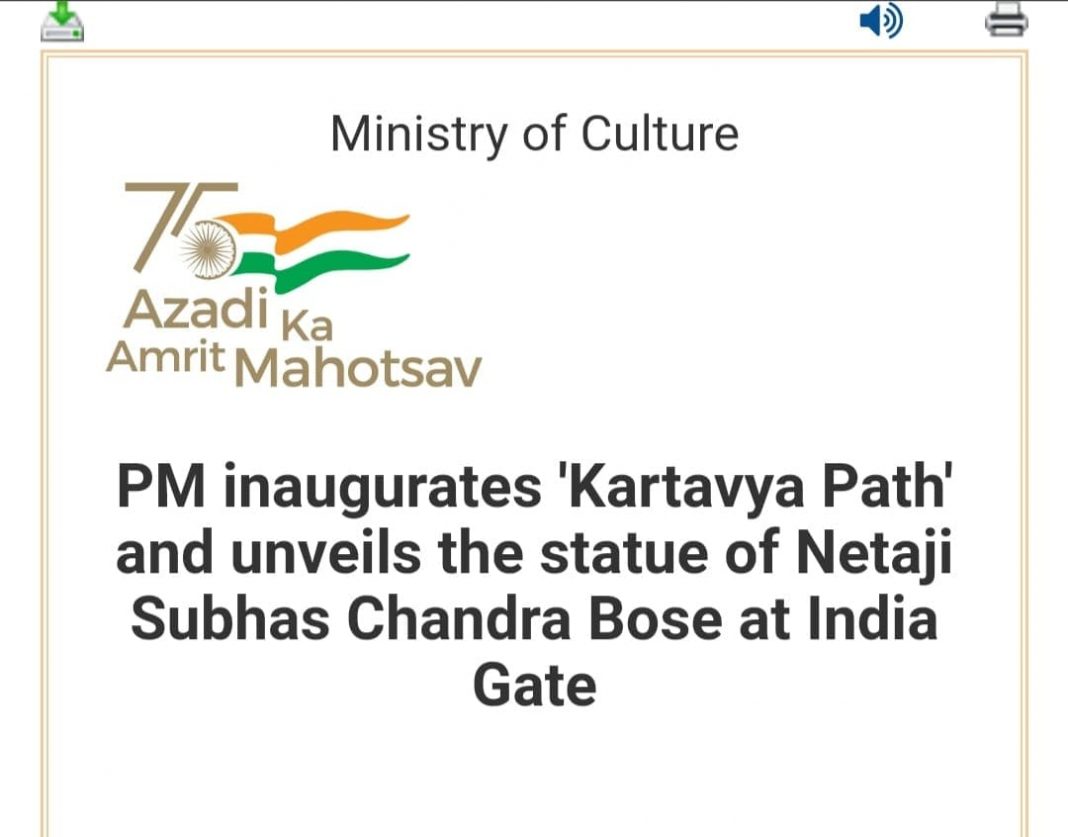
On September 8, 2022, Press Information Bureau (PIB) also released a statement mentioning the role of Arun Yogiraj in sculpting the granite statue of Netaji, currently placed under a canopy in Kartavya Path.
“The statue is completely hand sculpted using traditional techniques and modern tools. The team of sculptors for executing the statue was led by Shri. Arun Yogiraj,” it read.
Screengrab of the Press Information Bureau report
Contrary claims made in support of The Hindu article
One Twitter user, Pradeep Suthar (@marwadi_baba), posted a copy of a work order given to M/S Matu Ram Art Centres by the National Gallery of Modern Artby. The work order, dated May 26 this year, precedes the copy of the work order, earlier posted by Arun Yogiraj, by over 2 weeks.
In a tweet on Friday (November 11), Pradeep Suthar claimed, “Work order from Government of India to Naresh’s company is also available so both have worked on it. Naresh’s team designed, researched on it and later on Arun picked it up from there. That’s what the evidences suggests.”
Work order from Government of India to Naresh’s company is also available so both have worked on it. Naresh’s team designed, researched on it and later on Arun picked it up from there. That’s what the evidences suggests. pic.twitter.com/Yd2k5w3ekK
The archived copy of the tweet can be accessed here. According to business research platform, Zabua Corp, Naresh Kumawat is the director of Matu Ram Art Centres.
At the time of writing, The Hindu did not provide any clarification on the matter, despite multiple social media users pointing out the obvious discrepancies.
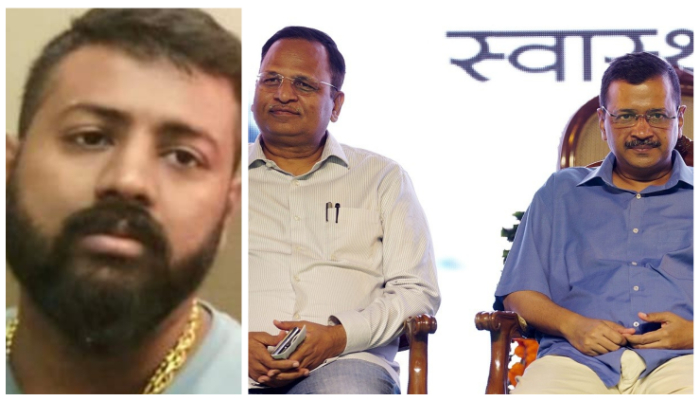
In his letter addressed to the media, Sukesh Chandrashekhar, who was arrested by Delhi Police in the 200 crore extortion case, has launched a fresh attack on Delhi CM Arvind Kejriwal and arrested AAP leader Satyender Jain. Chandrashekhar has claimed that his accusations against Aam Aadmi Party are true and he has also consented to take a polygraph test.
“I welcome the suggestion of a polygraph test in light of all of my complaints and facts about AAP, Satyendra Jain, and Arvind Kejriwal… I am extremely happy to give my consent for the polygraph test,” in a handwritten letter, the conman stated.
“But only if Satyendra Jain and Arvind Kejriwal agree, and the polygraph test is conducted as a face-to-face confrontation in the presence of all three, and the entire process is televised live, as suggested. So that the whole country can witness the pandora box of the reality of Kejriwal and Jain unfold in the open,” he added.
Chandrashekhar further suggests Arvind Kejriwal and Satyender Jain not to cry foul and divert the issue by blaming the BJP.
In another letter Sukesh has now dared Kejriwal & Co. To take a Live Lie Detector test- has also exposed how expensive watches worth crores were gifted & how international PR was arranged in International media by spending huge sums to hype up the “Education Model” 1/n pic.twitter.com/lGhS3Vq3kR
“Instead of crying foul and claiming that the BJP forced me to write all of this, Kejriwal ji should have the courage and guts to agree to the polygraph test. Don’t divert the issue, as you and Jain used to tell me, and laugh about how the attack is the best form of defence.”
Chandrashekhar also claimed to have bought luxury watches for Kejriwal and Jain.
“Talking about the time, Kejriwal ji, I’m sure you still have the Jacob and Co. Astronomia watch that I gave you and then asked you to change the strap from blue to black. Because of your urgency, I chartered a flight to Dubai specifically to change the strap, which was carried by my staff and returned to you in Delhi.”
Making another shocking accusation against the Delhi CM, Sukesh Chandrashekhar alleged that Kejriwal used his money and PR agent to publish paid news to promote the ‘Delhi school/education model on the front page of an American newspaper.
So, Kejriwal ji, I’d like to ask you why you recently used my money and my PR agent to publish paid news in your favour about your Delhi School model. On the front page of a major American newspaper around the world? So, is it okay for you and your party to accept this from a so-called “thug”? So, what exactly does this make you? Even after my recent arrest in the $200 million case, you continued to use my money and PR, which I had previously paid for,” he wrote in his letter.
In his letter, although Chandrashekhar did not mention the name of the newspaper, however, on August 19, 2022, Delhi CM Kejriwal tweeted an image of the front page of the New York Times, which featured Delhi’s education minister and an accused in excise policy scam, Manish Sisodia and lauded his education model.
“Delhi has made India proud. Delhi model is on the front page of the biggest newspaper in the US. Manish Sisodia is the best education minister of independent India,” Kejriwal tweeted.
Delhi has made India proud. Delhi model is on the front page of the biggest newspaper of US. Manish Sisodia is the best education minister of independent India. pic.twitter.com/6erXmLB2be
Earlier, Chandrashekhar had confessed to providing Rs 10 crore as “protection money” to incarcerated Aam Aadmi Party minister Satyendar Jain. Chandrashekhar stated in a letter to Delhi Lieutenant Governor V K Saxena that he has known the AAP leader since 2015.
For the uninitiated, Sukesh Chandrashekhar is being investigated by the Delhi Police in connection with an alleged Rs 215 crore criminal conspiracy, embezzlement, and extortion case. The Economic Offences Wing (EOW) of the Delhi Police had previously filed an FIR against Chandrasekhar for allegedly defrauding the spouses of erstwhile Ranbaxy promoters Shivinder Singh and Malvinder Singh of Rs 215 crore.
There are over 20 other cases of extortion registered against the conman who operated a racket from inside his jail cell.
Notably, Bollywood actor Jacqueline Fernandez was also charged as an accused in the extortion case involving conman Sukesh Chandrasekhar by the Enforcement Directorate. According to the central agency, Jacqueline was aware that Sukesh was an embezzler.
The reality of conversions in Punjab is widely known, but it has received little attention. The state is witnessing the most intense wave of proselytization since Indian independence. This wave has been a result of mass gatherings by widely celebrated Pastors, who claim to do miracles to cure diseases and put things in place.
According to the latest issue of India Today magazine, the stars of this new upsurge are a handful of prominent pastors. About a dozen of them, including doctors, engineers, lawyers, police, government officials, business owners, and landlords, have either quit their employment or preach on Sundays. Here in this report, we will delve into the findings made by India Today, elaborating on the menace of charismatic pastors in the state.
Dramatic proselytization throughout the state
There are pastors with enormous congregations, many centres throughout Punjab, a vast YouTube following and most significantly, they claim the power of miracles and wonderful acts of faith healing. Their claims vary depending on how dramatic they want to be, including vanquishing ghosts, healing everything from cancer to joint pain to infertility, and helping people with everything from deaddiction to jobs, matrimonial matches, and visas for other countries.
On the other end of the spectrum are the village pastors. Sunday sermons are regularly given by assistant sub-inspectors, modest cloth merchants, part-time tailors, and agricultural workers from a nook in their own homes. They cater to followers in more conventional ways, openly embracing Punjab’s cultural signifiers—turban, Langar, Tappa, and Gidda—in their sermons.
Their Satsangs mimic communal prayer services from any of the three major religions practised in Punjab: Sikh, Hindu, and Sufi Islam. The majority of their followers come from the Dalit/tribal groups that are most oppressed, including the Mazhabi Sikh-Balmiki, Sansi, Rai Sikh, Bawaria, Bazigar, Barad, Bangala, Gadhile, and Nat, who are not allowed to participate in Punjab’s religious institutions that are “elite-controlled” or its arc of prosperity.
Here is a list of pastors enjoying massive support in the state which struggles with drug addiction in the youth and deteriorating law & order since the previous dispensation led by Congress was in power.
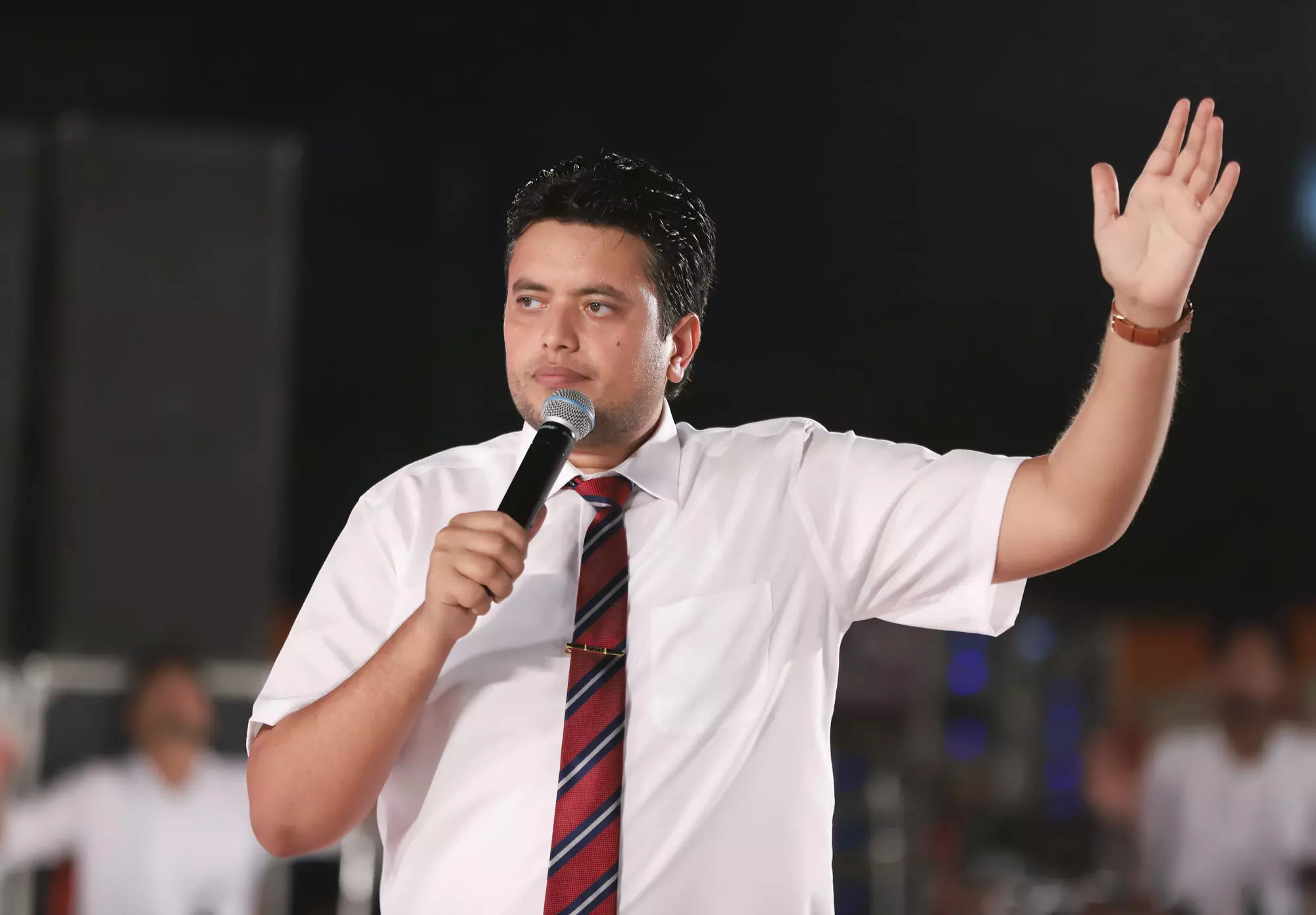
Ankur Yoseph Narula, Jalandhar
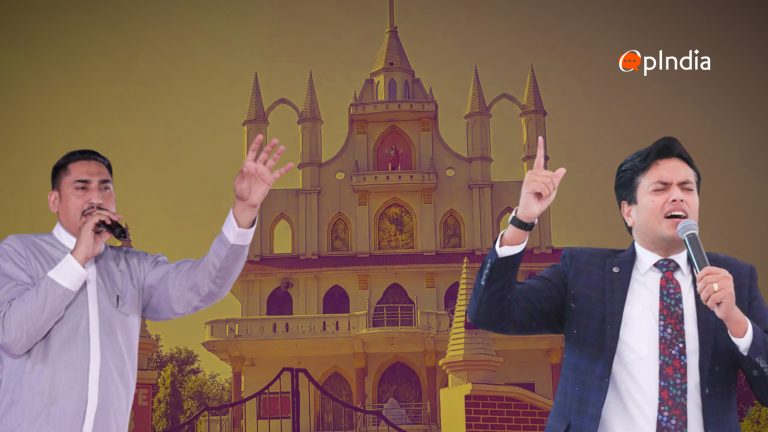
Narula, who was raised in Jalandhar by a Hindu Khatri business family, was profoundly influenced by the sermons of South African preachers. Later, he claims, Jesus invited him to become a Christian in a dream appearance. In 2008, he established his ministry and had just three adherents. With over 100,000 Sunday attendees and a 300,000 global membership, it is now the largest church in Punjab.
On YouTube, he has 1.23 million subscribers. Narula, who calls himself a faith healer, asserts that he has the power to cure any illness, including cancer, arthritis, and even the dead. Although he likes the word “Apostle,” his fans refer to him as “Papa”.
Anilesh S. Mahajan and Sunil Menon, who contributed to the piece in the Indian Today Magazine, assert that visiting the Ankur Narula Ministry on a Sunday is similar to visiting Delhi’s Akshardham complex, albeit it is larger because of its 65 acres of land. The ministry operates out of a facility that is still under construction. They assert that when completed, it will be Asia’s largest church.
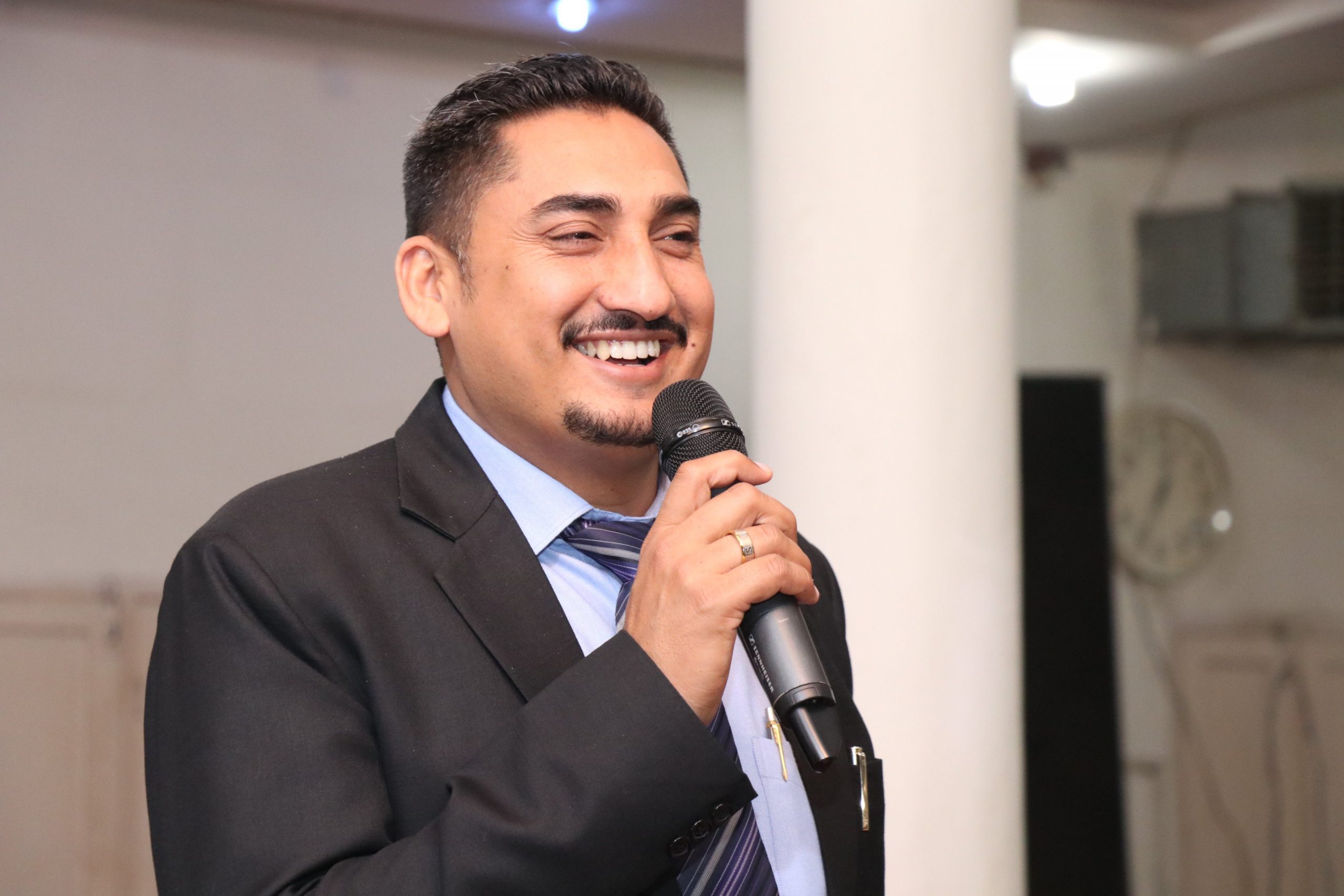
Gurnam Singh, Ajnala
Gurnam Singh, aged 53, is a Punjab Police Assistant Sub Inspector who converted to Christianity in 1998 after breaking up with his family. “As my wife was unable to bear a child, my family wanted me to dump her and remarry,” he claims. “It was unacceptable to me. I moved to Amritsar. There, I got in touch with some pastors. With their prayers, I have three children now,” he stated.
Singh, a Mazhabi Sikh, wears a turban to work and preaches the Bible when he gets home. He’s turned his backyard into a church, and his Sunday sermon draws around 50 people. “I don’t convert people,” he says emphatically. “I only preach the Bible,” he concludes.
Harpreet Deol, Kapurthala
Harpreet Deol (42), like most young people from Punjab’s Doaba district, was eager to migrate to and establish himself in Canada when he was in his twenties. But fate had other intentions, and his visa was denied. Deol’s father, Harbhajan Singh, was already a well-known preacher who had converted in 1988 under the persuasion of an Australian pastor—against the trend given his background as a member of the prominent Jat Sikh society.
Harpreet Deol.
Deol inherited his father’s Open Door Church, one of Punjab’s oldest Pentecostal congregations. “My father was, but I was never devoutly religious. My experiences with his colleagues, their respect for him and, above all, my own experience with Christian leaders transformed me,” Deol says.
On a one-acre parcel of land near his ministry, he has been preaching since 2012 and is currently erecting a church. He claims to have successfully healed cancer patients with the power of prayer during his well-attended healing sessions and Sunday sermons. Through PCPC (the Pentecostal Church Prabandhak Committee), which he founded and is now in charge of, Deol is now aggressively organising Pentecostal pastors.
Gurnam Singh Khera, Gurdaspur
Gurnam Singh Khera was well-known in the Gurdaspur region for two reasons, first, he was a renowned physician, and second, he was the younger brother of Jaswant Singh Khera, a fighter in the Khalistan Commando Force and a close confidant of the militant Wassan Singh Zaffarwal. Jaswant converted to Christianity in 2006 after learning from a local pastor about the various ways he may ‘achieve’ God. Gurnam and his family embraced the same a year later.
Gurnam begins, “I have seen miracles, some have happened through me.” But he still sports the turban while presiding over sermons. “Recently, a few Sikh organisations complained to the cops. I categorically told them that I was open to removing my turban if it was against the Constitution or was illegal, not because some Sikh organisation has objections,” he added.
When they refused to let his father be cremated at the Sikh crematorium three years ago, Gurnam had another run-in with the neighbourhood. He was forced to transport his father’s remains to a Christian cemetery when authorities and local officials interfered.
Manohar Singh, Amritsar
Manohar Singh, 56, runs the Manohar Singh Ministries in Naraingarh, Amritsar. People often question his appearance. When a stranger learns that Manohar Singh is a practising Christian, the first thing they ask is about his looks. Manohar, a former cloth trader, still wears his Sikh turban and has a thick beard.
He remarked, “When asked, I tell them that it’s part of my culture and upbringing. Even Christian prophets used to wear the turbans of their respective cultures.”
Manohar, a native of the Lubanas merchant community, became a Christian following the passing of his adolescent daughter. He was already under stress due to his son’s accident, which had occurred. He claims that “Some pastors came to my rescue and gave me mental peace.” “I started reading the Bible thereafter. Now, even though I have a smaller house, lesser resources and am perhaps a man of very few means, I am at peace,” he added.
Sweeping conversions through Pentecostalism
Naturally, the possibility of sweeping conversions has angered everyone. According to the report, among Punjab’s 23 districts, the Majha and Doaba belts, as well as the border regions of Ferozepur and Fazilka in Malwa have the highest number of neo-Christian ministries. Although there are no precise figures, one estimate tallies the number of pastors at an astonishing 65,000. This recent upsurge has even large organisations, like the Catholic hierarchy, confused since Pentecostalism is wooing their adherents away.
For the unserved, Pentecostalism is a branch of Christianity that places a strong focus on the activity of the Holy Spirit and the believer’s personal encounters with God. Pentecostals hold that true faith cannot be attained only by ceremony or thought, but must instead be profoundly experienced. Pentecostalism is lively and spirited.
The caste factor
Dalits make up 31.9 per cent of the population of modern-day Punjab, the greatest proportion of any Indian state. Being the most stigmatised of the castes, they account for the majority of conversions over the first half-century.
The waves of Conversion
Christianity is not rare in Punjab. Indeed, its unintentional entry in the mid-nineteenth century constituted a seminal event in its religious and social history. The Christian population of undivided Punjab increased from a few thousand in 1870 to half a million in 1930 before the wave subsided. The majority of them were dumped on the other side of the Radcliffe Line after partition. After that, the old churches became lovely variants on city vistas, settling into the customary humanitarian work—schools, universities, and hospitals.
Things began to alter in the 2000s when Tamil preacher Paul Dhinakaran arrived with his Pentecostal toolset crafted in the excessively dramatic American TV evangelical style. The Pentecostal spiritual buffet was spread by the Narula, who was mentioned previously, and others in his wake. This included trance-like glossolalia, also known as “speaking in tongues,” prayer as a direct bodily union with God attained through music and dance, ecstatic delusions, and amazing acts of faith healing, and thus, Punjab became the target of the dissemination of the sweet Jesus wave. Fears of a demographic transition have driven the monster that has become Christian conversions in recent years.
We have always been taught in school that Babur, Humayun, Akbar, Jahangir, Shah Jahan, and Aurangzeb were the ‘greatest’ emperors of the Mughal dynasty. Our history books were replete with anecdotes of their bravery and valour. In fact, in some publications, chapter after chapter was devoted to extolling these Mughal emperors. On the contrary, we found very few textbooks that spoke about India’s rich dynasty and cultural heritage that was mercilessly decimated by these Islamic tyrants.
We had to, in fact, buy additional non-syllabus books to study this because all of this information was conveniently removed from school textbooks after India gained independence and Maulana Abul Kalam Azad was chosen as the first Education Minister.
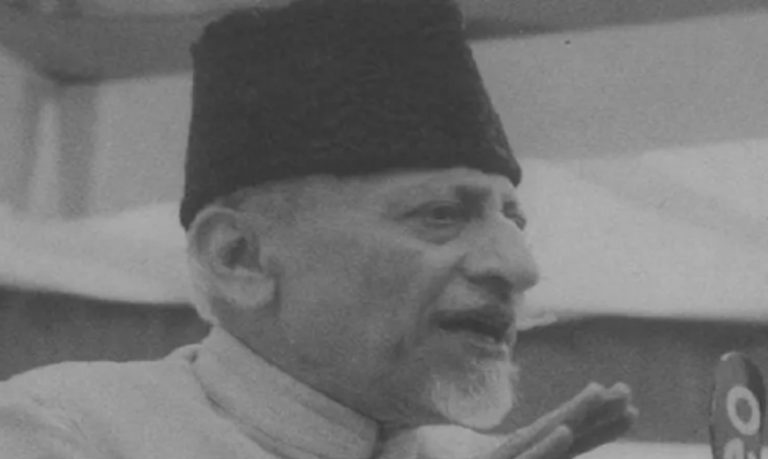
Abul Kalam Azad exalted Mughals and attempted to whitewash their sins while obfuscating Hindu history
From 1947 till his death in 1958, Maulana Abul Kalam Azad was India’s Education Minister. Today (November 11), the entire nation observes National Education Day in his honour and discusses how he was instrumental in the development of independent India’s education system, but no one seems to discuss how he began the process of negationism of history to cover up misdeeds of Islamic tyrants.
He served as Education Minister for over 11 years. During that period, he recruited individuals who were either members of the same community or adhered to the Leftist ideology. Humayun Kabir, MC Chagla, and Fakhruddin Ali Ahmed were among them. All of them combined to present the Mughals as “messiahs of the oppressed Hindu masses” and in the worst case as ‘benevolent dictators.’
A report by Freedomfirst.in published in 2014 read, “As Union Education Minister for eight years, Azad saw to it that the history of India presented in the textbooks was negationist; that is, cover up deeds perpetrated by the Muslim invaders and settlers and converts – loot, slaughter, destruction of temples, Jazia tax, forced conversions, forcing widows of dead soldiers into harems, sale of captured children in the slave bazaars of Baghdad, burning of libraries and appropriation of defeated peoples’ properties to constitute Wakfs for the welfare of Muslims etc.”
Source: Freedom First
Azad’s ideas demonstrated unequivocally that his allegiances were always with Islam and the true ramifications of his ideology—agreed to and supported by Nehru—reflected in our history textbooks where crimes of Islamic invaders were downplayed while Hinduism vilified
How Hindus were maligned
On Freedomfirst.in, you can read about the modifications made by Maulana Abul Kalam in the Indian education system that exonerated the Mughal emperors. As Minister of Education, Azad distorted Indian history by whitewashing deadly Islamic conquests, the research found.
In fact, in the year 2020, M Nageswara Rao, a senior IPS officer, asserted that “negation and whitewashing of deadly Islamic invasions or rule” occurred under education ministers such as Maulana Abul Kalam Azad, who was “in charge of Indian mind space” for 20 of the 30 years following Independence.
In a series of tweets, Nageswara Rao highlighted the fact that there is an organised attempt underway to relegate the Hindu Civilisation to the dustbins of history. According to him, there is a deliberate attempt to deny Hindus knowledge of their history and vilify Hinduism as a collection of superstitions.
Nageswara Rao also said that the education system has been Abrahamised and so have the media and entertainment industry. He said an attempt has been made to shame Hindus about their identity and consequently, if the glue of Hinduism ceases to exist, then Hindu society withers away.
Furthermore, the IPS officer attached four photos to his tweet which highlighted the phases in which subversive elements attempted to undermine Hindu society. In the first phase, the attached picture said that the Ministry of Education was under the hands of people such as Maulana Abul Kalam Azad, Humayun Kabir and Nurul Hassan and leftists.
During this phase, there was the distortion of history at an industrial scale and an attempt to whitewash the crimes of the genocidal Muslim invaders. Leftist and pro-minority academicians and scholars were patronised by the government while their Hindu Nationalist counterparts were deliberately sidelined.
Today, Maulana Abul Kalam Azad is depicted by the so-called leftist ecology as a secular figure symbolising the Ganga-Jamuna tehzeeb (a phrase used to depict Hindu-Muslim togetherness) and a staunch nationalist. Despite this effort, the question of why Hindus were denied the opportunity to learn about their own history pricks everyone like a needle. But, more importantly than the alterations he made hereafter becoming Education Minister, the question is, on what basis would he have been elected as India’s Education Minister?
Azad’s father wanted him to become a ‘Pir’ (Muslim saint)
If his biography is studied, it is apparent that Maulana Abul Kalam’s ancestry did not fit in as secular India’s education minister. He was born into the family of an Islamic Ulema who travelled to Bharat from Herat in Afghanistan during Mughal emperor Babur’s regime.
Maulana Khairuddin, his father, had gone to Mecca in Saudi Arabia in 1857 and returned to Kolkata, Bharat in 1898 after spending several years in the company of Islamic scholars from Mecca and Medina. He not only learned the teachings of Islam there but he was also picked to preach Islam and deliver sermons in what is considered the world’s holiest Muslim seminary.
Azad was born in Mecca on November 11, 1888, and spent his childhood in Mecca and Medina. His mother taught him Arabic, and his father taught him Urdu.
According to his own admission, he was home-schooled, and while he was taught a variety of courses, the emphasis was on Islamic studies, which he learned from his father three times a day.
Maulana Khairuddin did not value English education and wished for his sons to succeed him as Pirs (Muslim saints). Azad and his brother’s schooling was mostly controlled by their father, who was adamant that his sons carry on the family legacy of commitment to, learning of, and propagation of Islam.
His father sent him to the world-renowned Islamic university of Al-Azhar in Cairo for two years in 1905.
Because of his dislike for the modern and preference for the medieval, Khairuddin home-schooled his children, teaching them the Koran, Hadith, and Sharia. After finishing their Koran studies in Mecca, the boys were sent to haram sharif for Qerat (reading and singing the Koran) courses after moving to Kolkata (formerly Calcutta).
Although the children were taught Persian and Arabic, mastering the Quran, Hadith, and other Islamic holy texts remained the focus of their studies. Due to Khairuddin’s worsening health, eminent Islamic teachers were hired to share his burden.
Knowing his family’s strong Islamic beliefs, it’s easy to see why, even after becoming the education minister, Abul Kalam allegedly tried to hide the Mughals’ brutalities. Why didn’t he have the students read about the atrocities perpetrated by Mughal rulers like Tipu Sultan and Alauddin Khilji, and why did he include valourous sagas of Akbar the ‘great,’ emperor Porus, and Bappa Rawal in school textbooks?
Today, it is because of his partisan curriculum that people engage in frivolous debates over how Indian principles are anti-humanity. People are aware of the practice of Sati, but they are not aware of atrocities such as triple talaq and Nikah halala. In the name of free expression, Islamists and so-called liberals beat their chests clamouring for India’s secession, but Hindus are expected to remain silent even as they continue to face atrocities and see their history being swept under the rug.
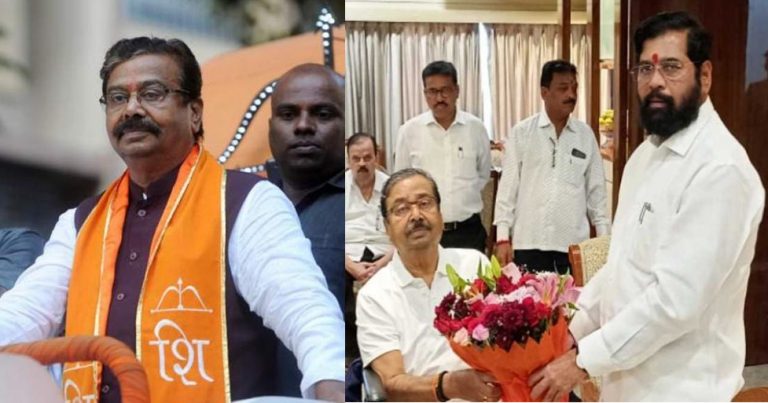
Even after Uddhav Thackery lost power in Maharashtra after the majority of Shiv Sena MLAs rebelled under the leadership of Eknath Shinde and formed a govt with the alliance of BJP, his faction of the party continues to lose leaders to the Shinde camp. In another big blow to the Uddhav Thackeray faction of Shiv Sena, the group’s senior leader and MP Gajanan Kirtikar joined the Eknath Shinde faction of Shiv Sena on Friday evening.
On 11th November 2022, senior Gajanan Kirtikar reached the official residence of the chief minister of Maharashtra i.e. the Varsha Bungalow to meet chief minister Eknath Shinde. There, Gajanan Kirtikar reportedly agreed to join the Shinde group which is now known as Shiv Sena (Balasaheb Thackeray). After that, he officially joined the party at an event held at Rabindra Natya Mandir in presence of CM Eknath Shinde and other leaders of the party.
CM Eknath Shinde confirmed the development by welcoming Gajanan Kirtikar to the party in a tweet. In the Tweet in Marathi, Shinde wrote, ‘Gajanan Kirtikar, a popular MP from Mumbai North West Lok Sabha constituency, today made a public entry into Balasaheb’s Shiv Sena party. He was warmly welcomed on the occasion and wished him all the very best for his future social and political journey.’
मुंबई उत्तर पश्चिम लोकसभा मतदारसंघाचे लोकप्रिय खासदार गजानन कीर्तिकर यांनी आज #बाळासाहेबांची_शिवसेना पक्षात जाहीर प्रवेश केला. याप्रसंगी त्यांचे मनापासून स्वागत केले तसेच भावी सामाजिक आणि राजकीय वाटचालीकरिता त्यांना शुभेच्छा दिल्या.@GajananKirtikarpic.twitter.com/vCnAK003Wt
This decision by the Mumbai MP is looked at as a big blow to the Shiv Sena (UBT) ahead of the elections of the Municipal Corporation of Greater Mumbai. Kirtikar was considered a loyal MP from the Uddhav Thackeray group. But with him also joining the Shinde group, the number of MPs in the Eknath Shinde group has gone up to 13.
There was already talk that Gajanan Kirtikar would join the Shinde group. In the program held at Shivaji Park, he had said that it was a mistake to make an alliance with Congress and the NCP. There were reports of a secret meeting between Gajanan Kirtikar and Chief Minister Eknath Shinde on September 6. At that time, it was said that MP Kirtikar had gone to get the darshan of Lord Ganpati at the official residence of the Chief Minister. Moreover, there were reports that Kirtikar was not happy with the Thackeray camp in recent times for various reasons.
Earlier, Eknath Shinde had met Kirtikar in July after coming to power. At that time, Shinde had said that it was not a political visit. He said that he met Kirtikar as he was ill. 12 Lok Sabha MPs from Shiv Sena have already joined the Shinde group. They are – Rahul Shewale, Bhavana Gavli, Krupal Tumane, Hemant Godse, Sadashiv Lokhande, Prataprao Jadhav, Dhairyashil Mane, Shrikant Shinde, Hemant Patil, Rajendra Gavit, Sanjay Mandlik, and Shrirang Barne. 79-year-old Gajanan Kirtikar is Lok Sabha MP from the northwest Mumbai constituency.
On Friday, the Enforcement Directorate (ED) informed that it has frozen 150.22 Bitcoins worth nearly Rs 22.82 crores during a raid on Binance Crypto. The federal agency carried out the search operation under the provisions of the Prevention of Money Laundering Act (PMLA), 2002 in connection with an ongoing investigation into the mobile gaming application E-nuggets money laundering case.
The Enforcement Directorate in a tweet informed about the action taken in the case and wrote, “ED has carried out a search operation on Wallet/User ID in Binance Crypto Exchange leading to freezing of 150.22 Bitcoins equivalent to Rs 22.82 Crore under PMLA, 2002, in respect to an investigation being conducted relating to the Mobile Gaming Application, namely E-nuggets.”
ED has carried out search operation on Wallet/User ID in Binance Crypto Exchange leading to freezing of 150.22 Bitcoins equivalent to Rs 22.82 Crore under PMLA, 2002, in respect to an investigation being conducted relating to the Mobile Gamming Application, namely E-nuggets.
The case is based on an FIR filed in February 2021 by the Kolkata police against one Aamir Khan and others in response to a court complaint filed by federal bank officials. Aamir Khan is accused of launching the gaming application E-nuggets with the intent of defrauding people. Over 300 accounts were used to launder money collected from users and transferred some of the money overseas via a cryptocurrency exchange.
On September 10 this year, ED raided six locations linked to Khan in an investigation against the fraud app E-Nuggets, through which thousands of people reportedly lost huge amounts of money.
During the raids, ED recovered a large cache of cash that amounted to more than Rs 18 crores. The bundles of notes were reportedly hidden in various places in Khan’s house, including under the bed. The house where the case was found is registered under the name of Aamir Khan’s father, Nasir Ahmed Khan.
The investigation agency stated in an official press release that 85.91870554 Bitcoins worth USD 16,74,255.7 (approximately Rs 13.56 Cr at the time, based on market exchange rates) discovered in the balance of Binance Exchange had been frozen.
Cryptocurrencies [WRX (WazirX utility token) and USDT] worth Rs 47.64 lakhs were frozen in WazirX accounts. The amount of Rs 5.47 crore unearthed in Aamir Khan’s and his accomplice’s bank account has been frozen. Cash totalling Rs 1.65 crore and 44.5 Bitcoins (then worth Rs 7.12 crore) were seized and frozen from Romen Agarwal’s residence.
Romen Agarwal, who is actively involved in inter/intra-country transactions involving the transfer of ill-gotten money within and outside of countries received from criminals, was apprehended and is currently under judicial custody. In its investigation under PMLA so far, the ED has seized Rs 68.42 crores.