Home Blog Page 324

SC calls petition on Rohingyas thrown into sea a ‘beautifully crafted story’: A reality check for activist fiction

On May 16, the Supreme Court of India, in a display of judicial clarity and institutional restraint, dismissed the sensational claims made in a writ petition alleging that 43 Rohingya refugees—women, children, cancer patients and all—were forcibly deported by being thrown into international waters by the Indian government. The apex court rightly refused to be baited by what Justice Surya Kant described as a “very beautifully crafted story” with “absolutely no material” to support its outlandish narrative.

The Supreme Court, raising eyebrows, noted a “serious dispute” over whether the Rohingyas could even be classified as refugees. It clubbed the petition with other ongoing cases on their deportation and scheduled a crucial hearing for July 31.

This case presents more than a legal footnote; it is a serious example of how public discourse, even in the courts, can be hijacked by what increasingly resemble activist-driven fictitious tales rather than fact-based legal advocacy. For the bench, comprising Justices Surya Kant and N Kotiswar Singh, the burden of proof was non-negotiable—a stance that reaffirms the judiciary’s responsibility to balance compassion with credibility.

Allegation or allegory?

The writ petition, filed by two Rohingya refugees in Delhi, claimed that Indian authorities, under the guise of biometric data collection, detained dozens of Rohingyas, flew them to Port Blair, blindfolded them, tied their hands, and abandoned them in the sea under false pretenses—supposedly after asking whether they preferred to be deported to Myanmar or Indonesia.

In essence, the petition implied that a democratic state started behaving like rogue nations, got its professional navy allegedly to tie up refugees, put them on a military vessel, and dumped them into the ocean, like pirates in a 17th-century novel. It is little surprise, then, that the Supreme Court openly hauled over the coals the petitioners and raised serious questions about the veracity of this “fanciful” account and asked them to present even a shred of verifiable evidence.

The petitioners, led by Senior Advocate Colin Gonsalves, leaned on anecdotal phone calls and unverifiable “tape recordings from Myanmar shores.” They invoked UN reports and international law, but when pressed, had no hard evidence or credible mechanism to connect these dramatic allegations to actual, documented events. As Justice Kant aptly asked: “Who is the person watching them? Who video-recorded? How did the petitioner come back?”

Supreme Court choose realism over gullibility

For years now, the Supreme Court is well-acquainted with petitions seeking to represent minorities and their rights. It is another subject that many activists have exploited legal avenues available to them to bilk project themselves as saviours of minorities.

India’s legal system is no stranger to hearing grievances from stateless populations or minorities under threat. The Chakma case in Arunachal Pradesh (NHRC v. State of Arunachal Pradesh) is one of many examples where the judiciary stepped in to protect non-citizens’ rights. But in that case, the relief was based on hard proof in the form of concrete governmental submissions and grounded claims—not activist rhetoric buttressed by unfounded allegations and media spin.

The court rightly noted that if the May 8 three-judge bench found no basis for interim relief, it would be judicial overreach to override that with no new substantial material presented. “Every day you come with one new story,” Justice Kant observed with frustration. “When the country is going through a difficult time, you come out with such fanciful ideas.”

And there lies the core issue: the attempt to inject volatile, vague allegations into the bloodstream of national discourse under the guise of human rights advocacy and get the court to sympathize with the illegal immigrants, overlooking their brazen undermining of the sovereign law. However, the Supreme Court recognized this for what it was—an effort to cast aspersions on the Indian state with no accountability for the fallout and came down hard against the petitioners.

The weaponisation of human rights

The principle of non-refoulement is a legitimate concern in any functioning democracy. India has, in practice, often honored it, despite not being a signatory to the 1951 Refugee Convention. However, this does not equate to granting carte blanche to every undocumented migrant or activist network seeking to convert international sympathy into domestic policy.

India houses over 8000 Rohingya refugees with UNHCR cards. But it is also a sovereign nation, entitled to enforce its immigration laws. Moreover, incidents like Pahalgam have painfully revealed the vulnerability of the country to external threats, including from unchecked migrations, which could pose a grave national security threat if not dealt with an iron fist. If individuals are deemed to be staying illegally—especially after due process—they are subject to deportation, not as punishment, but as the natural consequence of sovereign law.

To claim that every deportation is an act of genocide or a human rights atrocity is to trivialize actual atrocities.

Erosion of trust in constitutional institutions

The most disturbing aspect of this episode isn’t just the lack of evidence. It’s the increasing trend where activist narratives are presented as legal arguments, often using emotional appeals and international organizations as pressure tactics. Courts are expected to respond not to emotion, but to evidence. When a senior advocate says, “Please hear before they die,” without establishing any factual basis for the claim, it places the judiciary in an impossible position—pressured to act on unverified drama rather than legal merit.

It also begs the question: who benefits from peddling these narratives? Certainly not the Rohingya themselves, who are being used as pawns in a political and ideological contest between sovereignty and transnational activism.

The Supreme Court’s refusal to be swept away by this melodrama is a much-needed affirmation of judicial integrity. In times when headlines often carry more weight than hard facts, the Supreme Court’s stand on the matter exemplifies truth still matters. Human rights must be defended—but not at the cost of the truth, national security, or the dignity of legal process.

Activism has its place. But when it crosses into the realm of fiction, it ceases to be advocacy and becomes propaganda. The courts of India, thankfully, are yet not impaired to not know the difference.

Prophet Muhammad was guarding our missiles just like in 1965, 1971: Pakistan’s conspiracy theorist Zaid Hamid on India-Pakistan conflict

On 7th May, India initiated “Operation Sindoor” in response to the Pahalgam terror attack carried out by terrorists supported by Pakistan. Subsequently, the Islamic Repubic, feeling threatened, attempted to strike civilian areas and military facilities in border regions, particularly Jammu and Kashmir. Nevertheless, their malicious plans were foiled by India’s significantly advanced defense system which even led to the destruction of key air bases in retaliation.

A disgraced Pakistan, having endured a stinging defeat, resorted to fabricating narratives about inflicting damage on India. On the other hand, India presented ample evidence, including clear satellite imagery of their operations while Pakistan faced further global humiliation for its nonsensical claims and manipulation of information to assert victory.

The notorious Pakistani conspiracy theorist and a prominent advocate of the Ghazwa-e-Hind, Syed Zaid Zaman Hamid, has also made similar remarks regarding the recent conflict and a video of the same has now gained traction on social media.

“In the past, we heard tales of supernatural entities, including Islamic seers and clerics who supported Pakistan during the conflicts of 1965 and 1971. Notably, during the 1965 war, they came to Pakistan’s aid. In the recent minor dispute with India, numerous individuals from their regions reported witnessing Prophet Muhammad approaching Pakistan,” a visibly emotional Zaid Hamid stated.

Notably, the 1971 India-Pakistan war changed the political history of the world forever and resulted in the formation of a new country named Bangladesh. The 1965 conflict marked another unsuccessful attempt by Pakistan to capture Kashmir through infiltration, following a similar failed effort in 1947. In fact, an Indian Infantry unit reached the outskirts of Lahore before it was ordered to retreat, during the conflict.

“I received a message from a young man, and there is no reason for him to be untruthful. The revered prophet appears in dreams, which is a fact. He narrated his dream to me and disclosed that Prophet Muhammad was standing guard to protect Pakistan’s missiles. Hence, it is Ghazwa-e-Hind,” the self-proclaimed Afghan jihad veteran added with tears in his eyes.

Interestingly, during the pandemic, Zaid Hamid, insisted that a chemical in the vaccination created by Bill Gates would eradicate Islam from all Muslims. The world has been familiar with Corona for the past fifty years, he stated, referring to it as a common cold. He further argued that everyone on the planet had experienced coronavirus at some point and the hype was only because the billionaire had orchestrated a plan to enslave future generations globally for the benefit of America.

Popularly referred to as Lal Topi (due to his red cap), he gained public attention over 15 years ago when he asserted that Pakistan would reach the moon within five years and that the country would lead global affairs. Nevertheless, the nation has been descending into a catastrophic situation at a much faster rate, since his statement. He has regularly been the subject of mockery due to his ridiculous comments.

Rahul Gandhi announces ₹1 lakh compensation to the family of Abdul who was beaten to death after he tried to rape a tribal woman taking bath in a pond

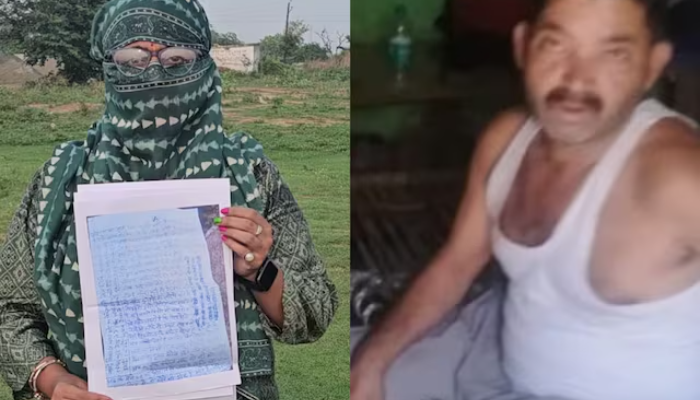
Congress leader Rahul Gandhi has announced ₹1 lakh compensation to the family of Abdul Kalam who was allegedly beaten to death after he sexually assaulted and attempted to rape a tribal woman while she was taking bath. The Hemant Soren-led Jharkhand government also promised to give ₹4 lakh, government job and a house to the kin of Abdul Kalam.

In addition to that, Siddiqui community promised to pay ₹51 thousand to Abdul’s family. Jharkhand Health Minister and Congress MLA Irfan Ansari also visited Abdul’s house to meet his mother Rehana Khatoon and assured her all possible assistance.

Abdul caught the victim, grabbed her breasts and tried to rape her

As per reports, the incident took place on 8th May, when 22-year-old Abdul Kalam, who was construction worker, visited Kadrukhutta village in the Penk Narayanpur Police Station area of Bokaro district for some work. Abdul sexually assaulted the wife of a local named Mahavir Murmu while she was taking bath in a pond. The FIR, accessed by OpIndia, states that Abdul caught her from behind and grabbed her breasts. He slammed her on the ground and tried to rape her. In the struggle to release herself from Abdul’s grip, the woman bit his hand and started screaming. Hearing her cries, villagers arrived on the spot and nabbed Abdul who was trying to flee. It is alleged that villagers tied him to a pole and started beating him. Thereafter, the police was called and the villagers handed him over to the police.

Jharkhand government announces monetary compensation, a house and a government job for Abdul’s family

The FIR filed by Abdul’s uncle reportedly states that Abdul sustained injuries after villagers beat him up. The police took him to Bakaro Thermal Hospital where he was declared dead. Abdul’s uncle claimed that he was suffering from a mental illness and was undergoing treatment. His uncle said that Abdul was not a criminal and that if he did something wrong he should have been tried as per law. The police have filed a case and arrested Rupan Manjhi, Baharam Manjhi, Sukhlal Manjhi and Baleshwar Hansda in connection with the case.

Bermo SDM Mukesh Machhua said that the state government has promised to grant ₹4 lakh, government job and a house to Abdul’s family. However, Abdul’s family have reportly declined to accept the compensation and have demanded justice.

The incident is getting mixed reactions on social media. While some people called out the Rahul Gandhi and the Jharkhand government for wasting the taxpayers’ money on granting compensation to a rape accused, others declared Abdul Kalam as innocent and a victim of mob lynching.

One X user lashed out at theCongress and the Jharkhand government for providing compensation to a rape accused.

On the other hand, another X user empathised with the rape accused and declared him innocent.

An X user ignored the allegation on Abdul and claimed that Abdul was killed because of his religious identity.

The police are investigating the case.

Bengal: Teenager Sudipta Pandit killed by Sheikh Farhad for picking fallen mangoes from his orchard, angry villagers burn down mango warehouse of the accused

In another brutal murder in West Bengal, a Hindu teenager was lynched by one Sheikh Farhad Mandal for picking some mangos from Farhad’s orchard. Angry locals later set the mango warehouse of Farhad on fire, while the accused have been arrested by police. The incident took place in Shibdaspur, Naihati, in North 24 Parganas district.

As per reports, 17-year-old Sudipta Pandit was a resident of Basanti Tala in Kanchrapara, and he had gone to his uncle’s house in Shibdaspur, Naihati to attend a family function. He along with some of his friends were returning home on Thursday night. While passing by a mango orchard, they saw some mangoes lying on the ground.

Unable to resist the urge to pick some mangoes, Sudipta went to pick some of the fruits from the ground. However, unfortunately for him, the orchard’s owner Sheikh Farhad Mandal was present at the spot, and he saw Sudipta picking the mangoes. He caught the minor boy and started to beat him brutally. Seeing this, Sudipta’s friends got scared and they fled.

When they informed the villagers and returned to the spot, Sudipta was found lying unconscious near the mango orchard. He was immediately taken to a hospital in Naihati, but it was too late, as doctors said that he had already died. It is alleged that after beating Sudipta, Farhad strangled him to death.

The incident led to tension in the area since Thursday evening. On Friday morning, the enraged villagers gathered at Farhad’s mango warehouse, and set it on fire. They also blocked the Kalyani Expressway and started a protest.

On receiving the information, the police from Shibdaspur police station reached the spot, and arrested Farhad. A large police force has been deployed in the area to ensure that there is no further unrest. 

In the meanwhile, Barrackpore BJP leader Priyangu Pandey has alleged that the boy was killed because was a Hindu. He said, ‘A 17-year-old innocent boy went to eat mangoes. His was ​​killed because his cousin is a booth-level worker of the BJP. Sudipta Pandit’s crime was that he was a Hindu.’ Pandey added that police can’t protect Hindus in West Bengal, and Hindus in the state must unite to survive.

‘The Wire’ has a problem with exposure of the misdeeds of Bhopal’s ‘Muslim gang’ which targeted Hindu girls, randomly brings up ‘media ethics’ to try and distract from the crime

A Muslim gang in Bhopal, Madhya Pradesh, trapped several Hindu girls, raped them, and made videos. They even tried to sell the videos on porn sites. During interrogation, the Muslim boys told that all this is done for ‘Sawaab‘. The media reported the incident as it is. Now this has created a problem for the propaganda portal ‘The Wire’. The Wire has a problem with why the truth of the Muslims who committed this heinous crime for ‘Sawaab’ was published.

Huneza Khan wrote an article in ‘The Wire’ on May 16, 2025 about this incident. In this article, Khan claimed that a media trial has been conducted in this Bhopal rape case. The Wire wrote that this news about horrific stories of the girls create ‘religious hatred’.

Notably, Muslim boys had raped Hindu girls in Bhopal after making them drink ganja, made videos of them, and also burnt them with cigarettes. When media organisations reported these things without any hesitation, The Wire got irritated.

The suffering of Hindu girls seems like a WhatsApp forward to Wire. Wire does not call this incident a crime against Hindu girls but an incident that allegedly happened with ‘college girls’. That is, on one hand it is angry at the media institutions because they told the truth about these Muslims and made people aware, while on the other hand it tones down this entire crime and hides the truth carefully.

Wire says that due to this kind of reporting, the ethics of the media are being questioned. That is, if the media starts showing the suffering of Hindus, then its ethics are gone. Remember that Wire is the same institution that did a hit job against the BJP. Later it had to remove it with an apology. This did not happen with it once, but it has apologized repeatedly.

This same Wire is talking about ‘media ethics’. It is like a bandit criticizing why violence is a bad thing. In this case, Wire wants to shift the entire focus to the fact that these crimes were actually committed by Muslim boys not because of their Jihadi mentality but because of ‘patriarchy’. Wire’s shamelessness in protecting Muslim criminals is not surprising. It has been promoting anti-India propaganda even during the war period, crimes against Hindus are a small matter for it.

Thousands of cases of ‘love jihad’ have come to light, whose victims are not only Hindu but also Christian girls. It tells the real meaning of jihad. Actually, Wire does not have a problem with the fact that the standards of media are falling, or that the media is creating an atmosphere of fear about things. It is pained by the fact that why the media clearly told the name of the Muslims and their mission.

Wire wants those golden days back when if a Muslim was accused, his crime was carefully hidden by writing words like ‘man’, ‘person’ and ‘particular community’, when only Hindus were shown as the aggressors. It wants those days back when even after being killed in riots, Hindus were considered criminals. If it was concerned about the falling standards of media, then this institution, which deals in lies every day, would have pulled down its shutters first. Its pain is different.

In the Bhopal case, the Muslim gang leader Farhan had told the police during interrogation that he has no regrets about raping Hindu girls, trapping them and threatening them. He had told the police that this is a sawab (meritorious) act according to Islam. Farhan has also told the police that he wanted to ruin the lives of Hindu girls and considered this act as Jihad, that is why he targeted them. He is proud of this.

The boys involved in this gang used to make videos of each other raping. The names of the boys involved in the gang are Farhan, Abrar, Nabeel, Saad and Ali among others. Some of them would arrange rooms for rape, some would bring marijuana. Some would advise that if a Hindu girl refuses to be raped, then sell her video. Dance academies, colleges, offices and many other places were where these Hindu girls were targeted. But for Wire, revealing all this truth is an act of ‘hate’.

Wire will continue to feel this pain, because the change that has come in the society in the last 11 years has strengthened Hindus to express their pain.

Chinese officials visit Lalmonirhat Airbase in Bangladesh near Chicken’s Neck corridor, Yunus govt has sought China’s help to develop it into an airport

Chinese officials recently visited the Lalmonirhat Airbase in Bangladesh near Indo-Bangla border, which the Bangladesh government is developing as a civilian airport. As per a report by The Assam Tribune, by Indian intelligence agencies have received inputs about the visit of the Chinese officials to the Bangladeshi Air Force base.

Lalmonirhat Airbase located in Rangpur Division is just 20 km away from the Siliguri corridor or the ‘Chickens neck’ corridor in India. It was built as a military base in 1931 by the British government and was used by allied forces during the World War II as a forward airbase for its operations on the eastern front.

After Independence and partition, the base was used by the Bangladesh Air Force. In 2019, a plot in the base was given to Bangladesh Aerospace and Aviation University to build its permanent campus.

However, recently the interim government of Bangladesh has sought to develop it as civilian airport. As per reports, Chief Advisor Md Yunus has asked China to develop the airport. He brought the matter during his China visit last month, when he made the controversial remarks saying that Bangladesh is the only guardian of the ocean for the entire region including the 7 north-eastern states of India.

Reportedly, work on the airport is likely to start in October this year, and China will engage a Pakistani company as the sub-contractor for the work.

Indian agencies are watching whether the air base would be used for civilian purposes, training or to deploy military aircraft. “We need to see if Bangladesh will allow other countries like China and Pakistan to use it. Bangladesh has the right to develop air fields for their security reasons, but that should not be used against India,” defence officials said, as per the Assam Tribune report.

Notably, India has strong military presence in its eastern and northeastern regions, including the Siliguri corridor. Indian Army’s Trishakti Corps, the XXXIII Corps, is headquartered near Siliguri. The Hasimara air base in Alipurduar district, West Bengal, houses the second squadron of Dassault Rafale fighter jets.

While Lalmonirhat Airbase is within the range of India’s artillery guns, Bangladesh and its allies China and Pakistan can potentially use it to keep an eye on movement of Indian forces, given its close proximity to the border.

“Testament to resilience, spirit of Gujarat”: Rajnath Singh on Smritivan Earthquake Memorial in Bhuj

0

Defence Minister Rajnath Singh visited the Smritivan Earthquake Memorial and Museum in Bhuj on Friday and said that the infrastructure pays a homage to the victims of the devastating 2001 Gujarat earthquake and stands as a testament to the resilience and the indomitable spirit of the people of the state.

The Defence Minister also praised Prime Minister Narendra Modi’s vision and inspiration for the memorial and museum and expressed gratitude to him.

Speaking to ANI, Rajnath Singh said, “I had the opportunity to visit the Smritivan Earthquake Memorial and Museum for the first time, and whatever I saw here was awe-inspiring and a very memorable experience for me. This museum is not only the pride of the country but also the world. This memorial, built in memory of the people who lost their lives in the 2001 quake in Gujarat, stands as a symbol of the resilience and the spirit of the state.”

“The museum, which has also found a place on the UNESCO list, reflects the vision and leadership of Prime Minister Narendra Modi. We all know that PM Modi’s vision and inspiration are clearly visible in this museum. I thank him for his inspiration for building it,” said Singh.
Calling Smritivan a source of national pride, the Defence Minister appealed to all visitors coming to Gujarat to make time to visit the memorial and pay homage to those who were killed in the earthquake.

“I request all my countrymen that whenever they come to Gujarat, they must visit this memorial and pay tribute to the approximately 13,000 people,” said Singh.

In 2001, a massive earthquake jolted Bhuj in Gujarat’s Kutch district, in which more than 20,000 people were killed and over 1.5 lakh people were injured. The earthquake left thousands homeless.

The intraplate earthquake measured 7.6 on the moment magnitude scale and occurred at a depth of 17.4 km.

Earlier in the day, Rajnath Singh arrived in Gujarat’s Bhuj and interacted with Air Warriors at Bhuj Air Force Station. He was accompanied by Air Force chief Air Chief Marshal AP Singh.

This comes a day after he concluded his visit to the Badami Bagh Cantt in Jammu and Kashmir’s Srinagar, where he met and interacted with Indian Army soldiers.

Highlighting the Indian Air Force’s (IAF) bravery during Operation Sindoor, Defence Minister Rajnath Singh asserted on Friday that the operation was not over yet and that whatever happened was just a “trailer.”

Addressing Air Warriors at Bhuj Air Force Station, Singh said, “We have kept Pakistan on probation. If its behaviour improves, then okay, otherwise, it will be given the strictest punishment. Operation Sindoor is not over yet. Whatever happened was just a trailer. When the right time comes, we will show the full picture to the world.”

The Defence Minister paid homage to those who lost their lives during Operation Sindoor and wished for the speedy recovery of the injured ones.

“Bhuj was witness to our victory against Pakistan in 1965 and 1971. Today, again, it has been a witness to our victory against Pakistan. I feel proud to be present here,” Singh said.

Praising the IAF for their execution during Operation Sindoor, he said, “Whatever you did during Operation Sindoor has made all Indians proud, whether they are in India or abroad. Just 23 minutes were enough for the Indian Air Force to crush terrorism being nurtured in Pakistan.”

Rajnath Singh on Friday appealed to the International Monetary Fund (IMF) to reconsider funding to Pakistan and said Islamabad will use a large portion of these funds on terror infrastructure in its country.

He said the fight against terrorism is not just a matter of security, but it is now also a part of the National Defence Doctrine.

Rajnath Singh said, “India’s fight against terrorism is not just a matter of security, it has now become a part of the national defence doctrine, and we will root out this hybrid and proxy warfare.”

He asserted that the current ceasefire means that India has kept Pakistan on probation based on its behaviour. If the behaviour improves, it is fine; but if there is any disturbance, the harshest punishment will be given, he said.

Chief of the Air Staff Air Chief Marshal AP Singh and other senior IAF officials were present on the occasion.

(This news report is published from a syndicated feed. Except for the headline, the content has not been written or edited by OpIndia staff)

“No action, only show off”: Karnataka MLA Kothur Manjunath joins long list of Congress leaders who doubt success of “Operation Sindoor”

Karnataka Congress MLA Kothur Manjunath from Kolar City has cast aspersions on “Operation Sindoor,” claiming it has been ineffective and did not provide justice to the family members of the Pahalgam terror attack.

“Apart from sending four fighter jets to bomb nine terrorist camps in Pakistan, what else has the government done? Is that all the value we place on the Arashina Kumkuma (turmeric and vermillion) of 26 women,” he said while talking to the media in Kolar.

“The government claims to have killed a few terrorists under the name of Operation Sindoor, but nothing has been confirmed. If terrorists can enter our country, kill our people, and escape unscathed, isn’t that a glaring security failure? What was our army doing at the border? Did they have any plan at all,” he questioned.

The lawmaker added, “Nothing was done. Just to show off, they sent three-four flights and returned. Will that compensate for the 26–28 people killed in Pahalgam? Is this how we compensate those women? Is this how we console them? Is this how we show respect?”

The politician inquired whether those killed in Indian strikes included the assaliants of the Baisaran Valley attack on 22nd April. “Have they confirmed that at least 100 terrorists have been killed? Who were those terrorists who crossed our border? What are their identities? Why was there no security at the border? How did they escape? We should identify the root, branches, and stems of terrorism and eliminate them,” he said.

Additionally, he asserted that there are contradictory reports regarding the number of terrorists killed and the destruction of Pakistani terror bases. “We hit them here, we hit them there? All the TV channels are telling different stories. One says they hit them like this, another says something else. Whom do we trust? Who was hit? Who died? Where is the official statement,” he challenged.

The Congress leader then said, “How they killed the husbands of those women right in front of their eyes? This cannot compensate them. This is not the solution.”

Notably, India has consistently outlined that no civilians were harmed in the military operation, maintaining that only terrorists were eliminated and that Pakistani military installations were targeted in the subsequent retaliation to the drone assaults.

The remarks have fueled the ongoing political feud between the opposition parties and the government over the operation’s conclusion. According to a government statement, at least 100 terrorists were killed and nine key terror launch sites were destroyed following the 7th May precision strikes by the Indian Armed Forces.

Notably, other members of his party have also made equally offensive comments about “Operation Sindoor.” Veteran Congress leader Prithviraj Chavan attacked the government over naming of the operation and charged that the codename was selected to gain “sentimental benefits.”

He claimed, “A war is fought with bombs, guns, and aircraft, and not on symbolism or tokenism. A war cannot be won through the name of the operation. The name of the operation is fine. Indian government might have thought that giving this name (Sindoor) to the operation, they might derive some sentimental benefits.”

Udit Raj, another Congressman, similarly expressed issues with the name and stated, “During discussions with intellectuals, it was pointed out that Sindoor is associated with a specific religion, and it would have been better if a different name was chosen.”

“Much better reply needs to be given, this is bare minimum. Our forces did what govt of India told them to do, but the question again arises. Was every single terrorist killed? Will there won’t be another Pahalgam,” Congress leader Rashid Alvi asked. Controversial Congress leader Imran Masood also expressed doubts about the operation.

“How many (terrorists) were killed and what all damages could they inflict, this also should be announced, then we will feel at peace,” he insisted. He previosuly made fun of 2019 Balakote airstrike in an interview and announced, “The whole world mocked the air strike. Pakistanis were saying that they killed our three crows.”

India responded with military action against the Jaish-e-Mohammed and Lashkar-e-Taiba terrorist network in Pakistan and Pakistan-occupied Kashmir (POK) including Muridke and Bahawalpur after terrorists from The Resistance Front (TRF), a proxy of Lashkar-e-Taiba, killed 25 Indians and one Nepali in the Pahalgam attack after establishing their Hindu identity.

Mehbooba Mufti again speaks like a Pakistani, gets triggered and threatens war over Omar Abdullah’s mention of reviving the Tulbul Navigation Barrage


Former Jammu and Kashmir CM and PDP chief Mehbooba Mufti, whose party suffered a massive loss in the assembly elections in the Union Territory, has again spoken like a politician of Pakistan, not India. Keeping up with her habit of appeasing Islamists across the border who want to further Pakistan’s agenda and keep Jammu and Kashmir deprived of economic development, she got triggered over CM Omar Abdullah’s post on X, which talked about the possibility of reviving the Tulbul Navigation Project.


CM Abdullah had posted a video of the Wular lake in North Kashmir. Highlighting the incomplete civil works on one side of the lake, he wrote, “The Wular lake in North Kashmir. The civil works you see in the video is the Tulbul Navigation Barrage.  It was started in the early 1980s but had to be abandoned under pressure from Pakistan citing the Indus Water Treaty. Now that the IWT has been “temporarily suspended” I wonder if we will be able to resume the project. It will give us the advantage of allowing us to use the Jhelum for navigation. It will also improve the power generation of downstream power projects, especially in winter.”

Mehbooba Mufti, however, got triggered by the statement and started behaving as a spokesperson of Pakistan all over again. Accusing Omar Abdullah of trying to trigger a war with Pakistan again, and hinting subtly that reviving the project would be enough justification for Pakistan to start attacking India again, Mufti reacted, “J&K Chief Minister Omar Abdullah’s call to revive the Tulbul Navigation Project amid ongoing tensions between India & Pakistan is deeply unfortunate. At a time when both countries have just stepped back from the brink of a full-fledged war—with Jammu and Kashmir bearing the brunt through the loss of innocent lives, widespread destruction and immense suffering such statements are not only irresponsible but also dangerously provocative.”


Nobody knows why a sitting CM’s post about reviving an abandoned infrastructure project in his own state, one that would mean better water management, and open up river navigation routes in a region that desperately needs economic development would be “provocative”. Maybe mehbooba Mufti thinks Jammu and Kashmir should remain undeveloped and lagging just to appease Pakistan, so that the poor people of the UT remain poor and become easy recruits for Pakistan’s terror factories. 

Mufti further accused Omar Abdullah of war-mongering and provoking Pakistan, adding, “Our people deserve peace as much as anyone else in the country. Weaponising something as essential and life-giving as water is not only inhumane but also risks internationalising what should remain a bilateral matter.”

It is notable here that Omar Abdullah neither spoke about attacking Pakistan nor did any sort of act of aggression towards the Pakistani people. He was merely suggesting the revival of a navigation project that would better utilise the waters of Jhelum and open up navigation routes, besides bringing development for the people of north Kashmir. The Wular lake belongs to India, and the section of the Jhelum river he was referring to also belongs to India. 

Omar Abdullah soon shot back, asking why Mufti is advocating for Pakistan and trying to peddle a narrative that reviving the Tulbul navigation project is the same as provoking Pakistan for war. 

“Actually what is unfortunate is that with your blind lust to try to score cheap publicity points & please some people sitting across the border, you refuse to acknowledge that the IWT has been one of the biggest historic betrayals of the interests of the people of J&K. I have always opposed this treaty & I will continue to do so. Opposing a blatantly unfair treaty is in no way, shape, size or form warmongering, it’s about correcting a historic injustice that denied the people of J&K the right to use our water for ourselves,” he posted. 

Clearly, Mehbooba Mufti wants to propagate an idea that India, and Jammu and Kashmir, should remain under perpetual fear of Pakistan, and behave exactly as Pakistan wants, for Pakistan’s benefit, even if it means depriving the people of Jammu and Kashmir of the right to utilised their own resources. 

What is the Tulbul Navigation Barrage, and how Pakistan got it halted

The Wular lake is in the Sopore area of Baramulla district, on the Jhelum river. The navigation project, initiated in the 1980s, was conceptualised with the aim of keeping the Wular, and Jhelum navigable even during the lean winter months, with the minimum of at least 4.5 feet of water. The proposed barrage, not a dam or reservoir, was planned to hold a maximum of 300,000 acre feet of water, so that the roughly 22 km stretch of Anantnag, Baramulla to Srinagar remains navigable by boats by controlled release of water.

Wular Lake, image via EJ Atlas

Usually in winter months, this stretch becomes non-navigable, as glacial freezing in the upstream Himalayan areas reduces water depth to under 2.5 feet.

If completed, the Tulbul Navigation Project with its barrage 439 feet long and 40 feet wide barrage holding and releasing water as required, would have maintained the minimum navigable water depth required throughout the year between Khanabal (Anantnag) and Khadanyar (Baramulla). Thus facilitating the transport of fruits, timber, and essential goods easily by boats, also bringing tourism and other facilities to this area.

The barrage was proposed to be designed as a holding and regulating structure, not as a storage facility, so that the downstream water volume is not reduced. However, Pakistan still opposed it, claiming that India was trying to hold more water in Jhelum than specified in the Indus Water Treaty.

Not just year-round navigation, helping the locals, the project would have also ensured enough water throughout the year for downstream run of the river hydropower projects in Uri. 

India had stated to Pakistan that the barrage would ensure water flow to Mangla Dam, thus helping Pakistan’s irrigation canals downstream, but Pakistan threatened arbitrations in the International Court. India’s assurance that the barrage is for merely a control structure to ensure navigation, not a storage for consumptive use, failed to convince Pakistan, which wanted to halt the project at any cost. Multiple rounds of talks yielded no results.

Finally, in 1987, the Rajiv Gandhi government abandoned the project. Around 30% of the construction was done since 1984. 

Pakistan was so against the Tulbul Navigation Project that it had sent terrorists to attack the structure. In the last few years, Marine Commandos have been deployed around the lake area and its islands, trying to flush out terrorists hiding in the region.

Tulbul Navigation Project: Another example of former governments giving in to Pakistan’s threat of violence?

Pakistan has been desperate to keep Jammu and Kashmir undeveloped, so its nefarious agenda of spreading Islamic terrorism and bleeding India by thousand cuts becomes successful. For decades, by sheltering, facilitating and sponsoring Islamic terroists on its soil to spread violence and chaos in Jammu and Kashmir, it has been successful in doing so. The subsequent governments in the Centre and Jammu and Kashmir both, also have submitted before the blackmail, allowing Pakistan to dictate terms and make Indian leaders behave as it want therm to.

Mehbooba Mufti arguing for Pakistan and trying to justify and validate its threat of violence for a water management project is a glaring example of how far Pakistan has been successful in making some politicians dance to its tunes.

The plight of ‘justice’ in West Bengal: Teachers, who lost their jobs due to scam by TMC Ministers, now get brutally thrashed by Mamata’s police for protesting

West Bengal is in a state of complete chaos under the rule of Trinamool Congress government, led by Chief Minister Mamata Banerjee. First, a whopping 25,753 teachers lost their jobs in the 2016 West Bengal School Service Commission (WBSSC) recruitment scam carried out by sitting Ministers in the TMC government. Now, the jobless teachers are being mercilessly thrashed by Mamata’s police for protesting against the government due to loss of livelihood.

On Thursday (15th May), the teachers who lost their jobs due to the complicity of the Mamata Banerjee-led-West Bengal government held a protests outside the West Bengal Education Department heaquarters dubbed ‘Bikash Bhavan’ in Kolkata.

During the demonstrations, the angry and mentally distraught teachers broke the main gate of the building. Soon after, Mamata’s police force resorted to unspeakable brutality against the protestors.

The cops used their batons to inflict serious injuries and bodily harm on the teachers, who are now rendered jobless due to the 2016 WBSSC scam.

The police, alongside the Rapid Action Force (RAF,) were equipped with tear gas vehicles in advance to quell democratic protests against the Mamata government.

Visuals of women crying and men lying on the ground in bloodied state were caught on camera.

Despite the police brutality, the protesting teachers remained undettered. Some of them had to be rushed to hospitals for immediate medical attention.

While speaking to The Indian Express, a teacher remarked, “This is the real face of the Bengal government. They are beating us up and are not even providing us ambulances to take the injured to hospital. They only blew a siren and warned us to move away quickly.”

Another protester stated, “Why should we suffer when we gave no bribes? Why should we appear in the examination again? We got the job only after taking the exam.”

The new set of protests began on Wednesday (14th May). It was led by more than 1000 teachers who were identified as ‘not specifically tainted’ and allowed to continue their teaching jobs until December 2025.

They were miffed after learning that the West Bengal School Education Department and School Service Commission (SSC) filed a review petition in the Supreme Court without consulting them. The demonstration was dubbed ‘Bikash Bhawan Abhijan.’

One teacher told The Indian Express, “A protester said, “They are protecting the thieves. We must be reinstated with dignity. What is wrong with our demands? The goons of political leaders are coming and beating us up.”

In the meantime, the spokesperson of the teachers Mehaboob Mondol informed that TMC leader Sabyasachi Dutta and his supporters had assaulted them with helmets.

Dutta, who serves as the Bidhannagar Municipal Corporation chairman, was greeted with ‘go back’ slogans and labels like ‘chor’ (thief).

Mehaboob Mondol sought immediate intervention of Chief Minister Mamata Banerjee and said that the sacked teachers are fed up with the West Bengal Education Minister Bratya Basu.

It must be mentioned that many TMC politicians such as Partha Chatterjee, Manik Bhattacharya, Jiban Krishna Saha, Santanu Kundu and Kuntal Ghosh were involved in the 2016 WBSSC recruitment scam.

Verdict by the Supreme Court of India

In May 2024, the Supreme Court of India stayed the order of the Calcutta High Court, wherein it directed the cancellation of 25,752 appointments. It, however refused to put a stay on the CBI investigation in the case.

“The public job is so scarce….Nothing remains if the faith of the public goes. This is systemic fraud. Public jobs are extremely scarce today and are looked at for social mobility. What remains in the system if their appointments are also maligned? People will lose faith, how do you countenance this?” the apex court noted.

“Either you have the data or you do not have it…You were duty-bound to maintain the documents in digitised form. Now, it is obvious that there is no data. You are unaware of the fact that your service provider has engaged another agency. You had to maintain supervisory control,” it further added.

On 3rd April 2025, the Supreme Court of India upheld [pdf] the verdict of the Calcutta High Court and noted systemic irregularities, malaise/ fraud in the 2016 WBSSC recruitment case. Due to a compromise in the overall integrity of the recruitment process, it was cancelled in its entirety.

In our opinion, this is a case wherein the entire selection process has been vitiated and tainted beyond resolution. Manipulations and frauds on a large scale, coupled with the attempted cover-up, have dented the selection process beyond repair and partial redemption. The credibility and legitimacy of the selection are denuded,” the apex court observed.

The WBSSC had argued that the entire recruitment process should not be annulled. The Supreme Court, however found no merit in the argument.

We may have accepted this argument if WBSSC had the original physical OMR sheets or the mirror copy of the OMR sheets. However, WBSSC accepts that they do not have the physical OMR sheets as they were destroyed in terms of
Rule 21 of the Class IX and X and Class XI and XII Rules, which require retention of the OMR sheets for only one year
,” it added.

The apex court further pointed out that there was no rationale behind destroying the OMR sheets for Group C and D employees, given that the recruitment was underway even after the validity of the recruitment panel had expired.

It also underlined the illegality in the extension of the recruitment panel. “There is no doubt that the counselling process and appointments made to the post of Assistant Teachers for classes IX-X and XI-XII were made after the expiry of the panel. This is illegal and contrary to the rules,” the Supreme Court observed.