Home Blog Page 4210

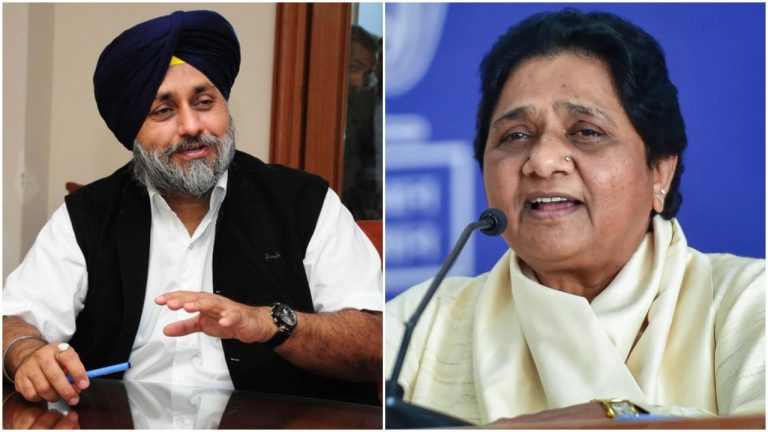
Ahead of Punjab Assembly Elections, Shiromani Akali Dal forms alliance with Mayawati-led Bahujan Samajwadi Party

In a major political development ahead of the 2022 assembly elections in Punjab, Shiromani Akali Dal (SAD) has decided to form an alliance with Mayawati led Bahujan Samaj Party (BSP) after leaving the NDA.

According to the reports, BSP leader Satish Chandra Mishra and SAD chief Sukhbir Singh Badal met on Saturday. SAD chief Badal announced the alliance between the two parties for the 2022 Punjab assembly elections.

Announcing the alliance, SAD president Sukhbir Singh Badal said BSP would contest from 20 seats — 8 in the Dalit-dominated Doaba region, 7 in Malwa and 5 in the Majha belt. SAD will contest the remaining 97 seats, Badal announced.

In the upcoming polls, Mayawati’s party will contest from Kartarpur Sahib, Jalandhar West, Jalandhar North, Phagwara, Hoshiarpur, Tanda, Dasuya, Nawanshahr, Payal, Ludhiana North, Chamkaur Sahib, Bassi Pathana, Mehal Kalan, Anandpur Sahib, Mohali, Amritsar North, Amritsar Central, Bhoa, Sujanpur, Pathankot in alliance with SAD.

Badal’s party had broken ties with the BJP last year over the passage of farm laws. BJP used to contest around 23 seats in Punjab in alliance with SAD. Essentially, SAD has offered the more or less same number of seats it used to accommodate for the BJP.

BSP-SAD alliance looking to corner Jat Sikhs and Dalit votes

Mayawati-led BSP has a considerable hold over the region as more than 31 per cent of voters in Punjab belong to Scheduled Caste. The concentration of the votes can be significant in the 23 seats of the Doaba region. While BSP eyes Dalit votes in the region, Sukhbir Singh Badal-led Shiromani Akali Dal can concentrate on the votes of Jat Sikhs, who are considered the core voters of the party.

In the 2017 Assembly elections, both SAD and BSP had fought independently. SAD had contested in 94 seats and won only in 15 seats, while BSP had failed to register any victory even after contesting from 111 seats.

Following the announcement, Sukhbir Badal said, “I am happy that the relationship, which was formed over 25 years ago by Parkash Singh Badal and BSP founder Kanshi Ram, has been revived. The Akali Dal and BSP alliance comes 27 years after the 1996 Lok Sabha elections when the two parties had fought the elections in an alliance, bagging 11 out of 13 seats in Punjab. The Mayawati-led BSP had won all three seats it had contested, while the Akali Dal won eight out of 10 seats.

SAD chief Sukhbir Badal said that both the parties aim to work for the underprivileged, economically downtrodden and labourers. “We need to bring Punjab’s economy back on track, and we are sure that it will be done following our victory,” he added.

Why so-called ‘fact-checkers’ are a greater evil than random misinformation that they claim to fight

In his most recent address to the nation, Prime Minister Modi announced sweeping changes to India’s vaccination policy. Going ahead, the Central Government would take control of most of the procurement of vaccine and their distribution among states. In his speech, the Prime Minister also took veiled jibes at a few Chief Ministers as well as loudmouthed opposition politicians with no skin in the game. They had demanded the right to procure vaccines, they had been given responsibility and they had failed. And so the Center will take charge, again.

Following this, an enraged P Chidambaram of the Congress demanded proof of any state government demanding the right to procure its own vaccines. In response, folks on social media quickly dug out the letters and the newspaper headlines. Mr Chidambaram conceded that he had been wrong.

Then, the fact-checkers got into the game. In a particularly long-winded and desperate piece, they essentially argued that Chidambaram was correct. What about the signed letter from Bengal CM asking to procure vaccines? That one doesn’t count, because it is a few months old. What about Rahul Gandhi’s letter asking for states to have greater say in vaccine procurement? That doesn’t count either, because the expression “greater say” is open to interpretation!

This is not fact-checking. In fact, this is nothing at all. This is probably a form of trolling, but this is also propaganda. It’s a desperate effort to generate a headline that gives the impression that the Prime Minister’s claims have been discredited. You know things are bad when P Chidambaram admits he is wrong but the fact-checkers end up arguing that he is right.

The fact-checkers have been doing this for a while and on a range of issues. Making up excuses for one side and fact-checking irrelevant details on the other. Did you say that someone pelted stones on the roof of a temple? They find someone who claims that stones were pelted on the wall and not on the roof. That could be a fact-check. In other words, say something pointless so that it diverts the discussion and throws reasonable people off balance. There are no standards for whose view counts as a reliable source. In West Bengal for instance, any claim by the state police is considered reliable and can be used as a basis to fact-check others. In Uttar Pradesh, the opposite happens. Any claim by any random person becomes a basis to fact-check the state police!

What qualifies someone to be a fact-checker? Nobody is quite certain. Apparently, there is something called the International Fact-Checking Network or IFCN, which I can only assume is a bit like IIPM, ranked number one in “global competitiveness.”

The scary part is just how much power the IFCN has. The big social media companies have outsourced censorship to fact-checkers who are generally certified by IFCN. In the modern world, fact-checkers get to control the flow of information. The public square has shifted online. Whoever controls it also controls the market of ideas. And yet, how many people have even heard of the IFCN? How many folks can name a single person who makes these decisions on what you are allowed to say in the new public square? At least we know the names of the big tech CEOs. If they censored anyone, we could point a finger at them personally. So now they have this rabbit hole where faceless fact-checkers control the market of ideas.

It isn’t just about your personal social media account. Consider what this does to the media landscape. If the fact-checkers are not on your side, they will hit you with any number of labels like “partly false” or “misleading” or “manipulated.” The social media companies will either ban you or won’t let you monetize. Either way, it will create too much uncertainty for anyone to invest in an opposing viewpoint. Media is a business. If you make the business model unviable, nobody will ever invest in it. Good luck getting your free speech to have an effect.

Okay, but what about those people who say the fact-checkers are doing something worthwhile after all? What about all the random misinformation on the internet? Don’t you want to know if someone is passing off riots from Bangladesh as pictures from West Bengal? Does that not serve the public interest?

The answer is yes it does. Like the actual public square that came before it, the internet is a messy place, full of liars and cheats. There is always someone who has something to gain by spreading lies. The question is whether we need an Orwellian Big Brother-like figure installed in the public square, watching the crowd from a giant telescreen? Would that make things better or worse?

Indeed, the same fears about the spread of misinformation on the internet have always been expressed about democracy itself. Can you really trust the intelligence of the common voter? Would it not be better to put power in the hands of some group perceived to be better or more enlightened in some way?

And yet, every alternative to democracy and the universal adult franchise has always proven to be worse, always a tool of bigotry and injustice. The kings of old thought that only they and the sons of other noblemen would understand how to run the country. In the United States, the world’s oldest democracy, there was a time when only white males who owned property could vote.

But wait, you might say. We are not talking about discrimination on racial or gender lines here. We are talking about meritocracy; the better informed dictating terms to the common masses. Unfortunately, policing speech always ends up the same way. That’s where the Communist dictatorships came from. They thought they were the enlightened ones, who knew what was best for everyone else.

Incidentally, the United States did experiment with a form of “merit-based” voting requirements. Until the passage of the Voting Rights Act in 1965, many southern states used methods such as poll taxes, minimum educational requirements, literacy tests, civics tests to decide voter eligibility. In theory, these did not violate the Equal Protection Clause in the US Constitution. But in both design and practice, they did. The literacy tests, in particular, were infamous, because poll officials applied them subjectively. The poll officials would simply ask easy questions to white citizens. They would ask African Americans difficult questions about obscure bits of history that most people would not know about.

In reality, there is no such thing as “merit based” voting requirements. It is always bigotry and injustice.

In many ways, those infamous civics tests are exactly what the fact-checkers are giving today. In both design and practice, they hold the two sides of the political spectrum to completely different standards. If you are part of the global liberal elite, you get a pass on everything. In fact, they will figure out excuses to prove you right even if you personally admit that you are wrong. On the other side of the spectrum, they “fact check” you and brand you a liar for spelling “school” with the second ‘O’ before the first.

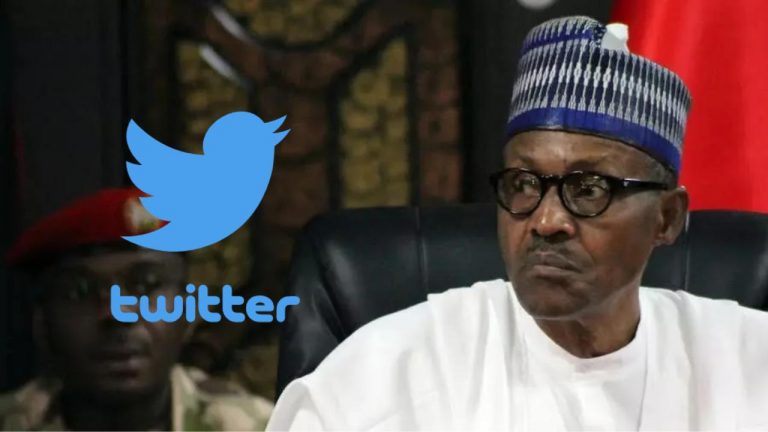
Twitter bends the knee after Nigeria bans the platform, begs for ‘open discussions’ to address ‘mutual concerns’: Details

A week after Nigeria banned Twitter from operating in the country, the social media behemoth seemed to have fallen in line as it made overtures to the Nigerian government for having ‘open discussions’ to iron out the ‘mutual concerns’ existing between the two.

In a tweet on Friday, Twitter said it has informed the Nigerian government of its readiness to have an open discussion to sort out the differences and see the service restored.

“Today marks one week since Twitter was blocked in Nigeria. We have informed the Nigerian government that we are ready to meet for an open discussion to address mutual concerns and see the service restored. We remain advocates for the free and #OpenInternet everywhere,” a tweet posted by Twitter Public Policy said.

The fence-mending by Twitter was in sharp contrast to its earlier stand when it expressed “deep concern” over the suspension of its operations from Nigeria and held forth on access to free and open internet being an essential human right in modern society.

During the last seven days, the Nigerian government showed no desire to carry out talks with Twitter over its presumptuous policies. Instead, it created an official account Indian social media platform Koo, a microblogging platform rivalling Twitter. Perhaps fearful that it may lose its business and relevance to Koo, Twitter on Friday attempted to placate the Nigerian government and make a proposal for open discussions with them.

Nigeria bans Twitter after it deleted a tweet posted by President Muhammadu Buhari

Last week, on June 4, Nigeria banned Twitter from the country for interfering in the country’s politics. The Nigerian govt on last Friday announced that it has indefinitely suspended Twitter’s activities. The move came two days after Twitter had deleted a Tweet by president Muhammadu Buhari warning against secessionist movements.

The decision was announced by Information Minister Lai Mohammed. He said, “the persistent use of the platform for activities that are capable of undermining Nigeria’s corporate existence”. He didn’t elaborate further on how the suspension will be executed. According to Reuters, the Twitter website and apps are still working in the country.

The move is seen as a response to Twitter deleting the president’s tweet, and suspending his account for 12 hours.

Yesterday, Lai Mohammed took had slammed Twitter for deleting the tweet by President Muhammadu Buhari who issued a warning to troublemakers in Nigeria. “We have a country to rule, and we will do so to the best of our ability. Twitter’s mission in Nigeria is very suspect, they have an agenda. The mission of Twitter in Nigeria is very suspicious,” he had said.

In the now-deleted tweet, Buhari had made a reference to the country’s 30-month civil war in 1967-1970 and had warned “those who wanted the government to fail” to desist from fomenting trouble.

“Many of those misbehaving today are too young to be aware of the destruction and loss of lives that occurred during the Nigeria civil war. Those of us in the fields for 30 months, who went through the war, will treat them in the language they understand”, the tweet posted by the president had said.

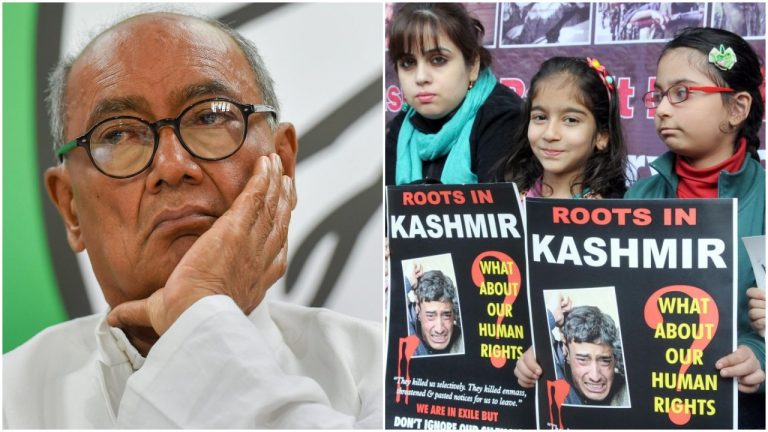
Digvijaya Singh lies to Pakistani journalists that Kashmiri Pandits benefited from reservation policies historically: Here is the truth

On early Friday morning, a Clubhouse conversation featuring Congress leader Digvijaya Singh and a few Pakistani journalists went viral on the internet. During the conversation, the veteran Congress leader stirred the hornet’s nest by hinting at the re-introduction of Article 370 in Jammu and Kashmir, a special provision for the former state that was revoked by the Modi government in 2019.

In the Clubhouse conversation, Digvijaya Singh openly said that if and when the Congress party returns to power at the centre, they would revoke the decision taken by the Modi government to revoke the controversial Article 370. Essentially, Digvijaya Singh admitted that the Congress government would treat Jammu and Kashmir as a separate entity from the rest of India.

Attacking the Modi government in the Clubhouse chatroom, Digvijaya Singh claimed, “Democracy was not there in Kashmir when they revoked Article 370. Insaniyat (humanity) was not there because they put everyone behind bars. And Kashmiriyat is something that is fundamental to secularism. Because in a Muslim-majority State, there was a Hindu Raja (king).”

In addition to promising the re-introduction of Article 370 in Jammu and Kashmir, the Congress leader also peddled misinformation against Kashmiri Pandits by saying that the community enjoyed reservation benefits in the valley. During his chat, Digvijaya Singh said that Kashmiri Pandits were granted reservations in jobs prior to the scrapping of Article 370.

“In fact, the reservation in Kashmir was given to Kashmiri Pandits in government services. Therefore, revoking Article 370 and reducing the Statehood of J&K is an extremely sad decision. We (Congress party) will certainly have to relook at this issue,” Digvijaya Singh said in the Clubhouse chatroom.

As per Digvijaya Singh, Kashmiri Pandits lived a life of harmony with fellow Muslims as they were given reservations in the government services. However, by scrapping Article 370, the Modi government did injustice to the Kashmiri Pandit community, the Congress leader insinuated. He also promised that they would have a relook at the issue once they return to power at the centre.

Did Kashmiri Pandits enjoy benefits of reservation in the valley as claimed by Digvijaya Singh?

Contrary to the claims out by the Congress leader, the Kashmiri Pandits as a community never enjoyed any special community-based reservation in Jammu and Kashmir since independence.

Prior to the scrapping of Article 370 and Article 35A of The Constitution of India, 1949, the reservations policies in the erstwhile state were implemented under the acts passed by the centre and concurred by the Jammu and Kashmir legislative assembly. One such act was the Jammu and Kashmir Reservation Act, 2004. This Act was in force to provide job reservation in Jammu and Kashmir to the Scheduled Castes, Scheduled Tribes and Other Socially and Educationally Backward Classes residing in regions adjoining the Actual Line of Control.

As per the 2004 act, any person claiming reservation must have resided in the area designated as backward for the last 15 years. The migrant Pandits belonging originally to areas declared backwards by the government were deprived of reservation benefits as they could not fulfil the necessary condition of having lived continuously in backward areas for the last 15 years before claiming benefits.

In fact, Kashmiri Pandits as a community never enjoyed any specific reservations under the law. However, any individual from the community could have benefited from the policy if he/she had lived in the area designated as backwardness for at least 15 years. As thousands of migrant Kashmiri Pandits fled from their native places due to the genocide that ensued post-1990s, the community members were not eligible under reservation policy.

In May 2019, just a few days before the revocation of Article 370, in a major relief to thousands of migrant Kashmiri Pandits, the then Jammu and Kashmir government had announced an amendment to the existing rules governing the issuance of reservation certificates to various categories of the state’s residents.

Under the new rules, the benefits of reservation, which was available to the residents along the Line of Actual Control (LAC), was also extended to residents living along the International Border (IB). This new rule benefited the residents, especially the Kashmiri Pandits living in Jammu, Samba and Kathua.

Most importantly, it was only after the Modi government scrapped Article 370, the Jammu and Kashmir Reservation Act, 2004 was made applicable with certain amendments to the Union Territory of Jammu and Kashmir and Union Territory of Ladakh, as mentioned in the Jammu and Kashmir Reorganisation Act, 2019. 

The Act provides reservation for appointments and promotions in the state government jobs, admission for certain reserved categories to the professional institutions. The people eligible under the category will get an additional 3% reservation in educational institutions as well as in jobs.  

Further, the Modi government also applied the 103rd Constitutional Amendment Act of 2019 to Jammu and Kashmir, giving 10% reservation to Economically Weaker Sections among people in the general category. Communities like Kashmiri Pandits, who were deprived of reservation policies in the state before the 2019 amendment, could now apply for reservation in education and jobs under both the Jammu & Kashmir Reservation Act and the 103rd Constitutional Amendment Act in the state.

From above, one can discern that the Kashmiri Pandits never really enjoyed any special benefits before 2019, as claimed by the Congress leader Digvijaya Singh. It was only after the revocation of Article 370 in Jammu and Kashmir, doors have opened for the Hindu community to seek reservations in education and public employment.

Kashmiri Pandit activists slam Digvijaya Singh for propagating lies about the community

Meanwhile, the Kashmiri Pandit activists have categorically rejected the claims made by Digvijaya Singh on Clubhouse and reiterated that the community never received any benefits of reservation policy in the erstwhile state as claimed by the Congress leader.

Journalist and Kashmiri Pandit activist Aditya Raj Kaul slammed the Congress leader, saying Kashmiri Pandits never had any government job reservation in Kashmir or any part of the rest of India. Kaul said Indira Gandhi trusted Kashmiri Pandits as her closest aides, who were known as ‘Kashmir Mafia’, which included people like PN Dhar, RN Kao, PN Haksar.

Rebutting the claims made by Digvijaya Singh, Kaul said that they were not hired on the reservation but were picked as they were educated, trustworthy and strategic thinkers.

Slamming Digvijaya Singh for his remarks on Kashmiri Pandits, Kaul said that Digvijaya Singh claimed ‘Kashmiriyat’ is the ‘fundamentals of secularism’, but where was this Kashmiriyat when ethnic cleansing of Pandits took place in 1990 by Islamists? he asked.

“Where is this Kashmiriyat when innocent KPs – Ajay Pandita and Rakesh Pandita are butchered in South Kashmir?” the Kashmiri journalist asked.

Noted scholar and Kashmiri Pandits activist Ashish Dhar too rejected the claims put out by Digvijaya Singh, saying that such statements from Congress leaders were nothing but lies.

Speaking to OpIndia, Dhar pointed out how Kashmiri Pandits had to suffer persecution at the hands of the Jammu and Kashmir state as they were deprived of benefits just because they were Hindus.

“Contrary to what Digvijay Singh has shamelessly stated, there were actually de-facto reservations for Muslims in professional colleges in Kashmir. For example, my own parents were denied admission to the Kashmir medical college as their names were quietly removed from the merit list just because they were Hindus. They had to waste an entire academic year and file a writ petition in the High court to get their seat allotted next year eventually,” Ashish Dhar revealed.

Attempts to gaslight Kashmiri Pandits and whitewash crimes of Islamists in the valley

The claims by Digvijaya Singh that KPs enjoyed the benefits of the reservation is just another attempt to gaslight the victims of genocide and portray them as the community which enjoyed all benefits in the valley. By claiming that Kashmiri Pandits of the valley were treated well by the state, Digvijaya Singh is completely glossing over the genocide of KPs, who was raped, murdered and driven away from Kashmir by Muslim fundamentalists and Jihadis.

By peddling such misinformation about the reservation policies in Jammu and Kashmir, Congress leader Digvijaya Singh was perhaps trying to portray that Kashmiri Pandits enjoyed a good deal of benefits in the valley before they were thrown out of the valley. In an attempt to whitewash the crimes of Islamists in the valley, Singh seems to have tried pushing a narrative that the KP community did not face any persecutions at the hands of Islamists in Kashmir.

The false propaganda against Kashmiri Pandits by Digvijaya Singh is strangely similar to the contextualisation of the genocide of Kashmiri Pandits by the likes of Barkha Dutt in the past. It is worth mentioning that Barkha Dutt was once seen defending the attacks on Kashmiri Pandits by saying that they were “wealthy in the valley with good jobs’, which according to her, created a rift and resentment among the Muslims who felt that they were ‘deprived’.

By the looks of it, Digvijaya Singh seems to be continuing the act of Barkha Dutt’s earlier attempts to whitewash the genocide carried out by Islamists against the Kashmir Pandit community by depicting the latter as some sort of ‘oppressors’ who enjoyed all the benefits granted by the state.


LeT terrorists attack police, CRPF on Covid duty in Sopore, 4 dead: Here is what we know so far

On Saturday (June 12), terrorists attacked Jammu and Kashmir Police personnel and the Central Reserve Police Force (CRPF) in Arampora in Sopore town in the Baramulla district.

As per reports, two civilians died while two police personnel were killed in action. Besides three police personnel including an assistant sub-inspector was injured during the attack. The victims were rushed to the nearby hospital for further medical treatment, before being shifted to Army’s 92 Base Hospital. Sources suggest that two more civilians also sustained injuries.

While speaking about the matter, Kashmir IG Vijay Kumar said, “Two policemen and two civilians lost their lives in a terrorist attack in Sopore. Two other police personnel are injured. Lashkar-e-Taiba is behind this attack.”

Reportedly, the police team was deployed in the Arampora area for Covid-19 duty. The area has been cordoned off and a probe has been initiated to nab the terrorists. Simultaneously, senior police officials have reached the spot to analyse the situation.

While reacting to the incident, National Conference Vice-President Omar Abdullah said, “Terrible news coming in from Sopore. Such attacks must be condemned without reservation. Prayers for the injured & condolences to the families of the deceased.”

Jammu & Kashmir police files charge sheet against Mehbooba Mufti’s close aide

Earlier, the Jammu and Kashmir Police had made a sensational set of disclosures in its charge sheet against senior PDP leader Waheed-ur-Rehman Parra, a close aide of former Jammu and Kashmir chief minister Mehbooba Mufti. In a 19-page charge-sheet, the Counter Intelligence Kashmir(CIK), a wing of the CID department of J&K police, had described Parra’s 13 years of the journey from 2007 as a journalist and politician as a “saga of subterfuge, deceit and double-dealing”.

The charge-sheet accused Para of being hand-in-glove with terrorists operating in Jammu and Kashmir and of taking directions from Pakistan-based terror outfits. The charge sheet said Parra was an “asset” for Pakistan-based terror groups and helped them in furthering their nefarious designs in Kashmir while ensuring that his political rivals were neutralised. Parra is said to have forged ties with terrorists to advance his political ambitions and returned the favour by providing an array of help and support that resulted in terror attacks.

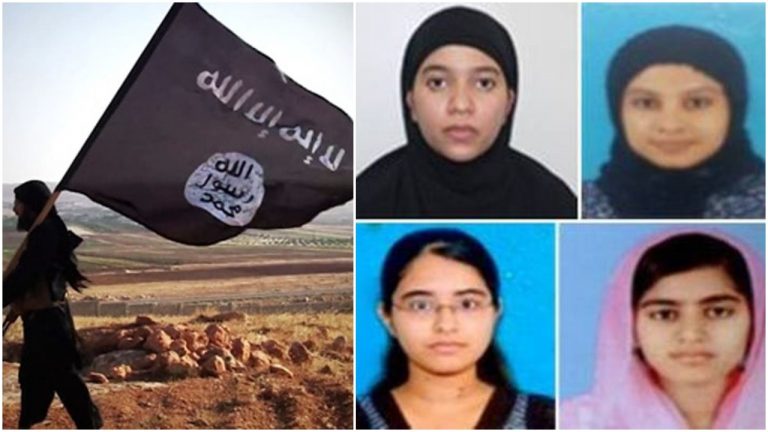
India not to allow return of four Kerala-based women who had joined Islamic State, at least 3 of them are converts: Details

The four Indian women from Kerala who had accompanied their husbands to join the Islamic State in Khorasan Province (ISKP) are unlikely to be allowed to return to the country, reports the Hindu.

According to the Hindu report, a senior government official has confirmed to them that the four Kerala-based women, who had travelled to Nangarhar in Afghanistan in the years 2016-18, will not be allowed to return back to the country.

However, their husbands were killed in different attacks in Afghanistan. The Kerala-based Muslim women were among thousands of Islamic State terrorists who surrendered before the Afghanistan authorities in November and December 2019.

The four women were identified as Sonia Sebastian alias Ayisha, Merrin Jacob alias Mariyam, Nimisha alias Fathima Isa and Raffaela. According to senior officials, two other Indian women and a man had also surrendered to the authorities.

In April this year, Ahmad Zia Saraj, the chief of Afghanistan’s National Directorate of Security, revealed that 408 members of the Islamic State from 13 countries are languishing in Afghanistan prisons. This included four Indians, 16 Chinese, 299 Pakistanis, two Bangladeshis, two from the Maldives, who had joined IS in the past.

Kerala women have strong belief in Islamic terrorism, says investigative agencies

Saraj had also said the Afghanistan government was in talks with different countries to deport the prisoners.

While Afghan officials in Delhi declined to comment, senior officials in Kabul hinted that they are waiting for confirmation from Delhi to deport these four Kerala-based women. As per the Hindu, there is no consensus among various government agencies on the return of the four women, and it was unlikely that they would be allowed to come back.

In December 2019, a month after the surrender, the Indian investigation agencies interviewed the four women living with children in Kabul. During the interview with the women, the investigation agencies found out that they have a strong stance in favour of Islamic terrorism, and hence, India is likely to request the Afghanistan authority to prosecute the women there itself.

“One line of thought was to allow them to come back and become an approver in the cases here. However, their interview revealed that they are highly radicalised. The France model may be followed, and the Afghanistan authorities can be requested to put them on trial there,” said the official to the Hindu.

Meanwhile, Interpol has issued red notices against the women on India’s request.

Four couples from Kerala had joined Islamic State: NIA

According to the charge sheet filed by the National Investigation Agency (NIA) in 2017, Sebastian had left India in 2016 to join the ISKP in Afghanistan along with a group of 21 men and women from Kerala. They had crossed over to Afghanistan on foot from Iran.

The NIA said Sebastian, from Kasargod in Kerala, left India on May 31, 2016, with her husband, Abdul Rashid Abdulla, from Mumbai airport. They had said the couple held secret classes supporting IS and jihad during the last part of Ramzan in Padanna and Kasaragod. Sebastian is an engineering graduate.

Another IS sympathiser, Merrin Jacob alias Mariyam, was married to Bestin Vincent, a resident of Palakkad. The couple escaped to Afghanistan in 2016 to live in the IS-controlled territory. Later, the Chrisitan couple converted to Islam after their marriage, and Vincent assumed the identity of Yahya. Vincent was later killed in Afghanistan.

Similarly, Vincent’s brother Bexon and his wife, Nimisha alias Fathima, also converted to Islam and escaped to Afghanistan with them.

Raffaela was married to a 37-year-old physician Ijas Kallukettiya Purayil a physician from Kasargod. The couple is believed to have stormed a prison in a terror attack in Eastern Afghanistan’s Jalalabad in August 2020. Around 30 persons were killed in the attack.

After raping woman from Bengal, ‘farmer activists’ took out procession with the dead body of the Covid victim, 6 named in FIR: Read what happened

Numerous shocking revelations have emerged as the Haryana police continues to probe the horrifying case of a gang rape of a 25-year-old woman who travelled all the way from West Bengal to participate in the anti-farm law protests at the Tikri Border site. According to reports, after the death of the victim on April 30, the protesting farmer activists had taken out a procession by placing the dead body in an open jeep, even though she allegedly died of Covid-19. 

As per guidelines, there are strict protocols in place that do not allow such processions of anyone who has died of Covid as it may infect the attendees.

Farmer ‘activists’ dubbed the victim as martyr to whitewash crime

However, unfettered, the farmers took out a funeral procession before her last rites were performed. They dubbed her a martyr as they claimed she died while fighting for farmer’s rights. This was reportedly done to hide the fact that she had been raped and sexually harassed at the protest location, which these activists knew at the time but chose to ignore, a report by Dainik Jagran claimed.

Moreover, apart from the three arrested accused, namely Anil Malik and his accomplice Anup Chinaut of Hisar, and Ankur Sangwan of Charkhi Dadri, there were others who were involved in the crime. The FIR, which was registered at the Women’s Police Station Bahadurgarh on the basis of a complaint by the girl’s father, names 6 accused, identified as Anil Malik, Anup Singh Chinaut, Ankur Sangwan, Kavita Arya, Jagdish Brar and Yogita Suhag. All the accused are members of the Kisan Social Army.

They have been charged under IPC Sections 120B, 342, 354, 365, 376D and 506 for criminal conspiracy, wrongful confinement, assault, rape, kidnapping, blackmailing and criminal intimidation.

Following the arrest, the main accused Anil Malik has reportedly confessed that he along with his accomplice Anup Chinaut had raped the deceased victim in the train as well as at the farmer’s protest site on the Tikri border.

A report by Hindi daily Amar Ujala reveals that apart from this, the accused had also blackmailed the victim with a video of the act which he recorded from his own phone.

According to the police, the third accused Ankur Sangwan had also molested the victim. Meanwhile, Jagdish Brar was found guilty of covering up the incident.

Additionally, the complaint registered by the victim’s father on 16 April said that the victim had revealed details of the sexual assault on her to two persons at the site – Jagdish Brar and Yogita Suhag. Yogita recorded a video of her statement in Jagdish’s presence. But the matter was suppressed until the victim’s father filed a formal complaint.

Connection of the Tikri border rape case with Aam Aadmi Party

As per reports, Anup Singh, one of the accused, was an active member of the Aam Aadmi Party from the Hisar region. AAP MLA Sushil Kumar has confirmed his involvement with the party. Another accused, Anil Malik is an AAP member in Delhi. However, Kumar claimed he did not have any information about him. These two were active at Farmer Protests from the beginning under the banner of the Kisan Social Army. Since the woman died in hospital, Anup has been missing from the protest site.

The silence of ‘farmer leaders’ like Yogendra Yadav

Yogendra Yadav, a professional protestor who is now protesting on behalf of “farmers,” said on May 10 that he was aware of the woman’s sexual harassment as well as the potential kidnapping of the West Bengal girl by the perpetrators. This revelation drew tremendous condemnation for Yadav who chose to remain silent despite knowing about the incident.

The Tikri border rape case

OpIndia had reported that on April 12, the woman was sexually assaulted while travelling by train from West Bengal to join a farmer’s protest on April 12. She was later raped at the protest venue also. After contracting Covid-19, the victim died on April 30 at a private hospital in Bahadurgarh.

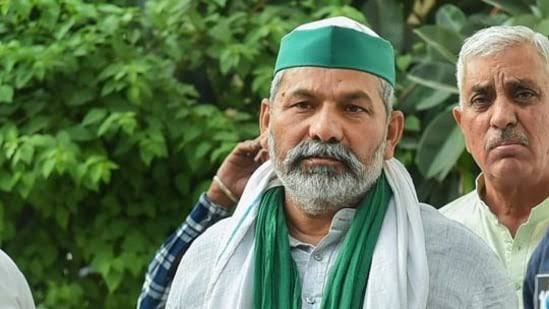
Delhi Police officials assaulted by protesting ‘farmers’ at Singhu border, Rakesh Tikait invents outrageous excuse to defend attack

Two police officers of Delhi Police’s Special Branch team were allegedly attacked by protesting farmers at the Singhu border on Thursday. The incident took place when the officers were reportedly taking pictures at the protest site.

According to Delhi Police, the personnel were doing ground analysis at the Narela border after there was an increase in the number of protesters who came from Panipat two days back. 

Describing the attack, one of the police officials said, “A woman came to us and questioned what we were doing there. Then others came and surrounded us. They all seemed to be drunk. They attacked us. My colleague sustained a fracture in his hand. Somehow we managed to save ourselves.”

Following the attack, an FIR has been filed at the Narela police station against unknown protesters for assaulting police personnel and obstructing them for doing their duty. 

BKU leader Rakesh Tikait defends attack against Delhi Police officials

Meanwhile, Bharatiya Kisan Union (BKU) leader Rakesh Tikait defended the farmers, alleging that they mistook police officials for journalists.

“They (Police) must have been in civil dress and farmers might have mistaken them for channel people (media) who portray their movement in bad light,” Tikait spoke on the incident of assault against Delhi Police officers on June 10. 

In addition, Tikait blamed the government and police for instigating farmers. “Police and government want to instigate farmers. If they (police) have been visiting the site for days, contact should have been established. They can file FIR, but there should be something to write in it,” he added.

Violence, Khalistani terrorism, rapes and more: Farmers’ protest against three agriculture laws

Since November 2020, the so-called farmers have camped on the borders of the national capital in opposition to the three farm laws—Farmers’ Produce Trade and Commerce (Promotion and Facilitation) Act, 2020; the Farmers Empowerment and Protection) Agreement on Price Assurance and farm Services Act 2020 and the Essential Commodities (Amendment) Act, 2020. 

The protests have seen multiple incidents of violence, most notably the Republic Day insurrection when scores of’ farmers’ ran riot on the streets of Delhi and tried to capture the Red Fort and turn it into a protest site. 

The protest also saw participation from pro-Khalistani members, who have been toiling to revive Khalistani terrorism and throw the country into chaos. More recently, the protests have also proven to be unsafe for women, with cases of rapes allegedly committed by protesters being reported. 

How propaganda media and cartoonist Manjul are milking a Twitter email to the hilt

On June 4, Anti-BJP cartoonist Manjul took to Twitter to insinuate that the Modi government has been trying to silence his freedom of expression. He had shared a screenshot of an email received from ‘Twitter Legal’, wherein it pointed out that the microblogging platform had received a request from Indian law enforcement authorities regarding his account. “Jai Ho Modi ji ki sarkar ki (All hail the Narendra Modi-led-government),” he alleged.

Twitter correspondence of this nature is not out of the ordinary. OpIndia itself has got several such emails from Twitter. In fact, other activists on Twitter have also received several such emails with the body of the email reading exactly the same as the text that was tweeted by Manjul.

However, this email became the trope with which Manjul, and several others, beat the Modi government. Manjul used this email to say, “Thanks to the Modi government that it did not ask Twitter to shut down the handle for being anti-religion and atheist and not considering Modi ji as my God.” Manjul further insinuated that the warning from Twitter was received at the behest of the Indian government. He wrote, “It would have been better if the government informed about the tweet that had offended it. I could have re-posted the same tweet. This would have helped the people.”

Soon, news surfaced that Manjul’s contract with Network 18 has been terminated. No sooner had the news appeared, did The Wire attribute the termination of the contract to the Twitter email that Manjul had got.

The Wire attributed its information to sources, said that “there was no indication that he would be suspended and the sudden move has taken them by surprise”. The Wire claims that it is the context of the email from Twitter that Manjul was suspended from Network 18, where had been working for the past 6 years.

The same report was then picked up by Newslaundry, another left-wing propaganda portal to spread the narrative further.

Even when one evaluates the reasons being peddled by The Wire, to anyone who wishes to look at the situation logically, the reason seems to be a bit of a stretch. Any company generally terminates its freelance contributors as and when they please, mostly as a cost-cutting measure or when they believe that the freelance contributor has become more of a burden than an asset. That is a legitimate decision that any company would take and the decision can be based on several factors. However, it is rather convenient to claim that a decision such as this would be taken based on one generic email by Twitter, that is not unique to Manjul, but has been received by hundreds of people on social media.

A former freelance writer with Network 18 too chimed in on the controversy.

He indicated that he too had been removed with ‘immediate effect’ from the list of freelance contributors and attributed the move possibly to Network 18’s possible cost-cutting measures in the midst of a pandemic.

In fact, lay-offs in the media industry were rather common during the Wuhan Coronavirus pandemic as portals and media houses struggled to make ends meet not just in India but across the globe.

In March 2021, left-wing media outlet BuzzFeed announced that it has laid off 47 reporters, editors and producers from the newly acquired HuffPost in USA. BuzzFeed also said that they would be closing down HuffPost’s Canadian operation due to the ongoing organisational restructuring.

In a statement, BuzzFeed CEO Jonah Peretti said to the employees that they would begin to restructure HuffPost to fast-track its path to profitability. Unfortunately, that includes staff reductions, and a number of talented colleagues will be laid off over the next few days, he said. Reportedly, Peretti said losses last year pegged at $20M and would be similar this year without intervention. 

“Though BuzzFeed is a profitable company, we don’t have the resources to support another two years of losses,” said Peretti announcing his decision to lay off 47 employees.

In April 2020, the Digital far-left propagandist website The Quint has asked 45 employees to go on indefinite leave without pay in the wake of the Wuhan Coronavirus pandemic. The list of employees sent on indefinite leave by the propagandists at The Quint includes reporters, copy editors, a bureau chief, production staff and the entire technology team. 

In April 2020 itself, India Today group had announced that it is shutting down its Delhi-tabloid Mail Today. The notice read, “It has been a privilege to be your paper of choice and inform you day after day. However, it is a fact that the coronavirus pandemic has drastically changed all our circumstances.” The print edition of Mail Today was in circulation from the last thirteen years. The notice further added, “It is with deep regret that we announce the suspension of the print edition of Mail Today, effective today.”

Therefore, the cost-cutting measures are not new in the midst of the pandemic and attributing Manjul’s exit to source based information and linking it to the Twitter email, only reeks of a motivated agenda that portals like The Wire and Newslaundry peddle rather effectively.

Interestingly, even an old colleague of Manjul did not quite believe the version being peddled by The Wire and Newslaundry. A former colleague of Manjul told OpIndia, “Manjul had resigned from DNA and had thought he’d have a flourishing freelance career and make much more money than what monthly salary was bringing him. However, his plans went haywire and he couldn’t get many contracts. He’s been bitter and now trying to blame external factors for a bad career move. I hope he’s finally making good money thanks to all publicity he’s been able to garner”.

It is pertinent to note here that Manjul was earlier a cartoonist with the Zee Media owned DNA. After taking up freelance work, he turned virulently anti-BJP and has been drawing cartoons since then to peddle anti-BJP agenda. 

Irrational and motivated strategy to defame Modi government

While Manjul, The Wire and Newslaundry brazenly tried to portray the hand of the Modi government behind the Twitter correspondence, nothing can be further from the truth. If we apply the rationale of the anti-BJP cartoonist, then, it will imply that the Indian government is out there to destroy Opindia and popular Twitter users such as Vikaso and Ankur Singh since all mentioned have received the exact same correspondence from Twitter.

While it is not unusual for the left-liberal lobby to pin the blame on the Modi government over trivial issues, the hullaballoo created on Twitter by Manjul appears to be a part of a new devious strategy to peddle propaganda against the incumbent government.

Oxfam says reporting rape cases harms black and marginalised people, blames ‘privileged white women’ for root causes of sexual violence

An Oxfam training document recently suggested that “privileged white women” were supporting the ‘root causes of sexual violence’ for wanting assailants imprisoned because it disproportionately affects minorities.

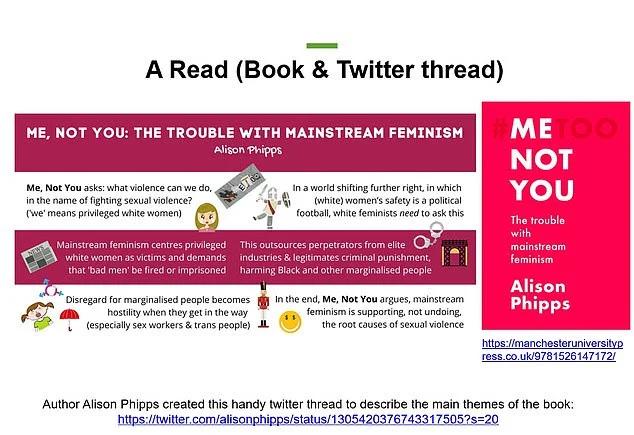
Oxfam, which has been mired in controversies over a host of sex scandals, including claims that employees used underage prostitutes in Haiti, compiled a PowerPoint presentation through its LGBT network that claimed mainstream feminism supports ‘the root causes of sexual violence’ by presenting white women as ‘victims’ and which in turn justifies the excessive punishment for ‘black and other marginalised people’.

The slide shows a sobbing woman, accompanied by a message that says mainstream feminism centres on privileged white women as victims and demands that ‘bad men’ be fired or imprisoned. It says that fighting against sexual assault legitimises criminal punishment, which harms black and other marginalised people.

Oxfam training manual that blames white women for pressing charges against offenders

The Oxfam training manual draws inspiration from the book Me Not You: The Trouble with Mainstream Feminism, authored by Alison Phipps, a professor of gender studies at Sussex University. Phipps describes herself as a political sociologist ‘focusing on mainstream Western feminism, especially movements around sexual violence’. The book concludes that mainstream feminism is supporting, not undoing, the root causes of sexual violence.

Summarising the main theme of the book, the Oxfam presentation says that white feminists need to ask themselves whether they are causing harm when they fight against sexual violence.

According to Naomi Cunningham, a discrimination and employment law barrister, the message from the contentious PowerPoint presentation seemed to allege that woman who report a rape or sexual assault case to police are considered as hateful “white feminist”. This is a classic case where victims are blamed and tried to silenced for the atrocities committed upon them, she said.

She slammed the document that indirectly tried to suggest a woman stoically endure sexual assaults and rapes committed on them and refrain from reporting them to police. “I think any woman could make an arguable case that this has created or contributed to an intimidating, hostile, degrading, humiliating or offensive environment, which is how the Equality Act defines harassment,” she added.

Charges of sexual exploitation against Oxfam staff

It is noteworthy to mention that while the Oxfam training manual hold victims responsible for the sexual assaults committed on them, in 2018, Oxfam was at the centre of a raging turmoil after its staff members in Haiti were accused of using underage prostitutes. It was reported that the Haiti Oxfam chief solicited prostitutes in a villa which was paid and provided for by Oxfam, exposing the dark underbelly of international charity organizations and NGOs in general.

This was not an isolated case. A year later, similar allegations of sexual exploitation were levelled against the Oxfam employees in the Democratic Republic of Congo. Two employees were suspended as a part of an “external investigation” into the matter.

However, according to The Times, whistleblowers were “frustrated at the length of time taken to complete the investigation”. Former and current staff members of Oxfam made allegations of sexual exploitation, bullying, fraud, and nepotism against 11 people in a letter sent to the Oxfam leadership.

After Oxfam’s Haiti sexual exploitation scandal came to light in 2018, the charity promised to bring reforms and changes, but the reemergence of allegations revealed that changes if made, were not sufficient. The UK Charity Commission concluded that Oxfam had a “culture of poor behaviour” and was issued with a warning over its “mismanagement”. In the wake of this scandal, thousands of people cancelled their regular donations to Oxfam, causing Oxfam to make cuts worth 16 million British pounds.

Oxfam India and its deference to the Congress party

It is to be noted that the CEO of Oxfam India, Amitabh Behar, wrote a fawning article on the Congress party. In the article, Behar offers numerous sermons to the Congress party and eulogizes its idea of India. Furthermore, a Board Member of Oxfam India was involved in the drafting of the deeply dangerous and anti-Hindu Communal Violence Bill.