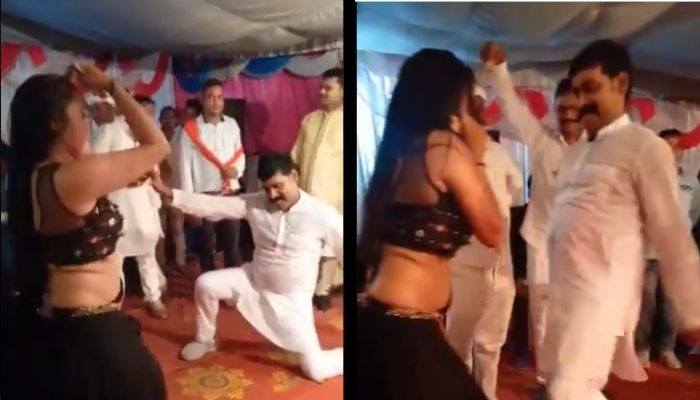
A First Information Report (FIR) was lodged against Samajwadi party leader Shailendra Yadav after he was found dancing and partying in violation of Coronavirus guidelines in Gorakhpur, Uttar Pradesh.
In a video that has now gone viral on social media, Yadav was seen dancing alongside women to the music of the Samajwadi party’s song ‘Samajwaad ka jhanda fir se UP me lahrayenge‘ (We will again unfurl the flag of socialism). He also danced to the tunes of another song titled, ‘‘Akhilesh ko Taj Dilayenge.‘
समाजवादी पार्टी की वैक्सीन आ गई है, गोरखपुर में सपा के नेता “वैक्सीन” का जश्न मनाते हुए !
उत्तर प्रदेश की जनता योगी जी के विकल्प के रूप में इनके हाथ में सत्ता सौंप सकती है – “समाजवाद” ! pic.twitter.com/NbScZLp2wM
— Ashok Shrivastav (@AshokShrivasta6) June 4, 2021
The incident took place on Wednesday (June 2) in Baijnathpur in Campierganj during the wedding ceremony of village head Balkishan Yadav’s daughter. Reportedly, the Samajwadi party leader reached the village with his supporters to attend the event. As per eyewitnesses, he jumped on the stage and began dancing with the girls on stage. When the villagers intervened, he and his supporters began thrashing the villagers. During the scuffle, chairs were tossed between them.
Case filed against Samajwadi party leader and others
While speaking about the matter, SSP (Gorakhpur) Dinesh Kumar confirmed that an FIR has been filed against Yadav, and organisers of the event. Those seen dancing on the stage in the video have also been booked. All of them have been charged for assault, intimidating, rioting, and violating Coronavirus protocols under the Disaster Management Act.
The police informed that organising orchestra and dancing events at the wedding ceremony was a violation of Coronavirus protocols. Reportedly, ADG (Zonal) Akhil Kumar had instructed the police of all districts to curb the organising of such events and restrict the participation of people.
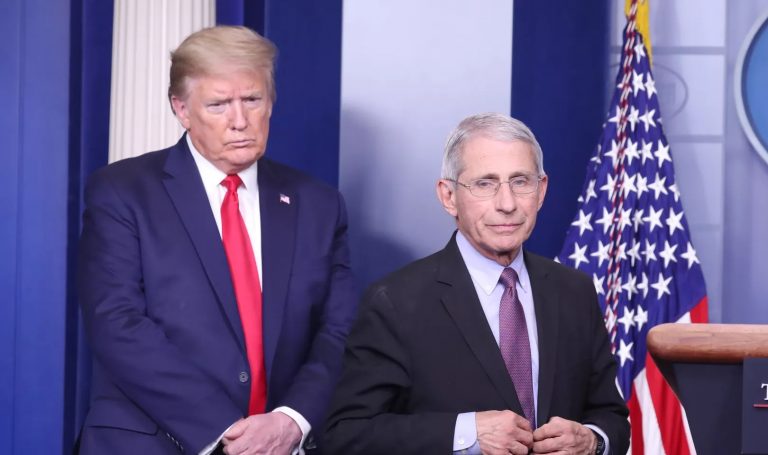
On Thursday, former US President Donald Trump said that he is vindicated of his earlier pronouncement about the Coronavirus: ‘China Virus had come from a Wuhan Lab’. He also slammed Dr. Anthony Fauci after his released emails pointed out that he was aware of research on the virus being done in the Chinese laboratory and that he had rejected the lab origin theory despite being made by several people.
“It is for everyone to see. Even the so-called enemy are grudgingly accepting and beginning to say that President Trump was right about the China Virus coming from Wuhan Lab,” said the former US President Donald Trump.
In his characteristic combative tone against China, Trump asked for imposing a fine on China for the death and the destruction they have caused due to this ‘lab leak’. “The correspondence between Dr Fauci and China speaks too loudly for anyone to ignore. China should pay USD 10 trillion to America, and the world, for the death and destruction they have caused!” said Trump.
“There are a lot of questions that must be answered by Dr. Fauci. The funding of Wuhan by the U.S. was foolishly started by the Obama Administration in 2014 but ended under the Trump Administration. When I heard about it, I said ‘no way.’ What did Dr. Fauci know about ‘gain of function’ research, and when did he know it?,” Trump said in a statement sent via email on Thursday.
Trump said that he is glad he didn’t always take the advice of Fauci, who was a member of his administration’s coronavirus task force.
“After seeing the emails, our Country is fortunate I didn’t do what Dr. Fauci wanted me to do. For instance, I closed our Borders to China very early despite his not wanting them closed. The Democrats and the Fake News Media even called me a ‘xenophobe.’ In the end, we saw this was a life-saving decision, and likewise with closing our borders to Europe, specifically to certain heavily infected countries,” Trump said.
The former president also revealed how Dr Fauci had been changing his opinions radically, like his views on wearing masks. “Also, Dr. Fauci was totally against masks when even I thought they would at least be helpful. He then changed his mind completely and became a radical masker!,” he said.
Trump’s proclamations come in the wake of the explosive revelation made in Dr Anthony Fauci’s private emails that were released to the press on the ongoing debate over coronavirus coming from Wuhan Lab. The emails revealed that during the early days of pandemic in the United States, Dr Fauci and his colleague were serious considering the possibility that the virus may have leaked from a laboratory in Wuhan, China.
However, soon after the emails were leaked, Dr Fauci tried to play down the consideration of the coronavirus being man-made, saying that he still finds it unlikely that a Wuhan laboratory released the virus. “I don’t remember what’s in that redacted [email], but the idea I think is quite far-fetched that the Chinese deliberately engineered something so that they could kill themselves as well as other people,” he said. “I think that’s a bit far out.”
Former US President Donald Trump was one of the earliest proponents of the lab-leak theory
The claim that the coronavirus might be synthetic and a result of a lab experiment gone awry gained traction after then US President Donald Trump threw his weight behind the theory that the virus was manufactured by the Chinese Communist Party in the Wuhan Institute of Virology. After trump’s endorsement, several experts and analysts alleged that the possibility of the virus emanating from the laboratory cannot be discounted, given that Wuhan Institute of Virology was known for carrying out such “risky” experiments.
However, a large section of experts had also dismissed the notion of the virus being artificially created, arguing that there was no evidence to support the claim and it was “extremely unlikely” that the virus was manufactured in a laboratory.
But in recent days, amidst criticism of inconclusive international inquiry into the origins of the virus and new reports of COVID-related illness emerging in the region weeks before it was officially identified, the belief that the virus may have indeed originated from a laboratory has gained renewed momentum.
Dr Fauci was informed in early 2020 that ‘the virus looks engineered’
The email leaks of Dr Fauci revealed that he was informed about the synthetic nature of the virus in early 2020. On June 1 (local time), Buzzfeed revealed that in the e-mails obtained through Freedom of Information Act request, Dr Anthony Fauci demanded information on gain-of-function experiments from the underlings.
In the academic paper attached to the e-mail titled “A SARS-like cluster of circulating bat coronaviruses shows potential for human emergence,” there was information on researchers in the United States and China were manipulating viruses to understand their shift from animals to humans.
The abstract of the paper states, “Using the SARS-CoV reverse genetics system, we generated and characterized a chimeric virus expressing the spike of bat coronavirus SHC014 in a mouse-adapted SARS-CoV backbone. The results indicate that group 2b viruses encoding the SHC014 spike in a wild-type backbone can efficiently use multiple orthologs of the SARS receptor human angiotensin-converting enzyme II (ACE2), replicate efficiently in primary human airway cells, and achieve in vitro titers equivalent to epidemic strains of SARS-CoV.”
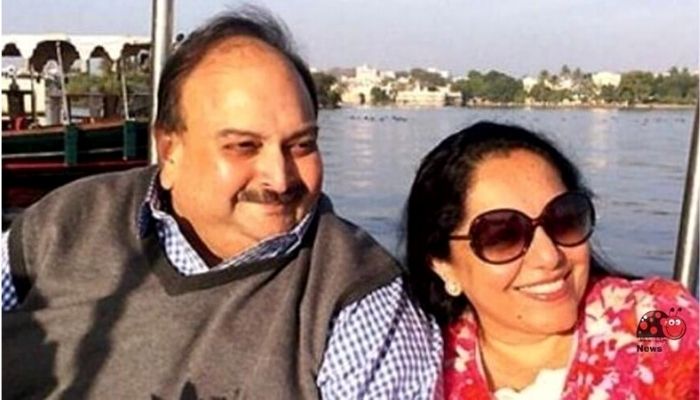
On Wednesday, the wife of fugitive Mehul Choksi alleged that the law enforcement authorities in India did not charge her husband and that he did not have any business dealings with absconding fraudster Nirav Modi. Priti Choksi made the allegations during an exclusive interview with Rahul Kanwal of India Today.
She claimed, “I fail to understand why my husband’s name was included in the FIR. In the chargesheet, my husband is not charged with anything because my husband was not involved with Nirav Modi My husband had no business with Nirav Modi. In the chargesheet, if you read, there is no mention of my husband.”
(Video Courtesy: Youtube/India Today)
What is the truth?
On February 13, 2018, a First Information Report (FIR) was filed by the Central Bureau of Investigation (CBI) against Mehul Choksi and his entities such as Gill India and Gitanjali Gems. The case was lodged following a complaint by the Punjab National Bank (PNB). The fugitive businessman was charged with fraud of ₹4,886 crores in the issuance of 143 Letters of Undertaking (LoU) and 224 foreign letters of credit (FLC) between 2017-2018.
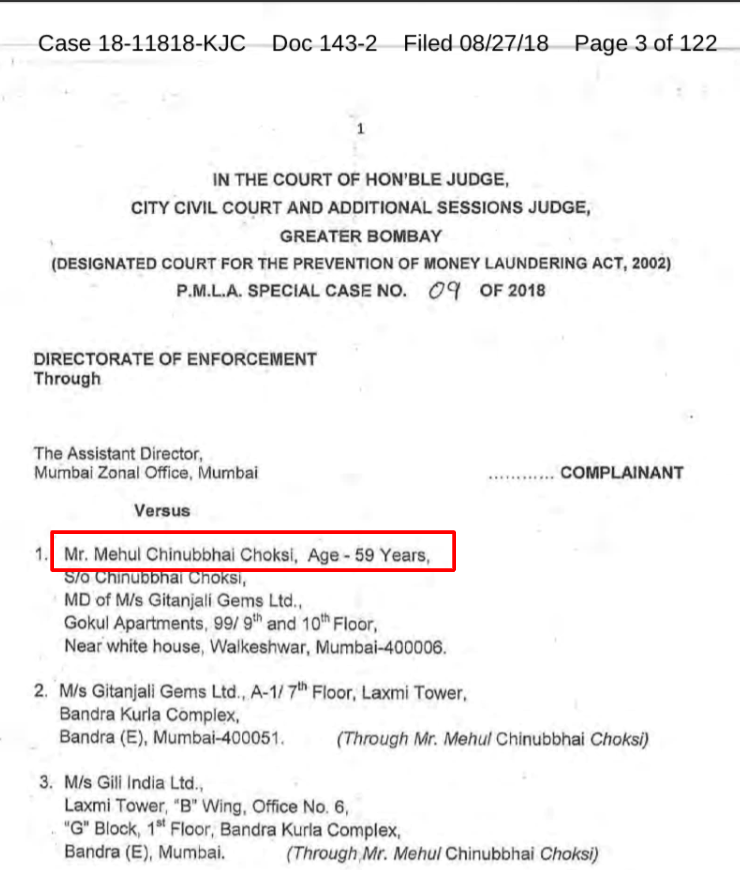
After the FIR was registered, the central agency had raided 17 entities of the Gitanjali Group at 26 locations in 6 cities on February 17 that year. It must be mentioned that the Enforcement Directorate (ED) had also filed a case against Mehul Choksi under the Prevention of Money Laundering Act (PMLA). The businessman was summoned by CBI and ED on several occasions but he fled the country and did not appear before the investigative authorities.
Screengrab of the case filed by the Enforcement Directorate (Image Credits: India Today)
Again on May 16, 2018, the CBI filed its first charge sheet in a Mumbai court. It had named Mehul CHoksi and 17 others for cheating, criminal conspiracy, and relevant provisions of PMLA. The central agency emphasised that the Punjab National bank suffered a ₹4,886 crore loss due to fraudulently issued 143 LoUs and 224 FLCs to the companies run by Mehul Choksi. Later, the ED had also filed a chargesheet and supplementary chargesheets. Both the agencies found the total defrauded amount by the fugitive businessman to be ₹6,097.33 crores.
Choksi’s firms such as Gill India Limited, Gitanjali Gems and Nakshatra Brands Limited were also involved in money laundering and siphoning off funds. Interestingly, the fugitive’s wife Priti Choksi was the nominee of most of the firms run by him. The ED found that Mehul Choksi along with PNB officials were involved in manipulating the SWIFT system of the bank, wherein small transactions were reflected in the system while large sums were being withdrawn.
The Enforcement Directorate had also attached ₹2600 crore worth of Choksi’s properties. Owing to his failure in appearing before the investigative authorities, a Red Corner notice was issued against the fugitive in December 2018.
Mehul Choksi arrested in Dominica
Dominican authorities had arrested Choksi for entering the country “illegally” from Antigua and Barbuda, where he has been living since January 2018. The ‘missing’ ex-diamantaire was spotted in Dominica’s capital city of Roseau at the Canefield beach where he was disposing of some documents at sea. Police got suspicious and approached him. When he was asked about his purpose to visit Dominica, he refused to answer.
After Choksi was arrested in Dominica, it was speculated that he will be extradited to India. However, the hopes of repatriating PNB Bank scam accused Mehul Choksi to India was soon dashed as Dominica said that they will send him back to Antigua, not India. Earlier, pictures of fugitive Mehul Choksi, held behind bars in Dominica, had surfaced on social media. The photographs were shared by Antigua News Room.
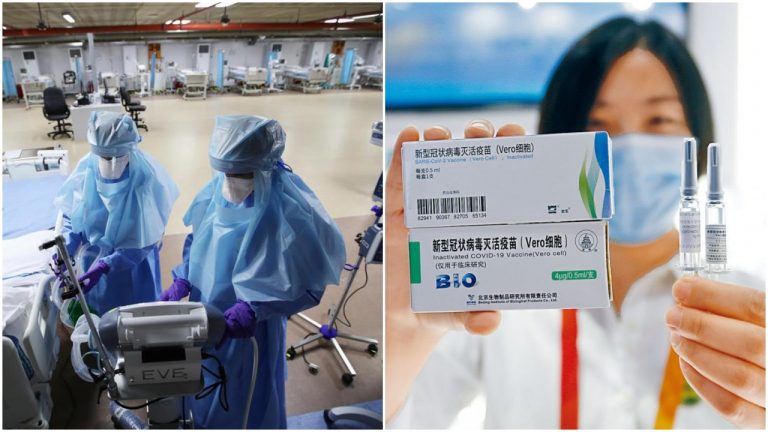
Concerns are growing over the effectiveness of Chinese vaccines after Bahrain announced that it would start giving additional immunization to its citizens by inoculating them with Pfizer and BioNTech SE vaccine to counter the sharp surge in the Covid-19 cases despite high rate of vaccination with the Chinese Sinopharm vaccines.
According to the reports, Bahrain, which has seen a sudden resurgence of Covid-19 despite high levels of immunisation with a Chinese-made vaccine, has started giving booster shots to its vulnerable citizens using Pfizer-BioNTech doses.
Last year, Bahrain was one of the first countries to buy China’s Sinopharm vaccine, even though serious doubts were raised on the safety and efficacy of the vaccine. A year later, the Persian Gulf country is raising doubts about the vaccine’s effectiveness.
Waleed Khalifa al Manea, Bahrain’s Undersecretary of Health, said the Sinopharm vaccine, which has accounted for more than 60% of Bahrain’s injections so far, provided a high degree of protection. However, nearly 90% of people infected in the current Covid-19 wave had not been vaccinated, he said.
Dr. al Manea also added that Bahrain residents who are aged over 50 and have chronic illnesses have been asked to get a booster shot six months after their complete Sinopharm vaccination. The government started offering the boosters at the end of May, he said. The Bahrain government will also go for the Pfizer-BioNTech vaccine to vaccinate its unvaccinated residents. However, they will also continue to offer the choice of Sinopharm to those who prefer the Chinese vaccine, Dr. al Manea said.
According to the Bahrain News Agency, 1,936 fresh cases were recorded on Thursday, taking the total tally in the country to more than 240,000, with over a thousand deaths.
Not just in Bahrain, Sinopharm trials in Serbia did not yield satisfactory results too: Reports
The peer-reviewed results of Sinopharm’s efficacy were published on May 26 by the Journal of the American Medical Association, which found 78% efficacy against symptomatic disease for one of two versions of the Sinopharm vaccine. However, there was no conclusive evidence to suggest the vaccine was effective for all age groups.
In a separate trial in Serbia, 29% of 150 participants were found to have zero antibodies against the virus even after three months. In addition, the average age of the people who participated in the Serbian study was higher than 65.
“The Sinopharm vaccine is not immunogenic enough, and it appears that its impact is especially low on elderly recipients,” noted Olgica Djurkovic-Djakovic, the head of the research.
The Communist Party of China has used two Chinese-made vaccines – Sinopharm and Sinovac as the critical tools of Beijing’s international diplomacy, especially in developing nations that have found it tough to secure sufficient doses of US and European-made vaccines. Sinopharm and Sinovac Biotech Ltd. have already received emergency approval from the World Health Organization.
The two vaccines are manufactured with inactivated virus, a long-used technique for making vaccines. The Pfizer-BioNTech shot employs a new technology using messenger RNA.
Seychelles, UAE also providing third booster shots
Seychelles, a small island nation in the Indian Ocean, became the world’s most vaccinated nation due to donations of the Sinopharm vaccine from the UAE. However, a recent surge in Covid-19 cases has been reported in the archipelago despite people getting jabbed by the Chinese vaccines. Following the scare, the Seychelles health ministry said it is considering vaccinating its people with a third booster shot.
Just as Bahrain and Seychelles, the UAE has also said that it already began administering a third booster shot of Sinopharm to some residents who failed to develop antibodies with the first two. In fact, Sinopharm had carried out a sophisticated trial in UAE and based on the UAE-led clinical trials in the Middle East, Sinopharm had also signed contracts to sell 175 million doses to countries like Egypt, Hungary, and Argentina while donating another 18 million to other small countries.
Dubai ruler Sheikh Mohammed bin Rashid al Maktoum, Serbian President Aleksandar Vucic and Philippine President Rodrigo Duterte are among several nation-heads who have publicly taken the Sinopharm jab.
As cases continue to surge in UAE, the authorities in Dubai, the most populous of the seven members of the UAE, have started giving Pfizer-BioNTech doses to people who were yet to receive complete doses of Sinopharm. Like in Bahrain, one can now choose in UAE which vaccine to take.
As questions are being raised against the efficacy of Sinopharm, China has maintained complete silence. In a press conference last month, Chinese Foreign Ministry spokesperson Hua Chunying had responded to the recent virus spike in Seychelles, another nation heavily dependent on Sinopharm, claiming that such reports “exposes their unhealthy mindset of denigrating China at every turn.”
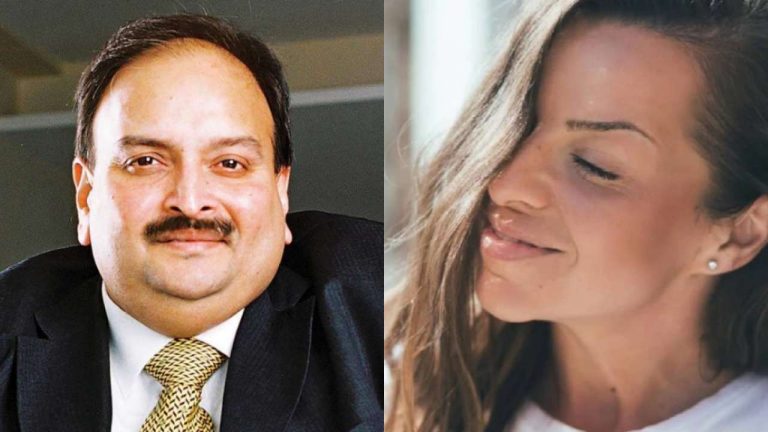
Another intriguing development surfaced in the detention case of fugitive diamantaire Mehul Choksi. The diamond trader’s wife has claimed that a mysterious woman whom Mehul Choksi met in 2020 is responsible for his current predicament. Choksi’s future lies in limbo as the authorities in Dominica, Antigua and India joust for his custody.
With Choksi currently facing charges of illegally entering Dominica from Antigua, the fugitive businessman’s wife, Priti, spoke about the woman who had allegedly laid the trap for her husband. “This woman, Barbara, laid a trap to bring him back to India. She entered our lives in August 2020 after she rented an accommodation opposite our house in Antigua. She led Mehul away from Antigua,” Priti said in an interview with the Times of India.
She further alleged that the boat which brought Mehul Choksi to Dominica is run by one Cobra Tours, whose owners, she contended were two Punjabi men.
“On Sunday, May 23, Mehul left home in a car to have dinner with Barbara. I don’t know what her real name is. Barabara Joseph, Barabara Jesseick or Barbara C? She stayed in the apartment next to ours intermittently. She had first met us last year between August 2-7,” Priti revealed.
Priti recalls Barbara requesting Mehul to pick her up from her residence. She said minutes later, eight to ten men barged into her house and whisked Mehul away.
Woman honey trapped Mehul Choksi
Earlier, reports had claimed that Choksi was honey-trapped by a woman who was possibly in cahoots with a team of men who abducted, tortured and conveyed him to Dominica. A report published in India Today quotes sources close to the fugitive businessmen to claim the woman was part of the team, which was involved in his “abduction, torture and arrest”.
Choksi had gone missing a few days ago from Antigua and Barbuda and was later traced to and arrested in Dominica. The fugitive diamantaire had alleged through his counsel that he was kidnapped from Jolly Harbour on May 23 and people having links with India were responsible for his abduction.
According to the report, the woman was staying in Antigua and had started meeting Choksi during morning and evening walks. She allegedly befriended Choksi and invited him to come over to her place on May 23. A team was lurking at her residence, waiting for Choksi to turn up. When he did arrive at the woman’s apartment, the group abducted him and spirited him away to Dominica, where he was arrested.
Mehul Choksi arrested in Dominica
Dominican authorities had arrested Choksi on Wednesday for entering the country “illegally” from Antigua and Barbuda, where he has been living since January 2018. The ‘missing’ ex-diamantaire was spotted in Dominica’s capital city of Roseau at the Canefield beach where he was disposing of some documents at sea. Police got suspicious and approached him. When he was asked about his purpose to visit Dominica, he refused to answer.
After Choksi was arrested in Dominica, it was speculated that he will be extradited to India. However, the hopes of repatriating PNB Bank scam accused Mehul Choksi to India was soon dashed as Dominica said that they will send him back to Antigua, not India
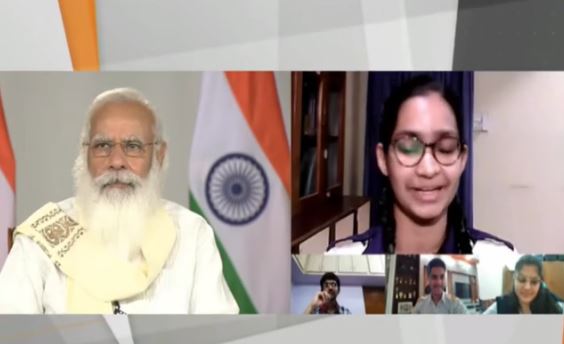
Prime Minister Narendra Modi surprised some students yesterday by participating in a virtual meeting with students from some CBSE schools. He also spoke with the parents of the children about the cancellation of the class 12 board exams.
The Union Education Ministry organised the meeting days after the decision to cancel the Class 12 board examinations.
Many snippets of PM Modi’s interacting with the CBSE students and their parents have surfaced online. The students were pleasantly surprised when the Prime Minister suddenly turned up at the virtual meeting.
In one video a parent tells PM Modi: “Shahrukh Khan se milne se bhi itna achcha nahi laga jitna aaj aap se milkar lag raha hain” (We were not so happy to meet Shahrukh Khan as we are to meet you today). Sir this is a dream come true”, said the parent.
“Shahrukh Khan se milkar itna achcha nahin lagaa jitna achcha aapse milkar lag raha hai!!” A parent at PM @narendramodi‘s surprise interaction with students. :)) pic.twitter.com/Ebi3HPKJan
— Priti Gandhi – प्रीति गांधी (@MrsGandhi) June 3, 2021
In other few videos shared by ANI, PM Modi candidly speaks to children, when a student tells Modi how much he admires him. Modi advised the students that health is wealth and asked them what do they do to remain physically fit.
#WATCH | PM Modi gets candid with students during surprise interaction, asks them about their hobbies and exercise routine. Students thank him for the cancellation of CBSE class 12 board exams pic.twitter.com/MjI3Gfpy1f
Hiteshwar Sharma, a Class 12 student from Panchkula, Haryana said: “PM sir asked how I was feeling after exams were cancelled. I told him that initially I didn’t feel good about but then I realised nothing is nor important than health,” he said.
Arni Sable, a Class 12 student from Indore said: “Interacting with PM Modi today was a very different experience and a once in a lifetime opportunity for me. He motivated us for the future.”
#WATCH “Interacting with PM Modi today was a once in a lifetime opportunity for me. He motivated us for the future,” says Arni Sable, a Class 12 student from Indore on her interaction with the PM earlier today pic.twitter.com/N4UMv6jABr
“He surprised us by joining the meeting suddenly. This was an unforgettable moment for us”, added Arni Sable.
Modi asked the students how they were feeling after the board examinations were cancelled due to the Covid-19 outbreak, and what they plan to do now, during an online conversation hosted by the Education Ministry.
The prime minister asked the students if they would rather watch the Indian Premier League, the Champions League, or the Olympics. He also reminded pupils to remember the mantra “health is wealth” and inquired about what they do to be physically healthy.
Several students told the prime minister about how the announcement offered them relief and put an end to a lengthy period of uncertainty.
Students were assured by PM Modi that the decision to cancel examinations was made in their best interests.
The full interaction of PM Modi with the CBSE students can be viewed here:
In a high-level discussion with various ministers on Tuesday, the government had decided to suspend the examinations because of the students’ health and safety. CBSE will soon disclose the evaluation criteria for preparing the results. Earlier, class 10th exams were cancelled too. Many state boards have also followed suit.
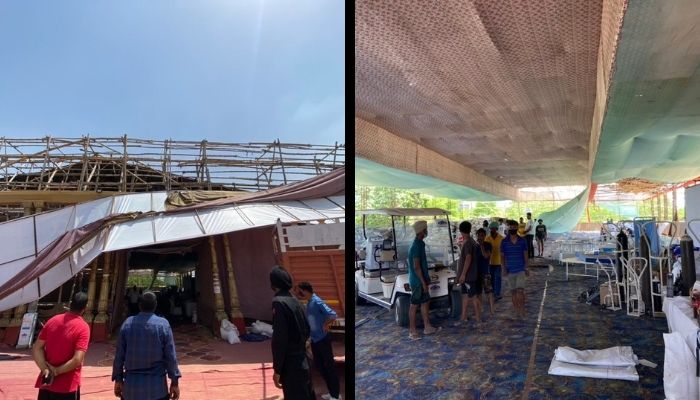
Amidst the second wave of the pandemic, a temporary Coronavirus treatment facility set up by Hemkunt Foundation in Sector 61 of Gurugram in Haryana was removed over allegations of turning it into a warehouse and giving ration to farmer protestors. The land belongs to an unnamed Jannayak Janta Party (JJP) leader.
As per reports, the land was leased to the controversial NGO for a period of two months after the Community development director of Hemkunt Foundation, Harteerath Singh, had asked for a 20,000 sq. ft land to set up a Covid-19 centre. However, the NGO soon repurposed the centre to serve as a warehouse to supply ration to the camps of farmer protestors.
While speaking on the development, tent house operator Jagat Singh informed, “We gave this land to the foundation for a makeshift Covid centre for just two months. There was no patient in it for many days owing to a dip in the number of cases and the landowner asked them to vacate the land. Some of the volunteers of the foundation told him that they are distributing ration kit in farmers protest and we can’t let them use the land a warehouse. We informed the foundation four days ago but they have not vacated yet.”
Hemkunt Foundation claims ‘goons’ destroyed their Coronavirus treatment facility
In a statement, the NGO alleged, “We need your help! Our O2 Centre at Gurgaon was destroyed forcefully today and our belongings were damaged.To continue helping everyone in need, we need access to 20,000 sq. ft. land at or near the City Centre of Gurgaon. Please help us spread the word.”
??We need your help!
Our O2 Centre at Gurgaon was destroyed forcefully today and our belongings were damanged.
To continue helping everyone in need, we need access to 20,000 sq. ft. land at or near the City Centre of Gurgaon.
Hemkunt Foundation has claimed that a group of men ambushed the centre and destroyed it for exceeding the two-month lease period. It has also allegedly paid ₹3.5 lacs as maintenance. Following the incident, a team of police headed by SDM (Badshahpur) Satish Yadav went to the spot to defuse the situation. Although no police complaint was filed, SDM Yadav said, “We are talking with foundation members and land owner and have asked them to give some time to vacate the land as the foundation is doing social work.”
Hemkunt Foundationcould possibly be violating FCRA laws
On May 9, OpIndia published a report on how a few organizations and individuals might be breaking FCRA laws under the pretext of collecting funds for Covid-19 relief.
The government of India has a directory of NGOs registered in India. The majority of the NGOs have got their names included in the list as it is one of the conditions to apply for FCRA. When we tried to find Hemkunt on DARPAN, it was nowhere to find. There was only one NGO with the name Hemkunt in it and it was registered in Punjab. We may give them the benefit of the doubt that they might have not registered with Darpan yet but it has been ten years since they are doing welfare projects. It is unclear why they did not register themselves with Darpan.
Despite this, our investigation revealed that the foundation has collected funds from foreign donors through crowdfunding websites such as Ketto, Milaap and DonateKart. It has to be noted that Hemkunt Foundation was one of the main organizations after Khalsa Aid to be working at farmer protest sites at Delhi borders. They had set up a tent city for the protesting farmers. It is unclear if they are diverting funds collected for Covid-19 relief work to their other projects.
Between the 1st and 10th of June 1984, Prime Minister Indira Gandhi had launched an operation to flush out terrorists from the Golden Temple. Operation Blue Star was the code name for the Indian military action carried out to remove Khalistan terrorist Jarnail Singh Bhindranwale and his armed followers from the Harminder Sahib complex in Amritsar.
Operation Blue Star, however, had far-reaching ramifications well after it was over. While the military had neutralised Bhindranwale, the Army Chief, who had coordinated the operation, was brutally assassinated by Khalistani terrorists only 2 years later.
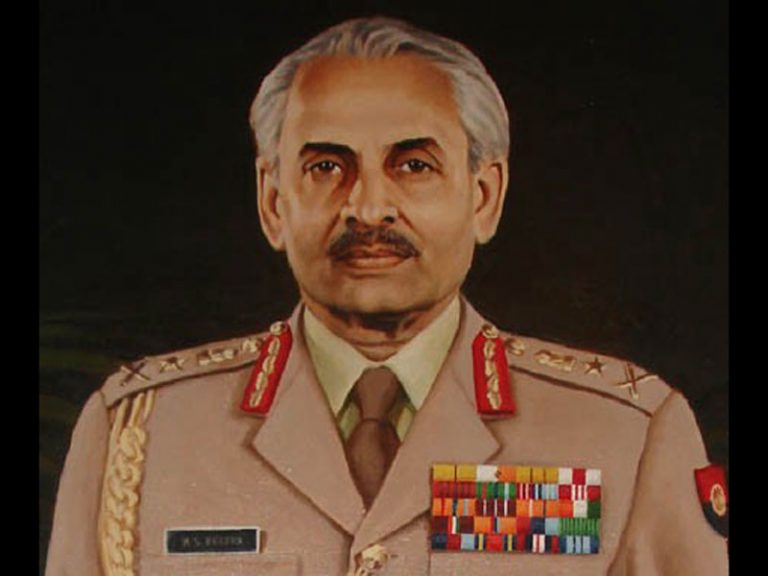
On August 10, 1986, former army chief General A.S. Vaidya was assassinated in Pune by Sikh militants on Khalistan Commando Force. The assassins, Jinda and Sukha were sentenced to death in 1989 and executed on October 9, 1992. General Vaidya played a vital role in Operation Blue Star that eventually led to the end of the Khalistan movement in Punjab. He was army chief during the operation.
A brief history of the life of Gen. Vaidya
General Arunkumar Shridhar Vaidya was born on January 27, 1926, in Bombay to a family of government employees. Gen Vaidya’s family had a fair share of representation in the Indian Army. He started his career in the Indian Armoured Corp in 1944. British Indian Army had called him to fight in Burma in World War II. Due to his dedication and valour, he rose quickly in the ranks. He spent a fair share of his service in Kashmir after independence.
In 1965 he served in the Indian Army as commandant during the India-Pakistan war. In 1971, he was the commander of the Indian armoured division during the India-Pakistan war. Before he became the Indian army chief in 1983, he had already earned two Maha Vir Chakra (One after the battle of Barapind in 1965 and the second after the 1971 Indo-Pak war) and Param Vahisht Sena Medal. When he took over the post of Army Chief, separatism was on the rise in India, especially in the state of Punjab.
Role of Gen Vaidya in Operation Bluestar
The Khalistan terrorist movement under Jarnail Singh Bhindranwale was about demanding a separate country Khalistan for Sikhs. The Militants from the organization took up arms and hid inside the Golden Temple, the most sacred shrine of Sikhs. After several attempts to end the Khalistani militancy in Punjab, the government of India under then-Prime Minister Indira Gandhi ordered the Indian Army to take charge and free the Golden Temple from the insurgents. The military operation codenamed Operation Bluestar was coordinated under Army Chief Vaidya.
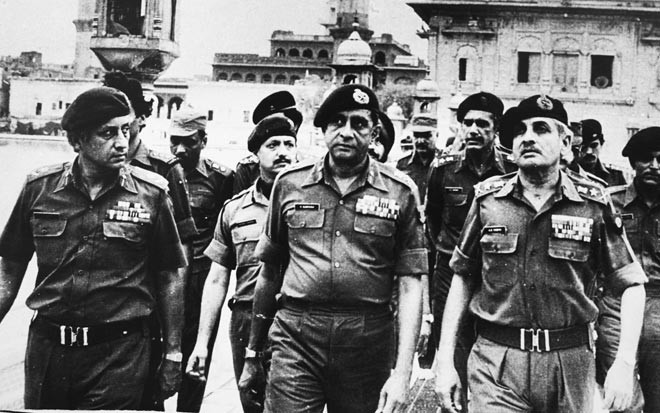
The operation was started on June 1, 1984, and ended on June 10, 1984. Lt. Gen. Sundarji assisted General Vaidya in the planning and coordination of Operation Bluestar. Lt. Gen. Kuldip Singh Brar had the command of the action. On June 7, 1984, the Army had complete control of Harmandir Sahib. However, keeping the size of the premises in mind, the Army took another three days to clear the premises and announced the end of the operation on June 10.
Gen. Vaidya served in the Army for over 40 years retired on January 31, 1986, as one of India’s most decorated officers. By the time he retired, he had earned over 20 medals, including two Maha Vir Chakra. He was posthumously conferred with Padma Vibhushan for his exemplary service in the Indian Army.
The series of events on the day of the assassination
Being a Hindu Army officer, Gen. Vaidya began to receive death threats from Khalistani terrorist groups after Operation Bluestar. As per reports, Khalistani militants had vowed to take revenge for the action of the Indian Army. Gen. Vaidya retired on January 31, 1986, and shifted to Pune, where he had built a three-bedroom bungalow in the Koregaon Park with his 55-year-old wife, Bhanu. His daughter Neera lived in Bhutan, and the other two daughters Parijat and Tarini, were living in Delhi.
At that time, the reporters asked him if he was afraid of the threats. He replied, “After seeing two wars, I can’t run away from danger. If a bullet is destined to get me, it will come with my name written on it.” Former army chief General G.G. Bewoor, who was his neighbour, had said, “I never spoke to him about the threatening letters, but it was obvious he had decided to ignore them and lead a normal life. He was a fine, brave soldier.”
Vaidya had security, but it was not adequate
Vaidya was travelling in his Maruti car with his wife and security guard on the day of his assassination on 10 August 1986. Technically, when he retired from the Army, he became a civilian. However, the Army had informed the Union Home Ministry about the threats on his life and the need for a protective ring around him. The Pune Police was given the task to ensure the security of Gen. Vaidya.
Lt-General P.N. Kathpalia, former Director-General of Military Intelligence (DGMI), had said, “He was certainly concerned. But he was too much of a soldier to bother too much about it.” Then-Pune Police Commissioner B.J. Misar had met Gen Vaidya two days before his death. He said, “Two days before he died, I met him at a party at Divisional Commissioner Kuljit Singh Sidhu’s house. He said he won’t be cowed down by the threats and is prepared to take the risk.”
Vaidya was an easy target on the day of the assassination
There was a lone bodyguard, Havildar Kshirsagar, armed with just a revolver sitting in the cramped back seat of the Maruti car. His presence was not enough to save Gen. Vaidya from professional killers. When the bodyguard was asked what he was doing when shots were fired, he said the General had asked him to sit in the back seat behind the General’s wife. The couple were out to go to the Shivaji Market.
In case of a sudden attack, his position was useless. When the shots were fired, he opened the door and tried to jump out, but his foot was caught in the narrow space between the seats. By the time he got himself free, drew his weapon and chased the killers, they had already vanished.
As per reports, four clean-shaven men pulled up alongside the car on the motorcycle and Vespa. They fired three shots at Vaidya through the window on the driver’s side. The first two bullets penetrated his head and killed him instantly. The third bullet struck him in the shoulder. Another bullet hit his wife’s neck. The bodyguard was also hit by four bullets on his back and thighs. A passing matador van was stopped, and Gen Vaidya was rushed to the Command Hospital, where he was declared brought dead. During the court hearing, Sukha claimed that he did not intend to attack Bhanumati Vaidya but she got injured as one of the bullets he had fired got strayed.
Two witnesses were noted in the reports of the assassination. The first witness who saw the four killers was Digamber Sridhar Gaekwad. Gaekwad told the Police that he saw clean-shaven men in their 20s riding a motorcycle and a cream Vespa scooter. He saw them speeding away towards the Circuit House junction that barely 100 metres away. His cycle was hit by Vaidya’s Maruti that skidded off its path at the time of the attack. Gaekwad did not sustain any injuries.
The second witness who saw the killers was 28-year-old mechanic Sheikh Jabbar Mehmood, who saw them on the bridge leading to Koregaon Park and the Ahmednagar highway. At that time, he was taking a police sub-inspector for a motorcycle test ride. He told Police that the rider was wearing a red T-shirt and shouting at the people on the road to give way.
The aftermath of the assassination
Within 30 minutes of the shooting, all roads leading out of Pune were sealed off by the Police. However, that much time was enough for the killers if they had planned a quick get-away. During the investigation, the Police found empty shells at the murder site. On examination, it was found that the same gun was used on June 13 in an armed robbery at a Union Bank of India branch in Pune.
The Maharashtra Police issued a statewide alert. Special investigating officers were brought from Bombay for assistance in the case. Initially, it was thought to be linked to the 120 army personnel who had deserted in Pune after Operation Bluestar. However, when the Punjab and Maharashtra Police shared intel with the intelligence officials, it was established that the killers were from Punjab. Still, they had been living in Maharashtra for some time.
Initially, no one took responsibility of the attack. However, the next day of the attack, an unsigned note was discovered in which KCF took responsibility of the assassination and threatened to kill other three generals who were involved in the Operation Bluestar.
The first name that popped up during the investigation was Harjinder Singh Jinda. At that time, he was identified as a clean-shaven Sikh terrorist suspected of killings and bank robberies. Punjab Police provided information on Sukhdev Singh Shinda to the Maharashtra counterparts. He had escaped from the court in Jalandhar on April 5 after killing six police officers.
Soon, Maharashtra Police roped in the Central Bureau of Investigation for support. In March 1987, Jinda was arrested from Majnu Ka Tilla, Delhi. While Police was trying to catch him, he was shot in the legs. On September 17, 1987, Sukha was arrested after he met with an accident with a truck in Pune. He was riding the same motorcycle that he had used to assassinate General Vaidya. Both of them admitted to the crime but did not plead guilty. They justified the assassination as he was “guilty of a serious crime, the punishment for which could only be death.”
They were sentenced to death on October 21, 1989, and hanged at Yerwada jail on October 9 1992. When they were being taken to the gallows, they were reportedly chanting pro-Khalistani slogans.
Who were Harjinder Singh Jinda and Sukhdev Singh Sukha?
Infamous as the “Sukha Jinda” duo, both Harjinder Singh Jinda and Sukhdev Singh Sukha were born in farmer families. Jinda hailed from Jandiala, Amritsar, while Sukha was from Ganganagar, Rajasthan. Jinda had joined the separatist Khalistan movement soon after operation Bluestar. Sukha, on the other hand, left his studies to join the Khalistani movement after Operation Bluestar. They were both members of Khalistan Commando Force or KCF.
Apart from the assassination of General Arun Vaidya, Jinda and Sukha had committed several crimes, including robbery and assassinations that had put them on the top list of Sikh militants. On July 31, 1985, Jinda, Sukha and Ranjit Singh Gill alias Kukki gunned down Congress leader and MLA Lalit Maken, uncle of Congress leader Ajay Maken. His wife and another visitor were also killed during the shootout. Notably, his wife did not die on the spot but later succumbed to her injuries.
In September 1985, Congress leader Arjan Dass was killed by Jinda and Sukha for his alleged involvement in 1984 anti-Sikh riots that took place after the assassination of then-Prime Minister Indira Gandhi by her Sikh bodyguards. Several Sikh victims took Dass’s name in their affidavits that they had submitted to the Nanavati Commission appointed by the Supreme Court. He was a close aide of former Prime Minister Rajiv Gandhi.
On February 13, 1987, the duo, along with other KCF members, looted over Rs.5 crore from Punjab National Bank. They were dressed as policemen and armed with submachine guns and rifles during the robbery. The incident was dubbed as the biggest bank robbery in the history of India.
Jinda Sukha were hailed during farmer protests
In February 2021, a video of actor-turned-leader and Khalistani sympathizer Deep Sandhu went viral on social media platforms in which he was seen appreciating a song being sung by two alleged farmers. The song’s lyrics suggest that the protestors will continue agitation even if they are termed as a rebel or terrorists.
They further stated that if the government tries to get strict against them, a bloodbath will follow. They added that if the government denies to take back the agriculture laws, the duo of Sukha and Jinda will rise again in Punjab. Notably, the song has been hailed by California based pro-Khalistan outfit California Sikh Youth Alliance.
A Punjabi movie based on Jinda Sukha was banned
In 2015, a movie titled “The Mastermind Jinda Sukha” based on the lives of the assassins of General Vaidya was banned by CBFC. The movie was initially cleared by the Central Bureau of Film Certification, but later a ban was imposed on the movie after complaints from several sections of the society were received.
It was alleged that the Home Ministry had asked for the ban on the film, but then-CBFC chief Pahlaj Nihalani had rebutted the allegations. He said, “Yes, we passed the film. But on receiving complaints from various sections of the society, we decided to review and revoke the certificate.”
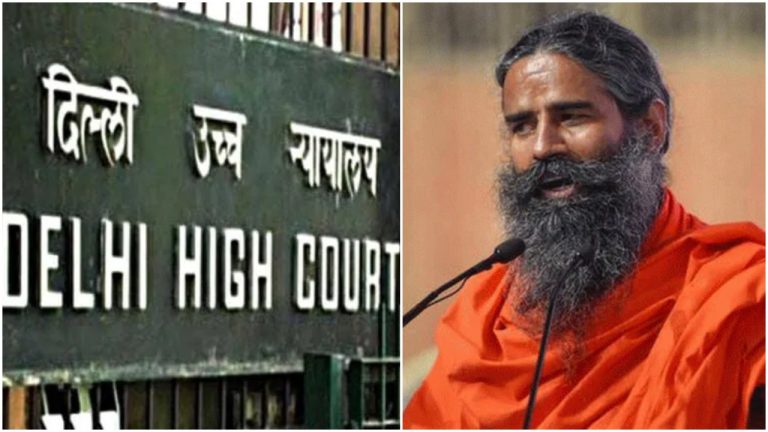
In a big setback to the Delhi Medical Association, the Delhi High Court on Thursday refused to restrain Yoga guru Baba Ramdev from making any statements against the allopathic system of medicines or in favour of Coronil.
According to the reports, Delhi High Court on Thursday said Baba Ramdev’s statements against Allopathy come within the parameters of the right to freedom of speech and expression. The HC observed that any order to restrain him from speaking has to be ‘tested on the touchstone of free speech’.
The Delhi High Court was hearing a plea filed by Delhi Medical Association seeking to restrain Baba Ramdev from speaking against allopathy and alleged false information about Patanjali’s Coronil.
The HC expressed its doubts over the “maintainability” of the suit at this stage and said DMA should rather be spending time on finding a cure for the pandemic instead of wasting the court’s time.
“Tomorrow I may feel homoeopathy is fake. Do you mean they will file a suit against me? Ramdev may be right or wrong. But I don’t think your allopathic profession is so fragile,” the HC pointed out, saying the Yoga guru has the right to freedom of speech protected under Art 19(1)(a) of the Constitution.
‘Why are you carrying the torch? This is PIL masquerading as a suit’: HC lashes out at DMA
Meanwhile, Advocate Rajiv Dutta, representing Delhi Medical Association, claimed that people were showing hesitancy in getting vaccinated because of Baba Ramdev’s false claims, which in turn was obstructing the inoculation process and hurting lives.
Responding to DMA’s claims, the court observed, “If Patanjali is violating (rules), it’s for the government to act. Why are you carrying the torch? This is public interest litigation, masquerading as a suit. You better file a PIL saying that he called it a cure and then changed it to immunity booster, and in the meantime, millions bought it.”
Further, Justice C Hari Shankar said, “Ramdev doesn’t have faith in allopathy. He believes everything can be cured by Yoga and Ayurveda. He may be right or wrong, but this court can’t say Coronil is a cure or not. It has to be done by medical experts. Though his words like ‘stupid science’ may be temperate, but that can’t be a cause for a suit.
“Let’s say 10,000 people bought Coronil, and 9,500 died. You go to media and say that Coronil has killed 95 per cent. In that case, Ramdev will file a suit against you? Allopathy has worked for some and not for some. It’s a view,” the judge stressed.
However, the Delhi High Court has also asked Baba Ramdev’s counsel to ask him not to make any provocative statements until the next hearing date on July 13.
IMA calls Baba Ramdev anti-national
A huge controversy erupted when a video of Baba Ramdev declaring allopathy as a ‘hollow practice’ went viral. The Indian Medical Association (IMA), a voluntary, non-government body of doctors, jumped into the fray, taking a strong objection to his remarks. It threatened the Yoga Guru with a police complaint and a Rs 1000 crore defamation suit.
After Baba Ramdev had expressed his opinion on the efficacy of modern medicine, the enraged Indian Medical Association, a private body of practising doctors, had threatened the Yoga Guru and had attacked him by referring to him as ‘anti-national’.
Following that, Baba Ramdev Yoga Guru had fired 25 questions to the Indian Medical Association and pharma companies over the efficacy of the Allopathic treatment. He had listed some common ailments and side effects of modern medicine and had asked why the allopathy doctors have not been able to find a cure for them so far.
मैं इंडियन मेडिकल एसोसिएशन व फार्मा कंपनियों से विनम्रता के साथ सीधे 25 सवाल पूछता हूँ- pic.twitter.com/ATVKlDc9tl
Further, the association had written a letter to Prime Minister Narendra Modi and the Union Health Ministry to take cognisance of the remarks made by Baba Ramdev and had demanded that the Yoga guru be booked under sedition charges. The Health Ministry promptly expressed its disapproval over Ramdev’s comments, issuing a letter to the Yoga Guru to retract his statements.
Even Baba Ramdev had complied with the request made to him by the Union Health Minister Harsh Vardhan and withdrew his statements against allopathic medicines.
However, the withdrawal of statements by Baba Ramdev has not satisfied IMA, who have now continued to attack and slander the Yoga Guru for expressing his opinion on the efficacy of the Allopathic medicines.
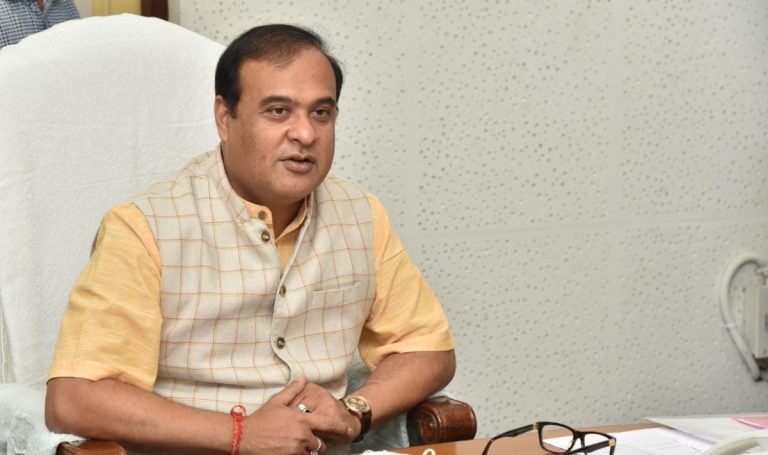
Assam Chief Minister Himanta Biswa Sarma has announced that the Chief Minister’s office in Guwahati will now function 24 hours a day. The CM confirmed this development during a press conference he had held in Assam Bhavan in Delhi today.
While answering the question by a journalist about reports in local media in Assam that he has ordered that the CMO will remain open for 24 hours a day, the CM confirmed the same. He said that as ministers don’t have office times, he has decided that CMO will remain open the whole day, and he has already split the staff in the office into three shifts of eight hours each.
Explaining the rationale behind the decision, he said, ‘Say I return to Guwahati after visiting other places at 12 in the night, and there are files pending in the office waiting my signature. Instead of going home and signing the files in the next morning, I can go to the office directly, sign the files, and then go home. Moreover, if some officers like DCs and SPs want to talk to the CM’s office in the night for some purpose, they will be able to do it.’
He further informed that his office already coordinated late in the night with the arrests following the brutal assault on a doctor in Hojai after the death of a patient. He said that the local police officials called the CMO at 3 AM to update on the latest developments, and they were able to reach the CM at that hour.
CM Himanta Biswa Sarma said that even if someone wants to meet the CM outside office hours, he will give appointments. ‘If someone wants to meet me at 12 AM in the night, I will give an appointment, if I have time,’ he said.
He said that with these arrangements, the amount of work completed in a day will go up, and with that objective, the staff has been split into three shifts.
He said that people keep talking about improving work culture, but the ministers have to set an example for that. If ministers work for longer hours, automatically more work will be done in the offices, he said.
Gratitude ?
His towering vision has taken India to glorious heights of prosperity. Assam has especially been a beneficiary of Prime Minister Sri @narendramodi’s generosity. It’s a great pride to be serving under him as CM of Assam.
— Himanta Biswa Sarma (@himantabiswa) June 2, 2021
Himanta Biswa Sarma was on a visit to Delhi for the first time after he became the CM. He met PM Modi yesterday in the afternoon. He also met other senior ministers like Amit Shah, Rajnath Singh, Nirmala Sitharaman, Hardeep Singh Puri, Dharmendra Pradhan, Harsh Vardhan, Prakash Javadekar, Nitin Gadkari, Narendra Singh Tomar on June 1 and 2. He had also met vice president Venkaiah Naidu, Lok Sabha speaker Om Birla, and senior BJP leaders. He said that the meetings were courtesy visits after he became the CM of Assam.