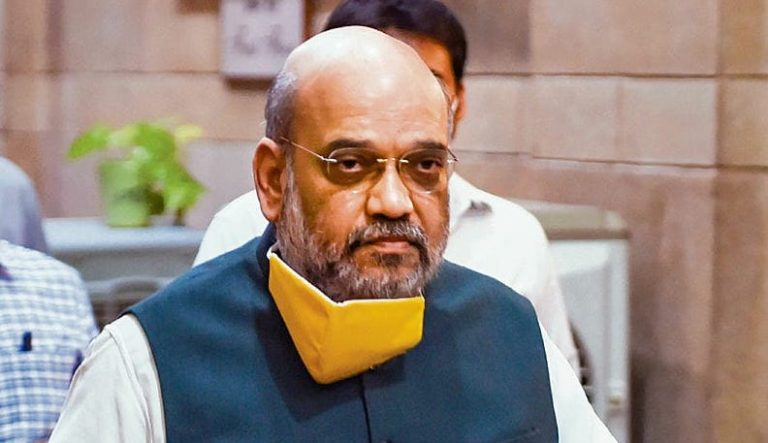
Union Home Minister Amit Shah was admitted to AIIMS in Delhi two weeks after he was discharged from the hospital. He was also admitted to the hospital on August 18 for post-coronavirus care.
According to the reports, the Union Home Minister admitted to AIIMS on Saturday night, at around 11 PM, after he developed some breathing issues.
The 55-year-old Shah had tested positive for coronavirus on August 2 and was admitted to private hospital Medanta in Gurgaon. On 14 August, he was discharged and was in home isolation for a few days.
Weeks later, he was again admitted to the AIIMS on August 18 after he complained of “fatigue and body ache”. He was discharged from the hospital after thirteen days in the hospital on August 31 after the doctors said the Home Minister had “recovered”.
AIIMS has issued a statement that Shah has been admitted into AIIMS for full-body checkup ahead of monsoon session of the Parliament.
#NewsAlert | Union Home Minister @AmitShah, who was discharged from AIIMS after post-Covid care on August 30, has now been admitted for complete medical checkup before Parliament sesssion for 1-2 days. pic.twitter.com/TiNSw7lG5E
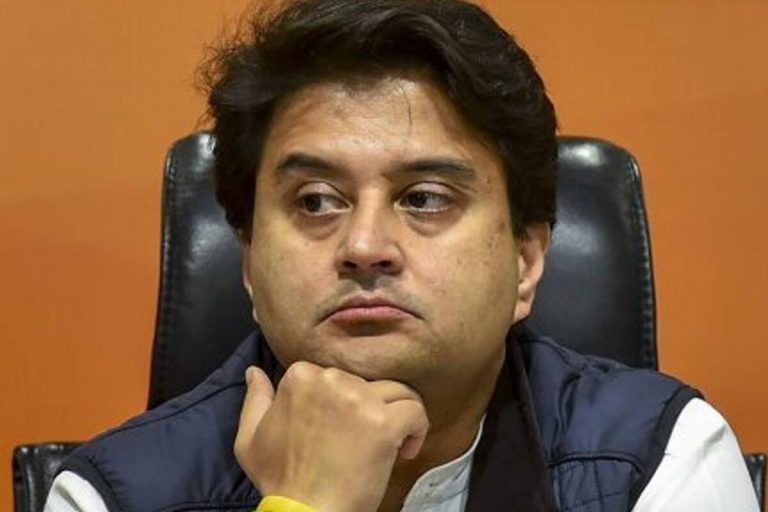
Addressing a rally during an event marking the Bhumi Pujan of development works worth Rs 70.84 crore and the inauguration of works worth Rs 21.08 crore in Dimani in Morena district of Madhya Pradesh, BJP Rajya Sabha MP Jyotiraditya Scindia launched scathing attack on his former colleagues Kamal Nath and Digvijay Singh.
Scindia accused ex-Madhya Pradesh CM Kamal Nath and Digvijaya Singh of leaving behind a debt of Rs 8,000 crore for successor Shivraj Chouhan. pic.twitter.com/wwiOj03Iwr
Coming down heavily on the previous Congress government in the State, Scindia said that the Congress government betrayed the people of Madhya Pradesh. He called the former Chief Minister Kamal Nath and senior Congress leader Digvijay Singh ‘traitors’. “I declare that within 10 days, the loan of every farmer in Madhya Pradesh will be waived”, he promised. Calling out the previous Congress government of not keeping the promise of waiving the loans of farmers, Scindia said, “I waited for 10 days. I waited for 10 months. Not keeping their promise with the farmers of Madhav Maharaj, tell me what is this if not treachery?”
“If someone has betrayed the people of Madhya Pradesh, it is Kamal Nath and Digvijay Singh who did not waive the loans of farmers even in a time of 15 months. Instead they left behind a loan of Rs 8000 crore for the Shivraj Singh Ji’s government in Madhya Pradesh”, Scindia alleged. Scindia said that after Congress formed government in the State former CM Kamal Nath did not once came to visit Dimani while CM Shivraj Singh Chauhan came at the occasion of Bhumi Pujan of the development works.
Scindia had resigned from the Congress party and had joined BJP in the month of March this year. On leaving Congress, Scindia had said that Congress was no longer the party that it used to be and that it rejected reality.
In a shocking revelation, a Chinese virologist, Li-Meng Yan, who had earlier claimed that China and WHO knew about the Wuhan coronavirus long before they made it public, has now stated that Coronavirus is lab-manufactured virus and she has proof to back it up.
Yan, who had fled Hong Kong fearing retribution from Chinese authorities for making claims that expose China’s coverup of the coronavirus crisis, recently said that she would soon publish evidence that would prove that the virus was synthetic and which could be verified by even non-scientists. She made the claims in an interview with host Jane Moore on British talk show Loose Women on ITV.
Interview of Chinese virologist Li Meng-Yan
On being asked from where did she think the coronavirus emanated, virologist Yan replied, “It came from the lab in Wuhan”.
Earlier President Trump too had claimed that he is fairly confident that the virus had emerged from the virolosy lab in Wuhan.
Dr Li said that the genome sequence is like a human fingerprint, and one can identify these this based on the genome sequence. “I will use this evidence to tell people why this has come from the lab in China, why they are the ones who made it,” she said. “Anyone, even if you have no biology knowledge, will be able to read it, and check and identify and verify it yourself,” she added.
She also spoke about the dangers she was facing while being in Hong Kong, especially against the backdrop of China asserting its authority over the city in the wake of demonstrations that had rocked the city last year. She appeared on ‘Loose Women’ from an undisclosed location, stating that the Chinese government had expunged all her information from government databases.
The virologist claimed that the claims such as coronavirus emerging from wet markets in Wuhan are nothing but a smokescreen, peddled by China to hide the true origins of the virus. She is planning to publish a report which she claims will have damning evidence to prove that the virus is manmade. She added that she felt like having a moral and scientific duty to blow the whistle over China’s cover-up of coronavirus outbreak.
China was well-aware of the coronavirus long before it warned the world: Yan
Earlier in July, Yan had claimed that China was well-aware of the deadly coronavirus and virulence of the deadly virus long before it said it did and asserted that the WHO advisor Professor Malik Peiris did nothing to alert others despite knowing about the virulence of the virus.
According to the virologist, her friend, who was a scientist at the Center for Disease Control and Prevention in China, had first-hand knowledge of the cases and reportedly informed her on December 31 of human-to-human transmission long before either China or the WHO would admit such a case.
In an exclusive interview with Fox News in July 2020, Yan, appearing from a secret location in the United States, said “I reason I came to the United States because I am carrying COVID’s message of truth. If I had been revealed this from China, I would have disappeared and killed.”
Dr Li, who was a specialist at Hong Kong’s School of Public Health, has said that her supervisor first asked her to investigate a new “SARS-like” virus in Wuhan on December 31, but later her efforts were later stifled. She had informed her superiors that the cases appeared to be rising exponentially, but she was told to “keep silent and be careful”. “‘We will get in trouble and we’ll be disappeared’,” her supervisor reportedly said, according to her.
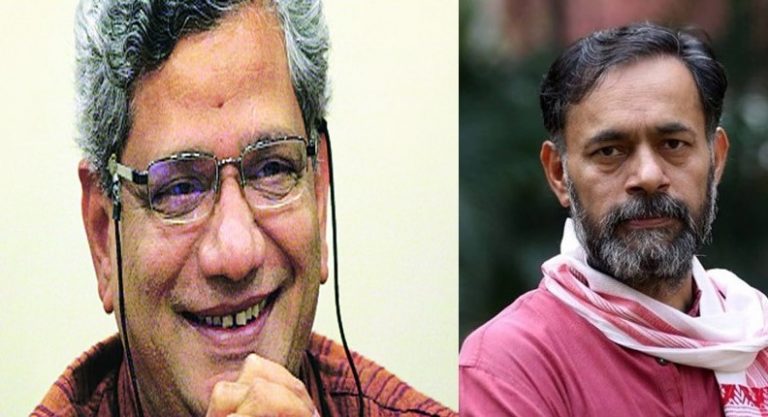
According to news agency PTI, the Delhi Police has filed a supplementary charge sheet in the Delhi Riots case where it has named CPI (M) general secretary Sitaram Yechury and Swaraj Abhiyan leader Yogendra Yadav as co-conspirators in the communal violence that transpired in the national capital in February. The report also said that economist Jayati Ghosh, DU professor and activist Apoorvanand, and documentary filmmaker Rahul Roy were also named in the charge sheet.
Delhi Police names CPI (M) general secretary Sitaram Yechury, Swaraj Abhiyan leader Yogendra Yadav, economist Jayati Ghosh, DU professor and activist Apoorvanand, and documentary filmmaker Rahul Roy in supplementary charge sheet as co-conspirators in Delhi riots case
But later Delhi police denied that they have charged them in the Delhi riots case. As per reports, the names were mentioned in some disclosure statements of the accused in the case, and not in any charge sheet.
Delhi Police has denied naming Sitaram Yechuri or Yogendra Yadav or Jayati Ghosh as accused in any Delhi riots supplementary chargesheet.
Yogendra Yadav also tweeted to say that the PTI report is not correct and he is not named in the charge sheet. He said that the supplementary charge sheet does not name him or Yechury, and their names were present only in some “unauthenticated” police statements which are not admissible in court.
This is factually incorrect report, hope @PTI_News withdraws it. Supplementary chargesheet does NOT mention me as co-conspirator, or even as accused. One passing reference to me and Yechury, in an unauthenticated police statement (not admissible in court) by one accused. https://t.co/QurXmQdOr2
An accused, Gulfisha alias Gul, who has been arrested under Unlawful Activities Prevention Act (UAPA), had earlier stated that Delhi University professor Apoorvanand has been the mastermind behind the conspiracy to incite riots in Delhi. A Burqa-clad Khwateen team had been prepared for the riots. Gulfisha claimed that Apoorvanand had issued them an advance heads-up presaging riots.
The Delhi Police in its prior chargesheets related to the Delhi Riots case and the murder of IB constable Ankit Sharma had held former AAP Councillor Tahir Hussain and his associates as conspirators in the riots case. The charge sheet filed in the murder of IB officer Ankit Sharma and Tahir Hussain’s role in the riots, it is explicitly mentioned that Tahir Hussain hatched the plans for the riots in January when Hussain had met Umar Khalid and Khalid Saifi at Shaheen Bagh. Khalid Saifi had also met with Zakir Naik to raise funds for the riots, a status report filed by the Delhi Police in Juky said.
The Delhi Police have also booked Natasha Narwal and Devangna Kalita in the riots case. The Delhi Police had alleged that both the women-Natasha and Devangana were involved in hatching a conspiracy to incite riots in Jafrabad. Natasha was booked under the stringent Unlawful Activities Prevention Act (UAPA) for her role in inciting the anti-Hindu communal riots in Northeast Delhi in February.
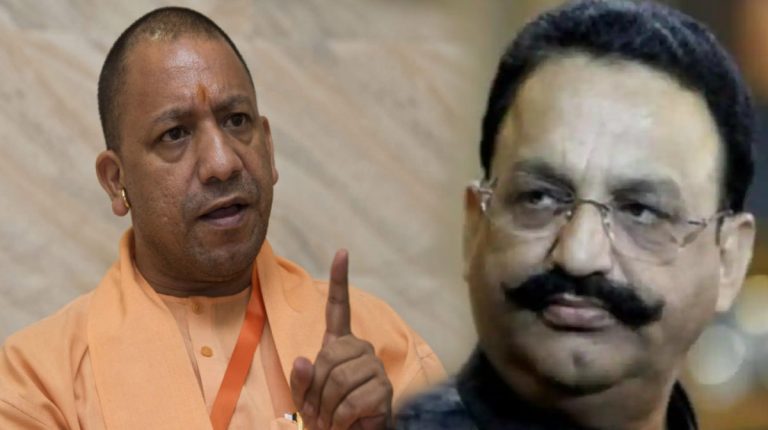
Gangster-turned-politician Mukhtar Ansari has been booked by Ghazipur police under the Uttar Pradesh Gangster and Anti-Social Activities (Prevention) Act. Ansari, who is an MLA, is not the only one to be booked under the Act. His wife Afsha Ansari and two brothers Anwar Shehzad and Sharjil Raza have also been charged under the Act for allegedly being involved in criminal activities like land grabbing, embezzlement, etc.
In the cases of illegal trespass and embezzlement registered in 2019 against Mukhtar’s wife and brothers, police had filed charge sheets. On the basis of the same developments, the action of booking them under the Gangster Act has been initiated on Saturday and further process is being followed”, told OP Singh, SP Ghazipur. He said that a case was also filed against Anwar Shehzad and Sharjil Raza last year in Ghazipur on the allegations of land grabbing and submitting fake documents for getting a government contract.
A charge sheet has been filed in that matter as well. Ansari’s wife is also charged with a case relating to appropriation of government money. A case filed against her in 2016.
Last month, the UP administration had demolished an illegal property of Ansari in Dalibagh colony in Lucknow and had attached properties worth Rs 3.17 crores belonging to Ansari’s aides in Jaunpur. The cost incurred in demolishing his property was also inflicted on Ansari by the administration.
In yet another case of suspected Love Jihad, one Pooja Patel, a resident of Varanasi married to Mohammad Aftab Siddiqui of Lucknow, committed suicide by hanging herself in her house. The incident happened under the limits of Bhelupur police station, Varanasi, Uttar Pradesh on late Friday evening, reports Hindi daily Jagran. While the girl’s family has pinned the blame of their daughter’s death on her husband Aftab and his family, the police said that prima facie investigation reveals that the cause of the incident was a dispute between husband and wife. Meanwhile, locals suspect that the girl was murdered by the husband’s family, which was pressurising her to adopt Islam.
Bhelupur Police station in-charge, Ajay Shrotriya, who reached the spot after receiving the information took Aftab into custody for questioning and Pooja’s body was sent for post mortem.
Pooja pressurised to adopt and abide by the beliefs and practices in Islam
The girl’s family confirmed that Pooja was aspiring to be a model and had been to Mumbai before the lockdown to peruse her dreams. They alleged that Aftab’s family were opposed to Pooja’s outgoing nature and use to pressurise her to adopt their way of living and abide by the beliefs and practices in Islam. Pooja, on the other hand, refused to be cowed by her in-law’s veiled threats. Owing to this, tensions between the husband and wife rose, pushing Pooja to take her life.
Pooja’s mother Kiran alleged that the problems started when Mohammad Aftab’s mother came to live with them in Varanasi. She started exerting pressure on Pooja to practice only Islam inwardly. She insisted that Pooja reads Namaz 5 times in a day. Moreover, Pooja’s in-laws pressurised her to quit modelling and acting as they thought it to be un-Islamic.
Pooja, meanwhile, stuck to her guns. She was not averse to following her husband’s custom but at the same time, Pooja refused to give up her beliefs. On one hand, she celebrated Hindu festivals like Karva Chauth, while on the other, she visited her in-laws during Eid. In fact, when her son was born she gave him a Hindu name-Naksh. She was also persistent in following her passion.
Pooja left Varanasi to make a career in acting
Pooja’s family confirmed that she had gone to Mumbai to make a career in acting. However, she came back to her husband during the lockdown. The problems began when after a few days, Pooja started insisting on going back to Mumbai. Aftab who along with his family did not want Pooja to pursue her career in acting started regularly picking up fights with her. He mostly came back home drunk and beat up Pooja. The girl’s mother recollects how she had also tried to convince Aftab’s family by showing Pooja’s modelling assignment pictures, but they remained undeterred. Aftab’s family started harassing her. Pooja, who started feeling stifled, started contemplating seeking a divorce from Aftab. She had also conveyed this to her family and her husband. Pooja who was upset, after all, this eventually embraced death.
Pooja’s neighbour’s testimony
Meanwhile, Aftab’s neighbours confirmed that the duo frequently fought. That day too, both had fought and went into separate rooms to sleep. According to the neighbour’s, at about 12 in the night, the husband started banging the door of Pooja’s room. Hearing the noise, when all the neighbours collected outside Aftab’s house, they saw Pooja hanging from the ceiling fan of her room. The door was broken in a hurry. The neighbours rushed Pooja to a private hospital from where she was taken to the Divisional Hospital in Kabirchaura where doctors declared her dead.
Pooja’s family who also lives in Varanasi allege Aftab’s family pressure prompted Pooja to commit suicide
Pooja Patel’s father Shivkumar confirmed that the duo fell in love five years ago. For almost two years, Pooja lived with Aftab in a rented house near Fatman in Sigra, Varanasi. After that, for the next three years, they lived in a rented house belonging to one Ishwar Chandra in Badi Gabi, Varanasi. Pooja’s mother Kiran Patel, confirmed that a Maulvi had read the duo’s Nikah in this rented house.
Pooja’s parents told that for the last three years, the duo was living happily until Aftab’s mother came to live with them after three years. She did not like Pooja and wanted to her to be out of her son’s life. It was on her instructions that Aftab started harassing her. He started coming back home drunk and beat Pooja. Even on the night of the incident, Pooja’s family alleged that Aftab had beaten her up. Fed up of these quarrels and torture, Pooja committed suicide, said Kiran Patel.
Aftab’s version
Meanwhile, Aftab, Pooja’s husband, told Jagran that Pooja wanted to become a model and had gone to Mumbai before the lockdown to pursue her dreams. He said that when she wanted to go back to Mumbai, he tried explaining to her that their child was young and he needed his mother’s attention and care. Aftab said that he told Pooja that it would be difficult for him to raise the child alone. The argument over this increased on the night of the incident and Aftab went to sleep in another room. After a while, when Aftab knocked on the door of Pooja’s room when he heard no sound of the cooler or the fan from her room. Aftab said that he got suspicious when he did not get the sound of her mobile because Pooja was addicted to PUBG and she often played the game on her mobile. “When no sound came from the room, then I looked through the window and saw Pooja hanging from the fan”, said Aftab to the Hindi Daily Jagran.
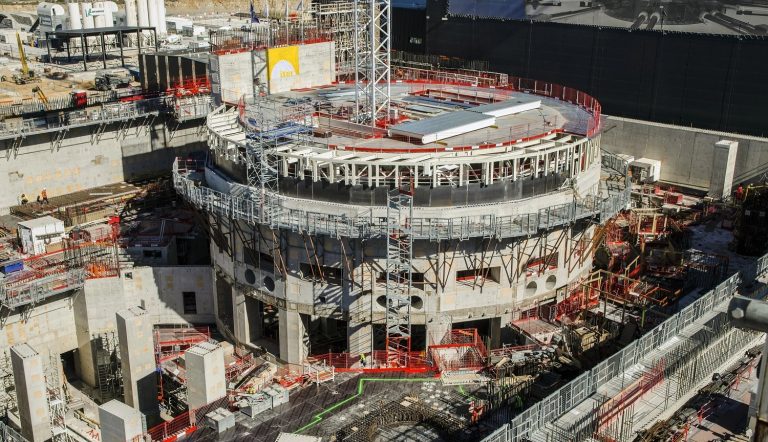
India is on its path to become a five trillion-dollar economy. For a country with so much to look forward to, it is essential to intensify the research and development of sources of clean energy. Since 2014, India has worked extensively in increasing energy production using cleaner sources such as solar power and wind power. However, experts are now showing concerns that in the future, the e-waste produced because of solar panels will be a menace as currently, there is very little scope to recycle it. On the other hand, there is one energy source that is cleaner and has a lot of potentials, and that is Nuclear fusion energy.
It is a matter of pride for India that it is an active partner of a project dedicated to developing fusion technology. A group of 35 nations, including India, came together in 2004 to build the world’s largest magnetic fusion device, TOKAMAK. The aim is to develop technology that can produce energy using fusion technology on a large scale. As it will be a carbon-free energy source, it will have a substantial positive impact on the environment. For India, the technology may mean getting rid of the highly polluting thermal power plants that are burning coal in the next few decades. It has to be noted that India produced 729.10 Million Tonnes of coal in the financial year 2019-2020.
The ITER project
International Thermonuclear Experimental Reactor or ITER is an ambitious project to develop sustainable and affordable fusion technology to produce clean energy. 35 nations are currently working together in southern France to build the world’s largest magnetic fusion device known as TOKAMAK. The main aim is to prove the feasibility of fusion as a large-scale and carbon-free source of energy. It can be compared to developing a small scale Sun right here on earth. The production of energy is based on the same principles that Sun and other stars use to produce energy.
Thousands of engineers and scientists have contributed so far to ITER’s design since its idea first emerged in the scientific community back in 1985. The European Union, India, Japan, Russia, the United States, Korea, and China engaged in a 35-year collaboration to build and operate the ITER experimental device.
What will ITER do?
European TOKAMAK JET (1997) holds the world record of fusion power. It produced 16 MW of fusion power from a total input heating power of 24 MW. The amount of fusion energy TOKAMAK can produce directly proportional to the number of fusion reactions that can take place at its core.
The project aims to develop a large-scale experimental device capable of producing 500 MW of fusion power using 50 MW of input heating power. It has to be kept in mind that the experiment aims to produce net energy gain. It will not capture the energy as electricity but will pave the path for the technology that can do so. The ITER TOKAMAK will be the first fusion device that will produce more energy than it consumes.
The scientists working on the project are confident that the deuterium-tritium plasmas in ITER will produce much more fusion energy than current capabilities, and it will remain stable for a longer duration. In the later stages, scientists will try to demonstrate the feasibility of producing tritium within the vacuum vessel as currently, the world supply of tritium that is used with deuterium to fuel the fusion reaction is not sufficient to cover the future needs. Another aspect of the project is to develop the technology in a way that has a negligible impact on the environment.
The first Plasma at ITER is scheduled for December 2025. The machine will be powered up for the first time. The central TOKAMAK building was handed over to the TIER Organization in March 2020 to start the machine assemble. In July 2020, India’s Larsen & Toubro (L&T) Heavy Engineering Ltd sent a 3800-tonne cryostat, which is a giant vacuum chamber for the machine. As per the July data, 70.5 percent of the project execution to First Plasma is complete.
India’s contribution to ITER
When India joined the project formally in 2005, 9.1 percent of the construction costs fell on India’s shoulders. The total cost of the project is 24 billion US dollars. All members working on the project are contributing in-kind and in cash. India is contributing 2.2 billion US dollars or 20,000 crore rupees that includes both monetary support and components.
Apart from monetary support, several key components including cryostat (manufactured by L&T and delivered in June 2020), cryo lines and cryo distribution system, in-wall shielding, cooling system and heat rejection system, ICRF source system, power supplies for DNB, ICRF and other systems, gyrotron support and diagnostics support are being provided by India.
Trained and qualified nuclear scientists from India are working on the project. Currently, there are around 25 scientists lodged at ITER from India, gaining important knowledge about the project. Recently, ITER appointed Nalinish Nagaich as head of corporate. He oversees human resources, finance, procurement and contracts, information technology, and project control. Before joining ITER, he has worked on top ranks at Nuclear Power Corporation of India Ltd (NPCIL).
Problems from Indian side and what India can do
Though India’s in-kind contributions have been on time and Bernard Bigot, the director-general of ITER, has praised India’s contribution calling India’s work on the cryostat “an unprecedented engineering challenge and achievement,” there are several issues where India has to step up.
Lack of manpower
The first problem is with manpower. As per the regulations, India can deploy scientists in sync with the contribution it is making. As India’s contribution stands at 9.1 percent, there can be as many as 95 Indian nuclear scientists gaining knowledge at the ITER. However, the data suggests that the number of scientists India has sent since 2016 stands at a maximum of 4.8%instead of 9.1%. At present, only 25 scientists are working in the project instead of 95 allowed for India. The lack of manpower is resulting in the loss of crucial knowledge and expertise that India can gain from the project.
Bigot, during an interview, mentioned that the Department of Atomic Energy or DAE has hundreds of bright scientists working on various projects. He said that he fails to understand why India is not sending more scientists to work on the ITER. They will gain unmatchable experience while working with colleagues from 35 other countries.
The major problem with the said policy in the context of ITER is that such projects run for multiple decades. Due to the strict policy in place, the Indian scientists who had worked for five years have to leave the opportunity of gaining more knowledge and experience on the project.
There is a policy in India that scientists can join projects like ITER for only for five years. Korea, too had such policy in the past, but to improve its contributions, they have amended the policy. What India can do to improve its stand in the ITER is to increase the number of applicants for different positions in ITER and relax the policy so that qualified scientists can work for long term on such projects.
Lack of financial support
The other problem that ITER has brought up is in-cash contributions. Bigot said that India has majorly defaulted in terms of the in-cash contributions. Since 2017, India has been unable to fulfill its promise. He added that the other member states are ‘very unhappy’ with India. The outstanding amount now touches Rs.1,000 crore. Though India has fulfilled in-kind contributions by sending supplies, the in-cash contribution helps to defray the labor cost.
Bigot said, “This year is very crucial, and India should pay its money as soon as possible.” Bigot adds, “I am very sorry to see India facing difficulty in arranging the in-cash component.” Bigot, normally a mild-mannered atomic diplomat, says, ‘if the [Indian] cash does not arrive, ITER will be in danger.’
https://www.youtube.com/watch?v=drN4RQ958bM
At this time, the Indian government must speed up clearing dues in terms of in-cash contributions for ITER. Bigot said that there is no doubt that India has played its role very well in supplying the components for the project but to assemble the components at the site, manpower is required. The experts hired for the project need to be paid, and without adequate in-cash contributions, ITER can’t continue.
India’s history with fusion technology and how ITER can help in Atmanirbhar Bharat Abhiyaar
India is not new to fusion technology. ADITYA TOKAMAK, the first TOKAMAK designed and fabricated in India by the Institute of Plasma Research, Gandhinagar, was commissioned in 1989. BHEL, L&T, and several other companies and organizations have worked together and gained knowledge and experience from the project.
India has been working on SST-1 (or Steady State Superconducting Tokamak) since 1995. Its second part, SST-2 dubbed as DEMO, has already been commissioned with an aim to develop a full-fledged nuclear fusion reactor to produce electricity. Equipped with several new features including D-T plasma, Test Blanket Module, Biological shielding and an improved diverter, SST-2 will be deployed in the state of Gujarat. As India is moving ahead with Atmanirbhar Abhiyaan, in-house nuclear fusion technology can help to solve major environmental issues like pollution and climate change that arise as an unwanted by-product of industrialization by reducing carbon footprint and nuclear waste.
With ample contributions in terms of financed and manpower to the ITER project, India’s in-house fusion reactor can become a reality quicker than anticipated. There is no doubt that India has decades of experience in nuclear fusion technology. However, ITER TOKAMAK can provide crucial knowledge about the technology to develop a fusion reactor that can produce more energy than it consumes.
How nuclear fusion is better than nuclear fission
In Fission, a neutron slams into a larger atom. The collision forces the atom to excite and split into two smaller atoms. Additional neutrons are released in this process that can initiate a chain reaction. At the time when an atom splits, it releases a tremendous amount of energy. Most commonly, Uranium and Plutonium are used in nuclear fission reactors as they are easy to initiate and control.
On the other hand, in Fusion, two atoms slam together to form a heavier atom. For example, when two hydrogen atoms fuse, they form one helium atom. It is the same process that is happening in the Sun. It creates enormous amounts of energy in the process, multiple times more than nuclear fission. Also, there are no highly radioactive fission products. As the by-product of fusion is helium, an inert gas that has a negligible impact on the environment, it is safer to use.
The issue here is that the nuclear fusion reaction is much harder than it may sound. The scientists are working for decades to develop a sustainable nuclear fusion reactor that can produce more energy than it consumes. Fusion is difficult to sustain for a longer duration, and ITER TOKAMAK is an ambitious project to attain a sustainable fusion reaction that can last longer and produce more energy than it consumes. If India steps up in time and does its part in terms of manpower and monetary support, the future of fusion technology in India can be much better.
India’s recent statement on ITER
In a joint statement, India and EU said at the 15th India-EU Summit on 15th July that they will continue to work together on the fusion research cooperation within the ITER project. On 28th July, when the assembly of the ITER TOKAMAK started, Prime Minister Narendra Modi congratulated the ITER organization for their hard work and success. He mentioned the Indian philosophy of “Vasudhaiva Kutumbakam” as the entire world is working together for the betterment of mankind. He said that India is proud of its fair share of contributions in developing the technology. India has shown its interest in the development of the technology and has contributed to par the requirement in-kind.
Importance of Indian scientists staying for a longer span at ITER
The construction of the project will be completed in 2025, with a timeline of 18 years. After the construction completes, the operation phase will be of 20 years. As per the policy, Indian scientists of the Department of Atomic Energy can only stay at ITER for five years. No scientist can gain the full experience of the design, construction, and operation. The decreasing number of Indian IO staff is problematic as it reduces our capacity to achieve the required know-how. It is also impacting the position of India in the decision making process at several levels within the organization.
On the other hand, China has maintained Chinese IO staff at 10% that is helping it to gain the required knowledge. After returning from ITER, scientists do not actively participate in the development of fusion technology and shift to their previous role in the organization, making their role at ITER obsolete for India’s ambition in nuclear fusion technology. The government of India has to intervene and amend the current policies regarding the tenure of the stay of Indian IO staff. To ensure India gets the required knowledge of design, construction, commissioning, and operation of the large-scale fusion reactor, the government needs to improve its position in the eyes of the ITER organization.
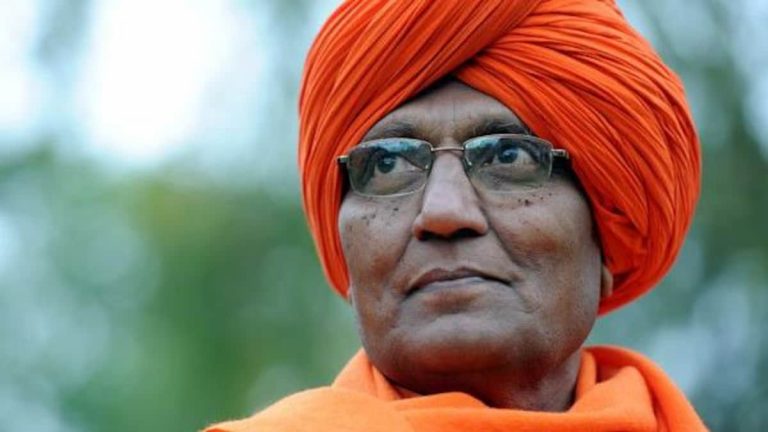
Swami Agnivesh, a controversial political figure is saffron garb, passed away on Friday after prolonged illness due to liver cirrhosis. Agnivesh was unique in that even though he donned the saffron garb, he received passionate condolences from only the liberal end of the political spectrum while others preferred to ignore his passing entirely.
Social media was overflowing with condolences when news of his death broke out. Weirdly, however, all the messages came from only one end of the political spectrum. Controversial actress Swara Bhasker deemed Swami Agnivesh to be the true embodiment of ‘Hindu Dharm’.
Umar Khalid, the JNU scholar who is under the scanner for his alleged role in the Delhi Riots in February, mourned his loss and claimed that “The people’s movements have lost a dear friend.”
It was an honour having known you, Swami Agnivesh ji. The people’s movements have lost a dear friend. But we will take forward your fight against inequality, bigotry, superstition and ignorace. That will be the real tribute to you! pic.twitter.com/vkHpQhEh4p
Javed Akhtar took the opportunity to bid a final farewell to the controversial activist.
This world has lost one more noble human being Swami Agnivesh . His resilience against the bonded labour had given a new life to lakhs of men women and children . Good bye Swami ji .
Communists paid tributes to him as well. “A lifelong crusader against social slavery and bigotry,” they called him.
Swami Agnivesh is no more. A lifelong crusader against social slavery and bigotry, Agnivesh continued to fight against hate crimes till his last breath. His courage, tenacity and fighting spirit will continue to inspire India’s battle against communal fascism. Salute Swamiji! pic.twitter.com/moaX8NUblZ
On the other side of the spectrum, there was either sheer indifference or an expression of joy or relief. “Good riddance” is how certain people described the passing away of Swami Agnivesh. Thus, quite clearly, the man in saffron evoked sharply contrasting sentiments among people of diverse political factions.
The reason for that can perhaps be found in the manner Swami Agnivesh has conducted himself over the years. He might have worn saffron robes, but his politics was anything but. On every matter under the Sun, he invariably ended up taking a stance that ran contrary to the kind of politics usually practised by men in saffron robes.
His history of raking up controversies goes far back. In 2007, Swami Agnivesh had managed to anger Hindus when he suggested that non-Hindus should be permitted entry into the Puri Jagannath Temple. “We will warn Agnivesh not to make any inflammatory remarks that will hurt the religious sentiments of Hindus. His remarks have created resentment among priests. We will send him a letter of warning,” then Puri collector and the deputy chief administrator of the Temple, Rashmi Ranjan Pattnaik, had said.
Four years later. Swami Agnivesh called the Amarnath Yatra a ‘religious deception’. Consequently, there were widespread protests against him. “Swami Agnivesh has passed derogatory remarks about the Amarnath shrine. He called the sacred ice stalagmite, representing Lord Shiva as just another block of ice. We consider this as an insult of our lord. Hence, we are carrying out this demonstration demanding strict action to be taken against him,” Swami Narayandass Puri, head priest of Sangla Shivala Mandir, had stated on the matter.
The matter had subsequently reached the Courts and the Supreme Court had slammed the controversial activist for the remarks that he had made. He was advised to think through his words “many a time before uttering them lest it hurts the sentiments of the people”. In 2015, again, Swami Agnivesh claimed that the Amarnath Yatra was responsible for floods in Kashmir.
“Nobody will dare to tell you this, but I am telling you and you must admit this fact that the Amarnath Yatra whose duration was stretched in a planned way is the source of catastrophe for the people of Kashmir,” he stated. He proceeded to add, “Amarnath yatra is a cocktail. It is the combination of religion and tourism and both the Hindu zealot groups and tourism department want to reap maximum benefits out of it.” He went on to claim, “The increased human traffic is threatening the environment in this fragile ecosystem, a major source of water for the Indus River. Scientists are now grappling with how to protect the headwaters of Kashmir Valley.”
Apart from such antics, he has demanded “peace talks” as the path forward to resolve Maoist terrorist while addressing former Prime Minister Manmohan Singh. He has also been spotted leading a protest march in the erstwhile state of Jammu & Kashmir with terrorist Yasin Malik. At the same time, he has also supported a 30-hour hunger strike against the resettlement of Kashmiri Pandits in the valley, who were forced out of their homes by Jihadists.
Swami Agnivesh was also seen in a video calling for a disruption of Anna Hazare’s movement against corruption where he was discussing a plan to end the movement with then UPA Minister Kapil Sibal. Under such circumstances, it is no surprise that he is being hailed by liberals on social media. Using saffron robes as a ruse, he sought to further every radical liberal agenda, albeit unsuccessfully. He helped liberals pretend that they are not ‘anti-Hindu’.
In 2018, he was assaulted by people during his visit to Pakur, Jharkhand. As soon as he came out of the hotel, he was kicked and punched and black flags and slogans were raised against him. Even though he was expelled from the Arya Samaj, people continued to associate Swami Agnivesh with the organisation.
A woman CPI(M) activist was found dead on Thursday night at a one-room building in Udiyankulangara owned by the party in rural Thiruvananthapuram, according to the police probing the case.
The woman, Asha, 41-year-old, had allegedly committed suicide by hanging herself from the ceiling. Asha was an ASHA worker and according to her family was also a member of the CPI(M) party. A suicide note, purportedly written by her, was found from the spot, in which she had named two partymen—local committee member Kottaman Rajan and Branch Secretary Anatharavilakam Joy—for mentally torturing her and accused the party of not paying heed to her complaint.
“Initial investigation indicates this to be suicide. A case has been registered and a probe is underway,” a police official privy to the matter said.
Asha is survived by her husband and two sons. Her brother B Unnikrishnan believes that there could be more to the case than meets the eyes.
CPIM says Asha was just a party sympathiser, not a member
Asha had reportedly attended a committee meeting of the party a few days ago. But, the party had denied that she was a member. Investigations are underway in the suicide case of Asha, and the police will also be ascertaining if she was indeed a member of the party or just a supporter.
While news reports state that the suicide note received from Asha had mentioned only the names of the CPI members, a report published by ‘The News Minute’ says that the suicide note also included financial dealings Asha had unearthed as a Kudumbashree worker.
CPI(M) Thiruvananthapuram district secretary Anavoor Nagappan said that the district committee had not received any complaint raised by the deceased woman and maintained that the woman was just a party sympathiser. He also added that the party would look into the incident, claiming that a probe has been launched because of the names of party members coming up in the alleged suicide note.
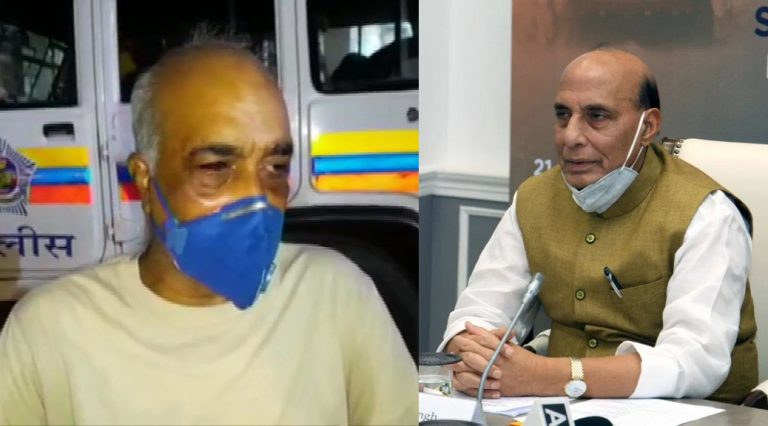
Defense Minister Rajnath Singh today talked to Indian Navy veteran Madan Sharma who was brutally beaten up by Shiv Sena goons in Maharashtra for sharing a cartoon on CM Uddhav Thackeray.
Spoke to retired naval officer, Shri Madan Sharma who was attacked by hooligans in Mumbai and enquired about his health. Such attacks on Ex-Servicemen is completely unacceptable and deplorable. I wish Madanji a speedy recovery.
Singh tweeted about this from his official Twitter handle. He inquired about Sharma’s health and wished him speedy recovery. He said that such attacks on ex-servicemen were completely unacceptable and deplorable.
Madan Sharma confirmed to Times Now that the Rakshya Mantri had called him and inquired about his health. Rajnath Singh also asked how the incident happened, and he explained everything about the attack by Shiv Sena goons in detail. Sharma also told the defence minister that he is not happy with the way Maharashtra govt is acting recently. He expressed his concern about the state of affairs in the state for the last 3-4 months, and asked the defence minister to do something about it.
#Exclusive | Defence Minister asked if I was doing fine, wished me a speedy recovery: Madan Sharma, assaulted veteran tells TIMES NOW.
When asked, Madan Sharma said that no Shiv Sena leader or minister has contacted him or apologized to him for the brutal attack. He also said that the party leaders may not want to say sorry for him for the act of their party workers as it will hurt their ego. He expressed concern that he and his family may come under attack again after he is recovered from his injuries.
Sharma, who is a 65-year old retired Navy officer, was brutally thrashed by some Shiv Sena goons yesterday after he shared a WhatsApp forward taking a dig at CM Uddhav Thackeray. The six goons who had attacked Sharma were arrested by the Mumbai Police after an FIR was registered by Sharma at Samta Nagar Police Station. However, soon after being arrested they managed to secure bail.
It has almost become a norm in the Shiv Sena coalition ruled Maharashtra that anyone speaking against or criticising the Chief Minister, his son or the state government is slapped with a court case. Navy Veteran Sharma is the latest victim of this censorial of the Maharashtra government. Yesterday, a man from Kolkata was arrested by the Mumbai police for allegedly threatening Shiv Sena leader Sanjay Raut over. The Mumbai police had traveled all the way to Kolkata especially to nab the man.