The Finance Ministry through Press Information Bureau recently issued a clarification, putting paid to the rumours and speculations that gained strength after an article in the Business Standard said that the government is mulling over the merger of the Central Board of Direct Taxes and Central Board of Indirect Taxes and Customs. The PIB rubbished the report as “baseless and unverified”.
In a press release, the PIB said that the news regarding the merger of CBDT and CBIC is “factually incorrect” as the government has no proposal to merge the two boards created under the Central Boards of Revenue Act, 1963.
“It has been published without due verification of facts from the competent authorities of Ministry of Finance and only creates a policy distraction when the Ministry is amidst the implementation of a large number of taxpayers’ friendly reforms like the transition from a manual assessment based on territorial jurisdiction to a completely randomized electronic faceless assessment, electronic verification or transactions and faceless appeals,” the statement said.
The PIB said that the merger was one of the suggestions made by the Tax Administrative Reforms Commission (TARC). However, the communique from the government said that after scrutinising in detail the report of TARC, the centre did not accept its recommendations. The same was conveyed in the parliament in 2018 before the Committee on Government Assurances. The statement further added that the website of the Department of Revenue shows that the recommendations proposed by the TARC were not accepted by the government.
Criticising the Business Standard article as “misleading”, the statement said that the piece was published in the newspaper without no due diligence or examination of official records available in the public domain or checking the latest status with relevant competent authorities in the Ministry of Finance.
“It not only reflects poorly on the quality of journalism but also shows a complete disregard for due diligence. If such an unverified story is given a front-page lead story position, it should be a concern for all news-reading public. This news item is completely rejected as baseless and unverified,” read the scathing remarks made by the PIB in its statement busting the misleading report published by Business Standard.
Business Standard article claims merger of CBDT and CBIC was on the anvil
The clarification was issued by the Press Information Bureau after a leading newspaper–Business Standard published an article on 5th July claiming that the central government is contemplating merging CBDT and CBIC. The article titled “Govt’s cost-cutting drive: Proposal to merge CBDT, CBIC back on the table” argued that as a part of the central government’s measures to trim down costs amid increasing revenue losses, the proposal to merge the direct and indirect tax boards, along with a large scale downsizing at all cadre levels is on the cards.
“Reducing entrants to the IRS, both for Customs and I-T, is being considered. Generally, the government informs the Union Public Service Commission every year how many it needs. Sources say this year the recruitment to the IRS has been reduced to half of that of last year. However, the number of IRS vacancies will be known after the results of the civil services examination come out. In 2019, 60 I-T officers had been recruited, against 65 in 2018 and 169 in 2017,” the article read regarding the marked reduction in the hiring for the IRS services.
The Business Standard article attributed the government’s retrenchment drive to the raging coronavirus crisis which has resulted in a cratering economy and widened the fiscal deficit. The move could include freezing of hiring for the Indian Revenue Services(IRS), changes in retirement rules, merging job categories, transferring revenue officers to other departments, and cutting down the allowances of employees, said the article.
“Both the tax boards, in agreement with the finance ministry, are working on cost-cutting measures. Certain proposals have been discussed, such as a unified structure, which would help in creating synergies with a reduced workforce,” the article published in the Business Standard said as quoting a person privy to the development.
It further added that the CBDT had recently issued directives to its departments to drive down key expenditures or imminent expenditures, including those on legal matters, write-off losses, repair and maintenance costs, and rewards to informants, which the article said would not be authorised.
John Kay once said that ‘the people who own the country ought to govern it’. In India, for the longest time, it was the Congress party that owned the country, not the people. The election of Narendra Damodardas Modi bought a tectonic shift in not just the political scene of the country, but also how the people saw themselves. From being treated as chattel, to be used and abused as the first family saw fit, to an empowered majority that chooses to write its own fate.
The defeat of Congress was a jolt that the ecosystem did not expect. When one rules a country for decades, one does not expect for their ‘right’ to be snatched away by the very subjects they assumed to have systematically oppressed for so many years. They genuinely believed that they had perhaps rewired the Indian populace.
They altered history, they fed the people selective information for decades by ensuring that only their minstrels have the right to public books that are taught to children in schools, they launched Soviet style propaganda to demonise the majority population, the Hindus, they got into secret deals with enemies that the people had no idea about and stole trillions from the people because they assumed that the scared ‘praja’ had no agency left to speak up.
When the Congress fell, much of what was fed to the Lutyens intellectual hitmen for hire, their ecosystem, crumbled. The hands that fed them no longer wielded the power that made it possible for them to be fed. They assumed that the Congress would never be dethroned and their gravy train would never stop. They never expected one Narendra Damodardas Modi to shake the very foundation of the political system of the country and expose the rot that was covered up with the collective Omertà.
After 6 years of defending the Congress and blaming the people for not selecting their Knights in shining armour, the ecosystem has now lost its patience, it would seem. At least momentarily. But even in their ire, the dishonesty is rather staggering.
The Wire published an article where they demanded that the ‘Gandhis must vacate the Congress space’. Interestingly, while the headline read Gandhis, the article was focused on the acute shortcomings of Rahul Gandhi and Priyanka Gandhi Vadra.
At the very outset, it was evident that the author’s rant did not stem from genuine introspection of what is wrong with the Congress model of governance, but rather, intense hate for PM Modi that is making him lash out at Rahul and Priyanka – much like a jilter lover.
Rahul Gandhi is not the problem, he is as incompetent as his predecessors, it is the weakening of the ecosystem that is pinching the left
After spending 6 years trying to orchestrate the “coming of age of Rahul Gandhi”, there are sections within the Left ecosystem that are visibly frustrated with him. They are frustrated because Congress not only lost to PM Modi and the BJP In 2014 and 2019, but despite all their antics, there seems to be no way that the Congress can come back to power in 2024. To be fair, that is not Rahul Gandhi’s fault alone. In 2014 when Congress lost to PM Modi, it was not him who was the president of the Congress party, but Sonia Gandhi. Right now as well, it is Sonia who is the president.
Rahul’s incompetence has been known. However, it is the same ecosystem that orchestrated or at least attempted to orchestrate a charade of his brilliance for years and continue to do so. So what is changing? Obviously they knew that Rahul Gandhi was a dud and yet, they pinned their hopes on him for 6 long years.
Essentially, the ecosystem has no problem with the exemplary incompetence of the Congress party or the family leaders. What they do have a problem with is that now, that incompetence is being exposed and challenged. What bothers them is now that exemplary and historic incompetence is for all to see, and that one leader brought about a revolution that dethroned them rather promptly. What bothers them is that because they have been dethroned, the ecosystem does not know who else can sustain them, financially or otherwise.
If Congress still had the resources and the power to sustain the ecosystem, Rahul Gandhi would have still been the Prince Charming who would rescue them. With the ecosystem losing its edge and its unbridled power, that seems to have changed or at least, is showing signs of changing.
The Wire article on Rahul Gandhi, its main contentions and why it is important to talk about it
The Wire article is written by Harish Khare. While his bio introduces himself as just a journalist, there is more to this than meets the eye. He served as the Media Adviser to the Indian Prime Minister’s Office from June 2009 to January 2012 and post that, has worked as Resident Editor and chief of bureau with The Hindu in New Delhi, India.
Being the person who was close to Manmohan Singh and obviously, close to Super PM Sonia Gandhi, that he is the one lashing out at Rahul and Priyanka Gandhi in a publication like The Wire that has served as Rahul Gandhi and Congress’ attack dog, is of significance and must be analysed threadbare.
Essentially, the author in The Wire article makes the following assertions:
Rahul and Priyanka Gandhi, whom he calls the ‘bhai-behn-cartel (BBC)’, has foisted a fratricidal internal war in Congress by blaming the ‘senior leaders’. The author further says, “the longer the brother-and-sister duo continue to scuffle within, the much-needed process of democratic recovery and regrouping gets postponed further and further”.
The main reason for the outburst published in The Wire seems to be the order for Priyanka Gandhi Vadra to vacate the government bungalow allotted to them, which they were not entitled to. While blaming Rahul and Priyanka of being reckless and entitled, the author cites an example where he essentially says that the mighty Gandhis have got their priorities all wrong and conflates the concepts of giving to the party as opposed to giving back to the nation they are meant to serve.
The third contention of the author seems to be that the brother-sister duo doesn’t seem to put in an effort to understand why millions and million prefer PM Modi over Gandhi’s Congress. “In particular, the Congress has to unsentimentally comprehend why Modi is able to run away with the deshbhakti ball and (to use American football terminology) get to score a touch-down at his choosing while the Gandhis prove very poor defensive linebackers. Nor has the bhai-behn cartel offered the country any moral reason to shift its allegiance and affection away from Narendra Modi”, the article on The Wire states.
The Wire says, Rahul Gandhi and Priyanka Gandhi Vadra have ‘convinced themselves that the ‘old guard’ are a stumbling block in their righteous struggle against Modi’.
His other contention seems to be that Rahul Gandhi refuses to be the Party President and then, on the other hand, refuses to let the reigns go to some non-dynast member either.
The raging hypocrisy and sheer inanity of the assertions are rather stupefying. Let’s examine these assertions one by one.
Internal feuds: The making of Rahul Gandhi and Priyanka Gandhi Vadra?
The author, who happens to be a veteran journalist no less, makes it sound as if the internal feuds in Congress are the fresh making of Rahul Gandhi and Priyanka Gandhi Vadra. The truth is, that the Congress party has never really been a united house. There are thousands of incidents, from the time of Nehru to Indira Gandhi and even Sonia Gandhi where internal feuds were really the norm.
K Natwar Singh had himself written an article where he had categorically narrated how Sonia Gandhi did not want him to be the External Affairs Minister because she was being pressured from several quarters, including the Americans. Thereafter, she had accused Natwar of being involved in defence deals rather out of the blue while in a meeting with the Afghanistan President.
It is no secret how Sonia Gandhi hounded and humiliated Maneka Gandhi after the death of Sanjay Gandhi. To a point where she was not allowed to eat at the same table and evidently, this was done because Sonia Gandhi did not want Maneka to get a share of the property. This is not an assertion from thin air but a tale narrated by Maneka Gandhi herself.
Further, who doesn’t remember how PV Narsimha Rao was treated? With his dead body being torn apart by dogs? Or who doesn’t remember how Sonia Gandhi and Rahul Gandhi tore up ordinances signed by Manmohan Singh as the PM, publicly during a press conference? Who has not heard of the feuds between Indira Gandhi and Sanjay Gandhi? Or how Congress leaders have been treated like dirt by every member of the Nehru-Gandhi clan? Or who doesn’t remember how Nehru actually became the prime minister and who was sidelined?
In such a scenario, blaming Rahul Gandhi or Priyanka Gandhi Vadra for being the first to create internal feud is ridiculous. Congress has never been sans internal feuds and there is a good reason for it – for anyone dynasty to hold power within the party, internal feuds are a necessary evil that keeps even half-capable people at check.
In fact, this article in The Wire itself seems to be the product of the internal feud between the Rahul Gandhi and Priyanka Gandhi Vadra clan and the Sonia Gandhi faction. That can be evidenced from the fact that all the blame in this article, even for their stand during Galwan stand-off has been shifted to Rahul and Priyanka Gandhi and Sonia Gandhi has not even been mentioned once.
The only thing that Rahul Gandhi and Priyanka Gandhi can be faulted for, perhaps, is that their lack of intelligence is why they are not being able to control the narrative even for their own party, despite several pens for hire willing to build their image up. The problem here is the urge to market a bad product. Not that it has never been done before.
Giving to the party confused with giving to the nation
While the author rues that Rahul Gandhi has been unable to understand why millions and millions of people support PM Modi and not Gandhi’s Congress, the author tragically writes an entire paragraph that makes no sense at all except to say that the current generations seems to have lost their street credo. Even more tragically, the rant seems to confuse giving to the political party with giving to the nation, for the nation’s benefit.
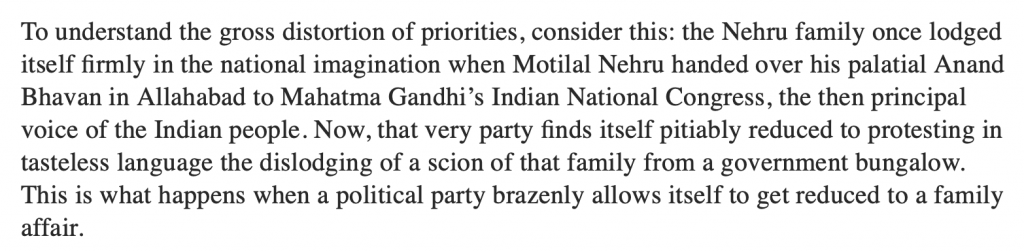
Excerpt from The Wire article
In this paragraph, the author says that Motilal Nehru gave his palatial bungalow to Mahatma Gandhi’s Congress and thus, firmly lodged itself in the national imagination. On the other hand, the current Congress uses tasteless language to defend itself after Priyanka being dislodged from her illegal government accommodation.
The author really has no right to blame Rahul Gandhi or even Priyanka Gandhi Vadra because he seems to belong to the exact, degenerated mindset that the Gandhi family, including Rahul and Priyanka belong to. The author here conflates giving a bungalow to the party as a great service to the nation. That is not much different from the entitlement that every scion of the Nehru-Gandhi family feels.
A service to the party, is a service to the nation per them. A service to the Gandhi family is an ode to the over 1 billion people of India. A victory for the Gandhis is a victory of the people of India. This is exactly what Rahul believes but he is not the first. Evert leader of Congress has exactly the same mindset. And thus, for the author to blame Rahul and Priyanka for being exactly like their parents or grandparents seems a little harsh.
The tantrum – Why does Modi manage to run with the ‘deshbhakti’ plank
Well, maybe because he genuinely is one? The issue with Congress has always been tweaking its core ideology per the political winds that might shape elections. During the Indira Gandhi regime, they wanted to protect cows. During the Sonia Gandhi regime, they wanted to bring in the Communal Violence Bill that would reduce every Hindu into a perpetrator, facts be damned, and shield every Muslim as victim, facts be damned, during a communal riot. During the Rahul Gandhi reign, they allied with Islamists and Naxals. Not that it was new. Sonia Gandhi too shared the political bed with Islamists and Naxals, heck, Sonia Gandhi even accepted money from China and Soros linked foundations during her regime.
Prime Minister Modi manages to run with the ‘deshbhakti’ plank because the BJP, in face of loss or victory has remained rather steadfast in their political ideology and vision for the nation. Congress on the other hand are like political mistresses who change their ideology much like one would change clothes.
However, to blame Rahul or Priyanka Gandhi for their intellectual or ideological debauchery is rather unfair. It is akin to blaming them for running a family business just how their father or mother or grandparents ran it. And that is what Congress is, really. A family business.
The issue here is that the ecosystem does not seem to have the strength to question Sonia Gandhi or even the Congress party for its history that has often compromised national security. What they care about is lashing out at Rahul Gandhi and Priyanka because that is easier to do compared to looking inwards.
Old guard not a stumbling block, new guard is? So says The Wire
The Wire says, Rahul Gandhi and Priyanka Gandhi Vadra have ‘convinced themselves that the ‘old guard’ are a stumbling block in their righteous struggle against Modi’. This, per the author is a massive error in judgement.
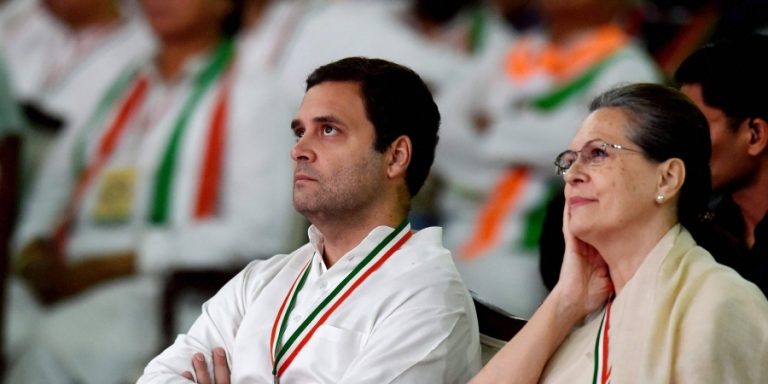
While at this point, this would seem like a planted article by the Sonia gang to subjugate the Rahul gang, the dishonestly emanating from this piece is still staggering. Currently, it is Sonia Gandhi who is the President of the Party. When Congress lost to Narendra Modi in 2014, it was Sonia Gandhi. Interestingly, the article does not mention Sonia Gandhi even once, other than in the featured image of the article.
Rahul Gandhi is completely useless. So is Priyanka Gandhi. However, the old guard has no halo around their heads either. In 2014, it was the old guard along with rants from the new guard that cost Congress its power. Today, during the China stand-off, the party is headed by Sonia Gandhi, though the party is equally enamoured with Rahul Gandhi. Neither of them managed to form one sentence that actually made sense if even translated into a sentiment that favoured the interests of the nation.
Painting Rahul Gandhi and Priyanka Gandhi as imbeciles and the old guard as Knights is unfair. Both the factions are equally mentally decelerated, it would seem.
Besides, what Congress and its playthings probably don’t understand is that the Congress is not newly incompetent now. They were always incompetent. They remained in power because earlier, there was no leader with the brute courage of conviction like that of PM Modi. All it took, was one leader to shake their entire foundation. And if the foundation, build over decades, can be shaken in one election, then it is certainly a foundation that ought to be demolished with dynamite.
Interestingly, while whining about the incompetence of Rahul Gandhi, the author also rues that Rahul is unwilling to accept responsibility of becoming the President of the Party. After an entire article of bashing the poor man who is simply following his DNA, the author wonders why he does not want to become the President.
Perhaps the author would do well to remember that in this regard too, he is only following his mamma. Sonia Gandhi refused to become the Prime Minister when she could, however, ensured that she was the ‘Super PM’ while Manmohan Singh rightly got the heat for his incompetence. Rahul Gandhi is exactly the same. He would want to ruin the nation from the shadows while someone else, who is merely a puppet, takes the fall for it.
This critique of Rahul Gandhi and Priyanka Gandhi Vadra is unfair. Unfair not because it is wrong, per se. But because everything that Rahul Gandhi and Priyanka Gandhi Vadra are doing wrong, has always been wrong with the Congress. Vested interests have been too scared to call it out because it was always the Congress that fed them.
The reason these voices are becoming sparsely audible today is not because the Congress has deteriorated, it is because the ecosystem is biting the very hands that fed them, because the hands no longer wield the power anymore to sustain a massively expensive and parasitic ecosystem. Rahul and Priyanka Gandhi are imbeciles. They are selfish and clueless and wildly anti-India since their personal interests reign supreme. But, so was every other Congress leader. So was every other scion of the Nehru-Gandhi clan.
It is not the incompetence of the Congress party or its latest fools that angers the ecosystem, it is the fact that the people have seen through the facade finally and the gravy train has stopped.
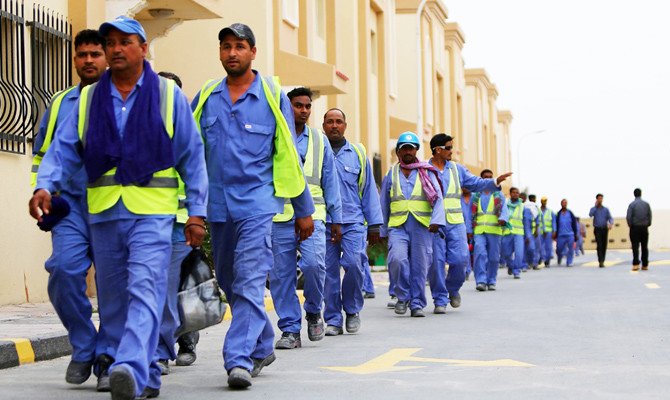
Kuwait has proposed a new bill on 4th July to limit the number of foreign nationals in the country. The bill will be submitted to the Assembly in the next two weeks. According to the Kuwait Times, Assembly Speaker Marzouq Al-Ghanem said that Kuwait’s main problem is its population structure. 70% of the total population are expats.
As per reports, Kuwait has around 3.35 million expats and a staggering 1.3 million are either illiterate or can barely read and write. Kuwait does not need them. He added that 100,000 of these people are workers who are illiterate.
The interior minister of Kuwait has said that visa trading is another problem the country is facing. It is a brutal practice and involves human trafficking that must be stopped. In the proposed bill, the number of Indians should be reduced to 15% of the total population. The legal and legislative committee of the National Assembly has said that the draft expat quota bill is constitutional. Sheikh Sabah Al Khalid Al Sabah, Prime Minister of Kuwait had last month proposed to bring the number of expats to 30 percent of the population. The reduction is supposed to be done in phases.
Officials have stated that they constantly face complaints of visa trading and human trafficking.
Around 14 lakh Indians are reportedly living in Kuwait (For details click here: PDF). If the bill becomes a law, around eight lakh, Indians have to return home. The bill also calls for reducing the number of Egyptians in the country that makes to 10% of Kuwait’s total population. As per 2008 estimates, 80% of all Indians living in the Gulf are from Kerala. If Kuwait’s new law comes into force, it is expected that Keralites will be the most impacted.
A slump in oil prices among reasons of new proposed law
In 2018, India received close to $4.8 billion from Kuwait in remittances. At present, the citizens of Kuwait have turned into minority and the administration is trying to reverse it. Kuwait is largely dependent on the workforce from different countries. In the background of Covid-19, there has been a slump in the oil prices across the world that is believed to be one of the reasons for such a step.
The Indian embassy is closely following the developments and no official statement has been released by the Ministry of External affairs so far. India and Kuwait have pleasant diplomatic and trade relationships. There are more than a million expats from India living in Kuwait. Out of these, around 80 percent are from southern states of India, the majority being from Kerala. MEA has mentioned it multiple times in its statement that Indians are present in all segments of society in Kuwait and are largely considered disciplined, hardworking, and law-abiding.
The Congress party, of late, has been protesting against what it calls the ‘privatisation’ of Indian Railways. Recently, the Indian Youth Congress held a symbolic ‘shirtless’ protest against the same.
“Since the present BJP led NDA government came to power in 2014, many government PSUs and otherwise government-held assets have moved towards privatization. The anti-poor government at the Centre has also consistently moved towards privatization of Indian Railways, which will gradually lead to the railway becoming unaffordable for the common man,” the IYC said in a press release.
Ostensibly, the protests are regarding the decision of the Indian Railways to permit private entities to operate 109 trains on its rail network. Senior Congress leader and leader of the party in the Lok Sabha Adhir Ranjan Choudhary claimed that it was adding “salt to the injury of common people”. “It is easy to privatize the 109 pairs of trains but for whose interest?” he asked.
For its part, the Railways said, “The objective of this initiative is to introduce modern technology rolling stock with reduced maintenance, reduced transit time, boost job creation, provide enhanced safety, provide world-class travel experience to passengers.” The 109 origin-destination routes have been formed into 12 clusters across the Indian Railway network. Each train shall have a minimum of 16 coaches, it said.
It is important to remember here that the initiative of the Indian Railways in question is not exactly ‘privatisation’ so to speak. The correct term to use here is Public Private Partnership (PPP). The PPP Model has been used extensively in the past to fuel the growth engine of the Indian economy and usher in development. Not so long ago, the Congress itself was predisposed towards such partnerships as is evident from the conduct of the UPA Government.
It is only when they lost power that they suddenly appear to have discovered the perils of it. Like everything else, even the current issue is being embroiled in petty politics so that the Congress party could gain at least some political mileage from it. Distressed by its current political irrelevance, it is throwing everything in its arsenal at the BJP in the deluded hope that something sticks.
Favourable comments by senior Congress leaders during UPA regime
In his inaugural address at the Conference on PPP in National Highways in September, 2011, then Prime Minister Manmohan Sinmgh said, “I have often said Public Private Partnership is private profit in service of public at large”. P Chidambaram said in his budget speech in 2004, “I believe that the key to growth is investment – public and private, domestic and foreign. It is therefore my intention to considerably enhance investment in all sectors of the economy.”
In his 2005 Budget Speech, P Chidambaram said, “In agriculture, we shall enhance public and private investment in the infrastructure required to support expansion, diversification and value addition. In the industrial sector, both the public sector and the private sector will be allowed the space to grow and compete with each other. Government will play the leading role in providing and facilitating investment in public goods such as roads, railways, power, seaports and airports. In the services sector, Government will recognize the leading role played by the private sector, and provide a supportive policy environment and stable tax policies.”
In his 2005 Budget Speech as the Railways Minister of the country, Lalu Prasad Yadav said, “To ensure the commercial utilisation of surplus railway land and air space I had, during the last Parliament session, presented a Railway (Amendment) Bill, 2004 in the Rajya Sabha, for setting up of RLDA. This authority will, through public-private participation, develop surplus land adjoining railway stations and goods sheds for constructing warehouses and logistics parks. It would also generate additional resources for the development of railways.”
Lalu Prasad Yadav said in his 2006 Railway Budget Speech, Lalu Prasad Yadav said, “We will not allow resource constraints to hamper expansion of the rail network. We will encourage public-private partnership schemes for effecting significant improvements in rail services. This is the need of the hour.”
It is pertinent to mention here that Lalu Prasad Yadav was the Railway Minister during the UPA regime. Thus, quite clearly, the Congress party itself was not averse towards public-private partnerships when it was in power. It is only now that the NDA government is treading the same path that it is suddenly finding fault with it.
Opinion on Disinvestment and Privatisation of Congress party
Close aide of former Congress president Sam Pitroda said in an article in May 2018, Rajiv Gandhi “emphasised privatisation, liberalisation, free market economy, democratisation, deregulation, technology, entrepreneurship, innovations, etc, in the mid-eighties, with a commitment to expedite the process of development in India.”
Former Commerce Minister Kamal Nath had told ET in 2009 that “disinvestment of government equity while maintaining management control will only improve the efficiency of some of these public sector undertakings”.
Allegations of Scam involving PPPs during UPA regime
Lalu Prasad Yadav, his son Tejasvi Yadav and his wife, Rabrfi Devi, were accused of corruption during his tenure as Union Minister in 2006. He was accused of facilitating the lease of two hotels to a private company Sujata Hotels in return for a 2-acre plot in Patna, Bihar during his tenure as Railway Minister from 2004-09.
The Central Bureau of Investigation conducted raids at 12 locations associated with the RJD Supremo and others accused in the IRCTC hotel Lenders Case in July, 2017.
In 2018, movable assets worth Rs. 17.55 crores be;onging to R.K. Associates and Hoteliers Pvt. Ltd., Satyam caterers Pvt. Ltd. And others were attached by the Enforcement Directorate in a scam related to Rail Neer. The CBI discovered in its investigation that private caterers were mandated to supply Rail Neer water bottles to Rajdhani and Shatabdi trains.
Instead, other packaged drinking water brands were supplied in collusion with officers in the railways department causing a loss of Rs. 19.55 crores to the government exchequer between January 2013 and December 2014. Furthermore, it was revealed that the private entities had laundered Rs. 17.55 crores to their bank accounts.
Success stories of public-private partnerships in Indian Railways
Numerous contracts have been signed under the ‘Make in India’ initiative that is expected to increase average speed of goods trains in freight corridor. 19 electric locomotives and 2010 diesel locmotives have been delivered to Indian Railways under a PPP programme. The first such locomotive has already been put under operation by the Indian Railways.
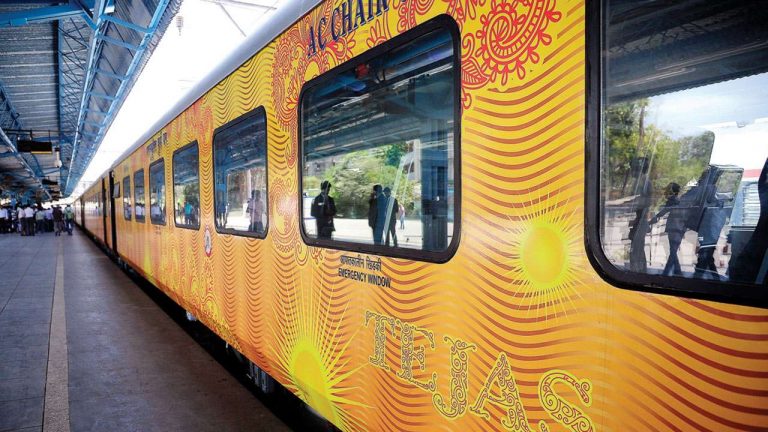
One of the greatest success stories of the PPP Model, however, is the corporate trains being run by IRCTC in three routes currently. The Ahmedabad-Mumbai Tejas Express Train, the Delhi-Lucknow Tejas Express train and the Kashmi Mahakal Express train are operated by the IRCTC. Onboard services are provided by the IRCTC in association with private partners and have been well received by the people at large.
The National Investigation Agency (NIA) Monday, filed a charge-sheet against 6 people, including Hizb-ul-Mujahideen terrorist Syed Naveed and the Jammu and Kashmir tainted cop Davinder Singh. All have been charged in a terror case, reported ANI.
National Investigation Agency has filed a charge sheet against six persons including Hizbul Mujahideen terrorist Syed Naveed and DSP of J&K Police, Davinder Singh in a terror case. https://t.co/TgEuwKnoz4
Last month, NIA had confirmed that it had “adequate evidence” against the rogue cop and would be filing a charge-sheet against him in due course of time. He was arrested under the anti-terror UAPA (Unlawful Activities Prevention Act) law.
Davinder Singh granted bail by Delhi Court
Last month social media was abuzz with the liberals casting aspersions on the government and the police mechanism, insinuating that the disgraced cop was going to walk free after there were reports that the Court has granted bail to Davinder Singh and lawyer Irfan Shafi Mir. However, soon it was confirmed that the bail was awarded to Davinder Singh in a separate case and he would continue to remain in judicial custody in the NIA case. In a brief statement, a spokesperson of the NIA had confirmed that Davinder Singh continued to be in judicial custody in a case filed by the agency.
The suspended Jammu and Kashmir cop was escorting Naveed Mushtaq (alias Babu), a Hizbul Mujahideen terrorist and resident of Nazneenpora in Shopian district, and his associate Asif Ahmad, when he was arrested on 11 January at Kulgam. According to the police, Naveed Mushtaq was wanted in the killings of apple traders, drivers and labourers (a total of 11 people) in October last year.
Davinder Singh’s terror connection
It was reported that DSP Davinder Singh, who was on the payroll of the Islamic terror organisation, had been taking money not only for transporting and sheltering Naveed but was also receiving money on a regular basis from the terrorist for extending assistance throughout the year. Singh was involved in multiple operations of trapping and killing militants or forcing their arrest or surrender.
The other accused in the case are two Hizb-ul terrorists Naveed Mushtaq alias Babu, Rafi Ahmed Rather and lawyer Irfan Shafi Mir. The three were arrested with the DSP from a checkpoint on the highway at Wanpoh area of south Kashmir’s Kulgam district.
The fifth person to be arrested was Naveed’s brother Irfan Mushtaq. He was held on January 23 for allegedly being part of the conspiracy and the sixth accused arrested in the case was the ex-president of cross-LoC trade Tanveer Ahmed Wani.
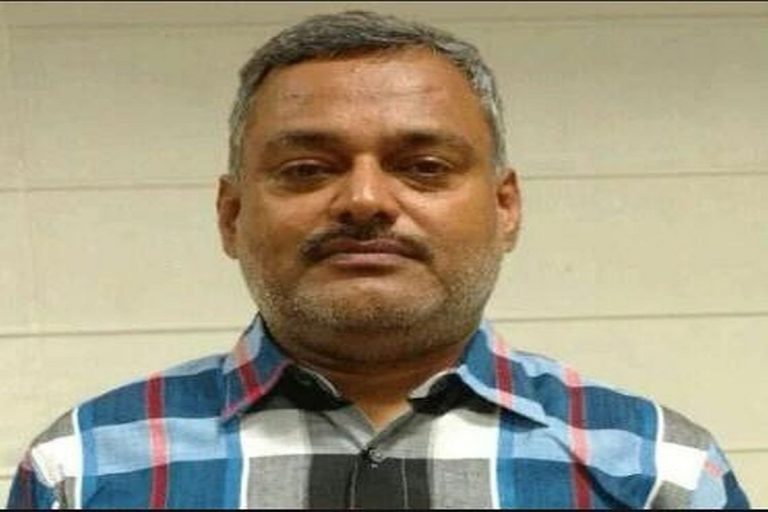
IG Kanpur Range Mohit Agarwal on Monday said that three police officers have been suspended after their suspicious activities linked to Vikas Dubey surfaced. According to a report published in TOI, the investigators are analyzing call records of around 115 police personnel. They have found that three of them could be on the payroll of gangster Vikas Dubey. The investigators think that these three could be the moles who informed Dubey about police movement.
Today, 3 police officers have been suspended after their suspicious activities linked to Vikas Dubey surfaced. 25 teams of 40 police stations have been formed to carry out searches to arrest people involved & very soon we will arrest all: Kanpur IG Mohit Agarwal pic.twitter.com/GhVl2sZ31f
IG Agarwal said that the probe is still underway. The three personnel who got suspended are sub-inspectors Krishna Kumar Sharma and Kunwarpal and a police constable Rajeev. All three were deployed in Chaubeypur police station. The station in-charge of the same police station, Vinay Tiwari, fled from the encounter scene on Friday night. He was suspended on Saturday. Kanpur SSP Dinesh Kumar P said that preliminary inquiry had been initiated against all three policemen.
The story of sabotage
On Friday night (3rd June), three teams of UP police comprising 30 police personnel went to arrest gangster Vikas Dubey. It is alleged that someone from Choubeypur Police station informed Dubey about the police movement. Dubey, along with his 50-60 goons, took the position in his house. The moment police personnel reached his house, they opened fire at them.
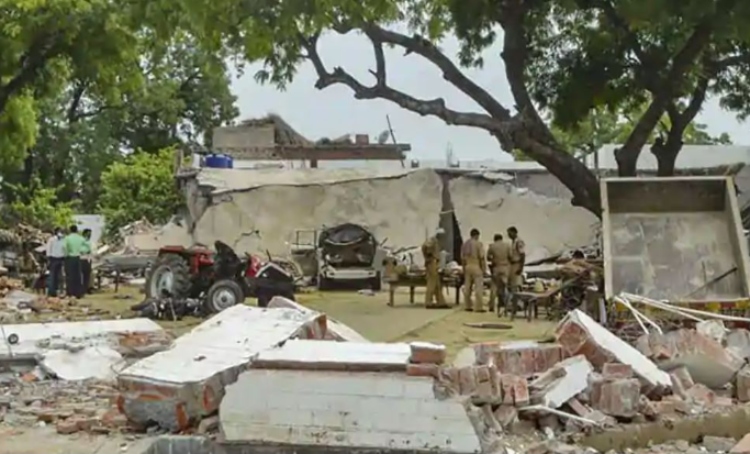
Taking advantage of the altitude and dark surroundings, they managed to kill eight police officers. As per the witness, no one from Choubeypur police station fired any shot. The station in-charge, Tiwari, fled from the scene. In the aftermath of the incident, the administration has demolished Kanpur house of Dubey. Twenty-five teams are aggressively searching for Dubey since the attack happened.
If their involvement is proved during the inquiry, an FIR will be lodged against them, and they will face further action, said SSP Kumar.
Kanpur police have revealed that Vikas Dubey, the hardened criminal who had killed 8 police personnel in an ambush on the intervening night of July 2 and 3, operated like a Maoist. The history-sheeter had a bunker in his house which was used to store weapons and explosives.
Kanpur inspector general (IG) Mohit Agarwal confirmed that the bunkers were stocked with arms, ammunition and explosives. He added that like black money hoarders hide currency notes, the walls in Vikas’ house were found hiding guns and ammunition.
The police officer added that the gangster had hidden arms and ammunition in the walls of his house. After the demolition of Vikas Dubey’s palatial house in Kanpur district, Saturday, the police recovered a large number of country-made guns, ammunition and explosives.
It is being reported that Vikas Dubey and his henchmen were in possession of dangerous weapons like the AK-47. According to reports, Dubey and his gang members had fired 200-300 shots at the police during the ambush, the cartridges of which have been recovered by the police during the demolition of Dubey’s house in Kanpur.
According to recent reports, Kanpur police has initiated a preliminary inquiry against sub-inspectors Kunwarpal and Krishna Kumar Sharma and constable Rajeev, the three who have been suspended. It is being believed that the three cops were in touch with Vikas Dubey and his accomplice.
Injured cop narrates how policemen were trapped
Today, Kaushalendra Pratap Singh, an injured station officer of Bithoor police station, described the incident which transpired on July 2 in Bithoor area in Chaubepur, explaining how and why things went south for UP Police. The police officer revealed that the local team of Chaubeypur police station had stood watching as the other teams were ambushed by Vikas’ men.
Singh suffered bullet injuries and he is currently under treatment at Regency Hospital in Kanpur.
Police demolish the house of gangster Vikas Dubey in Bithur
On Saturday, Uttar Pradesh police had demolished the gangster’s house in Bithur besides deploying several teams to raid different areas in search of Vikas Dubey. These places are residences of Dubey’s relatives and family members and the police believe that Dubey might be hiding at one of the places. On these lines, a team raided Vikas Dubey’s house in Lucknow, where the police found no one except a servant.
Continuing their search for the hardened criminal who fled after the ambush, the police thereafter raided the house of Deep, Vikas’s brother and recovered a revolver from Deep’s wife.
What transpired on the intervening night of July 2-3
Eight police personnel, including Deputy SP Devendra Mishra, were killed and six cops were injured in Uttar Pradesh’s Kanpur district, when the police team went to nab gangster Vikas Dubey on July 2 late night. According to the police officer, Dubey’s gang had laid a trap for the police officers, possibly alerted about the raid. As the police team reached the spot, they were ambushed by Dubey’s men who were prepared with arms on the roof of a building and continuously shot at them. Shockingly, the criminals had already stationed a JCB machine on the road to block the police team. Eight police personnel were killed and six cops were injured in the ambush.
The Kanpur police had arrested an aide of gangster Vikas Dubey in Kalyanpur in Uttar Pradesh, following an encounter on Saturday night. The accomplice who was identified as one Daya Shankar Agnihotri had confirmed to the police that Dubey had received a call from the cops before they came to arrest him. Moreover, Dubey’s call records have revealed that he was in touch with at least 24 police officials, including some from Chaubeypur and Shivrajpur stations.
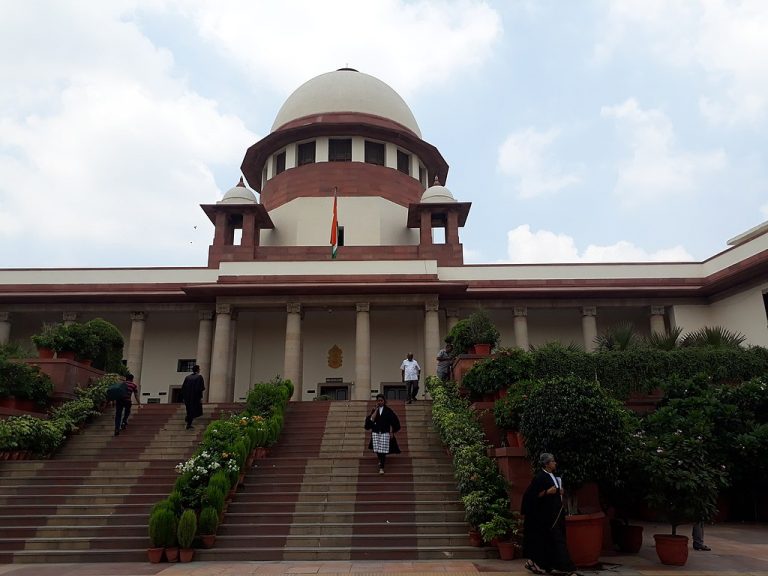
On Monday, 6th July, a Division Bench comprising Chief Justice DN Patel and Justice Prateek Jalan of Supreme Court heard multiple petitions against violence that took place in and around Jamia Millia Islamia University during anti-CAA protests on the evening of 15th December 2019. The petitioners asked for an independent inquiry into the violence that broke out at Jamia Milia Islamia University. SG Tushar Mehta appeared for the Delhi Police while senior advocate Colin Gonsalves appeared for the petitioners.
[JAMIA VIOLENCE]
Delhi High Court hears Petitions concerning violence that broke out at Jamia University last year following an Anti-CAA protest. #jamiamilliaislamia#antiCAA@jamiamillia_
During the hearing, Solicitor General Tushar Mehta objected to the language used in certain portions of the pleadings. He said that the petitions suggest that the Home Minister has ordered police to beat the students and break their bones mercilessly. The pleadings say that there is a common opinion that police had instructions from the top to beat the students.
Allegations without evidence look good only in speeches not in affidavits
SG Mehta said that without any evidence, the petitioners could not make such a claim against the constitutional authorities. “Such allegations cannot be made before a constitutional court,” He added. The allegations that are without any evidence should be removed from the pleadings. SG submitted that such allegations might look good in the public speeches but not an affidavit filed before a constitutional court.
The Court asked Senior Advocate Gonsalves to consider deleting the objectionable content from the petitions. When Justice Jalan asked SG Mehta if the objection had to be decided at a preliminary stage, he replied that it could be decided at the stage of hearing.
Senior Advocate Salman Khurshid, who was appearing for the petitioners, asked the court if there can be a consolidated list of petitions and counter-affidavits, which was supported by Advocate Indira Jaising. In the final order, the court asked to submit a consolidated list of issues, and categorically asked that the objectionable content without any evidence should be removed from the petition.
Anti-CAA protests, Jamia Violence and Delhi Riots
The Jamia Milia Islamia violence took place in the background on anti-CAA protests on the evening of 15th December. There were allegations that the police attacked unarmed students studying in the library and beat them up. It was alleged that the police broke the furniture in the library as well. However, later video evidence showed that the rioters who were pelting stones on police were hiding in the Library taking cover as students.
Anti-CAA protests that led to the Delhi riots in February caused the loss of lives and property across the country. Delhi police have submitted several charge sheets against conspirators like ex-AAP MLA Tahir Hussain, Shahrukh Pathan, Sharjeel Imam, Devangana Kalita, Safoora Zargar and many others.
The Supreme Court has set 13th July 2020 as the next date of hearing in the Jamia violence case.
In the first signs of de-escalation of the conflict between India and China at the Line of Actual Control (LAC), the People’s Liberation Army (PLA) personnel have reportedly retreated about 2 km from the site of the violent clashes in Galwan Valley in Eastern Ladakh. According to reports, China has confirmed disengagement along LAC.
China’s Global Times has quoted Chinese Foreign Ministry Spox Zhao Lijian as saying on Monday: “There is progress made on frontline troops taking effective measures to disengage and ease tensions.”
China & India have made progress coming up with effective measures for frontline troops to disengage & deescalate the border situation at the 3rd commander-level talks between the two militaries on June 30: China’s Global Times quotes Chinese Foreign Ministry Spox Zhao Lijian pic.twitter.com/UzuWb3gcBk
NSA Ajit Doval intervenes to resolve the deadlock between India and China
Journalist Aditya Raj Kaul informed that NSA Ajit Doval had a two-hour long video call with Foreign Minister of China Wang Yi yesterday, where they spoke on how to resolve the deadlock between the two countries and the steps to be taken for disengagement. It is being said that the discussion between the two ended on a positive note and an official statement from the Indian Government on the disengagement can be expected any time soon.
#BREAKING: NSA Ajit Doval had a two hour long video call with Foreign Minister of China Wang Yi yesterday on the border tensions and the steps to be taken for disengagement. Statement likely soon by the Indian Government on disengagement after cordial talks held yesterday.
According to reports, NSA Ajit Doval has been closely monitoring the Ladakh crisis and has been keeping a close watch on the actions being taken by China amidst the escalated tensions between India and China at the Line of Actual Control (LAC). It is being believed that PM Modi’s sudden visit to Ladakh was also a part of Doval’s strategy. Apart from him, no one was reportedly aware that the Prime Minister would be accompanying COAS Naravane and CDS Bipin Rawat to Ladakh.
PM Modi’s Leh visit
The PM had arrived in Leh, Ladakh early morning on July 3 with Gen Bipin Rawat and COAS MM Naravane. PM Modi was there to meet soldiers and boost the morals of the Indian troops present there.
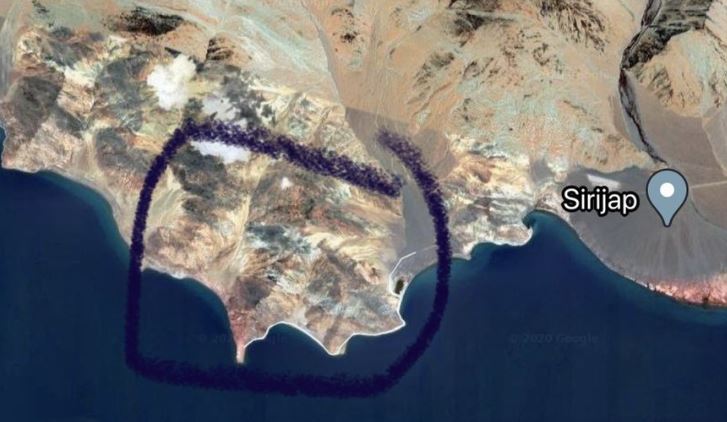
Meanwhile, there are reports that after Galwan Valley, China has also been pulling back from Finger 4 area of Pangong, the 1st such Chinese pullback from the area since May 10. Some Chinese posts have been dismantled at Finger 4 ridgeline and some of the 62 new PLA Finger 4 positions have also been moved.
Pangong Tso is believed to be one of the most contentious areas of the current stand-offs, with the PLA moving about 8 km inside up to Finger 4. India’s claim is till Finger 8 as per the alignment of the LAC.
A violent face-off between Indian and Chinese soldiers had taken place between finger 4 and 5 areas on May 5 and since then the stand-off between the troops of the two countries has continued.
BREAKING: 1st Chinese pullback from Finger 4 Pangong since May 10: 1⃣ Some Chinese posts dismantled at Finger 4 ridgeline 2⃣ Some of the 62 new PLA Finger 4 positions moved 3⃣ China had raised >300 new posts after May 10 4⃣ Indian post west of Finger 4 remains *ARMY WILL VERIFY* pic.twitter.com/mypWRPZlz8
Kaul later shared a statement from the Chinese authorities confirming the disengagement but adding, “China will continue to defend its territorial sovereignty and the border area and peace.”
Earlier we had reported that the Chinese troops have retreated about 2 km from the site of the violent clashes in Galwan Valley in Eastern Ladakh. Following the high-level meeting between the Commanders on both sides on June 30, a survey was conducted to verify whether China acted upon its assurances. Physical verification reportedly revealed that temporary structures were removed by both the sides from the site of violent confrontation in Galwan Valley.
As per the June 30 plan, de-escalation was to take place at critical sites such as Galwan, Pangong Tso, and Hot Springs. Once de-escalation took place in the said areas, a similar course of action would be implemented in ‘depth areas’ such as Depsang plains.
On June 19, China had made new claims suggesting that the Galwan Valley was located on the Chinese side of the LAC.
In fact, the June 15 deadly clashes in Galwan Valley which left 20 Indian soldiers killed, after the Chinese troops had attacked with stones, batons, and barbed wires, had taken place after Indian troops strongly opposed the erection of a surveillance post by the Chinese near patrolling point 14 in the Galwan Valley.
Even as the raging coronavirus gallops through the world, authorities in China’s Inner Mongolia have sounded an alert after the region reported a suspected case of the bubonic plague, the disease that had caused the Black Death pandemic. According to the reports, Bayannur, Inner Mongolia Autonomous Region, called for a Level III warning of plague prevention and control.
The Level III warning outlaws the hunting and eating of animals that could carry plague and calls on the public to report suspected cases. The Xinhua News Agency stated that the warning will stay in place until the end of the year.
The case was first reported by the state-run Xinhua News Agency on July 1 which said that the lab results of two suspected cases of bubonic plague from Khovd Province of Western Mongolia came out positive. Two brothers, one a 27-year-old one and the other 17-year-old have been confirmed of being infected by the pestilence. They both had consumed marmot meat, prompting Health officials to issue an advisory against the consumption of marmot meat. Recently, a herdsman in the Inner Mongolia region was also confirmed to have been suffering from the bubonic plague
In addition to raising an alert, the Bayannur health authorities have also stepped up the measures to avert the spread of the plague asking people to take extra precautions to reduce the risk of human-to-human transmission and to prevent hunting or eating animals that can cause infection.
“At present, there is a risk of a human plague epidemic spreading in this city. The public should improve its self-protection awareness and ability, and report abnormal health conditions promptly,” the local health authority said, according to state-run newspaper China Daily.
What is a plague and how are humans affected by it?
Plague is a highly contagious disease that is caused by Yersinia pestis bacteria and transmitted through flea bites and infected animals. The plague is spread by a zoonotic bacteria that is usually found in small mammals and their fleas, with the symptoms of the disease appearing after an incubation period of one to seven days. The malady typically spreads from bites of fleas that have fed upon infected creatures like mice, rats, rabbits and squirrels.
What is Black Death?
The Black Death, also known as the Pestilence and the Great Mortality, was one of the most fatal pandemics recorded in human history. Estimated to have killed 75-200 million people in the world, most notably in Eurasia and North Africa, the pandemic is believed to have rampaged in the Medieval times from 1346 to 1353.
The pandemic was believed to have originated somewhere in the central Asia before sweeping through Europe and North Africa in the middle of 14th century. While the antibiotics can treat the disease now, during the medieval times, the epidemic wreaked havoc, killing healthy people overnight and causing a great social, political and religious upheaval.
What are the different forms of the plague?
There are three types of plague—Bubonic, Septicemic and Pneumonic plague.
The bubonic plague causes painful inflammation of lymph nodes, along with fever, chills and coughing. This form of plague is generally caused by an infected flea bite. The bacteria breeds in the lymph node closest to where the bacteria entered the body. If the patient is not treated with appropriate antibiotics, the pathogen can spread to other parts of the body, eventually resulting in a fatality.
Marmot behind the cause of bubonic plague in China?
Marmots, a type of large ground squirrel that is a staple diet in some part of China and the neighbouring Mongolia, which have a history of plague outbreaks in the region. Bayannur authorities have cautioned people against the consumption of marmots and asked people to report on the findings of dead or sick marmots.
Marmots are also believed to have caused the 1911 pneumonic plague epidemic which killed about 63,000 people in northeast China. Marmots were hunted for its fur, its popularity rising among the international traders. The diseases fur products that travelled across different countries infected thousands along the way. While the epidemic was contained within a year, marmot-related contagions have continued for decades. Last year, a couple in Mongolia died after they consumed the raw kidney of a marmot, thought to be a folk remedy for good health. Months later, across the border in China’s Inner Mongolia, two people got affected by the pneumonic plague, another form of the disease that affects the lungs.