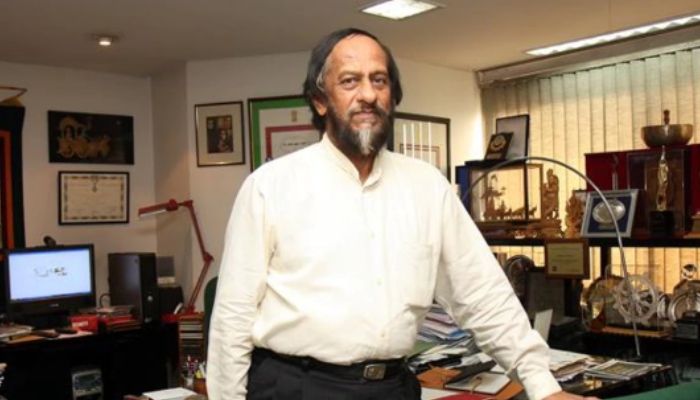
RK Pachauri had dawned many hats during his lifetime. Born in 1940 in Nainital, Uttarakhand, he studied at the La Martiniere College (Lucknow, UP) and the Indian Railways Institute of Mechanical and Electrical Engineering (Jamalpur, Bihar). He then pursued Industrial Engineering in the United States.
A strict vegetarian and a renowned environmentalist, Rk Pachauri was the frontrunner in convincing countries to step up their efforts in containing carbon emissions. Under his astute leadership, the United Nation’s Intergovernmental Panel on Climate Change (IPCC), was awarded the Nobel Peace Prize. Pachauri served as the Chairman of the organisation for 13 years.
He also headed India’s premier The Energy and Resources Institute (TERI) until 2015. Pachauri breathed his last at Escorts Heart Institute in New Delhi on Thursday at the age of 79. He was battling a prolonged heart illness and was put on life support. In his memory, the current Chairman of TERI, Nitin Desai, said that Pachauri’s contribution to global sustainable development is “unparalleled.”
His illustrious career was cut short after allegations of criminal intimidation, stalking and sexual harassment surfaced against him in 2015. A young female researcher who worked under Pachauri had accused him of making sexual advancements towards her. This prompted his resignation from the post of TERI chief, a position he held since 2002.
The Delhi police had filed a 1400-page charge sheet on March 1, 2016, and conceded that “sufficient evidence” existed to prove the charges against him. The Saket Court had formally directed to frame charges against the internationally acclaimed climate activist on October 20, 2018.
Pachauri’s notoriety convinced people to draw analogies with Tarun Tejapl who had been accused of raping a female colleague inside an elevator during Tehelka magazine’s THiNK 2013 festival in Goa on November 7, 2013. Both these perpetrators preyed on victims who were younger and favoured by the duo and looked up to them as “fatherly figures.” While Pachauri justified his sexual exploitation as “love”, Tejpal threatened his victim to make her reciprocate.
Now that RK Pachauri is no more in this mortal world, eulogies have started to pour in from all corners. An attempt to whitewash his sins is underway by the same group of left-liberals who had earlier defended Tarun Tejpal and shamed the victim. An obituary must be a correct assessment of someone’s life, highlighting both the good deeds and sins in the same breath.
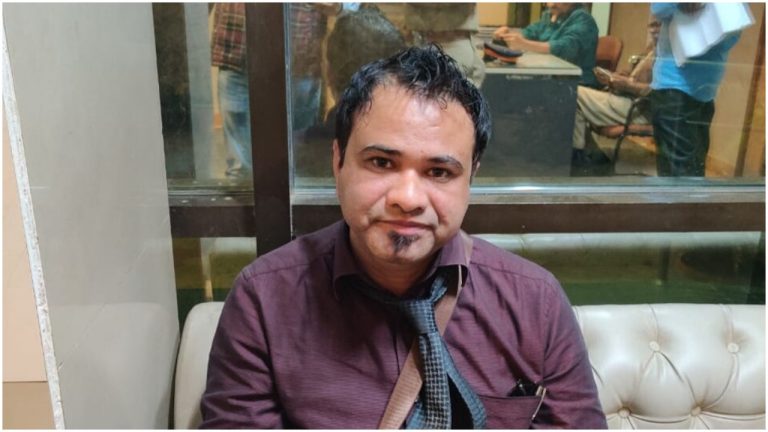
The Uttar Pradesh police have slapped the National Security Act (NSA) against that controversial Gorakhpur ‘doctor’ Kafeel Khan for making provocative comments during his speech on the Citizenship Amendment Act (CAA) at Aligarh Muslim University (AMU) on December 12, 2019.
According to media reports, a special messenger was sent by the Chief Judicial Magistrate to the Mathura jail, where he has been housed, on February 13 informing them of the NSA charges.
Khan was granted bail on Monday but he has not been released from Mathura jail where he is lodged. Khan’s family had approached the CJM court in Aligarh over the delay in his release despite getting bail.
Khan’s brother Adeel Khan said: “We got to know on Friday morning that the NSA has been slapped on Kafeel and now he will not be coming out of jail soon. This is simply unacceptable. He is being targeted at the behest of the state government.”
Controversial ‘doctor’ Kafeel Khan arrested in Mumbai on January 30 for making a provocative speech in the Aligarh Muslim University campus on December 12th, 2019, inciting people against the CAA was remanded to 14 days judicial custody on February 1 and later transferred to Mathura jail.
An FIR was filed against Kafeel for attempting to vitiate the peaceful atmosphere and disturb communal harmony. The FIR was registered under section 153-A (Promoting enmity between different groups on ground of religion) of IPC on the 13th of December.
In his speech, the controversial doctor Kafeel had said, “Mota Bhai (Home Minister Amit Shah) is teaching everyone to become Hindu or Muslim but not a human being. He is a murderer whose clothes are foul with blood. He does not believe in the constitution since the RSS came into existence. The CAB makes Muslims a second category citizen and subsequently, they will be harassed with the implementation of the NRC.”
Kafeel is further alleged to have said, “This is a fight is for our existence. We have to fight”. He also said that students in RSS schools are being taught that those who have beards are terrorists. He reportedly added, “through the CAB, the government has told us that India is not ‘our’ country.”
On the night of December 15, Delhi’s Jamia Nagar and AMU had seen violent riots breaking out. UP police had stated that despite the proctoral team’s attempt, many students had scaled the gates and had come outside to clash with the police and pelt stones.
Kafeel Khan is one of the accused in the BRD Medical College and Hospital children’s death case in Gorakhpur. He had taken to social media to spread false news that he had been given a ‘clean chit’ in the 2017 case in a departmental inquiry. The Uttar Pradesh government had in October initiated a fresh inquiry against him for spreading misinformation in the media and forcibly entering a hospital and trying to treat patients during his suspension period.
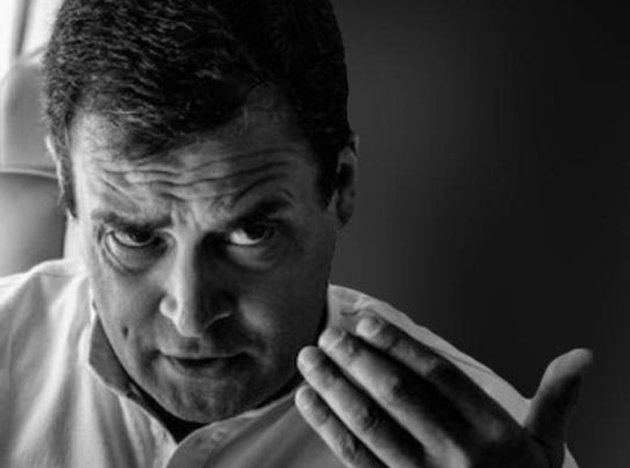
As India remembers Pulwama martyrs on the first anniversary of the terror attack on Friday, Gandhi-scion Rahul Gandhi hit a new low by casting aspersions on the Pulwama attacks as he hinted that the barbaric incident might have been an inside job which benefitted BJP ahead of the 2019 Lok Sabha elections.
On the first anniversary of the Pulwama attacks in which 40 CRPF jawans were killed by Islamic terrorists, insensitive Rahul Gandhi took to Twitter to indulge in a political slugfest to target the BJP government rather than paying his tributes to the fallen soldiers who had laid their lives for the security of the country.
Shockingly, former Congress chief Rahul Gandhi posed three questions targeting the Modi government. Gandhi went on to blame the Modi government for the Pulwama attacks as he hinted that it was a false flag operation. Gandhi’s accusations despite the fact that the Islamic terrorist group Jaish-e-Mohammed has itself claimed responsibility for the attack.
Today as we remember our 40 CRPF martyrs in the #PulwamaAttack , let us ask:
1. Who benefitted the most from the attack?
2. What is the outcome of the inquiry into the attack?
3. Who in the BJP Govt has yet been held accountable for the security lapses that allowed the attack? pic.twitter.com/KZLbdOkLK5
In his first question, Rahul Gandhi asks “Who benefitted the most from the attack?”. While the terrorist attack was carried out by Pakistan sponsored terror group, by asking this question, Rahul Gandhi is clearly hinting that there is “more to the Pulwama attack” than just Pakistan bleeding India with the attack as it has for decades.
The following questions also contribute to the shameless trope being peddled by Rahul Gandhi hinting that the BJP government at the centre is perhaps not inquiring into the attack simply because they were somehow responsible for it.
It is thus safe to conclude that according to Gandhi, the terror attack on CRPF soldiers by Jaish-e-Mohammed terrorist was an inside job which benefitted the Modi government during the 2019 Lok Sabha elections. Gandhi seems to believe that the Modi government politically benefited from the terrorist attacks and hinted that it is for the same reason that the Modi government was going slow on the inquiry into the attacks. He is perhaps unaware of the supplementary chargesheet filed against JeM terrorists and also the fact that the mastermind of the Pulwama attack has been neutralised by the forces. “What is the outcome of the inquiry into the attack?” asked the Wayanad MP.
Ever since Islamic terrorists attacked CRPF jawans, the grand old party has been parroting lines of the terror-state of Pakistan. Interestingly, the then Congress President Rahul Gandhi himself was caught on camera dancing just hours after the Pulwama attack.
Congress leader B K Hariprasad, a Rajya Sabha MP from Karnataka, had stirred a controversy by mocking the Pulwama terrorist attack which claimed the lives more than 40 CRPF personnel. Hariprasad called the terrorist attack a ‘fixed-match’ between PM Modi and Pakistan.
Similarly, Goa Congress leader Chellakumar had alleged that the Pulwama attack was orchestrated by PM Modi and went on to ask where were the bodies of terrorists who were killed in the airstrikes. Kumar had also floated a conspiracy theory that the Pulwama terror attack, the responsibility of which was claimed by Pakistan based terror group Jaish-e-Mohammad, was an inside job.
Just after the cowardly attack by a Kashmiri terrorist belonging to the Pakistan-based Jaish-e-Muhammad claimed 40 lives of our CRPF soldiers, the Congress spokesperson Randeep Surjewala had rubbed salt on their wounds by alleging that the terrorist was a ‘Home-grown so-called terrorist’.
Taking it to the next level, senior Congress leaders had even gone to an extent to downplay the Pulwama terror attack. Sam Pitroda gave credibility to the New York Times article, which had not only downplayed Pulwama terror attack by referring to it as ‘explosion’ but also peddled half-truths and whole lies to perpetuate its anti-India narrative.
Soon after the ‘Balakot strike’ which succeeded the Pulwama attack as a retaliation by the Indian army, the Congress party had jumped into the scene to question the authenticity of the strikes.
Congress MP Shashi Tharoor had quoted Pakistan’s claim that the Army hit a few trees in Pakistan and that no terrorists were killed in the airstrike on February 26. When asked as to why he was questioning the same, when Pakistan PM Imran Khan had admitted the strike, he denied any knowledge of it.
Referring to the terror attack as an ‘accident’, senior Congress leader Digvijaya Singh had said that reports in various foreign media regarding the “airstrike” have created doubt in our minds. This has made us question the credibility of the Indian government as well, he added. Kapil Sibal and Madhya Pradesh Chief Minister Kamal Nath were also seen taking a similar stand.
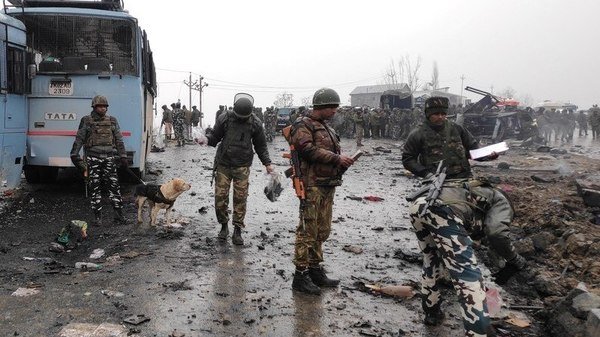
On February 14, 2019, a convoy of vehicles carrying security personnel on the Jammu Srinagar National Highway was attacked by a vehicle-borne Islamic terrorist at Lethpora in the Pulwama district, Jammu and Kashmir, India. The attack resulted in the deaths of 40 CRPF personnel. The responsibility for the attack was claimed by the Pakistan-based terrorist group Jaish-e-Mohammed.
The 14th of February marks the first anniversary of the Pulwama Attack. The Pakistan sponsored terror attack that resulted in the death of more than forty of our CRPF Jawans was the second big event of the first chapter of the Modi-Amit Shah-Doval era (MAD era). The first chapter, obviously, culminated with the abrogation of Article 370 and the complete integration of Jammu & Kashmir with the rest of the Indian Union.
The Pulwama Attack, as devastating as it was, finally broke the Dam that had kept a check on India’s thirst for vengeance as a nation. The barbarity of the attack that was on display made the nation realize the true nature of the barbarism we are up against. As was the case with the Uri Attack three years prior, there was a terrible miscalculation on the part of the Pakistani establishment with regards to the Pulwama Attack as well.
It is safe to argue that through the Pulwama Attack, the Pakistani establishment hoped to cause a dent on Narendra Modi’s image as a strong and no-nonsense leader and thereby, undermine his stature ahead of the Lok Sabha Elections couple of months later. Pakistan believed that they could manage to prevent and safeguard themselves from another ‘Surgical Strike’ by beefing up security at the Border. What they didn’t take into account was the fact that India under Prime Minister Modi would consider other more aggressive actions as well.
Since the Balakot Airstrikes, there has been a remarkable change in Pakistan’s conduct. That change was a consequence of the changes India had itself undergone as a country. As India adopted a hardline stance towards the country, Pakistan was relegated to screeching on social media and howling in a rage without having the ability to respond to India in any manner whatsoever.
The world has changed remarkably since the Pulwama Terror Attack. The greatest change has been the status of Jammu & Kashmir within the Indian Union. After Article 370 was abrogated, for all its huff and puff, the Pakistani establishment couldn’t really bring itself to retaliate against India. All their aggression was limited to social media and speech. Their actions have been demure when compared with the past.
There is a good reason for that. India’s clout in global affairs has been growing greatly in recent years, so much that Pakistan has been abandoned by its trusted Islamic allies. As a consequence perhaps of India’s growing ties with the United States, our own relationship with the USA’s trusted ally Saudi Arabia has been improving steadily as well. Simultaneously, our ties with other Arab countries have been getting better too. Thus, countries which Pakistan would have traditionally expected to stand by it on the international forum have been forming closer ties with India.
The greatest evidence of this is Sushma Swaraj’s attendance at the Organisation of Islamic Cooperation (OIC) meeting as a guest of honour in March 2019 when tempers were still running high between India and Pakistan, merely three days after the Balakot Airstrikes, and despite numerous objections from Pakistan.
Narendra Modi as Prime Minister also has received numerous awards from Islamic countries. The Order of Zayed Award from the United Arab Emirates within two months of the Pulwama Attacks and the Order of the Distinguished Rule of Nishan Izzuddin from the Maldives in June 2019 is reflective of that fact. Earlier in 2016, the Prime Minister had been awarded the Order of Abdulaziz Al Saud by Saudi Arabia demonstrating India’s growing ties with the Islamic world.
The abrogation of Article 370 marked the conclusion of the first chapter of the MAD era. In the second chapter, the battleground will be Pakistan-occupied Kashmir as evidenced by the plethora of statements made by high ranking Union Ministers in the cabinet of the Modi Government. Thus far, on the matter of Kashmir, Pakistan has found no support at the international forum, apart from China, Turkey and Malaysia. Of these three countries, the third is already regretting antagonizing India as our country has hit back at them by reducing its palm oil imports, thereby affecting its economy. Turkey, too, has suffered India’s wrath by raking up the Kashmir issue at the United Nations. Thus, India’s hardline stance against Pakistan has raised the costs for other countries to side with Pakistan at international forums.
India’s relationship with Pakistan has never been friendly but it was the Pulwama Terror Attack that broke the camel’s back. The Pakistani establishment did not expect such an aggressive retaliation from India following the attack. And it is this miscalculation that has cost them terribly. Now, it stands alone at the international forum with nobody backing them apart from China which does so for its own benefit.
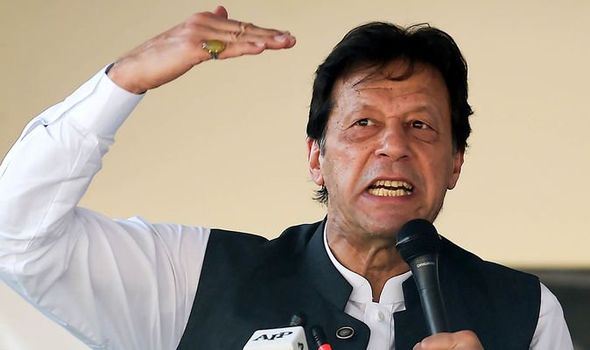
The trade war between the USA and China, too, has affected the relationship between India and Pakistan. The USA recognizes that it cannot afford to alienate India completely in the midst of its trade war with China and it has provided India with more leverage to bargain at the negotiation table. Pakistan’s overtures towards China hasn’t helped their cause either. And so it happens that Imran Khan, the Pakistani Prime Minister, can be regularly found on Twitter screaming into the void about India becoming a fascist country and yet, no entity of consequence pays him any attention.
Recently, a Pakistani court has convicted Hafiz Saeed, the mastermind of the Mumbai Terror Attacks, in cases related to funding terrorism. It is, of course, a desperate move ahead of the FATF plenary meet in order to avoid being blacklisted by the agency. At the same time, India has upped its offensive against the persecution of Pakistan’s religious minorities in the country.
Pakistan’s position at the moment is far worse than it was before the Pulwama Terror Attack. Its economy is collapsing, its influence on the international forums has diminished greatly and it is in no position to retaliate against India’s moves on Kashmir. And it doesn’t appear that the situation is likely to improve for them at any point in the near future. Pakistan has not recovered from the terrible blow it has suffered due to the nefarious act of terrorism it plotted against India in Pulwama and it is unlikely they will any time soon.
The Shiv Sena has given a green signal to the decision of the Union Government to transfer the Bhima Koregaon case to the National Investigative Agency (NIA) on Wednesday, thereby drawing the ire of its ally, the Nationalist Congress Party (NCP), in the Maha Vikas Aghadi.
It is notable here that since coming to power, the NCP had been batting for dropping cases against the accused persons in the Bhima Koregaon violence case. It was also reported that CM Uddhav had assured NCP leaders that the cases will be dropped.
However, the central government had handed over the Bhima Koregaon violence cases to the NIA, taking it beyond the power of state law enforcement.
On January 25, the Union Ministry of Home Affairs had issued a notification regarding the transfer of the Bhima Koregaon case. It was done after the newly formed coalition government in Maharashtra was considering forming an SIT and possibly dropping the charges against left-wing intellectuals implicated in the case.
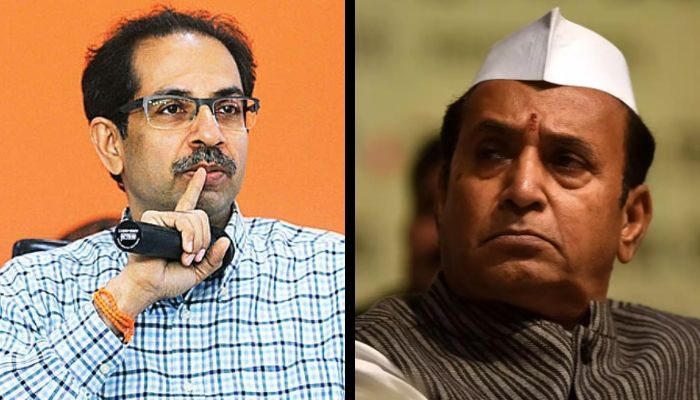
State Home Minister and member of the NCP, Anil Deshmukh, hit out at the Shiv Sena chief Uddhav Thackeray over the use of his ‘discretionary powers’. He said, “The CM has powers. He overruled my objection and granted consent to the NIA to take over the probe.”
Deshmukh reiterated that the NCP was of the view that the Centre should have consulted the State government before transferring the Bhima Koregaon case to the NIA. He added that the Home Ministry is in touch with the State advocate general, Ashutosh Kumbhakoni.
Reports, however, suggested that Uddhav Thackeray gave a nod to the Centre’s decision after seeking a legal opinion from Kumbhakoni who informed the Chief Minister that the Union Government was legally empowered to do so. Reportedly, Anil Deshmukh had discussed the issue with NCP supremo, Sharad Pawar, and Uddhav before briefing the media.
After discussing with the state advocate general, CM Thackeray had ordered that state government will no longer oppose the Centre in court, and to facilitate that, the home department, through an order issued on Wednesday, had directed the Maharashtra DGP to convey the decision to the sessions court in Pune during a hearing scheduled for Friday.
In an interview with Saamana, Uddhav Thackeray stated, “Nobody denies the Centre’s right in this investigation. But, while exercising its right, the Centre should have taken the state into confidence or should have told us what was wrong in the investigation.”
This is not the first time that the allies in the Maha Vikas Aghadi had taken contradictory stances publicly. Earlier, Shiv Sena had snubbed Congress ahead of the Delhi elections and instead backed its arch-rival, the Aam Aadmi Party (AAP). The saffron party had also been at loggerheads with the Congress over comments made by the latter on Veer Savarkar. While both NCP and Congress had been opposing the Citizenship Amendment Act, Sena had been a supporter of the Act.
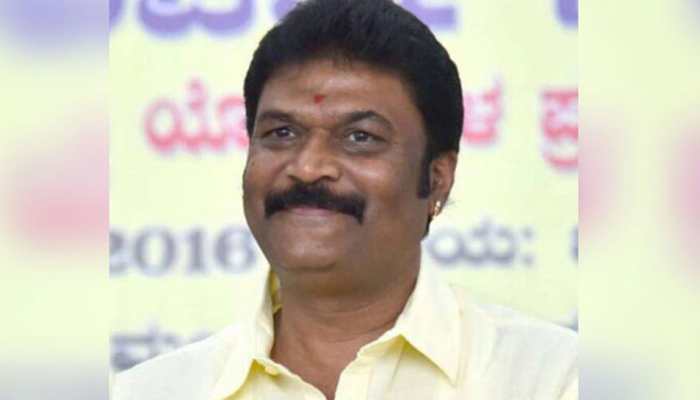
A controversy has erupted in Karnataka over Chief Minister BS Yediyurappa’s decision to appoint newly-elected MLA Anand Singh as the minister for forest, environment and ecology. The opposition parties in the state have hit out at the BJP government for appointing Anand Singh, a mining baron, as the forest minister.
Who is Anand Singh?
Anand Singh, a four-time MLA from Vijayanagara, is a businessman with mining interests and a former close-associate of infamous mining barons Bellari Reddy brothers. Singh, who has assets worth over Rs 100 crore, entered into politics in 2008 along with the Reddy brothers.
He first served as tourism minister in the first Yediyurappa government in 2008. However, he later quit the BJP to join the Congress ahead of the 2018 elections claiming he was fed up with internal bickering within the party.
Interestingly, Anand Singh was one of the few Congress MLAs who had gone missing in 2018 ahead of BS Yediyurappa’s trust vote. However, Singh made a dramatic entry to Vidhana Soudha later in the day, being escorted by senior Congress leader DK Shivakumar.
Later in 2019, Anand Singh is one among the newly-elected BJP legislators who had defected from Congress. He was one of the 17 MLAs who quit the Congress-JDS coalition and joined BJP, which led to the collapse of HD Kumaraswamy-led Karnataka government.
Singh, along with 16 other MLAs, was disqualified by the former assembly speaker. Though the Supreme Court had upheld the disqualification, it had allowed the MLAs to contest elections again.
Later, Singh contested and won the recently held by-polls on a BJP ticket. He was inducted into the Cabinet by Yediyurappa last week. He was initially given the Food, Civil Supplies and Consumers Affairs portfolio. However, the Vijayanagara MLA’s was later appointed as Minister for Forest, Ecology and Environment.
According to Singh’s election affidavit, the MLA has listed 15 pending cases against him. He was reportedly arrested twice in 2013 and 2015 on charges of illegal transportation of iron ore.
Reportedly, these offences fall under various sections of the Indian Penal Code and the Mines and Minerals (Development and Regulation) Act, along with violations of the Karnataka Forest Act. They include charges of criminal conspiracy, criminal breach of trust, cheating, dishonesty, illegal transport or movement of forest produce and forgery of documents.
Singh, a former associate of the mining barons – Reddy brothers, was arrested in 2015 by the Special Investigation Team (SIT) of the Karnataka Lokayukta on charges of illegal iron ore transportation.
In one of the cases, filed by the Range Forest Officer, Hosapete, Singh was accused of ‘counterfeiting or defacing’ marks on trees or timber and altering boundary marks within the forest.
Anand Singh was also arrested in 2013 as well in connection with alleged illegal export of iron ore from Belekeri port. In September 2019, Singh was acquitted in one case pertaining to the alleged export of 1.3 lakh tonnes of iron ore from Belekeri.
‘Conflict of interest’ allegations
Several state leaders, opposition parties, social media users and former Lokayukta Santhosh Hegde have voiced concerns over the portfolio allocation. Since many cases against Singh are being pursued by the forest department, many have also alleged that his appointment sends a wrong message to the officials.
Following the controversy, Karnataka chief minister BS Yediyurappa on Wednesday met senior ministers and discussed the possibility of changing the Vijayanagara MLAs’s portfolio.
Meanwhile, Anand Singh has maintained that the portfolio was allocated to him by the chief minister and that he did not ask for it.
Claiming that the cases against him were ‘minor violations’, he claimed the cases are related to traffic violations.”Traffic violation cases if you have vehicles, similarly- there are naturally cases of violation as the family has been in the mining business for long.”
Twenty years ago, air travel was a distant dream for most Indians. We had Indian Airlines and Air India, both creaky government monopolies, run (rarely on time) from equally creaky government-run airports. Prices were high, service was poor. Like almost everything else in India from the Nehruvian era, it sucked.
Then something happened. The skies were opened up. Private airlines came into the picture. Bit by bit, the government fought back the resistance from the employee unions and privatized the airports. That’s when a whole new world opened up.
The aspiration associated with flying at the time is perfectly captured in this touching ad from Air Deccan in the 2000s.
Today, India has the third-highest number of airline passengers in the world, just after the United States and China. Our big airports rank among the best, most comfortable in the world. But these big airports, most of them refurbished just a decade ago, are bursting at the seams already with traffic. From 2014 to 2018, passenger traffic grew at double digits every year.
Smaller airports are buzzing too. A little over ten years ago, Ranchi airport had two flights a day, one from Delhi and one from Kolkata (both Air India). Today, there is a long line to enter the airport at almost every hour of the day. The newly built terminal already feels a little cramped. After all, air traffic at Ranchi grew 27% last year. The year before, it grew by a staggering 72%!
Not everyone in India can fly yet, but the middle class surely can. And did you know that on a per-kilometre basis, flying in India is the cheapest in the whole world?
WSJ blog on Indian Domestic Flights being cheapest in the world
The private sector gave us better mobility, better service, better standard of living and more employment opportunities. And lowered the prices! Well, of course, it did.
How did Indian aviation become such a success story? Because we took the government out and brought the free market in.
What else is wrong with India? Why not apply the same cure to it? Well, we have the Railways.
The prices aren’t high. But the service is generally bad. And there is little to no accountability. Because of the politics, passenger fares did not rise for decades on end. At one point, the Railways had become a rather dangerous mode of travel. We have seen some improvements since then, but we are clearly nowhere compared to what we expect from developed nations.
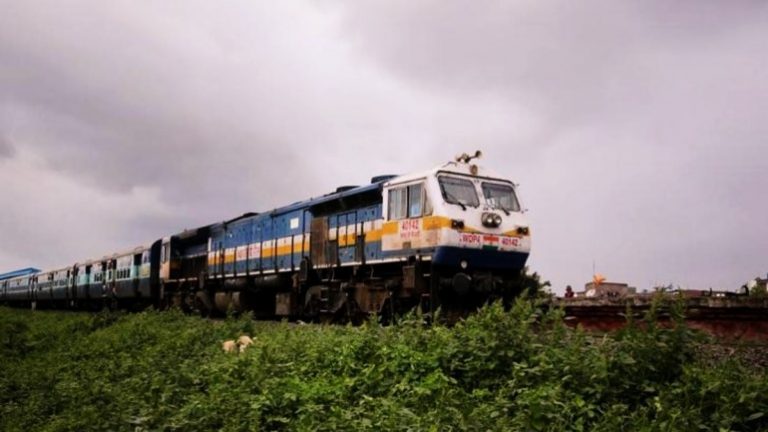
There is only so much the government can do. And finally, the Railway is getting ready to welcome private players. Tata, Adani and Hyundai queue up to run private trains and this is how Indian Railways is set to reform.
The new chapter began with Delhi Lucknow Tejas Express last year, leased from Indian Railways and operated by IRCTC which is now a publicly-traded company. By the end of this month, there will be three such trains. By 2024, we will likely have hundreds of such trains, running on 100 routes identified by the government.
This is real reform that India has been expecting from Modi sarkar and it will change the face of the nation. If we know anything about govt bureaucracies, we can guess that the sheer resistance that this move must have faced would be mind-boggling.
But it seems that things are finally smooth and on track. And private players are lining up for the big opportunity. Tata, Adani and Hyundai are just the beginning. As the Mint article notes, Siemens, Alstom and Bombardier are all interested.
Who would not be interested? Railways cater to hundreds of millions of people in the world’s fastest-growing major economy (yeah…we got that distinction back). The possibilities are simply endless.
All it took was to stop treating Indian Railways as a liability and start seeing them as an asset. The reach of the Railway is phenomenal across the length and breadth of India. Who would not want a piece?
It is expected that private players will be given control over the prices. In the short term, this means we can expect the prices to be generally higher than regular ticket fares. So where does that leave the poor?
No problem. The old Railway is not going anywhere. Instead, it is giving an option to folks who can afford to spend more. And when that happens, the economy grows, more wealth is created and everyone does better. Which would include the very poor who may not be able to afford the new private trains?
Here is what was wrong with the old system (and everything socialist in general). To make sure that the poor could afford something, we kept everyone locked in at the same level, not allowed to move. While that may sound like sharing and caring in a child’s bedtime story, it is a very bad idea in practice.
Because when everybody is trapped at the same level, nobody can go out there, take a step ahead and create wealth. Things never improve for anyone. Is that better?
Private investment will bring more capital to our railways. More job opportunities. It will stimulate our economy. Who wins in this? Everyone, including the poorest person in India.
Roads don’t just help those who can afford to buy cars. They help the ones who work on building the road, the ones who work on building the cars, the ones who start businesses along the highways or find jobs in them.
When the sleepy old railway station turns into a thriving hub of economic activity, everyone wins.
There is no doubt that old socialists will try to create all sorts of fears in people about the privatization thrust within Indian railways. You will see them on TV screens and internet columns shortly, breathing rhetoric, crying about the poor.
Don’t forget that it is this rhetoric that kept India stuck at one place for 40 straight years. It is this rhetoric because of which we are behind the Chinese today. What this rhetoric has done to our country is very very cruel indeed.
So ignore them. And remember that these intellectual talking heads are making a lot more money today precisely because the media is a vibrant free market. The old Doordarshan monopoly is gone. Dismantling the government monopoly helped these talking heads grow their personal bank accounts. Don’t let them talk us out of the process which can do the same for others.
The 14th of February marks the one year anniversary of the Pulwama Terror Attack. The heinous terror attack claimed the lives of more than forty CRPF Jawans and caused grievous injury to the collective conscience of the country. However, in the moment of the heinous act of terrorism by Pakistan sponsored terrorists, there were some people who were using it to further their own political agenda. The conduct of the mainstream media in the aftermath of the Pulwama Attack was indeed deplorable and disgusting, to put it mild terms. Even as the funeral pyres of our martyrs had not turned cold, the media betrayed them.
In what was perhaps the worst article of the previous decade, The Caravan published a caste-wise analysis of the deceased martyrs. In its efforts to accurately capture the data, the journalist even called the families of the martyrs to inquire about their caste in their moment of unimaginable grief. The journalist himself, Ajaz Ashraf, belonged to the same religion as the Pulwama terrorist. However, a dedicated effort was made to deflect attention from the religion of the perpetrator and pin the blame, instead, on the Upper Castes.
It wasn’t the only evidence of the moral depravity of the mainstream media that was on display in the aftermath of the Pulwama Terror Attack. Soon after the identity of the terrorist became known, the mainstream media engaged in a full-scale effort to whitewash the sins of his family. It even provided a platform for the family of the terrorist to blame the Indian Armed Forces for the path his son had chosen to tread.
The mainstream media relied on the family of the terrorist to claim that he had chosen to become a terrorist because he was supposedly harassed by the Indian Army. Nowhere else in the world does it happen that the media rushes to air the views of the terrorist’s family that casts aspersions on the conduct of the Indian Army days after a terror attack that claimed the lives of so many.
Furthermore, the mainstream media worked hard to absolve the sins of the family entirely and humanize them. A report published by the Hindustan Times claimed that the ‘family of the Jaish operative can’t believe he joined militant ranks’. Apart from the obvious omission of Muhammad from the name of the Jaish-e-Muhammad, the media house tried to paint the family as completely innocent when it is extremely likely that the seeds of radicalization were sowed in the terrorist’s own house. And yet, we are asked to participate in a suspension of disbelief and completely embrace the terrorist’s family’s proclamations of innocence.
The other extreme instance of disgusting conduct by people in the media was the deputy news editor of NDTV glorifying the terrorist attack. She was eventually suspended for a couple of weeks by the propagandist news network. She had said in a Facebook post “where a grisly 44 has been proven to be greater than the mythical 56”. With this, she had added a hashtag #HowstheJaish, a take on the famous dialogue ‘How’s the Josh’ from the movie Uri: The Surgical Strike.
Pakistan was even relying on Indian media and ‘intellectuals’ held in high esteem in liberal circles to peddle the narrative that the Pulwama Terror Attack was a false-flag operation. Ashok Swain’s tweet from December 11 where he had insinuated that the NDA government could trigger a conflict with Pakistan to reap electoral benefits was used by none other than the former DG-ISPR of Pakistan Asif Ghafoor to claim that the Pulwama terror attack was orchestrated by the Indian government.
Ghafoor had also made comments along the lines of The Caravan caste-analysis report in his efforts to slander India. Not only that, but Ghafoor had also mentioned the video of the terrorist’s parents, which was widely reported by the Indian media, where it was insinuated that Adil Dar turned terrorist because of maltreatment by the Army. He had said, “He was under arrest in 2017, security forces maltreated him, there is a video message by his parents as well. Please see that to realize how he was forced into a situation where he resorted to such a violent response.”
The conduct of the mainstream media while covering the Pulwama Terror Attack and its aftermath has been atrocious. And yet, the worst offenders have received great praise from the ’eminent journalist’ in the community. Ravish Kumar, for instance, spoke of The Caravan in glowing terms days a day before the Balakot Airstrikes. At the same time, he claimed that there was an effort underway to sow religious discord within the ranks of the Indian Army.
One would have expected the media to engage in a period of deep reflection and serious introspection following their pathetic coverage of the terrorist attack. However, nothing much appears to have changed since then. The more things change, the more they remain the same. And it appears extremely unlikely that the conduct of the mainstream media will get any better any time soon.
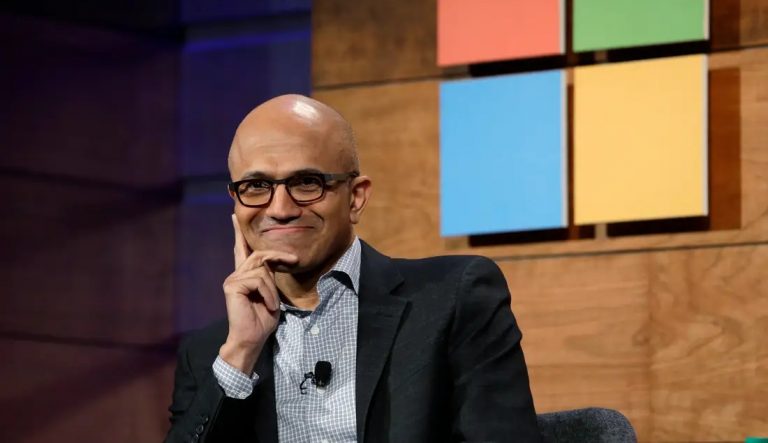
Alongside US President Donald Trump, another important figure is set to visit India in the month of February. Microsoft’s Chief Executive Officer Satya Nadella is planning to visit India between the 24th of February and the 26th, as per reports.
Sources close to Nadella said that he will likely visit New Delhi, Bengaluru and Mumbai. He will also meet some industry leaders, although there is yet to be an official announcement from the company.
Microsoft reportedly is trying to get a meeting fixed between the Prime Minister and the chief of Microsoft. However, both the PMO and the company has not made any official statement for now.
Responding to an e-mail query by the Economic Times, Microsoft confirmed the visit. “Yes, Satya Nadella, CEO, Microsoft, will be visiting India later this month to address customers, young achievers, students, developers and entrepreneurs,” the company replied. According to sources, he will meet industry leaders and government functionaries during his visit.
Nadella scheduled visit comes just weeks after the Indian origin tech leader had made controversial statement regarding the Citizenship Amendment Act. His comments last month on the CAA drew sharp criticism from the Indian government. He was quoted by Buzzfeed as saying that the new law implemented by Modi’s government was “just bad”.
Later, Microsoft had released a statement where he said that every country has the right to protect and define their borders. Many felt that this was a face-saver tactic by the company.
It is viewed by many that such a visit is the company’s attempt to try and brush the recent comments over the CAA under the carpet and the timing suits them well. President Trump will visit India between 24th or 25th of February. Recently, India finalised defence deals worth 3.5 billion with USA.
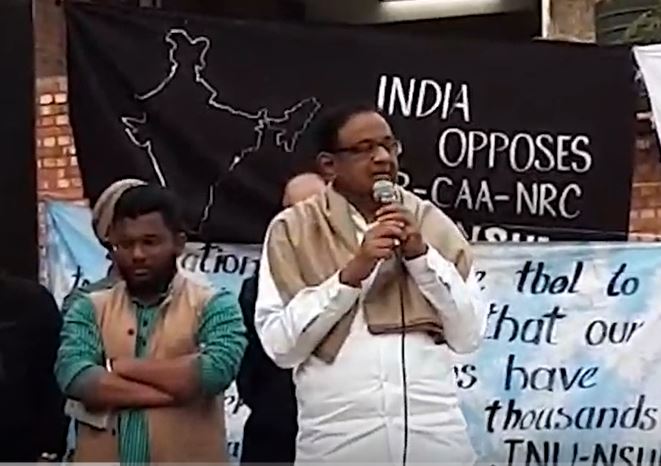
Congress senior leader P Chidambaram on Thursday while addressing students at the JNU campus on the Citizenship Amendment Act, attempted to instigate them by saying that there should be a “huge mass movement” if any Muslim is sent to detention camps in case the Supreme Court upholds the validity of the Citizenship Amendment Act.
Senior Congress leader P Chidambaram says there should be ‘huge mass movement’ if any Muslim is sent to detention camps in case SC upholds validity of CAA
Replying to a question by a student asking for the best course of action if the CAA is upheld by the Supreme court, Chidambaram suggested: “When they touch the excluded…they will only be Muslims, try to identify and throw them out, declare them Stateless. There must be a huge mass movement resisting any Muslim being thrown out or kept in detention camps.”
Speaking at the JNU campus in Delhi, Chidambaram said that CAA was an outcome of the “NRC fiasco” in Assam which left 19 lakh people out of NRC. The CAA was brought to accommodate 12 lakh Hindus out of the 19 lakh people who could not be included in the final NRC in Assam, the former home and finance minister claimed.
Stating that the CAA harms the foundation of the Indian Constitution, Chidambaram said: “They (BJP Government) have cut the foundation of India’s citizenship premise. They have cut at the premise by saying that citizenship for a certain set of people will be based on religion, not on territory. There are many learned people, who say, so what? That is the superficial view. The deeper cut is, you are changing the basis of citizenship to religion from territory.”
He also said Congress believes the CAA must be repealed and there should be a political struggle so that National Population Register (NPR) is pushed beyond 2024.
Notably, the Congress party has been vociferously opposing the new law that provides citizenship to persecuted minorities from neighbouring Islamic States tooth and nail. Many Congress-ruled States have refused to implement the law passed by both Houses of the Parliament and have been spreading canards about the Ac, even though they have no authority to refuse a central law passed by parliament.
In fact, sufficient proofs have also emerged which have pointed to the nexus between Congress and Islamists in stoking anti-CAA riots.
In the Congress manifesto released before Delhi Assembly elections, the party promised to not implement the National Population Register (NPR) and National Register of Citizens (NRC) in its present form. The grand old party also vowed to challenge the Citizenship Amendment Act (CAA) in the apex court.
NPR is a part of the census and was earlier prepared in 2010-2011 along with the 2011 Census during the Congress-led UPA government. CAA aims to fast-track the citizenship of minorities from three neighbouring countries of Pakistan, Bangladesh and Afghanistan who have migrated to India illegally, owing to religious persecution. As for a nationwide NRC, no draft has been laid down by the government. The exercise to update the NRC in Assam was initiated during the Congress government in the state, while by the time it was completed BJP had come to power.
Hard-hitting facts, however, have not stopped the Congress party from casting aspersions about CAA-NRC-NPR.