Home Blog Page 951

‘My daughter did the right thing’: After brother, mother of Kulwinder Kaur defends the suspended CISF constable for assaulting Kangana Ranaut

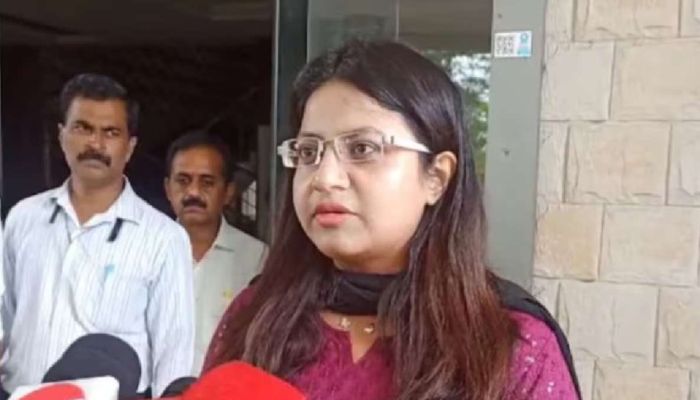
After her brother, the mother of the suspended CISF constable Kulwinder Kaur, who assaulted Kangana Ranaut, has also defended her daughter. Kulwinder’s mother Veer Kaur justified her daughter’s actions, stating that whatever she did was absolutely justified. She argued that Kangana must have instigated her by using inappropriate language, claiming that her daughter wouldn’t have done this otherwise.

Veer Kaur also alleged that the Bollywood actor turned MP had made controversial remarks in the past. Veer Kaur fiercely defended her daughter’s action in an interview with the news agency PTI. She said, “Meri beti Kulwinder Kaur ne jo kiya, theek kiya.’’ ( Translation – Whater My daughter Kulwinder Kaur did, did the right thing.) 

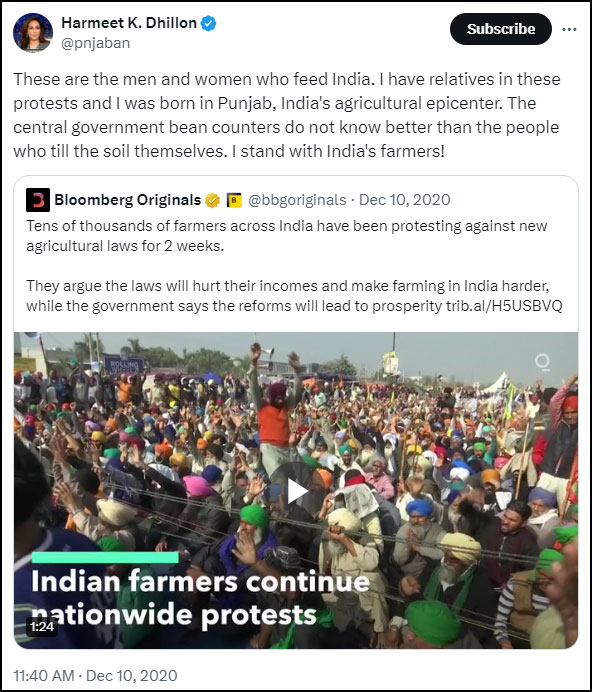
Veer Kaur further told PTI that she had joined the Kisan Morcha during the farmer protests against the now revoked three farm bills.

The incident unfolded on Thursday (6th June) when the actor-turned-MP-elect Kangana Ranaut was heading for New Delhi to attend a meeting of the newly elected NDA Members of Parliament. When she was at Chandigarh Airport, Central Industrial Security Force (CISF) constable Kulwinder Kaur launched an attack and slapped her.

Later, an irate Kulwinder was seen speaking with people in a video in circulation on social media. In the video, the constable said, “Kangana made a statement saying farmers were protesting in Delhi for Rs 100 to Rs 200. At the time, my mother was one of the protesters.”

Subsequently, the constable was detained and taken to the CISF Commandant Office for interrogation. Kulwinder was suspended and the CISF filed a formal complaint against her and directed a court of inquiry into the matter. 

Meanwhile, after the incident, several important facts have emerged in this matter. Pertinently, Kulwinder Kaur is the sister of a prominent farmer whose group participated in the demonstrations against the three farm laws that have since been abolished by the Modi government.

She joined the CISF in 2009 and has been stationed at the Chandigarh airport since 2021 with the force’s aviation security group. The 35-year-old mother of two children is from Sultanpur Lodhi in Punjab. She has spent the last two years working at the Chandigarh Airport. Her spouse also works with the CISF. Her brother Sher Singh Mahiwal leads a group of farmers and serves as the Kisan Mazdoor Sangharsh Committee’s organizational secretary. She has not yet faced any vigilance inquiries or punishments from the force, and her spouse is also assigned to the same airport.

Following the incident, Kaur’s brother, Mahiwal released a video to extend support to his sister. Defending her sister for assaulting Kangana Ranaut, Maliwal had stated that the actor is used to making loose comments about farmers. His brother also said that he is not afraid of any investigation and said the actor should have ‘controlled’ herself over her comments against farmers.

Nonetheless, terming the incident a serious matter, National Commission for Women (NCW) chairperson Rekha Sharma called for serious action. She added that the panel had taken up the matter with the CISF and submitted a letter to the Director General of CISF. NCW also condemned the alarming incident and demanded strict measures against the constable if the charges were proven.

As Sheikh Hasina reaches India to attend Narendra Modi’s swearing-in ceremony, read why BJP’s re-election is good for India-Bangladesh relations

Bangladesh Prime Minister Sheikh Hasina reached New Delhi from Dhaka on the afternoon of 8th June to attend the swearing-in ceremony of Indian Prime Minister Narendra Modi, marking his historic third consecutive term.

On 5th June, Sheikh Hasina congratulated Narendra Modi on his election victory, marking the third consecutive win for his party. Prime Minister Narendra Modi extended the invitation to Sheikh Hasina during a telephone conversation, which she graciously accepted.

During their phone conversation, Sheikh Hasina extended her congratulations on behalf of the people of Bangladesh, her government, her family, and herself for the National Democratic Alliance (NDA), led by the Bharatiya Janata Party (BJP), winning the 18th Lok Sabha election.   

It may be mentioned here that, since Narendra Modi became Prime Minister of India in 2014, Bangladesh-India relations have been steadily deepening, and this latest development is expected to further strengthen the ties between the two nations.

The relationship between Bangladesh and India has reached unprecedented levels of cooperation and mutual respect under the visionary leadership of Indian Prime Minister Narendra Modi and Bangladesh Prime Minister Sheikh Hasina.

Their dynamic leadership has fostered stronger bilateral ties, enhancing collaboration across various sectors including trade, connectivity, defense, and cultural exchange.

The historical ties between Bangladesh and India are deeply rooted, with India playing a pivotal role in Bangladesh’s liberation war in 1971. However, it is under the leadership of Modi and Hasina that these ties have been significantly strengthened.

Since Narendra Modi took office in 2014, and with Sheikh Hasina’s leadership since 2009, both leaders have shown a remarkable political will to elevate bilateral relations to new heights.

Their personal rapport and frequent high-level meetings have paved the way for resolving long-standing issues and initiating new avenues of cooperation.

Economic engagement has been a cornerstone of the deepening relations between the two countries. India is one of Bangladesh’s largest trading partners.

In recent years, bilateral trade has surged, with both countries benefiting from mutual economic growth. The introduction of various trade agreements and the removal of tariff and non-tariff barriers have facilitated smoother trade flows.

India’s investment in Bangladesh has also seen a significant increase, with Indian companies investing in sectors like telecommunications, pharmaceuticals, and energy.

Connectivity projects have been a major focus of Modi and Hasina’s leadership. The revival of old railway lines, the establishment of new bus and train services, and the development of infrastructure at border points have greatly enhanced people-to-people contact and economic activity.

The Bangladesh-Bhutan-India-Nepal (BBIN) Initiative is a prime example of their commitment to regional connectivity, aiming to facilitate the movement of goods and people among the four countries.

Water sharing is a critical issue for both nations, with many rivers flowing between India and Bangladesh. The two leaders have made significant strides in addressing water-sharing concerns, notably with the signing of the historic Ganges Water Treaty in 1996, which laid the foundation for further cooperation.

Ongoing discussions about the Teesta River and other transboundary rivers reflect their commitment to finding mutually beneficial solutions.

In the area of security and defense, India and Bangladesh have taken substantial steps to collaborate more closely. Joint military exercises, increased defense training exchanges, and enhanced cooperation in combating terrorism and transnational crimes underscore their strong defense ties.

The recent agreement on the exchange of white shipping information is a testament to their growing maritime cooperation. Cultural ties have always been strong between Bangladesh and India, with both countries sharing a rich cultural heritage.

Initiatives like the opening of new cultural centers, increased scholarships for Bangladeshi students in India, and joint cultural festivals have further strengthened these bonds. These initiatives not only promote mutual understanding but also bring the people of both nations closer.

People-to-people contact has been significantly enhanced through visa facilitation agreements and easier travel protocols. The introduction of multiple-entry visas and the establishment of more visa application centers in Bangladesh have made travel between the two countries more accessible.

This has boosted tourism, medical travel, and educational exchanges. While significant progress has been made, challenges remain. Border management issues, particularly related to smuggling and illegal migration, need continuous attention.

Environmental concerns, such as the impact of large infrastructure projects on local ecosystems, also require cooperative solutions. However, the strong foundation laid by Modi and Hasina’s leadership provides a robust framework to address these challenges.

With Indian Prime Minister Narendra Modi embarking on his historic third consecutive term, the relations between Bangladesh and India are poised to reach new heights.

This milestone not only marks a significant moment in Indian politics but also signals a promising future for the deepening ties between the two neighboring nations.

Under Modi’s leadership and the steadfast partnership with Bangladesh Prime Minister Sheikh Hasina, the bilateral relationship is expected to see further strengthening and expansion across various sectors.

Narendra Modi’s leadership since 2014 has been characterized by a proactive and strategic approach to foreign policy, particularly with neighboring countries.

His relationship with Sheikh Hasina has been marked by mutual respect and a shared vision for regional stability and prosperity. This camaraderie has played a crucial role in overcoming historical challenges and fostering a spirit of collaboration and trust.

The relationship between Bangladesh and India has been characterized by mutual respect, strategic cooperation, and a shared vision for regional stability and prosperity.

Maintaining a cordial relationship with India has brought immense benefits to Bangladesh across various sectors, from economic growth to infrastructure development, security, and cultural exchange.

The dynamic partnership under the leadership of Prime Minister Sheikh Hasina and Indian Prime Minister Narendra Modi has significantly enhanced these benefits, creating a robust framework for future cooperation.

Under the magnanimous leadership of Prime Minister Narendra Modi and Prime Minister Sheikh Hasina, Bangladesh-India relations have flourished, setting a new paradigm of bilateral cooperation.

Their strategic vision, mutual respect, and commitment to regional stability and prosperity have not only benefited their respective nations but also set an example of how neighboring countries can work together for mutual benefit.

As both nations continue to build on this solid foundation, the future of Bangladesh-India relations looks promising, heralding an era of enhanced cooperation and shared progress.

Incentive for assaulting female MPs: Why Bollywood Music Director Vishal Dadlani offering a job for assaulting Kangana Ranaut puts all women in Parliament at risk

AAP-friendly Bollywood music director Vishal Dadlani has been facing massive backlash for encouraging violent acts against critical voices and announcing a job for the CISF constable Kulwinder Kaur, who assaulted actor-turned-MP-elect Kangana Ranaut. Several X users have lambasted him over his series of Instagram posts offering to provide “gainful employment” to the suspended CISF personnel.

Many online users applied his logic and asked him whether he would be fine if a random person slapped him and later on gained employment at Kangana Ranaut’s office or if they slapped him on the pretext that his remarks or songs hurt them. 

Incidentally, Vishal Dadlani has encouraged violent acts on several occasions in the past. Many X users have shared his old tweets in which he can be seen asking (the authorities) to shoot dead BJP leaders, including the current UP Chief Minister Yogi Adityanath. Sharing his old tweets, they have tagged UP Police asking them to take legal action against the controversial music director for calling for physical harm on BJP leaders including Yogi Adityanath. 

Singer Sona Mohapatra also slammed Vishal Dadlani for his double standards and shared an anecdotal story. She said, Dadlani had refrained from taking a stand against alleged serial molester Anu Malik stating that he just wanted to gather a lot of money and leave India. 

She wrote, “The ‘spine’ includes sitting next to a multiple accused serial molester like Anu Malik on the judges seat & when colleagues like me call him to stand up, speak up, help push back this toxic culture of reality shows – saying paisa kamaake desh se nikalna hai..such a gem I tell you (sic).”

Dadlani’s zealous support for the CISF constable who went against everything her organisation stands for and her duty, and assaulted a passenger for her personal grievance is a classic case of encouraging and rewarding violence just because he doesn’t share the same social and political outlook as espoused by MP-elect Kangana Ranaut.

What Kangana said years ago is irrelevant. Kangana exercised her Freedom of Speech that is enshrined in the constitution of India. Contextualising her comments to justify the turn of events we witnessed on Thursday (6th June) at the Chandigarh airport is a crude attempt at rationalising the assault, a discourse that would not only shrink the space for dissent in the country but also set a dangerous precedent to follow.

Adding fuel to fire: Rewarding acts of extremism and radicalism

Vishal Dadlani’s recent announcement could set a very dangerous but promising precedent for radicalised individuals. In a country where a large section of the youth is irrationally obsessed with Bollywood celebrities, online spats, trolling, and verbal and sexual harassment of fans of other ‘stars’ or neutral critics, this is a dangerous precedent. This obsession often leads to the imitation of their favorite celebrities’ acts, even their misadventures. Adding fuel to the fire in this growing trend, justification of violence and rewarding the perpetrator of violence emboldens hooliganism, leading to a trigger-happy “fan army”. 

Justifying violence for the perceived fundamental right to be offended and thus acting as judge, jury, and executioner could lead to the emboldening of vigilantes, so-called social justice warriors, and moral right defenders, resulting in wanton violence and further aggravating the menace of Islamist violence. Islamist mobs who carry out ‘Sar Tan Se Juda‘ slogans over hearsay allegations of blasphemy could feel emboldened to drop the red line for giving a call for violence. 

If we consider resorting to violence over grievances harboured by individuals for perceived mistreatment or insults to their relatives as justified, it will lead to a breakdown of law and order. Everyone who feels hurt may consider it fair game to assault and ‘avenge’ the perceived insult. Terrorists might commit violence in the name of grievances and then seek ‘gainful employment’ from Vishal Dadlani.

If masses know that assaulting a female Member of Parliament gets them a job in Bollywood under a leading music director like Vishal Dadlani, then what stops them from assaulting any female MP in the hope of getting a job in Bollywood. While Vishal Dadlani may hate Kangana Ranaut, for whatever reasons, his act has opened the gates for people to assault Indian MPs and get a job in Bollywood.

By that logic, relatives of victims of heinous crimes such as murder, rape, or acid attacks, who are still awaiting justice in courts, would be higher on the pedestal to pronounce immediate justice and punishment, thus taking law in their own hands. Encouraging such acts and providing employment rationalisation could lead to more people resorting to violence.

While Dadlani is in a position to provide a job to Kulwinder Kaur, will he be able to employ several hundred thousand people who might be emboldened to take up violence knowing that a prospective employer is waiting to employ them? If yes, then India’s ‘jobs problem’, as the INDI leaders claim, is sorted. Nonetheless, will the former AAP worker clarify whether his job offer can also be extended to those who have previously slapped his political leader, AAP Supremo Arvind Kejriwal, in public? Setting aside the routine accusations of violent acts against AAP leaders inside his residence, such an endeavour might even require the former AAP leader to seek IMF loans, similar to Pakistan.

The left-liberal lobby, which still predominantly calls the shots in the Hindi film industry, is offering assured jobs in Bollywood. This allurement, by assaulting rival parties, can endanger all politicians, particularly women MPs, for ruffling too many feathers and getting on the wrong side of the cancel culture or Islamist mobs. In the realm of politics, accusations, counter-allegations, and the branding of ideological or political statements as controversial by opposing factions have been a regular affair. Encouraging violence for alleged controversial remarks and rewarding the perpetrator puts all politicians in harm’s way.   

It could cut both ways and also pose a threat to the security of Bollywood celebrities, who often make headlines for ‘getting clicked by the paparazzi’ at airports. This could render them prone to mobs of political supporters, as they might end up getting assaulted for allegedly offending politicians’ supporters with their perceived controversial remarks or actions.

Interestingly, Vishal Dadlani’s logic could have put even him in harm’s way and exposed him to mob attacks for his derogatory 2016 post about Jain religious leader Tarun Sagar. Dadlani was spared from his own flawed logic and from receiving ‘guilty judgment and on-the-spot punishment’ by any aggrieved party, as the Punjab and Haryana High Court imposed only a fine of Rs 10 lakh for hurting the religious sentiments of the Jain community. This fine was later stayed by the Supreme Court in 2019. Had any disgruntled youth from the Jain community slapped him for insulting their revered monk, the music director would have cried hoarse, shouting ‘Intolerance is rising’ in his cacophonous voice, but thankfully for him, Jains don’t believe in violence, forget about rewarding it like Dadlani.

Attempt to involve an ideology without any basis: Madhya Pradesh HC refuses to quash FIR against singer Neha Singh Rathore, questions use of RSS shorts in her cartoon

The Madhya Pradesh High Court has refused to quash the FIR against Bhojpuri singer Neha Singh Rathore over a tweet referencing a viral video which featured a man urinating on a tribal labourer in Sidhi, reported Bar and Bench. Judge Gurpal Singh Ahluwalia questioned the singer’s decision to include the Rashtriya Swayamsevak Sangh (RSS) Khaki shorts as part of a “particular ideology” in the cartoon which she uploaded online, considering that the accused individual did not wear the same outfit.

“Since the cartoon which was uploaded by the applicant on her Twitter and Instagram account was not in accordance with the incident which had taken place and certain additional things were added by the applicant on her own, this Court is of the considered opinion that it cannot be said that the applicant had uploaded the cartoon by exercising her fundamental right of free speech and expression,” pronounced the court.

The court further stated that reasonable limitations apply to the basic right to free speech and expression, making it a non-absolute right. It highlighted, “Although an artist must have the liberty to criticize through satire but adding a particular dress in the cartoon cannot be said to be a satire. The attempt of the applicant was to involve a group of particular ideology without any basis. Therefore, it would not come within the purview of Article 19(1)(a) of the Constitution of India and even a satirical expression may be prohibited under Article 19(2) of the Constitution of India.”

The folk singer from Uttar Pradesh was charged last year under Section 153A of the Indian Penal Code (IPC), which prohibits inciting hatred between groups based on differences in religion, race, place of birth or place of residence. The incident occurred after she shared a cartoon on social media that depicted a person in a semi-naked state urinating on a person who was seated on the ground. The cartoon also included a half-pant in khaki, or a yellowish-brown colour, lying on the ground. This served as a metaphor for the accused Parvesh Shukla’s purported affiliation with the Bharatiya Janata Party.

Her attorney requested that the FIR be quashed on the grounds that there was no evidence of an offence under Section 153A of the IPC. The state, however, disagreed with the request, claiming that Parvesh Shukla was the target of the National Security Act because of the incident’s escalation of tension. The court noted that it had asked her counsel to clarify whether he was wearing the same clothing as represented in the cartoon in the ruling dated 15th May.

The court pointed out, “It was fairly conceded by counsel for the applicant that the cartoon which has been uploaded by the applicant was not in accordance with the actual incident and certain dress was included which the accused was not wearing at the time of the incident.”

The court observed that the reason she put the specific outfit to the cartoon would be determined during the trial and conveyed, “The addition of a particular dress was indicative of the fact that applicant wanted to communicate that the offence was committed by a person belonging to a particular ideology. Thus, it was a clear case of making an attempt to disrupt harmony and to provoke the feelings of enmity, hatred or ill-will.”

She argued that she had no purpose of encouraging animosity, but the court rejected this claim, holding that her defence must be established in court. Consequently, it declined to have the First Information Report (FIR) against her quashed. “Considering the totality of facts and circumstances of the case, this Court is of considered opinion that no case is made out warranting interference,” it added.

A one-year-old video of a man named Pravesh Shukla from Sidhi urinating on the head of a tribal person named Dashmat Rawat in Madhya Pradesh went viral on 4th July 2023. The Madhya Pradesh police arrested the accused and initiated strict action against him. Meanwhile, the then Chief Minister Shivraj Singh Chouhan met Dashrath Rawat, apologised to him and washed his feet at his official residence in Bhopal. Pravesh Shukla’s house was also razed by the authorities on the chief minister’s order.

Tipping the scale: How statutory body meant to thwart monopolies may be flouting regulatory norms, defeating purpose of Insolvency Laws

Liberalised economies have the potential to unleash the potential of industries and businesses, however, that potential can only be realised when these markets are fair and competitive. Fundamentally, competition not only pushes companies to maximise their potential but also ensures that the end user is provided with the best services and/or products at the best market price. However, one of the greatest detriments to industry competition is that one big bulwark indulges in predatory practices to drive competition away. 

Let’s simplify that with a sports example. In boxing,  a weight class is the measurement weight range for boxers. There are several weight categories – from Flyweight to Heavyweight. Flyweight is usually about 52 kgs and heavyweight upper limit stands at 91 kgs. Now, why do these weight classes exist and why can’t a heavyweight contender fight in a Flyweight category? It’s pretty simple. If you have two boxers who are 52 kgs, the battle is to determine first among equals. However, if you have a boxer weighing 52 kgs fighting a heavyweight contender weighing 91 kgs, in all probability, it would not even be a fight. There would be no competition at all. It would mostly be the heavyweight contender railroading the fighter weighing 52 kg. These rules in boxing exist so 92 kgs bulwarks cannot railroad 52 kg contenders unfairly, taking advantage of their size and strength, to eliminate any competition in the tournament. 

Businesses are no different. Let’s say in an industry, two business entities control 35% and 45% of the market share of that industry. Now, in their independent rights, they are massive companies. But if either of them attempts to indulge in predatory practices like trying to non-competitive prices in the market, the other companies can get together and outweigh the one bulwark. That is how a healthy market works – where market forces can automatically force a big player to course correct, eliminating predatory practices and market bullying. Now, let’s assume that the two business entities which independently control 35% and 45% of the market come together. Company A acquires Company B or they decide to merge. Post-merger, that one bulwark company would control 80% of the market. With that kind of massive market share, the new company which now controls 80% of the market share of that specific industry can indulge in all kinds of predatory practices rendering any industry competition moot. For example, it can independently, without any market checks, drop the price of the product or serve to such an extent, that no small company would be able to compete. Eventually, predatory practices would ensure that all other companies in that industry segment go out of business even before they get a chance to enter the ‘weight category’, so to speak. 

To ensure that a bear with an axe is not sent into a fight meant to mid-weight cats with a kitchen knife, India passed the Competition Act, of 2002, administered by the Competition Commission – a statutory body under the Ministry of Corporate Affairs. 

The Competition Act, of 2002, as amended by the Competition (Amendment) Act, of 2007, follows the philosophy of modern competition laws. The Act prohibits anti-competitive agreements, and abuse of dominant position by enterprises and regulates combinations (acquisition, acquiring of control, and M&A), which cause or are likely to cause an appreciable adverse effect on competition within India.

The objectives of the Act are sought to be achieved through the Competition Commission of India, which has been established by the Central Government with effect from 14th October 2003. CCI consists of a Chairperson and 6 Members appointed by the Central Government.

The Commission must eliminate practices having adverse effects on competition, promote and sustain competition, protect the interests of consumers, and ensure freedom of trade in the markets of India.

The Commission is also required to give an opinion on competition issues on a reference received from a statutory authority established under any law and to undertake competition advocacy, create public awareness, and impart training on competition issues.

In an earlier article, we analyzed in detail how the Insolvency and Bankruptcy process (IBC) is being manipulated and hijacked by private players for financial gains. Companies like Ernst and Young (EY) along with Edelweiss have been monopolizing and manipulating the process to ensure their stranglehold on the Resolution Professionals, the process of acquiring companies declares insolvent and also, holds immense sway over the decisions of the CCI. 

While we discussed the role of companies like Edelweiss and EY in tarnishing the process of a law that was otherwise designed to inject transparency and fairness into the process along with safeguarding the interest of the creditors and the going concern, it would be remiss if we did not analyze the role of the Competition Commission of India (CCI) and how it sometimes fails to fulfill the objectives for which it was created. 

On the 9th of February 2024, Finance Minister Nirmala Sitharaman was reportedly set to review the functioning of the CCI over regulatory inaction. This action came after a lack of action by the CCI on complaints by several app developers against Google alleging anti-competitive conduct and non-compliance with CCI’s previous rulings.

Citing sources, BusinessLine reported that the Finance Minister may be set to quiz CCI officials and regulators on the lack of regulatory action and the delay in investigation and disposal of cases. 

That the CCI seems to have not taken any regulatory action even after app developers complained against the anti-competition conduct of Google only seems to be the tip of the iceberg. CCI has failed to, in some cases, fulfill one of its basic functions – which is ensuring that the merger of two companies does not lead to a monopolistic market. 

What is section 31 of the Insolvency and Bankruptcy Code and its interplay with Section 5 of the Competition Act 2002

Section 31 of the Insolvency and Bankruptcy Code, 2016 (IBC) provides for approval of a resolution plan. Sub-section (4) says that resolution applicants shall obtain necessary approval as required under any law within one year from the date of the plan being approved.

The proviso to this subsection (added via the 2018 amendment) reads:

“where the resolution plan contains a provision for combination (under section 5 of the Competition Act, 2002) the resolution applicant shall obtain the approval of the Competition Commission of India (CCI) prior to the approval of such resolution plan by the committee of creditors.”

The section clearly states that in case of combinations, where one entity is acquiring another, CCI approval is required prior to the approval of such resolution plan by the Committee of Creditors (CoC). The law also states that the approval given by the CCI must not be conditional. 

Section 5 of the Competition Act 2002 defines the criterion, upon the fulfillment of which, a merger/acquisition/resolution would be considered a ‘combination’ – which would need the approval of the CCI before the plan is passed by the CoC and then, the NCLT. 

Case Study: How CCI may be flouting regulatory norms and the law when it comes to approving combinations 

Given the inquiry initiated by the Finance Minister, it seems like the CCI has, on occasion failed to comply with regulatory provisions. To understand how the CCI may be flouting legal requirements in the process of IBC, possibly tainting the process to a large extent, we will analyze the case of Hindustan National Glass and the insolvency process against it. 

The case started in 2020 with the DBS Bank initiating insolvency proceedings against Hindustan National Glass & Industries Limited (HNG) in NCLT  Kolkata. Insolvency was admitted in the year 2021. Hindustan National Glass & Industries Limited is an Indian container glassmaker based in Kolkata. The company is the largest and one of the oldest glass manufacturing companies in India.

The IBC process as far as HNG goes is one of the longest resolution processes after the passage of the law – marred with allegations of impropriety on the part of the Resolution Professional (RP), conflict of interest, and hijacking of the process for financial gain by private players like Ernst and Young and Edelweiss, alleged oversight of material facts by the Committee of Creditors (CoC), which included Edelweiss, miscarriage of justice by the NCLT and finally, improper dispensation of the case by the Competition Commission of India (CCI). 

For a deeper understanding of the case and the hijacking of the process by private players like Edelweiss, one can read this detailed article. 

For the purpose of this article, we will focus on CCI, and its alleged missteps in the case of HNG and use it to extrapolate the changes that need to be made in the CCI to ensure that the letter and spirit of the IBC are upheld. 

In the case of HNG, after the issue of Expression of Interest, the RP received 14 bids to acquire HNG. Once the RP received the applications, on the 24th of May 2022, a Request for Resolution Plan was issued and eventually, only three firms expressed interest in purchasing HNG – AGI Greenpac (AGI), International Sugar Corporation (INSCO), and Nirma Chemical. Later, Nirma Chemical dropped out of the process and only two bidders remained – AGI and INSCO. 

Before we move along, it is pertinent to note here that the IBC is an extremely robust system to ensure the market interests are protected as well along with that of the creditors. To that end, one of the rules embedded in IBC is that before a resolution plan is approved by the CoC, the company wishing the acquire the insolvent company has to take unconditional approval from the Competition Commission of India (CCI). This rule has been put in place to ensure that the acquisition does not lead to a monopolistic market situation where other small players in the same market suffer commercially. 

In this case, one of the parties interested in purchasing HNG was AGI – while HNG is the largest in the glass manufacturing segment, AGI is the second largest. Because the combination of the two could lead to a monopolistic market in the glass manufacturing industry, CCI’s role in the process was crucial. 

The Competition Commission of India vide its order dated 15 March 2023, under section 31(1) of the Competition Act, 2002, provided conditional approval to AGI for the acquisition of HNG. The CCI order granting conditional approval on 15th March itself had several issues – issues which are now pending adjudication in the Supreme Court after INCSO filed a case against it. 

Background of the CCI approval to the AGI plan 

First and foremost, it is important to know that when the RP presented the AGI and INSCO plan to the CoC for voting, the AGI plan did not have prior CCI approval. CCI approval is mandatory per law. The watering down of this requirement by the RP has been questioned by experts since it favored AGI Greenpac’s plan. In fact, UP Glass Manufacturer Syndicate had approached the NCLT against the approval by the CoC to the AGI plan where NCLT, Kolkata had affirmed that the CCI approval is mandatory before the CoC approves the plan. The said order was passed on the 21st of September 2022. 

Section 29(1) of the Competition Act, 2002 mandates that “where the Commission is of the prima facie opinion that a combination is likely to cause, or has caused an appreciable adverse effect on competition within the relevant market in India, it shall issue a notice to show cause to the parties to the combination ”.

In this case, the CCI approval of the AGI plan was necessary because the combination of AGI and HNG would create a monopolistic market, owing to the two companies being number 1 and 2 in the market. 

After the NCLT order, AGI did seek the approval of CCI thereafter, however, there was a catch. It filed ‘Form-1’ with the CCI instead of ‘Form-2’. 

Form-1 is like the ‘green channel’ of immigration. Essentially, it tells the CCI that there are no considerations of monopolistic market creation if the said company acquires the insolvent entity. Form-2 is the ‘red channel’ – declaring the scale of the company’s business. 

AGI is the second largest player in the market wishing to acquire the largest player – there are clear considerations of the merger creating a monopolistic situation and therefore, AGI should have submitted their application to CCI under Form 2 – they did not. INSCO on the other hand filed Form-1 too and got the CCI approval since it is a foreign firm with no prior presence in India in this industry segment. CCI, as expected, rejected AGI’s application terming it ‘not valid’, disqualifying them from the process. 

After the CCI rejection of AGI’s application, the authorized signatory of AGI wrote to the RP saying that the CCI had asked them to file for approval under Form 2 and that they were in the process of doing so. AGI said that they would ‘hopefully’ they would get CCI approval by November 2022. The email was sent on the 27th of October 2022. 

Based on this ‘assurance’ by AGI, the RP went ahead and put the two resolution plans by AGI and INSCO respectively to vote in the CoC. It is to be kept in mind that at this stage, INSCO had already got CCI approval and AGI had not. In the CoC, the AGI plan was passed, specifically with the help of Edelweiss ARC. 

In the CoC, each credit can vote for multiple plans or no plan at all and therefore, the percentages don’t add up to 100%. Edelweiss had 4 votes, thanks to the chicanery by the RP. One of the votes it cast was against INSCO which resulted in AGI winning by 8.30% difference owing to Edelweiss ARC’s vote. 

Interestingly, the role of Edelweiss in this fiasco cannot be underscored. In our previous article, we had explained how private players like Edelweiss are hijacking the IBC process for financial gain. Edelweiss was essentially a Creditor of the insolvent company (HNG) and also a major funding partner of the Acquirer (AGI). 

This revelation was made during the proceedings in the NCLT when a letter came to the fore, from Edelweiss Alternate Asset Advisors to AGI promising Rs 1,100 crore for the acquisition of HNG. In fact, one of the key clauses of the funding that Edelweiss was providing to AGI Greenpac was that the funding would only be approved if their proposal was approved by the CoC. Edelweiss Alternate Asset Advisors, in their letter, had told AGI that they would fund the acquisition of HNG by AGI only after the CoC approval. At the same time, Edelweiss ARC was a part of the CoC, influencing the decision of the AGI proposal being accepted by voting in their favor. 

Further, the rush with which the AGI plan was passed, flouting laws and rules, could be for a specific reason. Edelweiss in its letter to AGI had also mentioned a deadline. It had said that if the AGI plan does not get CoC approval within 60 days, then the offer to fund the acquisition would not hold valid. The strict timeline imposed by Edelweiss on AGI also seems to have played a role in the rush with which the AGI plan was passed by the CoC, with the help of Edelweiss ARC. 

AGI filed Form 2 for approval with CCI only 5 days after their plan got approved by the CoC.

Before they got approval, the RP filed the resolution plan with the NCLT. While his circumvention of the CCI approval provision by the RP was overridden by NCLT, the RP seems to have disregarded that and filed the proposal with NCLT before the CCI approval came through. It is an agreed convention that no plan which has conditionalities can be filed before the NCLT per a judgment of the Supreme Court, however, the RP, in this case, seems to have acted questionably. Since the matters are sub-judice in the Supreme Court, the AGI plan is yet to be approved by NCLT. 

By November 2022, Glassex (India) Pvt. Ltd one of the private players in the industry wrote a letter to CCI pointing out that the combination of AGI and HNG would create an anti-competition environment in the industry – a grievance which was ignored by the CCI. UP Glass Manufacturer Syndicate also raised similar grievances, which were ignored.

When INCSO then approached the NCLT praying that the selection of AGI should be set aside, CCI seems to have contravened the law further in favour of AGI, according to legal experts. 

CCI, realizing that the combination of AGI and HNG would lead to AAEC, issued a show-cause notice to AGI asking why it should not initiate action against AGI. In response to CCI’s show-cause notice, AGI responded on the 10th and 15th of March 2023 and said that under the Voluntary Modification Scheme, it would divest the Rishikesh Plant of HNG so the combination does not lead to AAEC. 

Interestingly, CCI issued a show-cause notice only to AGI when the law mandates under section 29 of the Competition Act that the CCI must seek an explanation from all parties involved in the resolution process – that is the acquirer and the company getting acquired. 

On 15th March 2023, the very next day after AGI submitted its modified proposal, CCI gave conditional approval to the plan even though it allegedly did not have the quorum and had not independently verified the information provided by AGI – which we will see later – was mired with misrepresented facts, according to legal experts.

The problems with the approval granted by CCI to the AGI plan in 2023 

The most glaring problem with the CCI approval of the AGI plan seems to be that when the said plan was approved, CCI allegedly did not have the required quorum to pass the decision. The minimum number of members of the CCI that are required to be present for any plan to get approval is 3. When the AGI plan was passed, only 2 members were present. There is a provision by way of which plans can be approved even if there are 2 members present. The provision is called the ‘doctrine of necessity’. This doctrine comes into play in serious and urgent cases where waiting for the quorum would lead to catastrophic market repercussions and therefore, the invocation of this doctrine is limited to the rarest of rare cases. In this case, it would appear that there was no such urgency, and therefore, the invocation of the doctrine by the CCI has come into question.

Further, as discussed in the previous article and earlier in this article, the CCI seems to have erred in issuing a show-cause notice only to AGI and not to HNG. The law mandates that a show-cause notice is issued to the target and the acquirer. This provision of the IBC has been put in place to ensure that there is no misrepresentation of facts by the acquirer and that the target company (HNG in this case) can be a counter-check for any misrepresentation of facts that could lead to a monopolistic market owing to the combination. 

As mentioned above, on 10th February 2023, when CCI issued a show-cause notice to AGI, and thereafter, AGI responded with an undertaking to divest one plant of HNG should it get CCI approval. The plan that AGI undertook to divest under the Voluntary Modification Scheme was the Rishikesh Plant, which belonged to HNG. The AGI contended that if they divest the Rishikesh Plant of HNG, then the combination would not lead to a monopolistic market (given that the share in the market would reduce). It is based on this commitment that the CCI conditionally approved the AGI plan in 2023. 

Since the CCI issued the show-cause notice only to AGI and not HNG also proved detrimental given that AGI seems to have misrepresented facts to get the conditional approval by CCI. The law that mandates sending the show-cause notice to the target and acquirer was breached, according to legal experts. Had it been followed, the misrepresentation of facts by AGI would have been checked, since HNG would have had an opportunity to respond as well. 

What are some of the facts that were misrepresented by AGI and how the CCI failed to independently check facts before granting approval? 

Rishikesh Plant only contributes 8% in the Food and Beverage (F&B) sector of its total sales. However, as per the CCI order, the combined share of HNG and AGI in the F&B sector would be 80-85% if the combination were to happen. Given that the Rishikesh plant only contributed 8% of the total sales, its divestment would also not cure the Appreciable Adverse Effect on Competition (AAEC) as a result of the combination. 

AGI also seems to have given problematic data on the installed capacity and operational capacity of the Rishikesh Plant, which it said it would divest to cure AAEC. As per the CCI approval, AGI claimed that the operational capacity of HNG is 2325 Tonnes Per Day (TDP), however, according to the Information Memorandum submitted by the RP, the operational capacity of HNG is 2625 TPD. Further, according to the CCI order, the total Installed Capacity of AGI is 1600 TPD whereas, according to AGI’s website, the Total Installed Capacity of AGI was 1754 TPD as of 1st January 2023. 

It would seem that AGI misrepresented data to the CCI, reducing the operational capacity of HNG and the installed capacity of AGI to project as if the combination would not lead to AAEC. 

AGI further claimed that the combined entity will have a market presence of 80-85% in the F&B segment which can be cured by divesting the Rishikesh plant of HNG. However, per IM, the Rishikesh plant has only 7-8 % sales for the F&B segment and contributes only 1.1% of revenue. This seems to have been misrepresented as a cure for the AAEC, however, given the whopping market share of 80-85% of the combined entity, a divesture of a plant that contributes only 8% of sales and 1.1% of the revenue does not seem to cure the monopolistic combination at all. 

CCI also recorded based on the information provided by AGI that the reduction of 400 TPD by the divestment of the Rishikesh Plant was 17% of the total utilized capacity of HNG and the reduction of 400 TPD by the divestment of Rishikesh Plant was 25% of the incremental capacity of AGI. However, according to the IM, 400 TPD is only 15% of the operational capacity of HNG and 22% of the operational capacity of AGI. This too, seemingly, would not cure the AAEC resulting from the combination of AGI and HNG. 

Apart from the alleged misrepresentation of the facts by AGI, the CCI seems to have not considered some logical fallacies in its order. CCI has given conditional approval based on the current operational capacity and not the total installed capacity of HNG and AGI.

Logically, if my installed capacity is 10 and I am functioning right now at an operational capacity of 5, there is no guarantee that after the merger, I will not improve my operational capacity and function at a level of 10 (the installed capacity). Therefore, to ascertain whether the AGI and HNG combination would lead to a monopoly and whether the divesture of the Rishikesh Plant would fix the AAEC, the CCI should have evaluated the installed capacity (which is the total capacity of the plant or the company itself) and not the operational capacity (the capacity which is being utilized by the company or the plant). 

There was also a strange circular logic that was applied by the CCI to conditionally approve the AGI-HNG combination plan. This circular logic is revealed after a reading of Para 104 of the CCI order, granting conditional approval to AGI for the combination. 

Para 104 of the CCI order says, “In case the Acquirer fails to comply with the Modification as provided in the Annexure, the Proposed Transaction would be deemed to have caused an appreciable adverse effect on competition in India and the Acquirer shall render itself liable for being proceeded under the relevant provisions of the Act.”

Here, the CCI, while granting conditional approval to AGI for the combination has said that in order to get directed that the combination will only be approved if AGI complies with its undertaking to divest the Rishikesh Plant of HNG, and only then the same will result in a cure to AAEC, failing which AGI shall be liable for proceedings under the act.

However, the Rishikesh Plant cannot be sold until AGI completes the full acquisition of HNG, which cannot be acquired unless AGI obtains absolute approval of combination from CCI, as required under the statutory provisions of Insolvency and Bankruptcy Code, 2016, Competition Act, 2002 and the RFRP. Given the conditionality in Para 104, AGI cannot get absolute approval from CCI unless it divests the Rishikesh Plant (which it can’t unless it acquires HNG since the plant belongs to HNG). 

This CCI order leads to the creation of a chicken and egg problem. One has to wonder why the CCI did not ask AGI to simply divest its plant to cure AAEC instead of proposing to divest a plant it does not even own – that of HNG – that company it wishes to acquire. 

While this circular logic was applied to give conditional approval to the AGI proposal, it also seems true that it was done based on misrepresentations made by AGI and with no opportunity given to HNG to be heard. Experts believe that CCI erred on several levels as far as the conditional approval to AGI was concerned.

Interestingly, on the website of AGI, it has itself said that it would increase its operational capacity over time. What is far more intriguing is that in September 2022, INSCO had already received approval from the CCI after they had applied through the green channel. When INSCO had already gotten approval after due process, the additional steps to give AGI conditional approval based on alleged misrepresented facts and circular logic made little sense when it already was of the prima facie opinion that the combination of AGI and HNG would lead to AAEC. 

The juggernaut created by the CCI has also led to an inordinate delay in the IBC process as far as the HNG case is concerned. The inordinate delay because of the conditional approval to AGI has led to litigation in the Supreme Court. As of date, the HNG case has dragged on for over 600 days. Under IBC, the maximum time charted for resolution of insolvency cases is 270 days. 

IBC as a law was introduced to ensure transparency and expediency along with ensuring the interest of creditors. In the HNG case, it would appear that because of the lapses by the RP and the CCI, the very letter and spirit of the IBC have been disregarded. 

The SEBI order which proves AGI misrepresented facts 

In May 2024, SEBI slapped a ₹5 lakh penalty on packaging products company AGI Greenpac for “failure to provide accurate, adequate, and explicit disclosure resulting in misrepresentation to the stock exchanges”. In the SEBI order against AGI Greenpac, the market regulator said that the company withheld crucial information regarding its deal to acquire Hindustan National Glass. It also failed to disclose material developments with respect to disclosures made by it to the exchanges “dated October 31, 2022, and March 16, 2023”.

SEBI further stated that AGI Greenpac failed to disclose crucial information related to a show-cause notice issued by the Competition Commission of India (CCI) to it in the HNG acquisition case. Before the SEBI order, Justice Vikramajit Sen, the former Chief Justice of the Karnataka High Court and judge of the Supreme Court had said that AGI made “partial and deceitful disclosure” about the CCI approval.

The SEBI that AGI hid material information in the modification to the application filed by AGI to the CCI and litigation related to the CCI order approving the proposed combination of AGI and HNG.

When the SEBI spoke about the misrepresentation of facts in the medication plan, SEBI referred to the divestment of the Rishikesh Plant and the information that AGI provided to CCI after the show-cause notice was issued it, based on which the CCI conditionally approved the combination of AGI and HNG. 

Judicial opinions on the errors by CCI 

Justice Ramana gave a detailed opinion on the matter holding the process followed by the RP and the CCI with respect to approval granted to AGI as contravenous to the law. 

About the AGI plan being approved by the CoC without the prior approval of the CCI, Justice Ramana said, “The RP published the Request for Resolution Plan (“RFRP”) on 24.05.2022 whereby the express precondition under clause 3.3 read with clause 4.1.1(k) required the approval from the Competition Commission of India (“CCI”) for approval of any Combination under Section 5of the Competition Act, 2002 to be taken prior to the approval of the Resolution Plan by the Committee of Creditors (CoC) of HNG. The RFRP further read

that the CoC shall have the right to not consider a Resolution Plan/reject the Resolution Plan in case the approval of the CCI (where required) is not obtained”. 

About the conditional plan being put to vote by the RP to the CoC, Justice Ramana said, “It is not in dispute that the CCI Order dated 15.03.2023, is a conditional one subject to fulfillment of certain criteria by the SRA. Whether the compliance by the SRA with these conditions would affect the implementation of the Resolution Plan/or would lead to a change in the interpretation of any of the terms of the Resolution Plan has to be examined in detail by the CoC. Hence, the action of the RP in presenting this Plan before the Adjudicating Authority, seeking its approval, is ultra vires to the provisions of the Code, as the Plan in the present state, without the approval of the CCI in its totality cannot be said to have been approved by the CoC without making any modifications. Speed is the essence of IBC and the situation where a Resolution Plan is approved and then later is subjected to modifications and alterations and sent back to the CoC would only lead to further loss of time and more complications”. 

On the CCI approval of the plan, Justice Ramana was scathing, saying that the approved plan by the CCI of AGI and HNG combination should be set aside if AGI had misrepresented the facts about the capacity of AGI, HNG, and the Rishikesh Plant. “Aforementioned submissions of AGI, if proved to be false, would render the basis of the CCI order dated 15.03.2023 as wrong and liable to be set aside”. 

Justice Ramana further says that the plan to divest the Rishikesh Plant of HNG was proposed by AGI to CCI only on 10.03.2023 and 14.03.2023 and was not disclosed to the RP and CoC when the resolution plan was proposed or voted on by the CoC. To this, Justice Ramana says, “This is therefore a clear case of non-disclosure and concealment on the part of AGI in failure to inform the RP and CoC and to also make appropriate disclosures in the Resolution Plan. The disclosures regarding ‘business plan’ of the CD post-acquisition form part of the mandatory requirement of the Code under Regulation 83 of IBBI (Insolvency Resolution Process for Corporate Persons) Regulations, 2016 (“CIRP Regulations”) and the disclosure regarding the sale of any assets of the CD forms part of mandatory disclosure under Regulation 37. Non-disclosure regarding the proposed divestment would tantamount to violation of mandatory requirements under the Code and is a clear case of misrepresentation by AGI”. 

Justice Sikri too says “The modification proposed by AGI in respect of divestment of assets of HNG was also without the approval or even intimation to the CoC of HNG. The CoC ought to have considered the resolution plan of AGI with complete disclosures. This is also the mandate under Section 30 of the Code read with 38 of the IBBI (CIRP) Regulations, 2016”. 

He further says, ‘The subsequent modification of the plan by the successful resolution applicant after approval by the CoC but before the approval by the NCLT, is a serious irregularity of the provisions of the IBC Code. Such an irregularity cannot be cured ex-post facto by virtue of the NCLT requesting the CoC to peruse the modification proposed by AGI which was not challenged by the CoC”.

Justice Nariman considered an authority in this field, said that the decisions by the CCI and the NCPT were bad in law. He opined, “There is no doubt that the approval to the resolution plan of AGI by the CoC and the Adjudicating Authority would be contrary to law, in as much as, it is clear that AGI was declared a successful resolution applicant on 28.10.2022, whereas conditional approval from the Commission was obtained only on 15.03.2023”. 

Conclusion

Based on the opinions of several prominent legal luminaries and the facts of the case, it would seem that the CCI has not followed due process and passed the AGI plan in contravention of the law. Several questions arise out of the alleged conduct by the CCI. 

  1. Why did the CCI believe that it had to pass the order urgently even without the quorum being present? 
  2. Why did CCI not independently verify the data submitted by AGI in its order dated March 15, 2023? Why did the CCI not take steps to assess the reliability of the data?
  3. The CCI in its order acknowledged that prima facie, the combination of AGI and HNG would lead to AAEC. If that was the conclusion by CCI, why was conditional approval granted to AGI, that too, on the basis of the divestment of a plant that belonged to HNG – which AGI had not acquired yet? 
  4. How can the CCI approval for HNGIL be based on a capacity of 2325 TPD when a document from RP, presumably reviewed during the approval process, clearly states 2625 TPD?
  5. AGI Greenpac allegedly misrepresented its installed capacity to the Competition Commission of India (CCI) during an assessment period. Why has action not been initiated by the CCI against the errant party? 
  6. Does the Competition Commission of India’s (CCI) approval of divesting the Rishikesh plant, which contributes only 8% to sales, adequately address its own finding of an 80-85% market concentration in the F&B sector after the merger?
  7. Why did the CCI focus on the operational capacity while granting conditional approval rather than operational capacity? In the past, the CCI has categorically focussed on the installed capacity to evaluate if a combination leads to AAEC or not. In the JSW-Neo Energy case, for example, the CCI had based its evaluation on Installed/Rated capacity to calculate Market share and AAEC. In this order, CCI has also considered additional capacity to be added over and above-installed capacity. In the Holicim-Lafarge combination as well, the CCI depended on the installed/rated capacity to calculate market share and whether the combination would lead to AAEC. If in the past, the CCI has focussed on one method of evaluation, why was the method changed in the case of AGI-HNG? 
  8. Why did the CCI not give a show-cause notice to AGI and HNG as per the law? 
  9. Why has the CCI gone to court to challenge the petition by INSCO against the approval which was given without quorum? Are there other cases where combinations have been approved without the necessary quorum? 

The CCI is a body constituted as a barrier to monopolistic practices. It would seem that in this case, the core function of CCI was overlooked to facilitate the acquisition of HNG by AGI even though INSCO taking over HNG would create no contingencies or monopolistic practices.

The smooth functioning of the CCI is imperative to the IBC process – which is to promote healthy businesses, ensure the company remains a going concern, and safeguard the interest of creditors and also, of other smaller companies that may get affected by giants coming together. 

Punjab: Sword-wielding man hacks 31-year-old woman to death in broad daylight on her way to office in Mohali, arrested

In a horrific murder in Punjab, a sword-wielding man killed a woman in Phase-5 of Mohali in broad daylight on Saturday. The woman was assaulted on the road when she was on her way to work, and the murder was captured on CCTV cameras. The woman was taken to a nearby hospital immediately, but she was pronounced dead on arrival.

According to the police, 31-year-old Baljinder Kaur employed at a private bank in Mohali, Punjab was killed on the morning of 8th June (Saturday) during busy office hours in broad daylight. Baljinder Kaur was attacked at 9:30 am when she was going to the office with her friends. The police arrested the perpetrator and took him for medical examination. The accused has been identified as 36-year-old Sukhchain Singh, a resident of Samrala who used to work at a petrol pump there.

The culprit suddenly appeared in front of Baljinder as she was getting off the bus in the morning. He was holding a sword and attacked her. She was accompanied by two other female companions at the time of the incident. She tried to protect herself and made continuous efforts to escape from him but he continued to pursue and strike her with the weapon and eventually hacked her to death. Baljinder was immediately taken to Civil Hospital Mohali in an ambulance where the doctors declared her dead. The Chairperson of the Punjab State Women’s Commission also reached the hospital.

The woman is seen in the CCTV footage sprinting to the middle of the road while the man follows her after which he grabs hold of her and assaults her. She stumbles in front of a pickup truck that is driving toward them. After a brief stop, the vehicle quickly accelerates in the direction of its destination. The assailant can be seen strolling carelessly across the road after unleashing a barrage of strikes on the woman.

After committing the crime, the attacker met with an accident as he was departing from the scene. According to police, he killed the woman because she rejected his advances. Victim Baljinder and killer Sukhchain knew each other for some time, according to the police. The two got into a fight a few days earlier over an issue.

The brother of the victim, however, claimed that she never mentioned anything about any man in the house.

“He has been identified as Sukhchain Singh. He works at a petrol station in Fatehgarh Sahib. Sukhchain tried to flee from the spot after killing but met with an accident and got injured. We arrested him a few kilometres from the murder spot. Jilted lover theory established during the preliminary investigation,” mentioned a police official.

The deceased, a resident of Fatehpur Jattan village near Morinda town, had been working in the bank in Phase-V for the past nine years. She used to travel by bus from her house and then walk from the bus stop to the bank. Her brother revealed that at approximately 9:30 in the morning, an eyewitness called to let them know about the occurrence.

According to other reports, preliminary inquiry indicated that Baljinder Kaur arrived at the office in the morning in an autorickshaw and was making her way to her office when the offender who was already there, repeatedly slashed at her with a sword and wounded her gravely. No one came to the woman’s aid despite the fact that the assault happened in a busy area.

The police station Phase-1 has filed a murder case. Police have stated that the investigation into the incident is ongoing.

Notably, the shocking instance happened within a few kilometres from the airport where actor-turned-member of parliament Kangana Ranaut was violently attacked at Chandigarh airport by Central Industrial Security Force (CISF) security personnel named Kulwinder Kaur on 6th June.

Twitter user says TMC dumped garbage outside housing society for voting in favour of BJP, TMC’s General Secretary calls its ‘revenge’

On Friday (7th June), an X (formerly Twitter) user ‘Subham’ informed that the people of a housing society in Kolkata were being punished by the Trinamool Congress (TMC) government for voting in favour of the Bharatiya Janata Party (BJP).

The user stated that garbage was being dumped outside ‘Sunrise Heights’ in the Beleghata neighbourhood of Central Kolkata as 543 residents of the housing complex voted against TMC.

Soon after, the State General Secretary of Trinamool Congress, Nilanjan Das, confirmed the development on X (formerly Twitter).

He dubbed the action of dumping garbage outside the housing society as a ‘non-violent means of revenge.’

The BJP has slammed the TMC for his outrageous actions. “The TMC State General Secretary shamelessly boasts about dumping garbage in front of a Kolkata housing society for daring to vote against them,” it said in a tweet.

“Is this what ‘serving the people’ looks like? Pure thuggery and intimidation,” the party added. Following outrage on social media, Nilanjan Das deleted his controversial tweet.

Congress Working Committee unanimously passes resolution requesting Rahul Gandhi to become the Leader of Opposition in Lok Sabha

0

The Congress Working Committee passed the resolution that party MP Rahul Gandhi should be appointed as the Leader of the Opposition in Lok Sabha, sources said on Saturday.

Rahul Gandhi won the Lok Sabha elections from Raebareli in Uttar Pradesh and Wayanad in Kerala.

After the CWC meeting, Congress MP Kumari Selja said, “It was the CWC’s wish that Rahul Gandhi be elected the LoP…”

Senior Congress leader and newly elected MP from Alappuzha KC Venugopal said “CWC unanimously requested Rahul Gandhi ji to take the responsibility of the leader of the opposition in the Lok Sabha.”

The CWC resolution praised Rahul Gandhi for his efforts in the election campaign.

“Former Congress President Rahul Gandhi has to be singled out largely because of the Bharat Jodo Yatra and the Bharat Jodo Nyay Yatra that he designed and led. Both these Yatras that reflected his thinking and personality were historic turning points in our nation’s politics and instilled hope and confidence in lakhs of our workers and crores of our voters. Rahul Gandhi’s election campaign was single-minded, sharp and pointed and more than any other individual it was he who made the protection of our republic’s Constitution the central issue in the 2024 elections. The PaanchNyay-Pachees Guarantee programme which resonated so very powerfully in the election campaign was the outcome of Rahulji’s yatras in which he listened to the fears, concerns and aspirations of all people, especially youth, women, farmers, workers, Dalits, Adivasis, OBCs and minorities.”

The meeting of the extended Congress Working Committee was held in the national capital on Saturday. The meeting was attended by Congress Parliamentary Party chairperson Sonia Gandhi, Congress chief Mallikarjun Kharge, Congress leaders Rahul Gandhi, Priyanka Gandhi, Manish Tiwari, DK Shivakumar, and Revanth Reddy among others.

Speaking after the CWC meeting, Congress Rajya Sabha MP Pramod Tiwari said, “Definitely he (Rahul Gandhi) should become (LoP in Lok Sabha). This was the request of our working committee. He is fearless and courageous.”

Earlier in the day, several party leaders voiced their demand that Rahul Gandhi should take over the key role.

Speaking on the same, Telangana Chief Minister Revanth Reddy said that this is the demand of 140 crore Indians.

“Our demand is the same as that of 140 crore Indians. Rahul Gandhi has to take the position as the leader of the Opposition. Rahul Gandhi has been fighting for women and the unemployed,” he said.

Congress MP Sukhjinder Singh Randhawa who won the Lok Sabha election from Gurdaspur said that Rahul Gandhi is someone who can reply to the Prime Minister in the Parliament and hence he should assume the position of LoP.

“We will play the role of a strong Opposition in the Parliament. Yes, we want the country to get such a face who can reply to the Prime Minister. I think the entire country wants this,” he said.

After the Lok Sabha Polls , the Congress has emerged as the second-largest party in the election and improved its tally to 100, from 52 in the 2019 Lok Sabha poll.


(This news report is published from a syndicated feed. Except for the headline, the content has not been written or edited by OpIndia staff)

9 female Bangladeshis held from Mira Road for illegal stay: Read how the Mumbai neighbourhood has turned into a hub of Islamists

On 7th June, MBVV (Mira-Bhayandar, Vasai-Virar) police authorities announced that nine Bangladeshi women had been arrested in a major crackdown on illegal immigration for overstaying in India without the necessary documents. Another woman has also been apprehended for providing them with refuge. On 5th June, the Naya Nagar police carried out a raid in the Shanti Nagar and Gita Nagar areas of Mira Road based on confidential information, which led to the action.

Furthermore, the cops are also on the lookout for the owner of the house where the women were staying. According to the police, the accused people are facing charges under multiple provisions of the Foreigners Act, the Passport Act, and the Indian Penal Code. “The woman who had given them shelter was also arrested. The owner of the house is wanted in the case. We have charged them under provisions of the Indian Penal Code, the Passport Act and the Foreigners Act,” informed an official.

Notably, eight illegal Rohingya immigrants were captured by the Mira Bhayandar Police on 29th February, near Bhayandar in the seaside town of Uttan. The accused individuals were originally from Myanmar and were identified as Imam Hussain Abdul Kasim (25), Mohammad Johar Noor Mohammad (39), Amir Hussain Asad Ali (42), Ali Hussain Abdul Sobi (49), Noorul Amin Yusuf Ali (52), Kamal Hussain Noor Kamal (35), Mohammad Zakir Hussain Abu Alam (30) and Hamid Hussain Ali Akbar (55). They were nabbed on 26th February at the fishing jetty in Chowk village while attempting to give a slip to the police squad. It was discovered that they spoke Hindi fluently. They were charged under the Foreigners Act and the Indian Passport Act after they failed to produce valid documentation enabling them to stay in the country.

Meanwhile, Mira Road has been infested by fundamentalists and the region has become a centre for Islamists who openly indulge in jihadi activities, commit heinous crimes as well as harass and target Hindus. OpIndia had reported on 15 such cases from last year where these radicals wreaked havoc in the area and attacked helpless Hindus, their families and especially their daughters. From older women to girls as young as 13 years old, they were drugged, kidnapped, tortured and sexually assaulted by these Muslim males.

Hindu females were trapped into relationships in the name of love only to get tormented and assaulted at the hands of their Mulsim partners and husbands. Shockingly, in many instances, even the families including the mothers of the perpetrators condoned their horrible deeds and forced the victims to marry them and embrace Islam. Needless to say, Hindu religious processions also came under attack in the area, just as they did across the rest of India. Hindus are forced to plead for justice and the safety of their women while extremists are on the rampage there.

Unsurprisingly, there is always a direct and significant correlation between these anti-social jihadi elements and illegal construction. The fanatics of Mira Road had threatened and brutally attacked Hindus on 21st January as they celebrated the consecration of the Ram Mandir and the Lord’s return to his home in Ayodhya after 500 years after which the administration took stern action against the former and the unlawful construction of the culprits were demolished by the Mira Bhayander Municipal Corporation (MBMC)  in the presence of Maharashtra Security Force and Mumbai Police on 23rd January.

OpIndia was able to acquire a copy of the First Information Report in the matter where the complainant stated that he was threatened and assaulted by about fifty to sixty members of a particular community while he was driving around the Mira Road area. They also attacked his vehicle with rods and removed the Hindu flag that he had placed on it. “They raised slogans of Allah-hu-Akhbar, hit me on my head with an iron rod, and tried to kill me. They also saw a poster of Lord Hanuman on the car and puked on the poster. This has hurt our Hindu religious sentiments. They even pelted stones at women and small kids who accompanied me for a ride,” the formal complaint read.

Conclusion

The disturbing patterns of giving sanctuary to infiltrators and the widening cloud of Islamism over Mira Road should be a major cause of concern for the authorities and other citizens alike. The fact that these occurrences are only the beginning of the problems is much more concerning.

The issue is far more perilous and deeply ingrained. The region is always in the news for all the wrong reasons particularly the attacks on Hindus. The neighbourhood is rapidly turning into a “sensitive area,” and if things haven’t already become that dire, there won’t be much longer until it is also declared as a no-go zone for the non-Muslim community and Hindus would be lynched for even stepping a foot there.

Pakistan: Teacher at Madressah Yaseen arrested for raping 10 to 12 years old boys in Muzaffargarh

0

The police have arrested a seminary teacher for allegedly raping his two minor students and threatening them with dire consequences if they disclosed the assault, Dawn reported.

According to Daira Din Pannah police, the complainant, Jalal Din, said in his application that his son and a nephew, aged between 10-12 years, have studied at Madressah Yaseen at Chak No 143/ML for the past few months.

He added that boys told him that their teacher raped them at the seminary and also threatened to torture them if they told anybody about what happened.

On the complaint, the police lodged a case against the suspect under section 376-iii, 377-B.

The police added they had arrested the suspect, adding that the boys had been sent to hospital for a medical examination, as per Dawn’s report.

In Pakistan, a staggering 4,213 cases of child abuse were reported in the year 2023, with an alarming average of 11 children facing abuse each day, according to the ‘Cruel Numbers 2023’ report released by the non-profit organisation Sahil, in collaboration with the National Commission for Human Rights (NCHR).

The comprehensive report encompasses various forms of child abuse, including sexual abuse, abduction, missing children, and child marriages.

The gender breakdown reveals that out of the total reported cases, 53 per cent of victims were girls, and 47 per cent were boys.
Notably, children between the ages of 6 and 15 were identified as the most vulnerable to abuse, with a higher number of boys than girls reported as victims within this age group. Shockingly, even children as young as 0-5 years old fell victim to sexual abuse, as reported by Geo News.

The report delves into the categorisation of abusers, highlighting that acquaintances remain the primary perpetrators of child sexual abuse, followed by relatives, family members, strangers, and women abettors. Geographically, Punjab reported the highest number of cases, accounting for 75 per cent of the total, followed by 13 per cent in Sindh, 7 per cent in Islamabad, 3 per cent in KP, and 2 per cent in Balochistan, PoK, and GB combined.

The report, termed ‘Cruel Numbers 2023,’ revealed that 91 per cent of the total reported cases were registered with the police, indicating an active role played by law enforcement in addressing the issue. Of the reported cases, 2,021 specifically involved child sexual abuse, with an equal distribution between genders. Shockingly, 61 cases reported murder following sexual abuse, 1,833 cases of abduction, 330 cases of missing children, and 29 cases of child marriages, with 27 cases involving girls and 2 involving boys, according to Geo News.

In addition to cases of abuse, NGO monitored incidents involving children up to 18 years old who suffered injuries or death. Out of 2,184 cases monitored, the highest numbers were attributed to drowning (694), accidents (401), murder (286), torture (121), injuries (111), suicide (110), and deaths from electric shocks (103).

The NGO further compiled ‘Cruel Numbers 2023’ by monitoring 81 national and regional newspapers daily, with the aim of presenting comprehensive data on the situation of violence against children and contributing to existing information on child sexual abuse in Pakistan. The report also seeks to raise awareness and disseminate information about various forms of child sexual abuse across all segments of society, Geo News reported. 

(This news report is published from a syndicated feed. Except for the headline, the content has not been written or edited by OpIndia staff)