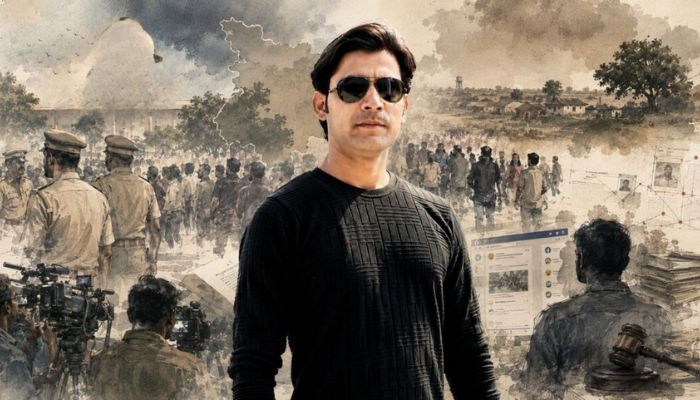
Questions continue to be raised over the death of Bharat Bhushan Tiwari, who was killed in a police encounter in Bihar’s Bhojpur district on 17th June. As the controversy grows, Bihar Chief Minister Samrat Choudhary has ordered a judicial inquiry into the incident.
The case has sparked intense debate both on social media and in political circles. While some people describe Bharat Tiwari as a man who fought for local issues, others point to his repeated threats against government officials and police personnel.
How the case began
The controversy started on 15th June, 2026, when Bharat Tiwari posted several messages on Facebook. In these posts, he spoke about starting a “revolutionary war” in the country and threatened to kill the SDM of Jagdishpur.
Police visited his house twice on 15th June, but he was not found there. He also did not appear before the police that day.
According to police, on 16th June, Shahpur police station received information that a man was moving around with a weapon. The man was identified as Bharat Bhushan Tiwari, a resident of Bilauti village. Several photos showing him holding weapons also surfaced on social media.
When police reached his home for questioning, Bharat was still carrying a gun. He even went live on Facebook while speaking to police officers.
In the live video and accompanying posts, Bharat accused the Bihar government and the administration of trying to kill him in an encounter. He claimed that officials were planning action against him and warned of a larger struggle against the system.
As videos and posts spread online, Bhojpur Police stated on social media late on 16th June that Bharat appeared to be mentally unwell and that steps were being taken to send him for treatment. They also stated that efforts were being made to recover the weapon in his possession and prevent any untoward incident.
Facebook live videos and firing at police
On the morning of 17th June, Bharat again went live on Facebook. In the video, he claimed that police wanted to declare him mentally unstable and take him away. He compared himself to freedom fighter Bhagat Singh and openly threatened police personnel.
During the live session, he fired shots toward police officers stationed outside his house and repeatedly spoke about killing them. In another Facebook post, he claimed that police had run away after he fired at them.
Later that morning, Bharat came out of his house and continued threatening police personnel. He also criticised the administration for calling him mentally ill.
On June 17, at around 9 a.m., Bharat went live once again from an open field. In the nearly 15-minute video, he was seen pointing a gun toward police officers and repeatedly asking them to leave.
When police appealed to him to surrender, Bharat replied that there would be a “war” and said either he or the police would survive. A gunshot can also be heard in the video as he fired at police personnel.
Speaking about his demands, Bharat said leaders and government officials should fulfil promises made to the public. He added that if promises were not kept, people would be forced to take up arms.
After saying this, he threw his weapon toward the police personnel present there.
Two different versions of what happened next
Soon after the surrender video, news emerged that Bharat had been shot.
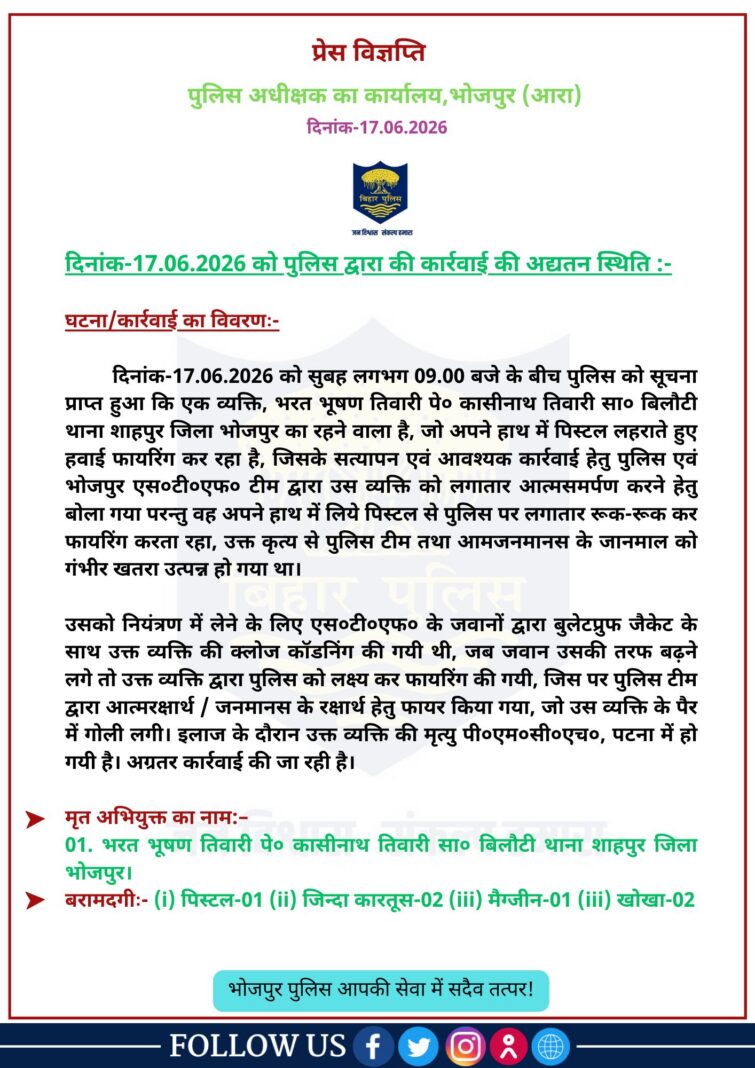
According to Bhojpur Police, Bharat continued firing despite repeated requests to surrender. Police said he opened fire directly at officers when they moved closer to him. In response, officers fired in self-defence, hitting him in the leg. He later died during treatment at PMCH in Patna.
However, eyewitnesses quoted in media reports have given a different version.
According to one witness, Bharat had already thrown away his weapon before police caught him. The witness claimed that police took him some distance away and then fired at him. The witness further claimed Bharat was shot multiple times. These differing accounts have become the central issue in the ongoing controversy.
Protests and FIRs after Bharat’s death
Following Bharat’s death, angry villagers staged protests on 18th June. His body was placed on a highway, and demonstrators blocked NH-922. The protest turned violent, and police used a lathi charge to disperse the crowd.
Media reports say two FIRs have been registered in connection with the incident. One FIR names Bharat’s father, Kashinath Tiwari, and brother, Chandan Tiwari, on charges including possession of weapons and obstructing government work.
Another FIR has been filed against 14 named individuals and more than 50 unidentified people for road blockage and violence during the protest.
Meanwhile, Bharat’s mother, Suman Devi, has demanded that a murder case be registered against police personnel involved in the encounter. She maintains that her son had surrendered by throwing away his weapon.
Political reactions and judicial inquiry
The encounter soon became a political issue in Bihar. Several police personnel, including Shahpur police station in-charge Rajesh Kumar Malakar, were suspended as questions continued to mount.
Many political leaders visited Bharat’s family to offer condolences. RJD leader Tejashwi Yadav described the incident as a fake encounter and demanded accountability. Questions were also raised by leaders from ruling alliance parties. JDU leader Sanjay Jha called for a high-level investigation, while Bihar minister Mithilesh Tiwari also sought answers regarding the encounter.
Amid growing pressure, Chief Minister Samrat Chaudhary announced on 20th June that the incident would be investigated through a judicial inquiry headed by a retired High Court judge.
भोजपुर जिले के शाहपुर थाना क्षेत्र के बिलौटी गांव में दिनांक 17.06.2026 को हुई पुलिस मुठभेड़ की स्वतंत्र एवं निष्पक्ष जांच हेतु उच्च न्यायालय के सेवानिवृत्त न्यायाधीश द्वारा न्यायिक जांच कराने का निर्णय लिया गया है। न्यायिक जांच का उद्देश्य घटना के सभी पहलुओं की निष्पक्षता एवं…
He said the aim was to ensure an independent, transparent and impartial investigation into all aspects of the case.
Revolutionary or criminal: Who was Bharat
The debate around Bharat Tiwari largely revolves around two very different images of him.
One side points to his social media posts, where he repeatedly threatened government officials, talked about encounters, and used aggressive language. Several posts show him warning officials that he would take violent action if development work was not completed.
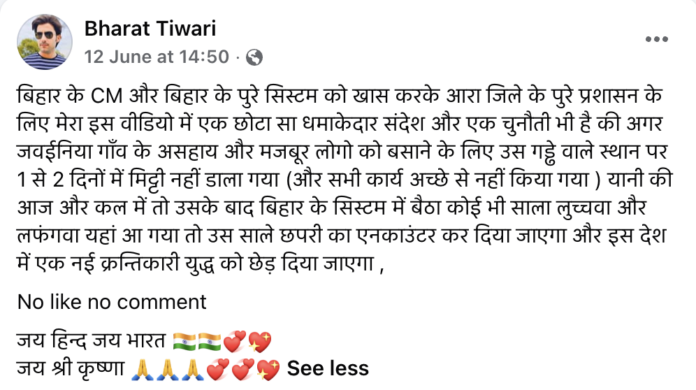
Bharat Tiwari’s Facebook post
In posts made on 15th June, 12th June and 7th June, he repeatedly referred to launching a “revolutionary war” and threatened officials, including the SDM of Jagdishpur. His Facebook profile also contains posts criticising the Bihar government, former Chief Minister Nitish Kumar, and the administrative system.
At the same time, many villagers remember him differently. Residents from flood-affected areas near Bilauti village told media organisations that Bharat regularly raised issues related to roads, electricity, drinking water and rehabilitation of displaced families.
Some villagers described him as someone who frequently checked on public services and pushed authorities to address local problems. Several residents even referred to him as a person who always stood with the poor during difficult times.
The encounter has left Bihar deeply divided. Bharat Tiwari’s social media activity clearly shows his anger toward the government and administration, along with repeated threats of violence. At the same time, many villagers credit him with highlighting local issues and helping people in need.
Whether Bharat Tiwari was a social activist who crossed legal limits, a criminal who threatened public officials, or whether the police acted correctly during the encounter are questions that remain unanswered for now.
The judicial inquiry ordered by the Bihar government is expected to determine what exactly happened on 17th June and whether the police action followed the law.
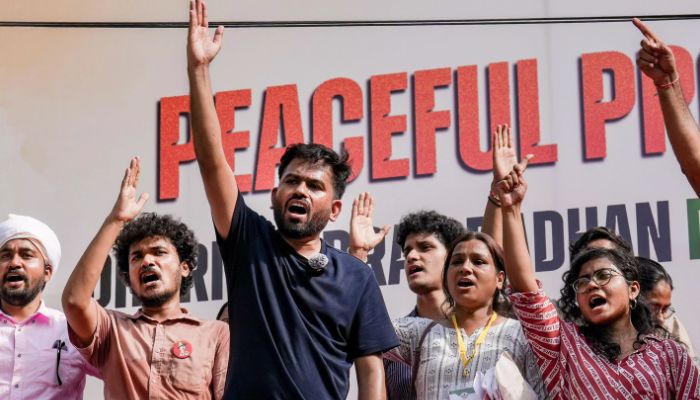
On 20th June, Abhijit Dipke, founder of the Cockroach Janta Party (CJP), published an alarming video on the social media platform X. “Police is about to arrest me. I appeal to you to not stop this peaceful protest nationwide even if I am arrested!” he said in the video. The message was designed to create a sense of urgency following the second round of the CJP protest at Jantar Mantar in Delhi. He claimed that the Delhi Police were about to crack down on a “peaceful protest” and arrest him merely for raising the “concerns of students”.
Police is about to arrest me. I appeal to you to not stop this peaceful protest nationwide even if I am arrested! pic.twitter.com/P7ljEJkCzP
But there was one problem. Dipke was never arrested by the Delhi Police. Another video shared by CJP showed police personnel standing while the protestors shouting “Halla Bol”.
इतना बल अगर पेपर लीक को रोकने में लगाया होता तो कॉक्रोचेस अपने घर पर ही होते आज!
धर्मेंद्र प्रधान को बचाने के लिए इतनी पुलिस भेजी है – क्यों इस सरकार को युवाओं से ज़्यादा अपने एक incompetent मंत्री से प्यार है? pic.twitter.com/c4wTkF1TTo
— Cockroach is Back (@Cockroachisback) June 20, 2026
Within a few hours of the video, another video surfaced on social media in which he was seen enjoying bread pakodas with fellow protesters. The Delhi Police neither dragged him away nor used force against any protester. In fact, despite the permission for the protest having expired, which appeared to be valid until the evening of 20th June, the police allowed Dipke and his supporters to remain at Jantar Mantar overnight.
The sequence of events made it evident that the dramatic warning about his impending arrest was not borne out by what happened on the ground. It was clearly a false alarm used to portray the police as aggressors and mobilise more people against them.
In a charged protest environment, such claims can create hostility towards police personnel, encourage crowds to disregard lawful instructions and prepare supporters to view every police action as an attack on democracy. Basically, such false alarms can easily turn the atmosphere hostile, pushing the police to take action to maintain law and order, and this is what appears to be the plan of the “cockroaches”.
India has already witnessed the deadly consequences of sustained incitement against police personnel. Head Constable Ratan Lal was killed during the 2020 Delhi riots, while hundreds of police personnel were brutally attacked after protesting farmers violated the agreed conditions of their tractor rally on Republic Day in 2021.
Any attempt to incite the public, including what Dipke has been doing, must be viewed in the context of such precedents.
Permission was granted only until a specified time
The police never denied permission to protest at Jantar Mantar. On 6th June, when Dipke and his supporters tried to put the Delhi Police in a bad light by seeking permission for the protest at the last minute, despite the Supreme Court’s ruling that a 7-day notice is necessary to protest at Jantar Mantar in the national capital, permission was granted at the airport itself, putting a hole in the plan to create chaos at the Parliament Street Police Station.
On 20th June as well, permission must have been granted for a limited time. Any protest can take place at Jantar Mantar, but it cannot be continuous. Permission is always granted with a fixed closing time, and that too under specific conditions.
Once that period expires, the police ask the protesters to disperse. This is what must have happened at Jantar Mantar during the CJP protest. There is nothing unusual, illegal or undemocratic about this. The police were merely enforcing the terms under which the protest must have been allowed.
However, Dipke continued to stay at the protest site with his followers. A protest organiser cannot refuse to leave after the deadline and then accuse the police of repression for asking him to comply with the very conditions he had accepted while seeking permission. The right to protest does not include the right to unilaterally occupy a public space indefinitely.
Delhi Police showed restraint
The conduct of the Delhi Police completely contradicts Dipke’s attempt to portray himself as the victim of an impending crackdown. Almost 24 hours have passed since he claimed that the Delhi Police were going to arrest him at the protest site. By the time this report was published, he was still at the protest site amid a heavy police deployment, and he had not even been touched by the police, let alone arrested.
Ideally, when an authorised protest period ends and the protesters refuse to leave, the police have every right to remove them in accordance with the law. However, Dipke stayed, his followers stayed, and the propagandists who came to join the protest to further their agendas also stayed with their daflis and thalis.
This was far from the conduct of an oppressive force. The Delhi Police showed considerable restraint and cooperation. However, the police cannot be expected to abandon all restrictions simply because an organiser has announced that he will not leave until a Union minister resigns. Cooperation from the police does not mean surrendering public spaces to political groups for an unlimited period.
The water supply claim further fuelled the narrative
Dipke did not stop at making claims about his arrest. On 21st June, he published a post at around 7 am in which he claimed that the water supply had been stopped at the public restrooms at Jantar Mantar since the previous night. He said, “I request the authorities not to cut off the water supply to the restrooms at the Jantar Mantar protest site. Since last night there’s no water supply at the public restrooms.”
I request the authorities not to cut off the water supply to the restrooms at the Jantar Mantar protest site.
Since last night there’s no water supply at the public restrooms.
The statement again presented the authorities as deliberately mistreating protesters. He did not establish who was responsible for the lack of water, but he framed his message as a direct appeal to the authorities not to deprive protesters of a basic facility.
This post helped reinforce the impression that the police and the administration were collectively attempting to harass a “peaceful gathering”.
He urged the police not to stop additional protesters
Around 90 minutes after that video, he released another video asking the police not to prevent more people from reaching Jantar Mantar. In the video, he was seen standing in front of police personnel and making the request, with no response coming from the other side. On X, he wrote alongside the video, “I request the police to not stop people from coming at Jantar Mantar. We are not doing anything wrong, we are just seeking justice for the students who committed suicide.”
I request the police to not stop people from coming at Jantar Mantar.
We are not doing anything wrong, we are just seeking justice for the students who committed suicide. pic.twitter.com/OHK8Bwro4L
Dipke was effectively telling his supporters that the police should step aside and allow unrestricted mobilisation at a protest that had already crossed its permitted deadline.
Farmers and workers were called in as reinforcements
Another problematic appeal made by Dipke came from the protest site stage later on Sunday, when he asked farmers and workers across the country to join the protest. He said, “We appeal to the farmers, workers, brothers and sisters across the country: Your children are struggling at Jantar Mantar for their rights. More than 12 children have already taken their own lives. Please come to Jantar Mantar, stand with us.”
Abhijeet Dipke appeals to farmers across India to come and stand with students at Jantar Mantar.
When farmers were fighting for their rights, students stood shoulder to shoulder with them. Students need the same solidarity today. Please join us at Jantar Mantar. pic.twitter.com/kEJiue00qj
— Cockroach is Back (@Cockroachisback) June 21, 2026
He further claimed that if the country’s farmers and workers stood with the youth, “no one can stop Dharmendra Pradhan’s resignation”.
हम देशभर के किसान, मज़दूर भाइयों और बहनों से अपील करते हैं: आपके बच्चे जंतर मंतर पर अपने हक के लिए संघर्ष कर रहे हैं। 12 से अधिक बच्चे आत्महत्या कर चुके हैं। Please जंतर मंतर आइए, हमारा साथ दीजिए।
— Cockroach is Back (@Cockroachisback) June 21, 2026
Dipke also invoked the previous farmers’ agitation, claiming that students had stood shoulder to shoulder with farmers when they were fighting for their rights and that students now needed the same solidarity.
This cannot be seen as a simple appeal for people to express support from their respective cities. It was a call for organised groups to converge at Jantar Mantar. Farmers and workers were effectively being summoned as political reinforcements to increase pressure on the government and overwhelm the restrictions imposed by the police.
Given Delhi’s history of protests turning violent, such mobilisation cannot be treated as harmless rhetoric.
Head Constable Ratan Lal was killed after police were demonised
The anti-Hindu Delhi riots of 2020 provide a grim reminder of what happens when police personnel are systematically portrayed as enemies of a community or movement. On 24th February 2020, a violent mob attacked police personnel near Chand Bagh. Head Constable Ratan Lal was among those who were on duty to control the mob. He was killed, while DCP Amit Sharma, an Assistant Commissioner of Police and several other police personnel suffered injuries.
Head Constable Ratan Lal was not sitting in an air-conditioned office making political decisions. He was on the streets performing his duty and attempting to control a violent mob that was instigated by the perpetrators behind the larger conspiracy. He never returned to his family.
The violence did not emerge in a vacuum. For weeks, provocative speeches, inflammatory mobilisation and calls to resist police action had created an atmosphere in which law-enforcement personnel were viewed as legitimate targets.
Once a crowd is persuaded that the police are oppressors, every lawful instruction is treated as provocation. Barricades become symbols of tyranny. Requests to disperse are described as attacks on democracy. Violence against police personnel is then rationalised as resistance.
Dipke’s posts follow the same dangerous pattern of delegitimising the police before a large audience.
He portrayed the possibility of enforcing a protest deadline as an impending arrest. He suggested that facilities were being deliberately denied. He asked the police not to regulate entry and appealed to farmers and workers to reach the site. His message to his supporters was clear: the police were standing between the protesters and justice.
Republic Day violence showed what happens when agreed conditions are discarded
A similar pattern was visible during the farmers’ protests. On Republic Day in 2021, protesters announced a tractor rally. Permission was granted by the police for a specific route, considering VIP movement on the day and the fact that Delhi is the national capital.
However, sections of the protesters entered Delhi before the agreed time, broke barricades and abandoned the authorised routes. The resulting chaos spread across the national capital. Protesters reached the Red Fort, attacked police personnel and engaged in clashes at several locations. Nearly 400 police personnel were injured.
Videos from the day showed protesters attacking policemen with sticks and swords, driving tractors dangerously through police barricades and chasing officers. Some police personnel were forced to jump from elevated structures to escape the mob.
The violence was not caused because the police had denied farmers the right to protest. It occurred after sections of the protesters violated the very conditions under which the rally had been allowed.
This parallels Dipke’s conduct at the CJP protest. This is precisely how authorised protests are pushed towards confrontation.
The police cannot be expected to surrender before every mob
India is a democracy, but the right to protest is not a licence to disregard rules, deadlines or restrictions imposed to maintain public order. A time-bound demonstration cannot become an indefinite occupation because organisers refuse to leave. Nor can they summon crowds to a site and then accuse the police of repression for regulating access.
While students have every right to raise concerns and protest, the gravity of those issues cannot be used to justify misinformation or hostility towards the police. A movement claiming to represent distressed students has a responsibility to remain truthful.
Despite the restraint shown by the Delhi Police during the 6th June protest and the 20th June protest, which continued into the next day, Dipke claimed that he was about to be arrested, claimed that the water had been cut off, asked the police not to stop more protesters and called on farmers and workers to reach the site. This was an attempt to manufacture police repression where none existed.
The rhetoric is dangerous. Such rhetoric can turn violent at any time and lead to a repeat of what happened during the Delhi riots and the tractor rally. Peace requires organisers to respect rules, avoid misinformation and prevent hostility towards the police. Dipke instead chose confrontation, leaving personnel to bear the risks created by his mobilisation.
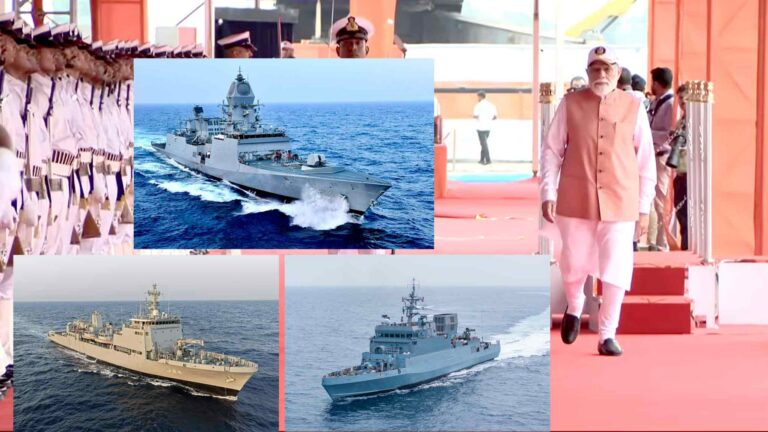
On Sunday, 21st June, Prime Minister Narendra Modi commissioned three indigenously built naval ships at Kolkata’s Syama Prasad Mookerjee Port, describing the occasion as a major milestone in India’s journey towards defence self-reliance and maritime strength. The three vessels, INS Dunagiri, INS Sanshodhak and INS Agray, have been designed and built in India and are expected to significantly strengthen the Indian Navy’s capabilities in surface warfare, hydrographic surveying and anti-submarine operations.
The commissioning ceremony was held in the presence of West Bengal Governor RN Ravi, Chief Minister Suvendu Adhikari and Chief of the Naval Staff Admiral Krishna Swaminathan. The event came on a symbolic day, coinciding with International Day of Yoga as well as World Hydrography Day.
आज 21 जून को World Hydrography Day के रूप में भी मनाया जाता है।
और यह बहुत ही अद्भुत संयोग है कि आज के दिन हमने भारत का सबसे advanced hydrography जहाज़ “INS संशोधक” कमीशन किया है: PM @narendramodi
The three ships represent different dimensions of India’s maritime capability. INS Dunagiri is a modern stealth-guided missile frigate designed for multi-role combat operations. INS Agray is an anti-submarine warfare vessel meant to detect and neutralise underwater threats in shallow coastal waters. INS Sanshodhak is an advanced survey vessel tasked with mapping the seabed, collecting oceanographic data and supporting both military and civilian maritime operations.
A New Chapter Begins with the commissioning of powerful symbols of Maritime Strength.
Designed, built and integrated in India, Dunagiri, Agray, and Sanshodhak, showcase the power of #AatmanirbharBharat.
— Ministry of Defence, Government of India (@SpokespersonMoD) June 20, 2026
The induction of the three vessels comes at a time when India is rapidly expanding its naval capabilities amid increasing strategic competition in the Indian Ocean region and growing concerns over maritime security.
India’s strength lies in Self-Reliance: PM Modi
Addressing the gathering after the commissioning ceremony, Prime Minister Modi said the three ships symbolised India’s growing confidence and determination to become self-reliant in defence manufacturing.
“These three vessels also symbolise three important national commitments. They have been built in India. They have been designed in India. The talent of Indian industries has contributed to their construction. The skills of Indian engineers and the hard work of Indian workers have gone into building them. This is the greatest strength of the new India,” he said.
A milestone for India’s maritime security! Speaking at the Tri Commissioning ceremony of INS Agray, INS Dunagiri and INS Sanshodhak in Kolkata. @indiannavyhttps://t.co/obmbDiY4T0
The Prime Minister stressed that India could no longer remain dependent on foreign suppliers for its defence requirements.
“India no longer wishes to remain merely a buyer in the defence sector. Our military strength cannot become a market for the rest of the world. My strength cannot be defined by becoming a market for the world. The true measure of my strength and capability lies in my self-reliance,” he said.
#WATCH | Kolkata, West Bengal: Prime Minister Narendra Modi says, "These three ships also symbolise three important resolutions of India. They were built in India, designed in India. They are the result of the talent of Indian industries, the skill of Indian engineers, and the… https://t.co/JJlkxUovpbpic.twitter.com/PqTZvyToEo
Modi highlighted how India’s maritime future would shape its economic and strategic influence in the coming decades.
“The world has witnessed that no nation can become a major power without maritime capability. Development is connected with the sea. Security is connected with the sea. Prosperity is connected with the sea,” he said.
#WATCH | Kolkata, West Bengal: Prime Minister Narendra Modi says, "A country whose maritime power is strong will also have a strong economic and strategic influence and India understands this reality well. India is preparing itself for this, and today is a testament to our… https://t.co/JJlkxUp3eJpic.twitter.com/C22rtZ7DTo
The Prime Minister also linked the commissioning of the three vessels to the broader transformation taking place within India’s defence sector.
“A few years ago, when we dedicated INS Vikrant to the nation, India announced the beginning of a new chapter in its maritime strength. The journey from INS Vikrant to the present day is not merely a journey involving new warships. It is also the journey of India’s growing self-reliance. Today, INS Agray, INS Dunagiri and INS Sanshodhak are giving fresh momentum to that journey,” he added.
A ceremony with strategic significance
The commissioning ceremony carried significance beyond the induction of three ships.
PM Modi used the occasion to underline India’s growing shipbuilding capabilities and the role of the maritime sector in generating employment and economic growth. He revealed that more than 40 indigenously built warships and submarines had joined the Indian Navy over the past few years and that another 45 major naval platforms are currently under construction.
The Prime Minister also highlighted the contribution of Indian industry, particularly small and medium enterprises, in strengthening the country’s defence manufacturing ecosystem.
According to him, more than 200 MSMEs contributed to the construction of the three ships commissioned on Sunday.
He further pointed to India’s ₹70,000 crore incentive package for the shipping sector and ongoing initiatives such as Sagarmala, which aim to modernise ports, expand logistics networks and strengthen India’s maritime economy.
Three ships, three different roles
While all three vessels were built in India and share the common objective of strengthening India’s maritime capabilities, each ship serves a very different operational purpose.
INS Dunagiri is designed for frontline naval combat and long-range maritime operations. INS Agray focuses on hunting enemy submarines in coastal waters. INS Sanshodhak is dedicated to hydrographic surveys and the collection of critical underwater data.
Together, they provide the Navy with a powerful combination of combat capability, underwater surveillance and maritime domain awareness.
INS Dunagiri: India’s new stealth combat frigate
Among the three ships commissioned, INS Dunagiri is perhaps the most powerful combat platform. It is the fifth warship under Project 17A and belongs to the Nilgiri-class of stealth-guided missile frigates. Designed by the Indian Navy’s Warship Design Bureau and constructed by Garden Reach Shipbuilders & Engineers (GRSE) in Kolkata, INS Dunagiri represents the next generation of Indian surface combatants.
It was delivered to the Indian Navy on March 30, 2026, at Garden Reach Shipbuilders & Engineers (GRSE) in Kolkata. INS Dunagiri is the second Nilgiri-class ship built at GRSE. The ship was laid down on 24 January 2020, and it was launched on 15 July 2022.
Named after the Himalayan peak Dunagiri in Uttarakhand, the vessel carries forward the legacy of the earlier INS Dunagiri, which served the Navy for more than three decades.
At nearly 149 metres in length and displacing around 6,600 tonnes, the warship is built for modern naval warfare. The frigate incorporates advanced stealth features that reduce its radar signature, making it harder for enemy forces to detect and track.
It is armed with BrahMos supersonic cruise missiles, MRSAM (Medium Range Surface-to-Air Missiles) complex with MFSTAR radar, 76mm Super Rapid Gun Mount (SRGM), close-in weapon systems (30mm and 12.7mm), and rockets and torpedoes for anti-submarine warfare. These weapons allow the vessel to engage enemy ships, submarines and aircraft simultaneously. The warship is equipped with sophisticated radars, electronic warfare systems and anti-submarine sensors, making it capable of operating across multiple domains.
One of its major technological features is the Integrated Platform Management System, which enables centralised monitoring and control of key ship functions.
INS Dunagiri is powered by a Combined Diesel or Gas propulsion system, consisting of two gas turbines and two diesel engines driving controllable-pitch propellers, paired with a state-of-the-art Integrated Platform Management System (IPMS), allowing commanders to balance fuel efficiency and speed depending on mission requirements. This configuration enables high-speed and high-endurance operations, with a top speed around 28–32 knots and a range of up to 5,500 nautical miles at economical speeds.
The vessel can also operate helicopters for anti-submarine warfare, maritime surveillance and search-and-rescue missions. The ship was delivered in 80 months, significantly faster than the 93 months required for the lead vessel of the class, INS Nilgiri.
With increasing naval activity in the Indian Ocean region, particularly from China, INS Dunagiri is expected to become a key element of India’s future blue-water navy.
Project 17A frigates are versatile multi-mission platforms capable of addressing current and future maritime challenges. These represent a substantial upgrade over the earlier Project 17 (Shivalik-class) frigates. The ships also integrate a modern Combat Management System for rapid threat response.
INS Agray: The Navy’s submarine hunter
While INS Dunagiri is built for multi-role combat, INS Agray has a much more specialised mission. The vessel is part of the Arnala-class Anti-Submarine Warfare Shallow Water Craft programme approved by the government in 2013.
INS Agray is the fifth vessel under the programme and has been specifically designed for operations in shallow coastal waters where enemy submarines can attempt to operate undetected. Built by Garden Reach Shipbuilders & Engineers in Kolkata, the vessel measures approximately 77 metres in length and is among the largest Indian naval warships powered by waterjets.
It is equipped with lightweight torpedoes, indigenous anti-submarine rocket launchers and advanced shallow-water sonar systems capable of detecting underwater threats. The vessel’s primary role is to identify, track and neutralise hostile submarines operating near India’s coastline.
This capability has become increasingly important as regional navies continue to invest heavily in submarine fleets. Pakistan, for example, is expanding its underwater warfare capability through the induction of new Hangor-class submarines.
Apart from anti-submarine missions, INS Agray will also support mine warfare and coastal surveillance operations.nThe vessel has more than 80% indigenous content, making it another major example of India’s growing defence manufacturing capability.
The ship also carries historical significance, as it revives the name of the earlier INS Agray, a patrol vessel that served the Navy before being decommissioned in 2017.
INS Sanshodhak: Mapping the Oceans for India
The third ship commissioned on Sunday was INS Sanshodhak, an advanced survey vessel designed to strengthen India’s hydrographic capabilities. INS Sanshodhak is the fourth and final vessel of the Sandhayak-class Survey Vessel (Large) programme.
Built by GRSE Kolkata and designed by the Indian Navy’s Warship Design Bureau, the vessel is approximately 110 metres long and displaces around 3,400 tonnes.
Its primary responsibility is to conduct coastal and deep-water hydrographic surveys. These surveys help identify safe navigational routes, map harbour approaches and produce accurate maritime charts that are critical for both naval and commercial shipping operations. The ship is also capable of collecting oceanographic and geophysical data for defence, scientific and civilian applications.
INS Sanshodhak is equipped with state-of-the-art systems, including Autonomous Underwater Vehicles (AUVs), Remotely Operated Vehicles (ROVs), Digital Side Scan Sonar, Data Acquisition and Processing Systems and advanced positioning equipment.
Powered by two diesel engines, the vessel can achieve speeds exceeding 18 knots. The ship carries more than 80% indigenous content and represents India’s growing capability in specialised naval platforms.
Its commissioning on World Hydrography Day added further symbolic importance to the event.
Why the commissioning matters
The induction of INS Dunagiri, INS Agray and INS Sanshodhak is significant not merely because three new ships have joined the Navy, but because they represent the broader transformation taking place in India’s defence sector.
In his speech, Prime Minister Modi repeatedly emphasised that maritime power would play a decisive role in shaping India’s future economic and strategic influence.
India’s growing dependence on sea-based trade, undersea communication cables, energy routes and critical maritime resources makes naval strength increasingly important.
The three vessels strengthen key areas of capability, combat power, anti-submarine warfare and hydrographic surveying, which are essential for maintaining maritime security in the Indian Ocean Region.
The commissioning also reflects the success of India’s Aatmanirbhar Bharat initiative in defence manufacturing. All three ships were designed and built domestically, with substantial participation from Indian industries and MSMEs.
“India wants to become a manufacturer. The day we become manufacturers, we will also become decisive players,” PM Modi said while highlighting the significance of the commissioning.
As Delhi’s Jantar Mantar became the centre of fresh protests over the contentious NEET issue on June 20, 2026, OpIndia uncovered the visible footprint of a US-based social media ‘activist’ whose influence extended far beyond the digital world and onto the streets of the national capital.
The protest, organised by the Cockroach Janta Party (CJP), was projected as a spontaneous youth-led movement against Union Education Minister Dharmendra Pradhan and the government over alleged NEET-related grievances. However, what emerged from ground reporting was evidence suggesting that the agitation was being actively fuelled and amplified by those who had no skin in the game, provoking people from thousands of miles away. One such individual was Osman Faizan Ali, a self-styled activist based in the United States, who has been using social media platforms to provoke, mobilise and emotionally charge young Indians into confrontation with authorities.
Across Jantar Mantar, protesters were seen carrying professionally designed placards featuring social media commentator Dhruv Rathee, activist Abhijit Dipke and actor Rakhi Sawant. Yet a closer examination revealed a curious common feature. Printed prominently on many of these posters was the photograph of a bearded man identified as “Indian Osman Faizan Ali — From USA.”
Who is Osman Ali, the man sitting in the US and provoking Indian youth toward unrest?
A protester reached Jantar Mantar carrying posters of Dhruv Rathee and Osman Faizan Ali.
The discovery immediately raised questions. Why was the image of an overseas activist appearing on posters at a protest supposedly driven by students and local activists? More importantly, how many of those carrying the placards even knew who he was?
When OpIndia spoke to several protesters at the venue, the answers were revealing. Many admitted they had no idea who Osman Faizan Ali was. One young protester openly stated that the poster had been handed to him by organisers and that he was unaware of the identity of the person whose photograph appeared on it. Similar responses from other demonstrators suggested that while they were being used to amplify Ali’s messaging, many were not even familiar with the individual behind it.
This disconnect points to a broader strategy. Rather than building a movement organically, Ali appears to be attempting to hijack it, manufacturing outrage and directing public anger through carefully designed propaganda distributed to impressionable participants on the ground.
A closer look at his social media activity reveals a pattern of deliberate provocation. Operating primarily through the Instagram account @bbm_india_, Ali has spent weeks pushing highly charged content related to the CJP protests. His videos are not limited to expressing support for demonstrators. Instead, they repeatedly seek to create a sense of impending confrontation, portraying the movement as a battle between angry youth and the Indian state.
His content relies heavily on emotionally loaded rhetoric, aggressive messaging and repeated attempts to convince young followers that they are part of a historic uprising. The objective appears clear: transform frustration over a public issue into a mass mobilisation driven by anger and confrontation.
One of the clearest examples came on June 1, 2026, when Ali uploaded a video directly addressing the Delhi Police. Rather than appealing for peaceful protest, the video carried an unmistakably threatening tone. He warned the police to deploy massive numbers of personnel before allowing CJP activists and Abhijit Dipke supporters to gather at Jantar Mantar. He repeatedly spoke about an unstoppable “tsunami” of people that would overwhelm any attempt by authorities to control the situation.
The language was significant. Instead of encouraging lawful democratic participation, Ali sought to create an atmosphere of confrontation. The message being conveyed to supporters was that they were part of a force powerful enough to challenge the state. Such rhetoric is a common tactic employed by agitators seeking to emotionally charge crowds and push supporters towards increasingly aggressive behaviour.
The fact that these messages were being delivered from the safety of a foreign country makes the situation even more troubling. While young Indians are encouraged to take to the streets, face police action and potentially risk legal consequences, the individual issuing these calls remains comfortably insulated from the fallout.
Ali’s efforts did not end there. He has been posting provocative content aimed at mobilising ‘Cockroaches’ ever since CJP started gaining online traction.
Earlier yesterday, he uploaded another video attempting to shape events on the ground. This time, he publicly appealed to the Delhi Police and security agencies to permit the demonstrations. However, the appeal came with an underlying threat. The video repeatedly suggested that stopping the protesters could lead to unrest and instability.
This form of messaging allows Ali to maintain plausible deniability while continuing to inflame passions. He does not explicitly call for violence, yet repeatedly frames confrontation as the likely outcome if authorities intervene. The practical effect is to heighten tensions, deepen mistrust of law enforcement and encourage supporters to view any administrative action as oppression. And to do all this from thousands of miles away, in the United States, is all too convenient for someone who positions himself as a crusader ‘fighting to save democracy in India.’
A review of Ali’s broader online activity suggests that this is not an isolated episode but part of a long-standing pattern. His social media presence consistently revolves around mobilising outrage, amplifying opposition narratives and encouraging followers to see political disagreements through the lens of conflict and resistance.
His YouTube channel, “Button Ballot Movement by Osman Faizan Ali,” provides further insight into his political objectives. While largely inactive today, archived content demonstrates that he has long sought to influence Indian politics despite operating from abroad.
One audio recording uploaded on May 13, 2024, featured an explicit appeal to voters in Hyderabad and Secunderabad. In the recording, Ali urged listeners to vote strategically for AIMIM and Congress candidates with the stated objective of defeating the BJP. The message was not framed around supporting particular policies or programmes but around defeating a political opponent through coordinated voting behaviour.
The recording demonstrates that Ali’s activism extends far beyond student issues or social causes. Rather, it reveals a pattern of attempting to influence political discourse and electoral outcomes in India while operating from abroad. His present-day support for the Cockroach Janta Party does not appear to stem from any long-standing ideological commitment to the movement. Instead, it seems to reflect an opportunistic effort to latch onto a viral internet phenomenon that has recently gained traction among sections of the youth. His political positioning has shifted with changing circumstances.
As recently as 2024, Ali was openly urging voters in Hyderabad and Secunderabad to support AIMIM and Congress candidates with the stated objective of defeating the BJP. His current embrace of the Cockroach Janta Party, therefore, appears less like an ideological commitment and more like political opportunism. Rather than being rooted in any consistent set of principles, his activism seems to follow whichever movement offers the greatest potential for mobilisation and visibility. Until 2024, Ali was actively rallying support behind AIMIM and Congress in their efforts to electorally challenge the BJP. Today, he has repositioned himself as a cheerleader for the CJP-led agitation, suggesting that his primary objective is not advancing a particular ideology but inserting himself into causes that act against the BJP and PM Modi.
The events at Jantar Mantar demonstrate how social media has transformed the nature of political mobilisation. In the past, protest movements were largely directed by individuals physically present on the ground and accountable for their actions. Today, however, activists sitting thousands of kilometres away can shape narratives, design propaganda, distribute campaign material, and influence the behaviour of large crowds with the click of a button.
What makes the current case particularly concerning is the apparent vulnerability of the young people being targeted. Many of the protesters carrying Ali’s posters did not even know who he was. Yet they were unknowingly helping promote his image and messaging in the heart of the national capital.
This raises serious questions. How many young participants are consuming such content without recognising the motives behind it? How many are being encouraged to view confrontation with institutions as a desirable outcome? And how many understand that those encouraging them to take risks are often individuals who bear none of the consequences themselves?
The Jantar Mantar protest offers a glimpse into a new model of political agitation in which overseas influencers attempt to weaponise local grievances to advance broader political objectives. By feeding young audiences a steady stream of inflammatory content, portraying institutions as enemies and framing protests as showdowns with the state, individuals like Osman Faizan Ali seek to transform public dissatisfaction into organised unrest.
While protesters on the ground face the possibility of detention, legal proceedings or violence if situations spiral out of control, those directing the outrage from abroad remain beyond the immediate reach of Indian law enforcement. The result is an unequal dynamic in which the risks are borne by impressionable youth while the rewards of political visibility accrue to digital agitators operating safely overseas.
The prominence of Osman Faizan Ali’s image at the Jantar Mantar protest is therefore more than a curious detail. It is evidence of how a foreign-based armchair ‘activist’ has attempted to insert himself into a domestic agitation, cultivate anger among young Indians and use digital platforms to push them towards confrontation. The incident serves as a reminder that in the age of social media, political unrest is no longer shaped only by those present on the streets. Increasingly, it is being influenced by individuals who may be thousands of kilometres away but are actively working to provoke, mobilise and radicalise audiences through the power of the internet.
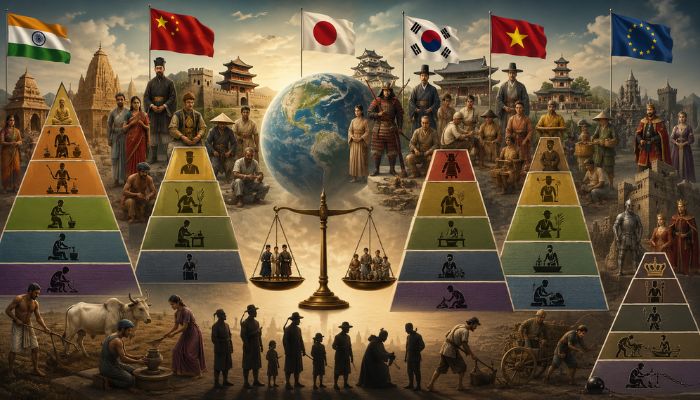
For decades, discussions around caste have almost always centred on India. International media, academics and activists frequently present caste as a uniquely Indian problem, often portraying it as an institution found nowhere else in the world. However, a growing India-China debate on social media has recently challenged that perception, with many users pointing out that rigid birth-based and occupation-based hierarchies existed across several societies, often under different names.
Over the past few weeks, Indian social media users have flooded platforms such as X and Instagram with posts, memes, videos and detailed threads exposing what many describe as China’s own caste-like social hierarchy. For years, the Chinese Communist Party projected itself as a society that had successfully eliminated social discrimination while simultaneously highlighting India’s caste issues. However, users began drawing attention to China’s historical social order and its modern Hukou system, which many believe continues to create institutional barriers between different groups of citizens.
The pursuit began gaining serious traction from around 11th June 2026 onwards with posts highlighting China’s ancient Four Occupations: Shi-Nong-Gong-Shang, as a hereditary hierarchy, and institutionalised discrimination within the modern Hukou household registration system, which traps millions of Chinese people in second-class status. While the Four Occupations created a structured hierarchy of scholars, farmers, artisans and merchants, the Hukou system continues to divide Chinese citizens into privileged urban residents and disadvantaged rural populations, restricting access to education, healthcare and employment opportunities.
Reality of Chinese Caste System. Share it and make it reach to every indians. Hats off to whomsoever started this movement of exposing realities of china. pic.twitter.com/YJmRmgM1oM
The debate has reopened an important historical question: Was caste really unique to India, or did many societies create their own rigid social hierarchies that controlled people’s lives for generations?
The answer is that almost every major civilisation developed some form of hereditary or occupation-based social structure. While the names differed and the rules varied from country to country, the underlying principle remained strikingly similar. People were born into specific groups, social mobility was restricted, marriage often took place within the same community, and those at the bottom were frequently subjected to discrimination and poverty.
Caste was not unique to India
Modern discussions often associate the word “caste” exclusively with India. Yet historically, rigid social stratification based on birth existed across Asia, Europe and even parts of Africa.
Many societies divided people according to birth, occupation, wealth or perceived ritual purity. These divisions were often enforced by law, religion or state authority. In several cases, people born into lower groups could neither change their occupation nor easily improve their social standing.
The difference is largely one of terminology. In India, these divisions came to be known through the framework of ‘caste’, which, ironically, originated from the Portuguese ‘casta’. In other countries, they were called classes, estates, orders, ranks, serfdoms, outcast groups or hereditary occupations. But regardless of the name, they functioned in remarkably similar ways.
This reality becomes even more evident when examining some of Asia’s most advanced and admired societies, including Japan, Korea and Vietnam.
Japan’s rigid hereditary social order
Modern Japan is often viewed as one of the world’s most advanced nations. However, for centuries Japanese society operated under a rigid hereditary hierarchy that determined a person’s status, rights and opportunities.
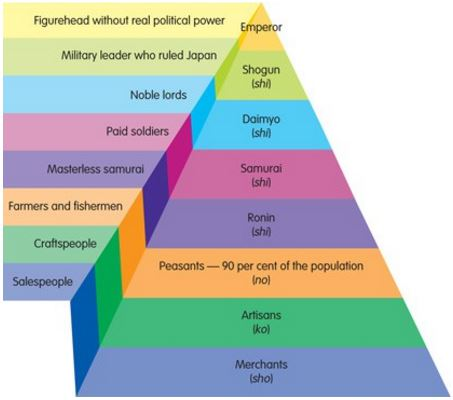
During the Edo Period, which lasted from 1603 to 1868, the Tokugawa Shogunate institutionalised a strict social order known as Shinokosho. Society was divided into four principal groups:
Shi – Samurai
Nō – Farmers
Kō – Craftsmen
Shō – Merchants.
Image via MGSC
At the top stood the Samurai class. These warrior-administrators enjoyed significant privileges and occupied positions of authority. Below them were farmers, who were valued because they produced rice, the foundation of Japan’s economy. Craftsmen came next, while merchants occupied the bottom rung because they were considered to generate wealth without producing essential goods.
This hierarchy was hereditary. A child born into a farmer’s family remained a farmer. A merchant’s child remained a merchant. Marriage between classes was restricted, and social mobility was severely limited.
The Tokugawa government repeatedly reminded citizens to “know your station in life.” People required permission to relocate, change occupations or marry outside their social category. Even clothing, hairstyles and daily behaviour were often regulated according to social rank.
Yet even below these four classes existed groups that suffered even harsher discrimination.
Among them were the Eta and Hinin communities, who later became known collectively as Burakumin.
The Eta were associated with occupations considered “impure,” including butchery, tanning and handling corpses. The Hinin included beggars, entertainers, low-status prostitutes and others considered socially undesirable.
These communities faced severe segregation. They were often forced to live in separate settlements, excluded from mainstream society and denied many opportunities available to other Japanese citizens.
Over time, the discrimination became codified in law. Occupations became hereditary, meaning the son of a tanner was expected to become a tanner. Social interaction between mainstream Japanese society and the Burakumin was discouraged and sometimes legally restricted.
Although legal discrimination was abolished during the Meiji era, the social stigma did not disappear overnight. Buraku rights organisations continue to fight discrimination even today, demonstrating how deeply entrenched these hierarchies once were.
Korea’s class system and the Nobi underclass
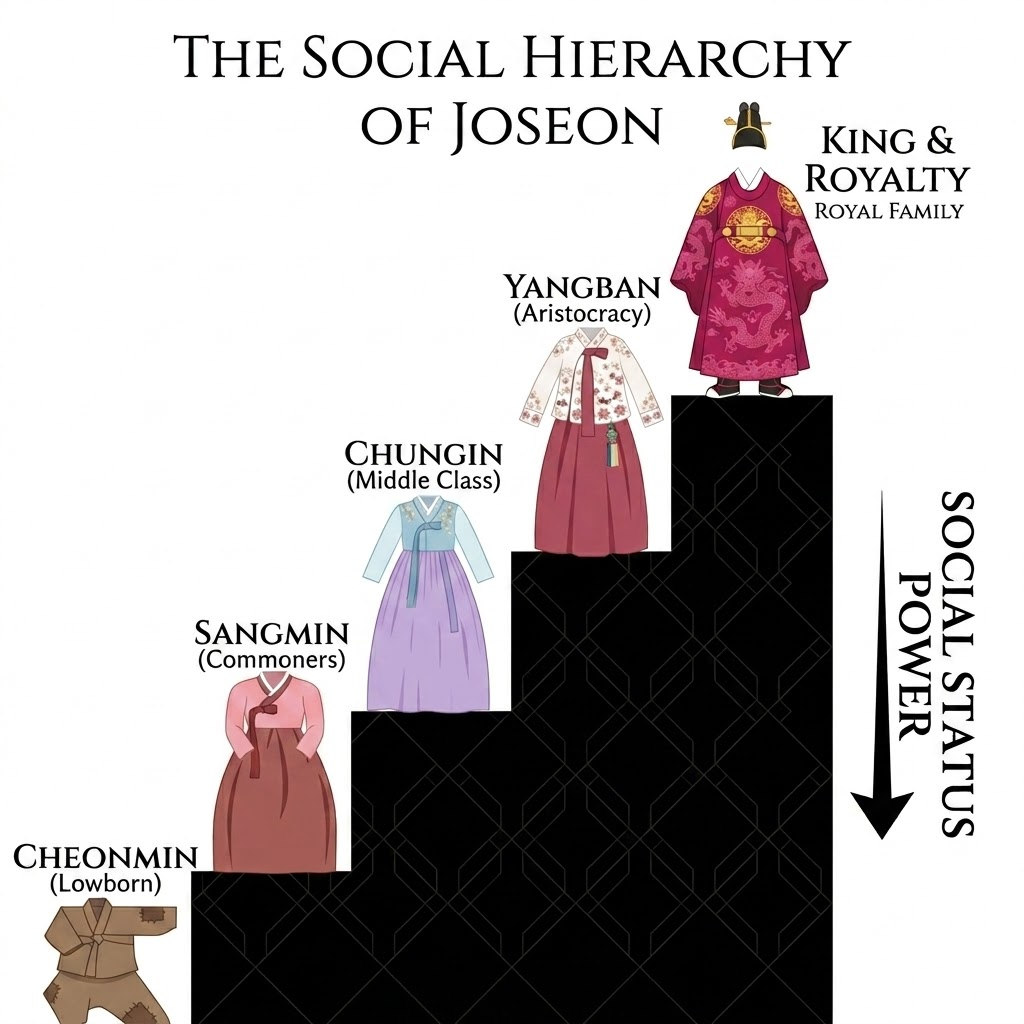
Like Japan, Korea also developed a highly structured and often rigid social hierarchy. During the Joseon Dynasty, Korean society was divided into several major classes.
Jungin – Technical Middle Class (Doctors, Interpreters)
Sangmin – Common Taxpayers (Farmers, Craftsmen, Traders)
Cheonmin – Lowly Class (Shamans, Butchers) & NOBI (Slaves)
Image via Pinterest
At the top stood the Yangban, who formed the ruling elite. They were scholar-officials who controlled government administration and owned significant amounts of land.
Below them were the Jungin, or middle people, who included technical professionals such as doctors, translators and administrators.
The majority of the population belonged to the Sangmin class, which consisted of farmers, craftsmen and merchants who paid taxes and supported the economy.
At the very bottom were the Cheonmin, meaning “lowly people.” This group included butchers, shamans, entertainers and the Nobi.
The Nobi occupied a particularly vulnerable position. They were considered property and could be bought, sold, inherited or transferred. In many respects, they resembled slaves or serfs. However, the Nobi system was complex. Some Nobi possessed property, accumulated wealth and lived independently. Nevertheless, their legal status remained subordinate to their owners.
For centuries, Korean society operated under this hierarchy. The Yangban enjoyed political and social dominance while lower classes faced significant barriers to advancement.
Only in the nineteenth century did these divisions begin to weaken. Economic changes, social reforms and political upheavals gradually eroded the old order. In 1894, the Nobi system was formally abolished.
Vietnam’s adoption of the Chinese social order
Vietnam presents another example of how caste-like structures spread across Asia through Chinese influence.
Historically, Vietnam adopted the Chinese Four Occupations model known locally as “Sĩ, Nông, Công, Thương.”
This system placed scholars and officials at the top, followed by farmers, artisans and merchants.
The arrangement reflected Confucian ideals that valued education and administration above commerce. Merchants often accumulated wealth, yet they remained socially inferior to scholars and bureaucrats.
Although the Vietnamese system was not as rigidly hereditary as some others, it still created a clear social hierarchy. Land ownership, education and government service became concentrated among elite families, reinforcing divisions across generations.
A key institution supporting this hierarchy was the Confucian civil service examination system. Introduced under the Ly Dynasty and continuing until 1919, these examinations selected government officials based on mastery of Confucian texts and classical literature.
In theory, any capable candidate could rise through the examination system. In practice, access to education was often concentrated among wealthy and influential families, giving them significant advantages. The examination structure elevated scholar-officials into a prestigious elite class while reinforcing the importance of bureaucratic status over commercial success. Over time, this helped create a durable social order that shaped Vietnamese society for centuries.
Caste-like hierarchies were not limited to Asia
The existence of rigid social hierarchies was not limited to Asian societies.
Europe, often portrayed as the birthplace of modern liberalism and equality, also spent centuries under systems that restricted social mobility and tied people to inherited status, even to slave-like conditions generation after generation.
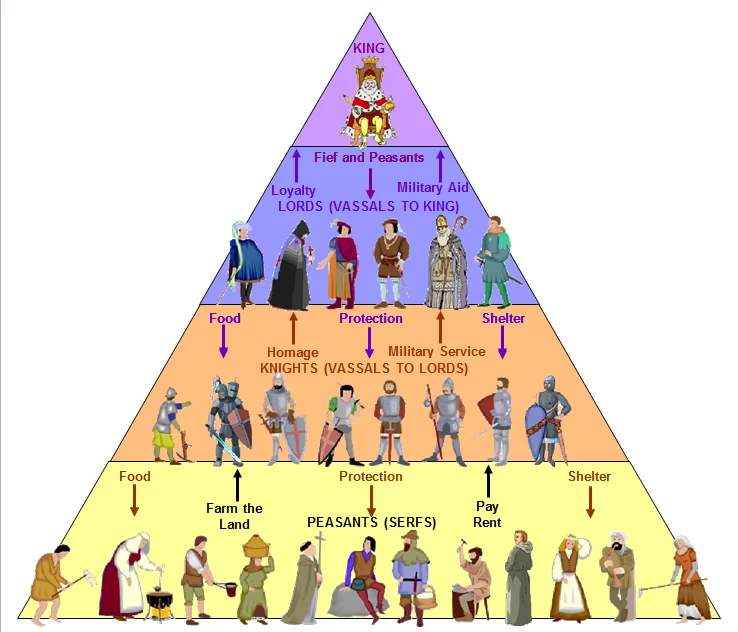
For much of medieval Europe, society operated under feudalism. Feudalism was a governmental and economical structure that rose after that fall of the Roman Empire in the fifth century. When the Roman Empire controlled large portions of Europe, it functioned as a large, central, stabilizing power. After its fall, local warlords began to assert their own dominance over small swaths of land.
Image via Brewminate
At the top were kings, nobles and landowners. At the bottom were serfs, who worked the land but did not own it.
Europe’s serfs and lords
Serfdom was one of the defining institutions of medieval Europe.
Serfs were not technically slaves, but their lives were heavily controlled by local lords. They farmed land belonging to the lord and were required to surrender a significant portion of their produce as rent.
They could not freely leave the land. They often required permission to marry, relocate or change occupations. If the land changed ownership, the serfs frequently changed owners with it. In practical terms, their freedom was extremely limited.
The system was built around inherited status. Children of serfs generally became serfs themselves. Opportunities for advancement were rare.
Lords, meanwhile, exercised considerable authority. In exchange for labour and rent, they provided protection, housing and basic security. Yet the relationship remained deeply unequal. The institution survived for centuries and shaped the lives of millions of Europeans.
Only major disruptions such as economic transformation, urbanisation and the Black Death began weakening the system. The Black Death dramatically reduced Europe’s population, creating labour shortages that gave surviving workers greater bargaining power. Peasants increasingly demanded better conditions and greater freedom.
Over time, feudalism gradually declined and serfdom was abolished across much of Europe.
Scotland’s coal miners: Slavery by another name
Even after Britain began presenting itself as a champion of liberty and the abolition of slavery, forms of hereditary labour bondage continued to exist.
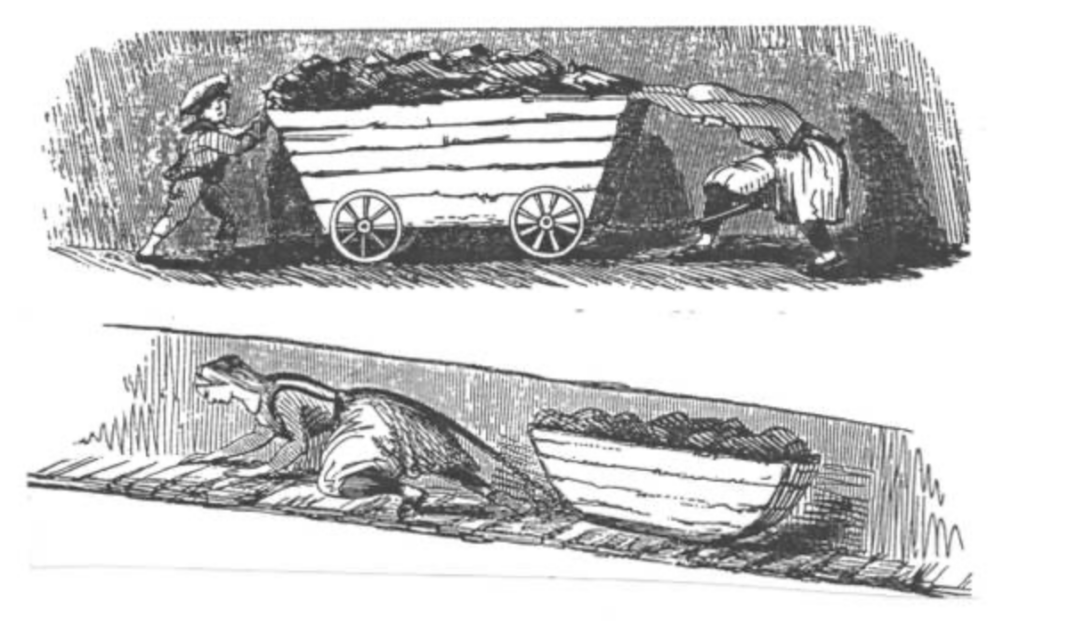
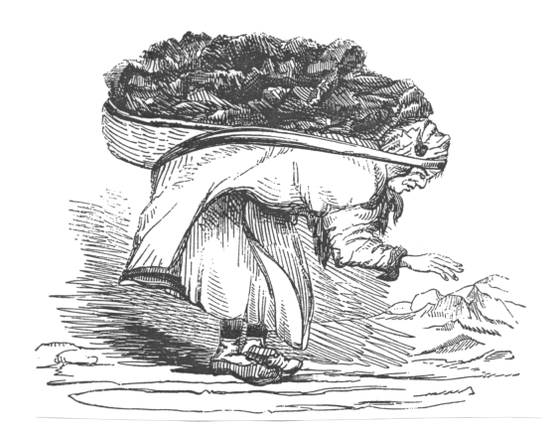
For centuries, Scottish colliers and salters were effectively tied to the mines where they worked. This included the colliers’ families as well. Mining was often a generational occupation, and even children would work in mines, some as young as four years old, although usually children were eight or nine if they were to work down in the pits. If conditions were better in other mines, colliers could not choose to leave and improve their situations, and any miner who did so was treated as a criminal and actively sought and retrieved. Some were punished severely for ‘absconding’ from their mines; they were treated as ‘vagabonds and sturdy beggars’; some were even sent to specific correctional facilities, created to deter miners from trying to leave their mines.
They could not freely leave their employers and were often bought and transferred along with mining operations.
This brutal act was actually extended in 1641 to enslave other workers, such as trappers, watermen, windsmen, gatesmen and carriers, who also worked at the mines. This act also increased the working week to six days out of seven. The situation lasted until 1775, when the process of freeing the mining communities from these abhorrent conditions was begun with the Colliers and Salters (Scotland) Act of Parliament. This started the process of freeing miners from their bonds, in a top-down approach. This effectively meant that if the father of a family was freed then so were his family.
A global reality often ignored
The historical record shows that rigid social hierarchies existed across much of the world.
China had the Four Occupations and later systems that institutionalised social divisions. Japan enforced hereditary classes and segregated Burakumin communities. Korea maintained a hierarchy dominated by Yangban elites while millions lived as Nobi. Vietnam adopted Confucian social structures that privileged educated elites over other groups.
Europe had feudalism, serfdom and hereditary labour systems that tied generations of people to specific occupations and social positions in deplorable living conditions and almost no rights.
The names differed. The legal frameworks differed. The cultural justifications differed. But the outcome was often similar.
People born into lower groups faced restricted opportunities, social stigma, economic hardship and limited mobility. Their lives were shaped by structures they did not choose and often could not escape.
Looking beyond simplified narratives
None of this means that social discrimination did not exist in India or that caste-related problems should be ignored. However, history shows that hierarchical social structures, what has been called the ‘caste system’ in India, were not a uniquely Indian phenomenon.
Across continents, societies created systems that divided people according to birth, occupation, status or perceived purity. These systems controlled access to wealth, education, political power and social respectability.
Yet public discourse often treats caste as though it were an exclusively Indian invention while overlooking similar structures elsewhere.
The recent discussion surrounding China’s social hierarchy has therefore opened a broader conversation. It reminds us that rigid social orders were once common across the world.
Whether called caste, class, estate, serfdom, nobility, outcaste status or hereditary occupation, these systems shared a common feature: they restricted human freedom and concentrated privilege in the hands of a few while keeping those at the bottom poor, dependent and socially marginalised.
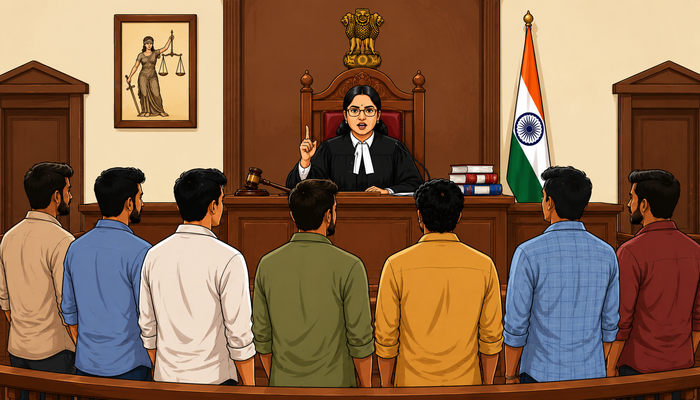
Recently, an Additional District and Sessions court in Madhya Pradesh convicted 7 individuals in a rioting and murder incident that happened in the Narmadapuram district of Madhya Pradesh in August 2022. The incident resulted in the killing of a man named Nazeer Ahmed, while several others were seriously injured.
In a verdict passed on June 12, 2026, Additional Sessions Judge Tabassum Khan convicted seven accused, namely, Deepak alias Baba Kewat, Ajay alias Ajju Rathore, Prakash Kaushal, Pawan Bathav, Amar alias Bhola Bathav, Kanhaiya Bathav and Ballu alias Anuj Raghuvanshi, under Sections 302, 307, 148 r/w 149 of the Indian Penal Code. The judge sentenced all the convicts to life imprisonment.
While the culprits were convicted under provisions relating to murder, attempt to murder and rioting, some media outlets were quick to peddle the case as one relating to cow vigilantism merely because the incident involved a truck carrying cattle.
Several media outlets referred to the convicts as Gau Rakhshaks (Cow vigilantes), while the term is nowhere mentioned in the judgment.
Some media reports wrongly mentioned the number of convicts granted life imprisonment by the court as 14, but 7 people were convicted and sentenced by the sessions court.
Before moving on to the court’s observations and the decision in the case, let’s take a look at the incident that led to the filing of the case.
As recorded in the judgment, the incident took place around midnight on August 3, 2022, on Nandarwada Road in Barakhad village, under the Seonimalwa Police Station area, of the Narmadapuram district in Madhya Pradesh. The complainant, Sheikh Lala (a truck driver), along with his companions, Nazeer Ahmed and Sheikh Mushtaq, was travelling in a truck carrying cattle. The truck left from Nandarwada and was travelling towards Amravati in Maharashtra.
As the truck was passing near Barakhad village around midnight on the day of the incident, its occupants were attacked by 10 to 12 villagers carrying sticks. The thrashed Sheikh Lala, Nazeer Ahmed and Sheikh Mushtaq. The police arrived at the spot and rushed the victims to the Community Health Centre (CHC) Seonimalwa. Sheikh Lala and Sheikh Mushtaq sustained serious injuries, but Nazeer Ahmed passed away during treatment at the hospital.
A FIR was registered by the police at Seonimalwa Police Station against 10-12 persons under Sections 147, 148, 341, 307, and 302 of the Indian Penal Code (IPC). Seven of the accused were tried for the offences and convicted of some of the offences mentioned in the FIR.
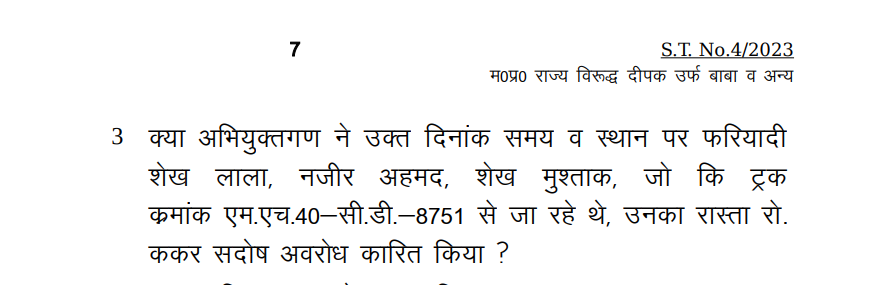
The court framed seven issues for determining the commission of the offences alleged in the FIR. Out of the seven issues framed by the court, a key issue mentioned at number 3 stated whether the accused deliberately stopped the truck of the victims before launching an attack on them. This issue was crucial for establishing whether the accused had a motive behind their actions.
Screenshot of the judgment
“Whether, at the said date, time and place, the accused persons wrongfully restrained the complainant Sheikh Lala, Nazeer Ahmed and Sheikh Mushtaq, who were travelling in truck registration number MH-40-CD-8751, by stopping/obstructing their way?” read the issue framed by the court.
After examining the evidence adduced and the arguments advanced by both sides, the court concluded that the element of wrongful restraint could not be proved against the accused. In other words, the court held that the prosecution could not prove that the accused deliberately stopped the truck of the victims before attacking them. In the absence of a motive, the misleading claims of the media portals about the attack on the victims being motivated by cow vigilantism do not hold water.
Screenshot of the judgment
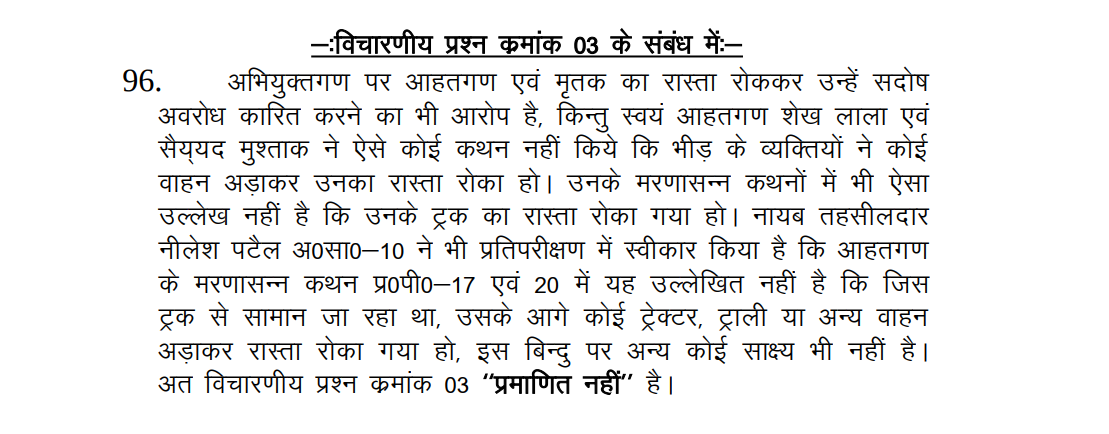
In para number 96 of the judgment, the court stated that the allegation against the accused that they wrongfully restrained the injured persons and the deceased by blocking their way was not proved. The court stated that the eyewitnesses, Sheikh Lala and Syed Mushtaq, made no statements before the court to the effect that anyone from the crowd had stopped their way by placing any vehicle in front of them. The court also pointed out that even their statements given to the police did not mention that the path of their truck had been blocked. No other evidence was submitted to the court to show that the accused blocked the truck’s path.
A plain reading of the judgment is sufficient to debunk the claims of the media portals to misrepresent the case as one of cow vigilantism. It is clear from the findings of the court that the incident did not relate to cow vigilantism and involved acts of murder, attempt to murder and rioting.
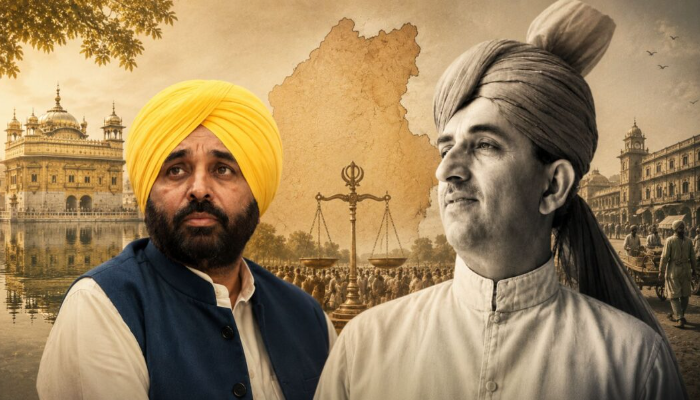
The Akal Takht has labelled Punjab Chief Minister Bhagwant Mann as a “Guru-dhokhi” (one who has betrayed the Guru) and declared him an adversary of the Khalsa Panth. There are increasing demands for his resignation and calls for his boycott, subjecting him to both political and religious pressure. Mann has dismissed these accusations and has shown no signs of intending to give up his chair.
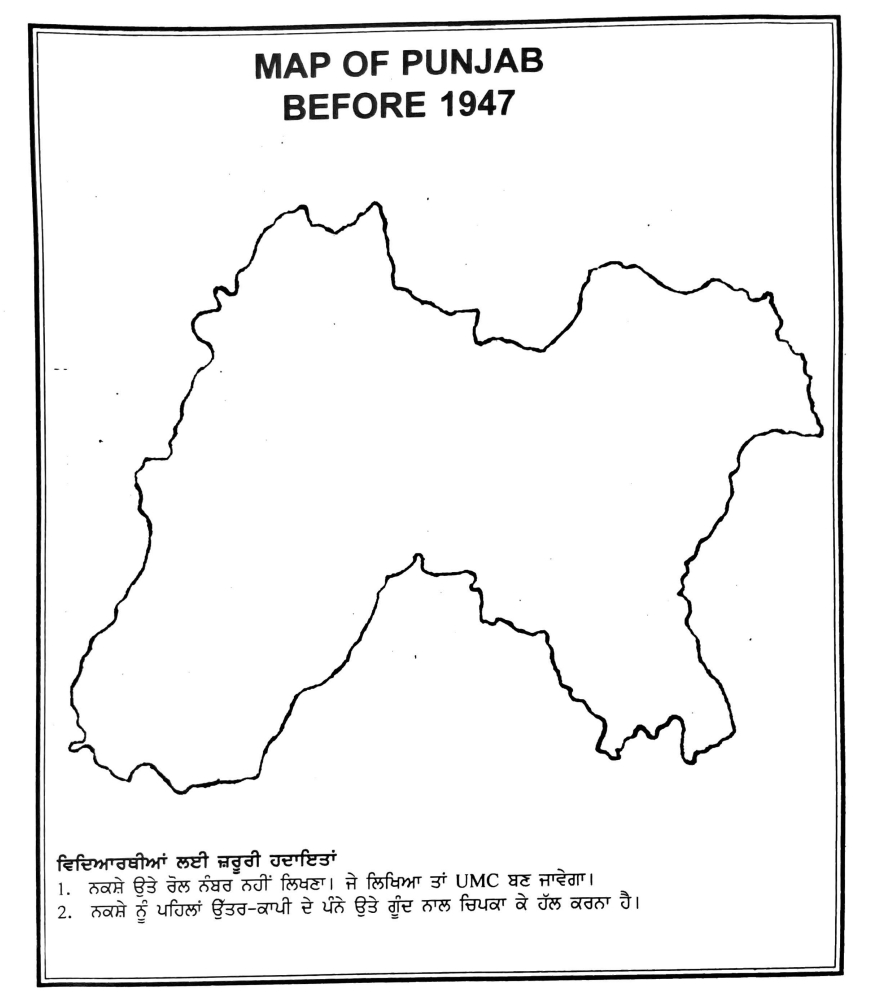
As we discuss whether Mann should step down, it is first vital to understand the Punjab of the 1940s, as this period offers significant historical context for the matter at hand. The Punjab of that time was significantly different from today. During that period, both Lahore and Rawalpindi were part of the region.
Punjab before 1947
At that time, the Chief Minister or Premier of Punjab was Malik Khizar Hayat Tiwana. He was a key figure in Punjab’s powerful Unionist Party and initially took on the role of Chief Minister in 1942. He returned to the office in 1946. His government received support from the region’s two principal political parties: the Akali Dal and the Congress.
This era was marked by massive upheaval in the country. The Muslim League was advocating for a separate Pakistan, while the Congress was resisting the partition of the nation, and the British were attempting to maintain their authority.
Malik Khizar Hayat Tiwana
By the year 1945, the Second World War had concluded, and it became increasingly hard for the British to sustain their control over India. In February 1947, British Prime Minister Clement Attlee announced that the country would be granted independence. Subsequently, the British acquiesced to the Muslim League’s demand for Pakistan and revealed a plan for the partition of India in June 1947.
Sir Cyril Radcliffe was dispatched to establish the borders between India and Pakistan. The demarcation process was greatly impacted by factors such as population, religion, language and the preferences of local leadership. The league argued that Muslims represented the largest demographic group in Punjab and hence the entire province should be incorporated into Pakistan.
When Muhammad Ali Jinnah wanted the whole of Punjab to become part of Pakistan, Punjab Premier Malik Khizar Hayat Tiwana stood in his way.
A staunch opponent of Punjab’s partition, Tiwana remained committed to a united Punjab despite growing pressure from the Muslim League.… pic.twitter.com/CjrgAutbVd
It was not solely Hindu leaders who opposed this demand. The Muslim League faced its strongest opposition from Tiwana. He was an influential Muslim leader, yet he unequivocally rejected the partition of Punjab.
In fact, this resistance was not a recent development. A conflict between the Unionist Party and the Muslim League had been ongoing since 1935. An agreement was even set up between Sir Sikandar Hayat Khan and Mohammad Ali Jinnah in 1937. This deal had no mention of Pakistan, but Jinnah sought the Unionist Party legislators to align with the League.
In 1940, the Muslim League adopted the Lahore Resolution, which became known as the Pakistan Resolution. Afterwards, the Muslim League consistently applied pressure on the Unionist Party to endorse the creation of Pakistan. Most senior leaders of the Unionist Party were Muslims, and therefore, they faced pressure based on their religious affiliations.
By 1944, the Muslim League’s influence had expanded considerably. During a meeting, Jinnah urged Tiwana to support the Pakistan movement. Although Tiwana hesitated momentarily, the Governor of Punjab counselled him to maintain his stance, and he ultimately declined to comply with Jinnah’s requests.
Jinnah and his associates then initiated an extensive smear campaign against him. He was labelled a traitor to his community, a kafir (infidel) and a foe of Muslims. Jinnah himself referred to him as a kafir. This campaign escalated further following the announcement of the partition.
Tiwana consistently asserted that Punjab should not be divided. He believed that the individuals of different faiths residing in Punjab shared a common cultural heritage. Nevertheless, this viewpoint proved to be politically detrimental for him. Protests erupted on the streets against him, and his effigies were displayed in mock funeral processions. Maulanas delivered speeches denouncing him. Wherever he went, he was vilified as an infidel and a traitor to the community. His vehicles were surrounded, and he endured continuous social and religious pressure.
On 2nd March 1947, Tiwana ultimately resigned from his position as Chief Minister. RK Kaushik, a former IAS officer, has detailed the events surrounding his resignation in an article featured in “The Tribune.”
Kaushik recounted that on the day he resigned, Tiwana paid a visit to the residence of Punjab’s Education Minister, Ibrahim Khan Barq. During this visit, the minister’s 8-year-old son confronted him, asking, “Are you the same Khizar Tiwana uncle who is obstructing the Muslim nation of Pakistan? I will not shake your hand.” This comment profoundly disturbed Tiwana.
He confided in the Development Minister, Sardar Swaran Singh, expressing, “I could have persisted in the struggle against the Muslim League, but if even our children are beginning to see us as adversaries, it is wiser for us to withdraw and allow events to unfold organically.”
He subsequently stepped down. The day after, Mohammad Ali Jinnah proclaimed that the primary hindrance to the creation of Pakistan had been overcome. Historians believe that the situation in Punjab deteriorated rapidly thereafter, marking the onset of widespread communal violence.
Should Bhagwant Mann resign
The present controversy involving Bhagwant Mann evokes memories of the region’s history. The Akal Takht has announced that it has received two objectionable videos featuring Bhagwant Mann, leading it to classify him as an opponent of the Khalsa Panth. In addition, various political parties, including the Akali Dal and the Congress, have called for his resignation based on these allegations.
Nevertheless, if the issue of Mann’s resignation is to be considered, the rationale must be rooted in democratic and administrative principles. If one contends that Punjab’s debt has increased during his tenure, crime control has been ineffective, criminals are making video calls from prisons, the drug problem remains unresolved, or election promises have not been met, these are issues that pertain to political accountability and the public interest. On such bases, the public is entitled to seek answers from a Chief Minister and may even call for their resignation.
The notion that an elected Chief Minister should resign merely due to an order from a religious institution raises major concerns from a democratic standpoint. If a leader has offended religious sentiments, the Akal Takht has the authority to impose religious penance, limit their religious privileges or initiate a social boycott. However, the ultimate decision regarding their continuation in a democratic role must be left to the electorate.
The people are the ultimate source of authority in a democratic system. If the public believes that a leader has failed to uphold their trust, they have the option to remove them from power in the subsequent election. The upcoming election in Punjab is approaching and this decision should rest with the populace, rather than a system that claims superiority over elected officials.
The story of Tiwana serves as a historical case pertinent to this issue. This account transcends the resignation of a single individual and delves into the crucial debate of whether democratic governance should be influenced by religious pressures. Historical evidence indicates that when political choices are swayed by religious or communal influences instead of the democratic framework, the entire society could face serious repercussions.
For many years, the Chinese Communist Party concealed its societal realities behind a ‘firewall’ and concocted hateful narratives about India’s social structure and caste system. However, Indians have memed their way into rattling the CCP’s propaganda fortress. Since the past few days, major social media platforms, particularly X (formerly, Twitter) and Instagram, have been flooded with Indian users posting ground-level visuals, threads, sarcastic commentary, videos and memes calling out the exploitative Chinese caste system.
While in scholarly discourse in India, the Chinese caste system and its modern Hukou form are not lesser-known issues, Indians, in fact, know only the sanitised version of China’s caste system. However, Indian social media users decided to make this lesser-known societal truth about China globally known.
The pursuit began gaining serious traction from around 11th June 2026 onwards with posts highlighting China’s ancient Four Occupations: Shi-Nong-Gong-Shang, as a hereditary hierarchy, and institutionalised discrimination within the modern Hukou household registration system, which traps millions of Chinese people in second-class status.
Before delving into how and why Indians are after China’s societal realities, it is important to learn about the Chinese caste system, both historical and modern.
From ‘Four Occupations’ to Hukou system: Caste system is not alien, rather entrenched in Chinese society for centuries
The ‘Four Occupations’ system dates back to the Zhou dynasty, though formalised in later periods. It was an ideal social hierarchy under the emperor. Under this system, people were divided into four categories.
At the top was the Shi (士) caste. This comprised scholars, gentry, officials, and the overall ruling elite.
Shi were followed by Nong (农), who were peasants, farmers, the producers of food. Although respected in theory, they were deemed lower in practice.
In third position was Gong (工). This category included artisans and craftsmen.
The lowest in the hierarchy was the Shang (商) group. These included merchants and traders. They were viewed as profit-driven and less essential.
In some eras, there was a bottom layer of Jianmin or “degraded people”. The emperor was above all these categories.
It is argued by many pro-China elements outside China, and Chinese scholars, that this arrangement, though hierarchical and functional, was not identical to India’s Varna or Jati system. They contend that while the Varna system was strictly hereditary or purity-based, the ‘Four Occupations’ system was more vocational than hereditary.
However, even the Varna system, in its original Vedic form, was not hereditary or birth-determined. While China’s ‘Shi-Nong-Gong-Shang’ hierarchy was based on occupation, Bharat’s Varna system was based on guna or qualities and karma or work.
Brahmins, comprising Vedic priests, scholars and teachers, Kshatriyas comprising the ruling elite and warriors, Vaishyas, comprising merchants, farmers, traders, and finally, the Shudras, who were service providers. This system was based essentially on a division of labour and a social organisation wherein individual aptitude, qualities, duties and interests decided their Varna, not immutable birth.
Varna was theoretically fluid and based essentially on personal conduct and aptitude. Many noted individuals rose to the status of Brahmins through merit and conduct, while in many cases, bad conduct would result in caste and reputational loss. None of it was based on birth.
It is undeniably true that in later periods, the caste system became hereditary; the original system, just as China’s Four Occupations, was not birth-based. Social hierarchy and exclusion are not unique to India alone. Many countries have religion-based or occupation-based hierarchies that were either originally or, through corruption over time, took rigid and discriminatory forms. However, it is strictly in India’s context that social hierarchy and exclusion are raised to essentialise Hindu culture and religion.
This is deliberately done to defame Hinduism and establish a norm that the Hindu religion and culture alone define Indian society and culture, even as India is home to diverse religions and cultures, which have their own separate hierarchies and related rivalries.
Despite this, the Chinese propaganda factory cherry-picks convenient negatives of the Indian caste system, blends it with their exaggerated narratives to portray India as a feudal, divided and even ‘inferior’ country, unlike the imaginary ancient and present communist Chinese Utopia where everyone is ‘equal’.
Hukou system: The de facto Chinese caste system
While independent India has, through laws and societal reforms, achieved considerable success in eradicating caste discrimination, Communist China has adopted a highly rigid Hukou system.
The origins of the hukou system date back to the Warring Kingdoms period (third century BC). Unlike India’s Varna system or ancient China’s Four Occupations, Hukou is not occupation-based; it divides people into groups according to birth-based privileges for some.
Hukou is a household registration regime introduced in its strictest form in 1958 after the Chinese Communist ‘revolution’. With this system, the CCP made it mandatory for every Chinese citizen to have a Hukou status by birth.
It divides people into two groups: Agricultural (rural) versus Non-Agricultural or urban. This is also linked to a specific location, like local or outsider. The Urban hukou holders enjoy privileged access to better public schools and colleges, subsidised healthcare and housing. Pensions and social welfare, as well as stable government or formal sector jobs. They are basically a privileged minority.
This system divides the Chinese populace into nongmin (rural citizens), with an agricultural hukou, and shimin (urban citizens), with a non-agricultural hukou.
The rural hukou holders, who form the majority, have to face systemic barriers. Several media reports and studies say that when the rural hukou holders migrate to cities for work, they usually get only temporary residence permits. The children of these rural hukou nongmin become left-behind children in villages, and face extra fees issues in urban schools.
In fact, there are separate unlicensed migrant schools outside the CCP-run state’s education system, reflecting how rural hukou are segregated from the socially and economically better and mainstream urban hukou and have very little access to public resources. These schools rely mainly on tuition fees to operate, have dilapidated buildings and are no match for the public schools in terms of facilities and quality of education.
Unable to get admission even in the migrant schools, the workers are sometimes forced to send their children back alone to their place of hukou for education. This essentially perpetuates a generational poor educational trajectory for rural hukou holders, while urban hukous have seen their educational levels improve generation by generation from school to universities.
In this ongoing decade alone, China’s capital, Beijing, has seen the closure and demolition of numerous migrant schools, further disconnecting rural hukou holders from education.
The only way for children of migrant workers to get admission to mainstream public schools is by providing the “five permits”. These include a labour contract and proof of local housing. However, obtaining urban hukou for a migrant worker is a near-impossible task. Since most of the migrant workers are employed in the informal economy and living in informal apartments, they cannot fulfil the requirements for obtaining an urban hukou.
In his notable book The Urbanization of People, sociologist Eli Friedman notes that, unlike discriminatory practices and social conditions in other regions, the Chinese Hukou system is “wholly and openly by state design, systematically creating a division among and within the predominantly Han population.”
In a study titled, Hukou and Urban-Rural Educational Inequality: Who Are Left Out?, Zheyu Zhao details the inequalities rural hukous face in the education sector.
“The educational system in China is rife with urban-rural inequalities, owing to the discriminatory effects of Hukou on educational resources and opportunities. In many cities, migrant students without local Hukous are excluded from the Nine-Year Compulsory Free Education [7]. Most state schools receive no state funding for migrant pupils, so they often claim to be full [8]. As a result, migrant students must either attend private institutions or return to the village linked to their Hukou status, where they can receive a free but bare-bones education,” the study reads.
Since migrant workers do the dangerous, dirtiest, and low-paid jobs in factories and construction, a social stigma is attached to them. They get lower wages compared to urban hukou for similar work, face hiring discrimination, and have limited access to full urban benefits. The same is the story of peasants (nongmin) and other rural hukou holders.
The Chinese Hukou system is equivalent to a birth-based discriminatory caste system, given the disparity in economic standing, social status, and access to public resources based on the birth of the urban and rural Hukous. The CCP has created a regime that has pushed a significant section of the population into perpetual precarity and destitution based on birth.
Clearly, China’s socialism-communism is confined to lip service and the CCP conveniently adopted not only the pre-Mao Hukou (Huji) system, which was originally based on where a person resided, but also made it even more rigid and discriminatory by making it birth-based, turning the residency status became inheritable.
From an economic point of view, the Hukou system helped China create a dual economy, with a large proportion of unskilled labour. With a birth-based and institutionalised exclusionary Hukou regime, the CCP achieved social stability and economic growth, thanks to the abundance of cheap labour, which it needed to perpetuate its authoritarian rule.
In fact, initially, the hukou inheritance was made matrilineal and not patrilineal. No, this was not a progressive move; rather, historian Professor Glen Peterson described it as the elimination of the opportunity for upwardly mobile fathers to bequeath urban hukou status to the offspring.
“By assigning hukou status through the maternal parent, the opportunity for upwardly mobile fathers to bequeath urban hukou status to their offspring was eliminated. … Hukou controls were the state’s primary mechanism for allocating – and denying – access to a wide range of state-supplied goods and services: schooling, food, housing, employment, consumer products, and other benefits. Following the great famine of 1959-61, moreover, China’s leaders came to regard a peasantry bound legally and permanently to the land as the most effective means of guaranteeing the country’s precarious food supply,” Peterson wrote in his book The Power of Words: Literacy and Revolution in South China, 1949-95.
It was only in 1998 that Hukou inheritance was made patrilineal.
In his noted work, Organizing Through Division and Exclusion: China’s Hukou System(2005), Dr Fei-Ling Wang, Professor at Sam Nunn School of International Affairs, described Hukou as a “control measure by dividing the population into small segments.”
“China’s imperial hukou system functioned as a quasi-institutional exclusion. In addition to the location-determined population immobility, there always lingered an inherited hukou categorisation of various noble clans, ordinary people (mainly peasants), and various low-class clans (slaves, floaters, untouchables such as paupers or prostitutes). In the last two dynasties (Ming and Qing), the legally equal ordinary people were categorised into four inherited hukou types: military, peasants, merchants, and handicraft workers. They had the same legal status but frequently different and adjustable treatment regarding tax burden and the right to participate in the imperial examinations, as well as the right to move. Several categories of low-class clans were further excluded. … Unlike the current PRC hukou system, however, the imperial hukou system formally excluded not the majority of the population but mainly the socially undesirable minority or fringe groups,” Wang wrote.
The CCP’s adoption and perpetuation of the birth-based Hukou system is rooted in the advice of traditional Chinese scholar Guo Tinglin, who said, “When the masses dwell in the villages, order prevails; when the masses flock to the cities, disorder prevails”. The Hukou regime in the People’s Republic of China is essentially a de facto caste or apartheid-like system, creating “two Chinas”.
The Hukou system is prevalent in China even now and has witnessed several reforms. However, despite the reforms, the core divide persists. The urban-rural gaps in income, education and opportunities also remain stark. The discrimination in labour markets and prejudiced social attitudes is now widely known.
Several studies indicate that the Mao-era Hukou locked peasants in place to feed cities and fund China’s industrialisation. The Great Leap Forward and Collectivisation further devastated rural China.
In fact, during the Cultural Revolution (1966-76), the CCP institutionalised hereditary discrimination via the “class label” system. Families were categorised on the basis of their pre-revolutionary wealth or political standing. Several studies detail how those who were During the Cultural Revolution (1966–1976), the Chinese Communist Party institutionalised hereditary discrimination through the “class label” system. Families were permanently categorised based on their pre-revolutionary wealth or political standing. Those designated as “class enemies” passed social and political stigmas onto their children, having their life chances heavily restricted.
Be it through the stigmatised “Five Black Categories” and the CCP-favoured “Five Red Categories” during the Cultural Revolution or the perpetual Hukou system, China has an opprobrious history of discrimination against its own people, be it for political view, or based on birth.
It would amount to intellectual dishonesty if the term caste is not used in the context of China’s birth-based discriminatory system. Caste is not an Indic term; the word finds its origin in the Spanish and Portuguese word “casta”, which means “race, lineage, breed, or kind”. Casta itself originated from the Latin castus, meaning “pure”. Evidently, the European origins of the term and its birth/lineage-based purity indicate that the Caste system, in some form or other, existed in Europe as well. However, in modern studies, “caste” has almost exclusively been used in the context of the Hindu varna/jati system.
Indians sarcastically call out ‘Chinese caste system’, CCP deploys mouthpiece Global Times for narrative control
In the last few days, Indian netizens have been dominating timelines across all major social media platforms with videos, memes, and sarcastic commentary on China’s historical and prevalent social hierarchies and related discrimination.
As Indians called out China’s birth-based urban-rural chasm, the CCP mouthpiece Global Times, notorious for peddling anti-India propaganda, published a defensive piece on “Indian netizens allege China has a ‘caste system’,”.
The Global Times cited Chinese ‘experts’ to dismiss the Indian pushback as “hilarious,” “ignorant of Chinese historical culture,” and classic “projection” or “coping.”
Apparently, the CCP is now rattled not only by state actors but also by ordinary Indians, who have punctured China’s carefully curated global image of a harmonious and meritocratic Communist Utopia. While some of the ‘Chinese caste system’ posts by Indian netizens are a genuine attempt at highlighting China’s very own birth-based hierarchical systems, the Global Times failed to read the Indian sarcasm.
For years, Chinese state media, bots, and influencers peddled half-truths, blatant lies and propaganda about India, Indians, and Indian society. From passing off videos of unhygienic street foods from Bangladesh and Pakistan as Indian on X, Facebook, Instagram, and TikTok, to highlighting the caste system with their own exaggerated narratives, CCP bots fuelled hatred against Indians online.
However, Indian social media users flipped the script. While the CCP is deploying its media mouthpiece and social media bots to ‘counter’ the Chinese caste system claims made by Indians, the Indian side of X has essentially played the CCP’s game of picking historical issues and peddling exaggerated narratives around it. Indian netizens, powered by 2.5 GB per day of internet, are not merely apprising the world of China’s discriminatory societal structure but are giving a blowback with a blend of facts, satire, and sarcasm, with a dash of mockery.
While ‘caste’ has become a keyword in the ongoing Indian social media campaign and Chinese reaction, this is not confined to just caste or discrimination. Indian social media users have managed to breach the ‘firewall’ and bring out visual elements, be it poverty clips, migrant stories, and similar ground stories, that never make their way beyond the official filters. It is hilarious that the CCP is rattled by decentralised, creative and motivated Indian netizens who are simply pushing back against Chinese propaganda in the CCP’s own style.
“Divide and Rule,” the tactic, which was officially put into action by the British, has been a prominent feature of their colonial legacy in India. The imperialists exited the country after inflicting a brutal division in 1947 along the same lines, but their nefarious motto continues to be applied even today, often in a more aggressive manner and with a different approach. Certain elements have been using this strategy to exploit the faultlines within the Hindu community, even going so far as to designate many groups as outside this religious fold.
Senior All India Muslim Personal Law Board (AIMPLB) member Maulana Khalilur Rahman Sajjad Nomani recently stated that Hindus are no longer the majority in India during a speech. He argued that the traditional perception of their population is deceptive when diverse groups are viewed separately.
Nomani insisted that tribals, scheduled caste communities, people from Tamil Nadu, Lingayats, some segments of the Jat community and other such categories should not be counted as Hindus because their identities are distinct from the larger community. He announced, “I place my hand on Hajr-e-Aswad and the cover of the Kaaba and say that Hindus are a minority in India. Under no circumstances can Hindus be considered a majority,” to his attentive audience in the viral footage.
He also made an admission, revealing that Hindus were split into two factions to serve the Islamist agenda and expressed disappointment over the scheme’s failure as they all voted for the Bharatiya Janata Party (BJP). “We divided Hindus into secular and fascist units, but both ended up hurting our cause.”
"We have made Hindus a minority in this country too." – Maulana Khalilur Rahman Sajjad Nomani pic.twitter.com/zd4lz2Hpvv
The statement made by Taliban fanboy Nomani is an open secret. The radical ecosystem and “secular” politicians alike have repeatedly employed such manoeuvres to create rifts within Hindu society and fulfil their ulterior motives. Former Karnataka Chief Minister Siddaramaiah had claimed that Lingayat is a different religion. Similarly, Congress MLA from Madhya Pradesh, Umang Singhar, asserted that “tribals are not Hindus.”
The Rashtriya Janata Dal and Samajwadi Party are known for their “Muslim Yadav (M-Y)” combination to form vote blocs in Bihar and Uttar Pradesh for electoral benefits. The latter’s latest PDA (Pichhda or Backward Classes, Dalit and Alpsankhyak or Minorities) strategy represents another extension of this playbook.
The systematic targeting of the Hindu community, which has been segregated into castes, classes or other segments, remains a defining feature of this effort, while Muslims are consistently perceived as a single entity, despite the presence of multiple sects that have been involved in violent conflicts with each other for decades.
The phenomenon has become so standard that it elicits no response when the largest community in India, instead of being regarded as a cohesive whole, is unceasingly exposed to attempts to foster feelings of separation and isolation to undermine its Hindu foundation. This is regularly observed from discussions analysing voting behaviours to giving “caste colours” to crimes, but never to terror assaults, as that would be “Islamophobic.”
A terrifying scenario is underway
A conspiracy is in motion, transcending vote bank politics, aimed at breaking apart the Hindu community, eroding its strength and weakening its influence, which would ultimately sever the civilisational roots of India, substituting them with a foreign culture, as seen in various parts of the world, from the Arab nations to India’s neighbours.
This illustrates why an offensive against Iran and Gaza triggers massive protests and violence takes place in Mumbai’s Azad Maidan over Rohingya Muslims, but New Delhi’s move to introduce the Citizenship Amendment Act (CAA) to protect the persecuted minorities of Pakistan, Bangladesh and Afghanistan results in unrest and anti-Hindu riots in the national capital.
This is also the reason behind the alarming influx of Bangladeshi and Rohingya intruders into the country, which is facilitated by political parties such as All India Trinamool Congress (AITC or TMC) in pursuit of their short-term political objectives at the expense of the nation’s greater good.
TMC chief and former West Bengal Chief Minister had even threatened that Muslims would encircle Hindus and “completely finish them off” if her party were not in power in the state. Interestingly, this was intended to frighten Hindus into supporting her during the assembly elections, which later led to her humiliating defeat. However, her comment serves as a stark reminder of the imminent threat that has already transformed into a chilling reality from Kashmir to Murshidabad.
The Hindu territory of Kashmir experienced a dramatic decline in its native population as the Muslim population expanded over time. The Kashmiri Pandits had to endure a Pakistan-sponsored brutal exodus in the 1990s and are forced to live as refugees in their own country. Their properties are confiscated by those who were once their neighbours and friends but sided with the jihadis, while the former are unable to return to their homes and have to act as uninvited guests in their own land.
A similar incident unfolded in the Muslim-majority Murshidabad last year, where Hindus had to leave their homes to protect themselves after facing attacks from extremists. The violence resulted in the brutal murders of 72-year-old Hargobindo Das and his 40-year-old son Chandan, leading to the conviction of 13 Muslims in the case. Hindu idols and temples were desecrated and vandalised, while Hindu residences were marked with black ink, bombed and set ablaze by the bloodthirsty mobs.
Multiple such instances have surfaced where Hindus had to sell their homes to evade this unwarranted aggression from Muslims, especially where the latter are predominant or in substantial numbers. Furthermore, Indian courts, including the Supreme Court and legal bodies, have consistently cautioned that unnatural or unchecked demographic changes, particularly through illegal immigration, pose a major threat to national security, constitutional integrity and social stability.
Judge GR Swaminathan of the Madras High Court even remarked that the Indian Constitution would no longer be relevant if the nation’s “demographic profile” is altered. Regions such as Jharkhand have already begun to suffer the repercussions of this development.
A violation of the religious rights of Hindus
These Muslim extremists not only assault Hindus but also react adversely to the latter practising their faith, which “offends” their delicate sentiments. A Durga temple in Asansol was shut down by the TMC government due to pressure from Muslims and remained closed for 15 years as Hindus were not allowed to worship there. It was only reopened after the saffron party came to power.
The Mamata government shut down a Maa Durga temple in Asansol under pressure from Muslims.
The temple remained closed for 15 years, with Hindus denied the right to worship.
Following the BJP’s victory, the temple gates have reopened, and saffron flag has been hoisted.… pic.twitter.com/CMHwn4pSiB
Hindus had faced restrictions on conducting religious processions and celebrating prominent festivals, including Durga Puja, when they coincided with Islamic occasions during the TMC regime in Bengal. Calcutta High Court had to intervene against such diktats. However, the trend is widespread in other areas as well. The unyielding objections and assaults on Hindu processions for having the audacity to traverse through “Muslim areas” or even otherwise point to an unsettling degree of intolerance within the second-largest community in the country.
Meanwhile, Hindus have to constantly fight for their fundamental right to observe their beliefs and worship their deities, from Lord Ram in Ayodhya to Lord Murugan at Tiruparankundram Hill. As if this were not enough, the rampant criminal activities, including love jihad and those perpetrated by intruders, which comprise the occupation of government-owned lands such as critical forest and agricultural zones, have resulted in a serious challenge in states like Assam.
Therefore, this remark by Nomani, who is also opposed to sending girls to schools, is not indicative of a radical mindset but rather a meticulously constructed plot reminiscent of the dangerous aspirations expressed in the “India 2047” document of the outlawed Popular Front of India (PFI), which envisioned the country as an Islamic state.
These entities are singularly focused on establishing Muslim dominance in India through any unscrupulous methods, including the division of Hindu society, while “secular” parties are desperate to cater to them for power acquisition while Hindus are in a precarious position facing an existential threat.
Conclusion
It has become imperative to put an end to internal disputes and counter any devious act to attack the Hindu community, which must awaken to reality and stop clashing over matters such as castes, class or language and instead concentrate on the larger picture. They need to showcase a solidified front, just as Muslims do for their community, despite their differences, if they hope to survive against such an organised adversary.
Their dropping growth rate in contrast to that of Muslims, the imposing inflow of Rohingya and Bangladeshi intruders and the Islamo-leftist lobby, has already left them with a very narrow margin against this menace. The odds are stacked against them. Hindus have to defend themselves against an unrelenting global ecosystem on several fronts, and they must recognise and respond to this reality.
It is a fact that Hindus have become politically, culturally and religiously conscious in recent years, but this process must be accelerated and not even a slight opportunity should be afforded to the Islamists to further their agenda, which could be detrimental not only to Hindus but to all of India.
Somalian American Congresswoman Ilhan Omar, notorious for her extreme animosity towards India, has once again made outrageous allegations devoid of any facts to attack the country, especially at a time when there is a rising wave of anti-immigration sentiment marked by violence, especially against individuals of Indian descent, in the United States. Her latest outburst of vitriol happened on 7th June at a program arranged by the Indian American Muslim Council (IAMC), a radical group recognised for its support for terror outfits and anti-Hindu ideology.
.@Ilhan says “Reports coming out of India [place it at] the 8th stage of genocide,” she said, adding that concerns were not limited to Modi Administration but also reflected broader societal dynamics.
“Reports coming out of India place it at the 8th stage of genocide. It’s really important for us to continue to raise the alarm,” Omar claimed at the public event titled, “Community Resistance to Hate and Extremism.” She added that the reason for the situation is not just the Modi government, but rather, the “havoc” is evolving into a “systemic” and “societal” issue.
As was expected, no proof was provided to validate the claims, which were founded on the 10-stage paradigm of genocide developed by American attorney and propagandist Gregory H. Stanton, who created Genocide Watch. He described the 8th step as persecution, which entails widespread, state-sponsored repression of a minority group.
According to him, extrajudicial executions, property confiscation, forced relocation, ghettoisation and denial of necessities like food, water, and medical care are parts of systematic rights violations that fall under this category. While there is no evidence of such brutal targeting of any group in India, it is also important to outline that minority communities, especially Muslims, have seen a considerable increase in population compared to the majority community.
It is noteworthy that the number of people enduring such violent assaults dramatically declines, as is the case in Pakistan, Afghanistan and Bangladesh, instead of rising as rapidly as they do in India. Furthermore, minorities have continuously held key positions both historically and in the present in the world’s biggest democracy.
Meanwhile, real reports that highlight the unprecedented oppression of Hindus in Islamic nations of the subcontinent seldom reach the discussion panels of these forums, which are influenced by a deep-seated bias and hostility towards India.
Hinduphobic IAMC and its ties to terrorist groups
IAMC is a lobbying group in the US that is supported by Jamaat-e-Islami and presents itself as an advocacy group for human rights. According to reports, it has collaborated with and paid money to several American groups to have India placed on the USCIRF’s (United States Commission on International Religious Freedom) blacklist.
IAMC has been repeatedly confronted over its relationship with terrorist groups. This concern was brought to light by the Indian government in 2022, following former Vice President Hamid Ansari’s attendance at a virtual panel discussion set up by the body on Republic Day.
“Some people are becoming a part of an anti-India conspiracy of Pakistan-sponsored organisations, which are conspiring to create confusion over India’s culture and inclusivity,” expressed Mukhtar Abbas Naqvi, who was the minority affairs minister at the time. He underscored that IAMC has links with the banned Students Islamic Movement of India (SIMI) and Pakistan’s Inter-Services Intelligence (ISI).
IAMC is involved in a vast jihadi network comprising terrorist and fanatical groups. Its founder, Shaik Ubaid, and member Abdul Malik Mujahid also presided over the Islamic Circle of North America (ICNA), which is a Western branch of Jamaat-e-Islami, Pakistan. ICNA reportedly established links with Lashkar-e-Taiba (LeT).
IAMC’s former president and current Executive Director, Rasheed Ahmed, attained the position of executive director of the Jamaat-affiliated Islamic Medical Association of North America (IMANA), which employed Zahid Mahmood, a former member of the Pakistani Navy, as its director of operations.
IMANA was accused of embezzling money from a fundraising drive it sponsored during COVID-19 under the pretence of supporting India. It has relations with retired Pakistani Navy and Army officers alongside alliances with terrorist groups,s including LeT and Hizbul Mujahideen.
Rasheed, in a flagrant act of Hinduphobia, had mocked that Hindu leaders in India were intoxicated by “cow urine” to recover from the coronavirus. A similar insulting statement was posted on social media by IAMC Advocacy Director Ajit Sahi, who wrote, “Sacred cows make the tastiest hamburger.”
It regularly partners with the Council on American-Islamic Relations (CAIR), which has been discovered to have ties with al-Qaeda, Hamas and similar outfits to advance their agenda. The duo collectively protested in 2021 against the “omission of the country from the US Department of State’s list of countries of particular concern.”
Moreover, IAMC pushed US President Joe Biden to withdraw PM Modi’s invitation to the State Dinner in 2023. The letter was signed by 17 organisations, including IAMC. It was also found circulating fabricated material and fake news to support the Islamist movement in India. It also advocated against the Uniform Civil Code in Uttarakhand.
In 2024, IAMC executed a “survey” to label the Hindu community as “racist,” “intolerant”, and “Islamophobic” in an attempt to further demonise the minority community residing in the United States.
The Federation of Indian Associations of New York, New Jersey, Connecticut and New England wanted to include a “Ram Janmabhoomi Temple float” in the India Day Parade that year to celebrate the 78th Independence Day of the nation. However, anti-Hindu groups, such as IAMC, resorted to writing to local leaders opposing the float using fraudulent information and reports.
Last year, IAMC teamed up with other anti-India forces to put together events titled “The Weaponisation of Hinduism in NNorthCarolina and India and the Relationships to Global Religious Nationalisms” at multiple locations to disparage Hindutva in the United States.
Ilhan Omar’s agenda circulates anti-India propaganda, parrots Pakistan’s propaganda and has ties to Islamist outfits
Of course, this is not the first instance for Omar, who has also made headlines for reportedly marrying her own brother, a charge reiterated by President Donald Trump, who even told her to leave the country, to criticise India and the current government under the guise of “minorities” and “human rights.”
The representative from Minnesota extended her support for the unfounded accusations made by the former Trudeau government in 2023 and wrote, “The allegations that Canadian citizen Hardeep Singh Niijar was assassinated by the Indian government are deeply concerning. The US must fully support the Canadian investigation. We are also requesting a briefing on whether there are similar operations in the United States,” she wrote on social media.
Omar not only boycotted Prime Minister Narendra Modi’s joint address to Congress during his visit to the United States a few months earlier that year but also introduced a resolution calling out alleged human rights breaches and restrictions on religious freedom in India in a blatant move to malign the country’s reputation.
Omar took an “official” and “personal” visit to Pakistan-occupied Kashmir (PoK) in 2022, triggering a sharp reaction from New Delhi. She even met with former Pakistan Prime Minister Imran Khan Niazi in Islamabad and lauded him for his stand on “Islamophobia.” She held discussions over “human rights violations in Jammu and Kashmir” with Shahbaz Sharif, who was serving as the prime minister at the time and then President of PoK, Sultan Mehmood Chaudhry.
Omar has a well-recorded track record of promoting the Islamic Republic’s stance regarding Kashmir. She remained at the forefront of bringing up the bilateral subject in the US House of Representatives, pressing the White House to get involved in the matter during the former Biden administration.
Omar unsurprisingly spreads false information in relation to purported attacks on minorities, human rights concerns and freedom of speech in India, as well as peddles the Muslim victimhood narrative. She has disseminated her agenda for years, particularly against PM Modi and even urged the Democratic Party’s administration to aid in her shenanigans.
Aarti Tikoo Singh, an Indian journalist who had testified before the US Congress on the 1990s Kashmiri Hindu massacre in the valley, was verbally attacked by Omar during a US House Foreign Affairs Committee Hearing on South Asia Human Rights in 2019.
In a conspicuous move to meddle in the internal affairs of India, Omar, along with other members of her cabal, signed a letter in December demanding bail and a “free trial” for “student activist and scholar” Umar Khalid, prime accused in the anti-Hindu Delhi riots case.
She landed in a massive controversy in 2019 when she downplayed the Al-Qaeda terrorists who carried out the 9/11 attack as “some people doing something” during her speech at an event organised by the group linked to CAIR. Her remarks soon went viral, drawing immense backlash as Trump accused her of supporting the jihadi outfit.
Omar has links with fanatic Islamic factions like Islamic Relief and Helping Hand for Relief and Development (HHRD), which is the sister unit of the ICNA. Additionally, the former has ties to jihadi outfits, including LeT. Omar has also been accused of working for Qatar and the Muslim Brotherhood.
Therefore, it is not unexpected that two prominent Hinduphobes with severely suspicious connections to jihadi elements, who have been excessively engaged in promoting hatred against India, once again united to further their agenda.