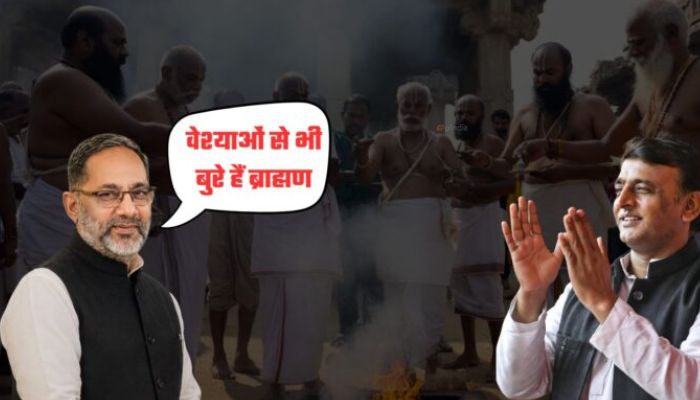
The story of Samajwadi Party leader Rajkumar Bhati begins on a stage in Delhi, wherein he peddled a hateful narrative against the Brahmin community under the guise of ‘socialism’ and ‘social justice’. Standing amidst a gathering of leftists and fundamentalists, Samajwadi Party leader Rajkumar Bhati compared Brahmins to prostitutes and described them as even worse.What followed was a vicious “giggle.” The laughter echoing from the stage and Bhati’s scornful smile testified that this wasn’t just a phrase, but a display of his deeply ingrained anti-Hindu mindset.
However, as Hindus were outraged and demanded police action, Rajkumar Bhati changed tone and began offering “unconditional apology” with folded hands. However, a video he himself shared exposes his forced apology, in which he is still smiling while reading the hateful lyrics, while his supporters, in the background, demand the installation of “posters” of this insult. Let’s understand this entire story, woven of hatred, cunning, and electoral fear, sequentially.
Book launch event became a platform for peddling anti-Brahmin hatred
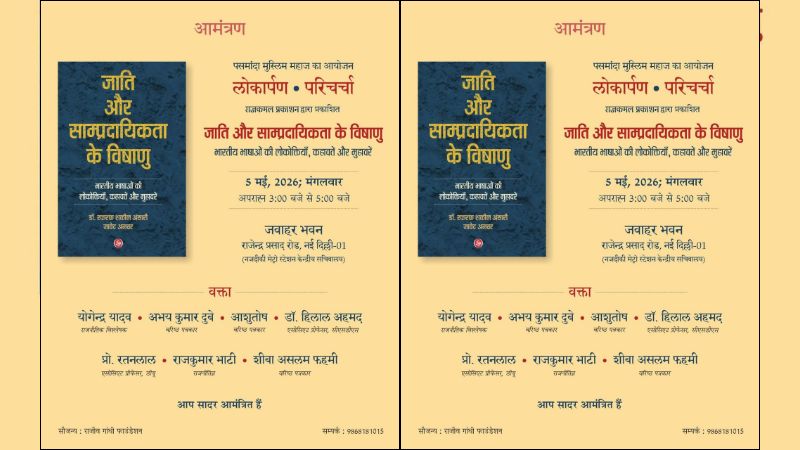
The story begins on 5th May 2026. A book launch event was underway at Jawahar Bhawan in Delhi, associated with the Sonia Gandhi family’s Rajiv Gandhi Foundation. The book was titled “The Virus of Caste and Communalism.” Ironically, the two Muslim authors, namely, Dr. Rafraf Shakeel Ansari and Javed Anwar, did not speak about social evils like halala or triple talaq within their religion, but rather spewed venom against the castes of Hindu society.
It was on this stage that Rajkumar Bhati began his speech. He recited an old couplet, “ब्राह्मण भला न वेश्या, इनमें भला न कोय!और कोई-कोई वेश्या तो भली, ब्राह्मण भला न कोय।” The direct meaning of this was that for him, Brahmins were worse than prostitutes.
The Left’s support and the vicious laughter
Bhati wasn’t alone on the stage. He was joined by Yogendra Yadav, Professor Ratan Lal, Ashutosh, and Sheeba Aslam Fahmi, all of whom have a history of making controversial statements about Hinduism. When Rajkumar Bhati was insulting the Brahmin community, a strange, hateful smile appeared on his face. He may never have laughed as much during his entire speech as he did while making these derogatory remarks about Brahmins.
Surprisingly, the “intellectual” community gathered there applauded this insult. Someone in the crowd even shouted, “Bhati ji, please put up a poster of this!” This proves that the people gathered there were not there for a discussion, but to humiliate a particular community.
The fake apology: When the elections and fear of jail haunt you
Soon after, Bhati’s video spewing vitriol against Brahmins went viral online, sparking outrage and an FIR was registered in Ghaziabad. The Samajwadi Party leader immediately backtracked. Bhati posted a 5-minute video, portraying himself as a helpless man, saying, “I’m being defamed by cutting a 7-second clip.” He even resorted to the phrase “Gurjar-Yadav” to defend himself, but the reality is that his entire target was Brahmins.
In the video, he is seen folding his hands, but his eyes show cunning, not remorse. The video, shared on Facebook, clearly shows Bhati having already written a book against Brahmins and then reading it from the paper and reciting proverbs to the crowd, bursting into laughter. In a way, Bhati Sahib had gone there not to release a book, but to entertain leftists.
Bhati also said that “some innocent people are misled by the BJP and start campaigning against them.” But the truth is that the 2027 assembly elections are nearing, and this “pretend apology” was staged to prevent the Brahmins’ anger from spoiling the vote count.
Rajkumar Bhati’s apology is as genuine as the Samajwadi Party’s ‘secularism’
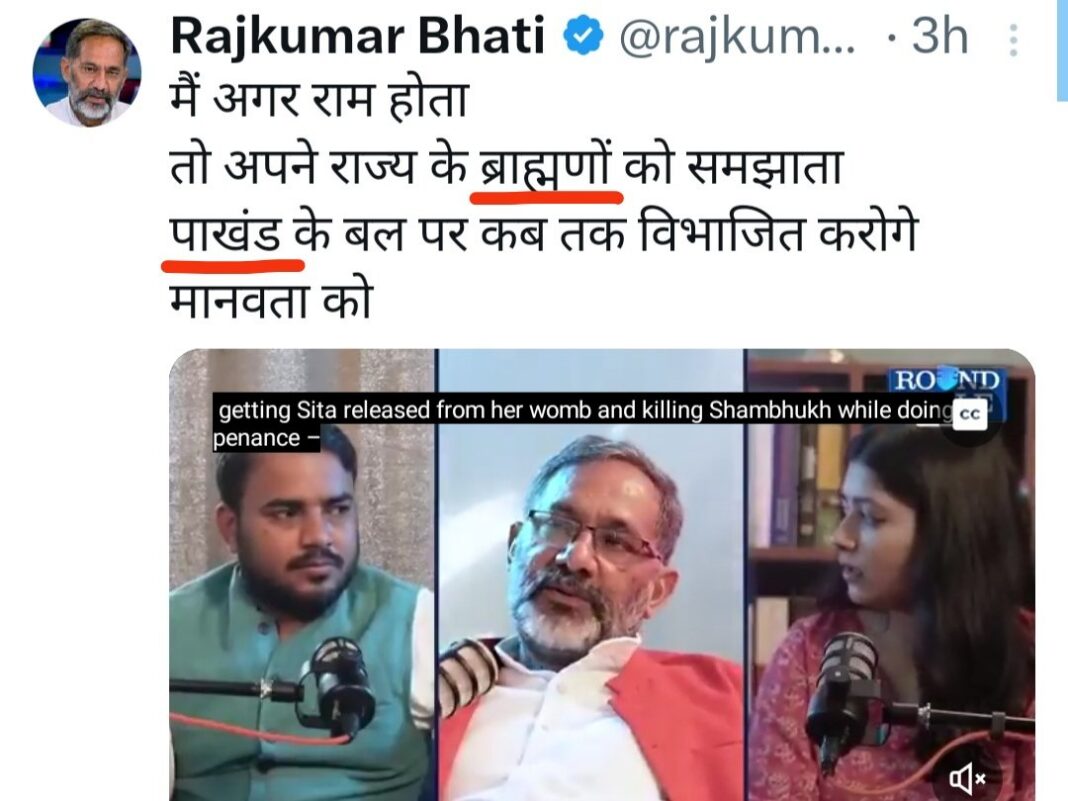
The anti-Brahmin commentary by SP leader Rajkumar Bhati at the Delhi event is not an isolated incident; rather, he has spewed venom against the Hindu religion and traditions many times before. He has not shied away from commenting on even Lord Ram. He once even said that if he were Ram, he would advise Brahmins to abandon their hypocrisy.
Rajkumar Bhati has also insulted Hindu scriptures in the past. He once called the Manusmriti “inferior” and considers the great work Ramcharitmanas a mere “ordinary poem” rather than a divine text.
Not only this, but his views on the existence of God are also quite strange. He says that he doesn’t feel the need to visit temples because he is currently conducting research on whether God exists. But surprisingly, while on the one hand he questions Hindu deities, on the other hand, he openly declares on TV that he considers no one greater than Muhammad.
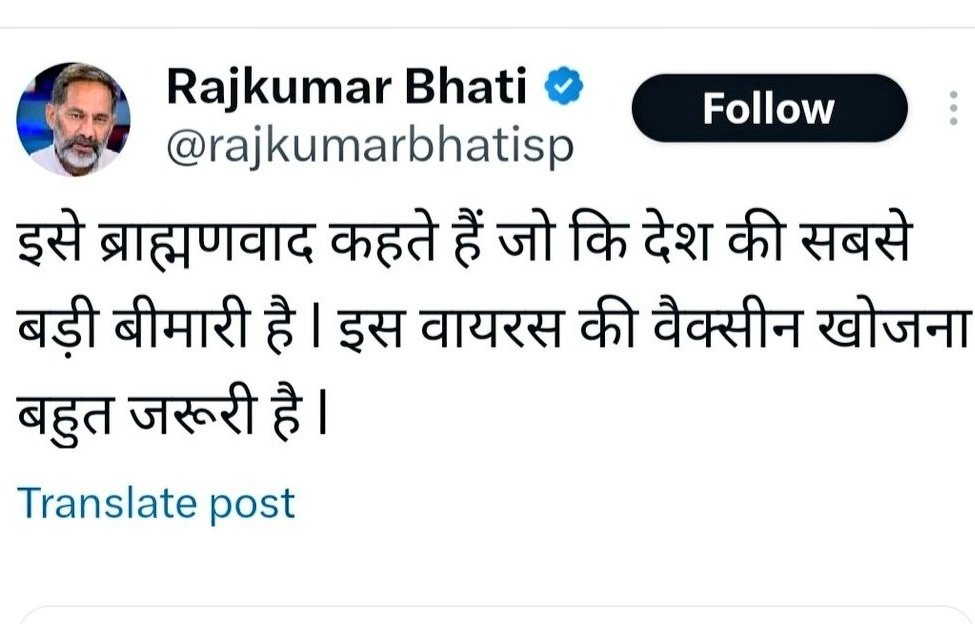
His comments clearly demonstrate his one-sided thinking and hatred towards Sanatan Dharma. Furthermore, in an earlier tweet, Rajkumar Bhati had referred to Brahminism as a “virus” and called for a vaccine.
The real Hindu-hating face versus the socialist ‘secular’ mask
Today, when SP leader Rajkumar Bhati apologises for his actions, it’s not from his heart, but rather from the fear of arrest. It is the fear of political loss that compels him to apologise. The body language in his Facebook video, the voices of his supporters behind him, and his laughter scream out loud the hatred he harbours for Hindus.
7th October 2023 marked the bloodiest day for Israel since its independence when Hamas-led terrorist outfits such as Palestinian Islamic Jihad, unleashed a gruesome onslaught on the country.
Over 1,200 people, mostly civilians comprising of women, elderly, disabled and children, were killed and about 251 were abducted into Gaza by the assailants who targeted homes, roads, shelters, communities, military bases, security installations and a music festival. The events were captured and transmitted to the world with the purpose of glorification.
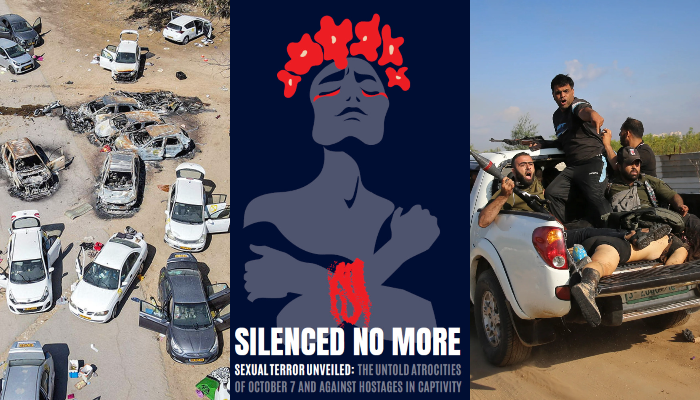
Israelis, irrespective of their age or gender, endured unprecedented sexual violence at the hands of the terrorists. The distressing testimonies have been regularly shared by the victims, witnesses and various accounts to the shock of the global community. Israeli non-profit organisation, “The Civil Commission” released a similar 300-page report, “Silenced No More,” featuring tagline “Sexual Terror Unveiled: The Untold Atrocities of October 7 and Against Hostages in Captivity” on 12th May (Tuesday).
The unending horrors of sexual violence, derogation and severe violations
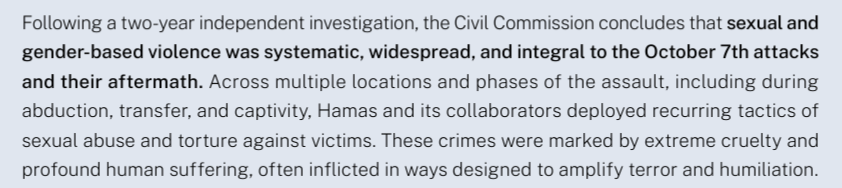
Sexual and gender-based violence was systemic, pervasive and crucial to the assault and its aftermath, based on the findings of a 2-year independent inquiry by the commission. Hamas and its allies repeatedly used sexual abuse and torture against victims in many locations and stages of the attack, including their kidnapping, transfer and incarceration. Excessive cruelty and severe human suffering were characteristics of these crimes, which were committed in ways intended to frighten and demean them.
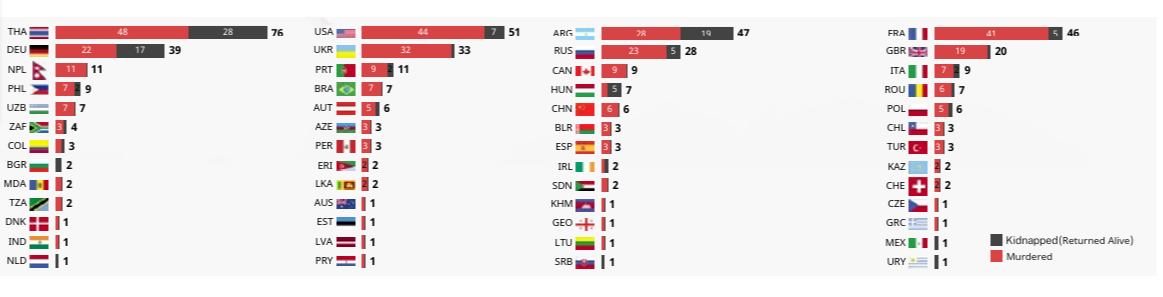
Original witness and survivor testimony, interviews, photos, videos, government papers and other primary materials from the attack sites had been employed for basis of the conclusion. “Data analysis conducted by the commission reveals that the victims represented 52 different nationalities, underscoring the international scope of the crimes and their impact,” the report read. Foreign or dual Israeli and foreign nationals were a substantial portion of the persons held in Gaza.
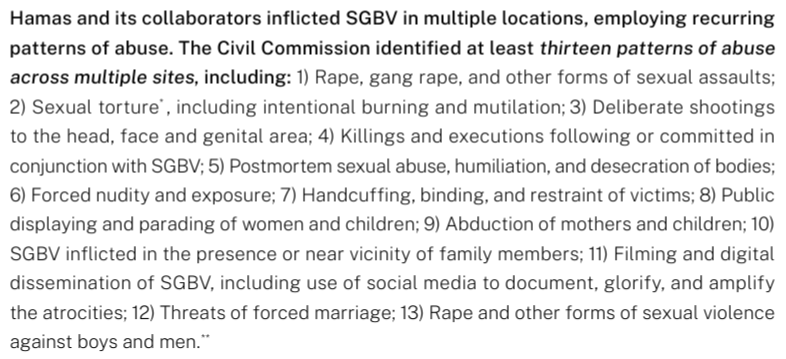
It highlighted, “Through systematic cross-referencing of this material and detailed analysis of the modus operandi of the perpetrators, the commission identified 13 recurring patterns of sexual and gender-based violence committed across multiple locations. The repetition of these patterns demonstrates that the crimes were not isolated acts of brutality but formed part of a broader operational method used during the attack and its aftermath.”
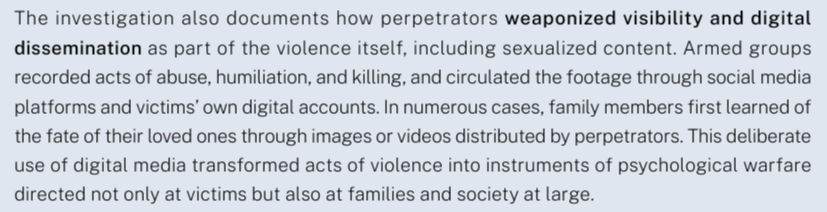
The probe also revealed that the terrorists used visibility and digital distribution, including sexualised content, as weapons in the attack. They misused social media and the personal online profiles of the victims to circulate footage of assault, humiliation and murder. Family members first found out about their loved one’s fate through pictures or videos that the attackers shared in multiple instances.
Terrorists sported GoPros and body-worn cameras or made sure that their acts were captured and publicised by others. “Across all sites, these videos documented armed groups and Palestinian civilians celebrating the attacks, appearing joyful and euphoric,” the report underscored. This intentional use of digital media converted violent crimes into psychological warfare instruments aimed not only at victims but also at families and society as a whole.
A calculated campaign of sexual terror aimed at punishing, degrading and dehumanising the victims persisted after they were dragged to the Gaza Strip. Women and men, including the very young and the senior citizens were exposed to perpetual sexual violence, threats of rape humiliation and psychological horror. Families were split up and basic medical treatment was withheld while the bodies and minds of these prisoners were manipulated into weapons for propaganda and coercion.
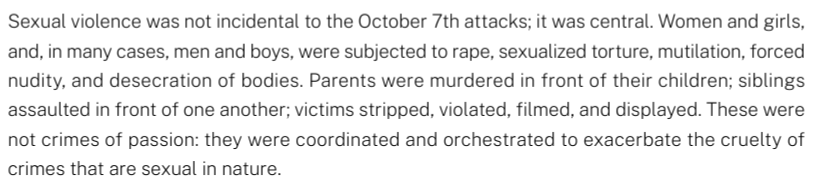
The report outlined that these acts were “central” to the attack. It conveyed, “Women and girls, and, in many cases, men and boys, were subjected to rape, sexualised torture, mutilation, forced nudity, and desecration of bodies. Parents were murdered in front of their children, siblings assaulted in front of one another, victims stripped, violated, filmed and displayed. These were not crimes of passion: they were coordinated and orchestrated to exacerbate the cruelty of crimes that are sexual in nature.”
Family members pushed into sexual acts, even the deceased not spared: A chronicle of continual dread faced by the victims
The report mentioned, “Hamas and its collaborators used sexual and gender-based violence (SGBV) deliberately and systematically as an inherent part of a wider strategy of the attack, primarily targeting women and hostages, while minors were also subjected to grave forms of such violence and abuse.” The people were put through these gut-wrenching ordeals at different places even in the presence of their families by the jihadis.
Their pain and suffering were maximised through sexual torture. “Victims endured brutal acts, including burning, mutilation, rape, restraining, forced insertion of objects into the genitalia, shootings to the faces and genital area, killings and abuses in front of family members and executions. Many victims were found handcuffed, bound or otherwise physically restrained. Extreme forms of SGBV continued against hostages in captivity for prolonged periods, inflicted on both women and men,” the investigation discovered.
Furthermore, individuals who witnessed these acts and those who survived sustained serious, long-lasting psychological and physical damage. The armed groups committed rape, gang rape, other sexual assaults, torture, including burning and mutilation, as well as purposeful shootings to the head, face and genital area. Executions and killings were either carried out in tandem with or after SGBV. There were postmortem sexual abuse, body degradation and humiliation.
“Forced nudity and exposure. Handcuffing, binding and restraint of victims. Public displaying and parading of women and children. Abduction of mothers and children. SGBV inflicted in the presence or near vicinity of family members. Filming and digital dissemination of SGBV, including use of social media to document, glorify and amplify the atrocities. Threats of forced marriage. Rape and other forms of sexual violence against boys and men,” the report stated.
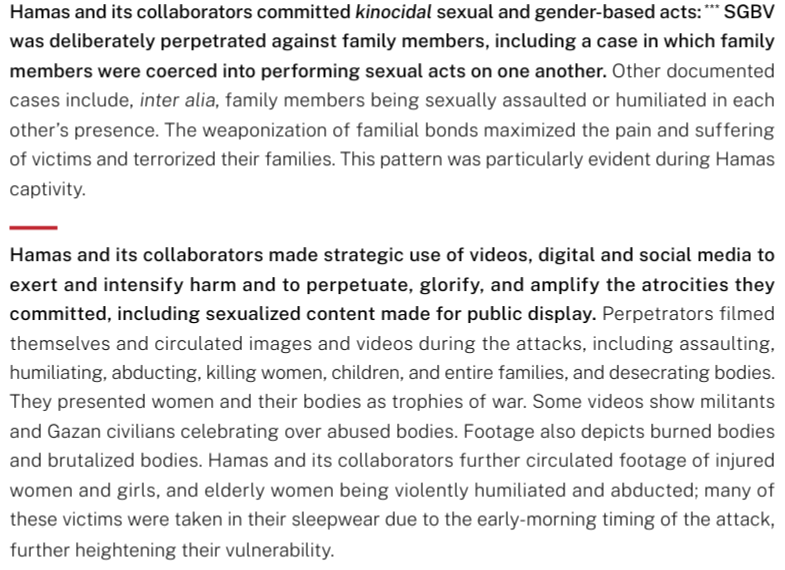
SGBV was wilfully perpetuated against blood relations, including a particular case where family members were subjugated to indulge in sexual acts with one another. The report emphasised, “Other documented cases include, inter alia, family members being sexually assaulted or humiliated in each other’s presence. The weaponisation of familial bonds maximised the pain and suffering of victims and terrorised their families. This pattern was particularly evident during Hamas captivity.”
The extremists recorded themselves on camera and uploaded visuals of themselves beating, shaming, abducting, slaughtering women, children and entire families alongside desecrating bodies. They displayed women and their corpses as war booty. Some clips showed terrorists and Gazan people rejoicing over desecrated remains.
Additionally, footage portrayed dead bodies that were brutalised and burnt. “Hamas and its collaborators further circulated footage of injured women and girls, and elderly women being violently humiliated and abducted. Many of these victims were taken in their sleepwear due to the early-morning timing of the attack, further heightening their vulnerability,” the report conveyed.
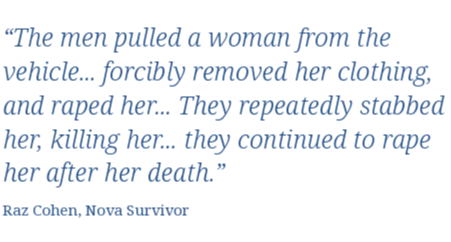
It added, “The digital abuse of hostages continued for many months after 7th October. Videos and images filmed by Hamas during captivity, show hostages being tormented, abused, taunted or humiliated on camera.” The report had a statement from a Nova music festival survivor who expressed, “The men pulled a woman from the vehicle, forcibly removed her clothing and raped her. They repeatedly stabbed her, killing her. They continued to rape her after her death,” illustrating the extent of the depravity and violence.
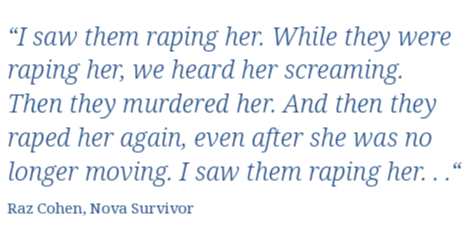
“I saw them raping her. While they were raping her, we heard her screaming. Then they murdered her and then they raped her again, even after she was no longer moving. I saw them raping her,” revealed Raz Cohen.
The savage strike that shook the Jewish state: A deed motivated by religious animosity
Two pregnant women, 28-year-old Nitzan Rahum and 23-year-old S. Abu-Rashed were among the initial targets. The latter managed to survive while her baby perished as did Rahum and her unborn child. Testimonies and witness descriptions of sexual assaults promptly surfaced following the assault.
“From the earliest days, reports from survivors, first responders, medical experts, and morgue staff indicated that the attacks had a marked gendered dimension. For many victims, these crimes ended in death. In numerous cases, victims were killed during or after the assaults, and their bodies were recovered mutilated, burned and desecrated, in ways consistent with patterns of sexualised violence of exceptional cruelty,” the report pointed out.
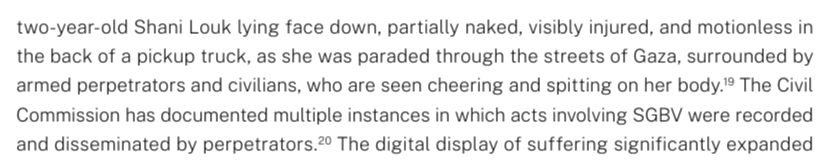
It recounted the occurrence regrading “22-year-old Shani Louk lying face down, partially naked, visibly injured, and motionless in the back of a pickup truck, as she was paraded through the streets of Gaza, surrounded by armed perpetrators and civilians, who are seen cheering and spitting on her body.”
In the months that succeeded the attack, Hamas dropped countless videos exhibiting innocent detainees pleading for their life or showcasing corpses. They made direct contact with family members of the victims in certain situations, aggravating their anguish. These actions extended and amplified the effects of the terror hit, adding to the pain and trauma.
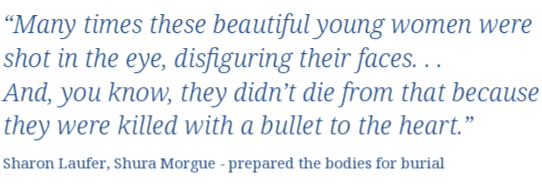
“Many times, these beautiful young women were shot in the eye, disfiguring their faces. They didn’t die from that because they were killed with a bullet to the heart.” voiced Sharon Laufer who prepared the bodies for the last rites.
The report cited assessments drawn by the United Nations, underlining the gravity of the crimes, including sexual abuse and violence executed by the terrorists. It disclosed that Hamas was added to the UN Secretary-General’s blacklist in August 2025, which identifies parties credibly suspected of committing or being responsible for systematic rape and other types of sexual violence during times of armed conflict.
The report noted, “Being placed on this list signifies that the UN has also verified substantial evidence of such violations perpetrated by Hamas during the 7th of October attacks and against hostages in captivity.”
The commission examined an assortment of tactical manuals, notebooks, checklists, maps, phrasebooks, and operational resources that guided abductors on how to control victims, penetrate civilian areas and issue directives in Hebrew. These materials include overt calls for violence and hatred that is structured by religion.
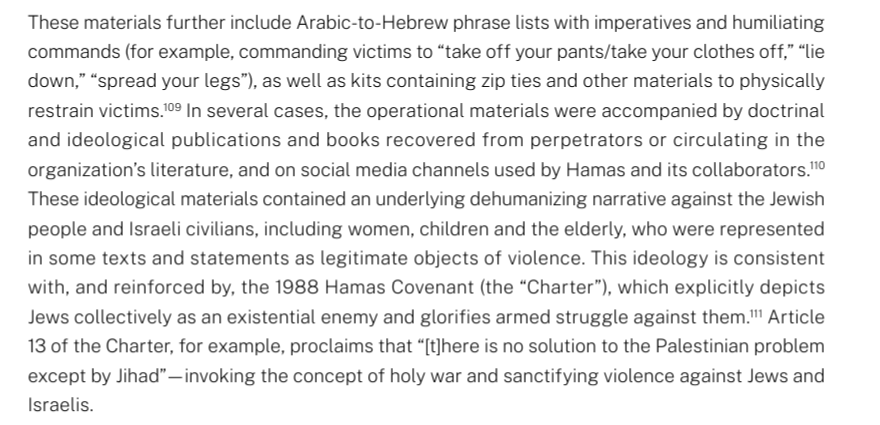
“These materials further include Arabic-to-Hebrew phrase lists with imperatives and humiliating commands (for example, commanding victims to take off your pants or take your clothes off, lie down, spread your legs) as well as kits containing zip ties and other materials to physically restrain victims,” the report highlighted.
“These ideological materials contained an underlying dehumanising narrative against the Jewish people and Israeli civilians, including women, children and the elderly, who were represented in some texts and statements as legitimate objects of violence,” it added in compliance with the charter of Hamas, which endorses violence against the Jewish community.
The massacre and vile acts were not only filmed but were also exalted with religious expressions and fervor. “Civilian property in the kibbutzim was also defaced with religious graffiti glorifying the attacks. For example, the Civil Commission documented several homes in Be’eri bearing inscriptions in Arabic (such as this is one of God’s days and God is great),” the report stated.
The victims and witnesses narrate the tale of Islamist terror
A witness who was at Nova music festival sought cover in the caravan together with 7 others during the attack. She reported hearing 3 acts of rapes emanating from 3 distinct places close to her hiding place. She was an eyewitness to the sight, including the mutilated condition and position of the bodies seen in the wake of the incident.
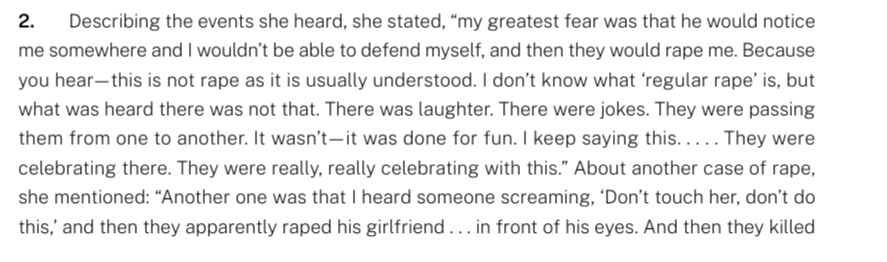
“I don’t know what regular rape is, but what was heard there was not that. There was laughter. There were jokes. They were passing them from one to another. It was done for fun. They were celebrating. They were really, really celebrating with this,” she expressed. They passed around the screaming victims and then shot them dead.
“Another one was that I heard someone screaming, ‘Don’t touch her, don’t do this,’ and then they apparently raped his girlfriend in front of his eyes,” she added after which the couple met the same fate.
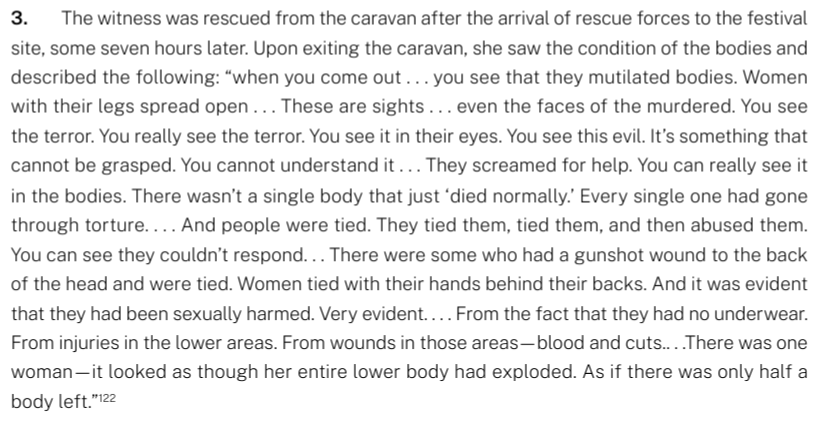
“There wasn’t a single body that just died normally. Every single one had gone through torture. People were tied and abused. You can see they couldn’t respond. There were some who had a gunshot wound to the back of the head and were tied. Women tied with their hands behind their backs. And it was evident that they had been sexually harmed. Very evident. From the fact that they had no underwear. From injuries in the lower areas. From wounds in those areas, blood and cuts. There was one woman, it looked as though her entire lower body had exploded,” she reflected on the ghastly scene she encountered after her rescue. The same was confirmed by another witness who was inside the caravan with her.
A male shared a similar experience. Furthermore, he was also gang raped and tortured at the venue by at least 5 radicals. His testimony had been proven by a polygraph test. “We went through abuse of every kind. They spat in our faces, humiliated us, said things about Jews. At one point, I was alone with my head on the ground. At first, I resisted, until I was hit in the head so hard that I felt I lost myself, and the more I resisted, the harder they beat me. They injured my genitalia. I was beaten with a belt. They also laughed at me. One of them took out a knife and started laughing about different things. I told him I was sorry and begged him to leave me alone. I don’t know what they took before they did this, they were like animals,” he remembered.
The pressed a gun to his head and issued death threats along with warnings of genital amputation. The inhumanity continued until he lost consciousness and was unable to recollect what had happened to him. He also heard crying women being gang raped in the background.
An individual observed a gang rape at the site and stated, “Someone violated her and shot her in the head while still inside her.” The witness asserted to have seen another attacker carrying the nude body of a second female over his shoulder. A person similarly saw “a beautiful woman with the face of an angel and 8 or 10 fighters beating and raping her.” He highlighted that she pleaded, “Stop it, already, I am going to die anyway from what you are doing, just kill me,” but they just laugh and eventually shot her in the head.
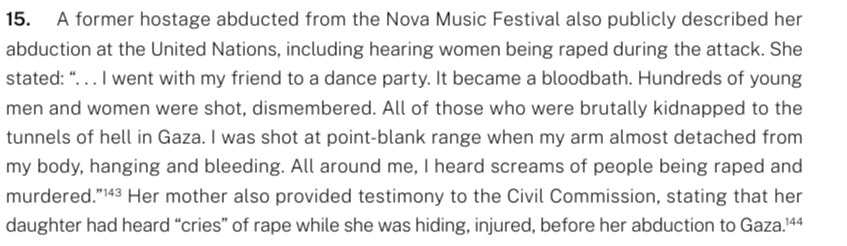
The eyewitnesses reported that women were continuously begging and screaming for help as they were brutally raped, injured and subsequently murdered, including beheaded, by the terrorists. A survivor who was held captive revealed, “All of those who were brutally kidnapped to the tunnels of hell in Gaza. I was shot at point-blank range when my arm almost detached from my body, hanging and bleeding. All around me, I heard screams of people being raped and murdered.”
“I remember seeing the Jeep, and there was the body of a woman wearing a black dress. She had a bullet in her cheek and she was frozen in that position. Her dress was pulled up, and she wasn’t wearing underwear, not because it burned, because there was no trace. They removed her underwear. Her legs were spread. Her genitals were exposed. Her husband’s body was on the other side of the car, apparently it was her husband. I didn’t know that at the time. There was another body that was just ash. It didn’t even look like a human being anymore,” expressed another witness who was trying to save a friend.
“They dragged people out of cars. They abused the bodies at the most extreme levels. They cut people with construction hoes. Tools are in their bodies. We drive maybe another 50 meters. There are trees on both sides. Everything is burned. Bodies are thrown along the side of the road. A lot of equipment, so much equipment,” pointed out another man.
The report noted, “Witnesses who were part of the Nova Music Festival staff similarly publicly reported encountering female victims found naked or partially naked, in some cases without underwear, including victims positioned with their legs spread and showing injuries or mutilation to the groin area.” Corpses were located severed in half, viciously dismembered, including intimate parts and in specific settings, stacked together and charred.
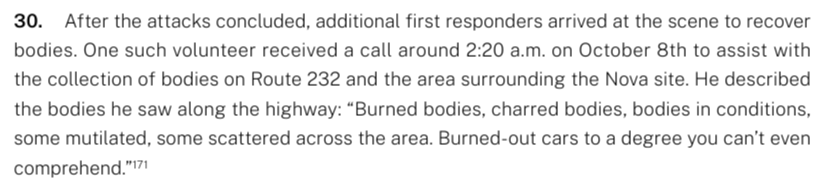
“Burned bodies, charred bodies, bodies in conditions, some mutilated, some scattered across the area. Burned-out cars to a degree you can’t even comprehend,” mentioned a first responder. The report outlined, “One volunteer described encountering cases involving the recovery of naked civilian bodies, including a female victim whose body showed signs of extreme physical destruction and a male victim found naked with indications suggesting prolonged suffering and possible abuse prior to death.”
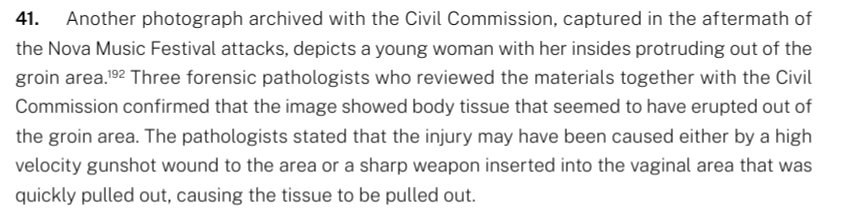
The witnesses shared how the terrorists ruthlessly persecuted, harmed and tortured their targets. A number of visuals were evaluated and examined by the commission and professionals, which depicted the brutality of that day, where weapons were likely inserted into the groin areas of the victims prior to executing them.
The report stressed that “the dynamics of sexual violence at the Nova site are evident throughout the testimonies and visual materials reviewed: women were targeted in ways that were both gender-specific and exceptionally brutal, including extreme sexual violence, mutilation and disfigurement, indicating that they were attacked because they were women and that SGBV was an integral component of the attacks. The documentation further indicates that male victims were also subjected to sexual violence and mutilation, including through acts of undressing and targeting of the genitalia that carried clear sexualized and emasculating dimensions, apparently to humiliate and punish victims.”
The extraordinary violence grips Israel
Multiple Palestinian civilians took part in the attack on Kibbutzims alongside armed terrorists, adding to the scale of carnage and devastation, according to testimonies, visual evidence and official data that the commission gathered and scrutinised.
A volunteer stated, “When we went inside, there was a hospital bed and a body. I understood that it was a woman. In the room were knives, scalpels, a hammer, an axe, screwdrivers, tools, tools from the household. All of those were embedded in the body. The body was completely mutilated,” after visiting Be’eri on 9th October.
“In this kibbutz, similarly to other locations, female victims were found fully or partially naked from the waist down with their hands tied behind their backs and shot. The mission team collected information from first responders who reported discovering bodies of women naked with their hands tied behind their backs and gunshot wounds to the head,” stated Special Representative’s report in relation to Kfar Aza.
It added, “While verification of sexual violence against these victims was not possible at this point, available circumstantial information, notably the recurring pattern of female victims found undressed, bound, and shot indicates that sexual violence, including potential sexualized torture, or cruel, inhuman and degrading treatment, may have occurred.” People were also either fatally shot or abducted in the presence of their defenceless families.
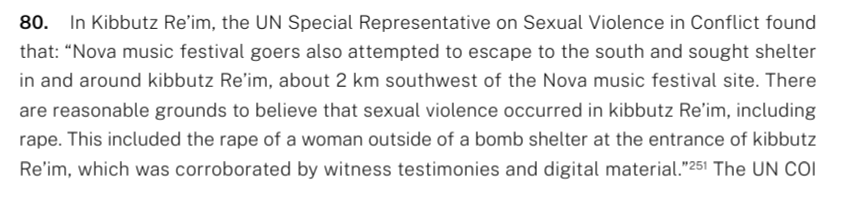
UN Special Representative on Sexual Violence in Conflict observed, “There are reasonable grounds to believe that sexual violence occurred in kibbutz Re’im, including rape. This included the rape of a woman outside of a bomb shelter at the entrance of kibbutz Re’im, which was corroborated by witness testimonies and digital material. The UN COI (Independent International Commission of Inquiry) also documented cases indicative of sexual violence perpetrated against women and men in several kibbutzim.”
Moreover, videos that Hamas released after its assault on Kibbutz Nahal Oz represented the abuse of a young male international student and his partially naked body.
Grim scenes continue to unfold
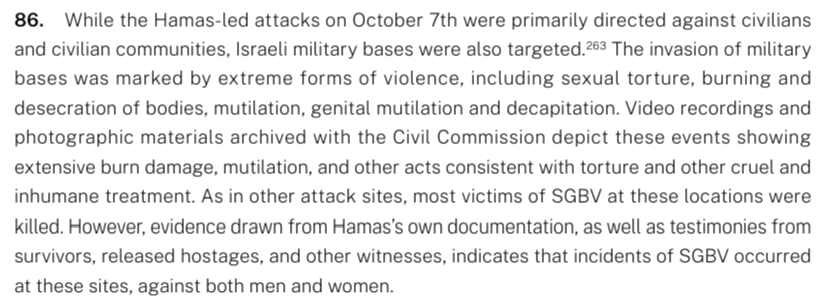
Israeli military installations were also targeted even although civilians and their communities were the main targets. “The invasion of military bases was marked by extreme forms of violence, including sexual torture, burning and desecration of bodies, mutilation, genital mutilation and decapitation,” the report mentioned. It was also confirmed through video recordings and other materials by the commission.
“As in other attack sites, most victims of SGBV at these locations were killed. However, evidence drawn from Hamas’s own documentation, as well as testimonies from survivors, released hostages, and other witnesses, indicates that incidents of SGBV occurred at these sites, against both men and women,” it conveyed.
According to testimonies, witnesses detected horrifying scenes, such as female victims with their faces deliberately distorted and maimed, bodies covered in blood and women shot in their genital areas. “Testimonies further described the condition of the bodies of female soldiers when they were received at morgues, specifically reiterating these observations and additionally noting that their clothing and pajamas were torn to shreds, and that the bodies bore injuries indicative of extreme forms of violence inflicted both prior to death and post-mortem,” the report noted.
An officer who was hiding outside the building reported to have heard someone being raped. She later spotted a woman soldier’s nude body and covered her after moving outside. She even asserted to have seen a man’s body with his penis mutilated.
“Another video reported by the UN Commission of Inquiry is described showing six perpetrators standing beside a wall. Four bodies are shown on the floor of the shelter. One female body is partially blurred and appears to have been covered with a piece of white sheet. Despite the blurring, the lower part of the body appears to be undressed. In another video, the perpetrators scream ‘God is great’ while standing over the same woman,” the report stated.
It noted that an essential official point of reference for comprehending the extent and character of the violence at the Nahal Oz military camp had been provided by the conclusions of the United Nations Special Representative of the Secretary-General on Sexual Violence in Conflict.
“Her forensic review underscores both the scale of the killings and the extreme brutality inflicted upon the victims, including destructive burn damage and injuries to intimate body parts while also highlighting limitations in identifying patterns of sexual mutilation due to the condition of many of the bodies,” the report added.
On the other hand, witnesses disclosed, “Female victims arrived dressed in blood-soaked, shredded clothing or were partially naked, wearing only underwear that was often heavily stained with blood,” and further conveyed that “female soldiers who were shot in the crotch, intimate parts, vagina or shot in a breast. This seemed to be systematic genital mutilation of a group of victims.”
A witness admitted having encountered bodies of women personnel with evidence of sexual violence, including many with groin cuts and “described seeing bodies showing indications of sexual abuse, including bone fractures, inserted items, as well as bodies with amputated genitals.”
It was mentioned that “first responders also reported bodies of women found undressed and isolated in separate rooms, showing signs of physical abuse and sexual violence.” UN Commission of Inquiry also documented similar accounts revealed by witnesses. A person unveiled, “The women were brutalised and it was clear what had happened. They were isolated, stripped, and in positions of surrender when we found them.”
Pathologists noted that accelerants could have been used to put the genitalia on fire as many bodies, majority females, had “precise burnings” to their private area.
The extreme sexual abuse experienced by hostages, including minors, after their abduction
According to the commission’s examination into the treatment of hostages detained in Gaza, SGBV was committed against them in a number of different locations. Testimonies, medical assessments and open-source research show that these violations occurred for the whole of the captivity, from the first days after the kidnappings until they were freed or killed.
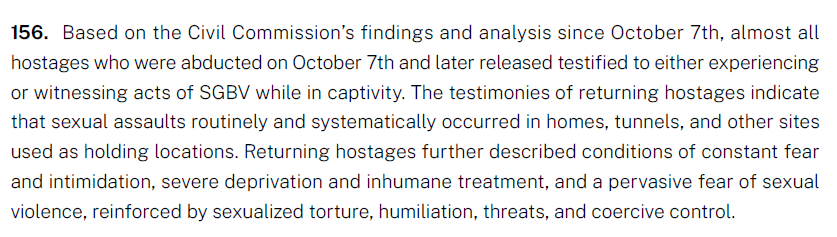
Nearly all of the hostages who were kidnapped on 7th October and ultimately released attested to having either witnessed or experienced SGBV during their captivity. Statements from captives revealed that sexual assaults took place in homes, tunnels, and other facilities that were utilised as holding places on a regular and organised basis.
A widespread fear of sexual violence, reinforced by sexualised torture, humiliation, threats and coercive control, as well as extreme deprivation and cruel treatment were also mentioned by them.
A victim stated, “They brought me into a room. At the entrance to the room there were two men standing there with guns. One man simply starts cutting off all my clothes. One man takes off my shoes, another takes off my earrings, and another removes my jewellery from my body. Around 15 people who are touching me, like, all at once, until it gets to the point where they cut off all my clothes. And then I was lying there naked, completely naked. It felt like an out-of-body experience, like I was seeing everything from above.”
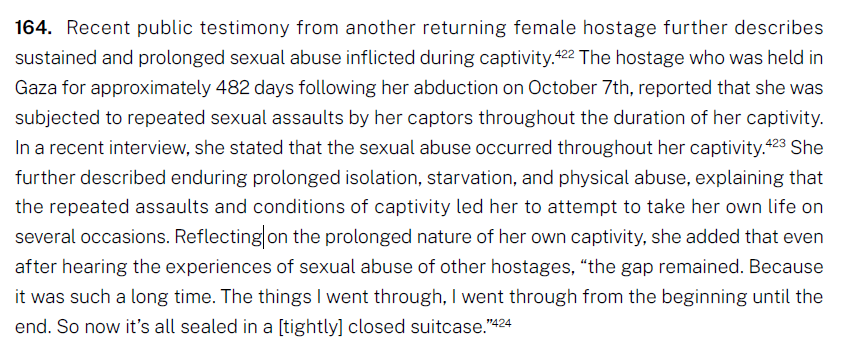
She was repeatedly sexually violated by her captors, told that she was presumed dead in Israel and would spend the rest of her life as a sex slave. Another victim who stayed 482 days in Gaza narrated similar traumatic experience. The report mentioned, “She further described enduring prolonged isolation, starvation, and physical abuse, explaining that the repeated assaults and conditions of captivity led her to attempt to take her own life on several occasions.”
“Male hostages were also subjected to sexual violence, sexual torture, and sexual humiliation in captivity,” the report mentioned. “Two returning hostages, minors, who were family members, reported that they were forced to perform sexual acts on one another. They were reportedly compelled by their captors to take off their clothes, and their captors then touched their private parts and whipped their genitalia,” it highlighted.
The report contained the chilling narratives of sexual violence and abuse perpetrated against the hostages by the terrorists. They were beaten to the extent of losing consciousness and these horrific acts were documented. It disclosed, “Several returning hostages explained that throughout their captivity, they and other captives were forbidden from crying or making sounds, and in some cases were instructed to smile and appear happy, even in the immediate aftermath of sexual abuse.”
Conclusion
The report is based on more than 10,000 photos and video clips of the attack along with greater than 430 official and informal interviews, testimonials, and meetings with survivors, witnesses, returned hostages, experts and family members. Both American tech executive and philanthropist Sheryl Sandberg, who has also raised awareness of sexual abuse by Hamas predators and former US secretary of state Hillary Clinton endorsed the findings.
Chair of the commission, Cochav Elkayam-Levy pointed to the motivation behind the report and conveyed, “They filmed the victims to make sure that the world knew what was happening. We felt deeply obligated to expose everything. This was sexual terror in the most exceptional cruelty, and I think one important aspect of it was the digital documentation, the fact that the crimes were glorified,” while talking to The Jerusalem Post.
For a farmer, a crop is not just a source of income. It carries the hopes of an entire family. A good harvest means old debts may finally get cleared, household expenses can be managed, and some savings can be kept aside for children’s future. But when that same farmer reaches the market after months of hard work and discovers that his produce is worth almost nothing, the emotional and financial shock can be devastating.
A recent case from Maharashtra’s Chhatrapati Sambhajinagar district has once again triggered debate around the struggles of Indian farmers, the role of agricultural markets and the controversy surrounding the now-repealed farm laws brought by the Narendra Modi government in 2020.
The farmer earns less than his transportation cost
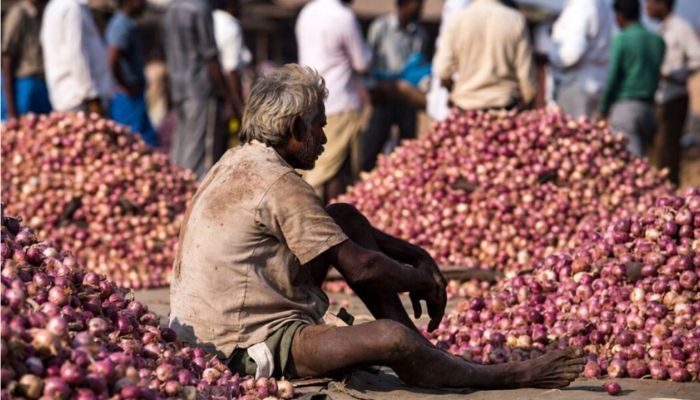
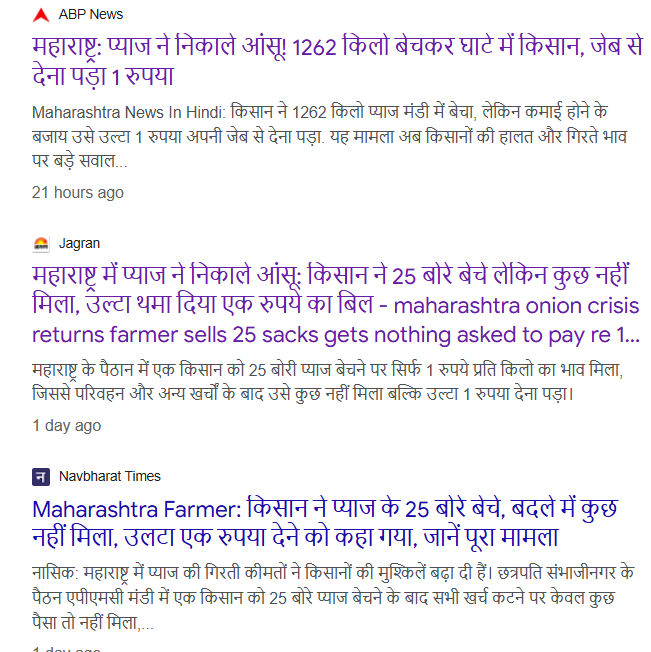
According to reports circulating in the media, a farmer named Prakash Galadhar from Varudi village in Paithan taluka spent nearly three months cultivating onions. After harvesting his crop, he packed 1,262 kilograms of onions into 25 sacks and transported them to the mandi, hoping to earn enough to recover his investment and support his family.
महाराष्ट्र में किसानों को प्याज का जो भाव मिल रहा, उससे उनकी लागत तक नहीं निकल पा रही है। किसान परेशान हैं। pic.twitter.com/Uy5dJaEZmR
However, the price he received in the market left him shattered.
Traders reportedly offered him only ₹100 per quintal for his onions, which effectively came down to around ₹1 per kilogram. After selling the entire stock, the farmer received just ₹1,262.
The situation became even more painful when the total transportation and mandi-related expenses were calculated. Reports stated that the farmer spent ₹1,263 on loading, weighing, labour and transport costs while bringing the onions to the market. In simple terms, he spent one rupee more transporting the crop than what he earned from selling it.
महाराष्ट्र के छत्रपति संभाजीनगर जिले में एक किसान ने 1262 किलो प्याज मंडी में बेचा. लेकिन मंडी में प्याज का भाव मिला सिर्फ 100 रुपए प्रति क्विंटल, यानि एक किलो प्याज की कीमत लगी महज 1 रुपया. 1262 किलो प्याज बेचने पर किसान को कुल 1262 रुपए मिले. किसान से हमाली के 125 रुपए, तुलाई… pic.twitter.com/R6wuQdna5F
This meant that after three months of hard work, the farmer not only failed to make a profit but actually suffered a financial loss.
Media coverage and the missing debate
Stories like these often trigger emotional reactions across the country. Images of distressed farmers and reports of crops being sold at extremely low prices usually lead to public anger directed at governments and administrative systems.
Many media reports focus heavily on the emotional suffering of farmers, but they often leave out the larger policy debate surrounding agricultural reforms and market access.
The recent onion case has once again revived discussion over whether Indian farmers remain trapped in a system where they are still heavily dependent on mandis and middlemen to sell their produce. The farm reforms introduced by the Modi government six years ago, through the now-repealed laws, were designed specifically to reduce this dependence and give farmers more freedom in selling their crops.
What were the farm laws about?
In 2020, the central government introduced three farm laws that it described as major agricultural reforms. According to the government, the purpose of these laws was to allow farmers to sell their produce outside traditional mandi systems and directly connect with private buyers, companies and larger markets across India.
The government argued that these reforms would create more competition, give farmers better prices and reduce the control of middlemen in agricultural trade.
आज भारत के किसानों के पास अपनी फसल मंडियों के साथ ही बाहर भी बेचने का विकल्प है।
आज भारत मे मंडियों का आधुनिकीकरण तो हो ही रहा है, किसानों को डिजिटल प्लेटफार्म पर फसल बेचने और खरीदने का भी विकल्प दिया है।
Prime Minister Narendra Modi repeatedly defended the reforms during speeches, interviews and episodes of Mann Ki Baat. He stated that the laws would open new markets for farmers, attract investment into agriculture and improve storage and supply chain infrastructure, such as cold storage facilities.
The government also claimed that farmers would eventually be able to use digital platforms and direct agreements to sell produce more profitably instead of depending only on local mandis.
Massive protests and political opposition
Despite the government’s claims, the farm laws triggered massive protests, especially in Punjab, Haryana and western Uttar Pradesh. Several farmer groups feared that the reforms would weaken the mandi system and eventually remove the Minimum Support Price (MSP) framework, even though the government repeatedly denied such intentions.
The protests continued for months, with thousands of farmers camping at Delhi’s borders. Roads were blocked, and large demonstrations took place across several states. Opposition parties strongly backed the protests and accused the government of bringing “anti-farmer” laws.
During that period, political tensions rose sharply. Initially, many farmer organisations supported the law, but figures like Rakesh Tikait and opportunistic politicians resorted to misinformation. Gradually, reports emerged that if this continued, it could compromise national security.
The government maintained that the reforms were meant to modernise Indian agriculture and give farmers greater flexibility. However, amid growing tensions and concerns over public order, the Modi government eventually decided to repeal the laws in 2021.
While announcing the repeal, Prime Minister Modi said that the government had failed to convince a section of farmers about the benefits of the reforms.
The debate returns amid farmer distress
Now, incidents like the Maharashtra onion case are bringing the debate back into public discussion.
If farmers had more freedom to directly access buyers or larger markets, many of them would not be forced to sell crops at distress prices inside local mandis. Farmers like Prakash Galadhar might have had alternative selling options if the reforms had remained in place.
Maharashtra | Onion farmers at Nashik's Lasalgaon APMC today stopped auctions due to low wholesale price of onions. Maharashtra State Onion Grower's Association also staged a protest against the govt pic.twitter.com/09xL3ZrnVU
Still, the case has once again highlighted the harsh reality faced by many farmers across India. Despite months of labour, uncertainty over the weather and rising cultivation costs, many farmers continue to struggle to get fair prices for their produce.
The emotional impact of such losses is often severe. In several parts of the country, financial distress among farmers has repeatedly led to mental stress, debt and in extreme cases even suicides.
It’s also important to remember that the media, which is highlighting the farmers’ suffering with headlines today, would not have faced this situation if it had been focused on farmers’ interests at the time. Unfortunately, they still don’t dare to admit that the confusion spread about the agricultural laws is a major reason for the current situation.
(This article is a translation of the original article published at OpIndia Hindi.)
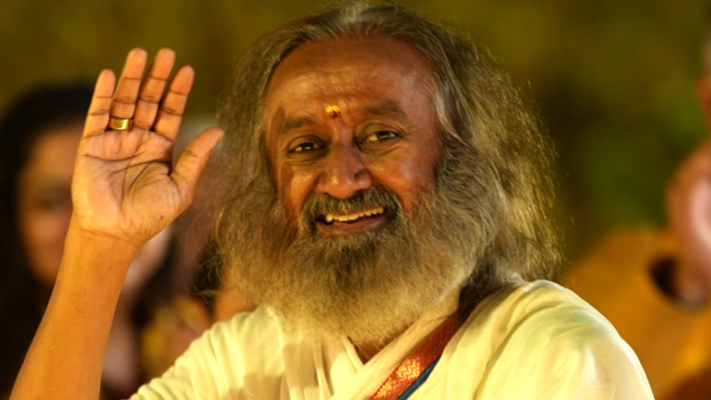
The Art of Living Foundation, established by Hindu spiritual leader Sri Sri Ravi Shankar, celebrated its 45th anniversary on May 10, 2026, with a grand celebration at its International Centre in Bengaluru. The event was attended by Prime Minister Modi, who inaugurated a Dhyan Mandir (meditation temple) and underscored the role of spirituality, service, and a sense of social responsibility among the country’s youth in building a developed India.
The Art of Living Foundation has been offering spiritual guidance as well as several programmes, including various yoga and meditation programs, rehabilitation and trauma healing programs to thousands of people in 182 countries. Apart from promoting physical, mental and spiritual well-being, the foundation has been actively involved in several humanitarian and reconciliation initiatives across the world, including Latin America, the Balkans, Iraq, and South Asia.
The founder and spiritual leader of the Art of Living Foundation, Sri Sri Ravi Shankar, has emerged as a global peacemaker by resolving several long-standing global conflicts through dialogue, meditation, and trauma healing. His reconciliation and peace efforts brought him many accolades, such as the 2025 World Leader for Peace and Security Award conferred by the Boston Global Forum (BGF) and the AI World Society (AIWS).
Sri Sri Ravi Shankar’s peace intervention into over 5 decade-old conlfict in Colombia
One of the most remarkable and successful interventions of Sri Sri Ravi Shankar, who is affectionately referred to as ‘Gurudev’ by his followers, came in 2015 in the Colombian civil war, which had been going on for over 5 decades. The Colombian civil war, which roughly began in 1964, was an armed conflict between the government and several rebel groups. There came a time in 2015, when the negotiations between the government and a major Marxist–Leninist guerrilla group, Revolutionary Armed Forces of Colombia—People’s Army (FARC–EP) reached a breaking point after the rebel group killed a bunch of young, unarmed soldiers. The incident led to the then-Colombian President, Juan Manuel Santos, freezing the negotiations.
That’s when Sri Sri Ravi Shankar visited Colombia and met the Colombian President, and discussed the ongoing civil war. Subsequently, President Santos invited Sri Sri Ravi Shankar to Havana, Cuba, where the government and the FARC representatives had gathered for negotiations. He engaged with the FARC representatives directly and listened to their concerns. He encouraged the rebel group to renounce the way of violence and embrace non-violence. Sri Sri Ravi Shankar’s compassion and empathy moved the rebel group, prompting the FARC leadership to announce that the group would adopt the principles of non-violence.
Sri Sri Ravi Shankar’s valuable and timely intervention saved the peace negotiations, which were on the brink of collapsing. His presence in the negotiations produced an outcome which numerous rounds of formal negotiations and international pressure failed to yield. After the intervention, the peace process in Colombia gained momentum and eventually resulted in the signing of a historic peace accord in 2016. President Santos invited Sri Sri Ravi Shankar to the signing ceremony to highlight the pivotal role he played in the peace process. A year later, following its disarmament, the FARC transformed into a political party.
The trauma healing of the victims of the Kosovo conflict
The Kosovo conflict, which went on between 1998 and 1999, was a war between ethnic Albanian separatists (Kosovo Liberation Army – KLA) and the Federal Republic of Yugoslavia (Serbia and Montenegro) over control of Kosovo, a small country located in the Balkans region of Southeast Europe. Sri Sri Ravi Shankar offered post-war healing in the region through his foundation’s trauma relief programs for war veterans, women, children, and refugees.
The trauma relief programs focused on youth empowerment, inter-community dialogue, and trauma healing after a violent conflict that claimed over 13,000 lives and displaced several thousand. Kosovo’s Ministry of Health later recommended that mental health workers in the country receive training in the Art of Living Foundation’s Breath Water Sound workshop, a program specifically designed for trauma relief.
In Kosovo, Sri Sri Ravi Shankar was not directly involved in negotiations, but his foundation’s humanitarian outreach and community programs made a crucial contribution in healing and rebuilding trust in a society torn by violence.
The healing of the Yazidi women victims of ISIS atrocities
In addition to bringing about peace and healing in war-torn regions, Sri Sri Ravi Shankar’s humanitarian outreach also offered a healing touch to a group of Yazidi women, who endured unspeakable abuse and atrocities in the captivity of the terrorist organisation ISIS. The Art of Living Foundation commenced its relief work in Iraq in 2003 by offering trauma relief and meditation programs to locals affected by the violence. The organisation has reached out to thousands of people in Iraq through their trauma relief and meditation programs.
In May 2007, Sri Sri Ravi Shankar was invited by the then-Iraqi Prime Minister Nouri al-Maliki. This was the first time that a Hindu spiritual leader was officially invited by the Iraqi government. He signed a Memorandum of Understanding (MoU) with the Youth Ministry, under which the Art of Living offered special leadership programs for Iraqi youth. The foundation provided vocational training to thousands of Iraqi women, contributing to their empowerment and financial independence. The spiritual guru also made peace efforts in Iraq in 2008 by holding meetings with Shia, Sunni, and Kurdish leaders at a time when the region was plagued by violence.
In November 2014, Sri Sri Ravi Shankar travelled to Erbil, Iraq, to host a conference in conjunction with the International Association for Human Values (IAHV), a sister organisation of the Art of Living founded in 1997, and the Kurdistan Regional Government on “Protecting Women & Bringing Peace and Stability.” Volunteers of the IAHV organised medical camps and meditation classes in Iraq for the victims of Islamic terrorism.
Later in 2018, a group of Yazidi women came to India to attend trauma-relief and healing sessions at the Art of Living International Centre in Bengaluru.
Other significant contributions of the Art of Living Foundation
In addition to it recoliatory and humanitarian activities, the Art of Living Foundation has also been leading initiatives for environmental conservation. In 2013, the organisation started a water conservation initiative at the pan-India level, impacting over 34.5 million people across 19,400 villages. The organisation constructed over 92,000 groundwater recharge structures, removing 270 lakh cubic metres of silt, and restoring 59,000 square kilometres of land while conserving approximately 174 billion litres of water. The initiative was fruitful as an independent assessment found that groundwater levels in areas covered under the initiative were 20 per cent higher than in comparable areas.
The organisation is also active on the education front, as it established a network of 1,356 schools serving more than 120,000 children from over 2,000 villages. The students enrolled in these schools, most of whom are first-generation learners, receive free and holistic schooling. Moreover, the Art of Living Foundation has also been working with over 3 million farmers across the country. It has been promoting natural farming methods and reducing chemical dependence, addressing both soil degradation and the emotional distress tied to chronic agrarian debt.
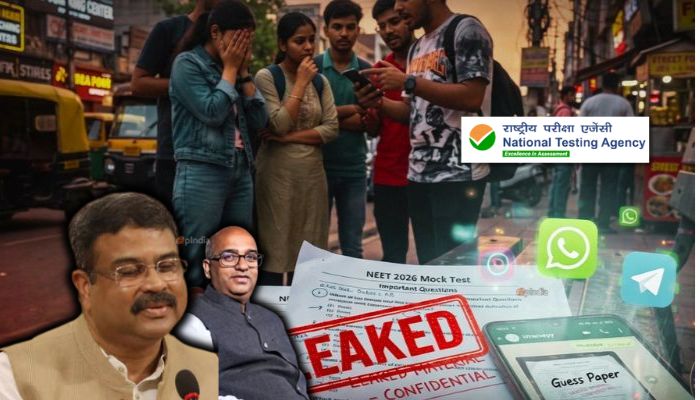
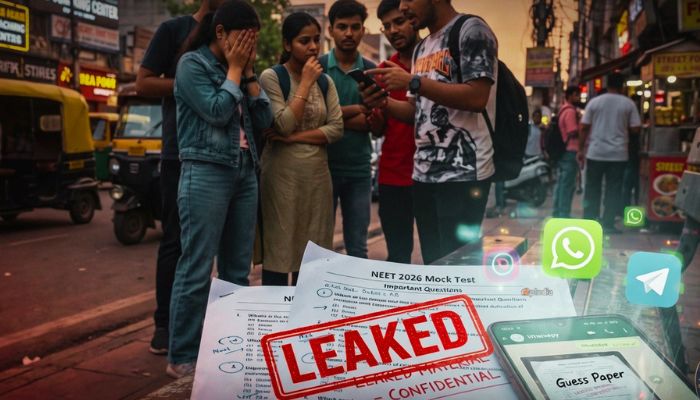
One layer after the other is being unearthed in the alleged NEET UG 2026 paper leak scandal. On 3rd May, over 22 lakh students appeared for the high-stakes exam conducted by the National Testing Agency (NTA). Despite the promises of conducting a leak-proof exam, NTA could not prevent a guess paper, similar to the actual paper, from making its way to WhatsApp and Telegram groups for sale days before the exam.
‘Private Mafia’ WhatsApp group, NEET ‘guess paper’ for sale and a trail that led investigators to the paper leak scandal
The scandal came to the fore after a handwritten guess paper closely matched a significant portion of the actual question paper, particularly the Chemistry and Biology sections. A handwritten note containing around 410 questions, with a 281-question set, circulated among students over WhatsApp, Telegram groups and coaching networks, particularly in Rajasthan’s Sikar, Uttarakhand’s Dehradun, and other coaching hubs.
Before the Central Bureau of Investigation (CBI) took over the probe into the alleged paper leak, the Rajasthan Police’s Special Operation Group (SOG) found striking similarities in the actual paper and the circulated guess paper, with around 120-140 questions, mainly Biology and Chemistry-related, matching exactly or very closely.
Around 135 questions from the guess paper are reported to have matched with the actual paper, accounting for around 600 marks out of 720. Each question in the NEET paper carries 4 marks.
The guess paper was circulated through a WhatsApp Group named “Private Mafia”. The Rajasthan SOG said that the group administrator charged around ₹5,000 for membership alone and instructed members not to share the guess paper. Nonetheless, the paper was widely circulated.
THE ‘GUESS PAPER’ ANGLE A video now surfacing allegedly shows a WhatsApp group named “Private Mafia” with nearly 400 members. The group description reportedly states it was created exclusively to upload leaked exam papers and warns members not to forward them outside the group.… pic.twitter.com/hk4P9PAnif
Preliminary investigation indicated that the alleged paper leak happened in Maharashtra’s Nashik; however, the state police later denied these claims. On Tuesday, Kirankumar Chauhan, Deputy Commissioner of Police, said that they received a request from the Rajasthan Police regarding a suspect involved in the NEET paper leak case. The Nashik Police acted on the request of the Rajasthan Police and took the accused into custody, and handed the accused over to the CBI.
The arrested accused has been identified as Shubham Khairnar. He was a medical student in Madhya Pradesh’s Bhopal and resided in Nashik. Khairnar obtained the NEET UG 2026 question paper from one of his associates in Pune. The accused received a hard copy, and from thereon, he circulated a soft copy through WhatsApp groups. The police are currently probing if the circulated question paper was a ‘guess paper’ or the actual question paper.
“Khairnar was a student of Bachelor of Ayurveda, Medicine and Surgery (BAMS) in Bhopal last year and stays in Nashik with his family. We received information from the Rajasthan SOG early Tuesday morning about taking him into custody. We apprehended him and brought him to the crime branch office. As per the preliminary inquiry, he was also a part of the (paper leak) syndicate. We are now transferring him to the CBI,” Kishor Kale, Deputy Commissioner of Police, Nashik City, said.
Meanwhile, Kirankumar Chauhan, Deputy Commissioner of Police, Nashik, revealed that Shubham Khainar changed his appearance to escape identification and arrest; however, the Crime Branch managed to trace him through technical analysis.
Khairnar is alleged to have bought the NEET UG 2026 question paper for Rs 10 lakh and sold it later for Rs 15 lakh. He disseminated the ‘guess paper’ to some people in Gurgaon/Gurugram, and from thereon, the paper reached students and career counsellors in Rajasthan, Uttarakhand, Jammu and Kashmir and other states.
“The accused had changed his appearance by cutting his hair, making identification difficult. However, based on technical analysis and police investigation, the Crime Branch team managed to trace and detain him.
In addition to Shubham Khairnar, an MBBS student from Rajasthan’s Shekhawati, who is studying in Kerala, also came under the radar of the investigators. He sent the guess paper to his friend in Sikar on 1st May, two days before the exam.
From thereon, the guess paper went viral among aspirants and soon reached a PG operator, further spreading to students, career counsellors, and other candidates. An India Today report says that the PG operator is the father of the Kerala MBBS student and received the paper directly from him.
After the exams were over on 3rd May, the same PG operator in Sikar filed a police complaint at Udyog Nagar Police Station, alleging that a large number of students had received the problematic question bank.
The police swung into action after the National Testing Agency verified a complaint letter the PG operator wrote to the agency. However, it soon emerged that the complaint whistleblower PG operator himself had received the guess paper identical to the actual question paper, and forwarded it to several students and counsellors. The PG operator reportedly asked a teacher at a coaching centre in Sikar to verify how many questions from the guess paper, actually appeared in the exam.
It turned out that all 90 questions in Biology and 45 in Chemistry in the actual NEET UG question paper were the exact same as those in the 281-question guess paper. For the Chemistry portion, even the sequence and framing of the questions in the actual question paper was aligned with the guess paper.
The authorities suspect that the PG operator might have filed the complaint to protect himself from police action if and when the scandal comes under investigation.
The Rajasthan SOG questioned over 150 NEET UG 2026 candidates and their parents. The police team prepared a list of 150 aspirants and 70 parents. This list has been handed over to the CBI.
According to Ajay Pal Lamba, the Rajasthan SOG Inspector General, those behind the paper leak planned to sell the actual question paper as ‘guess paper’. The officer said that the paper leak was carried out by an organised group. However, much like the Nashik City DCP, who rejected the reports that the paper leak originated from Maharashtra, Officer Lamba also denied Rajasthan being the epicentre of the leak.
“Questioning several persons has pointed to an organised group. All these suspicious persons are being questioned by the CBI now. It is wrong to say that Rajasthan is the epicentre; it reached the state via other states. Before Rajasthan, it had reached a person near Gurgaon. It did not originate in Rajasthan,” the Rajasthan SOG Inspector General said.
Notably, the leaked “guess paper” was sold for ₹30,000 to a price as high as ₹5 to ₹30 lakh in several networks. It has emerged that two brothers, Mangilal and Dinesh Biwal, from Rajasthan’s Jamwa Ramgarh, have allegedly purchased the NEET UG 2026 paper from a doctor in Gurugram for ₹30 lakh one week before the examination.
One of the brothers in this duo gave the purchased ‘guess paper’ to his son, preparing for the NEET exam in Sikar. He also sold the question paper to several people on 29th April, just four days before the exam. The paper was sold to a Sikar-based MBBS counselling agent, Rakesh Kumar Mandawaria. It was Mandawaria who sold the paper to the student from Sikar pursuing MBBS in Kerala for ₹30,000.
Amidst a massive outrage over the alleged paper leak, the National Testing Agency issued a statement on 12th May, saying that the NEET UG examination conducted on 3rd May stands cancelled, and a fresh date for reconducting the exam will be announced later. Despite claims of understanding the distress this entire fiasco is causing to NEET UG aspirants, the tone-deaf statements from the NTA are exacerbating frustration.
In continuation of its press release dated 10 May 2026, the National Testing Agency wishes to inform candidates, parents, and members of the public of the following decisions taken in respect of NEET (UG) 2026. NTA had, on 8 May 2026, referred the matters then under consideration…
— National Testing Agency (@NTA_Exams) May 12, 2026
During a media interaction, NTA director Abhishek Singh ‘clarified’ that the entire question paper was never available on social media prior to the exam. “No, the entire paper was never available on Telegram or any other channel as far as we have verified the reports,” Singh said.
Singh even insinuated that a NEET UG 2026 exam paper leak did not even happen since the full question paper as is, was not circulated on WhatsApp and Telegram groups and sold.
“I don’t know how you define a leak But I will call it something which has happened, which has violated the 100% integrity of the examination and our commitment to a zero-error examination. In so far as the typical, traditional way of leak is concerned, no question paper in the form of a complete question paper has leaked anywhere,” Singh said.
VIDEO | NEET UG 2026: NTA Director General Abhishek Singh says, “The paper conducted on May 3 had four code versions. None of the papers were found in the market, and no leak has been established. In the PDF that circulated, there were many questions, and some of them appeared… pic.twitter.com/O1axvtT8U4
“What has happened is that a guess paper in the form of a PDF was circulating on WhatsApp, and it had a few questions which were matching with the questions which were asked. When we verified whether this was in circulation before May 3, it was found that some of it was. So, given that a few questions were available to some people before the examination, it makes it unfair for the 22.79 lakh students who were preparing for this examination with their hard work,” the NTA chief continued.
The audacity to even say that the guess paper had “a few questions which were matching with the questions which were asked” is alarming. Nearly 135 questions from the guess paper reportedly matched with the actual paper, accounting for around 600 marks out of 720. 600 marks is not a mere passing score or the result of a ‘few questions’; it is a very strong score that can place an aspirant among the top 1–2% of candidates and unlock chances of an MBBS seat in government medical colleges.
Meanwhile, Education Minister Dharmendra Pradhan did not even care to take media questions about the NEET UG exam paper leak.
Plea filed in the Supreme Court to replace NTA and conduct NEET UG exam under judicial supervision
With one paper leak after the other, the students are losing their little remaining faith in the National Testing Agency. Now, the Federation of All India Medical Association (FAIMA) has filed a plea before the Supreme Court challenging what it describes as NTA’s “systemic failure”. The petition has sought the top court’s direction for the replacement or fundamental restructuring of the NTA and to conduct a fresh NEET-UG 2026 exam under judicial supervision.
The plea seeks the Central government to replace the NTA with a “more robust, technologically advanced, and autonomous body” for conducting NEET examinations.
Further, the petition sought the constitution of a High-Powered Monitoring Committee headed by a retired Supreme Court judge, along with a cybersecurity expert and a forensic scientist. The petitioner demanded that this committee should supervise the re-conduct of NEET UG 2026 exam until a new independent examination body is formally constituted by the Centre.
In addition, the plea moved by FAIMA also sought the Supreme Court’s directions for the digital locking of question papers and a shift to a Computer-Based Test (CBT) model to eliminate the physical chain-of-custody risks
Why Sikar? Is Rajasthan’s ‘mini-Kota’ a cheating hub?
Under Rajasthan’s Shekhawati region, Sikar has emerged as the main epicentre in this alleged NEET UG paper leak scandal, just as many previous leaks have been traced to coaching hubs. Emerging as “mini-Kota”, Sikar is a significant NEET/JEE coaching centre cluster, having hundreds of institutes, PGs, and hostels housing aspirants from across the country.
As mentioned above, the leaked ‘guess paper reached Sikar via Haryana’s Gurugram, and was widely circulated among aspirants, counsellors, and coaching networks there. Rakesh Mandawaria, the MBBS counsellor in Sikar was among the first ones to receive and sell the guess paper for ₹30,000. Mandawaria operated a counselling centre named SK Consultancy on Piprali Road in Sikar, opposite a coaching institute.
The raids conducted by Rajasthan SOG in Sikar, Churu, Jhunjhunu, and other areas indicate presence of an organized ecosystem that exploited the desperation of students to clear the medical entrance exam.
Sikar, however, has not made headlines for the first time in the context of NEET exams. The coaching hub made news after the declaration of the NEET UG 2024 exam results. It was found that of 50 exam centres that had the highest percentage of candidates scoring marks above 650, 37 centres were situated in the Sikar district alone.
Over 2000 students from Sikar are reported to have secured marks above 650 in NEET UG 2024 and 8 out of the 10 top-performing centres were located in Sikar. In fact, 149 students from Sikar scored more than 700 out of 720 marks, with one getting a perfect 720 out of 720 score.
This unusual clustering of top scorers in Sikar had raised suspicion, however, the authorities did not prioritise camping in the district to thoroughly probe the presence of networks involved in paper leaks.
The Sikar district is also reported to house coaching institutes that enjoy political influence and are allegedly funding local-level elections. Over the years, as Kota, India’s coaching capital, became chaotic and witnessed increased student suicides, Sikar gained ground as an alternative coaching hub.
One of the first coaching institutes in Sikar was opened in 1996, and since then, the district has grown into a massive coaching hub, attracting aspirants from Uttar Pradesh, Bihar, Delhi and other states. Sikar’s coaching hub owed its rapid rise to its marketing as a “less stressful” alternative to Kota, cheaper hostels, and personalised mentoring. In recent years, coaching giants like ALLEN and Physicswallah have established their centres in Sikar. Reports say that by 2023, Sikar coaching hub ascended from being an alternative to Kota to becoming a direct competitor.
However, with the expansion of the coaching centre cluster, allegations of malpractice also emerged. It is alleged that the cut-throat competition between coaching clusters to prove themselves as topper-generating machines has compelled these coaching networks to indulge in illegal and unethical practices like paper leak.
In 2015, Manoj Sharma, director of a coaching institute in Sikar, was arrested after allegations of the Army recruitment exam paper leak emerged. Several students had alleged that the question paper was circulated among students through WhatsApp groups and coaching network operators in Sikar.
Back in 2021, when the Rajasthan Eligibility Examination for Teachers (REET) paper leak case was reported in Rajasthan, the investigation zeroed in on coaching networks in Sikar. In 2023, the Enforcement Directorate (ED) raided Kalam Academy’s centres in Sikar and other neighbouring districts as part of its 2021 REET paper leak probe. The ED acted after Rajasthan Police SOG found that the 2021 REET paper leak was carried out by organised networks, with active involvement of middlemen, coaching-linked operators and financial transactions spanning crores of rupees.
Similar, pattern emerged during the 2024 NEET paper leak as well. However, the probe somehow did not gain much momentum.
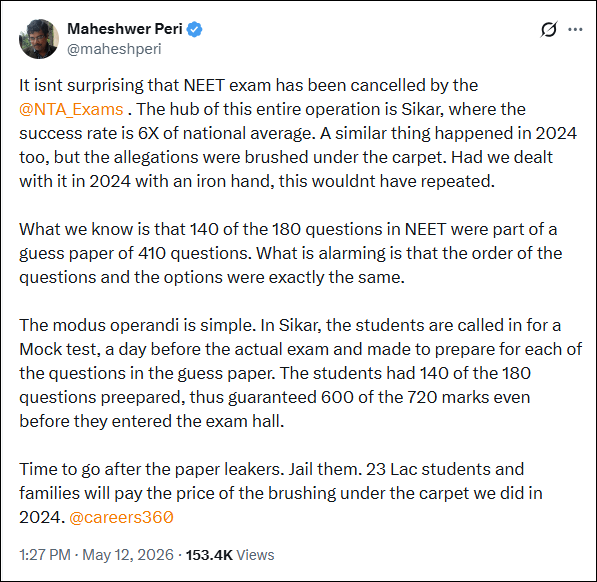
Entrepreneur-educationist Maheshwar Peri had raised alarms about the problematic activities of coaching networks in Sikar in 2024 as well. Now again, Peri has raised concerns over the allegedly suspiciously high success rate of Sikar’s coaching hub. Sikar has a success rate around 6 t 7% higher than the national average.
“… The hub of this entire operation is Sikar, where the success rate is 6 times the national average. A similar thing happened in 2024, too, but the allegations were brushed under the carpet. Had we dealt with it in 2024 with an iron hand, this wouldn’t have repeated,” Peri posted on X.
“The modus operandi is simple. In Sikar, the students are called in for a mock test a day before the actual exam and made to prepare for each of the questions on the guess paper. The students had 140 of the 180 questions prepared, thus guaranteeing 600 of the 720 marks even before they entered the exam hall,” he added.
Clearly, beyond the ‘academic excellence’ claims, Sikar’s coaching network has a documented history of irregularities in competitive exams. Discontinuing the past neglect, the authorities need to thoroughly investigate this town’s coaching cluster to prevent further paper leaks and consequent distress and devastation to lakhs of students.
Overall, there are many unanswered questions. Since NEET is a paper-and-pen examination, and the copies of the question paper are transported to more than 5000 exam centres across the country, the time gap is usually weeks before the exam. Despite there being a fear of paper leaks, why has no concrete solution been found by the NTA yet? Was there an insider involvement in the paper leak? Was the ‘guess paper’ procured during the printing process? The cancellation of the NEET UG exam indicates that the scandal is way bigger than it seems. Why has NTA not revealed the full extent of the rot? Is not the right time to pivot to the Computer-based test format? And most importantly, how long will this exam-paper leak-cancellation-reexam spiral go on?
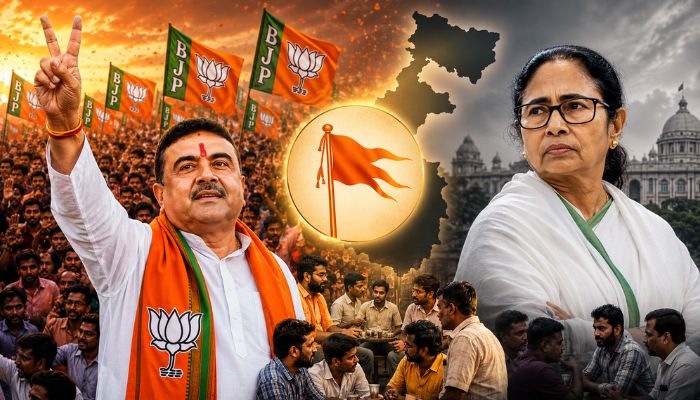
The BJP registered a massive victory in the 2026 Assembly elections, winning 206 out of 293 seats, while the ruling Mamata Banerjee-led Trinamool Congress (TMC) was reduced to just 81 seats. BJP leader Suvendu Adhikari took oath as the ninth Chief Minister of the state on 9th May, becoming the first Chief Minister from the Bharatiya Janata Party in Bengal’s history.
One of the biggest political shocks came from Bhabanipur, where former Chief Minister Mamata Banerjee lost her seat. Just a decade ago, such a political outcome would have seemed impossible in Bengal.
The BJP’s rise in Bengal has been long and gradual. From having zero seats in 2011 to now forming the government in 2026, the party spent years building its organisation at the grassroots level. BJP leaders and workers repeatedly claimed that the people of Bengal were frustrated with the “jungle raj” of the TMC government.
But behind this political rise was another organisation working almost invisibly on the ground, the Rashtriya Swayamsevak Sangh and its affiliates. While BJP leaders addressed massive rallies and dominated headlines, the RSS quietly built a deep social network across villages, towns and urban colonies that eventually helped unseat the TMC government.
A silent campaign that Bengal barely noticed
Unlike traditional elections, where a visible wave can be sensed months in advance, Bengal’s political shift came through what many BJP and RSS workers describe as a “silent undercurrent”. There were no loud campaign slogans on every street corner for most of the year. Instead, the campaign operated through conversations at tea stalls, beauty parlours, grocery shops, auto-rickshaws and evening gatherings over tea and chanachur.
According to a report by India Today, an RSS functionary from Bengal said that the Sangh and BJP realised early that people were angry but hesitant to openly speak against the TMC due to fear and political pressure. According to him, the strategy was simple: go micro, not mega.
“For over a year, around 50,000 auto drivers in Kolkata silently campaigned for the BJP. They did not openly ask for votes. They would simply drop one or two lines during conversations with passengers about corruption, women’s safety or cut-money,” the RSS functionary said.
This became one of the defining features of the BJP-RSS campaign in Bengal. Instead of relying solely on giant political rallies, the focus shifted to ordinary people with daily contact with voters. Local tea sellers, grocery store owners, beauticians, temple volunteers and small businessmen became informal communicators of political messaging.
According to RSS workers, these “local influencers” were identified long before the elections. The Sangh believed that people trusted familiar faces from their neighbourhood more than political speeches from distant leaders.
Tea stalls, beauty parlours and whisper campaigns
One of the most unusual parts of the campaign was what RSS workers called the “whisper campaign”. Instead of holding loud political meetings everywhere, small groups of five to ten people would meet informally and discuss issues affecting Bengal. Those people would then carry the discussion into their families and neighbourhoods.
Hindu Jagaran Manch leader Sarnath Ghosh explained how the strategy worked. “We held whisper campaigns with small groups. Those ten people would then speak to a hundred others. Slowly, the message spread everywhere without noise,” he said.
According to Ghosh, social media also played a major role in amplifying these discussions. Videos related to violence, corruption, alleged atrocities against Hindus, the RG Kar rape-murder case, Sandeshkhali violence and syndicate extortion were widely circulated through WhatsApp groups and local networks.
“We asked people a simple question: Who will protect your safety, your family and your faith?” Ghosh reportedly said, while adding that Sangh affiliates themselves do not directly ask people to vote for any political party.
The RSS and BJP also focused heavily on informal door-to-door contact. BJP workers would visit homes in the evening for tea and snacks, often without openly discussing politics. The idea was to build familiarity and trust rather than pressure people for votes.
Bengal BJP spokesperson Bimal Sankar Nanda said that the party conducted nearly 2.5 lakh small and big meetings before the election. “This time, the focus was not on formal speeches. The focus was on direct human contact,” he explained.
Anger against TMC became BJP’s biggest strength
The BJP and RSS workers believed that Bengal already had a strong anti-incumbency mood. Their task was not to create anger, but to quietly organise and channel it.
Several incidents became central talking points during the campaign. The RG Kar rape-murder case created massive outrage over women’s safety. The Sandeshkhali violence and allegations of land grabbing angered rural voters. Complaints about syndicate culture, cut-money extortion and political violence also damaged the image of the TMC government in many areas.
RSS leaders repeatedly argued that ordinary Bengalis felt politically suffocated under the TMC’s rule. Jisnu Basu, the Purba Kshetra Prachar Pramukh of the RSS, claimed that many voters believed Bengal’s identity and security were under threat. “This election became an organic reaction against fear, criminalisation and political oppression,” he said.
According to RSS workers, many voters were especially angry after the devastating floods in Bengal in 2025. BJP and RSS campaigners frequently reminded voters that while many parts of Bengal were suffering during the floods, Mamata Banerjee was attending public events and carnivals in Kolkata.
An RSS worker from Tollygunge who runs a tea stall said such incidents deeply affected public sentiment. “People felt the government had become disconnected from common citizens,” he reportedly said.
RSS built the ground structure while BJP expanded organisationally
The RSS campaign alone would not have been enough without the BJP simultaneously strengthening its organisational machinery across Bengal. After the BJP’s strong performance in the 2019 Lok Sabha elections, where it won 18 parliamentary seats, the party began aggressively expanding its grassroots structure. Ahead of the 2026 Assembly election, BJP leaders focused on booth-level management and local mobilisation.
Senior BJP leader Sunil Bansal, who started as an RSS pracharak, played a major role in reorganising the BJP structure in Bengal. Union minister Bhupender Yadav and Tripura leader Biplab Kumar Deb also spent long periods in Bengal helping the party strengthen its network.
The BJP identified nearly 44,000 booths and categorised them based on the party’s strength in each area. “Panna pramukhs” were assigned responsibility for maintaining contact with groups of 30 to 60 voters. These workers remained in constant touch with voters till polling day.
RSS volunteers also gave constant feedback to BJP leaders about local public sentiment and the opposition’s moves. BJP leaders admitted that this helped the party fine-tune its campaign strategy constituency by constituency.
West Bengal BJP spokesperson Bimal Sankar Nanda told India Today Digital that the party held nearly two lakh small meetings across Bengal before the election. During these interactions, people were encouraged to vote without fear and assured that central security forces would protect the polling process.
Hindutva politics and border concerns became major issues
Another major factor in the election was the growing traction of Hindutva politics in Bengal. Issues like illegal immigration from Bangladesh, demographic changes in border districts and appeasement politics became central themes in the BJP’s campaign.
RSS affiliates repeatedly raised concerns about attacks on Hindus and religious polarisation. Through small meetings and local discussions, they framed the election as a fight for Bengal’s identity and security. The BJP also linked law-and-order concerns with border infiltration and illegal networks operating in parts of Bengal. These issues resonated strongly in border districts and among sections of urban Hindu voters.
In many constituencies, BJP candidates focused heavily on hyper-local campaigning. In Bankura, BJP candidate Niladri Shekhar Dana campaigned on an e-rickshaw while volunteers conducted door-to-door outreach from morning till night.
Dana further said that a team of reveals a team of 100 volunteers was working tirelessly from 8 am to 9 pm, conducting door-to-door outreach efforts. He claims that a strong pro-BJP sentiment is sweeping the region, asserting that the ruling Trinamool Congress is on the verge of defeat. He lambasts the TMC using harsh descriptors such as ‘thief’ and ‘thug rule,’ accusing them of neglecting law and order and ignoring the public’s demands for change.
In Birbhum, BJP leaders visited fish markets and villages, speaking directly to people about water shortages, corruption and unemployment. The slogan of “poriborton” slowly transformed from a campaign message into a wider public sentiment.
The fall of TMC’s stronghold
By the time polling concluded, the BJP and RSS workers believed that the political tide had already shifted beneath the surface. What looked like a normal election on the outside had actually become a massive social mobilisation at the ground level.
The RSS leadership publicly downplayed its role after the results, saying that Bengal’s people themselves had rejected the TMC government. But BJP leaders privately acknowledged that the Sangh’s grassroots work played a major role in converting public anger into electoral victory.
The BJP’s Bengal victory ultimately became a combination of organisational discipline, booth-level planning, ideological mobilisation and silent social outreach. Massive rallies by leaders like Prime Minister Narendra Modi and Home Minister Amit Shah gave energy to the campaign, but the real groundwork happened quietly inside neighbourhoods, tea stalls and homes across Bengal.
For years, the TMC appeared politically unbeatable in Bengal. But the RSS spent months building a near-invisible network of conversations, local influence and voter outreach that slowly chipped away at the ruling party’s dominance. When the results finally came on 4th May, that silent campaign had turned into one of the biggest political upsets in Bengal’s history.
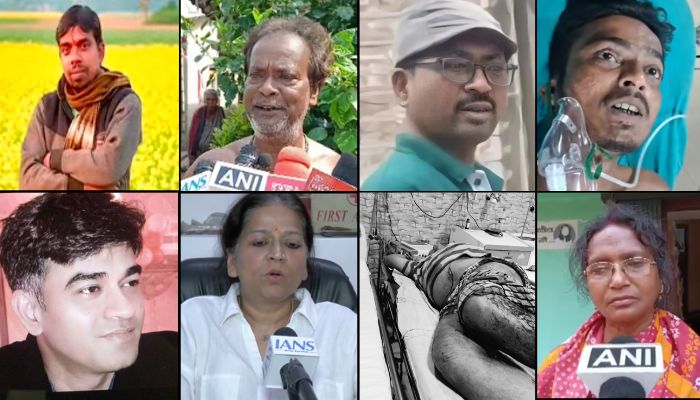
The Trinamool Congress, led by Mamata Banerjee, has been completely rattled after losing the 2026 Vidhan Sabha election. As a result, it has unleashed its hooligans to create chaos and conflict after the election results. While Mamata has refused to resign, her party thugs have resorted to killing BJP workers, destroying property and intimidating common people through violence. OpIndia has compiled multiple such incidents carried out by the TMC since 4th May 2026.
Jadhav Bor lynched in Howrah
On Monday night (4th May), a 45-year-old BJP worker named Jadhav Bor was beaten to death by TMC goons near his residence in the Udaynarayanpur area of Howrah. The incident happened shortly after celebrations began in the area following the BJP’s election victory.
According to his family members, Jadhav had stepped out to celebrate with colours along with other BJP karyakartas. Later in the evening, he returned home but soon went out again to bathe at a spot a short distance away.
It was during this time that a group of men reached there and attacked him. He was reportedly hit on the head with a rod, causing severe injuries. Hearing his screams, locals rushed to the spot, but the attackers fled. Jadhav was quickly taken to Udaynarayanpur State General Hospital, where doctors declared him dead.
Madhu Mandal beaten to death in New Town
On Tuesday (5th May), a BJP leader named Madhu Mandal was beaten to death by Trinamool Congress goons during a victory rally in Baliguri locality of New Town in West Bengal. His body was found lying in a patch of mud. So far, the local police have arrested a TMC leader named Kamal Mandal and his 4 aides in connection with the brutal murder.
BJP leader Piyush Kanodia, who won from Rajarhat New Town Assembly constituency, assured action against the killers of Madhu Mandal.
“I have just taken charge as an MLA, and it hasn’t even been four hours, and I am having to place a garland on my brother’s body. I have told the police that those who are responsible for this act should not be spared at all,” he remarked.
Kolkata, West Bengal: On a BJP worker being murdered in Newtown, BJP’s winning candidate Piyush Kanodia says, “I have just taken charge as an MLA, and it hasn’t even been four hours, and I am having to place a garland on my brother’s body. I have told the police that those who… pic.twitter.com/twF1IpHu0w
Personal assistant of Suvendu Adhikari murdered, driver in critical state
On Wednesday (6th May), the personal assistant of BJP leader Suvendu Adhikari, identified as Chandranath Rath, was shot dead in Madhyamgram in North 24 Parganas district of West Bengal. The incident occurred close to the victim’s residence. At the time of his killing, Rath was travelling in a black Scorpio SUV.
According to reports, the shooting was carried out by 2 bike-borne men. Rath sustained bullet injuries to his head, chest and abdomen. After being rushed to the hospital, he was declared dead on arrival. The car driver, Buddhadeb Bera, was also injured and currently remains in a critical condition. A Special Investigation Team (SIT) was constituted to investigate the targeted killing.
Chandipur, West Bengal: BJP MP Soumendu Adhikari arrived to attend the last rites of Chandranath Rath, personal assistant to Leader of Opposition in the West Bengal Legislative Assembly Suvendu Adhikari, and became emotional. pic.twitter.com/BmPwM047tR
On Wednesday (6th May), BJP worker Rohit Roy was shot in the abdomen by TMC goons in Basirhat. At the time of the attack, the victim was putting BJP flags in his locality to celebrate his party’s victory in the elections.
Roy was confronted by a group of 8-10 TMC workers. Thereafter, 3 to 5 of them opened fire at him. The victim was rushed to the Basirhat State Hospital. Currently, he is in critical but stable condition.
BJP worker Rohit Roy shot in the abdomen by TMC goons. He was putting BJP flags in his locality when 4-5 TMC goons objected and then shot him. pic.twitter.com/HyRsh54C69
House of BJP supporter vandalised in North 24 Parganas
On Monday night (4th May), the house of a BJP supporter named Madan Morol was vandalised by Trinamool Congress (TMC) goons. The incident occurred in the Amdanga Vidhan Sabha constituency, which falls in the North 24 Parganas district of West Bengal.
While speaking to the media, the victim informed, “We voted for the BJP, so yesterday late night, 40-50 Trinamool miscreants came and vandalised our house and beat us. After getting information from the police, the police and the central forces came to the spot. I am very scared.”
North 24 Parganas, West Bengal: Victim, Madan Morol says, "We voted for BJP, so yesterday late night, 40-50 Trinamool miscreants came and vandalised our house and beat us. After getting information from the police, the police and the central forces came to the spot. I am very… https://t.co/XdQo8bd7pupic.twitter.com/D5hwTBMCEr
On Wednesday (6th May), a BJP leader identified as Somnath Dhar was brutally stabbed in Baranagar in the North 24 Parganas district of West Bengal. The victim, who worked as the booth President, as well as his family members, were seriously injured during the targeted attack.
According to reports, Dhar was attacked while he was standing in front of his house. He was thrown to the ground and attacked with sharp weapons. When his family members came to his rescue, they were also targeted. The victim was recovered in a bloodied state and rushed to the local hospital.
As per the family, the attack was carried out by Trinamool Congress (TMC) goons, namely, Ranjit Dhar and Subhankar Dhar. They said that the duo had been trying to occupy the ancestral residence of the BJP leader for a long time. The victim’s family stated that the TMC goons were angry after Dhar refused to give up his property.
Screengrab of the tweet by Amit Thakor
BJP worker killed in Dakshin Dinajpur
On Tuesday (5th May), a 66-year-old BJP worker named Jagadish Basak was attacked by Trinamool Congress goons in Gangarampur city in Dakshin Dinajpur district of West Bengal. His son, Jayant Basak, was also injured.
The victim’s only mistake was that his grandson burst firecrackers in front of his building to celebrate the victory of the BJP in the Vidhan Sabha election. The kid had also raised the slogan of ‘Jai Shri Ram.’ Thereafter, TMC goons came in droves and vandalised the gate of Jagadish Basak’s house. They also hit the victim on the head with an iron rod.
Jayant Basak was attacked in the neck with a sharp weapon. The father-son duo were later rushed to the hospital for immediate medical attention. While Jayant survived, his father, Jagadish Basak, succumbed to his injuries on Saturday (9th May). So far, 4 people have been arrested in connection with the case.
No respite from TMC goons in Bengal.
Now this BJP worker has been killed.
In South Dinajpur district, a BJP worker named Jagadish Basak celebrated the victory of BJP.
The local TMC goons threatened him against celebrating. When he still celebrated, they attacked him.
On Wednesday (6th May), crude bombs were hurled at BJP workers in the Panihati area in the North 24 Parganas district of West Bengal. Notably, BJP candidate Ratna Debnath, mother of RG Kar Hospital rape and murder victim, won the election from the Panihati constituency.
The incident took place near St Xavier’s Institution at Dutta Road of Ward No. 2 of Panihati Municipality. According to reports, a few members of the BJP were talking to locals when several bike-borne men arrived at the location.
Eyewitnesses said four people were on the bikes when three bombs were thrown one after another at the BJP workers before the attackers quickly escaped from the spot. A total of 5 BJP workers suffered serious injuries in the blast. The victims were rushed to R. G. Kar Medical College and Hospital, where they are currently undergoing treatment.
#WATCH | North 24 Parganas | On reports of bomb attack near her residence, BJP's winning candidate from Panihati Assembly Constituency, Mother of RG Kar Medical College rape and murder victim and BJP leader Ratna Debnath says, "…It didn't happen in front of my house, it… pic.twitter.com/wUDBKwgh2q
3 Police officers, 2 CRPF jawans attacked in Sandeshkhali
On Wednesday (6th May), a team of police officers and central forces, who were patrolling the Bamangheria area in Sandeshkhali, came under sudden attack.
The unidentified assailants opened fire and injured several personnel. The injured were identified as Bharat Purkait (Nazat Police Station Officer-in-Charge), Bhaswat Goswami (Rajbari Outpost officer), and a woman police officer. At the same time, 2 CRPF jawans were also injured in the firing.
All five injured personnel were immediately rescued and taken to Minakha Rural Hospital for initial treatment. Due to the seriousness of their injuries, they were later shifted to different government hospitals in Kolkata for better medical care.
#WATCH | Sandeshkhali, West Bengal: Political tension erupts in the Bamangheri area (Ward No. 14) of the Sarberia-Agarhati Gram Panchayat, under the jurisdiction of the Nazat Police Station. Late at night, when a police team—accompanied by central security forces—went to patrol… pic.twitter.com/8lDALs6zuZ
Husband of TMC councillor leads attack on BJP minority wing leader
On Friday (7th May), Shamim Ahmed, the husband of a Trinamool Congress (TMC) councillor, led a violent attack on BJP workers and supporters in the Shibpur area of Howrah.
In visuals that have surfaced online, Ahmed could be seen leading a mob that hurled 7-15 crude bombs and fired 7-8 rounds of ammunition. His primary target was the residence of Manoj Khan, the BJP Minority Morcha President.
During the targeted attack, BJP leaders Munna Khan and Sikandar Khan were injured. Several party workers were injured during the incident and were rushed to the hospital. It must be mentioned that Shamim Ahmed was previously arrested by the National Investigation Agency (NIA) in connection with violence during a Ram Navami procession in Howrah.
Open lawlessness at Shibpur's Chaura Basti today, miscreants took to hurling bombs & two from BJP are seriously injured. Oath Taking is now need of the hour, many criminals in their final attempt is acting desparate to cause violence pic.twitter.com/JIv2UvPiwF
— Sudhanidhi Bandyopadhyay (@SudhanidhiB) May 7, 2026
TMC goons threaten petrol pump owner in Tollygunge
On Monday (4th May), an HPCL petrol pump owner in Kolkata’s Tollygunge, identified as Shalini Sen, narrated how a group of TMC goons created chaos at her petrol pump.
She informed, “Yesterday evening, when I had gone home, around 30–40 miscreants from the previous regime came to the petrol pump in an intoxicated state. They threatened my manager regarding the parking of a large fuel tanker, saying they would give only 10 minutes to remove it or they would create a disturbance. My manager called me and asked what to do…”
Kolkata, West Bengal: HPCL Petrol Pump Owner, Tollygunge, Shalini Sen says, "Yesterday evening, when I had gone home, around 30–40 miscreants from the previous regime came to the petrol pump in an intoxicated state. They threatened my manager regarding the parking of a large fuel… pic.twitter.com/QVEq2L2lFR
Shalini Sen also thanked Prime Minister Narendra Modi and Union Home Minister Amit Shah, saying that people in Bengal are finally getting an opportunity to breathe, live and work fearlessly.
The formation of the Bharatiya Janata Party (BJP) government in West Bengal has clearly sparked panic in neighbouring Bangladesh. Street protests have erupted against the new Bengal government, while radical clerics are openly threatening to kill the state’s new Chief Minister, Suvendu Adhikari. Not only are radical clerics, but those holding important positions in the Bangladesh government are also distraught.
The reason behind this isn’t just a change of government and the replacement of one party with another, but rather the entire ideological shift that this change of power is bringing about in Bengal. India’s open border served as a gateway for Bangladeshi infiltrators. Mamata Banerjee opposed closing it, but the situation has changed. Suvendu Adhikari has prioritised fencing, and this crackdown is increasing the anxiety of extremists.
The Suvendu government gave land to the BSF for fencing, but the Mamata government blocked it
Upon assuming power in Bengal, Chief Minister Suvendu Adhikari made the security of the India-Bangladesh border a top priority in his very first cabinet decisions. The new government decided that the necessary land for fencing in areas along the India-Bangladesh border that had not yet been completed would be handed over to the BSF within 45 days.
Howrah, West Bengal: Chief Minister Suvendu Adhikari says, "…Today, on the very first day, we have approved the land transfer process to secure the borders for the central defence office and the BSF. From today, the land transfer process will begin. Within 45 days, the land… pic.twitter.com/W41HltujqI
Shubhendu Adhikari stated clearly that his government will not compromise on border security. This decision by the state government will prevent infiltration, cattle smuggling, and illegal networks that are conspiring to change the demographics of the border once the border fencing is complete.
This land was stuck during the tenure of Mamata Banerjee’s TMC government. The matter reached the Calcutta High Court, where the High Court reprimanded the then Mamata Banerjee government for not allocating the agreed-upon land to the BSF and also imposed a fine of ₹25,000 on a government official.
Bangladesh uneasy over fencing decision, Tariq Rahman’s advisor says
This decision by the Shubhendu government has increased anxiety in Bangladesh. According to media reports, Humayun Kabir, foreign affairs advisor of Bangladesh Prime Minister Tariq Rahman, commented on this decision, saying that Bangladesh cannot be intimidated by “barbed wire.” There have also been reports of the Bangladesh Border Guard (BGB) being put on alert.
That is, the decision which the new BJP government of West Bengal is linking to border security and national interest has increased the uneasiness of political and fundamentalist circles in Bangladesh.
Protests in Bangladesh and inflammatory statements by fundamentalists
Following the formation of the BJP government in Bengal, there has been unrest among Islamic fundamentalists in Bangladesh. These fundamentalists are taking to the streets to protest against the new Bengal government. Several clerics are also openly spewing venom against the BJP government and Hindus in Bengal.
🚨 A radical Islamist group from #Bangladesh 🇧🇩 called "Islami Andolan" is protesting against the BJP govt in West Bengal. They want to fight a war.
They also want to bring back Mamata Banerjee and the TMC party to power in West Bengal. pic.twitter.com/FZMw3S0Wtk
— Bangladeshi Hindus Community🚨🇧🇩 (@Hindubd49346) May 11, 2026
In a viral video, a cleric associated with the radical Bangladeshi organisation Insaaf Kayamkari Chhatra Shramik Janata (Insaf Kayamkari Chhatra Shramik Janata) hurled Hindu hatred, calling for an attack on India with the help of Pakistan and Indian Muslims. “India will be attacked, Inshallah. We will call upon Pakistan. It will not even take 3 hours for us to capture India. These 26 provinces of India will be crushed, Insha-Allah. And the Muslims of India are enough,” the preacher threatened.
In the video, he named Prime Minister Narendra Modi, Defence Minister Rajnath Singh, Assam Chief Minister Himanta Biswa Sarma, Uttar Pradesh Chief Minister Yogi Adityanath, and Bengal Chief Minister Suvendu Adhikari and issued threats.
“If 40 crore (400 million) Muslims become angry, the Hindus of India will not be able to live. Suvendu, Modi, Rajnath Singh, Himanta and Yogi will have to apologise to Muslims,” he further remarked.
CM Suvendu Adhikari threatened to be buried at the border
Another video has surfaced in which a Bangladeshi Muslim man threatens to bury Bengal’s new Chief Minister, Suvendu Adhikari, at the border. This video is shared by a Facebook page called “The Daily Inquilab.” However, the police are investigating the authenticity of this video.
According to information being examined by investigators, the man seen in the viral video is said to be the father of an Islamist who was killed during the 2024 regime change operation in Bangladesh. In the clip, the man uses abusive and violent language against the West Bengal Chief Minister while speaking in Hindi.
Meanwhile, Bangladeshi Maulana Inayatullah Abbasi says that if Muslims are not safe in Bengal, Hindus will not be safe in Bangladesh either. He is provoking the Tariq Rahman government in Bangladesh to threaten to break off trade relations with India.
The ground reality of ‘Poriborton’ in Bengal: Cross-border racketeering will now be stopped
Bangladesh’s frustration with the BJP’s growing political power and electoral success in West Bengal is clearly visible. Bengal shares a nearly 2,200-kilometre international border with Bangladesh, a portion of which was previously open. For years, this area had been a hub of illegal immigration, cattle smuggling, counterfeit currency networks, and radical activities.
Due to appeasement politics in West Bengal, Mamata Banerjee’s government did not take strict measures regarding border security. Vote-bank politics protected illegal immigrants, gradually affecting the demographics of many border districts. It even emerged that the illegal activities carried out by Bangladesh were facilitated by the “Mamata” government, steeped in appeasement politics.
As the BJP’s influence grows, anxiety is rising among those who relied on cross-border illicit trade and political patronage. The reactions of radical organisations in Bangladesh, as well as Islamic preachers and government officials, need to be seen in this context. They fear that if a stricter administrative system is implemented in Bengal, the illegal activities that have enjoyed protection until now may be curbed.
(This article is a translation of the original article published at OpIndia Hindi.)
A fresh controversy has surrounded the recently held NEET UG 2026 exams. Just days after around 22.79 lakh students appeared for this high-stakes test for MBBS, BDS and other medical courses, it has emerged that the tight measures put up by the National Testing Agency (NTA) to prevent paper leak were just not enough, again. The scandal came to the fore after a handwritten guess paper closely matched a significant portion of the actual question paper, particularly the Chemistry and Biology sections.
The paper leak scandal triggered CBI investigations, outrage, and eventually the cancellation of the National Eligibility cum Entrance Test for the year 2026. The exams will now be reconducted on a date to be announced later by the NTA.
The ‘guess paper’ led to the NEET paper leak scandal
According to reports, a handwritten note containing around 410 questions, with a 281-question set, circulated among students over WhatsApp, Telegram groups and coaching networks, particularly in Rajasthan’s Sikar, Uttarakhand’s Dehradun, and other coaching hubs. The guess paper began to be circulated among NEET aspirants, days before the exam held on 3rd May.
After receiving a tip-off, the Rajasthan Police’s Special Operations Group (SOG) launched a probe and found striking similarities in the actual paper and the circulated guess paper, with around 120-140 questions, mainly Biology and Chemistry-related, matching exactly or very closely.
Some reports even say that 135 questions from the guess paper matched with the actual paper. These questions accounted for around 600 marks out of 720. Each question in the NEET paper carries 4 marks.
The alleged question bank is reportedly linked to a man from Rajasthan’s Churu, currently pursuing MBBS at a medical college in Kerala. He sent the guess paper to his friend in Sikar on 1st May, two days before the exam.
From thereon, the guess paper went viral among aspirants and soon reached a PG operator, further spreading to students, career counsellors, and other candidates. After the exams were over on 3rd May, the same PG operator in Sikar filed a police complaint at Udyog Nagar Police Station, alleging that a large number of students had received the problematic question bank.
The police swung into action; however, it soon emerged that the complaint PG operator himself had received the guess paper identical to the actual question paper, and forwarded it to several students and counsellors. The authorities suspect that the PG operator might have filed the complaint to protect himself from police action if and when the scandal comes under investigation.
The Rajasthan SOG is now focusing on exposing the entire network involved in the alleged paper leak.
While the investigators are describing the leaked note as a “guess paper” or an advanced test series, the extent of similarities between the actual paper and the ‘guess paper’ indicates malpractice that just could not have happened without the involvement of someone with insider access.
It has emerged that the leaked “guess paper” was sold for Rs 30,000 to a price as high as Rs 5 lakh in several networks.
So far, the police have arrested around 13 individuals, questioned several and are conducting searches to nab suspects. On Tuesday, Kiran Kumar Chavan, Deputy Commissioner of Police, Nashik City, said that they received a request from the Rajasthan Police regarding a suspect involved in the NEET paper leak case.
The Nashik Police acted on the request of the Rajasthan Police and took the accused into custody. The accused will be handed over to the Rajasthan Police soon.
Amidst a massive outrage over the alleged paper leak, the National Testing Agency issued a statement on 10th May, detailing the chain of events, from examination to reports of malpractice and the subsequent action by the NTA and law enforcement agencies.
Regarding the reports of malpractice, the NTA said, “On the late evening of 7 May 2026, four days after the examination, NTA received inputs concerning alleged malpractice activity around the examination. These inputs were escalated by NTA to central agencies on the morning of 8 May 2026 for independent verification and necessary action. The action subsequently undertaken by the law enforcement agencies, including the detentions reported in the media over recent days, is the result of their professional and timely work. NTA places on record its appreciation for the agencies leading this effort, and confirms that it is working closely with them in a fully supporting role, providing all examination-related data and technical assistance required.”
The National Testing Agency is aware of reports concerning the action initiated by the Rajasthan Special Operations Group in connection with alleged irregularities around NEET (UG) 2026. The following is placed on record for the information of candidates, parents, and the public.…
— National Testing Agency (@NTA_Exams) May 10, 2026
The Agency did not initially call it a case of paper leak, saying that the matter remains under investigation. “The matter is presently under investigation, and the facts will be established by the agencies in due course. NTA will not pre-judge the inquiry, nor characterise its likely outcome. Whatever the agencies determine, including findings that may require further action, will be examined transparently and disclosed in keeping with established procedure,” it said.
CBI takes over probe, NTA cancel NEET UG 2026 after paper leak, new date to be announced
Meanwhile, the Central government has handed over the probe into the matter to the Central Bureau of Investigation (CBI). The National Testing Agency (NTA) stated on 12th May, and said that the NEET UG examination conducted on 3rd May stands cancelled, and a fresh date for reconducting the exam will be announced later.
“Based on the inputs subsequently examined by NTA in coordination with the central agencies, and the investigative findings shared by the law enforcement agencies and to ensure that there is transparency in the system, the National Testing Agency, with the approval of the Government of India, has decided to cancel the NEET (UG) 2026 examination conducted on 3 May 2026, and to re-conduct the examination on dates that will be notified separately,” the NTA said, adding that the present examination process could not be allowed to stand.
In continuation of its press release dated 10 May 2026, the National Testing Agency wishes to inform candidates, parents, and members of the public of the following decisions taken in respect of NEET (UG) 2026. NTA had, on 8 May 2026, referred the matters then under consideration…
— National Testing Agency (@NTA_Exams) May 12, 2026
Acknowledging the immense distress and inconvenience the cancellation and re-examination of NEET UG 2026 will cause to students and their families, the NTA said, “The registration data, candidature, and examination centres opted for in the May 2026 cycle will be carried forward to the re-conducted examination. No fresh registration will be required, and no additional examination fee will be levied. In addition, fees already paid will be refunded to the students, and the exam will be re-conducted using NTA’s internal resources.”
NEET paper leaks have become a recurring blot on India’s education and examination system. In 2024, confirmed paper leaks were reported in Bihar and Jharkhand, in addition to a ‘grace marks’ controversy that affected thousands of students. Back then, the CBI had investigated the matter, and eventually, it was ruled by the Supreme Court that the ‘leak’ was localised, and at the pan-India level, thus the results were allowed to stand.
Private coaching networks, the high-stakes nature of the exam, the vulnerability and desperation of students, and a system, despite its efforts and tall promises, fail to fully deliver, all collectively fuel paper leaks, pushing the educational future of thousands of students into jeopardy.
The intensification of conflict between the United States, Israel and Iran caused fuel prices to spike, underscoring the vulnerability of the energy sector to geopolitical shocks. Fears of protracted disruptions to shipments through the Strait of Hormuz, a crucial chokepoint for 25% of global oil flows, pushed Brent crude prices to multi-year highs in late April and early May, at over $100 per barrel.
Energy markets have been profoundly destabilised, resulting in inflation and a surge in energy costs around the world. However, India has proven to be an exception despite its own set of struggles owing to the war. It successfully maintained a steady energy supply with consistent prices without any major alterations, even as G20 states had to confront the fallout from the tensions in West Asia.
Likewise, India’s immediate and larger neighbourhood had to adopt to a range of policies to manage the growing energy challenge. Many countries shared plans to ration fuel and energy consumption as the dispute persists. Fuel shortages prevailed in nations including Maldives, Bangladesh, Nepal, Sri Lanka and Pakistan.
Additionally, they are relying on New Delhi for support. India is the fourth-largest refiner in the world and supplies fuels to Bangladesh, Nepal, Bhutan and Sri Lanka. The nation is viewed as a vital alternative during emergencies, from urgent shipments to continuous pleas for diesel and Liquefied Petroleum Gas (LPG). This emphasises India’s expanding position as a dependable partner for upholding stability throughout South Asia and the Indian Ocean.
Maldives looks at India for help
These countries depend on energy imports and tourism is a major source of income for Sri Lanka and the Maldives which witnessed a major decline. The number of tourists visiting the Maldives decreased by 20%, just weeks before a due $500 million debt repayment. The figure in the first 16 days of March was down by 21% compared to the same period last year. Meanwhile, Maldives hiked fuel prices and wanted to secure deliveries from India.
“The government of Maldives has reached out to us for supply of petroleum products both on short-term and long-term basis. The request is being examined keeping in mind our own availability and our own needs,” mentioned Ministry of External Affairs spokesperson Randhir Jaiswal.
Pakistan issues directives due to severe fuel shortage
On the other hand, Pakistan, which takes around 80% of its crude oil from the United Arab Emirates and Oman, where prices hit a record high because of the ongoing turmoil, faced a substantial rise in costs of fuel amid its role as a failed “mediator” between Washington and Tehran. The Islamic Republic also extended school holidays by 2 weeks, switched to online classes and mandated a four-day workweek for government offices.
All markets and commercial centers, with the exception of Sindh province, were ordered to shut at 8 pm. Weddings at private residences or commercial locations were not permitted after 10 pm. Public transit in Gilgit and Muzaffarabad was declared free for a month. Fuel allocations for government divisions were reduced by 50% for a period of two months.
It was communicated to offices that only 50% of the staff should be physically present. The initial Twenty20 cricket matches in the Pakistan Super League were played behind closed doors without any audience and its opening ceremony was cancelled.
“Prime Minister Shehbaz Sharif requested all of Pakistan to restrict their movements because of the fuel crisis. We closed schools and instituted work from home and increased the number of Eid holidays. We don’t know how long this war will last,” expressed Pakistan Cricket Board (PCB) chairman and the country’s interior minister, Mohsin Naqvi.
Bangladesh introduces strict measures
95% of Bangladesh’s gas and oil originate from West Asia. Hence, it had to assess its energy usage in light of the unrest. The country increased Ramzan holidays, shortened shop and office hours in an effort to save electricity. Banks were told to function from 9 am to 3 pm, and government and private offices from 9 pm to 4 pm.
Offices had been directed to reduce power consumption, which included eliminating overly bright lighting. There were also limitations on non-essential travel and on the amount of fuel and energy used in public offices.
The nation’s shopping malls were required to close at 6 o’clock in the evening but food establishments were expected to maintain their regular hours. Government entities had been advised to forgo purchasing computers and automobiles. Dhaka stopped production at fertiliser facilities and placed restrictions on fuel procurement. Bangladesh also outlawed decorative lighting at weddings until further notice.
The country also turned to India for assistance. “We have received requests from some neighbouring countries for energy exports, including diesel from Bangladesh. Domestic availability and production will be factored in before any decision is taken,” Jaiswal stated at the time. The Modi government had promised to send over 50,000 tonnes of diesel to Dhaka by April.
Sri Lanka’s economy continues to struggle amid the new hurdle
Sri Lanka, which continues to grapple with economic instability and is trying to prevent another collapse similar to 2022, also bore precarious circumstances stemming from the present distress. It proclaimed every Wednesday to be a “holiday” to preserve the fuel reserves, reinstate work-from-home options and formal programs were postponed.
The public institutions, universities and schools were covered under the four-day workweek. Moreover, Colombo implemented constraints on the quantity of fuel its residents could obtain. This move was last enforced in 2022, at the height of its bankruptcy.
Bus and train services were scaled back. Households and businesses had to confront greater electricity rates. The island nation drove the cost of power by up to 40% and that of fuel by a third. It also slapped a ban on the utilisation of billboards, neon signs and streetlights. The government also encouraged use of fewer air conditioning units.
A conversation happened between Prime Minister Narendra Modi and President Anura Kumara Dissanayake after which India shipped 38,000 metric tonnes of fuel (20,000 MT diesel and 18,000 MT petrol) to Sri Lanka.
Nepal announces various regulations to address the situation
Nepal similarly lowered its working week from 6 to 5 days in April in response to the violent face-off in the Middle East. Official spokesperson Sasmit Pokharel noted, “Given the present uncomfortable situation caused by fuel supply, the government and educational institutions remain closed for two days.” Government offices would run from Monday to Friday from 9 am to 5 pm. Furthermore, senior administrative personnel received a 50% slip in their fuel quota.
The Nepalese government added that it was going to examine possibilities (legal arrangements) to switch from petrol and diesel vehicles to electric models. The cost of aviation fuel more than doubled alongside a surge in the price of petrol and diesel. The landlocked Himalayan country started selling gas cylinders that were only partially filled due to the sensitive situation and frenzied buying. Nepal also asked India for larger provision of LPG.
The military junta declares strict directives for Myanmar
A comprehensive fuel rationing system for private vehicles was unveiled by the ruling junta in Myanmar. The National Defence and Security Council (NDSC) stated that the new rules, which went into effect on 7th March, were a reaction to “global political situations” and armed strife in the Middle East that had impeded the influx of oil.
According to the regime, even-numbered plates would be authorised to drive on even dates and odd-numbered plates on odd dates under an innovative “even-odd” licensing regime. Electric motorcycles and cars were exempt. Additionally, the NDSC threatened to penalise companies and people that hoarded fuel for resale at inflated prices.
All government staff were asked to work from home every Wednesday as gas and diesel prices ascended by 50%. Domestic flights were temporarily suspended due to massive scarcity of jet fuel.
The state of affairs just as serious in the wider neighbourhood surrounding India
Southeast Asia’s economy is heavily dependent on commerce and exports and the altercation between the Islamic regime and Trump administration triggered to grave implications for the area, especially with rising oil prices and hindrances in international trade. The continuing feud hurts the regional economies and renders matters more complicated for nations who have significant trade surpluses with the United States, such as Vietnam, Thailand, Malaysia, Indonesia and the Philippines.
These countries are predominantly reliant on fossil fuels from the Middle East and is consequently quite susceptible to supply chain failures. Fuel prices skyrocketed throughout Southeast Asia. The cost of gas and diesel rose by 50% in the Philippines, Laos, Vietnam and Cambodia.
The cost of jet fuel, a byproduct of crude oil, likewise soared. Thailand had a 50% reduction in tourist arrivals in March compared to the previous month. According to one estimate, up to 3 million fewer tourists could make it to the nation if the standoff lasts longer than 6 months, costing it an estimated US$4.5 billion in lost tourism earnings.
A national energy emergency was approved in the Philippines due to “the resulting imminent danger posed upon the availability and stability of the country’s energy supply.” The nation’s jeepney drivers were among those most adversely affected by the war. Prices climbed up and inflation took hold.
The high cost of fuel equally bothered farmers and fishermen. Bulacan had already seen the forced cessation of planting by many vegetable growers.
A looming danger to economies
Civil servants were directed to work from home one day a week in Malaysia, Indonesia and the Philippines. Laos government recommended ministries to cut back on travel, opt for electric vehicles, promote remote work and meetings as well as rotate employees to save on fuel in its emergency order. Laos’s predicament was exacerbated when Thailand stopped importing energy to its neighbours.
The school week in Laos was shortened from five to three days. Notably, “The Laotian Times” reported on 28th March that the Lao Statistics Bureau’s most recent data showed headline inflation increased to 9.7% in March from 6.2% in February and 5.1% in January. The war was feared to prompt another economic crisis in the country.
Vietnam also removed some fuel taxes until mid-April to offset outrageous fuel costs and ease the burden on people and companies. These prices diminished by about 20% as a result of the action, although they stood far higher than they were prior to the violent rivalry. Operational costs also shot up by almost 60% due to the dearth of diesel and LPG needed for factory equipment. Airlines in Vietnam clamped on flights on certain domestic routes to save jet fuel.
Indonesia vowed to sustain fuel subsidies for the remainder of the year and carried out fuel rations for private drivers to quell domestic chaos. It also had to slash its free school food program by one day per week due to higher government spending.
Malaysia temporarily dropped the monthly subsidised fuel allotment from 300 litres to 200 litres after its fuel subsidy cost quadrupled in March. Governments urged commuters to use public services rather than private vehicles and promoted energy efficiency in homes and workplaces.
Singapore underwent elevated electricity and inflation rates, with certain sectors of the economy being more vulnerable than others. The cost of aircraft fuels more than doubled. Public agencies received guidance to minimise their usage of electricity, particularly air conditioning, while the government launched support measures of approximately S$1 billion ($785 million) to stabilise the economy.
Conclusion
The hostilities in West Asia have brought about upheaval and trouble internationally with every country feeling the heat even though some regions have been better prepared to counter it than others via subsidies, fresh rules or other means. Nevertheless, the most alarming aspect is that the conflict does not appear to be nearing an end anytime soon.