Home Blog Page 166

Trump’s attempt to bully India fails spectacularly: India moved even closer to Russia and is improving ties with China, America’s main rival; Modi-Putin-Xi bonhomie dominates SCO summit

Global politics took a fresh turn after Donald Trump’s tariff move against India backfired. Instead of giving in to pressure, India is mending is further strengthening its ties with Russia, and improving its ties with China. Notably, President Donald Trump has accused India of funding Russia’s war in Ukraine by buying discounted crude oil from Moscow. To pressure India, Trump’s administration has imposed a 50% duty on a wide variety of Indian goods.

The U.S. Department of Homeland Security formally notified the hike, saying the additional taxes were a reaction to “threats to the United States by the Government of the Russian Federation.” Any Indian product arriving after 27th August at 12:01 am (Eastern Daylight Time/EST) would face the extra duty, effectively doubling costs for Indian exporters, the notification read.

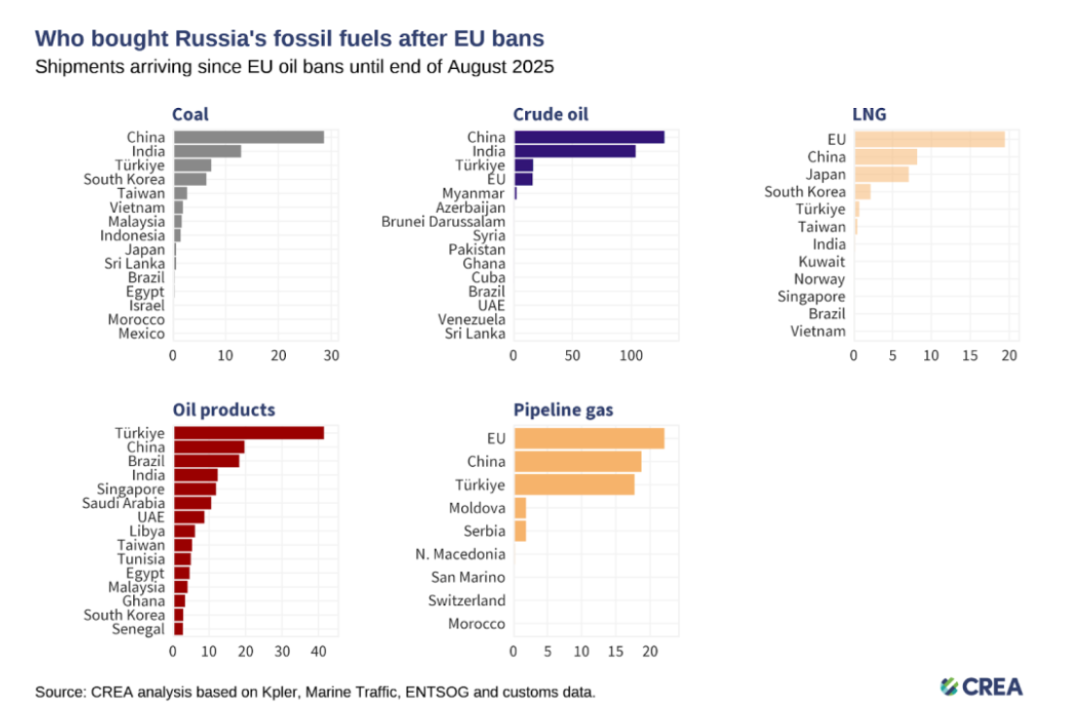
Trump signed Executive Order 14329 authorising the move and has even threatened “very big consequences” for any country that continues to trade with Russia. While India has been directly targeted, curiously, Washington has avoided imposing similar penalties on other major buyers of Russian oil, including China and several European nations.

Trump first announced a 25% duty on Indian goods, but he subsequently declared that he would increase it to 50% by adding 25% more as a penalty for purchasing Russian oil, which he insisted “funded war in Ukraine.” 

He had set the implementation date for 27th August. Interestingly, his government has been accusing India and the “wealthiest Indian families” of profiting from Russian oil while continually defending Beijing.

This uneven strategy has generated universal criticism that the U.S. is selectively employing tariffs as an instrument of bullying instead of an equitable global policy. For India, the tariffs remind it that economic coercion is being employed as leverage in geopolitics.

India’s response: Energy security first

India, however, has not taken this lying down. Prime Minister Narendra Modi was adamant in his response, “The pressure on us may increase, but we will bear it all.” He emphasised that national interests of farmers, small and medium-scale industries, and common citizens are given priority. 

External affairs minister S Jaishankar also strongly endorsed India’s energy decisions, asserting that New Delhi would keep making choices that serve its strategic autonomy and national interest.

Dr Jaishankar pointed out that the US tariff issue is being misrepresented as “oil dispute”. He pointed out that bigger importers like China and European countries have not received the same criticism as India for buying Russian oil.

India has been purchasing more than a million barrels of Russian crude daily, most of it at discounted prices. These imports help India manage fuel costs for its 140 crore citizens, keeping inflation under check in a volatile global market. Indian officials have pointed out that after the war began, Europe diverted much of its oil supply, leaving India with limited options but to look toward Russia.

Dr Jaishankar has also repeatedly reminded Western leaders of their double standards that Europe continues to purchase Russian liquefied natural gas (LNG) in massive quantities, and the United States still imports Russian uranium for its nuclear plants. Yet, India alone is being singled out and punished with tariffs.

Defence ties with Moscow

India’s ties with Russia are not limited to energy. Nearly 60-70% of India’s defence equipment originates from Russia, ranging from fighter jets to missile systems. New Delhi has consistently argued that abruptly cutting off these supplies would harm its national security.

Here too, Western criticism appears selective. NATO member Turkey purchased Russian S-400 missile systems in 2019. While it faced some sanctions, Turkey continues to remain a NATO member and engages in trade with Russia. India, on the other hand, is being targeted despite not being bound by any alliance obligations to the West.

PM Modi at the SCO Summit

The Indian Prime Minister reached the SCO Summit on Sunday, 31st August. He landed in Tianjin, China and attended the official reception for Heads of State and Heads of Government.

Prime Minister Narendra Modi addressed the plenary session of the Shanghai Cooperation Organisation (SCO) Summit in Tianjin, China, on Monday, 1st September. He spoke strongly against terrorism and outlined India’s priorities as a member of the grouping in the session.

In a major diplomatic success for India, the Shanghai Cooperation Organisation (SCO) strongly condemned the 22nd April terrorist attack in Pahalgam, Jammu and Kashmir, which claimed 26 innocent lives. The Tianjin Declaration, signed on 1st September, expressed deep condolences to the families of the victims and demanded that the perpetrators, organisers, and sponsors of the massacre be brought to justice.

Modi-Putin bonhomie at the SCO summit

On Monday, 1st September, Russian President Vladimir Putin greeted Prime Minister Narendra Modi with a warm hug at the plenary session of the SCO Summit. 

The two leaders, hold a bilateral meeting today on the sidelines of the Summit, meeting for the first time after the US imposed 50 per cent tariffs on India over its Russian oil imports.

In a gesture of togetherness, they travelled together in the same car to their bilateral meeting venue. PM Modi shared on X, “After the proceedings at the SCO Summit venue, President Putin and I travelled together to the venue of our bilateral meeting. Conversations with him are always insightful.”

The optics were unmistakable, far from buckling under U.S. pressure, India is strengthening its ties with Russia.

During his bilateral meeting with Russian President Vladimir Putin in Tianjin, China, Prime Minister Narendra Modi also addressed the war in Ukraine and said, “We have been continuously discussing the ongoing conflict in Ukraine. We welcome all the recent efforts for peace. We hope that all parties will move forward constructively. A way has to be found to end the conflict as soon as possible and establish lasting peace. This is the call of the entire humanity.”

“We welcome all the recent efforts for peace,” PM Modi said in the meeting. 

This was not just a symbolic friendship. It was a calculated statement, India will not be bullied out of its choices.

Putin’s upcoming visit to India

Russian President Vladimir Putin will travel to India in December, the Kremlin made it official on Friday, 29th August. His visit comes at a time when ties between Moscow and New Delhi are becoming stronger after the United States imposed tariffs on India over its purchases of Russian oil.

This is going to be one of Putin’s few overseas trips after the International Criminal Court (ICC) issued a warrant against him over the Ukraine war. India is not a signatory to the ICC, so it is not bound to implement the warrant. Vladimir Putin visited Alaska in US earlier this month for a meeting with President Donald Trump, U.S. is also not a member of the ICC.

Putin’s India trip also highlights the fact that in spite of sanctions and political pressure, Russia has been able to hold on to important strategic partners like India.

The Modi-Xi meeting: Improving ties with China

The relationship between India and China has been complicated in recent times, particularly following the Galwan clashes of 2020. However, at the SCO Summit, both leaders hinted at wanting to move on. 

Modi posted after the meeting, “Had a fruitful meeting with President Xi Jinping in Tianjin. We reviewed the positive momentum in India-China relations since our last meeting in Kazan. We agreed on the importance of maintaining peace and tranquility in border areas and reaffirmed our commitment to cooperation based on mutual respect, mutual interest and mutual sensitivity.”

Foreign Secretary Vikram Misri later added that both nations discussed narrowing the trade deficit, increasing investment transparency, and enhancing people-to-people contacts through tourism and direct flights. They also discussed cooperation on transboundary rivers and combined efforts to combat terrorism.

PM Modi invited Xi to the 2026 BRICS Summit in India, and Xi welcomed the invitation, pledging support.

The emerging Russia-India-China triangle

Modi’s visible friendship with both Putin and Xi at the same summit. The three leaders exchanging handshakes, hugs, and smiles was a rare sight. 

Russia’s envoy to international organisations in Vienna, Mikhail Ulyanov, described the growing India-China partnership as part of a “qualitatively new system of international relations,” amid global uncertainties and US tariffs. His comments followed PM Modi’s meeting with President Xi Jinping at the SCO Summit in Tianjin, where both leaders welcomed positive momentum since their last meeting in Kazan.

This is not to indicate that India has turned its back on the West. But it reminds us that Indian foreign policy is not Washington’s or Brussels’ to direct. It is informed by its own national interest, based on strategic autonomy.

Conclusion: India charts its own path

Trump imposed tariffs to punish India for its Russian oil purchases. Instead, they have backfired. India has not reduced its imports; it has doubled down. Far from drifting away from Russia, Modi is welcoming Putin to New Delhi. Far from locking horns with China, Modi is shaking hands with Xi.

The SCO Summit in Tianjin was more than a routine multilateral meeting. It was a turning point, a moment that highlighted India’s refusal to bow to external pressure. 

As Putin prepares for his December visit, one thing is clear: Donald Trump’s attempt to bully India has not weakened it. If anything, it has pushed India into an even stronger position, closer to Russia, improving ties with China, and more determined than ever to chart its own independent course in global politics.

Rajasthan: Minor Pakistani Hindu refugee girl raped by Mohd Fazal, Sabir and Qurban in Jaisalmer

0

In Rajasthan’s Jaisalmer, a case of kidnapping and gang rape of a minor girl belonging to a Hindu family from Pakistan has come to the fore. The minor Hindu girl was allegedly kidnapped and raped by Mohammad Fazal l and his accomplices Qurban Khan, Sabir Khan and another accused.

On the complaint of the victim, a case was registered in the women’s police station, Jaisalmer on 5th August 2025.

On 25th August, Vishwa Hindu Parishad activists, joined by local Hindus and Pakistani Hindu refugees belonging to the Bhil community, sat on a dharna in front of the Jaisalmer District Collectorate Office. The protest came after the police failed to arrest the accused persons even after 20 days had passed since the complaint was lodged.

The minor victim was living in Mohangarh in Jaisalmer. The main accused is Fazal Mohammad. He is a resident of Haryana’s Ferozepur Jhirka, and currently lives in Mohangarh. He first raped her on Valentine’s Day, kept blackmailing her by making photos and videos, and called her 8-10 times and further exploited her.

Reports say that Fazal was stalking the victim for quite some time and was pressuring her to elope with him and perform Nikah. However, the victim refused his advances and decided to marry a Hindu man. To avenge this, it is alleged, Fazal decided to abduct and rape the victim.

The victim was married on 8th June 2025, after which she came to her maternal home on June 27, 2025. On the night of 28th July, at around 1.30 am, Fazal and his accomplices Qurban Khan, Sabir Khan and another accused abducted her from her house and made her sit in a Swift car, took her to a room located at the Mohangarh bypass and raped her and left her on the road after threatening to kill her.

The victim got scared and did not tell anyone about the incident, later she informed her uncle and got an FIR registered. Reports say that amidst protests by Pakistani Hindu refugees and Vishwa Hindu Parishad, the police arrested two of the accused Muslim men while the main accused Mohammad Fazal is still at large.

CO Nachana Police Gajendra Singh, who is investigating the case, said that the police raided many places to find and arrest the accused. On the night of Wednesday, 27th August, 2 accused, Sabir and Qurban, were arrested. The officer added that raids are being conducted in Haryana as well to nab the absconding main accused.

Meanwhile, the victim’s family says that their protest will continue until the main accused is arrested.

Leicester: Complaint filed against radical Muslim outfit for branding saffron flags at Ganesh Chaturthi procession as ‘extremist’

The city that became a global case study in how Islamist disinformation can spark real-world violence is once again facing a dangerous provocation. Hindu organisations in Leicester have filed a police complaint against the Muslim Council of Britain (MCB) for branding saffron flags at a Ganesh Chaturthi procession as “extremist.”

The MCB’s August 28 statement demanded “urgent action” from authorities, alleging that saffron flags in a Hindu religious car procession represented “Hindutva extremism.” But the Hindu Community Organisations Group (HCOG), representing 40 Hindu bodies across Leicester, hit back, calling the claim “factually incorrect, inflammatory, and a gross misrepresentation of a sacred symbol.”

HCOG convenor Vinod Popat stated:

“The saffron flag (Bhagwa Dhwaj) is revered for centuries. It stands for peace, courage, and truth. To brand it extremist not only insults Hindus but risks stoking hostility against our community.”

Echoes of Leicester 2022: When fake news lit the fuse

This latest controversy is not occurring in isolation. On August 28, 2022, after India defeated Pakistan in an Asia Cup cricket match, tensions in Leicester spiraled into unprecedented anti-Hindu riots. What began as a flag-snatching incident on Belgrave Road was twisted into a false narrative of “Hindu extremists chanting racist slogans.”

Leicester Police’s Chief Inspector Paul Allen initially repeated the baseless claim that Hindus shouted “death to Muslims.” Though he retracted his statement the next day, the damage was already done, Islamists seized on it to legitimise violence.

What followed was a month-long orgy of Islamist violence. Hindu homes and cars were vandalised, saffron flags desecrated, and a Hindu youth stabbed. On Ganesh Chaturthi, Hindu families faced assaults: eggs thrown, knives brandished, and women punched. A Hindu temple was besieged, its sacred flag torn down as mobs shouted war cries.

All of this was fuelled by fake news and conspiracy theories: Claims that Hindus abducted a Muslim girl (debunked by police); rumours of a Quran being desecrated, and lies about “busloads of RSS extremists” being ferried to Leicester by a temple (refuted by the bus operator).

Islamist influencers like Majid Freeman and Mohammed Hijab weaponised social media, spreading incendiary videos and rallying mobs with slogans like “Muslim patrol in Leicester.” Videos later surfaced of Hijab openly mocking Hindus as “cowardly” and urging Muslims to “teach them a lesson.”

Think tank report exposed the narrative

In November 2022, the Henry Jackson Society (HJS) released a 39-page report titled “Hindu-Muslim civil unrest in Leicester: ‘Hindutva’ and the creation of a false narrative.” The findings were clear: No evidence of Hindu extremism was found in Leicester. The riots were instigated by Islamist misinformation and mobilisation, not “Hindutva terrorism.” And Social media influencers linked to Dawood Ibrahim, Hizb ut-Tahrir, and even Taliban sympathisers exploited the chaos.

The report warned that media outlets, including BBC, The Guardian, and Reuters, amplified the false Islamist narrative by giving platforms to the very agitators spreading hate, thereby deepening mistrust and endangering Hindus.

Today’s warning signs

The MCB’s attempt to equate saffron flags with extremism bears a chilling resemblance to the same pattern: demonise Hindu symbols, spread panic, and legitimise hostility under the guise of “community concern.”

Hindus in Leicester fear that what should have been a joyous religious festival could once again be twisted into a trigger for hate. As one local leader put it: “Last year, fake stories led to attacks on our homes, families, and temples. Today, the MCB is laying the groundwork for history to repeat itself.”

The Leicester saga underscores a larger lesson

The Leicester saga underscores a larger lesson: Islamist disinformation, when legitimised by institutions and amplified by media, creates real security risks for minority Hindus in the UK. Branding a sacred flag extremist is not just offensive; it’s a deliberate move in a continuing campaign to marginalise, vilify, and endanger an already targeted community.

Unless the British establishment learns from Leicester 2022 and stops pandering to false narratives, Hindus in the UK may continue to pay the price for a dangerous game of victimhood politics.

Trump’s attack dog parrots Opposition’s caste politics: As Navarro rants ‘Brahmins profiteering at the expense of Indians,’ read how domestic anti-Brahminism is now going global

It is said that the more you talk, the more you reveal your true self. White House Trade Adviser Peter Navarro has been on interview giving spree to justify US President Donald Trump’s senseless 50 per cent tariff imposition on India. Marking a shift from usual anti-India rants, Peter Navarro, Trump’s attack dog-in-chief has invoked caste and accused the Brahmins of India of “profiteering at the expense of the Indian people.”

Referring to India as “nothing but a laundromat for the Kremlin”, Navarro, during an interview with Fox News on Monday, accused New Delhi of enabling trade imbalances and geopolitical alliances that run counter to US interests.

Just as Trump would call Prime Minister Narendra Modi and India his friends before launching his tirade against New Delhi, Navarro called PM Modi a “great leader” only to criticise his foreign policy approach. Navarro suggested that India’s engagement with Russia and China undermines its status as the world’s largest democracy.  

“And on top of that, by the way, 25 per cent or 50 per cent is because India is the Maharaja of tariffs. They have the highest tariffs in the world. They won’t let us sell to them, so who gets hurt, workers in America, taxpayers in America… Ukrainians in cities are getting killed by Russian drones,” the Navarro said.

“So, you know, look, Modi’s a great leader… But I don’t understand why he’s getting into bed with Putin and Xi Jinping…when he’s the leader of the biggest democracy in the world. I would just simply say to the Indian people. Please, understand what’s going on here. You’ve got Brahmins profiteering at the expense of the Indian people. We need that to stop,” he added.

Navarro’s latest anti-India rant followed Prime Minister Modi’s bilateral engagement with Chinese President Xi Jinping on Sunday, on the sidelines of the SCO leaders’ summit, during which both leaders welcomed the positive momentum and steady progress in bilateral relations since their last meeting in Kazan on the sidelines of the BRICS Summit in October 2024.

Earlier on Friday, Navarro accused India of profiting from Russian oil in scalding remarks. “India’s Big Oil lobby has turned the largest democracy in the world into a massive refining hub and oil money laundromat for the Kremlin. Indian refiners buy cheap Russian oil, process it, and export fuels to Europe, Africa, and Asia – shielded from sanctions under the pretence of neutrality,” he said in a series of posts on X.

In an interview with Bloomberg, White House Trade Adviser Peter Navarro blamed India for being the reason behind the US and Europe funding Ukraine against Russia’s aggression. He went on to call the ongoing Russia-Ukraine war as “Modi’s war”.

“Ukraine comes to us and Europe and says give us more money (for its war). Everybody in America loses because of what India is doing. Consumers and businesses lose; workers lose because India’s high tariffs cause jobs, income and higher wages. The taxpayer loses because we got to fund Modi’s war,” Navarro harangued and called Indians “arrogant”.

Before this, Navarro wrote an opinion piece titled: “India’s oil lobby is funding Putin’s war machine — that has to stop”, in the Financial Times, and alleged that India’s purchases of Russian crude oil were funding Moscow’s war against Russia and that New Delhi needs to stop this. He asserted that India needs to stop cosying up to Russia and China if it wants to be treated as the US’s strategic partner. Navarro, however, did not advise Trump against mollycoddling Islamic terror sponsor Pakistan and its Madrassa-bred de facto ruler Asim Munir.

Navarro sermonised India on how it should act to be treated as the US’s strategic partner; however, the White House advisor did not give any advice to Washington on what it should do to make India feel equal in this partnership.

Navarro blamed India’s ‘greed’ for deaths in Ukraine while US has been profiteering from Russia-Ukraine war

Interestingly, while Navarro suggests that Ukrainians are dying because India is buying Russian oil for its own profits, however, OpIndia has reported earlier, the US has been the biggest profiteer of the Russia-Ukraine war. During his meeting with the US President in Alaska on 16th August, Russian President Vladimir Putin revealed that US-Russia bilateral trade had expanded by over 20 per cent in the past few months, exposing Trump’s persistent claims that the US has been pressuring Moscow to end its war in Ukraine.

American oil companies have made record profits since the Russia-Ukraine war broke out in 2022. From liquified natural gas (LNG) exports, arms sales, and several other war-driven opportunities, the US is apparently the biggest profiteer of Russia-Ukraine war. 

The US sold its cheap LNG to Europe at monumentally higher prices, often four times the US domestic rate citing ‘war-induced disruptions, benefiting from Europe’s urgent need for alternatives. In 2022, US oil and gas companies like Chevron and ExxonMobil registered record profits with a massive 125% jump from pre-war 2021.

Beyond energy, the US also benefitted from Russia-Ukraine war through its defence exports. Donald Trump is selling its weapons to Ukraine through European nations at a 10% premium, essentially to fill America’s coffers while people from both Russia and Ukraine continue to lose life. Trump has even put a cost to US involvement in providing security guarantees to Ukraine.

The US profiteered from Russia-Ukraine war and now even in peace talks, Trump is pursuing profits but Navarro wants the world to believe that India fuelled Russia’s ‘war machine’.

Brahmins profiteering: Is Peter Navarro trying to stir caste unrest in India?

Peter Navarro singled out Brahmins as the elite class, to suggest that Brahmins are benefitting from Russian oil deals. In reality, however, Brahmins do not dominate India’s oil industry. Brahmins are also not dominant in political leadership. Be it business tycoons Mukesh Ambani and Gautam Adani to Prime Minister Modi and Home Minister Amit Shah, none of them are Brahmins.

On the face of it, one would think that Peter Navarro is ignorant about India’s socio-economic landscape and thinks that all affluent businessmen and industrialists, are ‘upper caste’ Brahmins. Even Donald Trump has many a times said that India and Pakistan have been at war for ‘hundreds of years’, being completely ignorant of the fact that hundred years back, Pakistan did not even exist.

However, a deliberate attempt at fomenting caste unrest in India cannot be ruled out, considering the renewed focus of opposition parties on caste politics. Hating on Brahmins earns quick fame in India’s left liberal and anti-Hindu circles.

Navarro’s anti-Brahmin tirade perfectly dovetails with Opposition’s attempts to fuel caste divisions in India

Navarro’s anti-Brahmin remarks align with the opposition’s narrative that somehow the so-called upper caste rich people have taken control over India’s resources while the ‘lower castes’ are deprived of their rights. Not to forget, Congress leader Rahul Gandhi’s ‘caste X-ray’ and ‘Jitni aabadi utna haq’ rhetoric. The Congress leader promised to not only get caste census done but also carry out caste-based wealth redistribution. The DMK’s anti-Brahmin politics has become so entrenched in Tamil Nadu politics that it no longer sparks massive outrage. Several anti-BJP parties have been advocating increasing reservations for the SC, ST and OBCs. Apparently, Navarro has noticed that anti-Brahmin rhetoric sells in India and also can be weaponised against the Modi government.

Navarro’s anti-Brahmin remark seeped in orientalism is not that surprising since even in the United States, caste propaganda has been ongoing for the last few years. In 2023, the  California State Senate in the US passed legislation (SB-403) that banned caste-based discrimination in the State. OpIndia reported earlier how anti-Brahmin NGOs like Equality Lab have been pushing caste propaganda in the US. 

From Brandeis University in Massachusetts adding caste to its non-discrimination policy in December 2019, the CISCO caste discrimination case, Harvard University, Colby College, Brown University, and California State University adding caste to its non-discrimination policy, the dismissal of CISCO case, Seattle council passing a bill to add caste to protected category, California Senate approving the outrageous SB403 bill to events and seminars vilifying Brahmins and pushing caste discrimination narrative, America is witnessing a significant rise in anti-Hindu, particularly, anti-Brahmin propaganda by anti-Hindu forces, all in the name of social justice and struggle for ‘equality’.

It was reported last year how DEI programs have been normalising hatred against Brahmins in the US. In their attempts to foment same hate Nazis had for Jews, several DEI programs were creating prejudices against Hindus, particularly the so-called “upper-caste” Hindus like Brahmins, who are already at the receiving end of hate campaigns of the anti-Hindu elements.

It seems that even Trump administration’s officials have taken note of the anti-Brahmin rhetoric in India unleashed by Congress and other anti-BJP parties and realised that this narrative can be used to get things done and pressure the Modi government into acting as per US’s whims.

Given the desperate attempts by the opposition at re-mainstreaming caste politics, Navarro’s remarks against Brahmins come across as an attempt to exploit caste divisions. Perhaps, Navarro is trying to push a false and sinister narrative that Brahmin dominance is fuelling Russia-Ukraine war and that the Modi government is favouring Brahmins elites. It seems that after amplifying Donald Trump’s ‘dead economy’ jibe, Rahul Gandhi has found another point to agree on with Trump administration. It won’t be surprising if the opposition parties amplify and try to capitalise on Navarro’s remarks.

From ‘Indian refiners profiteering from Russia-Ukraine war’, ‘Indians are arrogant’, ‘Modi’s war’, to ‘Brahmins profiteering’, Navarro’s verbal attacks on India have levelled up. Intensifying efforts to destroy India-US relations, it seems that Trump administration officials are moving from usual vilification of India to influencing socio-political narratives in India.

Indian Opposition’s anti-Brahmin bent: Rationalisation of Navarro’s hate reflects Opposition’s deep-seated hatred for Brahmins

As if to prove the United States hawks weren’t acting on their own volition and taking cues from their counterparts in India, the Congress ecosystem quickly swung into action, promptly contextualizing and defending Navarro’s abject attempt to fuel caste divisions in India. Several senior Congress leaders came to the fore to rationalize Navarro’s contentious remarks.

Congress leader Karti Chidambaram defended Navarro’s attack on India claiming, “Boston Brahmins” is a term used to describe the elite of the society in common parlance.

A similar shoddy attempt to rationalize Navarro’s attack was also attempted by TMC Rajya Sabha MP Sagarika Ghose.

Other members of the Congress ecosystem have also been working overtime to contexualise Navarro’s rant against Brahmins.

What is more revealing than Navarro’s rant is the manner in which sections of India’s Opposition ecosystem rushed to contextualise and rationalise it. Congress functionaries, senior leaders, and even TMC Rajya Sabha members treated his comments as if they were a legitimate critique instead of a brazenly racist and casteist slur directed at a section of Indians. That they do not mind Brahmins being demonised by a foreign official merely because Prime Minister Modi refused to sign a lopsided trade deal with Washington, one that would have dealt a body blow to India’s farming community, exposes their priorities. Political one-upmanship against Modi takes precedence over standing up for Indians when insulted abroad.

Even more telling was the attempt to “intellectualise” Navarro’s remarks by invoking parallels with the so-called “Boston Brahmins.” By rationalising his comments through this lens, Opposition leaders betrayed how little they care when Brahmins are vilified. In fact, it points to a deeper, entrenched hostility within their own political culture. For if a foreigner had made such vile and sweeping remarks about any other community in India, the very same leaders would have rushed to issue unqualified condemnations, projecting themselves as defenders of that community’s honour. Their studied silence, and in some cases, active validation, when it comes to Brahmins reflects a hypocrisy that cannot be missed: selective outrage rooted not in principles, but in political hatred.

SCO Summit 2025: Tianjin Declaration condemns Pahalgam terrorist attack; PM Modi calls terrorism the biggest global challenge, engages with Putin, Xi

On 1st September, in a major diplomatic success for India, the Shanghai Cooperation Organisation (SCO) strongly condemned the 22nd April terrorist attack in Pahalgam, Jammu and Kashmir, which claimed 26 innocent lives. The Tianjin Declaration, signed on 1st September, expressed deep condolences to the families of the victims and demanded that the perpetrators, organisers, and sponsors of the massacre be brought to justice.

Prime Minister Narendra Modi addressed the plenary session of the Shanghai Cooperation Organisation (SCO) Summit in Tianjin, China, on Monday, 1st September. He spoke strongly against terrorism and outlined India’s priorities as a member of the grouping in the session.

While addressing the summit, Prime Minister Narendra Modi asked whether open support for terrorism by some nations could ever be tolerated. Notably, during the address, Pakistan’s Prime Minister Shehbaz Sharif was also present. PM Modi declared the Pahalgam terrorist attack an assault on humanity and urged the SCO states to adopt zero tolerance.

He added India had been facing the impact of terrorism for the last four decades. “India has been bearing the brunt of terrorism for the last four decades. Recently, we saw the worst side of terrorism in Pahalgam. I express my gratitude to the friendly country that stood with us in this hour of grief,” he added.

Speaking about India’s role in the SCO, Modi explained that the country’s approach was guided by three key pillars: Security, Connectivity, and Opportunity. “India has played a very positive role as a member of the SCO. India’s vision and policy for the SCO is based on three important pillars. S – Security, C- Connectivity, and O – Opportunity.”

Prime Minister Narendra Modi delivered India’s statement at the Shanghai Cooperation Council (SCO) Members Session in Tianjin, China.

He said, “I am happy to participate in the SCO Summit. I want to thank President Xi Jinping for giving us a grand welcome. Today is the Independence Day of Uzbekistan, I congratulate them as well…”

PM Modi meets Russian President Putin  

Ahead of the plenary session, Prime Minister Modi met Russian President Vladimir Putin and Chinese President Xi Jinping. “Interactions in Tianjin continue! Exchanging perspectives with President Putin and President Xi during the SCO Summit,” PM Modi posted on X.

Prime Minister Modi’s camaraderie with Putin was palpable as the two greeted each other with smiles and hugs.

The interaction between PM Modi and President Putin came ahead of their bilateral meeting, which is scheduled to take place after the plenary session.

PM Modi’s meetings with world leaders in Tianjin on Sunday

The Prime Minister’s schedule during the SCO Summit began a day earlier. He landed in Tianjin on Sunday, 31st August and attended the official reception for Heads of State and Heads of Government. All the delegates attending the SCO summit, including PM Modi, were received at the venue by Chinese President Xi Jinping and First Lady Peng Liyuan. After Xi greeted all the leaders, the customary group photo of all the leaders was taken.

After the official ceremony, Prime Minister Modi met with several world leaders ahead of the gala dinner and shared details of his interactions on X.

PM Modi interacted with several heads of state/government at the venue. He first met Nepali Prime Minister KP Oli. Posting a photo on X, he said, “India’s relations with Nepal are deep-rooted and very special.”

After that, he met Maldives President Mohamed Muizzu, a month after he visited Maldives. PM Modi posted on X, “Interacted with President Muizzu of Maldives on the sidelines of the SCO Summit in Tianjin. India’s developmental cooperation with the Maldives is greatly beneficial for our people.”

Prime Minister Modi also met Mostafa Madbouly, the PM of Egypt, at the SCO Summit. During the interaction, he fondly recalled his Egypt visit a few years ago. He added that India-Egypt friendship is scaling newer heights of progress!

Next, he met Alexander Lukashenko, the president of Belarus. “We both are very optimistic about the beneficial opportunities ahead as far as our nations are concerned,” Modi posted on X. Notably, Belarus has been an important ally of Russia in the war against Ukraine.

PM Modi also talked to Emomali Rahmon, the President of Tajikistan. He said that India’s trade and cultural linkages with the landlocked Central Asian nation are increasing, and this is a wonderful sign.

He also met the president of another Central Asian country, President Tokayev of Kazakhstan. “Our nations are working closely in many key sectors, including energy, security, healthcare and pharma,” PM Modi posted on ?.

In a significant meeting, he also met Senior General Min Aung Hlaing, the acting president of Myanmar. PM Modi said in a post on ?, “Myanmar is a vital pillar of India’s Act East and Neighbourhood First Policies. We both agreed that there is immense scope to boost ties in areas like trade, connectivity, energy, rare earth mining, and security.”

At the SCO summit, Prime Minister Narendra Modi then had a brief talk with Phạm Minh Chính, the Prime Minister of Vietnam. He said that India is very keen to further deepen ties with Vietnam in defence, trade, green energy, and more.

Prime Minister Narendra Modi then had a meeting with Thongloun Sisoulith, the prime minister of Lao People’s Democratic Republic, another South East Asian nation. He said that “Closer friendship between our nations is greatly beneficial, especially ties in trade as well as culture.”

PM Modi also interacted with Serdar Berdimuhamedow, President of Turkmenistan. They exchanged perspectives on diverse issues.

After meeting Armenian President Nikol Pashinyan, PM Modi called it a very good interaction. “India and Armenia share warm and growing ties, rooted in friendship and mutual cooperation,” he said. This was the first direct interaction between the Indian Prime Minister and Armenian President after the US-brokered deal between Armenia and Azerbaijan.

PM Modi also posted on X about meeting President Shavkat Mirziyoyev of Uzbekistan. “India and Armenia have warm and expanding relations based on friendship and cooperation,” he added.

He then met with Sadyr Japarov, the president of Kyrgyzstan. “A very fruitful discussion with Kyrgyz President Sadyr Japarov in Tianjin. Our countries enjoy a strong partnership and we will continue cooperating to put more dynamism into our developmental cooperation,” he said in a post on X.

Australia: Nationwide anti-immigration protests target Indians, claim “replacement plan” as govt point out neo-Nazi links

On 31st August, thousands of Australians participated in anti-immigration marches nationwide and carried placards that specifically targeted Indian migrants. Notably, the authorities denounced the events as being associated with neo-Nazis and inciting hate. The “March for Australia” banner was used to organise the rallies in Sydney, other state capitals, and regional hubs.

Its website read, “Our streets have seen growing displays of anti-Australian hatred, foreign conflicts, and disintegrating trust, whilst mass migration has torn at the bonds that held our communities together. This march is a stand for the people, culture, and nation that built Australia and for our right to decide its future.”

The goal, according to the group, was to urge a halt to mass immigration, which “the mainstream politicians never have the courage to do.” Right-wing extremism, including neo-Nazi protests, has been on the rise in Australia, where one in two people was born abroad or has an overseas parent.

“All Australians, no matter their heritage, have the right to feel safe and welcome in our community,” Prime Minister Anthony Albanese government stated in an official statement. On the other hand, the agitators claimed to be concerned about infrastructure, hospitals, crime, wages, traffic, housing, water supply, culture, and the loss of community.

The organisers clarified that Indian migration is their primary issue, portraying it as a danger to the country’s cultural heritage. “More Indians in 5 years than Greeks and Italians in 100,” the flyer claimed. It further elaborated,” And that’s just from one country,” while referring to immigration as a “replacement plan.”

“We know migration has a cultural impact. This isn’t a slight cultural change – it’s a replacement, plain and simple. Australia is not an economic zone to be exploited by international finance,” the group argued.  

Currently, almost 3 percent of the country’s population is Indian-born. The numbers reportedly doubled from 2013 to 2023 to reach roughly 845,800. Additionally, Indians were similarly singled out in a pre-event Facebook post with the promotional materials.

Neo-Nazi launch an attack

During the rallies, a Sydney police officer was attacked, while a group of women in Melbourne were hurt. A group of men, some of whom belonged to the neo-Nazi National Socialist Network, attacked Camp Sovereignty, a permanent First Nations protest site in Melbourne’s Kings Domain, reported the Guardian.

The video captured the sun setting as at least fifty individuals, primarily dressed in black, approached the Camp Sovereignty location. They were “completely unprovoked, they ran up the hill and immediately targeted women, grabbing them, throwing them to the ground, and striking them in the head,” according to Camp Sovereignty and the Black Peoples Union.

According to the camp, two individuals were admitted to the hospital with serious head injuries, including one who had a large cut on their head, and four others needed medical assistance. All of the victims were younger women of colour. They raised extremist slogans like “white power,” “white man’s land,” alongside sexist and racist slurs.

Govt slams the protests, calls them neo-Nazi

Murray Watt, a senior minister in the Labor Government stated, “We absolutely condemn the March for Australia rally that’s going on today. It is not about increasing social harmony,” reported Sky News. He added, “We don’t support rallies like this that are about spreading hate and that are about dividing our community.” Watt also highlighted that the demonstrations were “organised and promoted” by neo-Nazi outfits.

“Multiculturalism is an integral and valued part of our national identity. We stand with all Australians, no matter where they were born, against those who seek to divide us and who seek to intimidate migrant communities. We will not be intimidated. This brand of far-right activism grounded in racism and ethnocentrism has no place in modern Australia,” Minister for Multicultural Affairs Anne Aly declared.

“There is no place in our country for people who seek to divide and undermine our social cohesion. Nothing could be less Australian,” lashed out Tony Burke, Minister for Home Affairs.

Protesters holding anti-immigration signs and Australian flags gathered at Flinders Street station in Melbourne before marching to the state parliament. Speaking during the rally, Thomas Sewell, a neo-Nazi, asserted that “his men” had spearheaded the march. “If we do not stop immigration, then our death is certain,” he announced.

Meanwhile, hundreds of people held a counter-rally organised by the Refugee Action Coalition in Sydney. A representative expressed, “Our event shows the depth of disgust and anger about the far-right agenda of March For Australia.”

Australia implemented laws this year that forbid the Nazi salute and the sale or display of symbols linked to terrorist organisations in reaction to a series of antisemitic assaults on synagogues, structures, and vehicles after Israel’s war in Gaza started in October 2023.

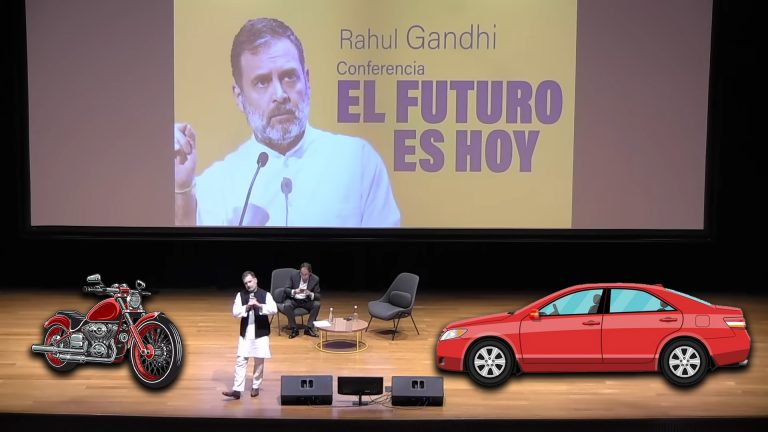
Darbhanga: Dhaba owner’s motorcycle goes missing after security personnel forcefully borrowed it for Rahul Gandhi’s Vote Adhikar Yatra

A man from Bihar’s Darbhanga has come forward with serious allegations that his Pulsar 220 motorcycle has gone missing after allegedly being taken forcefully by SPG commandos accompanying Congress leader Rahul Gandhi during the Voter Adhikar Yatra. Dhaba owner Shubham Saurabh said that the incident took place on August 27 when the rally went through Darbhanga.

Saurabh alleged that the SPG commandos had taken 7 motorcycles from the spot after having tea at his Dhaba. But while 6 of them were returned, he has not got his motorcycle back. He said that missing Pulsar 220 with registration number BR 07 AL 5605 is registered under his father-in-law Anil Rai’s name.

He said the incident unfolded at his roadside eatery near the NH-27. The commandos, he claimed, initially had tea at the Dhaba and then insisted on borrowing the parked motorcycle for a 2-km rally from Shahpur Chowk to Shobhan Chowk. Despite his initial refusal, he acceded under pressure. Along with the Pulsar 220, they also took six other motorcycles from the place similarly.

“I was attending visitors at the hotel when six security personnel came, asking for tea. In the meanwhile, they found the rally passing and requested me to hand over the keys of seven bikes parked on the campus, asking me to sit in the four-wheeler they had come with,” he said.

As per Shubham Saurabh, the other six bikes were later found scattered across the town, but his own remains untraceable. He said that he searched for the vehicle at various places, but could not find it. He talked with several people, but nobody could say anything.

In pursuit of his bike, Saurabh and his family scoured neighbouring districts of Muzaffarpur, Sitamarhi, Dhaka, and Motihari. He said that he has already spent around ₹15,000 to ₹20,000 in these searches. He further claimed that he has call recordings with the security personnel, who asked him to go to various places in search of the motorcycle.

Congress MLC Madan Mohan Jha said that Saurabh had been promised assistance after a scheduled party engagement in Patna. He added that there is a possibility that the motorcycle was stolen.

Meanwhile, local police officials confirmed they are looking into the matter, though Saurabh only informed the police verbally about the incident, and a formal written complaint is yet to be lodged.

Friendship, trade, defence, connectivity, cultural ties and more: PM Modi holds important talks with several world leaders during SCO reception

Prime Minister Narendra Modi on Sunday attended the official reception for Heads of State and Heads of Government at the Shanghai Cooperation Organisation (SCO) Summit in Tianjin, China. After the Chinese president officially welcomed all the delegates, PM Modi met with several world leaders ahead of the gala dinner.

All the delegates attending the SCO summit including PM Modi was received at the venue by Chinese President Xi Jinping and First Lady Peng Liyuan. After Xi greeted all the leaders, the customary group photo of all the leaders was taken.

After that, PM Modi interacted with several heads of state/government at the venue. He first met Nepali Prime Minister KP Oli. Posting a photo on X, he said, “India’s relations with Nepal are deep-rooted and very special.”

After that he met Maldives President Mohamed Muizzu, a month after he visited Maldives. PM Modi posted on X, “Interacted with President Muizzu of Maldives on the sidelines of the SCO Summit in Tianjin. India’s developmental cooperation with Maldives is greatly beneficial for our people.”

Prime Minister Modi also met Mostafa Madbouly, the PM of Egypt, at the SCO Summit. During the interaction he fondly recalled his Egypt visit a few years ago. He added that India-Egypt friendship is scaling newer heights of progress!

Next, he met Alexander Lukashenko, the president of Belarus. “We both are very optimistic about the beneficial opportunities ahead as far as our nations are concerned,” Modi posted on X. Notably, Belarus has been important ally of Russia in the war against Ukraine.

PM Modi also talked to Emomali Rahmon, the President of Tajikistan. He said that India’s trade and cultural linkages with the landlocked Central Asian nation are increasing and this is a wonderful sign.

He also met the president of another Central Asian country, President Tokayev of Kazakhstan. “Our nations are working closely in many key sectors, including energy, security, healthcare and pharma,” PM Modi posted on ?.

At the SCO summit, Prime Minister Narendra Modi then had a brief talk with Phạm Minh Chính, the Prime Minister of Vietnam. He said that India is very keen to further deepen ties with Vietnam in defence, trade, green energy and more.

In a significant meeting, he also met Senior General Min Aung Hlaing, the acting president of Myanmar. PM Modi said in a post on ?, “Myanmar is a vital pillar of India’s Act East and Neighbourhood First Policies. We both agreed that there is immense scope to boost ties in areas like trade, connectivity, energy, rare earth mining and security.”

Prime Minister Narendra Modi then had a meeting with Thongloun Sisoulith, the prime minister of Lao People’s Democratic Republic, another South East Asian nation. He said that “Closer friendship between our nations is greatly beneficial, especially ties in trade as well as culture.”

PM Modi also interacted with Serdar Berdimuhamedow, President of Turkmenistan. They exchanged perspectives on diverse issues.

After meeting Armenian President Nikol Pashinyan, PM Modi called it a very good interaction. “India and Armenia share warm and growing ties, rooted in friendship and mutual cooperation,” he said. This was first direct interaction between Indian and Armenian President after the US-brokered deal between Armenia and Azerbaijan.

PM Modi also posted on X about meeting President Shavkat Mirziyoyev of Uzbekistan. He said, “India and Uzbekistan are bound by a dynamic partnership that continues to expand across culture, economy and people-to-people ties.”

He further had an interaction with Sadyr Japarov, the president of Kyrgyzstan. Posting about it on X, he said, “A very productive conversation with Kyrgyz President Sadyr Japarov in Tianjin. Our nations share a robust partnership and we will keep working together to add more vigour to our developmental cooperation.”

Election Commission rubbishes propaganda of Soros-funded group of ‘journalists’ about Special Intensive Revision exercise in Bihar: Details

A fresh controversy erupted over Bihar’s draft electoral rolls after a report by the reporters’ collective claimed to have found 67,826 “dubious duplicate voters” across just 15 constituencies. According to the report, these alleged duplicates were registered with identical credentials, raising concerns about the purity of the State’s electoral list.

The collective’s findings, based on data mining, suggested large-scale duplication in the draft rolls published as part of the ongoing Special Summary Revision (SIR) 2025. However, the Chief Electoral Officer (CEO) of Bihar fact-checked the allegations on Sunday, 31st August, terming them misleading and premature.

In a detailed statement on X, the CEO said the report had ignored the statutory process through which draft rolls are corrected and finalised.

Draft rolls meant for public scrutiny, not final lists

Responding to the report, the CEO clarified that the Special Summary Revision (SIR) is still underway and that the published rolls are only a draft.

“The current draft rolls published under the SIR are not final. They are explicitly intended for public scrutiny, inviting claims and objections from electors, political parties, and all other stakeholders,” the CEO stated.

The statement further stated that any duplication at this stage cannot be taken as a “final error” or “illegal inclusion” because the law itself provides for correction during the claims and objections period.

Duplicate claims based on demographic similarities

The report’s claim of 67,826 duplicate voters was strongly contested by the CEO. The rebuttal explained that the figure was based on “subjective matching” of parameters like names, relatives’ names and age, which are not conclusive evidence of duplication.

“In Bihar, especially rural constituencies, it is common for multiple individuals to share identical names, parental names, and even similar ages,” he said. “The Supreme Court has recognised such demographic similarities as insufficient proof of duplication without a field inquiry.”

The report emphasised that Demographically Similar Entries (DSEs) are continuously identified and removed during the verification process. Any voter, political party, or citizen has the right to file objections with the Electoral Registration Officer (ERO).

Deduplication mechanism through ERONET 2.0

To counter the impression that duplicate entries go unchecked, the CEO highlighted the Election Commission of India’s deduplication mechanism.

The ECI uses its ERONET 2.0 software for detecting Demographically Similar Entries (DSEs), which flags probable duplicates.

These flagged cases are not automatically deleted but are subjected to ground verification by Booth Level Officers (BLOs) and EROs. This layered process ensures genuine electors are not disenfranchised by an automated algorithm.

In the case of Valmikinagar, it must be stated that a detailed report regarding the 5,000 persons alleged to be duplicates should be provided. Only then can any investigation be considered relevant. Merely giving out a number on an imaginary basis does not establish any fact as correct.”

Examples of duplicate voters under scrutiny

The report had also cited cases like “Anjali Kumari” of Triveniganj and “Ankit Kumar” of Laukaha to argue duplication. The CEO responded that these were isolated anecdotes which could have arisen from clerical errors, migration-related multiple applications, or misreporting at the household level.

The tweet confirmed that corrections were already underway: “Form 8 has been filled out for both cases of Anjali Kumari and Ankit Kumar.”

Allegations of ‘Locked’ data rejected

Another charge made by the reporters’ collective was that the electoral data had been deliberately “locked” to prevent machine-scale analysis.

Rejecting this, the CEO clarified: “Under Rule 22 of the Registration of Electors Rules, 1960, electoral rolls are made available in prescribed formats to ensure integrity and prevent misuse. Making rolls non-scrapable is a data protection safeguard, not an attempt to conceal duplication.”

The CEO also pointed to the Supreme Court’s directions in Kamalnath vs Election Commission of India (2018), which had already upheld such safeguards.

Statistical extrapolation ‘Speculative and Untenable’

The CEO took strong exception to the collective’s suggestion that the alleged duplication in 15 constituencies could be extrapolated to the entire state.

“The extrapolation that lakhs of duplicates could exist statewide is speculative and legally untenable,” he said, stressing that courts have repeatedly ruled that such allegations must be backed by verified evidence, not statistical projections.

The legal framework provides safeguards

The CEO also underlined that the law already has strong safeguards to address duplication.

“Section 22 of the Representation of the People Act, 1950, empowers EROs to delete names of duplicates if conclusive proof emerges. Hence, there exists a statutory mechanism to continuously address duplication,” he said.

Any elector or booth-level party agent can file specific objections under Rule 13 of the Registration of Electors Rules, 1960 if they suspect duplication, as further written in the tweet. 

Allegations premature, says Bihar CEO

Concluding the rebuttal, the CEO said the presence of some provisional duplicate entries in the draft roll does not invalidate the revision exercise.

“The report’s conclusions that the SIR facilitates fraud or that duplicates will decisively impact elections are speculative, premature, and contrary to the legal framework governing electoral roll management.”

The Reporters’s Collective and its links to American Deep State

It is important to look at the organisations behind Reporters’ Collective. A look at the list of donors of its parent organisation shows that it is backed by usual suspects behind the ongoing anti-India campaign.

Reporters’ Collective is run by the National Foundation for India, an FCRA-registered NGO.

A perusal of its donor list shows that the National Foundation for India is funded by the Ford Foundation, the Open Society Foundation of George Soros, the Omidyar Network, and the Rockefeller Foundation, among others.

National Foundation for India’s donor list from its annual report

All these organisations are part of the American Deep State network and have funded numerous anti-India campaigns and initiatives. The Reporters’ Collective is a part of the anti-India front of the American Deep State.

The fake news published by it in December last year is in line with the textbook approach adopted by George Soros and his Open Society Foundations to influence civil society and ‘distort’ public perspectives across different nations.

‘Don’t view India and China through a third-party lens’, said PM Modi during his meeting with Chinese President Xi Jinping: Here are the highlights of the meeting

As Prime Minister Modi landed in China, after a gap of 7 years, to attend the Shanghai Cooperation Organisation (SCO) Summit on Saturday (30th August), he had a bilateral meeting with Chinese President Xi Jinping ahead of the annual summit.

During the historic meeting, which comes amid the US tariffs, the two global powers vowed to strengthen the relations between the two countries. Both PM Modi and President Xi Jinping emphasised the significance of strong India-China ties, which have been facing turmoil since the Galwan Valley clash in 2020.

In his opening remarks, PM Modi expressed India’s resolve to take forward its relationship with China. “We are determined to take our relationship forward based on mutual trust, respect and sensitivity. We extend our best wishes for the successful hosting of the SCO Summit, and I thank you for the invitation for this visit and this meeting,” said PM Modi.

Similar sentiments were echoed by President Xi Jinping, who highlighted that India and China are two ancient civilisations and important members of the Global South. He added that the ‘dragon’ and the ‘elephant’ need to come together to enable each other’s success. “China and India are two ancient civilisations in the East. We are the world’s two most populous countries, and we are also important members of the Global South. We both shoulder the historical responsibility of improving the well-being of our two peoples, promoting the solidarity and rejuvenation of developing countries, and promoting the progress of human society. It is the right choice for both countries to be friends who have good neighbourly and amicable ties, partners who enable each other’s success, and to have the dragon and the elephant come together, said the Chinese President.

A statement released by India’s Ministry of External Affairs (MEA) after the meeting, stated that the two countries affimed that they are development partners and not rivals and that their differences should not turn into disputes.

Here are the highlights of the meeting between PM Modi and President Xi Jinping-

Relations based on mutual trust, respect and sensitivity

Affirming the peace and stability on the LAC after the disengagement process following the Galwan Valley clash, PM Modi said that the relations between the two countries should be based on mutual trust, respect and sensitivity. He pointed out that the resumption of the Kailash Mansarovar Yatra and direct flights between India and China mark the movement of the two countries in a positive direction.

India and China need to be friends, uphold multilaterlism

Hinting at the exisitng uncertain ties of both countries with the US, President Xi Jinping said that it was “vital for India and China to be friends and good neighbours amid the rapidly changing world. Recognising the role of their economies in stabilising the world, the two leaders asserted that they need to expand bilateral trade and investment relations and reduce trade deficit.

India and China are development partners, not threats to each other

The Chinese President asserted that India and China are development opportunities for each other and not threats. He cautioned that the two countries are at a crucial stage of development and regeneration, and therefore, they should focus on development. Jinping said that border issues should not define the India-China relationship.

India-China relations should not be seen through a third country lens

Stressing the strategic autonomy of the two countries, Prime Minister Modi said that India-China relations should not be seen through the lens of a third country. Both leaders agreed that the countries need to expand common ground on bilateral, regional and global issues and challenges, including terrorism, as well as fair trade in multilateral platforms.