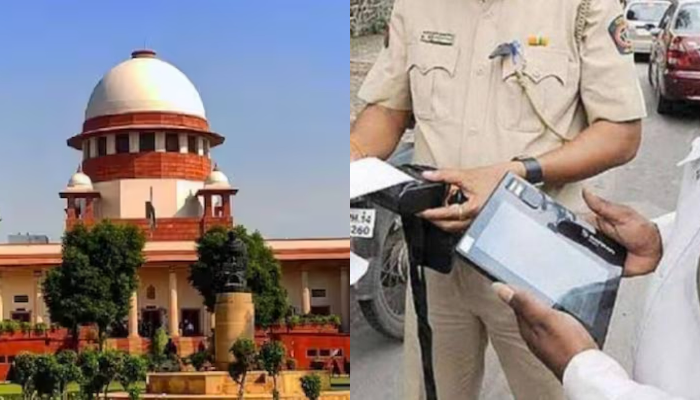
The authorities might suspend a driver’s license if they fail to pay their traffic e-challan (fine) within three months. Similarly, if a driver receives three challans in a fiscal year for reckless driving or jumping red lights, their license could be seized for a minimum of three months, reported “The Times of India.”
These are a few of the steps the government intends to take to curb irresponsible drivers after it was discovered that there was widespread non-compliance and only 40% recovery of e-challan amounts, which are fines for breaking traffic laws. According to sources, if an individual has at least two outstanding challans from the previous financial year, the government has developed a system to link higher insurance costs.
The specifics were hammered up in response to a Supreme Court judgement that required 23 states and 7 union territories to submit compliance reports detailing the Central Motor Vehicles Act’s provisions for electronic monitoring. According to section 136A of the act, advanced technology including speed and CCTV cameras, speed guns, body-worn cameras and automatic number plate recognition systems must be deployed to improve traffic management and law enforcement. This is essential for impartial regulation and detection.
The report conveyed that Delhi has the lowest rate of recovery of fines raised by e-challans at just 14%, followed by Karnataka 21%, Tamil Nadu and Uttar Pradesh at 27% each and Odisha at 29%. Major states with recovery rates between 62% and 66% include Rajasthan, Bihar, Madhya Pradesh, Maharashtra and Haryana. According to data, around 80% of people who addressed the courts or had their challans referred to them received relief from the fines levied by the police.
People don’t pay penalties promptly for a number of reasons, according to sources. These consist of defective challans and late challan alerts. They also stated that the government will develop a thorough standard operating procedure that will include minimum requirements for cameras and guarantee that notifications of outstanding challans are given to drivers or vehicle owners on a monthly basis until payment is received.
For instance, a driver or owner of a car will receive an e-challan notification within three days and they have thirty days to either accept and pay the fine or contest it before the relevant grievance authority. Failure to take action within the time period would be seen as an admission of responsibility and failure to make the payment within 90 days would result in the suspension of one’s driver’s license (DL) or registration certificate (RC) until the amount is received.
The DL or RC holder can upload data to contest the fine and report inaccuracies in a challan. The complaint must be resolved by the grievance authority within 30 days, otherwise the challenge will be dismissed. The government will provide drivers and owners a one-time window of three months to confirm and update data on the Vahan and Saarthi websites to address the persistent problem of people changing their addresses and mobile phone numbers without updating authorities. Afterward, providing services like Pollution Under Control (PUC) and insurance renewal, DL and RC will need updating mobile phone numbers.
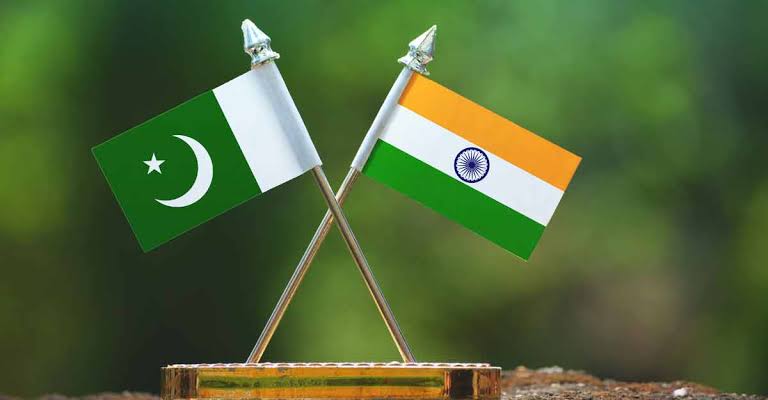
Pakistan (an acronym in the name of a country), has been unstable since the beginning of time, time begins in Pakistan in 1947 just to be clear. Before that, nothing existed, and then boom, there came Pakistan. Since the beginning of time (that is 1947), Indians have been subjected to “Why a stable Pakistan is better for India”, since then, neither Pakistan got stable, nor did Indian journalists stop writing these reports.
Now let’s analyse why a stable Pakistan is better for India. First of all, a stable Pakistan is an obvious oxymoron but let’s just go with it for a minute or two or ten.
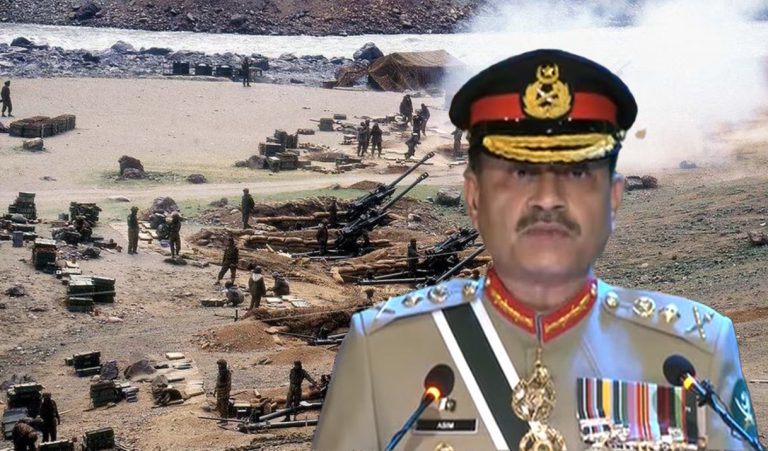
A stable Pakistan will mean they will have time to focus on sending terrorists in Kashmir, now tell me, how is that not beneficial for India? A stable Pakistan resulted in Kargil War after all, now how was that not beneficial for India, sorry, maybe it was not.
However, what about the terrorism in Kashmir, that started because of a stable Pakistan, how were mass murders in Kashmir Valley not better for India, oh, never mind.
Ok forget everything else, how is heroin being thrown across the Punjab border not better for India, because that happens only when Pakistan is stable. No, you tell me, how is throwing drugs in India not helpful for India. You can’t, because you are hateful.
Then there is the case of Thar desert, an unstable Pakistan struggles to smuggle all kinds of things through there, on the other hand, a stable Pakistan smuggles all kinds of things from there.
Hence proved that if there is a stable Pakistan, they will only do drugs smuggling and import terrorism in India, while they currently do drugs smuggling and import terrorism in India.
A section of Indians has long been enamoured with our arch-enemy and neighbour, the Islamic Republic of Pakistan, deluded into believing that a flourishing and stable Pakistan would prove to be a game-changer for the Global South, unlock endless opportunities for trade and commerce, and contribute immensely in mutual growth and establishing a lasting peace.
This wishful thinking, often championed by the Left-leaning intelligentsia in media, academia, and policy-making, resurfaces every so often in op-eds and television debates. Their argument? India should aid Pakistan in stabilizing itself, for a prosperous Pakistan would somehow translate into regional harmony and security.
Indian liberals still enamoured by ‘Aman Ki Asha’ delusion
To this end, Shekhar Gupta’s The Print recently published a YouTube video analysis of how a stable Pakistan augurs well for India, and how the Balochistan insurgency, which critics attribute to India, isn’t helping New Delhi’s cause, and causing more strain in an already frosty relationship between India and Pakistan.
But let’s be clear: the idea that ‘a stable Pakistan will be better for India’ is an irrational narrative propagated by the same lobby that has been selling the ‘Aman Ki Asha’ dream for decades.
Pakistan’s very foundation rests on the divisive Two-Nation Theory, an ideology championed by Syed Ahmad Khan, Mohammed Ali Jinnah, and other architects of partition. From its inception, Pakistan was built on an identity defined in opposition to Hindu-majority India, ensuring that enmity towards its eastern neighbor would remain a key tenet of its national psyche.
Since then, Pakistan and its successive leadership have endeavoured little to rise above their anti-Hindu bigotry, infuse progressive ideals among their populace, and steer the country on the path to development and growth.
Instead, the animus for India has only grown, as witnessed by several wars waged by Pakistan against India, be it in 1948, 1965, 1971, or recently in 1999. And since the early 1990s, it has launched a proxy war against India by formulating its military doctrine ‘Bleed India with a Thousand Cuts’—using non-state actors to carry out terror attacks in India.
And yet, a section of Indians is labouring under the belief that an economically and politically stronger Pakistan bodes well for India in increasingly uncertain times, with wars and military conflicts being the order of the day.
As such, The Print is not the only Indian media outlet to harbour fallacies of a stronger Pakistan complementing India’s rising stature in geopolitics and its emergence as a growing regional power. The same erroneous sentiment has been echoed by several policymakers, academics, and business leaders who fail to acknowledge the fundamental ideological differences between the two nations. An opinion piece published in The Tribune in October 2024 contended that resuming trade with Pakistan will also help India.
An opinion piece published in The Tribune argued for normalising trade ties between India and Pakistan.
How flourishing Pakistan threatened India’s internal security and peace
What’s even more damning is that Pakistan’s period of relative economic and political stability—from the 1980s to the early 2010s—coincided with some of the worst attacks against India. These decades saw a sharp escalation in Pakistan-backed terrorism, culminating in the forced exodus of Kashmiri Hindus from their homeland, a continuous stream of terror attacks across Indian cities, and unprecedented violence in Jammu & Kashmir.
During the late 1980s and 1990s, when Pakistan was politically and economically stable under military rulers like General Zia-ul-Haq and later Pervez Musharraf, it aggressively funded and trained Islamist radicals to spread terror in India. The ISI played a key role in radicalising Kashmiri youth and equipping militant groups like Hizbul Mujahideen, Lashkar-e-Taiba, and Jaish-e-Mohammed, leading to the 1990 genocide and exodus of Kashmiri Pandits. Thousands of Hindus were either killed or forced to flee under threat of execution and mass rapes, as terrorists openly declared their intent to create an Islamic state in Kashmir.
Meanwhile, Pakistan’s economic growth allowed it to fund extensive networks of sleeper cells and terrorist groups that carried out devastating attacks on Indian soil. The 1993 Mumbai bombings, the 2001 Indian Parliament attack, and numerous bomb blasts in Delhi, Hyderabad, Jaipur, and Bangalore through the 2000s were all orchestrated by Pakistan-based outfits with full backing from its military apparatus.
In contrast, as Pakistan’s economy deteriorated over the past decade, so has its ability to wage terror against India. Since the late 2010s, with Pakistan struggling to pay its debts, its state machinery weakening, and terror groups splintering due to infighting, India has seen a sharp decline in major terror attacks. Islamabad’s financial crisis has led to the collapse of its ability to fund large-scale operations against India. The rise of the Balochistan insurgency and growing internal conflicts in Pakistan-occupied territories have forced its military to divert resources inward, weakening its external misadventures.
A stable Pakistan does not mean a peaceful Pakistan. It means a Pakistan with more resources to pursue its decades-old objective of undermining India, be it through state-sponsored terrorism, diplomatic hostility, or radicalising segments of Indian society. A weakened Pakistan, on the other hand, diminishes its capacity to be a menace to India, reducing the security threats emanating from across the border, and also unburdening New Delhi from devoting significant resources to counter cross-border threats.
Those advocating for Pakistan’s stability should ask themselves: Has a stable Pakistan ever resulted in a friendlier Pakistan? The historical evidence overwhelmingly suggests the opposite. A strong Pakistan has always meant a more aggressive and terror-exporting Pakistan, while a weakened Pakistan has translated into relative peace for India.
India must remain clear-eyed about its adversary. While diplomatic engagement and economic interactions have their place, they must be guided by realism rather than wishful thinking and romanticised illusions of mythical harmony. The notion that Pakistan’s stability is a prerequisite for India’s progress is not just naive—it’s dangerously misleading. India must focus on its growth and security, without being encumbered by the fallacies of amity with a nation whose raison d’être is an unending enmity with India.
India’s strategic indifference to an imploding Pakistan
In the wake of Balakot airstrikes, PM Modi made a striking speech stating that Pakistan will die its own death—a thought that reflects a pragmatic approach to India’s geopolitical strategy. For decades, India’s Pakistan policy has oscillated between engagement and confrontation, but Modi’s assertion signals a shift towards strategic indifference. Instead of being consumed by Pakistan’s internal crises, India is better served by focusing on its development, economic growth, and global aspirations. The comments were also a scathing indictment of Pakistan’s self-destructive policies—its economic mismanagement, military overreach, and internal instability—will naturally lead to its decline, rendering India’s active intervention unnecessary.
This paradigm of strategic indifference delivers a body blow to the banal narrative that a stable Pakistan is in India’s best interest. As Pakistan reels under economic collapse, political chaos, and intensifying internal insurgencies—crises of its own making—its capacity to orchestrate cross-border terrorism has significantly waned. Modi’s stance is one of pragmatic realism: rather than expending resources to stabilise an inexorably hostile neighbour, India must remain focused on its own strategic priorities, allow Pakistan to bear the consequences of its self-inflicted decline.
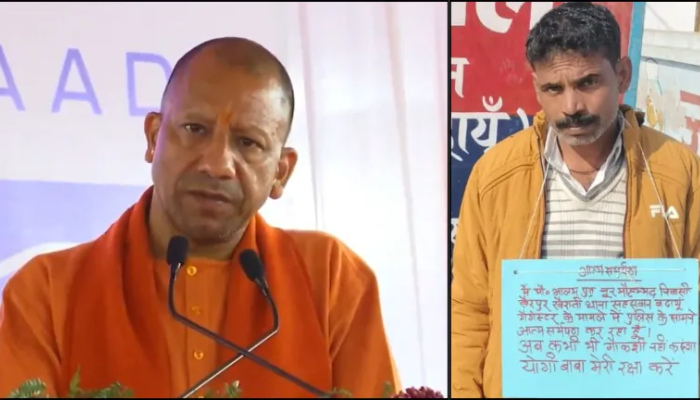
For the past eight years, Uttar Pradesh has been under the governance of the Bharatiya Janata Party (BJP), with Chief Minister Yogi Adityanath at the helm. From day one, Adityanath made it clear that law and order would be his administration’s top priority—and the results speak for themselves. The state has witnessed an 85% decline in heinous crimes, a feat largely attributed to a no-nonsense approach to policing and crime control. Encounters, crackdowns on mafias, and a bolstered police force have redefined governance in Uttar Pradesh.
From “Gundaraj” to Good Governance
When the BJP came to power in 2017, it did so on a promise to end what it called the Samajwadi Party’s “Gundaraj”—a state plagued by crime and lawlessness. Yogi Adityanath wasted no time in sending a strong message. His government swiftly moved to seize the assets of known criminals, tighten law enforcement, and ensure that offenders either ended up behind bars or faced the consequences of their actions.
85% drop in heinous crimes
The impact of these tough policies is evident. Crimes such as theft, robbery, and kidnapping have seen a drastic reduction, supported by hard data. According to a state government report:
Robberies have plummeted by 85% since 2016.
Theft cases have dropped by 77%.
Murders have declined by 41%.
Dowry deaths have also seen a significant dip.
Once notorious for highway robberies, western Uttar Pradesh is now considered much safer. The state police attribute this transformation to increased surveillance, widespread CCTV deployment, and a stronger, high-tech police presence. The addition of modernized vehicles and upgraded police infrastructure has further amplified law enforcement capabilities.
Over 8,000 encounters and a fearsome crackdown
Under Yogi Adityanath’s leadership, the state’s police force has been empowered like never before. Over the past eight years, they have carried out more than 8,000 encounters, resulting in the elimination of 222 criminals and injuries to over 8,118 offenders.
This aggressive crackdown has instilled such fear that images of criminals surrendering at police stations have become commonplace. More than 80,000 offenders have been jailed, and over 900 individuals have been booked under the National Security Act (NSA). Many of these criminals were either involved in serious crimes or accused of attempting to incite communal violence.
Bringing down the mafia empire
Yogi Adityanath has not shied away from taking on the deeply entrenched mafia network in Uttar Pradesh. Organized crime had been institutionalized since the 1990s, with powerful gangs controlling entire regions and amassing massive wealth through illegal means. The Yogi administration has systematically dismantled these criminal empires, confiscating properties worth over ₹4,000 crores.
The state’s strict implementation of the Gangster Act has led to the seizure of assets valued at ₹14,000 crores. Law enforcement has filed over 700 cases against 68 major mafias and more than 1,400 gang members. Additionally, over 350 arms licenses belonging to these mafias have been revoked. As a result, areas once feared for their association with notorious criminals like Mukhtar Ansari and Atiq Ahmed are now witnessing a wave of investment and economic resurgence.
Strengthening the police force for long-term security
Recognizing that law enforcement is only as effective as the force behind it, the Yogi government has prioritized improving police infrastructure and manpower. In 2017, the Uttar Pradesh Police Department faced a massive shortfall of over 2 lakh officers. Through sustained recruitment drives, that gap has now been reduced to around 50,000, with the latest hiring of 60,000 constables.
To further bridge the gap, the government has announced plans to recruit an additional 28,000 personnel in April, ensuring that nearly 90% of the required police force is in place. This initiative not only strengthens law enforcement but also creates job opportunities for Uttar Pradesh’s youth. So far, 2.16 lakh young individuals have secured permanent government jobs through police recruitment efforts.
Infrastructure has also seen a significant boost. The government has built 126 new police stations, making law enforcement more accessible across the state. Additionally, 86 new outposts have been established, and modern Scorpio vehicles have been added to the UP112 emergency service fleet.
A safer, more secure Uttar Pradesh
Yogi Adityanath’s tenure has marked a transformative shift in Uttar Pradesh’s law and order situation. The numbers and stories of change reflect a state that has moved from crime-ridden chaos to a model of strong governance and security. With continued efforts to modernize the police force and eliminate criminal networks, the Yogi government’s legacy on law enforcement is set to leave a lasting impact on Uttar Pradesh’s future.
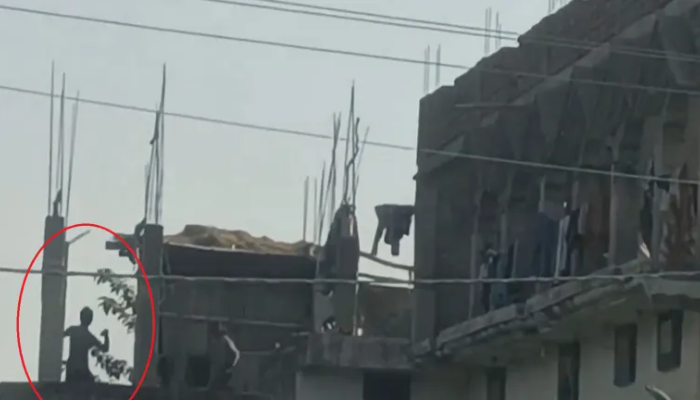
Hindus were attacked on the very first day of Navaratri in Darbhanga, Bihar, where Muslims gathered at the house of a person named Alauddin and pelted stones, injuring multiple individuals. The video of the incident is going viral on social media. This is the same area where Hindus were attacked on Holi as well. The authorities from three police stations have been deployed after the stone-pelting after the matter was settled at the time through dialogue between the locals and the cops. This incident took place on 30th March around 4:30 pm.
According to reports, devotees were returning from the Durga temple following the Kalash Shobha Yatra when stones were hurled at them in the Kewatgama Panchayat of the Kusheshwarsthan police station area. The assault created chaos, especially among women and children, who screamed in fear and ran for cover. Islamists, who had already gathered on the roof to await the Shobha Yatra, reportedly carried out the attack.
Villagers stated that Muslims assembled on the roof of the house of one Mohammad Alauddin, who lives in Pachhiyari Rahi village, from where they launched the attack. They began throwing stones as soon as the procession passed from the location. Panic spread among the devotees as they came under attack, with stones raining down on them. Some women reportedly lay on the ground to shield their children, while many sustained injuries in the assault.
दरभंगा – कलश शोभा यात्रा से लौट रहे लोगों पर पथराव, इलाके को पुलिस छावनी में किया तब्दील
केवटगामा पंचायत के पछियारी रही गांव में दुर्गा मंदिर में कलश स्थापना के बाद लौट रही श्रद्धालुओं की भीड़ पर समुदाय विशेष के लोगों ने पथराव कर दिया। #EidAlFitr#Navratripic.twitter.com/WLv6ZBiT2z
A large police force from the Biraul, Tilkeshwar, and Kusheshwarsthan police stations arrived in the area just as the word spread about the stone-pelting. The police controlled the situation, but the atmosphere in the hamlet remained tense. People are reluctant to leave their homes because they are afraid. Alok Kumar, also known as Vikas Kumar, the former head of the Panchayat, conveyed that these acts destroy the village’s unity.
Kusheshwarsthan Police Station Officer Rakesh Kumar Singh informed that the situation is now calm and cops have been deployed in the village. SSP (Senior Superintendent of Police) Jagunath Reddy also assured that the situation is normal and no one needs to worry. However, the residents disclosed that this peace is just superficial as fear and anger persist.
A similar incident occurred on Holi two weeks ago when a few members of the Muslim community attacked the young people in the hamlet who were celebrating Holi. A dispute broke out at initially, but soon things got out of hand and sticks were used, as well as stone-pelting ensued. Tension increased in the village as many youths were hurt. The cops then spoke with all sides and utilized a PR bond to defuse the situation.
Union Parliamentary Affairs Minister Kiren Rijiju on Monday dismissed the opposition against the proposed Waqf Amendment Bill, saying that those opposing the same are “powerful people” while accusing them of “misguiding” people.
He said that criticising the bill was everyone’s right, but it must be substantial.
“Who are those who are opposing this bill? There are a few powerful people who have encroached upon the Waqf properties. They are misguiding people. They are saying the bill is unconstitutional. It’s everyone’s right to criticise things, but criticism must have some substance in it,” Rijiju told ANI.
Speaking about the letter sent by the Kerala Catholic Bishops’ Council (KCBC) extending support to the Waqf Amendment Bill and requesting MPs in the state to do the same, Rijiju said that many organisations across religious lines are supporting the bill proposed by the central government.
The Union Minister asserted that the amendment bill was in interest of poor Muslims, children and women. It would, he added, ensure accountability and transparency when it comes to managing properties under the Waqf board.
“The request letter sent by the Kerala Catholic Bishops’ Council is extremely important for everybody. Many of the organisations across communities are supporting the Waqf (Amendment) Bill. We must understand that the Bill is basically in the interest of the poor Muslims, children and women and also to ensure that the properties of the Waqf are managed in a transparent and accountable manner. We ensure the welfare of the common people,” Rijiju said.
Kerala BJP President Rajeev Chandrasekhar on Monday said that many Christian organisations, including the Kerala Catholic Bishops Council (KCBC), are extending support to the Waqf Amendment Bill proposed by the centre after poor families in the Munambam suburb claimed to be living under the threat of their land being seized by the Waqf board. He urged the MPs in the state to assist people instead of engaging in “appeasement politics”.
“Kerala Catholic Bishop’s Council and many other Christian organisations are asking the MPs from Kerala to take a stand on the Waqf (Amendment) Bill and vote in favour of it. Because in Kerala, in a place called Munambam near Cochin, hundreds of poor families are having the threat of their land being seized by the Waqf,” Chandrasekhar told ANI.
Highlighting the agitation being carried out for years against the threat of land being seized, the BJP leader urged the MPs in Kerala to fulfil their duties to assist people in trouble instead of engaging in “appeasement politics”.
“This is an issue for which they have been agitating for months and years, and it is time that the MPs of Kerala do what their duty to do, which is to help people who are in trouble, help people and solve their problems rather than only play appeasement politics. Today is an important day. Congress MPs must take a position and decide. The Waqf (Amendment) Bill is not against any community. It is about aligning a law to the constitutional values of India,” Chandrasekhar said.
Union Minister Nirmala Sitharaman also welcomed the support extended by the KCBC to the Waqf bill.
“A welcome step by the Kerala Catholic Bishops Council (KCBC). Their call is for amending the sections which are “unfair” and “anti-constitutional” in the existing Waqf Act,” Sitharaman posted on X.
These reactions come after the KCBC urged MPs to vote in favour of amending the “unconstitutional” and “unjust” provisions of the Waqf Act.
The statement issued by Fr. Thomas Tharayil of the KCBC secretariat said that provisions in the Waqf law, which legitimise the “illegal claims” in such a way that people in Munambam are unable to exercise their revenue claims on the land, need to be amended.
“The Farooq College management, which sold the land to the residents of Munambam, has asserted that the land in question was received as a gift, the MPs should cooperate to amend the waqf bill Which has provisions to raise claims against this. KCBC will send letter to each MPs requesting to vote in favour of amending waqf bill,” KCBC said in a statement.
Around 610 families of Munambam, a coastal village in the Ernakulam district, have been protesting against the claim by the Waqf Board on their land.
(This news report is published from a syndicated feed. Except for the headline, the content has not been written or edited by OpIndia staff)
On 27th March, the Mohanlal-starrer Malayalam film ‘L2: Empuraan’ was released. Within hours, the movie faced severe backlash for the misportrayal of the 2002 Gujarat riots. The movie has shown Hindus as insensitive and merciless, using the context of the Godhra riots. The movie has pushed an anti-Hindu narrative. Reportedly, there is a scene in the movie where a Muslim family is shown as being brutally murdered by Hindu right-wing extremists.
Following the backlash, Mohanlal issued a statement on 30th March and acknowledged that certain aspects of the film had caused distress to his fans. He assured that the team had decided to remove the references that led to the backlash.
“I have come to know that some political and social themes that were included in the unveiling of Empuran, the second part of the Lucifer franchise, have caused considerable distress among many of my loved ones,” the actor wrote in a Facebook post.
“As an artist, it is my duty to ensure that none of my films promote hatred towards any political movement, ideology, or religious group. Therefore, both I and the Empuran team express our sincere regret for the distress caused to my dear ones, and we all take responsibility for it, with the realization that such issues must be removed from the film,” he wrote in Malayalam.
Sukumaran, playing second fiddle to Mohanlal’s character in the movie, portrayed a character named Zayed Masood. The controversial scenes relating to the Godhra riots appear in the introduction to the background of Sukumaran’s character. Besides, the movie allegedly shows how the then-ruling party, which was the BJP led by erstwhile Gujarat CM Narendra Modi, misused the central agencies during the riots.
According to media reports, the film opened with a disturbing sequence depicting a Muslim village being burnt during the post-Godhra riots. Following the scene, there was a series of graphic and intense sequences, including Hindu men mercilessly beating a Muslim child and committing violence against a pregnant Muslim woman.
Amid the ongoing controversy around the movie, a letter written by a Christian man named George Joseph has resurfaced, which was published in Mathrubhumi Daily in April 2002.
Letter exposed pre-planned conspiracy in Godhra carnage
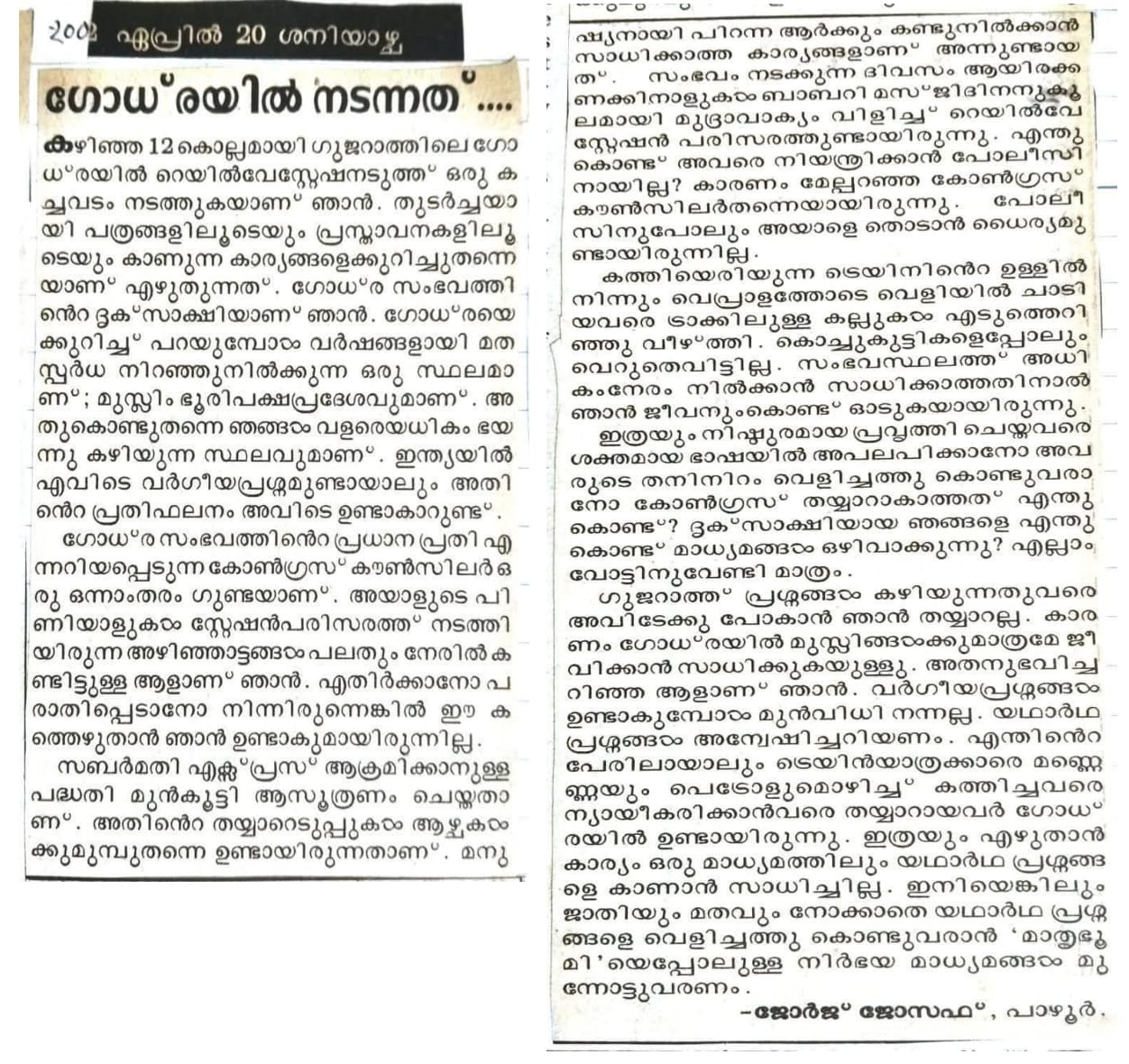
On 20th April 2002, almost two months after the deadly Godhra train burning incident that claimed the lives of 59 Hindu karsewaks returning from Ayodhya, a Christian man named George Joseph from Pazhoor wrote a letter to Mathrubhumi Daily describing the day of the incident in his own words. The letter was published in the newspaper in Malayalam.
George had been running a small business for 12 years near the Godhra Railway Station, where the incident that led to the Gujarat riots in 2002 took place. Being an eyewitness to the Godhra carnage, his testimony through the letter gives a true picture of the day, busting the lies that the left-liberals have narrated for over two decades in the media.
Letter written by George Joseph to Mathrubhumi Daily. Source: Ramith18/X
He noted that, being a Muslim-dominated area, Godhra experienced a deep communal divide and tension for many years. Non-Muslims like him lived under great fear and constant tension, as any communal unrest across the country used to have a drastic impact in Godhra. According to George, the main culprit behind the Godhra carnage was the Congress councillor. His cronies indulged in the most condemnable rowdy acts in the station surroundings multiple times, and he was a witness to such acts. He categorically suggested that if he had filed a complaint against them, he would not have been alive to write the letter.
George stated that the attack on the Sabarmati Express was a pre-planned exercise. The plan was made many weeks before the incident, and it was impossible to witness what had happened on the day of the attack. “Thousands of people, shouting slogans in favour of the Babri Masjid, were present in the railway station surroundings on that fateful day. Why did the police not try to control them? The Congress councillor was the main reason for that. Even the police did not have the guts to touch him,” he wrote.
Those who managed to jump out of the burning bogie, including children, were mercilessly stoned to death by the mob. George had to run for his life, as it was impossible to stay there as an eyewitness for a longer period of time. “Why is the Congress Party not prepared to condemn and expose the real colour of the culprits? Why is the media selectively avoiding eyewitnesses like us?” he questioned, while asserting it was all about vote politics.
George added that until the problems were resolved, he was not planning to go back. According to him, only Muslims could live peacefully in Godhra. “When communal problems take place, it is not correct to make a pre-judgement without actually analysing the real root of the problem. There are many people who still justify the merciless acts of burning alive the passengers of the Sabarmati Express with kerosene and petrol,” he concluded.
Verbetim translation of the letter
Saturday, April 20 What happened in Godhra…
For the past 12 years, I’ve been running a small business near the railway station in Godhra, Gujarat. I’m writing about things I’ve continuously seen in newspapers and public statements. I was an eyewitness to the Godhra incident.
When we talk about Godhra, it has for years remained a place filled with communal tension; it is also a Muslim-majority area. That in itself makes it a very frightening place for us. Wherever communal issues arise in India, their echoes are felt here too.
The main accused in the Godhra incident, known to be a Congress councillor, is a first-class thug. I’ve personally seen the chaos his men used to create around the station. Had I tried to oppose or complain, I wouldn’t be alive to write this letter today.
The plan to attack the Sabarmati Express was premeditated. Preparations had started weeks in advance. What happened that day were things no human being should have to witness. Thousands had gathered around the railway station that day, chanting slogans in support of the Babri Masjid. Why didn’t the police control them? Because the same Congress councillor was behind it. Even the police didn’t have the courage to touch him.
Those who leapt out of the burning train in panic were pelted with stones from the tracks. Even children were not spared. I had to flee to save my life because it was impossible to stay at the scene.
Why does the Congress not condemn, in strong words, the brutality of those involved in such a heinous act or expose their true faces? Why do the media ignore eyewitnesses like us? All for the sake of votes.
Until the issues in Gujarat are resolved, I am not ready to return there. Because in Godhra, only Muslims are able to live. I say this from personal experience. When communal tensions flare up, prejudices are dangerous. We must investigate the real issues. People in Godhra were ready to justify burning innocent train passengers alive with kerosene and petrol — no matter the cause. I’m writing all this because I could not find any media outlet reporting the truth. Even now, fearless media like Mathrubhumi must step forward to expose the real issues, regardless of caste or religion.
— George Joseph, Pazhoor
The truth of the Godhra riots
The Godhra riots are perhaps among the most misrepresented and the most politicised events in the country’s history of communal riots. While the riots have been used by politicians, media houses and left liberals over the years to paint an anti-Hindu narrative, the carnage that preceded the riots, in which 59 karsevaks were charred to death in a train coach set on fire by a Muslim mob, has never found mention in that narrative.
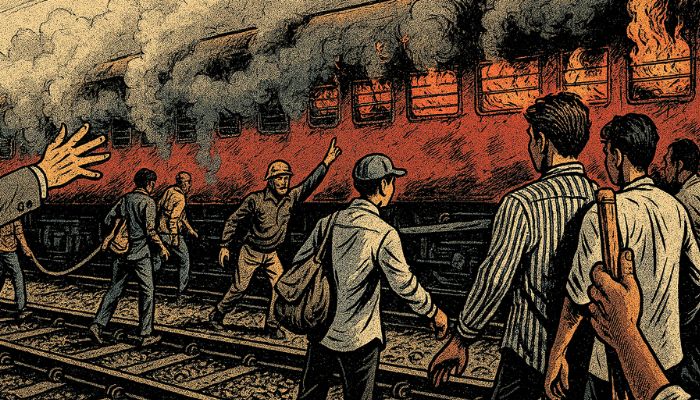
On 27th February 2002, the Sabarmati Express, after running four hours late, reached Godhra station by 7:40 am. at about 3:30 am. Coach S6 of the train was carrying 59 karsevaks returning from the Ramjanmabhoomi site in Ayodhya. Within minutes of the train arriving at the station, a mob of around 2000 Muslims from the nearby Muslim-dominated area of Signal Falia surrounded the coach carrying karsevaks and set it on fire. All the karsevaks inside the coach, including 25 women and 15 children, were burnt alive.
After years of judicial trial, the trial court convicted 31 Muslims on 22nd February, 2011, for the Godhra massacre. The convictions were later affirmed by the Gujarat High Court in 2017. In February 2003, one of the accused gave a judicial confession in which he admitted that the Godhra carnage was a pre-planned attack.
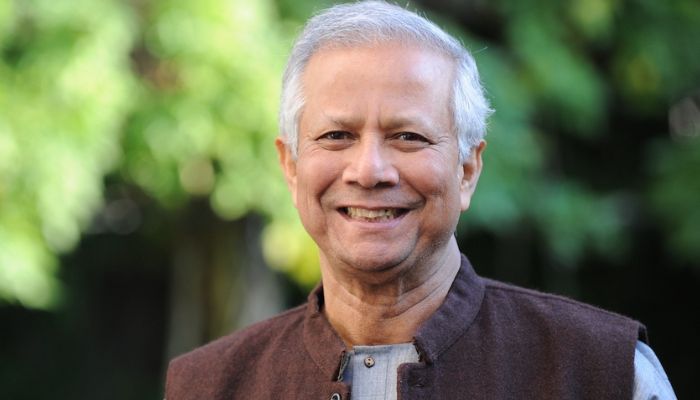
In less than seven months into his tenure, Bangladesh’s Chief Advisor, Muhammad Yunus, began to fall short of his lofty promises to prioritise rooting out corruption. This raised serious concerns about his commitment to the anti-corruption cause.
In an article published by Anjuman A Islam in Eurasia Review, since assuming control of Bangladesh’s interim government on August 8, Muhammad Yunus, a Nobel Peace Laureate, vowed to make rooting out corruption his top priority. He declared that his mission was to rebuild Bangladesh, with a focus on eliminating the abuse of state power and ushering in a new era of accountability. Despite his initial proclamations to the world, Yunus and his advisors have been accused of engaging in practices that contradict the values they promised to uphold.
Anjuman highlighted that a recent report by a Bangladesh newspaper revealed several of Yunus’s advisors have been using multiple vehicles meant for public service, diverting them for personal use and violating the rules that allow only one vehicle per advisor. This misuse of taxpayer-funded resources has sparked outrage, especially as it comes amid Yunus’s promises of transparency and accountability.
He further stated, “Alarmingly, all the advisors and the office of Yunus sought to brush this glaring abuse by advisors under the carpet until the newspaper broke the massive irregularities that Transparency International Bangladesh’s chapter executive Director Iftekharuzzaman called a glaring violation with the spirit of the July August revolution.”
This blatant misuse of state power by his advisors has further damaged Yunus’s attempt to portray the Awami League as the sole source of corruption in the country.
In a sharp contrast to his anti-corruption rhetoric, Yunus has also faced backlash for the swift approval of large-scale business ventures linked to him and his associates. Within just two months of taking power, his microcredit institution, Grameen Bank, was granted a five-year tax exemption, and other businesses connected to Yunus or his family members received rapid government approvals, Anjuman mentioned in his article.
One such approval overturned a prior High Court ruling, exempting Yunus’s Grameen Kalyan organization from a staggering BDT 666 crore in taxes. Additionally, a private university–Grameen University–was approved, allegedly benefiting Yunus’s inner circle.
Meanwhile, labor rights activists, anti-corruption campaigners, and lawyers have expressed concerns over Yunus’s silence regarding the rapid acquittal of cases filed against workers from organisations he once led. These cases, filed before August 5, were swiftly dismissed without public explanation, raising further doubts about the integrity of Yunus’s administration, as cited in the Eurasia Review article.
What began as an ambitious reform agenda, driven by promises of a corruption-free Bangladesh, now risks descending into a scandal-ridden administration.
(This news report is published from a syndicated feed. Except for the headline, the content has not been written or edited by OpIndia staff)
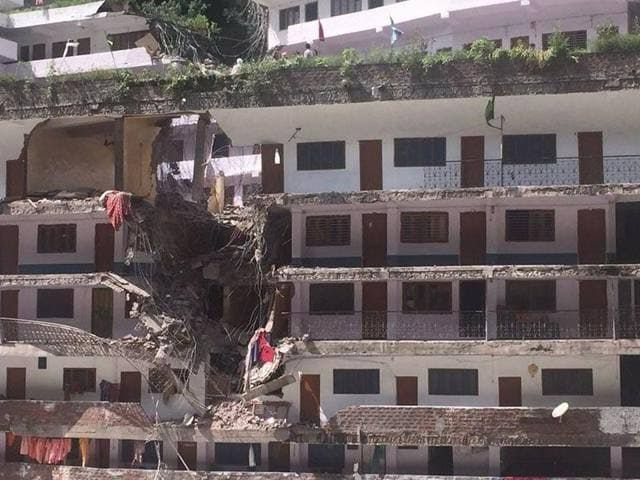
At least six people died, and five were injured after a hollow tree was uprooted near the Gurdwara Manikaran Sahib parking area in Kullu on Sunday.
Additional District Magistrate (ADM) of Kullu, Ashwani Kumar, said, “Six people died, and five were injured after trees were uprooted near Manikaran Sahib Gurudwara parking in Kullu. Police and rescue teams of the district administration have shifted five injured to the local community hospital at Jari.”
Kullu MLA Sunder Singh Thakur stated that three victims have been identified.
He said, “Two people were locals, and four were from outside. A few others have also been affected by the incident. Near the Manikaran Gurudwara, a tree was uprooted. Dead bodies are being brought to the district hospital. Four injured have been brought to the district hospital. Police administration is present at the site.”
Himachal Pradesh Chief Minister Sukhvinder Singh Sukhu expressed deep grief over the incident, said an official statement from the Himachal CMO.
The Chief Minister directed the district administration to extend all possible assistance to the victims and their families. He also instructed officials to ensure the best possible medical treatment for the injured.
Expressing his condolences, the Chief Minister prayed for the peace of the departed souls and strength for the bereaved families to bear this irreparable loss. He also wished a swift recovery for those injured in the incident.
CM Sukhu also assured the people that the state government stands firmly with the affected people in this hour of grief.
(This news report is published from a syndicated feed. Except for the headline, the content has not been written or edited by OpIndia staff)
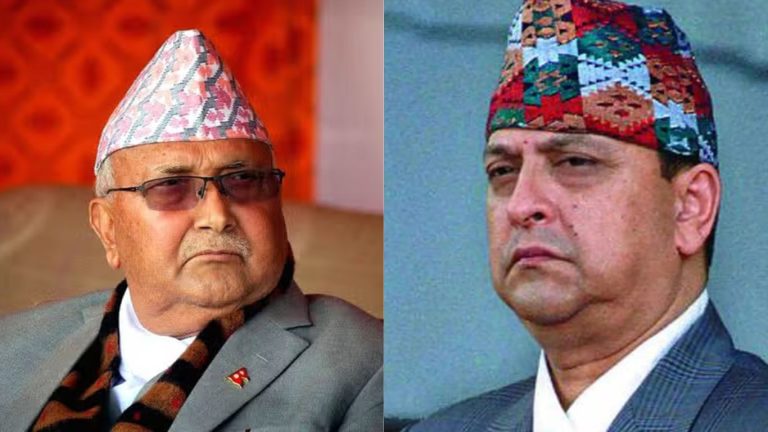
Intensifying its crackdown on pro-monarchy protests that erupted in Nepal, the Nepal government has put the leaders supporting the protests, including former King Gyanendra Bir Bikram Shah Dev and Nepal Rashtriya Panchayat Chairman Nav Raj Subedi, under a travel ban.
Subedi has been accused of coordinating the protests. Besides, the Vice-President and the General Secretary of the Rashtriya Prajatantra Party (RPP) have also reportedly been put under house arrest.
As per reports, the Nepalese government led by Prime Minister K P Sharma Oli has also reduced the security cover of the former king and has revoked his passport. The strength of personnel in the former king’s security has been reduced from 25 to 16. In addition to that, the Kathmandu Municipal Corporation has imposed a fine of 7.93 Nepali rupees on the former king on Saturday (29th March) for the damage caused to public property during the violent protests.
PM Oli reportedly called a meeting of all parties on Sunday, March 30, around 6 pm to discuss the protests. The Rashtriya Prajatantra Party, which is supporting the pro-monarchy protests, was not invited to the meeting. Meanwhile, the Parliament witnessed a major ruckus between the ruling party and the opposition due to which the Parliamentary meeting was delayed by two hours. The Sunday session of the Parliament was not broadcast live.
Violent pro-monarchy protests have erupted in Kathmandu in recent days. The protesters, demanding the restoration of the monarchy, clashed with the security personnel, resulting in a curfew being imposed in several parts of the city. Two people, including a protester and a video journalist, lost their lives in the violence. Several people, including security personnel, were also injured. The protesters have given the Nepalese government an ultimatum till 3rd April. The RPP had warned the Nepalese government against arresting the former king, saying that such an act would further aggravate the protests. Around 112 people, including RPP leaders Dhawal Shumsher Rana and Ravindra Mishra, have been detained by the police.
The ruling Nepali Congress has held the former king responsible for orchestrating the Friday pro-monarchy protests in the Tinkune area. “We reviewed the activities carried out on Friday in the name of pro-monarchists and the Home Minister presented the details of the incidents, after which we came to the conclusion that the violent activities were deliberately planned with the motive of imposing a totalitarian rule and the former King should take all the responsibility,” Nepali Congress spokesperson Prakash Sharan Mahat reportedly said.