Home Blog Page 2823

Alcohol is not bad, drink if you have strength: AAP’s candidate for Somnath assembly seat in Gujarat

0

On September 22, Thursday, a video went viral on social media wherein Jagmal Vala, an Aam Aadmi Party (AAP) candidate for the upcoming Gujarat Assembly election, is seen encouraging Gujaratis to consume alcohol.

The AAP candidate for Gujarat’s Somnath Assembly seat made the statements while addressing a public rally during campaigning.

Vala, in advocating alcohol consumption, reminded the gathering that famous doctors, IAS officers, and IPS officers all consume alcohol. He argued that while alcohol is enjoyed all around the world, only Gujarat has a prohibition in force.

He said in the viral video clip, “There are 800 crores people in the world, and there are 196 countries. All 196 countries allow the sale of alcohol. India has a population of 130 to 140 crore people, and the consumption of alcohol is permitted. The liquor ban only applies to Gujarat, which has a population of 6.5 crore people. It proves that liquor is not at all bad. The issue is that liquor consumes us. If we consume liquor then it is not bad. If you have the strength, drink liquor. Famous doctors, IPS officers, and IAS officers all consume alcohol.”

The comments made by Jagmal Vala on Wednesday evening sparked outrage, with the ruling Bharatiya Janata Party (BJP) demanding an apology from him for “defaming” Gujarat and encouraging alcohol usage.

Vala has been declared as the AAP’s candidate for the Somnath Assembly seat in Gujarat’s Gir Somnath district.

Assembly elections in the state are due by the end of this year.

Telangana: Outrage in Warangal after Endowment Dept asks 3 Hindu temples to contribute ₹1 crore each for construction of govt office building

0

Outrage erupted in Warangal after the Telangana endowment department issued an order to three temples to contribute ₹1 crore each for the construction of three floors of the Warangal endowment office. E Srinivas Rao, the additional commissioner of endowment, has ordered three temples in the state to contribute ₹1 crore each for the construction work.

The order has been issued to the Bhadrakali Temple in Warangal, the Seetharamachandra Swamy Temple in Kazipet Town’s Madikonda village, and the Medaram village in Mulugu district’s Sammakka-Saralamma Jatara organizers.

According to s report by the Times of India, the three temples have been directed to open a joint bank account in the name of the deputy commissioner of the endowment department and to deposit ₹1 crore from each temple in that bank account.

The decision of the Telangana endowment department was vigorously opposed by Bhadrakali Seva Samithi organizers B Sunil and B Veernanna. Members of the Mettu Gutta development committee had similar concerns about the state government’s decision. Local tribal leaders also objected to the misappropriation of temple funds for the construction of three floors of the Warangal endowment office.

Islamists in Indonesia force schoolgirls to wear hijab: How the symbol of oppression is first mainstreamed, then becomes a mandate

The issue of the hijab is being debated not just in India, but in many other parts of the world as well, including Islamic countries like Iran and Indonesia, but for different reasons than the one in India. While Islamic women in India are advocating for the hijab and demanding the right to wear the hijab in schools and colleges, in violation of the uniform dress code, women in countries like Iran and Indonesia are protesting and opposing the hijab to seek freedom from a garment that was forced on them by Islamic hardliners.

Recently, a terrifying incident of a 22-year-old woman named Mahsa Amini was reported from Iran, who was beaten to death by the ‘morality police’ for not conforming to the mandatory hijab laws of the country. A similar incident happened in Indonesia a few months ago when a Muslim student was allegedly forced to wear a hijab by her teachers, which led to her suffering from severe depression and anxiety. The incident which happened in July this year stirred up the debate on the right of individuals to make choices in the country. It highlighted intolerance in Indonesia and a breach of basic human rights.

A recent report by DW has highlighted the issue in Indonesia.

In mid-July, a 15-year-old first-year senior high school student in Bantul, Yogyakarta, was summoned by three professors for not donning the Islamic headscarf or hijab and was discovered crying in the toilet. The adolescent had previously been tormented by her teachers at her school orientation, who accused her parents of not performing daily Islamic prayers.

The incident of teachers bullying her at school for not wearing a hijab caused the victim girl uneasiness to such an extent that she went to a bathroom to cry and stayed there for over an hour. She cried and screamed and also stopped regular communication with her family. The school’s director and the teachers involved have been suspended while authorities are still investigating what transpired for the incident to happen in the first place. Meanwhile, the youngster agreed to be moved to another school.

According to the reports, several incidences of professors forcing female students to wear the hijab and cover their head, neck, and chest have made news in Indonesia, the country which houses the world’s largest Muslim population. The country of 280 million people, 88% of whom are Muslim, has also seen a rise in religious conservatism in recent years. The movement has extended to other aspects of society and is having a negative influence on the daily lives of women.

Indonesian public schools require female students, including non-Muslims, to don a hijab (Image source- Straitstimes.com)

Indonesian school teachers advocating the hijab

Elaine Pearson, acting Asia director for the NGO named Human Rights Watch (HRW) opines that the concept of mandatory hijab in Indonesia stems from a semi-autonomous Indonesian province on the northwest tip of Sumatra Island named the province of Aceh. Aceh is the only province in Indonesia that follows Shariah, the Islamic law. The government there in the year 2002 also approved a municipal rule regulating Islamic clothing standards which included the jilbab for women (a long loose outer garment).

“Several provinces and regencies in places like West Sumatra and West Java started to adopt their by-laws mandating the jilbab in certain public buildings, universities, and schools”, Pearson was quoted. However, Indonesia in 2014 introduced student uniform regulation and stated that jilbab was not to be considered a mandatory attire. “The new decree states that students and teachers may choose to wear a long skirt and a short- or long-sleeve shirt with or without a jilbab“, the regulation read.

Though it clearly asked the local governments and school principals to revoke the mandatory jilbab regulation, several schools interpreted the regulation wrongly and advocated a hijab mandate. At least 24 provinces in Indonesia’s Muslim-majority provinces adopted the headscarf, long-sleeve shirt, and long skirt as uniforms for its female pupils. The schools excluded the jilbab mandate but obligated the female students to wear hijab which had no mention in the new decree.

However, the hijab mandate was recognized by the government in February 2021 after a father of a high school student opposed school regulation demanding girls to mandatorily wear hijab. The complaint was reported by a Christian student’s father in Padang, the capital of West Sumatra. The government then signed a decree permitting any student or teacher to choose whether or not to wear the hijab at school.

But a local group opposed the ban and knocked at the doors of the Supreme Court to demand the imposition of Shariah in West Sumatra. “The decree was overturned largely on jurisdictional grounds, arguing that education is a matter for regional, not central government. Unfortunately, they won,” the HRW Asia director, was quoted. An inter-ministerial panel is analyzing several mandatory hijab laws and regulations, as well as their implications for schoolgirls and female public officials.

Human Rights Watch notes pervasive harassment of girls refusing to wear hijab

According to a Human Rights Watch (HRW) research issued in 2021, the number of national and regional regulations attempting to control the clothing of Muslim girls and women in the school system has risen in recent years. Islamic women have never in the past faced so many restrictions and pressure over their choice of attire.

The HRW research report observed pervasive harassment of girls and women who refuse to wear the hijab, as well as the profound psychological pain that such harassment may bring. According to the research, females who did not comply were forced to drop out or withdraw from school in at least 24 of the country’s 34 provinces, while several government officials, including teachers, physicians, school administrators, and university professors had to quit their jobs for not conforming to the hijab laws.

The pressure however is less intense in big cities such as Jakarta and Bali, which are home to the majority of Indonesia’s Hindu people. While most Indonesians believe that wearing a hijab should be a personal choice, schools in the country continue to torture students over their choice of attire which is not wearing a hijab.

Hijab can pave way for more limitations on women

Many Muslim women do not choose to wear a hijab. But unfortunately, even the privileged segments of Muslim society do not often have the option of rejecting it once it has become the norm. Women in Iran and other Muslim countries are seeking to abolish the hijab rule, which religious police forcibly enforce upon them. However, in India, Islamists backed by ‘liberals’ argue that requiring all female students to wear uniforms to school is oppression. In Indonesia Islamist girls going to schools and colleges are feeling pressured to wear hijab and jilbab, while the Islamist community in India is pressuring the government instead to allow hijab in educational institutions.

The recent proposal to legalize hijab in Karnataka schools and junior colleges, sponsored by the student arm of the terror organization PFI, became a worldwide topic. The matter escalated even more after the Karnataka High Court ruled in March this year that wearing Hijab is not an essential practice in Islam, as claimed by the Muslim students, and that the students should follow the uniform rules of respective schools inside the premises. Islamists reached the Supreme Court where the matter is still being heard.

At these times when India is debating the issue of hijab, it becomes important to note that hijab, burqa, jilbab, or niqab is anything but a symbol of oppression. The Islamic veil was introduced centuries ago to protect women from men who could not stop objectifying women. Also, women back then were made to believe that they were not capable enough to protect themselves and that they needed to cover themselves. But times have changed and today, in the 21st century, imposing a hijab, or niqab, veil, ghunghat etc is a blatant violation of women’s rights.

It is a slippery slope. First, the hijab is hailed, asserted as a matter of choice and pride and made ‘mainstream’, the garment soon becomes a mandate because Islamist hardliners do not consider women worthy enough to have a say in their life choices.

President of Iran refuses to speak to CNN’s Christiane Amanpour after she refused to wear a hijab for his interview

0

The president of Iran, Ebrahim Raisi, cancelled his interview with CNN’s Christiane Amanpour after she refused to wear a headscarf (hijab) while conducting the interview. The interview was scheduled to take place at the UN General Assembly in New York City.

Interestingly, this decision by the Iranian president to cancel the interview even on American soil over hijab comes at a time when Iran is seeing unprecedented protests against the forced practice of hijab in the country. In the wake of the killing of Mahsa Amini over ‘inappropriate hijab’, protests have swept through the country against the Islamic regime ruling Iran.

Sharing the news, Amanpour said that the interview was set up after weeks of planning and hours of preparations in setting up equipment. However, President Raisi did not turn up at the scheduled time, and 40 minutes later, one of his aides came up to Amanpour and explained the issue. She was asked to wear a hijab as it is the holy month of Muharram and Safar.

Christiane Amanpour politely declined the request and then she was told that the interview can not take place unless she wears a hijab. The interview eventually did not take place as Amanpour stuck to her guns and refused to wear a hijab.

Protests in Iran over mandatory hijab

Iran has been seeing large-scale protests led by Iranian women ever since a young 22-year-old girl Mahsa Amini was killed by ‘morality police’ for wearing her hijab inappropriately. Iranian women have been showing their anger by cutting their hair and burning their hijab to protest against the killing of Mahsa Amini.

There have been several protests in the streets of Iran as well against the forced practice of mandatory hijab in the country. People’s anger is directed toward the ruling Islamic regime and the regressive practices that are enforced on the populace.

The death of Mahsa Amini

A 22-year-old Iranian woman named Mahsa Amini, who fell into a coma after she was beaten by the ‘Morality Police’ for wearing ‘improper hijab’, died on Friday in Tehran. Iranian media reported that Amini died in hospital, quoting official sources.

Earlier on Tuesday, Mahsa Amini was declared brain dead, hours after she was arrested by the ‘Morality Police’ in Tehran for “improper hijab”, which means she had not fully covered her hair. She was arrested by the police and then beaten in the police van while being taken to a detention centre, dubbed as a ‘re-education class’ for not conforming to the country’s mandatory hijab rules.

According to the reports, the incident is said to have happened on September 13 when Amini, a native of Saghez, Iran, had travelled to Tehran for a pleasure trip. The woman was with her brother Kiarash at the entrance to the Shahid Haghani Expressway when the ‘Morality Police’ arrived and arrested Amini for a one-hour ‘re-education class’.

Major crackdown on PFI: As members of the Islamic outfit threaten to intensify protests, read how their ‘Vision 2047’ laid down plans of Islamic rule in India

The members of the radical Islamic outfit Popular Front of India (PFI) and Social Democratic Party of India (SDPI) have taken to the streets in as many as 8 states where the National Investigative Agency and Enforcement Directorate have conducted raids on locations linked to the Islamist organization Popular Front of India (PFI).

The federal agencies led by NIA had on Thursday conducted raids across 10 states, including Assam, Bihar, Kerala, Andhra Pradesh, Delhi, Uttar Pradesh, Karnataka, and Telangana and arrested more than 100 suspected PFI activists for allegedly supporting terror activities in the country. 

The members of the radical organisations have not only taken to the streets to protest against these raids that began at midnight but have also threatened to intensify the protests in the coming two-three days.

Meanwhile, many videos and images have surfaced online wherein PFI and SDPI members can be seen blocking roads and raising slogans against the federal agencies after the crackdown, which they have called the “largest ever investigation process till date.”

In Andhra Pradesh, SDPI workers raised slogans of “NIA Go Back” to protest against the raid by the agency at the residence of an SDPI leader in the Kurnool district.

Police apprehended PFI workers in Kannur, Kerala, as they attempted to block a road in protest of NIA operations.

The Kerala PFI unit has moreover called for a state-wide protest tomorrow against the raid and arrest by NIA.

PFI workers in Tamil Nadu sat on the streets to protest the NIA raid on the PFI headquarters in Chennai.

PFI and SDPI workers also protested against the NIA raid in Mangaluru.

Another video that emerged from Mangaluru shows PFI and SDPI workers sloganeering. “We know everything that RSS has sent you,” shouted the PFI members as they protested against the NIA raids.

NIA raids PFI offices and houses across 10 states, over 100 members, including top leaders arrested

The protest erupted after the National Investigation Agency, on the intervening night of September 21 and September 22, conducted several raids on locations linked to the Islamist organization Popular Front of India (PFI) across 10 states, including Bihar, Kerala, Andhra Pradesh, Delhi, Uttar Pradesh, Karnataka, and Telangana.

The agency arrested around 100 cadres, including top leaders of the organization. The maximum number of arrests was made in Kerala (22) followed by Maharashtra and Karnataka (20 each), Tamil Nadu (10), Assam (9), Uttar Pradesh (8), Andhra Pradesh (5), Madhya Pradesh (4), Puducherry and Delhi (3 each) and Rajasthan (2).

As per reports, the raids were conducted by joint teams of NIA, Enforcement Directorate (ED), and respective State Police, and the Union Ministry of Home Affairs was monitoring the action against the organization.

Though no untoward incident was reported from any protest of these sites today, it has been witnessed in the past how these kinds of protests have frequently turned extremely violent.

This year, in the month of May, a rally held by the radical Islamic outfit Popular Front of India (PFI) in Thiruvananthapuram turned violent. At around 12 noon, members of the outfit took out a march toward Chief Minister Pinarayi Vijayan’s official residence ‘Cliff House’ against the arrest of Popular Front leaders following the hate slogans given by a child in a recent rally in Alappuzha.

In fact, history has it that PFI has always been at the heart of many riots, criminal activities, anti-Hindu activities like murders of RSS workers and anti-India activities. Whether it was the 2020 protests against the CAA or the Karnataka burqa controversy or the 2020 Bengaluru riots which turned exceedingly violent, resulting in the loss of numerous lives and damage to public properties, the PFI has been linked to all.

Radical Islamist outfit Popular Front of India and its dangerous antecedents

The Popular front of India calls itself a neo-social movement allegedly committed to empowering people belonging to minority communities, Dalits, and other weaker sections of society. However, it finds its roots in the banned terrorist organization SIMI (Students Islamic Movement of India). Recent incidents regarding PFI and Islamic radicalism in the country, particularly in the Southern regions, suggest that PFI may have been attempting to bring SIMI’s extremist Islamic views to fruition.

In fact, ever since PFI was formed in 2006 it has been under the radar of the National Investigation Agency (NIA) as its members were linked to ISIS modules in Kerala that went on to join the terror outfit in Syria and Iraq. 

According to Indian intelligence officials, the PFI is also suspected of radicalising the masterminds of the 2019 Sri Lankan Easter bombings that killed over 300 people. 

In India, the PFI has been accused of radicalising students and has also been involved in several political killings and religious conversions. According to the NIA, the PFI has a presence in almost 23 states. It is worth mentioning that radical Islamic organisations such as PFI, SDPI and other associated organisations have been under the scanner in UP after the anti-CAA violence triggered in the state last year and this year. In addition, several leaders of the Popular Front of India were also named as accused in the 2020 Bengaluru riots.

PFI members have been frequently found to be indulging in criminal activities, including murder with communal motives. Earlier in January, the Enforcement Directorate (ED) had alleged that the PFI raised money through hawala channels for running terror camps in Kerala.

Besides this, it has been accused by the National Investigative Agency (NIA) of being involved in the controversial ‘love jihad’ cases in Kerala. Recently, members of its political arm SDPI were arrested for an ABVP worker’s brutal murder in Kerala’s Kannur.

Recently, PFI members were accused of killing 42-year-old activist Ramalingam. The activist was brutally murdered for opposing forced religious conversions. In the past, the PFI members have been accused of chopping off the hands of a Kerala Professor for allegedly insulting the Islamic Prophet Mohammed. Just a few days back, PFI leader Mohammad Haroon was nabbed by the Kerala Police in connection with the murder of RSS worker Sanjith in Palakkad.

In 2016, the PFI’s Bengaluru district president was arrested in connection with the murder of RSS leader R Rudresh. Earlier this week, a PFI leader from Palakkad in Kerala was arrested in connection with the killing of an RSS leader in the district in April.

More recently, the NIA claimed that its investigation revealed that the Islamist assailants of BJP worker Praveen Nettaru were active PFI members and had murdered Nettaru as part of a larger conspiracy to strike terror among the members of a section of society. Nettaru, a Bharatiya Janata Party Yuva Morcha worker, was hacked to death by two bike-borne attackers in Dakshina Kannada district’s Bellare village on July 26. The police arrested six persons before the government handed over the case to the NIA.

In fact, last month, after Nettaru’s merciless killing, the NIA conducted searches in at least 33 locations in Karnataka in connection with the murder.

During the searches conducted at the premises of the accused and suspects, digital devices, used ammunition, improvised arms, cash, incriminating documents, pamphlets and literature were seized.

“Investigations have revealed that the accused persons, who are active members of Popular Front of India (PFI) had planned and committed the murder of Nettaru as part of a larger conspiracy to strike terror amongst the members of a section of society,” the federal probe agency said.

Prior to this, NIA continuing its crackdown on the notorious Islamic outfit conducted searches in multiple locations in Bihar in connection with the terror module with links to Islamic extremist outfit PFI, busted by the Bihar police on the evening of July 11.

PFI “India Vision 2047”: Establishment of Islamic govt, murder of ‘coward Hindus’, arms training, infiltration of Judiciary and more

Following the crackdown on a secret PFI operation in the state, the Bihar police had in the same month made shocking revelations about an 8-page PFI document that talks about teaching a lesson to the “coward Hindus” of India. The 8-page PFI document underlined the PFI goal for the years ahead. In the document named ‘India Vision 2047’, PFI has circulated internally among its cadre that they aim to completely dominate the ‘coward Hindus’ and subjugate them and this goal will be achievable even with 10% of Muslims rallying behind PFI. 

They have also mentioned that they plan to launch a full-fledged armed uprising against the Indian State with the help of their trained cadre and with the help of Islamic countries like Turkey. They have also appealed to other Islamic countries for help to bring the Indian State and the majority of Hindus ‘to their knees’. The police added that former SIMI terrorist Parvez and the ex-police officer named Jalluuddin, arrested by the police, have raised funds worth lakhs for this recent endeavour. 

OpIndia had accessed the full 8-page document, the contents of which are far more shocking than what the police have revealed so far. The “India 2047” document has a tagline that underlines the goal of PFI – “Towards Rule of Islam in India”.

The document fear mongers about the “current status of Muslims in India”, to “PFI in every household” strategy, their India 2047 plan and actionable points for the Muslim community in India.

As the notorious Islamic outfit Popular Front of India (PFI) seeks to expand its tentacles and strengthen its roots by outlining various stages of progression toward establishing Islamic rule in India, as outlined in its “India Vision 2047,” reports have emerged that the Modi government will soon ban the Popular Front of India (PFI). The massive NIA raid conducted today, which came after a high-level meeting between Union Home Minister Amit Shah and top officials, National Security Advisor Ajit Doval, Union Home Secretary Ajay Bhalla, Director General of National Investigation Agency (NIA) Dinkar Gupta, could signal the end of this notorious organisation.

Islamists unleash havoc in Leicester: Hindus left feeling rudderless, exposed to harm and increasingly vulnerable

It all began with a mere cricket match but it went further than a mere sport, soon giving way to a maelstrom of communal discord, Islamist thuggery and a feeble police response that has left a major British city in communal ruins, a city which will no longer be seen as a thriving metropolis of multiculturalism, but as just another urban wasteland in which radical Islamists can dictate the rule of law, oppress kaffirs, and assert dominance while the police officers look helplessly on. 

The police force opened the way for Islamist misrule by falsely claiming in an email that a small group of people had called for the deaths of Muslims and Pakistan, inferring that the slogans could well be the handiwork of the Indian Hindu diaspora. A scrambled response to explain that this was not correct was irrelevant for it paved the way for a nauseatingly predictable set of scenes that western audiences are sadly now used to: enraged Islamists arrogating to themselves the right to tell anyone around them just how insulted they were and that nobody could stand in their way while they expressed their displeasure and outrage. Usually, it is those of the Judeo-Christian faith that have to sit by and deal with the consequences whether it be in France or the United States, this time it was the peaceful Hindu community in Great Britain.  

What followed were harrowing scenes of Hindus being assaulted in their cars while parked in their driveways, Hindu families remaining indoors as Islamist groups wandered the streets inciting violence and vandalizing property, throwing eggs at religious idols as a sacred Hindu festival was being observed. As dispersal powers were activated by befuddled police unable to shut down the rage of the Islamists (where have we seen that before?) the same groups turned their rage towards the peaceful Hindu groups that had since decided to take a stand and use the power of civil protest to express their dismay.  

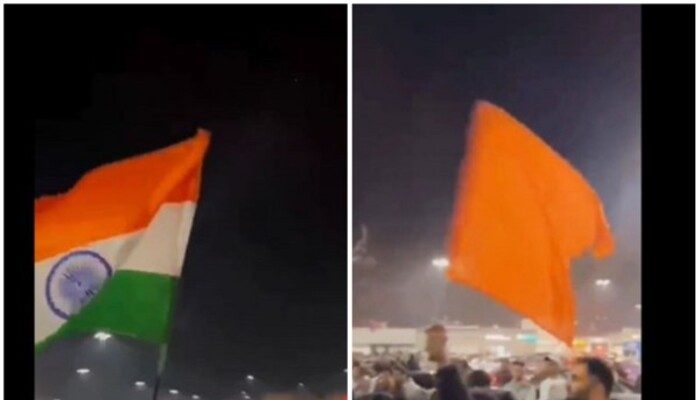
The Islamists weren’t listening to their calls for peace and instead hurled glass bottles at protestors, going so far as to desecrate and then burn a Hindu saffron flag (inscribed with the holy ‘Om’ symbol) atop a temple as the police looked on. There have been arrests but the narrative has shifted towards one engineered by the Islamist cadres: that the Hindus are right-wing fanatics issuing war cries and that peaceful Muslims simply had to assail groups of large numbers to protect one another. This narrative has support from echo chambers and ecosystems in the west extolling a narrative, often with Islamist supporters coordinating talking points, that some Hindus are adherents to a kind of South Asian alt-right, that they fall in step with the ideologies of Narendra Modi who by his friendship with Donald Trump must be a prototype fascist.

They call this movement ‘Hindutva’ without understanding what it is or what it might represent. Interestingly no definition has ever been ascribed as to its exact provenance and meaning, other than a political belief in preserving the sanctity of the Hindu religion. You might call it a Hindu kind of Zionism, and we all know what Islamists think of that philosophy. 

Ironically, the Islamists attribute the chants of ‘Jai Shri Ram’ by the peaceful Hindu protestors as akin to Nazi salutes and fascist sloganeering even though the chant simply names a deity held in great esteem by many Hindus and Indians across the world and whose idol sits within just about every Hindu temple built in countries worldwide. That the cries of ‘Allahu Akbar’ accompany terror attacks and episodes of unrelenting violence do not merit the same criticism or level of disparagement by these very western echo chambers or the Islamists themselves is always revealing. 

What we’ve seen in Leicester, as in other cities around the world where Islamist groups can quickly assemble through social media enclaves, is a mobilization of personnel to unleash terror without any fear of legal repercussion by western powerbrokers that are too afraid to be seen as racist or worse still Islamophobic rather than keep other British citizens safe.  

That the British citizens in this case were not white makes their mute stewardship of these riots a particular insult to the Hindu community, one of the most peaceful, socially conservative, law abiding, well integrated and well assimilated communities in the United Kingdom.  

There was also swift deployment of that useful weapon in the battle against the kaffir, the mistruth, which in this case was a completely false allegation that a mosque was attacked by Hindus which was promptly debunked by Leicestershire police and that a Hindu man had tried to kidnap a Muslim girl in the city, also proven to be false. While Islamists indulged in rabid misinformation painting the Hindu community as the perpetrator and not the victim that it was, western media quickly picked up the truths being propagated by Islamist rent-a-journalists, picking on one or two random Hindus and editing the footage to make them appear both incoherent and out of step with the rest of the peaceful protestors. 

To add insult to injury, the Islamists then wielded that other tool in their arsenal of narrative weapons-victimhood status. As violence played itself out the Islamists took to social media and assembled their pliant stooges in left-wing media houses to confirm that they were in fact the real victims, desperately defending themselves after violent Hindus had targeted them. A little like how the IDF apparently always targets Islamists in Israel except that this isn’t Palestine, this is Leicester.  

To Islamists, the only thing more insulting than a kaffir amidst their ranks is a whole group of them daring to stand up for their rights and particularly if they do so peacefully. That Islamists have particular disdain and outright contempt for Hindus is well known throughout history and unfortunately, Leicester has shown that these age-old grievances have been imported from the madrassas and mosques in Pakistan and the Muslim world that elevate their religious identity and patronage above paganistic idol worshippers which is what Hindus are to them. It is little wonder that this should be happening when the number of mosques in the UK has multiplied over the previous fifty years alongside demographic shifts that have ensured the Muslim bloc vote is an incredibly powerful one in British politics.  

This power shift has reinforced itself through representation in media, academia, local and country-wide political paradigms and in the culture wars where the cry of ‘Islamophobe’ is redolent of autocratic rule. Urban centres like Leicester are ‘easy meat’ for Islamists that wish to dictate their worldview and show disregard for those not like them. We’ve seen this with the grooming gang debacles in the UK where mostly white, working-class young girls were subjugated and oppressed first by their Islamist rapists then ignored and discarded by the police forces for fear of offending them. 

In Leicester, the idea of pagan idol worshipping kaffirs standing up to them and proclaiming the name of one of their most important deities right in their faces was simply unbearable to the Islamist philosophy. The police have been keen to shy away from religion in their calls for peace but to tackle the multicultural hellhole that Leicester is at risk of becoming they have to talk about the root cause of these ugly scenes of sectarian violence or is it doomed to repeat again. This is a particular risk with the tentpole religious festival of Diwali right around the corner. 

Meanwhile, Hindus in Leicester are left feeling rudderless, exposed to harm and increasingly vulnerable. The consensus is that if Muslims had been attacked or had their mosque vandalized the scenes would have made headlines around the world and attracted outrage but as it was Hindus who were attacked and had a Temple vandalized, the rest is silence. 

Chandigarh Municipal Corporation accused of using the same vehicle to transport meat and temple flowers, BJP demands action

0

The Chandigarh Municipal Corporation has triggered a controversy after it was found that it is using the same vehicle to transport meat and temple flowers. The urban body has been accused of hurting the religious sentiments of Hindu devotees while transporting flowers offered at various temples to its Maloya-based unit in the city. The flowers at the unit are reused by the corporation to make incense sticks and scented candles. The authorities however happened to ferry the flowers using vehicles that are used to carry meat from the slaughterhouses to the markets for the purpose, hurting the religious sentiments of the devotees.

According to an exclusive report by Amar Ujala, the Chandigarh Municipal Corporation last month decided to reuse the flowers which are offered in the temples and other places of worship by the devotees. On August 25, Mayor Sarabjit stated that the offered flowers would be reused to make incense sticks and scented candles. The Corporation executed the initiative by training and employing several women of the self-help groups under the Rashtriya Shahari Ajivika Mission and Swacch Bharat Mission.

Exclusive report published by Amar Ujala

Under the initiative, flowers from around 156 places including temples and other places of worship are collected and carried to Maloya-based units in Chandigarh. However, the corporation vehicle in which the flowers are transported is also used for transporting meat from the slaughterhouses to the city markets. The incident has hurt the religious sentiments of devotees.

The incident came to light on September 8 when the Municipal Corporation Chandigarh posted a picture of a vehicle loading floral waste from a temple. The report claims that the same vehicle with the same number plate was used for ferrying the meat from the slaughterhouses. The report further published two distinct photographs showcasing the same light transport vehicle carrying slaughtered meat and floral residue.

On September 8, the corporation posted a tweet saying that the authorities had collected floral waste from a temple in Chandigarh and that the waste was being taken to a unit in Molaya where women would convert such waste into incense sticks.

The authorities however denied the claims and said that two different vehicles are used for ferrying and offered flowers and meat. “Somebody is fooling around. This case will be properly investigated”, the authorities were quoted. Taking cognizance of the event, BJP’s Arun Sood slammed the authorities for hurting the sentiments of the devotees and demanded FIR be filed against the concerned corporation authority.

Meanwhile, the Congress Party and AAP also condemned the incident and demanded strict action against the corporation authorities. Reports mention that around 450 kg of floral waste is collected daily from 156 places including temples and other places of worship in the city. The floral waste is also collected from several florists in the city. The same waste is reused at a unit in Molaya to make incense sticks and scented candles. Commercial marketing of the products is to be launched on October 1 this year.

Such initiatives to reuse temple flowers have come up in several cities in the country, and several startups also have come up in India with innovative solutions.

Delhi court issues notice to Wikimedia Foundation over deletion of author and BJP spokesperson Tuhin A Sinha’s Wikipedia page

On September 22, Saket Court in Delhi issued summons to Wikimedia Foundation over author and Bharatiya Janata Party’s spokesperson Tuhin A Sinha’s plea against the deletion of his Wikipedia page from the platform. Notably, Sinha’s Wikipedia page existed since 2006, when his first book was launched and had detailed information about his professional life. Wikimedia Foundation is organisation that runs the Wikipedia platform, and also provides the open-source wiki software MediaWiki for free.

The page was deleted in March 2022 after he openly supported filmmaker Vivek Agnihotri’s film The Kashmir Files on social media platforms. The Wikipedia editors’ discussion at the time of deletion pointed out his association with BJP as one of the reasons to raise questions about the existence of his page on the platform. The page, which had been up since 2006, became an eye-sore for the openly leftist Wikipedia editors, especially after Sinha extended support for the film The Kashmir Files, and all of his credentials were then questioned during a discussion among the editors.

In a series of tweets, Sinha informed about the notice issued by the Court to Wikimedia Foundation. He wrote, “I had vowed legal action against Wikipedia for malafide deletion of my Wikipedia profile which had existed since 2006. I recently initiated legal proceedings through my lawyers Raghav Awasthi (@raghav355) and Mukesh Sharma (@ThisIsTheMukesh) in the Saket District court.”

He added, “In an imp development today, the Court has issued summons to Wikimedia Foundation against deletion of my Wikipedia page which in my opinion has been done in gross violation of the Intermediary Rules of 2021 as well as Wikipedia’s own guidelines. This will have far-reaching consequences on the intermediary’s arbitrary conduct in India n as its unchallenged ability 2 manipulate information. This is a decisive battle 4 truth. Will share more details soon.”

Speaking to OpIndia, Sinha said, “My Wikipedia page was deleted with malafide intent. Wikipedia has skipped Indian laws for a long time. I believe this is going to be the first one-on-one case by an individual against Wikipedia for such actions. My page had a lot of details since my journey as an author started in 2006. It was a shock for me to see it vanishing from the platform. I am not sure if it was my support to The Kashmir Files or my strong views against proxy Break India forces supported by certain western powers was the reason behind deletion, but I am going to legally challenge Wikipedia’s actions.”

Notably, the court case against Wikipedia came when the platform was already under the Government of India’s radar after cricketer Arshdeep Singh’s Wikipedia page was vandalized after India’s defeat in T20 Asia Cup against Pakistan. The Ministry of Electronics and Information and Technology (MeiTY) summoned Wikipedia executives in India. The ministry has sought an explanation of the incident where someone changed the entry to say that the young cricketer is associated with ‘Khalistanis’. Quoting Union Minister of State for Entrepreneurship, Skill Development, Electronics & Technology Rajeev Chandrasekhar’s tweet on the issue, Tuhin had said, “I hope Wikipedia treats this as a wake-up call and rectifies its flawed conduct. My full-fledged wiki page that had existed since 2006 was abruptly taken off this year. If the wiki does not restore it asap they must prepare for a long legal battle.”

Speaking to OpIndia, Advocate Mukesh Sharma said, “Tuhin’s profile existed for over 15 years. Deleting the profile was severely defamatory as it represents to the users of Wikipedia and potential business collaborators that his page contained unfounded and exaggerated statements about him.” He further added that collaborators, including publishers of Sinha’s books, called him following the deletion and expressed their dismay.

He also mentioned that at least one of his publishers called him [Tuhin] up to say that he would be terminating his contract with him because his reputation has been besmirched because of the deletion of his Wikipedia profile, purportedly because all the information posted therein was not correctly sourced. 

As per the plea submitted by Tuhin’s advocates, the “removal of Plaintiff’s Wikipedia page is in contravention of the concerned provisions of the Information Technology Act, 2000 and Information Technology (Intermediary Guidelines and Digital Media Ethics Code) Rules, 2021 as well as the concerned guidelines of the Defendant No.1 when it comes to deletion.” Sinha has sought compensation of Rs 25 lakh for the damages the deletion of the Wikipedia page has caused.

Wikipedia deleted Tuhin A Sinha’s page in March 2022

On March 22, Sinha raised a complaint on Twitter that his page, which had existed for over 15 years, was deleted. He said, “The only thing that may have irked them in last few days is my support for Kashmir Files and me calling out Cong supported Jihad network.” At that time, speaking to OpIndia Sinha had said, “I approached a couple of people who had edited Wikipedia pages in the past. I was actually informed that the page had been deleted. Now I am absolutely appalled that there is clearly somebody from the left ecosystem which is keeping a watch on everybody who is speaking in favor of The Kashmir Files and who is calling out the left-liberal ecosystem on the issue.”

Sinha was not the only one whose page became the target of Wikipedia’s editors at that time. News Anchor and Editor of India Today, Chaiti Narula’s page was also deleted from Wikipedia after she extended support for The Kashmir Files.

From Muskan in Karnataka to Aina Khan in the UK, women in hijab can ‘bravely’ stand up to ‘Hindutva’ because they know Hindus do no harm

It is shockingly counterintuitive to say the least when some Muslim women in otherwise secular countries say the hijab is a choice when there are countless Muslim women in Islamic countries who choose not to wear the hijab are being killed. A piece of clothing is not a choice if not wearing it or wearing it ‘inappropriately’ as per moral police (mostly men), can get you killed. This is when it is not even an essential religious practice.

When school-going girl Muskan Khan decided to ‘defy’ the ‘Hindu goons’ on her way to school to wear a hijab (not a part of the school uniform), she was hailed as a ‘brave girl’ by none other than the then terror organisation Al Qaeda chief Ayman al-Zawahiri. In the video titled “The Noble Woman of India”, which carried an infographic depicting Muskan Zainab Khan, Zawahiri recited and dedicated a poem he had composed to praise Khan. Nothing like an endorsement of bravery than a dreaded terrorist reciting poems for you, eh?

Islamists have often hailed her on social media as well for shouting ‘Allahu Akbar’ at Hindu students (referred to as ‘Hindutva goons’ by apologists of Islamists). The jihadi terrorist had said he learned about Muskan Khan from videos and social media. Referring to Muskan Khan as ‘sister’, the Al-Qaeda chief had said he was moved by her act, especially the raising of “cries of Takbeer”. Impressed by her chanting provocative Islamic slogans, Ayman al-Zawahiri said he decided to write a poem.

Not just that, he also attempted to incite Indian Muslims saying they needed to react to the “oppression” carried out against them by the Indian state. Zawahiri also attacked countries that have banned the hijab, along with Pakistan and Bangladesh, whom he accused of being “allies of the West”.

That was Zawahiri’s first video in five months. Clearly, even terror chiefs couldn’t resist praising a hijabi girl ‘standing up’ to idol worshippers. Idolatry in Islam is the biggest sin. Zawahiri was blasted to death by US drones in Afghanistan in August this year.

But you know what happened to ‘Hindutva goon’ who said the girls shouldn’t wear the symbol of oppression to schools where a hijab is clearly not a part of the uniform? A Bajrang Dal activist, Harsha, was murdered by Islamists in Shivamogga in February this year for demanding a uniform dress code in educational institutes. After his death, global Islamists and their apologists dehumanised him and also spread falsehoods regarding him to justify his murder.

Known Islamist CJ Werleman had spread falsehood on Harsha’s murder

Many even celebrated his death.

Hatred on Harsha’s murder

Isn’t it shocking that the ‘Hindutva goons’ who are ‘spreading terror’ are actually getting murdered while the ‘brave’ Islamists continue to ‘stand up’ for themselves, sometimes even choosing murder, in a secular, democratic country where they get equal, even more religious freedom than the majority community

Similar has been the case with leftist media outlet The Guardian’s Aina Khan. She, aided by full-time Islamists goes on streets of Leicester, creates a narrative that it is the ‘BJP/RSS goons’ and ‘Hindutva goons’ who are spreading terror when visuals have clearly shown the involvement of rabid Islamists who have a history of giving hateful speeches. She somehow makes Hindus appear like aggressors when clear evidence shows a terrifying mob taking to the streets and targeting Hindus.

In fact, as per the latest reports, Hindus have even fled the locality after being under constant threat. Islamists have, for a few months now, left threatening messages that they want to ‘clean’ Hindus from Leicester just like they ‘did from Kashmir.’ The tension had been brewing between Hindu and Muslim communities for a while now and Hindus who were displaying Hindu symbols in their cars and homes have been attacked.

Later, the violence even erupted in Birmingham because allegedly the Muslim community had protested against an event which was to be attended by Sadhvi Ritambhara. While some Islamists claimed that the program was cancelled two weeks back, earlier this week, an Islamist mob surrounded the temple, which was to host the event, and chanted Allahu Akbar while threatening the Hindus present inside.

Here, too, the Hindus are being portrayed as the aggressors by the ummah and ummah-friendly media while the Hindus are quietly giving messages of harmony and unity.

An elderly Hindu man is surrounded by Muslim men inside what appears like a masjid, days after a 200-300 strong Islamist mob surrounded the temple chanting Allahu Akbar, says how ‘we are all family’. Clearly, no duress here. It’s all cool.

On the other hand, Hindu women journalists are heckled and hooted at by Islamist mobs and even then it is justified as ‘Godi media’ deserved it. In fact, not just that, even ‘liberals’ like Shashi Tharoor were heckled and greeted by Islamic slogans when he visited Jamia Milia Islamia when he went there in January 2020 to extend solidarity with anti-CAA protestors.

The sad irony of the situation is, all this happens when in Iran, women are getting killed, beaten and dragged for not wearing hijab ‘properly’. In Afghanistan, women have been shunned from workplaces and schools, because the radical Islamists, the very same ones who had praised Muskan Khan for ‘choosing’ to wear a burqa in her college, have banned girls from basic education, declaring they don’t need studying.

Muskan Khan became ‘brave’ easily because she knew she is in India, a secular democratic country where she will not be beaten or killed for raising her voice. She was confidently shouting ‘Allahu Akbar’ because she knew that the persons standing before are are Hindus. They do not kill. Aina Khan can happily blame the victims of violence as aggressors, can spread misinformation about them because she knows that the Hindus do not kill, the chants of ‘Jai Shri Ram’ won’t be followed by suicide vests blowing up. She can defame Hindus and publish all her rants because she knows that the Hindus won’t march inside the office of the Guardian and kill the employees like Said Kouachi and Cherif Kouachi did in 2015.

Gujarat: AAP workers misbehave with News18 Gujarati’s female anchor, interrupt a live TV show using a megaphone

0

On September 19, during a live television program of News18 Gujarati in Mandvi, Kutch, Gujarat, Aam Aadmi Party (AAP) workers attempted to disrupt the debate and misbehaved with the female anchor.

During the live program ‘Sattano Sangram’, the AAP workers were shouting from a megaphone in order to suppress the voice of the BJP spokesperson. According to a Desh Gujarat report, one AAP worker tried to disrupt the live program by talking to the female anchor in an intimidating manner. 

Harsh Sanghavi, Minister of State for Home Affairs, commented on the AAP workers’ misbehavior, saying, “We know that these instances are happening after certain people are coming from Delhi and instructing Gujarat’s youth on how to cause lawlessness.” In Gujarat politics, such an episode has never occurred. We all have understood their true character and time will soon give them an answer.”

On the question of Arvind Kejriwal’s promise of women’s safety, Sanghavi stated, “If there is a difference between what you say and what you do, then AAP’s actions indicate the greatest discrepancy between speaking and doing. The manner in which these AAP workers behaved during the live program shows their attitude toward women. This is not the first time, many similar instances have occurred earlier. The background of these AAP workers needs to be checked.”

BJP State General Secretary Pradipsinh Vaghela equated AAP’s ideology with that of Naxalites. “I have always said that the culture and ideology of AAP are of Naxalism. AAP workers are getting training to become Urban Naxals, spread anarchy, and divide the country,” Vaghela said.

“Insulting a journalist and misbehaving on a TV show reveals their character. These people are modern-day Naxalites. Their only agenda is to spread lawlessness. They want to turn Gujarat into another Bengal”, Vaghela added.

Vaghela went on to warn AAP leaders that causing unrest in Gujarat would be disastrous. “You incite unrest in Punjab and back Khalistanis. I want you to know that this is Gujarat, and if similar episodes of misbehavior occur again in Gujarat, it will not be good.”