Home Blog Page 4464

MP who raised Sachin Vaze case in Lok Sabha says she was threatened by Shiv Sena MP Arvind Sawant, he blames her ‘body language’

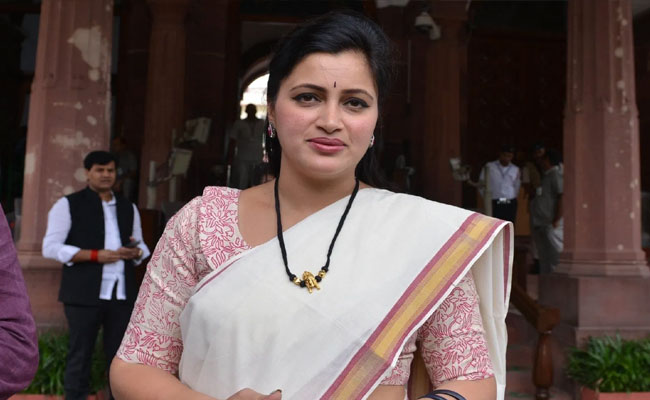
Independent MP from Amravati, Navneet Rana, has accused Shiv Sena MP Arvind Sawant of threatening her in the Lok Sabha lobby. In a letter to Speaker Om Birla, she said that she was threatened with arrest after she raised the Sachin Vaze matter in the Parliament.

In her letter, Navneet Rana has said that Arvind Sawant threatened her saying, “Tu Maharashtra mein kaise ghoomti hai main dekhta hun aur tere ko bhi jail mein daalenge (Let me see how you roam around in Mumbai, will put you in jail too).”

The letter also says that she has been threatened with acid attack several times in the past. Navneet Rana said that the women of the country have been insulted by the comment and demanded strict action against Sawant for the same.

Earlier, she had said on the Floor of the House, “On what basis was a man suspended for 16 and jailed, reinstated? When there was BJP govt, Uddhav Thackeray himself had called up Devendra Fadnavis for reinstating Sachin Waze, Fadnavis had refused. When Thackeray government came, they reinstated him.”

Since then, Arvind Sawant has come out with a statement defending himself. He said, “Why will I threaten her? If there were people present near her at that time, then, they can tell if I threatened her. Her way of talking and body language is wrong.”

There has been significant turmoil in Maharashtra over the VazeGate controversy. Param Bir Singh has made several allegations against state Home Minister Anil Deshmukh while the reinstatement of Sachin Vaze by the Thackeray Sarkar has come under question as well.

Congress IT cell head shares a misleading video of PM Modi, Twitter does not mark it ‘manipulated media’

As assembly elections in Assam draw closer, Congress IT cell resorted to spreading manipulated and misleading content. Recently, in its attempt to mount an attack against the BJP, Congress IT Cell head Rohan Gupta shared a cropped video from PM Modi’s rally in Assam on Twitter.

PM Modi in the video had called out Congress formula of keeping the poor poor and exploiting them for electoral gains. However, the snippet shared by Gupta was carefully cropped to give an impression that PM Modi was advocating the exploitation of the poor for votes.

Gupta conveniently edited out the part in which PM Modi elaborated on how it was the Congress modus operandi of preying on the poor and making false promises to them to win their votes.

Here’s the entire video where in PM Modi slammed Congress for fooling poor for gaining votes:

“Congress has a habit of making false promises in their manifestos. Show dreams to poor, lie to them, make them fight each other and rule them, this has been the Congress formula of staying in power at the centre,” PM Modi says as he elaborates how Congress has consciously kept the poor in the country poor and have deceitfully sought votes in their name.

In essence, Gupta shared a cropped video of PM Modi in which he was exposing the longstanding Congress formula of duping the poor by making assurances and promises that were never fulfilled.

It is also entirely expected that the Congress party and its stooges in the media fraternity would rush in the defence of the grand old party, downplaying the misleading video as a meme posted for entertainment purposes. The snippet shared by the Congress IT Cell head is not a meme, not by a long shot. It was a deceptive video, shared with the specific purpose of showing PM Modi and the BJP government in a bad light.

Twitter’s left bias and its penchant for repeatedly interfering in the Indian politics

It is also worth noting that social media behemoth Twitter, which has championed the cause of fighting misinformation on its platform by labelling suspicious tweets as ‘manipulated content’, did not bother to publish any such label for the tweet in which Rohan Gupta shared the misleading video.

It leads one to wonder if Twitter is really impartial in dishing out its misleading content label or whether such categorisation is only reserved for the tweets posted by the BJP leaders and not for the opposition politicians who peddle falsehoods and manipulated content.

In December 2020, BJP IT Cell head Amit Malviya shared a video debunking the lies peddled by the Congress leaders. Malviya shared a video in response to an image shared by Rahul Gandhi wherein he insinuated that the police was beating up an old farmer.

However, pictures often don’t reveal the entire story. A complete video of the incident from which the image was cunningly edited out demonstrates an altogether different story.

The video shows that the law enforcement official who is portrayed in the image as beating up an old ‘farmer’ simply swings the baton in the air to scare the protester away. The baton did not touch the protester. Yet, several Congress leaders and the IT cell bot deceitfully shared the picture to paint the security official as the victim of police brutality.

Malviya had shared a video to call out this treachery of the Congress leaders. However, his tweet was labelled by Twitter as ‘manipulated media’ while no such label was attached to scores of tweets posted by Congress leaders that carried the misleading picture.

Similarly, in the recent case where Congress IT Cell head Rohan Gupta tweeted a cropped out video of PM Modi, the social media giant didn’t censor the content by branding it as “manipulated content”. Instead, it shunned the role of regulating content and allowed the deceptive video on its platform. This is yet another instance when Twitter has displayed its penchant to interfere in the Indian elections.

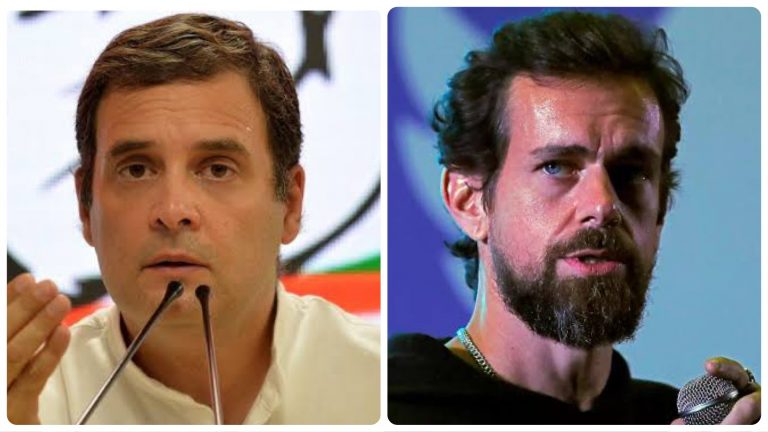
At the heart of this interference by Twitter is their leftist bias. For some time now, Twitter has been accused of furthering leftist propaganda. In fact, the tech giant is even unabashed about it, with its CEO Jack Dorsey proudly admitting that the employees in his organisation had a left-leaning bias.

Many governments across the world have blamed Twitter for unscrupulously influencing their elections and favouring the leftist parties. The Donald Trump regime repeatedly accused Twitter of targeting it while giving a free pass to the democrats.

Something similar is underway in India where leftists are allowed to peddle lies and misleading content, while attempts are made to muzzle those who do not conform to their worldview.

The Indian government must take urgent notice of these developments and take preventive measures to curb these interferences or else it won’t be too long before Twitter and other social media platforms start using advanced technological tools at their disposal and overtly manipulate public opinion as was witnessed during the American Presidential elections.

Additionally, the government should also probe if opposition parties in India are conniving with the social media behemoth to influence the upcoming assembly polls.

Nagpur hospital letter refutes Sharad Pawar and Deshmukh’s claims, says Anil Deshmukh was not prescribed home quarantine

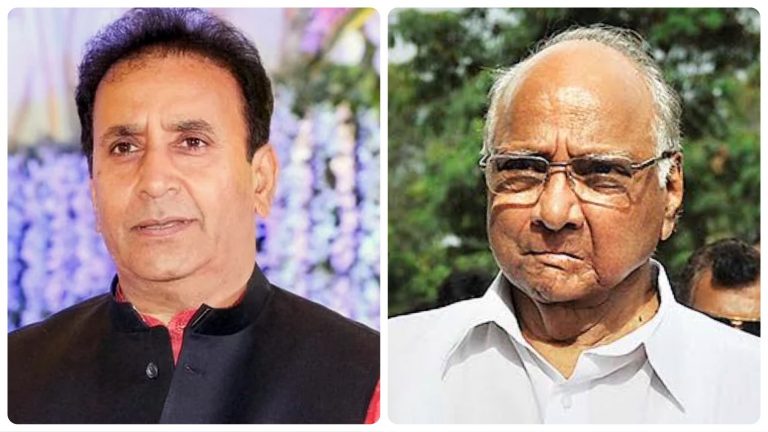
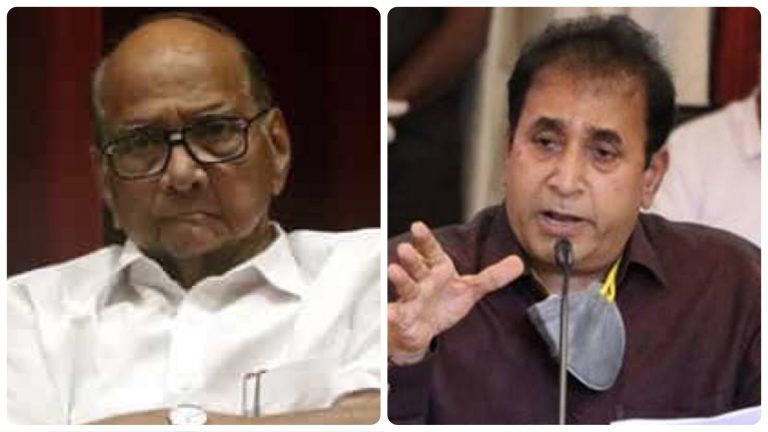
Hours after NCP supremo Sharad Pawar flashed a prescription report in his press conference to allege that Maharashtra Home Minister Anil Deshmukh was recommended home quarantine, the discharge letter of the Alexis Hospital in Nagpur where Deshmukh was reportedly admitted said that he was allowed to travel and no quarantine was recommended for him.

The letter accessed by Republic TV punctures the claim made by NCP supremo Sharad Pawar, who said that Anil Deshmukh had gone under quarantine from February 15 to February 27 after being infected with the coronavirus. This claim was reaffirmed by Home Minister Anil Deshmukh himself, who claimed that he was home quarantined from February 15 to February 27 and did not step out of his home during that period.

Source: YouTube

“He is non infectious from COVID-19 point of view and is fit to fly considering his stable medical condition,” the hospital letter dated February 15 read.

Sharad Pawar claims Anil Deshmukh was under quarantine

After former Mumbai Police Commissioner Param Bir Singh alleged that tainted police officer Sachin Vaze had a meeting with Anil Deshmukh wherein he was asked by the Home Minister to extort money from business owners in Mumbai, NCP chief Sharad Pawar tried to fend off the allegations by stating that Deshmukh could not have met anybody during the said period as he was in the hospital from February 6-16 and was later under quarantine from February 16 to 27.

Addressing the media amid a political storm over former Mumbai police chief Param Bir Singh’s corruption allegations against the home minister, Pawar said, “Anil Deshmukh was in the hospital from February 5 to 15 and from February 15 to 27, he was in home isolation in Nagpur.”

Essentially, Sharad Pawar rubbished the allegations made by Param Bir Singh in his letter about the meeting between Anil Deshmukh and Sachin Vaze, claiming that the Maharashtra Home Minister was down with coronavirus during the period February 6 to 16.

However, Pawar was caught off-guard when the journalists told him that Deshmukh had attended a press conference during the said time period. During the press conference, when journalists and reporters informed the NCP chief that Maharashtra Home Minister Anil Deshmukh had organised a press conference on February 15 and that he was not in a hospital, a baffled Pawar clung to his statement, saying that Deshmukh was hospitalised during the said period. Pawar then went on to chastise the reporters for diverting the real issue by targeting the Home Minister.

Anil Deshmukh says he was under quarantine fro February 15 to 27 and stepped out for the first time on Feb 28

After Sharad Pawar came in the defence of Anil Deshmukh, it was the latter’s time to defend the former. After questions were raised of Sharad Pawar on the hospitalisation chronology he mentioned, Deshmukh came forward to issue a clarification. The Maharashtra Home Minister said that the press conference he had addressed on February 15 was from outside the hospital after he got discharged on February 15th.

“A few journalists were waiting for me at the hospital gate after I got discharged on 15th February. I was feeling low and weak so I sat on the chair there and responded to their questions. Then I went straight to my car and went home,” Deshmukh said.

“I was in home quarantine from February 15th to 27th. I stepped out of my house for the first time on February 28,” he said.

However, this lie was quickly called out after netizens dug up the Home Minister’s tweet from February 18 where he was seen attending last rites of one of his security guards who had died in an accident.

Oxford India Society trivialises online bullying, racism and anti-Hindu rhetorics that Rashmi Samant faced: Read details

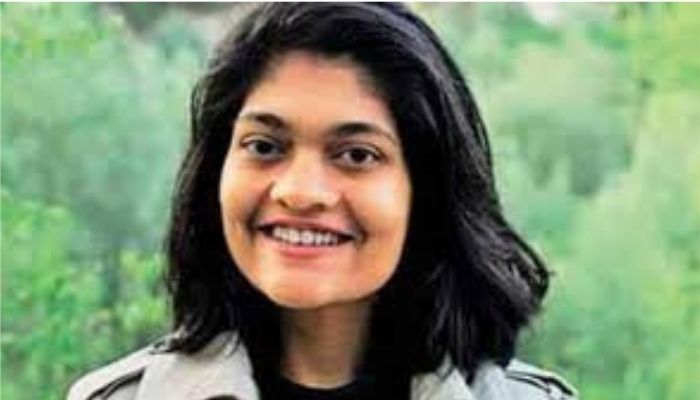
Days after the first female Indian elect of Oxford University Student’s Union, Rashmi Samant, was abused and vilified for being a Hindu, the Oxford India Society tried to downplay her ordeal on Monday.

In a collected statement released by Oxford Hindu Society, Oxford South Asian and the Oxford India Society, they insinuated that Rashmi Samant’s resignation was not motivated by racism or Hinduphobia. “We recognize that a culture of institutional racism is prevalent in the University and that racism is a lived reality for several members of the University, including brown students,” they claimed.

The statement further added, “It is with the utmost caution, therefore, that we wish to clarify that this is not why Ms Samant had to resign, and by that, we mean that neither her nationality nor her religion is what prompted the calls for her resignation. Her narrative of this being a racist attack against her undermines real experiences of racism of Students at the University.”

The Oxford India Society alleged that Rashmi Samant’s ‘deleted’ social media posts reeked of ‘racial insensitivity and ‘transphobia’. While justifying the hate and abuse meted to her, it said, “Although the student body voted for Ms Samant because of the pledges on her manifesto, ultimately, her insensitive remarks about other minority groups and refusal to accept responsibility for her actions are what prompted calls for her resignation.”

Oxford India Society bats for groups that spearheaded vitriolic campaign

The statement alleged that Samant’s resignation had nothing to do with her being an ‘Indian’ or a ‘Hindu.’ Instead of empathising with the victim of cyberbullying, the Oxford India Society sided with the Oxford University Student Union Campaign for Racial Awareness and Equality, and LGBTQ+ Campaigns. The two groups had facilitated the vitriolic campaign against her. “Ms Samant’s failure to take responsibility for her actions and her attempts at justifying her offensive remarks are reprehensible,” it said.

Oxford India Society backs Hinduphobic Professor

The Oxford India Society was also seen batting for the Hinduphobic rhetoric, peddled by Oxford Professor Abhijit Sarkar. While trivialising his vitriolic post directed at Samant’s parents and her Hindu culture, it referred to the social media post as ‘irresponsible.’ It further said, “We are concerned that this diverts the focus away from Ms Samant’s evasion of accountability, and the harm that her actions have caused.”

Despite whitewashing the ill-treatment meted out to Rashmi Samant, the Oxford India Society attempted to come across as ‘neutral’. In a conciliatory tone, it urged Abhijit Sarkar to “take responsibility for his words and apologise to Ms Samant.” While carefully avoiding his anti-Hindu rhetorics, the statement focused only on his statement pertaining to her parents. “Ms Samant’s parents and their religious beliefs had no place in a conversation about Ms Samant’s reprehensible actions,” it added.

Rashmi Samant feeding into India’s Hindutva narrative, alleges Oxford India society

The statement also claimed that the demand for Samant’s resignation was propelled by ‘democratic means’ and not ‘cancel culture.’ It alleged, “We are acutely aware that Ms Samant’s post-resignation comments and interviews are feeding into the dangerous Hindutva narrative in India that is fundamentally exclusionary and discriminatory.” The Oxford India Society concluded, “We urge Ms Samant to refrain from further commenting on this situation, and instead, educate herself on the harm she has caused, as she promised she would in her initial letter to the Oxford student community.”

The Background of the Case

Rashmi Samant was hounded by leftists and anti-Hindu propagandists after becoming the first female Indian elect of Oxford University Student’s Union on February 11. She was forced to resign within days after being abused, bullied and targeted for being a Hindu and over her views against British colonisation.

In a coordinated attack, her old social media posts were dredged up, accusing her of being racist, anti-semitic, Islamophobic, transphobic. Besides this, Rashmi was also targeted for being a Hindu. One of the faculty members in Oxford – Dr Abhijit Sarkar had even dragged Rashmi’s parents into the controversy, attacking them for having a Lord Shri Ram display picture on their social media accounts while claiming that Rashmi’s student council elections were funded by Prime Minister Modi.

He had even accused Rashmi of being Islamophobic by alleging that she came from coastal Karnataka, which the faculty member termed as “a bastion of Islamophobic far-right forces”. Following the controversy, netizens from across the world had demanded the dismissal of Hinduphobic faculty AbhijitSarkar and had trended hashtag #DismissAbhijitSarkar on Twitter.

Sachin Vaze warned against revealing that he was using the Scorpio: Transcript of conversation between Mansukh Hiren and brother emerges

0

In a sensational development in Mansukh Hiren murder, the owner of the SUV that was found laden with explosives outside Antilia (Mukesh Ambani residence) in Mumbai on 25 February, a transcript of a phone recording has come to light. This phone recording was handed over to Maharashtra ATS as evidence in the Mansukh Hiren murder case. According to Republic TV report, the tape transcript contains a conversation between Mansukh Hiren and his brother Vinod on February 27, a day after Hiren’s interrogation by the Police in the Antilia case.

During the conversation, Mansukh Hiren, who had died under mysterious circumstances earlier this month, told his brother that Sachin Vaze had asked him not to mention anywhere that he was using the Scorpio.

In between the conversation, when Vinod asks Mansukh Hiren whether he mentioned Sachin Vaze in his statement to the police, Mansukh denies, saying that Vaze had warned him against it.

This conversation, according to Republic TV, makes it evident that Mansukh Hiren was trying to conceal information at the behest of the tainted Mumbai Cop and former Shiv Sena leader Sachin Vaze.

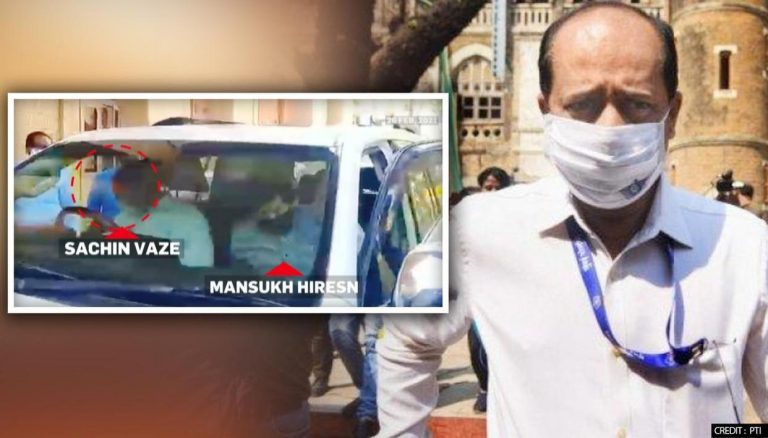
Video footage shows Mansukh Hiren with Sachin Vaze in a car a day after his bomb-laden Scorpio was parked outside Antilia

Earlier, video footage recorded outside the Crime Branch surfaced, in which Sachin Vaze was seen with Mansukh Hiren, the owner of the bomb-laden Scorpio. The footage was recorded on February 26, a day after the bomb-laden Scorpio was detected outside Mukesh Ambani’s residence in Mumbai.

In the video, Mumbai Police API Sachin Vaze was seen driving Mansukh Hiren to the crime branch. Mansukh Hiren was seen sitting next to Vaze in the Land Cruiser Prado – the vehicle which has been seized by the NIA. On Thursday, the National Investigation Agency had seized two more luxury cars – a Mercedes Benz ML 250 CDI and a Toyota Land Cruiser Prado GRJ 120 R in the Antilia bomb scare case, which are suspected to be linked to API Sachin Vaze.

This footage also revealed that Vaze was indeed in touch with the deceased businessman Mansukh Hiren a day after his bomb-laden car was parked outside Mukesh Hiren’s residence. 

Sachin Vaze’s connection in the Antilia Bomb scare case

Former Maharashtra Chief Minister Devendra Fadnavis made a sensational disclosure on March 5 in Vidhan Sabha when he claimed that Assistant Police officer Sachin Vaze was in touch with Hiren.

Fadnavis has alleged conspiracy behind the attack against Mukesh Ambani, alleging that it could not be a coincidence that the car was stolen from Thane, the route they followed was also from Thane, and the IO investigating the case also lived in Thane.

Shortly after Fadnavis’ revelation, Mansukh Hiren was found in a creek in Thane. Hiren’s wife has accused Vaze of murdering her husband. The case was transferred to the Anti-Terrorism Squad on March 6, and Vaze was removed from the Mumbai Police Crime Branch after his name surfaced in connection with the matter.

The ATS revealed that Mansukh Hiren’s was murdered because he refused to take the rap for planting the explosives outside Mukesh Ambani’s house. The murder of Hiren was allegedly planned on March 2 during a two-hour meeting Sachin Vaze held with his two other colleagues. Reportedly, Vaze ordered the hit but wasn’t present during the actual murder. In an attempt to establish an alibi, Vaze stayed put at Dongri carrying out searches on hotels till late at night.

Did Sharad Pawar and NCP fabricate a hospital prescription to save Anil Deshmukh? Did Anil Deshmukh lie further? 5 Questions that MVA has to answer

After former Mumbai Police Commissioner Param Bir Singh alleged that tainted police officer Sachin Vaze had a meeting with Anil Deshmukh wherein he was asked by the Home Minister to extort money from business owners in Mumbai, NCP chief Sharad Pawar has come in the defence of Deshmukh, alleging that he was in the hospital from February 6-16 and was later under quarantine from February 16 to 27.

However, the castle of lies came tumbling down pretty quickly.

Soon, it was discovered that while Pawar claimed that Param Bir Singh could not have met Anil Deshmukh since he was in hospital till the 16th and thereafter was under home quarantine, there was pretty compelling evidence that it could be lie.

It was discovered that on the 15th of February, Anil Deshmukh was conducting a rather public press conference with swaths of media present. He had shared the video of that press conference himself.

In fact, on February 8, a delegation of the Congress party had met Maharashtra home minister Anil Deshmukh to assert that Indian celebrities reacted to Rihanna’s tweet under pressure from the Bharatiya Janata Party.

Thereafter, Anil Deshmukh too came out with a statement to defend a seeming lie that was already furthered by Sharad Pawar. Deshmukh said, “A few journalists were waiting for me at the hospital gate after I got discharged on 15th February. I was feeling low and weak so I sat on the chair there and responded to their questions. Then I went straight to my car and went home,” Deshmukh said. “I was in home quarantine from February 15th to 27th. I stepped out of my house for the first time on February 28th” he added.

That lie too, however, was dismantled rather quickly.

Turns out, on February 18, Anil Deshmukh was seen paying tributes to a police officer who worked as a security guard at his bungalow in Nagpur. The pictures were posted by Deshmukh himself.

It is rather baffling that Sharad Pawar and Anil Deshmukh genuinely thought that they could get away with blatant lies.

However, there are more questions that they need to answer.

Question 1: What was the prescription waved around by Sharad Pawar. Was it fabricated?

NCP supremo Sharad Pawar today waved a prescription in front of the reporters when he was questioned about whether Anil Deshmukh was truly hospitalised between the period February 6 to 16 as alleged by him. During his press conference, journalists had raised doubts about his claim that Deshmukh was in hospital from February 6 to 16 as he was down with the coronavirus. They cited a press conference addressed by Deshmukh on February 15 to raise questions on Pawar’s assertions.

In response, Pawar waved the prescription in front of the reporters and reiterated his comments that Deshmukh was advised to be hospitalised because he was suffering from the coronavirus. Now the question that naturally arises is what was the prescription about? Was it just a letter of recommendation from doctors advising Mr Deshmukh to get admitted to the hospital or actual evidence that would prove that the Home Minister was in the hospital during the time period mentioned by Sharad Pawar?

It is also worth noting that Maharashtra Home Minister Anil Deshmukh had met a contingent of Congress leaders on February 8 who had come to his office demanding a probe into the tweets posted by Indian celebrities in response to Rihanna’s post calling for a discussion on the Farm laws. Given these discrepancies, the natural question that arises is was it a fabricated prescription that was obtained to extricate Maharashtra Home Minister Anil Deshmukh from the predicament he finds himself in after the explosive revelations by ex-top cop Param Bir Singh.

Question 2: When Anil Deshmukh addressed the press conference in person, why did Sharad Pawar say he did it online?

Earlier today, when journalists confronted Sharad Pawar with the fact that Anil Deshmukh was not in the hospital during the time period between February 6 to 16 and that he had attended a press conference on February 15, Pawar tried to summarily dismiss it by claiming that Deshmukh had attended a virtual conference.

However, as can be seen from the tweet posted by Anil Deshmukh on February 15, the press conference had happened in person and was not a virtual one as alleged by the NCP chief. Since the fact of the matter does not jibe with Pawar’s assertions, it raises a question as to why Sharad Pawar lied that Anil Deshmukh attended a virtual conference. Did Sharad Pawar invent a virtual conference just like he invented a bomb blast in Masjid Bunder back in 1993? Did he claim that Anil Deshmukh addressed a virtual conference to dispel questions raised on Deshmukh’s alleged hospitalisation?

Question 3: If Anil Deshmukh was indeed hospitalised, why did he endanger lives by addressing a press conference outside the hospital?

Even if one believes that the prescription waved by Sharad Pawar was authentic and that Anil Deshmukh was indeed hospitalised and being struck with the coronavirus, what was so important for him to attend a press conference outside the hospital?

The press conference that was addressed by Deshmukh allegedly outside the hospital was on any pressing issue. In fact, it was related to the celebrities coming out in support of the Indian government after popstar Rihanna and some international names had deviously tried to internationalise the ongoing ‘farmers’ protests. Was it really necessary for Anil Deshmukh, who was down with COVID-19 as per Pawar, to come out in the media and declare that an inquiry has been ordered to ascertain if the Bollywood celebrities were coerced by the BJP to tweet in their support?

Question 4: If Anil Deshmukh was struck with coronavirus, why did he endanger the lives of media persons and reporters by attending a press conference outside the hospital?

Another looming question that arises is if Anil Deshmukh was infected with coronavirus as has been alleged by Sharad Pawar in his press conference, then why did he defy coronavirus guidelines by coming out in public and addressing the press conference?

Moreover, as one can see in the video, Anil Deshmukh was not wearing mask while he was addressing the media outside the hospital. By disregarding the coronavirus guidelines, did he not endanger the lives of reporters and media professionals who were there with him during his press conference on February 15? Were the journalists informed that Anil Deshmukh was tested positive for the coronavirus? Even after being tested positive for coronavirus, as alleged by Pawar and as Deshmukh would later claim, why did he not wear mask while interacting with the media?

Question 5: Why did Anil Deshmukh attend the last rites of his security guard on February 18 when he was self admittedly under quarantine from Feb 15 to 28th?

After questions were raised of the loopholes in Sharad Pawar’s assertions in his press conference, like a loyal deputy, Anil Deshmukh jumped in to his defence, clarifying that the press conference he had addressed on February 15 was from outside the hospital after he got discharged.

“A few journalists were waiting for me at the hospital gate after I got discharged on 15th February. I was feeling low and weak so I sat on the chair there and responded to their questions. Then I went straight to my car and went home,” Deshmukh said.

“I was in home quarantine from February 15th to 27th. I stepped out of my house for the first time on February 28th” he said.

Deshmukh claimed that he did not step out of his house from February 15 to February 27. However, if one parses through his Twitter account, it becomes apparent that the Maharashtra Home Minister was lying through his teeth. On February 18, Deshmukh posted photos of a solemn ceremony carried out to pay tributes to one of his security guards who had died in a tragic accident. Clearly, the minister was not under quarantine as claimed by him and Sharad Pawar.

From the photos, it is evident that Deshmukh, along with his family members attended the ceremony where a large number of people had gathered. Deshmukh’s wife could be seen consoling the widow of the slain policeman. If Deshmukh was suffering from COVID-19 and by his own claim under quarantine from February 15th to 27th, what explains his presence in the last rites ceremony of a policeman that happened on February 18? Are the COVID-19 restrictions in Maharashtra only for the masses? The Ministers in Maharashtra can defy those restrictions and roam around freely as per their will and endanger others lives?

If Sharad Pawar and company want us to believe that Param Bir Singh is lying about the allegations he levelled against Maharashtra Home Minister Anil Deshmukh, he and his ministers first need to iron out the discrepancies engendered by their conflicting remarks and answer the questions raised above.


Assam: Complaint filed against Congress candidate, Sibamoni Bora, for allegedly enrolling Bangladeshis in voters list

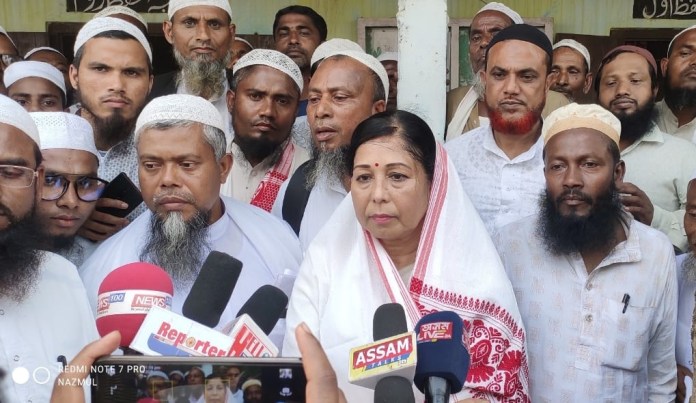
Shortly after Sibamoni Bora, Congress candidate from Assam, bragged about including Bangladeshis in voter list without any verification, a legal complaint has been filed against her. As reported by News Bharti, Legal Rights Observatory (LRO) has filed a complaint against the Congress candidate with Chief Electoral Officer (CEO), Assam.

Legal Rights Observatory has further sought prosecution of Sibamoni Bora for her illegal act of inducting illegal Bangladeshis in voters list when she was a BDO without any verification.

In latest update by LRO, the complaint has been forwarded by the Election Commission Of India to the Chief Electoral Officer, Assam. A time limit of two days has been set up for redressal. LRO is confident about the cancellation of Sibamoni’s candidature once the investigation authenticates the video put up by Pratidin Time.

In a video shared by Assamese news channel, Sibamoni Bora can be heard saying, “Me and my father and have been working for you for a long time. A lot of you people have got voting rights because of me, I can claim that. Because when I was a BDO here, when hearings took place (for updating voter lists), I had accepted all the applications without a single house visit. Those who are voting now here, I had enabled them to do so. If I had not done that at that time, you would not have got the voting rights.”

The Congress candidate further added, “You don’t have to fear about that, because this time the grand alliance will form the government.” She hinted that if Congress-AIUDF combine does not come to power, they may lose the voting rights, and hence they should vote for her.

Sibamoni Bora is constesting from Batadrava which is the birthplace of Srimanta Sankardev, the founder of Vaishnavism in Assam. However, region has seen large scale illegal infiltration from Bangladesh, and large areas of Bardowa Satra, the Vaishnav monastery, has been encroached by illegal immigrants from Bangladesh. The Congress is largely depending on the Bangladeshi Muslim voters in the constituency. Assam minister Himanta Biswa Sarma has said that removing the encroachers from the Satra land will be one of the main priorities of the govt if NDA comes back to power.

In an interview to India Today, Himanta Biswa Sharma asserted that his focus will remain on development and civilisational conflict in Assam. Upon being asked about fresh round of NRC, he said, “I want to request the Supreme Court to revisit some areas in Assam and do a fresh round of NRC. I am on the field all day and I know some people who were handling the process of NRC and have now joined Congress. They let off many people with fake documents. We’re not using NRC as a political tool. It’s a commitment to the people of Assam. Even if Bengali Hindus have been excluded in the NRC, we’ll get them justice through another route. We won’t forcefully include their names in the NRC. We will not compromise with the NRC. Later on, we’ll legitimise them through CAA (Citizenship Amendment Act). We’re for a fresh NRC and we stand with the persecuted Hindus.”

‘Muslim mob wanted to burn the place down, pulled us by the hair, Sabina threatened ‘Khoon ki Holi’ and called us ‘Bh*ngis’: Hear the women of Sarai Kale Khan

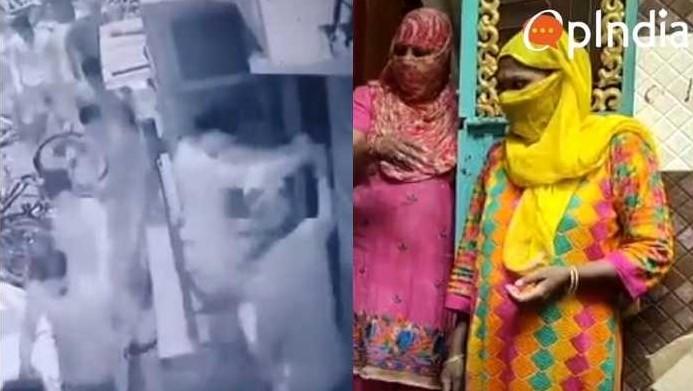
Hindu residents of Harijan Basti at Sarai Kale Khan, Delhi were attacked on Saturday night by a Muslim mob following an interfaith marriage between a Hindu man and a Muslim woman. OpIndia reached the spot to report on the matter.

The victims told us that the mob attacked them with swords and knives and sticks. Attempts were also made to set houses on fire. “They were taking out petrol, someone noticed them and threw something at them after which they fled,” one of the victims told us.

The rioters also entered the houses of Hindus to attack them, they said. All the members of one particular family were injured. Two women told us that they were lucky because they happened to be awake and therefore, could take prompt action to save themselves. Many others were not. We were told that the rioters also pulled one of the women by her hair.

Hindus told us that the mob hurled deeply offensive casteist slurs against them during the episode. They said that casteist slurs such as ‘Bh*ngi’ were used to insult the Dalit community. The residents are now demanding justice for the insults that were poured on them.

Furthermore, one resident told us that a woman called Sabina had threatened Hindus with ‘Khoon ki Holi’ and further assault. According to the women, Sabina came with a full group of Muslim men. The victims demand that action be taken against the woman and all the rioters responsible for the episode.

The victims have not left their homes to work fearing for the safety and security of their children. They say that their kids were also beaten. They say that there is pervasive fear among the Hindus of the area following the incident.

As we had reported earlier, the victims told us that the rioters picked up stones from the construction site near the Masjid in the area. Furthermore, the Police cleared the area of the debris so that the media could not see it when journalists reached the spot.

According to reports, the Muslim mob attacked Hindu homes because a Muslim woman had decided to marry a Hindu man.

The two had gotten married in secret but soon after, the girl’s family fixed her marriage with someone else. Therefore, the girl went to the local police station to record her statement and subsequently, left with the Hindu man.

It is reported that the couple and the parents have left the area to go live with their relatives elsewhere. Incensed by the marriage, the mob decided to attack the Hindu houses at Sarai Kale Khan.

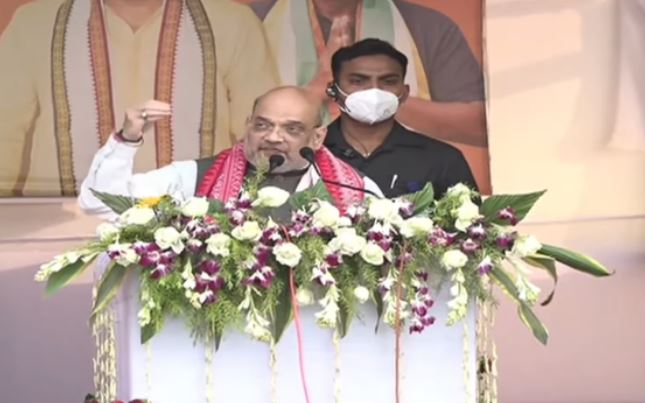
‘For Rahul baba, visiting Assam is just a picnic’: HM Amit Shah slams Congress for joining hands with AIUDF

Addressing a public gathering in Assam’s Dhemaji, Union Home Minister Amit Shah on Monday launched a scathing attack at the Congress for forging an alliance with Badruddin Ajmal-led All India United Democratic Front (AIUDF). He said that now that Congress has joined hands with AIUDF, infiltration will only be on the rise in the state of Assam.

“We worked for the development whereas Congress is forging an alliance with Badruddin Ajmal. If they come to power, infiltration in the state will surge. Do you want to stop infiltration? Congress party should be ashamed for coming together with Ajmal,’’ Union Home Minister Amit Shah said.

Speaking to the people of Assam ahead of the critical State Assembly Elections, Shah said that in the last 5 years of power, BJP under the leadership of PM Narendra Modi has brought peace to Assam and paved the way for progress in the whole of Assam by freeing the state from infiltrators. All of this is in stark contrast to the violence and instability bolstered during the Congress regime, said Shah.

Alleging that five years ago, when Congress was in power, agitation, violence, bomb blasts, deaths and curfews were common, Shah took a dig at the Congress supremo Rahul Gandhi for cozying up with AIUDF in the hope to win Assam. “Aatankwad ka nanga naach charo aur chal raha tha (there was naked dance of insurgency all around). Rahul Gandhi talks of protecting Assam’s ‘asmita’ (pride and identity), but today I want to ask him publicly – will Congress do it with AIUDF Chief Badruddin Ajmal on his lap?,” Home Minister asked.

Taking a further jibe at the Congress senior leader Rahul Gandhi, the HM furthered that his visits to the state are “nothing more than picnics.” 

“Recently, Rahul baba visited Assam. For him, visiting Assam is nothing more than a picnic. When he talks about labourers, I feel like laughing. Congress had four generations in command but none of them did anything for tea garden workers during the time they were in power,” Shah said.

Slamming Congress for stitching up an alliance with AIUDF in the state, Shah asked: “If by chance Ajmal comes to power, will Assam be safe from infiltrators? Do people want more infiltrators to come into the state?”

BJP government brought an end to insurgency in Assam: Amit Shah

The BJP stalwart reminded the public of Assam how BJP in its 2016 manifesto promised to eliminate terrorism agitation and curfew politics from Assam and the BJP government in the state kept its promise. Union Home Minister Amit Shah asserted that the Bodoland Territorial Region Accord (BTR), inked a year ago, has initiated the process of ending insurgency in the state. The politics of fear, terror, murder has stopped in Assam and the politics of development of the poor has started, said the HM.

Furthering that BJP is committed to quell violence and bring peace in the Bodo region, Amit Shah said that his party envisions replacing arms and ammunitions with computers so that the youths of Bodoland can contribute to the economy and development of the country.

Accusing Congress of following the divide and rule policy in the state, Shah asserted that BJP’s policy is Sabka Saath, Sabka Vikas and Sabka Vishwas. “The Congress has created a rift between Assamese and Bengalis, plains and hills and Upper and Lower Assam, while the “BJP has taken all smaller communities together and bonded them through development,” Shah claimed.

HM highlights developmental work in the state

Talking about the developments in the state under the BJP leadership, Shah said:” The Udalgiri Railway station has been modernized and 39,000 women have received free gas cylinders. Under the Bodo agreement, we have also formed an Aayog that was demanded by the community, said Shah, also informing that over 2,000 insurgents have returned to the mainstream after giving up arms.

Asserting that only PM Modi can keep Assam free from terrorism, Shah said that it was evident from the enthusiasm of the people that the BJP was going to form the government for a second consecutive term in Assam.

Today, the Union Home Minister was scheduled to address three rallies at Assam’s Jonai, Udalgiri and at Majuli from where Chief Minister Sarbananda Sonowal is contesting for a second consecutive term. He is also scheduled to attend a meeting of party workers at Guwahati in the evening.

The Assembly elections in Assam will be held in three phases starting from March 27 while the counting of votes will take place on May 2.

How farmers in Gujarat have benefitted with entry of private players and contract farming

The same old rhetoric of ‘farms will be sold to 4-5 big conglomerates’, ‘farmers will be rendered landless and exploited at the hands of few private players’ is being pushed forward by the kisan andolan leaders. The farmers agitating and holding Punjab and parts of Haryana and UP to ransom seem to be upset with farmers income doubling through open market and formalized contractual farming.

The fear mongering has made the farmers to believe that the private companies will take over their land. So let’s understand which section of the Farm Laws allows a company to buy a farmers land. Well the answer is none. There is no such provision in the Laws which enables a company to own farmers land or produce. However, this narrative is being played to mislead the farmers.

It is interesting to know that around 15 states in India have been practicing contractual farming in some way or the other.

What is contractual farming?

As explained in Krishi Jagran, contract farming is a method of agri-production where a purchaser approaches a farmer with specific requirements of production and marketing of a or multiple farm products. The farmer then offers to supply agreed-upon amounts of a given agricultural commodity as per the requirement stated in the contract. The farmer must ensure that the produce is as per purchaser’s quality requirements. In certain situations, the purchaser agrees to assist the farmer by providing necessary agricultural inputs, land planning, and technical guidance, among other things. 

Contractual farming in Indian states

Multiple states have loosely drafted bills in place for contractual farming which refrains a farmer from getting into such contracts. As mentioned by Tushar G in a Swarajya report, Punjab for example, introduced contract farming in the year 2002 under Captain Amarinder Singh’s government to decrease the share of cropped area under wheat and paddy and encourage diversification.

However, after the state government changed in 2007, stopped the financial help from UPA-led central government. This, coupled with lack of supply of good seeds, motivation to farmers and market support needed from state as well as central government were more or less absent. In 2013, the government made another attempt to pass Punjab Contract Farming Act which resembled the Farm laws but was met with strong opposition from the middlemen lobby.

In another report by the Indian Express, Maharashtra government had incorporated contract farming in its Agriculture Produce Marketing (Development and Facilitation) Act of 1964 in the year 2006. Just like the Centre’s Farm laws, Maharashtra had allowed farmers to enter into contracts with buyers to sell their produce at predetermined prices but the potential has remained untapped as retail chains have been reluctant to enter in contracts that last for a long period of time.

Role of Farm laws

What Centre has done with Farm laws is essentially weave the vaguely drafted state regulations in a watertight Act to ensure formalisation and protection of farmers and purchaser across the country promoting ‘one nation, one market’. Ensuring uniformity, the new laws have specific provisions to safeguard the interests of farmers. The Centre has repeatedly made it clear that contract farming is an option and not compulsion, selling outside of mandi is an option and not compulsion and no APMC will be shut.

Here is a brief round-up on what the new farm laws do:

The land remains with farmers

The land of farmers will remain with them.

No buyers can construct permanent structures on farm land

No buyer who gets into the contractual farming with farmers will be able to build permanent structures on the farm land.

No recovery can be made by selling or leasing land of farmers

The new farm laws say that there will be no action for recovery of dues against the farmers’ land.

Farmers get the choice

Further, farmers get the choice and freedom to sell their produce to whoever they wish to.

The Gujarat Model

No land has been sold to purchaser in India’s 30 years of contractual farming says a December 2020 report of online web portal DeshGujarat. In fact, the risk for farmers has gone substantially down after they got engaged into contract farming.

A moneycontrol report states that Jignesh Patel, a resident of Aravalli, Gujarat clocks Rs 25 crore annually, all thanks to contract farming. Patel’s family, who have been into potato farming for the past 26 years, began growing the LR potatoes (a special variety of potatoes) after pilot cultivation. They now produce produce 20,000 metric tonnes on an average and sell them to leading potato chips manufacturers such as Balaji and ITC.

In another report, an ITC official revealed that potato farmers in Gujarat earn as high as Rs 5 lakh per hectare. Sachid Madan, Chief Executive, fresh fruits and vegetables and frozen business, ITC said, “farmers make two times more income from growing potatoes for processing units,”. ITC is the maker of the popular potato snack brand, Bingo.

Adding to the success stories, ‘Tuber Foods Private Limited’ of Ahmedabad is all set to buy 400 tons of golden sweet potatoes at 25% higher rate than the market price from Maharajganj Vantangiya’s FPO ‘Maharajganj Vegetable Producing Company’. Specifying the deal, Ram Gulab, the director of Maharajganj Vegetable Producing Company said that the contract is for selling the produce and not the land and that contractual farming has come as a blessing for small farmers like them.

Banas Dairy, which is one of the 18 cooperative unions under the Gujarat Cooperative Milk Marketing Federation (GCMMF), is setting up a Rs 100-crore (USD 13.5 million) potato processing unit in North Gujarat to take on popular and established brands like McCain Foods India Pvt Ltd and Hyfun Foods in India. The unit will have an annual capacity to process 50,000 metric tonnes of potatoes for production of French fries, a popular snack and 12 other potato products for both domestic and international markets in the South-East Asia. The company is currently procuring 7,000 metric tonne of potatoes from approximately 500 farmers in North Gujarat.

Private players working with farmers

Companies like BigBasket, Reliance Retail, Amazon, ITV, PepsiCo have been working closely with farmers to procure desired products directly, increasing farmers income by around 20%. PepsiCo still undertakes some amount of contract farming in Punjab. Punjab farmers, who had wholeheartedly embraced the reforms few years back, are not up in arms against the very same reforms at central level. It appears that the opposition parties are opposing the new laws only because Modi government brought them in.