Home Blog Page 5673

Shaheen Bagh mastermind Sharjeel Imam brought to Delhi, to be investigated by Anti-terror unit

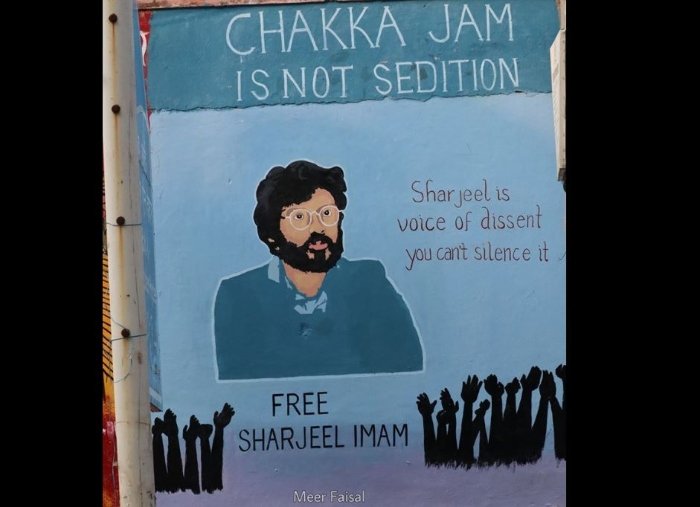
The Shaheen Bagh mastermind and the Wire columnist Sharjeel Imam who was arrested by the Police from Bihar’s Jehanabad has been brought to Delhi on Wednesday.

As reported by by Times of India journalist Raj Shekhar Jha, the radical Islamist Sharjeel Imam will be likely to be taken to the office of the interstate cell in Chanakyapuri where he will be questioned at length about his speeches and associates.


Reportedly, Delhi’s Anti-terror unit will investigate the nexus between arrested JNU student Sharjeel Imam and anti-India elements. A team of special cell police will also be present at the interstate cell office to question sedition accused Sharjeel Imam.

Sharjeel Imam was arrested by Delhi Police on Tuesday from Bihar after he evaded arrest for four days. Many cases of sedition were registered against Shaheen Bagh mastermind Sharjeel Imam following his secessionist speech urging Muslims to cut off North-east from the rest of the country during one of his speeches at Shaheen Bagh anti-CAA ‘protests’.

At first, the Assam Police had registered a case under the Unlawful Activities (Prevention) Act against Sharjeel Imam, said to be one of the organisers of the anti-citizenship law protest at Shaheen Bagh.

Later, the Delhi Police filed an FIR against Imam under IPC section 153 for giving provocative statements with intent to cause riots. Another sedition case was also registered against Shaheen Bagh mastermind Sharjeel Imam by Itanagar Crime Branch. A case under section 124(A), 153 (A) and 153 (B) of the IPC was registered against him for provocation inciting secession of Assam and other Northeastern states from rest of India.

The arrest of the Wire columnist Sharjeel Imam – the mastermind behind anti-India CAA protests at Shaheen Bagh comes after his video went viral where he had asked Muslims of the country to break India by cutting of North-east from the rest of the country. “Our main aim is to permanently cut Assam and North-east India from rest of India,” he could be heard saying in the video.

In his video, Sharjeel Imam had added, “If 5 lakhs Muslims are organised then we can cut the North-east from rest of India. If we cannot do permanently, at least we can cut North-east from India for months”.

Further, Sharjeel Imam who is also a columnist with The Wire and mastermind of Shaheen Bagh protests had said, “Our responsibility is to cut the Assam from India then Govt will hear our voice. If we have to help the Assam then we will have to cut the Assam from rest of India”.

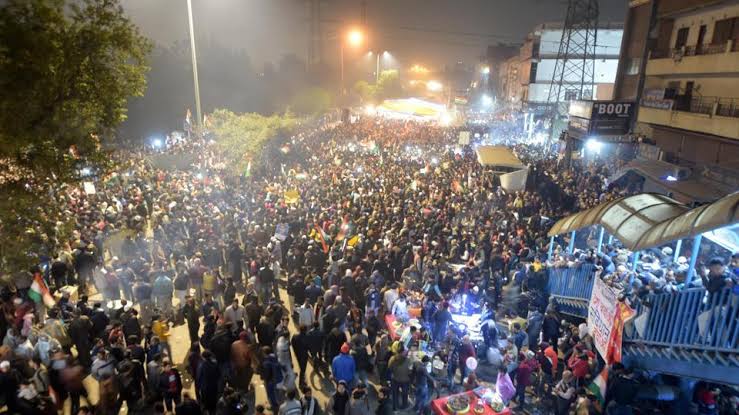
Sharjeel Imam is the mastermind and the main coordinator of the Shaheen Bagh protests against the Citizenship Amendment Act (CAA). Interestingly, earlier, ‘Jinnah Wali Azadi’ slogans were raised at Shaheen Bagh which also pointed towards the main agenda of these anti-CAA protests, specifically at Shaheen Bagh, is the second partition of India.

Mumbai Police denies permission for Queer Azaadi Mumbai Pride 2020 at August Kranti Maidan

0

Queer Azaadi Mumbai Pride March, also known as Queer Azaadi March and Peer Pride March is organised in the capital city of Maharashtra, Mumbai, to celebrate and commemorate the queer history. The annual LGBTQIA pride parade is organised by Queer Azaad Mumbai (QAM), a group of organisations and individuals working for the rights of the queer community.

However, this time around, Mumbai Police has reportedly denied them permission to hold Queer Azaadi March 2020 at August Kranti Maidaan. The development was shared on Twitter by Twitter handle of Queer Azaadi Mumbai (QAM) with a picture of notice issued by the Mumbai Police.


According to the notice, LGBTQ activist Harish Iyer and Humsafar trust had asked the Mumbai Police to allow them to hold the march, that has been happening in the city annually for the last 10 years. However, the police denied granting permission to them stating the rally will be used by anti-CAA dissenters to stoke anarchy in the city.

Read- Dear LGBT Community, Azadi slogans are clearly not working, it’s time to chant Jai Shri Ram

LGBTQ activist Harish Iyer posted a tweet tagging Uddhav Thackeray, Priyanka Chaturvedi and Aaditya Thackeray for seeking help after Mumbai Police denied them permission to carry out the annual pride march.


The Mumbai Police while denying the permission has claimed that the anti-CAA protesters might attempt to exploit the Queer Azaadi March which may lead to law and order situation in the city. The police also warned that if the rally is carried out in contravention to their order, everyone who will be at the rally will be held guilty and appropriate action as per law will be initiated against them.

Police’s preventive order comes at a time when many places in the country have witnessed disorder and violence during large scale rallies. In Delhi’s Jamia Nagar, anti-CAA rioters indulged in pelting stones, vandalism and arson in opposition to the Citizenship law. The state of Uttar Pradesh was too in the throes of violence and chaos after rampaging anti-CAA protestors took to streets against the enactment of the new citizenship law.

Swara Bhaskar shares stage with Shaheen Bagh mastermind Sharjeel Imam who called for cutting North East from India

In December, 2019, to express solidarity, the protesters at Delhi’s Shaheen Bagh were visited by Bollywood entertainer Swara Bhaskar where she spoke against CAA-NRC-NPR and also instigated the crowd against the government. The actor was also joined by Sharjeel Imam, the mastermind of the Shaheen Bagh protest, in her endeavour.

[youtube https://www.youtube.com/watch?v=EJ6uZbc6MxI]

The above video was uploaded on Youtube on January 1. Swara Bhaskar could be heard provoking the crowd by saying that they have shown others the true path and people should be drawing inspiration from them. While she instigates the gathering she is also seen giving false and malicious statements against the government and it’s newly implemented Citizenship Amendment Act and NRC.

And as she does so, Sharjeel Imam, the mastermind of the Shaheen Bagh protests, can also be seen in the video standing shoulder to shoulder with the actor turned cocktail politician.

Swara Bhaskar was seen sharing the stage with Sharjeel Imam at Delhi’s Shaheen Bagh.

Meanwhile, for the uninitiated, Sharjeel Imam, who is also a columnist with leftist propaganda website The Wire, was recently brought to Delhi by the Police from Bihar’s Jehanabad. Sedition charges had been filed against him in multiple states for his remarks urging Muslims to cut off North East India from the rest of the country by blocking the Chicken’s neck. The arrest was made by the Delhi Police Crime Branch after he was absconding for four days.

The FIR came after the Wire columnist and Shaheen Bagh roadblock mastermind Sharjeel Imam’s video went viral where he had asked Muslims of the country to break India by cutting of North-east from the rest of the country. “Our main aim is to permanently cut Assam and North-east India from rest of India,” he could be heard saying in the video.

In his video, Sharjeel Imam had added, “If 5 lakhs Muslims are organised then we can cut the North-east from rest of India. If we cannot do permanently, at least we can cut North-east from India for months”.

Read: Fearmongering beyond CAA: Now The Wire employee Arfa and Bollywood entertainer Swara Bhaskar paint Bollywood as threat

Further, Sharjeel Imam who is also a columnist with The Wire and mastermind of Shaheen Bagh protests had said, “Our responsibility is to cut the Assam from India then Govt will hear our voice. If we have to help the Assam then we will have to cut the Assam from rest of India”.

Sharjeel Imam is the mastermind and the main coordinator of the Shaheen Bagh protests against the Citizenship Amendment Act (CAA). Interestingly, earlier, ‘Jinnah Wali Azadi’ slogans were raised at Shaheen Bagh which also pointed towards the main agenda of these anti-CAA protests, specifically at Shaheen Bagh, is the second partition of India.

In just a week, many incidents have surfaced which laid the secessionist agenda of the ultra-left wing protestors at Delhi’s Shaheen Bagh area exposed. It is now sufficiently clear that this protest like all other anti-CAA riots, is anything but ‘organic’. In fact, it is another typical left-wing organised blatant communal event where protestors are openly batting for secession from India.

A Wishlist for Budget 2020: An opportunity to create history

On 20th of January 2020, the famous Halwa Ceremony was conducted in the Finance Ministry marking the start of the final leg of the budget process. The ceremony begins with the preparation of Halwa as in our culture, we begin something auspicious by eating sweet food. Nobody knows when this tradition started in Finance Ministry, but it has indeed been a long tradition. The question in our mind is just how auspicious the upcoming budget can be as our expectations seem to be at an all-time high.

Budgets don’t impact as much as they used to in my view as they once did due to the introduction of the Goods and Services Tax. This is precisely why we don’t get much news reports post budgets which dictate how some items will be expensive while others might get cheaper in the coming financial year.

Read: Union Budget 2020: All you need to know about the customary ‘Halwa Ceremony’ preceding the budget

The only tax policies that are of interest for the consumer would be the personal income tax rates or the customs duties. However, the budget as a policy document is indeed critical for the overall macroeconomy and that plays an important role for all of us. It is well recognized that our growth has slowed down from around 8 per cent to 4.5 per cent in the second quarter of the current financial year. Clearly, something went wrong – and even though we debate what went wrong, nearly everyone agrees that this budget could be a great opportunity to fix some of these issues. To be fair, since August we’ve seen the government take positive measures to address the current economic slump and this gives us a sense of optimism that this budget would only carry forward the legacy of these past measures.

Every economist, policy wonk and public policy commentator prepares a wish-list for the budget, including myself. The fact that the budget comes at a time of an economic slowdown makes it an important opportunity to take some of the tough policy decisions that would have been otherwise difficult. The first such decision would be to resist the temptation to increase duties in order to promote domestic industries. The idea may seem appealing, especially politically, but it was practised before 1991 and we saw the monumental failure of Nehruvian import substitution policies. Any temptation to revisit the debate on the need for reduction in import tariffs should be avoided.

India’s exponential growth post-1991 reforms coincided with one of the fastest pace of poverty reduction came with the backdrop of reduced tariffs. The economic argument for this is simple, India imports for the purpose of consumption and therefore, making imports dearer will not automatically make Indian products affordable. Moreover, one has to take a comprehensive view of the overall supply chain.

Read: Budget 2019 gets almost everything right, but sends a few wrong signals

A hypothetical example could be the situation when products such as cars may be competitive in the international market. However, if we impose a higher tariff on key inputs such as steel or rubber then the automobile industry would have to buy expensive inputs which may make them uncompetitive. Therefore, what is needed is a comprehensive view of trade policy and correct for the inverted duty structures. This along with an indication to further be integrated with global supply chains would be critical in sending a signal to international investors regarding our seriousness to attract these value chains to India. This is absolutely essential as we want to create adequate non-farm employment to absorb surplus labour from the agricultural sector.

The other item that is high on agenda has to do with tax reforms and implementation of the Direct Tax Code which is critical towards simplification of our taxation regime. This would include the removal of Long-Term Capital Gains Tax (LTCG) and rationalization of tax rates and tax slabs. A positive impact of this is on disposable income for taxpayers. Many have argued that tax cuts may not be an as good a strategy as expansion in outlays on infrastructure and programs like MGNREGA. Even though tax cuts will impact a small number of population, but they have a disproportionate share in India’s consumption. This, in turn, is likely to have a multiplier effect on growth rate but more than that, it will revive consumer sentiment and kickstart discretionary consumption.

Of course, all of these measures may imply that we may not meet our fiscal targets but then nobody anticipated us to meet the target for the current financial year. The extent of the slowdown has resulted in a consensus view to deviate from the fiscal target in the coming fiscal year and commit to a credible consolidation path in the medium term. One would definitely like to look at the fiscal numbers for FY2019-20, FY 2020-21 and the medium-term fiscal consolidation path.

This budget will be the first budget of the decade and there are signs of India finally breaking the 8 per cent sustained growth mark in this decade. One hopes that this budget would lay the foundation of such growth. On 20th of January started the final leg of the first Budget of the decade which could, by all means, be a historic budget. Coincidentally, just a few months ago on the 20th of September, history was made by the Hon’ble FM by announcing one of the biggest corporate tax rates in the 21st century. One hopes that the process of making history continues and we have more reasons to be optimistic on the 1st of February 2020.

Delhi Assembly Election: EC orders BJP to remove Anurag Thakur and Pravesh Verma from star campaigners list after their controversial comments

Citing the controversial statements made by Union Minister Anurag Thakur and Delhi BJP MP Pravesh Verma in an election rally, Election Commission on Wednesday ordered BJP to remove both of them from the list of star campaigners for the assembly elections in Delhi.

In a press statement, the Election Commission said the BJP must remove the two from its star campaigner list with immediate effect. The Election Commission has stated, “Election Commission has ordered the removal of Anurag Thakur and Parvesh Verma from the list of star campaigners of Bhartiya Janata Party for the general elections to the Legislative Assembly of the NCT of Delhi with immediate effect and until further orders”.

EC orders BJP to remove
EC ordered BJP to remove Thaku, Pravesh Verma from lists of star campaigners

On January 27, while addressing an election rally in Delhi, Anurag Thakur, who is Union Minister of State for Finance, led his supporters to chant the slogan: “Desh ke gaddaron ko, goli maro sa**lon ko.”

A day later, the Election Commission had issued a notice to Anurag Thakur, asking him to explain his statement.

BJP MP Parvesh Verma, the other BJP leader against whom the Election Commission has acted, in a statement, had vilified the people of Shaheen Bagh and said they will “enter your homes and rape and kill your daughters and sisters and that only Prime Minister Narendra Modi and Home Minister Amit Shah can save the people”. He had also said that if BJP comes to power in Delhi, the Shaheen Bagh protests will be cleared in an hour, and illegal mosques built on govt land in his constituency will be removed.

Read- Delhi Elections: Errant, recalcitrant, spoilt Delhi needs a tough disciplinarian government

The Election Commission has also asked Delhi’s chief election officer to provide full transcripts of Anurag Thakur and Pravesh Verma’s speeches along with videos.

Meanwhile, Congress leaders Ajay Maken and Subhash Chopra too had approached the Election Commission and registered complaints against Anurag Thakur and Pravesh Verma for making inflammatory and instigating remarks ahead of the Delhi elections.

Harish Khurana, a spokesperson of the BJP’s Delhi unit and son of former chief minister Madan Lal Khurana, defended the union minister, saying that it was the crowd that uttered the inciteful words and not Thakur.

In a statement Khurana said, “If you see the video, Thakur did not even say those words, so he should not be held responsible. The slogan is not invented by him, it is lasted for years”.

Khurana, however, said that the hate exists on both sides. “More than about being right or wrong, one must see who started it. There were slogans of ‘Jinnah-wali azaadi’ at Shaheen Bagh. BJP leaders were told that they need to take permission to enter Shaheen Bagh, not to mention the inconvenience that has been caused to people”.

Days before Kapil Mishra was pulled up by the Election Commission for inciteful comments such as “Delhi mein chhote chhote Pakistan bane”, “Shaheen Bagh mein Pak ki entry”, etc. The election commission gagged him for 48 hours and an FIR was filed against him.

From Dengue to Coronavirus: Five instances when Indian politicians called their rivals toxic pathogens

There have been several instances when Indian politicians have slammed their other politicians by referring to them as dreaded pathogens. Taking name-calling to another level, here are the five instances when politicians have named their political opponents after viruses.

1. JDU leader Dr Ajay Alok calling rebel JDU leader Prashant Kishor “coronavirus”

Latest, in the occurrence of such incidents, is the former JDU party spokesperson Dr Ajay Alok who had recently referred to rebel JDU leader Prashant Kishor as “coronavirus” to the party.

Demanding removal of Prashant Kishor from the party, Alok said that he is a corporate broker of power and is untrustworthy. Alok also hinted that Kishor may soon leave the party. “He is not trustworthy. He could not win the trust of Modi Ji and Nitish Ji. He works for AAP, talks to Rahul Gandhi, sits with Mamata didi. Who will trust him? We are happy this #coronavirus is leaving us, he can go wherever he wants to,” Alok said.


The relations between Prashant Kishor and Nitish Kumar soured after the former expressed his public disapproval with the party’s support for the Citizenship Amendment Act. The situation exacerbated after a series of allegations and counter-allegations made by Kishor and Kumar against each other, following which Kumar yesterday said that he is fine if Kishor leaves the party.

Alok’s “coronavirus” dig at Kishor comes at a time when more than 130 people have so far died across the world from the mysterious new coronavirus. The new coronavirus is believed to have emerged from illegally traded wildlife at a seafood market in Wuhan city of China. Investigations are still underway to determine the origins of the virus and its possible cure.

2. Haryana Minister Vij equated Rahul Gandhi to Nipah virus

In May 2018, Haryana Cabinet Minister Anil Vij who is notorious for making controversial statements compared Congress President Rahul Gandhi to the deadly Nipah Virus. Taking a jibe at Congress’ overtures to establish an alliance in Haryana, Vij said, “Rahul Gandhi is like Nipah virus, whichever party comes in contact with him will be finished off.”

Known for his contentious remarks, Vij had also called West Bengal chief minister Mamata Banerjee “mentally unstable”. Amidst rising political tension between Trinamool Congress and BJP in West Bengal, Haryana Health Minister, Anil Vij had taken to Twitter to call out on Mamata Banerjee’ unworthy attitude towards Prime Minister Narendra Modi and his party.

Calling the West Bengal Chief Minister, ‘mentally unstable’ he had questioned the President of India whether such mentally unsound people were fit to enjoy the position of the Chief Minister of any state?

Prior to this, Vij had likened Mamata Banerjee to Tadaka, a princess-turned-demoness in the epic Ramayana saying she creates problem pertaining to every issue. Claiming that Mamata Banerjee interfered in every issue to block the entry of the BJP leaders in West Bengal, Vij said, “I used to watch Ram-Leela when I was young and in a scene the demon ‘Tadaka’ used to disturb the ‘Yagyas’ conducted by the Rishis. Mamata Banerjee is also indulging in a similar act.”

3. Congress is affected by “Muslim League” virus- UP CM Yogi Adityanath

Uttar Pradesh Chief Minister Yogi Adityanath in April 2019 stated that the Muslim league was a virus that erupted after the mutiny of 1857 and divided the country on the religious line. Yogi further added that the Congress party was infected by the Muslim league virus after Rahul Gandhi filed his nomination from Kerala’s Wayanad, an ostensibly Muslim dominated region. Instead of just one individual, the UP CM named an entire political party responsible for partition as virus.

4. Kailash Vijayvargiya claims JNU virus has reached Madhya Pradesh after Rajgarh collector slapped a BJP worker

The BJP national general secretary Kailash Vijayvargiya last week alleged that Rajgarh district collector Nidhi Nivedita hailed from the JNU and that’s the reason she opposed the pro-Citizenship Amendment Act (CAA) rally organized by BJP workers and attacked them. “JNU is known for raising of anti-nation slogans. The Tri-colour is opposed over there. That’s why the BJP workers who held the national flag in their hands were insulted. JNU virus has come here and people know how a virus is cured,” Vijayvargiya said.

5. Delhi Chief Minister Arvind Kejriwal claims himself to be a “dengue mosquito”

While others resorted to referring their opponents as viruses, Delhi CM Arvind Kejriwal chose to name himself a virus. Earlier, Delhi Chief Minister Arvind Kejriwal counterintuitively hailed himself as a “dengue mosquito” whose sting can put both Congress and BJP in trouble. Responding the Mr Khurshid’s comment that Kejriwal’s attack against him is like a mosquito bite that causes minor irritation, Kejriwal said,” I am dengue (causing) mosquito. I will bite BJP and Congress and they will be in trouble.”

CAA, NRC and Lessons for the Government of India from the Rohingya crisis

The partition of India by colonial Britain in 1947 on the basis of Islamic majority regions resulting in the formation of the Islamic Republic of Pakistan and the People’s Republic of Bangladesh later (with Islam as its official religion) has left a deep and lasting scar on Indian Civilization. Unfortunately for the non-Islamic minorities in these countries, the trauma continues, even to this day. Life with dignity is impossible and naturally, these oppressed people look to India for succour.

Despite the formation of a sovereign Islamic nation, illegal immigration from Bangladesh continues unabated. While the Muslims find succour and support from their co-religionists in India and corrupt politicians in Bengal and Assam, the non-Islamic minorities fleeing structural oppression continue to face insurmountable hurdles and the apathy of the State. Not being of much use to the corrupt politicians who have used the façade of secularism to nurture, appease and exploit the Muslim vote bank in India to win elections, their fate is consigned to refugee colonies without any prospect of citizenship and integration into the mainstream life of India.

The Muslim illegals, on the other hand, have been always shielded from the scrutiny of the law and have official identity documents facilitated for them at speed. While this is common knowledge, the opposition political parties and much of mainstream English media has been vociferous in denial. Thus when the current BJP government brought in the Citizenship Amendment Act to regularise and grant citizenship to the oppressed minorities of the Islamic countries of Afghanistan, Bangladesh and Pakistan, who had fled to India until 2014, all hell broke loose.

With the CAA on one hand and the prospect of National Citizenship Register (NRC) on the other, to detect illegal immigrants in India, it was literally a violent shove to the power base of India’s pseudo-secular political tribes, disrupting their ability to further illegal patronage. Spectacular incidents of violence aimed at Central Government properties such as the Railways was unleashed by hordes of delinquent Muslim youth, primarily in West Bengal which hosts the largest population of illegal Bangladeshis. It was clear that these baying mobs, had little regard for national properties and their intent was purely intimidatory to demonstrate the kind of violence they are capable of unleashing.

Read: The Battle from CAA to JNU: Khilafat 2.0, Communist Fantasies, Petty Politics and the conspiracy of Hong Kong style protests

While one can try to understand the point of view of opposition politicians and even the illegals it was quite eye-opening to see the Anglo Saxon international media comprising of some reputable names such as the FT, NYT, WP and The Times, jump at this opportunity to profess doom for the democratic institutions of India and start peddling downright lies about the nature of the CAA which now happens to be duly notified Law. Comparisons between the CAA and the Citizenship Law of Myanmar have been drawn and linkages between the plight of the Rohingyas with Indian Muslims have been implied. This, in turn, has been picked up by left-leaning student unions in some Indian University campuses, and a litany of lies concocted to instigate and bait violence. It is absolutely essential to puncture these lies and unwarranted comparison and therefore very important for the Indian citizenry to understand the Rohingya issue, its parallels, and what the present government needs to be careful about to avert and nullify the malicious intentions against our country.

Crisis in our doorstep

The Rohingya refugee crisis is the largest refugee crisis in the world today, after the exodus of over a million Syrians into Europe in 2016. Just as the Western Press, holds Bashar Al Assad responsible for this rather than ISIS and the host of other Western and Turkish funded militant groups who started the conflict, the Rohingya Refugee crisis is squarely blamed on the Myanmar government and its military. The Rohingya crisis or conflict centres in the Rakhine state, earlier called Arakan in the West. Rakhine is a coastal geographic region in Lower Myanmar. It comprises a long narrow strip of land along the eastern seaboard of the Bay of Bengal and stretches from the Naf river estuary near Chittagong Hills area (in Bangladesh) in the north to the Gwa River in the south. The Arakan Yoma, a mountain range forms the eastern boundary of the region and isolates Rakhine from the rest of Myanmar.

The land is fertile and after conquest by the British East India Company in 1826, Rakhine became a leading rice exporter mainly cultivated by settlers who were encouraged to come in from the Chittagong area of the Bengal Presidency under a policy of mass immigration between 1826-1948 at the behest of colonial masters. This to a large extent is the genesis of the conflict in Rakhine. These settlers from the erstwhile Bengal Province of British India were mainly Muslims whereas the original inhabitants of the region were Buddhists. The Myanmar government thus considers these settlers to be Chittagonian Bengalis.

Read: Here’s why Amit Shah was right when he said Rohingyas will never be accepted in India and UNHRC cannot object

Aye Chan, in his paper The Development of a Muslim Enclave in Arakan (Rakhine) State of Burma (Myanmar), published in SOAS (a UK University) concludes the following about the Rohingyas:

For successive generations, their ethnicity and Islam have been practically not distinguishable. In the beginning, they adopted the policy of irredentism in favour of joining East Pakistan with the slogan, “Pakistan Jindabad,” (Victory to Pakistan). This policy faded away when they could not gain support from the government of Pakistan. Later they began to call for the establishment of an autonomous region instead. During the Independence War in Bangladesh, most of the Muslims in Arakan supported West Pakistan. After Bangladesh gained independence Dhaka followed the policy of disowning those Chittagonians. Consequently, they had to insist firmly on their identity as Rohingyas. Their leaders began to complain that the term “Chittagonian Bengali” had arbitrarily been applied to them. But the majority of the ethnic group, being illiterate agriculturalists in the rural areas, still prefer their identity as Bengali Muslims.

Katie Hunt of CNN has compiled a short photo- essay titled “Rohingya Crisis: How we got here” to describe the chronology of key events.

1430 AD: Last Rakhine kingdom founded, with its capital in Mrauk U. Situated on the border between Buddhist and Muslim Asia, the city became one of Asia’s richest. In 1785 it came under Myanmar’s control.
• 1826- 1948: The Muslim community in Rakhine expanded rapidly during colonial times, doubling from the 1880s to 1930s. Expanding rice cultivation required significant labour, largely filled by Muslim workers from neighbouring Bengal.
• 1941- 1945, World War II: Rakhine State was on the front line between the Japanese troops and allied forces. Muslims were mostly pro-British, while Rakhine Buddhists initially supported the Japanese.
• 1948: Shortly after Myanmar’s independence from British rule, a Muslim rebellion erupted in Rakhine, demanding equal rights and an autonomous area. The rebellion was eventually defeated.
• 1962: Military rule begins. Rights that Rohingya had enjoyed before the coup were eroded. In 1978 and 1991, heavy-handed government campaigns pushed more than 200,000 Muslims across the border into Bangladesh.
• 1982: New citizenship law passed identifying 135 national ethnic groups. The Rohingya aren’t one of them, effectively rendering them stateless.
• 2014: Myanmar conducts the first census in more than three decades but Rohingya are excluded.
• November 2015: In the first democratic elections since the end of military rule, Rohingya aren’t allowed to participate as candidates, nor as voters. Suu Kyi’s party wins and she becomes a de-facto leader in a power-sharing agreement with the military.
• October 2016: The attacks spark an intense crackdown by the Myanmar military and trigger an exodus of Rohingya to Bangladesh. Rohingya insurgent group, now known as Arakan Rohingya Salvation Army (ARSA), claims responsibility for the border post-attack.
• August 2017: Myanmar’s state media reports ARSA insurgents targeting at least 20 police outposts and an army base in Rakhine State. Military responds with what they describe as “clearance operations,” burning down villages and triggering a mass exodus of Rohingya to Bangladesh.

The Background

There has been a long history of Muslim-Buddhist animosity and clashes in the Rakhine region. The province of Rakhine lay between the largely Islamic eastern part of the “suba(province) of Bangal (Bengal)” of the Mughal empire and the Buddhist kingdoms of Myanmar. Indian history buffs may note that Shah Shuja the second son of the Mughal emperor Shah Jahan fled to Rakhine after the Mughal war of succession following which Aurangazeb became the emperor. The Chittagonian Rakhine Muslims and Rakhine Buddhists have traditionally been on opposing sides. It may be noted that during the second world war, when the Japanese forces occupied Myanmar and Rakhine, the Rakhine Muslims were opposed to it having allied with the British, whereas the Buddhists supported the Japanese (and Netaji Subhas’s INA).

Following the second world war and the independence of Myanmar, the Chittagonian Rakhine Muslims after having been frustrated in their efforts to have Rakhine merged with East Pakistan, targeted Rakhine Buddhist interests expelling many Rakhine Buddhists from the north. During the early years after Myanmar’s independence, the Myanmar Military was severely embattled having to counter several ethnic insurgencies across Myanmar. However, by 1962 the Military gradually gained ascendancy over the militant factions all over the country and also amongst the Chittagonian Rakhine Muslims the most formidable of which was the Rakhine Solidarity Organization (RSO), who continued to operate from across the border, from East Pakistan(later Bangladesh). The RSO continued to increase its capabilities throughout the 1980s and 2000s through the assistance of pan Islamic organizations in places such as Libya and Afghanistan. At the same time, the Chittagonian Rakhine Muslims adopted a new identity for themselves called Rohingyas and have tried to demonstrate historic ties with the province of Rakhine; unsuccessfully.

The Government of Myanmar has consistently opposed the self-nominated term of Rohingya because the Chittagonian Rakhine Muslims were primarily sent by the British administration in the period of 1826 to 1948 to further Colonial Britain’s economic interest of growing rice for exports. The official stance of the Government of Myanmar is that the Rohingya are citizens of Bangladesh, as a result of the British partitioning of their Asian possessions. This has placed them in direct conflict with the foreign policy of Britain and other Anglo-Saxon countries including the USA. Britain has refused to recognize the 1982 citizenship law of the Government of Myanmar under the plea that it was notified during the period of Military Dictatorship in Myanmar. Myanmar has, however, had democratic elections in 2015, where the citizenship law was accepted, in which the present ruling party of National League of Democracy attained majority with a stunning super majority of nearly 80%. NLD leader and Nobel Laureate Daw Aung San Suu Kyi was debarred under Myanmar’s citizenship laws from Presidency as her husband and children were foreign citizens, and she was appointed to the office of State Counsellor of Myanmar.

Read: Rohingyas pose serious threat to national security, India should never let them in

Daw Aung San Suu Kyi in September 2016 invited Kofi Annan to head a commission to find long-term solutions to deep-seated ethnic and religious divisions in Rakhine. At the request of the government, the commission agreed to exclude both the terms Rohingya and Bengali to refer to the Chittagonian Rakhine Muslims and refer to the respective parties as “Rakhine” implying Rakhine Buddhists and “Muslims”. The Kaman Muslims (who came with Shah Shuja) is simply referred to as Kaman.

Even while the Commission was at its work, an emerging terrorist group called the Harakah al-Yaqin (HaY) led by Rohingya emigres in Saudi Arabia launched deadly attacks on Myanmar’s Border Guard Police on 9 October 2016 and 12 November 2016 killing several security forces, senior army officers and the civilian population. The Leadership of the Harakah al-Yaqin (HaY), and their Pakistan and Saudi Arabia connections are described in detail in the International Crisis group’s report- Myanmar: A New Muslim Insurgency in Rakhine State, Asia Report No 283 dated 15 December 2016. The emergence of this new Muslim insurgency – Harakah al-Yaqin (HaY) later renamed as the Arakan Rohingya Salvation Army (ARSA), has been acknowledged to be highly destabilizing by the International Crisis Group and even finds mention in Kofi Annan’s Advisory Commission on Rakhine State.

Given below are extracts from the Commission’s reports that are quite telling about the concerns of the respective groups (Muslims and the Rakhine):

Rakhine also represents a human rights crisis. While all communities have suffered
from violence and abuse, protracted statelessness and profound discrimination
have made the Muslim community particularly vulnerable to human rights violations.
Some ten percent of the world’s stateless people live in Myanmar, and the Muslims
in Rakhine constitute the single biggest stateless community in the world. The
community faces a number of restrictions which affect basic rights and many
aspects of their daily lives. Approximately 120,000 people are still left in camps
for Internally Displaced People (IDPs). The community has been denied political
representation and is generally excluded from Myanmar’s body politic. Efforts by
the Government to verify citizenship claims have failed to win the confidence of
either Muslim or Rakhine communities.

Finally, Rakhine is also a security crisis. As witnessed by the Commission during its
many consultations across Rakhine State, all communities harbour deep-seated
fears, with the legacy of the violence of 2012 fresh in many minds. While Muslims
resent continued exclusion, the Rakhine(Buddhist) community worry about becoming a minority in the state in the future. Segregation has worsened the prospects for
mutual understanding. The Government has to step up its efforts to ensure that
all communities feel safe and in doing so, restore inter-communal cohesion. Time
alone will not heal Rakhine.

The Kofi Annan panel had recommended a number of policy considerations for Myanmar Government including a fresh review of the nature of Myanmar’s Citizenship Act, but evidently, its recommendations did not suit the intent of the Rohingyas. A day after the panel issued its report on 24 August 2017, Rohingya insurgents led by the Harakah al-Yaqin (HaY) or the ARSA launched coordinated attacks on security forces at over 30 Myanmar Police Posts and an Army Base all across Northern Rakhine State including the townships of Maungdaw, Buthidaung and Rathedaung. On the same day, the Harakah al-Yaqin (HaY) also attacked Hindu villages in a cluster known as Kha Maung Seik in the northern Maungdaw District and massacred 99 Bengali Hindu villagers.

It is worth pausing for a moment, to try to understand the intent of this massacre of a community who were also Rohingyas and of the same stock as the Chittagonian Bengalis but just did not happen to be Muslims!

The International Crisis Group notes the following:

ARSA is well aware that their latest attacks are likely to provoke a strong military response and political backlash, as they did in 2016, which will greatly harm Rohingya villagers. That almost certainly is its aim. Despite its claim that it is “protecting” the Rohingya, it knows that it is provoking the security forces into a heavy-handed military response, hoping that this will further alienate Rohingya communities, drive support for ARSA, and place the spotlight of the world back on military abuses in northern Rakhine state. A disproportionate military response without any overarching political strategy once again will play directly into ARSA’s hands.

Expectedly the counteroffensive launched by the Myanmar Army on the Harakah al-Yaqin (HaY) triggered a mass exodus of close to a million Rohingyas northwards across the river Naf into the Chittagong Hill tracts of Bangladesh.

The bias and one-sided nature of reporting in favour of the Rohingyas and against the Myanmar Government and Military by the Western News Media are quite revealing, prompting Daw Aung San Suu Kyi to label them as a “huge iceberg of misinformation”. UNHCR’s Zaid Raad Al Hussain, on the other hand, has referred to the military action as “A textbook example of Ethnic Cleansing”. Matters inevitably came up in the Security Council where condemnation of Myanmar had to be blocked by Russia and China (veto-wielding members!). At this 8133rd meeting of the UN Security Council on 12 December 2017, the representative of the Russian Federation, Vassily Nebenzia, observed the following during the course of the discussion on ‘The Situation in Myanmar’:

In our view, what is needed most of all in order to agree on a settlement of the situation of mass movements of people across the Myanmar-Bangladesh border is goodwill on the part of both States. Unfortunately, it will be impossible to re-solve matters if the two of them cannot come to a rapprochement on this age-old problem, whose foundation was laid in the previous century by a colonial administration, with its arbitrary drawing of borders and shifting of populations from one part of its colonial dominions to another. The role of the international community, including the United Nations, should be to assist bilateral efforts to surmount this crisis and its consequences.

Clearly, these facts are not of the liking of either the Anglo Saxon media or Britain whose main effort continues to be to isolate Myanmar.

Nevertheless, in 2018 the Myanmar Government formed an Independent Commission of Enquiry, in response to international calls for accountability to probe the circumstances leading to an exodus of the Rohingyas, under the Chair Person-ship of former Deputy Foreign Minister of Philippines, Hon. Rosario Manalo and its report came out on 20 January 2020. The report stated as follows:

“There is insufficient evidence to argue, much less conclude, that the crimes committed were undertaken with the intent to destroy, in whole or in part, a national, ethnical, racial or religious group, or with any other requisite mental state for the international crime of genocide”

The release of the long-awaited report came just a few days shy of the International Court of Justice’s ruling on 23 January 2020, whether to approve The Gambia’s request that provisional measures be taken against Myanmar. The small Central African nation had filed a lawsuit with the court accusing Myanmar of committing genocide against the Rohingya (following approval) at the behest of 57 members of the Organization of Islamic Countries. One is only led to wonder as to why neither Bangladesh nor Malaysia, the two Islamic neighbours of Myanmar and surely aware of ground realities, have the guts to file the suit at ICJ.

The ICJ directive on January 23, 2020, to the Myanmar Government, as reported in the “Myanmar Times” is reproduced below:

The court ordered Myanmar to follow four provisional measures –

1. to prevent the commission of all acts in the Genocide Convention against the Muslim group;
2. ensure that the military and any of its directed or supported organisations do not commit genocidal actions;
3. take effective measures to prevent the destruction and ensure the preservation of evidence of genocide crimes,
4. and provide a report on its action to the Court within four months and then every six months until the case closes.
The court’s president, Judge Abdulqawi Ahmed Yusuf, said the ICJ is of the opinion that the Muslim minority in northern Rakhine “remain extremely vulnerable.”

Lessons for India

The crisis in the Rakhine region of Myanmar has important lessons for India. Not only is the region in the doorstep of India’s North East, but as is well known in India the continuous flow of illegal Bangladeshi immigrants may turn into the more dangerous flood of Rohingyas a group of which the Harakah al-Yaqin (HaY) or ARSA is known to have participated in mass murder of Hindus in Kha Maung Seik.

1. Western Anglo Saxon Media, in particular, has a vested interest to perpetuate the deceit of the western democracies being anchored in liberal values, but when it comes to unrestrained immigration in their own countries, the clinching poster from the Brexit referendum proves otherwise:

2. Unfortunately, the experience of the Rohingyas demonstrating allegiance to far away Pakistan across generations from 1948 has a familiar echo in India. Both the Central and State Government organizations and media will do well not to hide this fact given that it has been widely reported by even the biased western media.

3. As Law and Order is a state subject in India, if certain state governments turn a blind eye to illegal immigration, it exposes India itself to a dangerous turn of events as happened in Rakhine when the two-centuries-old problem of settlement Bengalis by colonial Britain finally erupted into tragedy. It is the duty of every citizen and community to prevent corrupt politicians from undermining India by appeasement and exploitation for vote bank politics.

4. There is a great deal of parallel within India with Rakhine, from the erstwhile state and now Union Territory of J&K in how a radicalised Islamic population baits the government’s agencies and even civilian population it considers adversarial. In the 1990s the Hindu population of Kashmiri Pandits were evicted out of the vale of Kashmiri following threats and unrestrained bloodbath. In the last decade displays of ISIS flags after Friday Sermons, organized abuse and stone-throwing at the Indian Security Forces had become the norm. The World Media literally gloats on these incidents and their strident condemnation is only reserved for the government and security forces when they carry out any action that falls against the pseudo-moral benchmarks they have crafted for non-western nations. Media condemnation is quickly followed in an escalating scale from the usual suspect quarters of UNHCR, UN Security Council, ICJ all which have lost any ethical moorings that had been envisaged at the time of their foundation. This lyrical waxing expectedly goes silent from about worst genocides happening in the world such as in Yemen or against the Yazidis or Kurdish population. It is the case of “Might is right”! The Indian government needs to carefully consider this pattern of double standards and train India’s Security Forces accordingly and only deploy them as a last resort with non-high impact weaponry.

5. The parallel with J&K also extends to the state of West Bengal which is beset with changing demographics in villages due to unrestrained illegal immigration from Bangladesh. The tactics of these illegals are the same as in Northern Rakhine where Buddhist villagers were steadily pushed to the south with the intent of creating an ungoverned space or to merge the territory with East Pakistan. Luckily for Myanmar, the present government of Bangladesh has not shown any appetite for falling prey to the machinations of the Rohingyas who had supported West Pakistan. Britain’s strident condemnation of Myanmar’s Citizenship Law and the Western Anglo-Saxon media’s comparison of same with India’s Citizenship Amendment Act (CAA) and National Register of Citizenship (NRC), has lessons of grave import for our nation. There is a great deal of unease amongst the erstwhile colonial powers primarily Britain about its adverse legacy and footprint in India, Pakistan, Myanmar and Palestine. While the powers of Britain and these western nations are greatly diminished, they cannot be dismissed altogether due to the clout wielded in the UN Security Council and their damage potential in being able to adversely influence the USA with regards to its foreign policy. Therefore while the Indian Government needs to play the parliamentary democracy rule book consummately it needs to demonstrate iron-fisted will and determination in handling re-calcitrant state governments who unknowingly or willingly put India’s security at risk. Such state governments should be dismissed for jeopardizing the safety and security of India the moment they cross the Rubicon of disobeying Parliamentary laws on CAA and NRC.

6. Lastly, India’s defence lies best in the hands of its citizens and their will to strive for the unity of this great free-spirited nation, who are neither beholden to colonial Britain nor a band or grouping (religious or political), who only have an agenda to fulfil.

References:

1. https://en.wikipedia.org/wiki/Arakan
2. https://edition.cnn.com/2017/11/12/asia/rohingya-crisis-timeline/index.html
3. https://www.soas.ac.uk/sbbr/editions/file64388.pdf
4. https://www.crisisgroup.org/asia/south-east-asia/myanmar/283-myanmar-new-muslim-insurgency-rakhine-state
5. http://www.rakhinecommission.org/app/uploads/2017/08/FinalReport_Eng.pdf
6. https://www.crisisgroup.org/asia/south-east-asia/myanmar/myanmar-tips-new-crisis-after-rakhine-state-attacks
7. https://assets.publishing.service.gov.uk/government/uploads/system/uploads/attachment_data/file/790310/Burma_-_Rohingya_-_CPIN_-_v2.0__March_2019_.pdf
9. https://www.mmtimes.com/news/world-court-orders-myanmar-prevent-acts-genocide.html

Rahul Gandhi’s faux pas at his re-launch rally, says Indian youth is dreaming of ‘berozgari’

Amidst the recent formulated ‘protests’ over CAA, NRC and NPR tension brewing in the country, Rahul Gandhi is back to provide his fans with some comic relief, bringing laughter and joy into the long series of incessant lies and baseless accusations, most of which, interestingly, also come from himself.

The senior Congress leader was in Jaipur, Rajasthan on January 28 to launch a ‘serious’ campaign to tap so-called ‘youth anger’ against the central government in wake of CAA and NRC and the so-called highhandedness in dealing with student protests in university campuses particularly in JNU, Jamia Milia Islamia and AMU.

Addressing the youth of the country at the ‘Akrosh Rally’ in Jaipur, Rajasthan, the prince of goof-ups, merely 2.04 minutes into his power-packed speech, said: “Hindustan ka yuva berojgaari ke sapne dekhta hai” roughly translated as “The youth of the country dreams of unemployment”, while inadvertently also admitting that the Modi government is breaking the dreams of the youth.

People are left to wonder here whether he actually intended to speak against the Modi government or in their favour?

[youtube https://www.youtube.com/watch?v=zY5M3jKUwtU]

Rahul Gandhi, in the beginning of his speech, with all conviction, asserted: “Hindustan ya yuva sirf Hindustan nahin desh badal sakta hai” (India’s youth can not only change India but also the country). Here, ‘India’ and the ‘country’ would have technically meant the same thing.

Though the Congress leader quickly corrected himself at this point by replacing ‘desh’ (country) with ‘duniya’ (world), which actually made some sense, he did not think it important to rectify his “Hindustan ka yuva berojgaari ke sapne dekhta hain” gaffe.

The list of gaffes committed by Rahul Gandhi is endless. Addressing an election rally in Jharkhand, last December, the Gandhi scion conjured up a new mathematical numeral-‘Dhai Hazaar Panch Sau’ ( Rs 2500 500). It is interesting to note that initially he had said the correct figure, two thousand five hundred, but being himself, he invented the new number just a moment later.

Read: Rahul Gandhi: Mad(e) in India

This is not the first time that the former Congress president Rahul Gandhi has regaled his audience and listeners with his unintended humour. Last year, Rahul Gandhi invented another numeral-“pichatees” while slamming the BJP government for the rising unemployment figures.

The list of Rahul Gandhi’s problems with numbers is endless. During the 2019 Lok Sabha election campaigns, the then Congress president had given different numbers about their promised NYAY scheme at different rallies. Although the proposal had promised ₹72,000 per year, Rahul Gandhi had promised ₹72,000 per month in one place, while had promised a whopping ₹72,000 crore per year in another place.

Rahul’s goof-ups are legendary. From “this morning when I got up in the night” to his scientific fantasies of Alu Sona machine, the Congress prince is a constant source of entertainment and laughter for the public.

‘Comedian’ Kunal Kamra tries to heckle Arnab Goswami again on return GoAir flight, later gets banned from that airline too

Self-proclaimed comedian Kunal Kamra had heckled, hounded and misbehaved with Republic TV’s Arnab Goswami on board a Lucknow bound Indigo flight yesterday.

Taking cognisance of unruly behaviour risking passenger safety onboard a flight, minister of civil aviation Hardeep S Puri had stated that as per DGCA norms, Kamra should be banned from flying. Following widespread social media outrage and as per aviation safety rules, Indigo had declared that they are suspending Kamra from flying in their planes for a period of 6 months.

Later last night, Air India had also declared that Kamra will be suspended fro their flights until further notice.

Today, while returning in a GoAir flight from Lucknow to Mumbai, Kamra has reportedly repeated his behaviour. Arnab Goswami was travelling in that flight too, and Kamra, as per his own submission, tried to corner him again.


According to a fellow passenger, Kunal Kamra had completed his security check a few minutes prior. He waited at the gate for Arnab Goswami and started hounding him again. Further, he followed Arnab to the bus ferrying passengers from the airport to aircraft. He stood in the bus and repeatedly asked Arnab to “answer him” and “talk to him”. Thereafter, Arnab Goswami is said to have told him to back off.

Though the co-passenger tells us that Kamra’s demeanour was far more apologetic this time as compared to the video put out earlier on account of what happened on the Indigo flight

Following this, GoAir has also declared that they have banned Kamra from flying in their planes until further notice.


Prior to that, SpiceJet had declared that they have banned Kamra too. Kamra, in a tweet, has shared a note, defending his behaviour and stating that the suspension against him is unfair, claiming that he was not travelling in Air India or Spicejet so they cannot ban him for unruly behaviour.

It is not understandable why Kamra has been hell-bent on such deranged behaviour. However, in another tweet this morning, Kamra had himself declared that he has ‘stopped listening to his mind’ because ‘the mind is a coward’.

In September 2017, the government of India through Ministry of Civil Aviation had listed rules to tackle on-board disruptive and unruly behaviour by passengers which could put them on No-Fly List.

It is notable here that on-flight behaviour and passenger safety are monitored strictly on most domestic and international airlines and there are strict rules post the 9/11 attack in 2001.

Viral video claiming to show forceful conversion of Hindu woman actually shows Hindu Jinn in Muslim woman’s body converted to Islam in Bangladesh

As the debate over the Citizenship Amendment Act continues which aims to expedite giving citizenship to religiously persecuted minorities from Pakistan, Bangladesh and Afghanistan, reports of abduction and forced conversion of minorities, especially women, keeps coming from these countries. Amid this, a video has gone viral on social media which purportedly shows a Hindu woman being forcefully to Islam at knifepoint.

The video is being circulated saying that it is from Sylhet in Bangladesh where Muslim fundamentalists are forcefully converting an innocent Hindu woman to Islam. In the video, the woman is sitting on the floor with both her hands tied together, while a man sitting on a chair behind her keeps her restrained by holding her arms.


Another man, purportedly the cleric conducting the conversion, dictates Islamic verses to her and forces her to repeat the same. He threatens the woman by placing a large knife on her head, and the woman screams in fear. A few other women in burqa can also be seen in the room. The conversations in the video take place in Bengali.


In another video of the same incident, the woman is asked to repeat, ‘I have become Muslim from Hindu, I take oath in the name of Allah.’ After repeating that, the woman counters, ‘But I was already Muslim’, which is laughed away by the men in the room suggesting that she had become non-Muslim. After that, the woman is made to do a sit-up by holding her ears.

In a third part of the video, the men in the room proceed to give her a Muslim name. To that, she says that she already has a Muslim name, but the cleric says that she must take a new name, and asks her to choose a nice name. Someone suggests the name ‘Fatema’, while the woman keeps insisting that she already has a good name.


The entire video and the conversations leave it no doubt that the Hindu woman was forcefully converted to Islam by forcing her to repeat Islamic verses and giving her a Muslim name, all this, while she is kept restrained by one man and the cleric conducting the conversion, is holding a knife on his. But there is one intriguing thing in the video, which is the behaviour of the woman. Apart from when she screamed after the knife was put on her head, all other times it does not look like that she is being forcefully converted. The conversation of the woman with the men in the room sounds more like a friendly banter than facing a deadly threat. Also, the woman keeps saying that she is already Muslim and she has a Muslim name.

This is because, although it looks and sounds like a forced conversion video, actually the video shows an exorcism process in Bangladesh. The woman is already Muslim, but it is believed that she is being possessed by a Hindu Jinn. And this procedure was conducted to convert the Hindu Jinn to Islam, not the woman that the Jinn was riding.

A much longer video of the incident was posted by Bangladeshi Youtube Channel EM Multimedia last year, which says ‘watch how Hindu Jinn is converted to Islam’. In this much longer video, the cleric asked the woman to sing a song, and the woman breaks into laughter while singing a song.

An Internet search shows that exorcism of Hindu Jinns from Muslim men and women is quite common in Bangladesh, and there are several videos showing the same. The following video shows a peer freeing a man from the possession of a ‘stubborn powerful Hindu Jinn’ which had entered his body 3-4 years ago.

It may be noted the video of the woman had gone viral last year also, and at that several fact-checking sites and media houses had reported that it is an exorcism video, not conversion, but still that same video is being circulated with the same false claim.

The superstition of people possessed by ghosts, spirits, jinns are common across the world, and usually, services of babas, tantriks, peers, exorcists etc are used to ‘free’ the persons from such ‘possession’. But while everywhere else the goal is to get of the supernatural elements out from the bodies of ‘possessed persons’, perhaps it is a unique practice in Bangladesh to convert the Hindu Jinns into Islam, instead of removing them from the body.