Home Blog Page 147

Congress and Sonam Wangchuk collude to fuel unrest and mislead people of Ladakh: Read how talks with the Centre were kept under wraps

When Ladakh was conferred Union Territory status in August 2019, Sonam Wangchuk expressed gratitude to Prime Minister Narendra Modi with folded hands. Now, the same person is urging individuals to resort to violence and pelt stones. Ladakh, a region renowned for its serene beauty is presently engulfed in turmoil, resulting in fatalities while the instigator retreated to his village as part of a meticulously orchestrated plot.

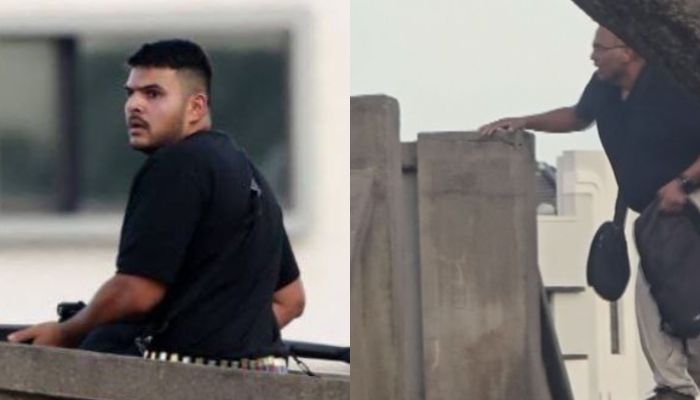
Footage and images have surfaced showing a Congress councilor actively inciting individuals while brandishing weapons. In Ladakh, where the announcement of Union Territory status was celebrated on 5th August 2019, instances of stone-pelting and arson occurred on 24th September. Violent demonstrations erupted in Ladakh as citizens demanded full statehood.

Four individuals lost their lives and many others sustained injuries during these protests. Protesters set fire to BJP offices and security vehicles and there were also accounts of stone-pelting in various locations.

Sonam Wangchuk celebrated the formation of Union Territory (UT)

Sonam Wangchuk plays a pivotal role in this violence which took place during his hunger strike. Alongside his supporters, he has been advocating for complete statehood for Ladakh. Currently, he is being accused of instigating this agitation despite having previously celebrated the establishment of the Union Territory (UT).

On 5th August 2019, the central government repealed Article 370 concerning Jammu and Kashmir, subsequently partitioning the region into two union territories. One was designated as Jammu and Kashmir while the other was named Ladakh. On that day, Sonam Wangchuk expressed his gratitude to the central government.

He thanked Prime Minister Narendra Modi for “fulfilling Ladakh’s longstanding dream.” He added, “It was exactly 30 years ago in August 1989 that Ladakhi leaders launched a movement for UT status. Thank you all who helped in this democratic decentralization.”

Wangchuk was not the only individual rejoicing over Ladakh’s Union Territory status as organizations such as Anjuman Moin-ul-Islam also took part in the celebrations. On the fateful day the organization released a letter extending gratitude to PM Modi, Home Minister Amit Shah and the central government. Sonam Wangchuk personally shared this letter on his X account.

Today, Leh is under the shadow of violence and flames but on 5th August 2019 the same place witnessed celebrations accompanied with singing and dancing as Ladakh was conferred the status of a Union Territory.

Quest for a Union Territory status for Ladakh has been vey long

The residents of Ladakh who took to the streets in celebration during August 2019 did so for a significant reason. Indeed, the Modi administration had addressed their long-standing demand. In June 2019, prior to Ladakh being granted Union Territory status, the then BJP MP Jamyang Tsering Namgyal remarked, “The call for Ladakh to be separated from Jammu and Kashmir is not a recent phenomenon; the people of Ladakh have sought a distinct identity since 1948.”

Namgyal’s assertion holds validity. In 1949, Chewang Rigzin, the Chairman of the Subject Committee of the Ladakh Buddhist Association (LBA), presented a memorandum to the then Prime Minister Jawaharlal Nehru, advocating for “self-governance” for the people of Ladakh.

A significant movement advocating for Union Territory status for Ladakh emerged in 1964. This initiative was spearheaded by the Buddhist saint and then-Chief Lama of Ladakh, Kushok Bakula Rinpoche. Nevertheless, the request for UT status was not fulfilled during this demonstration.

In 1989, protests reignited, calling for UT status. The Ladakh Buddhist Association (LBA) presented a memorandum to the Government of India, reiterating their demand for autonomy for Ladakh. Additionally, the LBA organized a substantial rally to support this cause. In 1995, the Ladakh Autonomous Hill Development Council (LAHDC) was formed to respond to this demand.

LBA’s Leh Chalo rally in 1989 demanding UT status.

Subsequently, protests advocating the demand persisted for numerous years. The central government was of the opinion that addressing the demands would necessitate an amendment to Article 370, a step that the Congress government was reluctant to undertake. In 2016, the All Religious Joint Action Committee (ARJAC), which had been advocating for a UT, adopted a resolution calling for the same for Ladakh. This aspiration of the Ladakhis was ultimately fulfilled by the Modi government in 2019.

How the appeal progressed to full state

Ladakh was conferred with Union Territory status, prompting the central government to initiate development efforts in the region. Under the leadership of PM Modi, Ladakh received permission to establish a university, a hotel management institute and a professional college. A substantial financial package amounting to crores was allocated. Infrastructure such as roads and bridges was developed. However, this progress and peace were met with resistance from certain “activists.”

A growing sentiment emerged among the populace that corporations would come and seize all available land. Speculations arose that outsiders would migrate and settle in the area. In early 2023, Sonam Wangchuk initiated a protest by sleeping outdoors, advocating for “constitutional safeguards for Ladakh.” Over time, the protest gained momentum.

The Leh Apex Body (LAB) and the Kargil Democratic Alliance (KAD) expressed their support as well. In March 2024, Soman Wangchuk and individuals linked to the LAB-KDA initiated another strike in Leh. In September 2024, LAB also commenced the “Dilli Chalo Padyatra.”

Sixth Schedule – Negotiations about full statehood?

Leaders from Ladakh have presented four demands to the Home Ministry, which include granting full statehood to Ladakh, incorporating it into the Sixth Schedule of the Constitution, creating a distinct Public Service Commission and allocating two parliamentary seats. The Home Ministry tentatively approved the latter two requests.

Additionally, protesters in Ladakh are advocating for inclusion in the Sixth Schedule of the Constitution. In simple terms, the Sixth Schedule of the Constitution offers special autonomy to tribal regions with the objective of safeguarding the culture, land and resources of tribal populations.

The BJP has incorporated this demand into its manifesto, indicating that the party is contemplating how to pursue it. Currently discussions are taking place with the central government concerning the demands of the protesters. Prior to the Wangchuk protest in March 2024, a delegation from Ladakh engaged in discussions with Union Home Minister Amit Shah.

In relation to this dialogue, the Home Ministry remarked, “Amit Shah assured the delegation that the government, led by PM Modi, is dedicated to offering the essential constitutional protections to the Union Territory of Ladakh.”

This was not an isolated meeting. In a press release dated 24th September, the Home Ministry announced, “The Government of India is actively collaborating with the Apex Body Leh and Kargil Democratic Alliance regarding these matters. Several meetings have been conducted with them through the official channels of the High Powered Committee and its sub-committees, as well as through various informal discussions with leaders.”

The central government indicated that discussions with Ladakhi leaders are scheduled for 25th and 26th September. Additionally, the High Powered Committee is set to convene on 6th October. However, prior to that, there has been an effort to provoke unrest in Ladakh.

Did Wangchuk plan to incite violence?

The incidents of arson and stone-pelting in Leh took place on 24th September. However, the groundwork for these events had already been laid. Sonam Wangchuk had warned of a potentially explosive situation during a press conference in September 2024. He stated, “The government has restricted their freedoms by denying them democracy, and simultaneously, by withholding employment, it has incapacitated them. The circumstances in Ladakh, which borders Pakistan and China, could escalate into a crisis.”

Sonam Wangchuk, who has been scrutinized regarding his foreign funding, made a reference to GenZ in relation to these protests. This term has recently become prominent due to the GenZ protests in Nepal, which were marked by incidents of arson, looting and stone-pelting. Numerous individuals lost their lives, even ministers were assaulted and the government was ultimately overthrown.

Where was Wangchuk during the time when efforts were required to prevent the violence? Additionally, the Home Ministry pointed out, “Despite several leaders urging him to terminate the hunger strike, he (Wangchuk) continued his hunger strike and misled the public by making incendiary references to protests reminiscent of the Arab Spring and Gen Z protests in Nepal.”

It is evident that this type of violence, along with the demands being discussed by the government, which included both past and future meetings, could only have been planned. In a democratic framework, dialogue is the sole path forward, and it should have been the exclusive resolution.

Nevertheless, the efforts to provoke chaos unmistakably suggest that certain individuals are uncomfortable with the peace in India. They aim to foster an atmosphere of disorder within the nation, occasionally utilizing Gen Z, and at other times drawing parallels with situations in Bangladesh and Sri Lanka.

Read the report in Hindi here.

‘Journalist’ gets rattled after ex-CJI highlights how construction of mosque atop Ram Mandir was desecration: Read how the addendum to Ayodhya verdict confirms Hindu beliefs

In a recent interview with the former Chief Justice of India DY Chandrachud, ‘independent journalist’ Sreenivasan Jain flogged the dead horse by casting aspersions on the Supreme Court verdict in the Ayodhya Ram Mandir case.

Based on certain critical comments on the Supreme Court judgment, Jain claimed that the verdict rewarded the “illegal act” committed by the Hindus in asserting their claim on the inner courtyard (where the disputed structure stood), and “punished” the Muslim side, which did not lay claim on the outer courtyard (where the Ram Lalla Virajmaan was seated in a makeshift temple).

“The idea that the inner courtyard contested was also a result of the Hindus committing illegal acts like desecration, asserting their rights and creating disturbances; the fact that the Muslims didn’t do that in the outer courtyard, didn’t contest it, then becomes almost a ground to punish them; the fact that you (Muslims) didn’t put up a fight while Hindus did actually weighs against the Muslims, is one critical reading of the verdict,” asserted Sreenivasan Jain.

Original act of desecration was the erection of the mosque: Chandrachud

Responding to Jain’s claim, former CJI Chandrachud reminded him that the original act of desecration, which was conducted by Muslims by erecting a mosque on the ruins of a Hindu temple, cannot be overlooked.

“When you said that the Hindus were desecrating the inner courtyard, what about the fundamental act of desecration, the very erection of the mosque, we forget all that happened in history. Now, once you accept that that happened in history, and we had evidence in the form of archaeological evidence, how can you shut your eyes?” said the former CJI, who was part of the Constitutional bench, which decided the Ayodhya dispute.

Those criticising the verdict have a selective view of history: Chandrachud

Refuting the critical comments on the judgment, referred to by Jain, Chandrachud said that those who criticised the verdict, and insinuated that the judiciary acted in a partisan manner by deciding in favour of the Ram Temple, have a selective view of history. “What is really being done by many of these commentators that you have referred to is that they have a selective view of history. They ignore evidence of what happened beyond a certain period of history and start looking at the evidence which is of a more comparable nature,” said Chandrachud.

In an effort to delegitimise the top court’s decision, Jain said, “I thought the judgment found that there was no evidence that the underlying structure was necessarily demolished to build the mosque because there was a gap of several centuries between the underlying structure and the mosque.” To which Chandrachud categorically replied, “There was adequate evidence from the archaeological excavation…there is evidence in the form of the archaeological report”.

Calling out the people who have been raising suspicions about the Supreme Court verdict, Chandrachud remarked that those are the people who have been picking and choosing historical facts to peddle their narrative. “Let’s face it. Ultimately, people who have criticised the judgment want to ignore the fundamental history of the mosque, and then look at the more comparative history, at selective elements of that history that support what they postulate”, said the former CJI.

He stated that the judgment was purely based on the law and the legal principles and that the claim that the decision was based on faith rather than evidence is unfounded. “The Supreme Court’s judgment applies the conventional yardstick of determining adverse possession. It’s on the basis of the evidence and the conventional yardsticks which we have applied that we have come to this conclusion. “The criticism that the judgment is based on faith and not evidence is the criticism by the people, I dare say, who have not read the judgment,” he added.

Jain’s claim that the Muslim side got punished for not asserting their claim on the site, within the disputed area, where Hindus have been offering prayers, sounds ridiculous. What else would qualify as a ‘claim’ better than the mosque itself, which stood over the ruins of a Hindu temple, and on a piece of land that did not even belong to the Muslims in the first place? In fact, Ayodhya Janmabhoomi is not the only site where the Muslims asserted their claims. The country is full of numerous such examples, which are testimony to how the Muslims have historically been asserting their ‘claims’ on the ruins of the faith of the Hindus. Several such ‘claims’ stand tall to date on the ruins of Hindu temples.

This is not the only instance where unfounded suspicions have been raised against the Supreme Court decision in the Ayodhya dispute. A certain lobby of people, including academicians and Historians, has been peddling false narratives using a whitewashed version of history to make a case for the mosque. The battle to reclaim the Ram Janmabhoomi went on for several decades and passed through several courts, and during this time, both parties had the full opportunity to put forward their arguments and evidence. Following a centuries-long struggle, which started in 1528 with the construction of the mosque, the dispute was finally settled with the Supreme Court’s verdict in 2019. After examining a plethora of evidence and hearing the detailed arguments of the Hindu and the Muslim sides, the Constitutional bench, which, notably, also included a Muslim (former) judge, Justice S. Abdul Nazeer, decided that the disputed site belonged to Lord Ram. The Supreme Court accepted the ASI report, which confirmed the presence of a Hindu structure beneath the Mosque. It also accepted that the auspicious site has always been sacred to Hindus. Apart, from the archaeological evidence, history is full of documentary evidence, which prove how the Hindus have always considered the site as Ram Janmabhoomi.

Historical evidence in favour of Ram Janmabhoomi

An addendum to the Supreme Court judgment by an unnamed judge went into depth of the beliefs of the Hindus regarding Ram Janmabhoomi by referring to certain Historical evidence, including Ain-i-Akbari, accounts of an English merchant William Finch, accounts of a Jesuit missionary Father Joseph Tieffenthaler and a description in Janma Sakhies of Guru Nanak’s visit to Ayodhya.

Ain-i-Akbari

Ain-i-Akbari, a 16th-century document written by Mughal Emperor Akbar’s court historian, Abu’ l Fazl, in the Persian language, mentioned Ayodhya as the residence of Ramachandra, who was further described as an Avatar, i.e., an incarnation of Vishnu. The document refers to Ayodhya as one of the holiest places of antiquity. A specific statement in the document said that during the Treta Yuga on the ninth of the light half of the month of Chaitra in the city of Ayodhya, the wife of Kausalya of Raja Dasaratha, Lord Ram was born.”

Accounts of William Finch

A similar reference to Ayodhya is found in the accounts of William Finch, who was an English merchant in the service of the East India Company (EIC). He travelled to India along with Captain Hawkins during the reign of Mughal emperor Jehangir. In his travel accounts, Finch mentioned the ruins of Ramachandra’s castle and houses. He also noticed the belief of Indians that Ramchandra was born, who took flesh upon him.”

Accounts of Father Joseph Tieffenthaler

Father Joseph Tieffenthaler, a Jesuit missionary who visited India between 1766 and 1771 A.D, wrote the historical and geographical description of India in Latin, which was later translated into French. English translation of the work was filed before the High Court as Ext. 133 (Suit-5) and the Court extensively relied on it. The Supreme Court judge drew three important conclusions from his account. The judge stated, “First, that Emperor Aurengzebe got the fortress called Ramcot demolished and got a Muslim temple, with triple domes, constructed at the same place. It further states that fourteen black stone pillars of 5 spans high, which had existed at the site of the fortress, are seen there. Twelve of these pillars now support the interior arcades of the mosque. Two (of these 12) are placed at the entrance of the cloister.”

“Second that, on the left is seen a square box raised 5 inches above the ground, with borders made of lime, with a length of more than 5 ells and a maximum width of about 4 ells, which is called Bedi (i.e. the “cradle”) by the Hindus. The reason for the faith and belief was also that there was a house where Beschan (Vishnu) was born in the form of Ram.” And finally, “Third, that Aurengzebe or Babar got this place razed in order to deny the noble people the opportunity of practising their superstitions. However, there still exists some superstitious cult in some place or other. Since in the place where the native house of Ram existed, the Hindus go around 3 times and prostrate on the floor”.

Guru Nanak’s visit to Ayodhya

The addendum also referred to the Janma Sakhies, which record a description of Guru Nanak’s visit to Ayodhya. They mention that Guru Nanak had visited Ayodhya for Darshan of Ram Janma Bhumi in the year 1510 AD, even before the construction of the mosque in 1528. This record supports the claim of Hindus that there was a temple in Ayodhya which was regarded as the birthplace of Bhagwan Ram, the judge said.

Besides, the fact that the mosque was commonly referred to as the “Janma Sthan Mosque” in various British government documents also proved that there was a common understanding about the mosque existing on a ‘Janam Sthan’ or birthplace. The addendum concluded with the remarks, “It is thus concluded on the conclusion that faith and belief of Hindus since prior to construction of Mosque and subsequent thereto has always been that Janmaasthan of Lord Ram is the place where Babri Mosque has been constructed which faith and belief is proved by documentary and oral evidence discussed above.”

Anti-India academic Nitasha Kaul, whose OCI card was revoked by India, enlisted by the US as an expert witness in the Pannun assassination plot trial

The United States government has enlisted Indian-origin British academic Nitasha Kaul as an expert witness in the ongoing trial linked to assassination plot against Khalistani terrorist Gurpatwant Singh Pannun

In its formal court document, the U.S. Department of Justice (DoJ) stated that Professor Kaul will give evidence in the case. She is a ‘Professor’ of Politics, International Relations and Critical Interdisciplinary Studies at the University of Westminster in London and also Director of the Centre for the Study of Democracy there.

Based on the filing, Kaul will be testifying on several points, including that the Government of India publicly condemned Pannun and Hardeep Singh Nijjar for their terrorist activities. She will also testify that India’s foreign intelligence service, the Research and Analysis Wing (RAW), operates under the Cabinet Secretariat, is based at the CGO Complex in New Delhi, frequently employs officers from the Central Reserve Police Force (CRPF), and that its purpose includes quelling Sikh separatist movements.

This information is shared by an independent investigative journalist, Journalist V on his X account.

This move to invite Kaul as an expert witness has already stirred controversy in India due to her history of making anti-India statements and her long record of activism against Indian institutions.

Who is Nitasha Kaul?

Nitasha Kaul has often been described as an “anti-India propagandist” for her remarks and actions over the years. In May 2024, she took to social media to complain after the Indian government cancelled her Overseas Citizen of India (OCI) card. In her post, she accused the government of carrying out “transnational repression” and punishing her for what she called “scholarly work” critical of Prime Minister Narendra Modi’s government.

She wrote that she had been unfairly treated, recalling that earlier she had also been denied entry into India when she was invited by the Congress-led government of Karnataka to deliver a talk on democratic and constitutional values. 

According to her, despite sending a detailed 20,000-word response to the authorities, the government had gone ahead and revoked her OCI card. She claimed that this was a sign of India’s “thin-skinned, petty insecurity” that allegedly does not allow space for dissent.

However, the Indian government has made it clear that the OCI card is not a right but a privilege. OCI status is given to persons of Indian origin under specific conditions, but it can be revoked if the person is found indulging in activities that go against India’s sovereignty, constitutional values, or national security.

GOI cancelled her OCI card against a direct attempt to harm India’s sovereignty and integrity

In Nitasha’s case, the part of the document that she shared read, “AND WHEREAS, it has been brought to the notice of the Government of India that you have been found indulging in anti-India activities, motivated by malice and complete disregard for facts or history. Through your numerous inimical writings, speeches and journalistic activities at various international forums and on social media platforms, you regularly target India and its institutions on the matters of India’s sovereignty.”

The GoI categorically stated that her OCI card was revoked because of her anti-India activities. Nitasha has a long history of propagating an anti-India narrative.

In May 2024, she shared a fictional story to cast aspersions on the integrity of Electronic Voting Machines (EVMs). She claimed she had dreamt about EVMs not counting votes in India. She conjectured a make-believe story to lend credence to the conspiracy theory mainstreamed by the Congress party about the EVMs. She claimed, “Recently, at a workshop lunch, I was telling a British colleague that I’d not slept well the previous night due to dreams where people were voting on EVMs but votes were not being counted. A Turkish colleague overheard & said he too used to have troubled dreams during Erdogan’s elections in Turkey!”

In February 2024, she was deported upon arrival at Bengaluru airport based on a preventive lookout circular issued against her as Indian agencies had flagged her “pro-separatist” comments and statements and anti-India line stand on Kashmir taken on various public forums. Kaul said she was detained at the airport by the immigration officials, who cited “orders from Delhi” to not allow her entry into the country. She said that she possessed all the necessary documentation for her visit, but faced a challenging situation. She claimed she would continue to advocate “democracy and civil liberties” despite the “adversities faced”. She ranted on X following the deportation, just the way she has done now after the OCI card was revoked.

She had previously spread falsehoods about the Rashtriya Swayamsewak Sangh (RSS) and participated in events organised by radical Islamic outfits such as ‘Stand With Kashmir (SWK)’, ‘Kashmir Solidarity Movement (KSM)’, and ‘Indian American Muslim Council (IAMC)’.

Kaul had been at the forefront of cancelling PM Modi’s address at the Wharton School of Business. The anti-India propagandist also mocked the death of former Chief of Defence Staff (CoDS) Bipin Rawat in December 2021.

Nitasha Kaul seemed to justify his untimely death by presenting him as an ‘enemy of Kashmiris’.

US government using an anti-India voice

The fact that the U.S. government has chosen someone with such a track record as an expert witness in the Pannun assassination plot trial has raised concerns in India. This can be considered as Washington deliberately giving space to an anti-India voice to build a narrative that paints New Delhi in a negative light.

Kaul’s testimony is expected to be used to establish that India has targeted Khalistani terrorists abroad, but her history of controversial and hostile remarks about India raises questions about her neutrality. 

For many, this looks like part of a broader attempt to corner India internationally at a time when New Delhi has strongly denied any involvement in assassination plots abroad.

Who is Gurpatwant Singh Pannun?

 Gurpatwant Singh Pannun is a US-based Khalistani terrorist who has citizenship in both the US and Canada. He poses as an attorney in the US and claims to be a frontrunner in the fight for the rights of Sikhs. 

In reality, he consistently propagates Khalistani sentiments and often issues threats against India. He has been actively promoting violence against Indian diplomats in Canada, the US and other countries where pro-Khalistani Sikhs have been living. 

He was designated as a terrorist by the Government of India under the Unlawful Activities (Prevention) Act (UAPA) for his anti-India activities. His organisation, Sikhs For Justice, was also listed as a terrorist outfit by the Government of India.

The details of the case

The assassination plot against Pannun came to light last year when the U.S. Department of Justice filed charges against two Indian nationals. The first, Vikash Yadav, was accused of directing the plot from India. Yadav, identified earlier only as “CC-1,” has since been officially charged. The second accused, Nikhil Gupta, was arrested in the Czech Republic and is currently in detention in Brooklyn.

According to the media reports, Yadav, who was once employed with India’s Cabinet Secretariat, tasked Gupta with finding a hitman in the U.S. to eliminate Pannun. 

The US Justice Department had reportedly claimed in an indictment filed in a federal court in Manhattan that an unidentified Indian government employee named (CC-1) recruited an Indian national named Nikhil Gupta to hire an assassin to kill Pannu. Gupta was detained in Prague in June 2023 and was extradited to the US in June 2024.

The US allegations regarding the failed assassination of Khalistani terrorist Gurpatwant Singh Pannun in November 2023 came months after then-Canadian Prime Minister Justin Trudeau alleged the involvement of Indian officials in the murder of Khalistani leader Hardeep Singh Nijjar. India has repeatedly rejected those allegations as baseless.

Now, with the U.S. pressing ahead in the Pannun plot case and using figures like Nitasha Kaul as expert witnesses, the matter has the potential to add another layer of strain in India’s relations with Washington.

As VHP issues a checklist to ensure only Hindus participate in Garba events, read why Muslims have been barred from the sacred celebrations

The entire nation is captivated by the celebrations and happiness that accompany the festive season. The Hindu community is presently engaged in the vibrant and enthusiastic observance of the auspicious Navratri from 22nd September to 2nd October.

However, how the liberal-Islamist alliance can permit the Hindus to celebrate peacefully? They have not strayed from their long-standing practice of targeting Hindus, particularly during significant occasionswith the intention of tainting the same. Hence, as anticipated, they persist in their vicious attempts to disrupt the joyful ambiance.

According to these elements, each community possesses the right to observe their sacred events per their preferences but the same privilege is not granted to the Hindu community as once again evidenced by the recent outrage. It is not that they need any justification to act outrageously over matters related to Hindus or Sanatan Dharma, but this time, the Muslim extremists and their apologists have been incited by the concerns expressed regarding the presence of Muslim males in garba programs across the country.

Importantly, Muslims target and do not even want to allow Hindus to organize Garba functions near their religious sites, however, it is conveniently painted as problematic when Hindus wish to celebrate their special days in a manner of their choosing.

How the fresh row started

The Vishva Hindu Parishad (VHP) recently declared that only Hindus will be allowed to attend garba programs during Navratri and those who wish to participate must provide their Aadhaar cards, apply a “tilak” to their foreheads and carry out Hindu religious rites. VHP defended the actions by maintaining that they were necessary to stop “love jihad,” which causes troubles every year amid the holy celebrations.

VHP national spokesperson Shriraj Nair voiced, “Garba is not merely a dance but a form of worship to please the goddess. They (apparent reference to Muslims) do not believe in idol worship. Only those having faith in the rituals must be allowed to participate.” According to him, the outfit had sent out advisories instructing garba organisers to verify Aadhaar cards of attendees at entry points, apply “tilak” to them and make sure they conduct puja before to admittance.

He added, “VHP and Bajrang Dal workers will monitor the events. Garba is a form of worship, not entertainment. Those who do not have faith in the goddess should not be part of it.”

According to VHP Vidarbha general secretary Prashant Titre, participants would also be sprayed with “gau mutra,” or cow urine, while volunteers from the Bajrang Dal would supervise garba pandals to make sure the rules were followed. Navin Jain, the convenor of the VHP’s Vidarbha Pran conveyed that non-Hindus should be excluded from garba events which he described as sacred worship as opposed to a dance or cultural program.

“Organisers should check the Aadhaar card of entrants to ensure only Hindus are allowed and a ’tilak’ be put on the forehead of men. Every participant should be asked to bow before the picture of the goddess at the entrance,” he stressed. Additionally, Jain urged that smoking and drinking of any kind be banned from these gatherings.

He mentioned, “People who do not have faith in goddess Durga should not attend such programmes. They go there with a certain mindset, which causes trouble for our sisters and hurts our religious sentiments. In the last few years, it has been seen that Hindu girls have been targeted for love jihad, prompting us to appeal to garba organisers to not allow such people.”

Many Bharatiya Janata Party leaders endorsed the decision, emphasizing that Hindus should have the freedom to organize their events as they wish, provided they secure permission from the relevant authorities. Predictably, the Congress-led I.N.D.I. Alliance, considering its voter base, opposed this in the name of secularism and attacked Vishva Hindu Parishad as well as Rashtriya Swayamsevak Sangh.

Why Muslims want to attend a Mushrik event and go against the teachings on Islam

According to Islam, a mushrik is a polytheist who engages in shirk (idolatry) by identifying partners with God. The Quran explicitly prohibits worshipping idols, deities or anyone else in addition to or instead of Allah. It is considered blasphemy and the greatest sin in the religion. A rational mind might question why the devoted adherents of this faith would choose to oppose the teachings of their sacred text by participating in an event that is fundamentally contrary to their preachings.

It cannot truly be the case that they believe in pluralism, respect other faiths and therefore wish to partake in such celebrations, as evidenced repeatedly by their actions, including stone pelting at religious Hindu processions, disrespecting and vandalizing idols of deities as well as asserting that exposure to Holi colours, performing yoga and even raising “Bharat Mata ki jai” slogan contradicts their beliefs.

This community which is characterized by a profound aversion to idolatry and believes that even calling their own country “Mata” infringes upon their religious convictions wish to attend events that are exclusively focused on the veneration of the nine forms of Goddess Durga?

Moreover, it is not that Muslims participate in the Garba events alongside their families. It is primarily the males who seek access to these programs without any females or children from their community.

This fact should already suffice for anyone to raise an eyebrow at anyone who mention their desire to take part in the cultural or religious diversity of India. Why is this courtesy granted solely to Muslim men and not to women? Are they not, after all, a part of the broader Indian society and deserving of the opportunity to experience the diversity of the country in which they reside?

Notably, all of this is labeled as religious freedom when it pertains to the second largest majority in the country, yet it transforms into intolerance and hatred when Hindus attempt to exercise their rights.

Fake names, problematic actions and more: What Islamists do in Garba events

Certainly, not every Muslim participates in or desires to attend the garba events, however, there exists a history of radical elements within the community exploiting the same as a platform to advance their malicious agendas. “Love jihad” which is frequently misrepresented as a conspiracy theory by Hindu “right wing” groups, by Islamists and their supporters, despite mounting proof indicates a rise during these events.

Guajara, known as the home of garba, once faced considerable challenges from this menace, especially during these events. Non-Hindus used to enter Garba celebrations pretending to be Hindus, tricked girls into believing them, took advantage of their vulnerability and ultimately wrecked their lives.

The same had been exacerbated by non-Hindu Garba classes as well which have been abused in the past to take exploit Hindu girls. These acts of desecration, which range from selling Chaniya Choli to erecting stalls at the Garba grounds and allowing non-Hindus to enter while concealing their identities ruined the glorious celebrations.

However, the Bharatiya Janata Party government, the Hindu community and the active vigiliance of Hindu outfits came together to tackle the problem and effectively brought the situation under control there. Nonetheless, the such threats are far from over.

These allowances given to Islamists have resulted in various troubles for the Hindu community. A married Hindu woman failed to come home from a Garba celebration during the 2024 Navratri in Deesa Taluka of Banaskantha, Gujarat after which a police complaint was filed a young Muslim guy was accused by her spouse of enticing her to accompany him.

Likewise, Munna Abbas Banjara, Mumtaz alias Aftab Banjara, Shahrukh Banjara, Saif Ali Banjara and Ajmal Banjara gang raped a 16-year-old girl during Navratri, last year.

A woman retruning from a Garba event was reportedly harassed by Muslim youngsters near Jama Masjid in Alirajpur of Madhya Pradesh, the same year. Feroz, a Muslim youth, pretended to be Hindu a few days later in order to attend a garba ceremony in Ujjain. He into the pandal with condoms and pretended to be Rahul. Fortunately, he was apprehended by the members of Hindu Jagran Manch. It does not require much effort to understand his motives for bringing the contraceptive at the sacred event.

Five Muslim boys were caught by the police when they infiltrated the Garba pandal in the Guna district under dubious circumstances. During October 2023, Fareed Shah tried to lure a Hindu girl into Garba pandal at Hyderabad’s Begumpet Hockey Stadium by masquerading as Ashish. However, Bajrang Dal activists stopped him.

Eight Muslim men were arrested by Indore police in October 2022 for attempting to enter garba venues while hiding their identities. A Muslim was nabbed for making offensive comments about Hindu women during in Garba pandal in Palsikar colony in another incident that occurred in the same year.

Shahrukh, Zubair, and Samir, stabbed a young man called Madhusudan Modi with a knife at a dandiya celebration in Bikaner, Rajasthan in 2022. Girls who had come to play Garba were being harassed by these people.

Rathod Amin Gulab Nabi, Nizami Moin Nurmahammad, Ganchi Amanbhai Firozbhai and Chauhan Mahamadnuman Mahamadhanif attacked six Hindu students on the same day for playing Islamic songs during a Garba event at BK Patel Arts & Commerce College of Savli in Vadodara. The four accused used stones and iron belts to attack the Hindu pupils.

Some young Muslims  broke into the Garba event in Rajasthan’s Jaipur on 30th September 2022. However, the arrival of the Bajrang Dal and VHP activists caused them to flee. Seven Muslim youngsterswere taken into custody by the police from Indore’s Garba pandal of Pandharinath that same year. According to reports, they were filming Hindu girls. They even lied about their names and posed as Hindus when they were confronted by Bajrang Dal activists.

Conclusion

The instances discussed above represent only a fraction of the larger issue but they are adequate to highlight the significant concern. The guidelines set by Hindu organizations are not a result of a prejudiced or anti-Muslim mindset as depicted by the liberal community and opposition parties but rather arise from a legitimate concern rooted in actual events that have rendered garba events a primary target for Muslim extremists to assault Hindus, especially women.

If they are so adamant about the principles of secularism, then why do they not request the organization of such events within the premises of mosques, madrasas or other religious structures of Muslims? They do not, and they never will, because they are aware that religious tolerance and secularism are a one-way street in India and Hindus are forced to bear the burden of it, even compromising their faith to uphold a constructed narrative.

Any such audacity directed towards the Muslim community will not only result in them being labeled as non-secular which is the utmost affront to liberals but will also wreak havoc on the streets with “Sar tan se juda” slogans resonating throughout.

As violence breaks out in Leh, read how ‘activist’ Sonam Wangchuk has been provoking locals against the Indian State for the past several years

Leh, the dream spot for tourists, is currently in turmoil. What was a peaceful and tranquil area has now become a focal point of violent protests, claiming the lives of 4 individuals and injuring approximately 45 others. In the midst of all this is the so-called “climate activist” Sonam Wangchuk, who has consistently issued inflammatory remarks that appear to have goaded the locals into violence against the Indian State.

This is not the first time Wangchuk has been under the scanner. He had faced heat over allegations of violating lease rules recently, but now the scandal surrounding him has taken a serious turn. His previous speeches and hit videos show a disturbing trend of provocation, which has a direct link to the trouble brewing in Ladakh today.

Provocations caught on video

Several videos of Sonam Wangchuk have gone viral on social media in recent weeks. In one of them, he is seen advising protestors to wear masks and hoodies while coming out for demonstrations. Such instructions are usually linked to violent protests, where people hide their identities to avoid being caught on camera.

In that video, Wangchuk himself is seen wearing a mask and a hoodie, further raising doubts about his real intentions.

Targeting the Indian Army

In another viral clip, Wangchuk can be heard making dangerous claims about the Indian Army’s condition in the border areas. He says:

“You know that on India’s border, our soldiers are in the weakest state. Because here, the strongest regiments are deployed, the Ladakh Scouts, the Sikh regiments and the Gorkha regiments. Today, the morale of Ladakh’s people is broken because they have neither been given democracy nor protection. The Sikh regiments, too, are feeling weak because of the protests in Punjab, and the Gorkha regiments are suffering due to the Agniveer scheme. Even worse, some are now joining the Chinese army. This was the regiment once described as so fearless that if someone said they were unafraid of death, they were either lying or they were a Gorkha. But such upheaval is going on in the Indian Army today, and no media outlet is talking about it.”

These words are not just criticism; they actively question the strength of India’s armed forces at a sensitive border region. Coming from a figure like Wangchuk, these remarks carry the potential to sow doubt and resentment among the youth of Ladakh.

A dangerous call for the “Arab Spring” in India

Perhaps the most alarming video is one where Wangchuk openly invokes the Arab Spring, a series of violent uprisings that toppled governments in the Middle East.

He says, “If the government does not meet our demands, I will dedicate my life to overthrowing it. Do you know about the Arab Spring? There was a revolution in Arab countries, and six governments were changed. Libya’s government was overthrown, Yemen’s government was overthrown, and Syria went into civil war. If all of this was triggered by one man, Muhammad Bouazizi, then can’t people like us do the same?”

This statement is a direct call for violent revolution against the Indian State. By glorifying the Arab Spring, which brought destruction and civil wars, Wangchuk is clearly pushing impressionable locals towards anarchy.

Comparing India with its neighbours

In yet another clip, Wangchuk compares India unfavourably with its neighbours. He says that in Pakistan, even Skardu and Baltistan have their own assemblies, while China has five autonomous regions, including Tibet, which he claims enjoy more rights than Ladakh.

Such comparisons are not only misleading but also dangerous in a sensitive border state. They are designed to fuel resentment among the people of Ladakh and create a false narrative of discrimination.

Meeting with Mohammad Yunus

Sonam Wangchuk also met with Nobel laureate Mohammad Yunus at the British High Commission in February 2020. Images show them hugging, adding another layer of suspicion about Wangchuk’s international connections. While this in itself does not amount to inciting violence, it is interesting that Wangchuk would meet Yunus, who has been spearheading and whitewashing the genocide of Hindus in Bangladesh.

Violence in Leh

The sad result of these inflammatory messages was evident on Wednesday, 24th September, when violent demonstrations erupted at Leh. Stone-pelting, burning of vehicles and police clashes made the city tense and volatile. 4 lives were lost and 45 injured by the evening. Shops were closed, streets vacant, and dread spread among ordinary citizens.

Officials say the violence did not arise out of nowhere. Rather, it was the culmination of months of speeches and videos that deliberately provoked people against the government. The young generation of Ladakh, who should have been focusing on education and development, ended up being dragged into dangerous confrontations.

A threat to National security beyond climate activism

Sonam Wangchuk is often introduced in the media as a “climate activist” or an “education reformer.” But the series of viral videos paints a very different picture. From casting doubts on the Indian Army to openly calling for an Arab Spring-style revolt to praising violent uprisings in other countries, his words have gone far beyond activism.

Update: Based on media reports, OpIndia had included in this article a video where Sonam Wangchuk was referring to regime change in Nepal and Bangladesh. OpIndia found that video was not an accurate representation of what Wangchuk was saying. This article has been updated to remove reference of that video.

Dear Arfa, if your ‘I Love Muhammad’ is so harmless then why is it leading to Muslim mobs attacking Hindus and police?

Dear Ms. Arfa Khanum Sherwani,

It is heartwarming to see your zeal for protecting “three simple words- I love Muhammad”. Sure, it is an expression of religious identity. Sure, it is the right of every Indian citizen to exercise their faith. But when you assert that Indian citizens have the right to express their religious identity, one would presume that would include Hindus as well. Does it, Ms Arfa Khanum Sherwani? And if you believe that Hindus too have a right to express their faith, why are you silent when the very Muslim community, of which you are a member, openly target Hindus for saying “I love Mahadev.”

In Bahiyal village of Dahegam, Gandhinagar district, Gujarat, on the night of September 24, 2025, Hindus were attacked during Garba celebrations. The violence was sparked by a social media post by a Hindu youth that read, “I Love Mahadev”. The post enraged your co-religionists, who then approached the man’s shop, forcing him to flee for safety. In his absence, the shop was vandalised and set ablaze, as CCTV footage later showed several Muslim men breaking into the premises and causing damage.

The unrest quickly escalated into full-scale violence. Stones were pelted, rods were wielded, and vehicles were set ablaze in a Garba- a Hindu religious event, which was held nearby. More than eight vehicles belonging to Hindus were attacked, and one shop was completely burnt down. Even police officers who rushed to the spot to restore order were assaulted, with two police vehicles sustaining heavy damage. Eyewitness footage from the site captured chaotic scenes of Muslim men hurling stones, while the cries of a Hindu mother searching for her son in panic could be heard in the background, underlining the terror caused by the mob.

According to local media reports, a shop owner, who was sitting outside at the time, recounted that a mob of nearly five thousand people descended during the night and deliberately targeted his shop. He explained that his village has only about 80 Hindu households, surrounded by a much larger Muslim population. The mob, armed with stones and weapons, stormed the premises and ransacked it, leaving Muslim ones untouched. He further noted that the attackers were not limited to young men but also included minors who had joined the violence.

The incident was clearly targeted at the Hindu community, as the Hindu man’s simple expression of devotion to Lord Shiva became the pretext for aggression. This was not a clash but a one-sided communal attack sparked by intolerance against Hindus and their devotion.

So tell me, Ms. Sherwani, if three simple words should never be considered threatening, why are Hindus violently punished for saying “I love Mahadev”? Where is your righteous outrage then?

Let me ask you this, Ms Arfa Khanum Sherwani – what if the Hindu youth had not fled? Do you believe your co-religionists, who were vandalizing the shop and indulging in violence, would not harm the Hindu boy? And if they did harm the Hindu boy, would you say that they had a right to do so because Muslims hold the exclusive right to feel aggreieved enough to strip non-Muslims of their liberty?

Tell us – do you believe that the mere expression of Hindu devotion is an affront to your faith? That the mere existence of Hindus is reason enough for the Muslim community to indulge in violence? Tell us, Ms Sherwani – do you believe Muslims have the exclusive right to express their religious identity, even though, that religious identity is so often based on stripping non-Muslims of their faith?

Since you seem so distressed about Muslims being “criminalised” for chanting it, let us look at how those three ‘benign’ words have actually been used by members of your community to wreak havoc across the country. These are not peaceful words of love. They are deployed as a war cry by Islamists. Frenzied crowds of Islamists have paired this chant with Sar Tan Se Juda (beheading) threats, stone pelting, arson, vandalism, and direct attacks on police.

Let us sample this poster.

‘I Love Muhammad’ poster

I am 100% willing to concede that you have the right to put up posters with “I Love Muhammad” – it is an expression of your faith and one should respect it. But, as a Hindu, whose community and its members are under siege, I ask you – why does your community feel the need to add, “If ever there is a war in your name, even cowards like us will stand in the first row”.

What war is your community waging, Ms Arfa? Who is war directed at? What will your community do if they emerge victorious? Do you know who else spoke about this mythical “war”? PFI. You know what they wrote? They wrote a document detailing how the impending war would mean annihilating Hindus – making a list of Hindus and murdering them. Turning India into an Islamic nation which would have no place for non-Muslims, for Hindus. Would you, Arfa, tell PFI and your co-religionists to ‘change their strategy, not their ideology’, like you told the Jihadis at Shaheen Bagh so that you can continue to keep up your secular pretenses?

Violence has broken out in multiple states, including Uttar Pradesh, Uttarakhand, and Gujarat. Police were attacked and stones were thrown at them in various cities amid loud slogans of “Sar tan se juda” during the marches. A cleric even issued a death threat to an inspector involved in a similar incident in Bareilly.

Yes, the slogan can very well be a harmless expression of devotion and the Muslim community should have the right to express their faith. The problem is, however, that Islamists weaponise their faith as an expression of the exclusionist, supremacist ideology that ultimately and almost always, ends up in Hindus being attacked, persecuted, subjugated and massacred.

Hindus said “I love Mahadev.” Muslims responded with stone pelting, arson, and selective targeting of Hindu shops. Muslims said “I love Muhammad” but coupled it with riots, giving threats of beheading and violently clashing with police. Do you not think that instead of questioning the Indian state or Hindus, you should be questioning those who presumably besmirched the name of the faith you so lovingly espouse?

But we know it won’t be. We know you won’t question your co-religionists and that hardly comes as a surprise. This is not new behavior from you, Ms. Sherwani — your Hinduphobia is well established. In August 2024, you mocked Hindu faith by posting an image that replaced a Shivling with a dustbin, an act so vile that a police complaint had to be filed. In September 2024, you dismissed documented cases of Love Jihad, Spit Jihad, and Land Jihad as “fake propaganda,” willfully ignoring the testimonies of Hindu victims who suffered through them. Then in January 2025, you defended The Wire’s coverage that attempted to shield Islamists arrested in Hamirpur for forced religious conversions, choosing to attack the police instead of acknowledging Hindu families torn apart by coercion. The list is endless.

In truth, Arfa – you will never find resonance with Muslims like Dr APJ Kalam. You will never respect those like Arif Mohammad. You will never stand up for those from the Muslim community who put Bharat first and genuinely, truly consider Hindus as their brethren. You, Arfa, will only speak up when Islamists run rampage and target Hindus. You, Arfa, are the ideological backbone of the Jihadis.

Growing Hinduphobia in US: How ‘historian’ Audrey Truschke is fueling hate against Hindus by lying about the roots of violence in the West

Normalisation of Hinduphobia is going on in the US in full swing. From politicians, anti-Hindu lobby, media, to academics, anti-Hindu elements from all walks of life in the US are instilling, promoting and perpetuating Hindu-hate. Audrey Truschke, a notorious anti-Hindu ‘historian’ who has a history of whitewashing heinous crimes committed by the Mughal tyrants against Indians, has authored a sinister propaganda piece fuelling hatred against Hindus by lying about the roots of violence in the West.

On 23rd September 2025, Religion Dispatches published Truschke’s propaganda piece titled: “WHAT IN THE WHAT?? Hindu Nationalism, Explained.” Laced with sheer hatred for the Hindu community in the US, this article argues that ‘Hindu nationalists’ or ‘Hindutva ideologues’ have been threatening the social fabric of America “for half a century”. The Aurangzeb fangirl claims that Hindus are influencing American politics by disguising their ‘political agenda’ as religious practice to ‘exploit’ religious liberty protections.

“In the last decade, they’ve injected their far-right ideas into California’s textbooks, inspired Steve Bannon, helped elect Trump, attacked local Democratic groups, tanked civil rights legislation, and intimidated Muslim Americans. Their latest agenda item is blocking Zohran Mamdani from becoming mayor of New York City,” the article reads.

‘Social fabric of America under threat’. Sounds familiar, right? Islamo-leftists in India, too, peddle a similar ‘India’s secular social fabric under threat’ narrative. In both cases, Muslims remain the perpetual victims while Hindu nationalists are their oppressors, even as reality is its exact opposite.

According to Truschke, Hindus should allow the Islamist lobby in the US to peddle anti-Hindu hatred, Hindus should not upset a Brahmin-hating, Thenmozhi Soundararajan, whose organisation, Equality Labs, runs on the sole agenda of fuelling hatred against Brahmins and undermining Hinduism, Hindus should quietly tolerate a known anti-Hindu, antisemite, Zohran Mamdani, the New York City mayoral candidate, even as he makes anti-Hindu and anti-India remarks.

Not to forget, Mamdani had claimed that there were no Muslims left in Gujarat and of labelling Prime Minister Modi a “war criminal.” In 2020, Mamdani described Hindus aligned with Modi’s party as “fascists” and berated fellow New York politicians Jenifer Rajkumar and Kevin Thomas for not denouncing Modi. Mamdani also opposed the construction of the Ram Mandir in Ayodhya, appearing at a rally in 2020 where derogatory chants against Hindus were raised.

Every Hinduphobic claim Mamdani has been making in political rallies and on social media is a product of his blatant hate for Hindus and fertile imagination. Audrey Truschke is fine with Mamdani peddling blatant lies to further his Muslim victimhood narrative.

While Truschke portrays Hindutva as an unprovoked ‘Hindu supremacy’ movement, the rise of Hindutva as a movement is rather a defensive ideology born from centuries of invasions, colonial exploitation, and political subjugation of Hindus, coupled with Islamist violence in independent India. Far from supremacy, Hindutva seeks religious-cultural self-assertion for a majority that endured temple destruction by invaders, including those by Mughal tyrant, Aurangzeb, whom Truschke has been whitewashing, forced conversions, and countless injustices and atrocities endured by Hindus, which find no mention in Truschke’s works or are downplayed and justified.

Islamists have been forming Muslim ghettos and no-go zones in the US, imposing Sharia laws in Muslim-dominated areas, and declaring ‘Sharia cities’, but Audrey Truschke wants Americans to believe that law-abiding and peaceful Hindus are a threat to America’s social fabric. Over the years, Hindu temples have come under attack in American cities, Hindus have been subjected to religious and racial hatred online, but Hindus are asserting ‘supremacy’. Indian Americans, particularly Hindus, have been major beneficiaries of the H1-B visas, and yet they could not stop the Trump administration from cracking down on the H1-B visas. So much influence in politics!

Truschke further dismisses Hinduphobia as ‘non-existent’ and to do so, she relies on references from ‘scholars’ and ‘progressive’ Hindu Americans. Now, Truschke’s ‘progressive Hindu Americans’ are none other than “Hindus for Human Rights” (HfHR), a George Soros-funded anti-Hindu and anti-India outfit run by Sunita Vishwanath.

“Hindu nationalists frequently allege that they’re targeted as a religious minority, victims of what they call “Hinduphobia.” Hindutva ideologues have popularized the concept of “Hinduphobia,” but scholars and progressive Hindu Americans reject this framework, noting that no evidence exists for systematic religion-based discrimination or oppression of Hindus in the US,” the Religion Dispatches article reads.

OpIndia has reported earlier how Vishwanath remembers her ‘Hinduness’ only when she has to sermonise Hindus and villainise them for not being tolerant (read subservient) enough towards Islamists and their Hindu-hate. She has also been seen with Congress leader Rahul Gandhi, another Hindu in name and not spirit, during his controversial US visits.

Last year, The Wire published her op-ed on Janmashtami, in which she grotesquely compared the suffering of Palestinians in Gaza to the trials of Krishna and the Pandavas in the Mahabharata, even likening Israel to Kansa. By twisting Hindu epics to justify sympathy for Hamas, a terrorist outfit responsible for massacring Israeli civilians, Sunita insulted Sanatan Dharma and whitewashed jihadist violence.

Her organisation, Hindus for Human Rights, has repeatedly used Hindu symbols to delegitimise Hindu identity. In February 2024, HfHR hosted an event at UC Berkeley titled “Zionism and Hindu Supremacy: Partners Against Pluralism, “equating Hindu identity with “supremacy” and pairing it with far-left demonisation of Zionism.

Ironically, this group of ‘progressive Hindu Americans’ was created in 2019 by the Indian American Muslim Council (IAMC) and OFMI, Islamist advocacy groups with ties to Jamaat-e-Islami networks.

Coming back to Audrey Truschke’s verbal diarrhoea, the historian-cum-Islamist-PR-agent resorted to accusing American Hindus of indulging in violence. She attempted to give a historical context of the alleged embrace of violence by Hindu nationalists.

Predictably, Audrey invoked Rashtriya Swayamsevak Sangh, calling it an all-male “parent group of Hindu nationalism” and Nathuram Godse, the man who killed MK Gandhi. She, however, did not care to delve into the details of how RSS has, over the past decades, done selfless service towards the nation by engaging in social service activities to help people in need regardless of their social or religious background. Trushchke claimed that a BJP operative attempted to assassinate a ‘US citizen’.

While the matter is sub judice, Tushchke suggested that it was a random US citizen and did not care to mention that this US citizen is an anti-Hindu and Khalistani terrorist, Gurpatwant Singh Pannu, who repeatedly organises anti-India and anti-Hindu protests, incites violence against Indian diplomats and has also been issuing threats to blow up Air India flights and bomb cricket stadiums in India.

Audrey Trushcke further villainised Tulsi Gabbard, the United States Director of National Intelligence in the rump administration. Basically, for Islamo-leftists, you are a good and progressive Hindu if you are detached from your religious teachings, are self-loathing, ashamed of your Indian roots, and support Islamist and liberal agendas, and you are a bad, extremist, and violent Hindu if you are proud of your Hindu identity, are proud of your Indian roots, are a patriot and do not align with Islamo-leftist agenda. Thus, for Truschke, Sunita Vishwanath passes as a ‘progressive Hindu’, but Tulsi Gabbard doesn’t.

Being a typical self-praising leftist, Truschke did not forget to invoke sympathy for herself and propagandists of her kind. However, in her pursuit to present herself as a ‘brave scholar’ confronting Hindu nationalists and their ideology, she subtly equated Hindus with terrorists.

“Because of the ever-present threat of violence, writing about Hindu nationalism is dangerous. The risks Hindu nationalists pose transcend borders and incentivize scholars and journalists alike to soft-pedal or simply ignore Hindutva. Those of us determined to confront the problem head-on learn to live with violent threats and the well-grounded fear that, one day, a Hindu nationalist might act upon those threats,” Truschke writes.

Towards the end of her Hinduphobic rant, Audrey laments how several Hindu groups are ‘promoting’ Hindu nationalism globally and how this can be countered.

Normalisation of Hinduphobia in the US: The Islamo-leftist agenda at work with a renewed intensity

Hinduphobia is not a new phenomenon in the US or the West. It has always simmered beneath the surface of the so-called pluralistic and progressive Western world. In 1910, The Detroit Times published a highly derogatory article vilifying the Hindus. The piece titled “Hindoos (Hindus) Continue to Flock to the US” referred to Hindus and Indians as ‘Oriental scum’. “The dumping place for the scum of the Orient and India is San Francisco,” the article published in 1910 read.

In 1907, a mob comprising mostly white men, led by the Asiatic Exclusion League in Bellingham, Washington, drove out over 100 Asian Indian immigrant workers from the city. From the Johnson-Reed Act of 1924 which barred immigrants from Asia, the Dot Busters group in 1980s which targeted Hindus Americans based on their religious an racial identity and assaulted them, to the individual cases of religiously-motivated hate crimes against Hindus post 2001, Hindus in the US, despite being a small minority which contributed massively to American economy has been subjected to hate, bias and violence.

Earlier, these Hinduphobic attitudes found manifestation in anti-Asian racism and labelling of Hindus as ‘caste-ridden savages’ and ‘heathens’, and attacks. It manifests today in temple desecrations, school bullying, media propaganda and online hatred. A 2022 Network Contagion Research Institute report documented a 1,000% increase in anti-Hindu slurs online, blending white supremacist “replacement” fears with Islamist narratives accusing Hindus of “genocide” in India.

In fact, the California textbook controversies, Trushcke cited in her propaganda piece, demonstrate prevalent academic Hinduphobia. During the contentious process of revising California’s K-12 history-social science curriculum, a proposal was brought up to replace the term ‘India’ with ‘South Asia, arguing that “India” did not exist as a unified entity before 1947. It also pushed for stereotypical representation of Hindus and Hinduism in textbooks.

Earlier this year, White and Christian supremacists ignited the H1-B visas debate after Donald Trump nominated American-born Indian Sriram Krishnan as senior policy advisor for Artificial Intelligence at the White House Office of Science and Technology Policy.

What began as an online attack slandering Sriram soon snowballed into a full-fledged campaign against H1-B visas for highly-skilled Indians. This was followed by derision and insults directed at Hindus and Hinduism.

And this anti-Indian and anti-Hindu campaign has paid off well for the bigots who partook in it as Donald Trump has backtracked from his earlier stance supporting H1-B visa and skilled immigration, and imposed a $1,00,000 fee on new H-1B visa petitions submitted by aliens outside the US. While this rule applies only to new applications, the MAGA faction saw it as a victory for its anti-Indian and anti-Hindu smear campaign. And victories, small or big, only embolden the bigots.

Recently, Alexander Duncan, the Republican Senate candidate for Texas, called Lord Hanuman a ‘false god’ and objected to the construction of his statue in the US, saying that America is a ‘Christian’ nation.

In an X post published on 20th September, Duncan shared a video showcasing the 90-foot-tall statue of Lord Hanuman installed in the Sri Ashtalakshmi Temple in the town of Sugar Land, Texas, and wrote, “Why are we allowing a false statue of a false Hindu God to be here in Texas? We are a CHRISTIAN nation!”

Weeks back, Donald Trump’s Trade Adviser, Peter Navarro, who Trump has unleashed as his attack dog to vilify India over its Russian oil purchases, resorted to slandering the Brahmin community. In an interview with Fox News, Navarro invoked caste and accused the Brahmins of India of “profiteering at the expense of the Indian people.”

So, you know, look, Modi’s a great leader… But I don’t understand why he’s getting into bed with Putin and Xi Jinping…when he’s the leader of the biggest democracy in the world. I would simply say to the Indian people. Please, understand what’s going on here. You’ve got Brahmins profiteering at the expense of the Indian people. We need that to stop…” Navarro said.

The Anti-Hindu lobby in the US has been actively running a sinister campaign to push a caste discrimination narrative aimed at undermining and villainising the Hindu community in the US, particularly the Brahmins. Many universities, including Harvard University, Colby College, Brown University, and California State University, have even added caste to their non-discrimination policy. In 2023, the California State Senate in the US passed legislation (SB-403) that banned caste-based discrimination in the State, although it was later vetoed. Not to forget the 2019 CISCO caste discrimination case, which was widely used to vilify the Hindu community as casteist and incompatible with American values. This case was dismissed after no wrongdoing was found.

In 2021, the BAPS Swaminarayan Temple in New Jersey was raided by the American authorities after a lawsuit alleging forced labour and caste discrimination was filed. The American legacy media targeted the Hindu temple and its authorities; however, this too turned out to be a case of all propaganda, not facts, intended to malign the reputation of Hindus in America. The US authorities recently closed the investigation in this case as none of the allegations were found to be true.

In 2024, the anti-Hindu lobby opposed House Resolution 113, which condemned Hinduphobia in the US.

In recent years, hate crimes against Indian Americans have also been on the rise. According to the FBI’s 2020 data, hate crimes against Indian Americans are up by 500 per cent.

Besides, politics and social media, even the American media and academia perpetuate anti-Hindu bias through selective outrage and erasure. OpIndia has on numerous occasions reported how newspapers like the New York Times, among others, have also been complicit in spinning and amplifying anti-Hindu narratives.

OpIndia earlier reported how DEI programs have been normalising hatred against Brahmins in the US. In their attempts to foment the same hate Nazis had for Jews, several DEI programs were creating prejudices against Hindus, particularly the so-called “upper-caste” Hindus like Brahmins, who are already at the receiving end of hate campaigns of the anti-Hindu elements.

The vandalism of Hindu temples in the US has become a new normal in the US. In September 2024, the BAPS Shri Swaminarayan Mandir in Sacramento, California, was desecrated with anti-Hindu and anti-India graffiti. This act of vandalism came just days after a similar incident occurred at the BAPS Mandir on Long Island, New York. While Khalistani terrorists have been the frequent perpetrators of these anti-Hindu crimes, now the Christian supremacists are also intensifying opposition to Hindu symbols, statues and temples.

It was reported last year that in California, anti-Hindu incidents ranked second only to antisemitism, with 23.3% of religious hate calls tied to Hinduphobia. In July 2025, a video of a White American berating an Indian man with “Why are you in my country? I don’t like you guys here. There are too many of you guys here. Indians! You guys are flooding all the white countries. I am tired of it. Americans are sick of this sh**. I want you to go back to India…”

There has been a rising tide of racism and religious hatred against the Hindus in the US. While not all crimes against Indian Americans are driven by religious hatred, the online hate against Hindus has also contributed to this. It must not be forgotten that even the H1-B visas debate began with ‘Indians are taking over our jobs’, but soon turned into blatant Hinduphobia.

Today’s calls for ‘sending back’ Hindus to India, and removing Hindu idols and temples, will eventually descend to calling for the killing, even genocide, of Hindus.

The United Kingdom has seen it during the Leicester violence. Hindus were vilified by Islamists and their liberal cheerleaders. It resulted in targeted violence against the Hindu community there. In the US, now the likes of Audrey Truschke are building on innate racism in an attempt to convince Americans, and by extension, the West, that Hindus are meant to be hated. Once hate is normalised, violence will be justified.

US sanctions Indian nationals Sadiq, Iqbal Shaikh for supplying fentanyl-laced pills: Hindu alias used, illicit drugs trade, and more — Here is what OpIndia found about the Company

0

On 24th September, the United States Department of the Treasury’s Office of Foreign Assets Control (OFAC) sanctioned two Indian nationals, Sadiq Abbas Habib Sayyed and Khizar Mohammad Iqbal Shaikh, for their involvement in supplying hundreds of thousands of counterfeit prescription pills laced with fentanyl and other illicit drugs. Furthermore, OFAC has also designated Shaikh’s India-based online pharmacy, KS International Traders, that operated under the name KS Pharmacy. Sadiq, according to September 2024 indictment, was using a Hindu name, Rakesh Sharma, as alias.

According to Treasury Under Secretary for Terrorism and Financial Intelligence, John K Hurley, the action was part of the continuing effort of the US government to protect families in America from the fentanyl crisis. He said, “Too many families have been torn apart by fentanyl. Today, we are acting to hold accountable those who profit from this poison.”

Role of online pharmacies in global drug trade

The sanctions have highlighted the growing role of online pharmacies in worsening the synthetic opioid epidemic in the US. According to the sanctions document, entities like KS Pharmacy frequently pose as legitimate sellers of pharmaceutical products. However, in reality, they are trafficking counterfeit pills that are often laced with fentanyl or methamphetamine. Earlier, the US Drug Enforcement Administration (DEA) had warned that unsuspecting buyers across the US are being misled into believing they are purchasing genuine medication such as Oxycodone, Adderall, or Xanax.

The sanctions highlight the growing role of online pharmacies, particularly those operating out of India, in fuelling the synthetic opioid epidemic. These entities frequently pose as legitimate sellers of pharmaceutical products but instead traffic in counterfeit pills often laced with fentanyl or methamphetamine. The US Drug Enforcement Administration (DEA) had earlier warned that unsuspecting buyers across the United States are being misled into believing they are purchasing genuine medications such as Oxycodone, Adderall, or Xanax.

Operations of Sayyed and Shaikh

According to US authorities, both Sayyed and Shaikh collaborated with traffickers based in the United States and the Dominican Republic. They marketed counterfeit pills as discounted pharmaceuticals and used encrypted platforms to carry out transactions. Both were indicted in September 2024 by a federal grand jury in New York on narcotics-related charges.

Notably, the document suggested that Shaikh, the owner of KS International Traders, allegedly continued operating his online pharmacy despite being exposed in the Department of Justice indictment. OFAC noted that the company was being sanctioned for acting on behalf of Shaikh to further his criminal activity.

September 2024 indictment in New York

In September 2024, the US Attorney’s Office for the Southern District of New York unsealed charges against 18 defendants for running a transnational network of fake online pharmacies distributing millions of fentanyl and methamphetamine pills. Among those named were Indian nationals Sadiq Abbas Habib Sayyed and Khizar Mohammad Iqbal Shaikh.

The indictment revealed that Sayyed operated under multiple aliases, including the Hindu name “Rakesh Sharma” and another identity, “Jonathan Acosta,” in order to conceal his origins and expand his reach in the illicit trade. Authorities alleged that the group, led by Dominican trafficker Francisco Alberto Lopez Reyes, sold counterfeit pills that resulted in multiple overdose deaths across the United States, including that of a 45-year-old army veteran. The investigation also exposed the industrial-scale “pill mills” in New York where drugs were pressed to resemble genuine pharmaceuticals, underscoring the global and sophisticated nature of the operation.

Sanctions implications

The designations mean that all property and interests belonging to Sayyed, Shaikh, and KS International Traders in the United States or controlled by US persons are blocked. Financial institutions and businesses have also been warned against engaging in transactions with them, as violations of sanctions carry civil or criminal penalties.

OpIndia investigation into KS International Traders

OpIndia has independently reviewed the sanctions documents and information on the pharmacy available online. Preliminary findings indicate that the company maintained a digital footprint portraying itself as a legitimate pharmaceutical supplier, while simultaneously being flagged in international monitoring reports.

Interestingly, there is a screenshot of the website operated under the name KS Pharmacy that has been pulled down. It is unclear if the website was brought down before sanctions were announced yesterday or earlier. However, OpIndia did find some of the archived pages of the website on the archive.org website which can be checked here. The screenshot below is similar to what has been included by the US authorities in the Sanction document.

Now-pulled down page of KS International Traders. Source: Archive.org

As per the information available on the archived page, the product list of the company was long. They were selling tablets of Lorazepam, Diazepam, Clonazepam Nozim, Sildenafil Citrate Cobra, Xanax Alprazolam, Alprazolam, Alpcore, and Ativan Lorazepam. Injections included Imupeg, Boldarix, Fondaparinux Sodium, Testosterone Enanthate, and Testosterone Cypionate. Capsules included Fildena Sildenafil softgel, Terraform Nutrition Anti Anxiety and Stress Relief,, and Orlistat.

During the investigation, OpIndia found that there was a website named ksinternationalpharmacy.com where the duo were selling pharmaceuticals. The website is no longer operational and displays the error: “Forbidden. You don’t have permission to access/on this server.”

The website is down.

Though the WhoIs information of the website was hidden under privacy options, an interesting aspect came to notice. KS International was exposed in the US court in September 2024 for its involvement in the illegal trade of pharmaceuticals laced with opioids. However, this particular website was registered in December 2024, which solidifies the concern that Shaikh continued to operate his pharmaceutical business.

Source: WhoIs

Upon reverse searching the GST number 27AAZFK8713F2ZQ, it was revealed that the GST number was issued on 27th June 2024, only three months before the US court verdict against the company.

Source: ClearTax

There is an Indiamart page of the company KS International Traders that claims to deal in wooden products, furniture, etc. The company, according to the profile, was registered in 2023 and operates from Mumbai. GST partner names have been mentioned as Saba Aslam Mistry and Khizar Mohammad Iqbal Shaikh.

Source: IndiaMart

While the company claims to sell furniture on its Indiamart page, what is intriguing are the reviews of the products. While there is no way to confirm if the reviews were posted by actual customers or the company owners themselves, one thing is evident: they were in fact selling pharmaceutical products.

For instance, one “Steve” from the US wrote a review on 15th June 2025 for Alprazolam tablets and claimed that the product was of “quality,” the company is “trustworthy,” and delivery was “fast.”

Source: Indiamart

Another customer, “Scott Robert Howard” from the US, said on 11th May 2025: “These guys are the best. If you want good fire bars, they have them all day. I highly recommend. I’ve dealt with 5 people on Indiamart, and these guys are the best by far. The bars are absolutely fire.” He also bought Alprazolam tablets.

Another customer, “Ronald Coleman,” bought Diazepam tablets. One customer, “Al Destefano,” bought Oxydolar. Another one, and “Daniel Wilson” bought Clonazepam.

Alprazolam, Diazepam and Clonazepam 

All three, Alprazolam, Diazepam and Clonazepam are benzodiazepine tablets that are used to treat anxiety, panic disorders, and anxiety linked to depression. It works by enhancing neurotransmitter activity in the brain. While considered safer than barbiturates, it carries risks of abuse, dependence, and overdose, especially when combined with alcohol, opioids, or other depressants. Overdose can cause respiratory depression, ataxia, or coma, though rarely fatal. Flumazenil may reverse intoxication but can trigger withdrawal in dependent patients. Diazepam is a Schedule IV controlled substance, requiring strict medical supervision for long-term use.

Oxydolar

Oxydolar is a brand name with Oxycodone as active ingrediant. It is a prescription opioid painkiller used for severe or long-term pain when standard painkillers fail. It is available as tablets, capsules, liquid, injections, and slow-release formulations for sustained relief. While effective, it carries a high risk of addiction, dependence, and overdose. Common side effects include nausea, constipation, and drowsiness. Grapefruit juice should be avoided as it intensifies side effects. Doctors may combine oxycodone with naloxone to reduce complications such as opioid-induced constipation.

There is one more website of the company ‘www.kttradersandservices.in’ [archived link] which lists only furniture products. However, it seems that the website pulls testimonies from IndiaMart as it shows same testimonies. This website is only 99 days old. The domain name says KT Traders but the website clearly says KS traders and the information matches the company that has been sanctioned.

Conclusion

The US Treasury’s sanctions are the latest in a string of coordinated international actions to counter the flow of synthetic opioids. With fentanyl overdose remaining the leading cause of death among Americans aged 18 to 45, the crackdown on online suppliers from India underlines the global nature of the crisis.

Video shows Congress councillor leading violence in Ladakh? Sonam Wangchuk instigated violence, had instructed protestors to wear masks and hoodies to hide identity: Details

On 24th September, violence erupted in Leh, Union Territory of Ladakh after a shutdown call by the Leh Apex Body’s youth wing spiralled into clashes, arson and chaos. The agitators, who were demanding statehood and inclusion of Ladakh under the Sixth Schedule of the Constitution, torched the local BJP office, burnt a police van, and clashed with the security forces deployed in the heart of the city. The protests were in solidarity with activist Sonam Wangchuk’s hunger strike, which was ended after violence.

Amid this, an undated video of Sonam Wangchuk has emerged, where he seemed to have advised the protestors to come prepared for violence. BJP IT cell heat Amit Malviya posted the video on X, where Wangchuk allegedly urged the protestors to wear masks and hoodies, a common tactic of protestors planning violence to avoid identification.

In the video, Wangchuk can be demonstrating wearing a mask and a hoodie. However, OpIndia independently could not verify what he was saying.

In the meanwhile, it has also been alleged that Congress leaders in Ladakh were behind the violence in Leh today. BJP on Wednesday claimed that Congress councillor Phuntsog Stanzin Tsepag incited the violence.

Malviya posted visuals showing Phuntsog Stanzin Tsepag leading the violent mob. He posted on ?, “This man rioting in Ladakh is Phuntsog Stanzin Tsepag, Congress Councillor for Upper Leh Ward. He can be clearly seen instigating the mob and participating in violence that targeted the BJP office and the Hill Council. Is this the kind of unrest Rahul Gandhi has been fantasising about?”

Echoing the allegations, BJP leader Sambit Patra said, “Today, in Ladakh, attempts were made to portray some protests as being led by Gen Z. However, when investigated, it was discovered that these protests were not led by Gen Z, but by Congress. Congress councillor Stanzin Tsepang is the councillor from the Upper Leh ward. He is the main instigator, and numerous photos have surfaced of him and his workers instigating the violence. He can also be seen marching towards the BJP office with a weapon in his hand. He is instigating the mob and targeting the BJP office… A video of this has also surfaced, and the BJP has also posted it. Councillor Stanzin Tsepang is with Rahul Gandhi.”

Patra also accused Rahul Gandhi of “repeatedly instigating” situations similar to what had happened in Nepal and Bangladesh. He said, “Congress has nefarious designs. ‘Bharat tere tukde honge Inshallah, Inshallah’ is Congress’s main line… This is Rahul Gandhi’s plan with George Soros, since they cannot win through the people, so we are working to break the country. Rahul Gandhi is repeatedly instigating the situation in the country that has happened in Bangladesh, Nepal, and is currently unfolding in the Philippines. What kind of leadership is this for the Congress?”

In another video posted by Amit Malviya, Congress councillor from Saspol, Smanla Dorjey Norboo, could be heard openly challenging the administration. He dared the govt to deploy more CRPF personnel, and claimed that even a larger security presence would not stop the protestors from reaching the BJP Ladakh office and dragging people out.

As per Malviya, he further said that he would personally come to stone the BJP Ladakh office, and he urged people from across Ladakh to travel to Leh on 24 September to carry out the attack.

The attack on BJP office did take place on 24 September, as threatened by the Congress leader.

Tension had been simmering since Tuesday evening after two elderly people sitting on hunger strike collapsed and were rushed to hospital. Their condition sparked outrage among students and youth activists, many of whom had already expressed discontent over the Centre’s delay in resuming meaningful talks with Ladakhi leadership.

On Wednesday morning, crowds began assembling near the hunger strike site. They later moved towards the BJP office in Leh town. Police and paramilitary forces had already been deployed in anticipation. Barricades were raised to control the agitators. However, as the protesters attempted to break through, stone pelting began. Police used teargas shells in retaliation to control the violence.

The situation quickly spiralled out of control when a police van was set ablaze. Soon after, protesters stormed the BJP office, setting it on fire amid chants in support of Wangchuk and against what they claimed to be the Centre’s “failed UT experiment.” Several other vehicles were also damaged in the melee.

At least four people have been killed in the violence, and 45 others were injured including 22 police personnel.

Ladakh violence: A manufactured crisis?

The violence that shook Leh on September 24 did not arise in a vacuum. Evidence suggests it was not a spontaneous outpouring of anger but the result of deliberate provocation and political manoeuvring. Tragically, it is the young people of Ladakh who are bearing the brunt of these power games.

Dialogue already on track

The Centre had already committed to addressing Ladakh’s demands. A High-Powered Committee (HPC) meeting was scheduled for October 6, with the government even agreeing to include new names suggested by the Apex Body, Leh (ABL) and the Kargil Democratic Alliance (KDA). In response to requests for earlier talks, September 25–26 was under discussion.

This was not the first attempt at dialogue. In July, talks were offered but did not progress as expected. Still, the HPC process had achieved significant outcomes: raising ST reservations from 45% to 84%, ensuring one-third women’s representation in local councils, granting official status to Bhoti and Purgi languages, and opening 1,800 government posts for recruitment.

A video recorded at Anshan just before the clashes shows LBA President Chhering Dorjay Lakrook telling a cheering crowd that a delegation would head to Delhi on September 26 for discussions with the Centre. Yet, within hours, optimism gave way to chaos.

Provocative rhetoric and escalation

On September 24, his supporters moved from the hunger strike site towards the BJP office and the Hill Council headquarters. Vehicles were set ablaze, police were attacked, and over 30 security personnel were injured in the clashes. Police were eventually forced to fire on the mob, resulting in casualties. By 4 PM, the situation was brought under control.

Notably, Wangchuk ended his fast the same day and left for his village in an ambulance, without taking visible responsibility for restraining his followers.

Centre’s official position on unrest

The Press Information Bureau (PIB) has outlined the official position on the unrest. According to its release:

  • The government has been in continuous dialogue with Ladakh’s leadership through the HPC, sub-committees, and informal meetings.
  • The dialogue process has already delivered major benefits, including expanded reservations, official language recognition, and new job opportunities.
  • The issues highlighted by Wangchuk during his fast are already part of the HPC’s ongoing agenda.
  • Despite repeated appeals by community leaders to end his hunger strike, Wangchuk persisted, using provocative comparisons to movements abroad.
  • On September 24, the violence was triggered when a mob, allegedly influenced by such rhetoric, left the hunger strike site and targeted political offices, police vehicles, and government property. Over 30 policemen and CRPF jawans were injured before order was restored.
  • The government reiterated its commitment to Ladakh’s aspirations and appealed to the public not to share misleading or inflammatory content online.

Singapore shipping firm behind toxic Colombo port leak rejects $1 billion damages court order: Read about a tragic environmental disaster and an international legal battle

A month after the Supreme Court of Sri Lanka ordered a Singapore shipping company to pay USD 1 billion in damages for causing Sri Lanka’s worst environmental disaster, the Singaporean company, X-Press Feeders, has refused to comply with the court order. The tragic environmental disaster caused by the sinking of the MV X-Press Pearl near Colombo Port in June 2021.

Speaking to news agency AFP, X-Press Feeders chief executive Shmuel Yoskovitz said he believed paying would have wide-ranging implications on global shipping and “set a dangerous precedent”.

Sinking of the Singapore-flagged MV X-Press Pearl and Sri Lanka’s worst maritime pollution disaster

The MV X-Press Pearl was a 1,098-foot container vessel owned by Singapore-based EOS Ro Pte LTD, which is a part of the X-Press Pearl Group, and was operated by X-Press Feeders Pte LTD, a prominent Singaporean shipping company specialising in intra-Asia routes. The ship was en route from Hazira Port in India’s Gujarat state to Sri Lanka’s Colombo, carrying 1,496 containers, 81 labelled as “dangerous cargo”.

The vessel carried 25 containers of nitric acid, a corrosive chemical used in fertilisers and explosives, in addition to lead ingots, calcium carbide, and hundreds of metric tons of plastic nurdles. The plastic nurdles are used for manufacturing plastic products like bottles and bags, and are non-biodegradable. These nurdles are highly polluting when released into the environment.

On 20th May 2021, while the vessel was still in the Arabian Sea, a container holding 26 metric tons of nitric acid began leaking. The crew attempted to contain it; however, the acid’s fumes damaged the ship’s electrical systems. This led to a cascade of failures. For obvious reasons, ports in Qatar and India denied the vessel entry to offload the hazardous cargo. Thus, the vessel was forced to proceed to Colombo.

The MV X-Press Pearl anchored 9.4 nautical miles (around 17 kilometres) off Colombo on 25th May 2021. By 26th May, the nitric acid leak had triggered a fire, which burned uncontrollably for 11 days, despite efforts by the Sri Lankan Navy, Air Force, and international salvage teams. The fire spread to other containers, causing explosions and the release of toxic fumes visible from the shore.

Finally, on 2nd June 2021, the vessel split into two and sank in 180 feet of water near Negombo Lagoon, a UNESCO-recognised Ramsar wetland site.

Reports say that the scale of maritime pollution caused by this incident was one of the worst in many decades. Over 87 tons of plastic nurdles were spilt into the sea, washing ashore along an 80 km stretch of Sri Lanka’s western coastline, from Negombo to Kalutara. In no time, these pellets contaminated beaches, estuaries and mangroves, entering the food chain and drastically affecting marine life.

Image via AFP

The spilt chemicals and nitric acid contaminated coastal waters, killing thousands of fish, 417 olive ridley sea turtles, 48 dolphins, eight blue whales, and countless other marine species that washed up dead on beaches.

In addition, the fire released toxic smoke containing nitrogen oxides and heavy metals, harming air quality in Colombo. Seagrass beds, coral reefs, and plankton populations suffered long-term damage that disrupted the ecosystem.

The tragedy was not confined to sea and air but also had human and economic impacts. A fishing ban was imposed for more than a year in impacted areas. Consequently, over 20,000 fishermen and their families lost their livelihoods.

Meanwhile, tourism also declined due to polluted beaches. Cleanup costs exceeded USD 7 million initially. Funds were allocated for compensating affected fishermen. At a time when Sri Lanka was already going through an economic peril, this disaster exacerbated the country’s economic crisis.

Amidst all this, environmental groups like the Centre of Environmental Justice (CEJ) and affected communities approached Sri Lanka’s Supreme Court to seek accountability under the country’s constitution and the international laws, particularly, the UN Convention on the Law of the Sea’s “polluter pays” principle.

Besides, the MV X-Press Pearl ship’s Russian captain, Vitaly Tyutkalo, was arrested and barred from leaving Sri Lanka since June 2021. X-Press Feeders offered a fine for Tyutkalo’s release; however, the Lankan authorities rejected the offer.

Sri Lanka Supreme Court’s landmark judgment and the refusal by Singapore-based X-Press Feeders to pay damages

In July 2025, a five-judge bench of the Supreme Court of Sri Lanka gave a 361-page verdict, ruling against X-Press Feeders and related entities, including EOS Ro Pte LTD. The verdict described the incident as causing “unprecedented devastation to the maritime environment” and violating fundamental rights.

The Lankan Supreme Court ordered that an “initial” USD 1 billion be paid to the government within one year, starting with USD 23 million by 23rd September 2025. The court said that future payments could be directed as needed for restoration.

Notably, the court calculated damages based on economic losses, ecosystem restoration costs, and long-term harm. The apex court emphasised the Singaporean company’s alleged negligence in cargo handling and failure to declare hazards properly.

The verdict received global praise and was hailed as a step toward global accountability. This verdict was supposed to be the culmination of four years of litigation and the quest for justice and accountability. However, a layer of conflict has been added to the case by X-Press Feeders, as the company has refused to pay the “initial” damages (USD 1 billion).

X-Press Feeders CEO Shmuel Yoskovitz recently told news agency, AFP, that his company will not pay the ordered amount and even called the court order a “hanging guillotine”. Yoskovitz argued that it would set a “dangerous precedent” for the global shipping industry by exposing operators to unlimited liability.

“We are not paying because the whole base of maritime trade is based on the limitation of liability. This judgment undermines this limitation of liability. Any payment towards the judgment could set a dangerous precedent for how maritime incidents will be resolved in the future,” Yoskovitz said.

He further raised concern that the absence of limitations could lead to higher insurance premiums, which would ultimately be passed on to consumers.

Yoskovitz apologised for the incident, adding that X-Press Feeders had already spent US$170 million to remove the wreck, clean up the seabed and beaches, and compensate affected fishermen.

“We are not trying to hide … We are willing to pay more, but it has to be under certain marine conventions and an amount that is full and final, and then it can be settled, and we can move on. But to live under this hanging guillotine – it is simply impossible to operate like this,” he said.

In August this year, X-Press Feeders issued a statement expressing dismay over the Sri Lankan Supreme Court’s ruling.

The Court has effectively pronounced the vessel’s Master (Captain Tyutkalo) and local Agents guilty of criminal charges before their trials have concluded, and in the case of the Agents, even before formal charges have been filed on some of the allegations. The shipping company said that the ship’s Master is languishing in Sri Lanka, unable to resume his life and career. Even during the trial, he was not present in the court or legally represented.

“The court’s intent to lay all blame and liability on the vessel’s owners and operators is blatantly apparent in their judgment on the Sri Lankan authorities’ role in the incident. It exonerates the actions of the Harbour Master and Director General of Merchant Shipping, despite their own experts boarding and inspecting the vessel and raising no alarm or immediate reason for concern, more than a week before the X-Press Pearl sank. It also ignores the vessel’s pleas for help and the refusal by three ports (in Qatar, India, and Sri Lanka) to offload the container before the fire started,” the X-Press Feeders’ statement reads.

Notably, in July 2023, X-Press Feeders secured a ruling from London’s Admiralty Court capping its liability at £19 million or USD 25 million, under the 1976 Convention on Limitation of Liability for Maritime Claims (LLMC). Sri Lanka has appealed against this.

Meanwhile, the Sri Lankan government has also sued the owners in Singapore’s International Commercial Court for unspecified damages. This case is reported to be on hold pending the London appeal.

However, how Sri Lanka plans to enforce the ruling extraterritorially remains unclear. The Lankan government has limited options, such as asset seizures in international ports, Interpol notices, or pressuring insurers. Besides, criminal probes could also target executives if they visit. However, in the absence of any reciprocity treaty between Singapore and Sri Lanka, the courts in Singapore or other countries where X-Press Feeders have assets are under no obligation to recognise the ruling.

Sri Lanka may also raise the matter at the state-to-state level, and the Singaporean government may ask X-Press Feeders to negotiate a settlement. In addition, Sri Lanka can also bring a claim in the International Tribunal for the Law of the Sea (ITLOS); however, given that arbitration requires the consent of both parties, this option may not yield much positive results for Colombo, as it is highly unlikely that X-Press Feeders or Singapore would give consent for the same.

While there has been a visible cleanup, experts warn of invisible long-term damage, including the persistence of microplastics in sediments and food webs for decades. This case reflects the tussle between national environmental justice and international maritime law. Sri Lanka wants accountability, Singapore’s X-Press Feeders offers accountability, but on their own terms. It remains to be seen if actual accountability will be secured or if this quest will go on for many more years with significant results.