Home Blog Page 3062

Rape-accused Malayalam actor Vijay Babu arrested in Kochi; to be released on bail

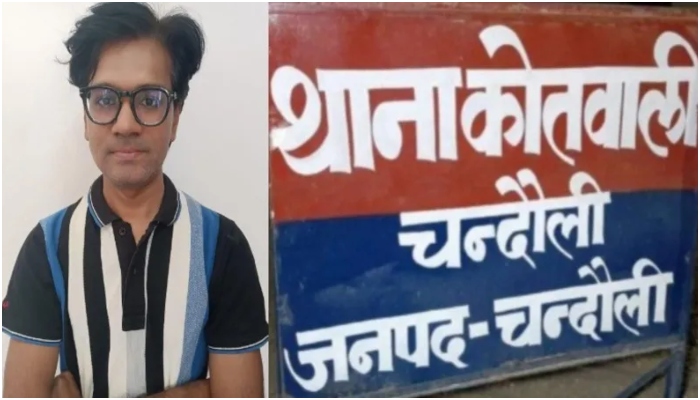
On Monday, Kochi city police arrested actor Vijay Babu for allegedly raping a young actor. He was apprehended when he came for interrogation at Ernakulam South police station. The Kerala High Court granted him anticipatory relief on June 22.

If the police arrested the actor-producer, the court ordered that he be freed on a bail bond of Rs 5 lakh, with two solvent sureties each of the same amount. While granting him anticipatory relief, the Kerala High Court ordered him not to leave the state and to surrender his passport. The team formed to investigate Babu has been granted permission to interrogate him from Monday to July 3 from 9 AM to 6 PM.

After Kochi Police filed a case of sexual assault against him, the actor departed the country and left for Dubai. On June 1, Vijay Babu returned to Kochi. Babu had appeared before the police for interrogation after returning from Dubai, claiming that he had a consensual affair with the woman. He said that the actress turned against him when she was denied roles in his films.

The victim, an actor herself, has accused Vijay of abusing her many times in his Ernakulam home. He allegedly also promised her bigger possibilities in the world of cinema. In a Facebook post, the victim said, “When I was incapable of saying yes or no consciously, he used my body as a tool for his pleasure. He has forced himself on me and even forced me into oral sex in a car against my will. I was in a state of shock, incapable of talking or responding.”

Vijay was also accused of revealing the survivor’s identity when he went live on his Facebook account and exposed the victim’s name. The high court accepted his anticipatory bail request in this matter after determining that the charges against him were bailable.

Kanpur violence: Administration seals 6 Baba Biryani outlets after food samples test unsafe for human consumption

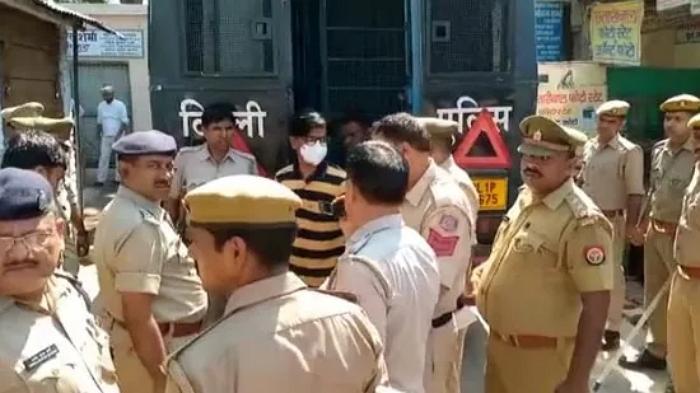
The district administration in Kanpur has sealed six Baba Biryani shops in a fresh crackdown against those involved in the rioting in the city after Friday prayers on June 3. According to reports, food samples from various outlets were collected and brought to Agra for testing, and many of them were deemed to be unsafe for human consumption, resulting in the revocation of their permits.

Talking to reporters, the Kanpur city District Magistrate said, “Food samples from various food outlets were taken & sent for testing in Agra. In the report, samples of 6 shops were found unfit for human consumption. On the basis of that their licenses have been cancelled.”

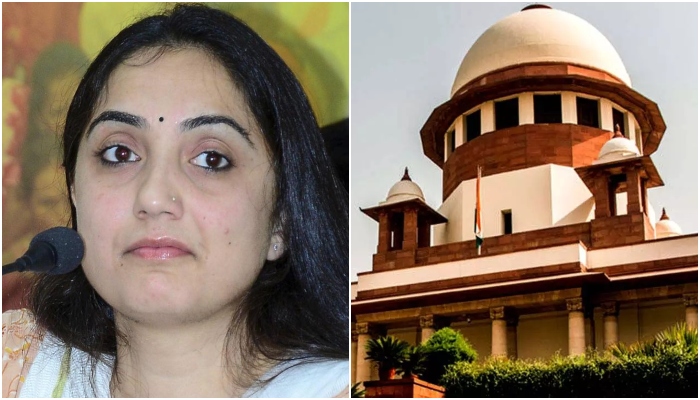
On Wednesday, Mukhtar Baba, proprietor of Baba Biryani, was detained by the SIT probing the Kanpur riots that erupted on June 3 following comments made by ex-BJP spokeswoman Nupur Sharma on Prophet Muhammad.

Mukhtar Baba, according to allegations, sponsored accused Hayat Zafar Hashmi’s Kanpur-based NGO, Maulana Mohammad Ali Jauhar Fans Association. His name had come up during the interrogation of the previously detained suspect in the case, therefore he has been on the radar of SIT and Kanpur police since the violence.

Mukhtar Baba, who had been missing since June 3, was apprehended by Kanpur Police on June 21. While confirming Mukhtar Baba’s arrest, Joint Police Commissioner Anand Prakash Tiwari stated that his name had appeared in crowdfunding ahead of the riots. According to reports, Mukhtar Baba fed the rioters and stone-pelters Biryani on the day of the mayhem. However, while speaking with OpIndia, his son Mahmood kept denying the charges.

Kanpur violence

Days after BJP Spokeswoman Nupur Sharma got death threats for allegedly committing “blasphemy” against Prophet Muhammad, horrific violence occurred in Uttar Pradesh’s Kanpur district, with Islamists calling for a district-wide shutdown to protest Sharma. After Friday prayers, thousands of Islamists joined the rally and began pelting stones at the police and the public.

Later, the police detained over 40 miscreants in the case and demolished unlawful properties possessed by primary accused Hayat Zafar Hashmi and his cronies. The police also discovered damning communications on Hashmi’s phone and investigated his bank accounts in order to track down money received from Gulf nations to allegedly support the violence.

SC grants interim relief to Eknath Shinde; extends the time to respond to disqualification notice till July 12

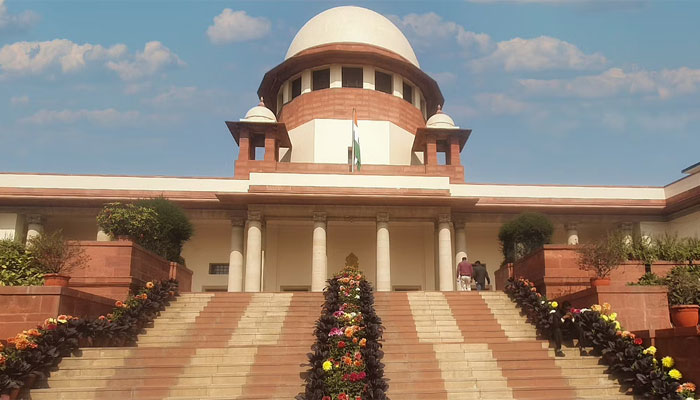
On Monday (June 27), the Supreme Court granted interim relief to rebel Shiv Sena leader Eknath Shinde and extended the time to respond to the disqualification notice, served by the Maharashtra deputy speaker to 16 MLAs, to July 12, 2022.

It must be mentioned that the initial deadline for submission was 5:30 pm today. “As an interim measure, the time granted by Deputy Speaker, to the petitioners or other similarly placed MLAs to submit their submissions today by 5.30 pm, stands extended till July 12,” the Supreme Court ruled.

The matter, which was heard by the vacation benches of Justices Surya Kant and JB Pardiwala, adjourned to July 11. They stated, “Counter affidavit to be filed within 5 days, rejoinder three days thereafter. List it on July 11.”

In his petition, Eknath Shinde pointed out that the Deputy Speaker was working on the behest of the Maka Vikas Aghadi government and gave the rebel MLAs 48 hours to respond to disqualification notices instead of 7 days (as per rules).

The petition read, “Not only the security of our families and relatives have been compromised by removing the security personnel but also there is an ongoing agenda wherein various leaders of the MVA government are instigating the cadres of their respective parties to take up violence to further intimidate us.”

Meanwhile, the Court was assured by the counsel for the Maharashtra government that the life and property of rebel MLAs will not be harmed. During the hearing, the apex court noted that the issue was whether a Deputy Speaker, who has been served a notice for removal, can issue a disqualification notice to MLAs.

Justice Kant stated, “The issue is limited. Whether the deputy speaker has right to hear the disqualification petition under Tenth Schedule when there is a notice seeking his removal under Article 179 of the Constitution.” He pointed out that 34 MLAs have sent notice to Deputy Speaker for his removal.

Eknath Shinde camp issues statement

“The real reason we have stationed ourselves in Guwahati is to strengthen ours and the Shiv Sena’s true voice. This is why we are repeatedly telling that this is not a rebellion but a fight for ShivSena’s self-respect,” the statement by the Shinde camp read.

“Our age-old alliance broke and as a result, we were forced to fight elections separately. Here, it becomes pertinent to mention that through these tough times, be it in 2014 or the events that followed after the 2019 elections, the BJP leadership be it the PM Narendra Modi, BJP’s Central or State leadership respected HinduHrudyaSamrat Shiv Sena Pramukh Balasaheb Thackeray,” it added.

The Shinde camp blamed Sanjay Raut for creating a wedge between the Sena and the BJP. “This is how widening the gap between our two parties was systematically orchestrated. During this time, all of us legislators would attempt to repeatedly bring this to our party leadership’s notice, but in vain,” it said.

“Leadership took no cognisance and the criticism using very indecent words continued every day. The kind of cheap and harsh language uttered regularly by our party’s leader Sanjay Raut was not used even by the Congress, NCP or other Opposition parties in the country,” it continued.

“Balasaheb’s basic mantra and most important lesson to us had been that focusing on Hindutva was above any alliances and this teaching will stay with us till eternity. Even if we die, we would like to die fighting to safeguard Hindutva,” the statement emphasised.

It concluded, “It is unfortunate that Sanjay Raut who hasn’t been elected by the people is set off to finish our party. Sanjay Raul is NCP’s blue-eyed boy. You may succeed in distancing the Shiv Sena from the BJP. But if you’re trying to distance the Shiv Sena from Hinclutva – Now do you expect us to tolerate it?”

The rebel MLAs added that it was not a rebellion but a fight for the self-esteem of Shiv Sena.

Gujarat riots 2002: Why the Tehelka sting of Babu Bajrangi was not admissible as evidence. All you need to know

The Gujarat Riots case is back in the news again after a case was filed against jailed former IPS officer Sanjiv Bhatt, retired DGP RB Sreekumar, and ‘activist’ Teesta Setalvad for conspiring to fabricate testimony to influence the proceedings of the case. The Ahmedabad Crime Branch has sought Bhatt’s remand while Gujarat ATS has already arrested Teesta Setalvad for further enquiry.

The Supreme Court on June 24, also dismissed a plea filed by Zakia Jafri, widow of former Congress MP Ehsan Jafri, challenging the clean chit given to the PM Narendra Modi by SIT in the 2002 Gujarat riots. During the ruling, the SC observed that the sting operations carried out by Tehelka regarding the riots have no evidentiary value.

The Supreme Court bench led by Justice AM Khanwilkar said that while the petitioner has heavily relied on the Tehelka tapes showing alleged confessions of some people that had appeared in 2007, they are not legally acceptable. “Upon investigation, if it was to be found that the tape and the contents have probative value, only then it could be used, that too against the maker of the statement alone and not against any other person,” the court noted.

One such tape which was recorded by Tehelka journalist Ashish Khetan features Babu Bajrangi alias Babubhai Patel, a Bajrang Dal leader who has been sentenced to 21 years imprisonment as the primary accused in the Naroda Patiya case. Khetan, who is also a former leader with the Aam Admi Party, recorded a sting interview of Bajrangi in which he could be heard making tall claims about the government of Gujarat giving an alleged free passage to Hindus to take revenge for the Godhra train massacre where 59 Hindus were burned alive.

In the sting video which has been touted as concluding evidence by many on social media sites, Babu Bajrangi, the Bajrang Dal leader can be heard admitting that Narendra Modi as the chief minister of Gujarat helped him in taking vengeance for the Godhra train burnings.

Bajrangi could be heard saying, “There were Police right there, just standing with eyes closed. The cops could have easily stopped us had they wanted to. The cops fired at them (Muslims), but not at us.” Bajrangi also claimed that the cops even told his men to go and ‘finish’ the other side. “We used their own gas cylinders to create explosions in their homes. The Police used to get calls from (Muslims) for help but they never answered the calls,” he said.

Bajrangi then talked about the Police Commissioner who came and said that such a huge death toll cannot be reported. “The bodies were dumped across the city and then recovered for postmortems. We butchered them like what happened in Haldighati and we are proud of it. We did not spare anyone of them – be it the women or children, we slashed and burnt them all.”

The petition filed by Zakia Jafri which made the case for a ‘larger conspiracy’, was based largely upon the Tehelka tapes. While the petition asked why the stings were not taken into much consideration by the SIT, it argued that interviews like those of Babu Bajrangi are a direct confession about the state joining hands with the arsonists in the Gujarat riots case.

Response by the state of Gujarat against the Tehelka tapes and statements by Bajrangi

The state of Gujarat submitted before the court that CM Narendra Modi has categorically dismissed any connection with Bajrangi and his associates during his tenure. Interviews given by Haresh Bhatt, the then MLA, Babu Bajrangi, and Rajendra Vyas, VHP Ahmedabad Head to Ashish Khetan, Special Correspondent for Tehelka were termed ‘false and incorrect’.

It should be noted that the issue of Babu Bajrangi’s claims was first raised in November 2007, after nearly six years of riots, and that too during the time of assembly elections in Gujarat in December 2007. Further, these issues were again raked up again in 2010 when the SIT appointed by the Supreme Court asked Narendra Modi to appear before them for his examination. “According to Narendra Modi, the whole episode is motivated and stage-managed and he had no personal knowledge about the authenticity of the said CD,” the response states.

Khetan wanted ‘spicy material’ for his thesis, admit Haresh Bhatt and Babu Bajrangi

The Naroda Patiya violence accused Babu Bajrangi and Haresh Bhatt have admitted their own presence in the sting CD. Bhatt stated that Khetan had approached him because he wanted to write a thesis on ‘Hindutva’. Apparently, he wanted Bhatt to contribute some spicy material for the same so that he could succeed in furthering his narrative. Reportedly, Khetan, as a Tehelka correspondent visited Bhatt at his residence in Ahmedabad as well as at Godhra at least 7-8 times in a month for the same.

Bhatt has admitted to having given answers as choreographed by Khetan in order to produce controversial material regarding the Gujarat riots. The accused has stated that the talks about the CBI enquiry and the story that he owned a gun factory where diesel bombs and pipe bombs were made and distributed to Hindus were ‘absolutely false and baseless’.

The answer submitted to the state of Gujarat mentions how Bhatt and Bajrangi admitted to having ordered about two truck loads of swords from Punjab and subsequently distributed them amongst Hindus. The story of making a rocket launcher in his gun factory and lighting a locally made bomb was also false, as admitted by the accused.

He has also mentioned that whatever was being said by him about Narendra Modi in the clip was all imaginary. Hence, the extra-judicial sting operation run by Tehelka does not hold much water when its own characters have accepted that they made up stories for the camera.

Babu Bajrangi’s post-facto admission after the sting

In the response filed by the state of Gujarat, the response petitions highlight the role of Babu Bajangi, whose admissions after the sting operation do not match with what he made up during the sting video. The response states that Ashish Khetan had given Bajrangi a script while he read out the same during the sting. “After going through the facts stated by these persons during the sting operation, it appears that they were bragging and that most of the facts stated by them are innocent,” the response states.

The story about a gun factory owned by Haresh Bhatt was completely made up as no evidence for the same was unearthed during the police investigation. The factual inaccuracies in the claims made by Babu Bajrangi also include him claiming over 700-800 dead bodies from the Naroda Patiya village being thrown by Ahmedabad Police in different parts of the city, upon the direction of the Commissioner of Police. This is absolutely incorrect as only 84 dead bodies were found at Naroda Patiya and 11 persons were reported missing during the recovery.

What the SIT found out

The sting operation of Tehelka carried out by Ashish Khetan has been submitted by the SIT in three out of nine sets of cases assigned to SIT by the High Court. Babu Bajrangi, who was seen making assertions in the sting was charge-sheeted and tried in connection with the evidence concerning the sting operation, However, The SIT noted that the call details of Bajrangi reveal that he was in Ahmedabad till noon on the day the violence broke and hence could not have remained present at Godhra at the time of the incident.

The Islamist and Liberal circles on social media who refuse to open their eyes regarding the contradictory assertions made by the accused in the case, still regard the Tehelka tapes – especially the sting of Babu Bajrangi as the conclusive evidence in the case. However, the same material has been dismissed first by the SIT, and later the Supreme Court while upholding the clean cheat given to Narendra Modi.

The fabricated material produced by Ashish Khetan, which is promoted by his ilk to this day has been categorically exposed as merely probative and contentious by the courts themselves. Similarly, so-called investigative Journalist Rana Ayyub’s book ‘Gujarat Files – Anatomy of a coverup’ on the Haren Pandya case was quashed by the Supreme Court calling it being based upon surmises, conjectures, and suppositions and having no evidentiary value”.

Even Tehelka, which was publishing dodgy sting operations on its website linked to Gujarat riots, refused to publish the story by Ayyub stating it did not meet the editorial standards of the publication. Madhu Trehan, a journalist also offered Rana Ayyub to run her investigative tapes and stings on Aaj Tak, for which she refused.

Kerala: Film on Moplah Massacre made by ex-Muslim who reverted to Hinduism denied censor certificate

On June 27, RSS functionary J Nandakumar alleged that the censor committee of Kerala had denied a certificate to the upcoming Malayalam film ‘Puzha Muthal Puzha Vare’ by filmmaker Ali Akbar aka Ramasimhan Aboobakker. The film revolves around the 1921 Malabar genocide of Hindus by Moplah Muslims.

In a post, J Nandakumar wrote, “Left-Jihadi Censor Committee in Kerala denies censor certificate for Ali Akbar film ‘Puzha mutual Puzha Vare’ (River to River) exposing the truth of Mappila (Moplah) riots.” He also tagged Union Minister for Information and Broadcasting Anurag Thakur in his post.

OpIndia tried to verify the claims independently but could not connect to the director Ali Akbar.

Who is Ali Akbar?

Ali Akbar is a director in Malayalam Film Industry. Recently, Akbar and his wife embraced Hinduism, and the director changed his name to Ramasimhan Aboobakker. Ali Akbar had said, “Ramasimhan is a person who was killed while sticking to the culture of Kerala. Tomorrow, Ali Akbar will be called Ram Singh. That’s the best name”.

Ramasimhan and his family were butchered by Islamists for converting to Hinduism from Islam in 1947. Ramasimhan, his brother Dayasimhan, Dayasimhan’s wife Kamala, their cook Raju Iyer and other members of the family were brutally butchered by Islamist Jihadists in Malaparamba, Malappuram district, on August 2 1947, just two weeks before the independence.

Renowned Malayalam director Akbar had in December announced that he was leaving Islam, protesting against those who had celebrated the tragic death of CDS General Bipin Rawat. Ali Akbar had then revealed this on Facebook, where he also stated that he and his family would have no religion henceforth.

1921 Malabar genocide of Hindus by Moplah Muslims

The Malabar genocide of 1921 was a systematic campaign of jihad against Hindus. The genocide, orchestrated by the likes of Variankunnath Kunhamad Haji, Ali Musaliar and others, led to an estimated death of 10,000 Hindus in Kerala. It is believed that as many as 100,000 Hindus were forced to leave Kerala in the wake of the massacre. The number of Hindu Temples that were destroyed in the genocide is speculated to be a hundred. Forcible conversion of Hindus was rampant and unspeakable atrocities were poured upon Hindus.

The Moplah pogrom was described by the likes of Annie Besant and Babasaheb Ambedkar in their respective published books. Annie Besant described the events in her book ‘The Future of Indian Politics’ as, “They murdered and plundered abundantly, and killed or drove away all Hindus who would not apostatize. Somewhere about a lakh, people were driven from their homes with nothing but the clothes they had on, stripped of everything. Malabar has taught us what Islamic rule still means, and we do not want to see another specimen of the Khilafat Raj in India.”

Babasaheb Ambedkar, in his book, Pakistan or the Partition of India, wrote, “The blood-curdling atrocities committed by the Moplas in Malabar against the Hindus were indescribable. All over Southern India, a wave of horrified feeling had spread among the Hindus of every shade of opinion, which was intensified when certain Khilafat leaders were so misguided as to pass resolutions of “congratulations to the Moplas on the brave fight they were conducting for the sake of religion”. Even after 100 years of the event, the wounds of the genocide remain afresh in the Hindu conscience.

VHP comes up with an action plan for 2024: From Love Jihad to missionary violence and hate speech against Hindus, here are their five demands

The Vishwa Hindu Parishad (VHP) released a press note on Monday, June 26, chalking out its action plan for the 60 years of its foundation in 2024. The Hindi organisation has said that it plans to enrol more than one crore members and raise its (Shakhas) units to one lakh with 15 lakh Karyakartas who will be working towards curbing the growing menace of love jihad, illegal religious conversions, demolition of temples and growing hate speeches against Hindu beliefs and deities across the country.

While addressing a press conference in Chennai, VHP’s joint secretary Dr Surendra Jain raised concerns over the demolition and destruction of Hindu Temples, the menace of love jihad and illegal religious conversions and growing hate speeches against Hindu beliefs and deities that have been plaguing different parts of the country, especially Tamil Nadu.

Jain said that all state governments should enact laws to curb illegal conversions and Love Jihad. The growing menace of acquisition and demolition of temples in discreet manner and hate speeches against Hindu beliefs and deities must also be stopped forthwith, he demanded. Calling Tamil Nadu the flag bearer of the Hindu Dharma for millennia, the Hindu outfit sought to draw attention to the growing intolerance toward Hindus in the state and appealed to the state government to take appropriate action before it is too late. VHP warned that if “they remain silent spectators, the Hindu Society will have to stand up and defend its pride.”

VHP urges states like Tamil Nadu to adopt anti-conversion and love jihad laws

Dr Surendra Jain opined that illegal religious conversion is the biggest crime and violence against humanity. He said that the “Mullah, Moulvi, and Missionaries” are engaging in this criminal activity assuming it to be their religious right and have been using all types of unconstitutional and unethical means to do so.

According to Jain, numerous different sections of society have called for an end to this illicit criminal activity ever since the country’s independence. He encouraged the Tamil Nadu government to follow the lead of the state governments that have already passed legislation to end unlawful conversions in their states.

The VHP joint secretary invoked the case of the 17-year-old M Lavanya to point out how due to the insensitivity and apathy of the state government, instances of illegal conversion and attempts to convert Hindus to Christianity in Missionary run schools are still occurring unabashedly in states like Tamil Nadu. Lavanya, a student of standard 12th in Sacred Heart Higher Secondary School, Thirukattupali in Thanjavur, Tamil Nadu, killed herself in January this year after she was allegedly tortured by her school authorities for refusing to convert to Christianity.

He also brought up other suicides that occurred for the same reason in Ramanathapuram and Melur in Madurai and expressed concern about the rise in incidents of Islamic fundamentalists targeting Hindu girls as part of their Love Jihad before using them as sexual objects.

Dr Surendra Jain demanded that the Tamil Nadu government should stop such activities by punishing these institutions and individuals stringently, so that these kinds of abuses on the Hindu Society may be stopped. VHP Central Governing Council urged the state government to enact a stringent Anti–Conversion law to curb illegal conversions and growing cases of Love Jihad.

Press note released by VHP

VHP raises its voice against rising violence of Islamic fundamentalism and terrorism

The Hindu outfit, in the press conference held in Chennai, also expressed concern about the recent escalation of violence that the entire nation has experienced as a result of Islamic fanaticism. “Using CAA, Corona, Hijab and Nupur controversy, they are trying to inflame the country in senseless violence. Terrorism has also been nurtured by these fundamentalists. Unfortunately, Tamilnadu has become a hub and recruiting center for the Jihadi Terrorists,” read the press release.

VHP added that the NIA has recently made several arrests of Islamic terrorists from Tamil Nadu, which has been an unprecedented surge in its infrastructure, sleeper cells, and financial support systems. The state security agencies appear to be negligent in spotting these forces in society and protecting its citizens, the Hindu outfit said.

Slamming the Tamil Nadu government’s apathy towards Hindus, Jain added that the inaction of the state police will embolden the Islamic fundamentalist groups in the state to unleash violence against innocent people.

“So far, in Tamilnadu, more than hundred Hindu Society/Political Leaders have been killed by these Islamic terrorists since 1985. Vishwa Hindu Parishad urges the govt. to act upon the Islamic Fundamentalists firmly, swiftly and stop further bloodshed in the name of Islamic religious fundamentalism,” read the press note.

VHP calls for freeing Hindu Temples from Govt control and stopping selective demolition

The Tamil Nadu government has often been rebuked for its bias against the Hindu religion. The Madras HC has, on numerous occasions, lashed out at the Tamil Nadu govt, ordering it to initiate proceedings to recover various encroached temple lands. The Hindu outfit, too, slammed the colonial mindset of the DMK government in Tamil Nadu and sought that Hindu temples be freed from the Govt control.

“We appreciate that some of the Govts have already declared to let the Hindu Religious places be run by the Hindu Society. VHP demands that the remaining State Govts including Tamilnadu should also free Hindu Temples. We appeal to the Hindu society to realize their strength and be ready to run effectively and transparently those great temples through the committee including pujaris and devotees from all castes and gender,” said the Hindu organisation.

The press release read that with tremendous bias and under the name of encroachment and unlawful buildings, the Tamilnadu government has been demolishing Hindu temples in the state. It said that in the last 13 months, over 20 temples had been destroyed, however, such cruelty has never been meted out to any mosque or church.

Condemning the anti-Hindu bias of the TN government, the VHP demanded that “if removal of temple is required as per law, it should be relocated to other place, in prior consultation with the temple committee and local Hindu organizations, as it is done with relocating people from encroachments. So that those Deities (Living Entities as per Supreme Court verdict) are treated with utmost sanctity and not cause agony to the Hindu society.”

Strict action against Hate Speech on Hindu belief and its deities

The Hindu outfit in strong words condemned the state’s inaction on the perpetrators of the hate speech against the Hindu faith and its deities, which it said “anguishes the Hindu society”.

VHP elucidated how strict measures are being taken across the nation against those who insult non-Hindu religions and their leaders, however, there is no action against those who do the same in Tamil Nadu as in the case of the Dravidian YouTuber who recently used the most obscene language to disparage Hindu God Shiva.

Having said the above, VHP made a plea to all state governments to show a little more consideration for the sentiments of the Hindu community. It warned the state government’s that if they choose to watch in silence, the Hindu Society will be compelled to step up and preserve its honour.

Maharaja Ranjit Singh death anniversary: Read how his son, last king of Sikh empire, was converted to Christianity and ‘lost’ the Kohinoor to British

Today, 27 June 2022, marks the 183rd death anniversary of Maharaja Ranjit Singh, one of the foremost rulers of the Sikh Empire. On June 27, 1839, Sher-e-Punjab or Lion of Punjab, Maharaja Ranjit Singh, passed away following multiple health complications. With his death, the tragic story of his youngest son, Duleep Singh, began.

At the time of Maharaja Ranjit Singh’s death, Duleep was not even a year old. Following his demise, Duleep Singh lived a quiet life with his mother Maharani Jind Kaur Aulakh at Jammu for a few years.

During that period, the Sikh empire that was established by Maharaja Ranjit Singh was ruled by Maharaja Kharak Singh, who was followed by Maharaja Nau Nihal Singh and Maharaja Sher Singh. After Maharaja Sher Singh was assassinated in 1841, Duleep Singh and his mother were recalled to Lahore in 1843. He was proclaimed the next King of the Sikh empire on September 16, 1843, at the tender age of five, and his mother ruled the kingdom on his behalf for a while.

The Anglo-Sikh war of 1845

From 1843 to 1845, the Sikh army grew steadily. The foreign officials in the army were dismissed from their posts. At one point, there were over 70,000 soldiers in Sikh Army. On December 13, 1845, the British declared war against the Sikh empire and defeated the Sikh army. Though Duleep Singh was retained as the figurehead Maharaja or a nominal ruler, the Council of Regency replaced Maharani Jind Kaur. She was later imprisoned and exiled.

It was a tough period for Duleep Singh as he was a young boy without any parental figure around. In 1849, the Sikh empire lost the second Anglo-Sikh War, and Punjab was annexed to the British Empire on March 29. Duleep Singh had to not only surrender the Empire to the British, but he was also put into the care of Dr John Login, a Scottish surgeon in British India.

Dr Login had started his career as an assistant surgeon in the East India Company in 1832, and during his initial years, he was appointed to the Bengal establishment. In 1839, the East India Company bestowed him with two essential duties. First was the guardianship of Maharaja Duleep Singh, who was still a child, and the second was the ‘protection’ of the Kohinoor diamond. The Kohinoor diamond is one of the largest cut diamonds in the world and Maharaja Ranjit Singh came to possess it in 1813.

In December 1849, he was shifted from Lahore to Fatehgarh. Duleep Singh lived under strict restrictions and was not allowed to meet any Indians. Only a few servants who were trusted by the British officials were allowed to meet Duleep Singh that too, in private.

In the lack of a parental figure, it is believed that Duleep Singh formed a bond with Dr Login, who exposed him to Christian texts. He was culturally detached from his Sikh roots. According to Peter Bance, author of ‘Sovereign, Squire and Rebel: Maharajah Duleep Singh and the Heirs of a Lost Kingdom’, a book that traces the life of Maharaja Duleep Singh, the young King was not allowed to meet any Indians, and he was surrounded by the children of British officers. There were two best friends of Duleep Singh during that period. Both of them were English Anglican missionaries. Bible was placed in his hand, and slowly he started to build interest in Christianity.

Thus, Dr Login introduced Maharaja Duleep Singh to Christianity and later persuaded him to convert.

Duleep Singh converted to Christianity

In 1853, the time came when he converted to Christianity. Bhajan Lal, who was himself a Christian convert, advised him to convert to Christianity, for which formal approval was taken from the Governor-General Lord Dalhousie. Bhajan Lal was a local Brahmin who converted to Christianity. He was used to expose Duleep to Christian texts. Lal often recited Bible phrases to Duleep Singh do that the young Maharaja build interest in Christianity. Duleep was not 15 when he was converted; thus, his conversion was considered a controversial topic.

Life of Duleep Singh during exile in the United Kingdom

In late 1854, he was shifted to England and was introduced to the British Court. Queen Victoria was supposedly in awe when she looked at him for the first time. Duleep Singh, who became a good friend of the Queen, lived in multiple hotels and homes during his stay in London. During that period, he also stayed with the Royal Family at Osborne on the invite of the Queen.

After a short span of time, Duleep Singh started to miss India and expressed his desire to go back. However, the East India Company Board was not in the mood to let the Maharaja go back to India. He was sent on a tour of the Europe with John Login and Lady Login.

In 1855, he returned to England, and at that time, the British Empire fixed an annual pension of £25,000 a year. There was a condition that he would remain obedient to the British Government if he wanted to receive the pension. Castle Menzies in Perthshire, Scotland, was leased for his stay. He remained under the supervision of Logins till the age of 19, after which he demanded to be in charge of his household, which was granted by the British Government. During the 1860s, he left Castle Menzies and shifted to Grandtully Castle.

Duleep Singh was married twice. He had seven children from his first marriage to Bamba Muller and two children from his second marriage to Ada Douglas Wetherill.

Reuniting with mother

When Duleep was 18 years old, he wrote a letter to his mother, who was living in Kathmandu at that time. In his letter, he expressed his desire that she should join him in Great Britain. The letter was intercepted by the British Authorities, and it could never reach his mother. Later, he tried again to contact her via an Indian named Pundit Nehamiah Goreh. However, the contact was intercepted again, and he was not allowed contact his mother again.

This was the time Duleep had enough and decided to go himself. By that time, Maharani was virtually blind and in a frail state. The British Government came to the conclusion that she was no longer a threat and did not stop Duleep from meeting her. Peter Bance, in an interview, narrated what happened when Duleep met her mother.

Notably, as he had embraced Christianity, he had cut his hair. Upon meeting his mother, he bowed down in front of her to take her blessings. Her blind mother raised her hands and touched his head with affection, only to get the shock that he no longer had long hair, which is one of the five Ks of Sikhism. She questioned him about what had happened to his hair, and he told her the whole story.

From that moment, his mother started telling him the actual history of the Sikh empire and how his father raised one of the most prosperous empires in the country. She was allowed to join him by the British Government, which made it possible for her to continue to bring him back to his roots. She joined him in England in 1860. Duleep stayed with her until her death in 1863. She was cremated in India.

The curious case of Kohinoor

It is believed that when Duleep Singh ‘surrendered’ the Sikh empire to the British, he also ‘surrendered’ the Kohinoor diamond. As mentioned above, his guardian, Dr Login was also guardian of the Kohinoor. Singh is often known as the King who gave away Kohinoor. However, Peter Bance said the reality was far from what people believed.

The diamond was taken away from the treasury of the Sikh Empire by Lord Dalhousie, the Governor General of India in 1849, when Duleep Singh was 11 years old. In 1854, when Duleep Singh met Queen Victoria, he expressed his desire to see the diamond. Lady Login insisted there was no harm if he saw the diamond, and it was brought from the British treasury on orders of the Queen. Bance said, “Duleep held the diamond in his hand and took it to the window. As he saw the diamond shining in the sun, he raised his hand and said ‘to Humble Majesty Kohinoor diamond,’ and this is how the bid of gifting the diamond came into existence”.

Return to Sikhism

Maharaja Duleep Singh was known for his lavish lifestyle. He always dressed in Highland costumes and gained the nickname “the Black Prince of Perthshire”. His mother’s stories of his family slowly started to take over his love for Christianity. He became disillusioned by the British and started to learn more about Sikhism.

During that time, he reconnected with his cousin Sardar Thakar Singh Sandhawalia and asked for his help to return to Sikhism. He wanted to go to India and return to Sikhism, but his decision was not welcomed by the British. It would have been a major shock for the British Empire, and they decided to do everything in their power to stop him from leaving Britain.

On March 30, 1886, Duleep Singh lodged in a ship to sail back to India, but he was stopped by the British officials. Later, his cousin Sandhawalia helped him to return to Sikhism in the presence of Sikh Granthi Pratap Singh Giani in Aden. During that time, he tried multiple times to revolt against the British empire. He also sought support from Russians and others but could never achieve what he wanted to do. Bance said everyone made attempts to use him as their puppet.

Death in exile

At the age of 55, Maharaja Duleep Singh died in Paris in 1893. Duleep Singh wanted his body to return to India. However, the British Government believed sending his mortal remains back to India would cause unrest as he was the son of the Lion of Punjab, Maharaja Ranjit Singh. Duleep Singh was buried in Britain in accordance with Christian rites despite the fact that he had returned to Sikhism. His grave is located on the west side of the Elveden Church. His mortal remains are still waiting for the day to return to India. Multiple efforts have been made by Sikh leaders to bring back his remains but all efforts failed to reach a fruitful conclusion.

Maharashtra political crisis: As 9 ‘rebel’ ministers get stripped of portfolios, Aaditya Thackeray says he is confident of winning with love on his side

With the Uddhav Thackeray-led Maha Vikas Aghadi (MVA) government in deep crisis following the rebellion by veteran leader Eknath Shinde, the CM has now taken back portfolios of 9 rebel ministers. An official statement said that portfolios of these rebel ministers have been handed over to other ministers now for the ease of administration.

The ministers to lose their portfolios include the leader of the rebel group Eknath Shinde, Gulabrao Patil, Dadaji Bhuse, Sandeepan Bhumare, and Uday Sawant. Along with these cabinet ministers, ministers of state Shambhuraj Desai, Rajendra Patil, Abdul Sattar, and Omprakash Kadu have also lost their portfolios.

Shiv Sena is now left with 4 cabinet ministers in the government, CM Uddhav Thackeray, his son Aditya Thackeray, Anil Parab, and Subhash Desai. Aaditya Thackeray is the only MLA among them, with the other 3 being MLCs.

Meanwhile, the Maharashtra crisis reached Supreme Court on Monday with the apex court hearing the rebel group’s plea over the disqualification notice sent by Maharashtra’s Deputy Speaker. In an interim relief to the rebel group, the time granted by the Deputy Speaker to the petitioners to submit their written submissions by 5:30 PM on Monday, 27th of June, has been extended till 5:30 PM on July 11.

Aaditya Thackeray says they will win this challenge with love on their side

Following the hearing in the Supreme Court, Aaditya Thackeray said that they are confident of winning this battle as they have love on their side. Expressing confidence that their government won’t fall, Thackeray said that those who run away don’t win, and those who betray don’t win.

Aaditya Thackeray also said that there should be a ‘morality’ test before any floor test in the assembly where their government is looking short on numbers after the rebellion by the Eknath Shinde group.

Muslim organisations denounce new ‘haram’ laws in Thailand pertaining to cannabis and same-sex marriage: Here is what happened

The League of Islamic Council of Southern Thailand has denounced three bills that are under consideration in the Parliament of Thailand, labelling them in violation of Islamic law and unworkable for practising Muslims. The Cannabis and Hemp Bill, the Progressive Liquor Bill, and the Civil Partnership Bill are three legislative bills being opposed by the Islamic Council.

In order to clarify their stand on the three measures that have already passed their first readings in parliament, representatives from the Islamic councils in Yala, Narathiwat, Songkhla, Satun, and Pattani convened on Thursday.

The Cannabis and Hemp Products bill does not apply to cannabis extracts that contain more than 0.2 per cent tetrahydrocannabinol (THC), the psychoactive ingredient of cannabis. The two plants will be delisted as illegal drugs by Bill. The Progressive Liquor Bill, on the other hand, aims to liberalise the alcohol industry and open the market to local suppliers. In addition, if passed, the Civil Partnership Bill will make same-sex marriage legal.

The topic has spurred a heated debate on social media, confusing Muslims. According to the council, practising Muslims cannot accept these regulations since they contradict Islamic teachings.

The council’s chairman, Waedueramae Mamingji, stated that the subject has been widely discussed on social media and may generate some misconceptions among Muslims in Thailand, thus the council must take this move to clarify points. He stated that the League of Islamic Councils of Southern Thailand does not endorse any of the proposed laws.

Waedueramae said, “Our organisation is the pillar for citizens. We must reveal our standpoint to society clearly. According to the Sheikhul Islam Office’s Fatwa, we will not support these laws because they are haram in Islam.”

It is worth noting that, according to the Quran, same-sex marriage, drugs, and alcoholic beverages are incompatible with Islam and its principles.

According to reports, Dr Ananchai Thaipratan, an Islamic medical expert who attended the conference, stated that cannabis is still classified as a narcotic that may only be used for therapeutic or scientific work. The council observed that university experts are also beginning to highlight the harmful side effects of cannabis consumption, which can induce hallucinations, tachycardia, and other heart-related disorders, as well as impair students’ cognitive advancement.

As Sanjay Raut says they might abandon MVA alliance if rebels return, here is why BJP must not re-align with Uddhav Thackeray-led Shiv Sena

The State of Maharashtra is going through a period of political turmoil with the ruling Maha Vikas Aghadi (MVA) government set for an imminent collapse, barring a massive upset.

The ‘unholy alliance’ between the Shiv Sena, Congress and the Nationalist Congress Party (NCP) can no longer hold on to the reins of power. More than 2/3rd MLAs of the Sena have deserted their chief Uddhav Thackeray for deviating from the ideals of the party’s founder Balasaheb Thackeray.

Not just the MLAs, even 60 Members of the Legislative Council (MLCs) from Thane are set to join the rebel Shiv Sena leader Eknath Shinde. This has left the Uddhav Thackeray camp in a state of panic.

The desperation to clutch onto their position of power has been such that even a loudmouth Sena leader such as Sanjay Raut has been forced to adopt a conciliatory tone.

“Shiv Sena is ready to step out of Maha Vikas Aaghadi. Your demand will be considered. Come back within 24 hours,” Raut was heard as saying. But, the rebel camp has insisted that the party must return to its natural ally i.e. the Bharatiya Janata Party (BJP).

Not until long ago, Raut had announced that the Shiv Sena would not side with the BJP even if offered the throne of Lord Indra. How will the firebrand leader now justify his sudden change of heart?

But more importantly, what awaits the political future for the State of Maharashtra? There are a number of possibilities, one of which is the alliance between the BJP and the Sena.

Shiv Sena of today is not the party of Balasaheb Thackeray

There were two core issues that bound the BJP and the Sena for several years. One was their mutual commitment to the cause of Hindutva and the other was their disdain for minority appeasement.

The Shiv Sena had failed on both fronts ever since they opportunistically sided with the ‘secular’ NCP and Congress in 2019. To keep its newfound allies content, the party had openly distanced itself from the ideals of Balasaheb Thackeray.

This became evident soon after Shiv Sena ditched its pre-poll ally i.e. BJP to make Uddhav Thackeray the Chief Minister, following the 2019 Maharashtra Legislative Assembly elections.

As such, even the likes of Samajwadi Party legislator Abu Azmi, who abused Balasaheb Thackeray as ‘old and senile‘, was spotted alongside Uddhav Thackeray during Sena-NCP-Congress meet.

Prior to the elections, Uddhav Thackeray mouthed platitudes about how ditching the BJP would draw the wrath of Chhatrapati Shivaji Maharaj. “If Chhatrapati Shivaji Maharaj were present today, he would have severely punished us by pushing all of us from a mountain cliff if we betrayed the alliance,” he had famously said.

Shiv Sena immensely benefitted from its alliance with the BJP but was quick to jump ship when the opportunity presented itself. This was contrary to the values espoused by Balasaheb Thackeray during his lifetime.

According to Congress leader Balasaheb Thorat, the intention of the Sena was clear from the start. It wanted to keep the BJP out of power in Maharashtra and thus initiated the alliance with its arch-rival.

Undermining national interests over petty politics

Soon after becoming the Chief Minister, Uddhav Thackeray began dancing to the tunes of his allies. He assured the leaders of the Nationalist Congress party that cases against arrested ‘Dalit activists’, who actively participated in the Bhima Koregaon violence, will be dropped.

Shiv Sena inducted an MLA named Abdul Sattar into its extended cabinet, despite having labelled him as a close associate of gangster Dawood Ibrahim in the past. In a scathing article published in Saamana in 1994, Shiv Sena alleged that Sattar, who was then in Congress, was an accomplice of the 1993 Mumbai Bomb Blasts mastermind.

In January 2020, Thackeray had met ‘Muslim leaders’ opposed to both the Citizenship Amendment Act (CAA) and the National Register of Citizens (NRC). One of the leaders happened to be the founder of Raza Academy, Alhaaj Saeed Noorie Sahab.

It may be recalled that the Islamist outfit had been at the forefront of several violent protests in the State of Maharashtra. During the 2012 Azad Maidan riots, extremists associated with the organisation vandalised the Amar Jawan Jyoti to protest against the alleged atrocities on Muslims in Assam and Myanmar.

In January 2020, students of the Mumbai University, Tata Institute of Social Sciences (TISS) and others who had assembled near the Gateway of India to condemn the violence that broke out in JNU. Interestingly, one protestor named Mehak Mirza Prabhu was seen holding a poster titled, ‘Free Kashmir.’

Although the usual suspects tried to trivialise the incident, those politically aware realised the sinister agenda behind such a poster. The idea was to call for the secession of Jammu and Kashmir from the Union of India while making it appear as a protest against the internet ban, following the abrogation of Article 370.

Shiv Sena, which has always been vocal about national integrity, tried to downplay the seriousness of the incident. Sanjay Raut had then suggested that the contentious poster did not actually mean ‘free Kashmir’ but only implied freedom from restrictions of internet services, mobile services and other issues.

Days after he attempted to whitewash secessionist forces, Sena’s mouthpiece Saamna claimed, “A Mumbaikar Marathi woman expressed the pain of Kashmiris silently through this poster. The opposition feels this is sedition. There can’t be a dirtier example of irresponsibility.”

In December of that year, the Mumbai police filed a ‘C Summary’ and dropped charges against the protestor, claiming that they found ‘no malicious motive.’

Shiv Sena Chief even trivialised the 2008 Mumbai attacks, which shook the conscience of the entire nation. He compared the ghastly terror attack that left 166 people dead to a clash between student groups in JNU.

The result of joining hands with so-called ‘secular forces’ had dented the values that were once espoused by Shiv Sena and its foot soldiers. This became evident when Shiv Sainiks brutally assaulted a navy veteran named Madan Sharma over a Whatsapp forward.

When the matter grabbed headlines, the party went into a damage control mode. Six goons associated with Shiv Sena were arrested but were released on bail within a few hours’ time.

The tokenism displayed by the Shiv Sena leadership, which once talked about reverence for armed forces, bolstered other party members to harass ex-servicemen. In January 2021, a former army officer named Sujit Aptehad moved the Bombay High Court, alleging threats to his life from Sena corporator Amey Ghole.

When Hindutva was put on the back burner

Throughout its history, Shiv Sena had held freedom fighter and ‘Father of Hindutva’ Veer Savarkar in high esteem. All of it changed once it joined hands with the NCP and Congress out of political opportunism.

This became evident when the Sena remained a mute spectator after All India Congress Seva Dal accused Savarkar of having a physical relationship with MK Gandhi’s assassin, Nathuram Godse.

Dismayed by the silence of the so-called Hindutva party, BJP leader Devendra Fadnavis had remarked, “The tiger of the Sena which used to give orders from Matoshree has turned into a cat. It does not roar and only does Meow Meow.”

Not only that, but the cause of Ram Janmabhoomi was also deserted by the Sena. The party, which was once at the forefront of building a magnificent Ram Temple in Ayodhya, had claimed that the construction of the temple in Ayodhya could wait.

Sanjay Raut had stated that all issues such as “India, Pakistan, Ram Mandir” could be put on hold. While disrespecting the sentiments of Ram Bhakts, Uddhav Thackeray had even suggested that the Bhoomi Pujan for Ram Mandir should have been done via video conferencing.

From detaining Hindu devotees for celebrating Dahi Handi to falsely claiming that Kumbh Mela returnees would distribute Coronavirus as ‘prasad’, the Shiv-Sena-led Maharashtra government openly endorsed Hinduphobia.

The arrest of Navneet Rana and her husband Ravi Rana, for planning to chant Hanuman Chalisa, is still afresh in public memory. Shiv Sainiks had even defamed ‘Jai Sree Ram’ by staging a hate attack against an alleged ‘Nepali citizen.’ However, the matter reached a crescendo with Uddhav Thackeray resorted to ‘Gaumutra jibes.’

“Those who cast aspersions on our government, themselves have their mouths filled with cow-dung and Gaumutra. They have been trying to sling cow-dung at us, in a desperate hope that it will stick but it did not because we are clean. It is them whose mouth and clothes reek of Gaumutra and cow-dung,” Uddhav Thackeray was heard as saying.

Islamists have often referred to Hindus as ‘cow urine drinkers’ or used ‘gau mutra’ jibes to derisively mock and insult them. The Pulwama terrorist attack was a watershed moment, given that the attack led to the death of 40 CRPF soldiers.

A video released in its aftermath saw the terrorist, responsible for the ghastly attack, spewing venom against Hindus and who sought to justify this hate by derogatorily referring to Hindus as ‘cow urine’ drinkers. 

If anything, the appalling stereotyping of Hindus by an Islamic terrorist who killed 40 Indian soldiers should have discouraged left-liberals and Shiv Sena from using the ‘gau mutra’ jibe.

How Muslim appeasement became the primary agenda of Shiv Sena

It is often said that ‘bad company ruins good morals’. Nothing can be truer in the case of Shiv Sena, which has been historically opposed to appeasement politics. One of the first agendas of the Shiv Sena-led- Maharashtra government was that of religion-based reservation (5% Muslim reservation in this case).

In a bid to not risk its alliance with ‘Muslim appeasing’ Congress and NCP, Sena leader Sanjay Raut had suggested that the persecuted minorities from the neighbouring Islamic countries (staying in India) must not be given voting rights even after being awarded Indian citizenship.

The ‘secular’ alliance of Shiv Sena, Congress and the NCP had even vowed to not implement the National Register of Citizens (NRC) and National Population Register (NPR) in the State to pacify the Muslim community.

As time passed, the erstwhile Hindutva party became wary of ‘communal sensitivities’ and resorted to greater appeasement than its allies. In February 2020, senior Shiv Sena leader Arjun Khotkar demanded that the episodes of the Marathi TV series- “Swarajya Rakshak Sambhaji” be stopped from being aired on television.

Khotkar claimed the episodes in the series had the potential of inciting discord in society and therefore should not be transmitted on television.

“Swarajya Rakshak Sambhaji”, a popular Marathi series, chronicled the life of Chhatrapati Shivaji Maharaj’s son Sambhaji Maharaj. Sambhaji reined over the Maratha Kingdom for 9 years until 1689 when he was captured, tortured and executed by the Mughal ruler Aurangzeb.

Soon after, social media influencers such as Shefali Vaidya and Sunaina Holey were intimidated by Sena for speaking against the role of Tablighi Jamaat in endangering public health and safety.

From easing Covid-19 restrictions on Eid to demands of renaming the Ghatkopar-Mankhurd flyover after Moinuddin Chisti, the party founded by Balasaheb Thackeray found itself in deep waters.

Sena had also inducted the likes of Rahatmulla Khan alias Papa Khan, Indin Shaikh and Anawar Shaikh, who have been convicted for the murder of senior RPI leader Naresh Gaikwad.

The party crossed all limits of hypocrisy when it joined hands with the Islamic fundamentalist AIMIM, for Amravati Municipal Corporation Committee elections. AIMIM returned the favour by supporting the Sena in the recently concluded Rajya Sabha elections in Maharashtra.

AIMIM had placed demands such as the appointment of a minority member in MPSC, reservation for Muslims and increasing the income of the Maharashtra Wakf Board. This prompted even Raj Thackeray’s party Maharashtra Navnirman Sena to call its ‘Hindutva’, a sham.

Recently, rebel Shiv Sena leader Eknath Shinde had put Uddhav Thackeray in the dock by questioning him about the reasons that stopped him from visiting the Holy city of Ayodha.

BJP braved personal attacks from Sena

Besides, BJP leaders had to face personal attacks from its erstwhile ally Shiv Sena. For instance, the wife of the former Maharashtra Chief Minister Devendra Fadnavis was publicly humiliated by the Shiv Sainiks.

In December 2019, the foot soldiers of the Sena held a crass demonstration during which they slapped the poster of Amruta Fadnavis with shoes and slippers. The act by Shiv Sena was done in response to a tweet wherein she criticised Uddhav Thackeray for abandoning the principles of his father.

In February this year, BJP leader Kirit Somaiya was attacked by Shiv Sena workers after he accused Sanjay Raut of making ₹100 crores illegally through the COVID care centre. Two months later, he alleged that a mob of 100 Shiv Sainiks assaulted him with stones, with the intention to kill him.

In April, another Maharashtra BJP leader named Mohit Kamboj alleged that Shiv Sena goons attacked his car in the Kalanagar area of Mumbai’s Bandra suburb. 

He claimed that the attack was an attempt to kill him as he had exposed corruption in the BMC (which is ruled by the Sena) and raised his voice against ‘corrupt ministers’ like Nawab Mallik.

“This was an attempt to kill me by Shiv Sena and Maharashtra CM, so as to suppress my voice. Will see what action will be taken by Mumbai Police. Everything is recorded on CCTV,” Kamboj had remarked.

Should the BJP trust the Sena again?

As evident from the above discussion, Uddhav Thackeray and his sidekick Sanjay Raut have abandoned the values and principles in their pursuit of power. The Sena under their leadership conveniently forgot that their electoral success has been the gift of the Bharatiya Janata Party.

Political opportunism and cunningness have overshadowed the cause of ideology and integrity. Although desperation has made the duo soften their stance, the BJP cannot afford to trust them again for the damage they inflicted on the people’s mandate.

They have subverted nationalist interests, engaged in vicious appeasement politics, and mocked the beliefs of their core voters. It has aligned itself with parties with completely opposite ideologies such as the AIMIM and the Congress.

The Eknath Shinde-led-faction that has deserted the likes of Thackeray and Raut provides a glimpse of hope. Disillusioned by the party’s departure from its core values, they have vowed to uphold the principles of Balasaheb Thackeray.

For the rebel camp, there was absolutely no need to abandon the luxury of power. But, it was too much for them to take. Their ideology took them all the way to Guwahati to foment a political alternative.

For the BJP, this appears as the right them to not be swayed by the shallow promises of Raut. The saffron party must work out a solution with Eknath Shinde to provide a stable government to the people of Maharashtra.